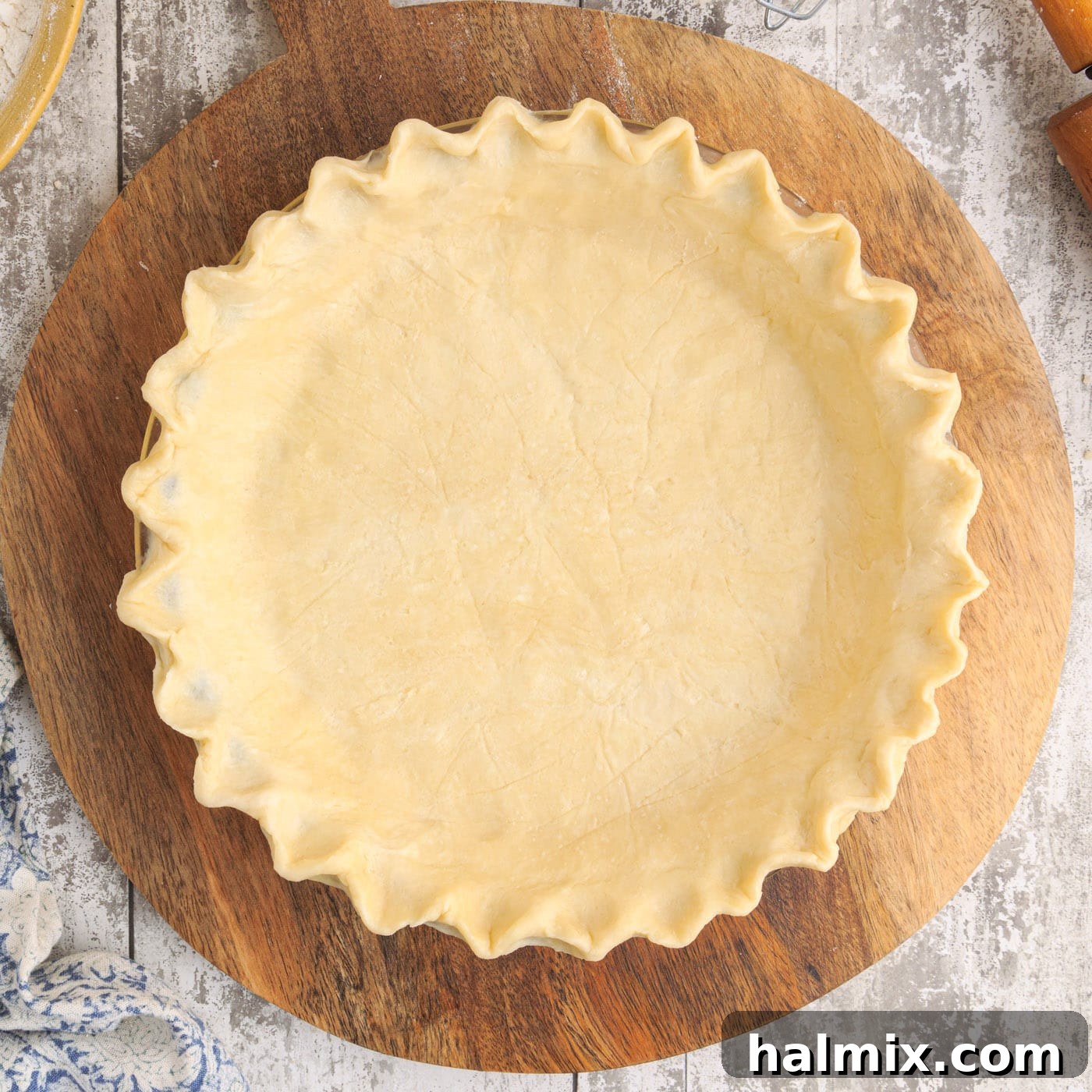
Unlock the secrets to baking perfection with our foolproof guide on how to make pie crust that’s both buttery and beautifully flaky. This comprehensive method is designed for bakers of all skill levels, ensuring a tender, crave-worthy result every single time. Forget store-bought shortcuts and embrace the joy of crafting your own base for countless sweet and savory delights.
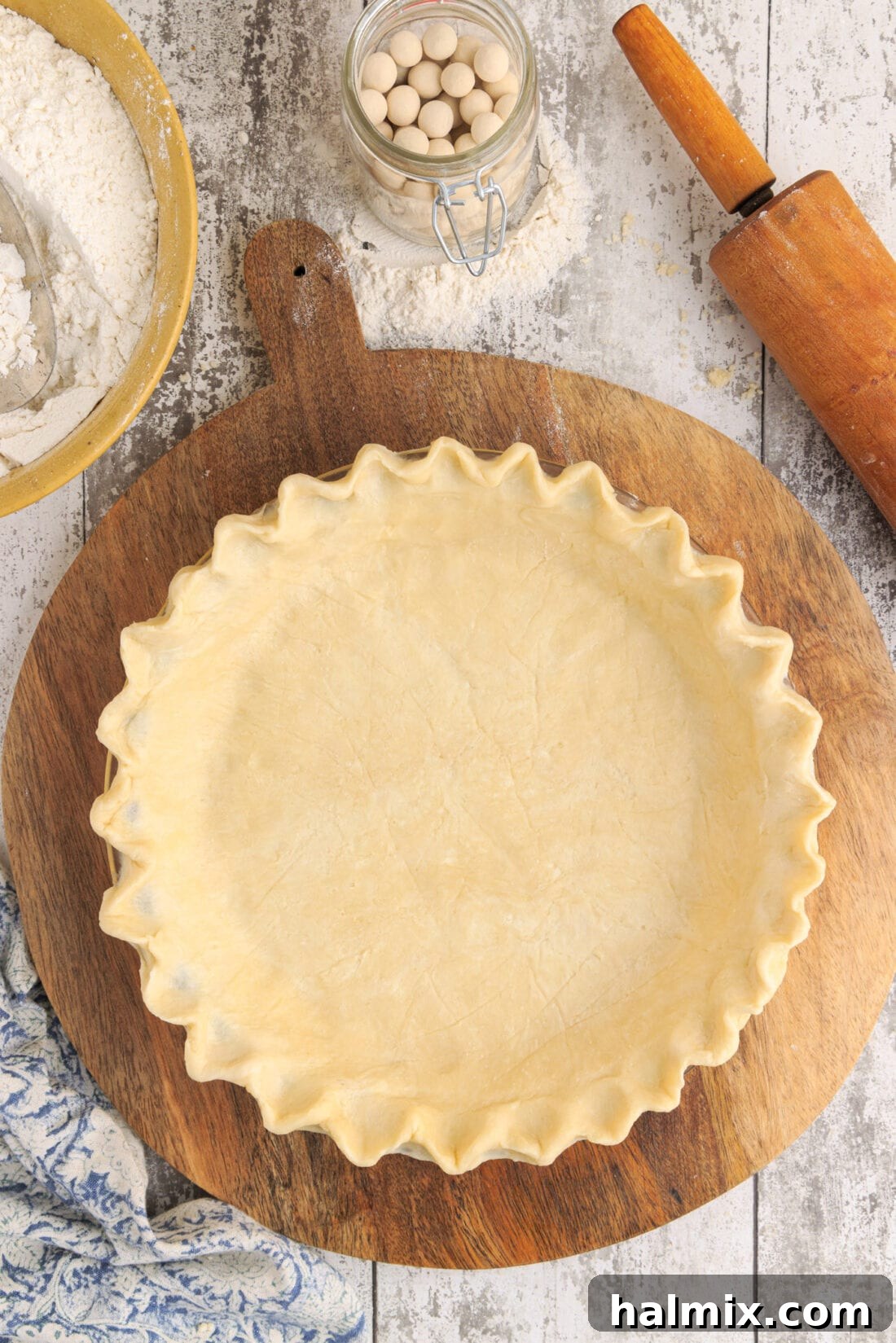
Mastering the Art of Homemade Pie Crust: A Foolproof Guide
There’s an undeniable charm and superior taste to a homemade pie crust that simply can’t be replicated by pre-made alternatives. It’s the foundation of any great pie, from classic fruit fillings to rich, creamy custards. This recipe empowers you to create a crust that’s not only incredibly flaky and tender but also infused with a rich, buttery flavor that elevates your entire dessert. We’ll demystify the process, focusing on key techniques and insights that guarantee success, making you a confident pie baker in no time.
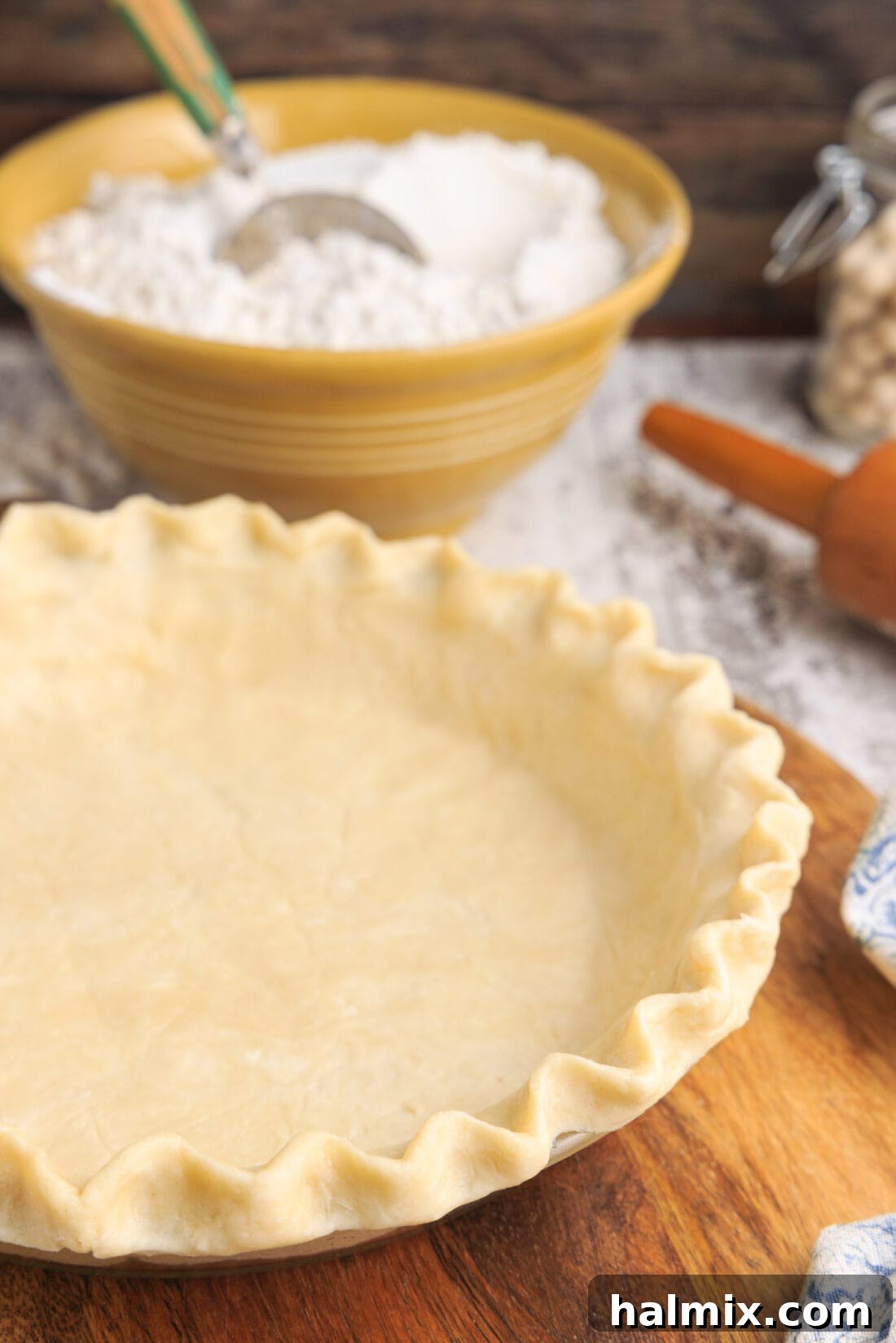
Why This Pie Crust Recipe Stands Out
The secret to a truly exceptional pie crust lies in understanding a few fundamental principles, which this recipe meticulously addresses. We aim for that coveted balance of buttery richness, ethereal flakiness, and melt-in-your-mouth tenderness. The magic happens through the careful handling of cold ingredients and strategic mixing. When cold butter pieces meet the heat of the oven, the water within them rapidly turns to steam, creating delicate pockets of air that separate the layers of dough. This process is what gives a pie crust its characteristic flaky texture. By controlling these factors, we ensure your crust is light, airy, and a perfect complement to any filling, from the sweet tang of an apple pie to the zesty delight of a lemon meringue pie.
Essential Ingredients for Your Flaky Pie Crust
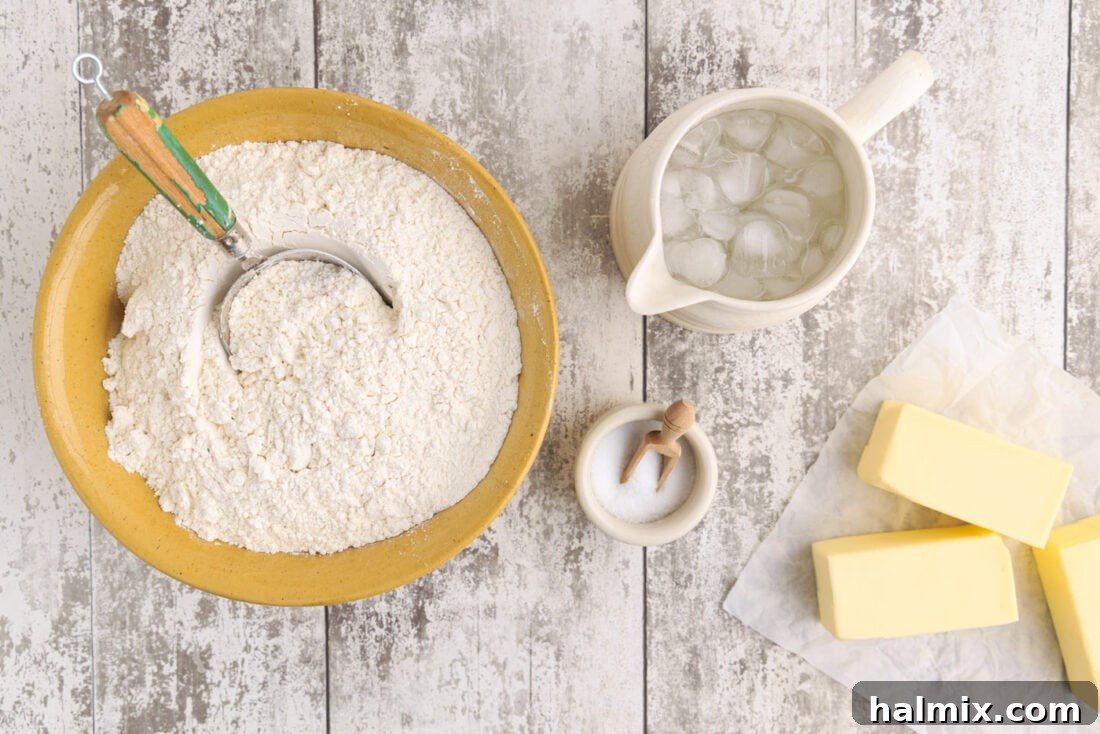
Crafting a superior pie crust begins with a handful of quality ingredients. This recipe requires only four staples, each playing a crucial role in achieving the perfect texture and flavor. The precise measurements and careful preparation of these ingredients are key to unlocking the full potential of your homemade crust. You’ll find all specific quantities and detailed instructions in the printable recipe card at the conclusion of this guide.
Ingredient Deep Dive: Tips for Success
Butter: The Heart of Flakiness
BUTTER is perhaps the most critical component for a flaky pie crust. The colder your butter, the better! I always recommend storing your unsalted butter in the freezer so it’s ready for immediate use. When preparing your dough, cut the frozen butter into small cubes. If your butter starts to soften at any point during preparation, don’t hesitate to pop the pieces back into the freezer for 10-15 minutes to re-chill them. The reason for keeping butter cold and in distinct pieces is scientific: these cold chunks of butter, when subjected to the high heat of the oven, will melt and release steam. This steam creates tiny air pockets within the dough, which are essential for those desirable tender, flaky layers. Using unsalted butter also gives you more control over the overall saltiness of your crust.
Flour: Precision is Key
FLOUR provides the structure for your pie crust, and measuring it correctly is paramount. The biggest mistake many bakers make is scooping their measuring cup directly into the flour bag, which compacts the flour and results in using too much. An excess of flour throws off the delicate flour-to-fat ratio, leading to a tough, dry crust. Instead, gently aerate your all-purpose flour by stirring it with a spoon in its container. Then, use the spoon to lightly scoop the flour into your measuring cup until it overflows. Finally, level it off precisely with the flat edge of a knife. Remember, the goal is for the flour to be light and fluffy, not packed down.
Ice Water: Your Chilling Ally
ICE COLD WATER is the binding agent that brings your pie dough together without activating too much gluten development, which can lead to toughness. It’s crucial that the water is truly ice cold. Prepare a large cup of ice water several minutes before you begin mixing your dough, allowing it ample time to chill. You’ll add the water gradually, just enough for the dough to come together. The exact amount can vary based on factors like humidity and the specific flour used, so it’s always best to add it a tablespoon at a time until the mixture forms clumps rather than a cohesive ball in the food processor. This careful hydration prevents a gummy crust and keeps your butter cold.
Salt: A Flavor Essential
SALT might seem like a minor addition, but it’s vital for balancing and enhancing the rich, buttery flavor of your pie crust. A small amount of salt prevents the crust from tasting bland and helps to bring out the sweetness or savory notes of your pie filling. Ensure it’s evenly distributed with the flour for consistent flavor throughout.
How to Craft Your Perfect Pie Crust: Step-by-Step Instructions
These step-by-step photos and detailed instructions are provided to help you visualize each stage of the recipe. For a concise, printable version with all measurements, jump directly to the recipe card at the bottom of this post.
Method 1: Using a Food Processor for Speed and Efficiency
A food processor is an excellent tool for making pie crust quickly and efficiently, minimizing the heat transfer from your hands to the butter. It helps achieve a consistent crumb texture with cold butter pieces.
- Combine Dry Ingredients: In the bowl of your food processor, add the properly measured all-purpose flour and salt. Pulse a few times to ensure they are well combined.
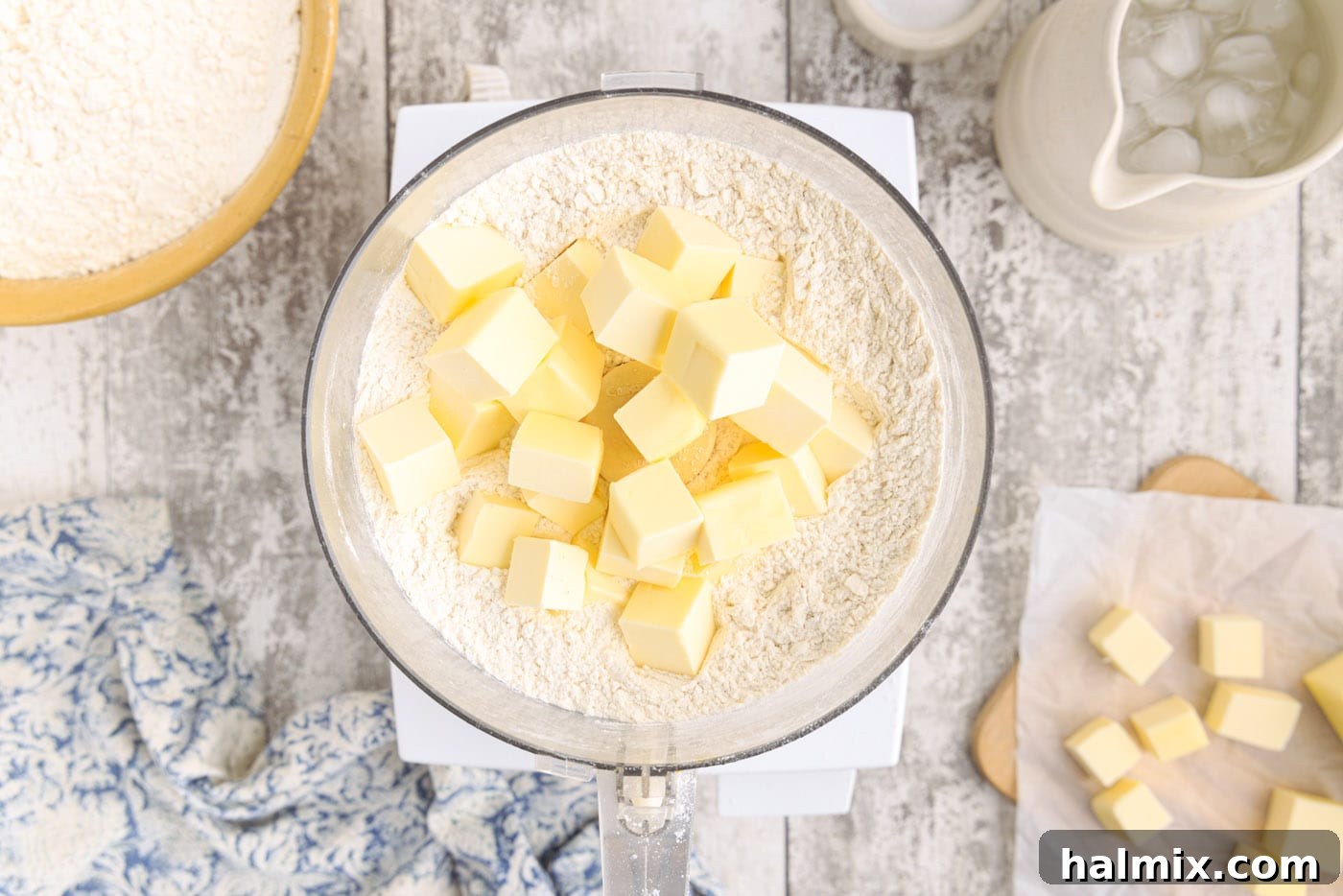
- Incorporate Cold Butter: Add the chilled, cubed unsalted butter to the flour mixture. Pulse in short bursts, about 10-15 times, until the mixture resembles coarse crumbs with visible pea-sized bits of butter distributed throughout. Avoid over-processing; some larger butter pieces are desirable for flakiness.

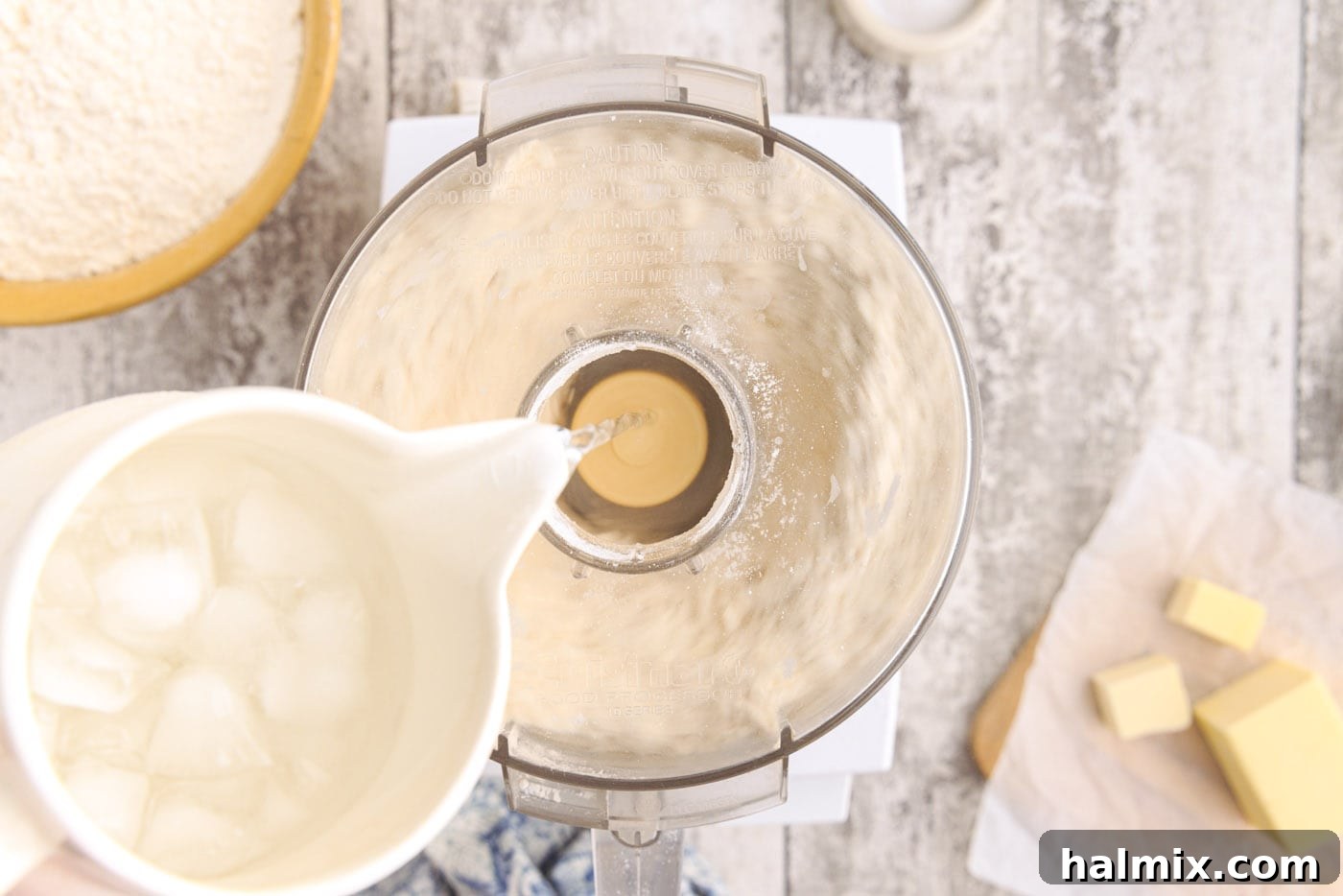
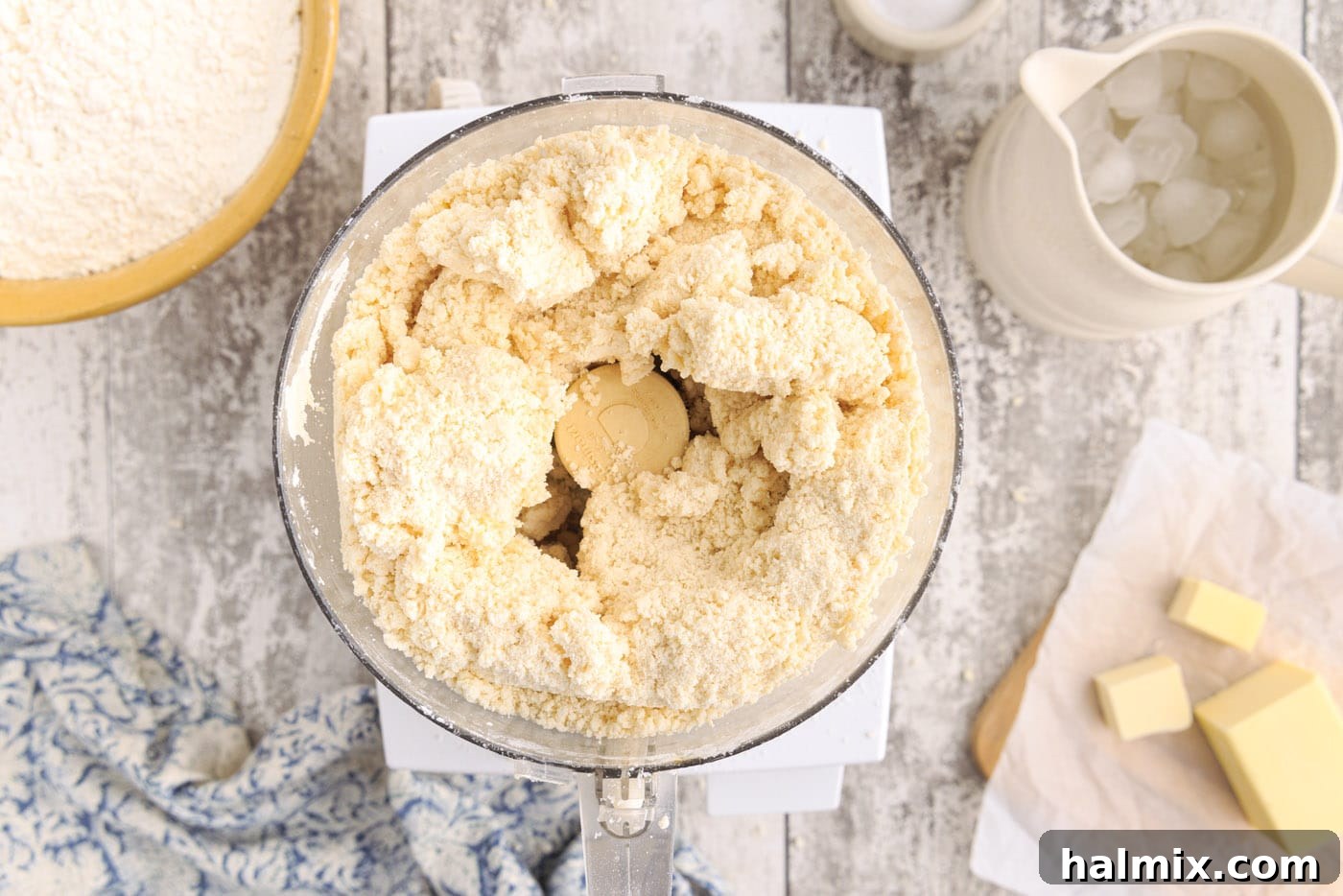
- Add Ice Water: With the food processor running, gradually drizzle the ice water through the feed tube on the top lid. Add water just until the mixture begins to clump together and pull away from the sides of the bowl. Be cautious not to add too much water; the dough should be just moist enough to hold together, not sticky.
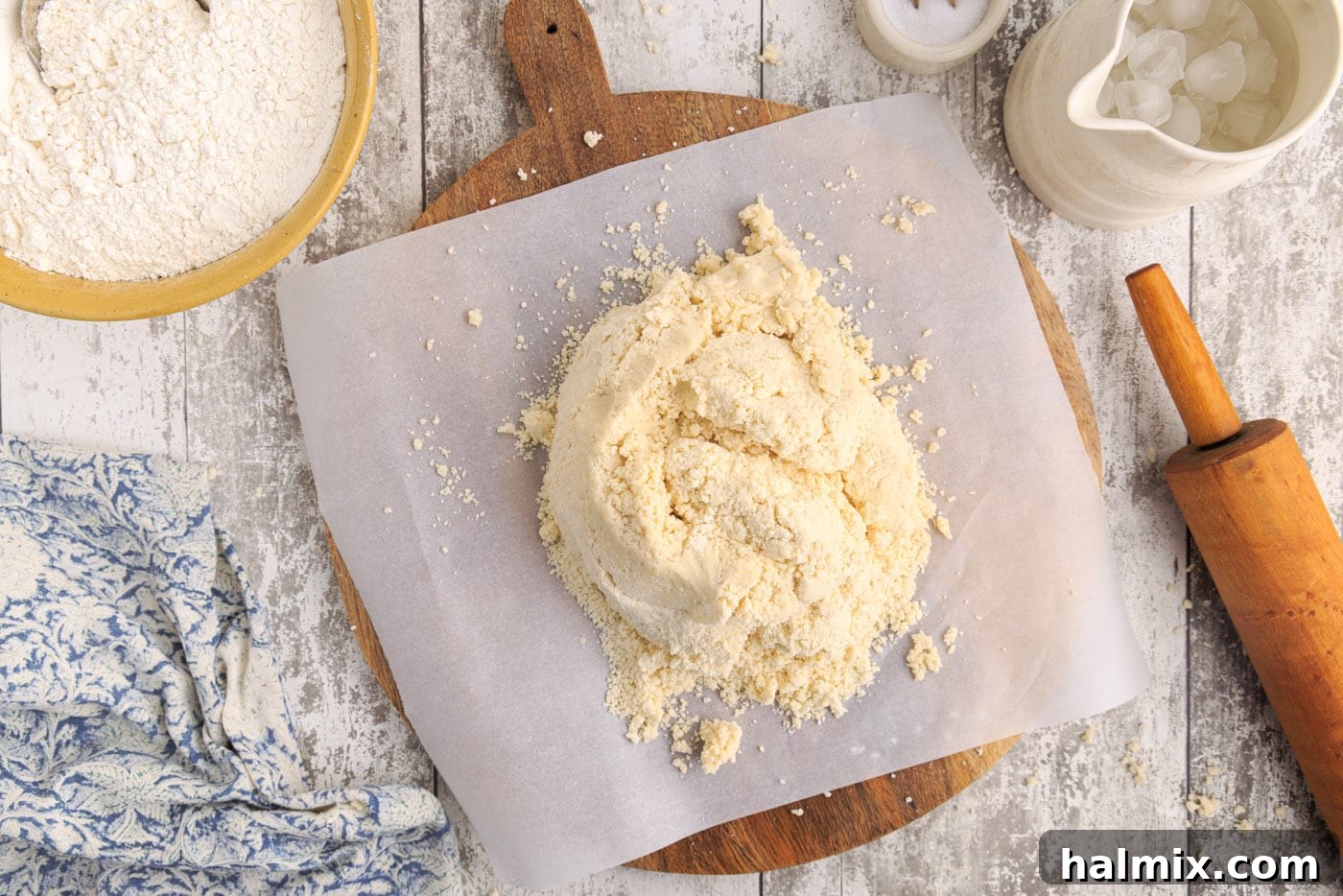
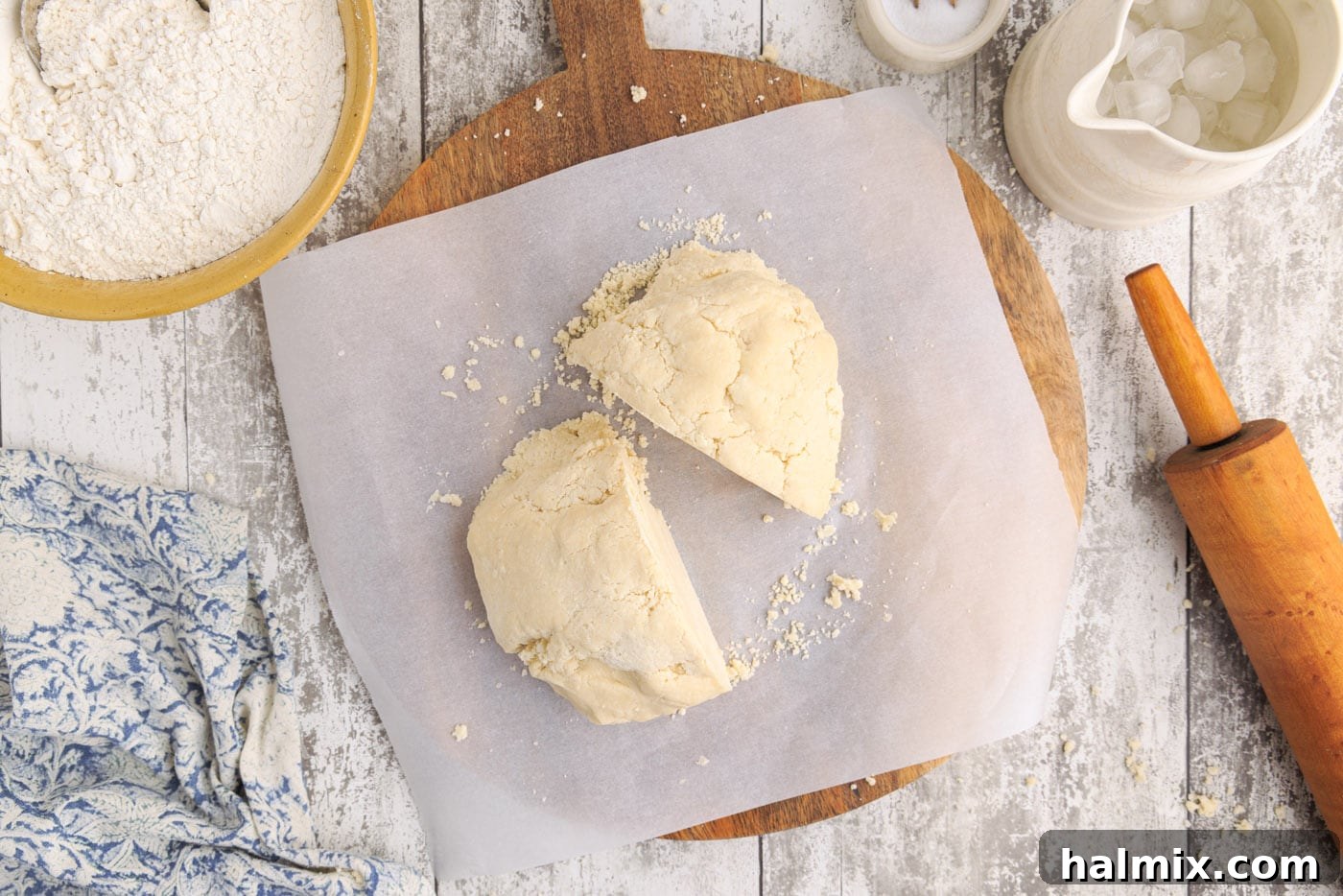
- Transfer and Form Dough: Carefully transfer the dough mixture from the food processor onto a lightly floured surface. Using a sheet of parchment paper or plastic wrap beneath your dough can make handling easier and minimize cleanup.
- Gently Form Discs: Use your hands to gently press the dough together, forming it into a cohesive ball. Avoid kneading or overworking the dough, as this can develop gluten and lead to a tough crust. Once formed, cut the ball in half to create two separate discs, each suitable for a single pastry crust.
EXPERT TIP: Minimal handling is crucial! The warmth from your hands can melt the vital cold butter chunks, which are responsible for flakiness. Work quickly and gently to maintain a chilled dough and ensure a tender final crust.
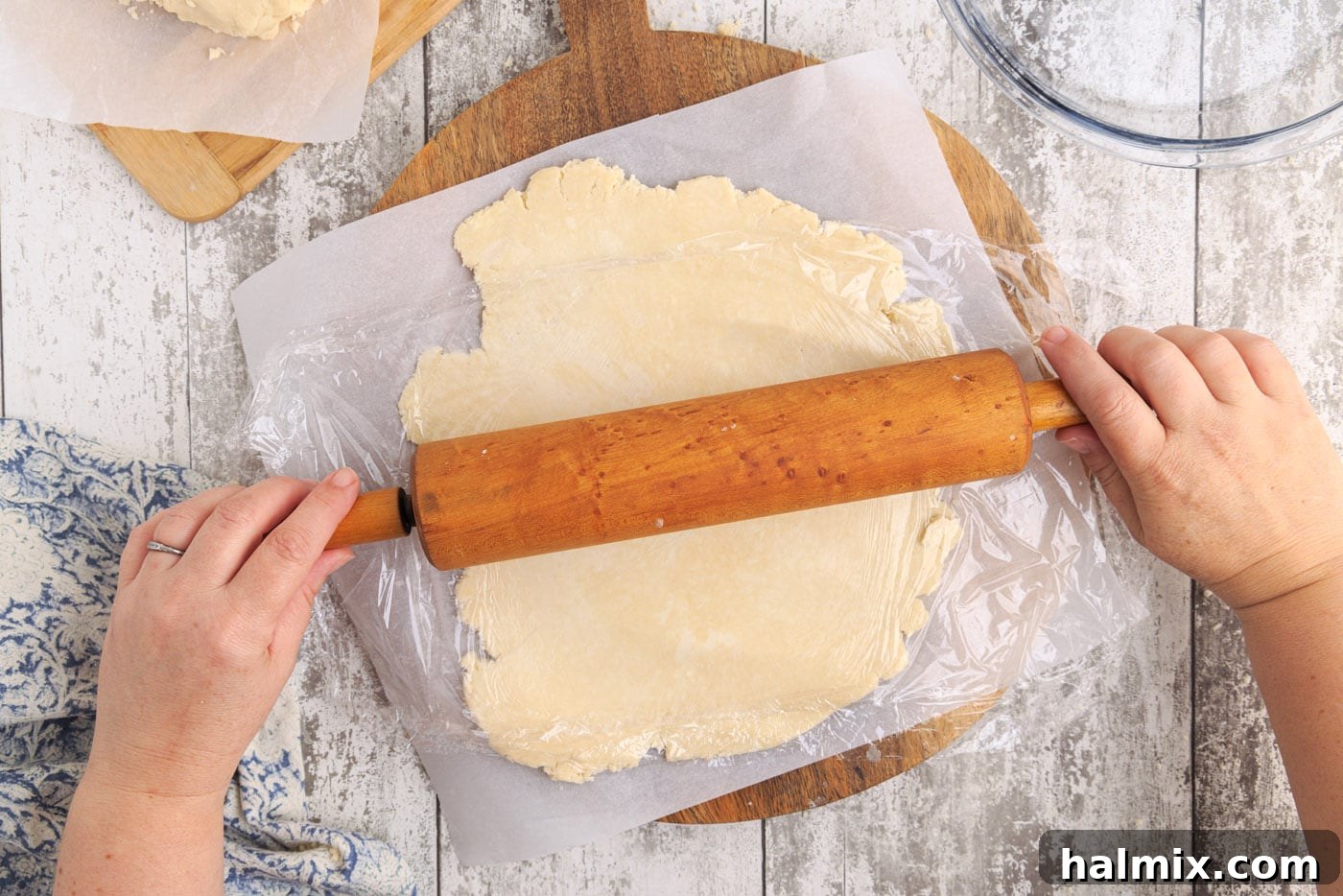
- Roll Out the Dough: Place one half of the dough between two sheets of parchment paper or plastic wrap. Using a rolling pin, roll the dough out evenly from the center, pushing outwards, until it forms a round sheet approximately 1⁄8” thick. This method prevents sticking and ensures an even thickness.
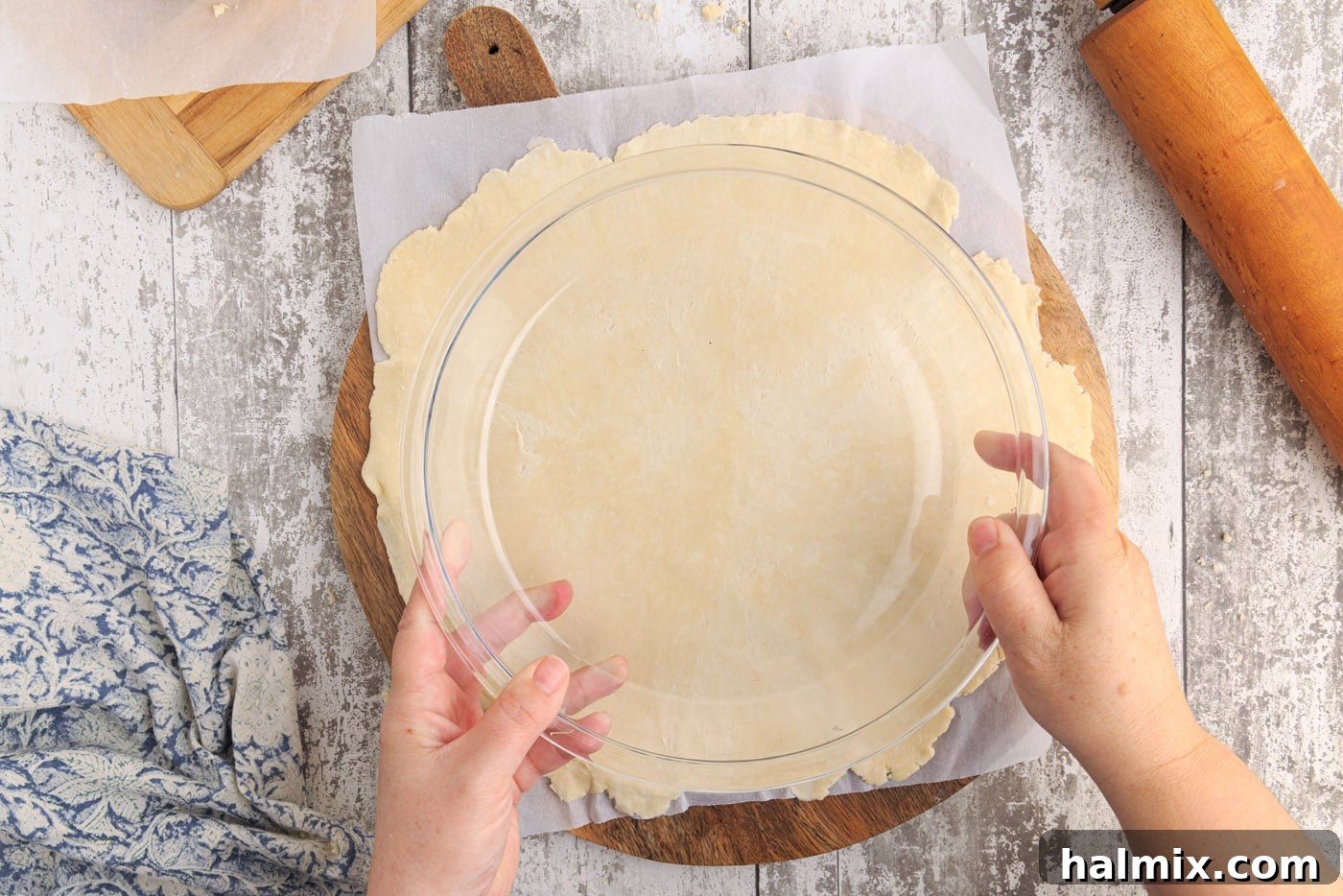
- Check for Size: Carefully lift your pie plate and invert it over the rolled-out crust to ensure the dough is large enough. It should extend about 1 inch beyond the diameter of the pie plate on all sides to allow for crimping and shrinking.
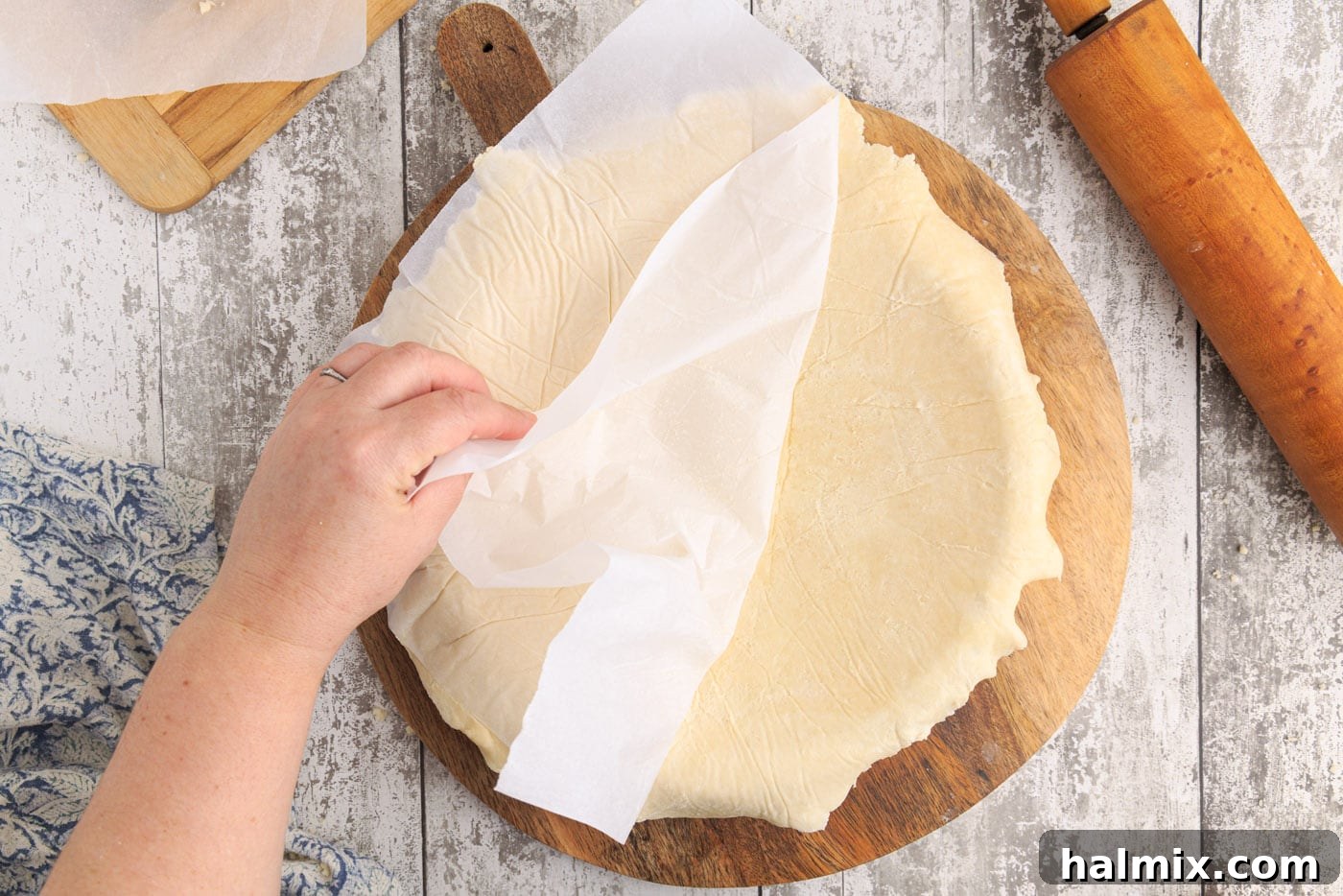
- Transfer to Pie Plate: Gently peel off the top layer of parchment or plastic wrap. Carefully invert the dough into your pie plate, then peel off the remaining parchment. Lift the edges of the crust around the pie plate, allowing it to gently settle into the bottom and up the sides without stretching. Stretching the dough can cause it to shrink during baking.
- Prepare for Filling: At this point, your pie crust is ready for its intended purpose. Proceed with the instructions for your specific pie recipe, whether it involves filling and topping with a second crust or blind baking.
Method 2: Crafting Pie Crust by Hand for a Traditional Touch
For those who prefer a hands-on approach or don’t own a food processor, making pie crust by hand is equally effective, though it requires a bit more care to keep the ingredients cold. This method often results in a rustic, beautiful texture.
- Whisk Dry Ingredients: In a large mixing bowl, whisk together the flour and salt until well combined and aerated.
- Cut in Butter: Add the cold, cubed butter pieces to the flour mixture. Using two forks, your fingertips, or a pastry blender, “cut in” the butter. Work quickly until the butter is broken down into pieces roughly the size of small peas. The goal is to coat the butter with flour while keeping it cold and distinct.
- Add Ice Water: Sprinkle 1-2 tablespoons of ice water over the dough mixture at a time. Using a fork or your hands, gently mix until the dough just begins to come together. Avoid over-mixing; you want a shaggy dough that barely holds together when squeezed. If it feels too dry, add another tablespoon of water, but err on the side of less water to prevent a tough crust.
- Form and Chill: Transfer the dough to a lightly floured surface, gently press it into a ball, divide it in half, and flatten each half into a disc. Wrap tightly in plastic wrap and chill for at least 30 minutes before rolling out, following steps 6-9 from the food processor method.
Blind Baking: The Secret to a Crisp Crust
Blind baking, or pre-baking, a pie crust is an essential step for many pie recipes, especially those with wet fillings (like quiches or custard pies) or no-bake fillings that simply require a pre-cooked shell. This technique prevents the crust from becoming soggy, ensures it’s fully cooked, and maintains its shape during baking. It creates a beautiful, golden base for your finished pie.
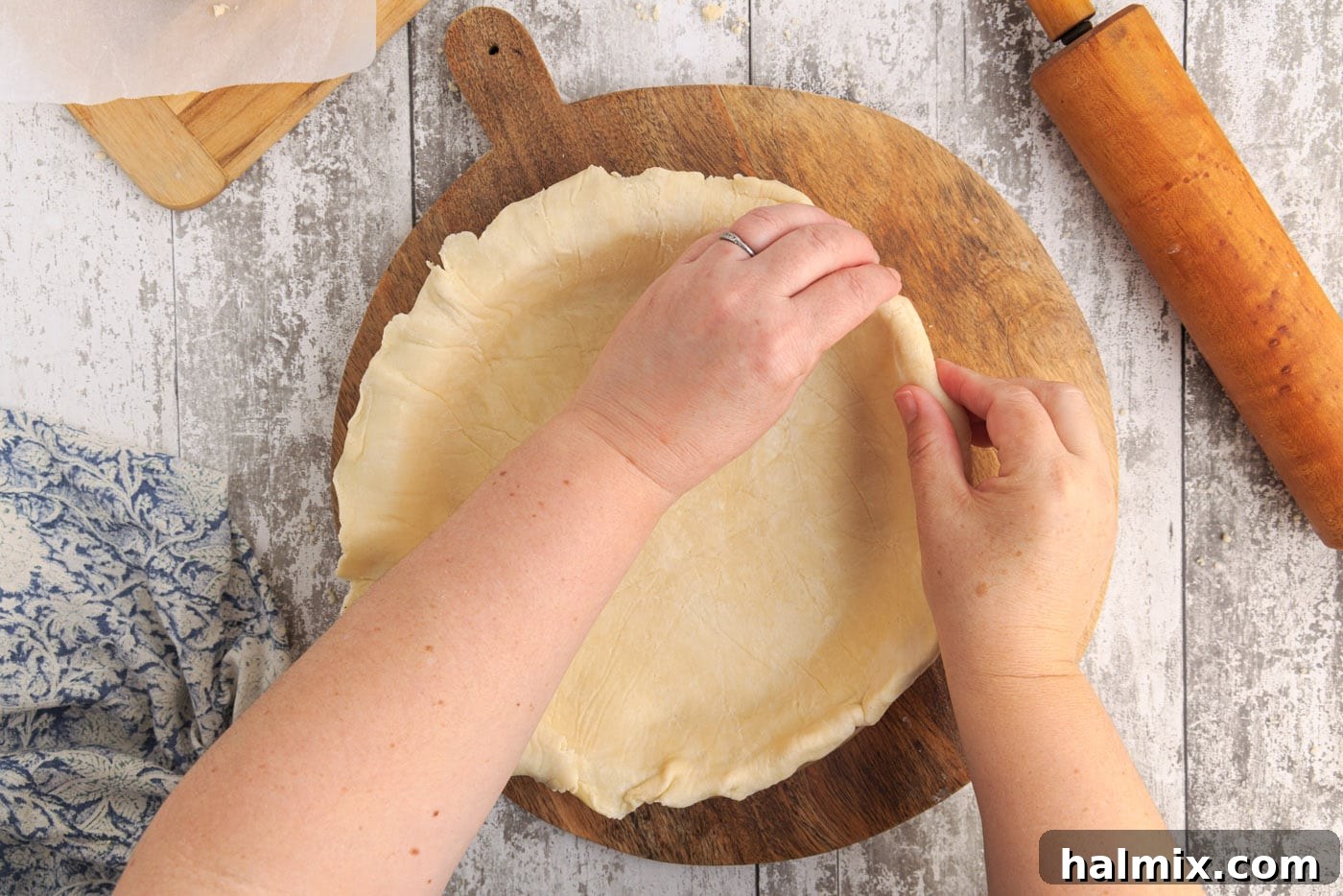
- Prepare the Edge: Once your rolled-out crust is nestled in the pie plate, trim any excessive overhang, leaving about a 1-inch border. Fold this excess pie crust under itself, going all the way around the edge of the plate, to create a thick, sturdy rim.
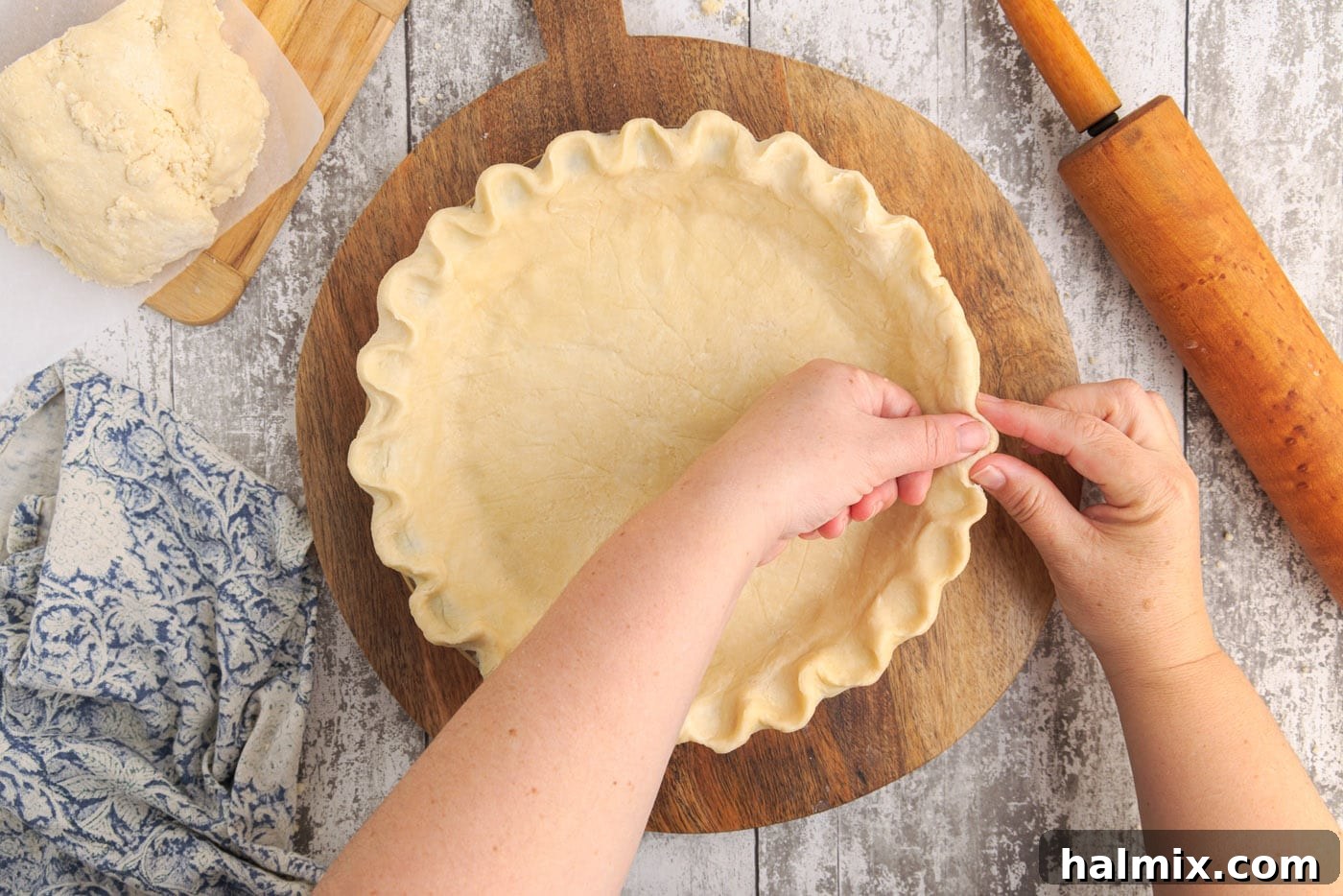
- Crimp the Edge: For a decorative finish and to help prevent shrinkage, use a finger or thumb of one hand to gently press the folded edge of the crust from the inside of the pie plate. Simultaneously, press the opposite direction with the thumb and forefinger of your other hand, creating a fluted or crimped edge.
- Continue Crimping: Repeat this crimping process all the way around the pie plate, creating a consistent and attractive edge. This step is both aesthetic and functional, providing structure.
- Chill the Crust: Place the prepared pie crust (in its plate) into the freezer for approximately 30 minutes. This chilling period is crucial as it helps firm up the butter and gluten, preventing the crust from shrinking excessively during baking.
- Preheat Oven: While the crust chills, preheat your oven to 375°F (190°C).
- Prick the Crust: Before baking, use a fork to prick the bottom and sides of the chilled crust all over. These small holes allow steam to escape during baking, preventing the crust from puffing up uncontrollably.
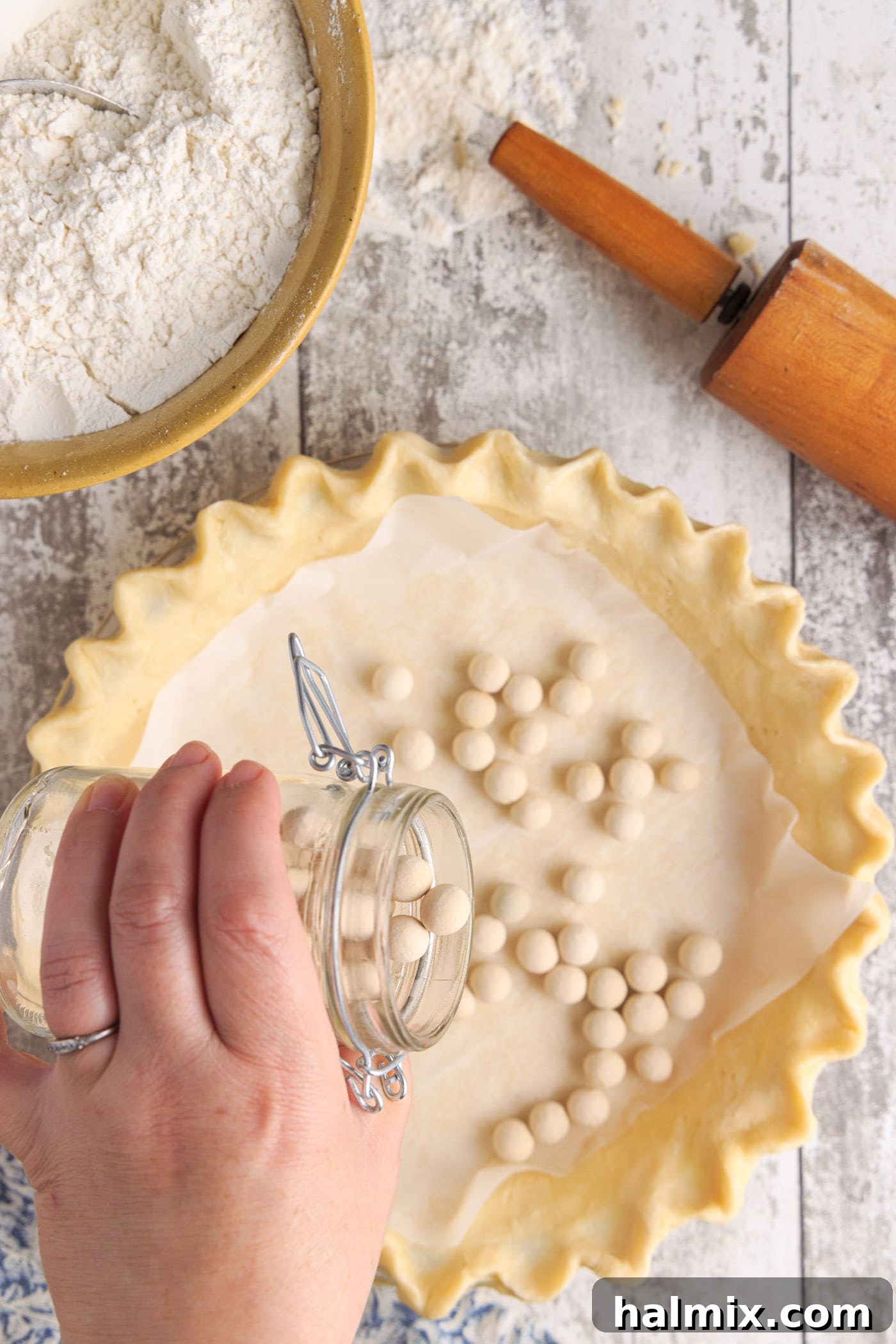
- Add Pie Weights: Line the bottom of the pricked crust with a sheet of aluminum foil or parchment paper. Fill the lined crust with ceramic pie weights, dried beans, or uncooked rice. These weights help keep the crust from bubbling up and shrinking dramatically.
- First Bake: Bake the crust with the weights for 15 minutes, or until the sides and edge of the crust appear dried and set.
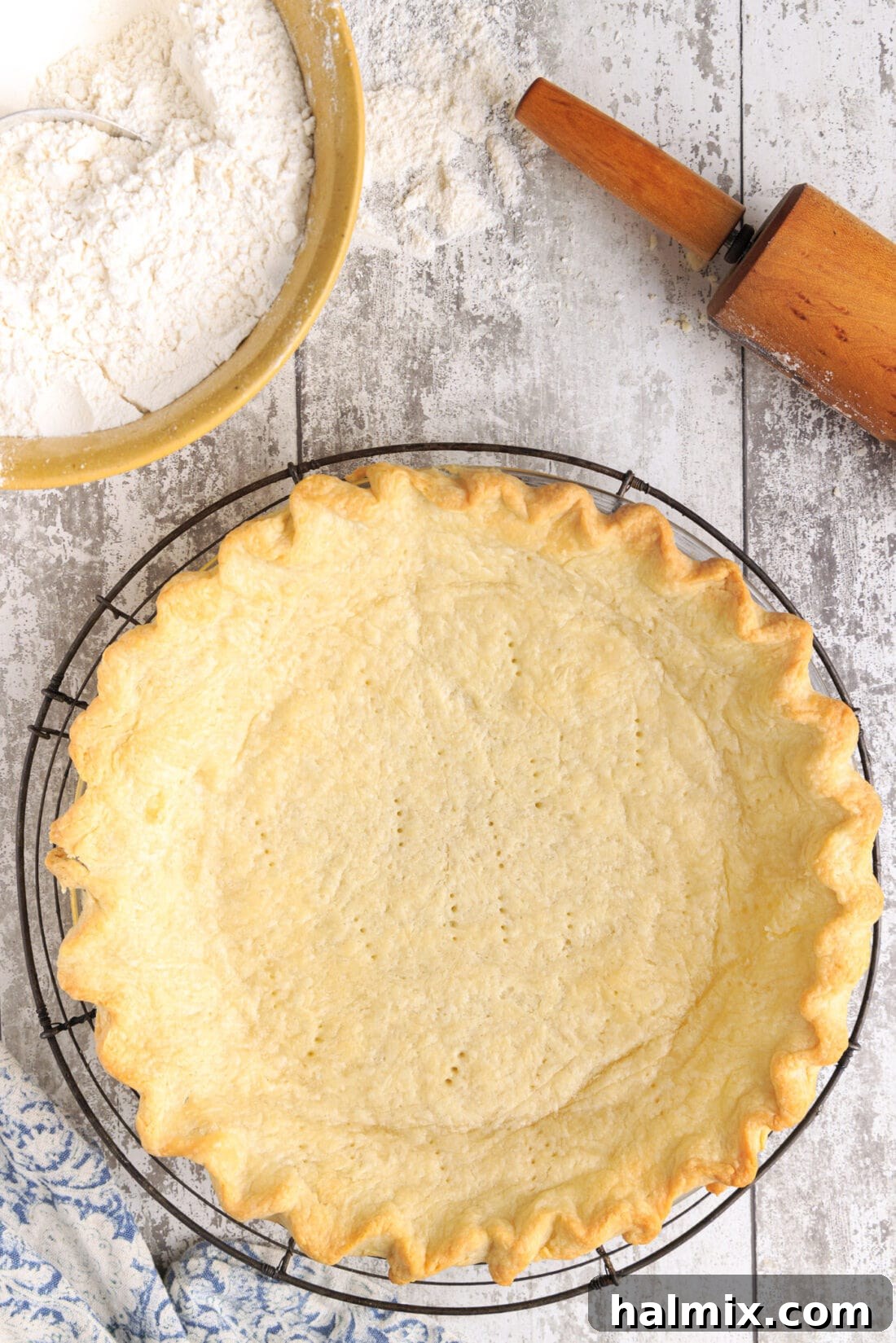
- Second Bake for Golden Perfection: Carefully remove the pie weights and the parchment/foil liner. Return the crust to the oven and continue baking for another 10-15 minutes, or until the entire crust is beautifully golden brown and fully cooked. Let it cool completely before filling.
Frequently Asked Questions & Expert Tips for Pie Crust Perfection
Can I freeze homemade pie crust?
Absolutely! Homemade pie crust freezes beautifully, making it an excellent component for meal prep. To freeze the raw dough, simply form it into a disc, wrap it tightly in plastic wrap, and then place it in a sealed freezer-safe zip-top bag. It can be stored in the freezer for up to 3 months. When you’re ready to use it, transfer it to the refrigerator to thaw overnight before rolling. You can also pre-bake the crust and freeze it in the pie plate, wrapped in plastic wrap and then a zip-top bag, for 3-4 weeks. This is a fantastic way to get ahead on your holiday baking!
What if my dough is too crumbly or too wet?
If your dough feels too crumbly and isn’t coming together, add ice water one teaspoon at a time, gently mixing, until it just holds. Be patient and resist the urge to add too much at once. If your dough is too wet and sticky, it means you’ve added too much liquid. You can try adding a tablespoon of flour at a time, mixing gently, until the stickiness subsides. However, too much flour can make the crust tough, so it’s best to be conservative with water from the start.
Why is my pie crust tough?
A tough pie crust is usually a sign of two things: overworking the dough or using warm ingredients. Overworking develops the gluten in the flour, making the crust elastic and chewy rather than tender and flaky. Always handle the dough as little and as gently as possible. Warm ingredients, especially butter, cause the butter to melt and absorb into the flour, hindering the creation of those flaky layers. Always use ice-cold butter and ice water, and work in a cool environment if possible.
How can I achieve a perfectly golden brown crust?
For an extra golden, professional-looking crust, consider an egg wash (one egg yolk beaten with a tablespoon of water or milk) applied lightly before baking. This also adds a slight sheen. For a slightly less intense color, a simple milk wash can work. Ensure your oven temperature is accurate; an inexpensive oven thermometer can be a baker’s best friend.
Creative Ways to Use Your Versatile Pie Crust
A homemade pie crust is incredibly versatile, extending its utility far beyond traditional pies. Unleash your creativity and explore the countless possibilities:
- Hand Pies: Small, portable versions of your favorite fruit pies, perfect for individual servings.
- Homemade Pop Tarts: A nostalgic treat, elevated with flaky pastry and delicious fillings, such as these homemade pop tarts.
- Quiches and Savory Tarts: The perfect base for rich, egg-based fillings and hearty vegetables.
- Galettes: Rustic, free-form tarts, ideal for showcasing seasonal fruits or savory ingredients like tomatoes and cheese.
- Cookies and Pastries: Roll out scraps and cut into shapes for simple, buttery cookies or use as a base for more elaborate pastries.
- Pot Pies: A savory, comforting meal topped with a golden, flaky crust.
Explore More Delicious Pie Recipes
Now that you’ve mastered the art of the perfect pie crust, it’s time to put your skills to delicious use! Explore our collection of beloved pie recipes:
- Classic Cherry Pie
- Sweet Blueberry Pie
- Fresh Strawberry Pie
- Decadent French Silk Pie
- Creamy Banana Cream Pie
- Perfect Pumpkin Pie for Holidays
I love sharing my passion for baking and cooking with you! To make sure you never miss a new recipe, consider subscribing to my convenient newsletter. Simply subscribe here and get free daily recipes delivered straight to your inbox!
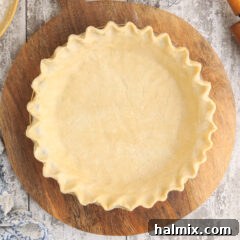
How To Make The Best Homemade Pie Crust
IMPORTANT – Don’t miss the Frequently Asked Questions and Expert Tips sections within the blog post for additional helpful information!
Print Recipe
Pin Recipe
Rate This Recipe
Ingredients
- 2 ¾ cup all-purpose flour
- 1 tsp salt
- 18 Tbsp unsalted butter 1 cup + 2 Tbsp, cut into cubes (frozen or chilled in freezer for 15 minutes)
- 6 Tbsp ice cold water 6-8 Tbsp, or as needed
Equipment You’ll Need
-
Food processor (Alternatively, a large bowl and pastry blender or two forks)
Before You Begin: Important Tips
- For the ultimate flaky, buttery crust, ensure all ingredients, especially butter and water, are as cold as possible. Prepare ice water several minutes beforehand.
- Keep butter frozen or well-chilled. If it softens during preparation, re-chill cubed pieces in the freezer for 15 minutes.
- Handle the dough minimally to prevent warmth from your hands from melting the butter and to avoid developing gluten, which can lead to a tough crust.
- To make the crust by hand: Whisk flour and salt. Cut in cold butter using a pastry blender or two forks until pea-sized crumbs form. Gradually sprinkle 1-2 tablespoons of ice water at a time, mixing gently until the dough just comes together.
Instructions for Food Processor Method
-
Place flour and salt in a food processor and pulse to combine evenly.
-
Add chilled, cubed butter to the flour mixture and pulse in short bursts until the mixture resembles coarse crumbs with pea-sized bits of butter distributed throughout.
-
With the food processor running, slowly drizzle ice water through the top lid. Add water just until the mixture pulls together into clumps (it shouldn’t form a perfect ball).
-
Transfer the dough onto a lightly floured surface (using parchment paper or plastic wrap is recommended for easy handling).
-
Use your hands to gently press the dough together to form a cohesive ball. Cut the ball in half to create two discs for single pastry crusts. Avoid overworking the dough.
-
Place one dough disc between two sheets of parchment or plastic wrap. Roll it out from the center outwards to form a round sheet about 1⁄8” thick.
-
Check the size by placing your pie plate over the rolled crust; it should be about 1” larger in diameter than the pie plate.
-
Carefully transfer the crust into the pie plate. Lift around the edges to help it settle down into the plate without stretching.
-
Proceed with your specific pie recipe instructions for filling and/or topping with the second pie crust.
Blind Baking a Single Pie Crust
-
Fold the excess pie crust under itself around the entire edge to form a thick, sturdy rim.
-
Crimp the edge by pressing with a finger/thumb from the inside and simultaneously pressing with the thumb and forefinger of your other hand from the outside.
-
Continue crimping the crust consistently all the way around the pie plate.
-
Chill the prepared crust in the freezer for approximately 30 minutes before blind baking.
-
Preheat your oven to 375°F (190°C).
-
Prick the bottom and sides of the chilled crust all over with a fork to allow steam to escape and minimize puffing.
-
Place a sheet of aluminum foil or parchment paper into the bottom of the crust and fill with pie weights, dried beans, or rice.
-
Bake for 15 minutes, until the sides and edge of the crust begin to look dried and set.
-
Carefully remove the pie weights and parchment/foil. Continue baking the crust for another 10-15 minutes, or until it is beautifully golden brown.
Expert Tips & Storage
- To freeze raw pie dough, wrap the dough ball tightly in plastic wrap, then place it in a sealed zip-top bag. Store in the freezer for up to 3 months. Thaw in the refrigerator overnight before rolling.
- You can also pre-bake the crust and store it in the freezer, wrapped in plastic wrap and then a zip-top bag, for 3-4 weeks. It’s perfectly fine to leave the pre-baked crust in its pie plate for freezing.
- Always work in a cool environment if possible, to keep your butter from melting prematurely.
- Don’t be afraid to put your butter (or even your flour) back in the fridge or freezer if it starts to get too warm while you’re working.
Nutrition Information
The recipes on this blog are tested with a conventional gas oven and gas stovetop. It’s important to note that some ovens, especially as they age, can cook and bake inconsistently. Using an inexpensive oven thermometer can assure you that your oven is truly heating to the proper temperature. If you use a toaster oven or countertop oven, please keep in mind that they may not distribute heat the same as a conventional full sized oven and you may need to adjust your cooking/baking times. In the case of recipes made with a pressure cooker, air fryer, slow cooker, or other appliance, a link to the appliances we use is listed within each respective recipe. For baking recipes where measurements are given by weight, please note that results may not be the same if cups are used instead, and we can’t guarantee success with that method.
This post originally appeared on this blog on November 18, 2021, and has been updated for clarity and expanded content.