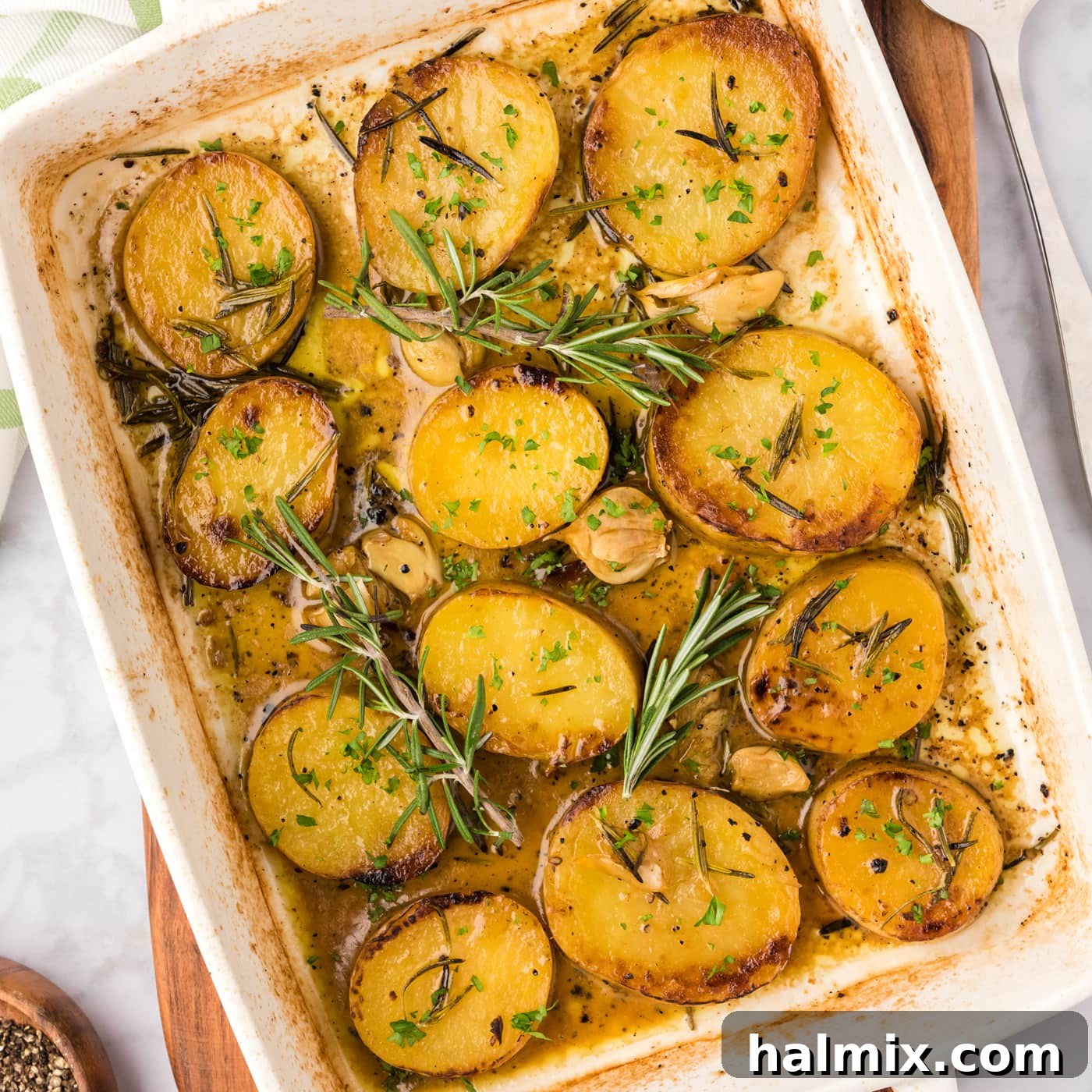
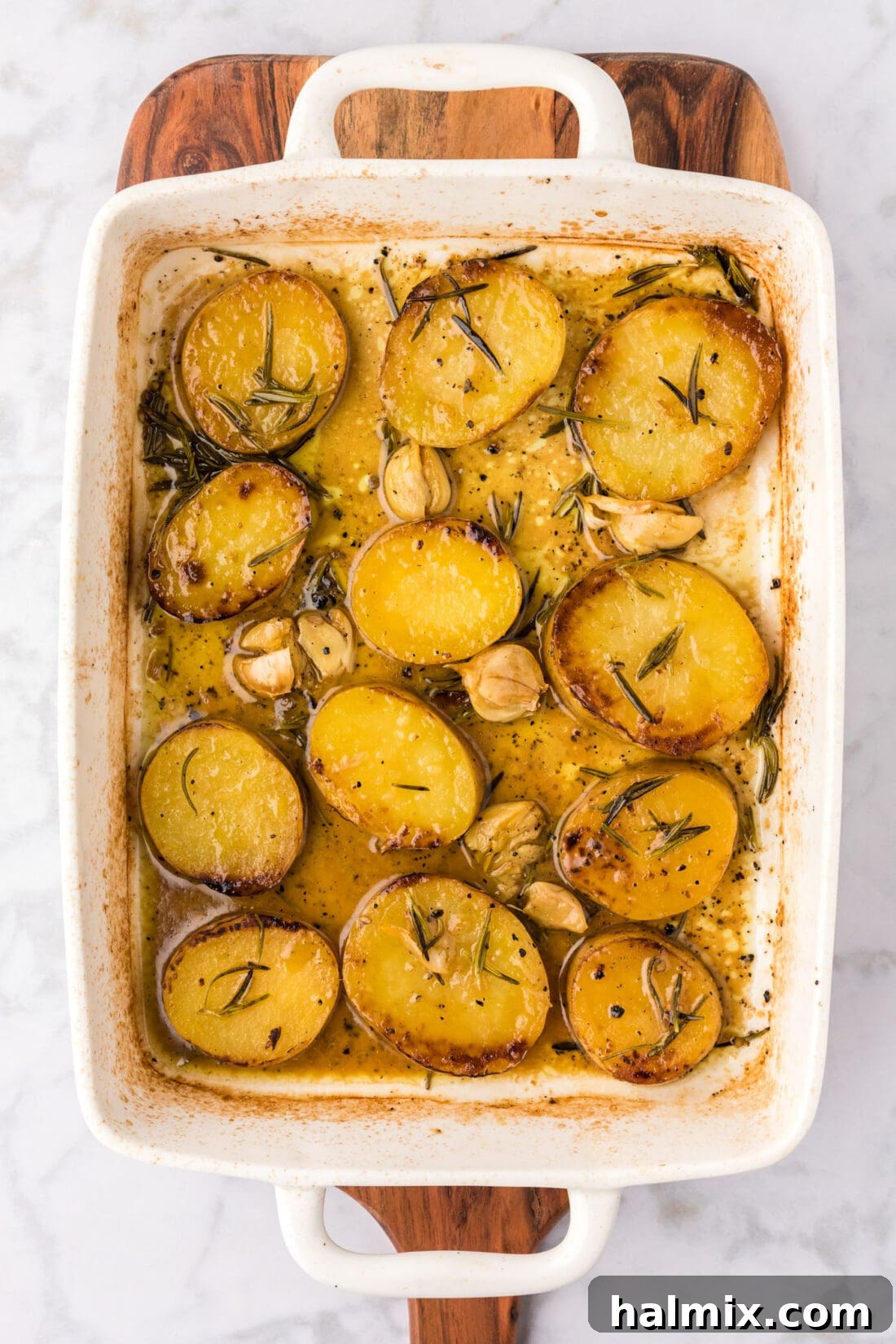
Prepare to elevate your side dish game with this incredible Melting Potatoes recipe. Imagine perfectly sliced potatoes, lovingly coated in a rich symphony of herbs, savory butter, aromatic garlic, and hearty chicken broth. The result? A culinary masterpiece where each bite delivers an unbelievably creamy and tender interior, flawlessly contrasted by a crisp, golden-brown crust. These aren’t just roasted potatoes; they are a transformative experience that lives up to their name, truly melting in your mouth with every delectable forkful.
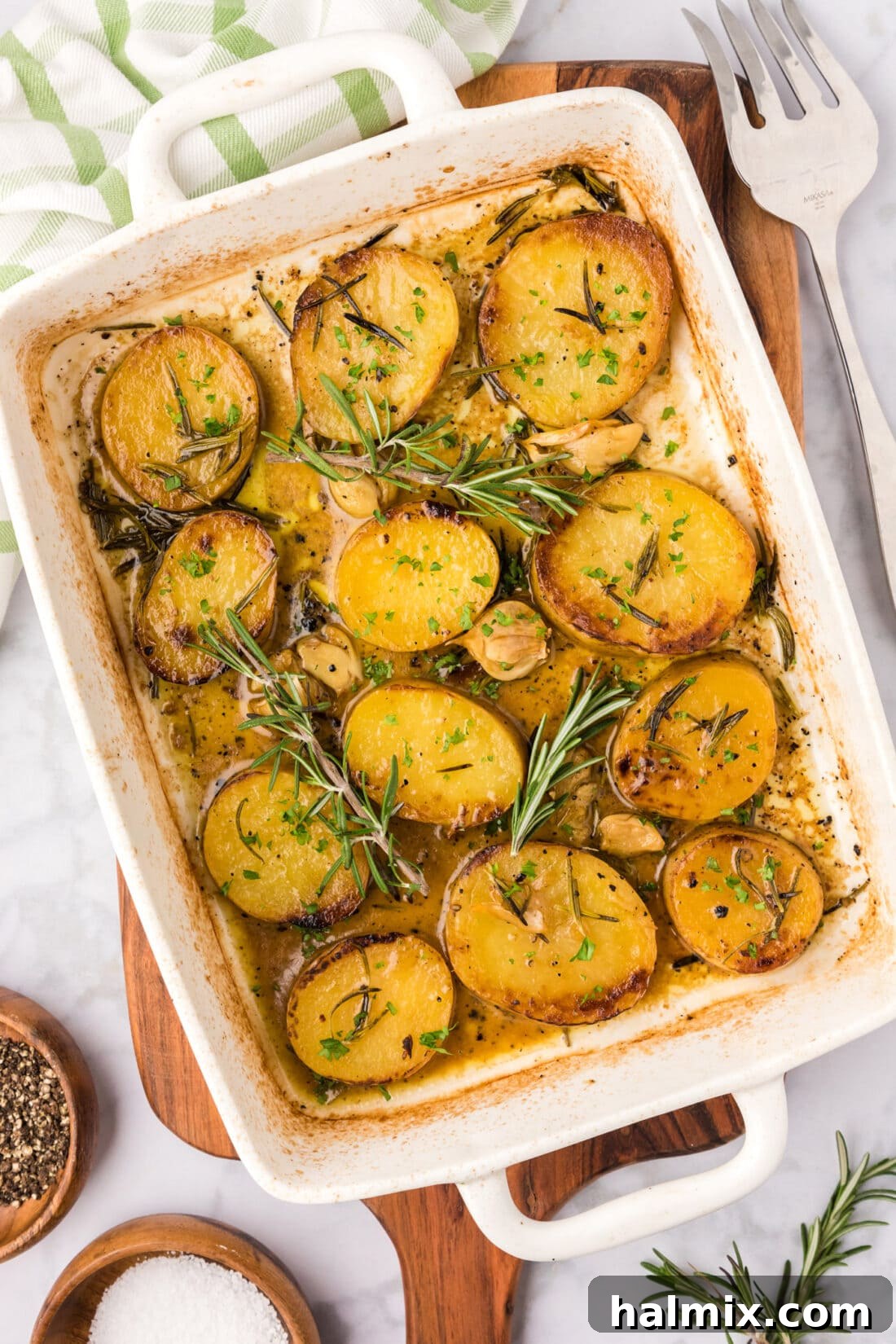
The Magic Behind Melting Potatoes: Why This Recipe Works
The allure of Melting Potatoes lies in a clever two-step cooking process that ensures their signature texture and intense flavor. This recipe masterfully combines searing and braising to achieve that coveted “melt-in-your-mouth” quality. Initially, thick potato rounds are quickly seared in a hot skillet. This crucial step develops a beautiful, crispy, golden-brown exterior through the Maillard reaction, locking in flavor and providing a delightful textural contrast. The brief but intense heat creates the foundation for that irresistible crust.
Once seared, these potatoes are gently transferred to a baking dish where their transformation truly begins. They are immersed in a fragrant bath of chicken broth, whole garlic cloves, fresh rosemary sprigs, and generous pats of unsalted butter. This is where the magic truly unravels. As the potatoes roast in the oven, they slowly absorb the rich chicken broth and surrounding ingredients. This infusion process not only deeply flavors the potatoes but also breaks down their starches, rendering them incredibly creamy, tender, and slightly caramelized on the inside. The combination of initial crisping and subsequent slow braising is precisely why these are called “Melting Potatoes” and not just simple roasted potatoes – they achieve a depth of texture and taste that is truly unique and unforgettable.
Essential Ingredients for Flawless Melting Potatoes
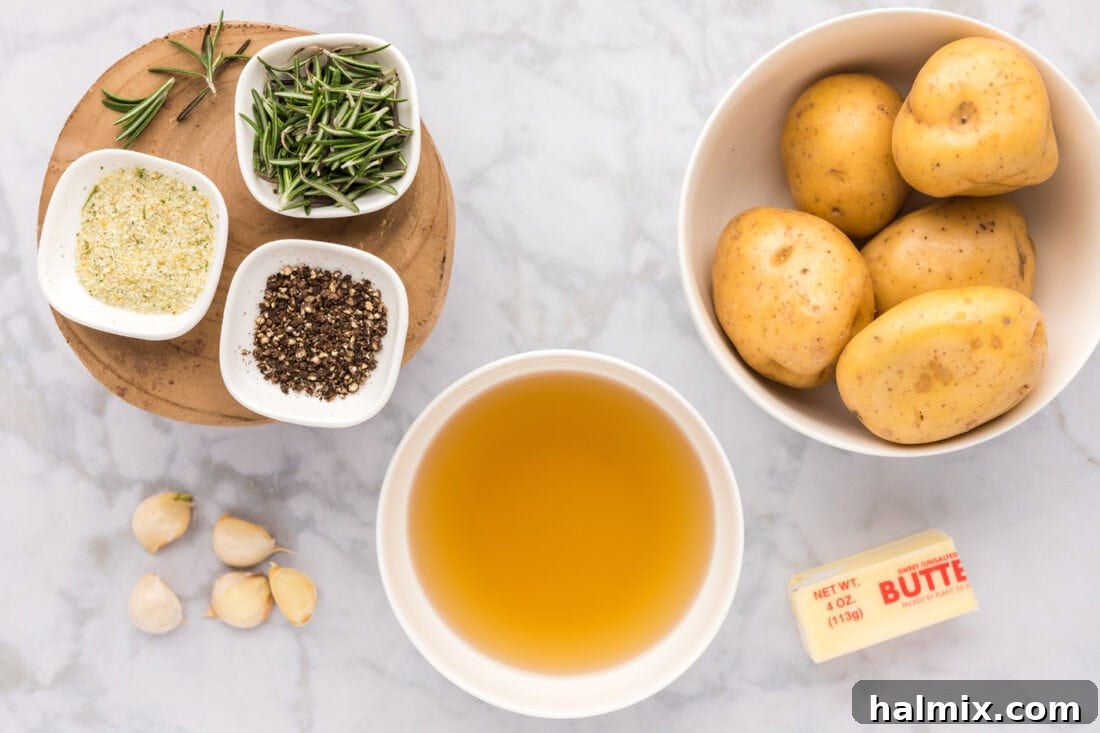
Crafting these delectable melting potatoes requires a handful of fresh, quality ingredients. Each component plays a vital role in achieving the dish’s signature creamy texture and robust flavor profile. Below is a comprehensive list to ensure you have everything you need to create this amazing side dish. For exact measurements and detailed instructions, refer to the printable recipe card at the bottom of this page.
Ingredient Insights & Smart Substitutions
Understanding your ingredients and knowing when to make substitutions can greatly enhance your cooking experience and adaptability in the kitchen.
POTATOES: For this recipe, the choice of potato is key to achieving that perfect melting texture. Yukon Gold potatoes are highly recommended due to their medium starch content, which allows them to become wonderfully creamy while still holding their shape. However, if Yukon Golds aren’t available, red potatoes are an excellent alternative, offering a slightly waxier texture but still capable of absorbing the rich flavors. Russet potatoes, while starchier, can also work; just be mindful that they might break down a little more, leading to an even softer interior, which some people prefer. The key is to slice them consistently to ensure even cooking.
BROTH: Chicken broth forms the savory liquid base that infuses the potatoes with flavor and moisture. Opt for a good quality, low-sodium chicken broth to control the seasoning. If you prefer a vegetarian option, vegetable broth can be seamlessly substituted without compromising the dish’s essence. For an even richer, deeper flavor, consider using beef broth, especially if serving with red meat.
HERBS: Fresh rosemary is a classic choice for its pungent, earthy, and slightly piney notes that beautifully complement potatoes and garlic. Its sturdy nature also holds up well during the roasting process. However, feel free to experiment with other fresh herbs to customize the flavor profile. Fresh thyme offers a more delicate, woody aroma, while sage can lend a slightly peppery and warm undertone. A blend of herbs like oregano or marjoram could also be delightful, adding a Mediterranean twist. Always use fresh herbs for the best results, as dried herbs won’t impart the same vibrant flavor or aroma.
BUTTER: Unsalted butter is preferred as it allows you to control the overall saltiness of the dish. It contributes to the golden crust during searing and adds richness and flavor during the baking phase. If only salted butter is on hand, simply adjust the amount of garlic salt used in the recipe.
GARLIC: Using whole, crushed garlic cloves is intentional. Crushing them slightly releases their essential oils and flavor without the risk of burning, which minced garlic might experience. This allows the garlic to slowly infuse the broth and potatoes with its sweet, savory essence, resulting in a milder and more integrated garlic flavor compared to finely chopped garlic.
SEASONING: Garlic salt and cracked black pepper are the primary seasonings. Layering the seasoning on both sides of the potato slices ensures every part is well-flavored. Feel free to add a pinch of onion powder or paprika for extra depth, or even a touch of red pepper flakes for a subtle kick.
Step-by-Step Guide: How to Make Melting Potatoes
These step-by-step photos and instructions are designed to help you visualize the process of making this irresistible recipe. For a convenient printable version, complete with all measurements and instructions, please jump to the recipe card at the bottom of this post.
- Begin by preheating your oven to 425°F (220°C). While the oven heats, thoroughly rinse your potatoes under cold water and pat them completely dry with a clean towel. This step is crucial for achieving a crispy exterior. Do not peel the potatoes; the skin adds texture and nutrients.
- Carefully trim the ends off each potato. These trimmed pieces can be saved for another dish, such as a soup or stew, or simply discarded.
- Slice the potatoes into thick, uniform rounds, approximately 3/4-inch thick. Consistency in thickness is important for even cooking.
- Melt 1 1/2 tablespoons of unsalted butter in a large, heavy-bottomed skillet over medium-high heat. Once melted, use a basting brush to evenly spread the butter across the entire bottom surface of the skillet, ensuring good coverage for searing.
- Carefully arrange the sliced potatoes in a single layer in the hot skillet. Work in batches if necessary to avoid overcrowding, which can steam the potatoes instead of searing them. You want as many potato slices as possible to make direct contact with the skillet bottom.
- Season the exposed side of the potatoes generously with garlic salt and freshly cracked black pepper.
- Allow the potatoes to cook undisturbed for 5-7 minutes. This initial searing time is vital for developing that beautiful, golden-brown crust. You’ll know they’re ready when they have a rich color.
- Using tongs, flip each potato slice over to expose the uncooked side. Season this newly exposed side with garlic salt and cracked black pepper to taste. You may not need to use all of your seasonings, depending on your preference.
- Pour the chicken broth into a 13×9 baking dish. Carefully transfer the browned potato slices from the skillet into the baking dish, arranging them neatly in the chicken broth.
- Prepare the garlic cloves: Place the flat side of a chef’s knife onto each whole garlic clove and give it a firm whack with the heel of your hand to slightly crush it. This helps release its flavor without mincing. Distribute these crushed garlic cloves among the potatoes in the broth.
- Slice the remaining unsalted butter into individual pats, ensuring you have one small pat for each potato slice. Place a butter pat directly on top of each potato slice in the baking dish.
- Garnish each butter-topped potato slice with a small bunch of fresh rosemary leaves, pressing them gently into the butter.
- Bake the potatoes in the preheated oven for 10-15 minutes. Then, carefully remove the dish, flip each potato slice over, and return to the oven to bake for an additional 10-15 minutes, or until fork-tender and beautifully golden on both sides.
Frequently Asked Questions & Expert Tips for Perfect Melting Potatoes
Leftover melting potatoes can be stored in an airtight container in the refrigerator for 4-5 days. To reheat, spread them on a baking sheet and warm them in a 350°F (175°C) oven until heated through. This method helps maintain their crispy exterior, preventing them from becoming soggy in the microwave.
While the choice is entirely yours and comes down to personal preference, we generally recommend leaving the skin on for this recipe. The skin adds a rustic texture, provides additional nutrients, and helps the potato slices retain their shape during the cooking process. If you prefer a smoother texture, you can certainly peel them, but it’s not necessary.
Yukon Gold potatoes are truly ideal for melting potatoes. Their creamy texture and ability to hold shape make them perfect. Red potatoes are also a great choice. Russet potatoes can work, but they tend to be starchier and may result in an even softer, slightly more crumbly interior, which some cooks appreciate for an ultra-tender result.
For the best results, it’s recommended to cook them fresh. However, you can prep the potatoes by washing, drying, and slicing them a day in advance. Store the sliced potatoes in a bowl of cold water in the refrigerator (to prevent browning) and pat them very dry before searing. You can also crush the garlic and portion the butter ahead of time.
The key to a crispy exterior is proper searing. Ensure your skillet is hot and not overcrowded. If you put too many potatoes in at once, the temperature of the pan will drop, and the potatoes will steam instead of fry. Also, make sure the potatoes are thoroughly patted dry before they hit the butter – moisture inhibits browning.
Absolutely! For a cheesy variation, you can sprinkle some grated Parmesan or Gruyère over the potatoes during the last 5-10 minutes of baking. This will add another layer of savory deliciousness and a beautiful golden crust.
Perfect Pairings: Serving Suggestions for Melting Potatoes
Melting potatoes are incredibly versatile, making them a fantastic side dish for almost any meal, from casual weeknight dinners to elegant holiday feasts. Their rich flavor and comforting texture complement a wide array of main courses.
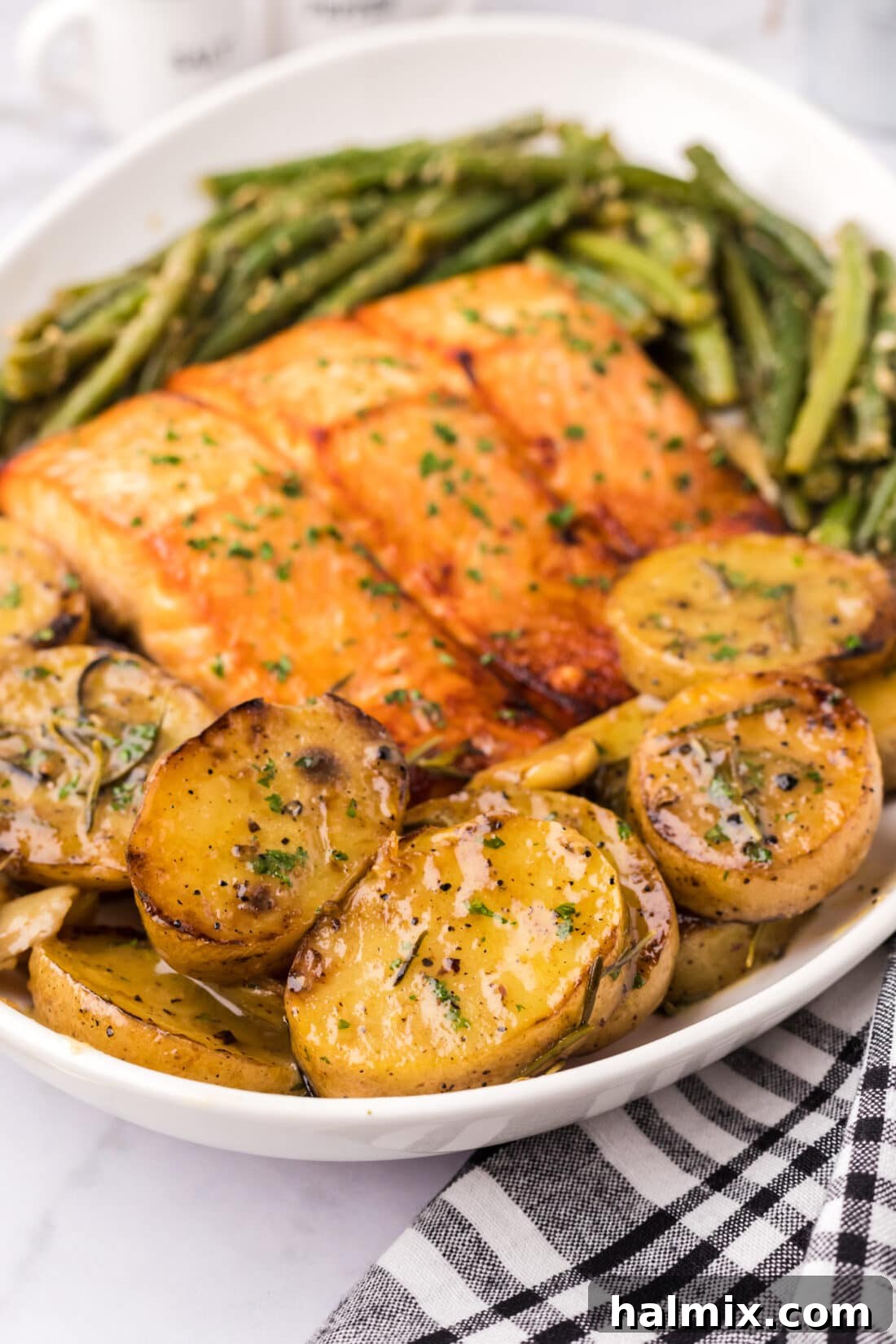
For a classic pairing, serve them alongside succulent proteins like perfectly roasted salmon, a juicy reverse-seared ribeye steak, or a delicate chicken francese. They also pair wonderfully with roasted chicken, pork chops, or a hearty lamb roast. The savory broth and herbaceous notes of the potatoes beautifully cut through richer meats.
Beyond main courses, consider serving these versatile potatoes as a sophisticated appetizer. Present them on a platter with a sprinkle of fresh parsley and a side of your favorite dipping sauce, such as a creamy aioli or a tangy sour cream and chive dip. The possibilities are truly limitless, making melting potatoes a valuable addition to your culinary repertoire!
Explore More Delicious Potato Recipes
If you love the comfort and versatility of potatoes, you’re in for a treat! Here are some other beloved potato recipes that are sure to become family favorites:
- Creamy Au Gratin Potatoes
- Crispy Parmesan Potatoes
- Indulgent Twice Baked Potatoes
- Flavorful Garlic Roasted Potatoes
- Hearty Bacon Three Cheese Potatoes
I genuinely enjoy creating and sharing delightful culinary experiences with all of you. To ensure you never miss out on a new recipe or kitchen tip, consider subscribing to our convenient newsletter. Simply subscribe here and start receiving free daily recipes delivered straight to your inbox!
Melting Potatoes
These potatoes soak up the chicken broth and surrounding ingredients, infusing them with flavor and leaving them creamy, caramelized, and ultra-tender. They are truly called melting potatoes for a reason!
Course: Side Dish
Cuisine: American
Servings: 4 servings
Total Time: 55 minutes
Calories: 375
Author: Amanda Davis
Ingredients
- 3 pounds Yukon gold potatoes
- 1 ½ cups chicken broth
- 2 Tablespoons fresh rosemary, separated into small leaf bundles
- Cracked black pepper, to taste
- Garlic salt, to taste
- 5 cloves garlic, whole
- 4 Tablespoons unsalted butter, separated
Things You’ll Need
- Large heavy bottomed skillet
- 13×9 baking dish
Before You Begin (Tips & Notes)
- Instead of Yukon Gold, you can use red potatoes or even Russet potatoes.
- If you prefer, you can replace the rosemary with fresh thyme, or any other fresh herb that you like.
- We prefer not to remove the skin from the potatoes for this recipe, but the choice is up to you. It truly comes down to preference.
- Store leftovers in an airtight container kept in the refrigerator for 4-5 days. Reheat on a baking sheet in a 350°F oven until warmed through.
Instructions
- Preheat oven to 425°F (220°C). Rinse potatoes and pat dry. Do not peel.
- Cut the ends off of the potatoes. You can use the ends in another dish if you like, or discard them.
- Slice potatoes into thick pieces, about 3/4-inch thick.
- Melt 1 1/2 tablespoons of the butter in a large skillet over medium-high heat. Use a basting brush to spread the melted butter all over the bottom of the skillet.
- Place sliced potatoes into the skillet, getting as many in as you can without overcrowding.
- Season the exposed side of the potatoes with garlic salt and cracked black pepper to taste.
- Cook for 5-7 minutes, until potatoes have a nice brown crust.
- Turn potatoes over and season the browned side with garlic salt and cracked black pepper to taste. You may not use all of the seasonings.
- Pour chicken broth into the 13×9 baking dish. Place browned potatoes into the chicken broth.
- Slightly crush the garlic cloves (you can place the flat side of a chef’s knife onto the clove and give it one good whack with the heel of your hand). Place crushed garlic cloves into the broth between the potatoes.
- Slice the remaining butter into enough squares so that you have one pat for each potato slice. Place butter pats on top of each potato.
- Place a small bunch of rosemary leaves on top of each butter pat.
- Bake in preheated oven for 10-15 minutes. Turn potatoes over, then bake an additional 10-15 minutes, until tender.
Nutrition Information
Serving: 1 serving | Calories: 375cal | Carbohydrates: 61g | Protein: 8g | Fat: 12g | Saturated Fat: 7g | Polyunsaturated Fat: 1g | Monounsaturated Fat: 3g | Trans Fat: 0.5g | Cholesterol: 32mg | Sodium: 350mg | Potassium: 1473mg | Fiber: 8g | Sugar: 3g | Vitamin A: 388IU | Vitamin C: 68mg | Calcium: 58mg | Iron: 3mg
Tried this Recipe? Pin it for Later!
Follow on Pinterest @AmandasCookin or tag #AmandasCookin!
The recipes on this blog are tested with a conventional gas oven and gas stovetop. It’s important to note that some ovens, especially as they age, can cook and bake inconsistently. Using an inexpensive oven thermometer can assure you that your oven is truly heating to the proper temperature. If you use a toaster oven or countertop oven, please keep in mind that they may not distribute heat the same as a conventional full sized oven and you may need to adjust your cooking/baking times. In the case of recipes made with a pressure cooker, air fryer, slow cooker, or other appliance, a link to the appliances we use is listed within each respective recipe. For baking recipes where measurements are given by weight, please note that results may not be the same if cups are used instead, and we can’t guarantee success with that method.