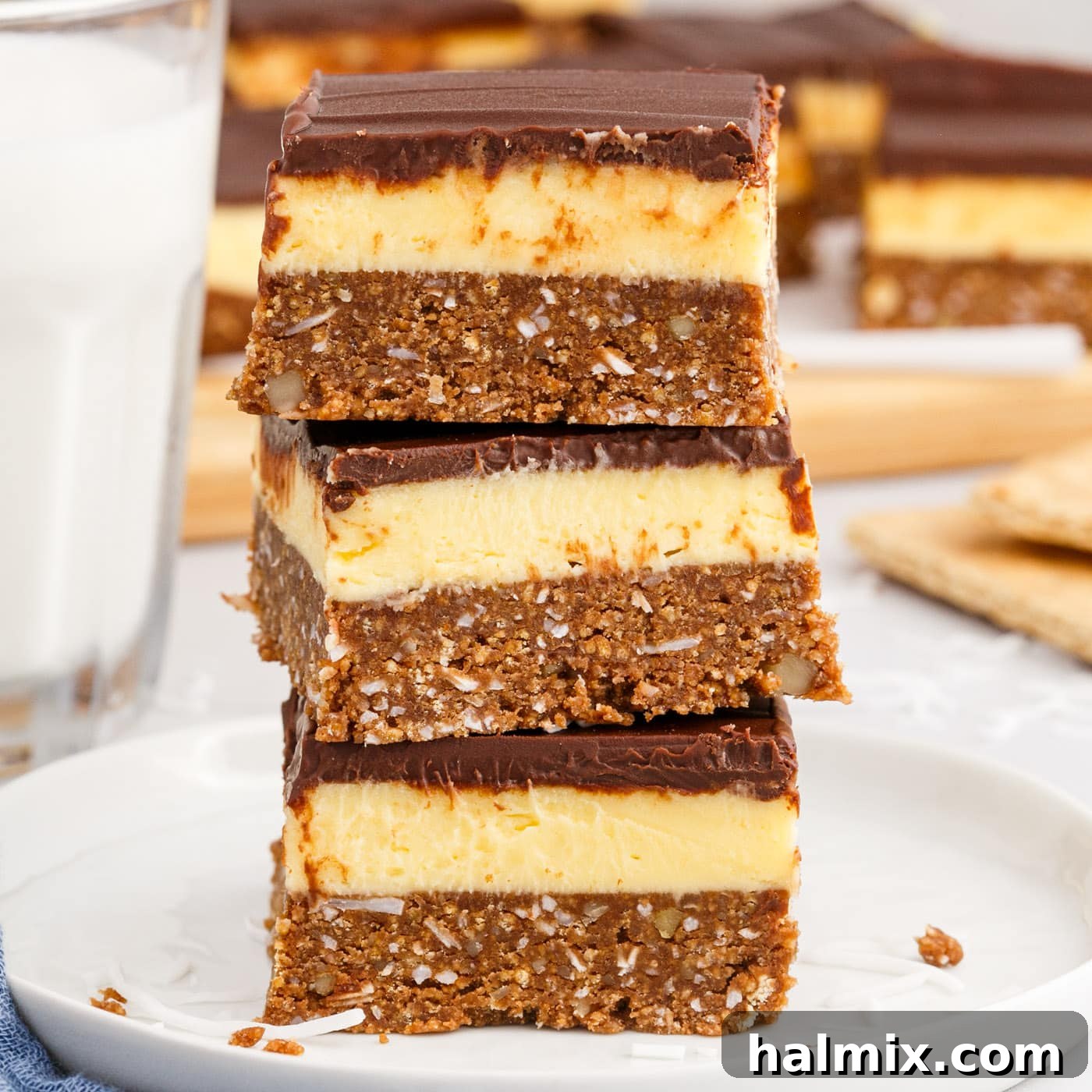
Indulge in the quintessential Canadian delight: Nanaimo Bars. These irresistible no-bake treats boast three distinct layers, each a masterpiece of flavor and texture. A rich, buttery chocolate and coconut graham cracker crust forms the base, followed by a smooth, creamy custard filling, all crowned with a decadent layer of rich, glossy chocolate. They are truly a harmonious blend of sweetness and a satisfyingly smooth finish that makes them an instant classic and a guaranteed crowd-pleaser.
The Enduring Charm of Nanaimo Bars: Why This Recipe Stands Out
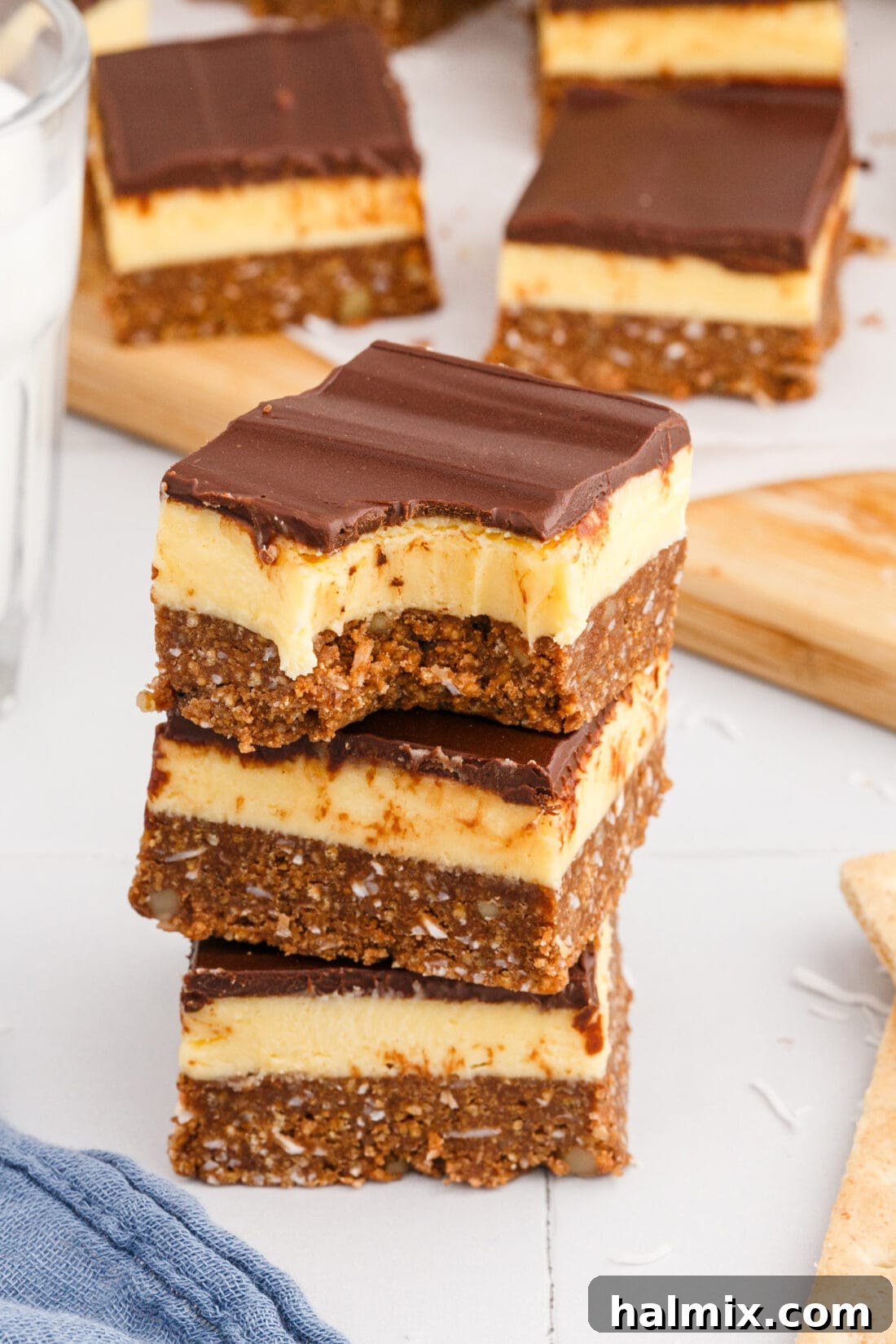
Nanaimo Bars are more than just a dessert; they are a beloved national treasure, proudly named after the city of Nanaimo in British Columbia, Canada. This no-bake wonder has captivated taste buds for generations with its unique combination of textures and flavors. Unlike many baked desserts, Nanaimo bars offer a delightful simplicity in preparation, requiring no oven, making them an ideal choice for any home baker, regardless of experience level. Our recipe captures the authentic essence of this iconic Canadian treat, ensuring each bite delivers that perfect balance of nutty crunch, creamy sweetness, and rich chocolate.
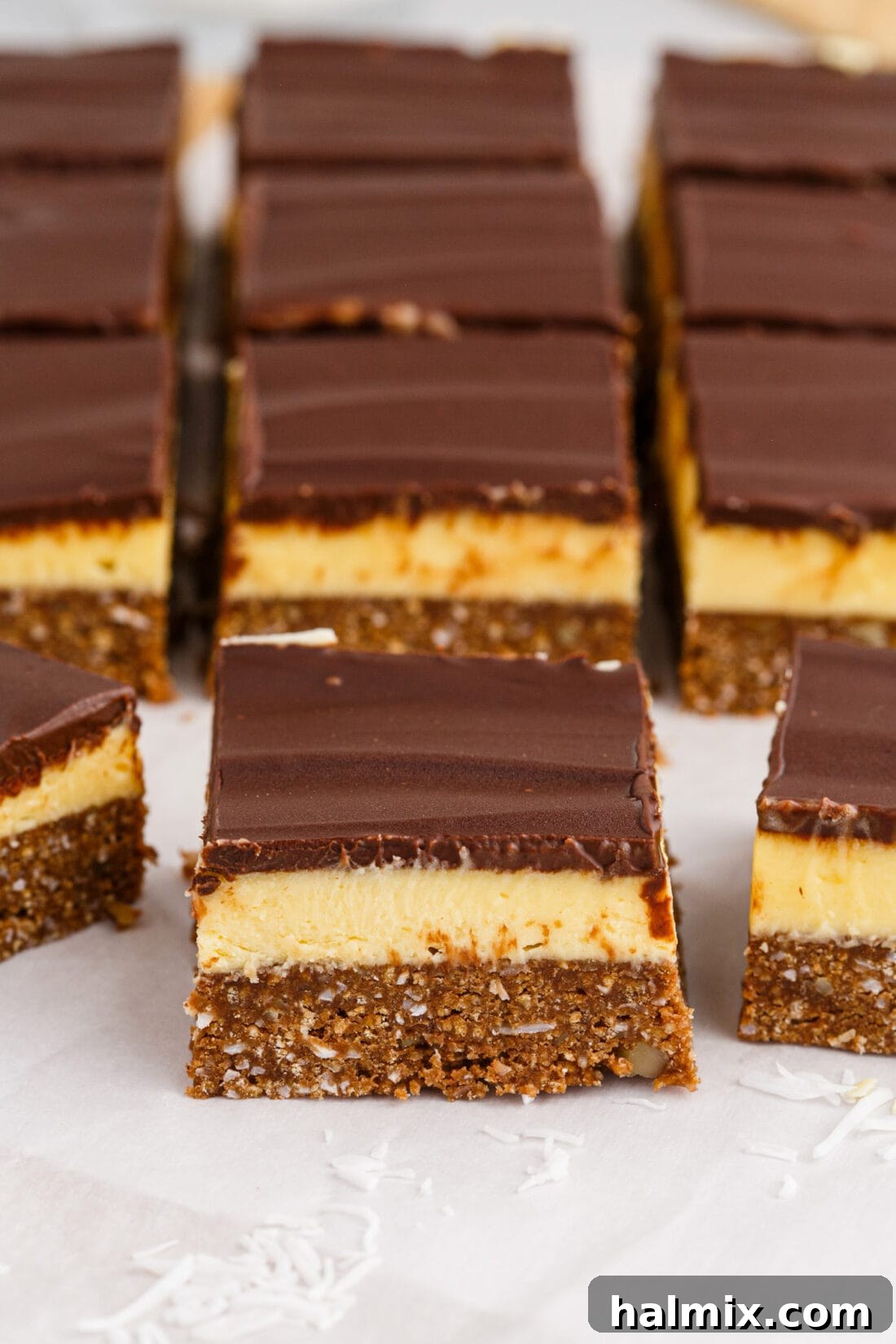
What makes a classic Nanaimo bar so famous and utterly tempting are its three distinct layers, each playing a crucial role in its overall appeal. The base layer is a robust blend of graham cracker crumbs, shredded coconut, and finely chopped walnuts, bound together with chocolate and butter. This creates a deeply flavorful, slightly chewy, and perfectly crumbly foundation. Above this lies the signature custard filling – a velvety smooth, rich, and slightly sweet butter icing that is the heart of the Nanaimo bar. Finally, a crisp, yet yielding, layer of semi-sweet chocolate perfectly caps off the bar, adding a final touch of intense cocoa flavor and a beautiful sheen. While variations abound, this classic trifecta is what defines the Nanaimo bar and what you’ll find in the most authentic and cherished family recipes.
This recipe not only honors the traditional flavors but also provides clear, easy-to-follow instructions, ensuring your Nanaimo bars turn out perfectly every time. From the precise measurements to the expert tips on achieving that smooth chocolate top, we guide you through each step to create a dessert that is rich, satisfying, and undeniably irresistible.
Essential Ingredients for Your Nanaimo Bars
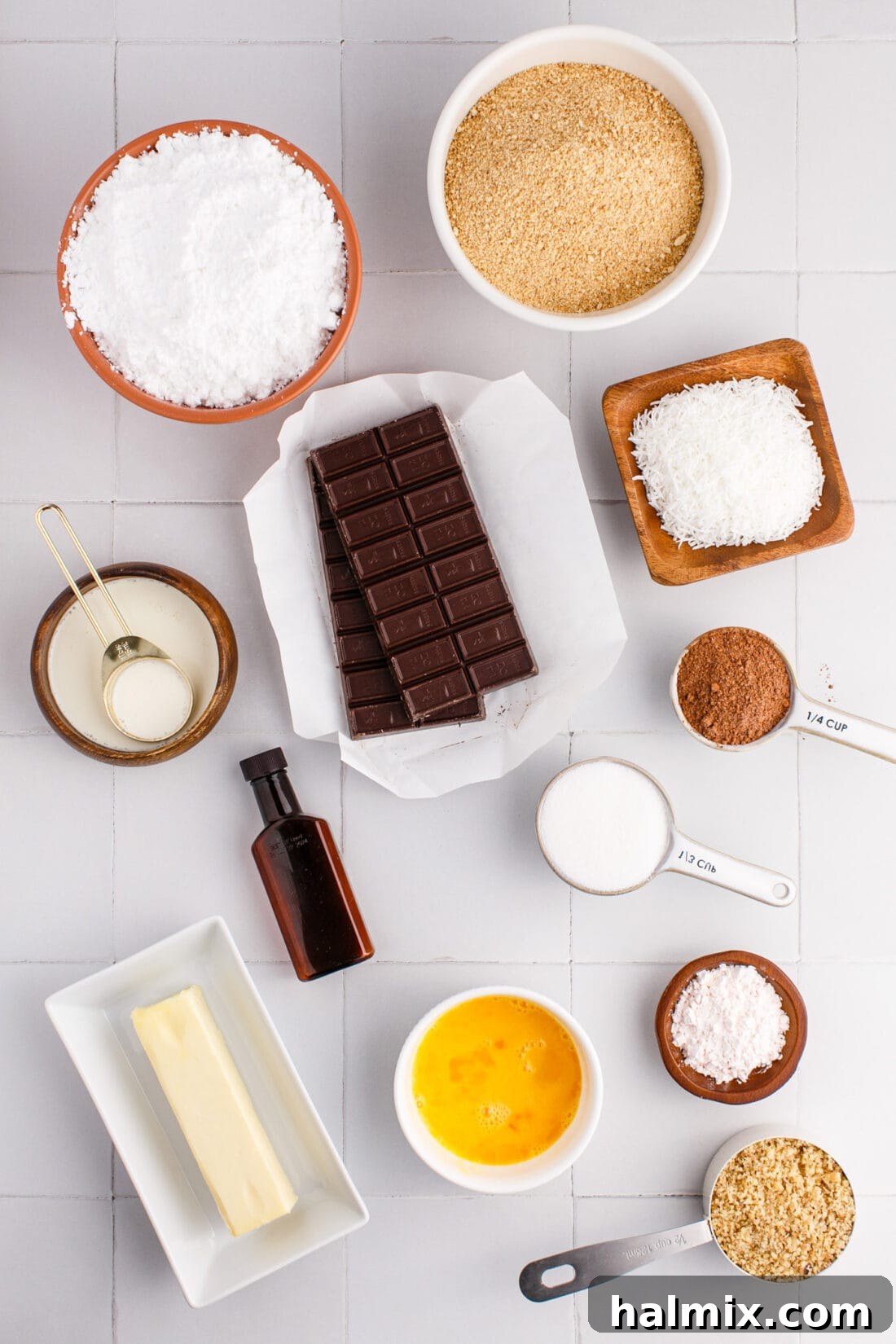
Crafting the perfect Nanaimo bar requires a selection of quality ingredients that come together to create its iconic flavor profile. Below, you’ll find a visual guide to the components, and a comprehensive list with precise measurements is available in the detailed recipe card at the end of this post. Ensuring you have all your ingredients prepped and measured before you begin will make the no-bake process even smoother and more enjoyable.
Detailed Ingredient Insights & Smart Substitutions
Understanding each ingredient’s role is key to mastering Nanaimo bars. Here’s a closer look at the critical components and how you can adapt them if needed:
CUSTARD POWDER – The custard layer is what truly sets Nanaimo bars apart from other no-bake bars. In Canadian tradition, custard refers to a thicker, egg-thickened cream, distinct from American-style puddings that typically rely on starch. For an authentic flavor and texture, we highly recommend using traditional British custard powder. Brands like Bird’s Custard Powder are widely available in the U.S. in the baking aisle of many grocery stores or can be easily found online. If you’re feeling adventurous and prefer to make your custard from scratch, you can adapt the custard ingredients from a classic English trifle recipe, ensuring it has that rich, creamy consistency essential for Nanaimo bars. The custard powder simplifies the process significantly while still delivering the expected taste.
CHOCOLATE – For the best possible flavor and a smooth, crack-free finish, the quality of your chocolate matters. We strongly suggest using a good quality baking chocolate bar, such as semi-sweet or dark chocolate, rather than chocolate chips or almond bark. Baking chocolate melts more evenly and provides a superior texture and richer flavor, which is crucial for the top layer that both protects the custard and provides a satisfying snap when cut. Chop your chocolate bar into small, uniform pieces to ensure it melts smoothly and consistently.
CRUST INGREDIENTS – The foundation of your Nanaimo bar is its flavorful crust. The recipe calls for graham cracker crumbs, which can be purchased pre-crushed for convenience. Alternatively, you can easily make your own by crushing about 16-18 full sheets of graham crackers to yield approximately 2 cups of crumbs. A food processor makes this task quick and effortless, ensuring a fine, even crumb. The addition of finely pulsed walnuts adds a delightful nutty depth and a subtle crunch that complements the other layers beautifully. For the coconut, unsweetened shredded coconut is preferred to balance the sweetness of the other layers, but if you enjoy a sweeter bar, sweetened shredded coconut can be used. Just be aware it will make the overall bar quite a bit sweeter.
BUTTER – Both salted and unsalted butter can be used, but if using unsalted, you might want to add a pinch of salt to the crust and filling to enhance the flavors. For the crust and chocolate layer, the butter doesn’t need to be softened, as it will be melted. For the custard filling, however, softened butter will cream more easily with the custard powder and icing sugar, resulting in a smoother, lump-free filling.
EGG – A single large egg is used in the crust to bind the ingredients and give it a richer texture. It’s tempered with melted butter and sugar to ensure safety and proper consistency. Please note the warning about consuming raw or undercooked eggs later in the recipe for specific demographics.
Step-by-Step Guide: Crafting Your Own Nanaimo Bars
These step-by-step photos and detailed instructions are designed to help you visualize each stage of the recipe, ensuring a successful outcome. For a comprehensive printable version of this recipe, including exact measurements and a full list of instructions, simply refer to the recipe card located at the bottom of this page.
- Prepare Your Pan: Begin by lining an 8×8 inch baking pan with parchment paper. Ensure the parchment paper extends up the sides, creating a sling that will make removing the chilled bars much easier. Lightly spray the parchment with non-stick cooking spray to prevent sticking.
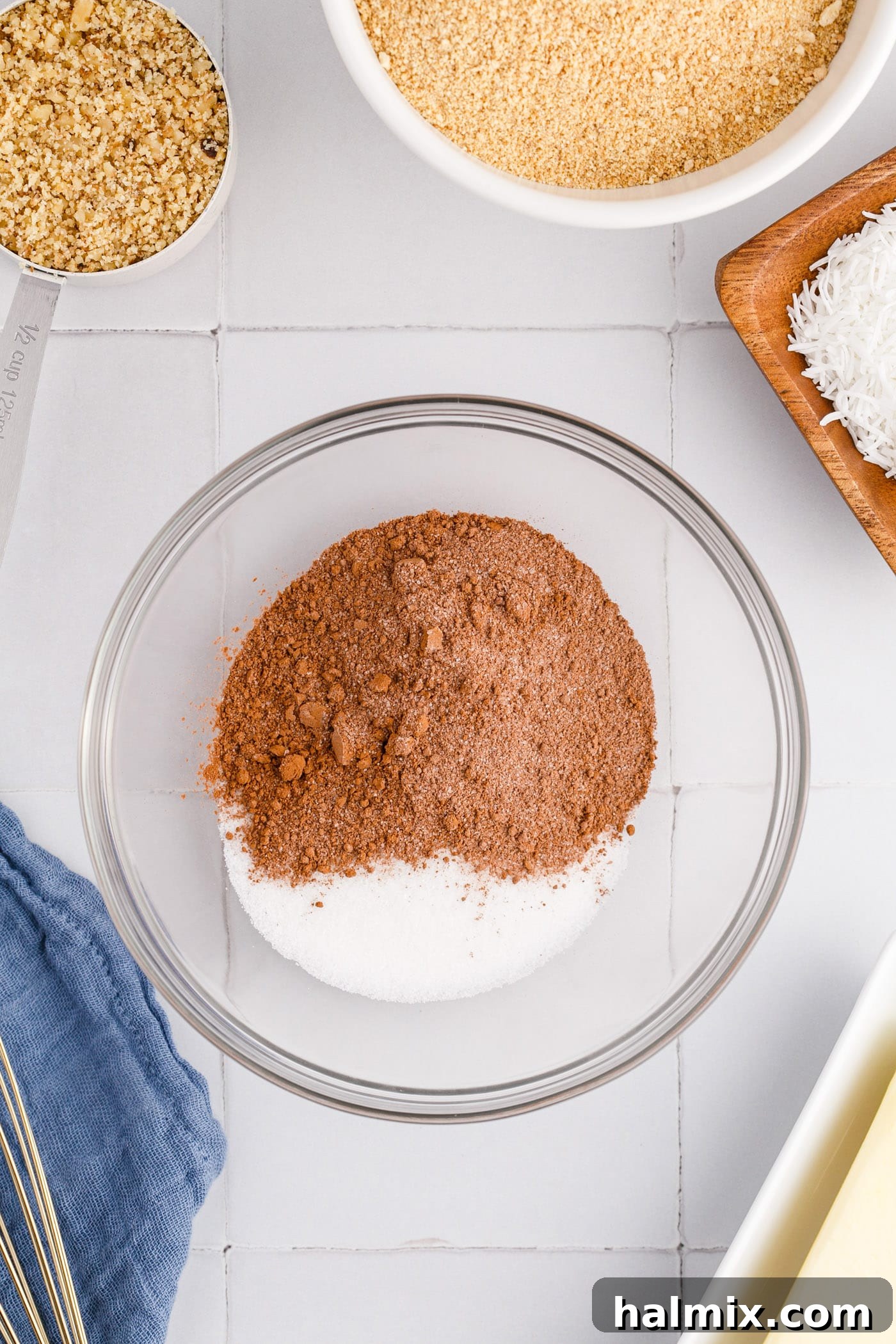
- Combine Dry Crust Ingredients (Phase 1): In a small bowl, thoroughly mix together the granulated sugar and cocoa powder. Set this mixture aside for a moment. This pre-mixing helps prevent cocoa lumps in your crust.

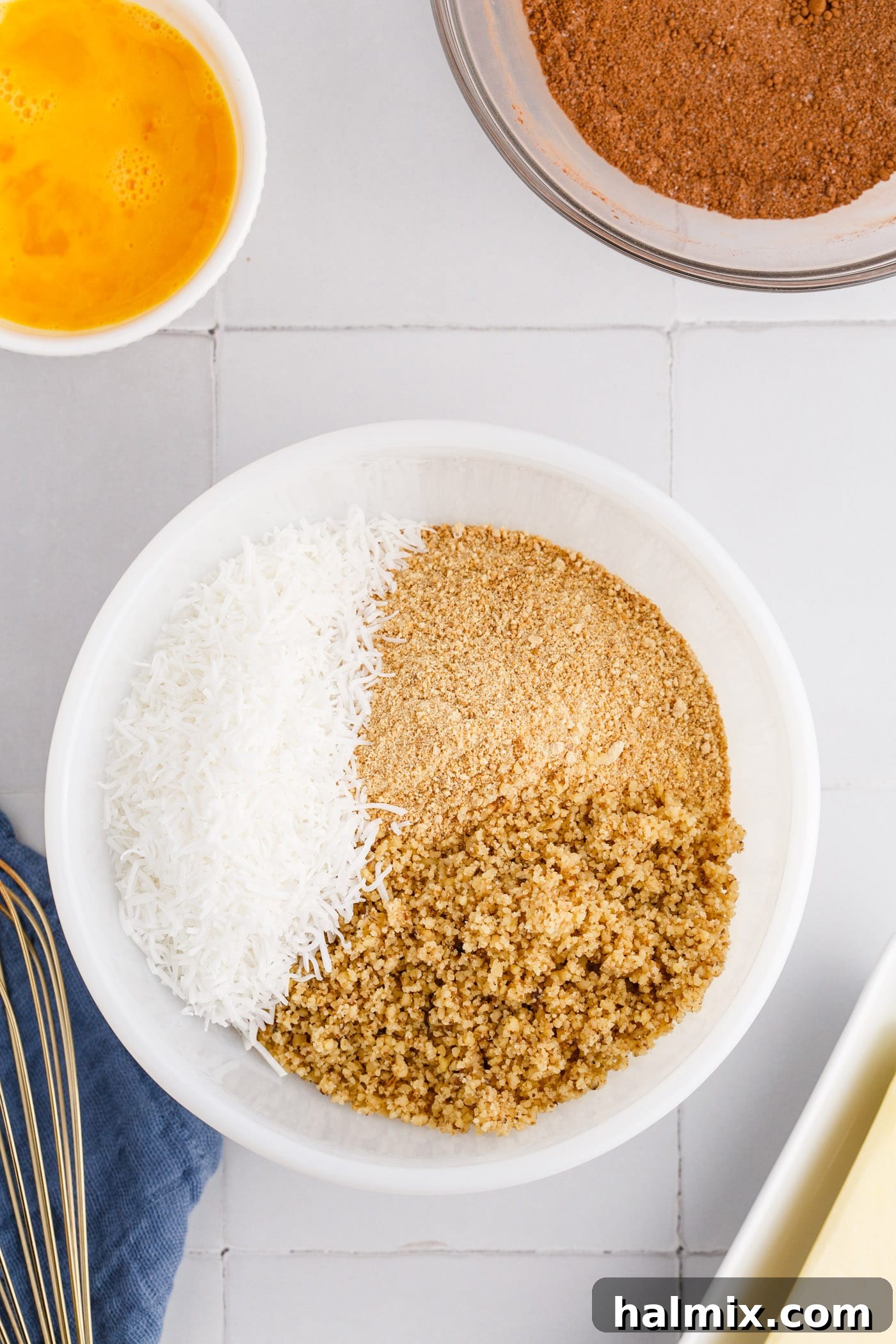
Combine sugar and cocoa powder for the crust. - Combine Dry Crust Ingredients (Phase 2): In a separate, slightly larger bowl, combine the graham cracker crumbs, finely pulsed walnuts, and shredded coconut. Stir until all ingredients are well distributed. Set this mixture aside as well.
Mix the graham cracker, walnut, and coconut crumbs. - Melt Butter for the Crust: Set up a double boiler by placing a heat-proof bowl over a pot of simmering water on the stovetop. Ensure the bottom of the bowl does not touch the water. Add the ½ cup of salted butter to the bowl and melt it slowly over low-medium heat, stirring occasionally. Once the butter is fully melted, carefully remove the bowl from the heat, but keep the stovetop on low heat for the next step.
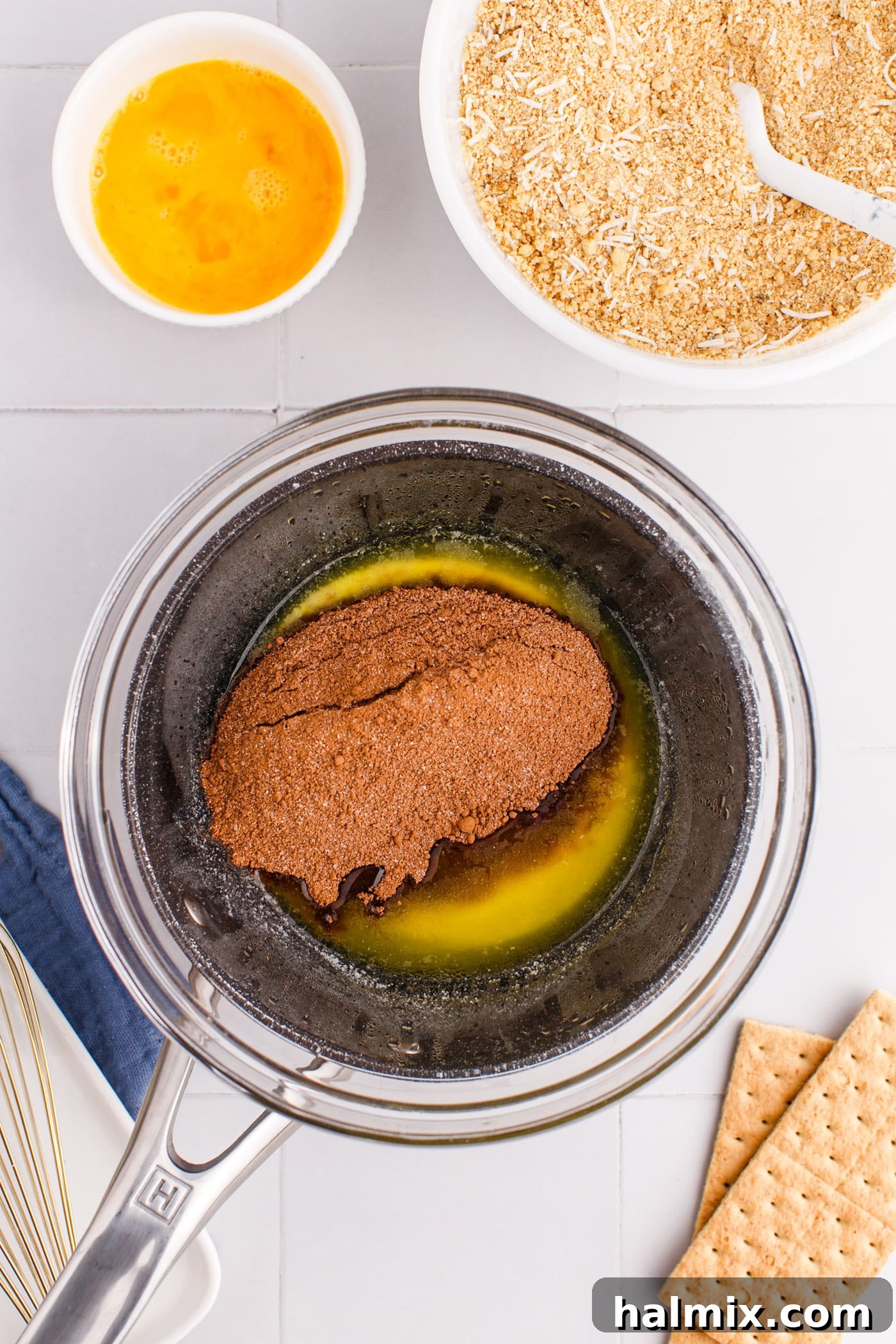
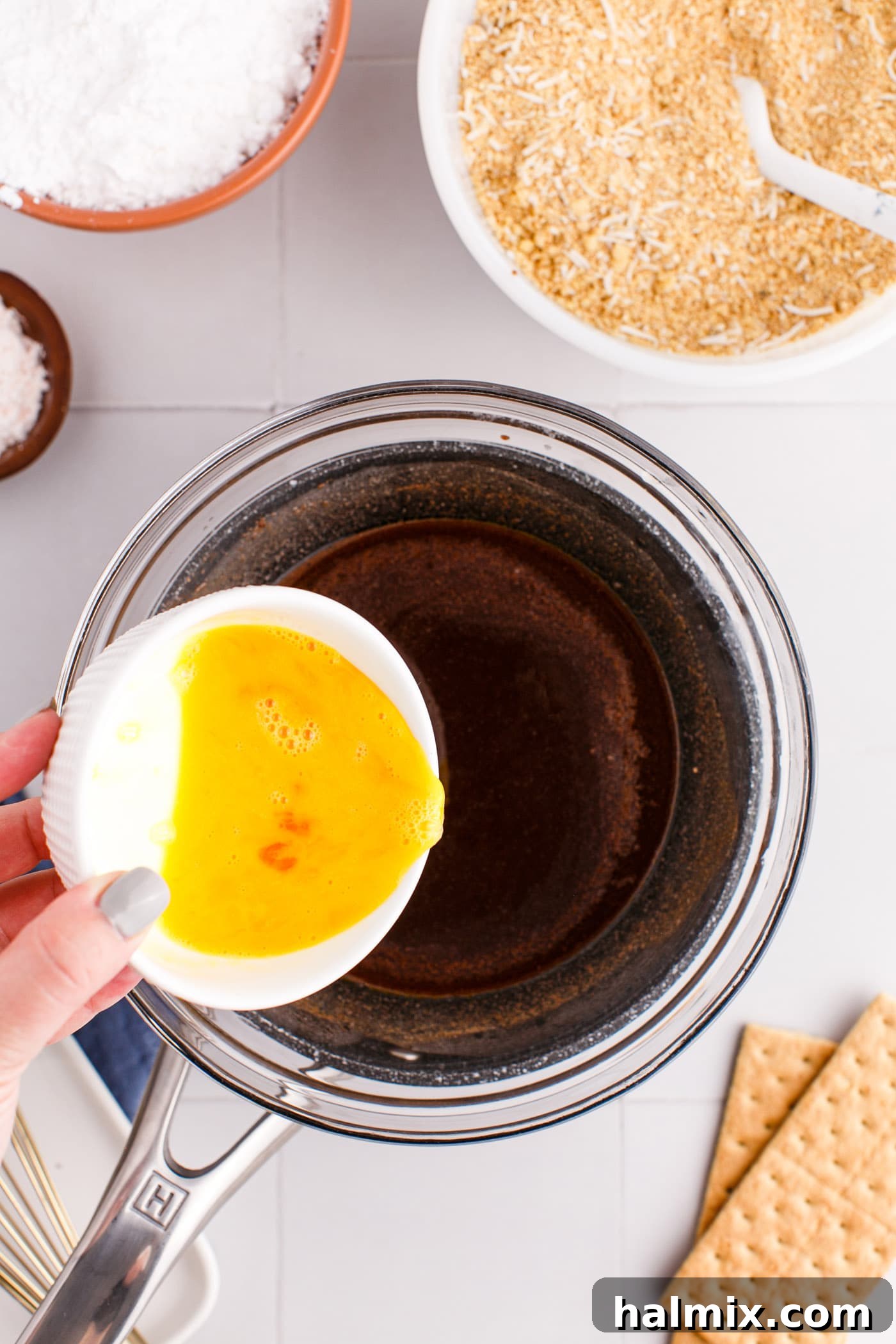
- Incorporate Sugar Mixture and Egg: While the butter is still warm, whisk the reserved sugar and cocoa powder mixture into the melted butter until smooth. Then, gradually and very slowly, whisk in the lightly beaten large egg. It’s crucial to whisk continuously and slowly to temper the egg, preventing it from scrambling due to the heat. Continue whisking until the mixture is uniform and smooth.
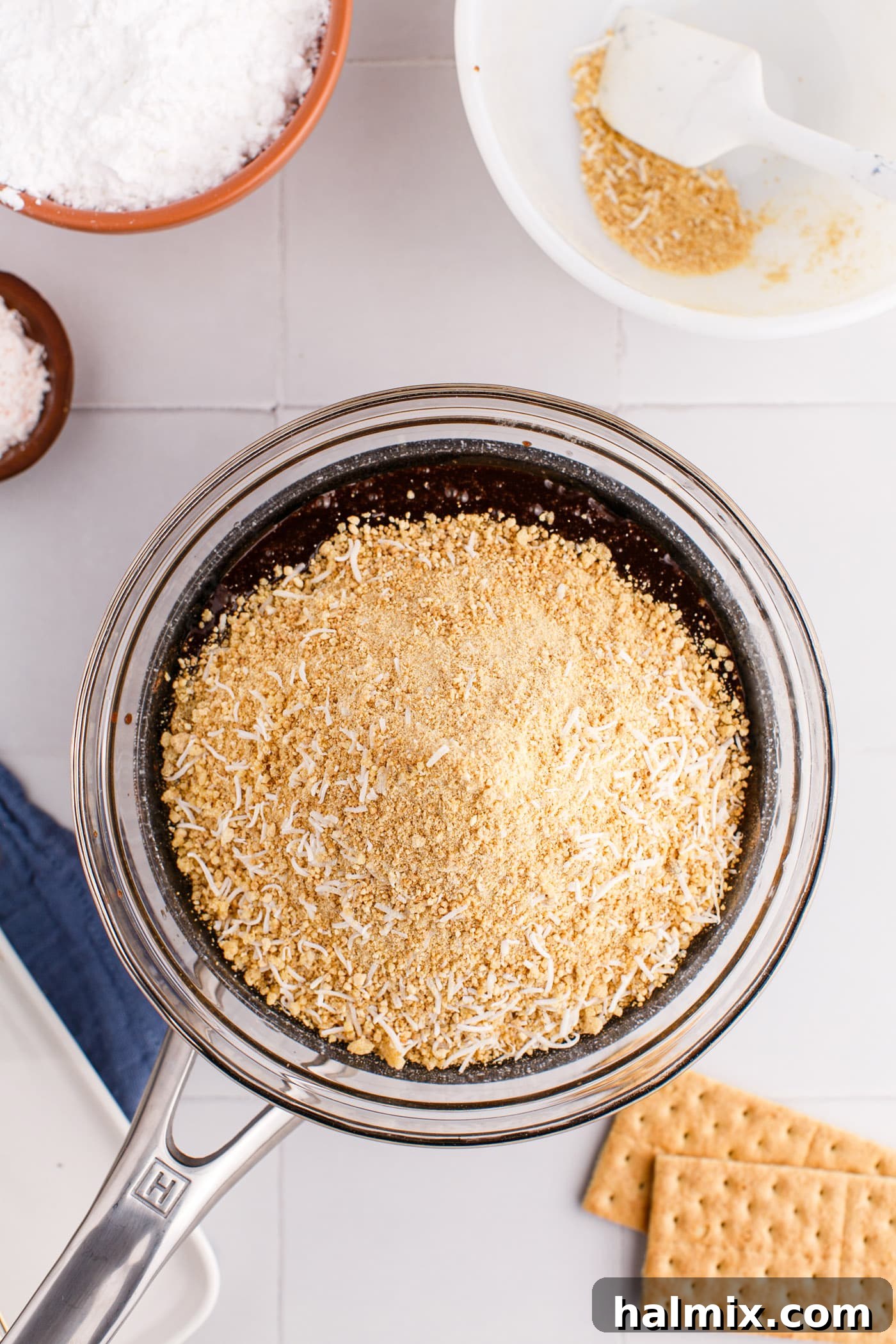
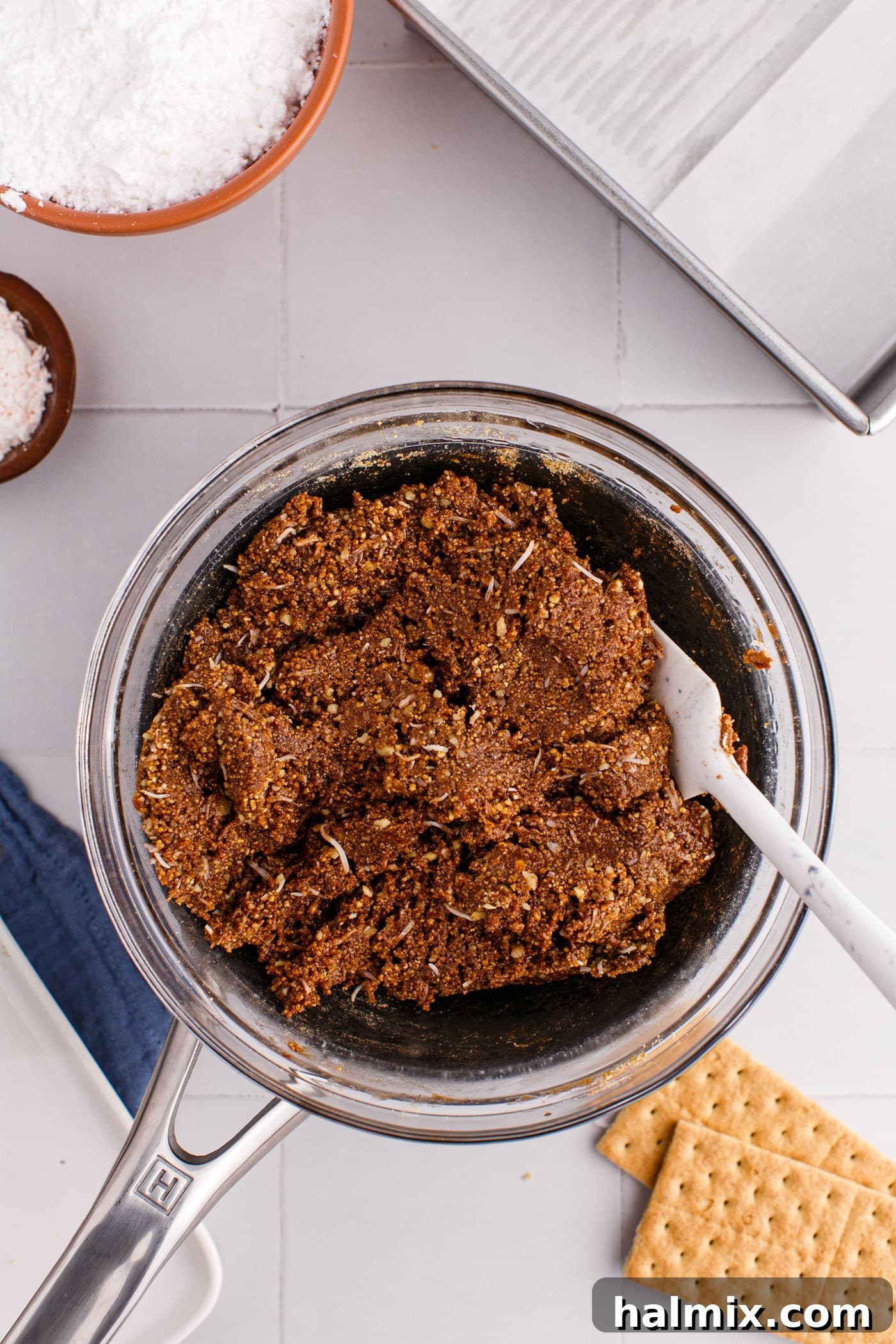
Whisk sugar and cocoa into melted butter. Slowly whisk in the egg. - Thicken and Add Dry Ingredients: Return the bowl to the stovetop (over the simmering water) and continue to whisk the butter-egg mixture for a minute or two until it slightly thickens, resembling a thin pudding. This step further cooks the egg gently without fully solidifying it. Remove the bowl from the heat and turn off the stovetop. Now, add the graham cracker, walnut, and coconut mixture to the wet ingredients. Stir thoroughly with a spoon or spatula until all the dry crumbs are completely moistened and combined into a cohesive mixture.
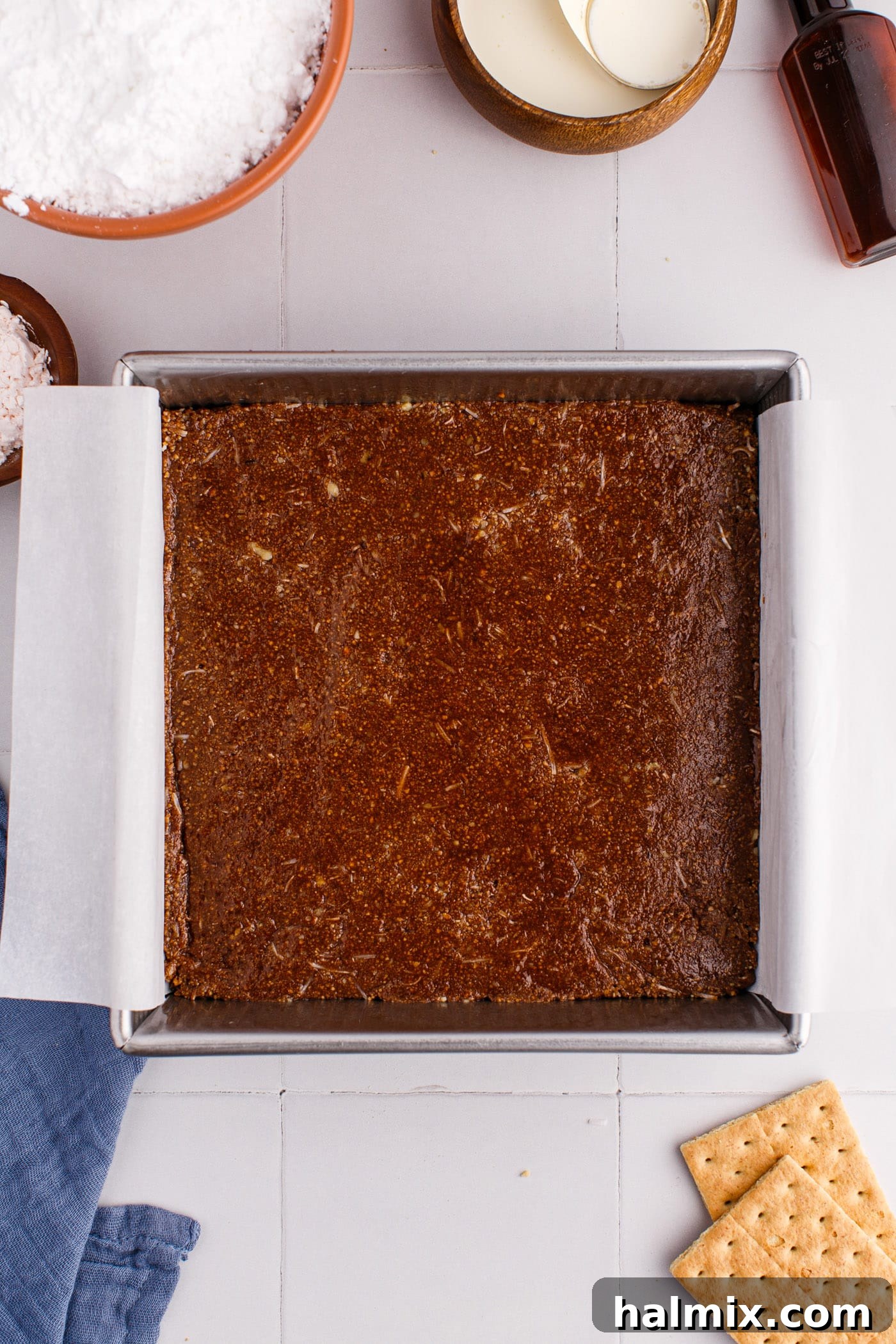
Add the dry crumb mixture to the wet ingredients. Stir until well combined to form the crust. - Press the Crust: Pour the crust mixture into your prepared 8×8 inch baking dish. Use the back of a spoon, a spatula, or even a flat-bottomed measuring cup or water glass to press the mixture firmly and evenly into the bottom of the pan. Ensure it forms a compact and smooth layer from edge to edge.
Press the crust evenly into the prepared pan. - Chill the Crust: Place the pan with the crust into the refrigerator to chill while you prepare the creamy custard filling. This allows the crust to firm up and set.
- Prepare the Custard Filling: In the bowl of a stand mixer fitted with a paddle attachment (or use a hand mixer), combine the softened ½ cup of salted butter, custard powder, and pure vanilla extract. Beat on medium speed until well combined and creamy, scraping down the sides of the bowl as needed.
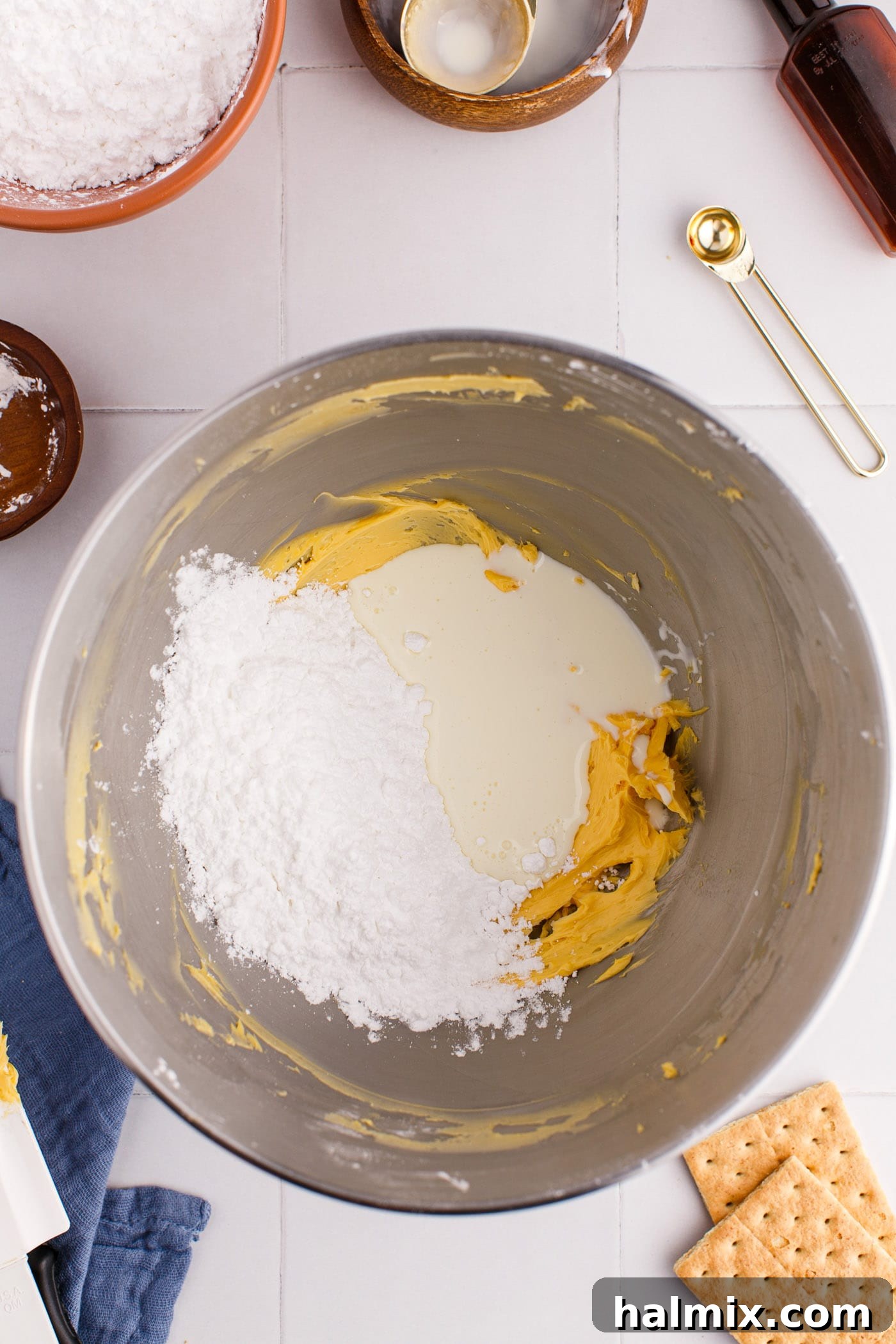
- Add Icing Sugar and Cream: Gradually add the 2 ½ cups of icing sugar (also known as confectioners’ sugar or powdered sugar) to the butter mixture, beating on low speed until mostly incorporated. Then, slowly pour in the 3 tablespoons of heavy whipping cream. Increase the speed to medium-high and beat for several minutes until the filling is light, fluffy, and smooth. If it seems too thick, you can add another teaspoon of cream, being careful not to make it too runny.
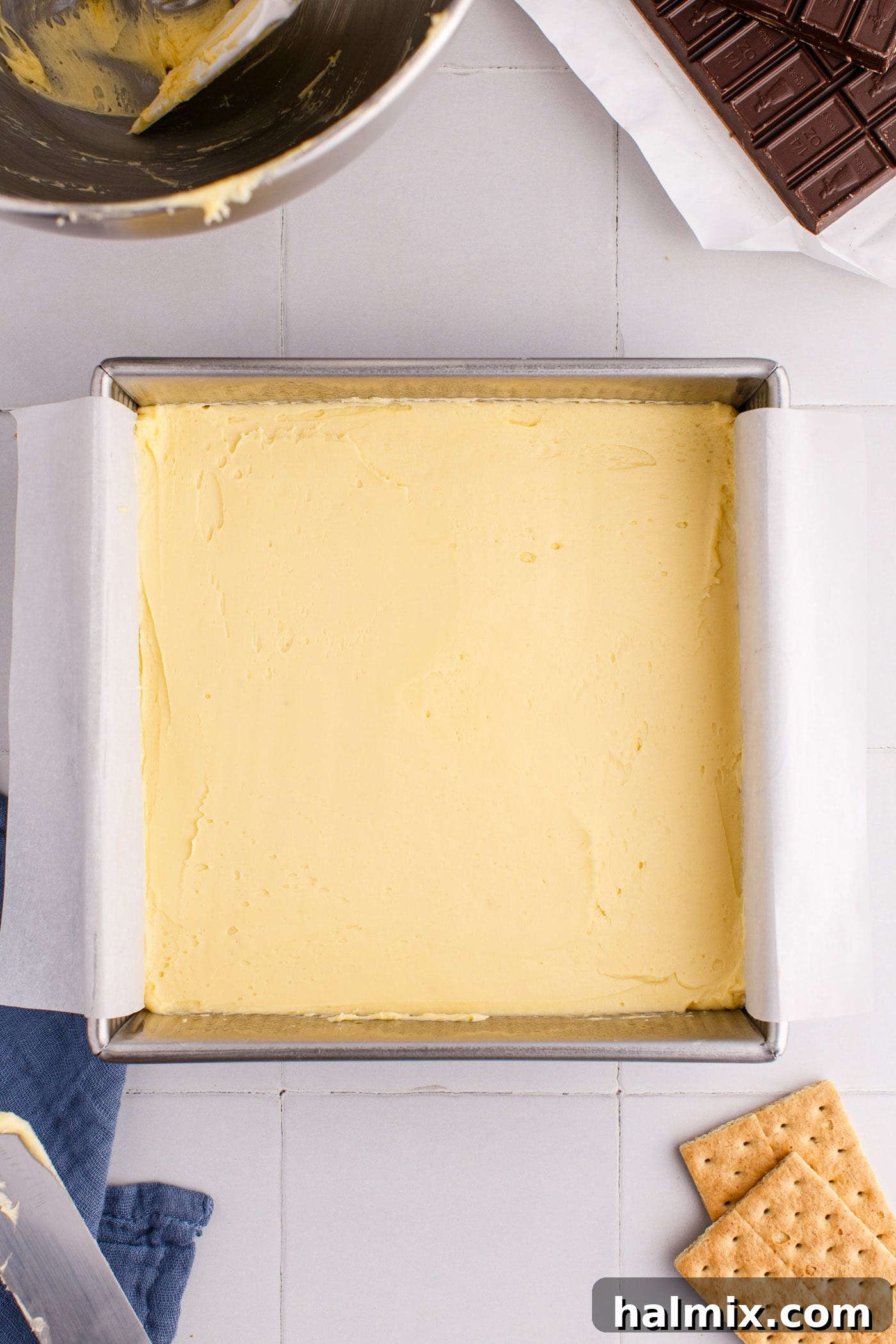
Add icing sugar and custard powder to the softened butter. - Layer the Custard: Carefully spread the prepared custard filling evenly over the chilled crust layer. Use an offset spatula or the back of a spoon to create a smooth, consistent layer. Place the pan in the freezer for at least 10 minutes (or in the refrigerator for 20-30 minutes) to allow the custard to firm up before adding the chocolate topping. This step is crucial to prevent the chocolate from melting into the custard.
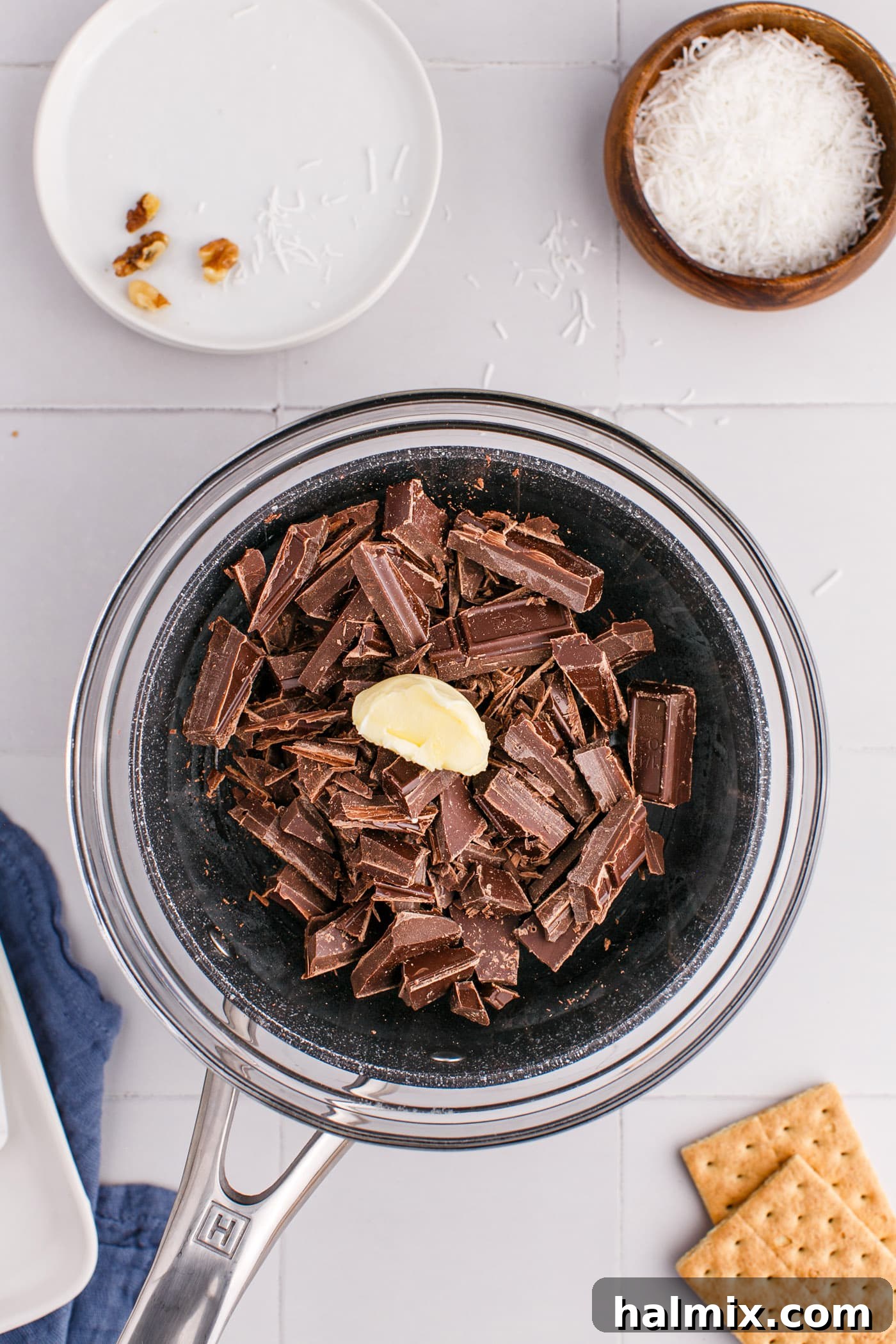
Evenly spread the creamy custard filling. - Prepare the Chocolate Layer: Using another heat-safe bowl set over the stovetop (as a double boiler), melt 8 ounces of chopped semi-sweet chocolate along with 1 tablespoon of salted butter over low-medium heat. Stir frequently until the chocolate is completely smooth and glossy, with no lumps remaining. Be careful not to overheat the chocolate, as this can cause it to seize.
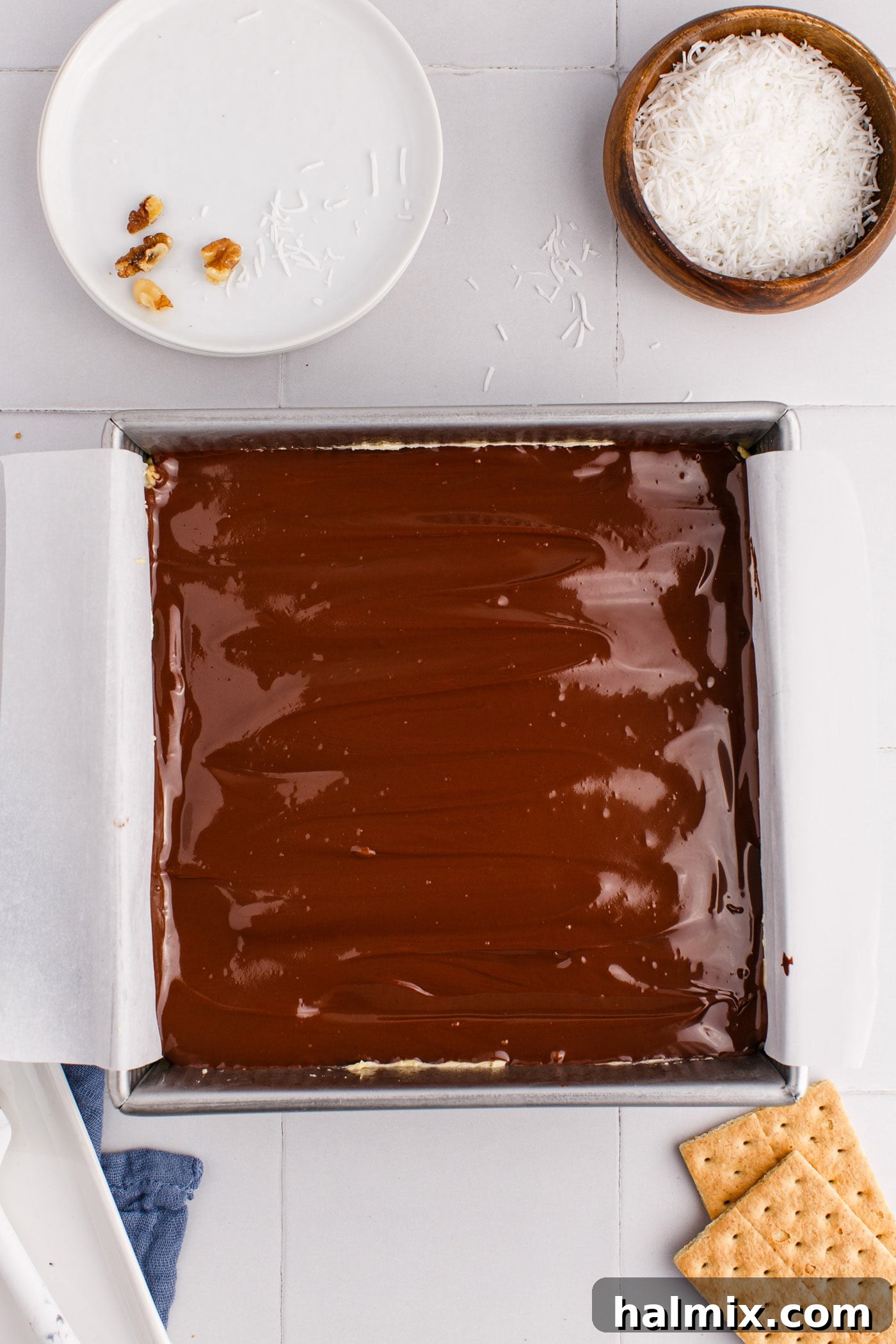
Melt chocolate and butter for the top layer. - Pour the Chocolate Topping: Remove the pan from the freezer/refrigerator. Carefully pour the melted chocolate mixture evenly over the chilled custard layer. Working quickly, use an offset spatula to gently spread the chocolate into a smooth, even top coat. Avoid disturbing the custard layer underneath.
Pour and smooth the melted chocolate over the custard. - Chill to Set: Return the pan to the refrigerator and chill for at least 3 hours, or preferably until the chocolate layer is completely firm and set. This firming time is crucial for easy and clean slicing.
Frequently Asked Questions & Expert Tips for Perfect Nanaimo Bars
To keep your Nanaimo bars fresh and delicious, store them in an airtight container in the refrigerator for up to 4 days. The cool temperature helps maintain the firmness of all three layers and prevents the custard from softening too much.
Absolutely! Nanaimo bars freeze beautifully, allowing you to enjoy them long after they’re made. To freeze, place the cut bars in an airtight container with layers separated by parchment paper to prevent sticking. You can also arrange them flat in a large freezer-safe zip-top bag. They will keep well in the freezer for up to 4 months. Thaw them in the refrigerator for a few hours before serving.
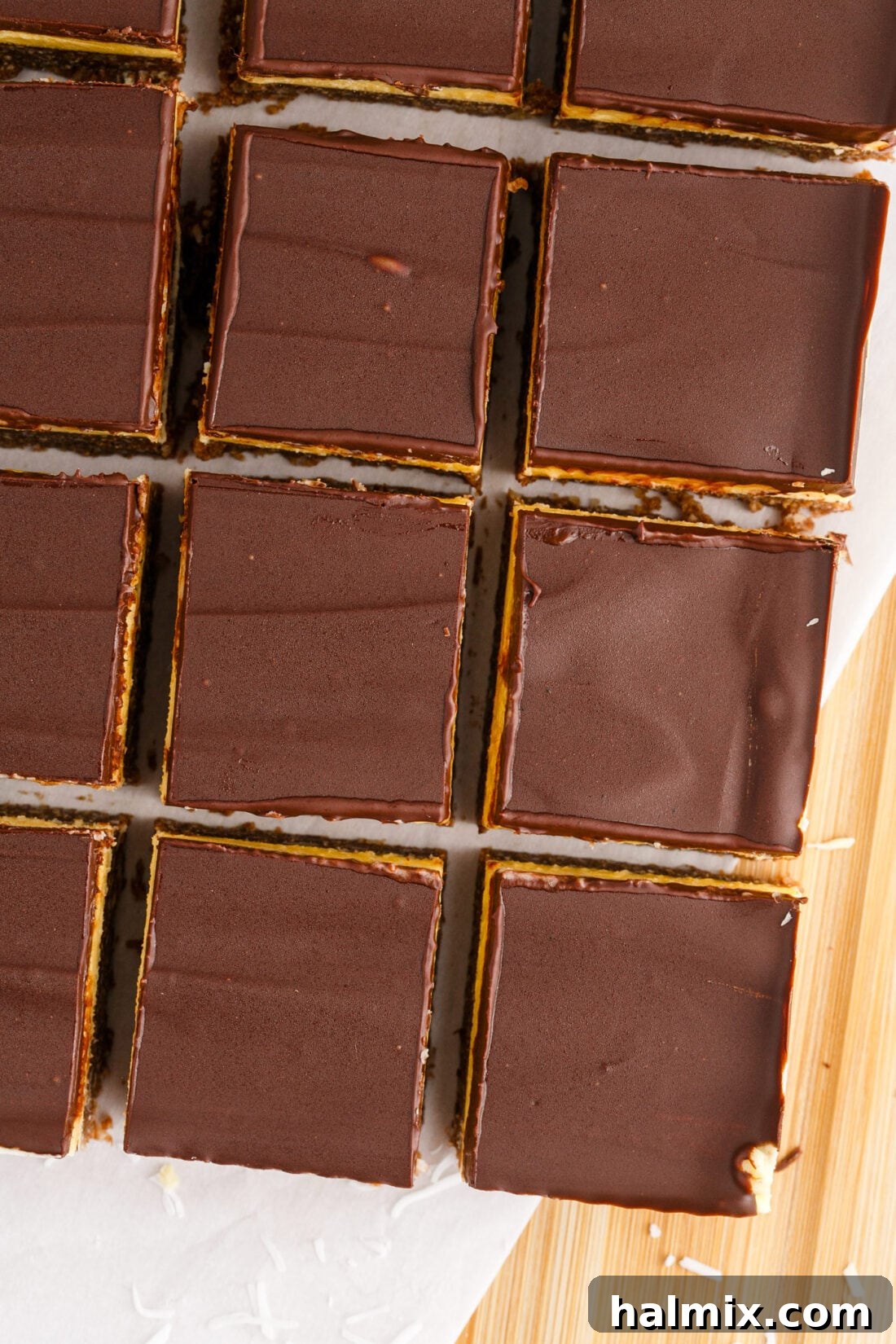
Cutting Nanaimo bars cleanly without cracking the chocolate layer can be tricky, but it’s easily achieved with a few simple techniques. First, ensure the bars are thoroughly chilled and firm. Remove them from the baking dish using the parchment sling and place them on a clean cutting board. For the cleanest cuts, use a sharp, thin-bladed knife. Run the knife under hot water, then wipe it completely dry. Lightly press down through only the chocolate layer to score your desired square or rectangle shapes. Re-rinse the knife under hot water, dry it, and then proceed to cut all the way through the layers. Repeat this hot-knife process for each cut. Some bakers find it beneficial to score the chocolate, then return the bars to the fridge or freezer for 10 minutes to firm up slightly before making the full cuts. This method helps prevent the chocolate from shattering.
The consistency of your custard filling is crucial. If your filling is too thin, try adding a tablespoon or two more of icing sugar and beating it in until it thickens to a spreadable consistency. If it’s too thick, add a teaspoon of heavy whipping cream at a time, beating until it reaches the desired smooth, creamy texture. Humidity can affect icing sugar, so small adjustments may be necessary.
Yes, while walnuts are traditional, you can certainly experiment with other nuts. Pecans or almonds, finely pulsed, would also offer a delicious flavor and texture to the crust. Be sure they are finely chopped to ensure the crust holds together well.
Serving Suggestions for Your Decadent Nanaimo Bars
Nanaimo bars are incredibly versatile and can be enjoyed in many ways. Traditionally, they are served as a delightful accompaniment to a warm cup of coffee or tea, making for a perfect afternoon pick-me-up or an elegant end to a meal. Their rich flavor also makes them an excellent standalone dessert, especially when you’re craving something sweet and satisfying. They are best enjoyed chilled, directly from the refrigerator, as this maintains the firm structure of the layers and the crispness of the chocolate topping.
When entertaining, arrange your perfectly cut Nanaimo bars on a decorative platter to showcase their beautiful layers. They pair wonderfully with fresh berries, a dollop of unsweetened whipped cream, or a light dusting of cocoa powder for an extra touch of sophistication. You might also consider serving smaller portions, as these bars are quite rich, ensuring everyone can savor their decadent flavor without feeling overwhelmed.
An Important Note on Egg Consumption: This recipe utilizes a tempering method for the egg in the crust layer, where it is whisked continuously over hot melted butter and sugar to gently raise its temperature without fully cooking it. While this is a common practice in many traditional custard-based recipes to achieve a specific texture, it means the egg is not cooked through to a temperature that eliminates all risk. Therefore, it is advisable that individuals who are elderly, very young children, pregnant women, or those with compromised immune systems consult a healthcare professional before consuming these bars. Always prioritize food safety and personal health considerations.
Explore More Delicious No-Bake Dessert Recipes
If you love the convenience and deliciousness of no-bake desserts, you’re in for a treat! Our collection features a variety of easy-to-make, irresistible recipes that require no oven time, perfect for satisfying your sweet cravings, especially during warmer months or when you’re short on time. From fruity delights to chocolatey indulgences, these recipes prove that you don’t need to bake to create spectacular desserts.
- Refreshing Lemon Icebox Cake
- Classic Chocolate No-Bake Cookies
- Irresistible No-Bake Peanut Butter Bars
- Sweet No-Bake Strawberry Cheesecake Bars
- Light and Zesty Lemon Cream Cheese Pudding Dessert
I pour my heart into creating and sharing delicious recipes with all of you! To make sure you never miss out on a new culinary adventure, I offer a convenient newsletter delivered right to your inbox every time a new recipe is posted. Simply subscribe here and start receiving your free daily recipes to inspire your kitchen creations!
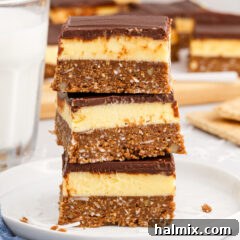
Nanaimo Bars
This no-bake chocolately confection has three layers of nutty-coconut-graham cracker, rich custard, and silky chocolate that make it ever so tempting!
IMPORTANT – You’ll find helpful frequently asked questions and expert tips within the blog post above. Scroll up to read them for best results!
Pin Recipe
Rate It
Ingredients
Crust
- ⅓ cup granulated white sugar
- ¼ cup unsweetened cocoa powder
- 2 cups graham cracker crumbs
- ½ cup walnuts finely pulsed
- ½ cup unsweetened shredded coconut
- ½ cup salted butter 1 stick, does not need to be softened
- 1 large egg lightly beaten
Filling
- ½ cup salted butter 1 stick, softened
- 3 Tablespoons custard powder
- ½ teaspoon pure vanilla extract
- 2 ½ cups icing sugar aka confectioners sugar or powdered sugar
- 3 Tablespoons heavy whipping cream
Chocolate Layer
- 8 ounces semi-sweet chocolate bar chopped
- 1 Tablespoon salted butter does not need to be softened
Equipment You’ll Need
- 8×8 baking pan
- Stand mixer or hand mixer
Before You Begin – Important Notes
- You can find graham cracker crumbs at the grocery store that are pre-crushed or crush around 16-18 full sheets of graham crackers to get 2 cups worth of crumbs.
- To cut the bars without cracking the chocolate, remove them from the baking dish and place on a cutting board. Using a sharp knife, run under hot water (then dry) and lightly press down through only the chocolate layer to score. Rinse again, and repeat going all the way through. Some people prefer to score, then cool in the fridge or freezer for 10 minutes, then repeat.
- Store the bars in an air-tight container kept in the refrigerator for up to 4 days.
- *I wouldn’t advise the elderly, children, or the immunocompromised to consume these bars due to the tempered egg. The egg in this recipe is tempered by continuously whisking it over hot melted butter, which helps to raise the temperature without fully cooking it. This is normal for some custard recipes, but the egg is not fully cooked, which can pose a risk for certain individuals.
- To freeze, place them in an air-tight container with parchment paper in-between each layer. You can also place them inside a large zip-top bag and layer them flat in the freezer. Store in the freezer for up to 4 months.
Instructions
- Line an 8×8 pan with parchment paper and spray with non-stick spray.
- In a small bowl, mix sugar and cocoa powder and set aside.
- In another small bowl, mix graham cracker crumbs, walnut crumbs, and shredded coconut; also set aside.
- Using a heat-proof bowl over simmering water on the stovetop (creating a double boiler), slowly melt ½ cup of butter over low-medium heat. Once melted, remove from heat but keep the stovetop on low.
- Whisk the sugar and cocoa mixture into the melted butter, then very slowly add in the lightly beaten egg, whisking continuously to temper it.
- Return the bowl to the heat and whisk until the mixture thickens slightly. Remove from heat and turn off the stovetop. Stir in the crumb and coconut mixture until well combined.
- Pour the crust mixture into the prepared baking dish and smooth to an even layer. A flat-bottom measuring cup or water glass works well for compacting.
- Chill the crust in the fridge while you prepare the filling layer.
- In a stand mixer bowl, add softened butter, custard powder, and vanilla, then beat to combine until creamy.
- Slowly add in icing sugar and 3 tablespoons of heavy whipping cream. Beat until light and fluffy.
- Spread the custard filling evenly over the chilled crust layer and chill in the freezer for at least 10 minutes before making and adding the chocolate layer.
- To make the chocolate layer, use a heat-safe bowl over simmering water (double boiler) and melt 8 ounces of semi-sweet chocolate along with 1 tablespoon salted butter on low-medium heat, stirring until smooth.
- Once melted, pour over the chilled dish and smooth out evenly with an offset spatula.
- Chill in the fridge for at least 3 hours before cutting into bars.
Nutrition Information
Serving: 1 bar | Calories: 395 cal | Carbohydrates: 43g | Protein: 3g | Fat: 25g | Saturated Fat: 14g | Polyunsaturated Fat: 3g | Monounsaturated Fat: 6g | Trans Fat: 1g | Cholesterol: 55mg | Sodium: 182mg | Potassium: 178mg | Fiber: 3g | Sugar: 31g | Vitamin A: 448IU | Vitamin C: 1mg | Calcium: 37mg | Iron: 2mg
Tried this Recipe? Pin it for Later!
Follow on Pinterest @AmandasCookin or tag #AmandasCookin!
The recipes on this blog are tested with a conventional gas oven and gas stovetop. It’s important to note that some ovens, especially as they age, can cook and bake inconsistently. Using an inexpensive oven thermometer can assure you that your oven is truly heating to the proper temperature. If you use a toaster oven or countertop oven, please keep in mind that they may not distribute heat the same as a conventional full-sized oven and you may need to adjust your cooking/baking times. In the case of recipes made with a pressure cooker, air fryer, slow cooker, or other appliance, a link to the appliances we use is listed within each respective recipe. For baking recipes where measurements are given by weight, please note that results may not be the same if cups are used instead, and we can’t guarantee success with that method.