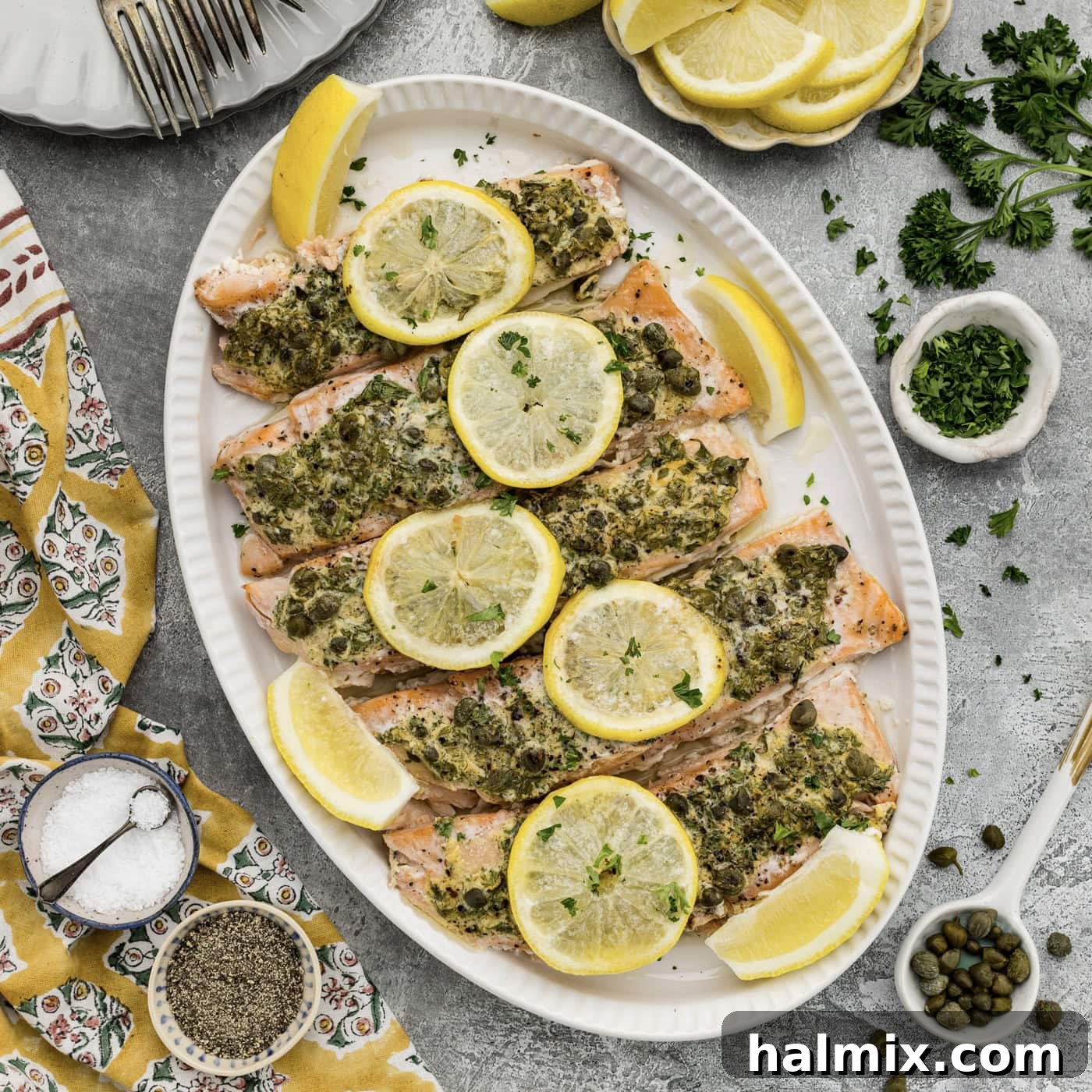
Exquisite Lemon Caper Salmon: A Zesty and Flavorful Baked Delight
Embark on a culinary journey with our exquisite Lemon Caper Salmon recipe, a dish bursting with vibrant, fresh, and zesty flavors. This recipe elevates simple baked salmon into an extraordinary meal, thanks to a luscious, buttery marinade infused with the briny pop of capers, the bright tang of fresh lemon juice, and the subtle sharpness of Dijon mustard. Say goodbye to bland weeknight dinners; this salmon promises a symphony of tastes that will tantalize your palate and leave you craving more.
Whether you’re a seasoned chef or a home cook looking for an impressive yet easy-to-follow recipe, this Lemon Caper Salmon is your answer. It’s an ideal choice for a healthy family meal, a sophisticated dinner party, or even a refreshing addition to your weekly meal prep. The combination of succulent, flaky salmon with this dynamic sauce creates a harmonious balance, making every bite a delight. Prepare to transform your kitchen into a gourmet haven with this truly unforgettable seafood sensation.
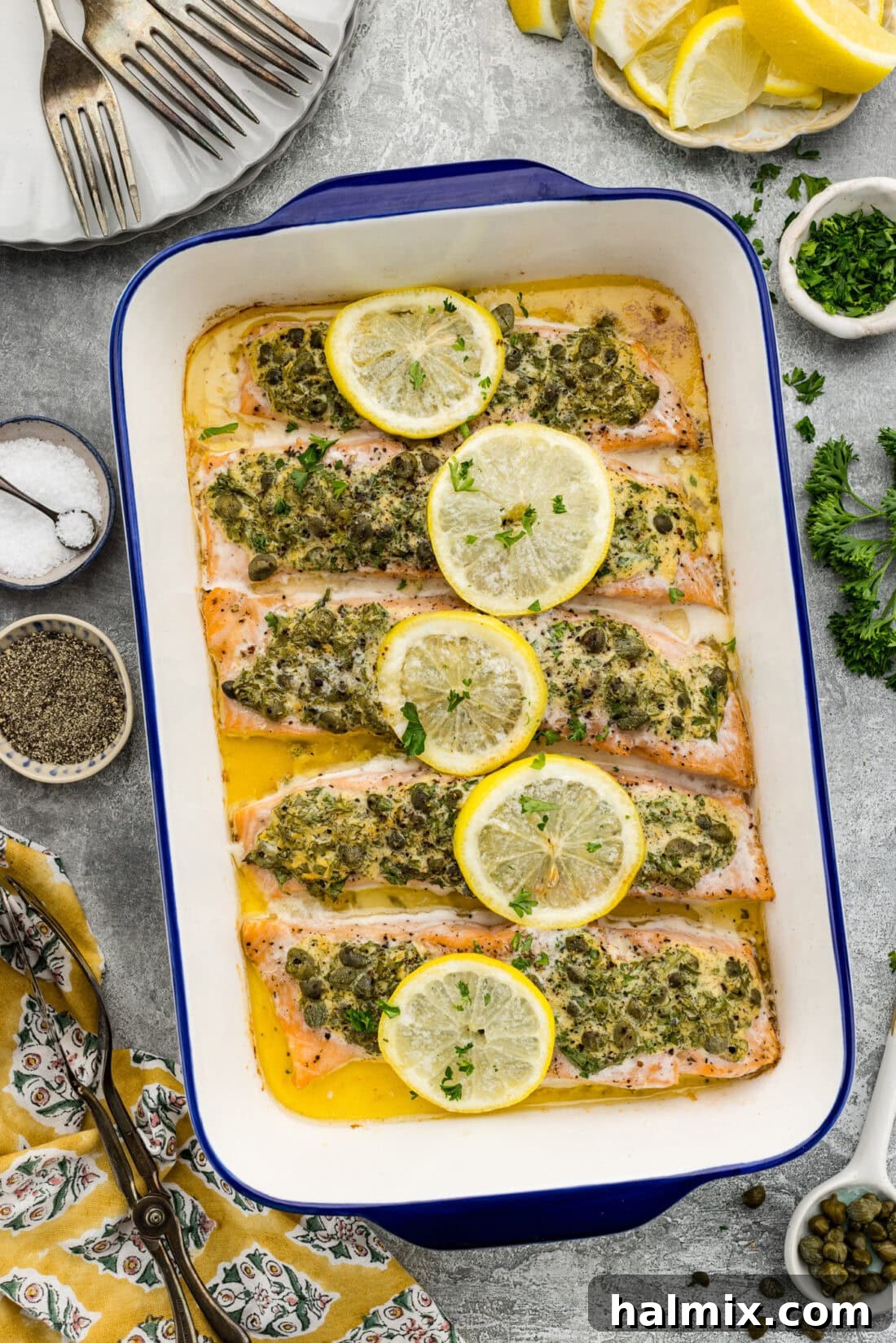
Why This Lemon Caper Salmon Recipe Is a Must-Try
The secret to truly outstanding fish lies in a well-crafted marinade, and this Lemon Caper Salmon recipe absolutely nails it. Our carefully balanced marinade penetrates the salmon, infusing it with layers of flavor that transform a simple filet into a gourmet experience. The beauty of this recipe is its flexibility: while a longer marination time deepens the flavors, even 30 minutes will yield a remarkably tasty and tender outcome.
Salmon, known for its rich, buttery texture and abundant omega-3 fatty acids, provides the perfect canvas for the bold flavors of this dish. The marinade’s key components work in brilliant synergy:
- Capers deliver a distinctive briny, slightly pungent note, adding bursts of salty goodness that complement the fish beautifully.
- Fresh Lemon Juice provides a bright, acidic counterpoint, cutting through the richness of the salmon and capers with its signature zest.
- Dijon Mustard introduces a sophisticated sharpness and a subtle emulsifying quality, helping the marinade cling perfectly to the salmon.
- Olive Oil forms the base, locking in moisture and ensuring the salmon remains tender and succulent during baking.
- Fresh Parsley adds a fresh, herbaceous aroma and a vibrant touch, both in the marinade and as a garnish.
This thoughtful blend ensures that every forkful is moist, flavorful, and anything but ordinary. It’s a testament to how simple, high-quality ingredients can create a dish that feels incredibly indulgent yet remains wonderfully easy to prepare.
Caper Alternatives: Not a huge fan of capers? You might prefer my classic baked lemon salmon recipe for a more straightforward citrus flavor.
Essential Ingredients for Your Lemon Caper Salmon
Crafting this delicious Lemon Caper Salmon requires only a handful of readily available ingredients. Each component plays a crucial role in building the robust flavor profile of the dish. Below, we delve into the details of what you’ll need and offer some helpful substitution tips. You can find all precise measurements and detailed instructions in the printable recipe card at the end of this comprehensive guide.
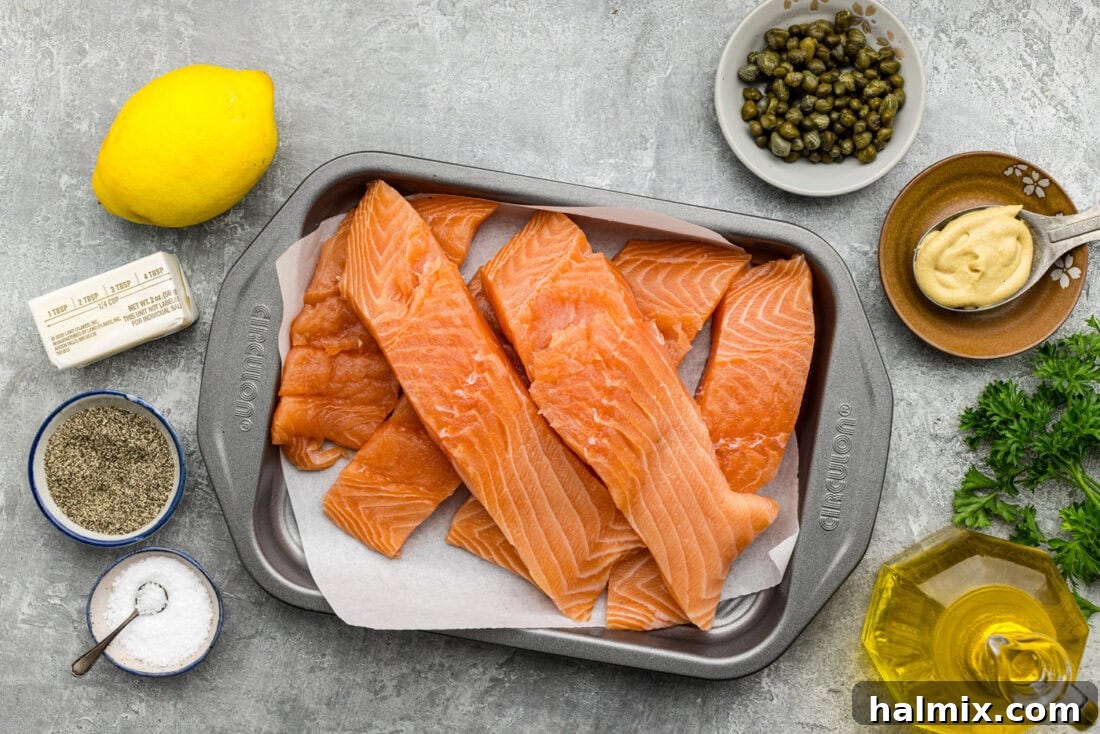
Ingredient Spotlight & Smart Substitutions
- Salmon: We highly recommend using New Zealand King Salmon if available, as its exceptionally buttery texture truly melts in your mouth. However, any good quality salmon will yield fantastic results. Look for center-cut salmon fillets as they tend to be uniform in thickness, ensuring even cooking for all pieces. For an even richer flavor, opt for skin-on fillets, as the skin protects the flesh and crisps up beautifully. If fresh salmon isn’t an option, high-quality frozen salmon, thawed properly, works well too.
- Olive Oil: Extra virgin olive oil is preferred for its superior flavor, forming the base of our vibrant marinade. If you don’t have olive oil, a neutral-tasting oil like avocado oil can be used, though it will impart a slightly different flavor.
- Fresh Squeezed Lemon Juice: This is non-negotiable for that authentic zesty punch! Bottled lemon juice simply doesn’t compare in terms of freshness and acidity. You’ll need about half a lemon for the marinade, but we recommend having a couple of extra lemons on hand for garnishing and an extra squeeze over the cooked salmon.
- Dijon Mustard: Adds a sophisticated tang and helps emulsify the marinade, allowing it to coat the salmon beautifully. Whole grain Dijon can also be used for a textural element, or for a slightly milder flavor, yellow mustard in a pinch (though it will change the profile).
- Chopped Parsley: Fresh flat-leaf (Italian) parsley is ideal for its bright, clean flavor. It adds color and a herbaceous note to the marinade and as a garnish. If fresh isn’t available, dried parsley can be used in a smaller quantity (about 1/3 of the fresh amount), but fresh is always recommended for optimal flavor and presentation.
- Capers: These small, briny flower buds are the star alongside lemon, providing unique bursts of salty, tangy flavor. Make sure to drain them well before adding to the marinade. If you find capers too intense, you can reduce the amount or omit them entirely, though the dish’s signature flavor will be altered.
- Unsalted Butter: A few pats of butter placed on top of the salmon before baking melt into the fish, creating an incredibly rich and moist texture. For a dairy-free alternative, coconut oil or a plant-based butter substitute can be used.
- Kosher Salt and Fresh Ground Black Pepper: Essential for seasoning. Always start with a moderate amount and adjust to taste. Freshly ground pepper makes a noticeable difference in flavor.
A Step-by-Step Guide to Crafting Lemon Caper Salmon
These detailed step-by-step photos and instructions are designed to help you visualize each stage of the recipe, ensuring a perfect outcome. For a quick reference, you can jump directly to the printable recipe card, complete with all exact measurements and concise instructions, located at the bottom of this post.
- Preheat Your Oven: Begin by preheating your oven to 350 degrees F (175 degrees C). This ensures the oven is at the correct temperature when the salmon goes in, promoting even cooking.
- Prepare the Salmon Fillets: Gently arrange your salmon fillets in a 9×13-inch baking pan. Ensure they are not overlapping to allow for consistent cooking and proper contact with the marinade. If your fillets are particularly thick, consider slightly scoring the top to help the marinade penetrate.
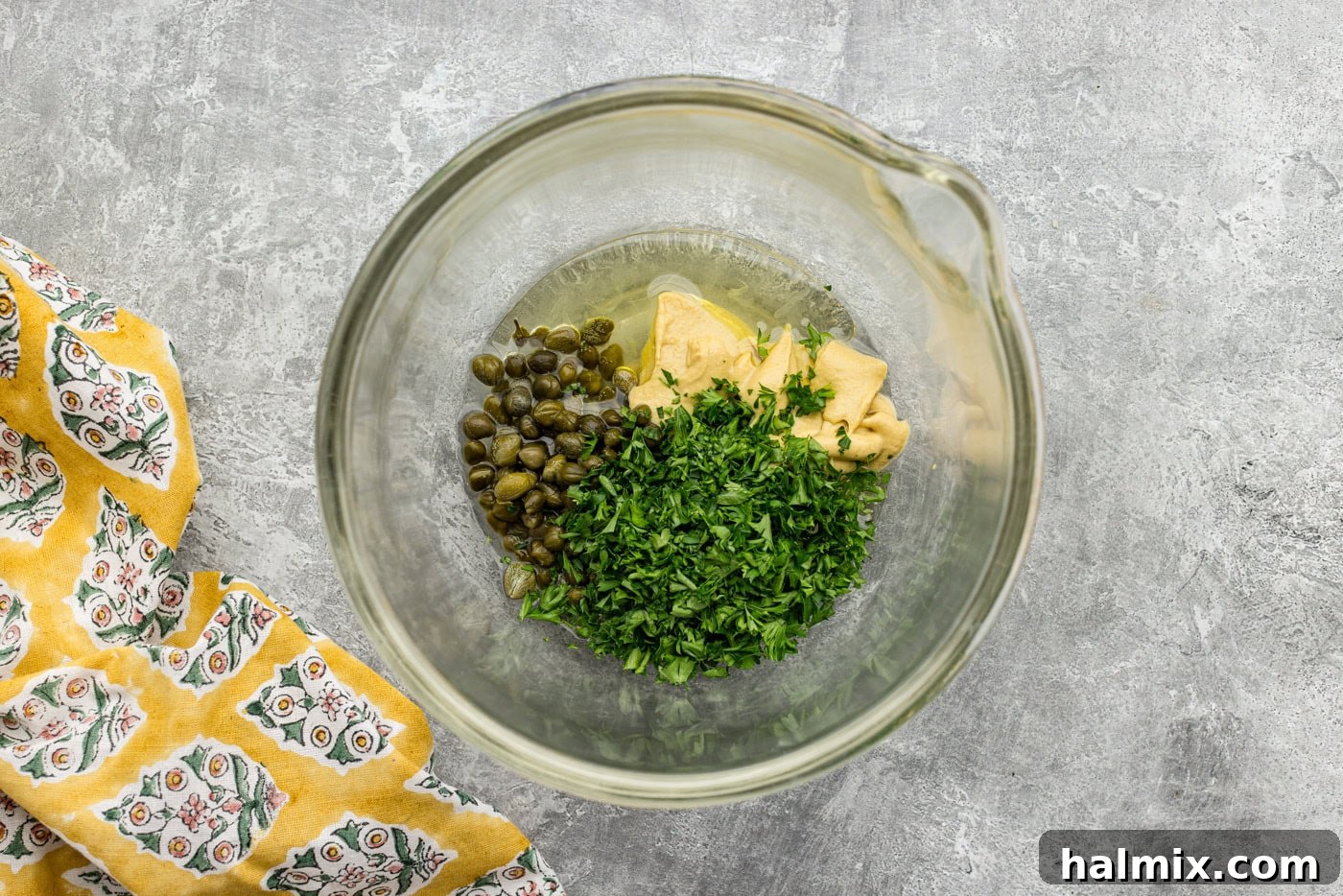
- Whisk Together the Marinade: In a medium-small mixing bowl, combine the olive oil, freshly squeezed lemon juice, Dijon mustard, finely chopped parsley, and the well-drained capers. Whisk all these ingredients together until they are thoroughly combined into a fragrant and emulsified sauce. The vibrant colors of the parsley and capers should be evenly distributed.

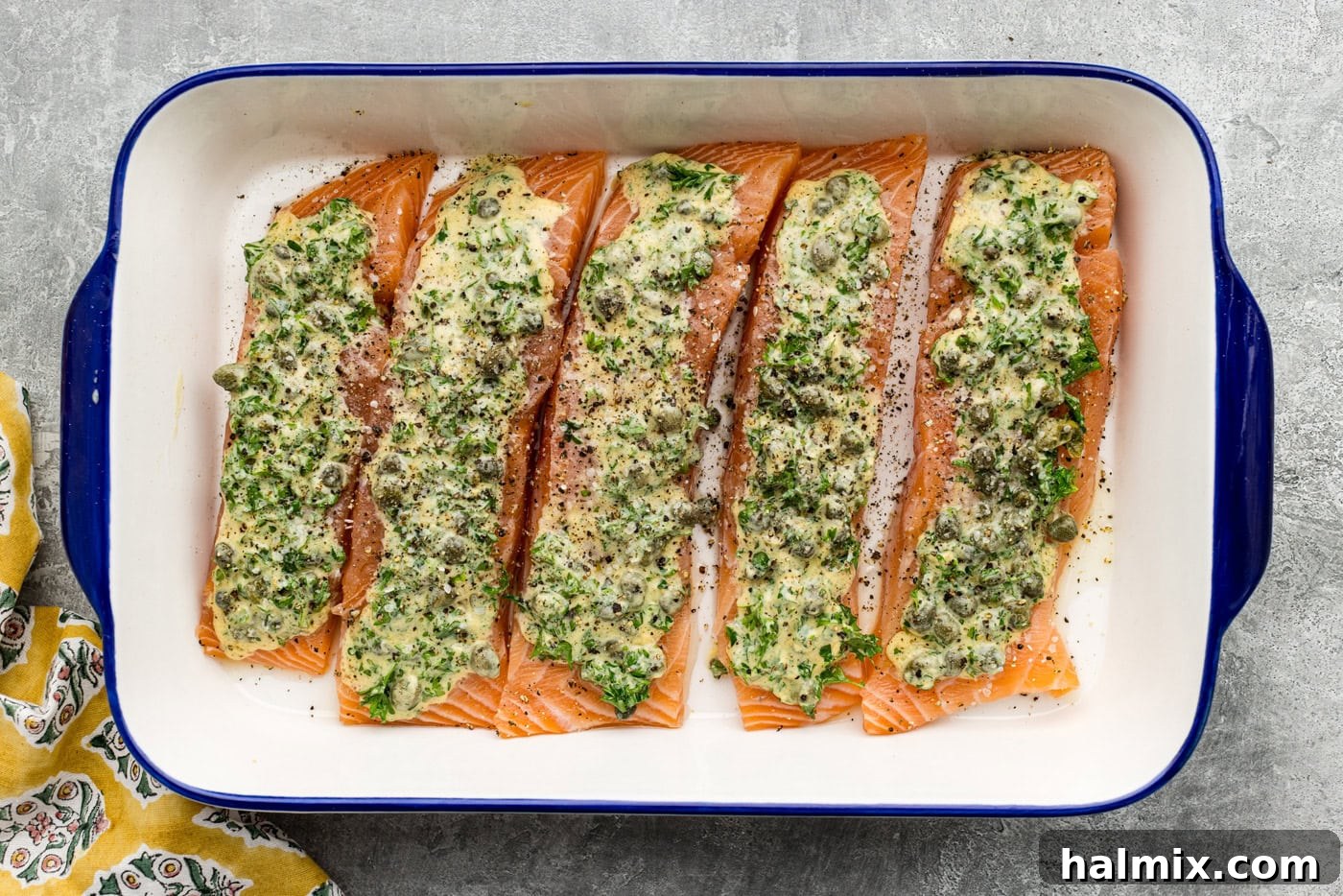
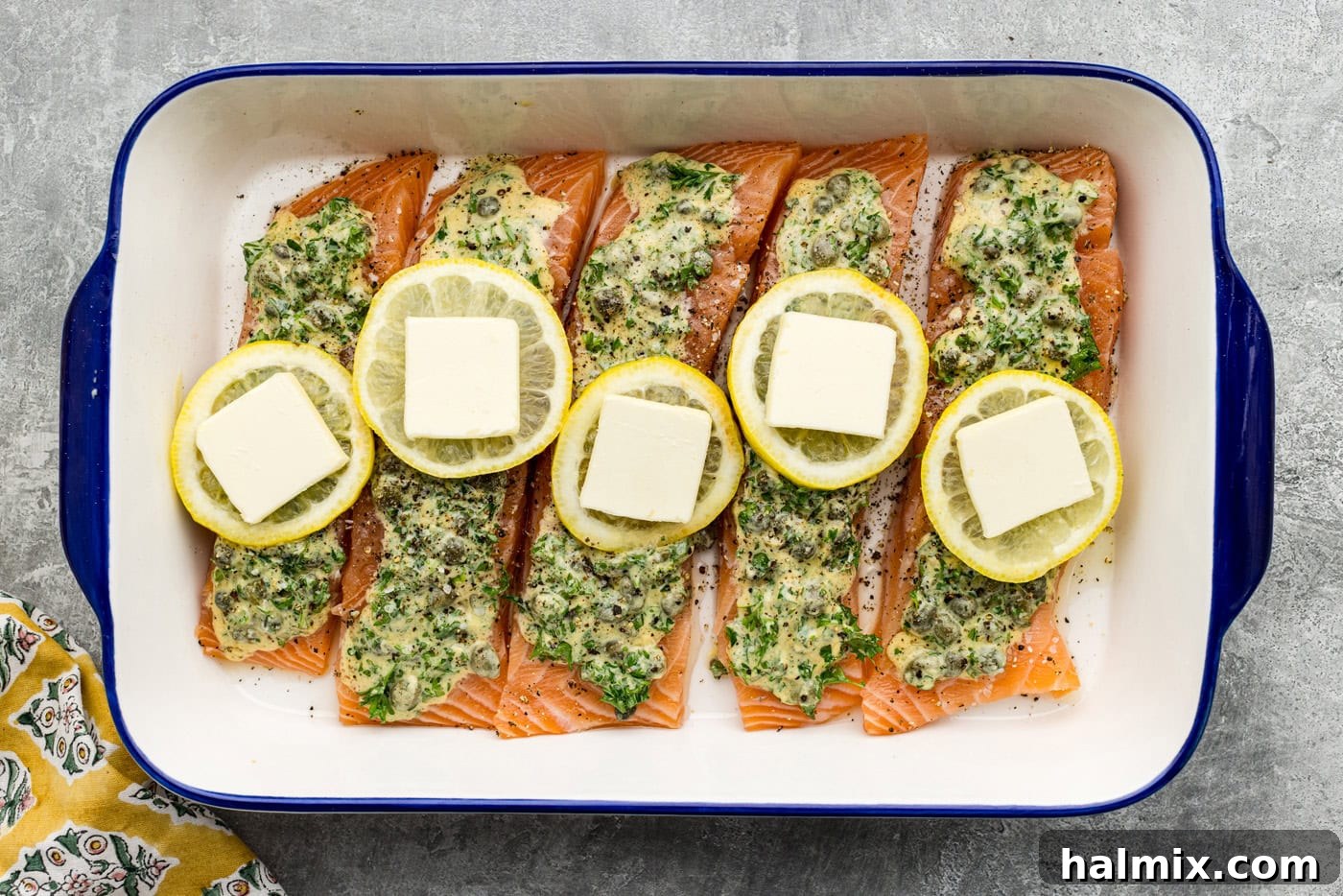
- Coat and Season the Salmon: Generously spread the prepared marinade over the top of each salmon fillet, ensuring they are fully coated. Use a spoon or brush to distribute the mixture evenly. Once coated, sprinkle kosher salt and fresh ground black pepper over the salmon to taste. For an extra layer of flavor and moisture, thinly slice a lemon and place a slice over each fillet. Then, top each lemon slice with a tablespoon of unsalted butter. As the butter melts, it will baste the salmon, keeping it incredibly tender and moist.
- Marinate for Flavor Development: Cover the baking pan tightly with plastic wrap and refrigerate. Allow the salmon to marinate for at least 30 minutes to an hour. For a deeper infusion of flavor, you can marinate it overnight (up to 12 hours). This step is crucial for the flavors to meld and tenderize the fish.
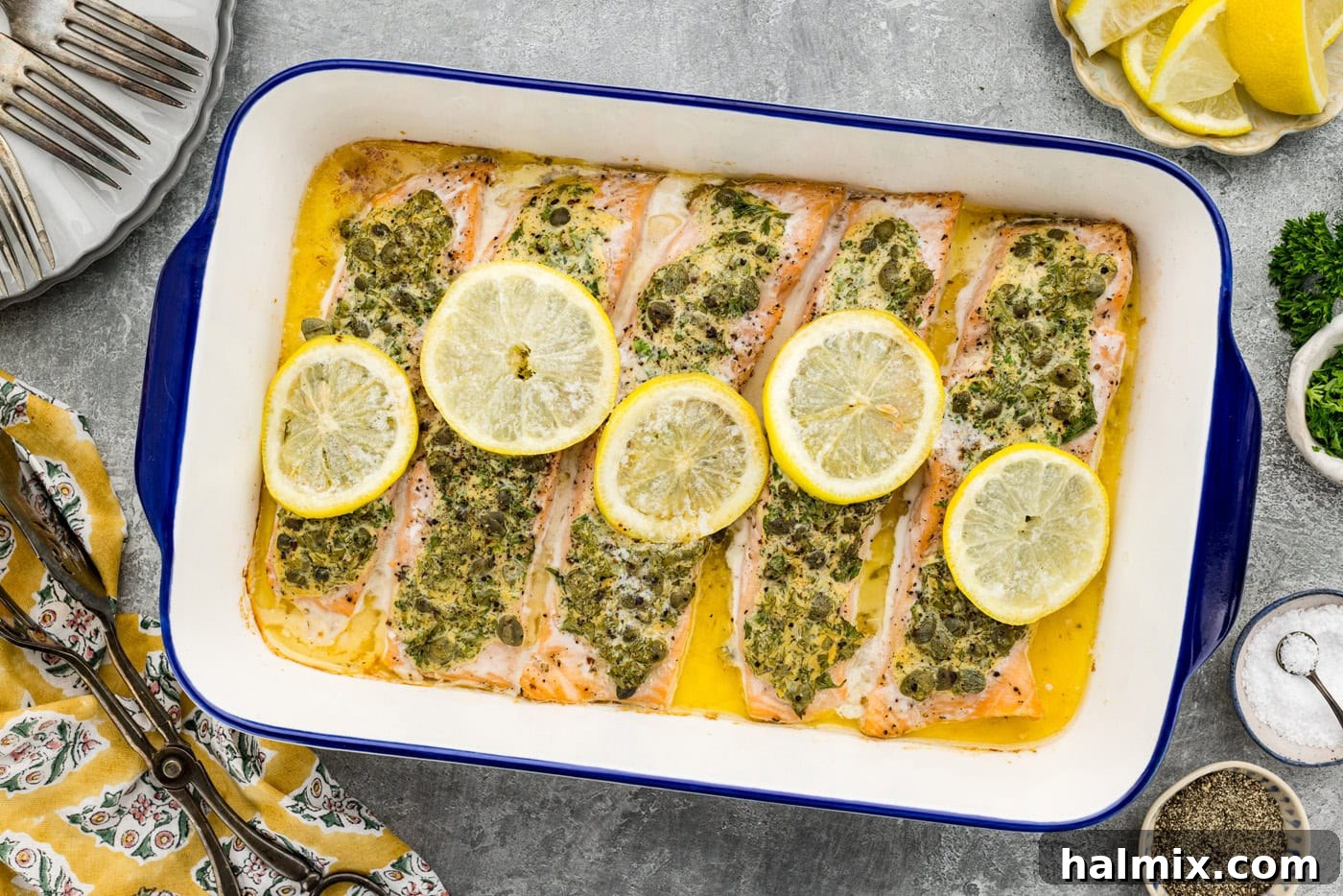
- Bake to Perfection: Transfer the covered baking dish to your preheated oven. Bake the salmon for 20-30 minutes. Cooking time will vary based on the thickness of your fillets. Begin checking for doneness at the 20-minute mark. The salmon is perfectly cooked when it flakes easily with a fork in its thickest portion but still appears moist and slightly translucent in the center. Avoid overcooking, as this can result in dry, stiff, or firm salmon. An internal temperature of 125-130°F (52-54°C) for medium or 140°F (60°C) for well-done is ideal.
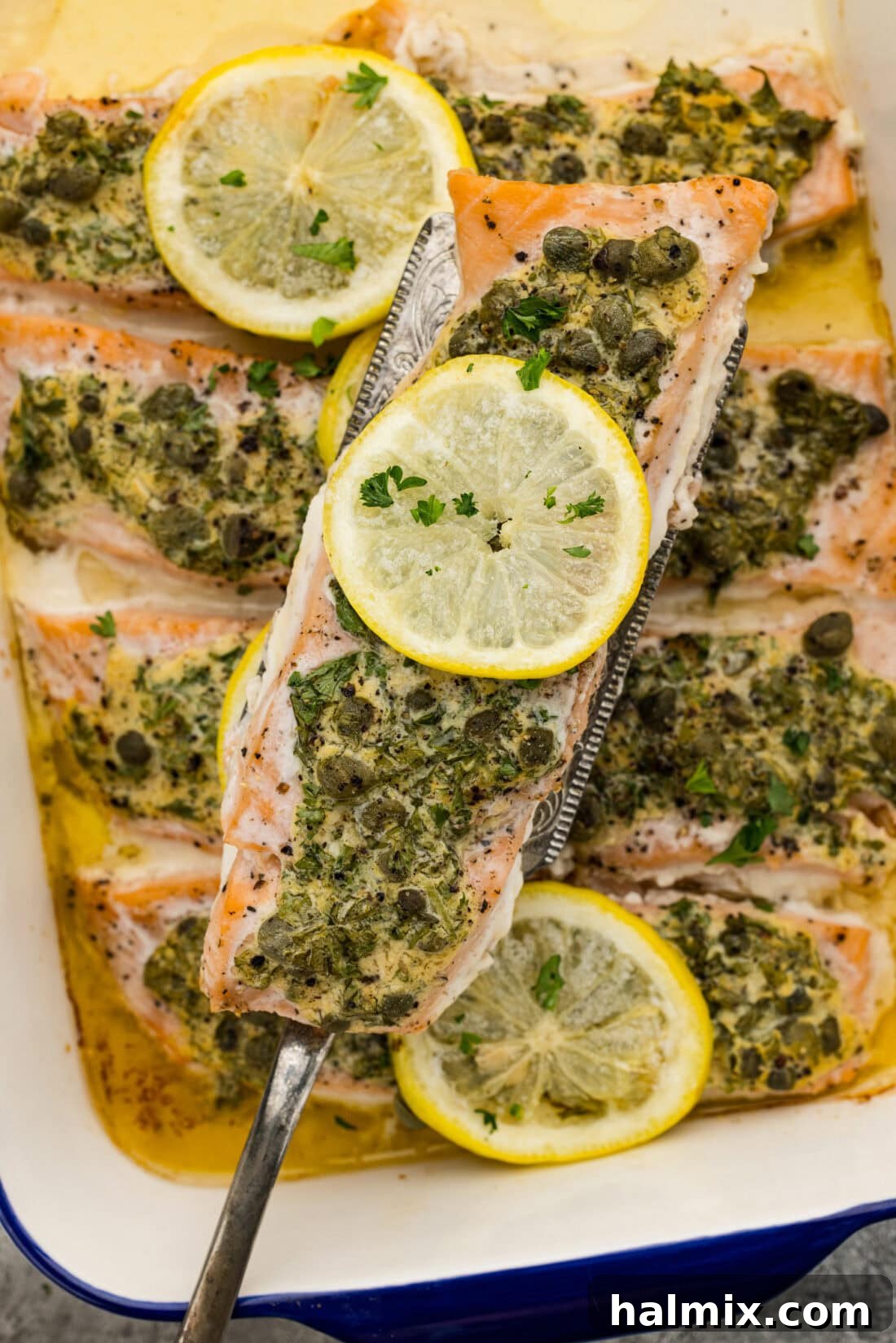
- Garnish and Serve: Once baked, remove the salmon from the oven. Optionally, sprinkle with more freshly chopped parsley for a burst of freshness and color. Add additional salt and pepper if desired. Serve immediately and enjoy the exquisite flavors!
Frequently Asked Questions & Expert Tips for Success
Absolutely! This recipe is fantastic for meal planning. You can prepare the salmon and let it marinate in the refrigerator the night before or the morning of your dinner. This allows the flavors to truly penetrate the fish, making your dinner prep stress-free and the final dish even more flavorful. Just be sure to cover it tightly with plastic wrap to keep it fresh.
Allow any leftover salmon to cool completely, then store it in an airtight container in the refrigerator for 3-4 days. When reheating, it’s best to do so gently to prevent the salmon from drying out. Preheat your oven to a low 275°F (135°C). Wrap the salmon loosely in foil and place it on a baking sheet. A splash of water or a small pat of extra butter added to the foil packet can help keep it moist during reheating. Reheat for about 10-15 minutes, or until just warmed through.
The most accurate way to test for doneness is by using an instant-read thermometer. Insert it into the thickest part of the salmon fillet. For medium-rare to medium, aim for an internal temperature of 125-130°F (52-54°C). For well-done, the temperature should reach 140°F (60°C). If you don’t have a thermometer, gently press the center of the fillet with a fork. If it flakes easily but still looks moist and slightly opaque in the center, it’s done. Stiff or firm salmon indicates it’s overcooked and will likely be dry.
Yes, absolutely! Grilling adds a lovely smoky flavor. Marinate the salmon as directed. Preheat your grill to medium-high heat. Lightly oil the grates to prevent sticking. Place the salmon skin-side down (if applicable) and grill for 4-6 minutes per side, or until it reaches your desired doneness and flakes easily. Keep an eye on it to prevent burning, especially with the lemon juice in the marinade.
A 9×13-inch baking pan is ideal for 4-5 fillets. Ceramic or glass baking dishes work well for even heat distribution. If using a metal baking sheet, you might want to line it with parchment paper for easier cleanup and to prevent sticking. Using a pan that fits the salmon snugly but without overcrowding is key for optimal cooking.
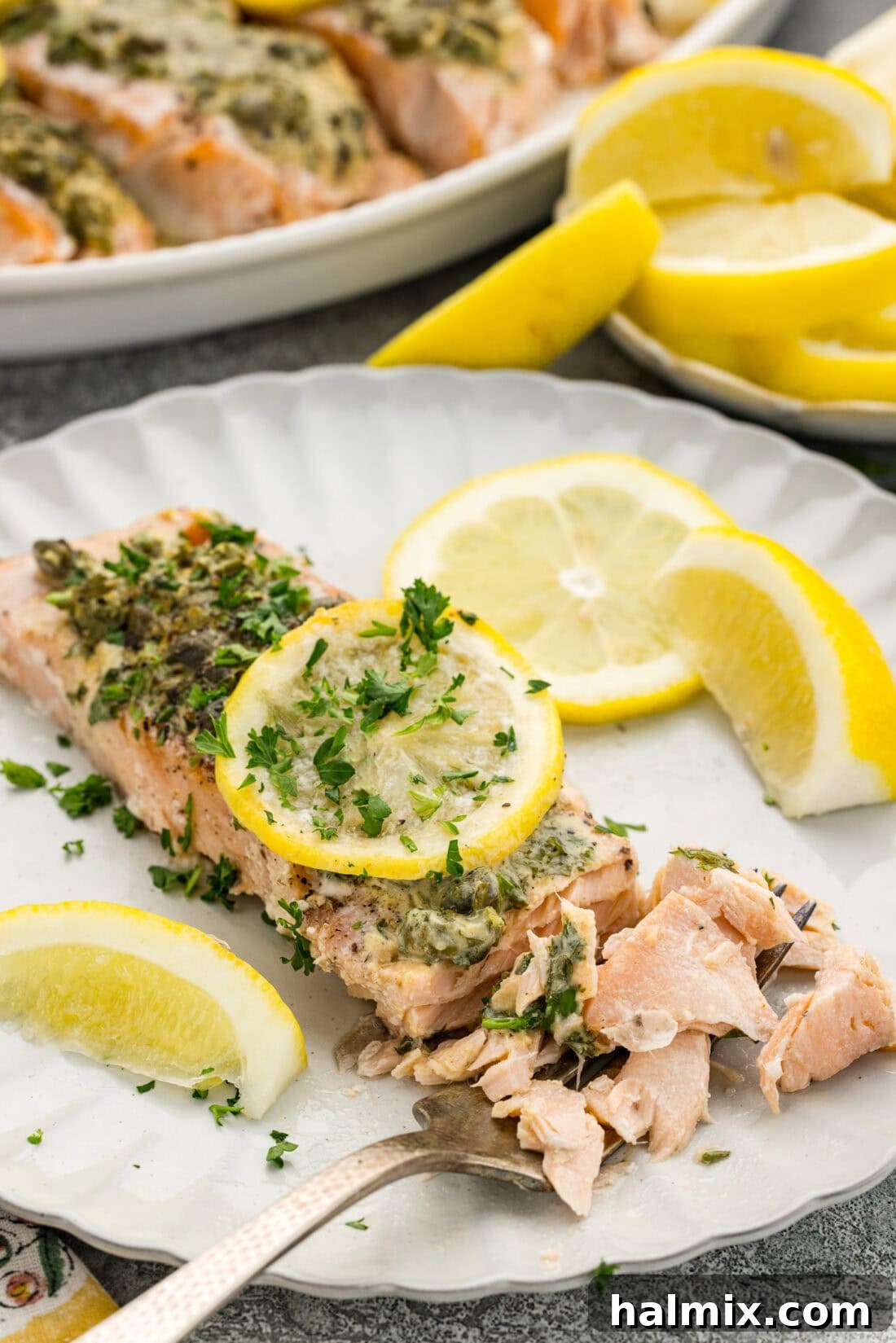
Delicious Serving Suggestions for Lemon Caper Salmon
This versatile Lemon Caper Salmon pairs beautifully with a wide array of side dishes, making it suitable for various occasions and dietary preferences. Its vibrant flavor profile complements both light and hearty accompaniments.
- Roasted Vegetables: Enhance your meal with roasted green beans, tender asparagus spears, or caramelized Brussels sprouts. The slight char and sweetness of roasted vegetables provide a wonderful contrast to the salmon’s zest. Roasted potatoes or sweet potatoes are also fantastic, offering a more substantial side.
- Grains: For a comforting and complete meal, serve the salmon alongside fluffy white rice, nutty brown rice, or a delicate orzo pasta. Our lemon couscous is an especially delightful pairing, echoing the citrus notes of the main dish. Quinoa is another healthy and flavorful grain option.
- Fresh Salads: Keep it light and refreshing with a crisp garden salad or a vibrant mixed green salad with a light vinaigrette. The leftovers, in particular, are excellent flaked into a fresh, crunchy salad for a healthy lunch.
- Creamy Sides: For a touch of indulgence, consider a creamy risotto or a light potato puree.
- Breads: A crusty baguette or garlic bread can be perfect for soaking up any delicious leftover sauce from the pan.
Whether you’re aiming for a quick weeknight dinner or an elegant weekend feast, this Lemon Caper Salmon adapts effortlessly. It’s also a fantastic candidate for meal prep; simply cook a larger batch and portion it out for delicious, healthy lunches throughout the week, often enjoying it chilled over greens or reheated gently.
Explore More Delicious Salmon Recipes
Salmon is a remarkably versatile fish, perfect for a myriad of culinary creations. If you loved this Lemon Caper Salmon, we invite you to explore more of our favorite salmon dishes, each offering a unique flavor profile and preparation style:
- Salmon Tacos: A fun and flavorful twist on taco night, featuring flaky salmon, fresh toppings, and zesty sauces.
- Classic Baked Salmon: A simple yet elegant go-to recipe for perfectly cooked salmon, ideal for any occasion.
- Teriyaki Salmon: Sweet and savory with an irresistible glaze, this recipe is a family favorite that comes together quickly.
- Brown Sugar Salmon: A delightful balance of sweet and salty, creating a tender, caramelized crust on your salmon fillets.
I love to bake and cook and share my kitchen experience with all of you! Remembering to come back each day can be tough, that’s why I offer a convenient newsletter every time a new recipe posts. Simply subscribe and start receiving your free daily recipes!
Lemon Caper Salmon
IMPORTANT – There are often Frequently Asked Questions within the blog post that you may find helpful. Simply scroll back up to read them!
Print It
Pin It
Rate It
Save It
Ingredients
- 2 pounds salmon about 5 filets. ideally center-cut salmon
- 2 Tablespoons olive oil
- 2 Tablespoons fresh squeezed lemon juice 1/2 lemon, get a couple lemons for this recipe so you have wedges for serving
- 2 Tablespoons Dijon mustard
- ¼ cup chopped parsley plus more for serving
- 1-2 Tablespoons capers drained
- 4-5 Tablespoons unsalted butter can substitute same amount coconut oil
- kosher salt and fresh ground black pepper to taste start with 1/4 tsp. of each
Things You’ll Need
-
13×9 baking dish
Before You Begin
- We initially used New Zealand King Salmon for this recipe. It was so buttery and melts in your mouth, but just about any good quality salmon will do the trick. Center cut salmon is excellent here because it’s uniform in size, meaning each filet will cook evenly together.
- The best way to test for doneness when it comes to salmon is to use an instant-read thermometer. Inserted into the thickest portion of the filet, the temperature should read 125-130F for medium and 140F for well done. If you don’t have a thermometer, gently press the filet in the center with a fork. If it flakes easily and still looks moist on the inside, it’s done.
Instructions
-
Preheat oven to 350 degrees F.
-
Arrange fillets in a 9×13-inch baking pan.2 pounds salmon
-
In a medium-small mixing bowl, mix the olive oil, freshly squeezed lemon juice, Dijon mustard, chopped parsley, and the drained capers.2 Tablespoons olive oil, 2 Tablespoons fresh squeezed lemon juice, 2 Tablespoons Dijon mustard, 1/4 cup chopped parsley, 1-2 Tablespoons capers
-
Spread the mixture over the top of the salmon filets until fully coated, top with salt and pepper to taste. Add lemon slices to each filet if desired and a tablespoon of butter over each of the lemon slices.4-5 Tablespoons unsalted butter
-
Cover with wrap and refrigerate for a half hour or longer (you can also marinate overnight).
-
Bake salmon for 20-30 minutes, checking at the 20-minute mark for doneness. The bake time will vary depending on how thick your filets are. If the salmon flakes easily when pressed with a fork in the thickest portion of the filet, but still looks moist inside, then it is done cooking. Stiff or firm salmon is considered overcooked.
-
Optionally top with freshly chopped parsley.
Expert Tips & FAQs
- You can prep the salmon and allow it to rest in the marinade the night before or morning off to take some stress off dinner time. Be sure to cover it well with plastic wrap.
- Store any cooled leftovers in an air-tight container kept in the refrigerator for 3-4 days. Reheat gently in a 275F oven. I would recommend wrapping the salmon loosely with foil and placing it on a baking sheet. Salmon tends to dry out when reheated, so a splash of water or extra butter will help keep it moist.
Nutrition
The recipes on this blog are tested with a conventional gas oven and gas stovetop. It’s important to note that some ovens, especially as they age, can cook and bake inconsistently. Using an inexpensive oven thermometer can assure you that your oven is truly heating to the proper temperature. If you use a toaster oven or countertop oven, please keep in mind that they may not distribute heat the same as a conventional full sized oven and you may need to adjust your cooking/baking times. In the case of recipes made with a pressure cooker, air fryer, slow cooker, or other appliance, a link to the appliances we use is listed within each respective recipe. For baking recipes where measurements are given by weight, please note that results may not be the same if cups are used instead, and we can’t guarantee success with that method.
This recipe was lovingly contributed by our friend Sara over at Life’s Little Sweets.