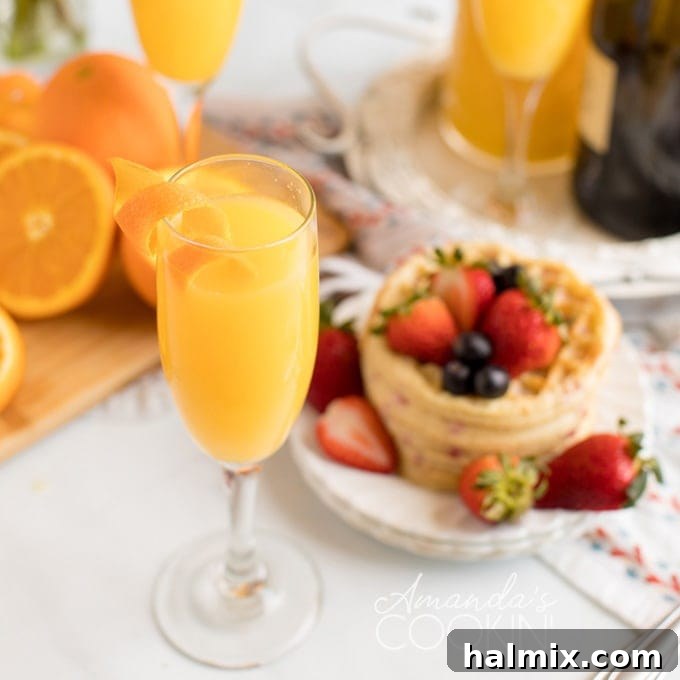
Welcome to the ultimate guide for mastering the art of the Mimosa, the quintessential brunch cocktail! Effortlessly elegant and incredibly simple to prepare, Mimosas are a beloved staple, gracing countless weekend gatherings and celebrations. This delightful blend of bright orange juice and effervescent champagne creates a truly refreshing drink that perfectly complements any brunch spread. Whether you’re a seasoned host or a novice entertainer, learning how to make the classic Mimosa will undoubtedly elevate your brunch game. Get ready to discover the secrets to crafting this iconic cocktail, complete with expert tips, delicious variations, and the simple recipe that ensures a perfect pour every time.
The Classic Mimosa: Your Go-To Brunch Companion
Brunch isn’t just a meal; it’s an experience, a leisurely celebration often accompanied by a classic Mimosa or a robust Bloody Mary. If you’re planning on hosting guests, this Mimosa recipe is your secret weapon for a sophisticated yet fuss-free gathering. Its simplicity means you can spend less time mixing drinks and more time enjoying the company of your loved ones.
While a full glass of champagne might feel a bit early for some, the addition of fresh orange juice softens the sparkle, allowing you to toast the occasion without getting “too buzzed before bacon.” Orange juice is the ideal partner for champagne, adding a touch of natural sweetness and a vibrant citrus note that brightens the cocktail without ever becoming cloying. It’s the perfect balance of festive and refreshing, making it an indispensable part of any successful brunch menu.
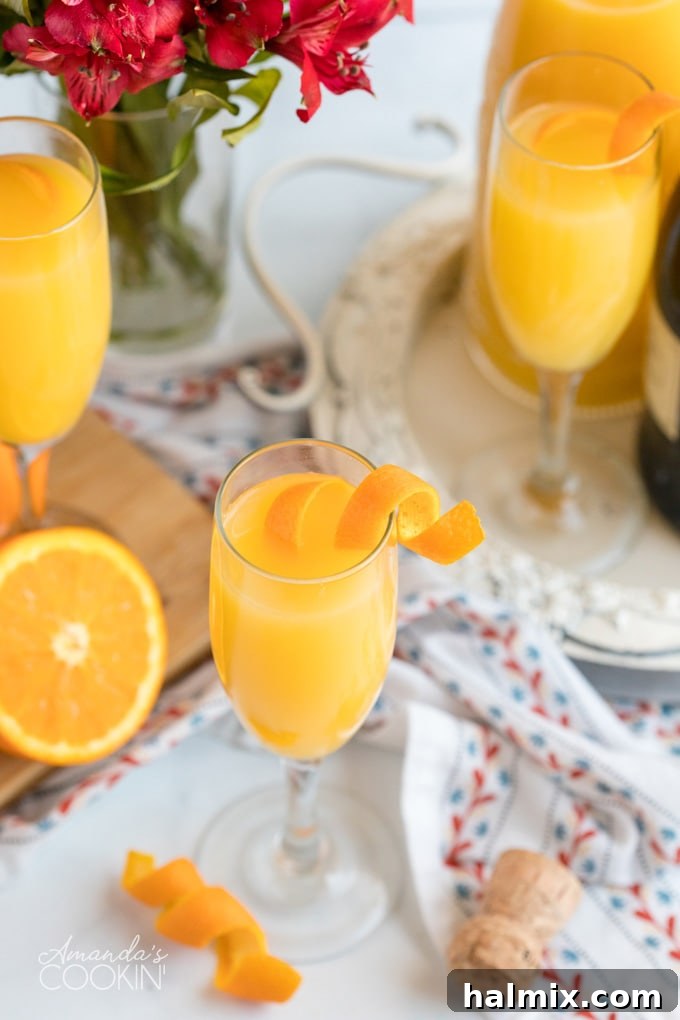
The beauty of Mimosas lies not only in their ease of preparation but also in their incredible versatility when paired with food. They harmonise beautifully with almost any brunch dish, whether you’re leaning towards savory delights or sweet indulgences. Imagine sipping a Mimosa alongside savory masterpieces like our Eggs Benedict, a comforting plate of Poached Eggs in Tomato Sauce, or a hearty Breakfast Casserole with Ham and Cheese. Or, if your heart desires something sweet, a Mimosa pairs wonderfully with our Quick Orange Rolls or these delectable Strawberry Sweet Rolls. A Mimosa never overpowers or clashes; instead, it offers a refreshing counterpoint, proving that a simple cocktail can be anything but boring.
The Simple Origin of the Mimosa
While its exact origins are debated, the Mimosa cocktail is widely believed to have been invented around the 1920s or 1930s. Some credit the Buck’s Club in London in 1921 with a similar drink called the “Buck’s Fizz,” which uses two parts champagne to one part orange juice. Others point to the Hôtel Ritz Paris, where bartender Frank Meier is said to have created the Mimosa in 1925. Regardless of its precise birthplace, this delightful concoction quickly gained popularity, especially among those seeking a lighter, more refreshing alternative to stronger spirits during daytime social gatherings. Its name is thought to come from the Mimosa flower (Acacia dealbata), which has bright yellow blossoms resembling the drink’s vibrant orange hue. From its early days in upscale establishments, the Mimosa has evolved into a global phenomenon, symbolizing leisurely weekends and joyful celebrations.
Choosing Your Ingredients: The Heart of a Perfect Mimosa
Crafting the perfect Mimosa relies on selecting quality ingredients. While the recipe itself is straightforward, a little attention to your choices can make a significant difference in the final taste.
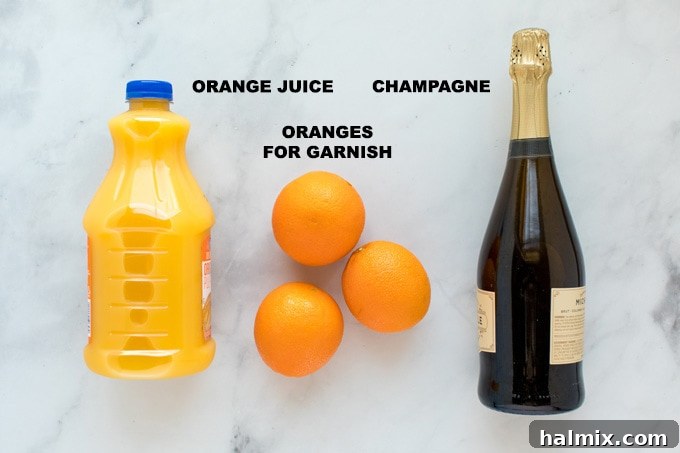
- Orange Juice: This is half the drink, so don’t skimp on quality. Freshly squeezed orange juice is always superior, offering the brightest flavor and most natural sweetness. If fresh isn’t an option, opt for a high-quality, 100% natural, not-from-concentrate orange juice. Look for one with a good balance of sweet and tart. Some prefer pulp-free for a smoother sip, while others enjoy a little texture. Whichever you choose, ensure it’s well-chilled for optimal refreshment.
- Champagne or Sparkling Wine: The other half of your Mimosa! While true “Champagne” must come from the Champagne region of France, any dry sparkling wine will do beautifully. Excellent alternatives include Prosecco (from Italy), Cava (from Spain), or domestic sparkling wines. The key is to choose a “Brut” or “Extra Dry” variety. These are drier, meaning they have less residual sugar, which allows the natural sweetness of the orange juice to shine without making the cocktail overly sugary. Avoid “Demi-Sec” or “Doux” sparkling wines unless you prefer a very sweet Mimosa.
- Orange Peel Twist: This isn’t just for looks; the oils from the orange peel add a subtle aromatic complexity to the drink. It’s an easy garnish that truly elevates the experience.
This recipe yields 2 servings, but it’s incredibly easy to scale up for a crowd. Just maintain the 1:1 ratio of orange juice to sparkling wine, or adjust to your personal preference!
Essential Kitchen Tools for Mimosas
You don’t need a professional bar setup to make Mimosas, but a few basic tools will make the process smoother and more enjoyable:
- Vegetable Peeler: Essential for creating those elegant orange peel twists.
- Champagne Flutes: While any glass works, flutes are traditionally used for Mimosas and other sparkling wines. Their tall, slender shape helps to preserve the bubbles, keeping your drink effervescent for longer.
- Liquid Measure: For accurate and consistent ratios of orange juice and champagne.
- Chopstick or Small Skewer: Useful for shaping the orange peel twists.
Expert Mimosa Making Tips
Elevate your Mimosa game with these simple yet effective tips:
- **Chill, Chill, Chill:** The colder your orange juice and sparkling wine are, the better your Mimosa will taste. Warm ingredients can dilute the flavor and make the drink less refreshing. Plan ahead and ensure everything is thoroughly chilled before mixing.
- **The Right Ratio:** The classic Mimosa ratio is 1:1 (equal parts orange juice and sparkling wine). However, this is merely a guideline. Feel free to adjust to your taste! If you prefer a lighter, less boozy drink, add more orange juice. For a stronger kick, increase the sparkling wine. Some variations even suggest a 2:1 champagne to orange juice ratio. Experiment to find your perfect balance.
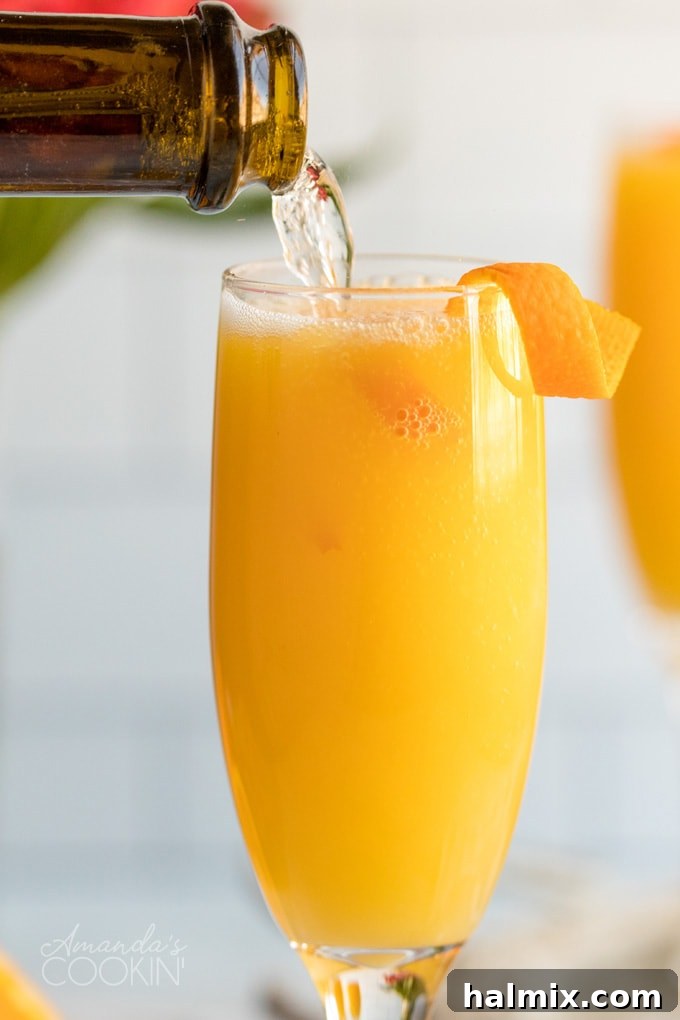
- **Pour Sparkle Last:** Always pour the orange juice into the flute first, then top with sparkling wine. Pouring the sparkling wine second helps to gently mix the ingredients and preserve more of the effervescence. Angle the glass slightly when pouring the sparkling wine, much like you would a beer, to minimize foam and maximize bubbles.
- **Creative Garnishes:** While an orange peel twist is classic, don’t stop there! Fresh berries (strawberries, raspberries, blueberries) can add a pop of color and flavor. A sprig of fresh mint or rosemary can introduce an unexpected aromatic twist. Edible flowers also make for a stunning presentation.
- **Seasonal Swaps:** Don’t be afraid to experiment with different juices! For a festive holiday brunch, try white cranberry juice or pomegranate juice. In the summer, strawberry puree or pineapple juice makes a delightful Mimosa variation. Grapefruit juice offers a sophisticated, slightly bitter twist.
- **Make-Ahead Potential (Sort Of):** While Mimosas are best made fresh to preserve the bubbles, you can prepare your orange twists ahead of time and keep them in the freezer. You can also have all your juices and sparkling wine chilled and ready to go. Just assemble immediately before serving.
How to Make Mimosas: Step-by-Step Guide
Follow these simple steps to craft perfect Mimosas every time:
- Prepare Your Orange Twists: Start by peeling a fresh orange with a vegetable peeler, aiming for long, thin strips without too much white pith. Gently twist each peel around a chopstick or small skewer. Place these twisted peels in the freezer for at least 2 minutes while you prepare the rest of your ingredients. This helps them hold their shape beautifully.
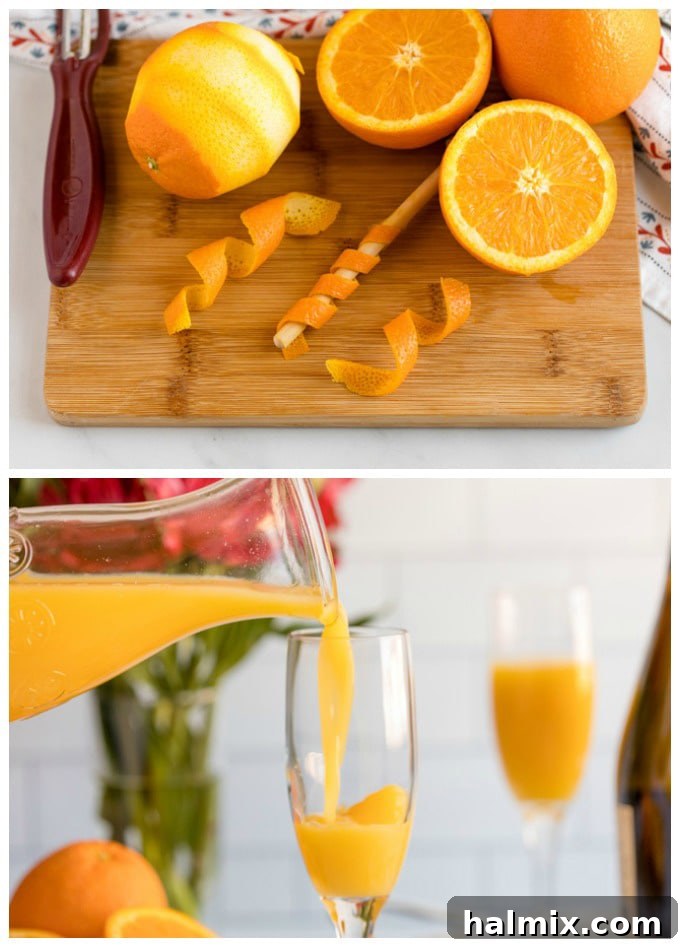
- Add Orange Juice: Take your chilled champagne flutes and fill each halfway with your cold orange juice. This typically means about 6 ounces per flute for a standard 12-ounce flute.
- Garnish the Flutes: Carefully remove the orange twists from the freezer. Gently place one twist on the rim of each flute. The cold will help them retain their elegant curl.
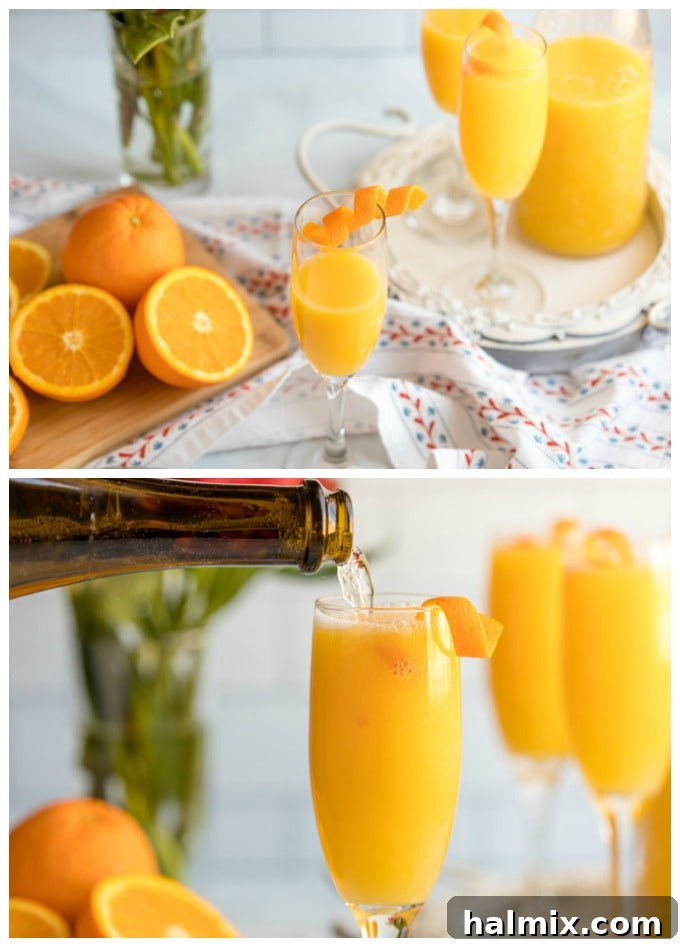
- Top with Champagne: Holding the flute at a slight angle, slowly fill the remaining half of the glass with your chilled champagne or sparkling wine. Pouring slowly and at an angle helps to preserve the bubbles.
Serve and enjoy your perfectly crafted Mimosas immediately! The effervescence and fresh flavors are best savored right after mixing.
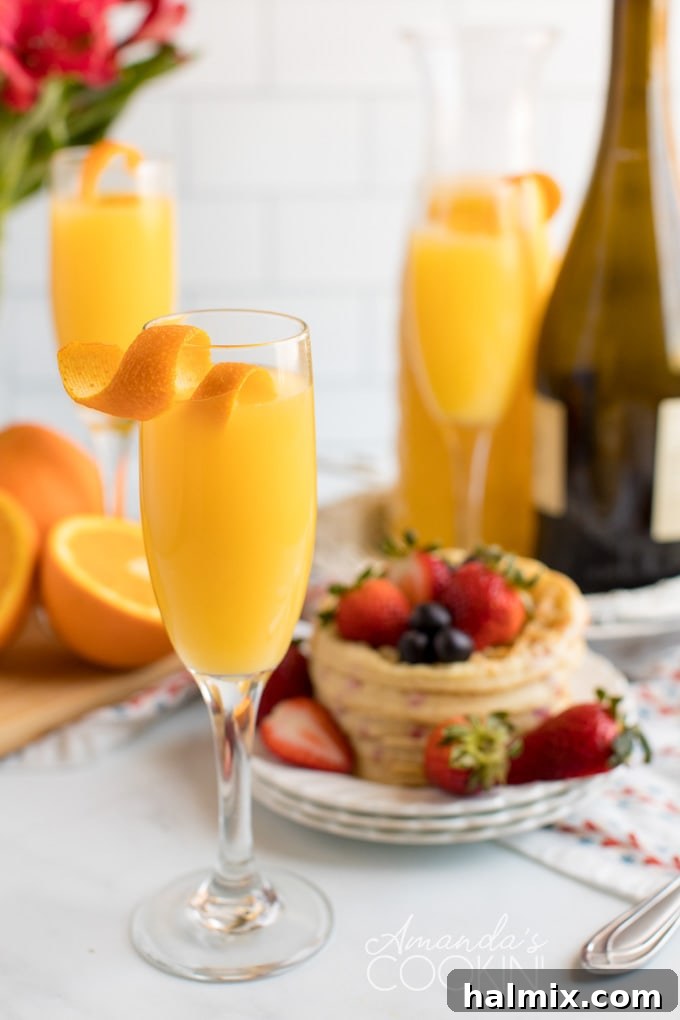
Mimosas are a testament to the idea that sometimes the simplest things are the best. They are incredibly easy to make and replenish, making them the perfect low-fuss brunch cocktail for all occasions. The most “fussy” aspect of them might just be choosing your favorite optional garnish, or deciding which delicious variation to try next.
Frequently Asked Questions About Mimosas
Here are answers to some common questions about making and enjoying Mimosas:
- What is the best type of orange juice for Mimosas?
- Freshly squeezed orange juice offers the best flavor. If using store-bought, choose a high-quality, not-from-concentrate, 100% orange juice. Pulp-free is generally preferred for a smoother texture, but it’s a matter of personal preference. Always ensure it’s well-chilled!
- What’s the ideal sparkling wine for Mimosas? Champagne, Prosecco, or Cava?
- Any dry sparkling wine works wonderfully! Champagne is traditional, but Prosecco (from Italy) or Cava (from Spain) are excellent, more affordable alternatives. Look for “Brut” or “Extra Dry” on the label, as these are less sweet and balance well with the orange juice.
- What’s the best ratio of orange juice to champagne?
- The classic ratio is 1:1 (equal parts orange juice and sparkling wine). However, many prefer a 2:1 ratio (two parts sparkling wine to one part orange juice) for a stronger, drier drink. Feel free to adjust to your personal taste.
- Can I make Mimosas ahead of time?
- Mimosas are best made fresh, right before serving, to preserve the bubbles and effervescence of the sparkling wine. You can prepare your orange twists in advance and chill all your ingredients, but don’t mix them until your guests arrive.
- How do I keep Mimosas cold for a party?
- For a large gathering, you can prepare the orange juice ahead and keep it in a pitcher in the fridge. Keep bottles of sparkling wine on ice in a bucket. Guests can then mix their own Mimosas on demand, ensuring a fresh and bubbly drink every time. You can also serve them from a large carafe or pitcher placed in an ice bath.
- Are there any non-alcoholic Mimosa options?
- Absolutely! For a delicious virgin Mimosa, simply swap the sparkling wine for sparkling cider, sparkling grape juice, or a non-alcoholic sparkling wine. It’s a great option for kids and non-drinkers to enjoy the festive feel.
More Delightful Recipes You Will Love
Looking to round out your brunch menu or explore more refreshing cocktails? Here are some fantastic recipes that pair wonderfully with Mimosas or offer exciting new drink options:
- For a perfectly delicious and wholesome brunch, serve these Mimosas alongside our savory Vegetable Frittata.
- If you’re seeking more brunch-worthy cocktails, this vibrant Pineapple Prosecco Punch and festive Cranberry Prosecco Punch are fantastic options for a crowd.
- Don’t miss our other orange juice-infused cocktails that bring a burst of sunshine to any occasion: the classic Tequila Sunrise and the ever-simple Screwdriver.
- For seasonal twists on the Mimosa, especially in the fall, try our cozy Cranberry Mimosa and the indulgent Caramel Apple Mimosa.

Mimosas
Can you even call it brunch if Mimosas aren’t an option? Better to play it safe and have this easy Mimosa recipe ready and waiting for your next get-together!
IMPORTANT – There are often Frequently Asked Questions within the blog post that you may find helpful. Simply scroll back up to read them!
Rate It
Save It
Ingredients
- 6 oz orange juice
- 6 oz champagne or sparkling wine (Brut or Extra Dry recommended)
- Orange peel twist (for garnish)
Things You’ll Need
- Vegetable peeler
- Champagne flutes
- Liquid measure
- Chopstick or small skewer (for shaping garnish)
Before You Begin
- You can swap out the orange juice for whatever is in season – or to complement your menu. Why not try a white cranberry mimosa for Christmas? Or a strawberry mimosa for summer?
- Chilled orange juice and champagne make the best Mimosas!
Instructions
- To make your orange twists, peel an orange with a vegetable peeler. Gently twist the peel around a chopstick and place in the freezer as you prepare the rest of the recipe. (Let set for at least 2 minutes.)
- Fill your champagne flutes halfway full with chilled orange juice.
- Remove the orange twists from the freezer and carefully place on the rims of the flutes.
- Fill flutes with chilled champagne or sparkling wine, pouring slowly and at a slight angle to preserve bubbles.
- Enjoy immediately.
Nutrition Facts (per serving)
Serving: 1 glass |
Calories: 79 cal |
Carbohydrates: 9 g |
Sodium: 6 mg |
Potassium: 244 mg |
Sugar: 8 g |
Vitamin A: 170 IU |
Vitamin C: 42.5 mg |
Calcium: 17 mg |
Iron: 0.5 mg
Follow on Pinterest @AmandasCookin or tag #AmandasCookin!
The recipes on this blog are tested with a conventional gas oven and gas stovetop. It’s important to note that some ovens, especially as they age, can cook and bake inconsistently. Using an inexpensive oven thermometer can assure you that your oven is truly heating to the proper temperature. If you use a toaster oven or countertop oven, please keep in mind that they may not distribute heat the same as a conventional full sized oven and you may need to adjust your cooking/baking times. In the case of recipes made with a pressure cooker, air fryer, slow cooker, or other appliance, a link to the appliances we use is listed within each respective recipe. For baking recipes where measurements are given by weight, please note that results may not be the same if cups are used instead, and we can’t guarantee success with that method.
This post originally appeared here on Mar 4, 2018, and has been updated for clarity, detail, and enhanced reader experience.