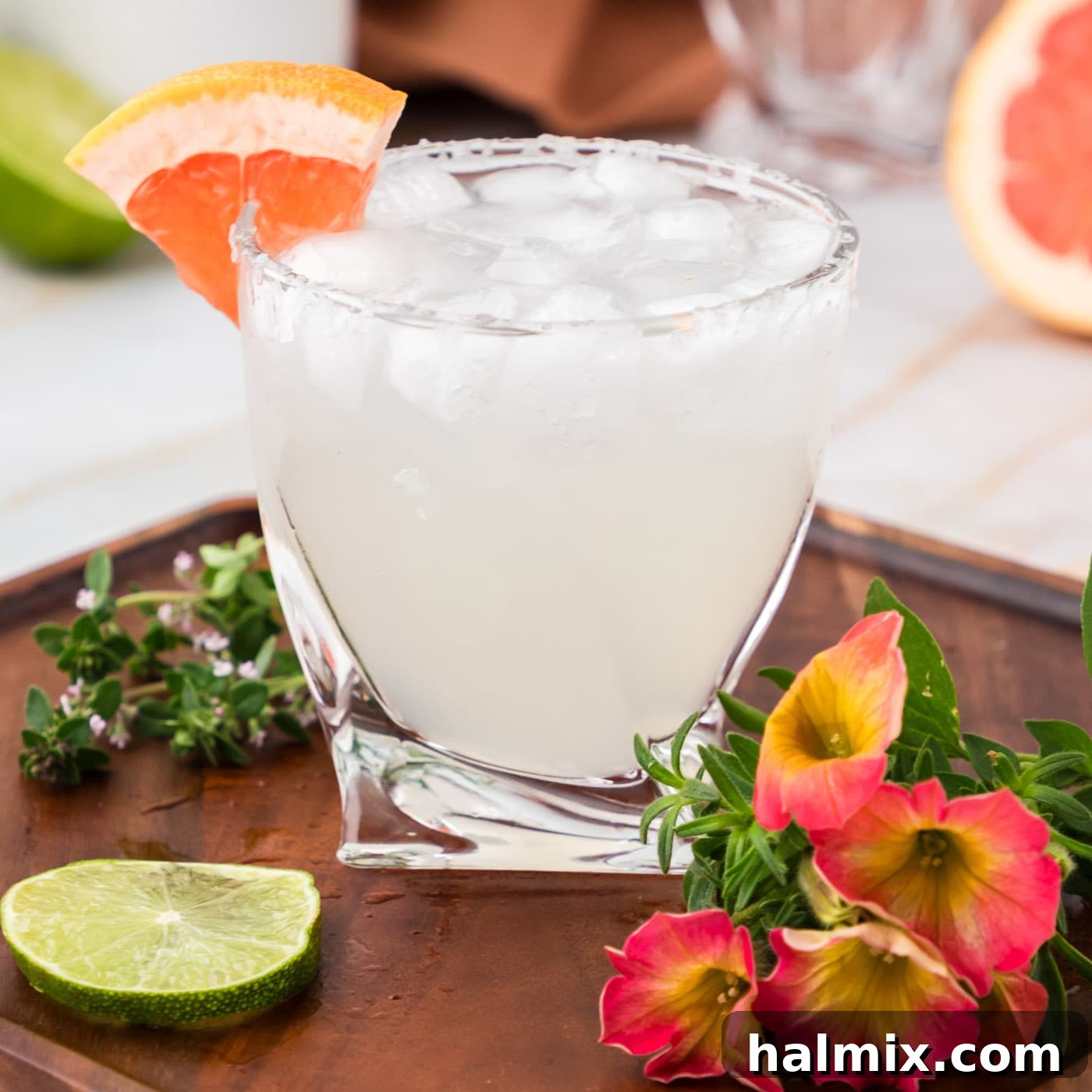
Unlock the secret to the ultimate refreshing cocktail with this classic Paloma recipe, a must-have in every home mixologist’s repertoire. This bright and bubbly drink, hailing from Mexico, effortlessly combines the vibrant flavors of tequila, the zesty tang of freshly squeezed lime juice, and the effervescent sweetness of grapefruit soda. The result is a perfectly balanced, citrus-forward concoction that’s both invigorating and incredibly easy to prepare. Whether you’re hosting a backyard barbecue, unwinding after a long day, or simply craving a taste of sunshine, the Paloma stands out as a sophisticated yet approachable choice, delivering a delightful fizzy kick with every sip.
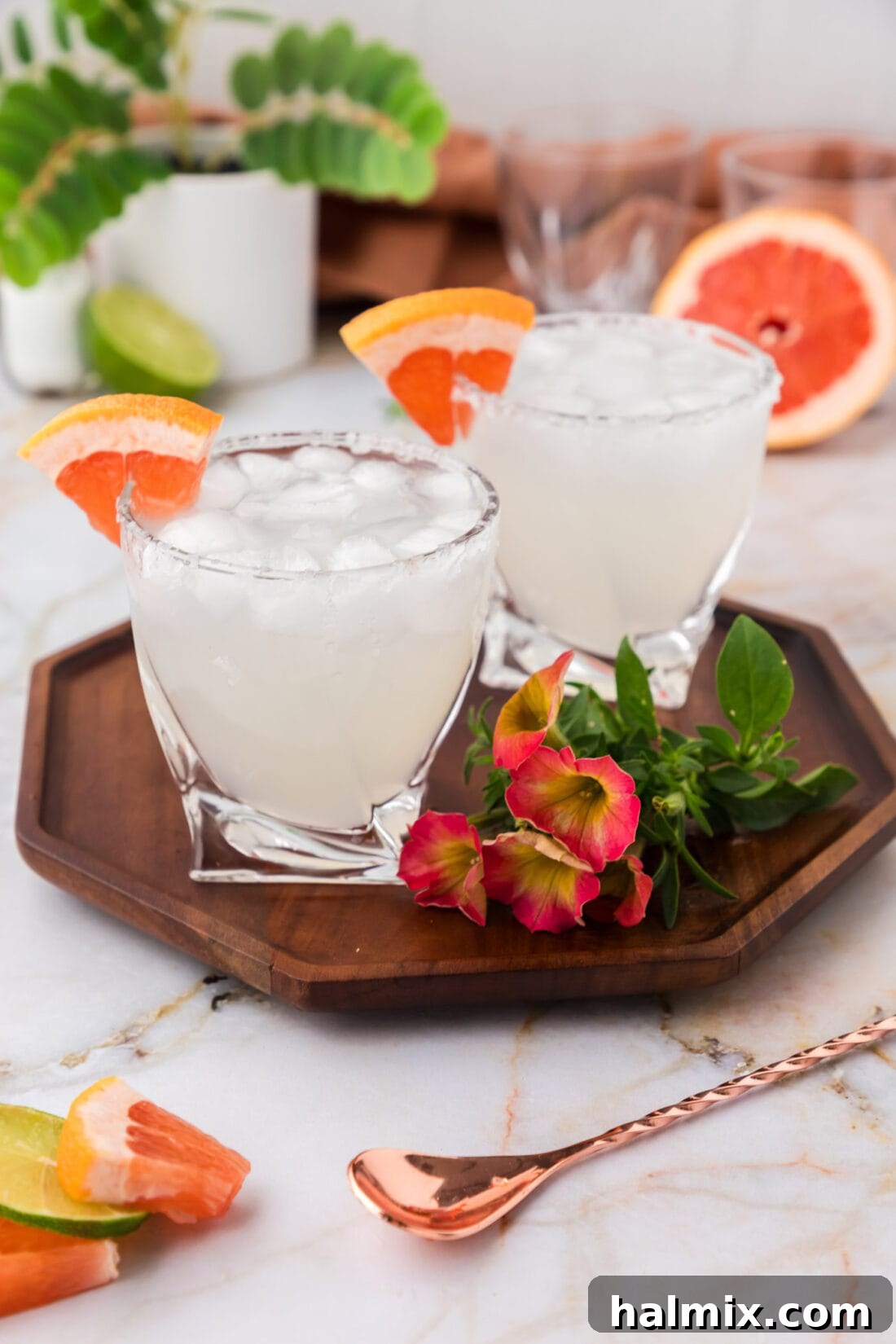
The Irresistible Allure of the Classic Paloma Cocktail
While many reach for a Margarita when thinking of tequila-based drinks, the Paloma offers a captivating alternative that’s gaining immense popularity, and for good reason. This recipe works because it champions simplicity and balance. Unlike its margarita cousin, which often relies on triple sec or orange liqueur, the Paloma shines by highlighting the natural, refreshing bitterness and sweetness of grapefruit soda, perfectly complemented by the sharp acidity of fresh lime juice and the earthy notes of tequila. It’s a less sweet, more nuanced drink that feels incredibly light and invigorating, especially on a warm day.
With just three core ingredients – tequila, grapefruit soda, and lime juice – plus ice, you can craft a sophisticated cocktail in minutes. This effervescent quality makes it incredibly quaffable, offering a delightful fizz that awakens the palate. It’s a testament to how humble ingredients, when combined thoughtfully, can create something truly spectacular. Our detailed guide ensures that even first-time cocktail makers can achieve professional-level results, making this Paloma recipe an essential addition to your entertaining arsenal.
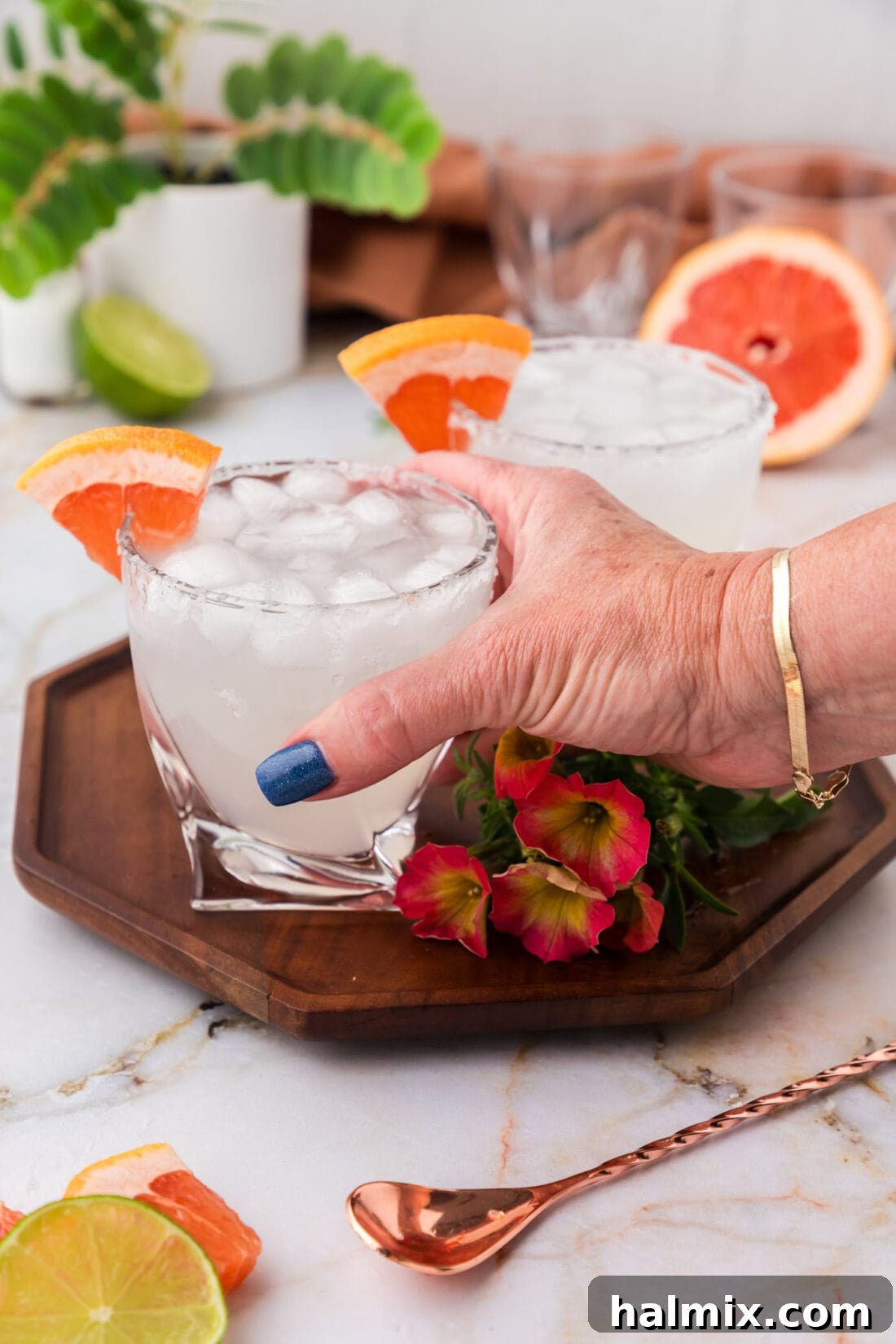
Crafting the Perfect Paloma: Essential Ingredients
Creating an exceptional Paloma begins with selecting the right ingredients. The beauty of this cocktail lies in its straightforward nature, meaning each component plays a crucial role in the final flavor profile. While the detailed measurements and a printable version of this recipe can be found in the dedicated recipe card further down this page, here’s a breakdown of the key elements that make our Paloma recipe truly stand out.
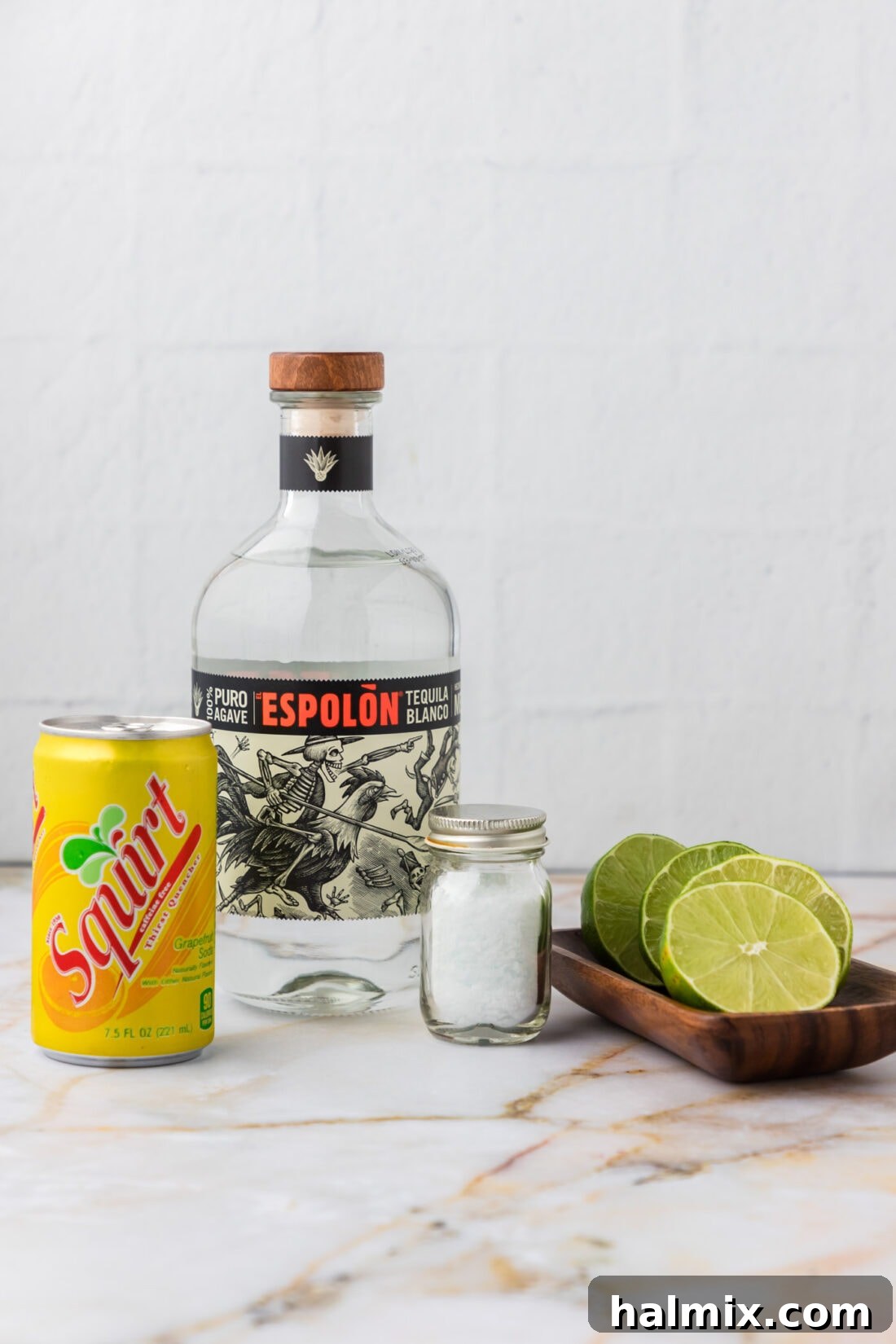
Ingredient Spotlight: Decoding the Paloma’s Flavors
Each ingredient in a Paloma contributes uniquely to its characteristic flavor, and understanding these nuances will help you craft a truly outstanding drink. Here’s a deeper look into the components and how to choose the best ones, along with suitable substitution suggestions.
Tequila: The Heart of the Paloma
When it comes to tequila, your choice significantly impacts the cocktail’s overall taste. For a classic Paloma, we highly recommend a high-quality Blanco or Silver Tequila. These tequilas are unaged or aged for a very short period, typically less than two months, resulting in a crisp, clear spirit with bright, earthy, and often peppery notes. Brands like Espolon Blanco are excellent choices, offering a smooth finish that allows the citrus flavors of the grapefruit and lime to shine without being overpowered.
Alternatively, Reposado Tequila, aged in oak barrels for two months to a year, can also be used. Reposado introduces subtle notes of vanilla, caramel, or oak, adding a layer of complexity and warmth to the Paloma. While it will alter the original crisp profile, it can create a richer, more mellow drink. We generally advise against Añejo or Extra Añejo tequilas for Palomas, as their extensive aging and robust flavor profiles tend to be better suited for sipping neat or in cocktails where their character can be fully appreciated.
Grapefruit Soda: The Effervescent Sweetness
The grapefruit soda is perhaps the most defining ingredient of a Paloma, imparting its signature bittersweet zest and carbonation. For an authentic experience, traditional Mexican grapefruit sodas are ideal. We often opt for the convenient 7 oz mini cans of Squirt, as one can perfectly proportions for two cocktails. Other excellent choices include Fresca, known for its lighter, crisp taste, and Ting, a Jamaican grapefruit soda that offers a unique, slightly more intense grapefruit flavor.
If finding grapefruit soda proves challenging, you can create a homemade alternative by combining fresh grapefruit juice with sparkling water or club soda. A good starting ratio would be 2 parts fresh grapefruit juice to 1 part simple syrup (or to taste) topped with sparkling water. This allows you to control the sweetness and bitterness, but remember that the flavor will be less intense and more natural than a pre-sweetened soda.
Fresh Lime Juice: The Essential Zest
The importance of freshly squeezed lime juice cannot be overstated. Bottled lime juice simply doesn’t compare in terms of vibrant flavor and acidity. Fresh lime juice provides the crucial tangy counterbalance to the sweetness of the soda and the depth of the tequila, bringing all the elements into perfect harmony. Typically, one medium-sized lime yields approximately 1 ounce of juice, which is enough for two cocktails. To get the most juice from your limes, roll them firmly on a countertop before slicing and squeezing.
Ice: Keeping It Cool
Don’t overlook the ice! Large, fresh ice cubes are preferred over crushed ice as they melt slower, preventing your drink from becoming diluted too quickly. High-quality ice maintains the integrity of the Paloma’s flavor profile from the first sip to the last.
Mastering the Paloma: A Step-by-Step Guide
Crafting a Paloma is a straightforward and enjoyable process. These step-by-step photos and instructions will help you visualize each stage, ensuring a perfect cocktail every time. For precise measurements and a printable version, please refer to the complete recipe card below.
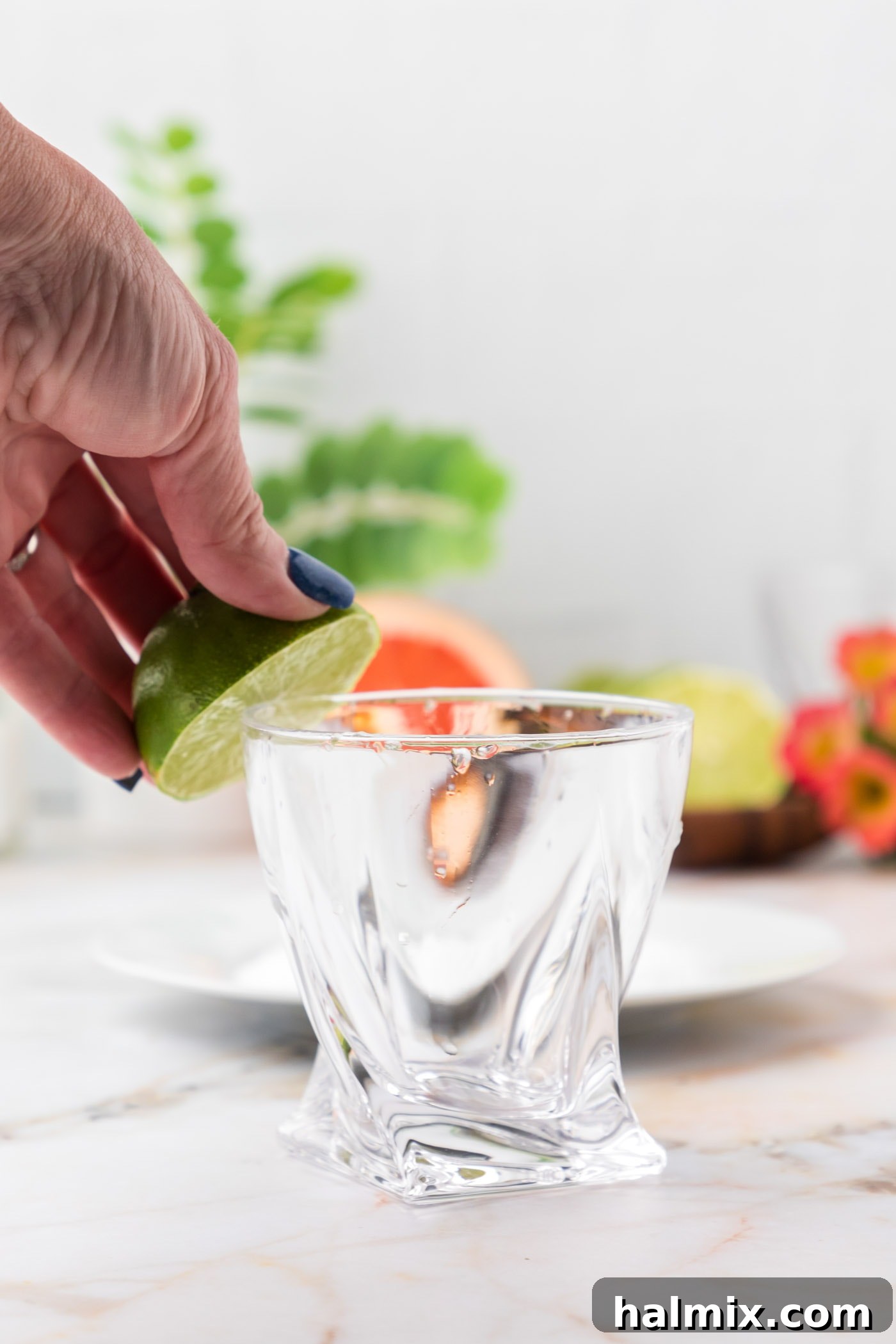
- Prepare the Glass Rim: Begin by cutting a fresh lime in half and squeezing out the juice, setting it aside for the drink. Take one of the lime halves and gently rub it along the rim of your chosen rock glass or highball glass. This moistens the edge, preparing it for the salt.

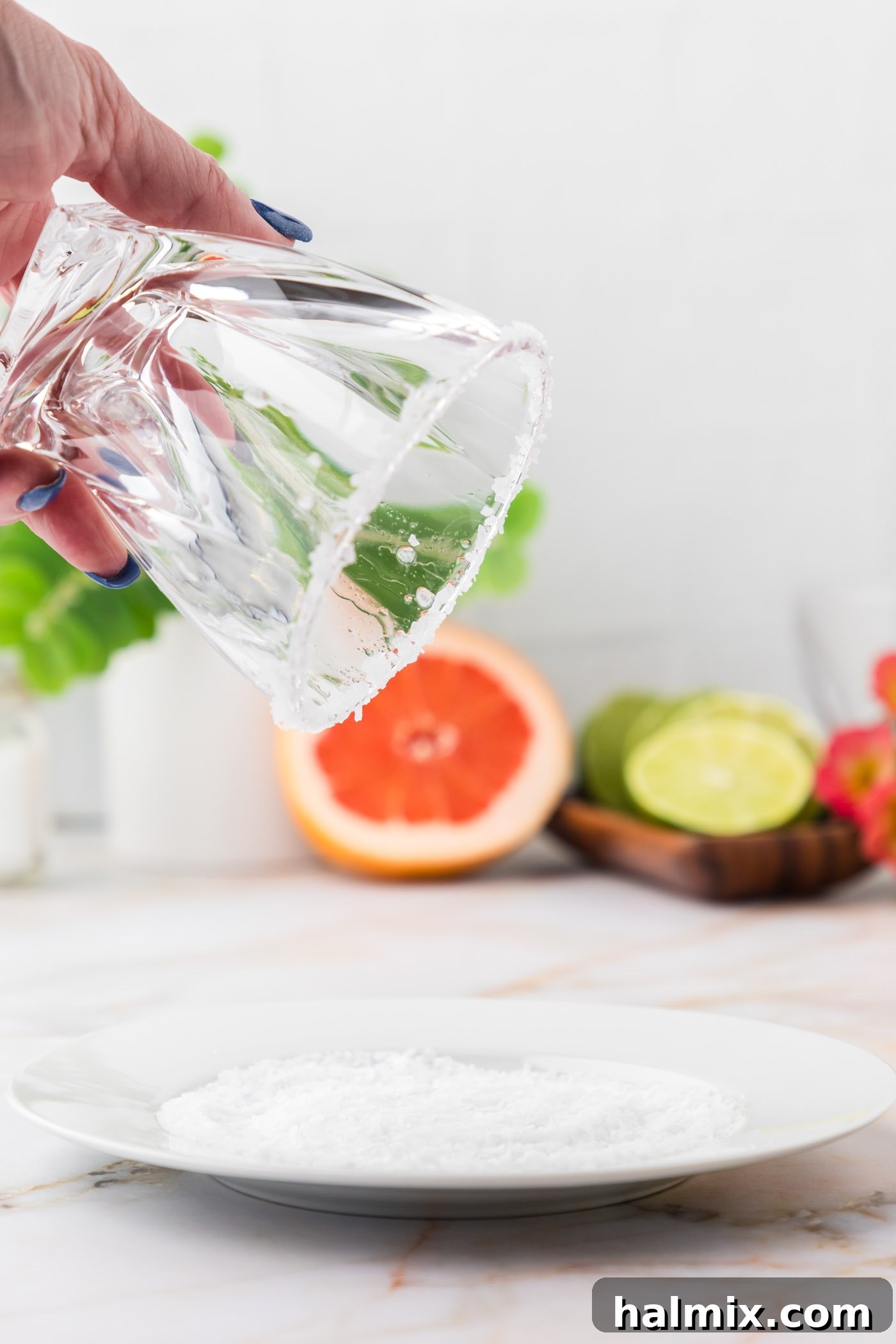
- Salt the Rim (Optional, but Recommended): Invert the moistened glass rim and dip it into a shallow plate of margarita salt or coarse sea salt. Gently twist the glass to ensure an even coating. The salt adds a delightful savory contrast that enhances the grapefruit’s flavor.
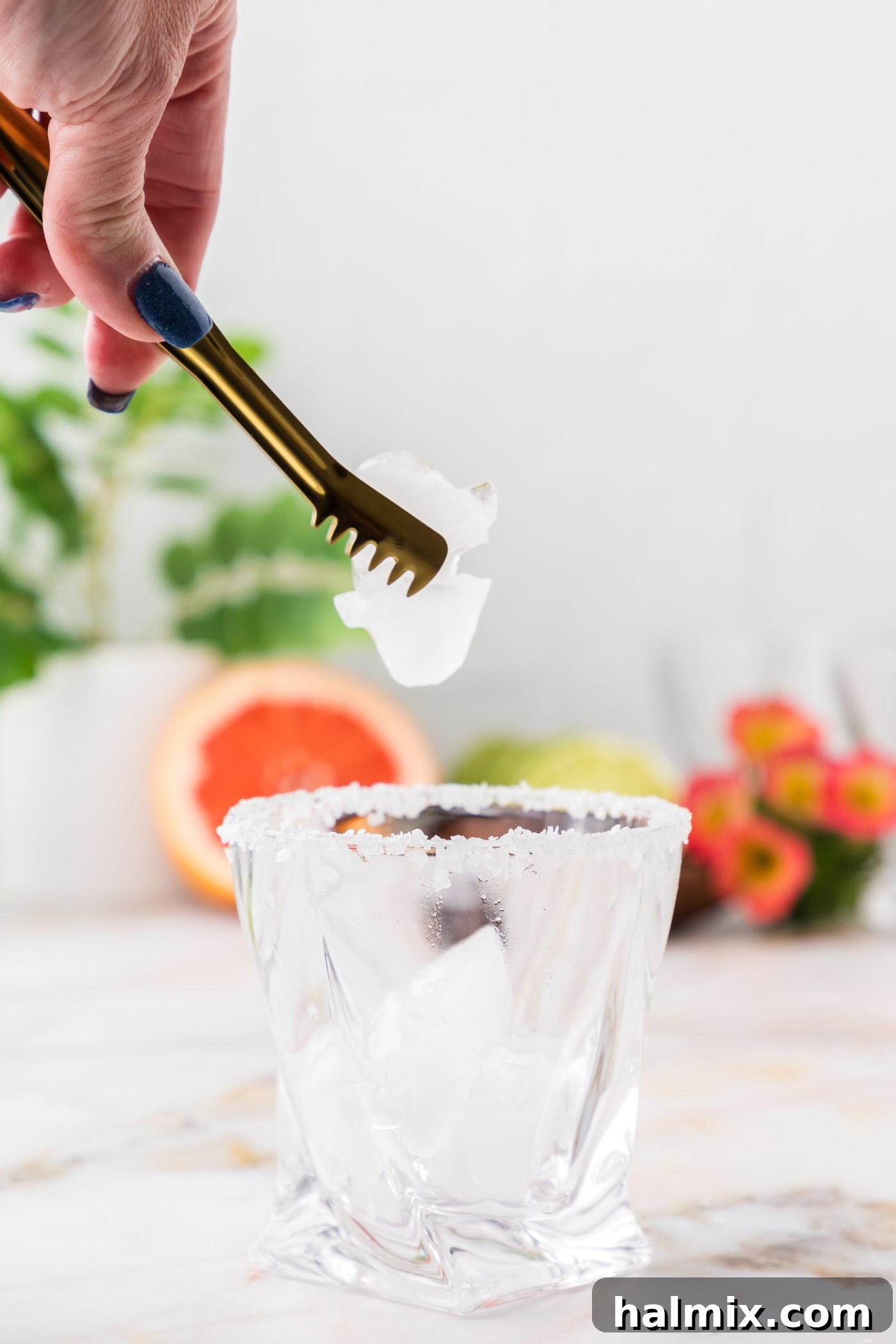
- Fill with Ice: Fill your prepared glass about three-quarters full with fresh ice cubes. Using plenty of ice helps keep the drink chilled and prevents rapid dilution.
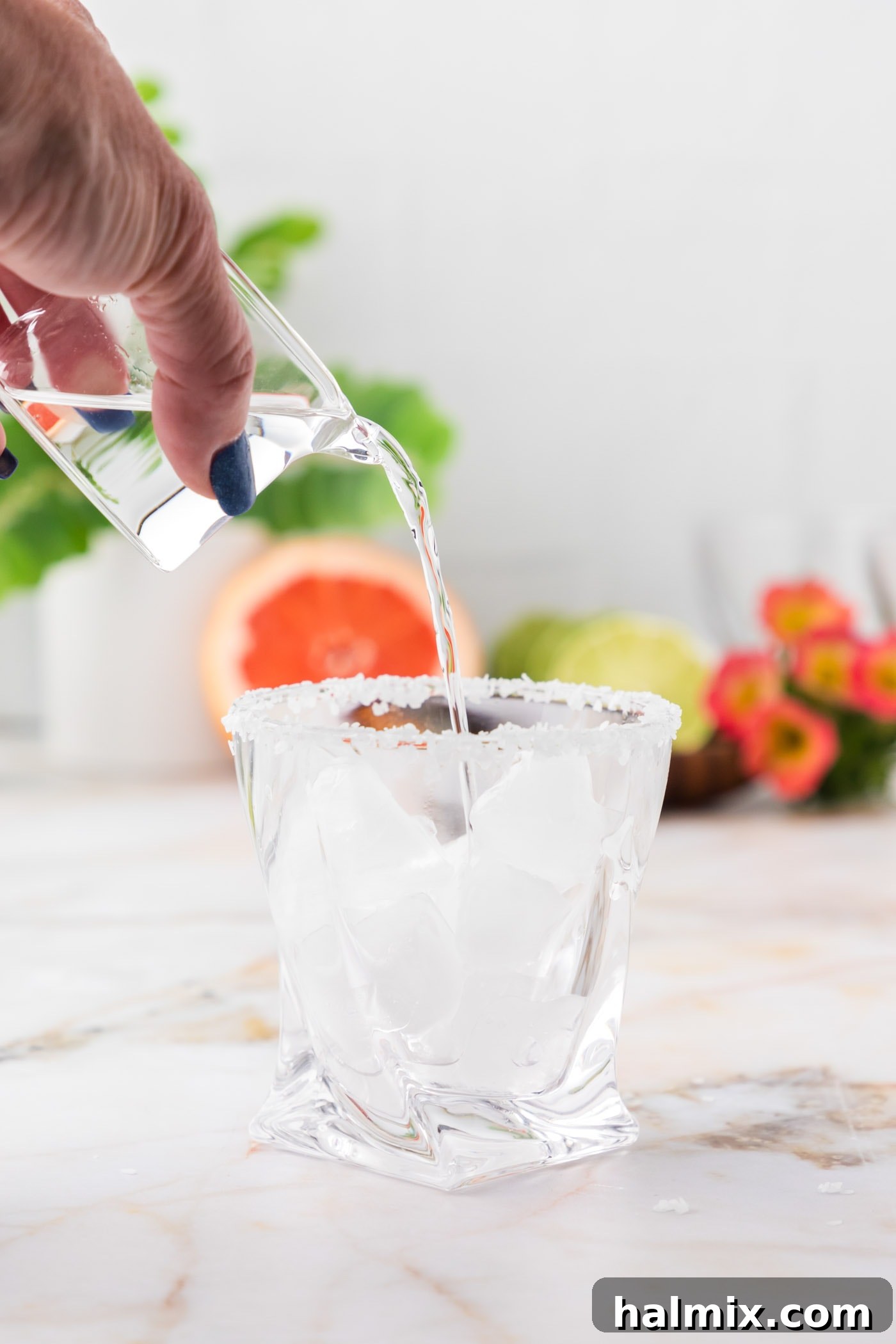
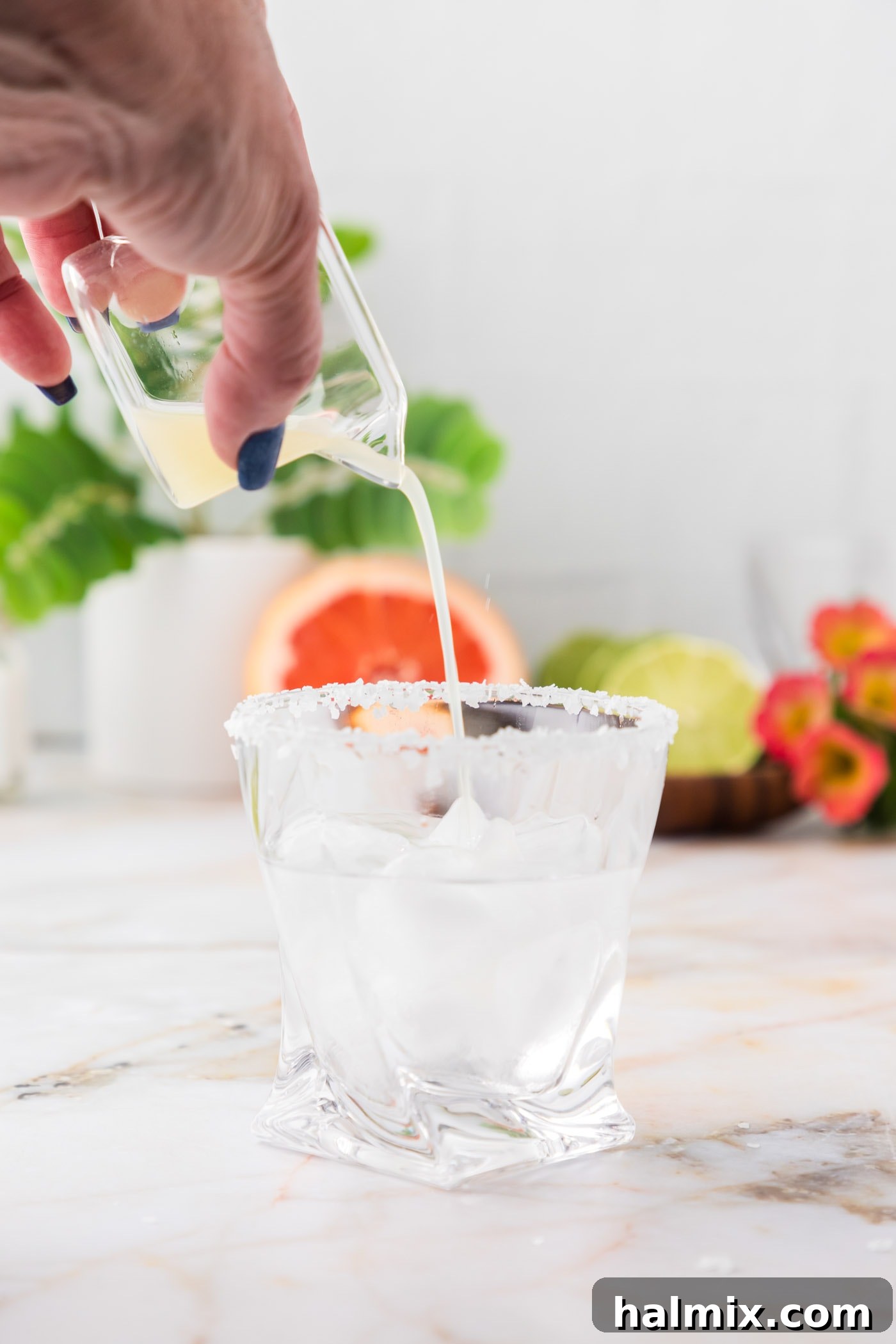
- Add Tequila and Lime Juice: Pour the measured amount of blanco tequila into the glass, followed by the freshly squeezed lime juice.
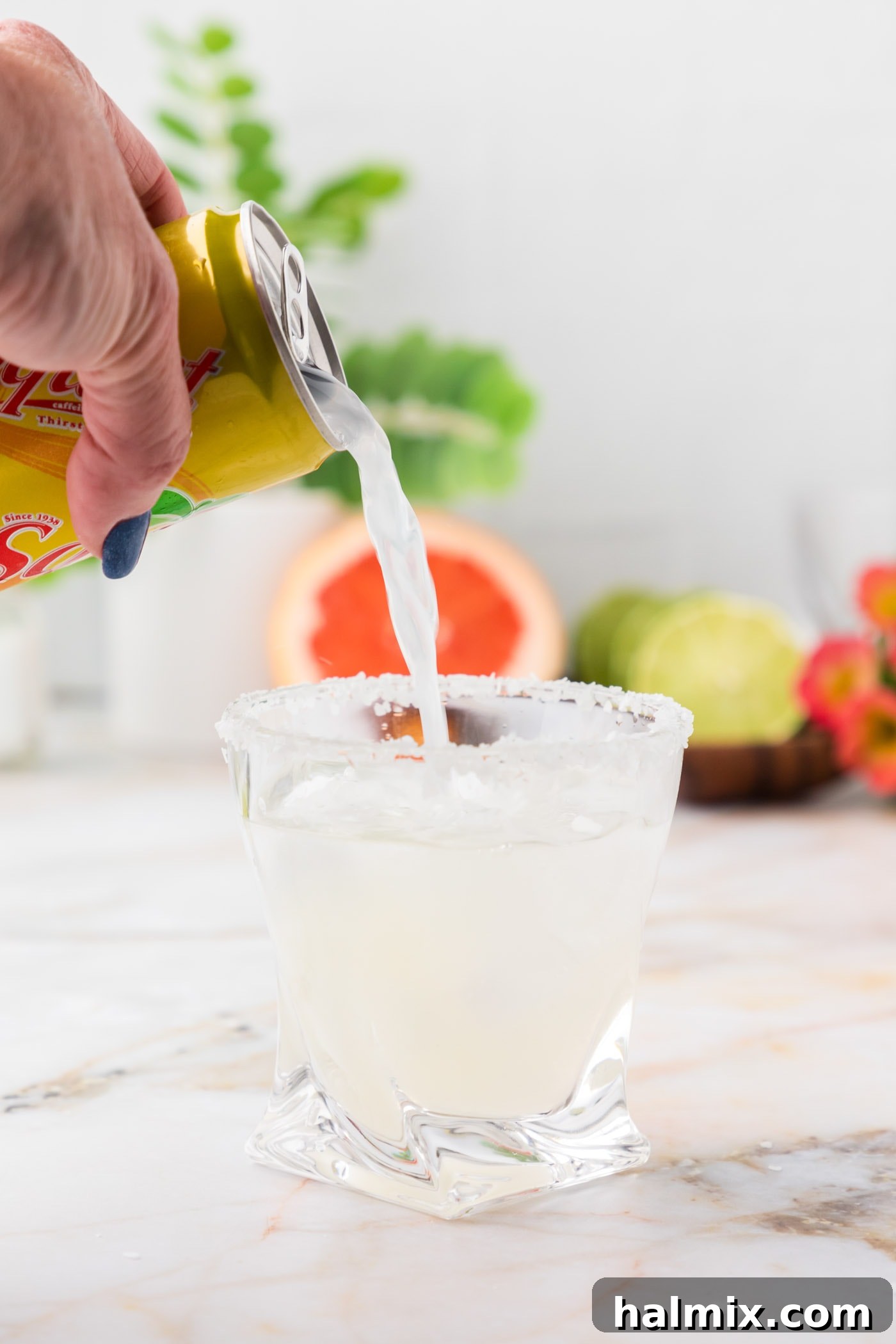
- Top with Grapefruit Soda: Slowly top off the glass with your preferred grapefruit soda, allowing the carbonation to settle slightly as you pour.
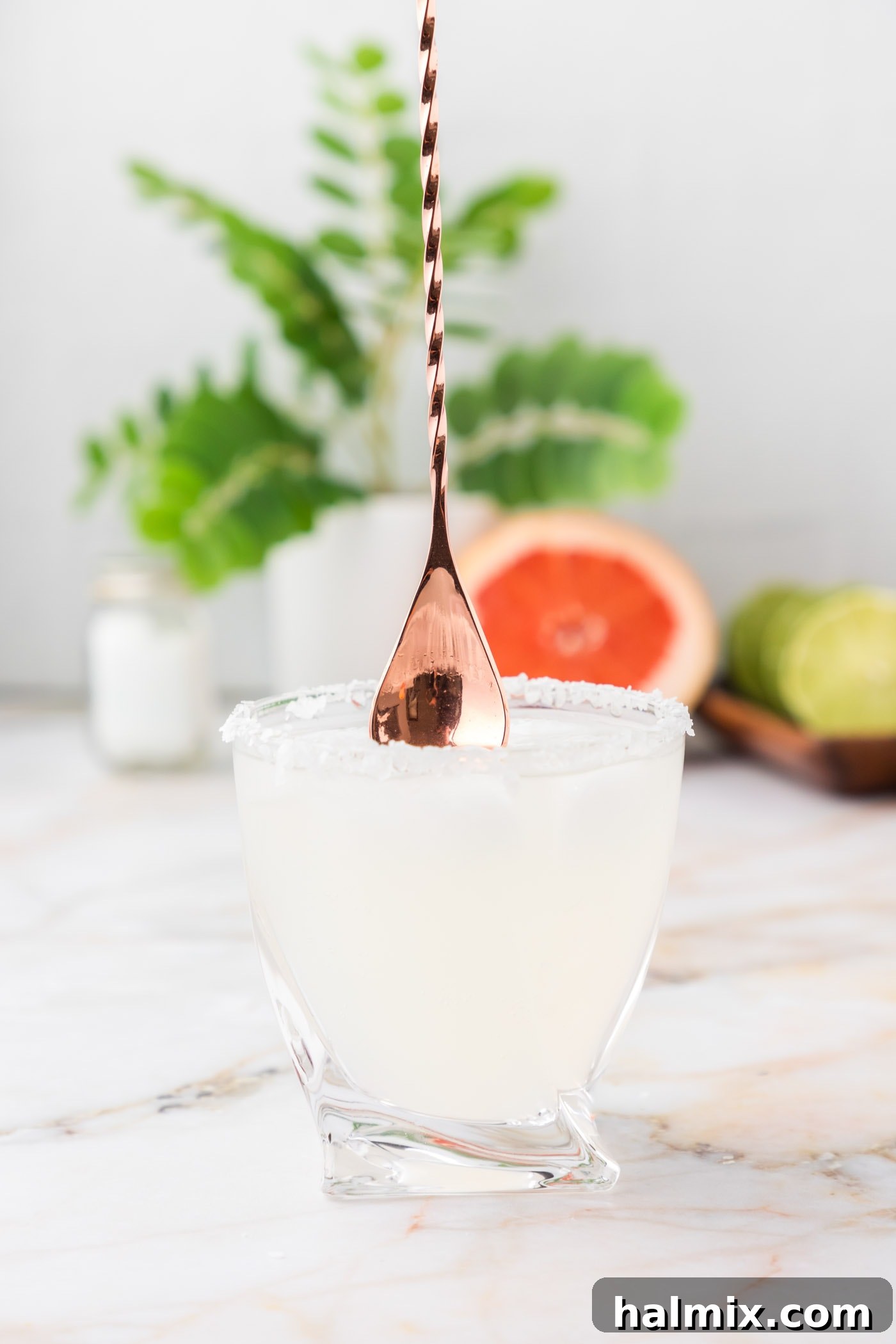
- Gently Stir: Use a long cocktail stirrer or spoon to gently combine the ingredients. A turn or two is sufficient; over-stirring can reduce the carbonation.
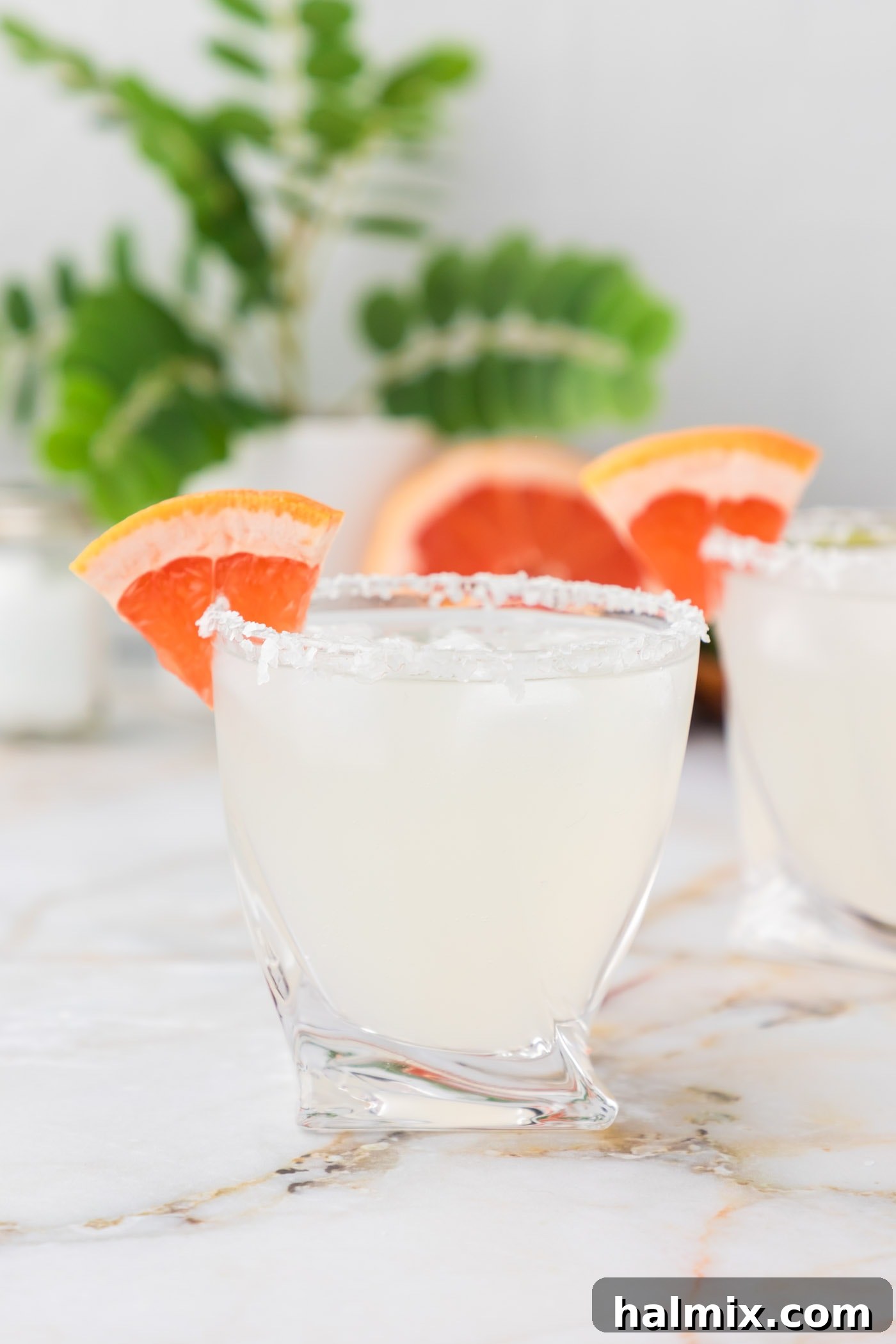
- Garnish and Serve: Garnish your Paloma with a fresh grapefruit wedge or a lime wheel. Serve immediately and enjoy!
Frequently Asked Questions & Expert Tips for Your Paloma
To help you perfect your Paloma, here are answers to common questions and additional tips from our experience.
Which tequila should you use for a Paloma?
For a truly authentic and refreshing Paloma cocktail, Blanco or Silver Tequila is generally recommended. Its unaged, crisp, and sometimes peppery notes complement the bright citrus flavors of lime and grapefruit perfectly, allowing them to shine without competition. Popular choices like Espolon Blanco offer a smooth and clean finish. However, if you prefer a drink with more depth, a good quality Reposado Tequila can also be used. Aged in oak barrels for a short period, reposado introduces subtle hints of vanilla, caramel, or oak, which can add a warm, complex character to your Paloma. Keep in mind that reposado and añejo tequilas are darker in color, which will subtly change the appearance of your cocktail. Ultimately, the best tequila is the one you enjoy most!
What is the origin of the Paloma cocktail?
The exact origin of the Paloma is a bit murky, but it’s widely believed to have originated in Mexico. Its name, “Paloma,” means “dove” in Spanish. Many theories suggest it was popularized in the 1950s or 60s, possibly by a legendary bar owner in Tequila, Jalisco, or simply as a natural evolution of mixing tequila with readily available grapefruit sodas. Regardless of its precise beginning, it has long been a beloved classic south of the border, often considered more popular than the Margarita in Mexico.
Can I make a Paloma pitcher for a crowd?
Absolutely! Palomas are fantastic for batching. To make a pitcher, pre-mix the tequila and fresh lime juice in your pitcher. When you’re ready to serve, fill individual glasses with ice, pour the tequila-lime mixture, and then top with cold grapefruit soda. This ensures the carbonation stays fresh and bubbly for your guests. A good ratio for a pitcher would be 1 part tequila, 1/2 part fresh lime juice, and then top with 3-4 parts grapefruit soda per serving size. Always taste and adjust to your preference!
How can I make a Paloma less sweet or more bitter?
If you find your Paloma too sweet, you can reduce the amount of grapefruit soda and replace some of it with plain sparkling water or club soda. For a more pronounced bitter note, you could add a dash of grapefruit bitters or even a tiny squeeze of fresh ruby red grapefruit juice (which is typically more tart than most sodas). The optional salt rim also helps to cut through sweetness and enhance the overall balance.
What’s the difference between a Paloma and a Margarita?
While both are iconic tequila cocktails, their flavor profiles and compositions differ significantly. A Margarita typically consists of tequila, lime juice, and an orange liqueur (like triple sec or Cointreau), served often with a salt rim. It’s generally more lime-forward and can be sweeter. A Paloma, on the other hand, combines tequila, lime juice, and grapefruit soda. Its character is defined by the bittersweet effervescence of grapefruit, making it often lighter, fizzier, and less sweet than a standard Margarita.
Serving Your Paloma: Presentation and Pairings
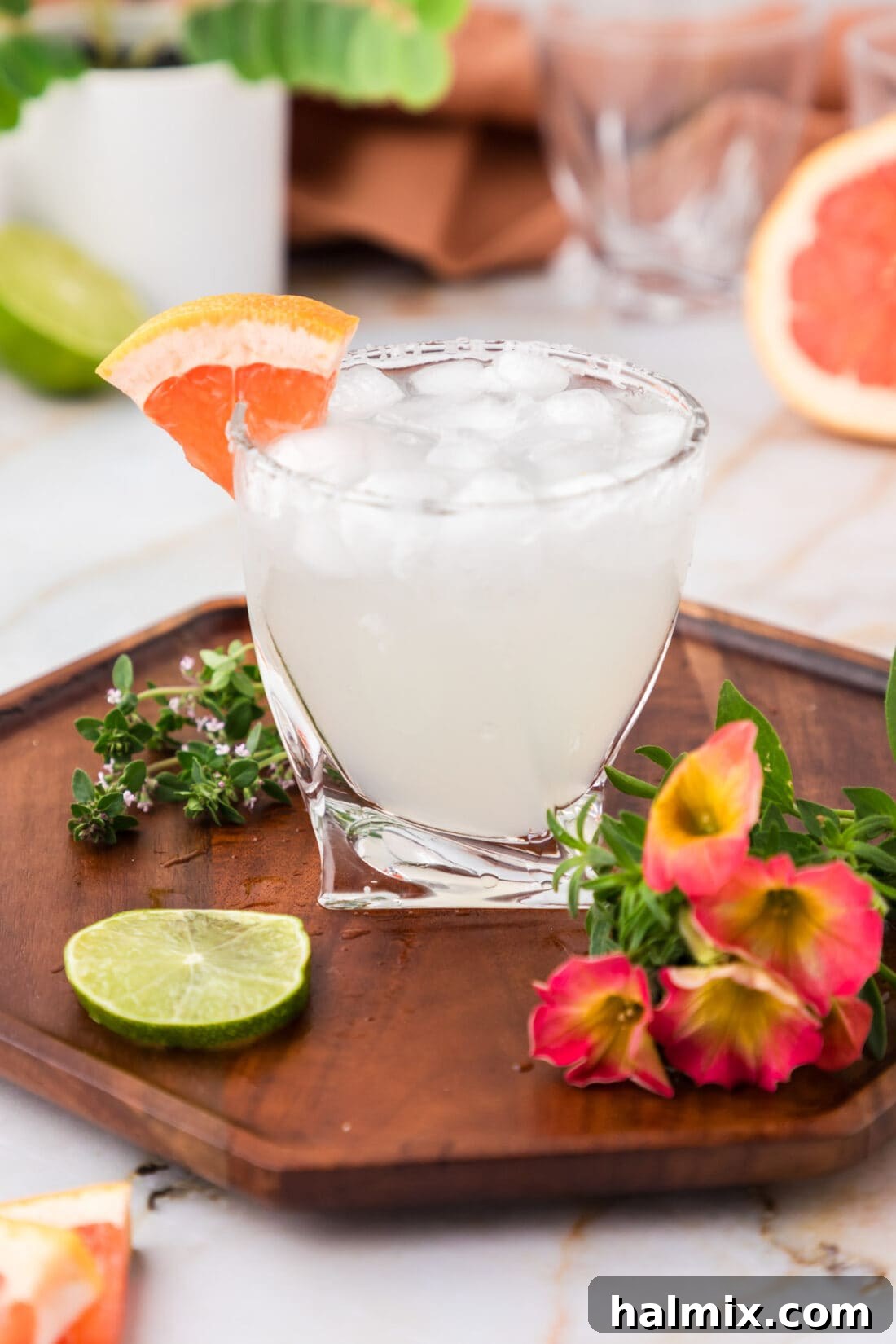
The Paloma is as delightful to behold as it is to drink. Traditionally, it is served on the rocks, meaning over plenty of ice, in either a classic rock glass or a tall highball glass. The choice of glass often comes down to personal preference or the amount of soda you prefer in your drink. An optional salted rim, as detailed in our instructions, is highly recommended. The salt helps to beautifully offset the natural bitterness of the grapefruit and enhances the cocktail’s overall complexity, even when using a sweetened grapefruit soda.
For garnishing, a simple wedge of fresh lime or grapefruit is classic and effective, adding both visual appeal and an aromatic citrus boost. For an extra touch of elegance, consider a grapefruit wheel or a sprig of fresh rosemary. The Paloma pairs wonderfully with a variety of foods, especially Mexican cuisine. Think fish tacos, ceviche, grilled shrimp, or even spicy chicken dishes. Its refreshing and crisp nature cuts through rich and spicy flavors, making it an ideal companion for a festive meal or a relaxed evening.
Paloma Variations to Explore
Once you’ve mastered the classic Paloma, don’t hesitate to experiment with these exciting variations to discover new flavor dimensions:
- Spicy Paloma: Muddle a few slices of fresh jalapeño or serrano pepper in the bottom of your glass before adding ice and liquids for a fiery kick.
- Smoky Mezcal Paloma: Substitute half or all of the tequila with mezcal for a wonderfully smoky and earthy twist that adds incredible depth.
- Herbal Paloma: Infuse your Paloma with fresh herbs by muddling a few sprigs of rosemary or mint in the glass before assembling. The aromatic notes complement the grapefruit beautifully.
- Grapefruit Juice & Soda Paloma: If you prefer to control the sweetness, use fresh grapefruit juice (2 oz), 0.5 oz simple syrup, 0.5 oz lime juice, and top with 3-4 oz club soda or sparkling water.
- Fruity Paloma: Add a splash of fresh blood orange or pineapple juice to the mix for an extra layer of fruity sweetness and a vibrant color.
Discover More Refreshing Cocktail Recipes
If you’ve enjoyed crafting and sipping this delightful Paloma, you’re in for a treat! Explore our other popular cocktail recipes:
- Tequila Sunrise
- Black Russian
- Long Island Iced Tea
- Skrew Loose Cocktail
- Blood Orange Margaritas
I’m passionate about baking and cooking, and I love sharing my culinary adventures with all of you! To make sure you never miss a new recipe, consider subscribing to my convenient newsletter. Simply subscribe here and start receiving delicious daily recipes directly in your inbox!
Classic Paloma Cocktail
This Paloma recipe is a vibrant and refreshing tequila-based cocktail, elevated with grapefruit soda for a perfect balance of bitter-sweetness and effervescence. All you’ll need are three simple ingredients and some ice for this fizzy, easy-to-make drink!
IMPORTANT – Detailed Frequently Asked Questions and Expert Tips are available within the blog post above that you may find incredibly helpful. Scroll back up to read them!
Print It
Pin It
Rate It
Ingredients
- 2 ounces blanco tequila
- ½ ounce freshly squeezed lime juice
- 3 ½ ounces grapefruit soda such as Squirt
- ice
Optional Garnish
- margarita salt for rim
- lime wedge
- grapefruit wedge
Things You’ll Need
-
Rock glasses or highball glass
-
Cocktail spoon
Before You Begin
- Blanco or silver tequila is best for a paloma cocktail. Most people reach for blanco tequila for its sweeter citrus notes which pairs really well with the lime and grapefruit flavors. Others may prefer to use Reposado or añejo tequila in their paloma recipe which are aged in oak barrels and take on a warm, toasty flavor profile. Reposado and añejo tequila are both darker in color, which will show through in your cocktail.
- In this paloma recipe we opted for the mini cans (7 oz) of Squirt. One mini can will make two cocktails. Other good grapefruit sodas include Fresca and Ting. If you can seem to find grapefruit soda you can try a combination of grapefruit juice and sparkling water or club soda.
- Traditionally, a paloma is served on the rocks (over ice) with an optional salted rim. Salting the rim helps offset the bitterness of grapefruit although you don’t technically need it when using grapefruit soda, but it’s always a nice touch. Garnish with a lime or grapefruit wedge. Serve in either a rock glass or highball glass.
Instructions
-
Cut lime in half and squeeze out the juice, reserving it for the drink. Rub the lime along the edge of the rock glass to moisten the rim.
-
Dip the rim of the glass in margarita salt.
-
Fill glass about 3/4 full with ice cubes.
-
Add tequila and lime juice to the glass.
-
Top off the glass with grapefruit soda.
-
Use a cocktail stirrer to gently stir the ingredients together, a turn or two should do it.
-
Garnish glass with a grapefruit wedge.
Nutrition
Calories: 175cal |
Carbohydrates: 12g |
Protein: 0.1g |
Fat: 0.01g |
Sodium: 11mg |
Potassium: 19mg |
Fiber: 0.1g |
Sugar: 10g |
Vitamin A: 7IU |
Vitamin C: 4mg |
Calcium: 4mg |
Iron: 0.1mg
Tried this Recipe? Pin it for Later!
Follow on Pinterest @AmandasCookin or tag #AmandasCookin!
The recipes on this blog are tested with a conventional gas oven and gas stovetop. It’s important to note that some ovens, especially as they age, can cook and bake inconsistently. Using an inexpensive oven thermometer can assure you that your oven is truly heating to the proper temperature. If you use a toaster oven or countertop oven, please keep in mind that they may not distribute heat the same as a conventional full sized oven and you may need to adjust your cooking/baking times. In the case of recipes made with a pressure cooker, air fryer, slow cooker, or other appliance, a link to the appliances we use is listed within each respective recipe. For baking recipes where measurements are given by weight, please note that results may not be the same if cups are used instead, and we can’t guarantee success with that method.