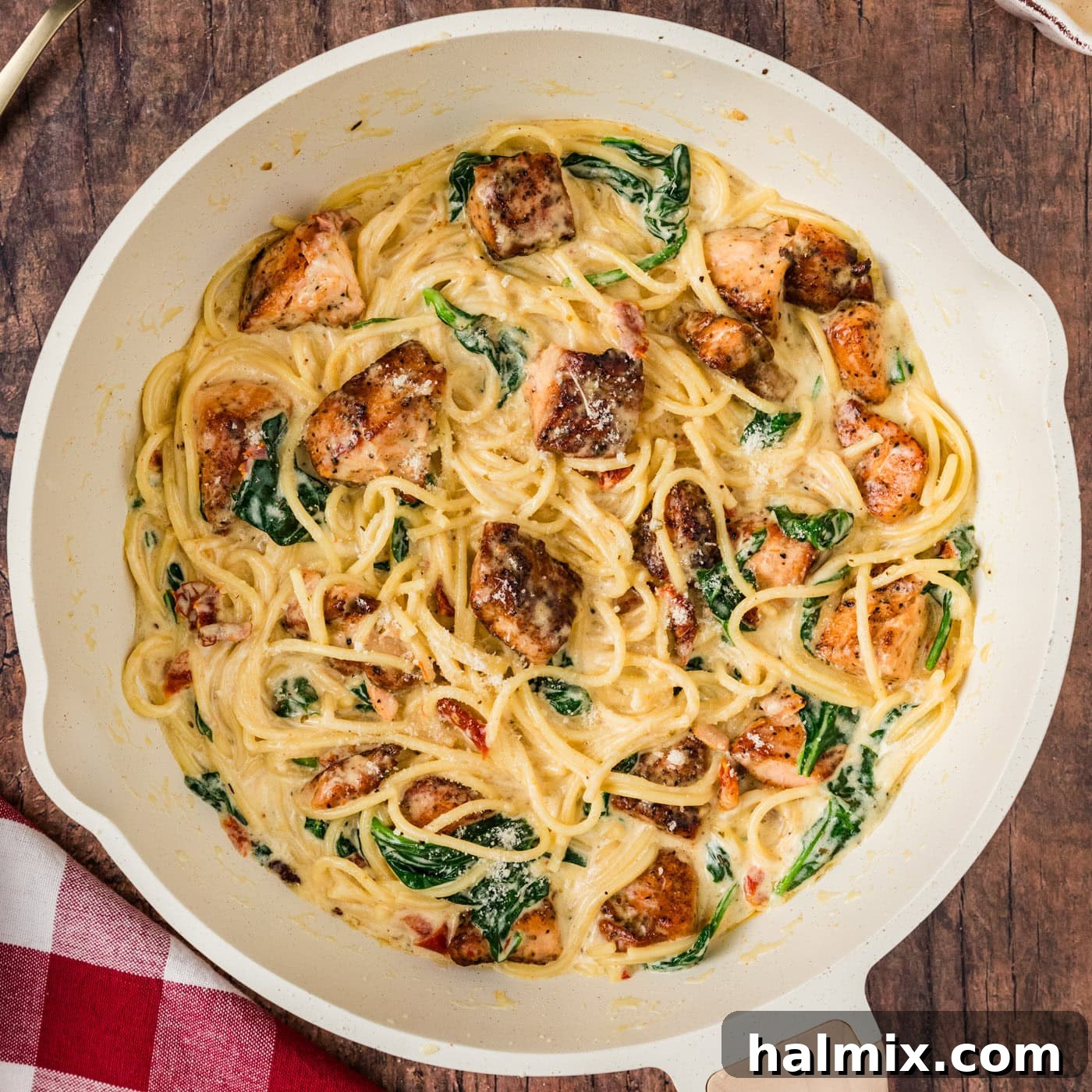
Prepare to elevate your dinner experience with this incredible **Creamy Salmon Pasta** recipe. This dish is a true celebration of flavors and textures, featuring succulent, tender salmon morsels, vibrant spinach, intensely flavored sun-dried tomatoes, and perfectly al dente pasta, all generously coated in a luxurious, rich garlic parmesan cream sauce. It’s an easy-to-follow recipe that delivers restaurant-quality taste in under an hour, making it an ideal choice for both busy weeknights and special occasions.
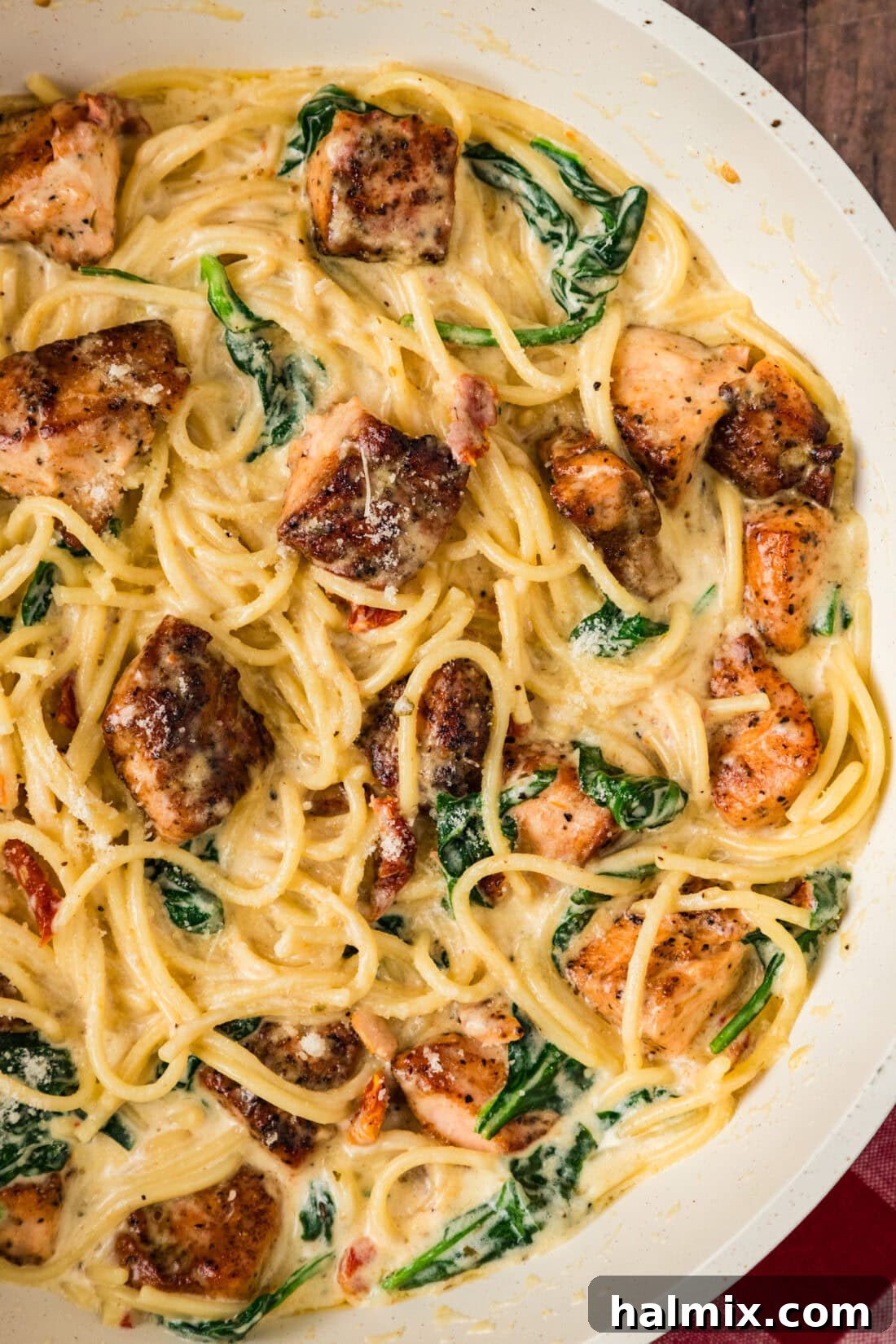
Why You’ll Love This Creamy Salmon Pasta Recipe
This creamy salmon pasta isn’t just another dinner; it’s a culinary experience designed for maximum flavor with minimal fuss. What makes this recipe an absolute winner? For starters, its **simplicity and speed**. You can have this gourmet-tasting meal on the table in approximately 40 minutes from start to finish, perfect for when you’re craving something special but are short on time. But don’t let the ease fool you – the flavor profile is anything but simple.
The secret lies in the harmonious blend of ingredients that work together to create a complex and satisfying taste. The **garlic-parmesan cream sauce** forms a velvety base, infusing every bite with savory depth. The addition of sun-dried tomatoes provides a concentrated burst of sweet and tangy umami, cutting through the richness of the cream and adding a sophisticated layer of flavor that’s utterly irresistible. Fresh spinach wilts gently into the sauce, adding a touch of vibrant color and essential nutrients, while the tender, flaky salmon offers a delicate contrast to the creamy pasta.
We’re big fans of salmon here, not just for its delicious taste but also for its incredible health benefits, packed with heart-healthy omega-3 fatty acids. Pairing it with pasta transforms it into a hearty, filling dish that still feels light and elegant. This recipe achieves the perfect balance: it’s rich and comforting, yet fresh and wholesome. It truly has it all, tasting like a dish straight out of a fine dining restaurant, yet entirely achievable in your home kitchen. Whether you’re a seasoned chef or a beginner cook, this creamy salmon pasta will quickly become a favorite in your recipe repertoire. Let’s dive in and create this culinary masterpiece!
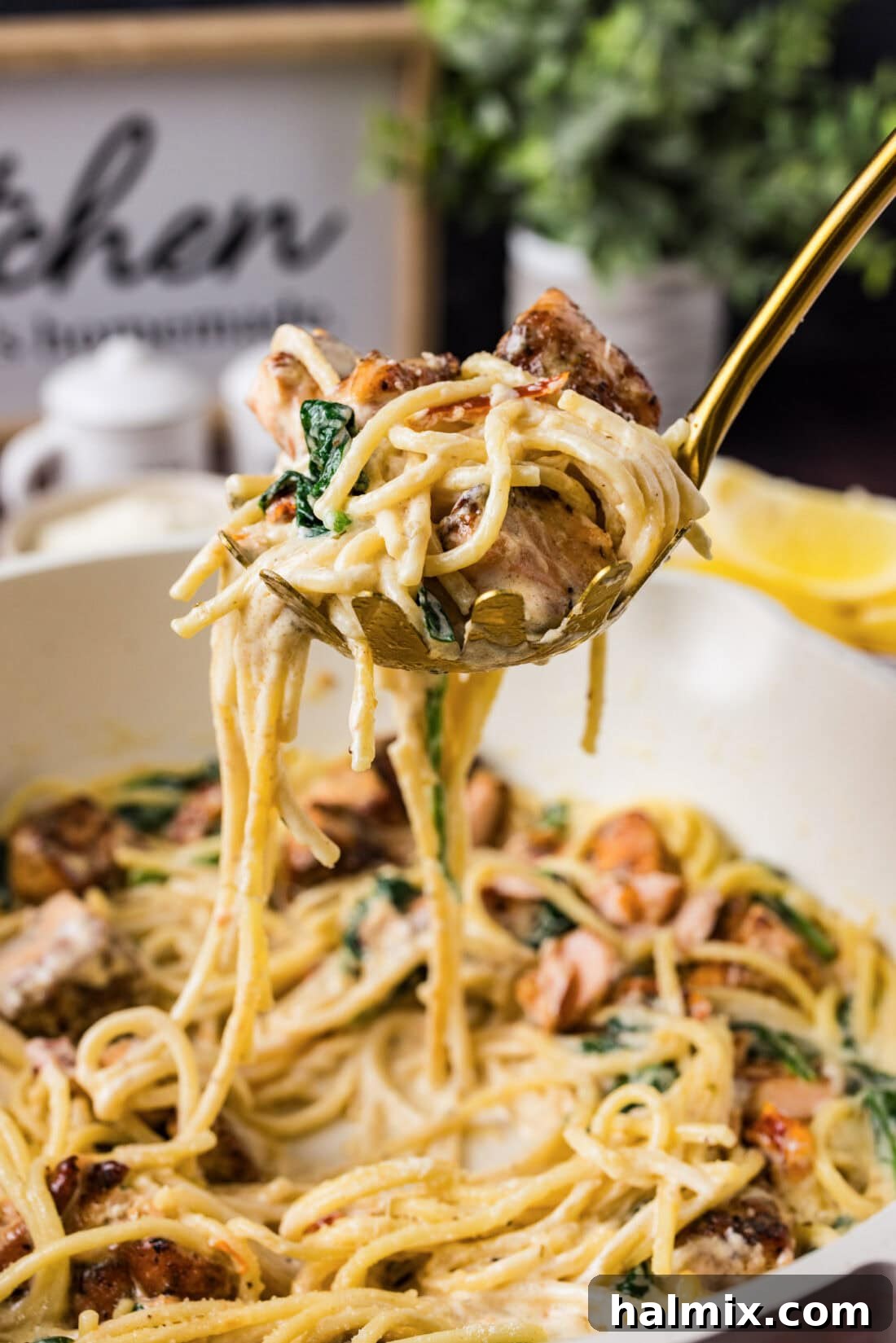
Essential Ingredients for Your Creamy Salmon Pasta
Gathering your ingredients is the first step to creating this delightful creamy salmon pasta. Each component plays a crucial role in building the dish’s incredible flavor and texture. You’ll find a detailed list of measurements and instructions in the printable recipe card towards the end of this article.
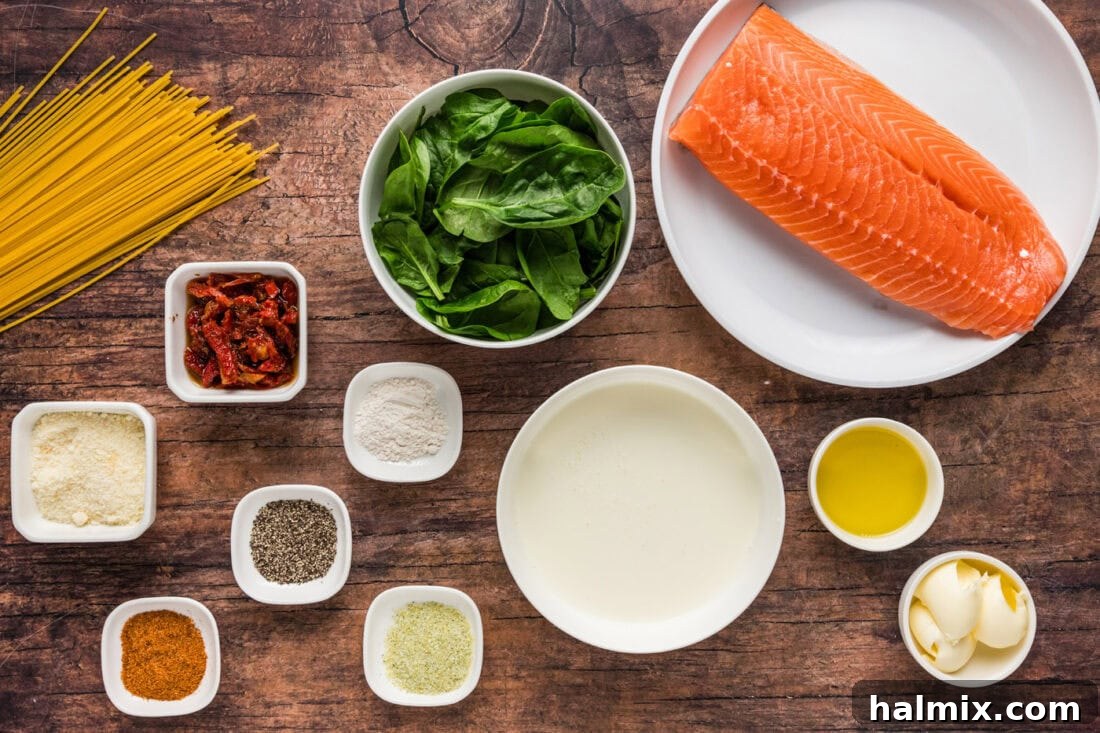
Ingredient Breakdown and Smart Substitution Suggestions
Let’s take a closer look at the key ingredients and how to make the most of them, along with some helpful substitution ideas to ensure your creamy salmon pasta is always a success. Understanding each component will help you customize this dish to your liking.
SALMON: For the best results in this creamy salmon pasta recipe, I highly recommend using **center-cut salmon fillets**. This specific cut tends to be more uniform in thickness, allowing you to easily cut the salmon into even cubes. Uniformly sized cubes are essential for consistent cooking, ensuring every piece of salmon is perfectly tender and flaky without overcooking. Always ensure your salmon is completely thawed before seasoning and cooking; this prevents the seasonings from slipping off and allows for an even sear. Patting the salmon dry with paper towels also aids in achieving that beautiful golden-brown crust. Salmon is not only delicious but also a powerhouse of nutrition, rich in essential omega-3 fatty acids, which are known to support heart and brain health.
SAUCE BASE: The heart of this creamy salmon pasta is its luscious sauce, crafted from **half and half, grated parmesan cheese, and a touch of all-purpose flour**. Half and half strikes the perfect balance between richness and lightness, creating a smooth, creamy texture that coats the pasta beautifully without being overly heavy. While you might be tempted to use lighter milk alternatives, I strongly recommend sticking to half and half for that signature creamy consistency and mouthfeel. If you don’t have half and half on hand, you can easily create your own by combining equal parts heavy cream and whole milk. The flour acts as a gentle thickener, giving the sauce its desirable body and preventing it from being too watery, while fresh parmesan cheese melts into pure bliss, adding a salty, umami kick that is indispensable to the dish.
PASTA: The beauty of this creamy salmon pasta is its adaptability! While we used classic **spaghetti** for its ability to beautifully hold the creamy sauce, feel free to get creative with your pasta choice. Long, flat noodles like **fettuccine** or **linguine** are excellent for scooping up the rich sauce. Shorter pasta shapes such as **penne**, **farfalle (bowtie)**, or even **rigatoni** also work wonderfully, especially for a heartier bite that traps the sauce within their grooves. The key, regardless of shape, is to cook your pasta al dente – firm to the bite – as it will continue to cook slightly when tossed with the hot sauce, ensuring a perfect texture without becoming mushy.
SUN-DRIED TOMATOES & SPINACH: These two ingredients are not just for color; they bring crucial flavor and nutritional benefits! **Sun-dried tomatoes** contribute a concentrated, sweet-tart, and slightly savory flavor that brightens the entire dish, providing a lovely contrast to the creamy sauce. Choose oil-packed sun-dried tomatoes for the best flavor and texture; remember to drain them well and chop them if they are in halves. **Fresh spinach leaves** add a vibrant green hue, a touch of earthiness, and a healthy dose of vitamins and minerals. They wilt down beautifully into the sauce, adding a subtle texture without overpowering the other flavors.
Step-by-Step Guide: How to Make Creamy Salmon Pasta
These step-by-step photos and instructions are here to help you visualize how to make this recipe. You can jump to the printable recipe card at the end of this post for a quick overview of ingredients and instructions.
- Prepare the Salmon: Begin by carefully cutting your thawed center-cut salmon fillets into even, bite-sized cubes. Aim for pieces roughly 1-inch in size for consistent cooking, which ensures every piece cooks perfectly at the same rate.
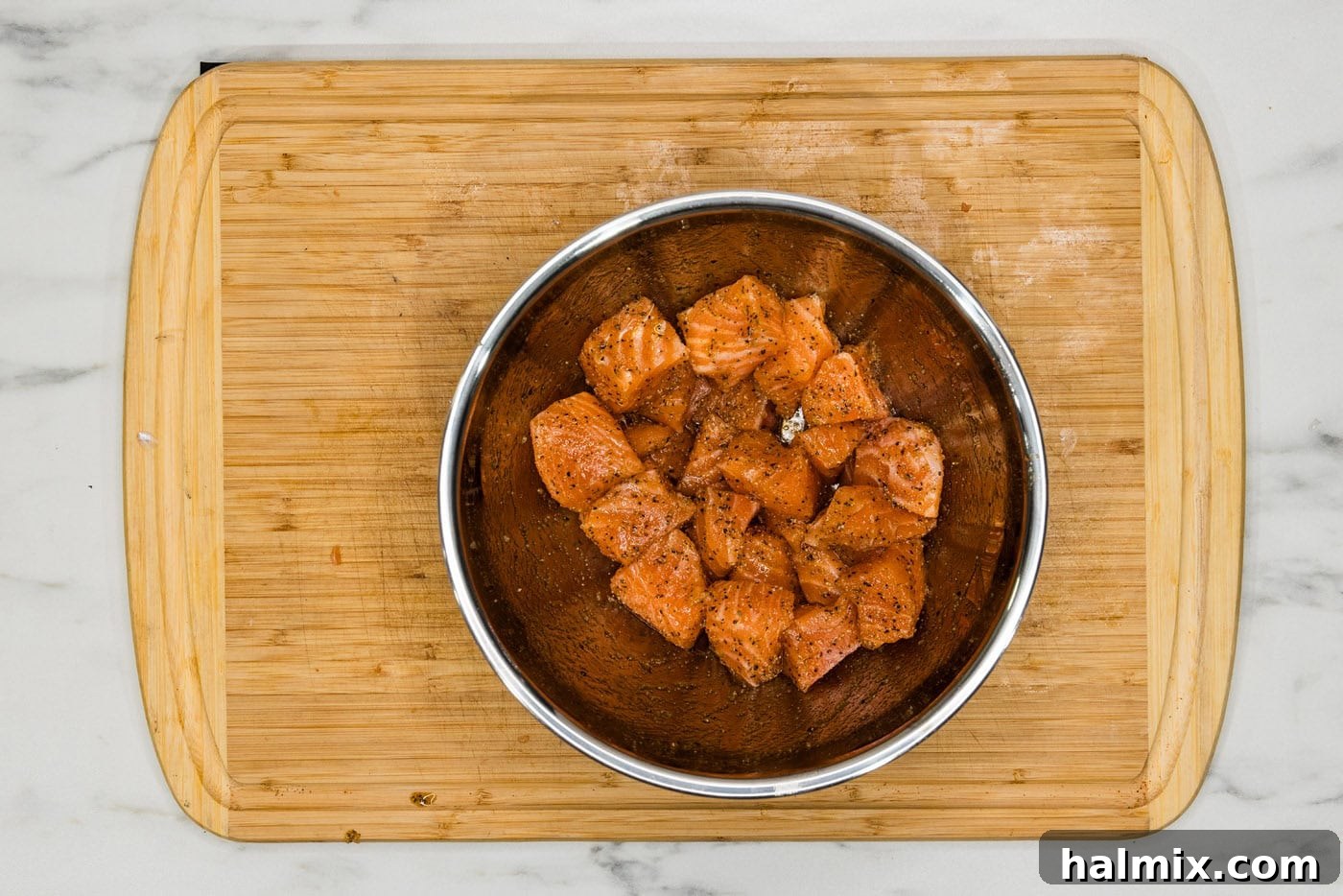
- Season the Salmon: In a medium bowl, combine the garlic salt, Old Bay seasoning, and black pepper. Drizzle in the olive oil, then add the salmon cubes. Toss gently to ensure each piece is thoroughly coated with the flavorful seasoning mixture, distributing the spices evenly.
-
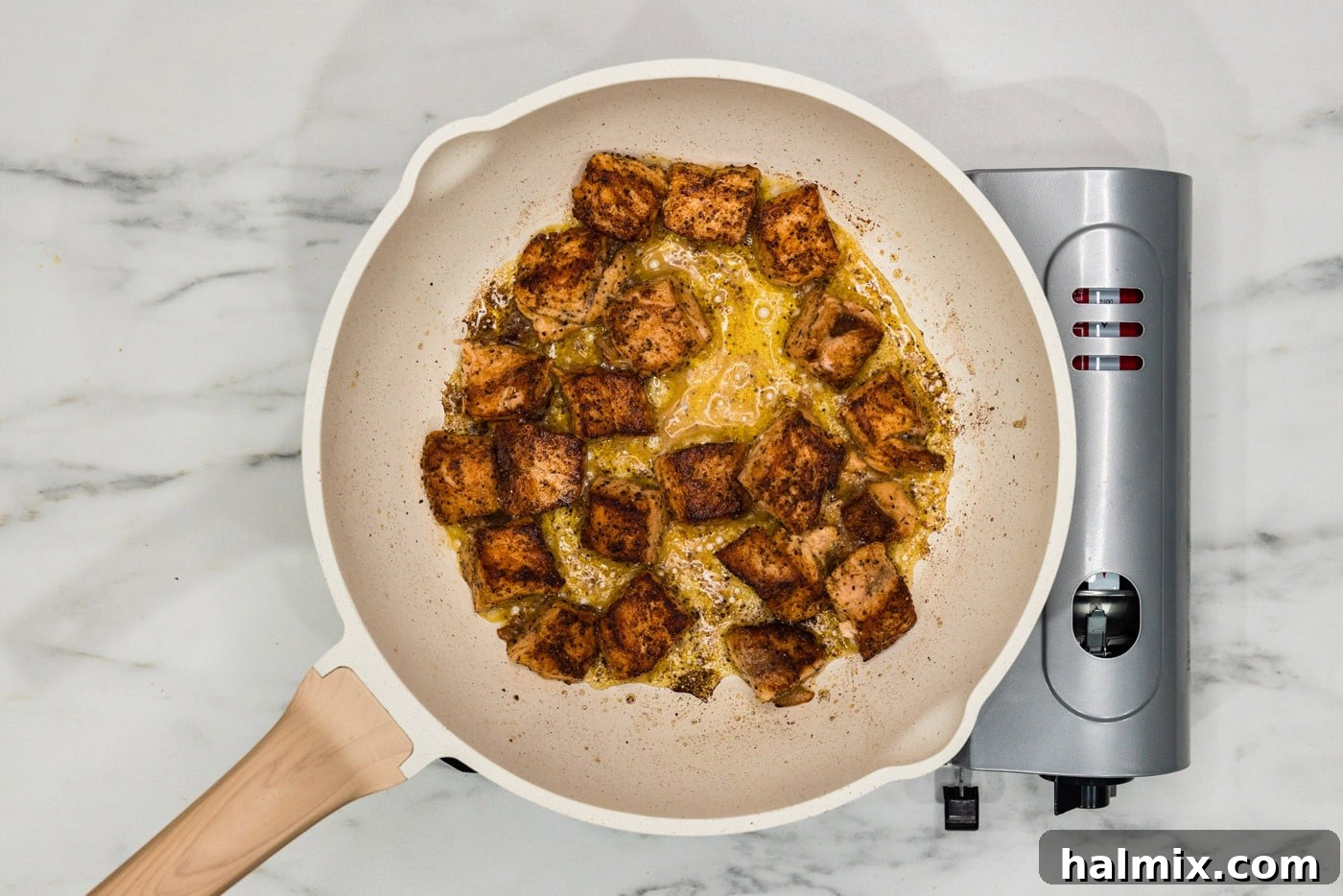
Sear the Salmon: Melt the unsalted butter in a large, heavy-bottomed skillet over medium-high heat. Once the butter is melted and slightly foaming, add the seasoned salmon cubes in a single layer, ensuring not to overcrowd the pan. Cook for 3-4 minutes per side, or until the salmon is beautifully browned and cooked through, becoming flaky. Overcooking salmon can make it dry and tough, so keep a close eye on it to achieve that perfect tenderness. Once cooked, remove the salmon from the skillet and transfer it to a plate lined with paper towels to absorb any excess oil, setting it aside for later.

Salmon cubes are tossed with a blend of garlic salt, Old Bay, black pepper, and olive oil, ensuring every piece is bursting with flavor. Perfectly seared salmon cubes, golden brown and ready to add to the creamy pasta. - Start the Cream Sauce: Without cleaning the skillet (those browned bits add flavor!), add the half and half. Bring it to a gentle simmer over medium heat, scraping up any delicious browned bits from the bottom of the pan – these fond bits will infuse tremendous flavor into your sauce.
-
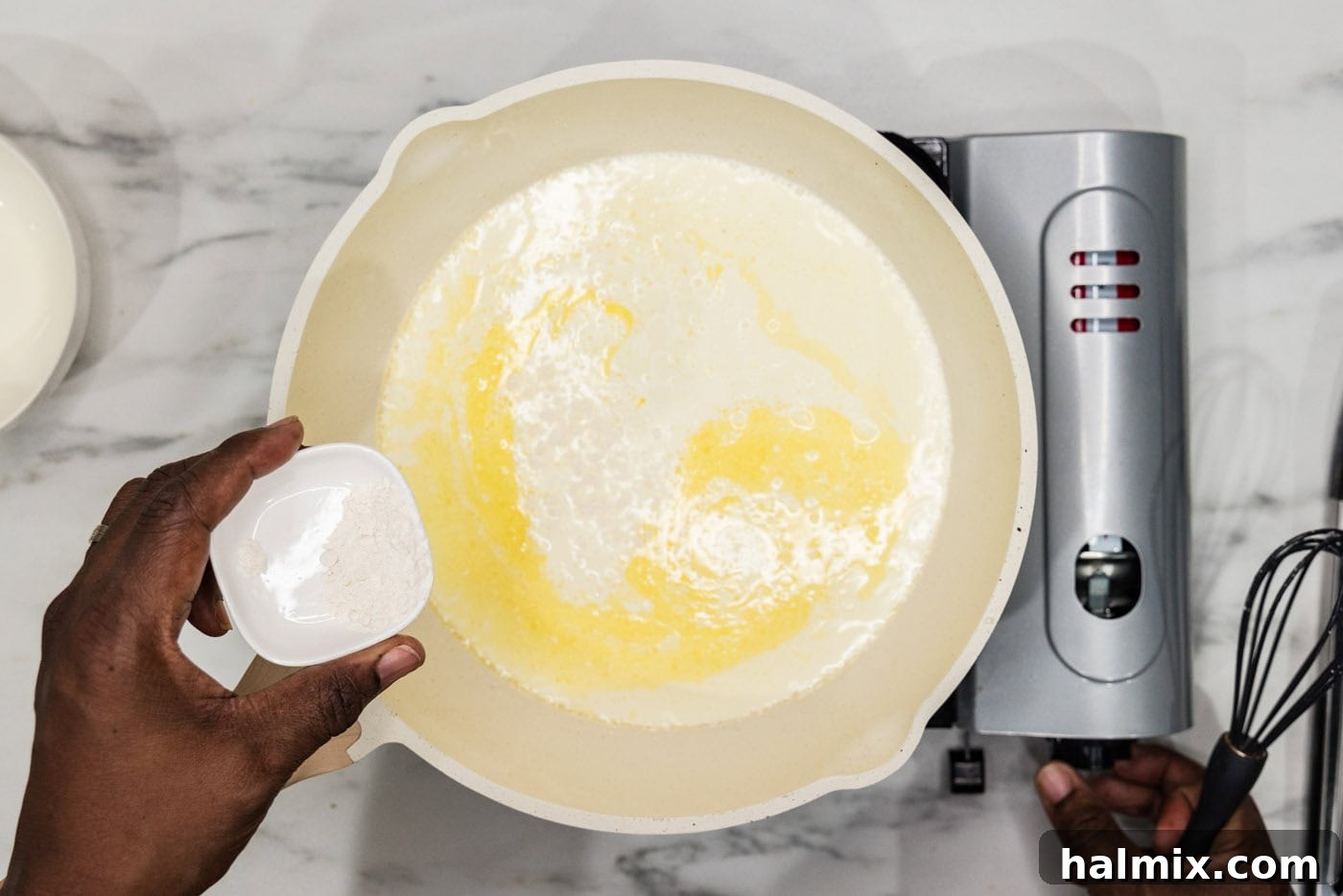
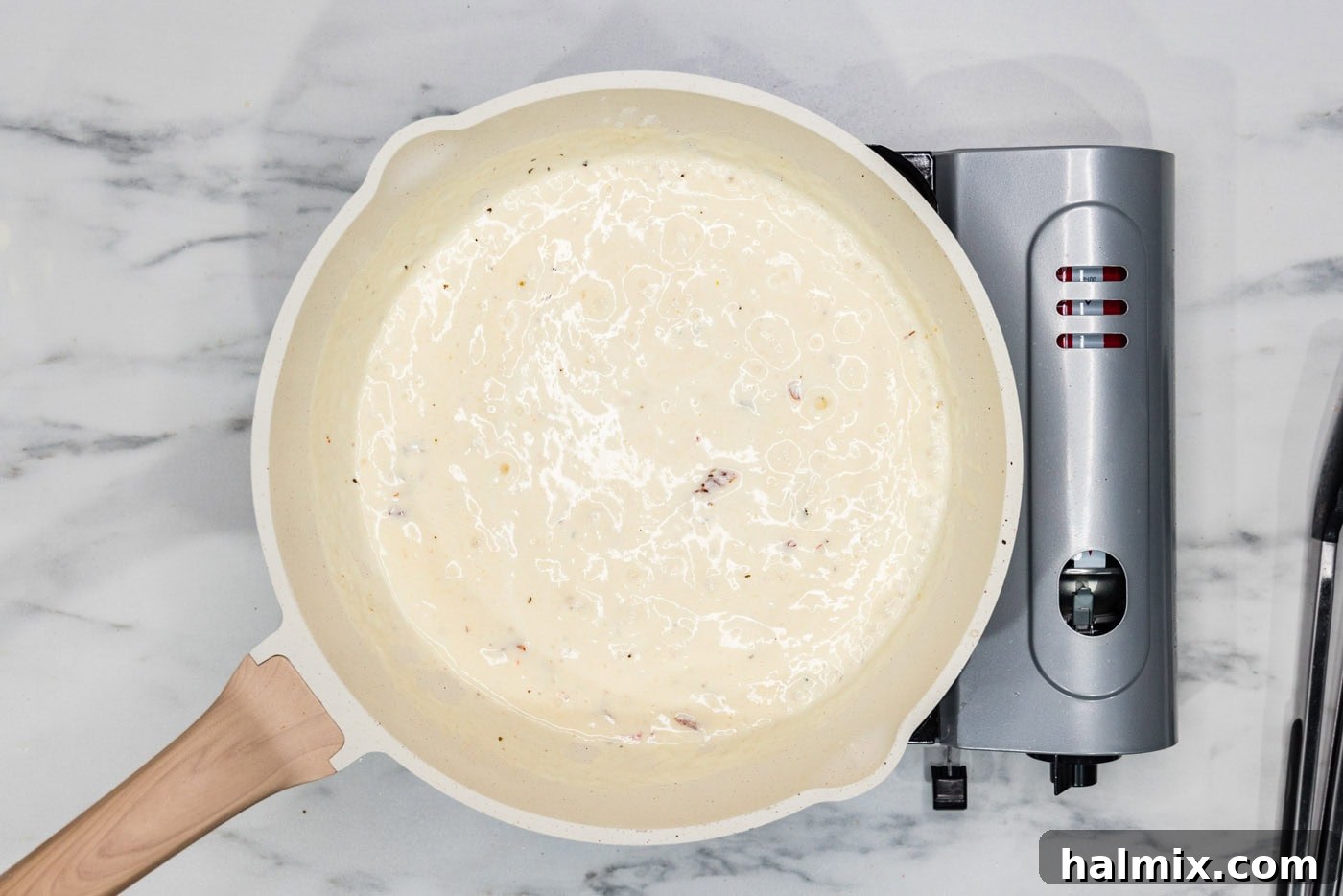
Thicken the Sauce: Gradually whisk in the all-purpose flour until no lumps remain and the mixture is smooth. Continue to whisk as you add the grated parmesan cheese, allowing it to melt evenly into the sauce. Bring the mixture to a boil, then reduce the heat to low and allow it to gently simmer and thicken for a few minutes. The sauce should become smooth, creamy, and coat the back of a spoon.
Whisking flour into the simmering half and half to create a perfectly smooth sauce base. -
Introduce Sun-Dried Tomatoes: Stir in the chopped sun-dried tomatoes, allowing their rich, concentrated flavor to infuse into the creamy sauce. Bring the sauce back to a gentle boil for a moment to ensure all flavors meld beautifully together.
Sun-dried tomatoes are added to the creamy sauce, bringing a burst of color and tangy sweetness. -
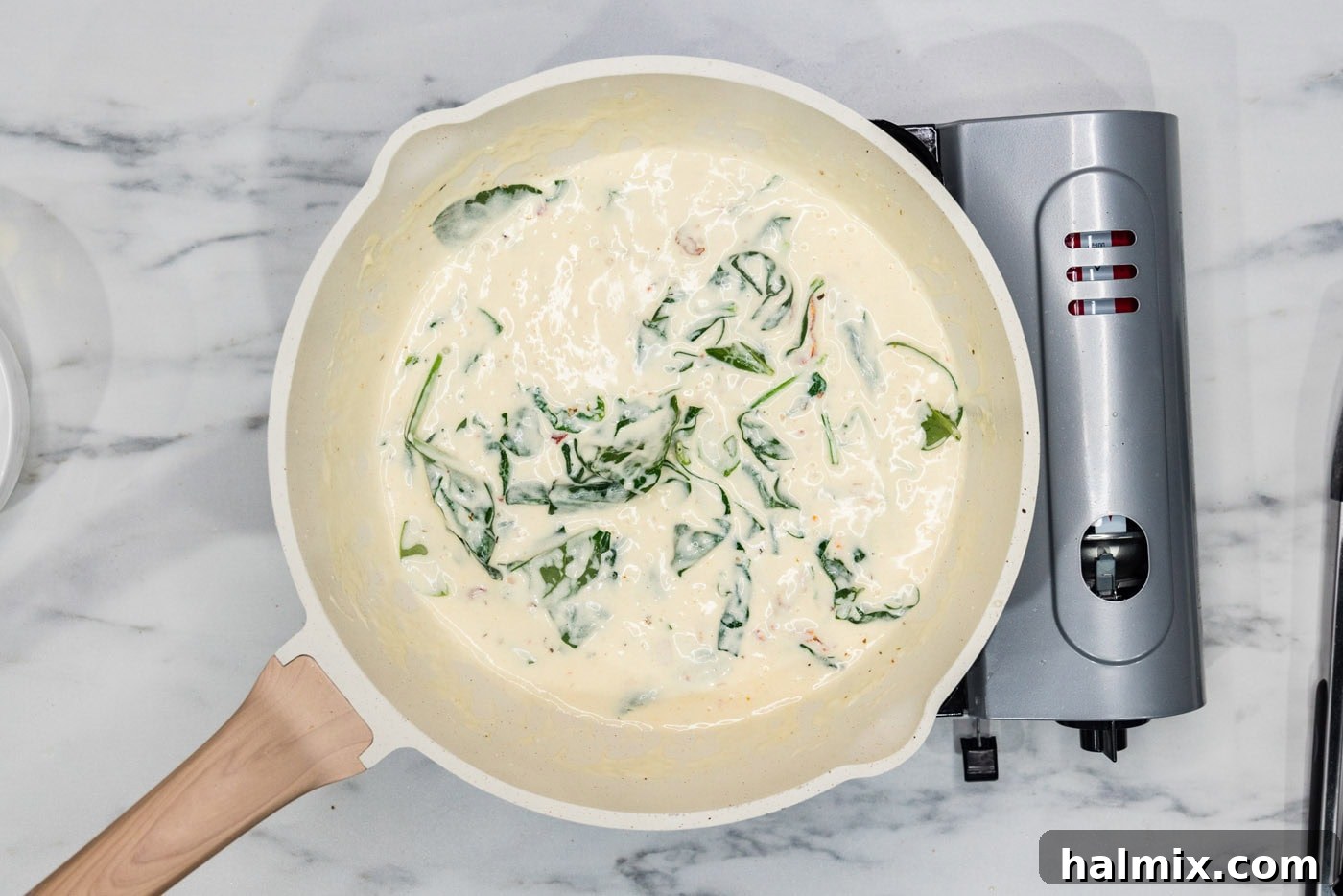
Add Spinach: Gently fold in the raw spinach leaves. Continue to cook, stirring occasionally, until the spinach begins to wilt and turn a vibrant green, integrating seamlessly into the sauce and adding a fresh, earthy note.
Fresh spinach leaves are stirred into the creamy sauce, wilting down to add nutrients and a beautiful green hue. -
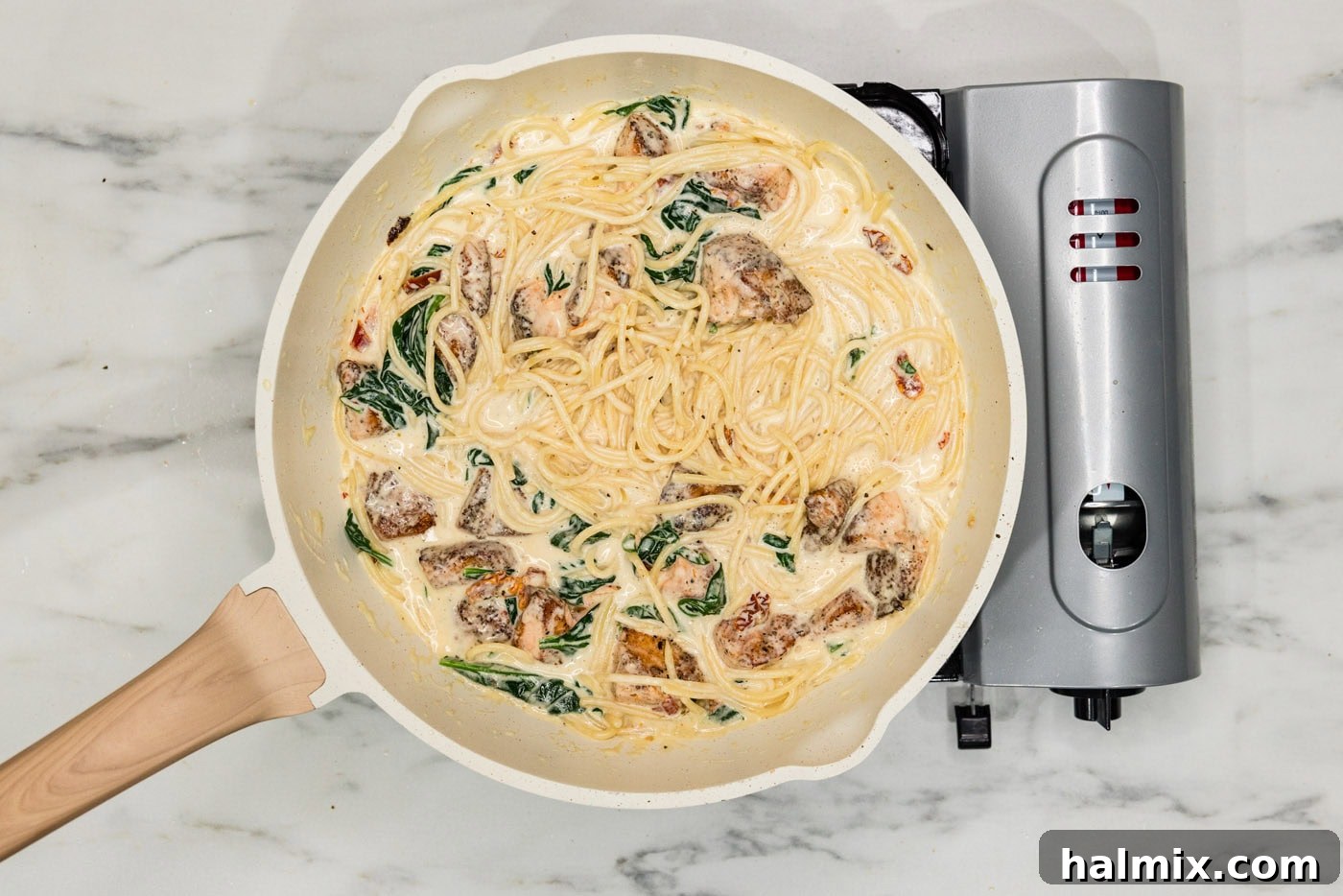
Combine with Pasta and Salmon: Add your cooked al dente spaghetti noodles and the reserved salmon chunks to the skillet with the creamy sauce. Toss everything together gently until the pasta is thoroughly coated and the salmon is heated through, creating a cohesive and flavorful dish.
The final step: cooked pasta and seared salmon are gently folded into the creamy sauce, creating a harmonious and hearty meal.
Frequently Asked Questions & Expert Tips for Perfect Creamy Salmon Pasta
How do you store leftover creamy salmon pasta?
To keep your creamy salmon pasta fresh, allow it to cool completely before transferring it to an airtight container. Store it in the refrigerator for up to 3 days. When reheating, it’s best to do so on the stovetop over low heat, stirring very often to prevent the sauce from breaking and to ensure even warming. Add a splash of milk or half and half if the sauce seems too thick or has absorbed too much liquid. While you can use a microwave, be aware that reheating salmon in the microwave can often dry it out and make it rubbery. Due to the dairy content in the sauce, I do not recommend freezing this dish, as dairy-based sauces can separate and become grainy upon thawing and reheating.
Can I use frozen salmon for this recipe?
Absolutely! If using frozen salmon, ensure it is completely thawed before you begin the recipe. The best way to thaw it is overnight in the refrigerator. For a quicker thaw, you can place the sealed salmon package under cold running water until it’s pliable. Once thawed, it’s crucial to pat the salmon very dry with paper towels before seasoning and cooking to ensure you get a beautiful, crispy sear and prevent it from steaming.
What if my cream sauce is too thick or too thin?
Achieving the perfect sauce consistency is key. If your sauce becomes too thick, simply whisk in a tablespoon or two of milk, half and half, or even some reserved pasta water (which is starchy and helps sauces cling) until it reaches your desired consistency. If it’s too thin, you can continue to simmer it gently, uncovered, for a few more minutes to allow it to reduce and thicken slightly. Alternatively, you can create a quick slurry with a teaspoon of cornstarch mixed with an equal amount of cold water, then gradually whisk it into the simmering sauce until it thickens.
Can I add other vegetables to this creamy salmon pasta?
Yes, this recipe is highly versatile and welcomes other vegetables! Feel free to add other quick-cooking options like asparagus spears, frozen peas, or sliced mushrooms. For tougher vegetables like mushrooms or broccoli florets, it’s best to sauté them briefly before adding the half and half for the sauce. Softer vegetables like peas can be added towards the end of the cooking process, along with or just before the spinach, to ensure they don’t get overcooked and retain their vibrant color and texture.
What kind of parmesan cheese should I use for the best results?
For the most superior flavor and a silky-smooth sauce, I highly recommend using freshly grated Parmesan cheese from a block. Pre-grated parmesan, especially the shelf-stable varieties, often contains anti-caking agents like cellulose that can make the sauce slightly grainy and prevent it from melting as smoothly. Freshly grated cheese, with its natural oils and sharper flavor, will melt beautifully into the cream sauce, providing an authentic and irresistible taste.
Serving Suggestions for Creamy Salmon Pasta
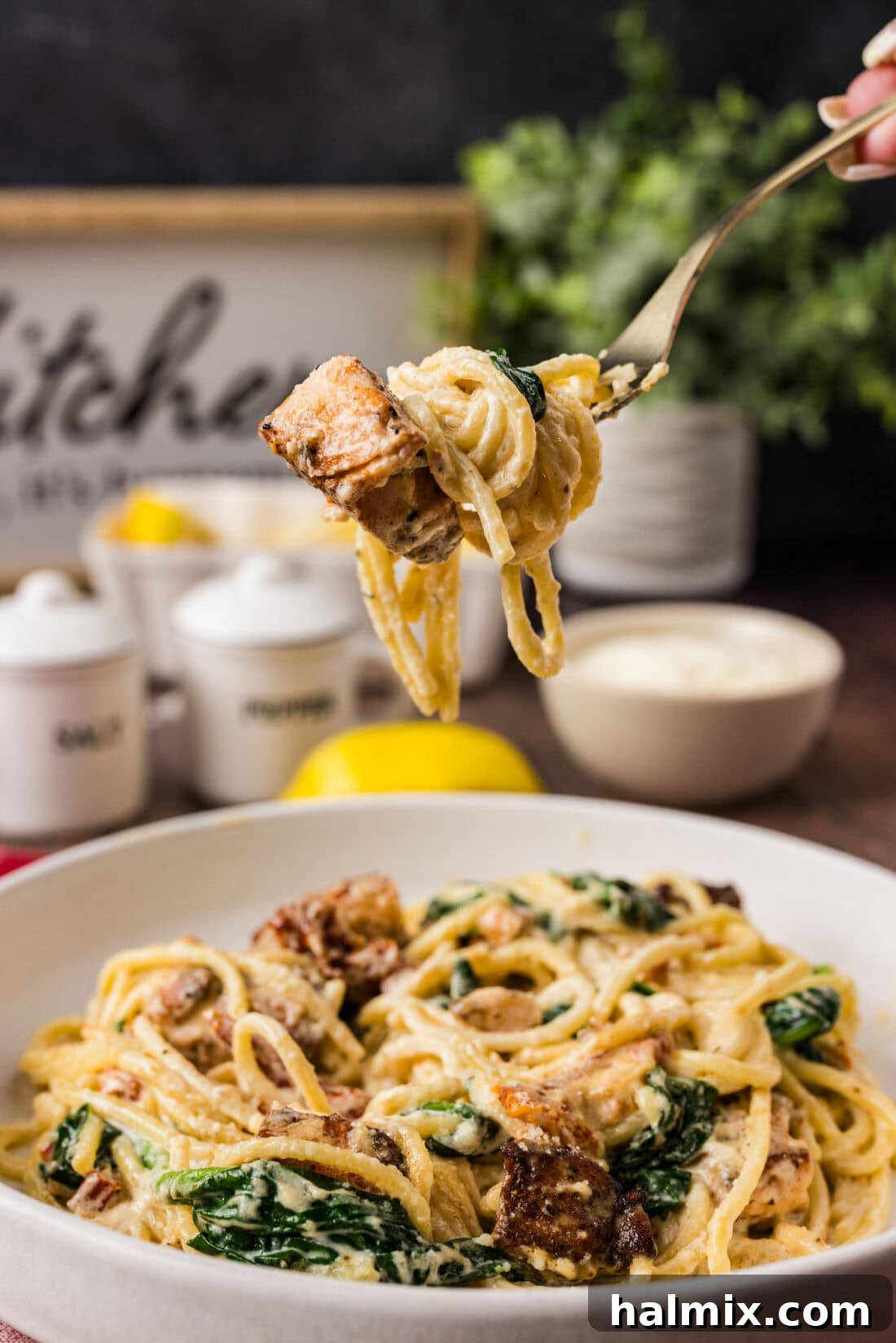
This creamy salmon pasta is a wonderfully complete meal on its own, offering a perfect balance of protein, carbohydrates, and vegetables. However, a few simple additions can elevate your dining experience even further. Serve it warm directly from the pan, perhaps with an extra sprinkle of fresh grated parmesan cheese for an added flourish and burst of umami. For a delightful texture contrast and to ensure you soak up every last drop of that incredible sauce, pair it with a hunk of crusty artisan bread or warm, buttery garlic bread. A light, crisp green salad with a simple vinaigrette would also complement the richness of the pasta beautifully, offering a refreshing counterpoint to cleanse the palate. If you appreciate a little kick, a dash of red pepper flakes sprinkled on top before serving adds a wonderful subtle heat that enhances the flavors. To perfectly complete your meal, consider pairing it with a glass of chilled white wine, such as a crisp Sauvignon Blanc, a light Pinot Grigio, or even a dry Rosé.
More Delicious Pasta Recipes to Try
- Flavorful Shrimp Pasta
- Exquisite Scallop Pasta
- Classic Shrimp Scampi Pasta
- Simple Garlic Butter Pasta
I absolutely love to explore the world of baking and cooking and share my culinary adventures with all of you! To make sure you never miss a new, delicious recipe, I offer a convenient newsletter delivered straight to your inbox every time a new creation posts. Simply subscribe here and start receiving your free daily recipes – it’s the easiest way to keep your meal plans exciting!
Creamy Salmon Pasta Recipe
This delightful salmon pasta recipe is remarkably simple and quick to prepare, yet it’s absolutely bursting with incredible flavor. The rich combination of sun-dried tomatoes and a decadent garlic-parmesan cream sauce creates a gourmet experience perfect for any occasion.
IMPORTANT – There are often Frequently Asked Questions within the blog post that you may find helpful. Simply scroll back up to read them!
Pin It
Ingredients
- 1.25 pounds center cut salmon
- 2 teaspoons garlic salt
- 2 teaspoons Old Bay seasoning
- 1 teaspoon black pepper
- 1 ½ Tablespoons olive oil
- 3 Tablespoons unsalted butter
- 1 ½ cups half and half
- 1 Tablespoon all purpose flour
- ¼ cup grated parmesan cheese
- ¼ cup sun dried tomatoes (oil-packed, drained and chopped)
- 1 cup raw spinach leaves
- 8 ounces spaghetti, cooked al dente
Equipment You’ll Need
- Chef’s knife
- Large heavy bottomed skillet
- Whisk
Instructions
- Cut salmon into even, bite-sized cubes.
- Combine garlic salt, Old Bay seasoning, and black pepper with olive oil in a bowl. Add the salmon cubes and toss to coat thoroughly.
- Melt butter in a large skillet over medium-high heat. Add salmon cubes and cook for 3-4 minutes per side, or until nicely browned and flaky. Remove from skillet to a paper towel-lined plate.
- Add half and half to the same skillet, bringing it to a gentle simmer.
- Whisk in the flour and grated parmesan cheese until smooth. Bring to a boil, then reduce heat and simmer to thicken.
- Stir in the sun-dried tomatoes and bring back to a boil.
- Add the spinach leaves and cook, stirring, until they begin to wilt.
- Add the cooked spaghetti noodles and the reserved salmon chunks to the skillet. Stir gently to combine everything and heat through.
- Serve immediately and enjoy your homemade creamy salmon pasta!
Expert Tips & Recipe Notes
- For consistent cooking, use center-cut salmon and ensure all cubes are evenly sized. Make sure your salmon is completely thawed before seasoning to help the spices adhere better.
- Feel free to experiment with different pasta shapes! While spaghetti works wonderfully, fettuccine, linguine, penne, or even farfalle are excellent choices. Always cook your pasta al dente for the best texture in this creamy dish.
- Store cooled leftovers in an air-tight container in the refrigerator for up to 3 days. Reheat on the stovetop over low heat, stirring frequently, adding a splash of milk or broth if needed to maintain creaminess. Freezing is not recommended due to the dairy in the sauce.
Nutrition Facts (per serving)
- Serving Size: 1 cup (1 serving)
- Calories: 567 kcal
- Carbohydrates: 43g
- Protein: 33g
- Fat: 29g
- Saturated Fat: 12g
- Polyunsaturated Fat: 4g
- Monounsaturated Fat: 10g
- Trans Fat: 0.3g
- Cholesterol: 110mg
- Sodium: 1127mg
- Potassium: 999mg
- Fiber: 2g
- Sugar: 6g
- Vitamin A: 1189 IU
- Vitamin C: 5mg
- Calcium: 170mg
- Iron: 3mg
Tried this Recipe? Pin it for Later!
Follow on Pinterest @AmandasCookin or tag #AmandasCookin!
The recipes on this blog are carefully tested using a conventional gas oven and gas stovetop. Please note that oven performance can vary, especially with older models, leading to inconsistent cooking and baking. We recommend using an inexpensive oven thermometer to ensure your oven maintains the correct temperature. If you utilize a toaster oven or a countertop oven, be aware that their heat distribution may differ from full-sized conventional ovens, and adjustments to cooking or baking times might be necessary. For recipes prepared with specialized appliances like pressure cookers, air fryers, or slow cookers, links to the specific appliances we use are provided within their respective recipes. For baking recipes where ingredients are measured by weight, using cups instead may alter results, and we cannot guarantee success with volumetric measurements in such cases.