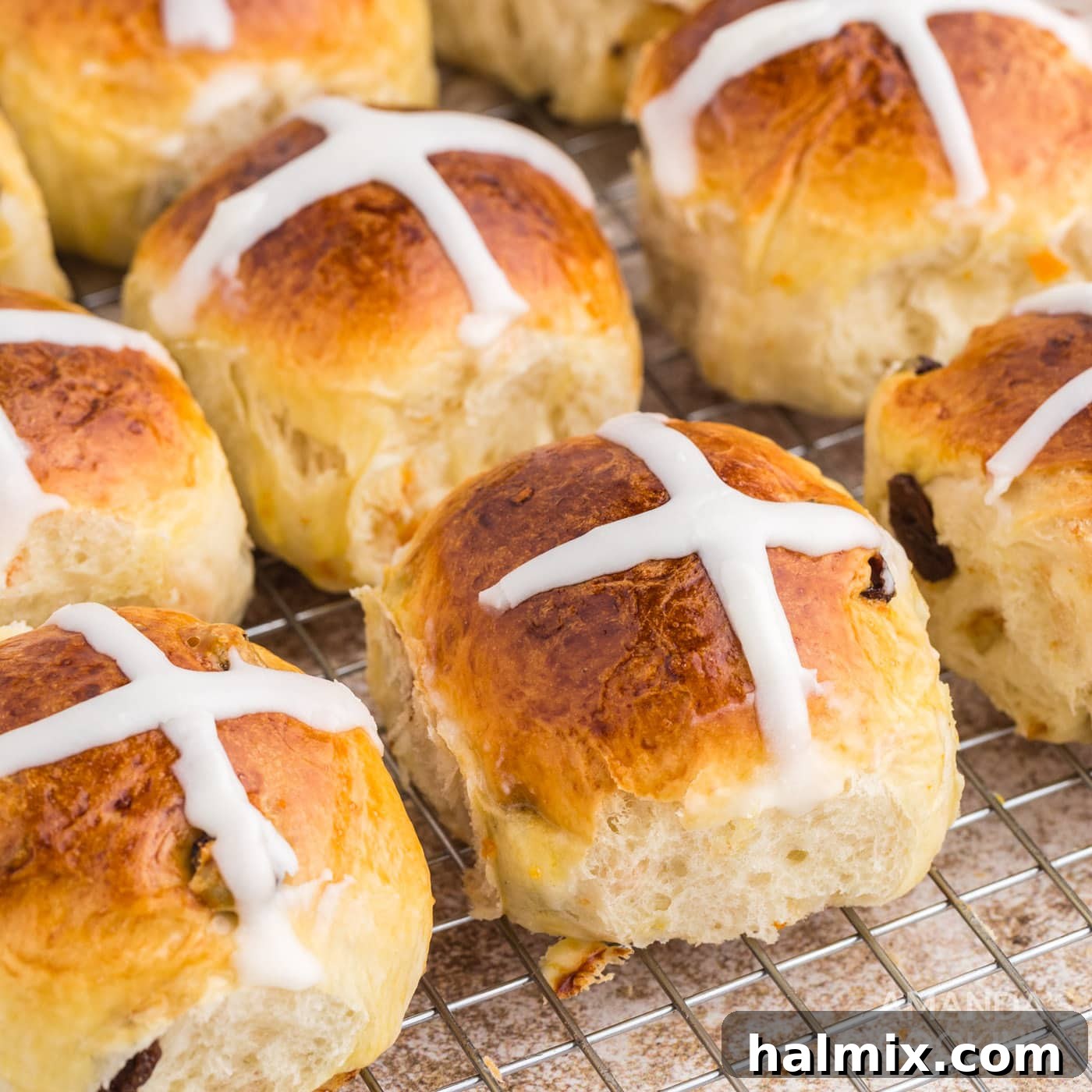
These delightful hot cross buns are a true Easter classic, renowned for their pillowy soft texture, succulent dried fruits, and that iconic sweet icing cross. They are a staple of springtime baking, bringing warmth and tradition to any table.
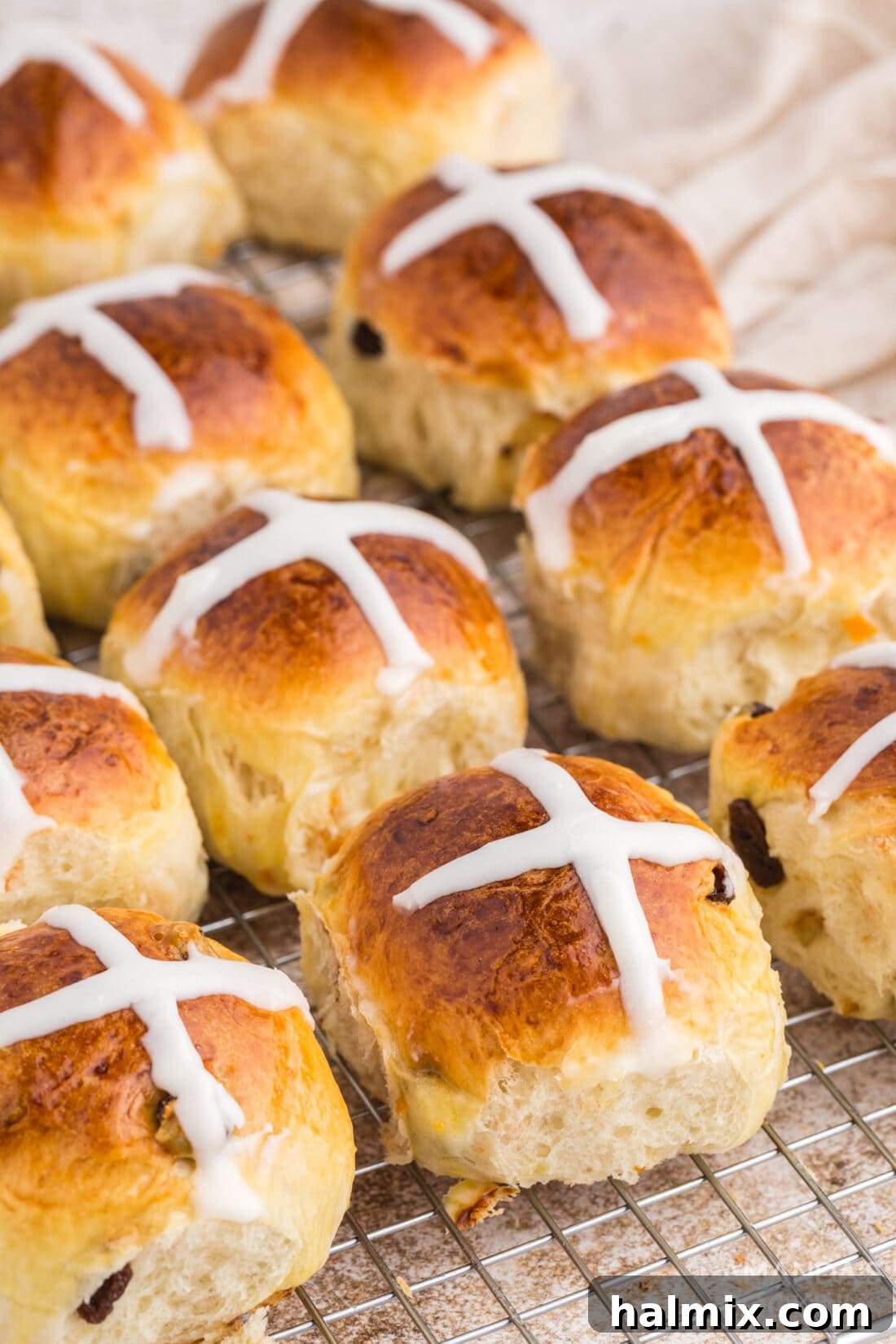
Irresistibly Soft Hot Cross Buns with Raisins and Candied Orange Peel
There’s something uniquely comforting about a batch of homemade hot cross buns. The aroma of sweet dough baking, mingling with fragrant spices (if you choose to add them), fills the kitchen with an inviting warmth that signals the arrival of spring and Easter festivities. This recipe promises perfectly tender buns, generously dotted with plump raisins and fragrant candied orange peel, all crowned with a beautiful, sugary cross.
Whether enjoyed as a cozy breakfast treat, a delightful accompaniment to afternoon tea, or a special addition to your Easter brunch spread, these buns are sure to become a cherished part of your holiday traditions. Forget store-bought versions; the satisfaction of pulling a tray of these golden, glazed beauties from your own oven is unparalleled.
Why This Hot Cross Buns Recipe Is a Must-Try
This hot cross buns recipe stands out for several reasons, guaranteeing a successful and delicious outcome every time. We focus on a method that ensures an incredibly soft and pillowy texture, a hallmark of a truly great hot cross bun. The gentle sweetness of the dough perfectly complements the bursts of flavor from the dried fruits.
Unlike some recipes that can yield dense or dry buns, our approach prioritizes moisture and proper proofing, resulting in a light, airy crumb that practically melts in your mouth. The combination of sweet raisins and bright, zesty candied orange peel offers a complex flavor profile that is both traditional and wonderfully refreshing. The simple yet elegant icing cross provides the perfect finishing touch, adding a lovely sweetness and visual appeal that makes these buns unmistakably Easter-ready. This recipe is designed to be straightforward, making the baking process enjoyable for both novice and experienced bakers alike, culminating in a batch of buns that are deeply satisfying and wonderfully rewarding.
The Enduring Tradition of Hot Cross Buns
Hot cross buns are more than just a sweet treat; they are deeply ingrained in history and tradition, particularly around Easter and Good Friday. Dating back centuries, these spiced, fruit-filled buns with their distinctive cross have been symbolic for various reasons. The cross, most commonly made with icing, is widely believed to represent the crucifixion of Jesus Christ, making them a traditional food for Good Friday. However, the origins may even predate Christianity, with some historians suggesting ancient Anglo-Saxons ate spiced cakes marked with a cross in honor of the goddess Eostre.
Over time, various superstitions and customs have also surrounded hot cross buns. It was once believed that buns baked on Good Friday would not spoil throughout the year, or that sharing a bun with a friend would ensure friendship for the coming year. Sailors would even take them on voyages to prevent shipwreck. Regardless of their exact historical genesis, hot cross buns have evolved into a beloved Easter staple worldwide. Their gentle sweetness, comforting texture, and symbolic icing cross make them a perfect representation of hope and renewal, eagerly anticipated as a sign of spring’s arrival and the Easter holiday.
Key Ingredients for Perfect Hot Cross Buns
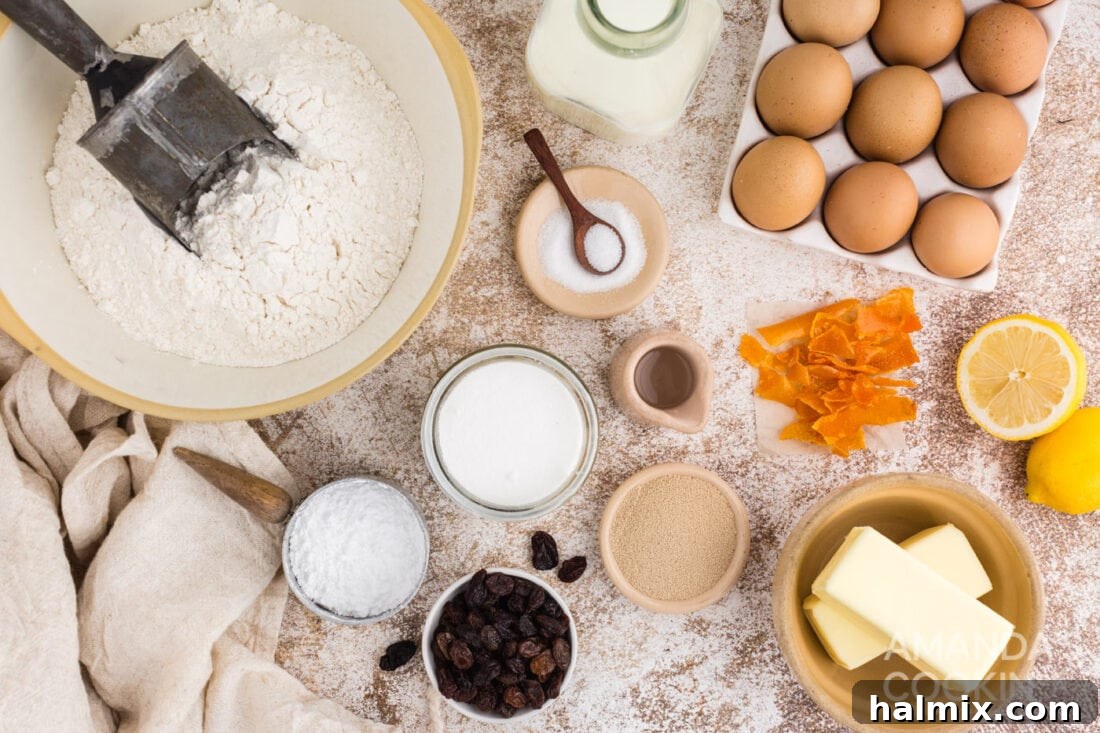
Crafting these delectable hot cross buns requires a thoughtful selection of staple baking ingredients, each playing a crucial role in achieving that signature soft texture and rich flavor. You’ll find all specific measurements and detailed instructions in the printable recipe card at the end of this comprehensive guide. Here’s a closer look at the components:
All-Purpose Flour
Our recipe primarily uses regular all-purpose flour, which provides the ideal balance for a tender yet structured bun. All-purpose flour has a moderate protein content, perfect for developing enough gluten to give the buns their characteristic chewiness without making them overly tough. If you’re considering a healthier alternative, you can certainly experiment with whole wheat flour. However, for best results, we recommend substituting no more than half of the all-purpose flour with whole wheat. Using entirely whole wheat flour can result in a denser, heavier bun, detracting from the desired light and airy texture.
Active Dry Yeast
Active dry yeast is our leavening agent of choice for these hot cross buns. This type of yeast requires a bit of activation, or “proofing,” by dissolving it in a warm liquid before being incorporated into the dry ingredients. This step ensures the yeast is alive and active, ready to work its magic in making your dough rise beautifully. While it adds a few extra minutes to the preparation, this method helps guarantee a successful rise. You can substitute active dry yeast with quick-rising or instant yeast, which can often be added directly to the dry ingredients without prior proofing, potentially shortening the overall process slightly. Just be sure to check the package instructions for your specific yeast type.
Dried Fruits: Raisins and Candied Orange Peels
The star additions to our sweet buns are plump raisins and vibrant candied orange peels. Raisins offer a classic sweetness and soft texture that complements the rich dough. The candied orange peels, on the other hand, introduce a delightful citrusy zest and a slightly chewy texture that brightens the flavor profile beautifully. You can easily make your own candied citrus peels at home for an even fresher taste. Feel free to customize the dried fruits based on your preference; currants, dried cranberries, chopped dried apricots, or even a mix of candied lemon and lime peels make excellent substitutes. For a truly spiced bun, consider adding warming spices like ground cinnamon, nutmeg, cloves, or allspice directly into your dough – though our current recipe focuses on the fruit-forward sweetness.
Dairy and Fats
Milk and unsalted butter contribute significantly to the richness, tenderness, and flavor of these hot cross buns. The milk helps activate the yeast and provides moisture, while butter adds a luxurious depth and helps create that wonderful soft crumb. Using unsalted butter allows you to control the overall salt content of the recipe.
Eggs
Eggs act as both a binder and an enricher in the dough. They add structure, contribute to the golden color of the baked buns, and provide additional richness, making the buns more tender and flavorful.
Crafting Your Own Homemade Hot Cross Buns: A Step-by-Step Guide
Embark on the journey of baking these wonderful hot cross buns with our detailed, easy-to-follow steps. For a convenient printable version of the complete recipe, including exact measurements and a comprehensive ingredient list, simply scroll down to the full recipe card at the bottom of this page.
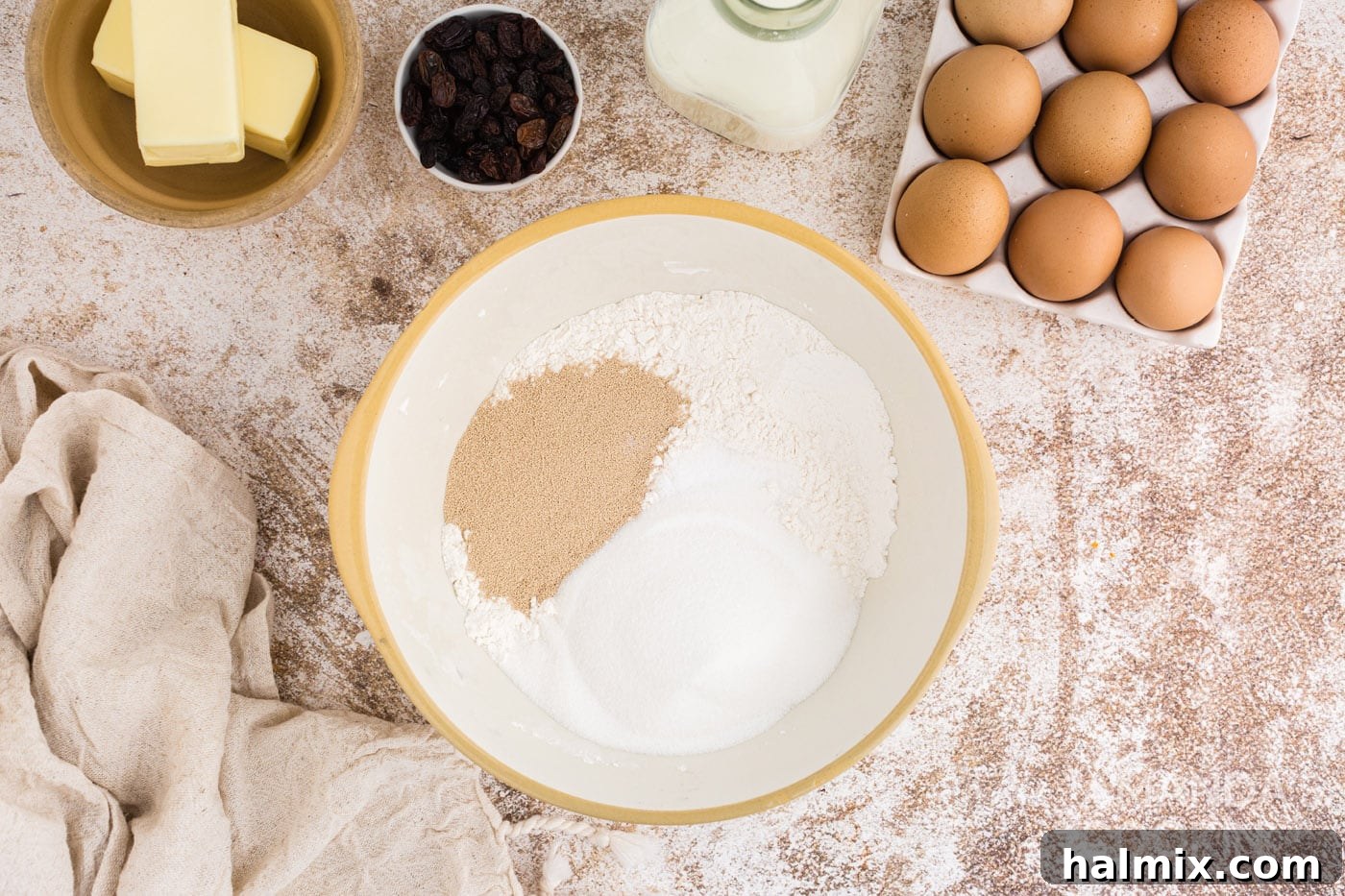
- In a spacious mixing bowl, begin by thoroughly combining your granulated sugar, salt, yeast, and the initial two cups of all-purpose flour. This initial blend ensures an even distribution of the dry ingredients before liquids are introduced.
Baking Insight: For this recipe, we’ll be adding the active dry yeast directly with the dry ingredients. It will fully dissolve and activate later when the warm liquids are incorporated into the mixture. As long as your yeast is fresh and within its expiration date, the traditional separate proofing step (where yeast is bloomed in warm water) is not strictly necessary. However, if you’re uncertain about your yeast’s viability, you can always proof a small amount in a portion of the warm milk from the recipe before adding it to the rest of the ingredients to confirm its activity.

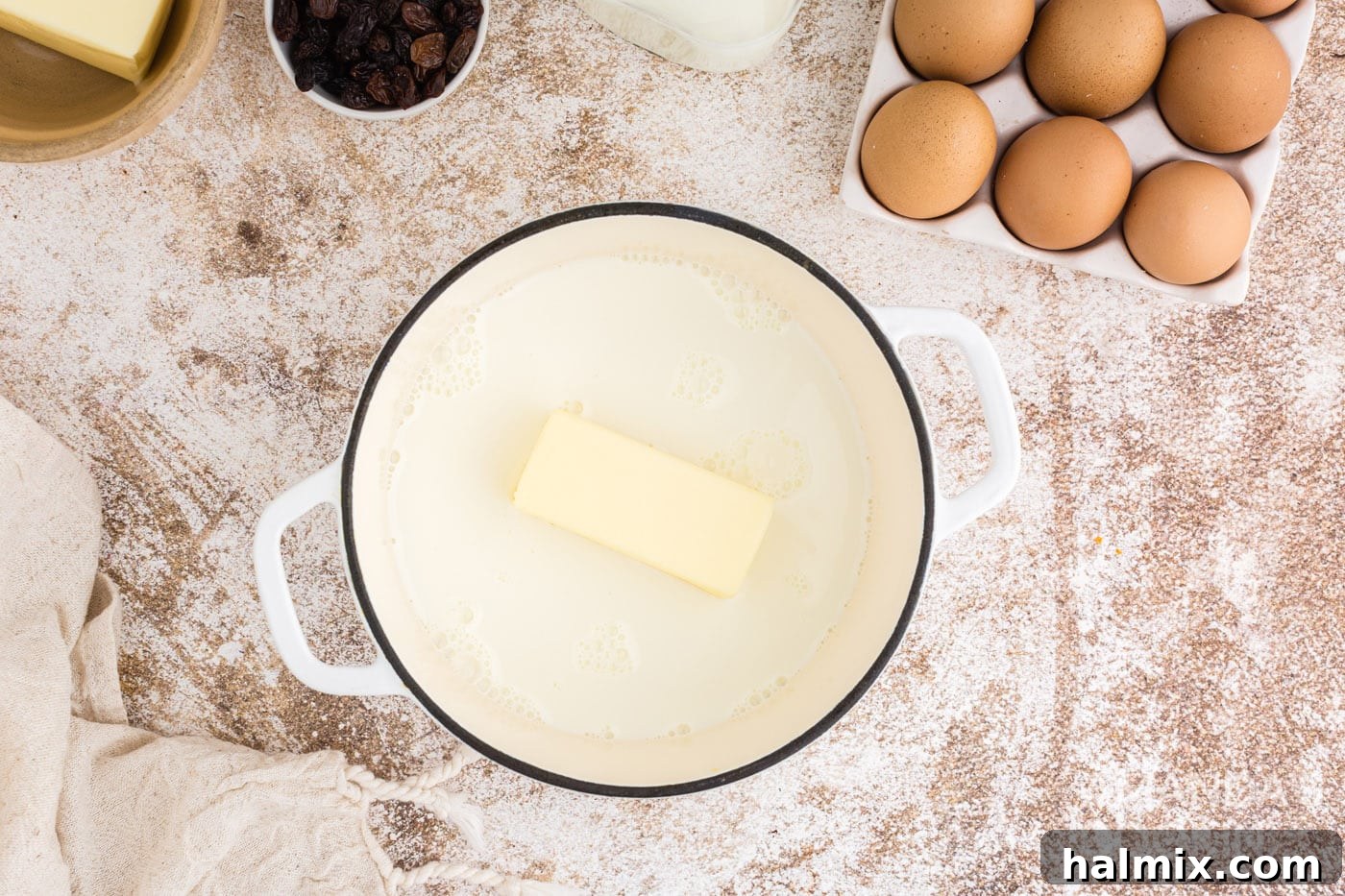
- In a small saucepan, gently heat the milk and butter over low heat until the mixture is warm to the touch, approximately 105-115°F (40-46°C). The butter doesn’t need to be completely melted; a few small chunks are perfectly fine as they will fully incorporate during mixing. Ensuring the liquid is warm, not hot, is crucial for yeast activation without killing it.
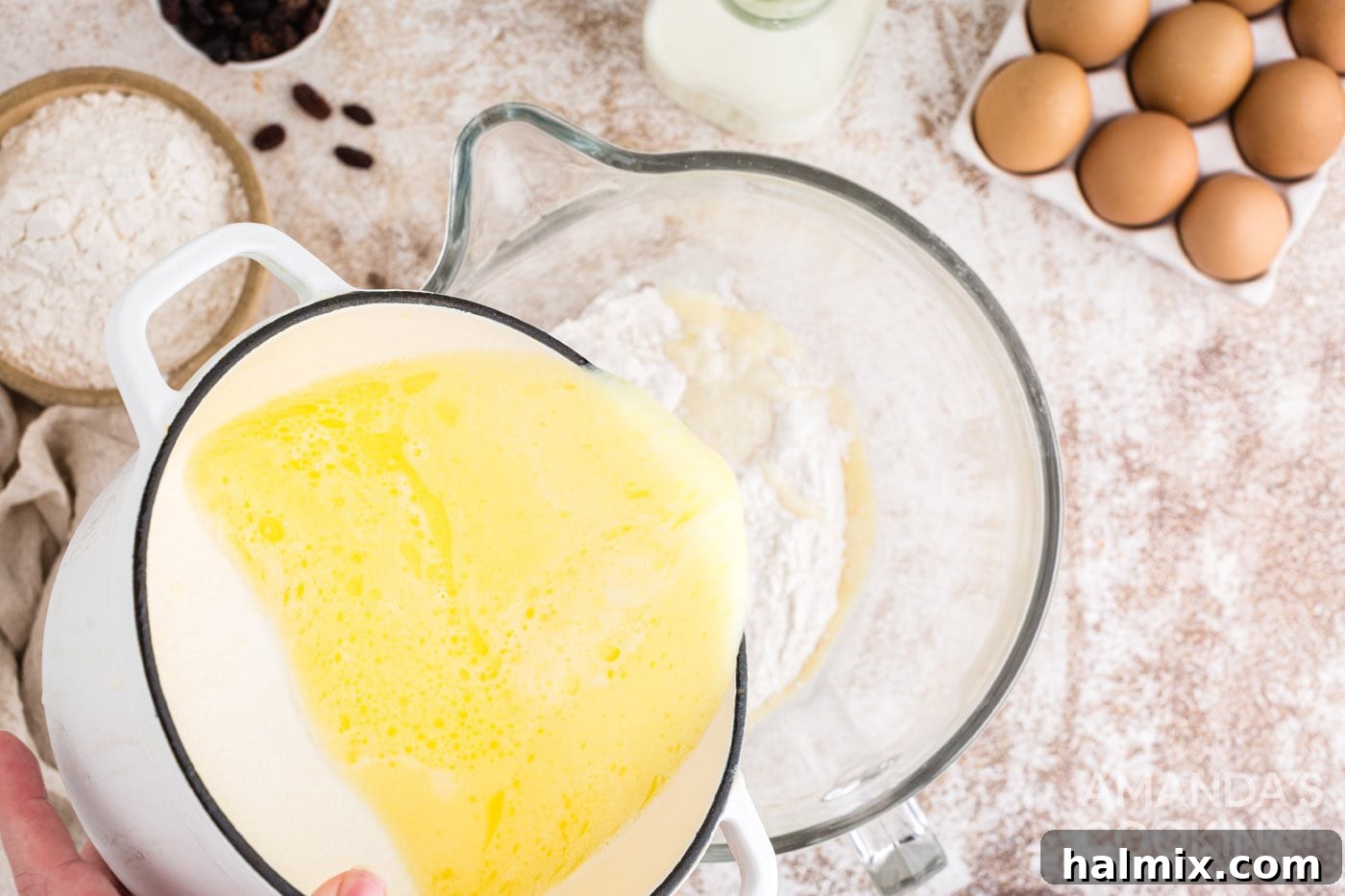
- Using a stand mixer fitted with a dough hook (or a handheld mixer with beaters) on low speed, gradually pour the warm milk and butter mixture into your dry ingredients. Mix slowly until the wet and dry components are just lightly combined.
- Once the ingredients are lightly mixed, increase the mixer speed to medium and continue beating for an additional 2 minutes. During this stage, be sure to pause occasionally and scrape down the sides of the bowl with a spatula to ensure all ingredients are thoroughly incorporated and no dry spots remain. This helps in the initial development of gluten.
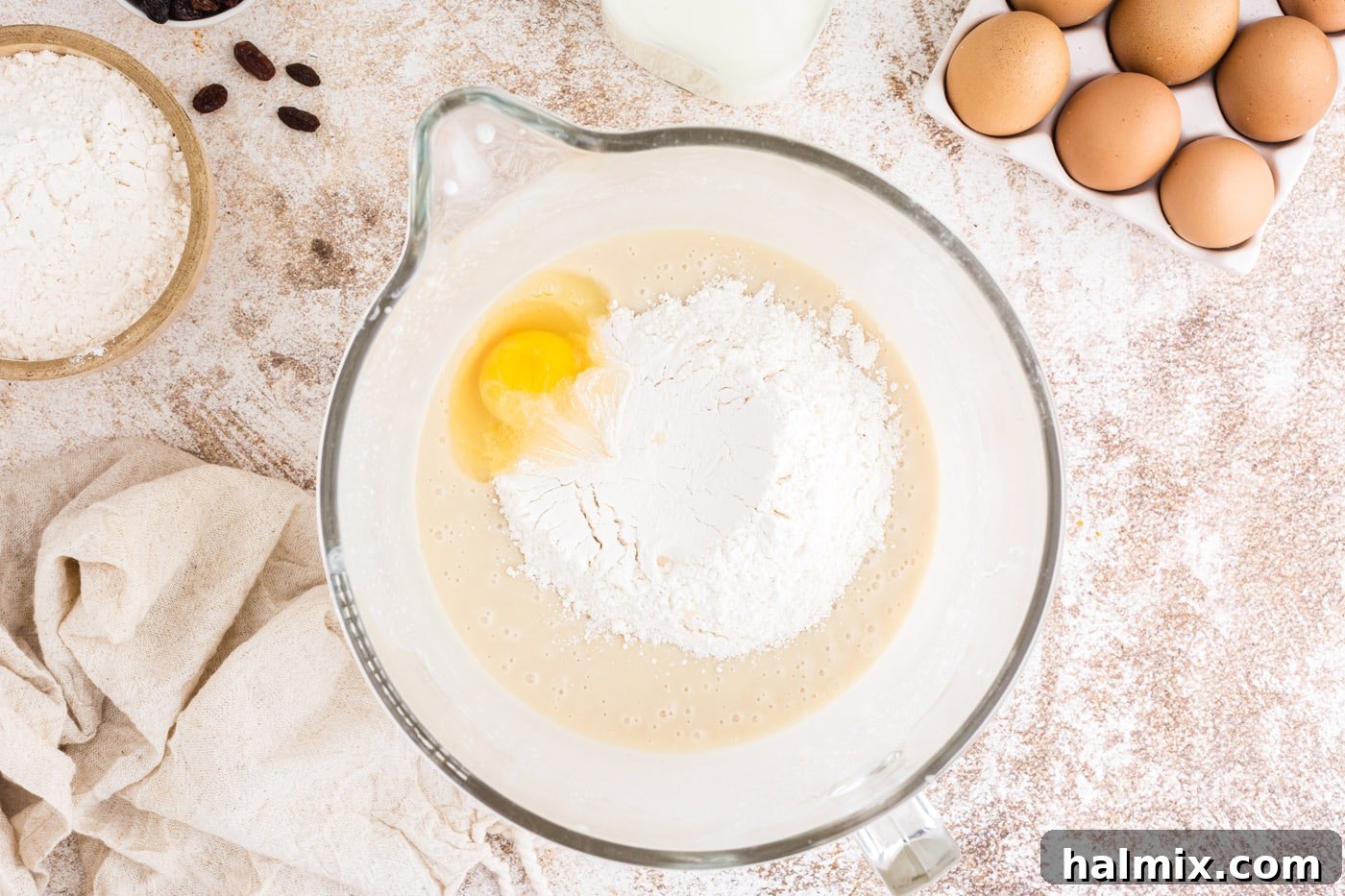
- Add the egg and an additional 2 cups of flour to the mixture. Resume mixing on medium speed for another 2 minutes. This further develops the dough’s structure and elasticity, preparing it for the kneading process.
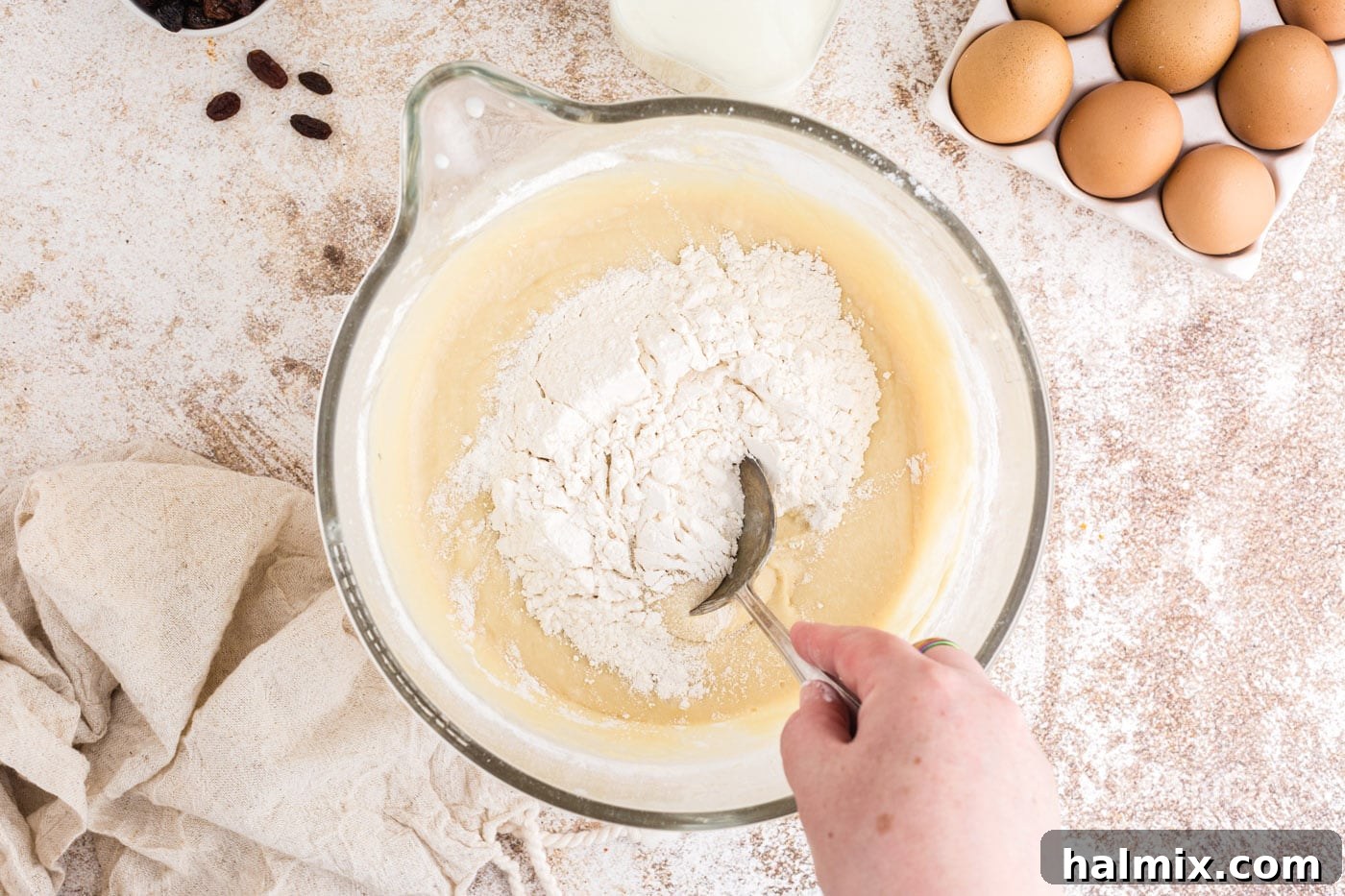
- Gradually stir in the remaining flour, about ½ cup, or just enough until the dough comes together and forms a soft, slightly sticky consistency. Avoid adding too much flour, as this can result in dry buns. The dough should still be pliable and somewhat tacky.
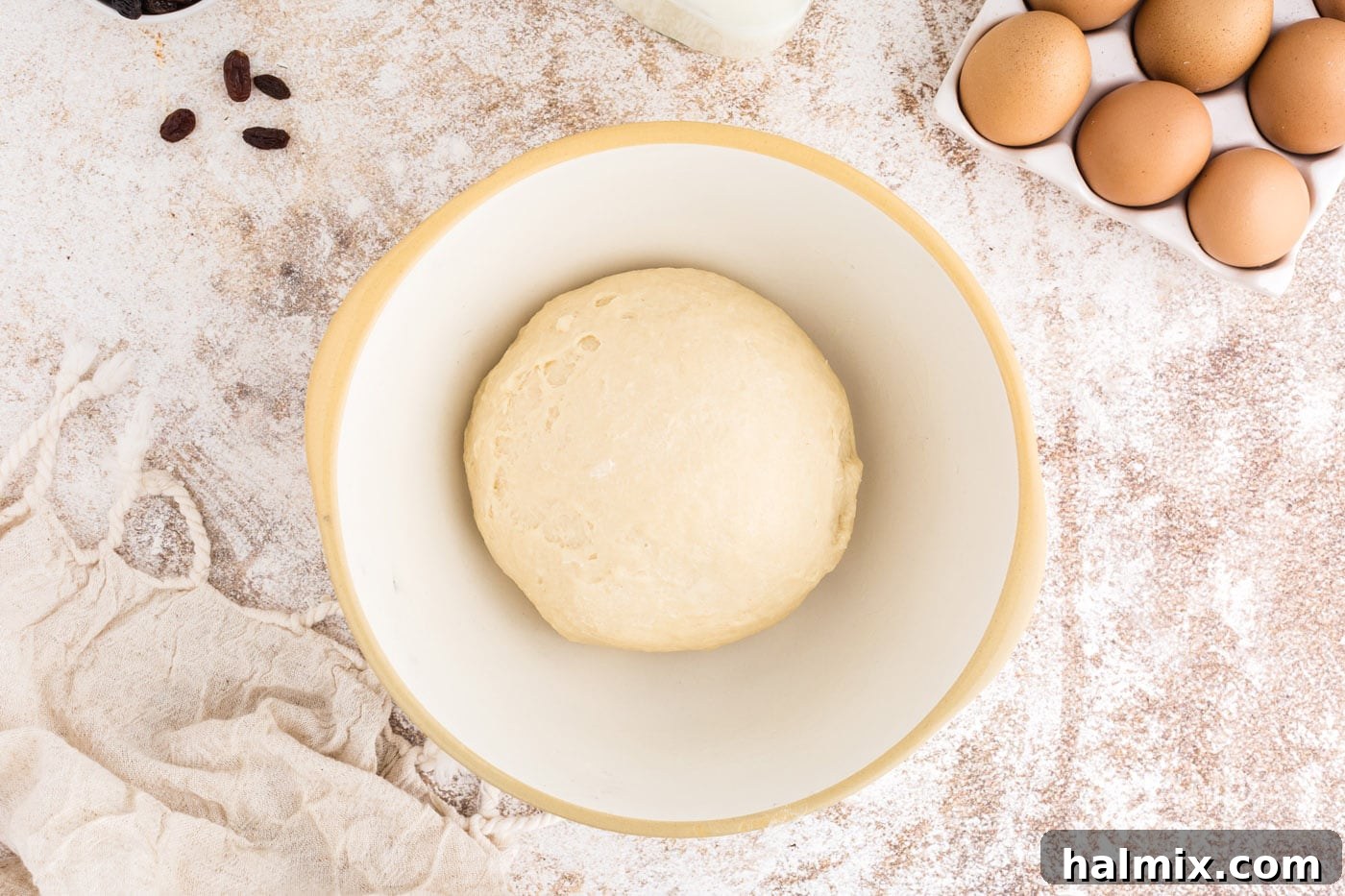
- Transfer the soft dough onto a lightly floured surface. Knead the dough vigorously for approximately 10 minutes until it becomes smooth, elastic, and no longer sticky. Proper kneading is essential for developing the gluten, which gives the buns their characteristic structure and chewiness. Once kneaded, shape the dough into a smooth ball.
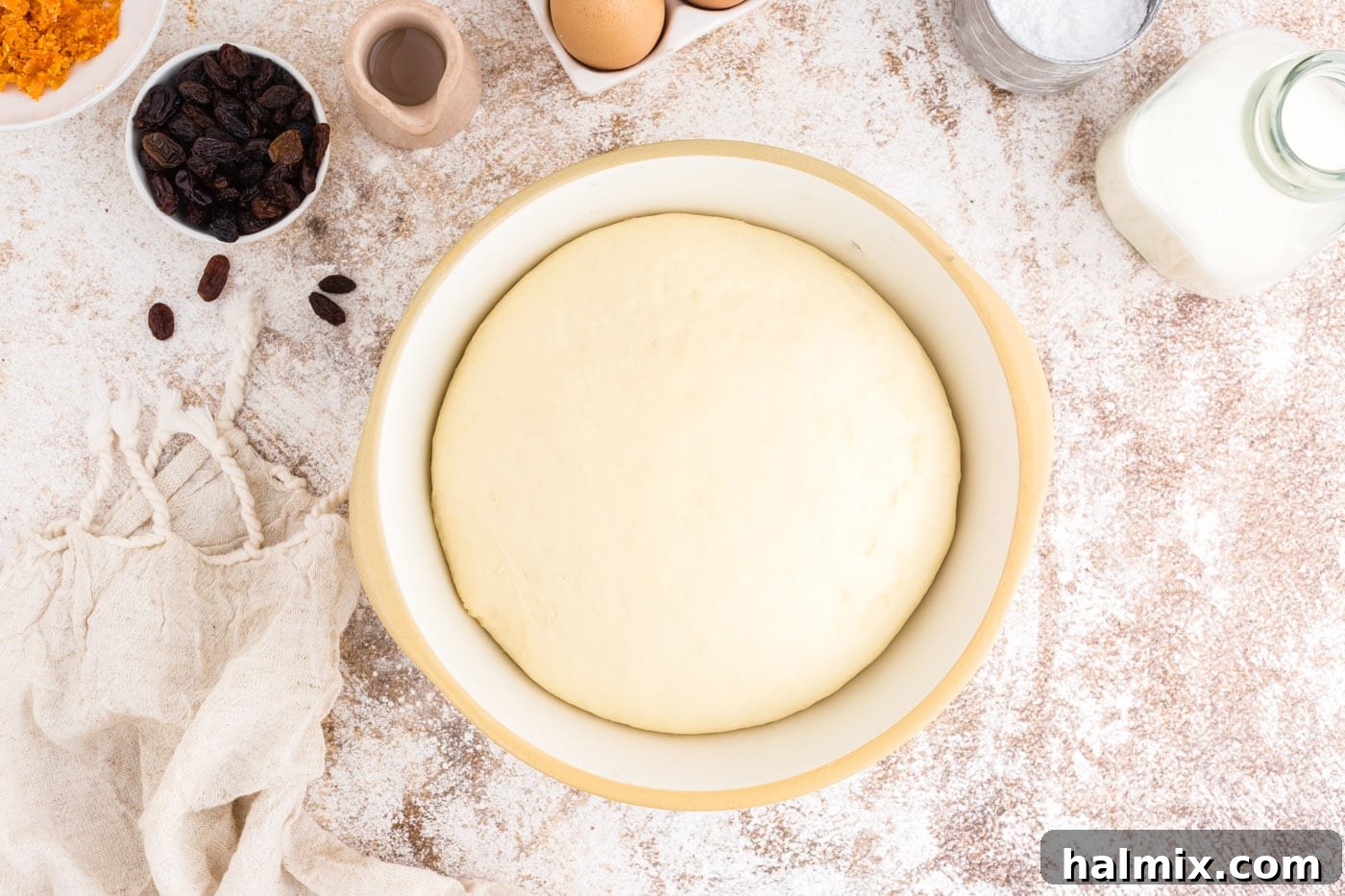
- Place the dough ball into a lightly greased bowl, then turn the dough over once to ensure the top surface is also lightly coated with oil. This prevents the dough from drying out during its rise. Cover the bowl with plastic wrap or a clean kitchen towel and allow the dough to rise in a warm, draft-free area until it has doubled in size, typically around 1 hour. A warm environment, like a slightly warmed oven (turned off), promotes optimal rising.
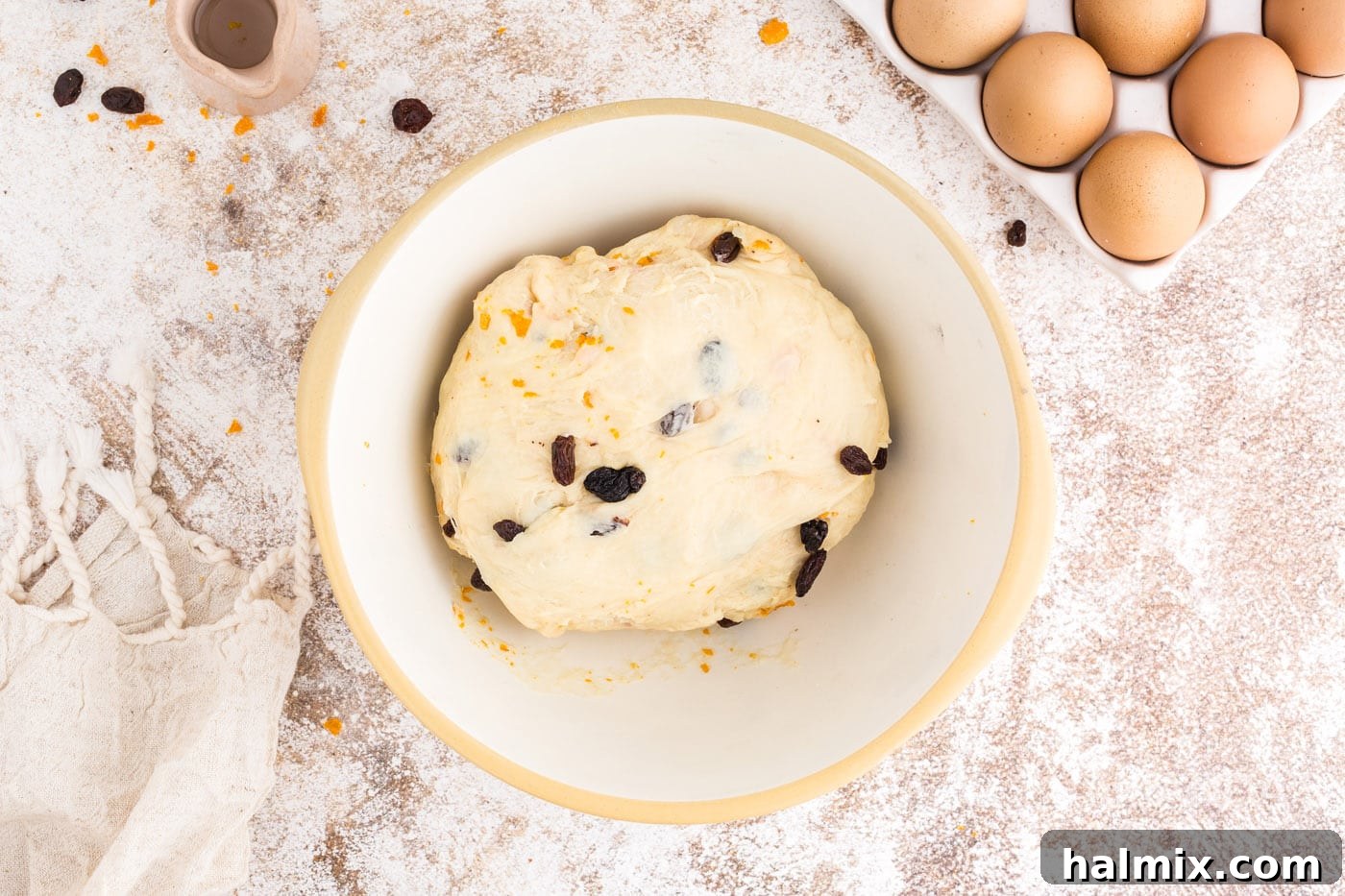
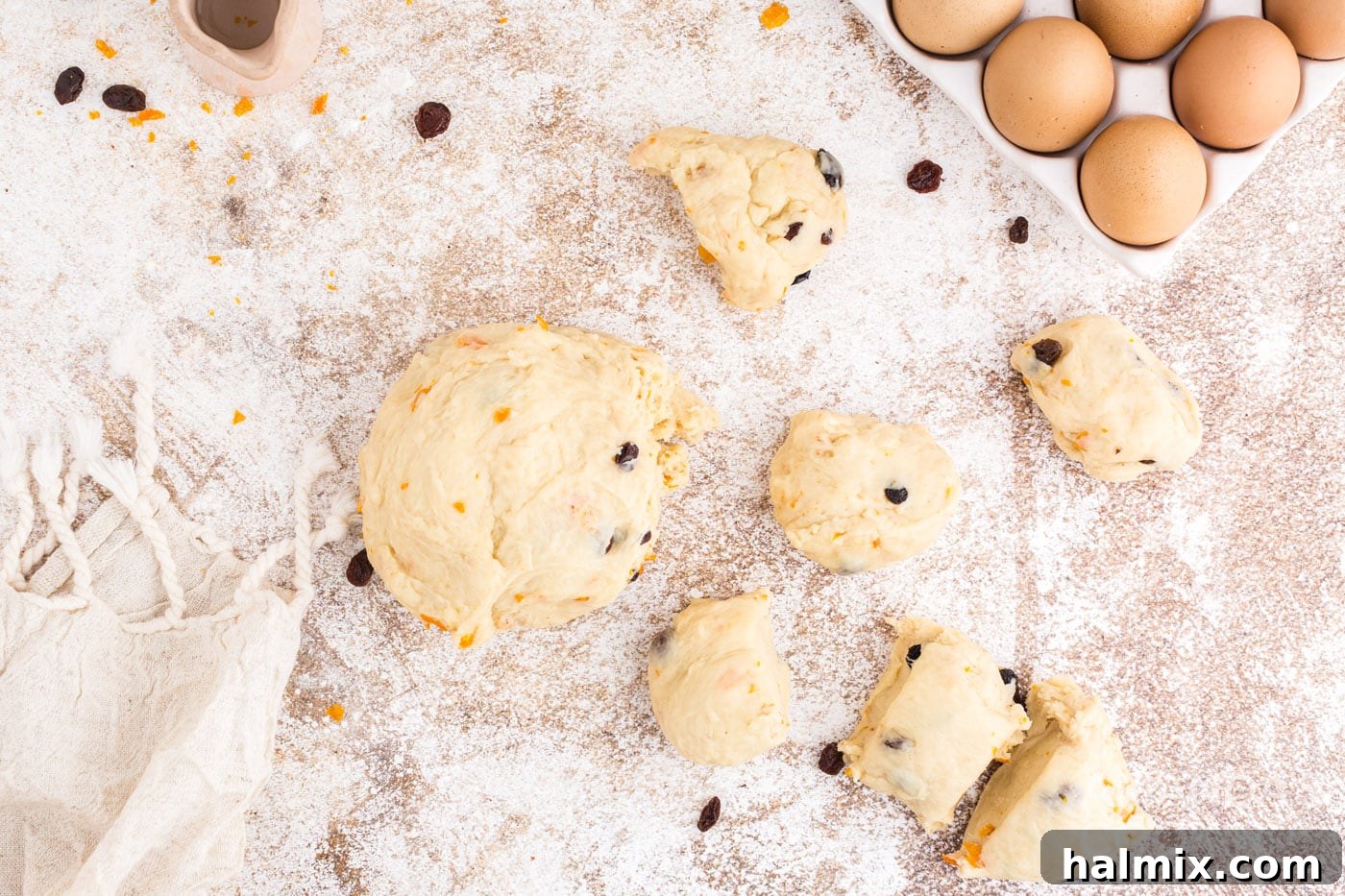
- Once the dough has risen, gently punch it down to release the air. Then, add the raisins and chopped candied orange peels to the dough. Lightly knead the dough just until the fruits are evenly distributed throughout. Be careful not to over-knead at this stage, as it can toughen the dough.
- Divide the dough into 12 equal pieces. This ensures uniform bun sizes. Cover the dough pieces loosely with a towel and let them rest for 15 minutes. This brief rest period allows the gluten to relax, making the dough easier to shape.
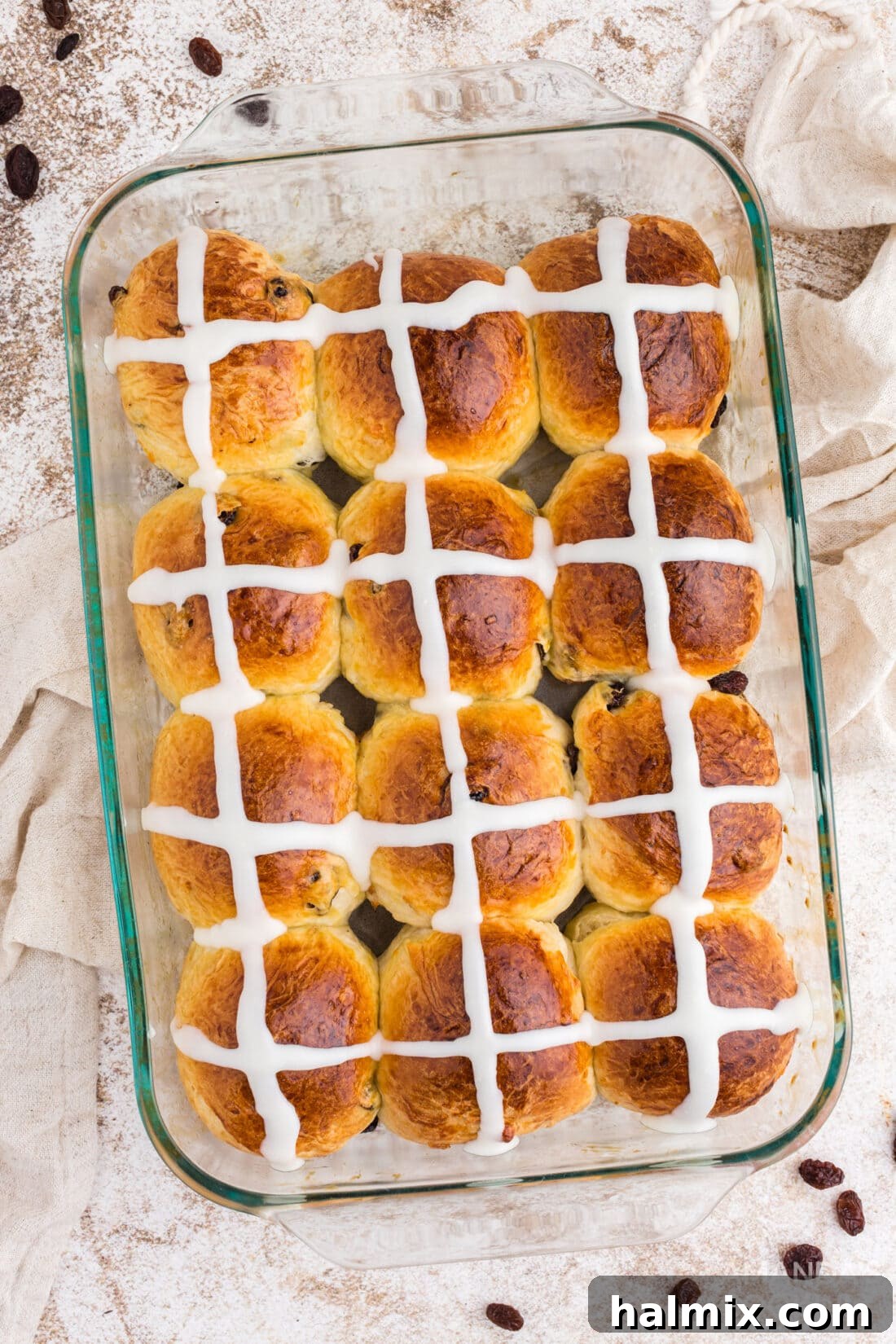
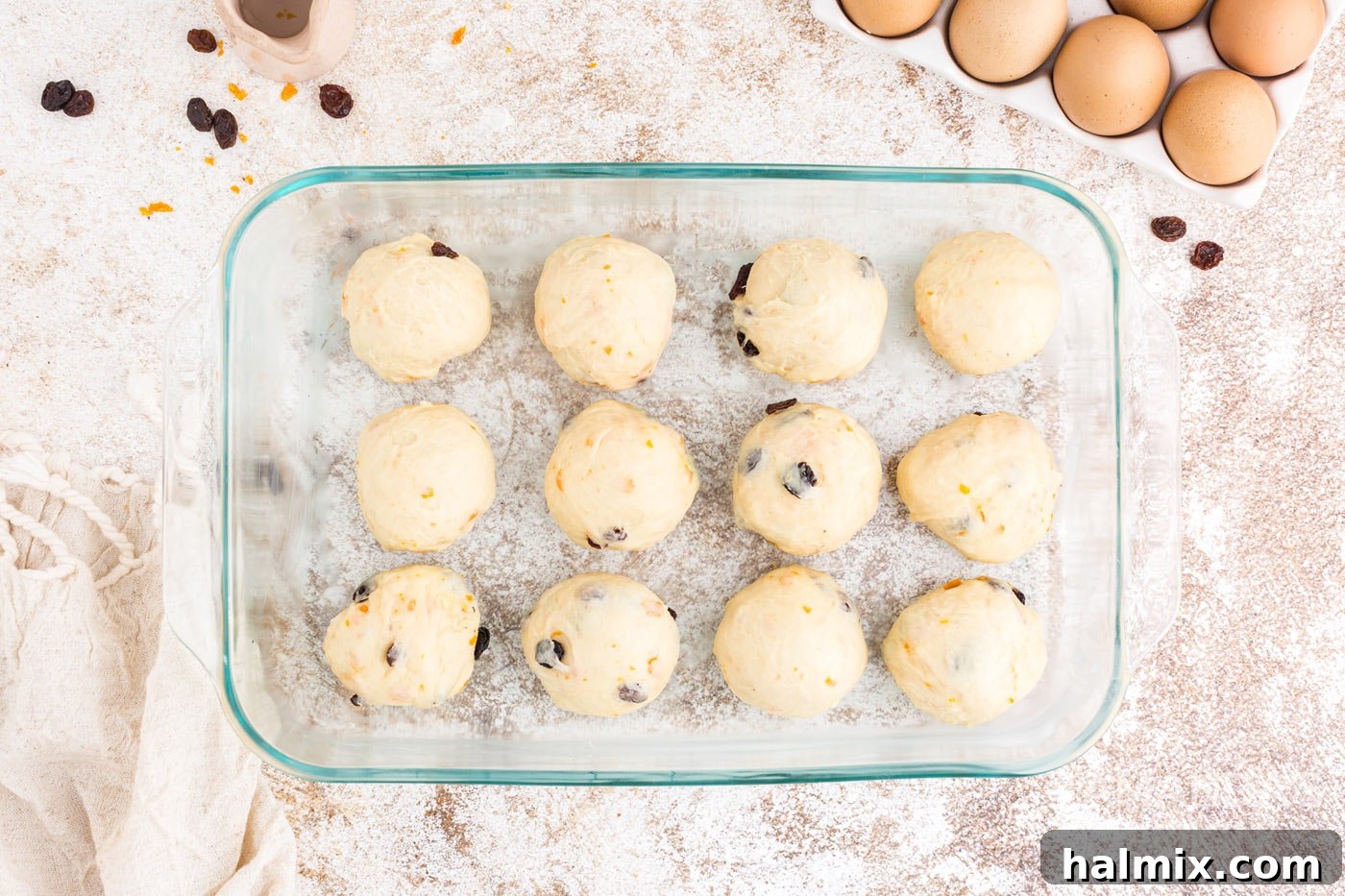
- Take each dough piece and gently shape it into a smooth, round ball. Arrange these dough balls in a greased 13×9 inch baking dish, leaving a little space between each one to allow for further rising.
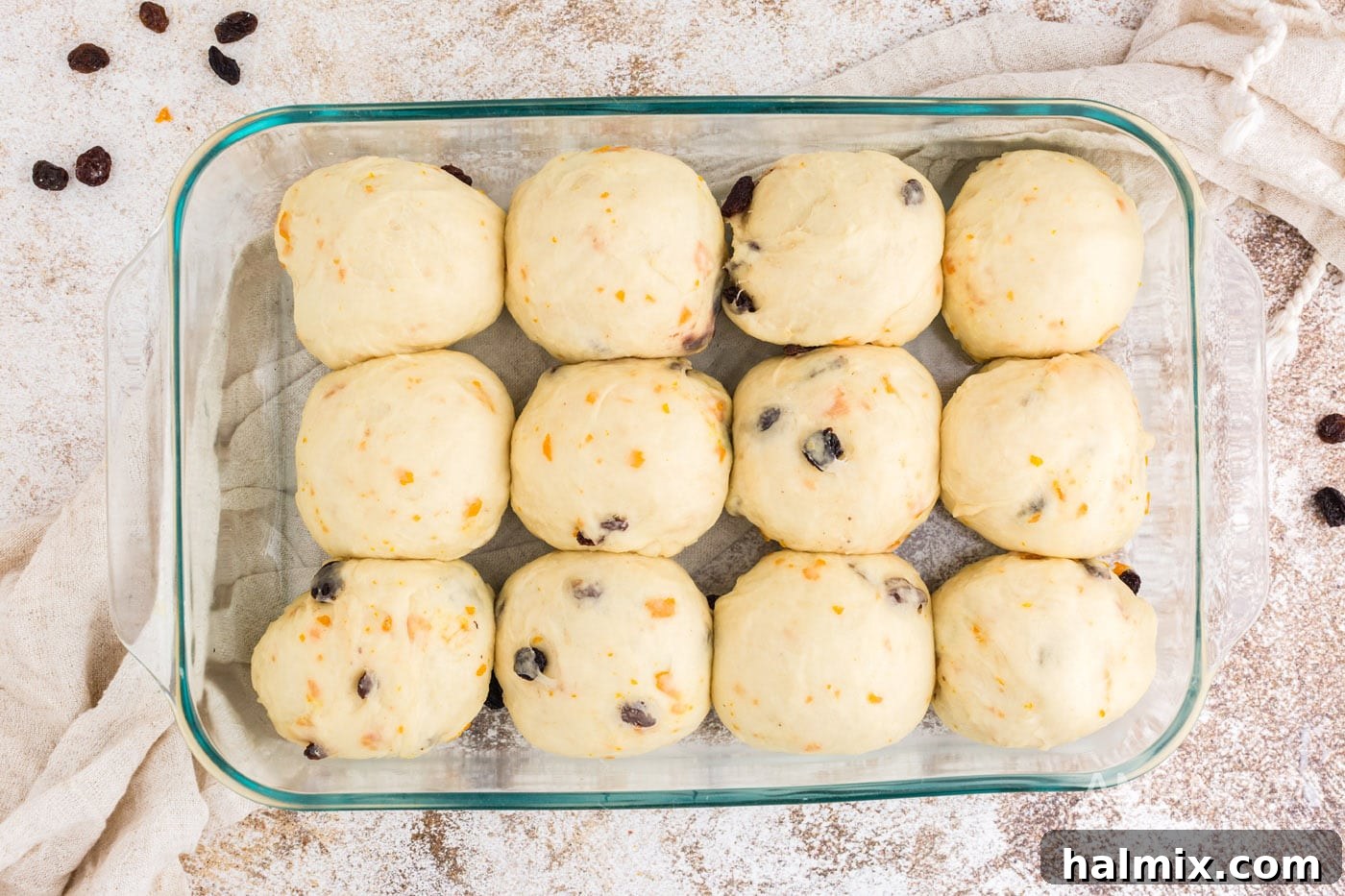
- Cover the baking dish with a clean kitchen towel and let the dough balls rise in a warm, draft-free place for approximately 1 hour, or until they have visibly doubled in size and are touching each other. This second rise contributes to the final airy texture of the buns.
- Preheat your oven to 350°F (175°C). Ensure the oven is fully preheated before baking to achieve consistent results.
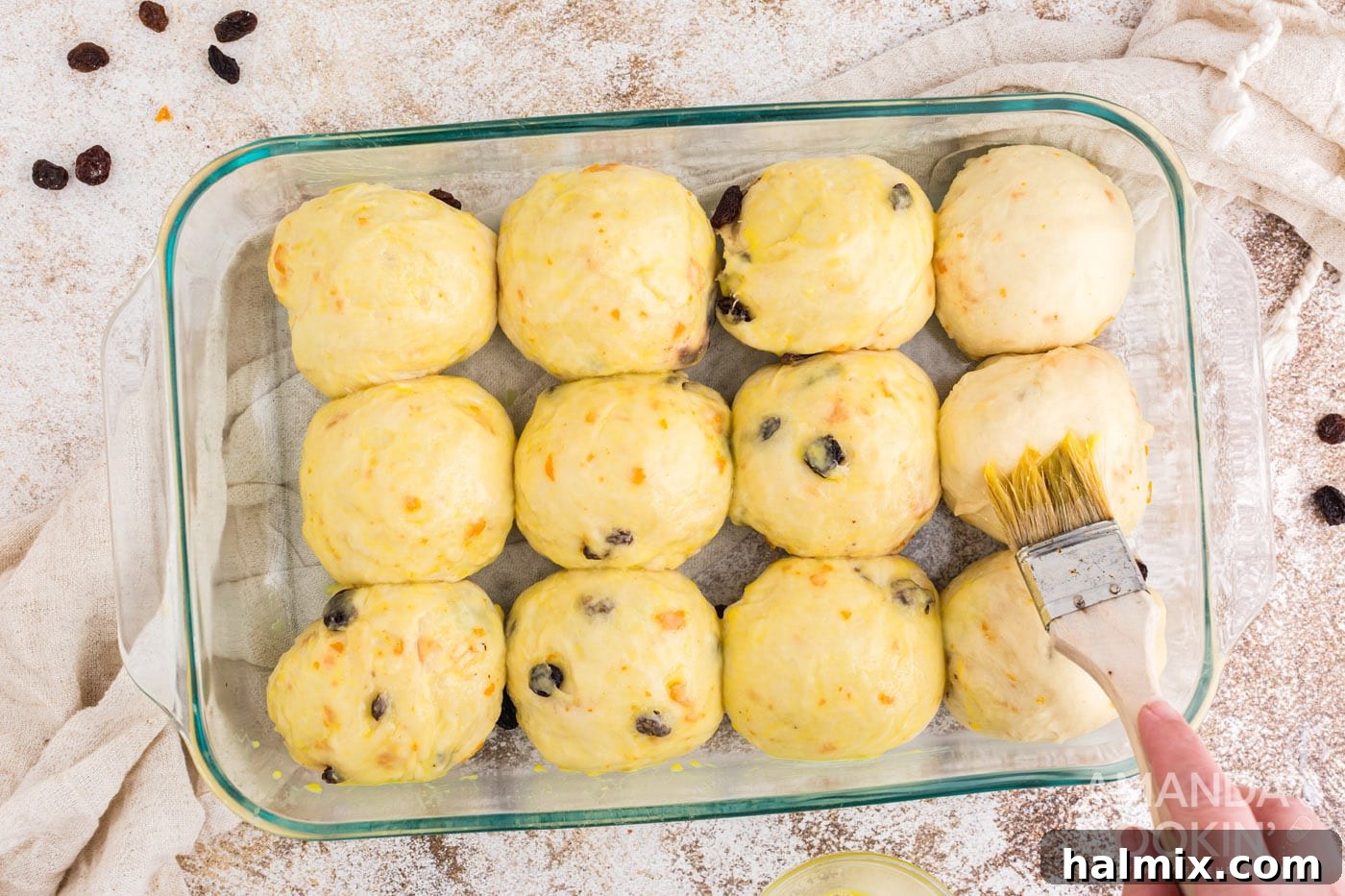
- In a small bowl, whisk together the egg yolk with 1 teaspoon of water to create an egg wash. Gently brush the tops of the risen buns with this egg wash. This will give them a beautiful golden-brown color and a slightly shiny crust. Bake for 30 minutes, or until the buns are deep golden brown and cooked through.
- While the buns are baking and cooling slightly, prepare your icing. In a separate bowl, combine all the icing ingredients: confectioners’ sugar, milk, softened butter, and lemon juice. Using a mixer set to low speed, beat until the mixture is completely smooth and free of lumps. You want a consistency that’s thick enough to hold its shape but still pourable.
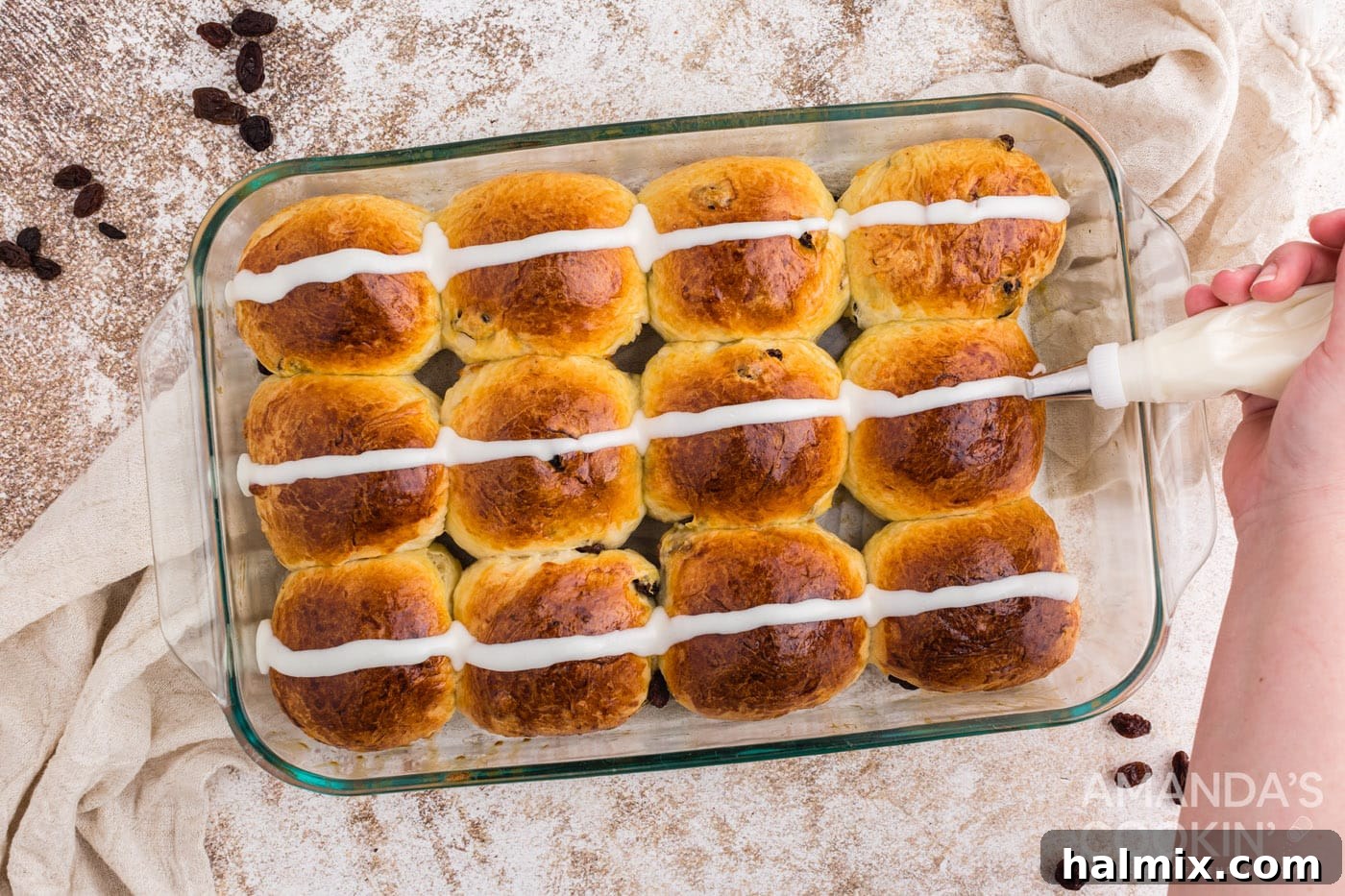
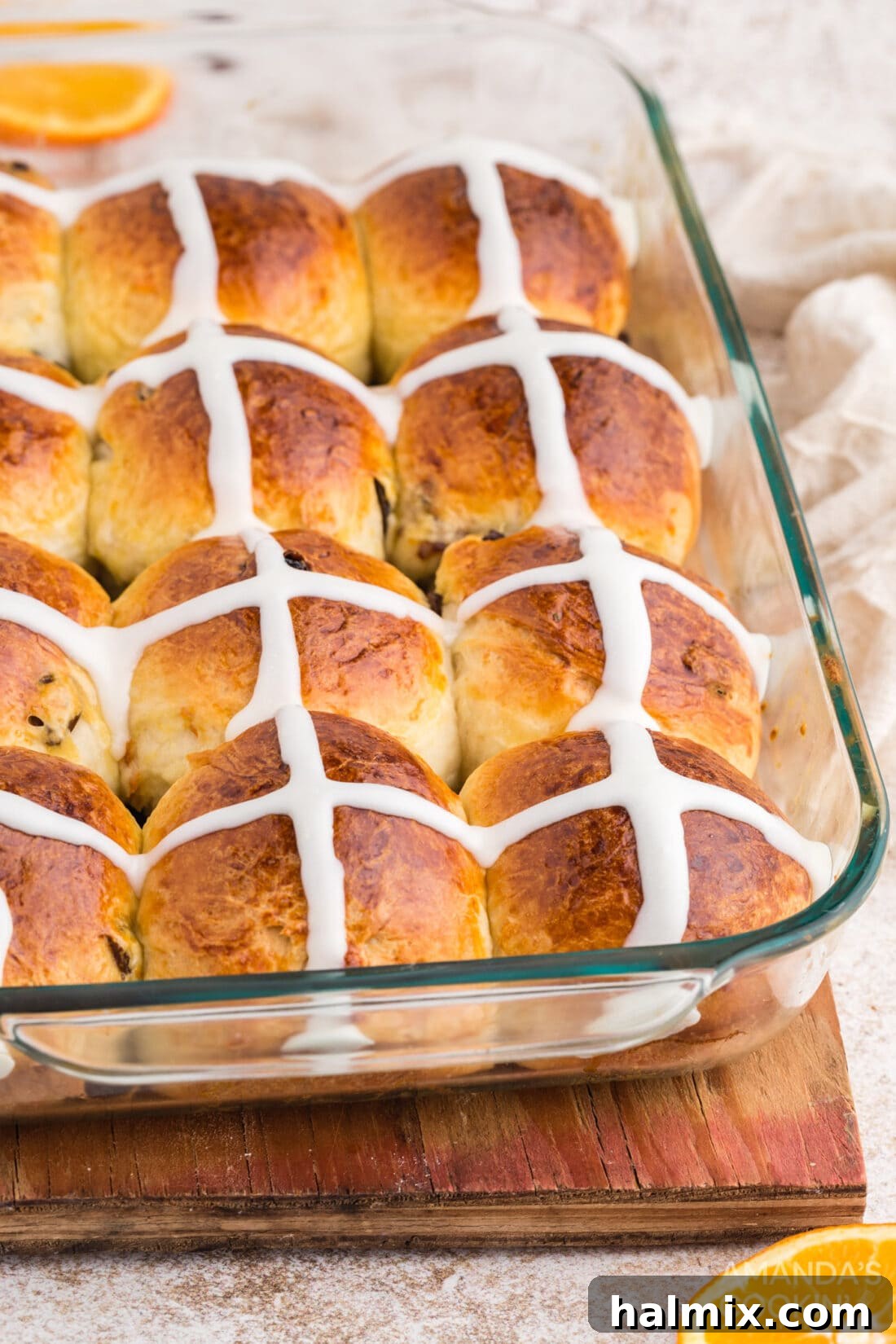
- Once the buns have cooled slightly but are still warm, transfer the prepared icing to a piping bag fitted with a small round tip, or simply use a ziplock bag with a tiny corner snipped off. Carefully pipe a horizontal line across the top of each bun, then pipe a vertical line intersecting the first to create the iconic cross. Pipe the icing while the buns are warm (but not piping hot) so it sets with a slight glaze, adhering beautifully to the surface.
Expert Tips for the Best Hot Cross Buns
- Yeast Activation: Always check the expiration date on your yeast. If unsure, proof it in a small amount of warm milk (from the recipe) with a pinch of sugar for 5-10 minutes. It should become foamy. If not, your yeast may be dead, and you’ll need a new batch.
- Dough Consistency: Resist the urge to add too much flour during kneading. A slightly sticky dough often results in a more tender bun. The goal is a soft, pliable dough that is smooth and elastic after kneading.
- Warm Proofing Environment: Yeast thrives in warmth. A slightly warmed (then turned off) oven, a sunny spot, or a proofing setting on your oven are ideal for dough rising. Avoid cold drafts, which can hinder the process.
- Even Fruit Distribution: Ensure raisins and candied orange peels are evenly incorporated during the final knead. This guarantees a flavorful bite in every bun.
- The Perfect Egg Wash: Brushing with an egg wash before baking gives your buns a beautiful golden sheen and a slightly crispy crust, enhancing their visual appeal.
- Icing Consistency: For the cross, ensure your icing is smooth and thick enough to hold its shape, but not so thick that it’s difficult to pipe. Adjust with tiny amounts of milk or confectioners’ sugar as needed.
Variations and Customizations for Your Hot Cross Buns
While the classic hot cross bun is always a winner, this recipe is incredibly adaptable, allowing you to personalize your batch to suit different tastes and occasions:
- Spice It Up: For traditional spiced buns, incorporate 1-2 teaspoons of ground cinnamon, ½ teaspoon of nutmeg, ¼ teaspoon of cloves, and a pinch of allspice into your dry ingredients along with the flour.
- Alternative Dried Fruits: Experiment with different dried fruits beyond raisins and candied orange peel. Dried cranberries offer a tart contrast, chopped dried apricots add a lovely chewiness, or a mixture of candied lemon and lime peels can provide a different citrusy kick. You can also use currants for a more classic approach.
- Chocolate Twist: For a modern indulgence, swap out some of the dried fruit for mini chocolate chips. Dark chocolate pairs wonderfully with the sweet dough.
- Glazed Finish: Instead of the traditional icing cross, you could opt for a simple sugar glaze. While the buns are still warm from the oven, brush them with a mixture of melted apricot jam (strained) or a simple syrup (equal parts sugar and water, simmered until dissolved). This provides a lovely shine and additional sweetness.
Frequently Asked Questions About Hot Cross Buns
Absolutely! While our recipe specifically calls for active dry yeast, you can easily substitute it with instant yeast (also known as quick-acting yeast). The main difference is that instant yeast doesn’t typically require prior proofing and can be mixed directly into your dry ingredients. You can generally swap them at a 1:1 ratio. Just ensure you follow the package instructions for your specific brand of instant yeast.
This recipe is wonderfully versatile when it comes to dried fruits. Instead of raisins, you can use currants, chopped dried plums, dried cranberries, dried elderberry, or dried cherries for different flavor notes. For the candied orange peels, feel free to substitute with homemade or store-bought candied lemon peel, candied lime peel, or a general blend of mixed candied citrus fruit. The key is to maintain a similar total quantity of fruit for best texture and moisture.
Yes, you can certainly use bread flour in place of all-purpose flour. Bread flour has a higher protein content, which will result in a chewier bun with a bit more structure. Simply use the same measurements as indicated for all-purpose flour in the ingredients list. Keep in mind that bread flour absorbs slightly more liquid, so you might need a tiny bit more milk to achieve the desired soft dough consistency during kneading.
Once completely cooled, store your hot cross buns in an airtight container at room temperature for up to 2-3 days. For longer storage, you can freeze un-iced buns for up to 1 month. Thaw at room temperature, then warm gently and add fresh icing before serving.
To enjoy your hot cross buns warm and fresh, you can reheat them in several ways. For best results, slice them in half and toast them lightly. Alternatively, warm them in a microwave for 15-30 seconds, or in a preheated oven at 300°F (150°C) for about 5-7 minutes until warmed through.
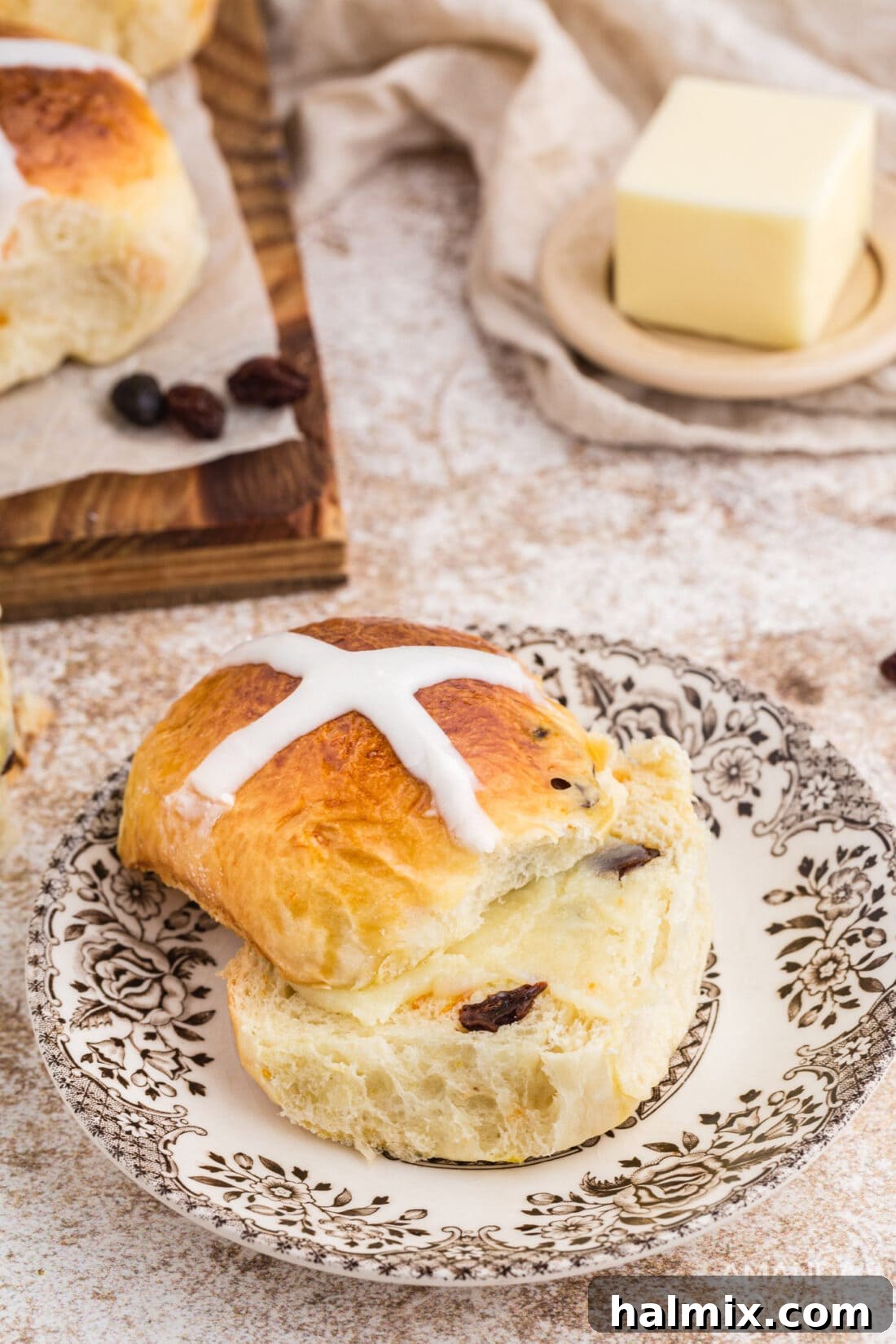
These homemade hot cross buns are truly extra delicious when served warm, perhaps with a generous smear of butter, or a dollop of clotted cream and jam. They embody the essence of a traditional Easter bread that you’ll be proud to feature on your holiday table, year after year.
More Delightful Easter Recipes to Explore
Looking for more inspiration to round out your Easter feast or springtime celebrations? Here are some other fantastic recipes that pair beautifully with the spirit of the season:
- Charming Easter Bunny Pull Apart Bread
- Adorable Bunny Butt Cupcakes
- Classic Deviled Eggs
- Sweet Bird Nest Cookies
- Indulgent Carrot Cake Trifle
- Savory Orange Bourbon Glazed Ham
I genuinely love sharing my passion for baking and cooking with all of you! To make sure you never miss out on a new recipe, I offer a convenient newsletter delivered straight to your inbox every time a fresh post goes live. Simply subscribe here and start receiving your free daily recipes, bringing culinary inspiration directly to you!

Hot Cross Buns
IMPORTANT – Don’t forget to review the helpful Frequently Asked Questions section earlier in the blog post for additional tips and insights!
Print It
Pin It
Rate It
Save It
Ingredients
- ½ cup granulated sugar
- ½ tsp salt
- 3 ½ Tbsp active dry yeast
- 4 ½ cup all-purpose flour divided
- 1 cup milk
- ½ cup unsalted butter
- 1 egg
Additions
- ½ cup dark seedless raisins
- ⅓ cup candied orange peels chopped
For the Icing
- 1 egg yolk
- 1 tsp water
- ¾ cup confectioners sugar also known as powdered sugar
- 1 Tbsp milk
- 1 Tbsp butter softened
- ½ tsp lemon juice
Tools You’ll Need
-
Stand mixer
-
Mixing bowls
-
13×9 inch baking dish
Before You Begin
- For this recipe, you will add the active dry yeast directly with the dry ingredients. It will dissolve and activate later when the warm liquid is added. As long as your yeast is within its expiration date, the common proofing step often seen in recipes is not essential. If you are unsure about the freshness of your yeast, you can proof it by mixing a small amount of the warm liquid from the recipe with the yeast before adding it to the rest of the ingredients.
- You can substitute active dry yeast with quick-rising or instant yeast by simply swapping them out in the ingredients list, typically at a 1:1 ratio.
- Pipe the icing onto the buns when they are warm but not piping hot. This allows the icing to set beautifully, creating a slight glaze that adheres well to the bun’s surface.
- While our recipe focuses on a fruit-forward flavor, feel free to add warming spices such as ground cinnamon, nutmeg, or cloves to your dough to create delicious spiced buns.
Instructions
-
In a large mixing bowl, combine granulated sugar, salt, active dry yeast, and 2 cups of all-purpose flour.
-
In a saucepan over low heat, gently warm the milk and butter until warm to the touch (105-115°F / 40-46°C). The butter does not need to melt completely.
-
With a stand mixer on low speed, slowly beat the warm milk and butter mixture into the dry ingredients until just combined.
-
Once lightly combined, increase the speed to medium and beat for an additional 2 minutes, scraping the bowl occasionally to ensure thorough mixing.
-
Add the egg and another 2 cups of flour to the mixture, then continue mixing on medium speed for 2 more minutes.
-
Stir in approximately ½ cup (or less) of additional flour until you have a soft, pliable dough that is slightly sticky but manageable.
-
Transfer the dough to a lightly floured surface and knead until it becomes smooth and elastic, about 10 minutes. Shape the kneaded dough into a ball.
-
Place the dough ball into a lightly greased bowl, turning it once to coat the top. Cover the bowl and let the dough rise in a warm, draft-free area for about 1 hour, or until it has doubled in size.
-
Gently punch down the risen dough. Add the dark seedless raisins and chopped candied orange peels, then knead just until the fruits are evenly incorporated.
-
Divide the dough into 12 equal pieces. Cover the pieces with a towel and let them rest for 15 minutes.
-
Shape each dough piece into a smooth ball and arrange them in a greased 13×9 inch baking dish.
-
Cover the baking dish with a clean towel and let the dough balls rise again in a warm place for about 1 hour, or until doubled in size.
-
Preheat your oven to 350°F (175°C).
-
In a small bowl, combine the egg yolk with 1 teaspoon of water to make an egg wash. Lightly brush the tops of the risen buns with this mixture. Bake for 30 minutes, or until they are golden brown.
-
While the buns are baking, prepare the icing. In a bowl, combine confectioners’ sugar, milk, softened butter, and lemon juice. Mix with a hand mixer on low speed until smooth and well combined.
-
Once the buns have cooled slightly (but are still warm), transfer the icing to a piping bag or a ziplock bag with a corner snipped off. Gently squeeze the icing to create a horizontal line, then a vertical line, across the top of each bun to form the iconic cross.
Nutrition Information
Tried this Recipe? Pin it for Later!Follow on Pinterest @AmandasCookin or tag #AmandasCookin!
The recipes on this blog are meticulously tested with a conventional gas oven and gas stovetop. Please note that oven performance, especially with older models, can vary in terms of heat consistency. Using an inexpensive oven thermometer is highly recommended to ensure your oven maintains the proper temperature. If you’re using a toaster oven or a countertop oven, be aware that their heat distribution might differ from a full-sized conventional oven, potentially requiring adjustments to your cooking and baking times. For recipes involving appliances like pressure cookers, air fryers, or slow cookers, a link to the specific models we use is typically provided within each recipe. Additionally, for baking recipes where ingredient measurements are given by weight, achieving comparable results when substituting with cup measurements cannot be guaranteed, and we advise following weight measurements for optimal success.