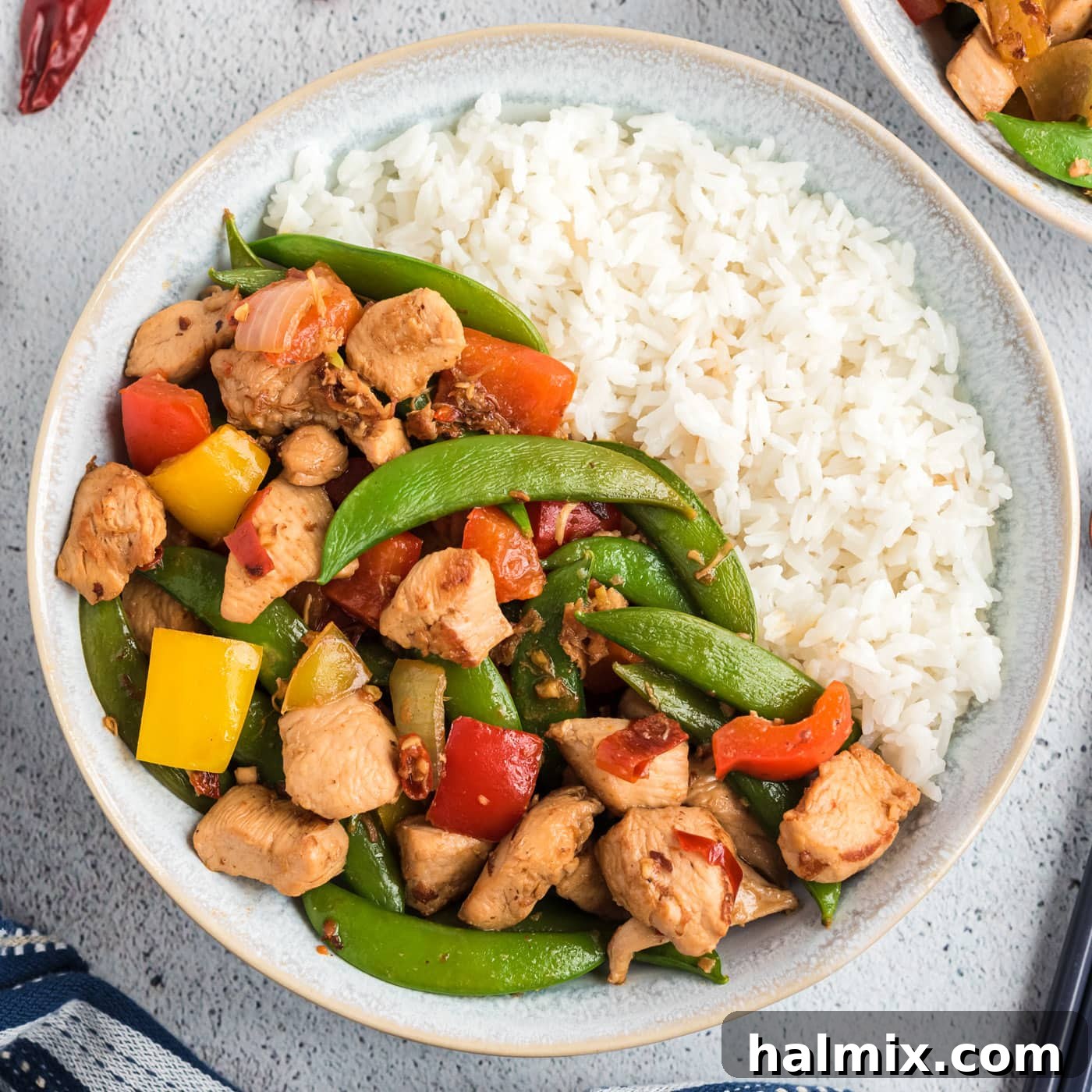
Dive into the vibrant flavors of Asia with our incredible **Kung Pao Chicken recipe**! This dish masterfully combines succulent, tender chicken with an array of colorful, crisp-tender stir-fried vegetables, all coated in a rich, savory sauce with a delightful spicy kick from dried chiles. It’s not just another meal; it’s a healthier, homemade rendition of your beloved Chinese takeout classic, designed to deliver maximum flavor without the extra guilt.
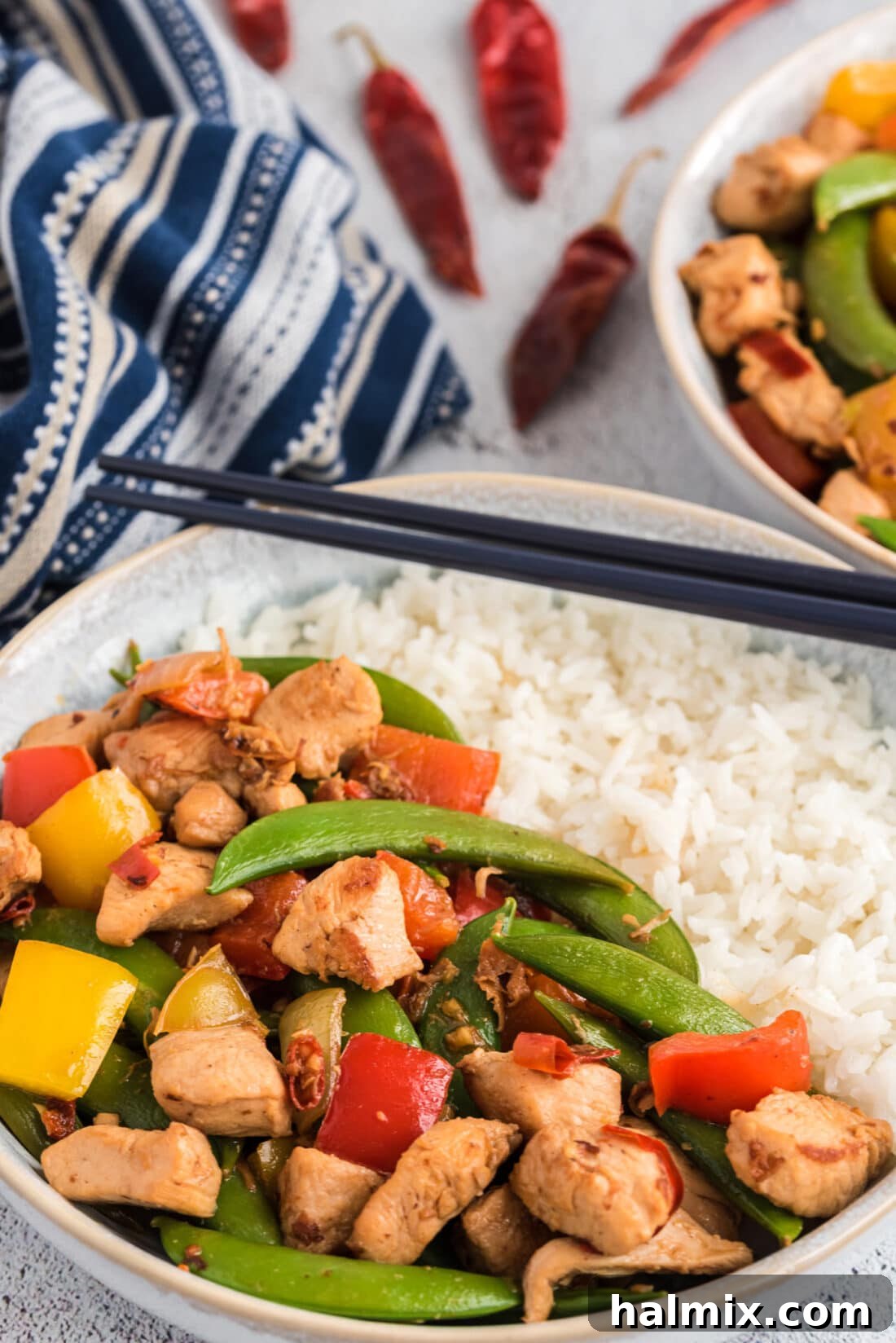
Healthy & Authentic Homemade Kung Pao Chicken Recipe
Why This Kung Pao Chicken Recipe Stands Out
If the irresistible aroma of a sizzling stir-fry makes your mouth water, then a truly excellent **Kung Pao Chicken recipe** is undoubtedly a culinary gem you need in your repertoire. Our recipe doesn’t just promise; it delivers a mouthwatering experience that rivals any restaurant. What sets this version apart is its unwavering commitment to freshness and health. We meticulously select fresh ingredients and steer clear of overly processed, bottled sauces, which are often loaded with sodium and unhealthy fats. By opting for low-sodium soy sauce and fat-free broth, we transform this classic into a dish that’s not only incredibly delicious but also significantly better for your well-being.
Preparing Kung Pao Chicken at home gives you complete control over the quality and quantity of ingredients. This means you can customize the spice level, adjust the sodium content, and ensure every bite is packed with wholesome goodness. It’s the perfect choice for anyone looking to enjoy the authentic taste of Chinese cuisine with a healthier twist. This recipe is a testament to how simple, fresh ingredients can come together to create something truly extraordinary, making it a fantastic addition to your weeknight dinner rotation or a special meal for entertaining.
RELATED: Expand your Asian-inspired cooking with these delicious recipes – you might also like this recipe for Chicken Chow Mein Casserole or try our fantastic Bourbon Chicken.
Essential Ingredients for Your Homemade Kung Pao Chicken
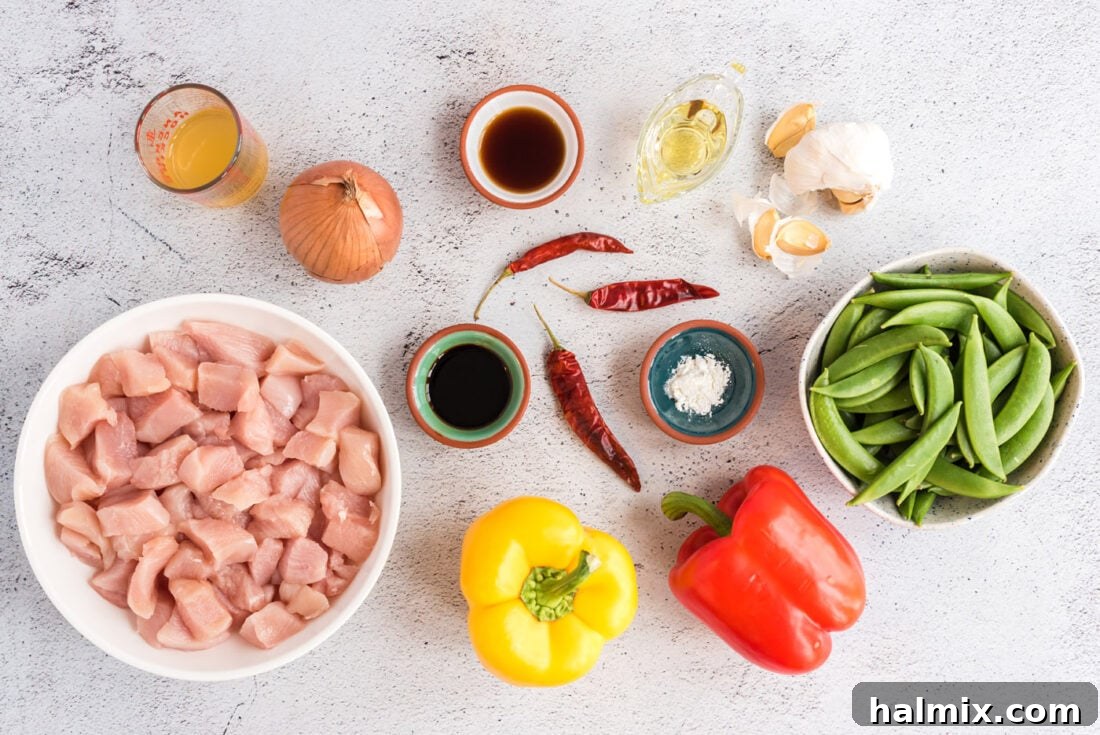
Crafting the perfect Kung Pao Chicken begins with gathering the right ingredients. This recipe prioritizes fresh, high-quality components to ensure the best flavor and a healthier meal. While you can find a comprehensive list of all measurements and detailed instructions in the printable recipe card below, here’s a closer look at what you’ll need and why each component is crucial:
The foundation of this dish is **boneless, skinless chicken breasts**, cut into uniform 1-inch chunks. This ensures even cooking and allows the chicken to become wonderfully tender and absorb the marinade. We also use **low-sodium soy sauce** not only for the marinade but also to build the rich, umami-packed sauce, helping you manage salt intake without sacrificing flavor. **Cornstarch** plays a dual role: it tenderizes the chicken during marination and helps create that signature velvety sauce consistency that coats every piece of chicken and vegetable beautifully.
For the signature heat, we rely on **red dried chiles**. These not only add a fiery kick but also a unique aromatic depth. The vegetables bring both flavor and texture: **red and yellow bell peppers** provide sweetness and vibrant color, while **onions** add a pungent base. And for a delightful crunch and freshness, **sugar snap peas** are an absolute must. Finally, **fat-free chicken or vegetable broth** forms the liquid base of our sauce, and **black vinegar** (or a suitable substitute) introduces a crucial tanginess and depth that balances the savory and spicy elements.
Ingredient Insights & Smart Substitutions
Understanding each ingredient and knowing when to make substitutions can elevate your cooking experience and ensure a successful dish every time, even if you don’t have everything on hand.
Chicken Selection
While boneless, skinless chicken breasts are specified for their lean protein and quick cooking, you can certainly use **boneless, skinless chicken thighs** for a richer flavor and even more tender result. Just ensure they are cut into similar 1-inch pieces to maintain cooking consistency.
The Power of Pepper: Mastering the Heat
The characteristic heat of this dish primarily comes from the **red dried chiles**. This is where you truly become the master of your spice destiny! For the boldest, most fiery version, keep all the chile seeds intact. If you prefer a milder flavor, simply remove some or all of the seeds before chopping. Experimenting with the number of seeds is key to finding your perfect heat level. Beyond the standard dried chiles, for an authentic Sichuan flavor profile, consider adding about **1 to 1½ teaspoons of Sichuan peppercorns**. These unique peppercorns don’t just add heat; they impart a distinctive citrusy, floral note and a tingling, numbing sensation that is the hallmark of true Sichuan cuisine. You can toast them briefly and then crush them before adding to the stir-fry for maximum effect.
Soy Sauce & Broth
Using **low-sodium soy sauce** is essential for a healthier dish. If you only have regular soy sauce, you can still use it, but consider reducing the amount slightly and tasting as you go to avoid over-salting. Our recipe calls for **fat-free chicken or vegetable broth**. Any clear, unsalted broth will work well. The goal is to add liquid and depth without introducing excessive fat or sodium.
Vegetable Versatility
The beauty of stir-fries lies in their adaptability. While we use red and yellow bell peppers, onion, and sugar snap peas, feel free to get creative with your vegetables. Other great additions include **broccoli florets, carrots (julienned), zucchini, mushrooms, or even baby corn**. Just ensure they are cut to similar sizes for even cooking and add them at appropriate stages in the stir-fry based on their cooking times.
Vinegar Alternatives
The recipe specifically calls for **black vinegar**, also known as Chinkiang vinegar, which offers a complex, slightly sweet, and tangy profile. If black vinegar is hard to find, a good substitute is **white rice vinegar** or **rice wine vinegar**. These will provide the necessary acidity, though they may lack some of the deeper flavor notes. You could also experiment with **date vinegar** or even a good quality **balsamic vinegar**, but be mindful that these are typically sweeter and will alter the flavor profile slightly, so use them sparingly and adjust to taste.
The Nutty Addition (Optional but Recommended!)
Many traditional Kung Pao Chicken recipes include **unsalted roasted peanuts**. These add a wonderful crunch and nutty depth that complements the savory and spicy flavors beautifully. Feel free to toss in about ¼ to ½ cup of peanuts during the final stages of cooking, allowing them a few minutes in the hot pan to meld with the other ingredients. If you prefer, **cashews** can also be a delightful alternative.
Mastering the Art of Homemade Kung Pao Chicken: Step-by-Step Guide
Creating this flavorful Kung Pao Chicken is a straightforward process, especially with these detailed steps and accompanying photos to guide you. For a quick overview and a printable version with precise measurements, simply jump to the recipe card below. Let’s get cooking!
-
Prepare the Chicken Marinade
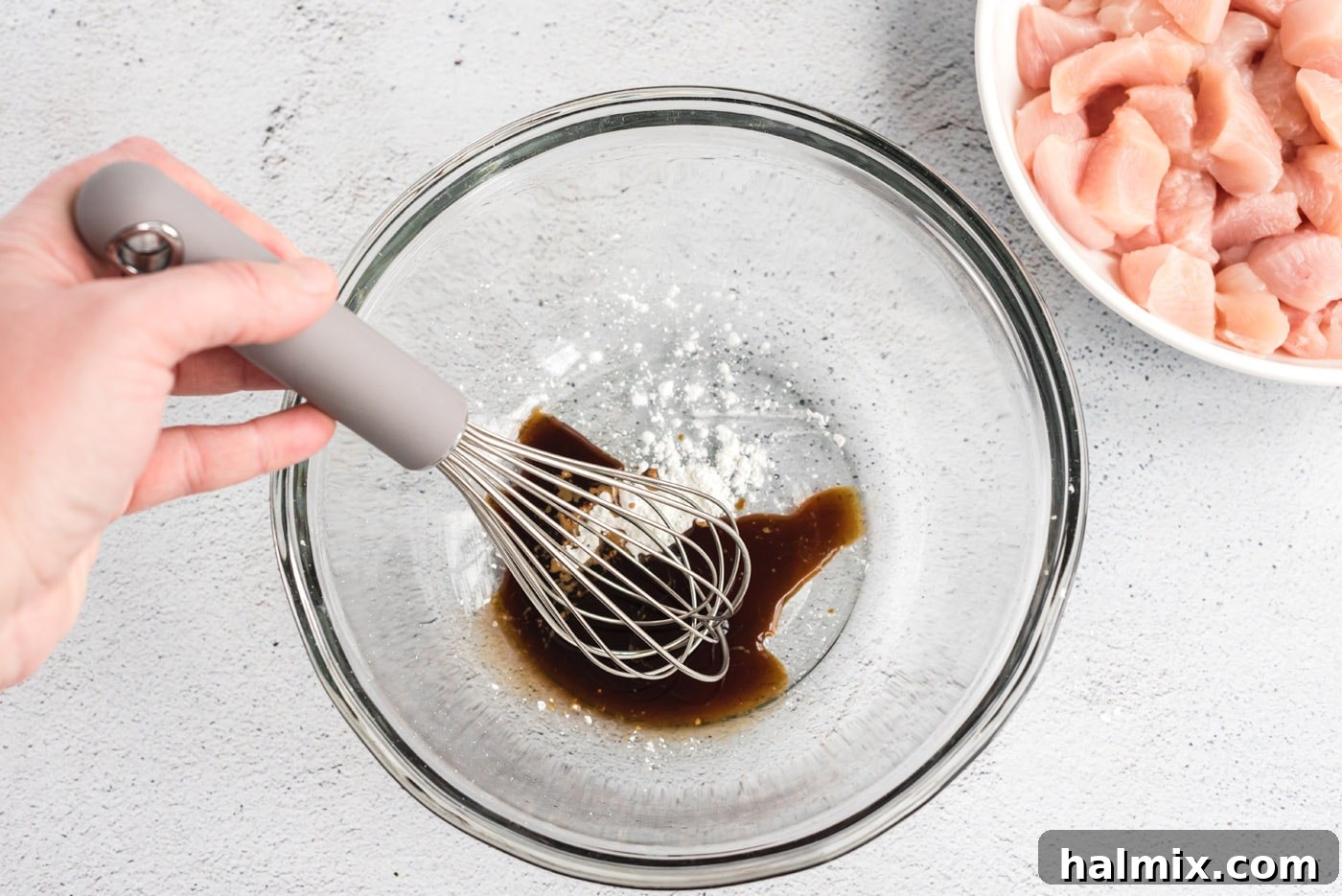
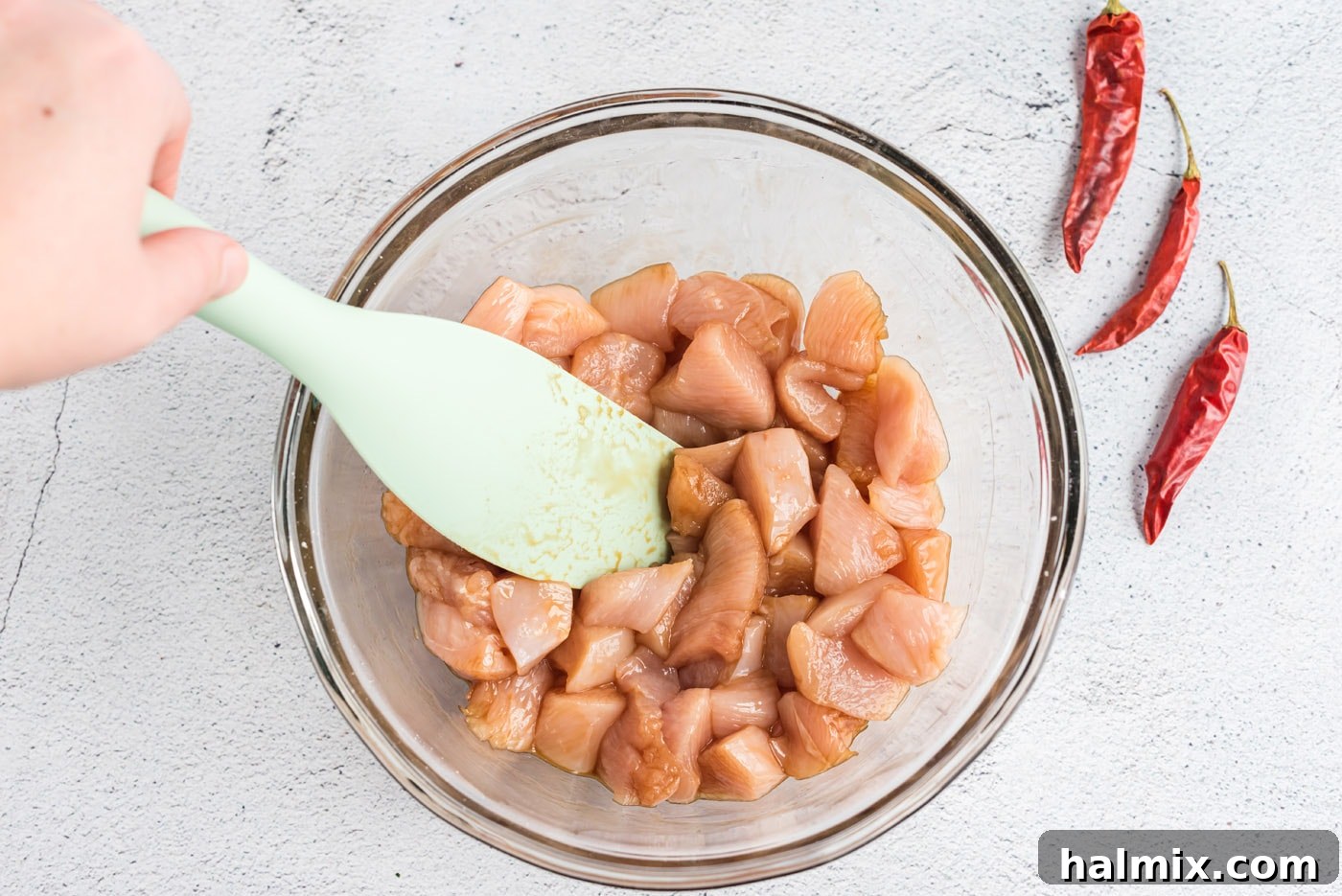
In a medium-sized bowl, combine ½ teaspoon of cornstarch with 1 teaspoon of the low-sodium soy sauce. Whisk until smooth. Add your 1-inch chunks of boneless, skinless chicken breast to this mixture. Toss thoroughly to ensure all the chicken pieces are evenly coated. Set the bowl aside and let the chicken marinate for at least ten minutes. This crucial step tenderizes the chicken and allows it to absorb the savory flavors, making it juicy and flavorful for the stir-fry.

Mixing the cornstarch and soy sauce for the chicken marinade. Chicken marinating, absorbing all the delicious flavors. -
Prepare the Dried Chiles
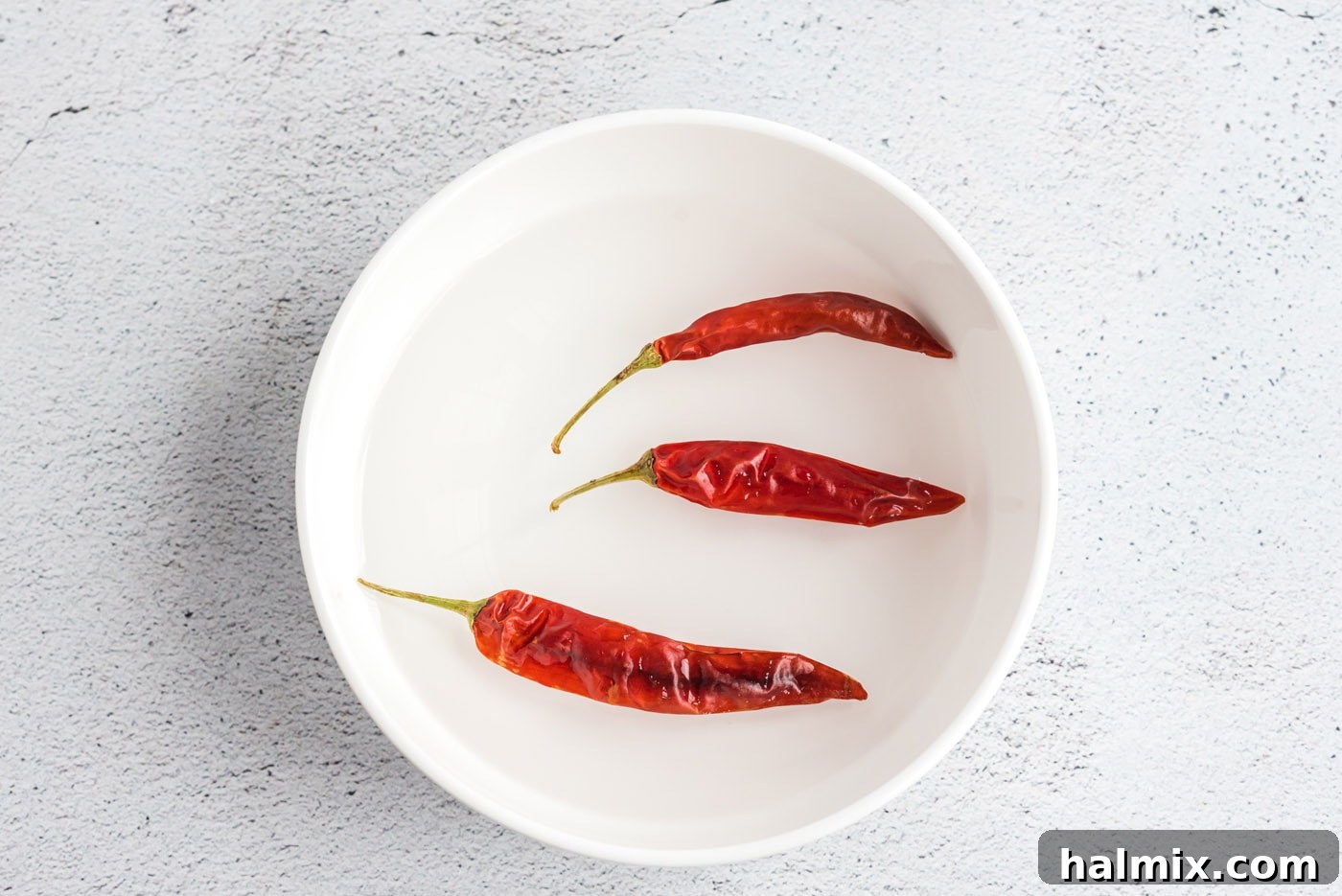
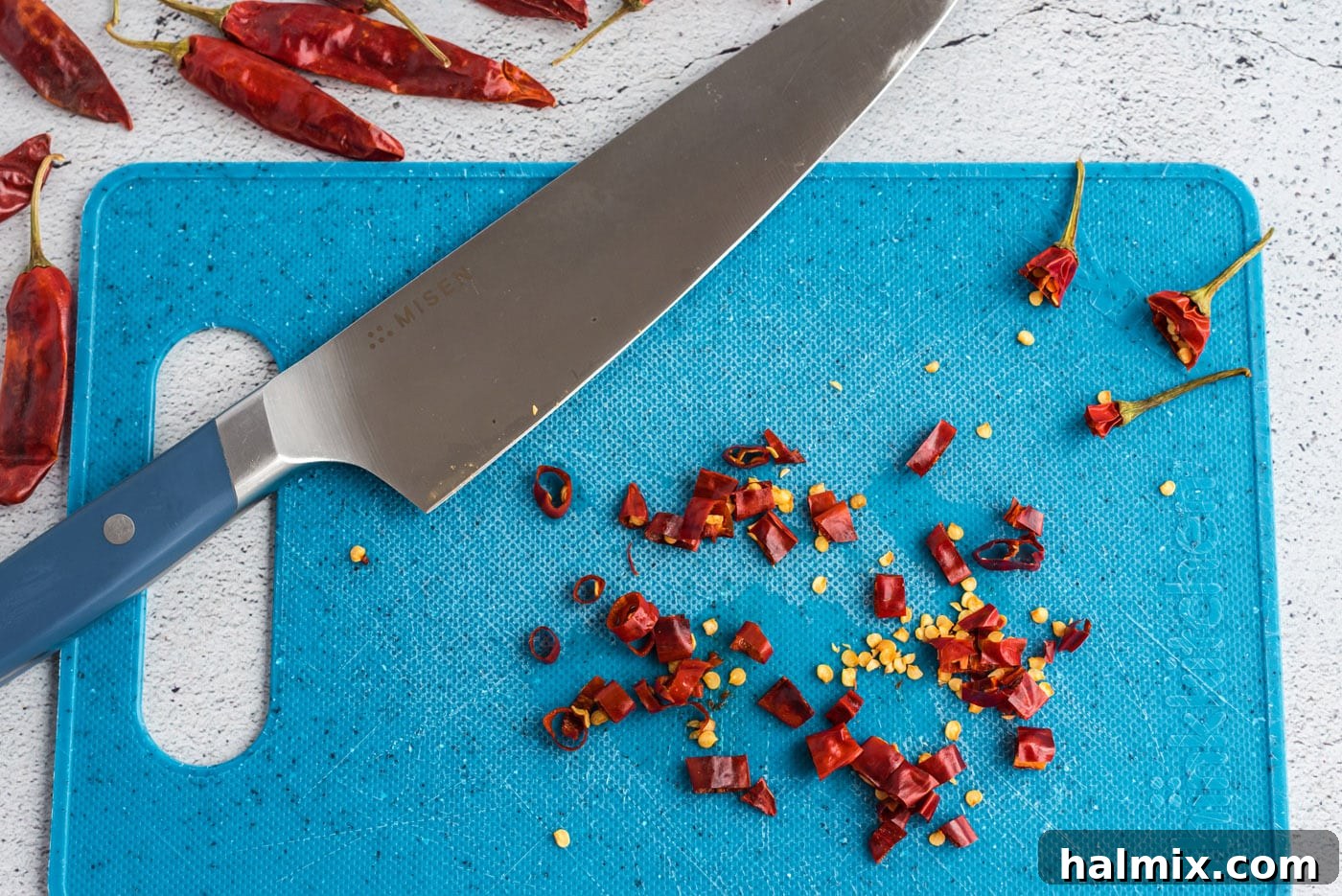
While the chicken marinates, prepare your dried red chiles. Place the chiles in a small bowl and pour hot water over them. Let them soak for several minutes until they soften slightly. Once softened, remove them from the water and pat them dry. Carefully chop the chiles into smaller pieces. Remember, for a less spicy dish, you can discard some or all of the seeds before chopping. The seeds contain most of the capsaicin, which is responsible for the heat.
Soaking dried chiles to soften them for easier chopping. Freshly chopped red chiles, ready to add their kick. -
Sear the Chicken
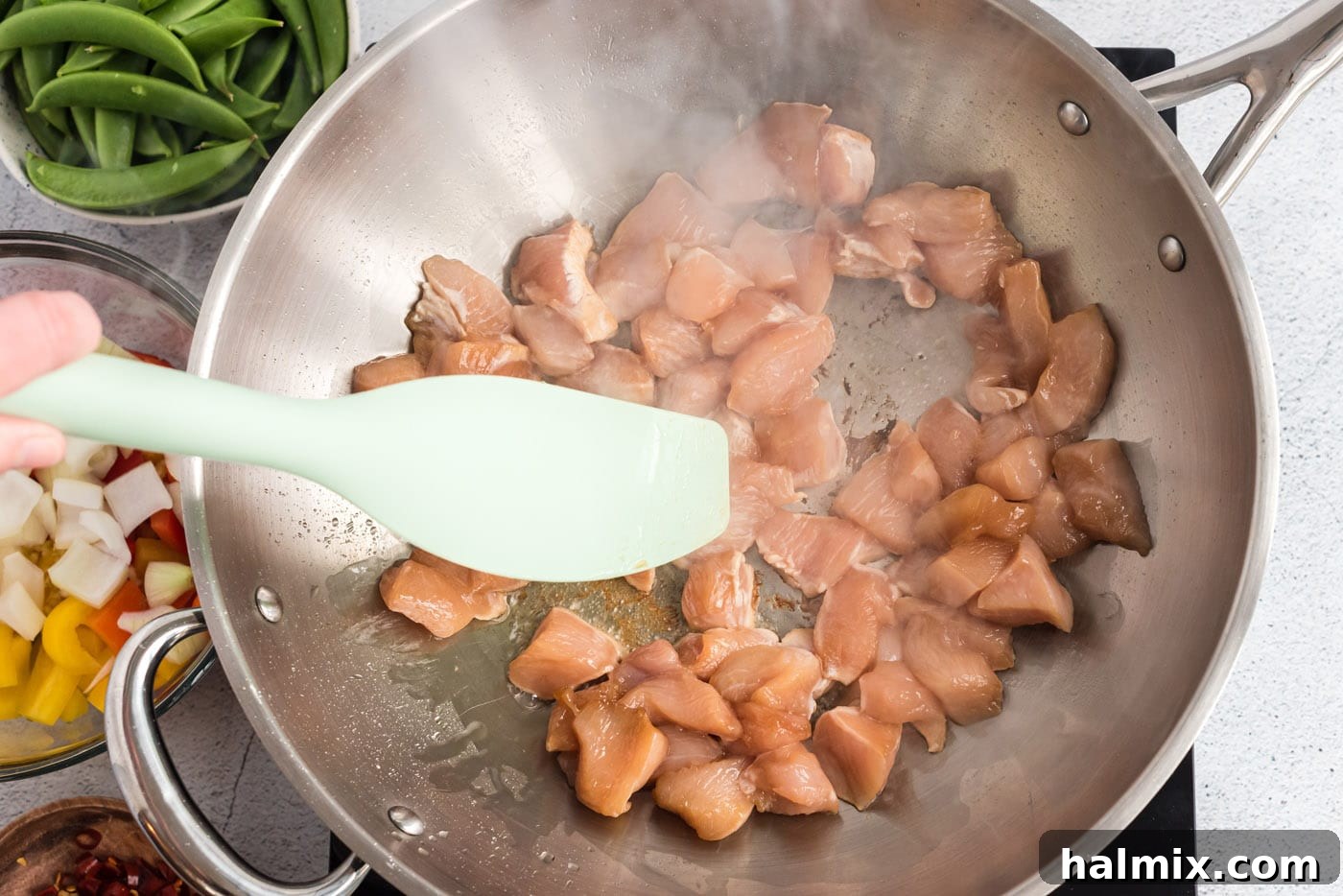
Heat a large skillet or a wok over high heat. Add 2 teaspoons of canola oil and swirl it around to coat the entire surface of the pan. Once the oil is shimmering and hot, add the marinated chicken. Spread the chicken out into a single layer across the surface of the pan. Avoid overcrowding the pan, as this can lower the temperature and steam the chicken instead of searing it. Sear the chicken on both sides until it’s lightly browned, approximately 4 minutes in total. The chicken doesn’t need to be cooked all the way through at this stage; it will finish cooking with the vegetables.
Searing the marinated chicken until lightly golden. -
Stir-Fry Vegetables and Finish the Dish
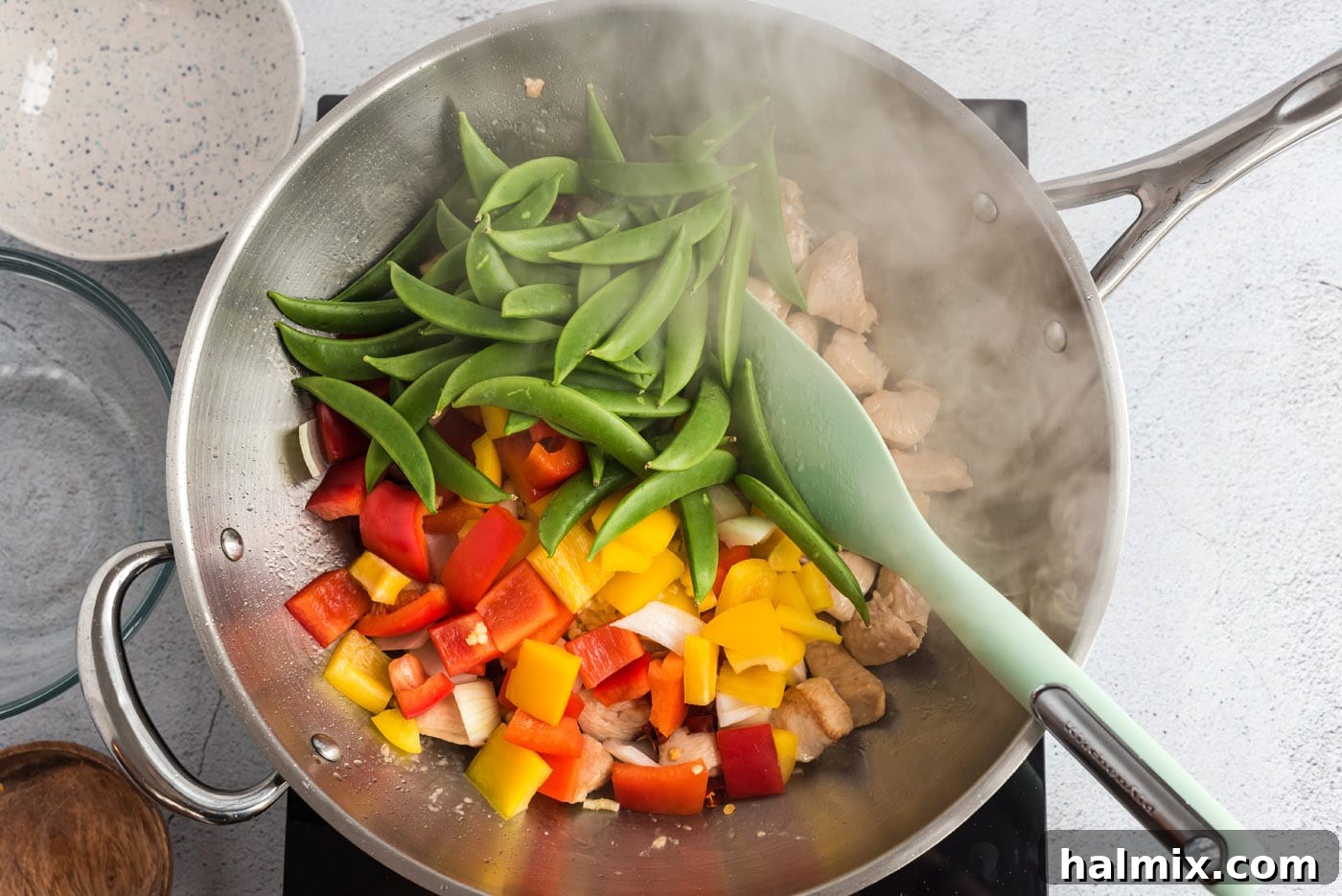
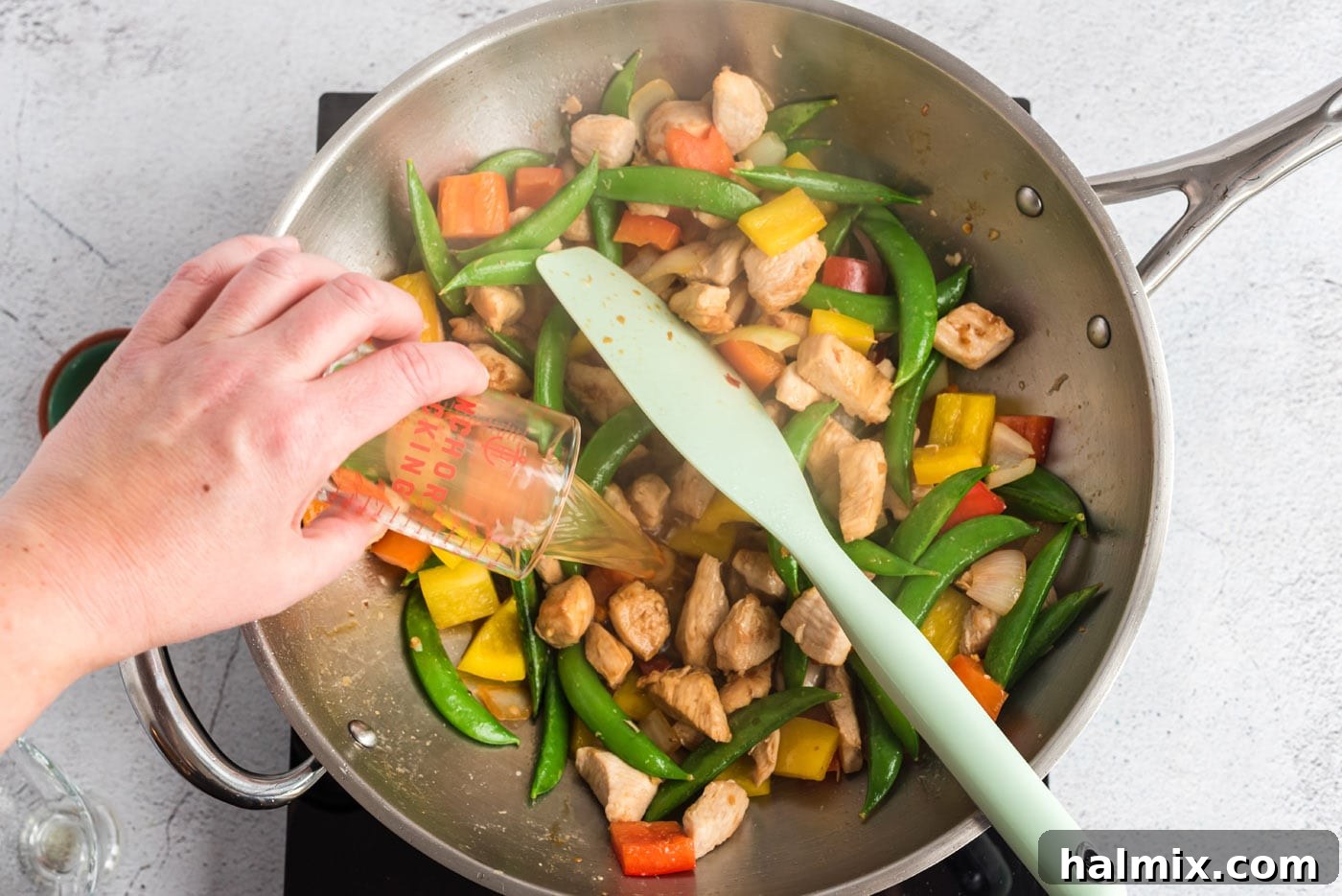
To the pan with the seared chicken, add the chopped chiles, minced garlic, diced bell peppers (red and yellow), diced onion, and sugar snap peas. Stir-fry for several minutes, tossing constantly, until the vegetables are crisp-tender and the garlic is fragrant. This usually takes about 3-5 minutes. Next, pour in the remaining 1 teaspoon of low-sodium soy sauce, the fat-free broth, and the black vinegar. Bring the mixture to a gentle simmer, then reduce the heat to medium-low. Allow it to cook for an additional 2-3 minutes, stirring occasionally, until the chicken is fully cooked through and the sauce has slightly thickened. The vegetables should still retain a pleasant bite.
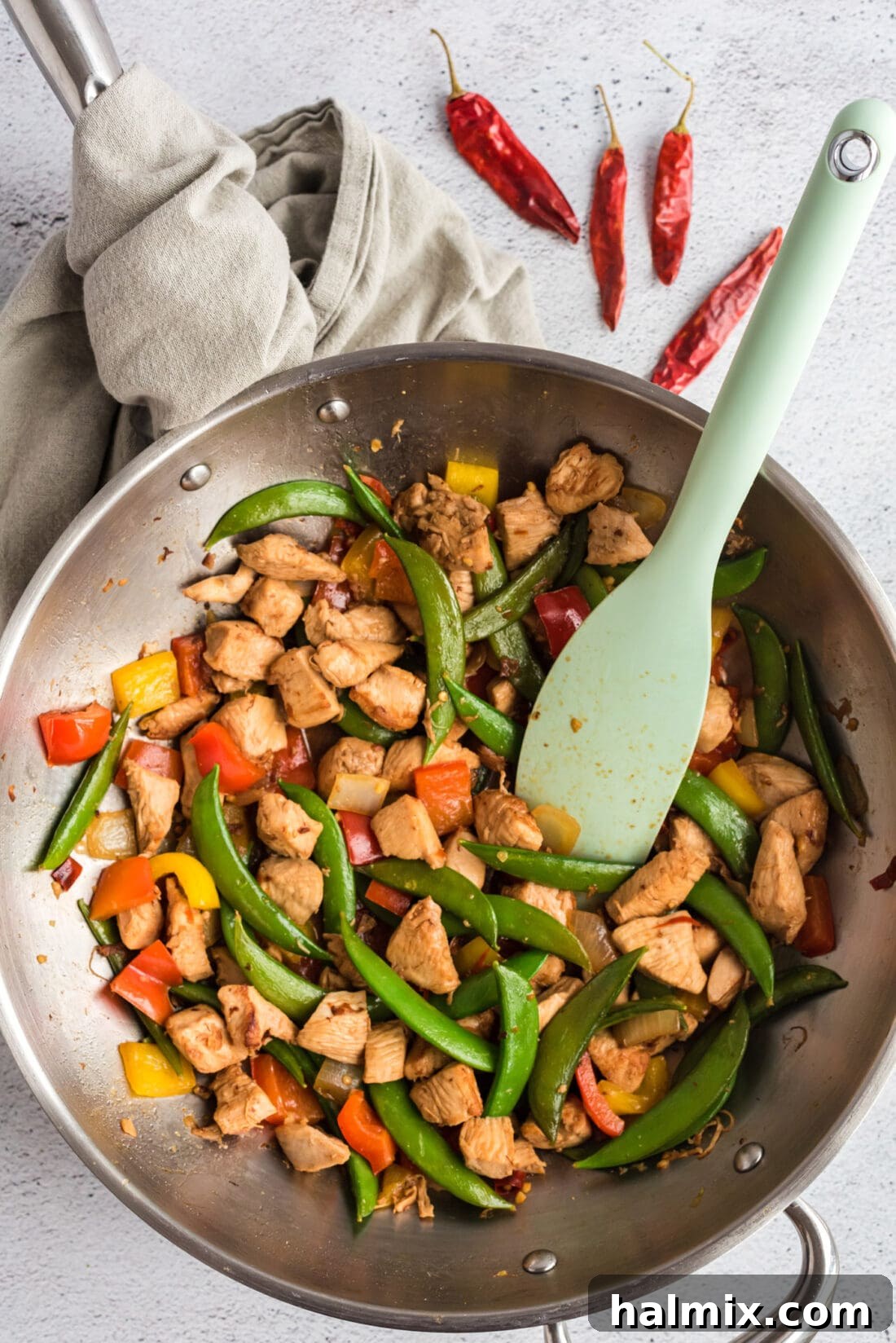
Adding the vibrant vegetables to the stir-frying chicken. The complete Kung Pao Chicken, simmering in its flavorful sauce.
Frequently Asked Questions & Expert Tips for Perfect Kung Pao Chicken
How do I store leftovers and how long will it keep?
Store any leftover Kung Pao Chicken in an airtight container in the refrigerator for 3-4 days. To reheat, use a microwave, adding a dash of water or broth if needed to loosen the sauce and prevent it from drying out.
I can’t find black vinegar, what else can I use?
If black vinegar (Chinkiang vinegar) is unavailable, a suitable substitute is white rice vinegar or rice wine vinegar. While the flavor profile will be slightly different, it will provide the necessary acidity. You could also try date vinegar or balsamic vinegar, but keep in mind that these two kinds of vinegar are inherently sweeter, so use them sparingly and adjust to your taste preferences.
Can I add nuts to this recipe?
Absolutely! Many authentic Kung Pao Chicken recipes feature peanuts. You can add ¼ to ½ cup of unsalted roasted peanuts or cashews. If adding nuts, toss them into the mixture during step 4, allowing them a few minutes in the pan to meld with the other flavors and gain a slight toastiness.
What if I don’t have a wok?
No wok? No problem! A large, heavy-bottomed skillet or a cast-iron pan will work perfectly. The key is to ensure your pan is large enough to prevent overcrowding, allowing the ingredients to properly sear and stir-fry rather than steam. High heat is crucial regardless of the pan type.
Can I make this dish vegetarian?
Yes, this recipe can be easily adapted for a vegetarian diet. Simply substitute the chicken with firm tofu or tempeh, cut into 1-inch cubes. Press the tofu to remove excess water before marinating and searing. You can also use vegetable broth instead of chicken broth.
Perfect Serving Suggestions for Kung Pao Chicken
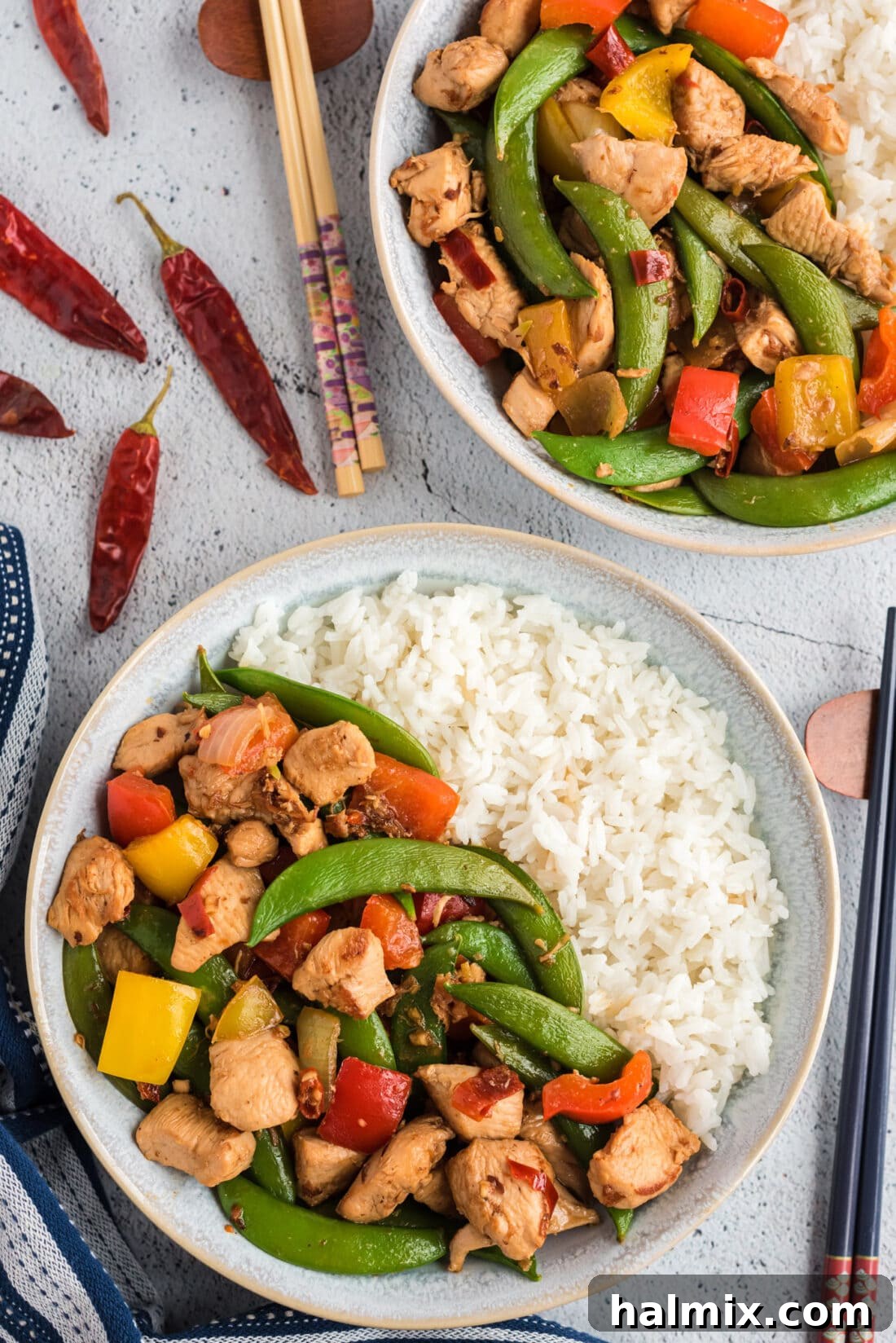
The classic accompaniment to Kung Pao Chicken is, of course, a fluffy bed of white rice. The rice perfectly soaks up the savory, spicy sauce, creating a harmonious balance with every spoonful. Beyond plain white rice, consider serving it with brown rice for added fiber, or even quinoa for a gluten-free option. For a heartier meal, you could serve it alongside stir-fried noodles like lo mein or chow mein.
This dish is already packed with fresh vegetables like red and yellow bell peppers, onion, and crisp sugar snap peas, making it a complete meal on its own. However, for an even more vibrant and nutritious spread, you can add a simple side of steamed or stir-fried greens such as bok choy, gai lan (Chinese broccoli), or spinach. A light cucumber salad dressed with a sesame vinaigrette would also offer a refreshing contrast to the richness of the chicken.
As mentioned earlier, many authentic Kung Pao recipes include unsalted roasted peanuts, which add a delightful crunch and nutty flavor. Feel free to incorporate about ¼ to ½ cup of peanuts or even toasted cashews for an extra layer of texture. The beauty of stir-fries lies in their incredible versatility, so don’t hesitate to customize the ingredients based on your personal preferences and what you have on hand. Whether it’s a simple weeknight dinner or a feast for friends, Kung Pao Chicken is always a crowd-pleaser.
More Irresistible Stir-Fry Recipes to Explore
If you’ve enjoyed the dynamic flavors and quick preparation of this Kung Pao Chicken, you’re in for a treat! Stir-fries are a fantastic way to create flavorful, wholesome meals in a flash. Here are some more of our favorite stir-fry recipes that you might love to try next:
- Mongolian Beef
- Sesame Chicken
- Moo Goo Gai Pan
- Chinese Pepper Steak
- Teriyaki Chicken and Rice
- Szechuan Beef
- General Tso Chicken
I absolutely adore cooking and baking, and my greatest joy is sharing my culinary adventures with all of you! To make sure you never miss out on a new recipe, I offer a convenient newsletter delivered right to your inbox every time a new dish is posted. Simply subscribe here and start receiving your free daily recipes!
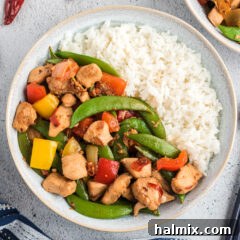
Kung Pao Chicken
Made with fresh ingredients and low-sodium and fat-free components, this Kung Pao Chicken is both delicious and good for you!
IMPORTANT – There are often Frequently Asked Questions within the blog post that you may find helpful. Simply scroll back up to read them!
Course: Dinner
Cuisine: Chinese
Servings: 4 servings
Total Time: 30 mins
Calories: 133
Author: Amanda Davis
Ingredients
- 10 ounces boneless skinless chicken breasts (2 breasts, cut into 1-inch chunks)
- 2 teaspoons low-sodium soy sauce (divided)
- ½ teaspoon cornstarch
- 2-3 red dried chiles (chopped)
- 2 teaspoons canola oil
- 2 cloves garlic (minced)
- ½ red bell pepper (cut into 1-inch dice)
- ½ yellow bell pepper (cut into 1-inch dice)
- ½ small onion (cut into 1-inch dice)
- 1 ½ cups sugar snap peas
- 3 tablespoons fat free chicken or vegetable broth
- 1 tablespoon black vinegar
Equipment You’ll Need
- Large skillet or wok
- Chef’s knife
Before You Begin (Expert Tips & Notes)
- You can add in 1/4-1/2 cup of unsalted roasted peanuts or cashews. If adding nuts, toss them into the mixture during step 4, allowing them a few minutes in the pan to meld with the other flavors.
- You may also add in about 1 – 1 1/2 tsp of Sichuan peppercorns if desired for authentic numbing heat.
- The heat from this dish comes from the red chiles. You can control how much heat yours has by keeping all the chile seeds for the spiciest possible version or removing them altogether for a milder recipe. It’s totally dependent on your tastes!
- If you can’t find black vinegar, you can substitute with white rice vinegar/rice wine vinegar. You could also try date vinegar or balsamic vinegar, but keep in mind that these two kinds of vinegar are sweeter in taste.
Instructions
- In a bowl, combine the cornstarch with 1 teaspoon of the soy sauce. Pour over chicken and toss to combine. Set aside to marinate for ten minutes.
- Soak dried chiles in hot water for several minutes. Remove from water and chop. For a less spicy dish, discard some or all of the seeds.
- Heat a large skillet or wok over high heat. Add canola oil and swirl to coat. Add the chicken, spread it out across the surface of the pan. Sear on both sides until lightly browned, but not cooked all the way through, about 4 minutes.
- Add the chiles, garlic, bell pepper, onion and snap peas. Stir-fry several minutes, until fragrant. Add remaining one teaspoon of soy sauce, the broth and vinegar. Bring to a simmer and turn heat down to medium low. Cook for 2-3 minutes, until chicken is cooked through.
Nutrition Information (per serving)
Serving: 1 portion | Calories: 133 cal | Carbohydrates: 7g | Protein: 17g | Fat: 4g | Saturated Fat: 1g | Polyunsaturated Fat: 1g | Monounsaturated Fat: 2g | Trans Fat: 1g | Cholesterol: 45mg | Sodium: 214mg | Potassium: 430mg | Fiber: 2g | Sugar: 3g | Vitamin A: 983IU | Vitamin C: 70mg | Calcium: 28mg | Iron: 1mg
Tried this Recipe? Pin it for Later!
Follow on Pinterest @AmandasCookin or tag #AmandasCookin!
The recipes on this blog are tested with a conventional gas oven and gas stovetop. It’s important to note that some ovens, especially as they age, can cook and bake inconsistently. Using an inexpensive oven thermometer can assure you that your oven is truly heating to the proper temperature. If you use a toaster oven or countertop oven, please keep in mind that they may not distribute heat the same as a conventional full sized oven and you may need to adjust your cooking/baking times. In the case of recipes made with a pressure cooker, air fryer, slow cooker, or other appliance, a link to the appliances we use is listed within each respective recipe. For baking recipes where measurements are given by weight, please note that results may not be the same if cups are used instead, and we can’t guarantee success with that method.
This post originally appeared here on June 23, 2013, and has since been updated with new photos, expert tips, and expanded content for a better reader experience.
This recipe was slightly adapted from Jaden Hair’s insightful book Steamy Kitchen’s Healthy Asian Favorites: 100 Recipes That Are Fast, Fresh, and Simple Enough for Tonight’s Supper, a fantastic resource for Asian-inspired cooking.