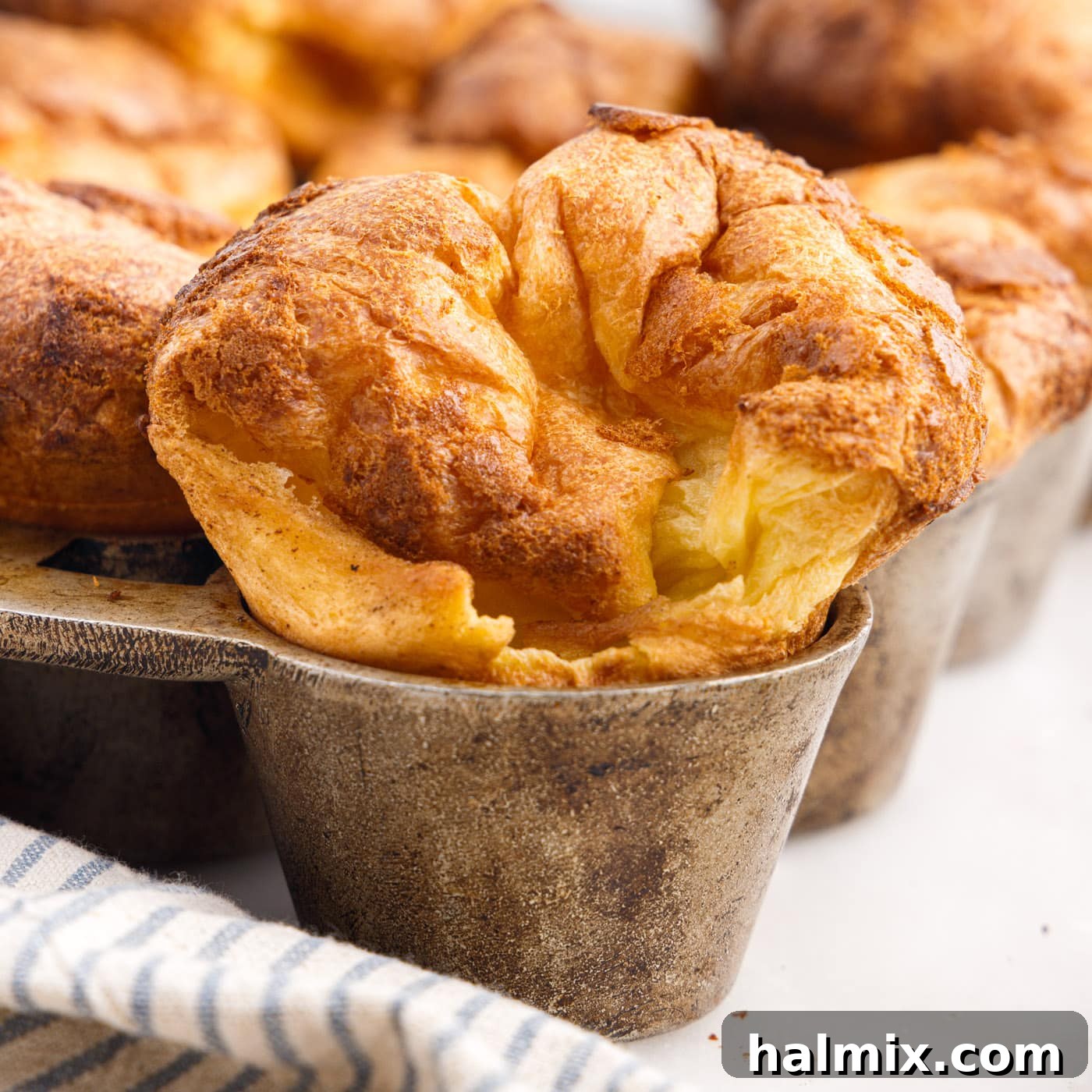
Unlock the secret to baking the most delightful popovers at home with this incredibly easy, 5-ingredient recipe. These golden-brown wonders emerge from the oven with a delicately crisp exterior that gives way to an airy, soft, and beautifully hollow interior. Their versatility makes them an ideal companion for both a cozy breakfast spread or a sophisticated dinner plate, effortlessly elevating any meal.
Why This Easy Popover Recipe Works Wonders
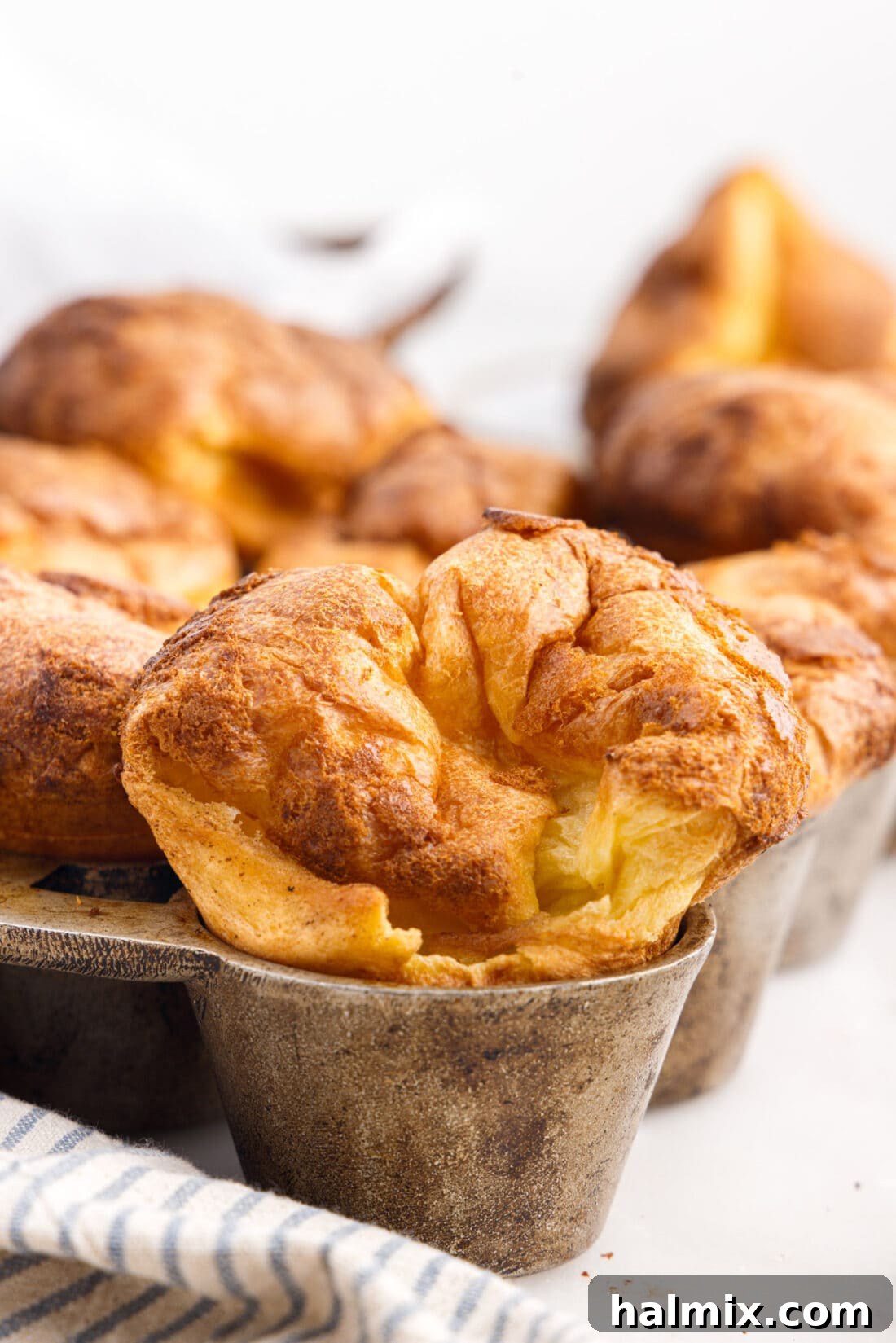
Popovers are a truly magical creation, and this particular recipe simplifies the process without compromising on that signature ‘wow’ factor. Unlike traditional dinner rolls that rely on yeast for their rise, popovers are crafted from a thin, egg-rich batter. This fundamental difference is what gives them their unique characteristics: a remarkably hollow core and an irresistibly crisp, golden-brown shell.
The name “popover” perfectly describes their dramatic ascent in the oven. As they bake in their deep-welled pans, the batter dramatically “pops” over the top, creating those iconic tall, domed shapes. The science behind this phenomenon is quite fascinating: the high initial heat in the oven rapidly turns the liquid in the batter into steam. This steam then expands, pushing the batter upwards and creating that wonderful, airy void inside, while the egg proteins set the structure and give the exterior its delightful crispness.
This recipe shines because it demystifies what many perceive as a challenging bake. With just a few straightforward tips, the right equipment (a popover tin is highly recommended, though alternatives exist), a blender for effortless mixing, and a handful of pantry staples, you can achieve homemade popover perfection right in your own kitchen. It’s a testament to how simple ingredients, combined with the right technique, can yield truly extraordinary results.
Essential Ingredients for Fluffy Popovers
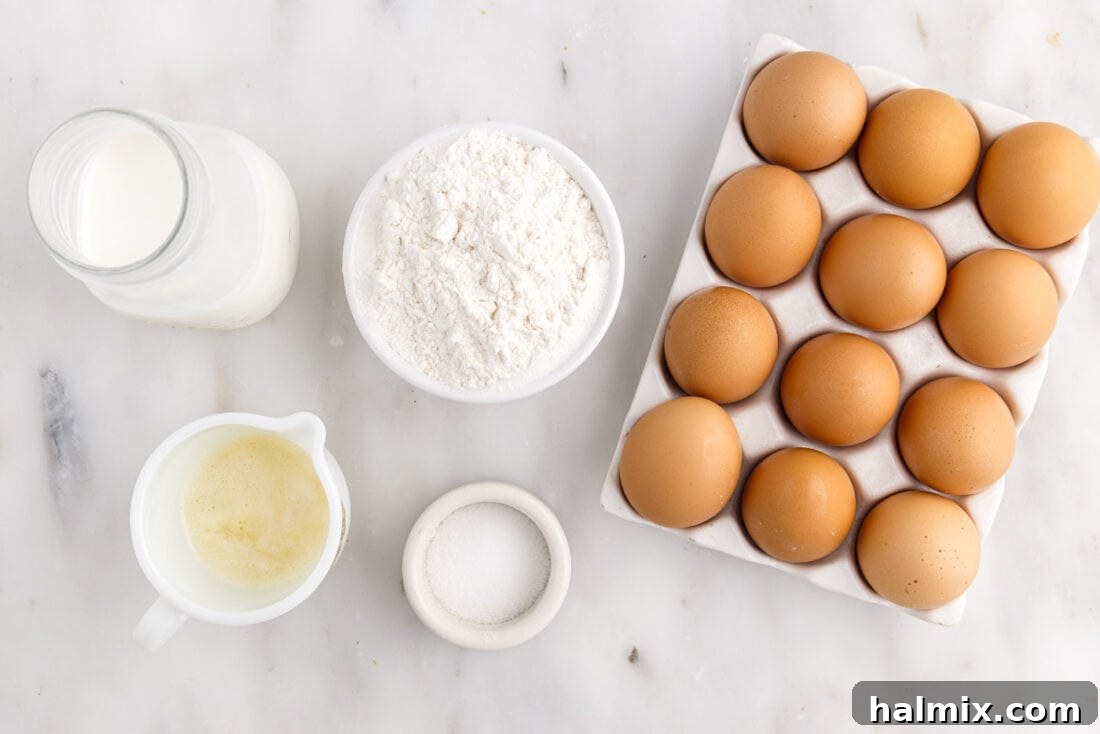
Crafting these delectable popovers requires only a small list of common ingredients, proving that extraordinary results don’t always demand an extensive pantry. You’ll find all precise measurements, ingredient specifics, and step-by-step instructions in the comprehensive, printable version of this recipe located at the end of this post.
Ingredient Insights & Expert Substitution Tips
Understanding your ingredients is key to achieving the perfect popover. Here’s what you need to know about each component and how to handle it:
FLOUR – The type and measurement of flour are critical for light and airy popovers. This recipe calls for all-purpose flour, which provides the right balance of protein to create structure without being too dense. The most crucial step is proper measurement. Always use the “scoop and sweep” method: first, aerate your flour by fluffing it with a spoon or whisk. Then, gently spoon the flour into your measuring cup until it overflows. Finally, use the flat edge of a butter knife or a straight-edge utensil to level off the excess flour, ensuring it’s flush with the top of the cup. Resist the urge to tap or pack down the flour at all, as this can lead to a compacted measurement, resulting in too much flour. Excess flour makes the batter too thick, preventing the popovers from expanding properly and leaving you with dense, heavy results instead of the desired light and hollow texture.
EGGS AND MILK – For the best possible rise and texture, it is absolutely essential that both your eggs and milk are at room temperature before you begin mixing the batter. Room temperature ingredients emulsify more effectively, meaning they combine more smoothly and uniformly. This creates a more stable batter that can trap air and steam better, leading to a higher, more consistent rise. Cold ingredients can shock the batter, making it thicker and hindering its ability to “pop” effectively. To quickly bring eggs to room temperature, place them in a bowl of warm (not hot) water for 5-10 minutes. For milk, simply let it sit on the counter for about 30 minutes to an hour before use.
BUTTER – Our recipe specifies melted butter, divided for use in both the batter and for greasing the pan. Butter adds a rich flavor and helps in achieving that beautiful golden crust. Using unsalted butter allows you to control the overall saltiness of the recipe. If you only have salted butter, you may want to slightly reduce the amount of added salt.
SALT – A small amount of sea salt enhances the flavors of the other ingredients, balancing the richness of the butter and eggs. While sea salt is recommended for its pure flavor, fine table salt can also be used, though you might adjust the quantity slightly to taste.
Step-by-Step Guide: How to Make Popovers
These detailed step-by-step photos and instructions are provided to help you visualize each stage of making this delightful recipe. For a convenient printable version, complete with precise measurements and full instructions, please Jump to Recipe at the bottom of this post.
- **Prepare Your Oven and Pan:** Begin by placing your popover pan on the bottom rack of your oven. Position a second oven shelf approximately 12 inches directly above the bottom shelf. On this upper shelf, place a standard sheet pan. This strategic placement of the sheet pan is a crucial expert tip – it acts as a shield, protecting the tops of your popovers from over-browning while ensuring they cook through evenly and achieve their maximum rise.
- **Preheat Thoroughly:** Preheat your oven to a high temperature of 450°F (232°C). Once the oven indicates it has reached 450°F, continue heating it for an additional 20 minutes. This extended preheating time is vital; it ensures that both the oven cavity and, most importantly, the popover pan itself are exceptionally hot. A super-hot pan is what causes the batter to rapidly steam and “pop” upwards almost instantly.
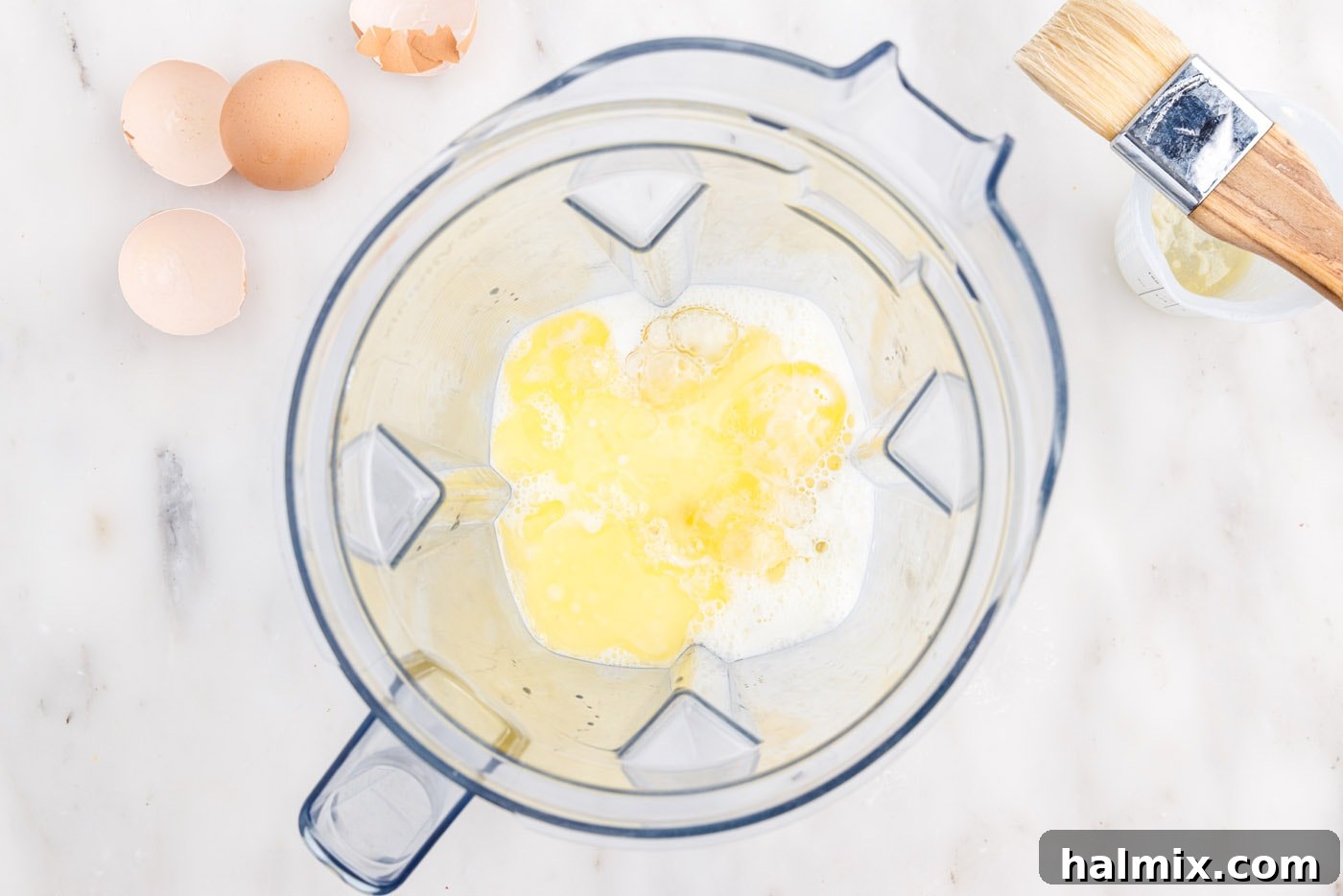
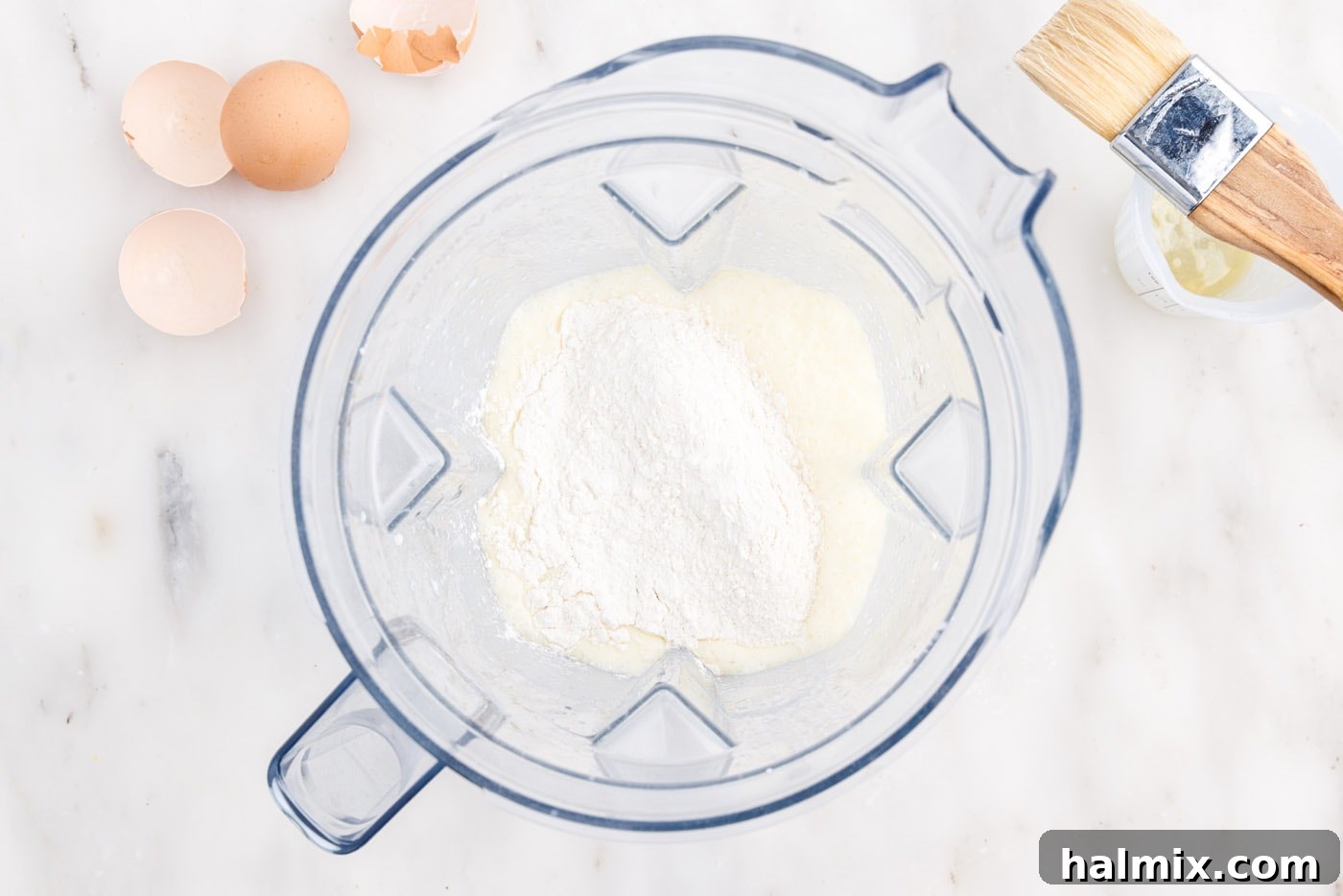
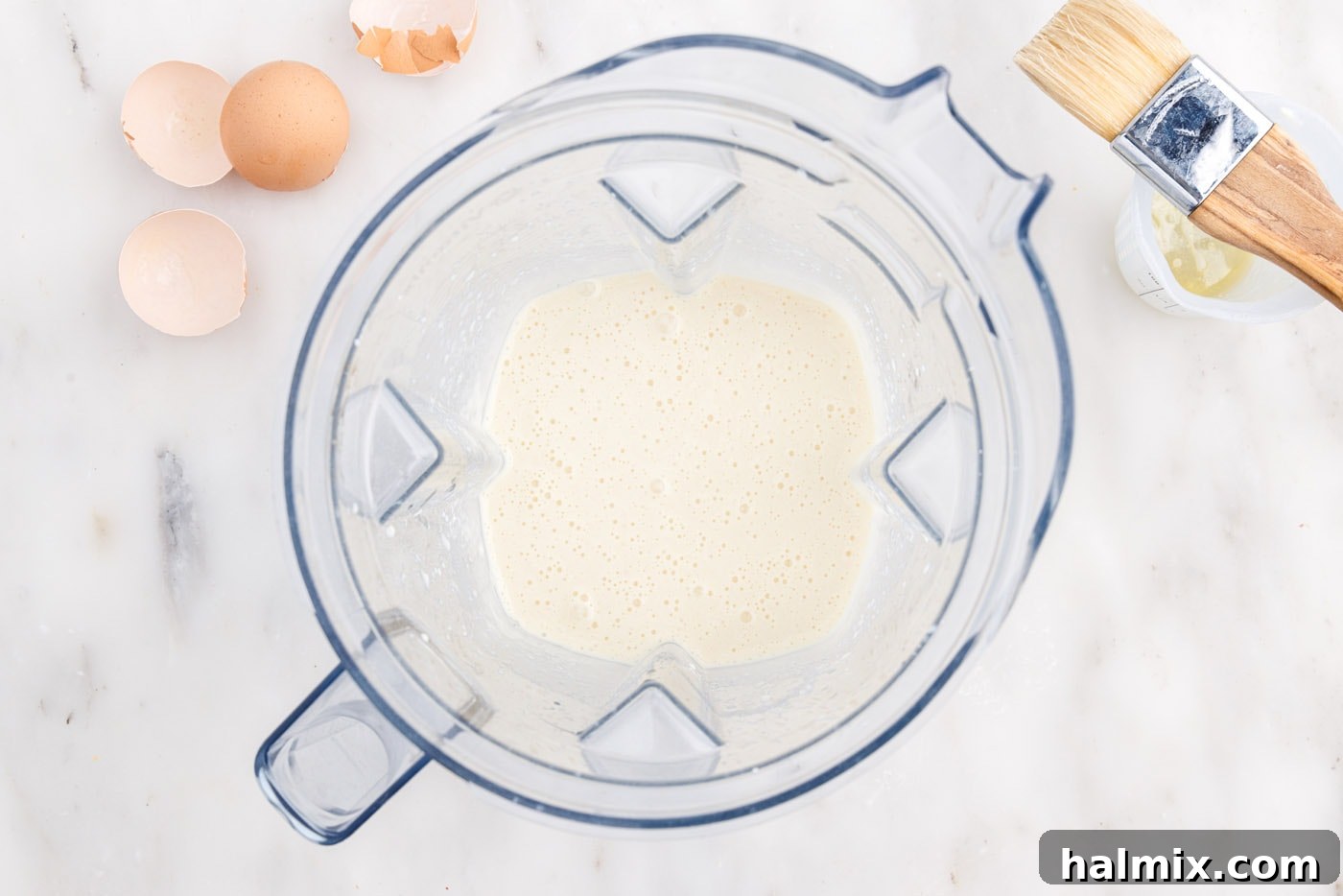
- **Prepare the Batter:** While the oven and pan are heating, combine 2 tablespoons of the melted butter (reserving the rest for later), the room-temperature eggs, and the room-temperature milk in a blender. Pulse these ingredients until they are thoroughly blended and smooth. Next, add the precisely measured all-purpose flour and sea salt to the blender. Pulse several more times, just until the flour is fully incorporated and the batter is smooth, being careful not to overmix. Overmixing can develop the gluten too much, leading to tougher popovers. Once combined, let the batter rest at room temperature for at least 15 minutes. This resting period allows the flour to fully hydrate and the gluten to relax, contributing to a more tender and airy texture.

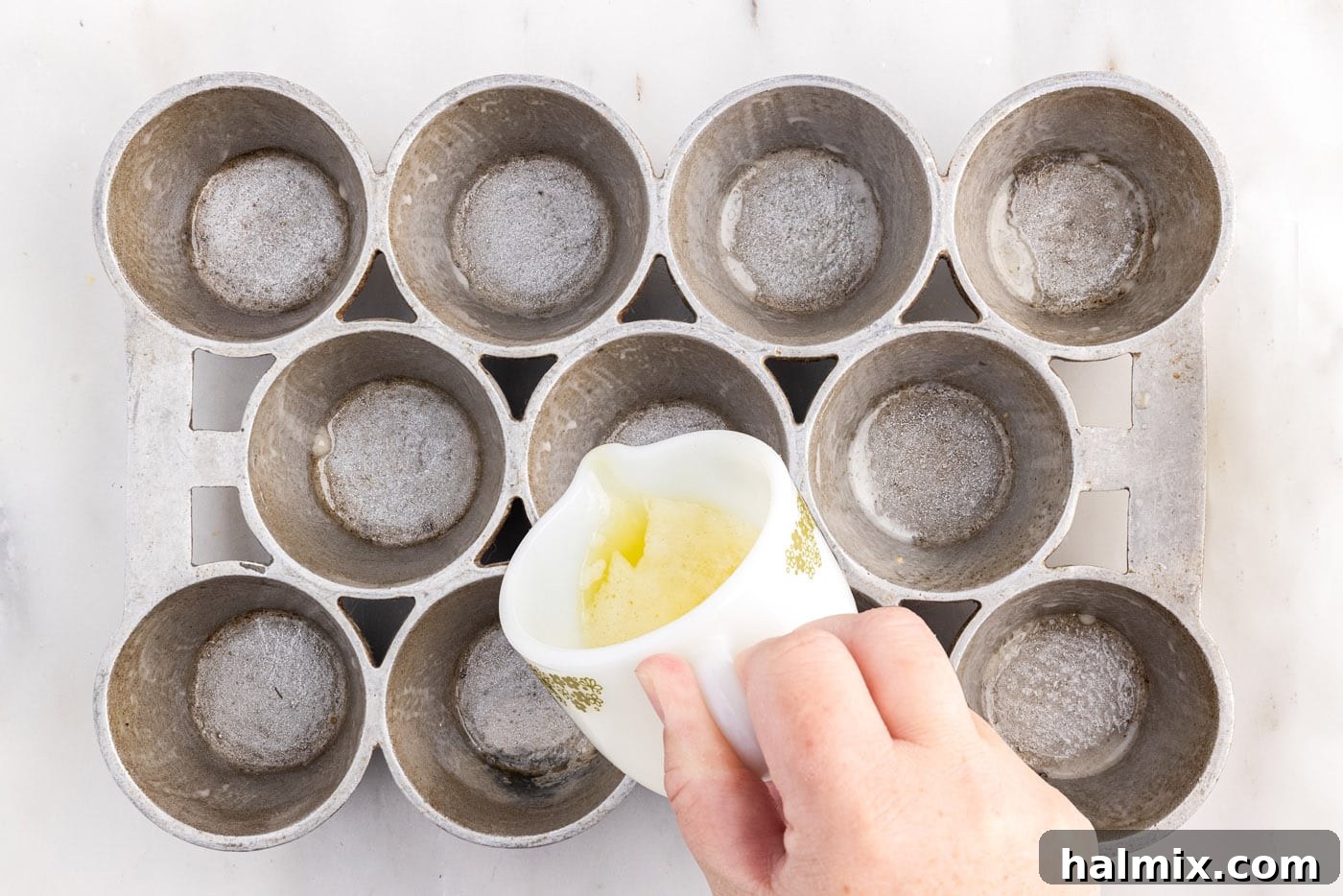
- **Grease the Hot Pan:** Once the oven has been thoroughly preheated for the full duration, carefully remove the searing hot popover pan from the oven. Using the remaining 2 tablespoons of melted butter, quickly and cautiously pour a small drizzle into the bottom of each cup of the pan. Be extremely careful, as the hot pan will cause the butter to sizzle and may splatter. Work swiftly to ensure each cup is evenly coated with a thin layer of butter. This step prevents sticking and contributes to the crispy crust.
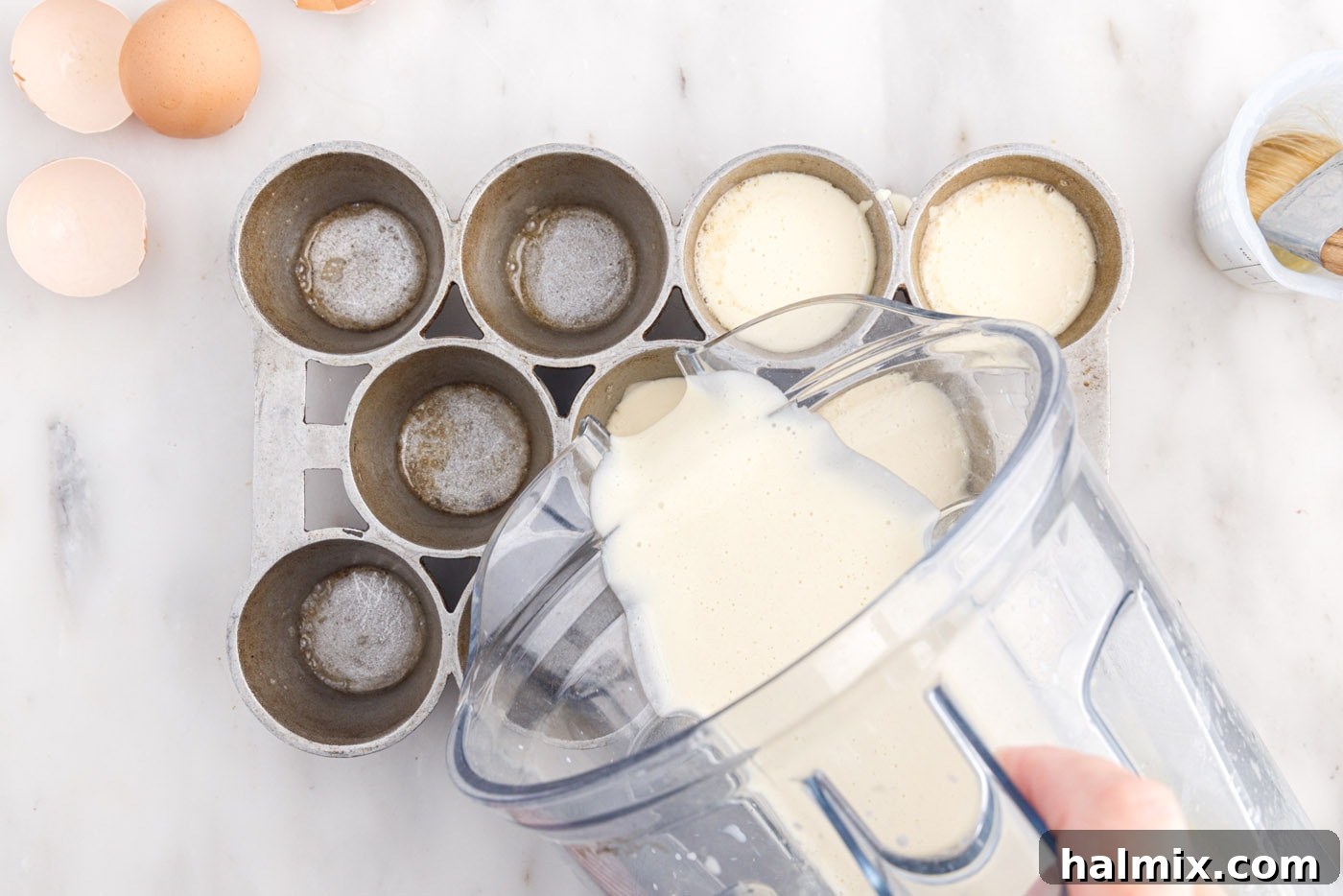
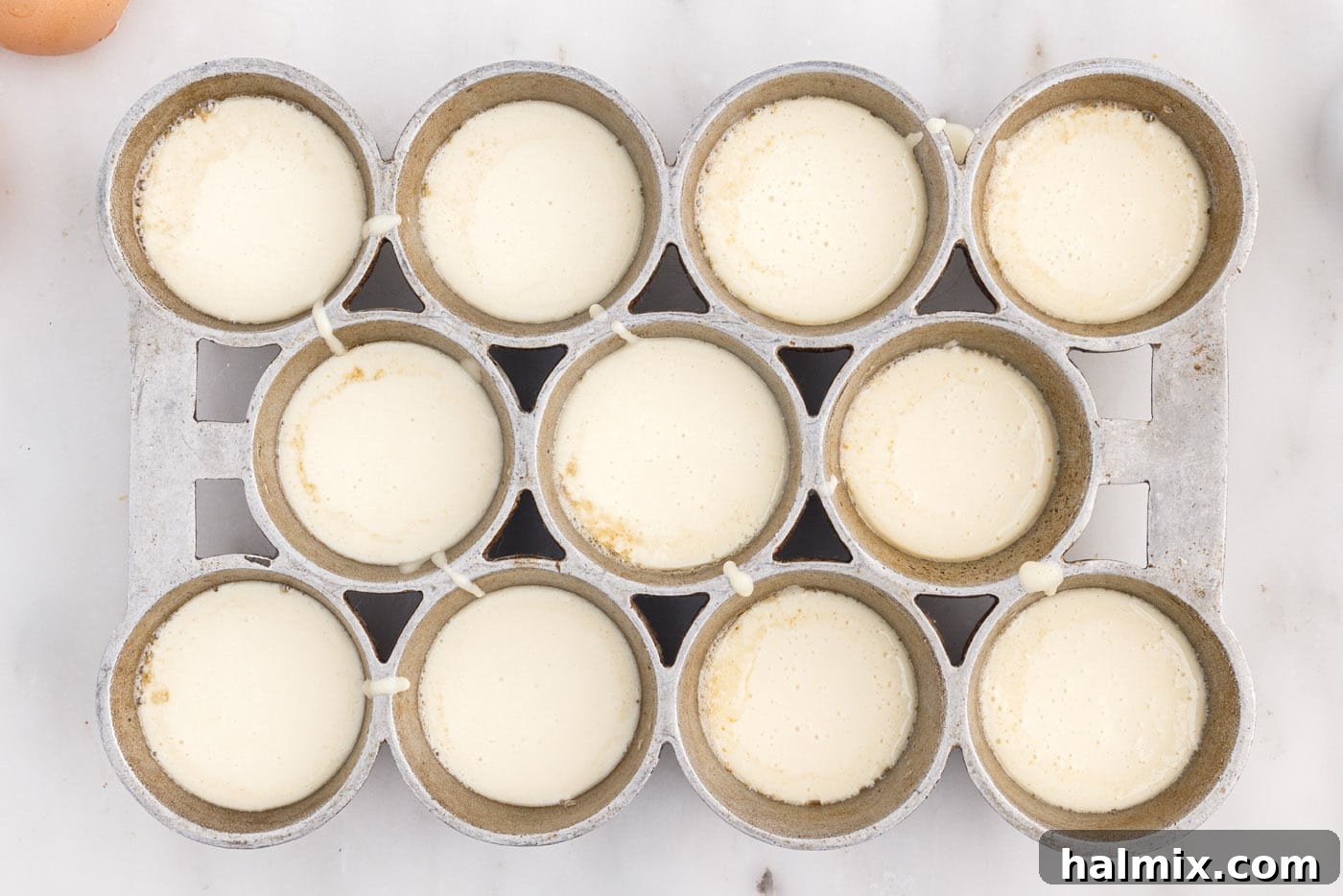
- **Fill the Pan:** Immediately after buttering, pour the rested popover batter into each prepared cup. Aim to fill each cup approximately two-thirds of the way full. It’s important not to overfill, as the popovers need ample space to expand and rise dramatically.
- **Bake with Precision:** Carefully return the filled popover pan to the bottom oven shelf. Bake at 450°F (232°C) for exactly 20 minutes. After 20 minutes, reduce the oven temperature to 350°F (175°C) WITHOUT opening the oven door. This is a critical step; opening the door can cause the popovers to deflate. Continue baking for an additional 10 minutes. The initial high heat creates the dramatic rise, while the lower temperature helps them cook through and set their structure without burning the delicate tops.
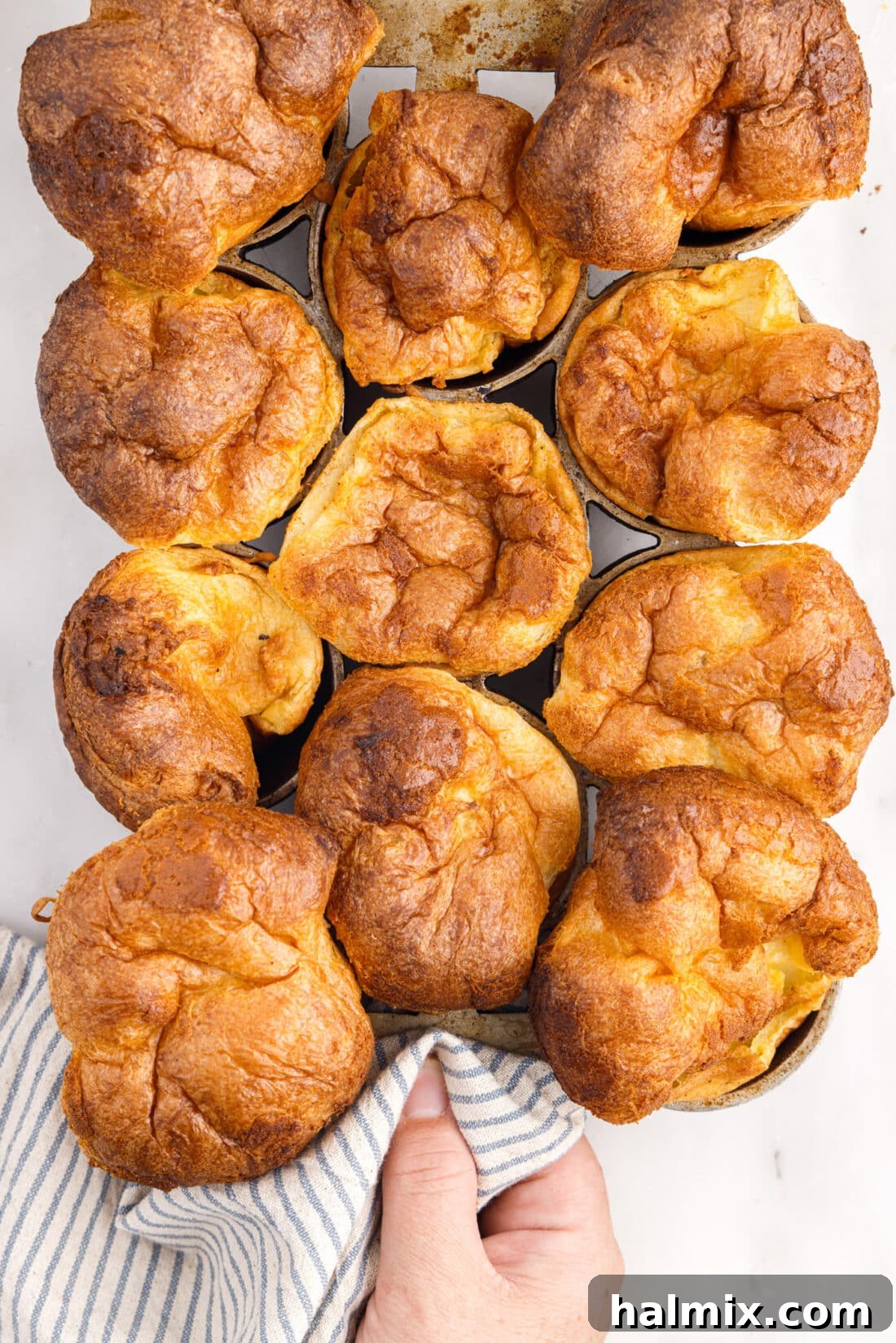
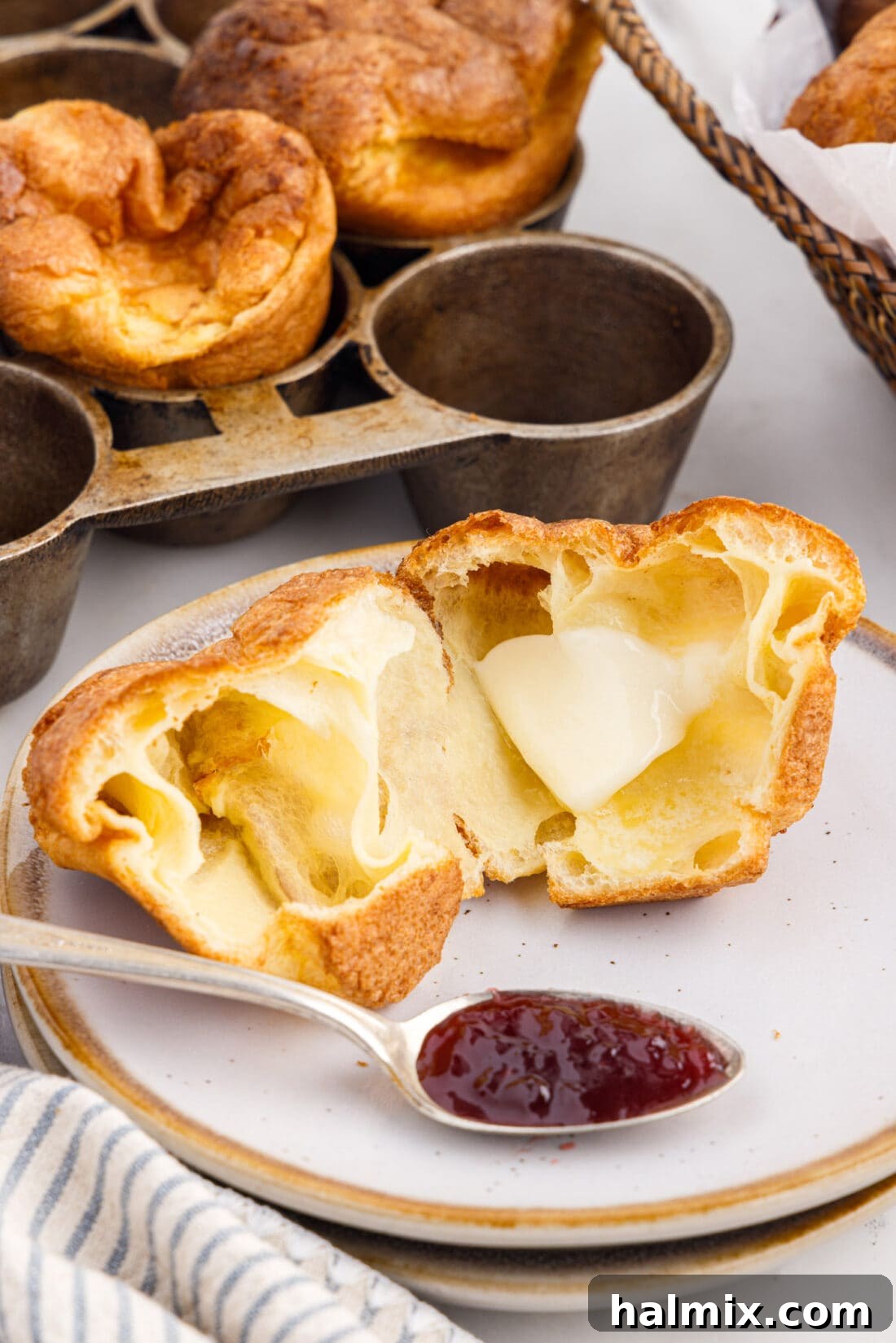
- **Serve Immediately:** Once baked, promptly remove the popovers from the oven. Gently twist or use a small knife to release them from the pan. Serve your homemade popovers immediately while they are still warm, light, and wonderfully crisp. They are absolutely divine when served with a dollop of fresh butter, a spoonful of your favorite jam, or even a sprinkle of cinnamon sugar, if you wish.
Frequently Asked Questions & Expert Tips for Popover Perfection
Popovers are truly at their absolute best when enjoyed immediately after baking. Their delicate, crisp texture and airy interior diminish over time. While leftovers can be enjoyed for a few hours after they’ve cooled, they will gradually become less crisp and more chewy. After several hours, popovers tend to dry out and become tough, at which point they are best discarded or repurposed, perhaps as croutons if still palatable.
Yes, you absolutely can prepare the popover batter in advance! This can be a great time-saver for busy mornings or dinner parties. Mix the batter as instructed, cover it tightly, and store it in the refrigerator for up to a day (24 hours). However, it is crucial that the batter is allowed to warm back up to room temperature before baking. Cold batter will not rise as effectively. Simply remove it from the refrigerator about 30-60 minutes before you plan to bake, giving it time to reach room temperature.
While a dedicated popover pan is highly recommended for achieving their distinct tall base and dramatically domed top, you can certainly use a standard muffin tin if a popover pan isn’t available. Popover pans are designed with deep, narrow wells and ample space between them, allowing the popovers to rise spectacularly without merging. When using a muffin tin, opt for a standard 12-cup tin. Fill the cups about two-thirds full and ensure you grease them thoroughly. Your popovers may not reach the same impressive height, but they will still be delicious and airy. Adjust baking times slightly as needed; they might bake a bit faster in shallower muffin cups.
Several factors can prevent popovers from rising properly. The most common reasons include: 1) **Cold Ingredients:** Eggs and milk must be at room temperature for optimal batter emulsification and rise. 2) **Insufficient Oven/Pan Preheat:** The oven and especially the popover pan need to be scorching hot. Make sure you preheat for the full recommended time *after* the oven reaches temperature. 3) **Opening the Oven Door:** Resist the urge to peek during baking, especially during the initial high-heat phase. The sudden drop in temperature can cause them to deflate. 4) **Overmixing or Undermixing Batter:** Overmixing develops too much gluten, making them tough, while undermixing can leave lumps that hinder rise. 5) **Too Much Flour:** Carefully measure your flour using the scoop and sweep method to avoid dense popovers.
Absolutely! Popovers are incredibly versatile. For sweet variations, you can add a pinch of sugar or vanilla extract to the batter. After baking, sprinkle with cinnamon sugar, dust with powdered sugar, or drizzle with a glaze. For savory options, consider adding a tablespoon of finely chopped herbs (like chives or rosemary), grated Parmesan cheese, or a dash of black pepper to the batter. They pair wonderfully with gravies or as a side to roasted meats.
Delightful Serving Suggestions for Popovers
These incredibly fluffy, airy rolls are a canvas for a myriad of flavors, making them wonderfully versatile. Their simple, elegant taste means they shine whether slathered with a rich pat of butter, spread with a sweet fruit jam, or paired with more substantial dishes. They are truly at home on any table, from a leisurely breakfast or brunch to a comforting weeknight dinner.
For a touch of irresistible sweetness, try a generous sprinkle of cinnamon sugar immediately after they come out of the oven. Alternatively, elevate your breakfast or brunch by spreading them with homemade cinnamon honey butter – a truly indulgent treat. They also make an excellent companion to your morning cup of coffee or a relaxing afternoon tea, offering a light yet satisfying bite.
On the savory side, popovers are fantastic with heartier fare. Their hollow interior is perfect for soaking up rich flavors, making them an ideal accompaniment to hearty soups and stews. Imagine them alongside a robust beef stew or a creamy tomato soup. They also serve as an impressive and easy bread substitute for almost any dinner, from roasted chicken to a prime rib feast, adding an elegant touch without much effort.
More Delicious Bread & Roll Recipes to Explore
If you love baking homemade breads and rolls, be sure to check out these other fantastic recipes:
- Bretzel Rolls
- Hot Cross Buns
- Parmesan Garlic Rolls
- Homemade Hawaiian Rolls
- Homemade Pull-Apart Dinner Rolls
I absolutely adore sharing my passion for baking and cooking, along with all my kitchen experiences, with each and every one of you! Keeping up with new recipes daily can be a challenge, which is why I offer a convenient newsletter delivered straight to your inbox every time a fresh recipe is posted. Simply subscribe today and start receiving your free daily recipes to inspire your next culinary adventure!

Easy Homemade Popovers
IMPORTANT – For additional helpful insights and troubleshooting, please refer to the Frequently Asked Questions and Expert Tips sections higher up in the blog post!
Print Recipe
Pin Recipe
Rate Recipe
Ingredients
- 4 Tablespoons unsalted butter melted, divided
- 3 large eggs at room temperature
- 1 cup whole milk at room temperature
- 1 cup all-purpose flour
- ½ teaspoon sea salt
Things You’ll Need
-
Popover pan
-
Blender
Before You Begin: Expert Tips for Success
- For the very best results and perfectly risen, crispy popovers, meticulously follow these critical steps: ensure room temperature ingredients, allow adequate resting time for the batter, thoroughly preheat both the oven and the popover pan, and carefully pour the melted butter into the hot pan. These seemingly small details collectively make a significant difference in the final texture and appearance of your popovers.
- The proper measurement of flour is paramount for achieving light and airy popovers. Always utilize the “scoop and sweep” method: first, aerate your all-purpose flour by fluffing it with a spoon. Then, gently spoon the flour into your measuring cup until it’s full and slightly mounded. Use the flat edge of a butter knife or a similar straight-edge tool to level off the excess flour, making sure not to tap down or pack the flour into the cup at all. Tapping the measuring cup with flour onto the counter or any other surface will compact the flour, leading to too much being used. An excess of flour will result in a denser batter, which in turn produces heavy, unrisen popovers instead of the desired light and hollow ones.
- Popovers require sufficient cooking time for the steam to fully inflate the batter and for the exterior to form a robust, crisp shell that will hold its shape. During this process, the tops can sometimes brown too quickly or even burn. Placing a sheet pan on the top rack of your oven is a game-changer; it effectively blocks some of the direct top heat, ensuring the popovers achieve a beautiful golden brown color without over-browning, while still having ample time to cook all the way through and set perfectly.
Instructions
-
Position a popover pan on the bottom oven rack. Place a second rack about 12 inches above, then put a sheet pan on the top rack to prevent over-browning.
-
Preheat oven to 450°F (232°C). Continue heating for an additional 20 minutes after it reaches temperature to ensure the pan is super hot.
-
In a blender, combine 2 tablespoons of melted butter, room-temperature eggs, and milk. Pulse until completely blended. Add flour and salt, then pulse a few more times until just combined. Let the batter rest for 15 minutes.
-
Once the oven and pan are fully preheated, carefully remove the hot popover pan. Drizzle the remaining 2 tablespoons of melted butter into the bottom of each cup, working quickly and cautiously as it may splatter.
-
Pour the rested batter into each prepared cup, filling them approximately 2⁄3 full. Do not overfill.
-
Bake for 20 minutes at 450°F (232°C). Without opening the oven door, reduce the temperature to 350°F (175°C) and continue baking for another 10 minutes.
-
Remove popovers from the oven immediately. Serve warm with butter, jam, or your preferred toppings. Enjoy!
Nutrition Information
The recipes on this blog are meticulously tested using a conventional gas oven and gas stovetop. Please be aware that oven performance, especially in older models, can vary. We highly recommend using an inexpensive oven thermometer to ensure your oven is truly reaching and maintaining the correct temperature. If you use a toaster oven or countertop oven, remember that their heat distribution might differ from a full-sized conventional oven, so you may need to adjust your cooking or baking times accordingly. For recipes utilizing appliances like pressure cookers, air fryers, or slow cookers, a link to the specific appliances we use is typically provided within each recipe. Finally, for baking recipes where measurements are given by weight, please note that using volume (cups) instead may lead to different results, and we cannot guarantee successful outcomes with that alternative measurement method.