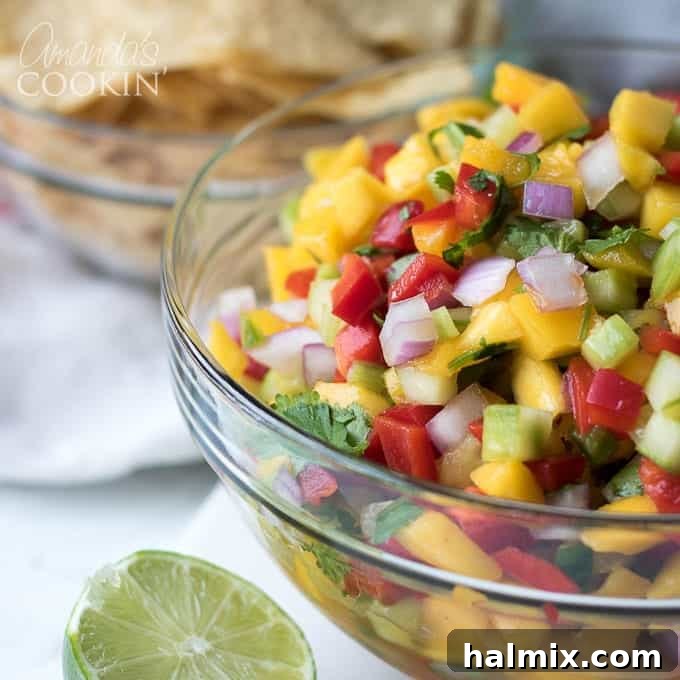
Every gathering, whether an intimate dinner or a lively barbecue, needs a show-stopping appetizer that leaves a lasting impression. While classic dips have their place, sometimes you crave something fresh, vibrant, and utterly unforgettable. Allow me to introduce you to the ultimate crowd-pleaser that consistently steals the spotlight: my homemade Mango Salsa. This isn’t just a side dish; it’s a celebration of tropical flavors, bursting with freshness and a perfect balance of sweet, savory, and a hint of spice.
I recently attended a friend’s party and decided to bring a full salsa bar, featuring my beloved restaurant-style salsa, a robust chunky salsa, and a creamy guacamole. But the undisputed star of the evening, the dish everyone raved about, was this incredible mango salsa. It’s truly a testament to the power of fresh ingredients and simple preparation.
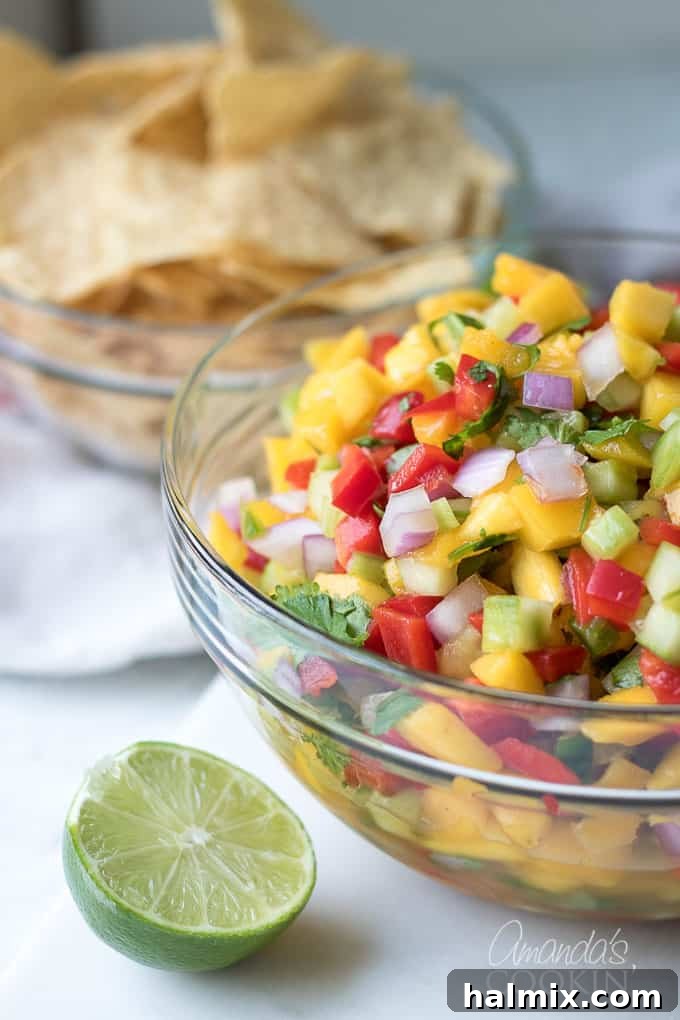
The Irresistible Allure of Fresh Mango Salsa
There’s something truly magical about a perfectly crafted mango salsa. The sweetness of ripe mangoes, the tang of pineapple, the crispness of cucumber and bell pepper, and the subtle warmth of jalapeño all come together in a harmonious blend that awakens the taste buds. It’s a versatile condiment that elevates everything from humble tortilla chips to grilled seafood, making it an essential recipe for your culinary repertoire.
The first time this particular recipe gained widespread acclaim was at a New Year’s Eve party. It was astonishing, considering mango season was far off. Yet, even with winter produce, the vibrant flavors shone through, proving that a good recipe transcends seasonality. Now, with barbecue season in full swing and outdoor entertaining on everyone’s mind, it’s the perfect time to share this recipe. Alongside this tropical delight, you might also enjoy my refreshing strawberry salsa – both are fantastic fruit-based options that are always a hit!
Mastering Mango Selection: Tips for Perfect Ripeness
The foundation of any great mango salsa lies in choosing the perfect mangoes. Selecting ripe mangos can indeed be a bit of an art, as their skin color isn’t always a reliable indicator of ripeness – it often varies by variety. Here’s what seasoned mango lovers look for:
- The Squeeze Test: According to the National Mango Board, a ripe mango will yield slightly to gentle pressure, much like a perfectly ripe peach or avocado. Avoid rock-hard mangoes, which are unripe, and overly soft ones, which may be past their prime.
- The Aroma Test: Gently smell the stem end of the mango. A ripe mango will emit a fragrant, sweet, and tropical aroma. If there’s no scent, it’s likely not ripe enough. If it smells fermented or alcoholic, it’s overripe.
- Appearance (Secondary): While color isn’t primary, look for smooth, unblemished skin. Some varieties turn red or yellow when ripe, while others remain green.
- Variety Matters: Different mango varieties offer subtle variations in flavor and texture. For salsa, a firm yet juicy mango like an Ataulfo (honey mango) or a Tommy Atkins works beautifully.
How to Confidently Cut a Mango for Salsa
Mangoes are undeniably delicious, but their large, flat pit can make them intimidating to cut. Fear not! With a simple technique, you’ll be dicing mangoes like a pro in no time. While there are several methods, for salsa, you’ll want clean, uniform cubes. The most common and easiest method involves:
- Slicing the “Cheeks”: Stand the mango on its stem end. Imagine the flat pit inside and make two cuts, one on each side of the pit, slicing off the largest fleshy parts (the “cheeks”).
- Scoring the Flesh: With the skin still on, score the mango flesh in a grid pattern (horizontally and vertically) without cutting through the skin.
- “Hedgehog” Method: Gently push the skin side up, turning the scored cheek inside out. The mango cubes will pop up, resembling a hedgehog.
- Dicing: Slice off the cubes into a bowl. Repeat with the other cheek. For the remaining flesh around the pit, carefully peel the skin and trim off any usable pieces, then dice them.
This method ensures beautiful, bite-sized mango pieces, perfect for blending seamlessly into your salsa.
The Core Ingredients: A Flavorful Medley for Your Mango Salsa
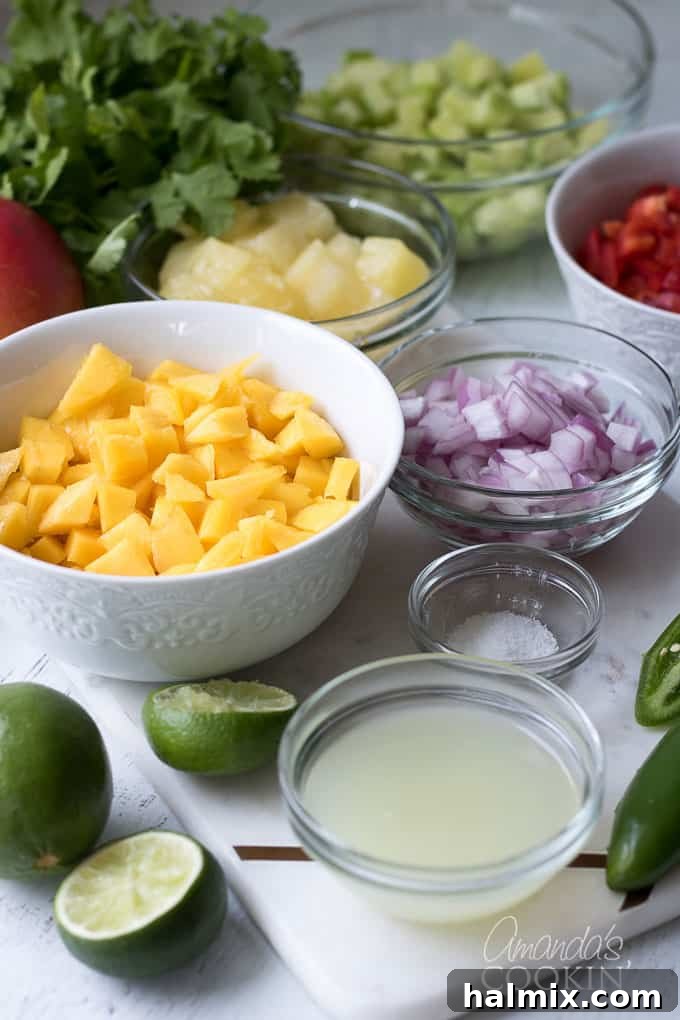
While mango is the star, the supporting cast of fresh vegetables and herbs plays a crucial role in creating a balanced and exciting flavor profile. Each ingredient is chosen not just for taste, but for texture, color, and its unique contribution to the overall experience:
- Pineapple: I love incorporating pineapple into this salsa. Its sweet-tart flavor and firmer texture complement the mango beautifully. While canned pineapple can be used in a pinch, I highly recommend fresh pineapple. It offers a brighter taste and a more substantial bite that holds up better in the salsa. You can often find pre-cored, fresh pineapple in your grocer’s produce section, or buy a whole one and enjoy the extra for snacking or other tropical recipes.
- Cucumber: For that refreshing crunch and a subtle cooling effect, fresh cucumber is essential. English cucumbers are excellent due to their thin skin and fewer seeds, but any crisp cucumber variety will do. Peel it if the skin is thick or waxed.
- Bell Pepper: I primarily use red bell pepper for its vibrant color and sweet, mellow flavor. While green bell peppers can be a bit too bitter and herbaceous for this sweet salsa, yellow or orange bell peppers are fantastic alternatives, offering similar mild sweetness and adding to the gorgeous spectrum of colors in the dish.
- Red Onion: A finely diced red onion provides a necessary sharp tang and beautiful purple flecks. Red onions are generally milder than yellow or white varieties when eaten raw. If you find even red onion too potent, a sweet Vidalia onion is an excellent substitute, or you can soak your diced red onion in cold water for 10-15 minutes to mellow its pungency before draining and adding to the salsa.
- Jalapeño: Don’t let the jalapeño intimidate you! When prepared correctly, it adds a delightful warmth rather than overwhelming heat. The majority of the heat resides in the white pith and seeds. To control the spice level, simply remove these parts completely, leaving only the minced flesh. For a spicier kick, you can leave some seeds or a bit of pith. If you prefer no heat at all, simply omit it or use a finely diced bell pepper instead.
- Lime: Freshly squeezed lime juice is crucial. It brightens all the flavors, adds a necessary acidic counterpoint to the sweet fruits, and helps to “cook” the raw onion and cilantro, enhancing their aromatics. While bottled lime juice can be substituted, the fresh zest and vibrant flavor of real lime are truly unparalleled.
- Fresh Cilantro: This herb is non-negotiable for an authentic, dynamic mango salsa. Fresh cilantro provides a distinctive, herbaceous, and slightly citrusy flavor that truly kicks the salsa up several notches. For those with the “cilantro soap gene,” fresh mint or parsley can offer a different but still appealing fresh note.
- Seasoning: Rounding out the flavors are ground cumin for a touch of earthy warmth and Kosher salt, which enhances all the natural flavors and helps them meld together beautifully. Adjust salt to taste.
Essential Kitchen Companions for Perfect Salsa Making
You don’t need a kitchen full of specialty gadgets to make fantastic salsa, but a few key tools can make the process significantly easier and more enjoyable:
- A quality cutting board and a sharp, reliable knife are a cook’s best friends. Precision dicing and chopping are key for salsa, and a sharp knife makes this task safe and efficient.
- For uniformly diced ingredients, especially for large batches, a vegetable chopper can be a real time-saver. These handy devices ensure consistent size, which is not only aesthetically pleasing but also ensures every bite of salsa has a perfect balance of ingredients.
- A generously sized mixing bowl is indispensable. When combining so many fresh ingredients, you need ample space to stir and turn everything, ensuring every piece is coated in the delicious lime-cumin dressing.
- Finally, for entertaining, a beautiful serving set for your chips and salsa makes a wonderful presentation. It’s perfect for potlucks, parties, barbecues, and any festive gathering where you want your dish to shine.
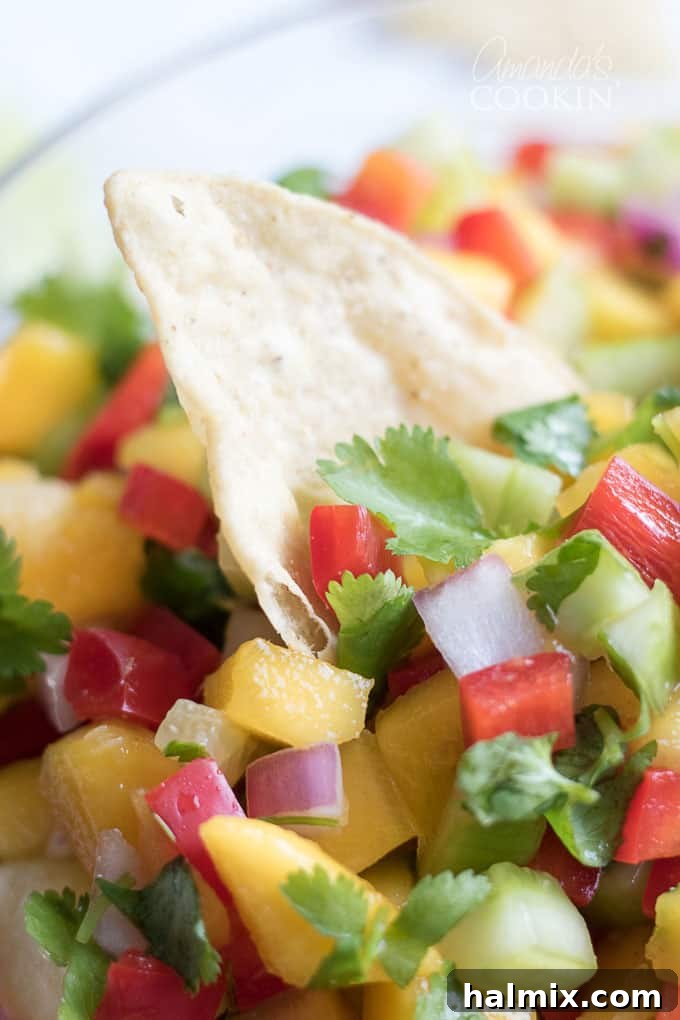
Beyond the Chip: Creative Ways to Enjoy Mango Salsa
While dipping crisp tortilla chips into this delightful mango salsa is a classic pleasure, its versatility extends far beyond that. Here are some innovative ways to incorporate this vibrant condiment into your meals:
- Seafood Sensation: It’s an unparalleled accompaniment for grilled fish (like salmon or mahi-mahi), pan-seared scallops, or shrimp tacos. The bright, fresh flavors cut through the richness of the seafood beautifully.
- Poultry Perfection: Spoon it over grilled chicken breasts, baked turkey burgers, or even shredded chicken for a fresh and zesty meal.
- Pork Pairings: The sweetness of mango salsa is a natural complement to savory pork dishes, such as grilled pork chops or slow-cooked pulled pork sliders.
- Vegetarian Delight: Transform simple black bean burgers, quinoa bowls, or roasted sweet potatoes with a generous dollop of this salsa.
- Breakfast Boost: Unexpected but delicious, try adding a spoonful to scrambled eggs or a breakfast burrito for a refreshing twist.
- Salad Topping: Use it as a vibrant and flavorful topping for green salads or grain bowls, adding texture and a burst of tropical goodness.
This mango salsa is truly addictive. I recall my friend Cathy texting me on New Year’s Day, desperate for the recipe. She insisted I send it over and proceeded to make it four times within the next couple of months! She couldn’t get enough, declaring it their new favorite snack. I wholeheartedly hope you get a chance to try it and experience its magic yourself.
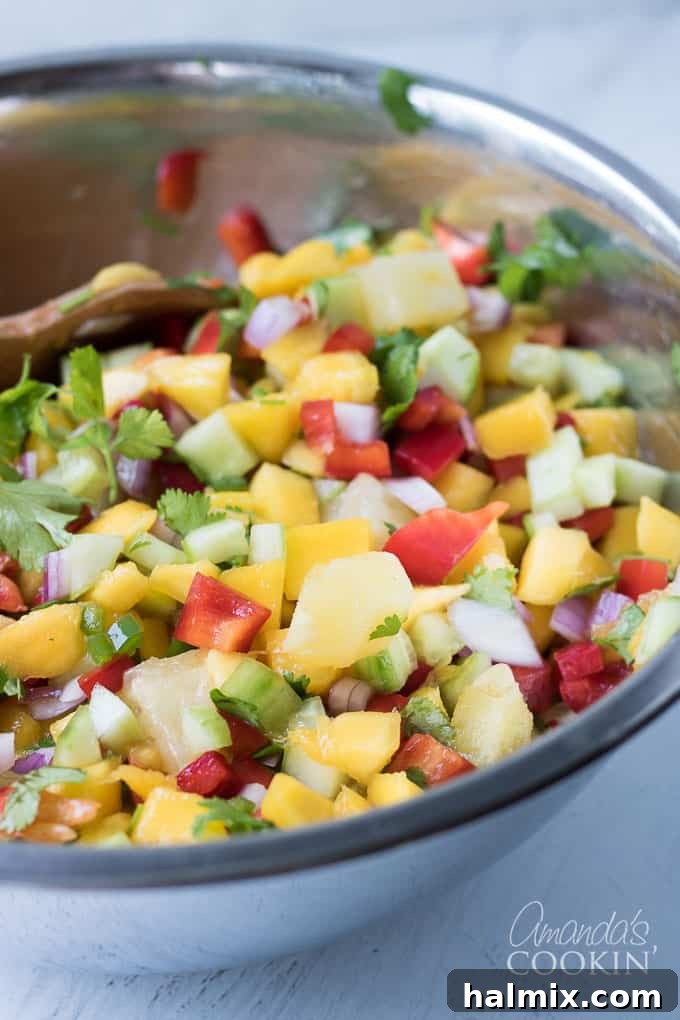
Tips for Making Ahead and Storing
This mango salsa tastes best when the flavors have had a little time to meld. Making it about 30 minutes to an hour in advance and chilling it allows the lime juice to work its magic and the ingredients to truly get acquainted. Store any leftovers in an airtight container in the refrigerator for up to 2-3 days. While it’s still delicious on the second day, the fruits will start to soften slightly, so it’s always best enjoyed fresh.
If you’re a devoted salsa enthusiast, I encourage you to explore other delightful variations on the blog, such as this wonderfully sweet pineapple salsa or the festive and unique cranberry salsa. And for those who love a hearty snack, don’t miss out on these incredibly yummy loaded nachos, perfect for pairing with any of these fresh salsas. I wish you a fantastic week full of delicious food!
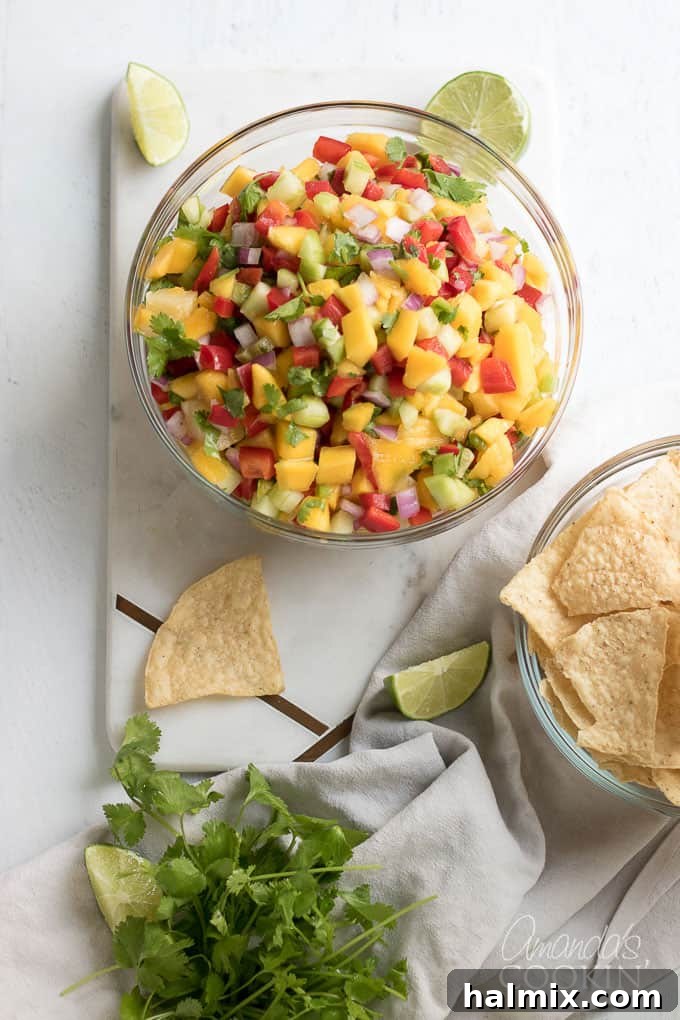
Looking for even more appetizer inspiration for your guests? Consider whipping up a classic Bruschetta. Who can resist a delightful salsa-like concoction atop warm, toasted bread? It’s truly addicting. Another fantastic option for any barbecue or get-together is a vibrant Cowboy Caviar. Your guests will undoubtedly thank you for these flavorful additions!
Explore More Zesty Salsa Recipes
If you’re passionate about fresh, homemade salsas, be sure to check out these other fantastic recipes:
- Salsa Fresca (Pico de Gallo)
- Salsa Verde (Green Salsa)
- Tomatillo Onion Avocado Salsa
- Corn Salsa
- Restaurant Style Salsa (from Canned Tomatoes)
- Halloween Eyeball Salsa (Fun for Parties!)
Mango Salsa
IMPORTANT – There are often Frequently Asked Questions within the blog post that you may find helpful. Simply scroll back up to read them!
Print It
Leave a Review
Ingredients
- 3 medium ripe mangos diced – about 3 cups
- 1 cup chopped pineapple
- 1 large cucumber peeled and diced
- 1 large red bell pepper chopped
- ½ cup chopped red onion
- ¼ cup packed fresh cilantro leaves chopped
- 1 medium jalapeño seeded and minced
- 1 large lime juiced (about ¼ cup lime juice)
- ½ teaspoon cumin
- 1 teaspoon kosher salt
Instructions
-
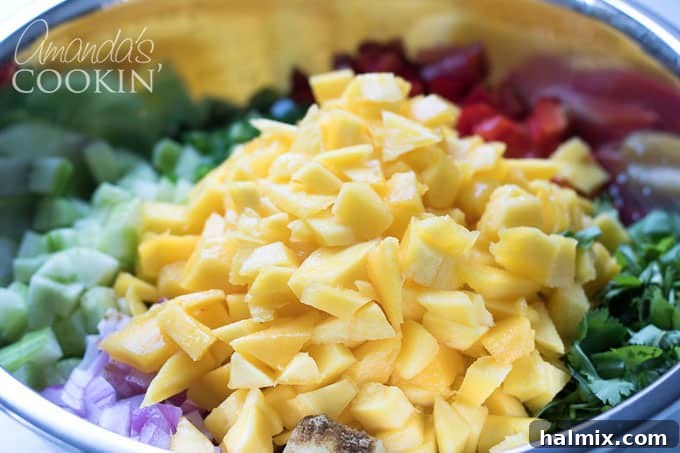
Simply combine all the diced and chopped fresh ingredients in a large bowl. Gently stir and turn them to ensure everything is thoroughly combined and coated with the lime juice and seasonings.
-
For best flavor, allow the salsa to chill in the refrigerator for at least 30 minutes before serving. Serve chilled with your favorite tortilla chips or as a vibrant topping for grilled dishes.
Nutrition
The recipes on this blog are tested with a conventional gas oven and gas stovetop. It’s important to note that some ovens, especially as they age, can cook and bake inconsistently. Using an inexpensive oven thermometer can assure you that your oven is truly heating to the proper temperature. If you use a toaster oven or countertop oven, please keep in mind that they may not distribute heat the same as a conventional full sized oven and you may need to adjust your cooking/baking times. In the case of recipes made with a pressure cooker, air fryer, slow cooker, or other appliance, a link to the appliances we use is listed within each respective recipe. For baking recipes where measurements are given by weight, please note that results may not be the same if cups are used instead, and we can’t guarantee success with that method.