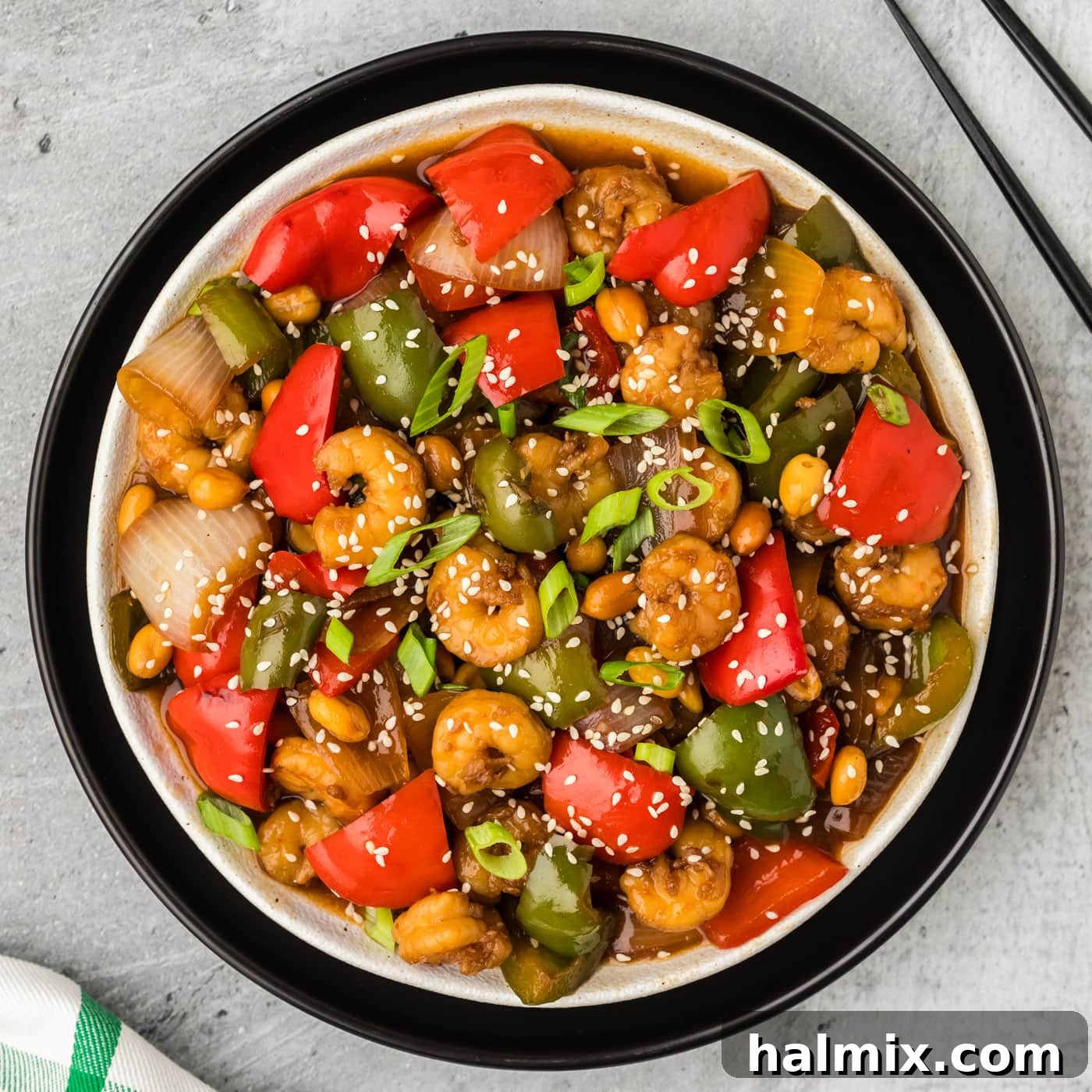
Welcome to a culinary journey where convenience meets exquisite flavor! This Kung Pao Shrimp recipe is designed to bring the vibrant tastes of a beloved Chinese takeout classic right into your home kitchen. Imagine succulent, tender shrimp, crunchy peanuts, and perfectly stir-fried vegetables all coated in a harmonious sweet and savory sauce. It’s a dish that promises to delight your palate and become a regular in your weeknight meal rotation. Serve it over a bed of fluffy white rice, and you have a quick, easy, and incredibly satisfying dinner that’s bursting with irresistible flavor!
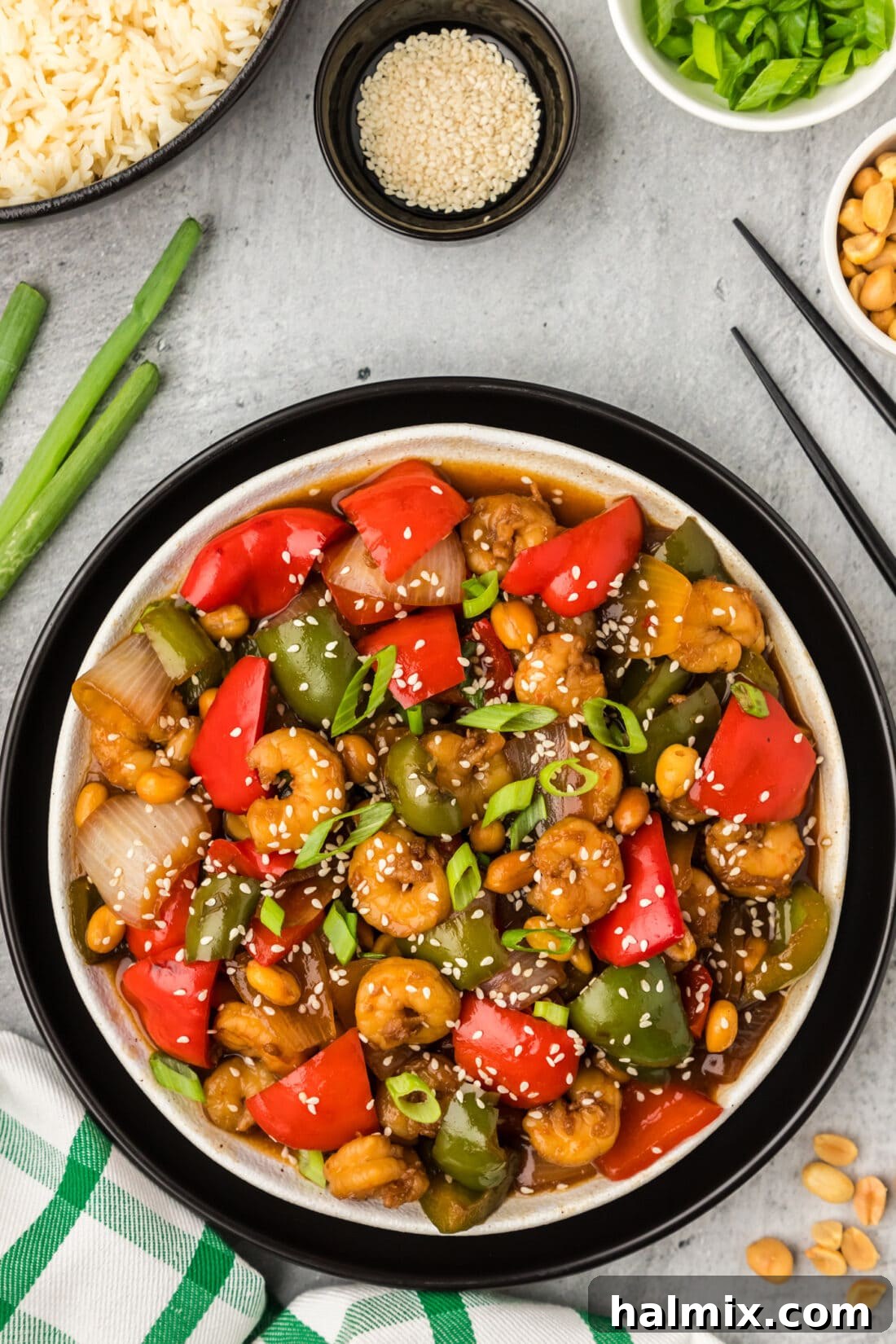
Why This Kung Pao Shrimp Recipe is a Must-Try
Kung Pao Shrimp, much like its popular counterparts Kung Pao Chicken or Beef, is a quintessential stir-fried dish renowned for its dynamic flavor profile. At its core, it features vibrant bell peppers, crisp onions, aromatic garlic, and the delightful crunch of peanuts, all enveloped in a rich, hoisin-soy based sauce. This blend incorporates a profound depth of flavor that is truly addictive.
Our rendition of Kung Pao Shrimp strikes a perfect balance: it’s subtly sweet, predominantly savory, and incredibly versatile. If you’re a fan of heat, this dish can effortlessly be transformed into a spicy sensation with the simple addition of chili peppers. But perhaps the most compelling reason to love this recipe? It goes from prep to plate in less than 30 minutes, making it an ideal choice for busy weeknights when you crave something extraordinary without spending hours in the kitchen. It’s not just a meal; it’s an experience that brings authentic Asian-inspired cuisine to your dining table with remarkable speed and ease. Let’s dive in and create some magic!
Essential Ingredients for Perfect Kung Pao Shrimp
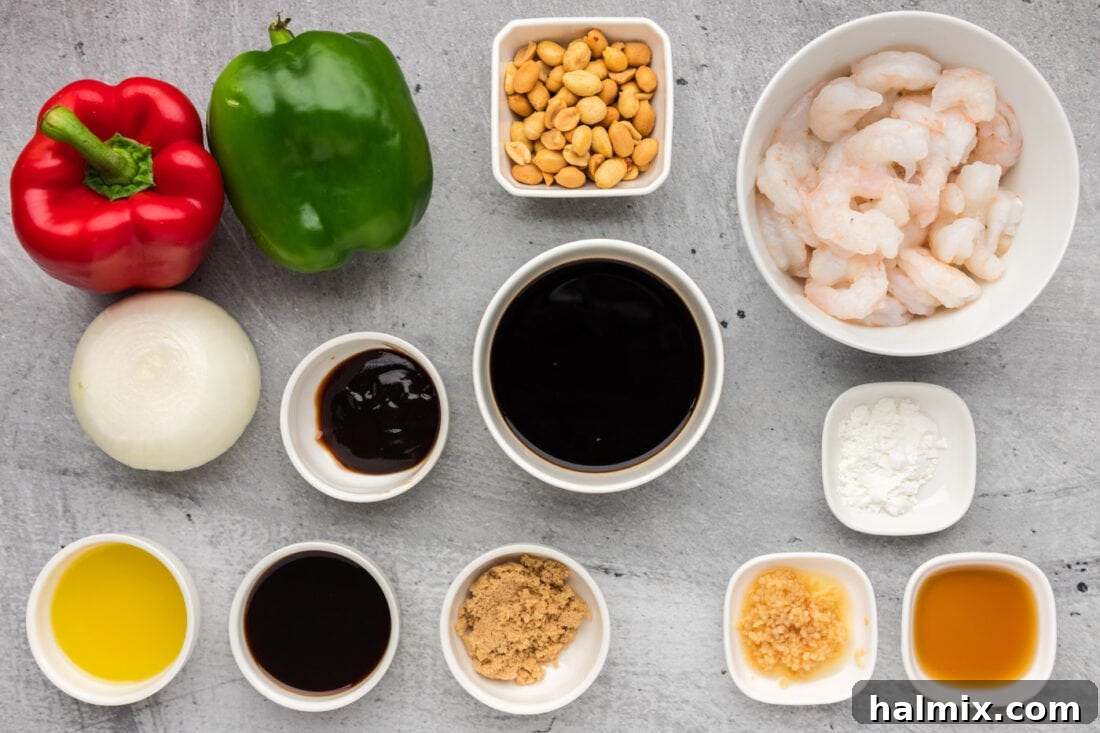
Crafting this delightful Kung Pao Shrimp begins with gathering a few key ingredients. You’ll find a detailed list with all measurements and comprehensive instructions in the printable recipe card located at the conclusion of this article. For now, let’s explore the components that make this dish so special.
Ingredient Spotlight & Expert Substitution Tips
Understanding each ingredient’s role and potential substitutions can elevate your cooking experience and adapt this recipe to your preferences or pantry availability. Here’s a closer look:
SHRIMP – For the best results, opt for raw, large shrimp. Ensure they are peeled, deveined, and have had their tails removed for effortless eating. While fresh shrimp are always fantastic, frozen shrimp work perfectly well too. Just remember a crucial step: allow them to thaw completely and then pat them thoroughly dry before you begin cooking. Excess moisture can prevent the shrimp from searing properly, impacting texture and flavor. Avoid using pre-cooked shrimp, as they tend to become rubbery when reheated and stir-fried, losing that desirable tender bite.
THE SIGNATURE SAUCE – This incredibly simple yet powerfully flavorful Kung Pao sauce is the heart of the dish. It’s a masterful blend of several Asian pantry staples:
- Soy Sauce: Provides the fundamental umami and salty base.
- Hoisin Sauce: Adds a beautiful sweetness, depth, and a touch of tang.
- Oyster Sauce: Contributes a rich, savory, and slightly sweet seafood essence, enhancing the overall complexity.
- Sesame Oil: Infuses the sauce with its distinct nutty aroma, a hallmark of many Asian dishes.
- Brown Sugar: Balances the savory elements with a caramelized sweetness.
- Cornstarch Slurry: This vital component is a mixture of cornstarch and water. It’s added at the end to thicken the sauce to a glossy, clingy consistency that perfectly coats every piece of shrimp and vegetable.
You can easily adjust the sweetness or saltiness of the sauce to your liking. For a lighter sodium option, use low-sodium soy sauce.
PEANUTS – The peanuts aren’t just an afterthought; they’re a key textural component of traditional Kung Pao dishes. They add a wonderful nutty flavor and a satisfying crunch that contrasts beautifully with the tender shrimp and soft vegetables. While you can omit them if you have a peanut allergy or simply prefer not to include them, we highly recommend them for the authentic experience. If you’re looking for alternatives, roasted cashews or almonds can provide a similar texture and flavor.
SPICY ADDITIONS – If you crave a kick, this dish is your canvas for heat! Feel free to customize the spice level with various additions:
- Red Jalapeños or Fresno Chilies: Freshly sliced for a vibrant, immediate heat.
- Chili Flakes (Crushed Red Pepper): Easy to add and distribute throughout the dish for consistent heat.
- Dried Chili Peppers (e.g., Sichuan Chilies): These offer a more nuanced, smoky heat and are often used whole or roughly chopped in authentic Kung Pao. For maximum flavor, you can toast them lightly in the wok before adding other ingredients.
- Sichuan Peppercorns: For an authentic “ma la” (numb-spicy) sensation, add a pinch of ground Sichuan peppercorns. Their unique citrusy and numbing quality will truly elevate the dish.
Start with a small amount and taste as you go to achieve your desired level of spice.
Mastering the Art of Kung Pao Shrimp: Step-by-Step Guide
These step-by-step photos and detailed instructions are here to help you visualize every stage of making this delicious recipe. For a convenient printable version, complete with precise measurements and instructions, simply Jump to Recipe at the bottom of this post.
Before you begin, a crucial tip for stir-frying is to have all your ingredients prepped and ready (mise en place). This means your vegetables chopped, shrimp cleaned, and sauce mixed, as the cooking process is very fast!
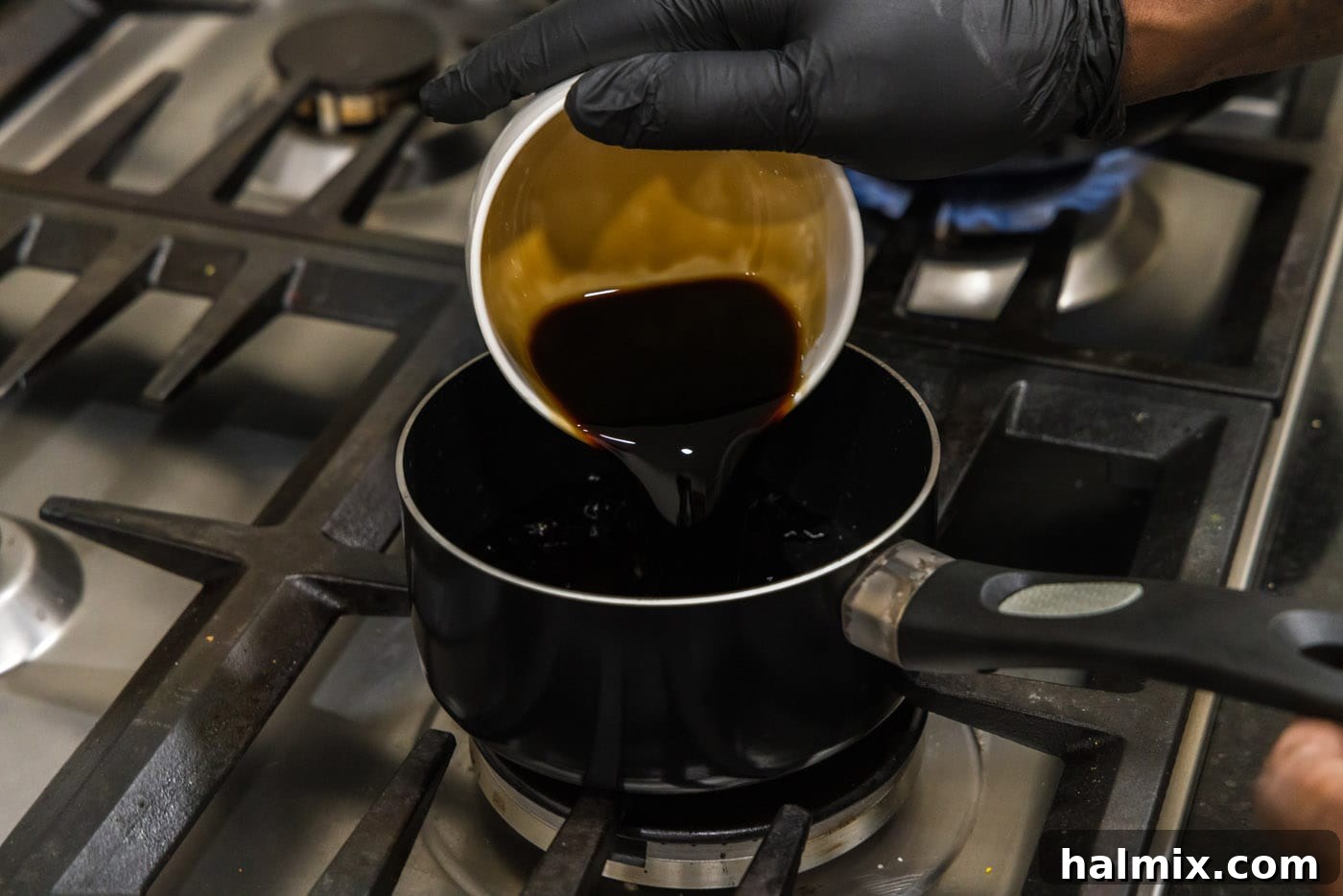
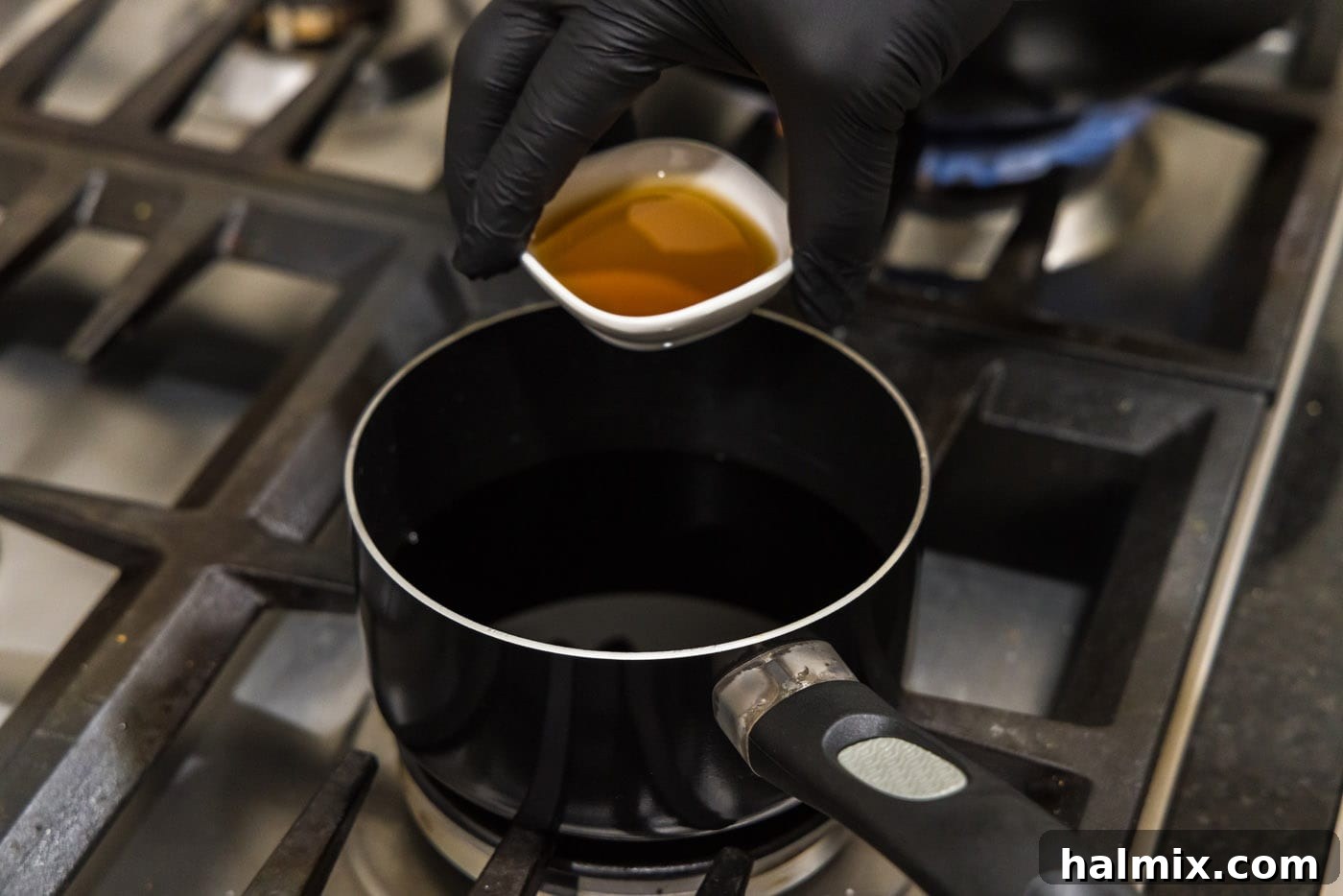
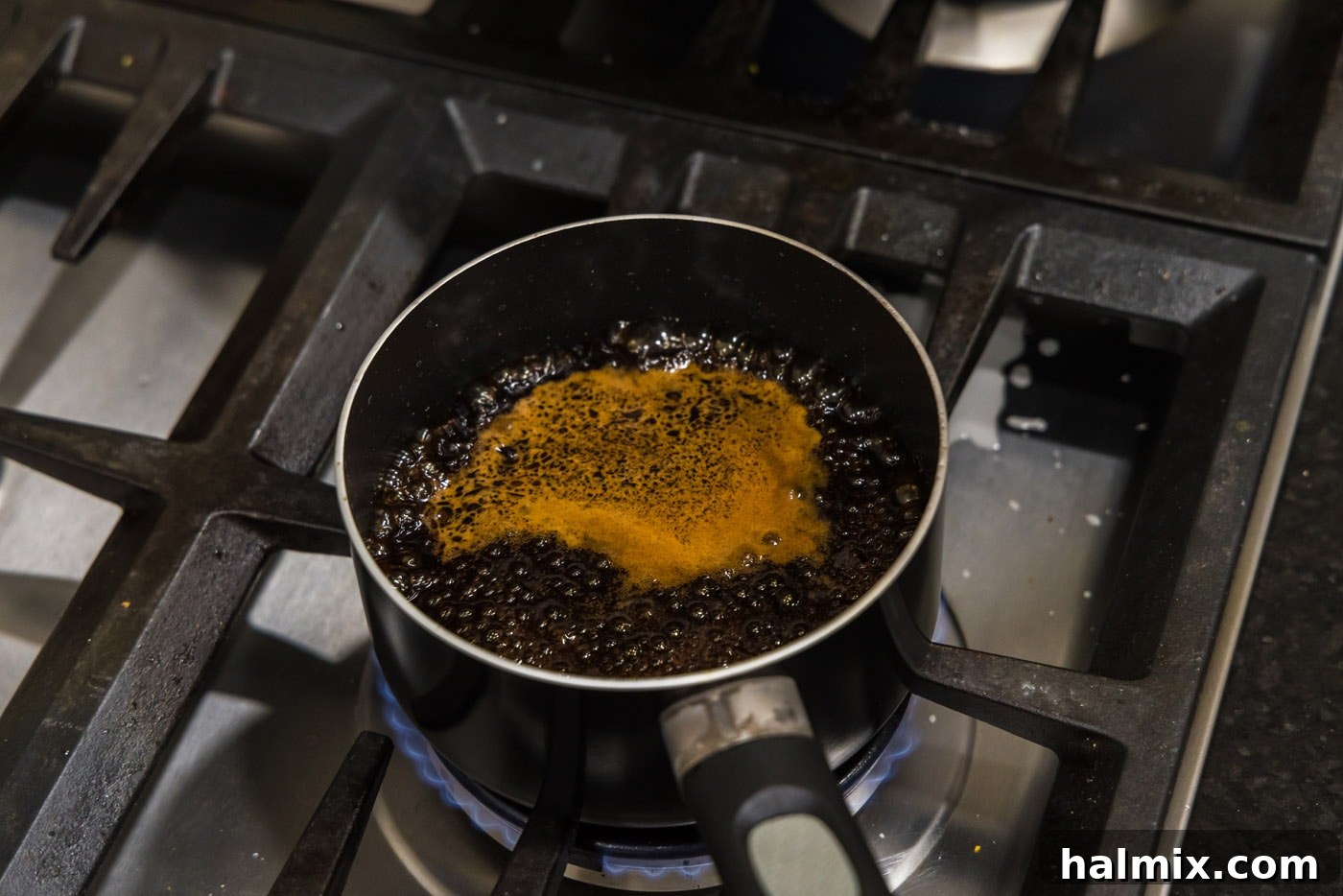
- In a small saucepan, combine the soy sauce, hoisin sauce, oyster sauce, sesame oil, and brown sugar. Bring this mixture to a gentle boil over medium heat, stirring occasionally to dissolve the sugar. Once boiling, reduce the heat to a low simmer. This allows the flavors to meld beautifully.

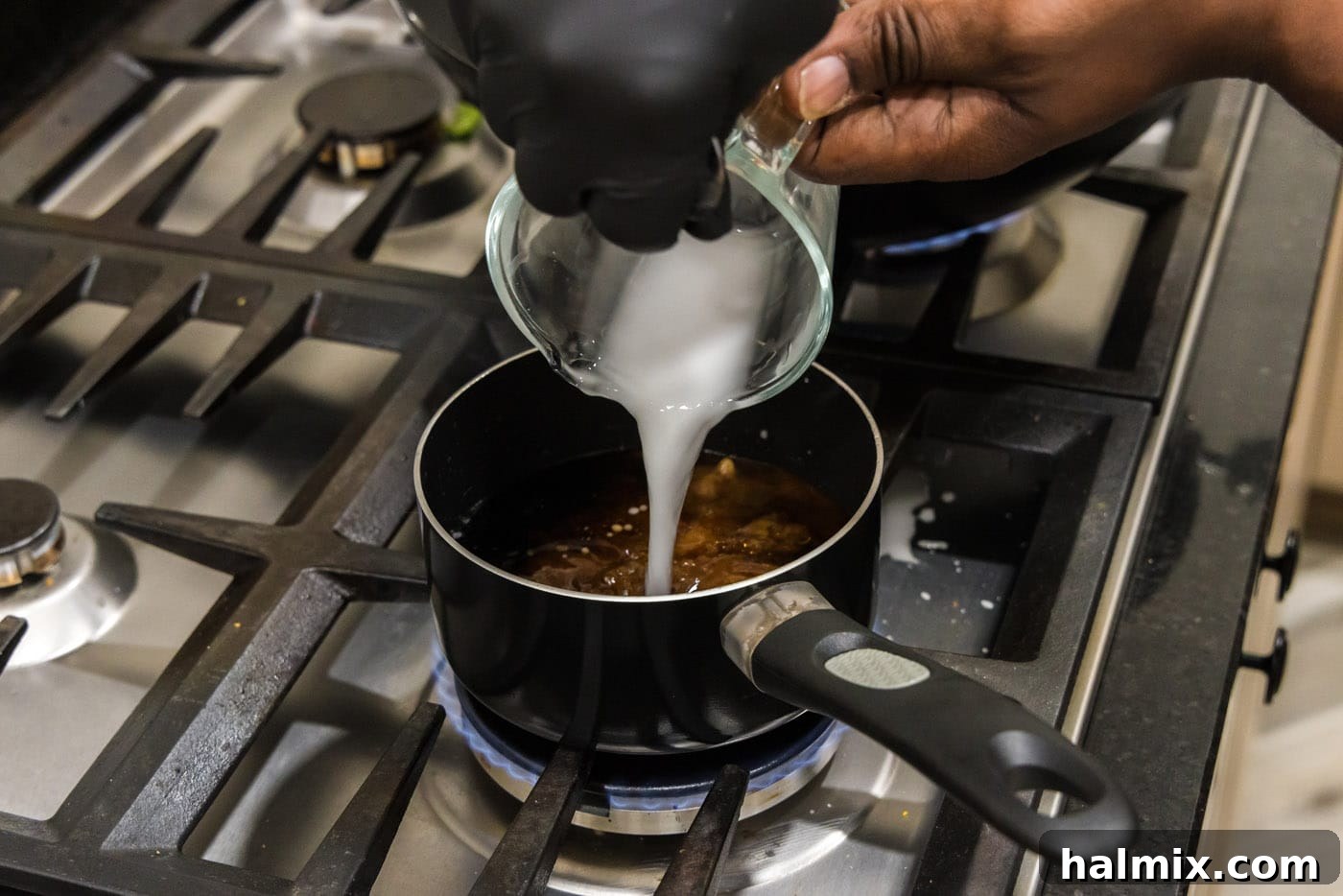
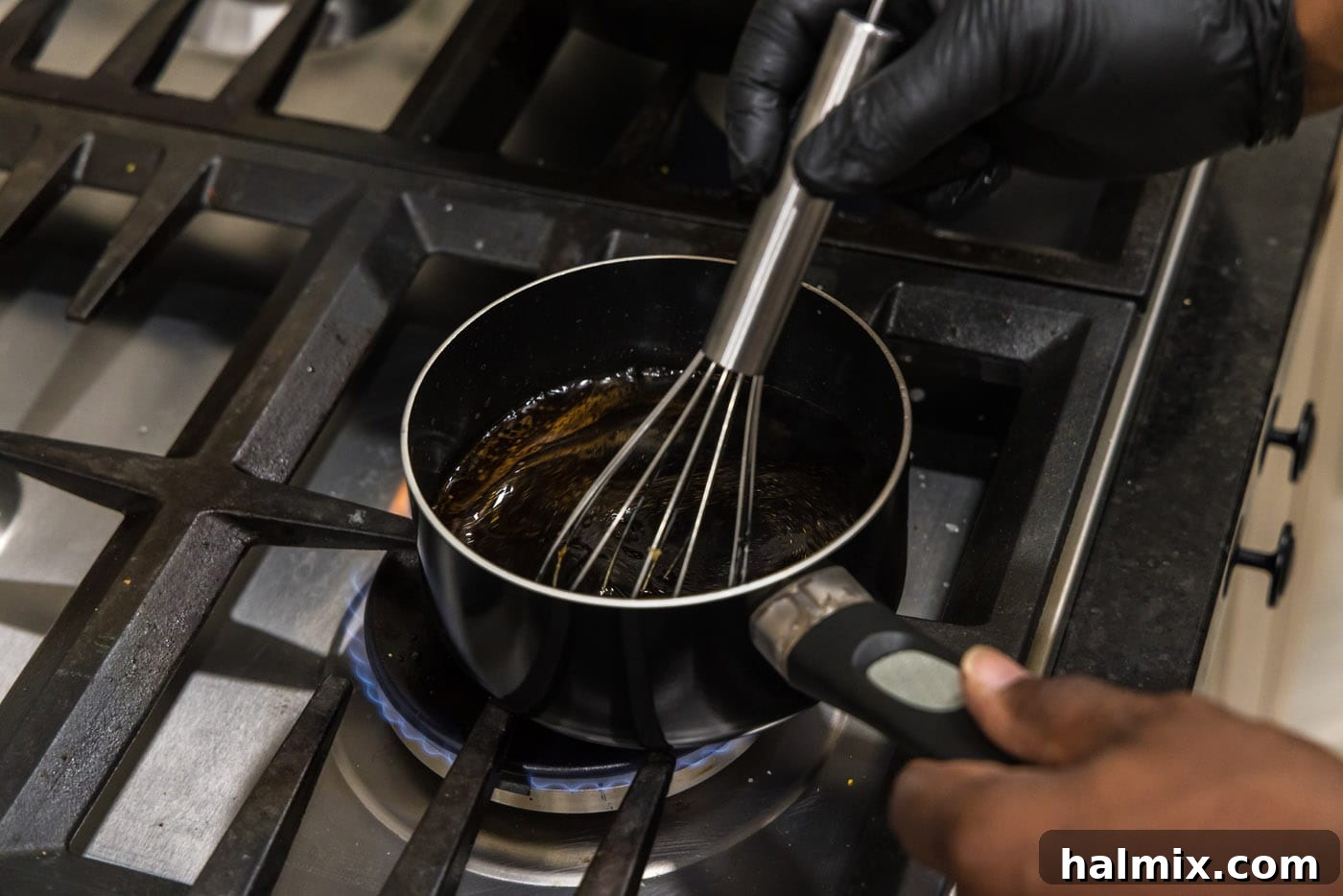
- In a separate small bowl, whisk together the cornstarch and water to create a smooth slurry. Gradually add this slurry to the simmering sauce in the saucepan, whisking continuously. Continue to simmer and stir until the sauce visibly thickens to a glossy consistency that will perfectly coat your ingredients. Remove from heat and set aside.
- Heat the olive oil in a large wok or a large, heavy-bottomed skillet over medium-high heat. Wait until the oil is shimmering hot, indicating it’s ready for stir-frying. A hot wok is key to achieving that authentic stir-fry char and quick cooking.
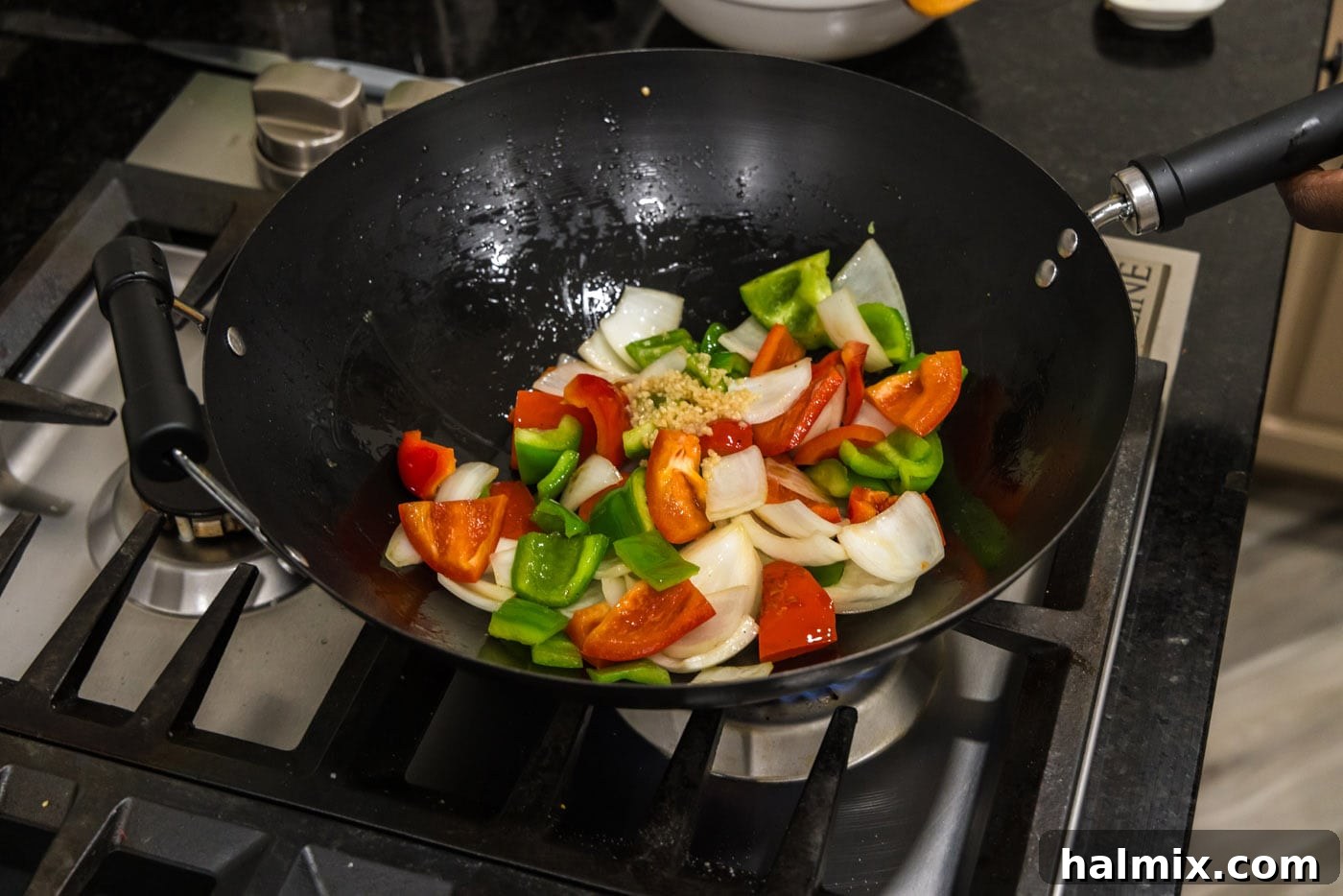
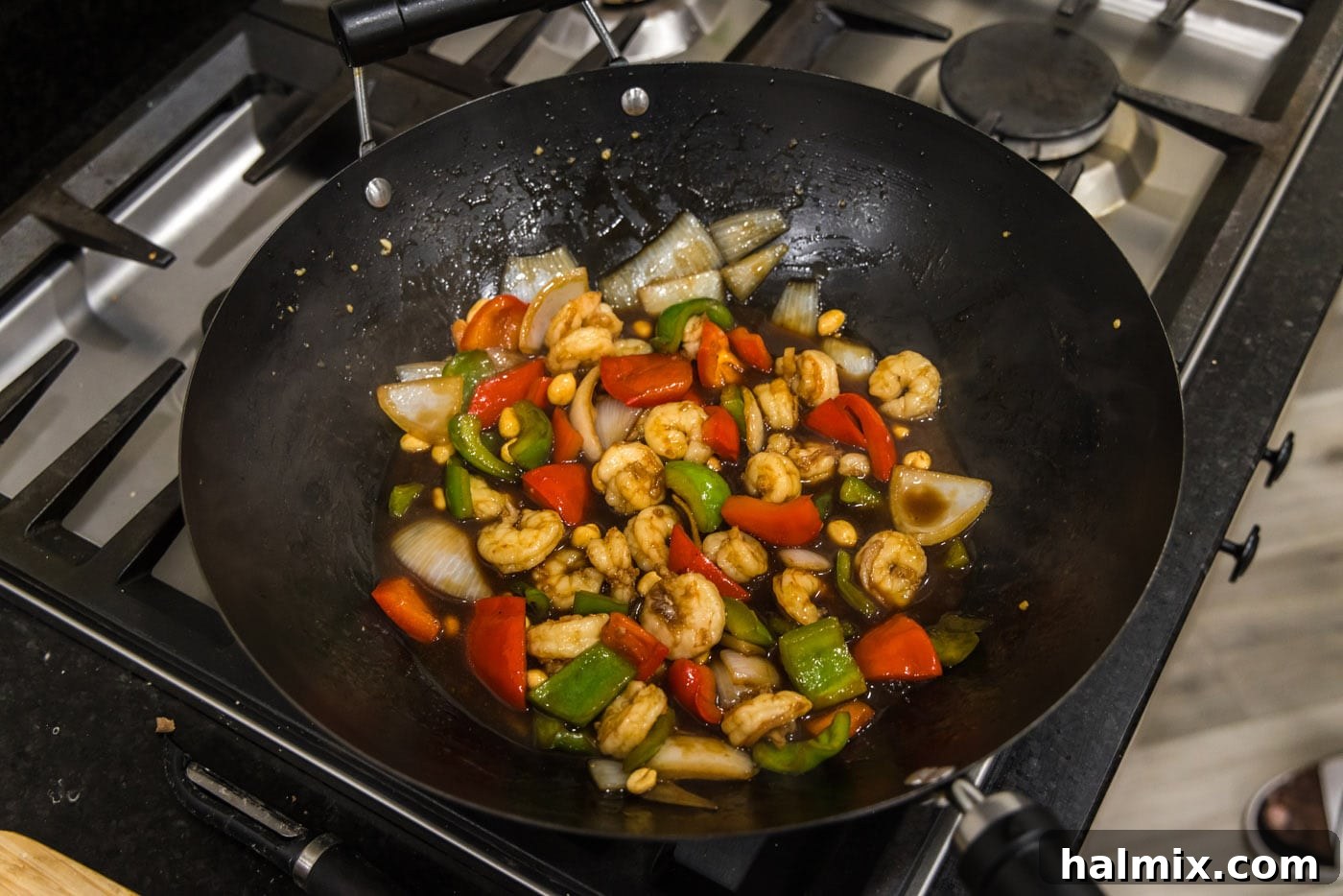
- Add the chopped green and red bell peppers and the onion to the hot oil. Stir fry vigorously for 3-4 minutes, allowing the vegetables to become slightly tender-crisp. Then, add the minced garlic and continue to cook for another 1-2 minutes until fragrant. Be careful not to burn the garlic.
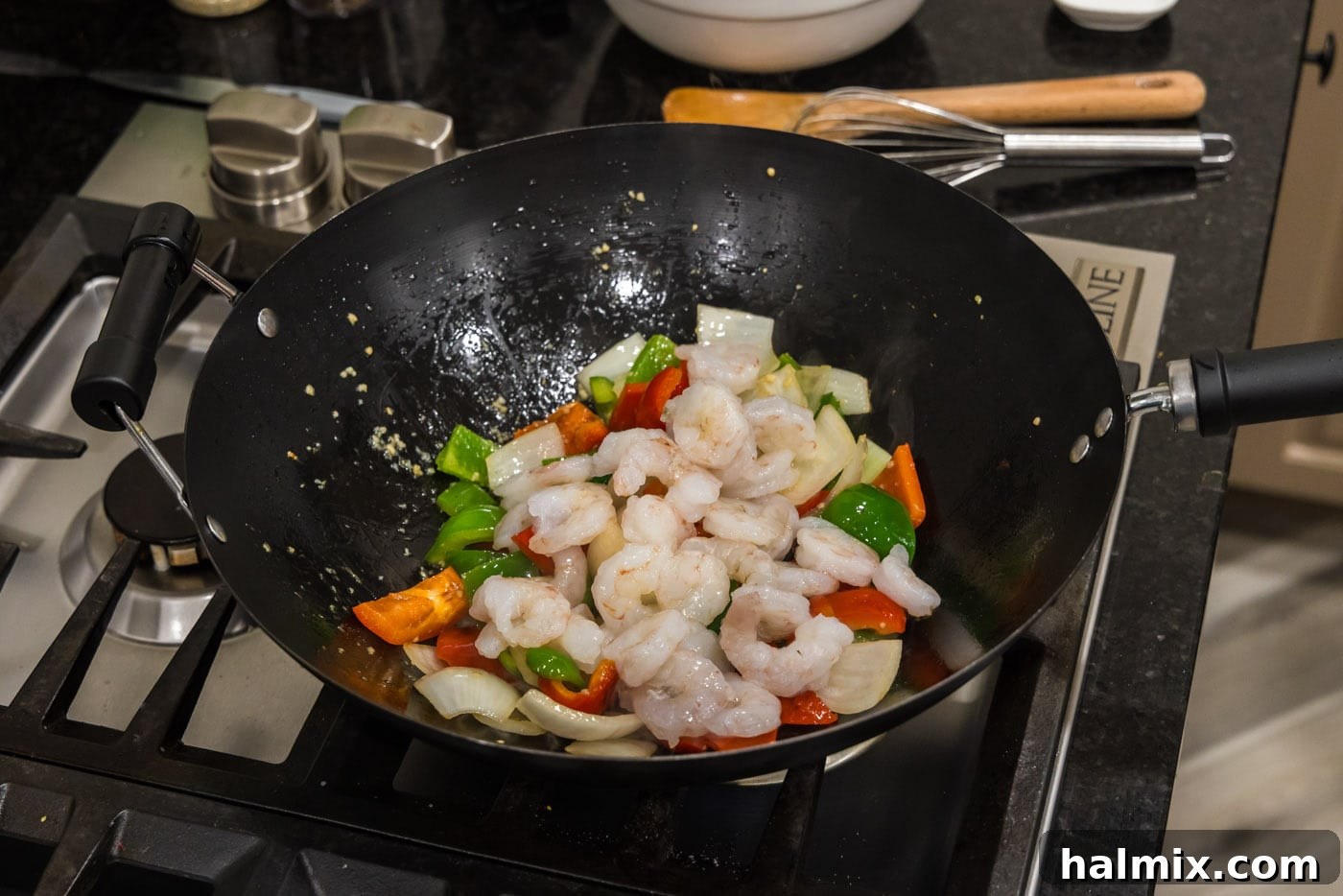
- Next, add the prepared shrimp to the wok with the vegetables. Stir fry for an additional 6-7 minutes, or until the shrimp turn opaque, pink, and curl into a C-shape. Be mindful not to overcook the shrimp, as they can quickly become rubbery.
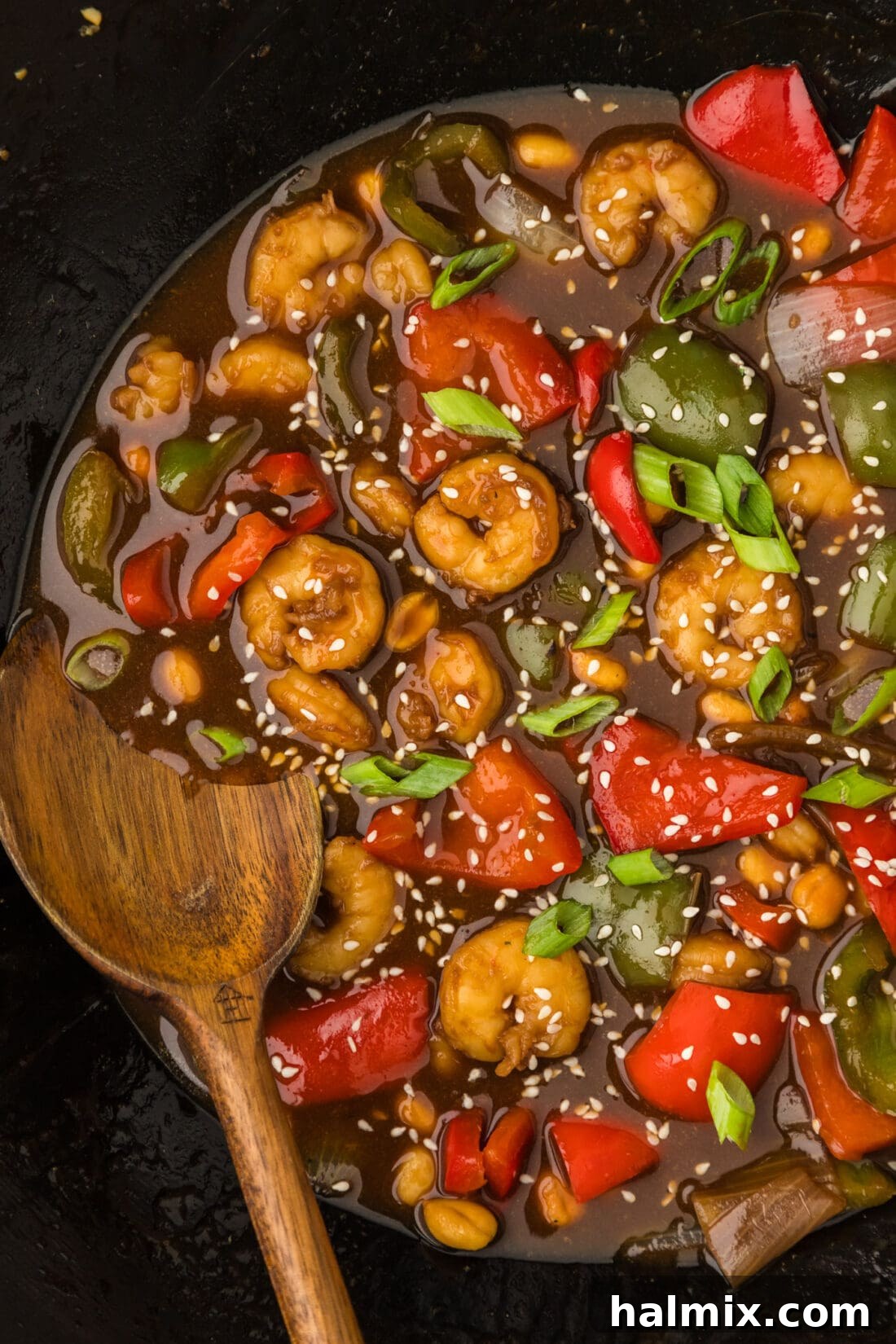
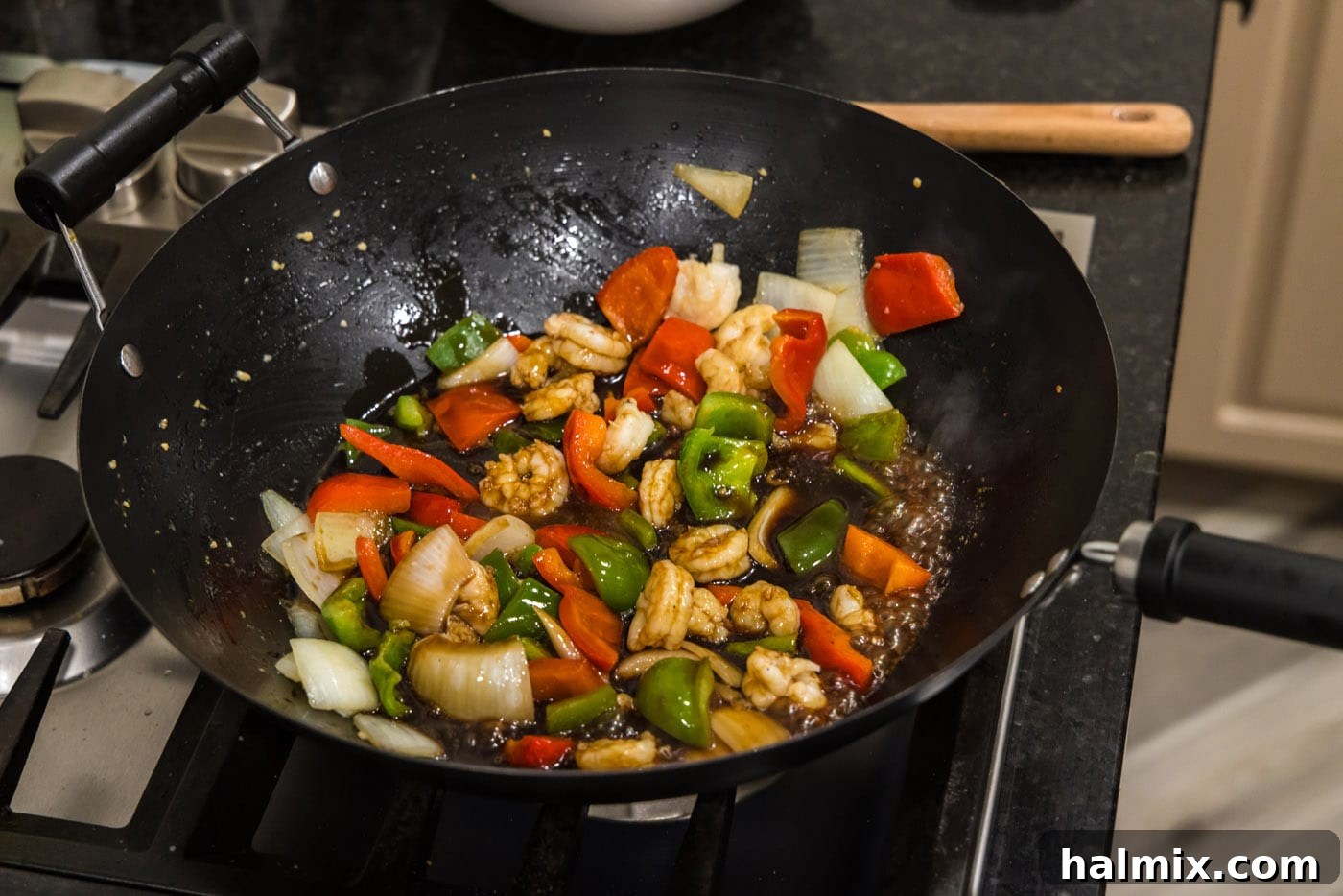
- Pour the thickened Kung Pao sauce into the wok. Toss everything together thoroughly, ensuring all the shrimp and vegetables are well-coated with the rich, glossy sauce. Heat through for about 1 minute until the sauce is bubbly and clings to the ingredients.
- Finally, stir in the peanuts. Give everything one last quick toss to coat them evenly. Remove the wok from the heat immediately to prevent overcooking the shrimp. Your delicious homemade Kung Pao Shrimp is now ready to be served!
Frequently Asked Questions & Pro Tips for Success
Here are some common questions and expert advice to help you master this Kung Pao Shrimp recipe and ensure a perfect outcome every time:
Store any leftover Kung Pao Shrimp in an airtight container in the refrigerator for up to 2 days. For best results when reheating, do so on the stovetop over medium-low heat, stirring gently, just until it is warmed through. To prevent the shrimp from overcooking and becoming tough, you might consider adding the shrimp back into the pan only during the last minute of reheating.
Absolutely! Frozen shrimp are a convenient option. The key is to ensure they are fully thawed and patted dry before you start cooking. To thaw shrimp quickly and safely, place them in a sealed plastic bag and submerge the bag in a bowl of cold water for approximately 25 minutes. It’s important to use cold water; never use hot or warm water, as this can start to cook the shrimp unevenly and affect its texture. We highly recommend against using precooked shrimp for this recipe, as it will likely result in a rubbery texture once stir-fried.
Shrimp cooks very quickly, making it easy to overcook if you’re not careful. Perfectly cooked shrimp will curl into a loose ‘C’ shape, turn opaque throughout, and display beautiful pink and red hues on the outside. If your shrimp curls tightly into an ‘O’ shape, or if it turns a grayish-white color and feels firm, it’s likely overcooked and will have a rubbery texture. Keep a close eye on them; they are often done faster than you expect!
Definitely! The beauty of homemade Kung Pao Shrimp is the ability to customize its heat. For a mild dish, omit all chili additions. For medium heat, add a pinch of chili flakes or one dried red chili. If you love it spicy, increase the amount of chili flakes, use several dried chilies, or incorporate fresh sliced jalapeños or Fresno chilies. For an authentic numbing sensation, a dash of ground Sichuan peppercorns can be added with the garlic.
While bell peppers and onions are classic, feel free to get creative with your vegetables. Snap peas, sliced carrots, water chestnuts, bamboo shoots, or even broccoli florets make excellent additions. Ensure all vegetables are cut into similar-sized pieces for even cooking during the stir-fry. Add harder vegetables like carrots earlier in the stir-frying process.
Elevate Your Meal: Serving Suggestions
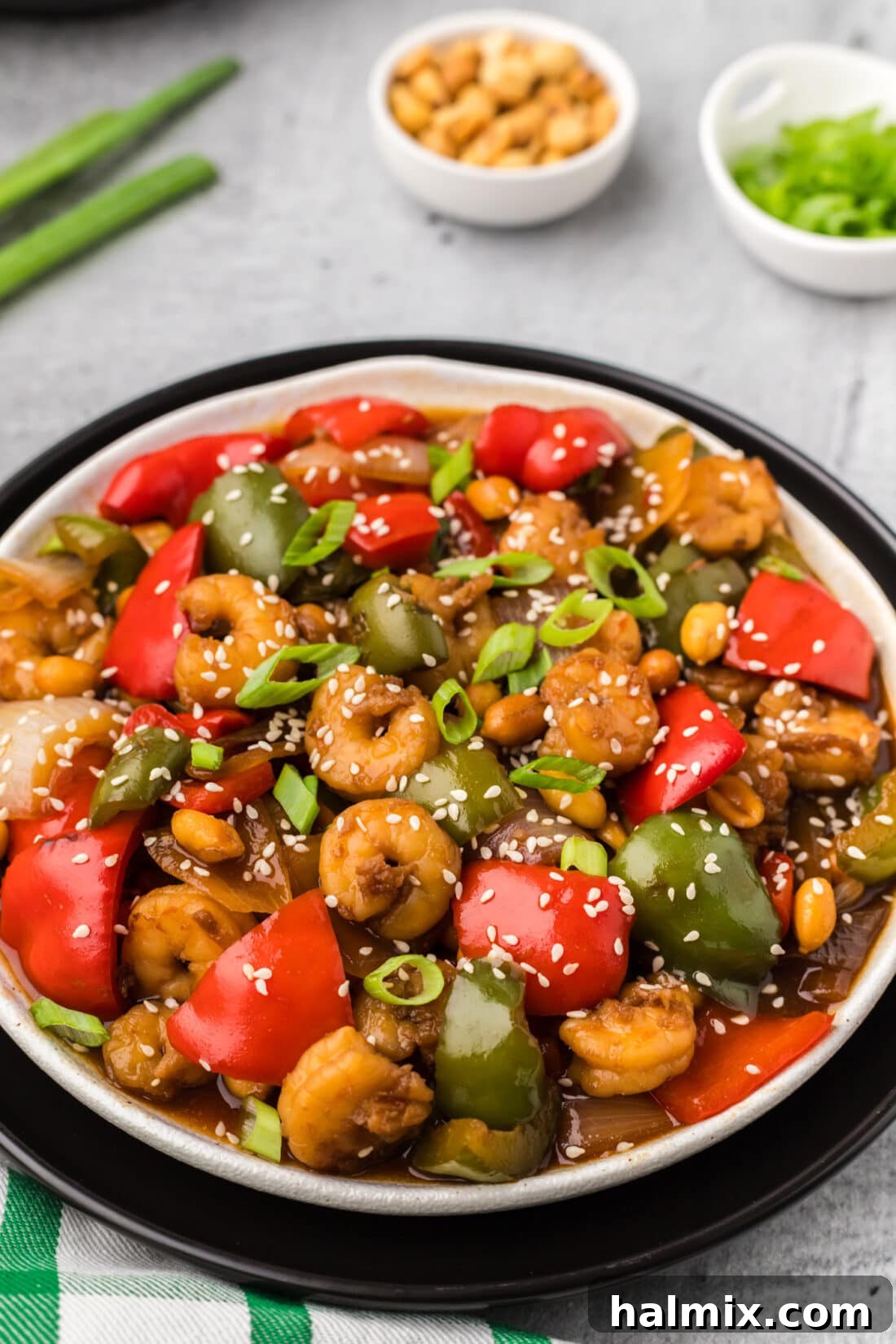
Kung Pao Shrimp is a dish that truly shines when served thoughtfully. It practically begs to be spooned generously over a mound of warm, fluffy white rice. The rice not only provides a comforting base but also acts as a perfect sponge, soaking up every drop of that luscious, sweet and savory sauce. This creates an incredibly satisfying bite with every mouthful.
To further enhance the presentation and add extra layers of flavor and texture, consider these optional garnishes:
- Sliced Green Onions (Scallions): A sprinkle of fresh green onions adds a vibrant color, a crisp texture, and a mild, zesty onion flavor that beautifully complements the richness of the dish.
- Toasted Sesame Seeds: A light dusting of toasted sesame seeds not only looks elegant but also contributes a subtle nutty aroma and a delicate crunch.
- Fresh Cilantro: For those who love it, a few fresh cilantro leaves can add a bright, herbaceous note.
For a more complete meal, you can also serve Kung Pao Shrimp alongside steamed or stir-fried Asian greens like bok choy or gai lan. Another excellent pairing is a simple cucumber salad, which offers a refreshing contrast to the savory main dish. Enjoy this vibrant culinary masterpiece!
Explore More Asian-Inspired Shrimp Dishes
If you’ve fallen in love with the flavors of our Kung Pao Shrimp, you’re in for a treat! The world of Asian-inspired shrimp recipes is incredibly diverse and delicious. Here are a few more fantastic recipes that are sure to satisfy your cravings for quick, flavorful seafood meals:
- Hunan Shrimp: For those who enjoy bold, spicy flavors with a fiery kick, Hunan Shrimp is an excellent choice.
- Honey Walnut Shrimp: A delightful balance of crispy shrimp coated in a creamy, sweet sauce, often paired with candied walnuts. A true indulgent favorite!
- Sweet and Sour Shrimp: A timeless classic that offers a perfect harmony of tangy and sweet flavors, often accompanied by colorful vegetables.
- Salt and Pepper Shrimp: Simple yet incredibly flavorful, this dish highlights the natural taste of shrimp with a savory, aromatic seasoning.
- Shrimp and Broccoli: A healthy and hearty stir-fry that combines tender shrimp with crisp broccoli in a savory sauce.
Each of these recipes offers a unique take on shrimp, showcasing different regional influences and flavor profiles. We encourage you to try them all and discover your new favorites!
I love to bake and cook and share my kitchen experience with all of you! Remembering to come back each day can be tough, that’s why I offer a convenient newsletter every time a new recipe posts. Simply subscribe and start receiving your free daily recipes!
Kung Pao Shrimp
IMPORTANT – Don’t forget to check the Frequently Asked Questions and Expert Tips section within the main blog post above for additional helpful information and troubleshooting advice!
Print It
Pin It
Rate It
Save ItSaved!
Ingredients
- 2 Tablespoons olive oil
- 1 medium green bell pepper chopped into chunks
- 1 medium red bell pepper chopped into chunks
- 1 medium onion chopped into chunks
- 1 Tablespoon minced garlic
- 10 ounces raw large shrimp peeled, deveined, tails removed
- ¼ cup peanuts
For the Sauce
- ¼ cup soy sauce
- 1 Tablespoon hoisin sauce
- 2 Tablespoons oyster sauce
- 2 teaspoons sesame oil
- 1 Tablespoon brown sugar
- 1 teaspoon cornstarch
- ½ cup water
Equipment You’ll Need
-
Wok
-
Saucepan
Chef’s Notes & Prep Tips
- For Frozen Shrimp: Ensure shrimp are fully thawed before cooking. For quick thawing, place them in a sealed plastic bag and submerge in a bowl of cold water for about 25 minutes. Pat them completely dry afterward. Avoid using hot or warm water, and do not use pre-cooked shrimp for this recipe, as it will affect the texture.
- Peanut Preference: The peanuts add a fantastic texture and flavor, but you can omit them if desired or substitute with cashews for a different nutty crunch.
- Spice It Up: To make this dish spicier, feel free to add chili flakes, dried chili peppers, or a touch of Sichuan peppercorns during the stir-frying of the vegetables. Adjust to your heat preference!
Instructions
Prepare the Kung Pao Sauce
-
In a small saucepan, combine the soy sauce, hoisin sauce, oyster sauce, sesame oil, and brown sugar. Bring this mixture to a gentle boil, then reduce the heat to a low simmer.
-
In a separate small bowl, whisk together the cornstarch and water to create a smooth slurry. Add this slurry gradually to the simmering sauce, whisking constantly until the sauce thickens to a glossy consistency. Remove from heat and set aside.
Stir-Fry Vegetables and Shrimp
-
Heat the olive oil in a large wok or heavy-bottomed skillet over medium-high heat until it begins to shimmer.
-
Add the chopped green bell pepper, red bell pepper, and onion to the hot oil. Stir fry for 3-4 minutes until the vegetables are tender-crisp. Then, add the minced garlic and cook for another 1-2 minutes until fragrant.
-
Add the raw shrimp to the wok. Stir fry for an additional 6-7 minutes, or until the shrimp turn opaque, pink, and curl into a C-shape. Be careful not to overcook them.
-
Pour the prepared thickened Kung Pao sauce into the wok with the shrimp and vegetables. Toss everything together vigorously to ensure all ingredients are evenly coated and heated through, about 1 minute.
-
Stir in the peanuts and give a final toss to coat. Remove the wok from the heat immediately. Serve hot over rice and enjoy!
Additional Tips & FAQs for Success
- Shrimp Doneness: Keep a close eye on the shrimp during cooking. They curl and turn opaque with pink/red hues when done. Overcooked shrimp will be whiteish-grey and rubbery.
- Leftovers: Store in an airtight container in the refrigerator for up to 2 days. Reheat gently on the stovetop over medium-low heat. To avoid overcooking the shrimp during reheating, add them back in during the final minute.
- Wok Hei: For that authentic stir-fry flavor (often called “wok hei”), ensure your wok is smoking hot before adding oil and ingredients. Cook in batches if necessary to avoid overcrowding the pan, which can steam rather than stir-fry the ingredients.
- Vegetable Prep: Cut all your vegetables into roughly uniform sizes. This ensures they cook evenly and are tender-crisp at the same time.
Nutrition Information
The recipes on this blog are tested with a conventional gas oven and gas stovetop. It’s important to note that some ovens, especially as they age, can cook and bake inconsistently. Using an inexpensive oven thermometer can assure you that your oven is truly heating to the proper temperature. If you use a toaster oven or countertop oven, please keep in mind that they may not distribute heat the same as a conventional full sized oven and you may need to adjust your cooking/baking times. In the case of recipes made with a pressure cooker, air fryer, slow cooker, or other appliance, a link to the appliances we use is listed within each respective recipe. For baking recipes where measurements are given by weight, please note that results may not be the same if cups are used instead, and we can’t guarantee success with that method.