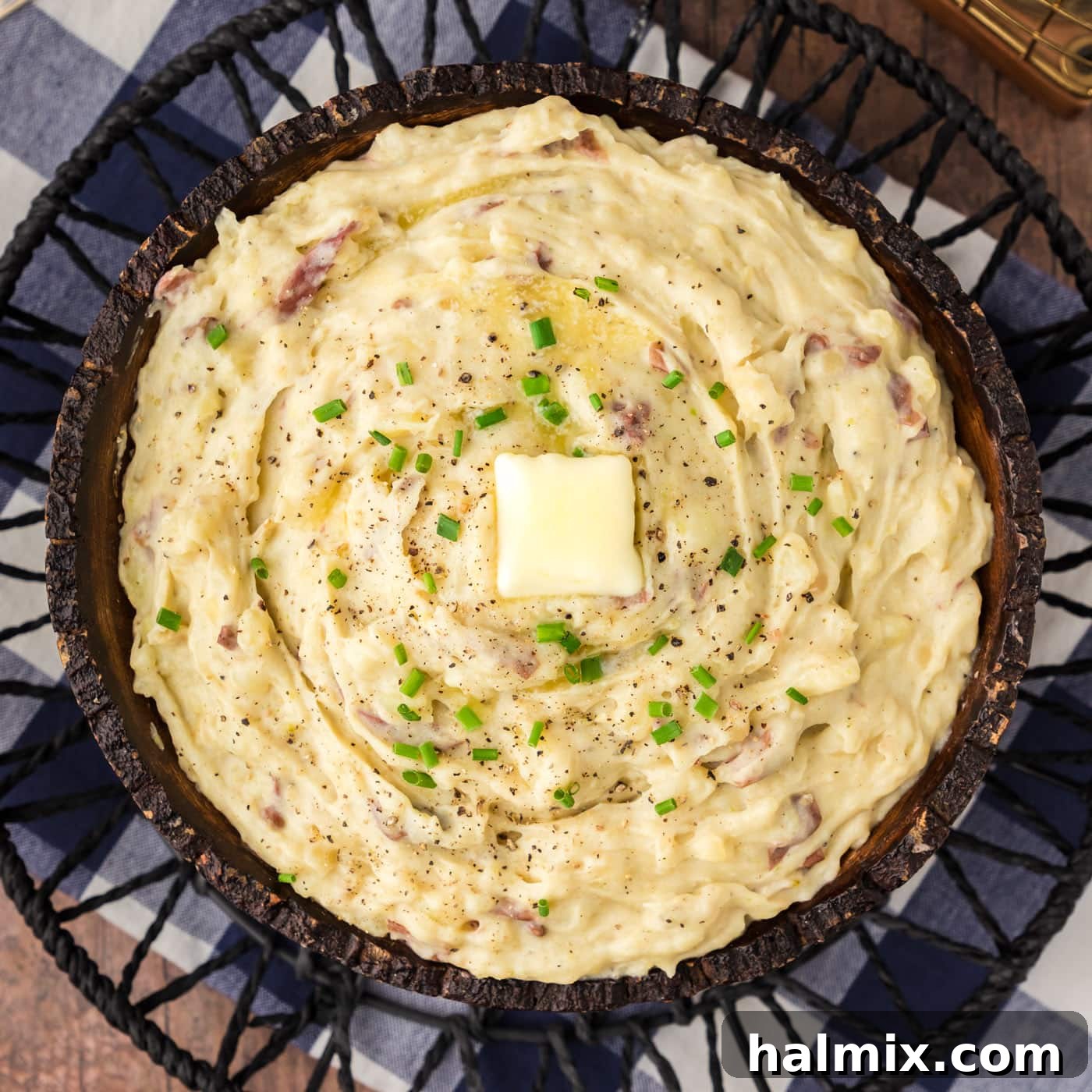
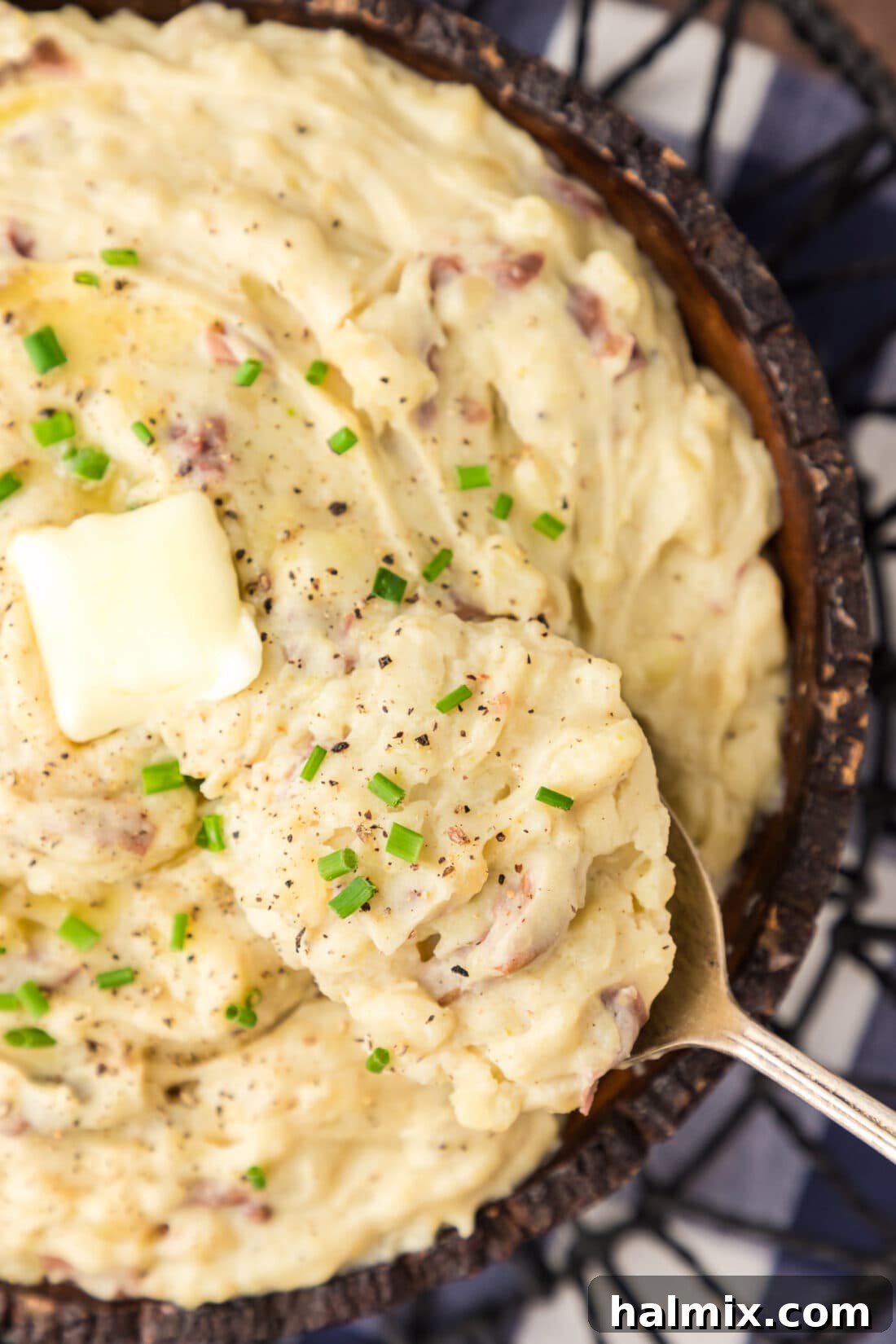
Transform your dinner table with a classic that never fails to impress: creamy roasted garlic mashed potatoes. This isn’t just a side dish; it’s a culinary experience that elevates any meal, from a casual weeknight dinner to a grand holiday feast. Our recipe focuses on achieving the perfect balance of fluffy texture and rich, savory flavor, ensuring every bite is utterly divine. We pack these easy-to-make potatoes with the deep, mellow sweetness of slow-roasted garlic, the tangy richness of sour cream, the luxurious silkiness of heavy cream, and the undeniable indulgence of real butter, creating an unparalleled side dish that will have everyone asking for seconds.
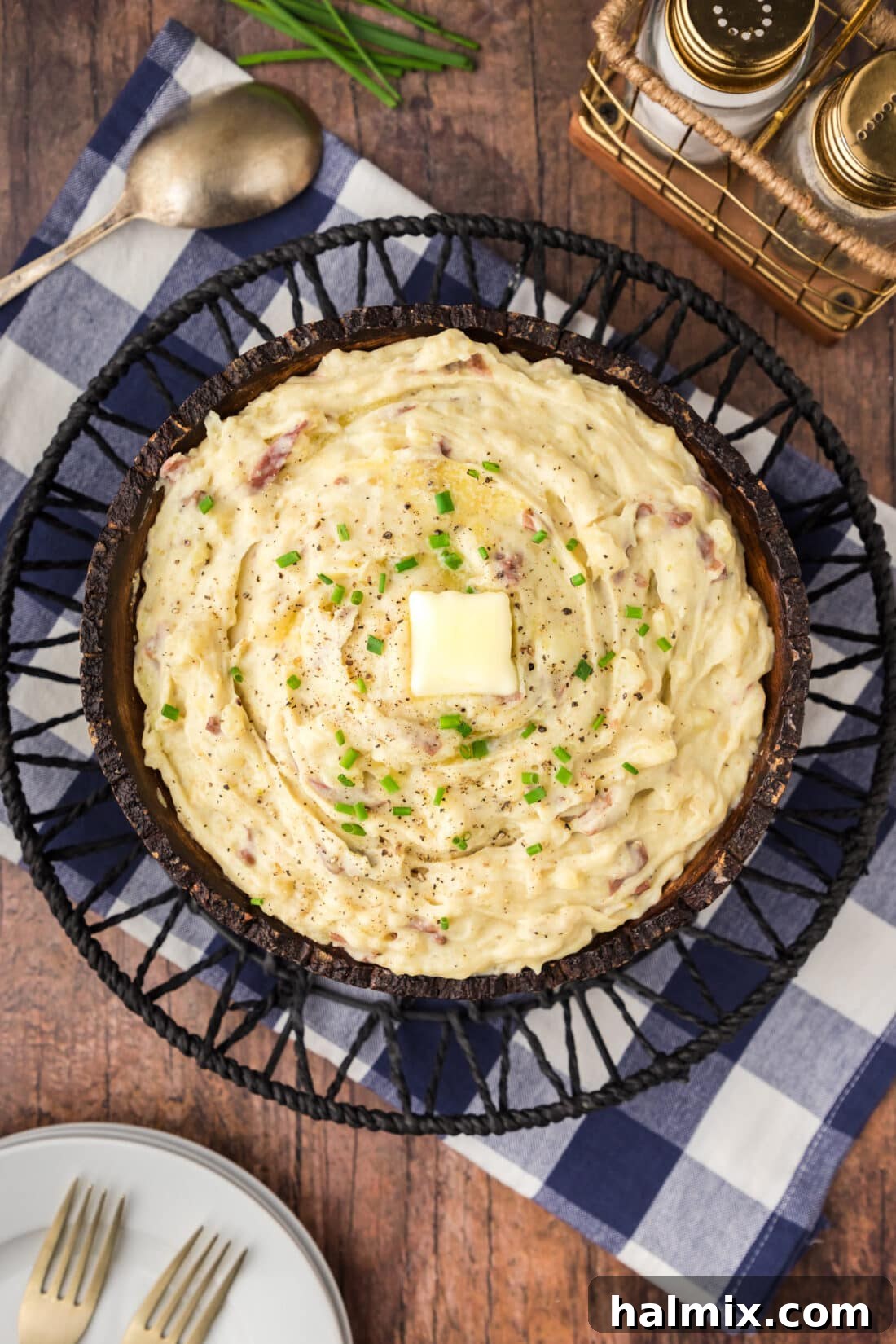
Why This Roasted Garlic Mashed Potato Recipe Stands Out
There’s a reason why a heaping serving of classic mashed potatoes remains a beloved comfort food across generations. Our take on this timeless dish isn’t just good; it’s exceptional. The secret lies in a few key elements that ensure a consistently fluffy texture, a perfectly buttery finish, and an unforgettable depth of garlic flavor.
Unlike recipes that rely on raw or sautéed garlic, which can sometimes be overpowering, we harness the magic of **roasted garlic**. Roasting transforms raw garlic into a sweet, caramelized, and incredibly mellow paste. This process removes the harsh bite, leaving behind a rich, nutty essence that infuses every spoonful of potatoes with a comforting warmth, without being abrasive. It’s this nuanced garlic flavor that truly sets our recipe apart, making it suitable for even the most discerning palates.
Beyond the star ingredient, the incredible creaminess you’ll experience comes from a thoughtful combination of dairy. **Sour cream** adds a subtle tang that brightens the overall flavor profile, cutting through the richness beautifully. **Heavy whipping cream** contributes to an undeniably smooth and luxurious texture, ensuring your mashed potatoes are never dry or pasty. And, of course, a generous helping of **butter** isn’t just for flavor; it lends a velvety mouthfeel and that classic, indulgent finish we all crave in a perfect mashed potato. Together, these ingredients create a side dish so satisfying, it easily earns its place alongside our crockpot mashed potatoes as a staple in any home cook’s repertoire.
Essential Ingredients for Perfect Garlic Mashed Potatoes
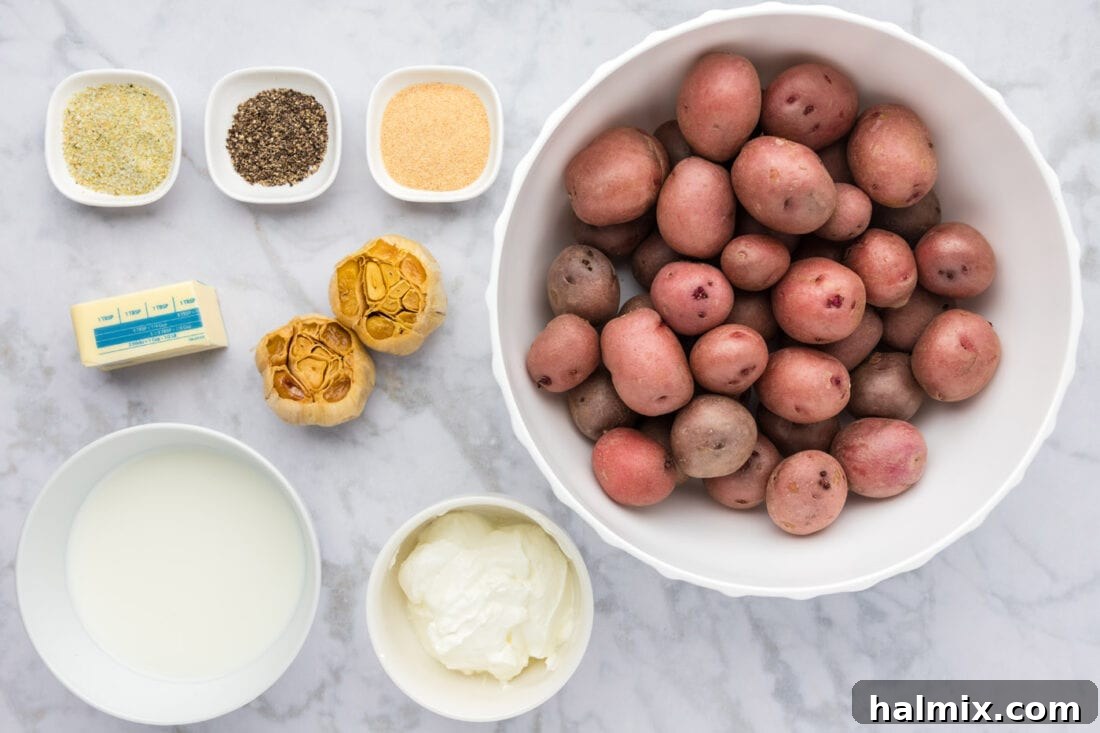
Crafting the best garlic mashed potatoes starts with selecting the right ingredients. Each component plays a vital role in achieving that sought-after creamy texture and robust flavor. While the full list with precise measurements is available in the recipe card below, here’s a closer look at the key players and why they matter.
Ingredient Spotlight & Expert Substitutions
Let’s dive deeper into the ingredients that make these garlic mashed potatoes truly special, along with some helpful substitution tips:
POTATOES: For the ultimate creamy and fluffy mashed potatoes, the type of potato you choose is crucial. We highly recommend **baby red potatoes**. Their thin skins mean you don’t necessarily have to peel them (more on that below!), and their waxy texture holds up well to mashing without becoming gummy. If baby red potatoes aren’t available, **Yukon Gold potatoes** are an excellent substitute. They are also a waxy-to-medium starch potato, known for their naturally buttery flavor and creamy consistency when mashed. Avoid overly starchy potatoes like Russets if you’re aiming for a smooth mash, as they can become gluey if over-mixed.
If you prefer your mashed potatoes with a delightful “chunky” texture, you can skip the traditional potato masher entirely and use just a hand mixer to gently combine everything. This approach leaves some smaller potato pieces intact, adding a rustic charm and satisfying bite to the dish.
ROASTED GARLIC: This is the heart of our garlic mashed potatoes. Roasting garlic mellows its pungent flavor, transforming it into a sweet, spreadable, and aromatic paste. This process takes ordinary garlic and makes it extraordinary. If you haven’t roasted garlic before, don’t worry! It’s incredibly simple, and we have a detailed guide on how to roast garlic that you can follow. The best part? Roasted garlic can be made in advance and even stored in the freezer for future recipes, making meal prep a breeze.
SOUR CREAM: A secret weapon for adding both creaminess and a subtle, pleasant tang. Sour cream helps to balance the richness of the butter and heavy cream, preventing the dish from feeling too heavy. For the best results, use full-fat sour cream.
BUTTER: Unsalted butter is preferred, as it allows you to control the overall saltiness of the dish. Butter is essential for that rich, velvety texture and classic indulgent flavor. Don’t skimp on it!
HEAVY WHIPPING CREAM: This dairy superstar is key to achieving truly luxurious, silky-smooth mashed potatoes. It adds body and richness without making the potatoes watery. You can also use half-and-half or whole milk in a pinch, but heavy cream delivers the most decadent result.
SEASONINGS (Garlic Salt, Garlic Powder, Black Pepper): While roasted garlic provides incredible depth, a touch of garlic salt and garlic powder enhances the overall garlic profile, ensuring a robust flavor. Freshly cracked black pepper adds a hint of spice and aroma. Always taste and adjust seasonings to your preference.
Mastering the Art of Garlic Mashed Potatoes: Step-by-Step Guide
Embark on a culinary journey to create the most exquisite garlic mashed potatoes your taste buds have ever encountered. These step-by-step instructions, accompanied by illustrative photos, will guide you through each stage of the process, ensuring a perfect batch every time. For a convenient printable version of this recipe, complete with precise measurements and comprehensive instructions, feel free to Jump to the Recipe Card at the bottom of this page.
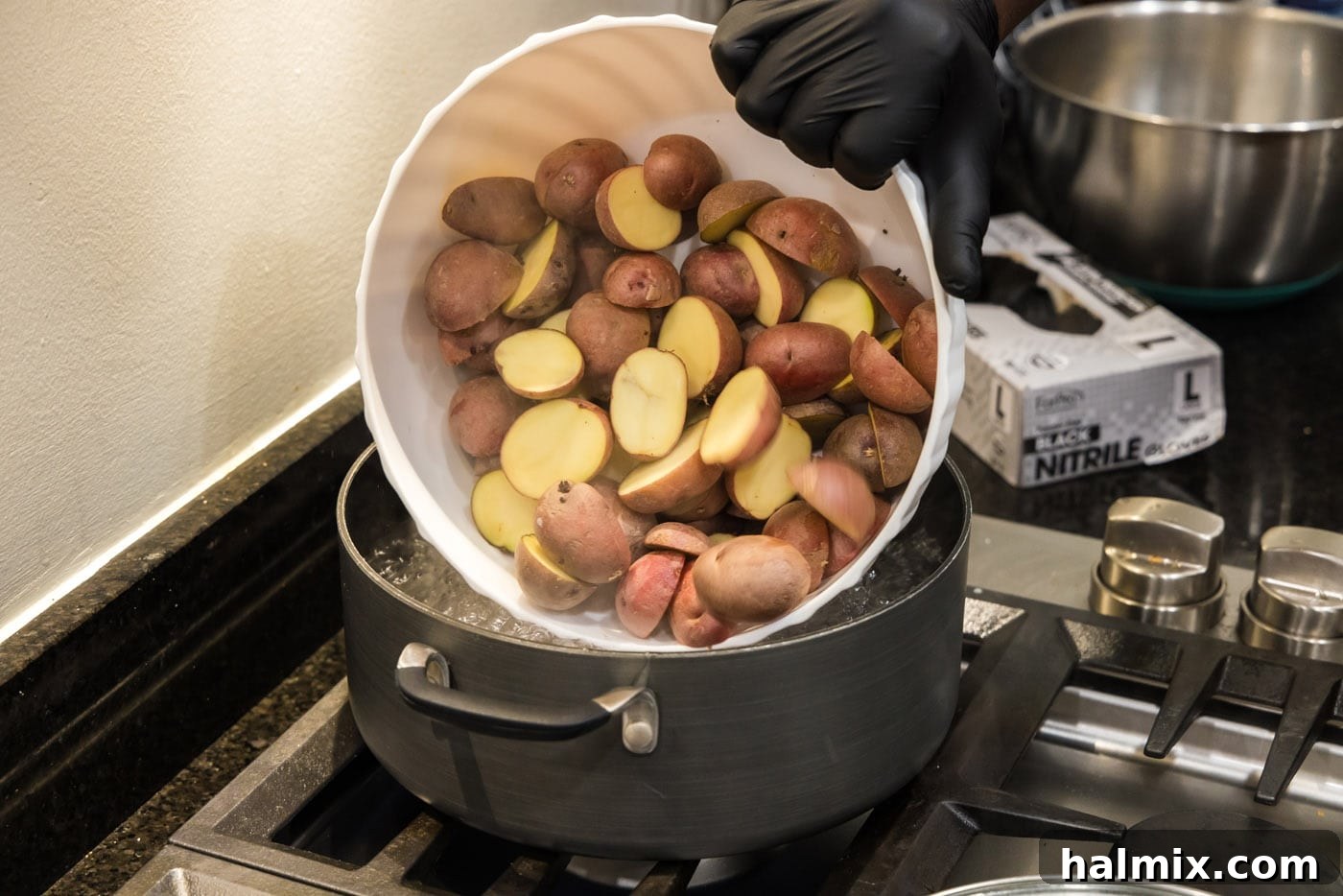
- Prepare the Potatoes: Begin by bringing a large pot of water to a rolling boil. While the water heats, thoroughly rinse your baby red potatoes under cold running water to remove any dirt. Cut each potato in half to ensure even cooking and faster softening. Once the water is boiling, carefully add the halved potatoes to the pot.
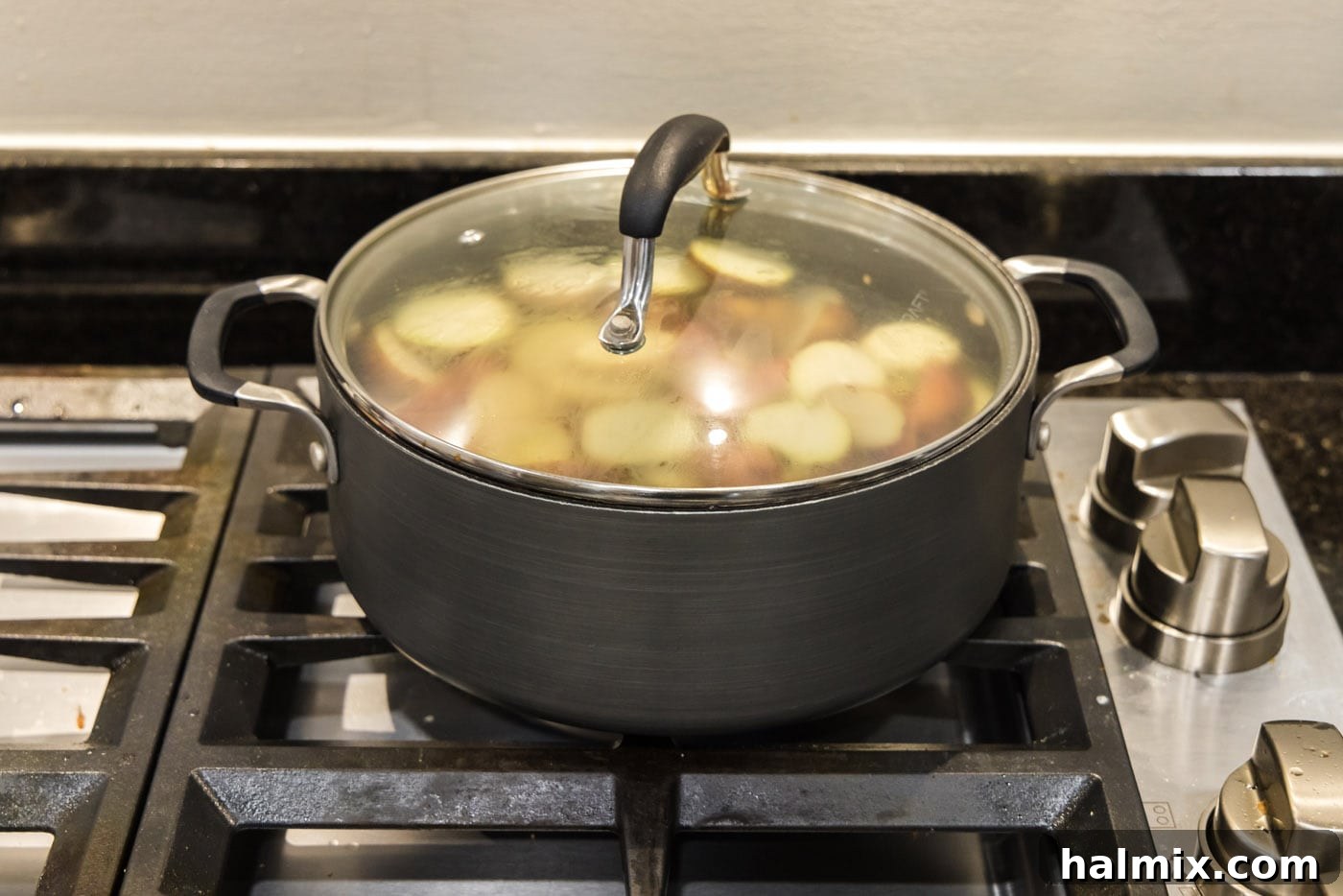
- Cook Until Tender: Place a lid on the pot and bring the water back to a boil over medium-high heat. Once boiling again, reduce the heat to medium and allow the potatoes to simmer. Continue cooking for approximately 20 minutes, or until the potatoes are completely fork-tender. You should be able to easily pierce them with a fork with minimal resistance. Overcooking can lead to watery potatoes, so keep an eye on them.
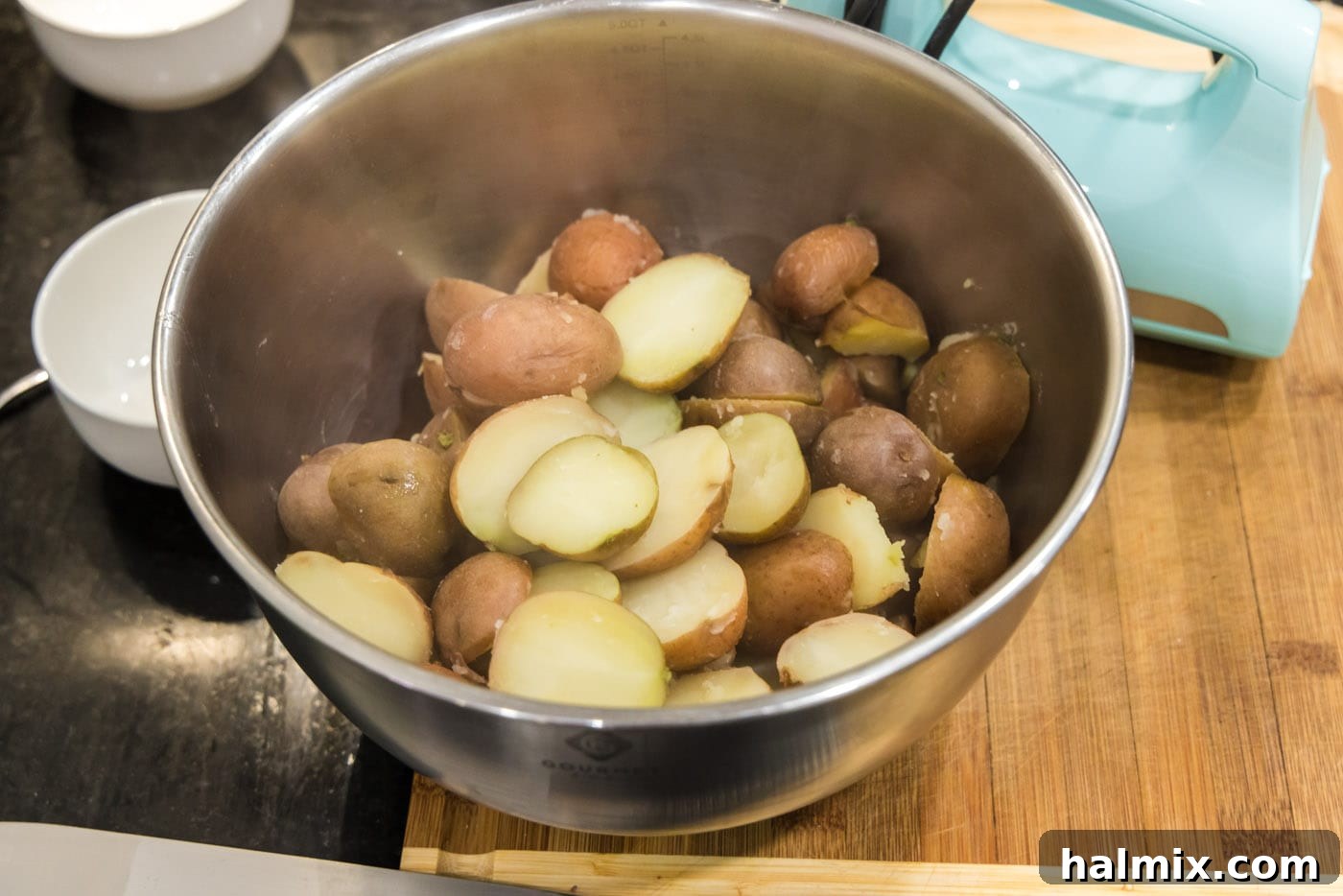
- Drain and Transfer: Once tender, carefully drain the cooked potatoes thoroughly using a colander. Ensure all excess water is removed, as this is crucial for preventing soggy mashed potatoes. Transfer the hot, drained potatoes into a large mixing bowl, preparing them for the next stage of flavor infusion.
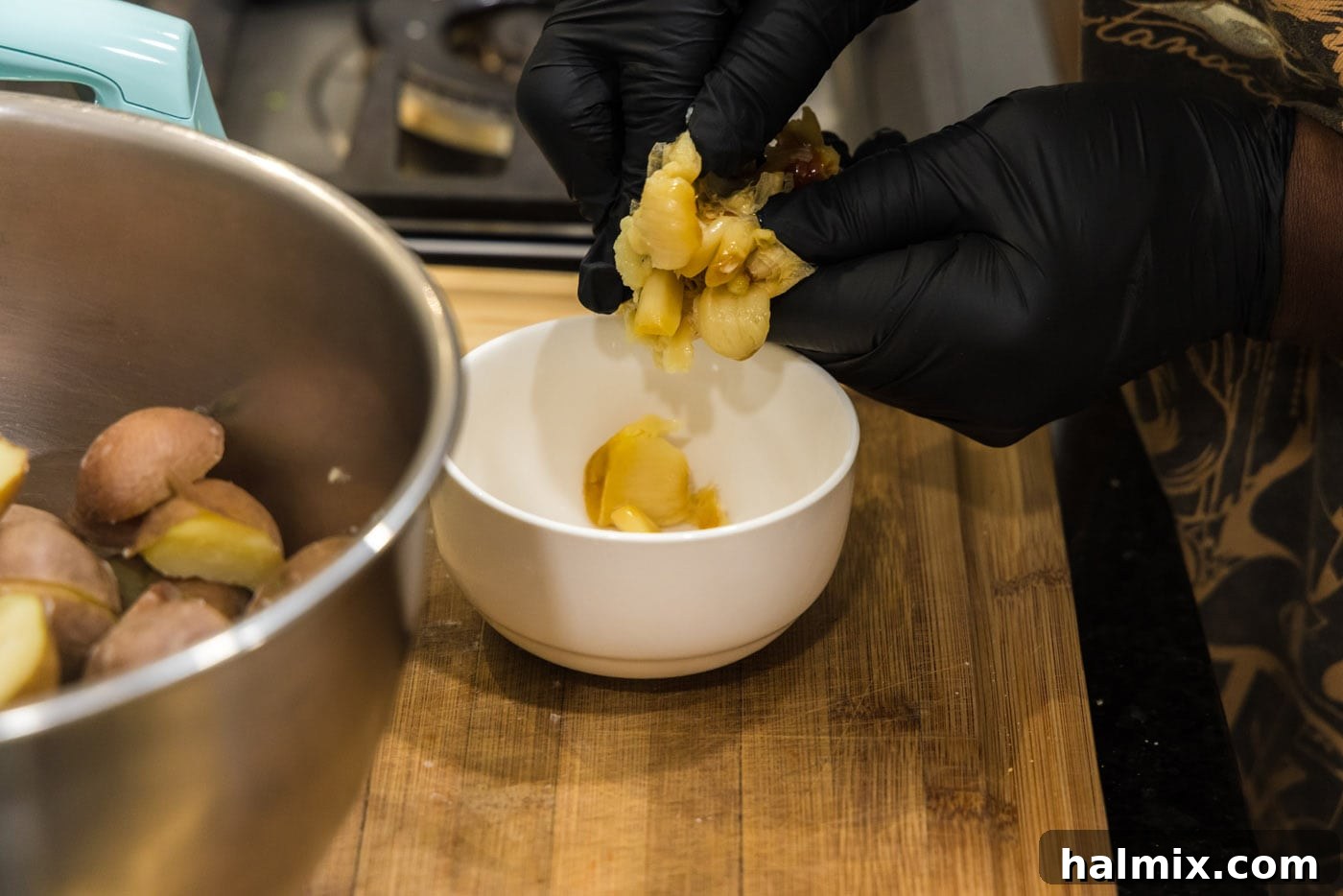
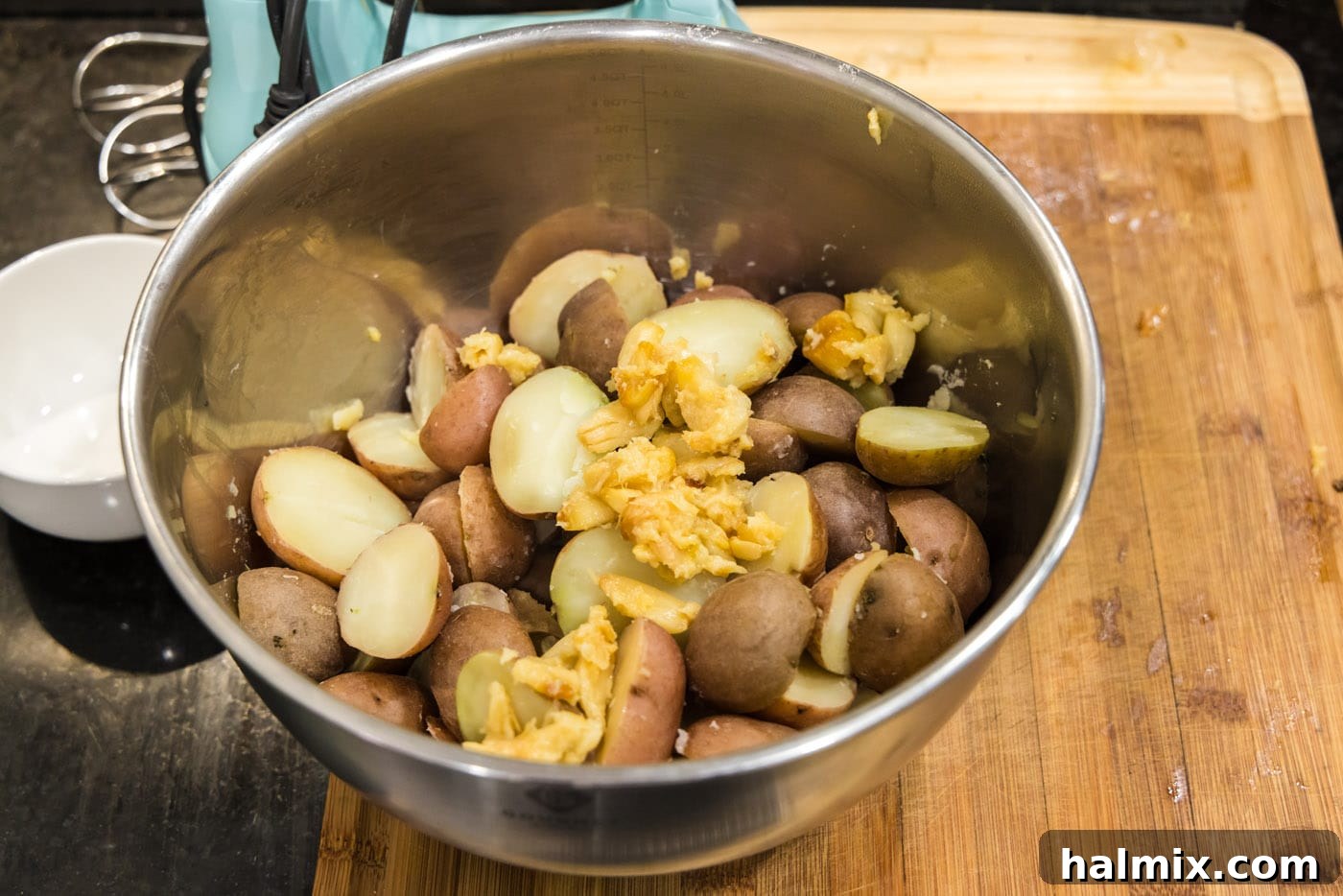
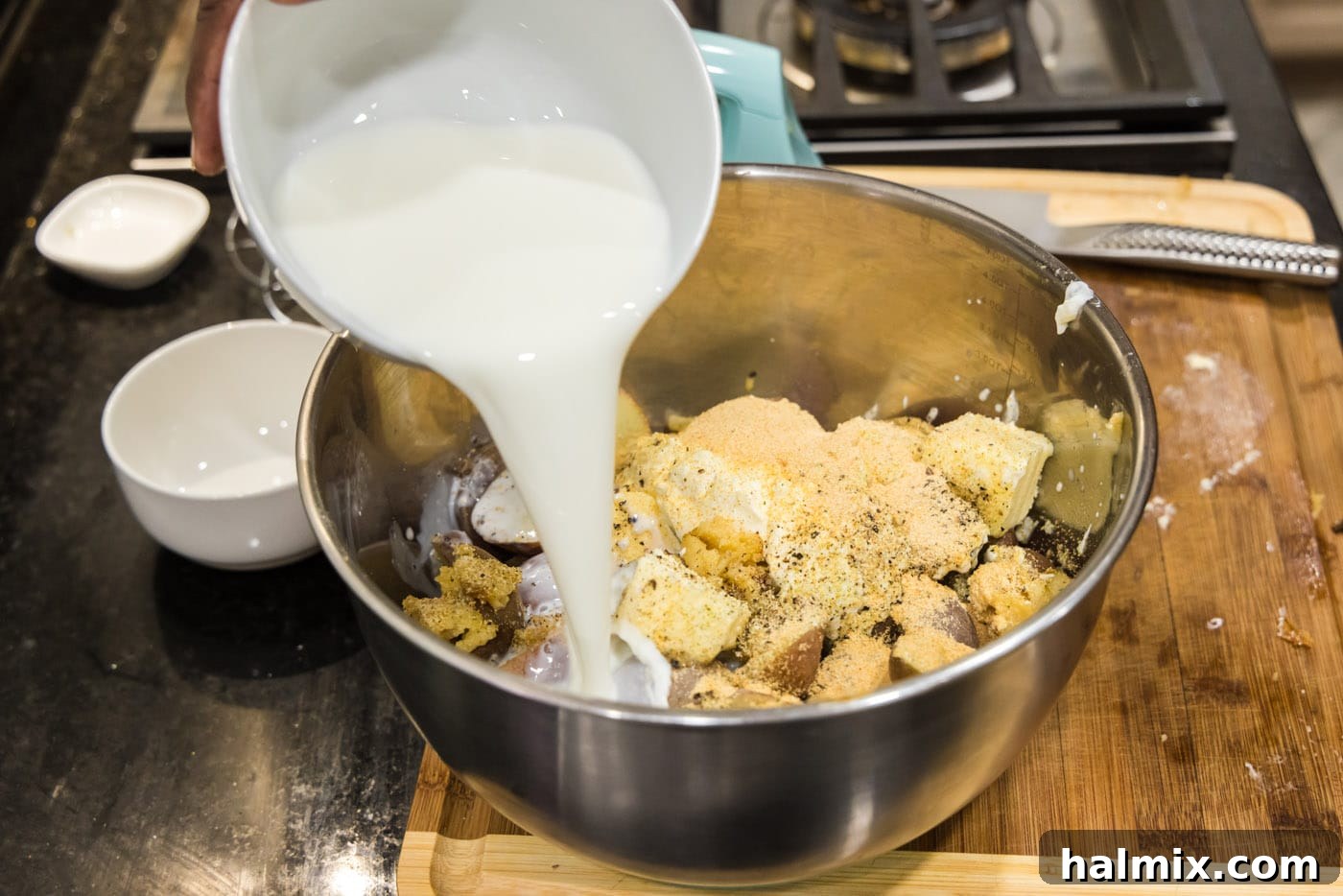
- Add the Richness: Now for the magic! Squeeze the soft, caramelized roasted garlic cloves directly from their bulb into the bowl with the hot potatoes. Add the sour cream, cubed butter, garlic salt, garlic powder, and black pepper. Finally, pour in the heavy whipping cream. The residual heat from the potatoes will help to melt the butter and warm the dairy, making everything easier to combine.
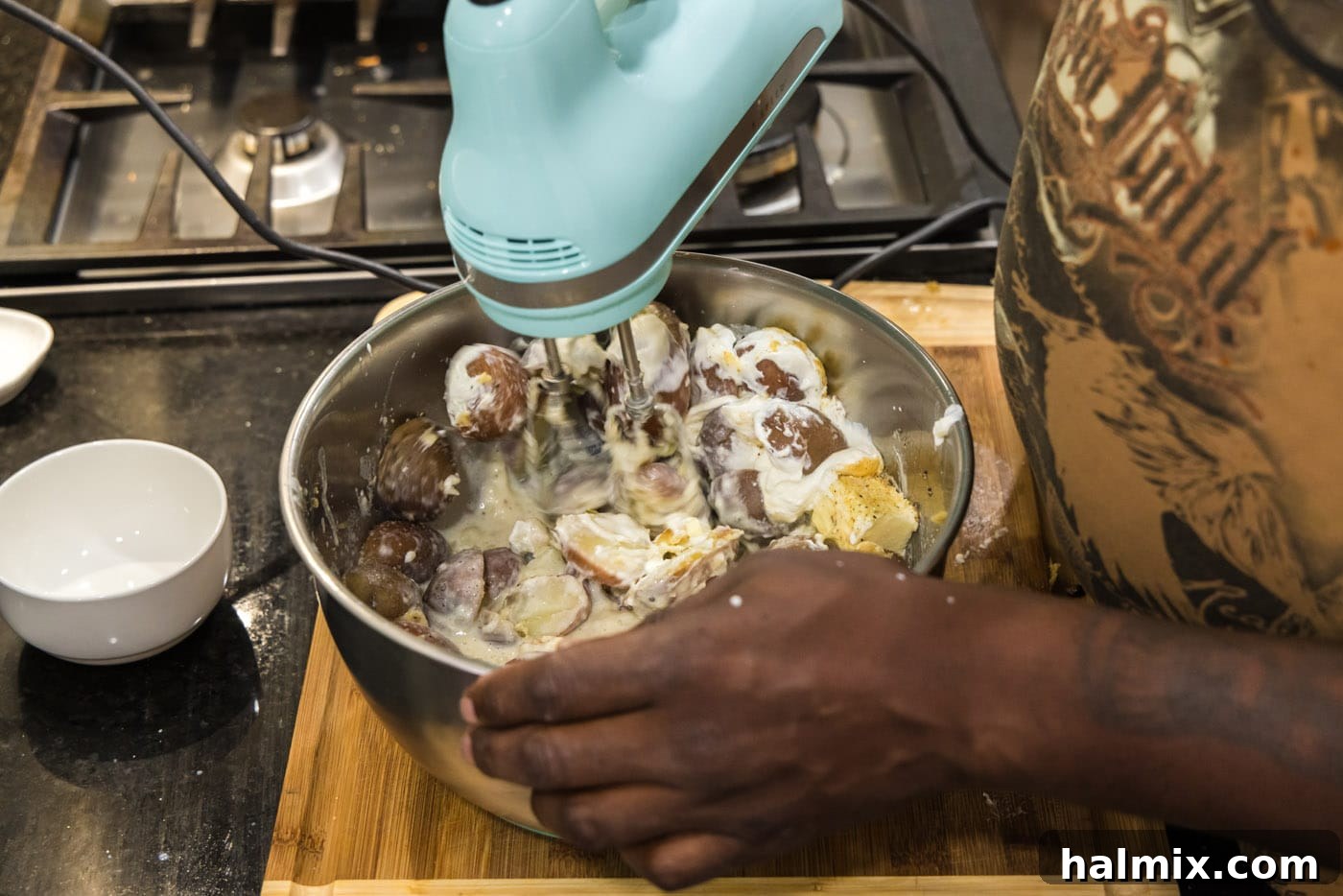
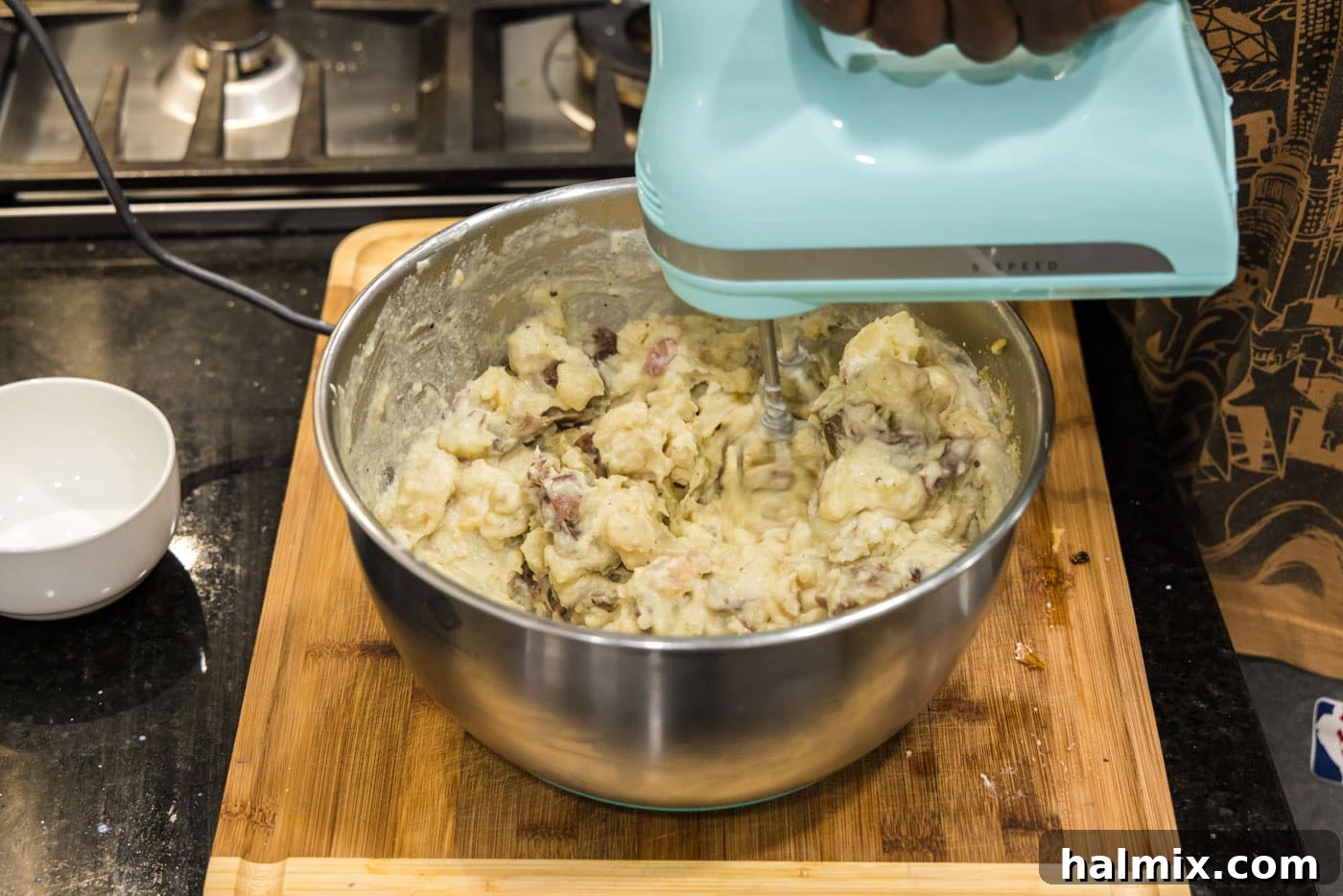
- Mash and Blend to Perfection: Begin by using a potato masher to initially break down the larger potato chunks. This ensures a smoother starting point. Once the potatoes are mostly broken apart, switch to a hand mixer. Blend all the ingredients together on a low to medium speed until your desired consistency is reached. Be careful not to over-mix, as this can activate too much starch and lead to gummy potatoes. Mix just until smooth and creamy, then taste and adjust seasonings as needed.
Frequently Asked Questions & Expert Tips for Perfect Mashed Potatoes
Absolutely! Peeling the potatoes is entirely a matter of personal preference. When using baby red potatoes, their skins are wonderfully thin and delicate, which means they can be left on to add a rustic texture, extra fiber, and a hint of earthy flavor to the finished dish. If you prefer a silky-smooth, classic mashed potato, go ahead and peel them before boiling. Both methods yield delicious results, so choose what suits your taste and desired presentation.
To maintain their freshness and flavor, any cooled leftover mashed potatoes should be transferred to an airtight container. Store them in the refrigerator, where they will keep well for up to 3-4 days. Prompt cooling and proper sealing are key to preserving quality and preventing spoilage.
Reheating mashed potatoes successfully requires adding a little moisture back to them. Here are a couple of effective methods:
- Stovetop Method: Place the mashed potatoes in a saucepan over medium-low heat. Add a splash of heavy whipping cream, milk, or a pat or two of butter to the pan. Stir gently and continuously as the potatoes warm through, gradually incorporating the added liquid until they reach their original creamy consistency. This method allows for good control over moisture.
- Oven Method: For larger quantities or when you prefer hands-off reheating, spread the mashed potatoes evenly in an oven-safe dish. Cover the dish tightly with foil to trap moisture. Reheat in a preheated 350°F (175°C) oven for about 20-30 minutes, or until thoroughly warmed through. You can stir in a little cream or butter before serving if they still seem a bit dry.
Yes, garlic mashed potatoes freeze beautifully, making them a fantastic make-ahead option! To freeze, ensure the potatoes are completely cooled first. Then, transfer them into a large freezer-safe zip-top bag, pressing out as much air as possible, or into an airtight freezer-safe container. They can be stored in the freezer for up to 1 month.
When you’re ready to enjoy them, thaw the mashed potatoes overnight in the refrigerator. The best way to reheat is on the stovetop over medium-low heat, as described above. Be sure to add a splash of heavy whipping cream or a few pats of butter as they warm to help them regain their moisture and creamy texture, which can sometimes be affected by freezing.
The key to avoiding gummy mashed potatoes is to avoid over-mixing. Potatoes, especially starchy varieties, release a lot of starch when mashed. The more you mash or blend them, the more starch is released, leading to a gluey texture. Use a potato masher first to break down chunks, then switch to a hand mixer on low speed only until smooth and creamy. Stop mixing as soon as your desired consistency is achieved. Also, ensure your potatoes are properly drained after boiling; excess water can contribute to gumminess.
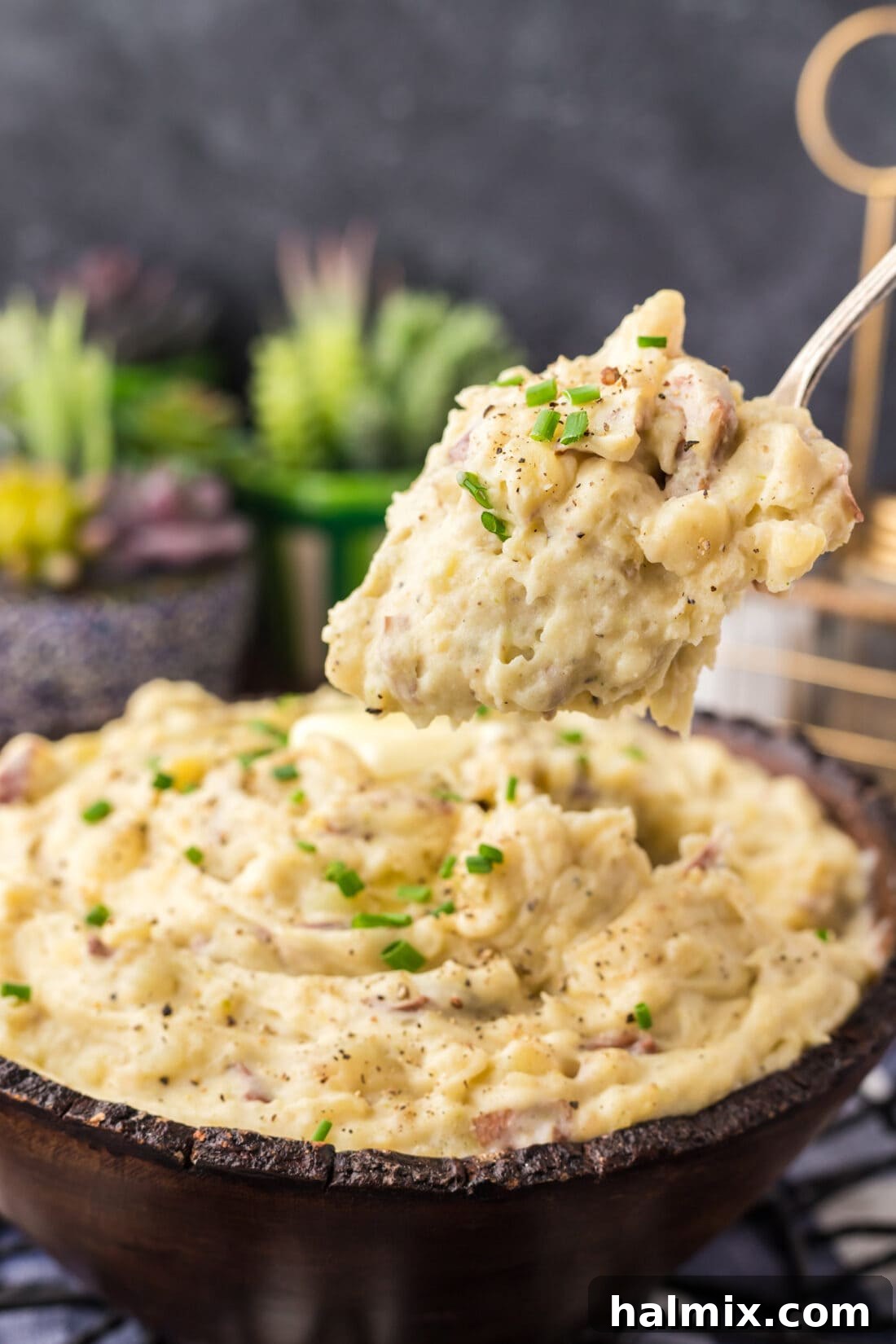
Delightful Serving Suggestions for Garlic Mashed Potatoes
The beauty of these creamy garlic mashed potatoes lies in their incredible versatility. They complement an astonishing array of main courses and can even be a star in their own right. Honestly, it’s hard to think of a dish they *don’t* pair well with! Here are just a few ideas to inspire your next meal:
- Classic Comfort Pairings: Serve them alongside a perfectly seared, juicy steak, roasted chicken, tender pork chops, or flavorful beef roasts. The rich potatoes provide a wonderful contrast and absorb delicious pan drippings beautifully.
- Holiday Favorites: A must-have on any holiday spread! They’re the ideal accompaniment to a magnificent roasted turkey, a savory glazed ham, or a succulent prime rib, adding a comforting, indulgent touch to your festive table.
- Hearty Mains: Elevate your favorite hearty dishes. Spoon generous amounts over a rustic shepherd’s pie or enjoy them with classic Swedish meatballs and lingonberry sauce for a truly satisfying meal.
- Seafood and Fish: Don’t limit mashed potatoes to red meat! Their subtle garlic flavor and creamy texture make them a delightful partner for baked or pan-seared fish like salmon or cod, and even shrimp dishes.
- Vegetarian Options: Pair with hearty vegetable roasts, grilled portobello mushrooms, or even a simple side of steamed green beans for a well-rounded meal.
- Breakfast/Brunch: Yes, really! Reheated mashed potatoes can be shaped into patties and pan-fried for a delicious twist on potato cakes, perfect with eggs and bacon.
Whether you’re planning an elaborate dinner or a simple weeknight meal, these garlic mashed potatoes are guaranteed to be a crowd-pleaser.
Explore More Delicious Potato Recipes
If you love potatoes as much as we do, you’re in for a treat! Discover more fantastic ways to prepare this versatile vegetable with our collection of tried-and-true recipes:
- Spicy Potatoes
- Melting Potatoes
- Scalloped Potatoes
- Mashed Sweet Potatoes
- Loaded Mashed Potato Casserole
I love to bake and cook and share my kitchen experience with all of you! Remembering to come back each day can be tough, that’s why I offer a convenient newsletter every time a new recipe posts. Simply subscribe and start receiving your free daily recipes!
Garlic Mashed Potatoes
Print It
Pin It
Course:
Side Dish
Cuisine:
American
8
servings (8 cups total)
30 minutes
298
Amanda Davis
Ingredients
- 3 pounds baby red potatoes
- 1 head roasted garlic
- ⅓ cup sour cream
- 4 Tablespoons unsalted butter
- 1 Tablespoon garlic salt
- 2 teaspoons garlic powder
- 2 teaspoons black pepper
- 1 cup heavy whipping cream
Things You’ll Need
-
Stockpot or Dutch oven
-
Large mixing bowl
-
Potato Masher
-
Hand mixer
Notes for Success
- To Peel or Not to Peel: You can peel baby red potatoes if you prefer a smoother mash, but their thin skins are perfectly fine to leave on for added texture and nutrients. It’s all about your personal preference!
- Roasted Garlic Advantage: For the best flavor, use roasted garlic. Its mellow, sweet notes are superior to raw garlic here. You can easily roast garlic in advance or even freeze it for future use.
- Potato Choice Matters: Opt for waxy or medium-starch potatoes like baby red or Yukon Gold for optimal creaminess without gumminess. Russets are higher in starch and can become gluey if over-mashed.
- Chunky vs. Smooth: If you enjoy a rustic, chunky texture, use only a potato masher, or blend minimally with a hand mixer. For a super smooth result, follow the recipe exactly, but be careful not to over-mix.
Instructions
-
Bring a large pot of water to a boil.
-
Rinse potatoes under cold water and cut in half. Add to the boiling water.
-
Place lid on pot and bring back to a boil over medium-high heat. Turn heat down to medium and continue cooking until potatoes are fork tender, about 20 minutes or so.
-
Drain potatoes thoroughly and place in a large mixing bowl.
-
Squeeze the roasted garlic out of the bulb and add to the bowl with potatoes. Add sour cream, butter, garlic salt, garlic powder, black pepper, and heavy whipping cream.
-
Use a potato masher to break up the large chunks of potatoes. Next, use a hand mixer to blend all ingredients together until smooth and creamy, being careful not to over-mix.
Storage & Reheating Tips
- Store any cooled leftover mashed potatoes in an airtight container in the refrigerator for up to 4 days.
- To reheat, place mashed potatoes in a saucepan over medium heat until warmed through. Add a splash of heavy whipping cream or a pat or two of butter to re-moisturize. Alternatively, cover and reheat in a 350°F (175°C) oven for about 20 minutes.
- To freeze, cool completely, then transfer to a freezer-safe zip-top bag or airtight container for up to 1 month. Thaw overnight in the refrigerator. Reheat on the stovetop over medium-low heat, adding cream or butter to restore texture.
Nutrition Facts
Serving: 1serving (1 cup)
|
Calories: 298cal
|
Carbohydrates: 30g
|
Protein: 5g
|
Fat: 19g
|
Saturated Fat: 11g
|
Polyunsaturated Fat: 1g
|
Monounsaturated Fat: 5g
|
Trans Fat: 0.2g
|
Cholesterol: 54mg
|
Sodium: 916mg
|
Potassium: 846mg
|
Fiber: 3g
|
Sugar: 3g
|
Vitamin A: 687IU
|
Vitamin C: 16mg
|
Calcium: 58mg
|
Iron: 1mg
Tried this Recipe? Pin it for Later!
Follow on Pinterest @AmandasCookin or tag #AmandasCookin!
The recipes on this blog are tested with a conventional gas oven and gas stovetop. It’s important to note that some ovens, especially as they age, can cook and bake inconsistently. Using an inexpensive oven thermometer can assure you that your oven is truly heating to the proper temperature. If you use a toaster oven or countertop oven, please keep in mind that they may not distribute heat the same as a conventional full sized oven and you may need to adjust your cooking/baking times. In the case of recipes made with a pressure cooker, air fryer, slow cooker, or other appliance, a link to the appliances we use is listed within each respective recipe. For baking recipes where measurements are given by weight, please note that results may not be the same if cups are used instead, and we can’t guarantee success with that method.