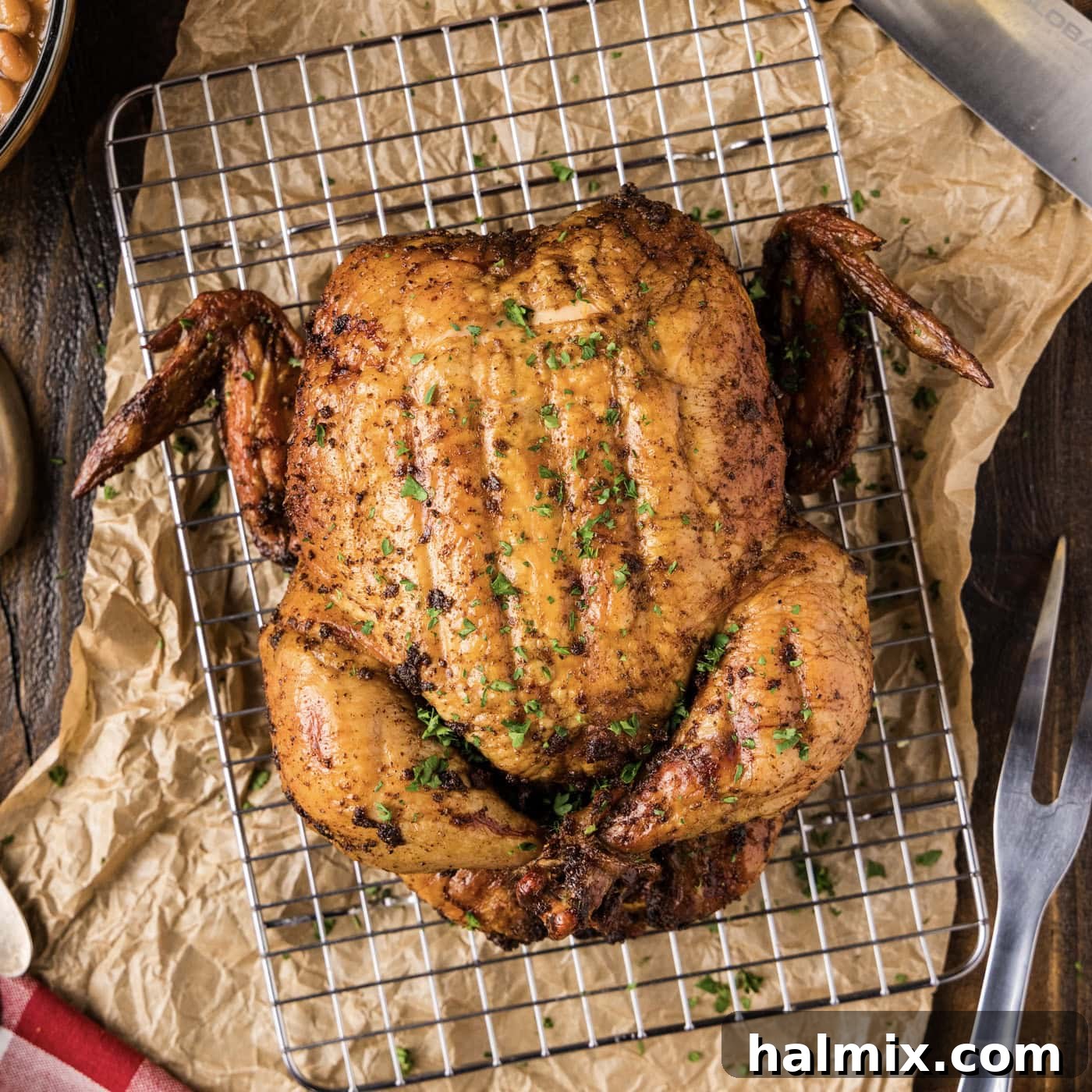
The Ultimate Whole Smoked Chicken Recipe: Unforgettable Juiciness and Flavor
Prepare for the most incredibly juicy and intensely flavorful whole smoked chicken you’ve ever tasted! This recipe guides you through a simple, low-and-slow smoking process, infusing your bird with a rich, smoky kiss that permeates every succulent bite. Seasoned generously with a vibrant blend of spices, this smoked chicken is destined to become a staple in your culinary repertoire.
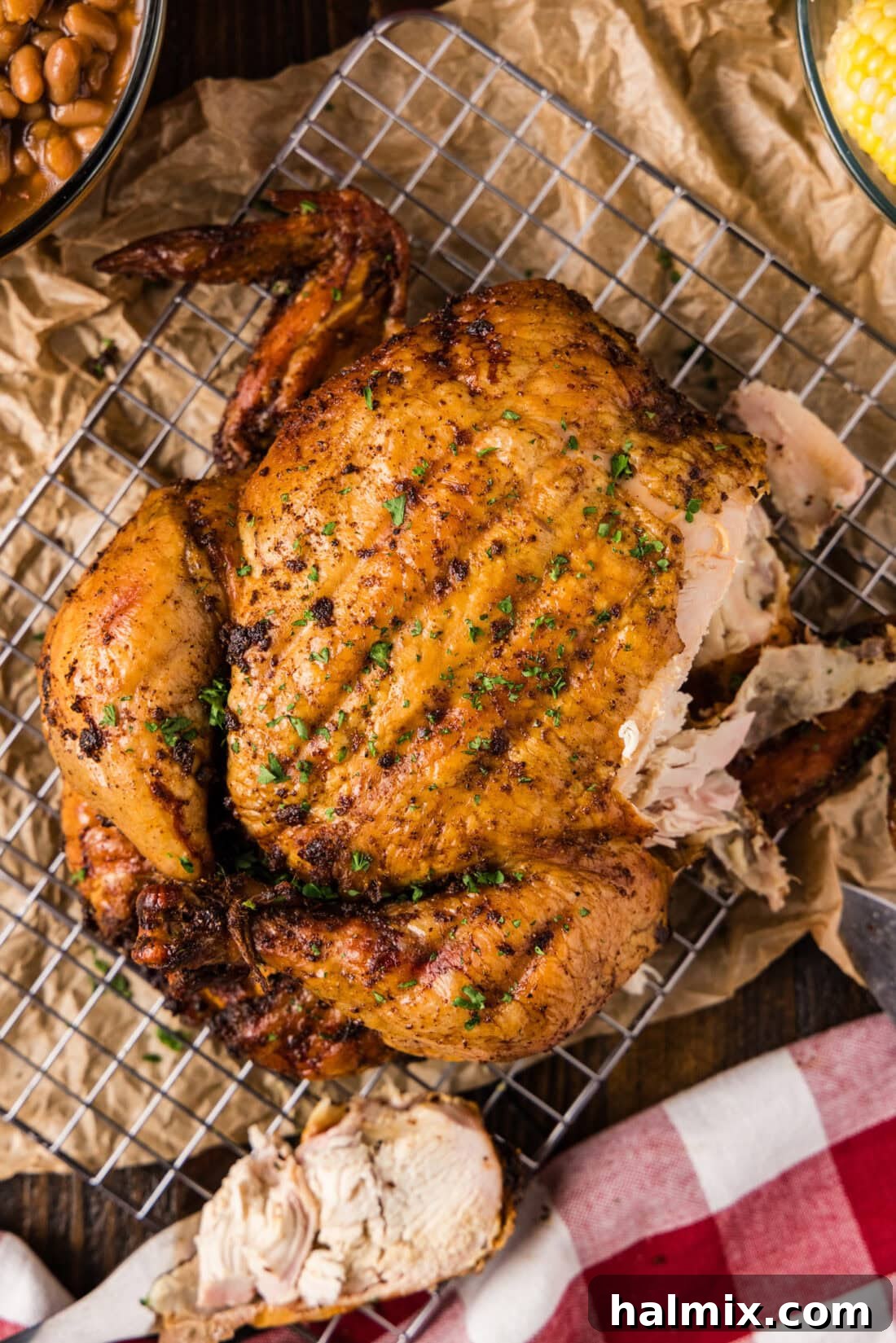
Why This Smoked Chicken Recipe is a Must-Try
Smoking a whole chicken offers a distinct advantage over other cooking methods, locking in moisture and delivering an unparalleled depth of flavor. Here’s why this recipe stands out:
- Unparalleled Juiciness: The “low and slow” smoking method gently cooks the chicken, preventing it from drying out. This technique allows the fats to render slowly, basting the meat from within and ensuring a moist, tender result from breast to thigh.
- Deep, Irresistible Smoky Flavor: Unlike roasting or grilling, smoking permeates the entire bird with a rich, aromatic flavor that reaches all the way to the bone. Every bite is an experience, offering a delightful balance of smoky notes and savory spices.
- Cost-Effective & Convenient: Often, purchasing a whole chicken is more economical per pound than buying individual cuts. Plus, once the chicken is in the smoker, it’s largely a hands-off process, freeing you up to prepare sides or simply relax.
- Keep Your Kitchen Cool: Smoking takes place outdoors, meaning you don’t have to heat your entire house for hours, especially beneficial during warmer months. While roasted chicken certainly has its place, the smoker is my go-to when the weather permits a delightful outdoor cooking adventure.
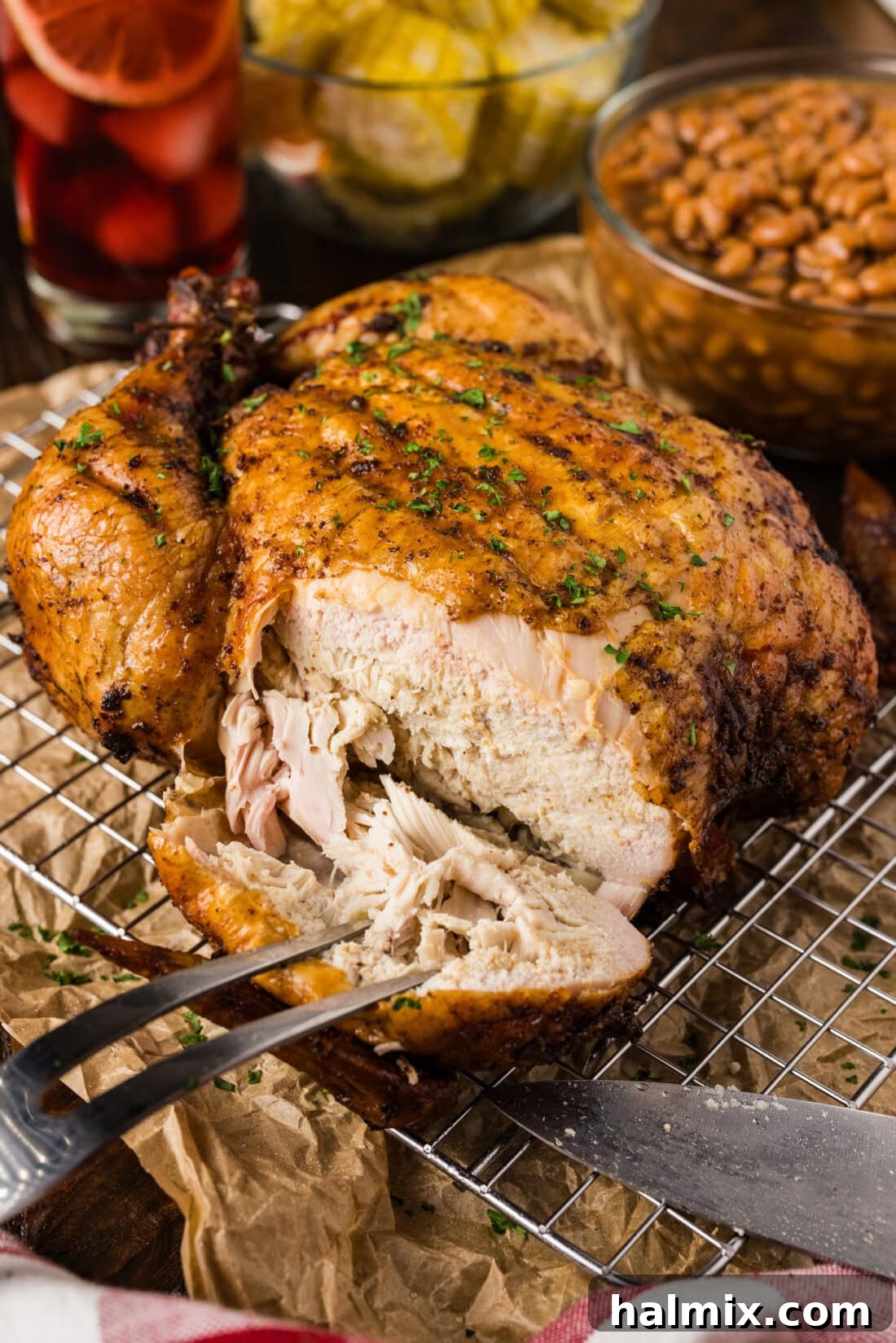
The Art of Smoking: Low and Slow Perfection
The secret to an exceptionally moist and flavorful smoked chicken lies in the “low and slow” cooking method. By maintaining a consistent, lower temperature in your smoker, you allow the chicken to gradually come to temperature. This gentle heat enables the connective tissues to break down, resulting in incredibly tender meat, while the skin slowly renders its fat, leading to a beautifully golden and crisp exterior (if desired, with a final temperature boost). Moreover, this extended cooking time maximizes the chicken’s exposure to the smoke, allowing it to absorb those desirable smoky aromas deeply.
Throughout the smoking process, the chicken’s internal temperature will steadily rise. It’s crucial to use a reliable meat thermometer to ensure your chicken reaches a safe and delicious internal temperature of 165°F (74°C) in the thickest part of the thigh, without touching the bone. This ensures not only food safety but also optimal tenderness and juiciness.
Essential Ingredients for Your Smoked Chicken
Crafting the perfect whole smoked chicken begins with a few simple, high-quality ingredients. The beauty of this recipe lies in how these basic components transform into something extraordinary with the magic of smoke.
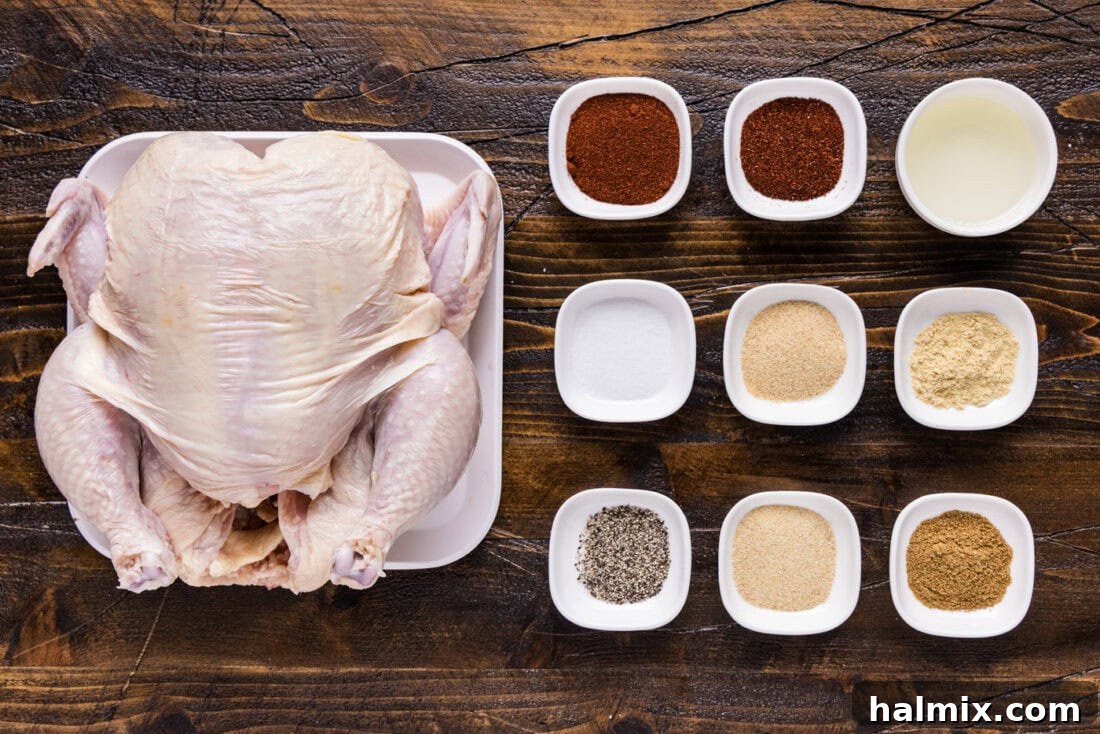
The Chicken
You will need a 4-pound whole chicken for this recipe. When selecting your chicken, look for one that appears plump and healthy. There’s no need to rinse the chicken; in fact, doing so can spread bacteria around your kitchen. Instead, simply pat the chicken thoroughly dry with paper towels. A dry surface is key for the rub to adhere properly and for achieving that desirable crispy skin.
A raw 4-pound chicken will typically lose about 25% of its weight during cooking. After the bones are removed, you can expect approximately 2 pounds of delicious, edible meat. This yield can vary slightly depending on factors like the water content added by the manufacturer and the chicken’s fat percentage.
The Flavorful Dry Rub
Our carefully balanced dry rub is what truly elevates the chicken’s flavor profile, complementing the smoky notes with savory depth and a hint of warmth. This blend includes:
- Onion Powder & Garlic Powder: These provide a foundational savory base, enhancing the chicken’s natural flavors.
- Cumin & Chili Powder: Delivering earthy warmth and a subtle kick, these spices add complexity.
- Dry Mustard: A fantastic tenderizer and flavor enhancer, it adds a tangy, pungent note that brightens the rub.
- Smoked Paprika: This is a superstar ingredient, intensifying the smoky flavor of the chicken even before it hits the smoker. It also contributes a beautiful reddish hue to the skin.
- Salt & Black Pepper: Essential for seasoning, bringing all the flavors together.
Feel free to customize this rub! If you have a favorite seasoning blend that you know and love, by all means, use it. The goal is to create a flavor profile that you and your family will adore.
Olive Oil
A small amount of olive oil is used to bind the spices together and help the rub adhere evenly to the chicken’s skin. It also aids in rendering the fat, contributing to a more flavorful and potentially crispier skin.
How to Make Smoked Chicken: A Step-by-Step Guide
Follow these detailed steps to achieve a perfectly smoked whole chicken, juicy on the inside and full of smoky goodness. For a printable version of the full recipe, including exact measurements, please refer to the recipe card at the end of this post.
- Preheat your smoker to a steady 275°F (135°C). Maintaining a consistent temperature is crucial for even cooking and smoke absorption.
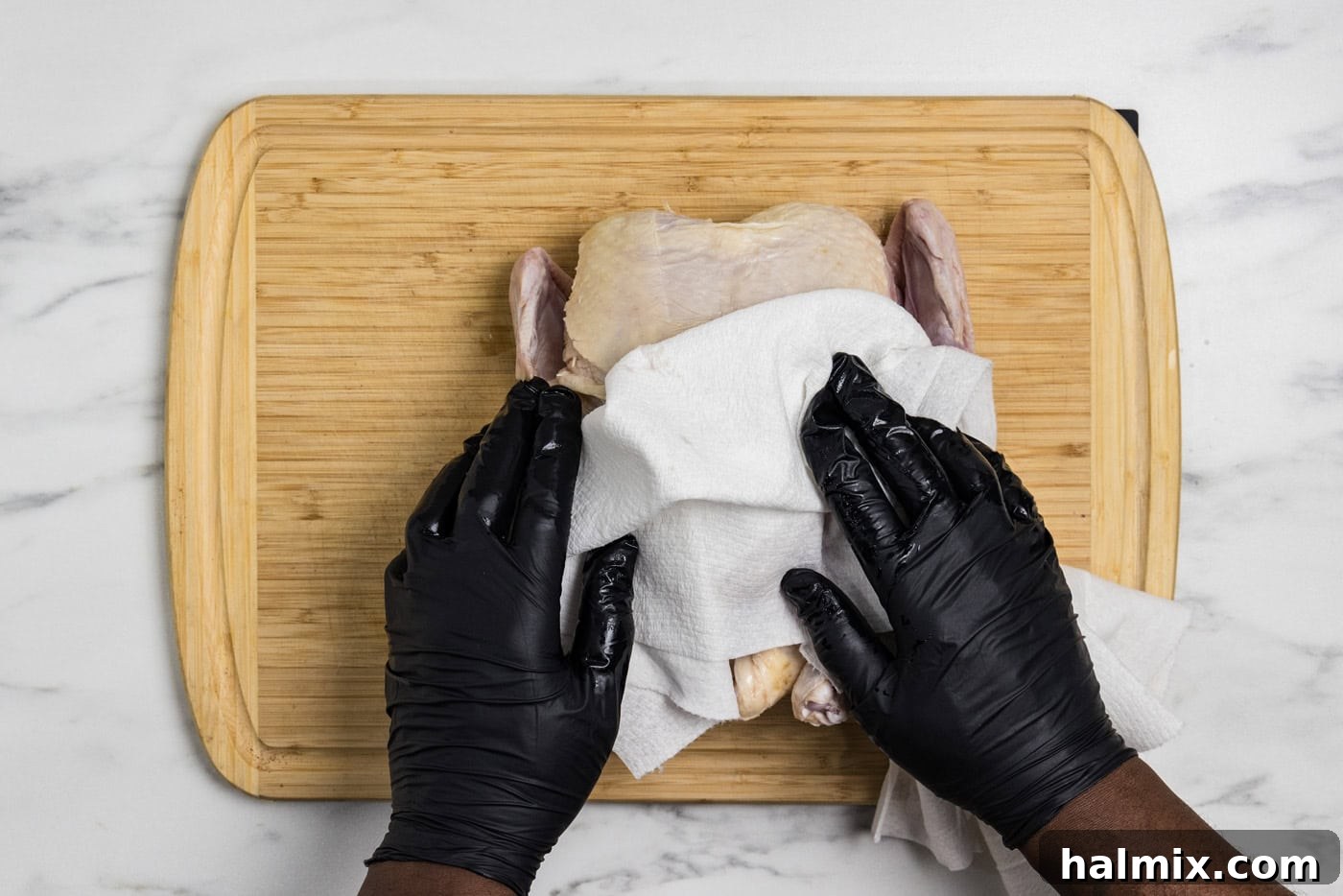
- Thoroughly pat the whole chicken dry with paper towels. This step is vital for encouraging crispy skin and allowing the rub to adhere effectively.

Patting the chicken dry is a simple but important step. - In a small bowl, combine all your chosen seasonings (onion powder, garlic powder, cumin, chili powder, dry mustard, smoked paprika, salt, and black pepper) with the olive oil. Whisk them together until you have a uniform paste.
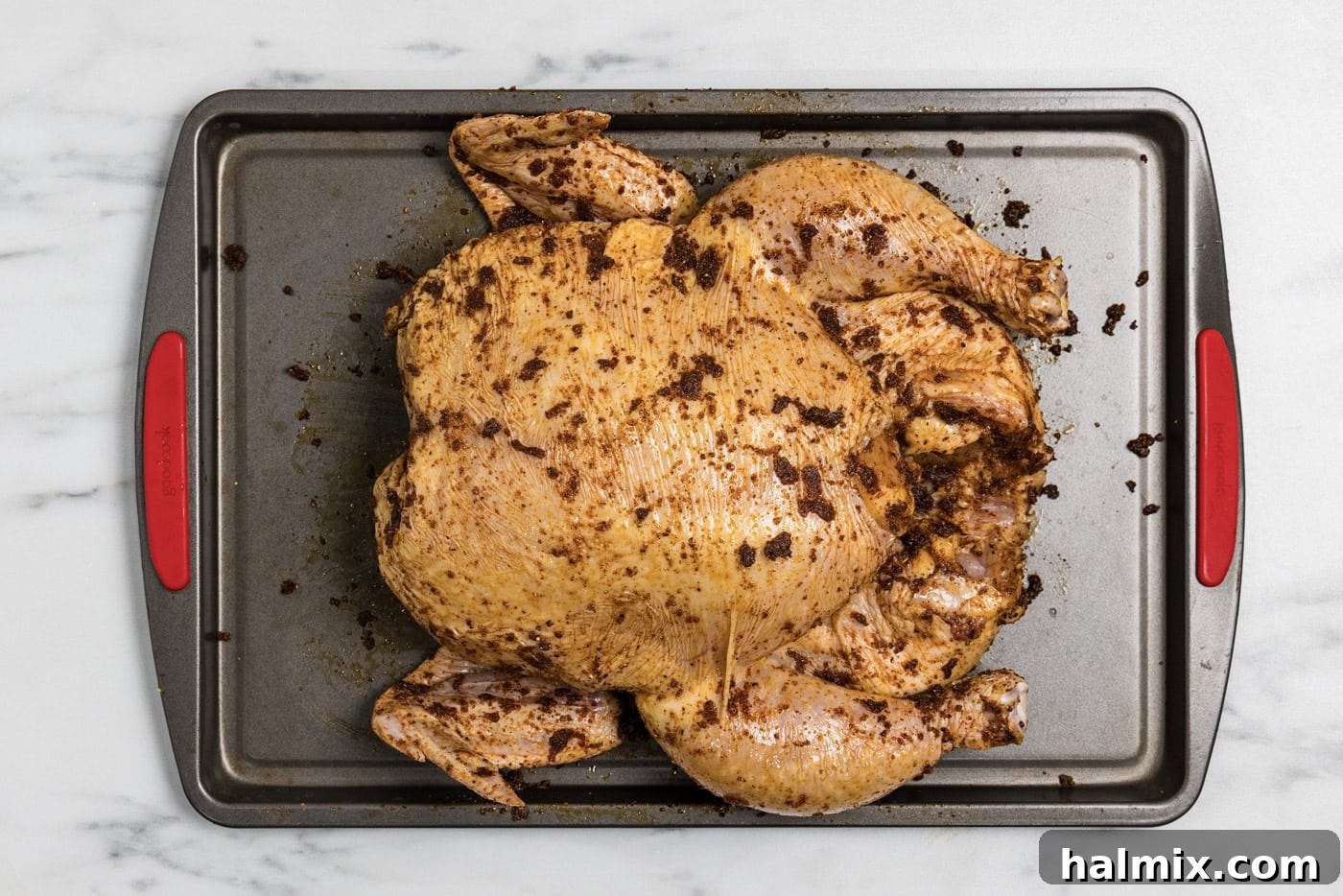
- Wearing gloves, generously rub the oil and spice mixture all over the entire surface of the chicken, ensuring every crevice is covered for maximum flavor. Tie the chicken’s legs together with baker’s twine and tuck the wings under the bird. This technique, known as trussing, helps the chicken cook more evenly and makes for a more presentable final product.
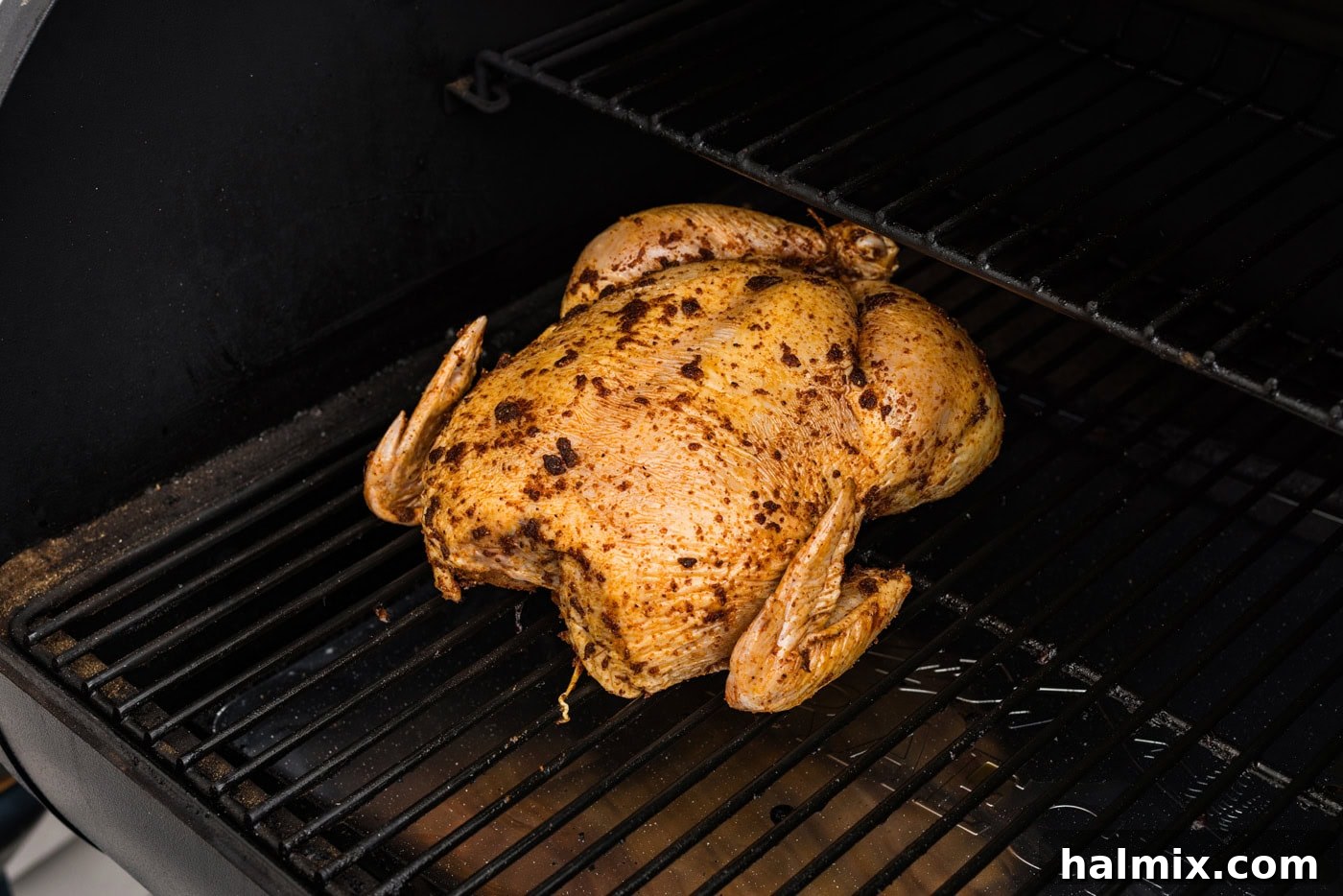
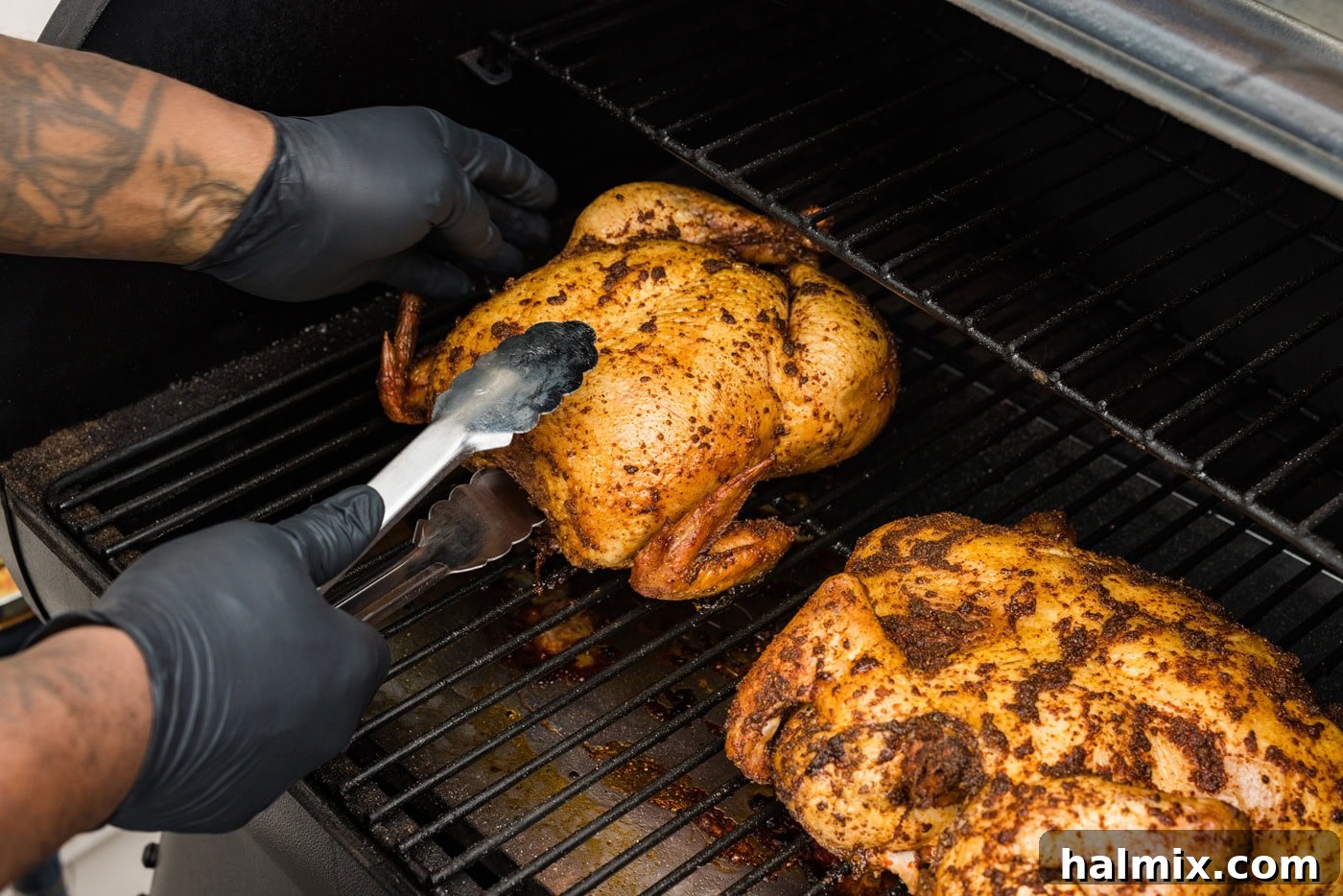
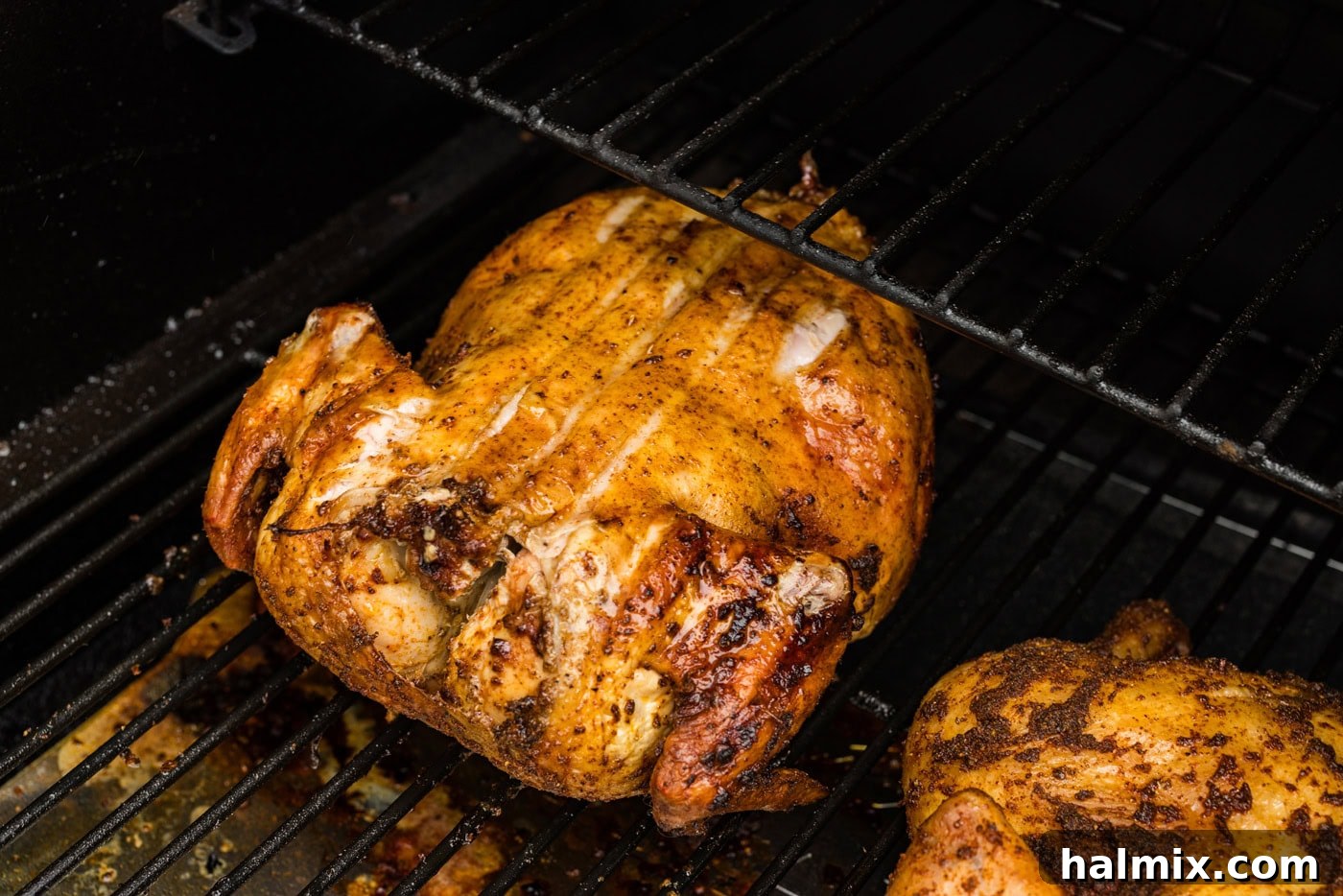
Generously coat the chicken with the spice rub and truss for even cooking. - Carefully place the prepared chicken, breast side up, directly onto the grates of your preheated smoker. Close the lid and smoke for 2 hours. After the initial 2 hours, use sturdy tongs to gently flip the bird over onto its breast side. Continue smoking for another 90 minutes. This flipping technique helps to ensure even cooking and smoke penetration.
Place the chicken breast-side up in the smoker. Flipping ensures even cooking and smoke absorption. - Once the chicken reaches an internal temperature of 165°F (74°C) in the thickest part of the thigh, remove it from the smoker. Allow the chicken to rest for at least 5-10 minutes before carving. This resting period is crucial for the juices to redistribute throughout the meat, resulting in a more tender and flavorful chicken.
Resting is essential for a juicy chicken.
Mastering the Smoke: Expert Tips for the Best Smoked Chicken
Achieving smoked chicken perfection is easy with a few key techniques and considerations. These expert tips will help you elevate your smoking game and ensure consistent, delicious results every time.
Wood Selection: The Heart of Smoky Flavor
The type of wood you choose for smoking dramatically influences the final flavor of your chicken. Experimenting with different woods is part of the fun! Here are some excellent choices:
- Fruit Woods (Apple, Cherry, Peach): These offer a mild, sweet, and subtle fruity flavor that pairs wonderfully with poultry. Cherry also imparts a beautiful reddish-brown color to the chicken skin.
- Maple & Pecan: Providing a balanced, slightly sweet, and nutty smoke, these are excellent “middle-ground” options if you’re looking for something beyond fruit but not as strong as hickory.
- Hickory: A classic choice for BBQ, hickory delivers a strong, bacon-like, savory smoke. Use it sparingly if you prefer a milder flavor, or blend it with a fruit wood.
- Oak: A medium-strength wood that offers a robust, earthy flavor without being overpowering. It’s a versatile choice that works well with most meats.
Ultimately, the best wood is a matter of personal preference. Consider starting with a milder fruit wood and gradually experimenting to find your favorite.
Temperature Control is Key for Success
Maintaining a consistent smoker temperature is paramount. Invest in a reliable smoker thermometer in addition to the one built into your unit, as they can sometimes be inaccurate. The target internal temperature for chicken is 165°F (74°C). Always use a good quality instant-read thermometer inserted into the thickest part of the thigh (avoiding the bone) to ensure doneness. This guarantees safety and prevents overcooking, which can lead to dry meat.
Achieving Crispy Skin
While smoked chicken skin often turns out a bit soft due to the low cooking temperature, there are ways to achieve a crispier finish:
- Pat Dry Thoroughly: As mentioned in the instructions, a very dry surface helps.
- Increase Heat at the End: For the last 15-20 minutes of cooking, you can briefly increase your smoker’s temperature to 350-375°F (175-190°C) to crisp up the skin. Alternatively, transfer the chicken to a hot grill or oven for a few minutes.
- Avoid Basting: Excessive basting can prevent the skin from drying out and crisping.
Optional Brining for Ultimate Moisture
For an even juicier chicken, consider brining it before smoking. You can use either a wet brine (submerging the chicken in a salt solution) or a dry brine (liberally salting the chicken and letting it rest uncovered in the fridge). Both methods help the chicken retain moisture during the long cooking process, resulting in an exceptionally tender and flavorful bird. If brining, remember to adjust the salt in your dry rub accordingly.
Resting Time is Non-Negotiable
After removing the chicken from the smoker, resist the urge to carve it immediately. Allowing the chicken to rest for 5-10 minutes is crucial. This rest period gives the juices, which have been drawn to the center of the bird during cooking, time to redistribute back throughout the meat. The result is a more tender, succulent, and uniformly juicy chicken. If you cut into it too soon, those precious juices will simply run out onto your cutting board.
Trussing for Even Cooking and Presentation
Tying the legs together with baker’s twine and tucking the wings under the bird (trussing) ensures that all parts of the chicken cook evenly. Without trussing, the wings and thinner parts of the breast can cook faster and dry out before the thighs are done. It also helps the chicken maintain a compact shape, making it easier to handle on the smoker and giving it a more appealing appearance.
If you don’t have baker’s twine, unflavored dental floss can work in a pinch. A long wooden skewer poked through the ankle part of the legs can also hold them together.
Frequently Asked Questions
The best wood for smoking chicken largely depends on personal preference. Fruit woods like apple, cherry, or peach impart a mild, sweet, and delicate smoke that complements chicken beautifully. Maple and pecan offer a slightly richer, nutty flavor, while hickory provides a stronger, more classic BBQ smoke. Oak is another versatile option with a medium, earthy flavor. Feel free to experiment or combine different wood types to find your favorite!
To store leftover smoked chicken, allow it to cool completely before shredding or cutting the meat off the bone. Place the cooled chicken in an airtight container and refrigerate it for up to 3-4 days. For longer storage, you can freeze the cooked chicken for up to 3 months. Thaw it in the refrigerator overnight before reheating.
Smoking a 4-pound whole chicken at 275°F (135°C) typically takes about 3.5 to 4 hours. This time can vary based on your smoker’s efficiency, ambient temperature, and the chicken’s initial temperature. Always rely on an accurate meat thermometer to ensure the chicken reaches an internal temperature of 165°F (74°C) in the thickest part of the thigh, rather than solely on cooking time.
Smoked chicken is safely cooked and ready to eat when it reaches an internal temperature of 165°F (74°C). Use an instant-read thermometer to check the temperature in the thickest part of the thigh, ensuring it doesn’t touch the bone. The breast meat might register slightly lower, but the thighs are generally the last to cook through.
Yes, you can adjust the chicken size, but be aware that cooking times will vary. A larger chicken will require more smoking time, while a smaller one will cook faster. Always monitor the internal temperature with a thermometer to ensure doneness, regardless of the chicken’s size. Adjust the amount of dry rub accordingly for larger birds.
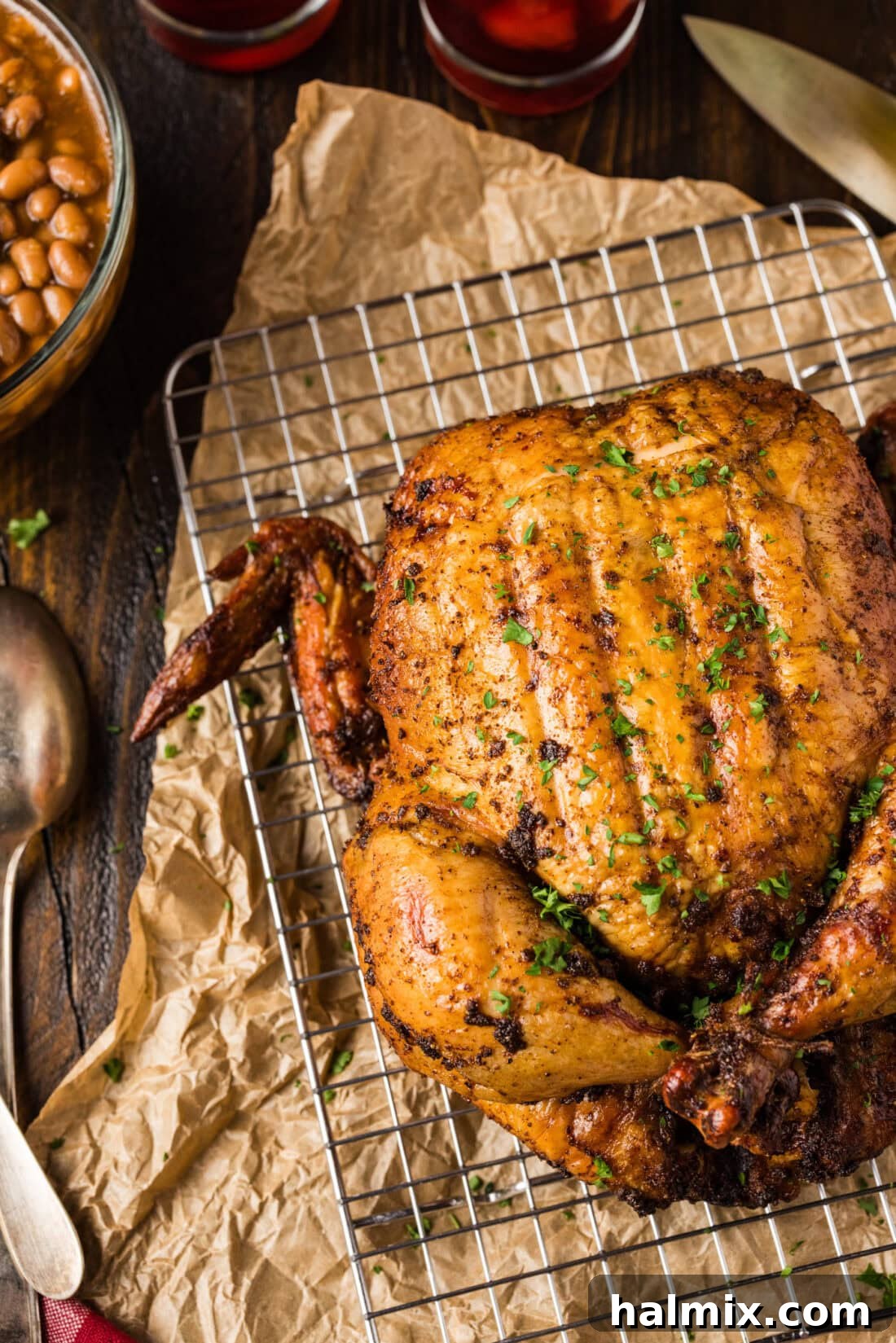
Delicious Serving Suggestions
A whole smoked chicken is a versatile main course that pairs wonderfully with a variety of side dishes. For a classic backyard BBQ feast, serve it alongside creamy baked beans, rich mac and cheese, or sweet corn on the cob. Other fantastic combinations include:
- Roasted Green Beans with Garlic: A simple, healthy, and flavorful vegetable side.
- Creamy Mashed Potatoes: A comforting classic that soaks up all the delicious juices.
- Coleslaw or Potato Salad: Refreshing, tangy options that balance the richness of the chicken.
- Fresh Garden Salad: A light and crisp salad with a vinaigrette dressing.
- Dinner Rolls or Cornbread: Perfect for soaking up any remaining sauce or drippings.
Transforming Leftovers: Creative Ideas for Smoked Chicken
Don’t let any of that incredible smoked chicken go to waste! Leftovers are fantastic for quick and flavorful meals throughout the week. Here are some creative ways to repurpose your smoked chicken:
- Smoked Chicken Sandwiches or Wraps: Shred the chicken and mix with a little mayo, BBQ sauce, or your favorite dressing for a quick lunch.
- Smoked Chicken Salads: Add chopped smoked chicken to green salads, pasta salads, or even a hearty Cobb salad for a protein boost.
- Tacos or Quesadillas: Shredded smoked chicken makes an amazing filling for tacos, burritos, or cheesy quesadillas.
- Soups and Stews: Use the flavorful smoked chicken meat (and those bones for homemade chicken stock!) to create incredibly rich and comforting soups or stews.
- Smoked Chicken Enchiladas or Casseroles: Incorporate the chicken into your favorite enchilada recipe or a cheesy chicken casserole for a satisfying family dinner.
- Pizza Topping: Dice the chicken and use it as a flavorful topping on homemade pizzas, especially with a BBQ sauce base.
The possibilities are endless once you have this delicious smoked chicken on hand. Enjoy!
More Smoker Recipes to Explore
If you’ve enjoyed smoking this whole chicken, you might be ready to explore more culinary adventures with your smoker. Here are some other fantastic recipes to try:
- Smoked Salmon
- Smoked Ribeye Steak
- Smoked Chicken Quarters
- Smoked Beef Short Ribs
- Smoked Spatchcock Chicken
I love to bake and cook and share my kitchen experience with all of you! Remembering to come back each day can be tough, that’s why I offer a convenient newsletter every time a new recipe posts. Simply subscribe and start receiving your free daily recipes!
Smoked Chicken
Golden-skinned with a juicy, moisture-locked center, this whole smoked chicken recipe is a perfect summer staple!
IMPORTANT – There are often Frequently Asked Questions within the blog post that you may find helpful. Simply scroll back up to read them!
Course: Dinner
Cuisine: American
Servings: 4 servings
Total Time: 3 hrs 40 mins
Calories: 562
Author: Amanda Davis
Ingredients
- 4 pound whole chicken
- ½ Tablespoon onion powder
- ½ Tablespoon garlic powder
- 1 teaspoon cumin
- 1 teaspoon chili powder
- ½ teaspoon dry mustard
- 1 Tablespoon smoked paprika
- 1 teaspoon salt
- ½ teaspoon black pepper
- 2 ½ Tablespoons olive oil
Things You’ll Need
- Smoker
- Mixing bowls
- Vinyl gloves
- Baker’s twine
- Tongs
- Instant-read meat thermometer (highly recommended for accuracy)
Before You Begin
- Don’t rinse the chicken as it can spread bacteria around the immediate area. Simply pat the chicken dry with paper towels.
- If you have a special seasoning rub that you like, by all means use it!
- If you don’t have baker’s twine, you can use unflavored dental floss to tie the legs together. A long wooden skewer can be poked through the ankle part of the legs to hold them together as well.
- A raw 4-pound chicken will lose about 25% of its weight when cooked. After removing the bones, the meat you are left with will weigh approximately 2 pounds, give or take some ounces. This all depends on how much water was added by the manufacturer and how fatty the chicken was.
- Always use a reliable meat thermometer to ensure the chicken reaches a safe internal temperature of 165°F (74°C) in the thickest part of the thigh.
Instructions
- Preheat smoker to 275°F (135°C).
- Pat chicken dry with paper towels.
- Combine all seasonings with the olive oil and whisk until completely mixed.
- Using gloved hands, rub oil mixture all over the chicken. Tie legs together with baker’s twine and tuck wings under the bird for even cooking.
- Place prepared chicken, breast side up, on the smoker and close the lid. Smoke for 2 hours. Then, use tongs to flip the bird over onto its breast side. Smoke for another 90 minutes, or until the internal temperature in the thickest part of the thigh reaches 165°F (74°C).
- Allow to rest for 5-10 minutes before carving to allow juices to redistribute.
Expert Tips & FAQs (Quick Reference)
- Store cooled leftover smoked chicken in an air-tight container in the refrigerator for up to 4 days.
- Refer to the “Mastering the Smoke: Expert Tips” and “Frequently Asked Questions” sections above for detailed advice on wood choice, crispy skin, temperature, and more.
Nutrition
Serving: 1 serving (1/4 chicken, about 1/2 lb) | Calories: 562cal | Carbohydrates: 3g | Protein: 41g | Fat: 42g | Saturated Fat: 11g | Polyunsaturated Fat: 8g | Monounsaturated Fat: 20g | Trans Fat: 0.2g | Cholesterol: 163mg | Sodium: 746mg | Potassium: 496mg | Fiber: 1g | Sugar: 0.3g | Vitamin A: 1323IU | Vitamin C: 4mg | Calcium: 41mg | Iron: 3mg
Tried this Recipe? Pin it for Later!
Follow on Pinterest @AmandasCookin or tag #AmandasCookin!
The recipes on this blog are tested with a conventional gas oven and gas stovetop. It’s important to note that some ovens, especially as they age, can cook and bake inconsistently. Using an inexpensive oven thermometer can assure you that your oven is truly heating to the proper temperature. If you use a toaster oven or countertop oven, please keep in mind that they may not distribute heat the same as a conventional full-sized oven and you may need to adjust your cooking/baking times. In the case of recipes made with a pressure cooker, air fryer, slow cooker, or other appliance, a link to the appliances we use is listed within each respective recipe. For baking recipes where measurements are given by weight, please note that results may not be the same if cups are used instead, and we can’t guarantee success with that method.