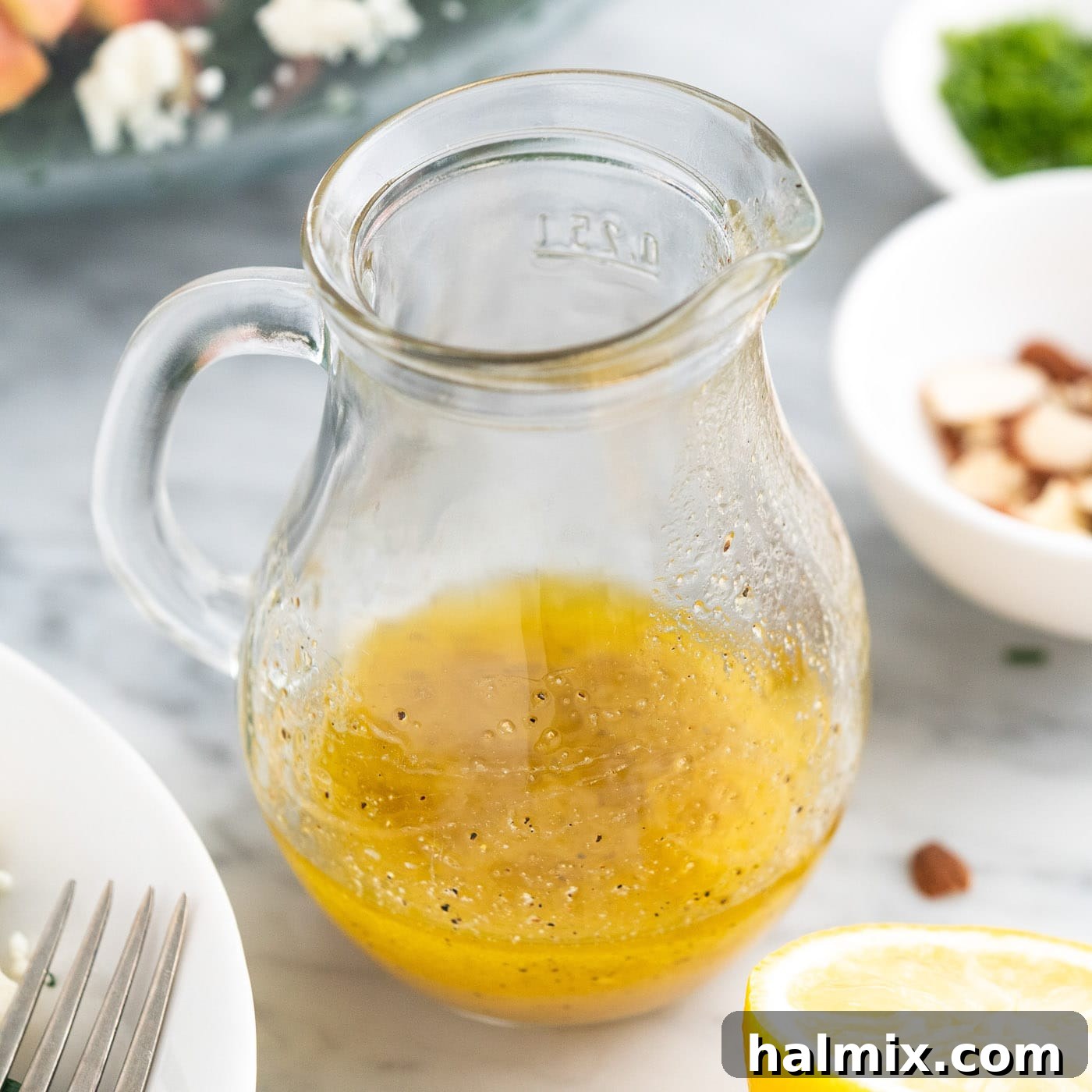
Transform your everyday salads with a bright, zesty, and utterly refreshing homemade lemon salad dressing. In just 5 minutes, with a handful of simple ingredients, you can whisk together a vibrant citrus vinaigrette that elevates any green or grain bowl from ordinary to extraordinary. Forget store-bought options filled with unpronounceable ingredients; this recipe brings pure, fresh flavor to your table with unparalleled ease.
Why This Homemade Lemon Dressing Is Your New Go-To
This lemon salad dressing isn’t just easy to make; it’s a culinary game-changer that combines fresh, wholesome ingredients into a perfectly balanced symphony of flavors. At its heart lies the bright, tangy zest of fresh lemon juice, a cornerstone for any good vinaigrette. This is beautifully complemented by the rich, smooth texture of extra virgin olive oil, which not only provides a luxurious mouthfeel but also infuses the dressing with healthy fats and antioxidants.
What truly makes this recipe shine is the careful interplay of a few key components. A touch of honey introduces a subtle sweetness that mellows the lemon’s natural acidity, preventing the dressing from being overly sharp. This sweetness also creates a more complex flavor profile, appealing to a wider range of palates. Dijon mustard acts as a crucial emulsifier, helping to bind the oil and vinegar (lemon juice, in this case) together into a smooth, creamy consistency, while also adding a sophisticated, slightly pungent depth that is unmistakably gourmet. Finally, a simple seasoning of salt and pepper enhances all these wonderful flavors, bringing them into perfect harmony.
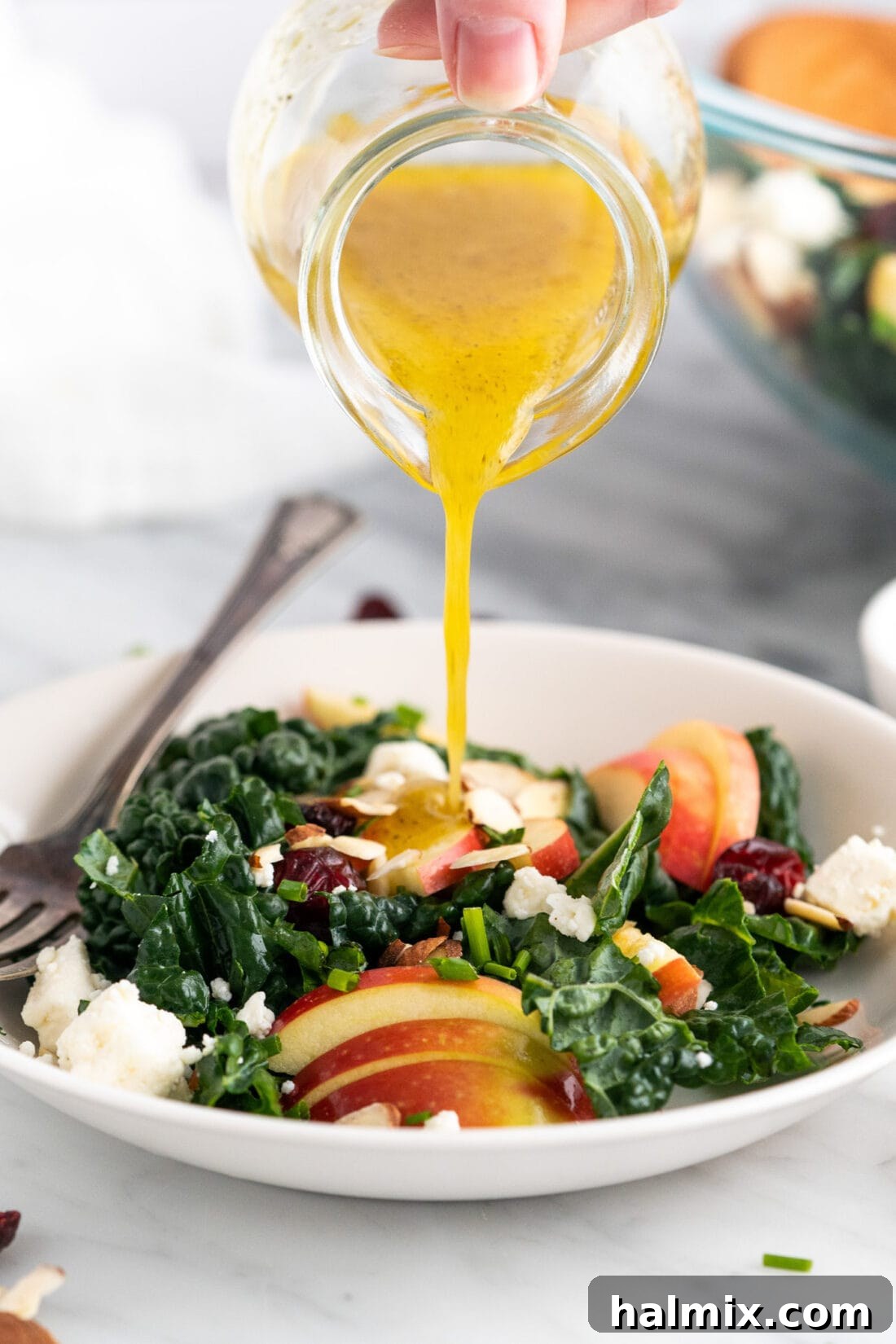
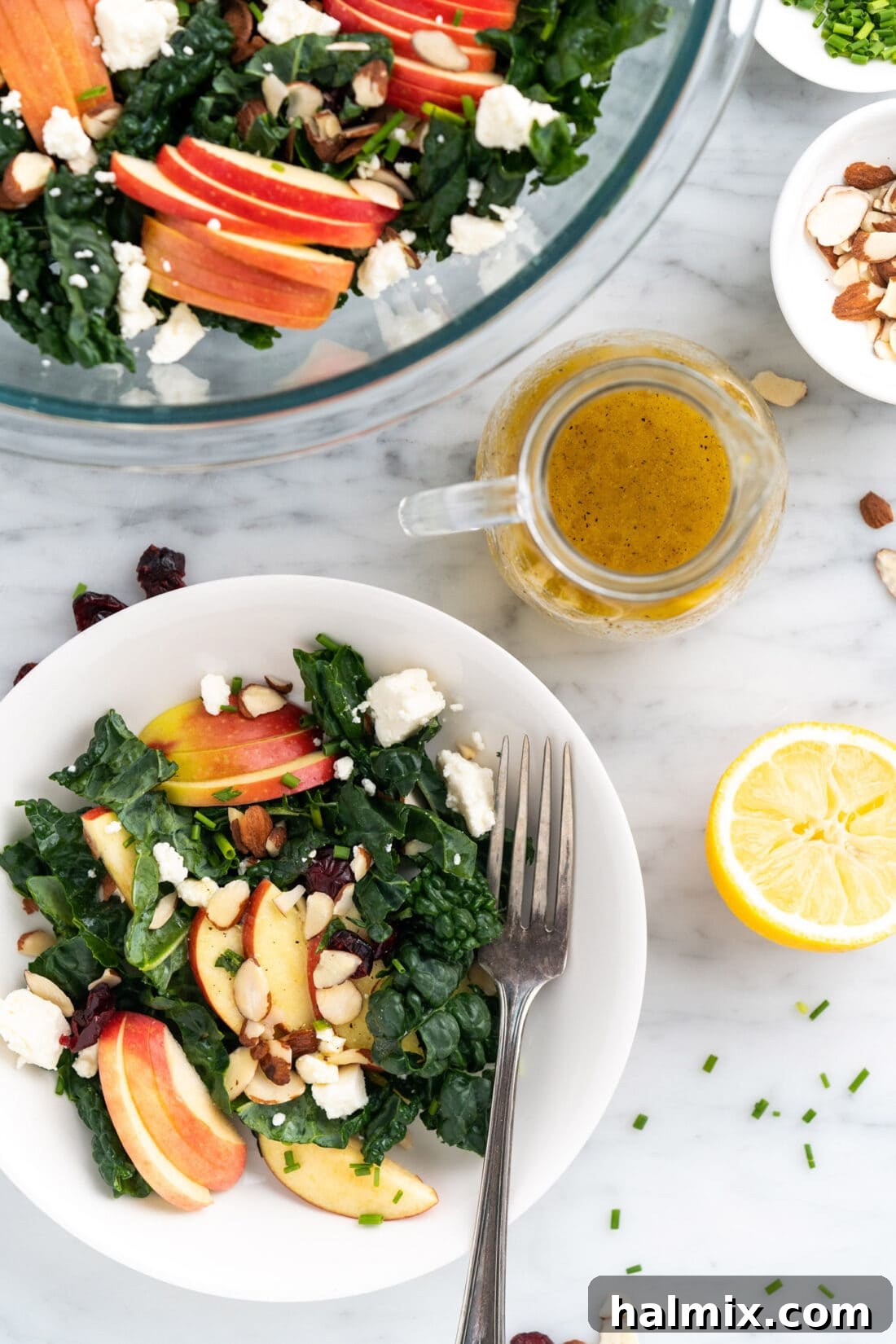
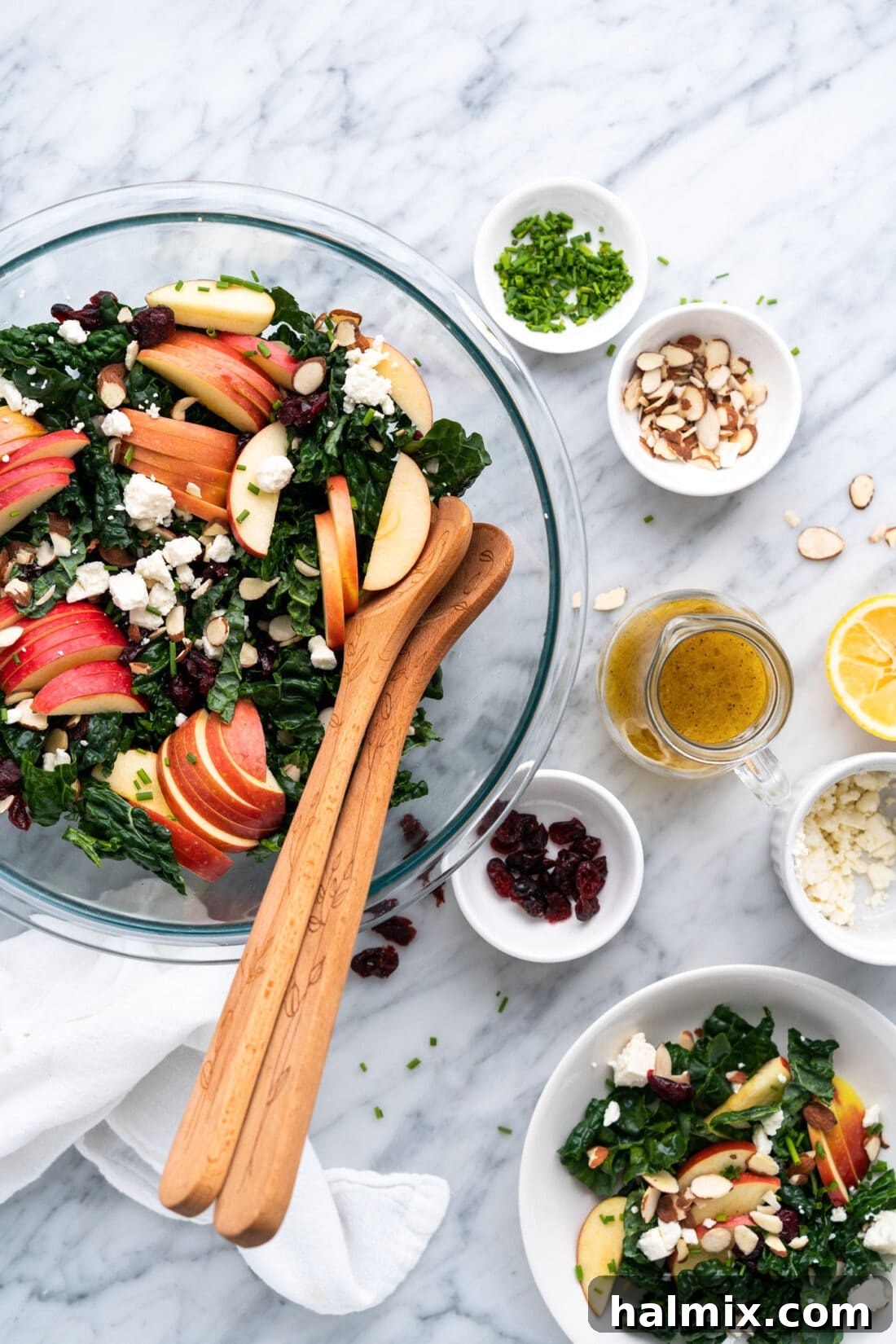
The beauty of this lemon vinaigrette lies in its versatility. While we particularly adore it tossed into our kale salad, where its bright notes cut through the richness of crunchy apples and tangy feta cheese (as beautifully pictured here), its refreshing character makes it a divine complement to virtually any fresh dinner salad. Imagine it drizzled over delicate spring greens, robust romaine, or even as a light, flavorful dressing for pasta salads, imparting a sun-kissed brightness that invigorates every bite. It’s a year-round staple, capable of brightening up winter greens and summer produce alike, proving that simplicity often yields the most exquisite results.
Essential Ingredients for Your Zesty Lemon Vinaigrette
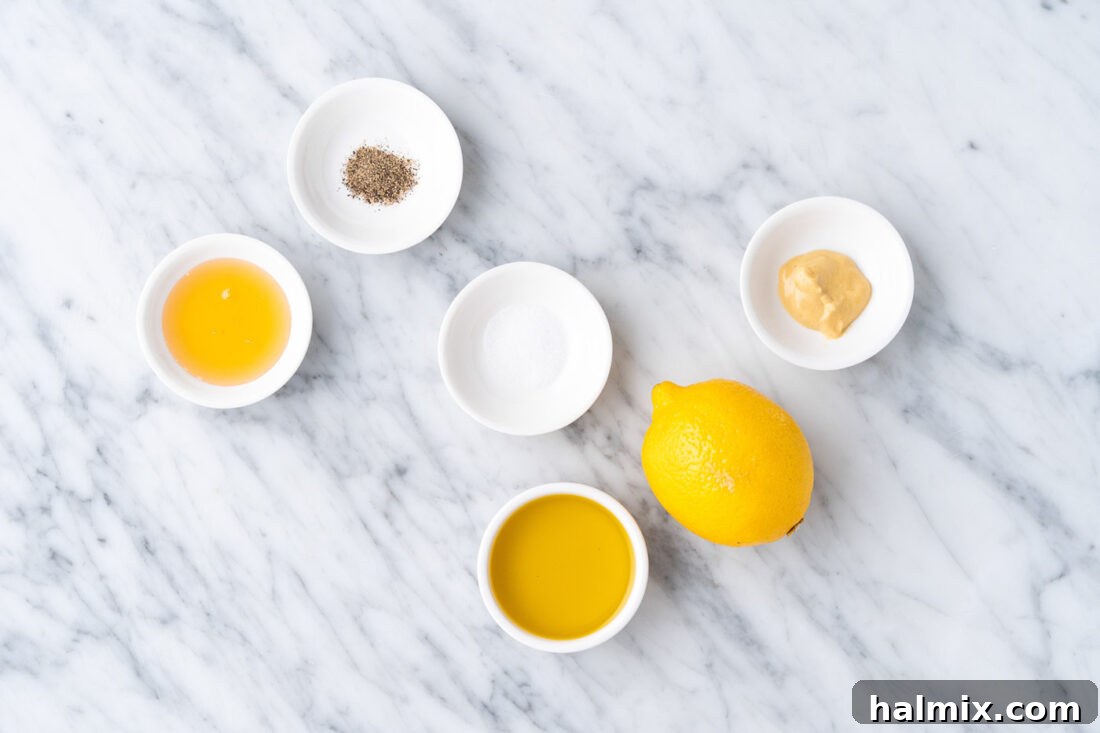
Creating this irresistible lemon salad dressing requires just a few pantry staples and, most importantly, fresh lemons. Each ingredient plays a vital role in achieving that perfect balance of tang, sweetness, and richness. Here’s what you’ll need to gather:
- Fresh Lemon Juice: The star of the show. Aim for freshly squeezed for the best, most vibrant flavor.
- Extra Virgin Olive Oil: A high-quality olive oil provides a smooth base and healthy fats.
- Honey: To balance the acidity of the lemon juice with a touch of natural sweetness.
- Dijon Mustard: Essential for emulsification and adding a subtle, complex tang.
- Salt and Freshly Ground Black Pepper: To season and enhance all the flavors.
You’ll find precise measurements and step-by-step instructions in the full recipe section at the end of this post, making it easy to create this delicious dressing whenever you crave a burst of freshness.
Ingredient Insights and Smart Substitutions
Understanding the role of each ingredient in your lemon salad dressing can help you achieve the perfect flavor profile and even inspire creative variations.
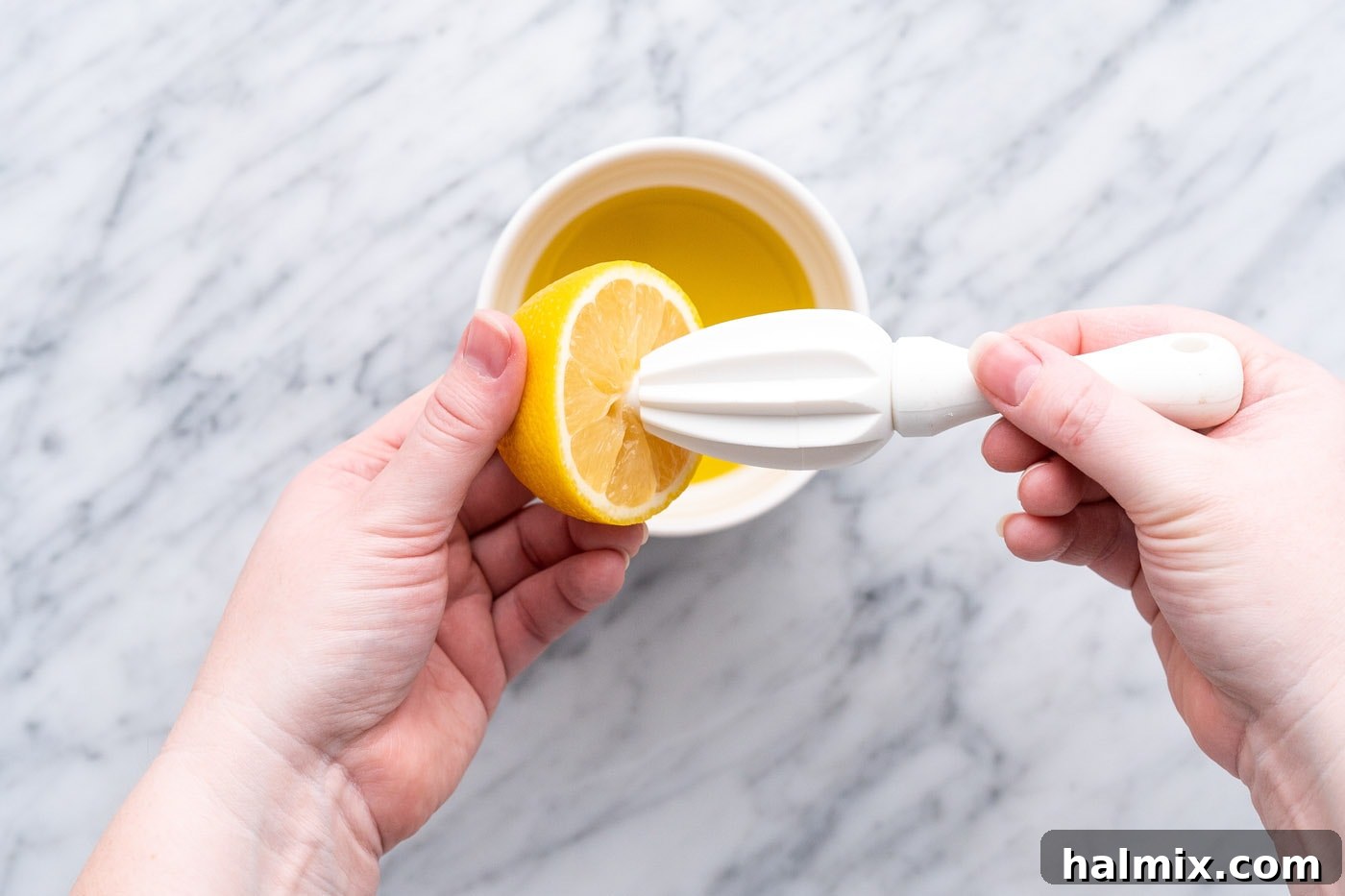
DRESSING BASE – Fresh Lemon Juice: This is non-negotiable for an exceptional lemon dressing. While bottled lemon juice is convenient, it simply cannot replicate the bright, natural acidity and delicate aroma of freshly squeezed lemons. The difference in taste is significant and immediately noticeable. One medium-sized lemon typically yields about 2-3 tablespoons of juice, which is generally enough for this recipe. To maximize juice extraction, roll the lemon firmly on your countertop before slicing and juicing. You can also briefly microwave it for 10-15 seconds.
EMULSIFIER & FLAVOR BOOSTER – Dijon Mustard: Far more than just a condiment, Dijon mustard plays a dual role here. Firstly, it acts as a fantastic emulsifying agent, helping the oil and lemon juice blend seamlessly into a smooth, unified dressing rather than separating. Secondly, it contributes a distinct, savory depth and a subtle peppery tang that complements the citrus beautifully. If you don’t have Dijon, you can use a small amount of whole-grain mustard, though it will alter the texture slightly. Avoid standard yellow mustard, as its flavor profile is too different.
SWEETNESS & BALANCE – Honey: The honey in this recipe is crucial for balancing the sharp acidity of the lemon, preventing the dressing from being overly tart. It introduces a gentle, natural sweetness that rounds out the flavors and adds a pleasant stickiness to the dressing. For a vegan alternative, pure maple syrup or agave nectar can be used in equal measure. If you prefer a less sweet dressing, you can slightly reduce the amount of honey. Conversely, if your lemons are particularly tart, a tiny bit more honey can bring it back into perfect balance.
RICHNESS & NUTRITION – Extra Virgin Olive Oil: As the backbone of this vinaigrette, extra virgin olive oil delivers a rich, fruity flavor and a silky texture. Beyond its taste, it’s packed with beneficial monounsaturated fats and antioxidants, making this dressing a healthy choice. Opt for a good quality extra virgin olive oil, as its flavor will be prominent. Lighter olive oils or even a neutral-flavored oil like avocado oil can be used for a milder taste, but you might lose some of the characteristic richness. Always pour olive oil slowly while whisking to ensure proper emulsification.
SEASONING – Salt and Pepper: These humble seasonings are vital for amplifying all the other flavors. Use fine sea salt or kosher salt, and freshly ground black pepper for the best results. Taste and adjust as needed, as individual lemons can vary in acidity and you might prefer a slightly saltier or spicier dressing.
Crafting Your Perfect Lemon Salad Dressing: A Step-by-Step Guide
These step-by-step photos and instructions are here to help you visualize how incredibly simple it is to make this delightful dressing. You can refer to the complete printable recipe, including exact measurements, at the very bottom of this post.
-
Combine Ingredients: Begin by adding all the measured ingredients – fresh lemon juice, extra virgin olive oil, honey, Dijon mustard, salt, and black pepper – into a small mixing bowl or a glass jar with a tight-fitting lid. Ensure your lemon juice is fresh-squeezed for optimal flavor!

-
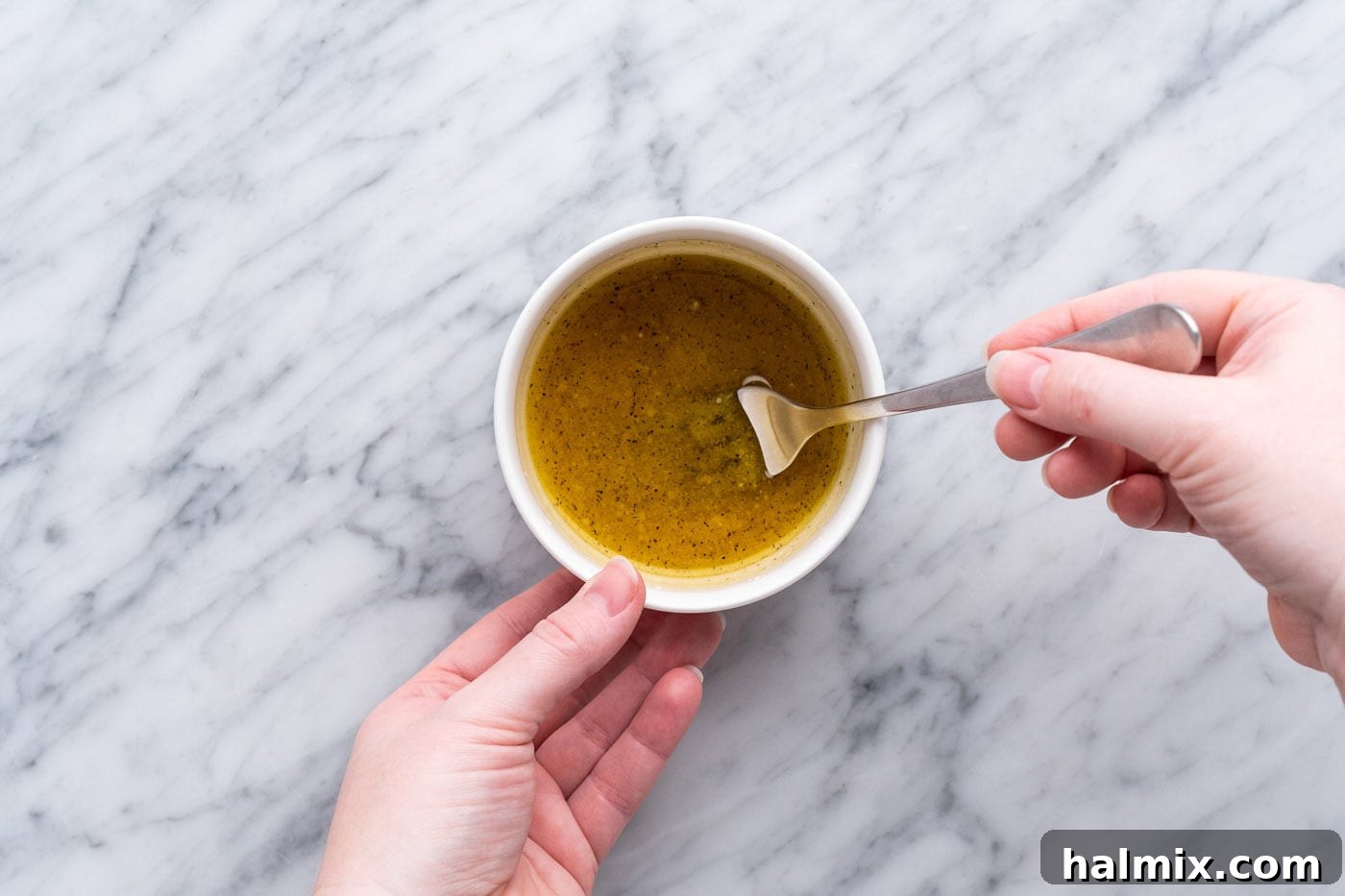
Whisk or Shake to Emulsify: If using a bowl, vigorously whisk the ingredients together until they are well combined and the dressing appears smooth and slightly thickened. This whisking action helps to emulsify the oil and lemon juice, preventing them from separating. If using a jar, simply screw on the lid tightly and shake vigorously for about 30 seconds until everything is fully blended. The dressing should look creamy and uniform.
-
Taste and Adjust: Before serving, always taste your dressing. Depending on the tartness of your lemons and your personal preference, you might want to add a tiny bit more salt, pepper, or honey to achieve your perfect balance. A good dressing should be bright but not overwhelmingly sour, and seasoned just right.
-
Chill Until Ready: Once prepared and seasoned to your liking, refrigerate the dressing until you’re ready to use it. Chilling allows the flavors to meld and deepen, enhancing its overall taste. Give it another quick shake or whisk before drizzling over your favorite salads.
Frequently Asked Questions & Expert Tips for Success
How long does lemon salad dressing keep and how do you store it?
This homemade lemon vinaigrette will keep exceptionally well in a sealed jar or an airtight container, stored in the refrigerator, for up to 1 week. The fresh lemon juice is quite acidic, which acts as a natural preservative. Before each use, simply give the container a good shake or a quick whisk, as some natural separation of ingredients can occur.
Can I freeze it?
Unfortunately, freezing this dressing is not recommended. The lemon juice can become bitter once thawed, and the emulsion of the oil and other ingredients may separate and not come back together properly, leading to an unpleasant texture and flavor.
What are some variations I can make?
Get creative! You can infuse your lemon dressing with additional flavors. Try adding a minced garlic clove for an aromatic kick, finely chopped fresh herbs like parsley, dill, or chives for extra freshness, or a pinch of red pepper flakes for a subtle heat. A teaspoon of lemon zest can also intensify the citrus flavor beautifully.
How do I ensure a good emulsion?
The key to a well-emulsified vinaigrette is the Dijon mustard and a steady, gradual whisking (or shaking). When adding the olive oil, do so slowly while continuously whisking. This helps the oil break down into tiny droplets that are suspended throughout the lemon juice and mustard, creating a smooth, cohesive dressing.
Can I make this dressing vegan?
Absolutely! The only non-vegan ingredient is honey. Simply substitute the honey with an equal amount of pure maple syrup or agave nectar to make this dressing entirely plant-based and vegan-friendly.
Delightful Serving Suggestions and Culinary Pairings
The beauty of this simple lemon salad dressing lies in its incredible versatility. Its bright and refreshing profile complements a wide array of dishes, making it far more than just a dressing for leafy greens.
- Classic Green Salads: Of course, it’s perfect over any variety of leafy greens. Try it with a crisp romaine salad, delicate butter lettuce, or a sturdy spinach mix. It’s especially fantastic with our kale salad, where its zest cuts through the heartiness of the kale beautifully.
- Fruit & Nut Salads: The honey and lemon combo sings with fruits. Drizzle it over a fresh blueberry salad with romaine, a strawberry spinach salad, or a mixed green salad featuring apples, walnuts, and goat cheese.
- Roasted Vegetables: Transform simple roasted vegetables into a gourmet side dish. Toss it with warm roasted asparagus, broccoli, carrots, Brussels sprouts, or even root vegetables like potatoes and sweet potatoes for a vibrant finish.
- Grilled Chicken or Fish: Use it as a light marinade for grilled chicken breasts, flaky white fish like cod or tilapia, or even shrimp. Its acidity tenderizes and infuses incredible flavor. Alternatively, drizzle it over cooked protein for a fresh finish.
- Grain Bowls: Elevate your quinoa, farro, or couscous bowls. It pairs wonderfully with cooked grains, fresh vegetables, and a protein source for a healthy and satisfying meal.
- Pasta Salads: Give your pasta salads a refreshing twist. Instead of heavy, creamy dressings, this lemon vinaigrette offers a lighter, brighter alternative that lets fresh ingredients shine.
- Cucumber & Tomato Salads: A simple summer delight! Slice cucumbers and tomatoes, add some red onion, and toss with this dressing for an incredibly fresh and satisfying side.
- Appetizers & Dips: Drizzle over sliced cucumbers, bell peppers, or other raw vegetables as a light appetizer. It can even be swirled into hummus for a brighter flavor.
No matter how you choose to enjoy it, this lemon vinaigrette is sure to add a burst of fresh, homemade flavor to your meals. Enjoy the delightful zest!
Explore More Delicious Homemade Salad Dressing Recipes
If you’ve fallen in love with the simplicity and fresh taste of homemade dressings, you’re in for a treat! Making your own dressings opens up a world of flavor, allowing you to control ingredients and customize to your heart’s content. Here are some more fantastic salad dressing recipes to add to your culinary repertoire:
- Classic Blue Cheese Dressing: Rich, tangy, and perfect for wedge salads or buffalo chicken.
- Creamy Dill Dressing: A fresh, herbaceous dressing that pairs wonderfully with seafood and garden salads.
- Homestyle Buttermilk Ranch Dressing: The ultimate creamy favorite, made fresh for superior taste.
- Sweet Blueberry Vinaigrette: A fruity and vibrant dressing perfect for summer salads.
- Classic Balsamic Vinaigrette: A versatile and timeless dressing for almost any salad.
Each of these recipes offers a unique flavor profile and the satisfaction of knowing exactly what goes into your meals. Enjoy experimenting and finding your new favorite!
I love to bake and cook and share my kitchen experience with all of you! Remembering to come back each day can be tough, that’s why I offer a convenient newsletter every time a new recipe posts. Simply subscribe and start receiving your free daily recipes!
Lemon Salad Dressing
This lemon salad dressing is made with fresh lemon juice, olive oil, honey, Dijon mustard, salt, and pepper for a quick and refreshing dressing to toss into salads all year round.
IMPORTANT: There are often Frequently Asked Questions within the blog post that you may find helpful. Simply scroll back up to read them!
Print It
Pin It
Course: Condiments
Cuisine: American
Servings: 6 servings
Total Time: 5 mins
Calories: 69
Author: Amanda Davis
Ingredients
- 2 Tablespoons fresh lemon juice
- 3 Tablespoons extra virgin olive oil
- ½ Tablespoon honey
- 1 teaspoon Dijon mustard
- ¼ teaspoon salt
- ⅛ teaspoon black pepper
Things You’ll Need
- Whisk
- Small Bowl or Glass Jar
Before You Begin
- It’s best to use fresh lemon juice as opposed to the bottled variety. Trust me, you can taste the difference! One regular-sized lemon will yield 2-3 Tablespoons of juice.
- The honey in this dressing mellows out the bitterness while the Dijon adds plenty of flavor and creaminess. Extra virgin olive oil packs in additional vitamins and antioxidants while creating depth as the base of this recipe.
- This homemade lemon vinaigrette will keep well in a sealed jar or air-tight container kept in the refrigerator for up to 1 week. Give it a good shake before using.
Instructions
- Add all ingredients to a small bowl or glass jar, and whisk or shake together to combine. Refrigerate until using.
Nutrition
Serving: 1 serving | Calories: 69cal | Carbohydrates: 2g | Protein: 0.1g | Fat: 7g | Saturated Fat: 1g | Polyunsaturated Fat: 1g | Monounsaturated Fat: 5g | Sodium: 106mg | Potassium: 8mg | Fiber: 0.1g | Sugar: 2g | Vitamin A: 1IU | Vitamin C: 2mg | Calcium: 1mg | Iron: 0.1mg
Tried this Recipe? Pin it for Later!
Follow on Pinterest @AmandasCookin or tag #AmandasCookin!
The recipes on this blog are tested with a conventional gas oven and gas stovetop. It’s important to note that some ovens, especially as they age, can cook and bake inconsistently. Using an inexpensive oven thermometer can assure you that your oven is truly heating to the proper temperature. If you use a toaster oven or countertop oven, please keep in mind that they may not distribute heat the same as a conventional full sized oven and you may need to adjust your cooking/baking times. In the case of recipes made with a pressure cooker, air fryer, slow cooker, or other appliance, a link to the appliances we use is listed within each respective recipe. For baking recipes where measurements are given by weight, please note that results may not be the same if cups are used instead, and we can’t guarantee success with that method.