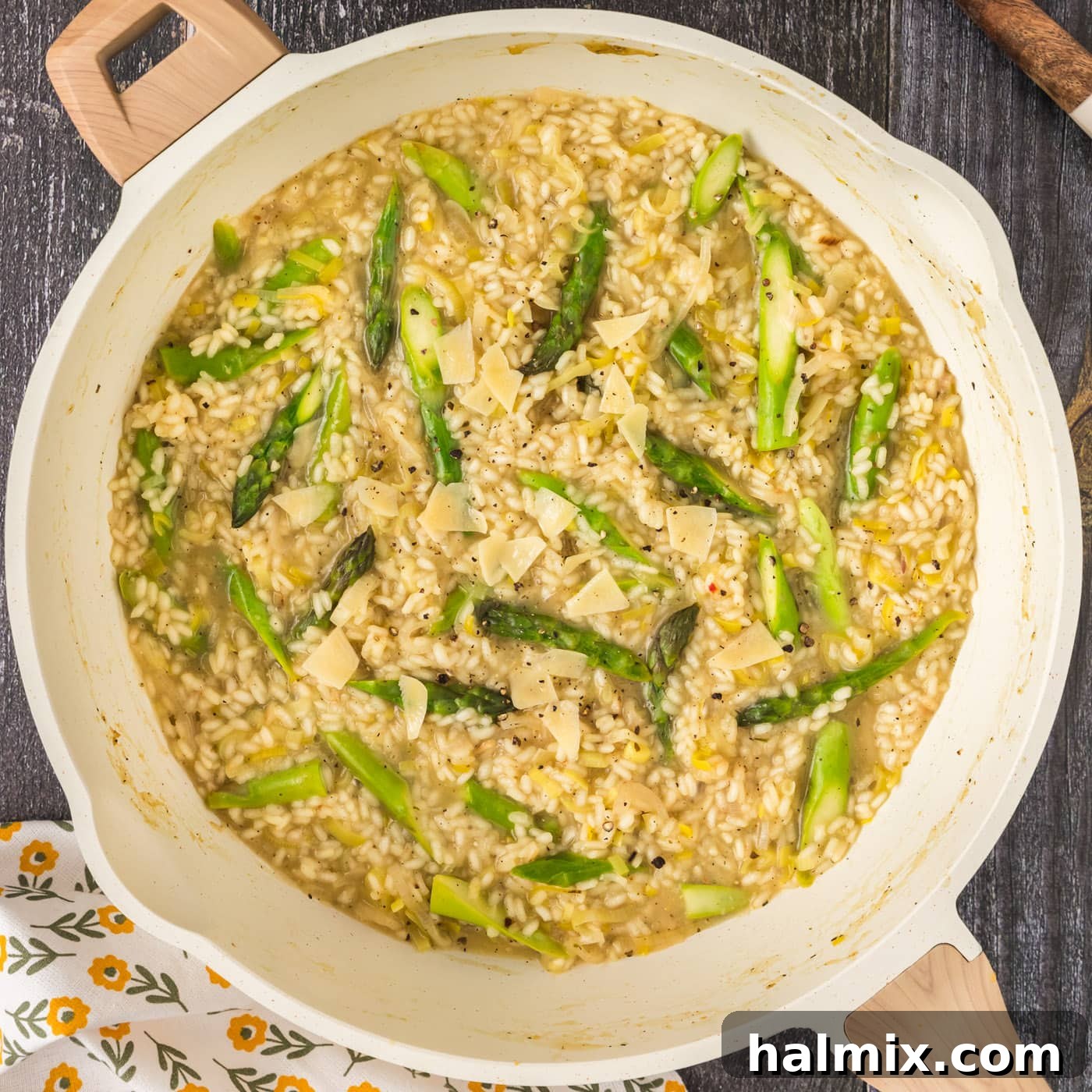
Creamy Asparagus Risotto: A Taste of Spring in Every Spoonful
Delight your senses with the vibrant flavors of spring in this exquisite creamy asparagus risotto. Crafted with tender, crisp asparagus spears, delicate sliced leeks, and aromatic chopped shallots, this dish features a rich, velvety Arborio rice base that promises pure comfort. Whether served as a light yet satisfying main course or an elegant, vibrant side dish, this recipe brings the essence of the season directly to your table.
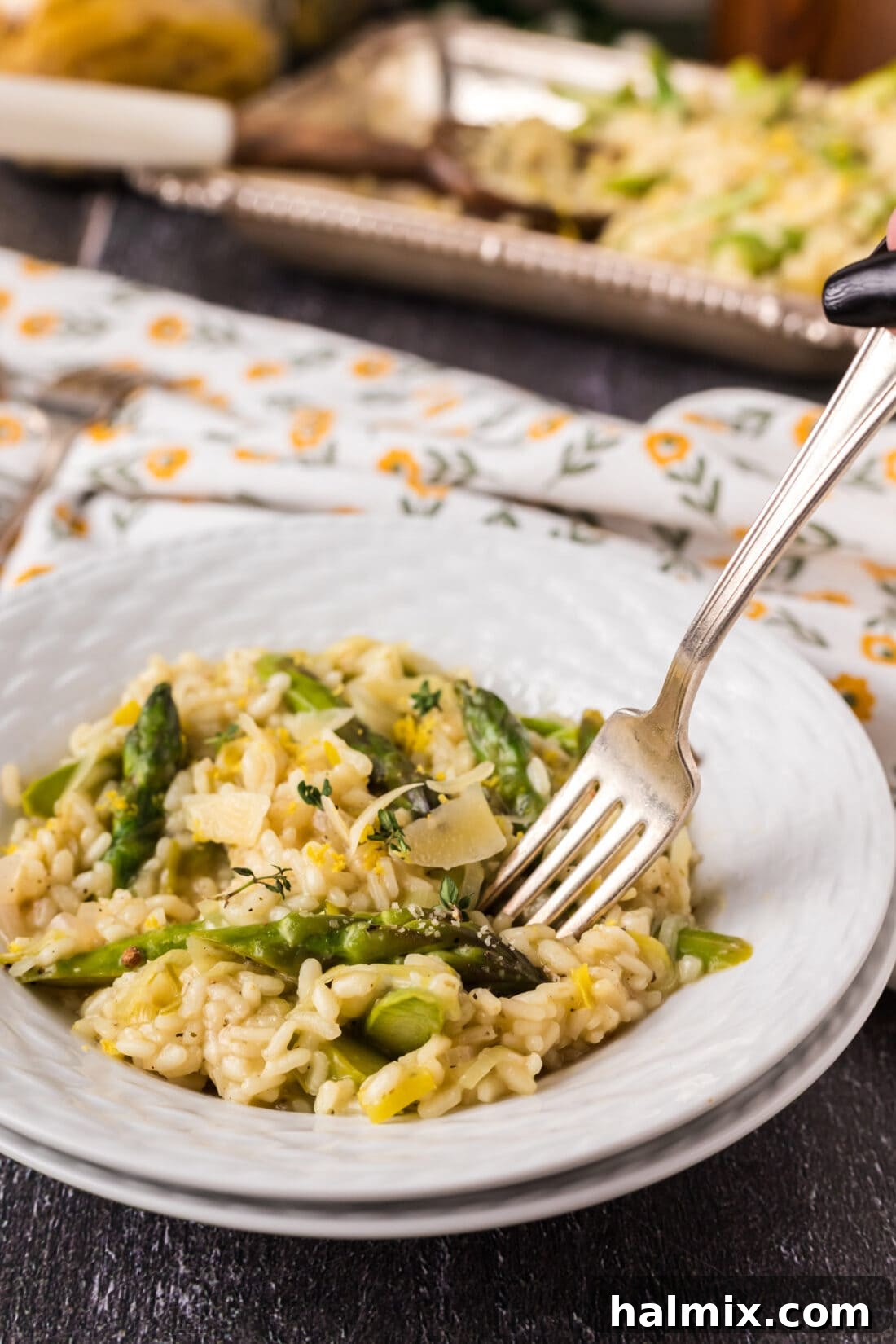
Why This Asparagus Risotto Recipe Is a Must-Try
Embrace the refreshing bounty of springtime with this incredibly delicious asparagus risotto. As gardens begin to bloom and farmers’ markets overflow with fresh produce, our asparagus risotto recipe shines as a celebration of these bright, seasonal flavors. There’s a unique joy in plucking budding asparagus and fresh leeks and transforming them into a dish that’s both comforting and invigorating.
This recipe consistently delivers a rich, creamy texture and a sophisticated flavor profile that makes it a highly anticipated meal every spring. The subtle sweetness of the leeks combined with the earthy notes of shallots and the delicate crunch of fresh asparagus creates a symphony of tastes that perfectly complements the luscious Arborio rice. It’s a culinary experience that captures the very essence of the season.
While we often find ourselves torn between making a hearty creamy mushroom risotto and this vibrant asparagus version when wild mushrooms and asparagus make their annual appearance, our ultimate solution is simple: make both! Swapping between these two delightful risottos offers a wonderful change in texture and flavor, ensuring variety throughout the spring season. With fresh, locally sourced produce readily available, there’s always room to enjoy both these exquisite dishes.
Beyond its incredible taste, this asparagus risotto is also a versatile dish. It can stand proudly as a satisfying vegetarian main course, offering a complete meal that’s both nourishing and fulfilling. Alternatively, it serves as an impeccable side dish, elevating any protein from grilled chicken to pan-seared salmon. The simplicity of its preparation, combined with its elegant presentation and impressive flavor, makes it a go-to recipe for both weeknight dinners and special occasions.
Essential Ingredients for Your Asparagus Risotto
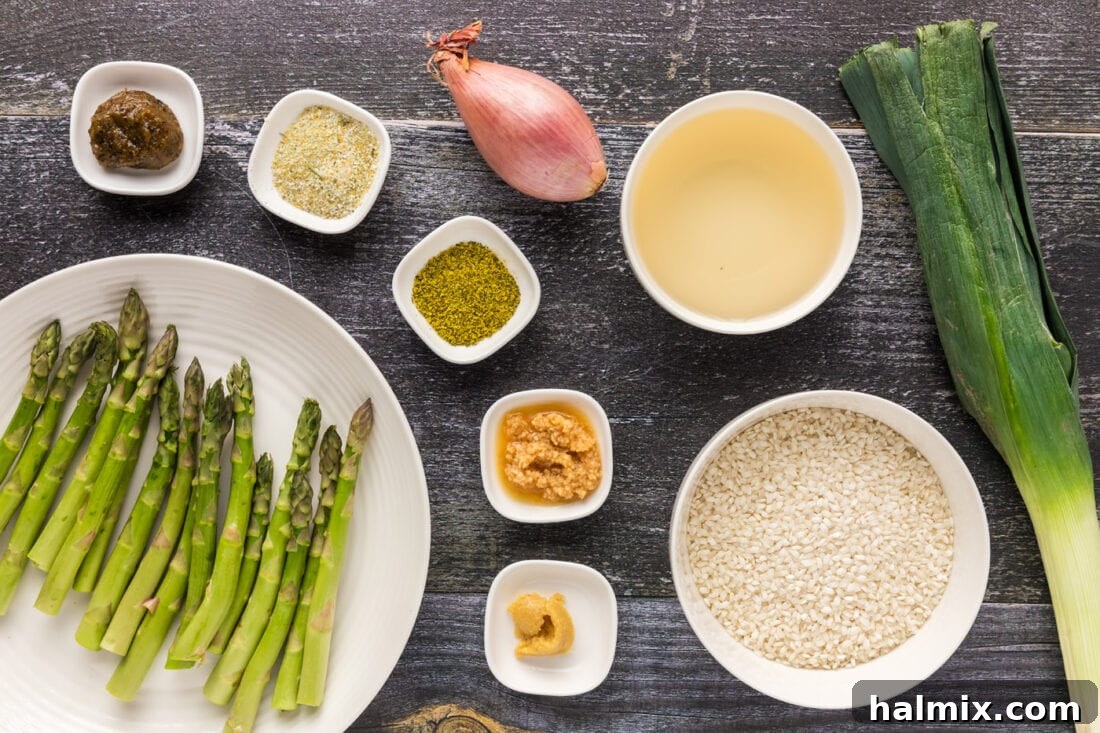
Creating an outstanding asparagus risotto begins with selecting fresh, high-quality ingredients. Each component plays a crucial role in building the layered flavors and achieving the signature creamy texture of this classic Italian dish. From the star ingredient, fresh asparagus, to the foundational Arborio rice and aromatic vegetables, every item contributes to the final masterpiece. While the full list of precise measurements and detailed instructions can be found in the recipe card at the conclusion of this article, here’s an overview of what you’ll need to gather to embark on this delightful culinary journey.
Having your ingredients prepped and ready before you start cooking, a technique known as “mise en place,” will make the risotto-making process smooth and enjoyable. This thoughtful preparation ensures that you can focus on the cooking technique, particularly the gradual addition of liquid and continuous stirring, which are key to achieving the perfect risotto.
Ingredient Insights and Smart Substitutions
Understanding each ingredient’s role and knowing possible substitutions can significantly enhance your cooking experience and culinary flexibility. Here’s a deeper look into the key components of our creamy asparagus risotto:
- Asparagus: The star of the show! For the best results, select vibrant green asparagus spears with firm stalks and tightly closed tips. Before cooking, remember to trim the woody ends, which are typically the bottom 1-2 inches of the stalk. These ends are tough and fibrous, and removing them ensures every bite is tender and enjoyable. Snap them by hand, and they’ll naturally break where the woody part ends and the tender part begins.
- Risotto Rice (Arborio Rice): We highly recommend 1½ cups of Arborio rice for the perfect risotto base. Arborio is our top choice because of its high starch content and remarkable ability to absorb a large amount of liquid while still retaining a slight bite in the center. As it cooks, it gradually releases its starch, creating the signature creamy, luscious texture that is characteristic of authentic risotto. While Arborio is ideal, other medium-grain, high-starch rice varieties like Carnaroli or Vialone Nano can also yield excellent results.
- Leeks: These elegant members of the onion family add a subtle, sweet, and mild onion flavor that complements the asparagus beautifully. Proper preparation is essential: first, slice off the root end and discard it. Then, trim off the tougher, darker green leaves, leaving the white and light green parts. Cut the leek lengthwise down the center and thoroughly rinse under cold water to remove any trapped dirt or grit between the layers. Finally, slice the cleaned leeks into thin, crescent-shaped pieces.
- Shallots: Often described as a milder, sweeter cousin to the onion, shallots provide a delicate aromatic base that lays the foundation for the risotto’s flavor. Their finely chopped texture melts into the dish, offering depth without overpowering the other ingredients.
- Garlic & Ginger: Minced garlic offers a pungent, savory kick, while fresh ginger introduces a bright, slightly spicy warmth, adding a unique and delightful layer of complexity to the overall flavor profile.
- Olive Oil: A good quality extra virgin olive oil is crucial for sautéing the aromatics. It provides a foundational rich, fruity flavor and helps prevent sticking.
- White Wine: A dry white wine, such as Pinot Grigio or Sauvignon Blanc, is used to deglaze the pan and add a layer of complex acidity and depth to the risotto. The alcohol cooks off, leaving behind a concentrated, appealing flavor. If you prefer not to use wine, an equal amount of vegetable stock or broth can be substituted, though the flavor profile will be slightly different.
- Bouillon Base (or Stock/Broth): We frequently use bouillon bases in our recipes for their convenience and long shelf life. They are compact and easy to store, simply requiring the addition of water to create a flavorful broth. For this recipe, 1½ tablespoons of an Italian Herb Bouillon Base, combined with 3 cups of water, creates an excellent liquid for the risotto. However, you can easily substitute this with an equal amount of chicken or vegetable stock or broth. Simply eliminate the bouillon and replace the water with the chosen stock for a equally delicious outcome.
- Seasonings (Garlic Salt & Lemon Pepper): These seasonings are carefully chosen to enhance the dish’s bright and savory notes. Garlic salt reinforces the aromatic base, while lemon pepper adds a zesty, peppery finish that truly makes the asparagus pop. Adjust to taste, remembering that the bouillon and parmesan cheese (if used) will also contribute to the saltiness.
Mastering Creamy Asparagus Risotto: Step-by-Step Guide
Making risotto is often described as a labor of love, but it’s a truly rewarding culinary experience. The key is patience and gradual liquid addition, transforming humble rice into a luxurious, creamy masterpiece. Follow these step-by-step instructions to create your perfect asparagus risotto.
Before you begin, ensure all your ingredients are prepped and within easy reach. This includes trimming the asparagus, slicing the leeks and shallots, and mincing the garlic and ginger. Having your warm broth ready to go is also crucial, as adding cold liquid will shock the rice and impede its creamy development.
- First, prepare your asparagus. Carefully cut off the woody ends from the asparagus spears, typically about 1-2 inches from the bottom. Once trimmed, slice the asparagus stalks into uniform 2-inch pieces. Set these aside for later.
- In a large, deep-sided skillet or a Dutch oven, heat 2 tablespoons of olive oil over medium-high heat. Wait until the oil is shimmering slightly, indicating it’s ready for sautéing.
- Add the sliced shallots to the hot skillet. Sauté them gently for 1-2 minutes, stirring occasionally, until they become translucent and fragrant. Be careful not to brown them, as this can impart a bitter flavor.
- Next, toss in the minced garlic and minced ginger. Continue to sauté for an additional minute, allowing their aromas to release and meld with the shallots. Stir constantly to prevent the garlic from burning.
- Add the prepared sliced leeks to the skillet with the shallots, garlic, and ginger. Cook for another 3-4 minutes, stirring occasionally, until the leeks have softened but are still vibrant.
- It’s time for the Arborio rice. Drop 1½ cups of Arborio rice into the skillet. Cook the rice for 3-4 minutes, stirring frequently. This step, known as “toasting” the rice, helps to slightly seal the grains, allowing them to absorb liquid more evenly and maintain their shape while releasing starch.
- Season the rice and vegetable mixture generously with 1 tablespoon of garlic salt and 2 teaspoons of lemon pepper. Stir thoroughly to ensure the seasonings are evenly distributed and coating every grain of rice.
- Pour in 1 cup of white wine, followed by 1½ tablespoons of Better than Bouillon Italian Herb Base and 3 cups of water. (Alternatively, if using stock, add 1 cup of white wine and 3 cups of chicken or vegetable stock – refer to the ingredient notes for details). Stir everything together to combine. Increase the heat to medium-high and bring the mixture to a gentle boil. Once boiling, reduce the heat to medium and cook for 7-10 minutes, stirring occasionally, until the sauce begins to thicken and the liquid starts to absorb into the rice.
- Finally, add the reserved sliced asparagus pieces to the skillet. Stir them into the thickening risotto. Continue to cook uncovered for an additional 20-30 minutes, or until the remaining liquid is absorbed, the rice is tender with a slight al dente bite, and the asparagus is cooked through but still has a pleasant crispness. Remember to stir frequently, especially towards the end, to prevent sticking and encourage creaminess.
Serve your creamy asparagus risotto immediately, garnished as desired. Enjoy the fruits of your labor!
Frequently Asked Questions & Expert Tips for Perfect Risotto
Achieving risotto perfection involves a few key techniques and knowing how to handle leftovers. Here are some frequently asked questions and expert tips to guide you:
How do you store leftover asparagus risotto?
Leftover asparagus risotto, once fully cooled to room temperature, should be transferred to an airtight container. Store it in the refrigerator for up to 4 days. While risotto is best enjoyed fresh, properly stored leftovers can still be delicious.
Can you freeze asparagus risotto?
While freezing asparagus risotto is technically possible, it’s important to be aware of potential changes in texture. Risotto, and particularly the delicate asparagus, may become slightly mushy after being frozen and reheated. The vibrant color and crispness of the asparagus might also diminish. However, if you choose to freeze it, ensure the fully cooled asparagus risotto is stored in an airtight container or a gallon-sized freezer bag for up to 2 months. To reheat, thaw overnight in the refrigerator, then gently warm on the stovetop over low heat, adding a splash of water or broth if needed to restore its creamy consistency. Stir frequently until heated through.
Expert Tips for an Unforgettable Asparagus Risotto:
- Warm Your Broth: Always use warm (or hot) stock/bouillon when adding it to the rice. Adding cold liquid can lower the temperature of the pan and rice, stopping the cooking process and affecting the creamy texture development. Keep your stock in a separate saucepan over low heat.
- Stirring Technique: While constant stirring is important for releasing the starch and creating creaminess, you don’t need to stir vigorously non-stop. Regular, gentle stirring every 30-60 seconds is sufficient to prevent sticking and ensure even cooking.
- Al Dente Perfection: Risotto should be tender but still have a slight bite (al dente) in the center of each grain of rice. Taste frequently towards the end of the cooking process to achieve your desired texture.
- Don’t Overcook Asparagus: Adding the asparagus towards the end ensures it cooks through but retains its vibrant color and pleasant crunch. Overcooked asparagus can become limp and lose its flavor.
- Taste and Adjust: Always taste your risotto before serving. Adjust seasonings like salt, pepper, or lemon juice as needed. A final squeeze of fresh lemon juice can brighten all the flavors.
- Serve Immediately: Risotto is a dish that waits for no one. Its creamy texture and temperature are at their peak right off the stove. Have plates ready and serve as soon as it’s done.
- Add a Knob of Butter and Parmesan at the End (Mantecaura): For an extra layer of richness and silkiness, stir in a knob of cold butter and a generous handful of freshly grated Parmesan cheese just before serving. This traditional “mantecaura” step brings the risotto together beautifully.
Delicious Serving Suggestions for Asparagus Risotto
This creamy asparagus risotto is wonderfully versatile and can be adapted to fit various meal scenarios. Its delicate yet rich flavor profile allows it to pair beautifully with a range of other dishes, or shine brightly on its own. Here are some delightful serving suggestions to inspire your next meal:
- As an Elegant Side Dish: Serve this risotto alongside your favorite lean proteins. It pairs exceptionally well with pan-seared scallops, grilled shrimp, baked salmon, or perfectly roasted chicken or turkey breast. The lightness of the asparagus complements the richness of these proteins.
- A Hearty Vegetarian Main Course: For a satisfying and complete vegetarian meal, present the asparagus risotto as the star of the plate. You can enhance it with a side of simple roasted vegetables like cherry tomatoes or bell peppers, or a crisp, green dinner salad with a light vinaigrette dressing. The rich flavor and creamy texture make it surprisingly filling.
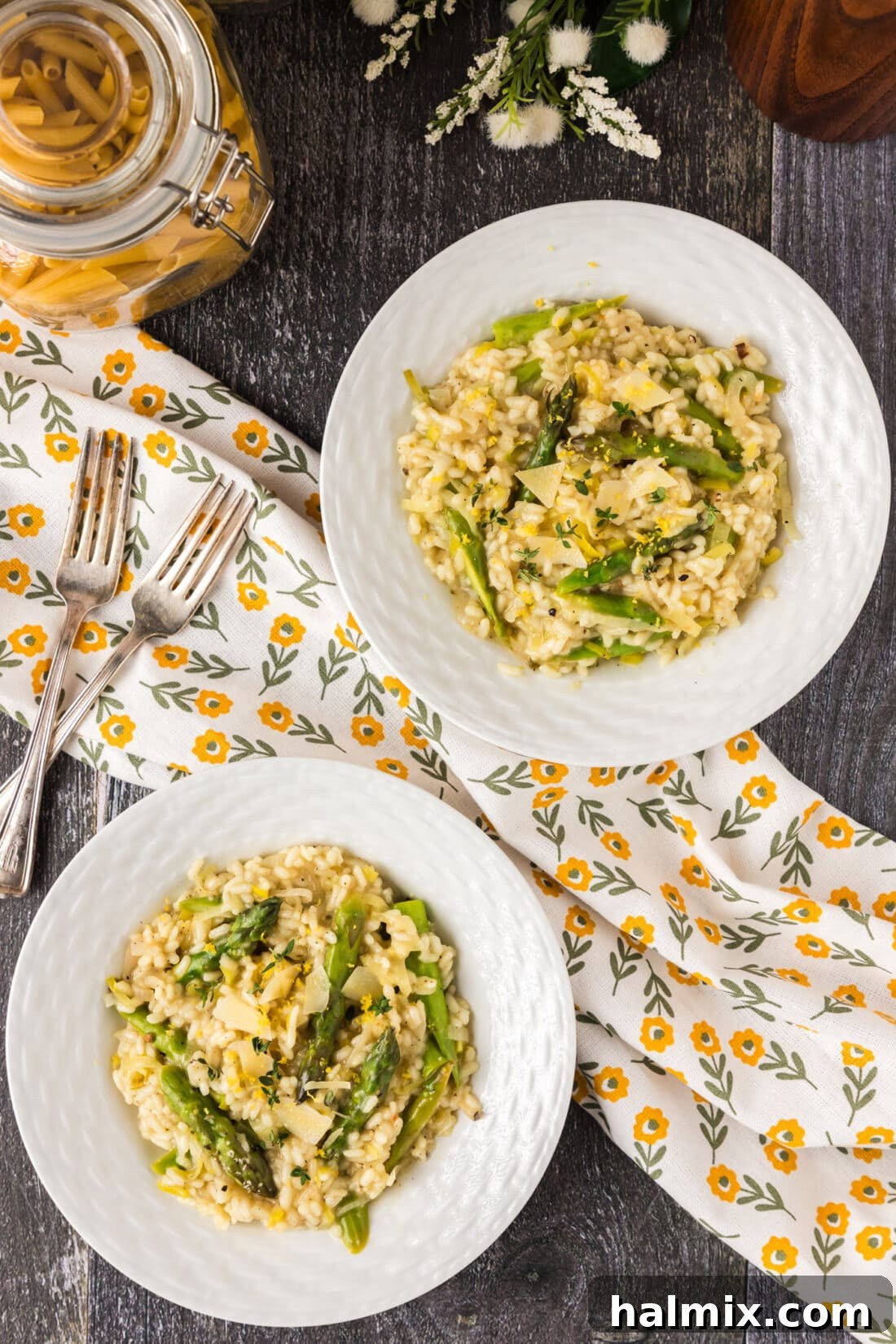
- Garnishing for Perfection: Elevate the presentation and flavor with optional garnishes. A sprinkling of freshly shaved Parmesan cheese adds a salty, umami depth, while a light grating of fresh lemon zest brightens the entire dish, enhancing the inherent zestiness and cutting through the richness. Freshly chopped chives or parsley can also add a touch of color and herbaceousness.
- With Other Spring Flavors: Consider serving it with a sprinkle of toasted pine nuts for added crunch, or a drizzle of high-quality truffle oil for an extra layer of luxury.
- For Brunch: Believe it or not, a smaller portion of this risotto can make an excellent addition to a sophisticated brunch spread, perhaps alongside poached eggs and fresh fruit.
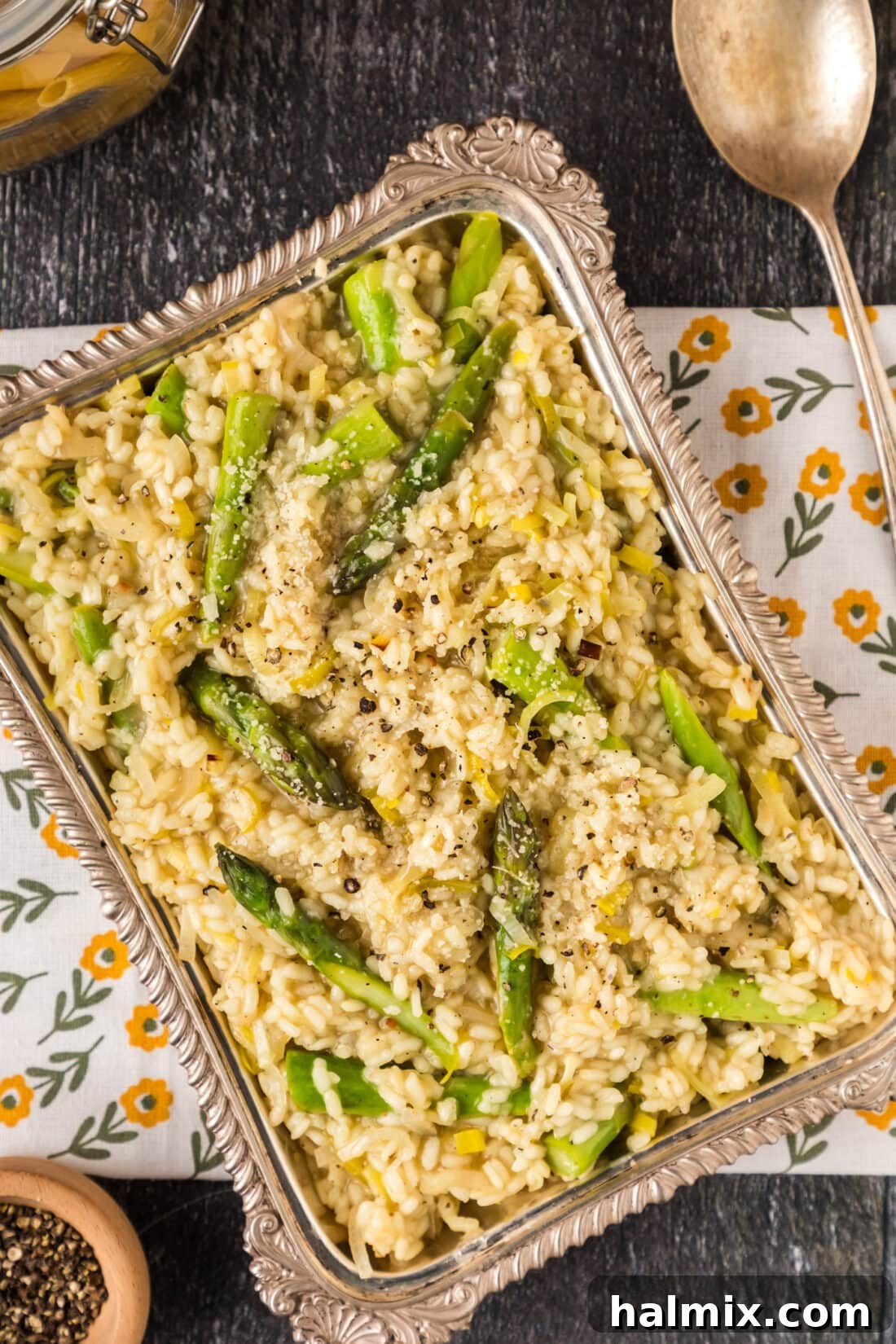
No matter how you choose to serve it, this creamy asparagus risotto is guaranteed to be a hit, offering a sophisticated taste of spring in every forkful.
Explore More Related Recipes
If you’ve enjoyed the creamy indulgence of this asparagus risotto, you might be interested in exploring other equally delicious and comforting risotto variations or complementary dishes. Here are some suggestions to expand your culinary repertoire:
- Lobster Risotto: For a truly luxurious experience, this seafood-infused risotto brings elegance to any dinner table.
- Lemon Couscous: If you’re looking for a lighter, quicker grain dish with bright, zesty flavors, this couscous recipe is a fantastic choice.
- Cauliflower Risotto: A wonderful way to enjoy a creamy, comforting risotto while incorporating more vegetables, often a great low-carb alternative.
- Creamy Mushroom Risotto: A classic and beloved risotto, rich with earthy mushroom flavors and a decadent creaminess.
- Shrimp Risotto: Another excellent seafood option, combining succulent shrimp with a creamy risotto base for a delightful meal.
I am passionate about baking and cooking, and love sharing my kitchen experiences with all of you! To make sure you never miss a new recipe, I offer a convenient newsletter. Simply subscribe today and start receiving your free daily recipes directly in your inbox!

Asparagus Risotto
This asparagus risotto recipe creates a bright, rich, and creamy springtime side dish or main course featuring fresh leeks, shallots, and tender asparagus spears.
IMPORTANT – There are often Frequently Asked Questions within the blog post that you may find helpful. Simply scroll back up to read them!
Print It
Pin It
Rate It
Ingredients
- 1 pound asparagus spears
- 2 Tablespoons olive oil
- 3 Tablespoons sliced shallots
- 1 large leek trimmed and sliced
- 2 teaspoons minced garlic or 4 cloves minced
- 1 teaspoon minced ginger
- 1 ½ cups arborio rice
- 1 Tablespoon garlic salt
- 2 teaspoons lemon pepper
- 1 cup white wine
- 1 ½ Tablespoons Better than Bouillon Italian Herb Base
- 3 cups water
Optional Garnish
- shaved parmesan cheese
- fresh lemon zest
Things You’ll Need
-
Large deep sided skillet
-
Rubber spatula
Before You Begin
- We use bouillon bases instead of stocks or broths in our recipes. They are smaller and easier to store and have a longer shelf life. Simply add water. If you like, you can substitute chicken or vegetable stock for the bouillon and water. Simply eliminate the bouillon and replace the water with an equal amount of stock.
- When preparing leeks, slice off the root end, then trim off the harder green leaves. Cut down the center lengthwise then slice those two ends into thin pieces.
- Arborio rice is our number one choice for making risotto as it absorbs a lot of liquid and surrounding flavors. It releases starch as it cooks which results in that classic creamy consistency.
Instructions
-
Cut woody ends off the asparagus (about 1-2 inches) and slice asparagus into 2-inch pieces. Set aside.
-
Heat olive oil in skillet over medium-high heat until shimmering.
-
Add sliced shallots to the pan and saute for 1-2 minutes.
-
Toss in garlic and ginger and saute another minute.
-
Add leeks and cook an addition 3-4 minutes stirring occasionally.
-
Drop in arborio rice and cook for 3-4 minutes, stirring frequently.
-
Season with garlic salt and lemon pepper, stirring to combine.
-
Add white wine, bouillon, and water (or white wine and stock – see note above) and stir to combine. Cook over medium-high heat, bringing to a gentle boil. Turn down to medium and cook for 7-10 minutes or until sauce begins to thicken.
-
Add in sliced asparagus and stir to combine. Cook uncovered for 20-30 minutes, or until water is absorbed and risotto is tender.
Expert Tips & FAQs
- We state that this makes 7 1-cup servings. However, that is if you are serving this as a side. For a vegetarian main dish, use 2 cups as a serving.
- Store leftovers in an airtight container (once fully cooled) in the refrigerator for up to 4 days.
Nutrition
The recipes on this blog are tested with a conventional gas oven and gas stovetop. It’s important to note that some ovens, especially as they age, can cook and bake inconsistently. Using an inexpensive oven thermometer can assure you that your oven is truly heating to the proper temperature. If you use a toaster oven or countertop oven, please keep in mind that they may not distribute heat the same as a conventional full sized oven and you may need to adjust your cooking/baking times. In the case of recipes made with a pressure cooker, air fryer, slow cooker, or other appliance, a link to the appliances we use is listed within each respective recipe. For baking recipes where measurements are given by weight, please note that results may not be the same if cups are used instead, and we can’t guarantee success with that method.