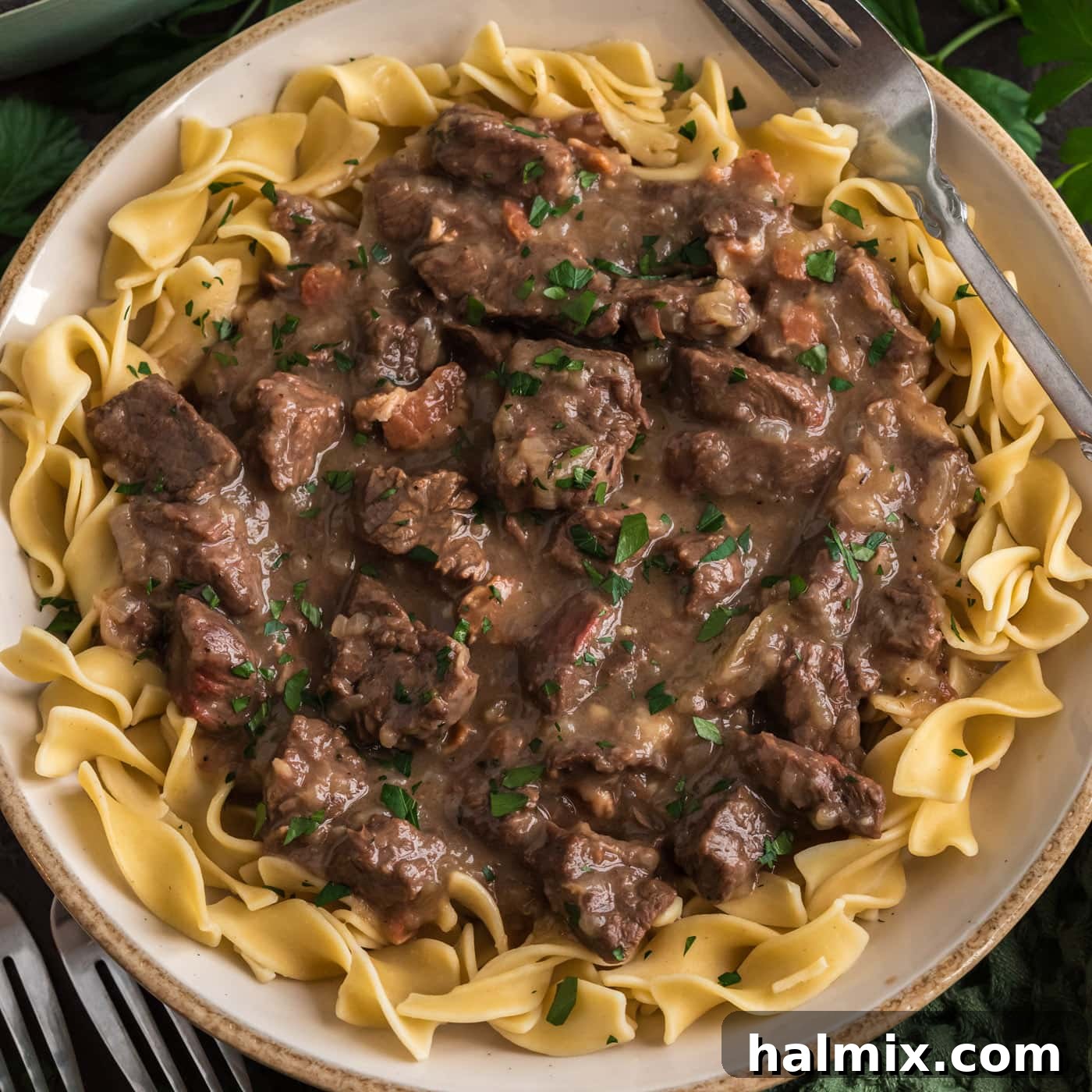
Indulge in the rich, deep flavors of a truly classic dish: Beef Carbonnade. This hearty Belgian beef stew, brimming with tender beef, savory bacon, sweet caramelized onions, and the malty goodness of beer, promises to become your new favorite comfort food. Forget complicated techniques; this recipe is all about slow, patient cooking that rewards you with an incredibly rich gravy and melt-in-your-mouth beef. It’s a culinary journey that transforms simple ingredients into an extraordinary meal, perfect for a cozy evening or an impressive dinner party.
Unveiling the Magic of Beef Carbonnade: A Belgian Classic
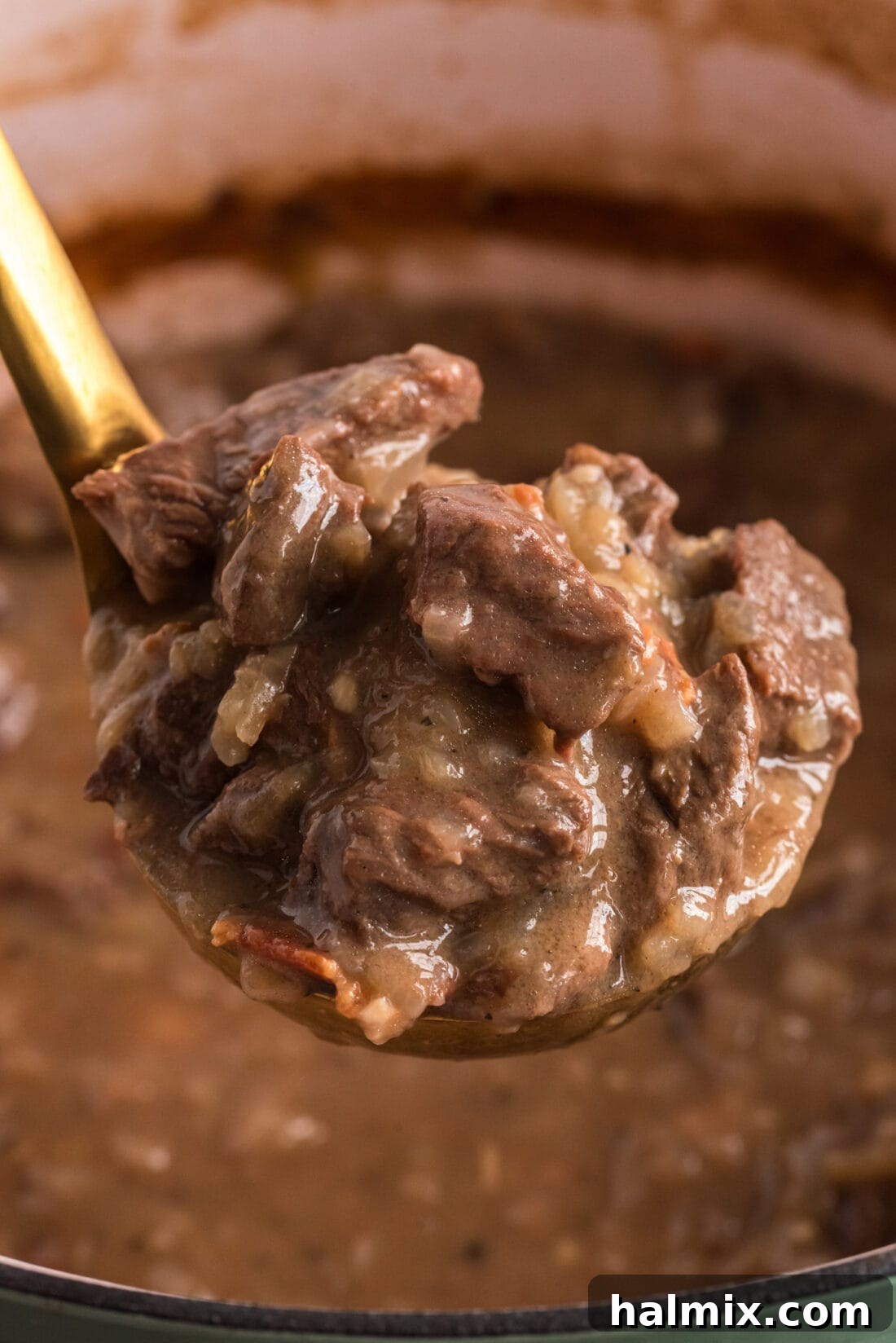
At its heart, Beef Carbonnade, or Carbonnade Flamande, is a quintessential Belgian stew renowned for its robust and complex flavor profile. Unlike many beef stews that rely on wine or broth, Carbonnade takes its distinct character from beer, specifically a rich, malty Belgian ale. This isn’t just a simple beef stew; it’s a symphony of savory, sweet, and tangy notes, achieved through careful layering of flavors and a patient cooking process.
The name “Carbonnade” itself hints at the dish’s core components: beef and onions. The secret to its incredible depth lies in the generous amount of onions used – far more than you might expect. Don’t be deterred by the initial volume of sliced onions; after hours of slow simmering in the oven, they virtually dissolve, contributing their sweet, caramelized essence to the gravy and tenderizing the meat, rather than overwhelming the dish with a sharp onion taste. This transformation creates a velvety, deeply flavored sauce that coats every succulent piece of beef, making it an unforgettable culinary experience.
This recipe truly works because it harnesses the power of traditional slow-braising techniques. The initial searing of the beef and bacon, followed by the caramelization of onions, builds foundational layers of flavor. Then, the long, gentle cooking in beer allows these flavors to meld and deepen, breaking down the tough connective tissues in the beef until it becomes incredibly tender. The result is a profoundly satisfying stew that warms you from the inside out, perfect for chilly evenings or special gatherings.
Essential Ingredients for an Authentic Beef Carbonnade
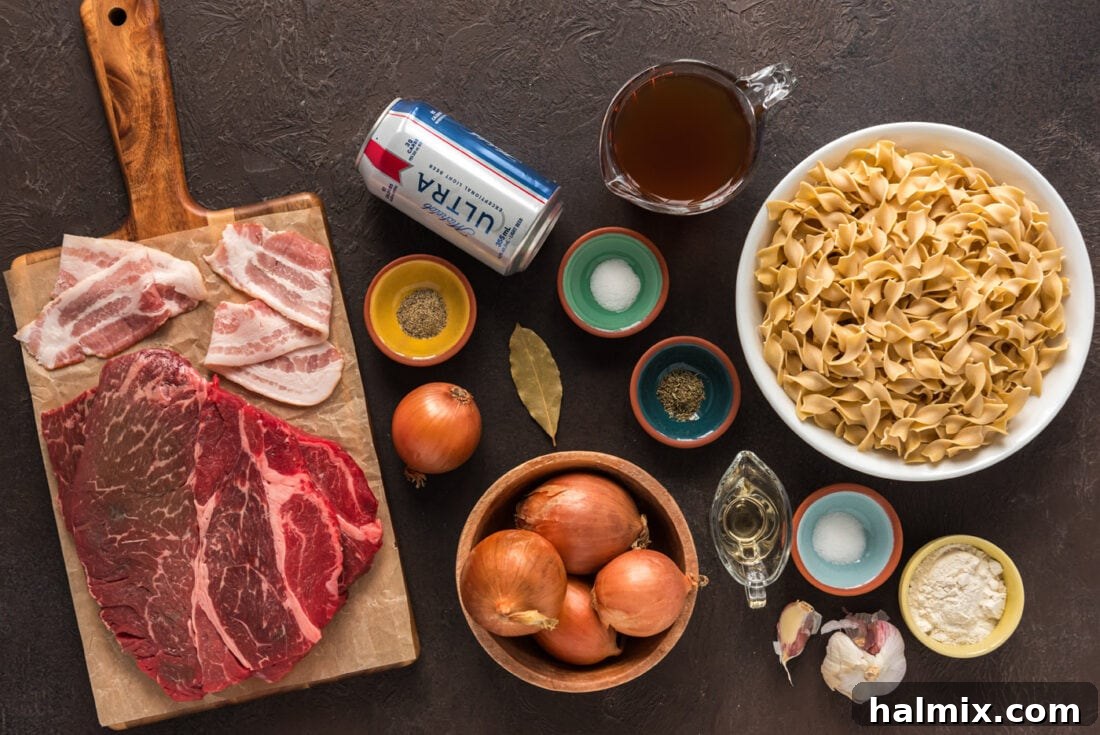
Crafting the perfect Beef Carbonnade begins with selecting high-quality ingredients. Each component plays a crucial role in developing the rich, complex flavors that define this classic Belgian stew. Here’s a breakdown of what you’ll need and why:
The Meat: Tender Chuck Roast
Beef: For an optimal Beef Carbonnade, boneless chuck roast is the cut of choice. Its generous marbling and connective tissue break down beautifully during long, slow braising, yielding incredibly tender, flavorful pieces of beef. Cut into 1-inch cubes, it provides the perfect bite-sized portions that absorb the rich gravy.
- **Why Chuck Roast?** This cut is inherently tough but becomes remarkably tender when cooked low and slow. The fat and collagen melt into the stew, enriching the sauce and keeping the meat moist.
- **Preparation:** Ensure your beef cubes are relatively uniform in size for even cooking. Patting them dry before browning is crucial for achieving a beautiful, flavorful crust.
The Liquid Heart of the Stew: Beer
Beer: The defining ingredient of Carbonnade! While Belgian ale is traditionally preferred for its malty sweetness and depth, a good quality light or dark beer can also work wonderfully. The beer infuses a unique richness and complexity that cannot be replicated by broth alone. Don’t worry about the alcohol content; it cooks out almost entirely during the long simmering process, leaving behind only its delicious flavor. This is what truly elevates Carbonnade beyond a typical beef stew.
- **Recommended Beers:** Look for authentic Belgian ales like Duvel, Leffe Brune, or even a robust Belgian Tripel for a deeper flavor. Avoid overly hoppy beers like IPAs, as their bitterness can become concentrated and unpleasant during cooking. A good quality stout or dark lager can also be an excellent alternative, lending a roasted, slightly caramel note.
- **Flavor Impact:** The sugars in the beer caramelize, adding a subtle sweetness and a tangy counterpoint to the savory meat and onions.
- **Alcohol Content:** Rest assured, the simmering process ensures that virtually all the alcohol evaporates, leaving behind only the exquisite flavor profile of the beer.
The Aromatic Base: Abundant Onions
Onions: Prepare for a generous amount! Five cups of thinly sliced onions might seem excessive at first glance, but they are absolutely essential to the authentic flavor and texture of Carbonnade. These onions will slowly caramelize and then melt into the stew, becoming almost indistinguishable, forming the luscious, thick gravy.
- **Type of Onion:** Yellow onions are typically preferred for their robust flavor and ability to withstand long cooking times without becoming overly sweet or mushy.
- **Transformation:** Through hours of slow cooking, the onions sweeten, soften, and eventually disintegrate, releasing their savory-sweet juices into the sauce. This is what creates the stew’s characteristic rich, dark, and slightly sweet gravy.
Supporting Flavors and Thickeners
- Bacon: Finely diced bacon (or pancetta) is rendered first, providing flavorful fat for searing the beef and adding a smoky, salty dimension to the stew.
- Garlic: A single clove, minced, offers a pungent aromatic note that complements the richness of the other ingredients.
- Flour: All-purpose flour is used to create a roux with the bacon drippings and onion, thickening the stew to a perfect consistency.
- Beef Broth: A cup of beef broth adds additional savory liquid and depth, harmonizing with the beer. Use a low-sodium variety to control the overall saltiness.
- White Wine Vinegar & Sugar: These two ingredients are crucial for balancing the flavors. The vinegar provides a touch of acidity to cut through the richness, while sugar enhances the caramelization of the onions and rounds out the beer’s malty notes.
- Dried Thyme & Bay Leaf: Classic herbs that infuse the stew with earthy, aromatic undertones, adding complexity to the overall flavor.
- Salt & Pepper: Essential seasonings to enhance all the other ingredients and bring the flavors into harmony.
How to Master Beef Carbonnade: A Step-by-Step Guide
Creating this authentic Belgian Beef Carbonnade is a process of building layers of flavor, but it’s surprisingly straightforward. The key is patience and allowing the ingredients to slowly meld into a rich, tender masterpiece. Follow these detailed steps for a truly exceptional result.
For a quick overview of ingredients and quantities, feel free to jump to the printable recipe card at the end of this post.
- Prepare Your Oven: Begin by preheating your oven to 325°F (160°C). This ensures it’s ready for the slow braising process, which is critical for tender beef.
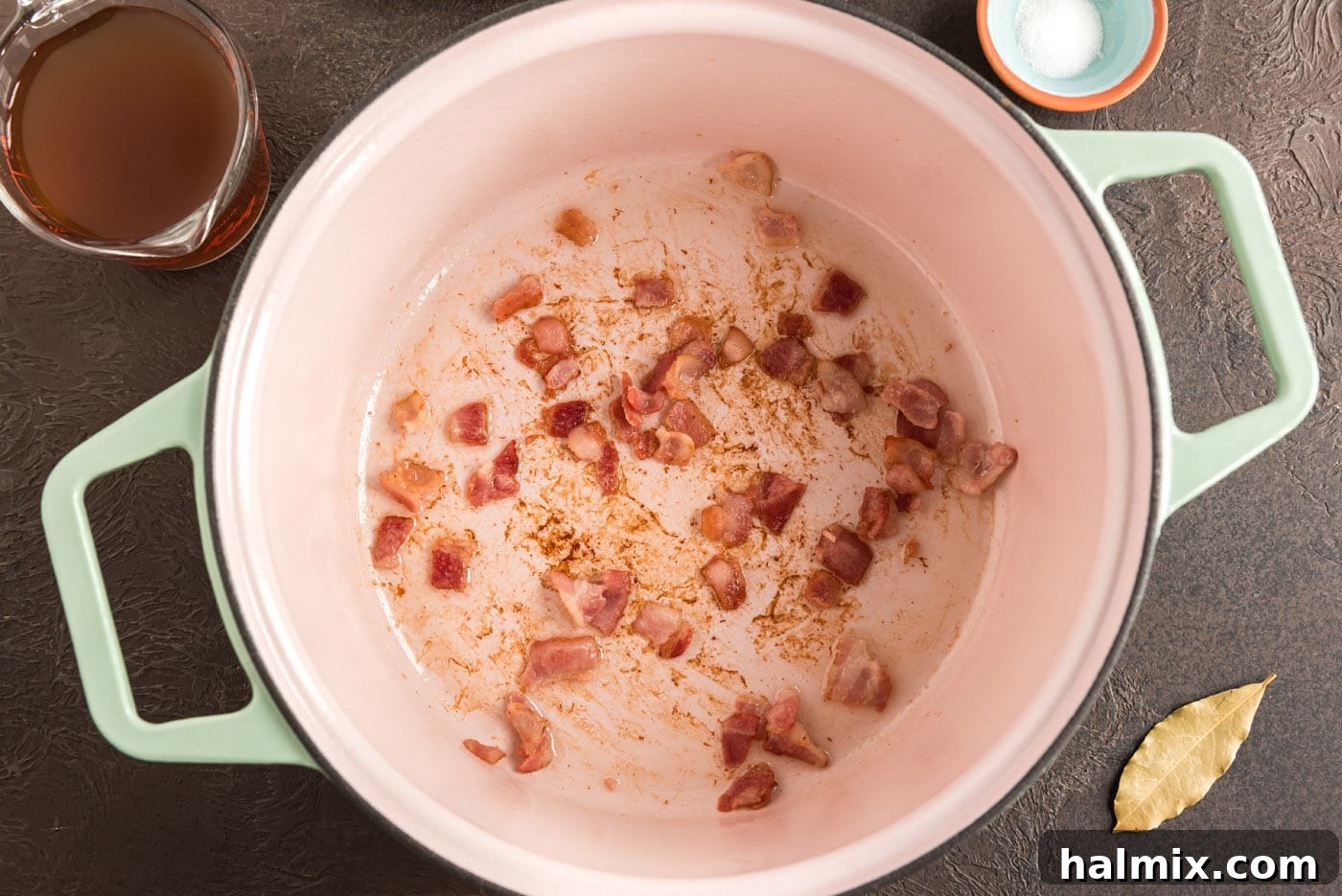
- Crisp the Bacon: In a large, heavy-bottomed Dutch oven (an essential piece of equipment for this recipe), cook the finely diced bacon over medium heat until it is beautifully crisp. The rendered bacon fat is a goldmine of flavor. Once crisp, use a slotted spoon to remove the bacon, reserving the drippings in the pot. Set the crispy bacon aside; it will be added back later.

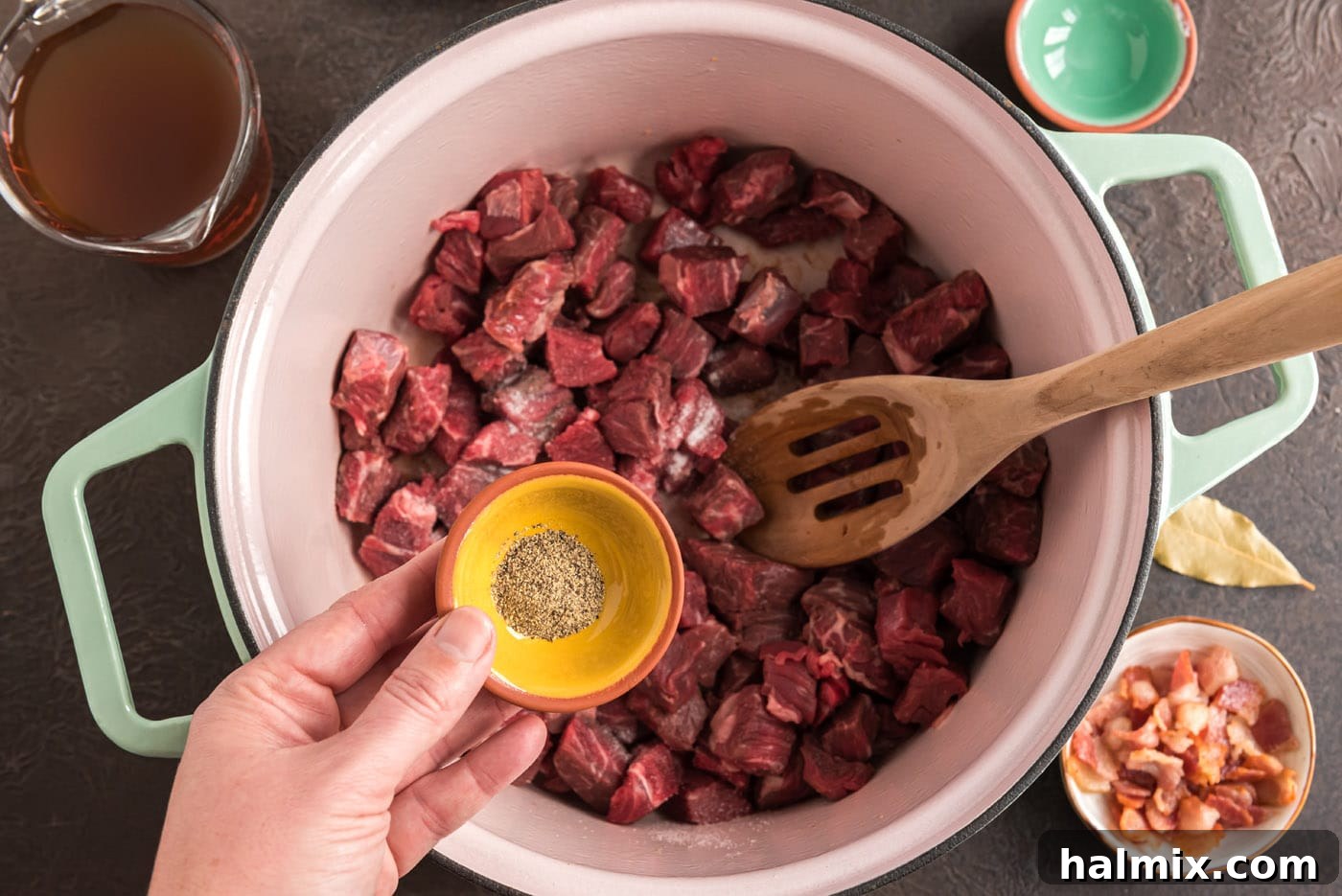
- Sear the Beef: Increase the heat to medium-high. Add the cubed beef (which you’ve seasoned generously with salt and pepper) to the hot bacon drippings. Cook for about 3 minutes, browning the beef thoroughly on all sides. This crucial step creates a rich, caramelized crust that locks in flavor and adds depth to the stew. Work in batches if necessary to avoid overcrowding the pot, which can steam the meat instead of searing it.
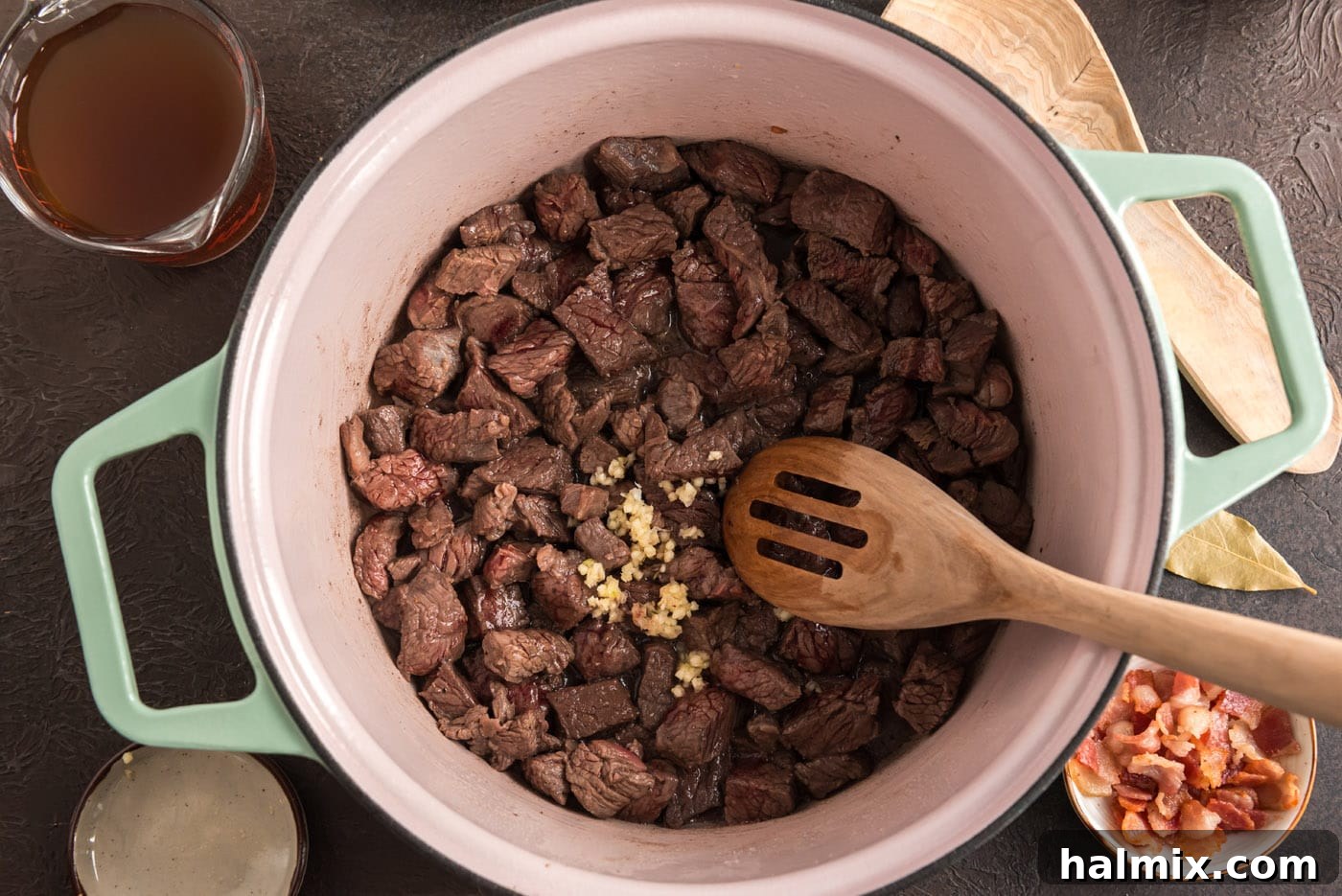
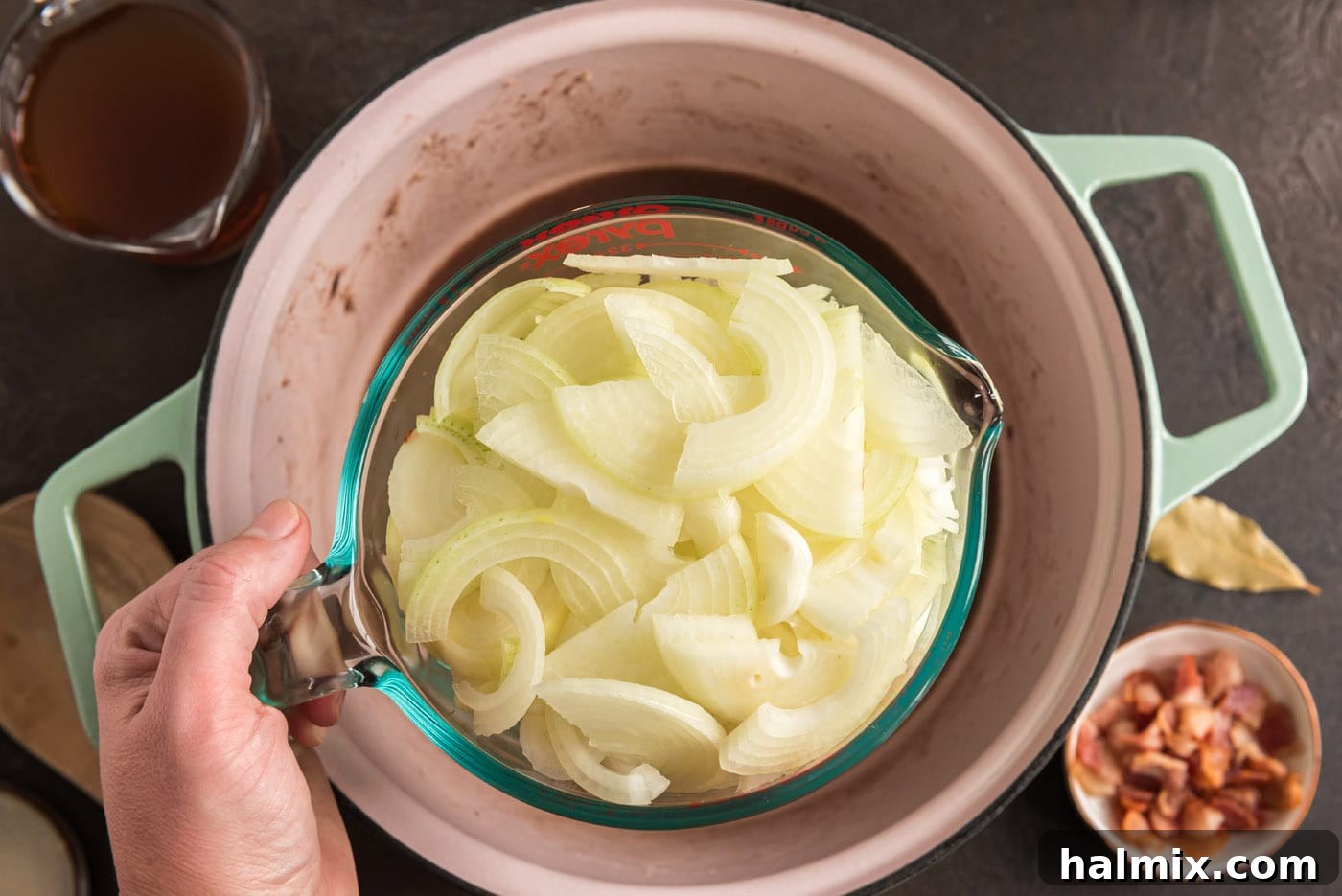
- Sauté Aromatics & Soften Onions: Once the beef is browned, add the minced garlic to the pot and cook for just 30 seconds until fragrant. Then, remove the beef with a slotted spoon and set it aside with the bacon. Now, add the thinly sliced onions to the pan. Cover the Dutch oven and cook the onions for 10 minutes over medium heat, stirring occasionally. This step allows the onions to soften and release their moisture, deglazing the pan and capturing all the flavorful bits left by the beef.
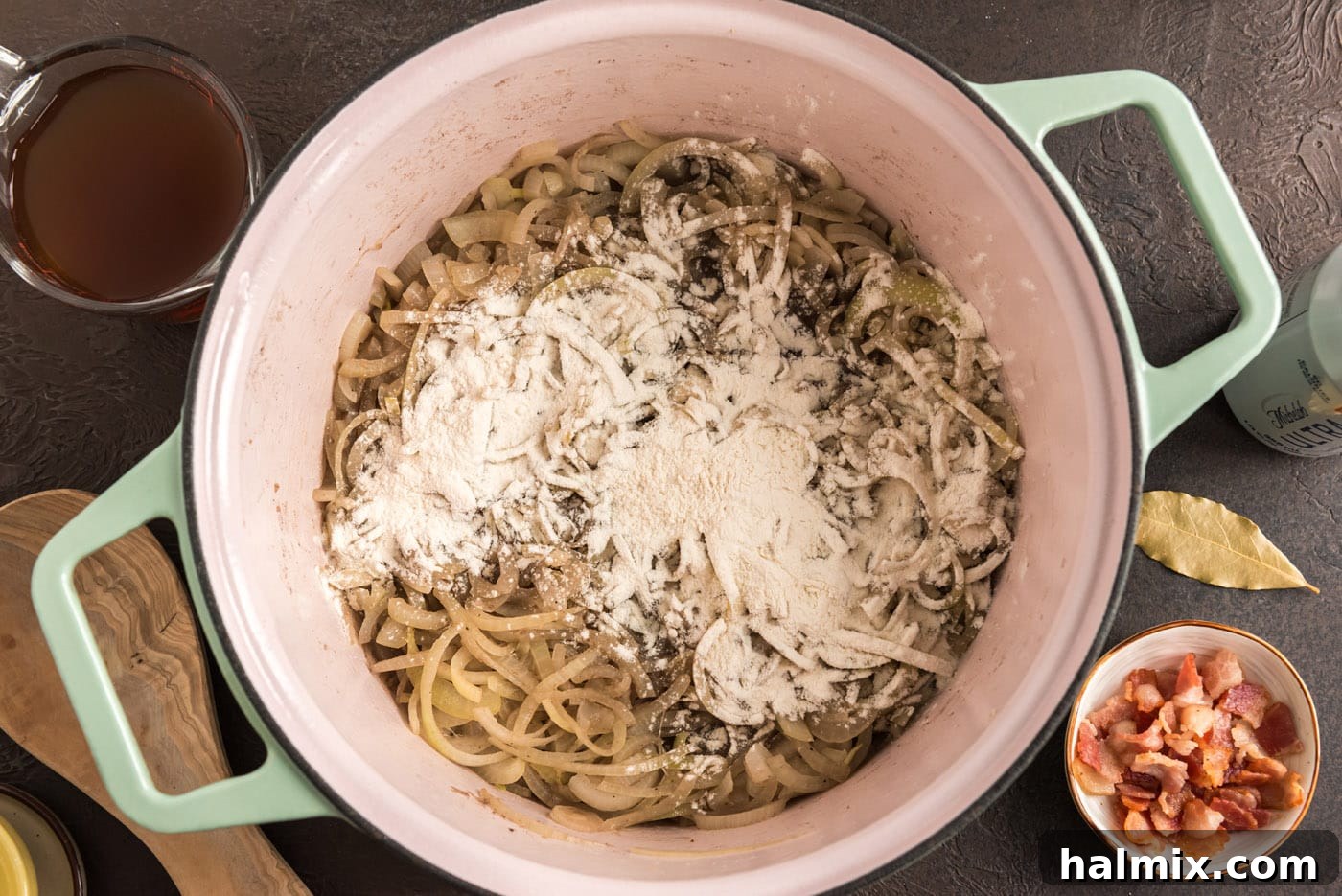
- Create the Roux: Stir in the all-purpose flour with the softened onions. Cook for 2 minutes, stirring constantly. This forms a roux, which will thicken the stew and provide a rich base. Cooking the flour prevents a raw flour taste.
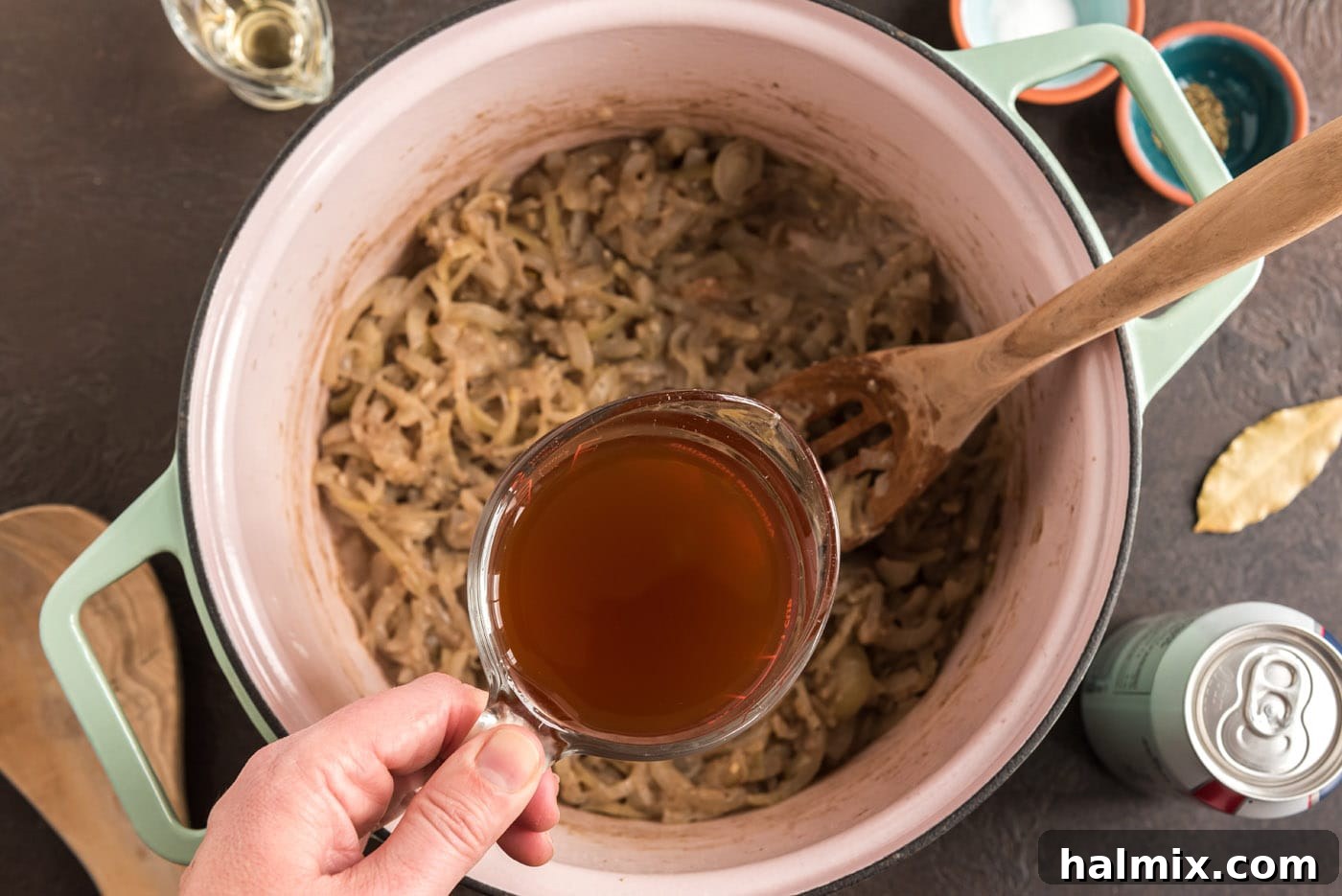
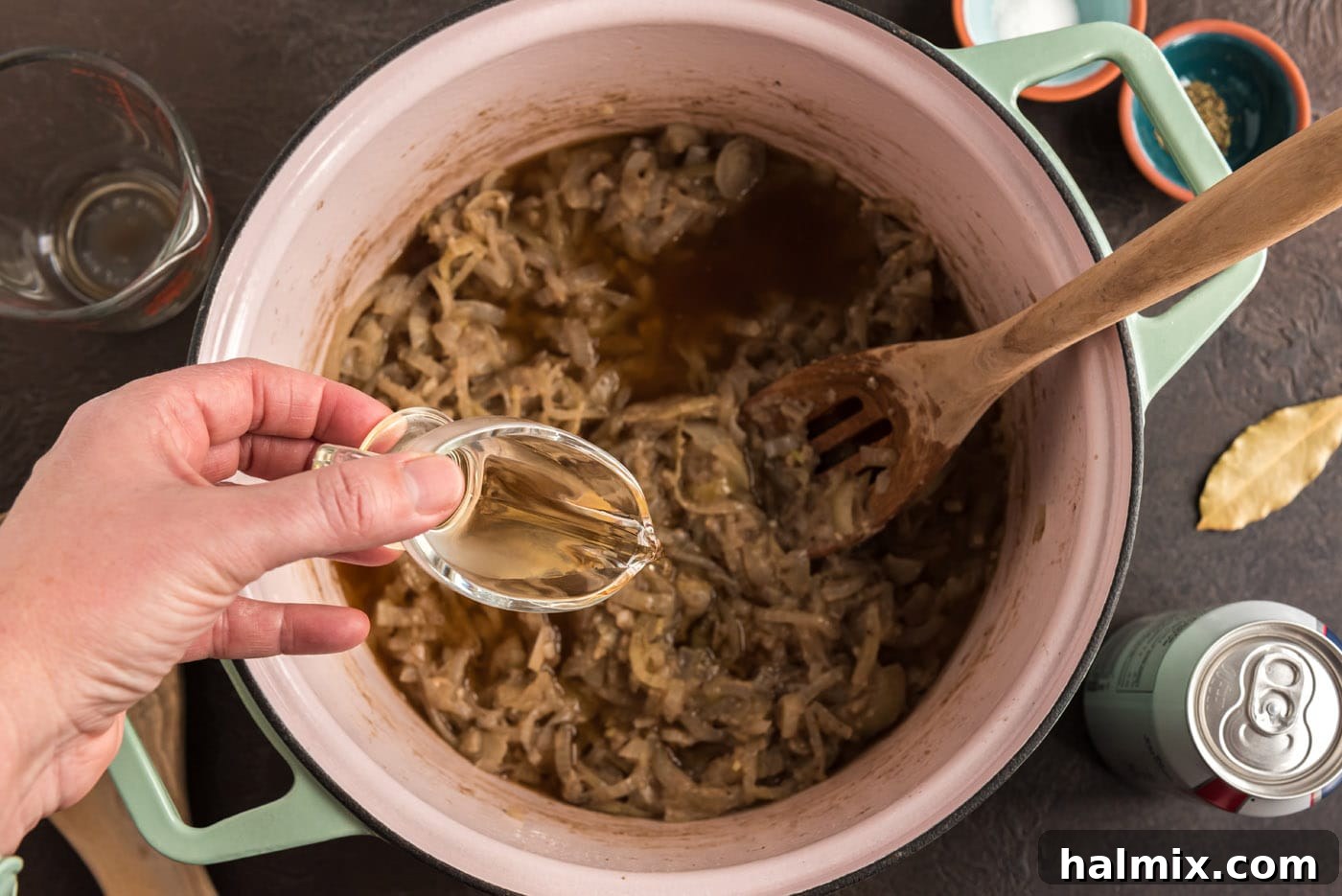
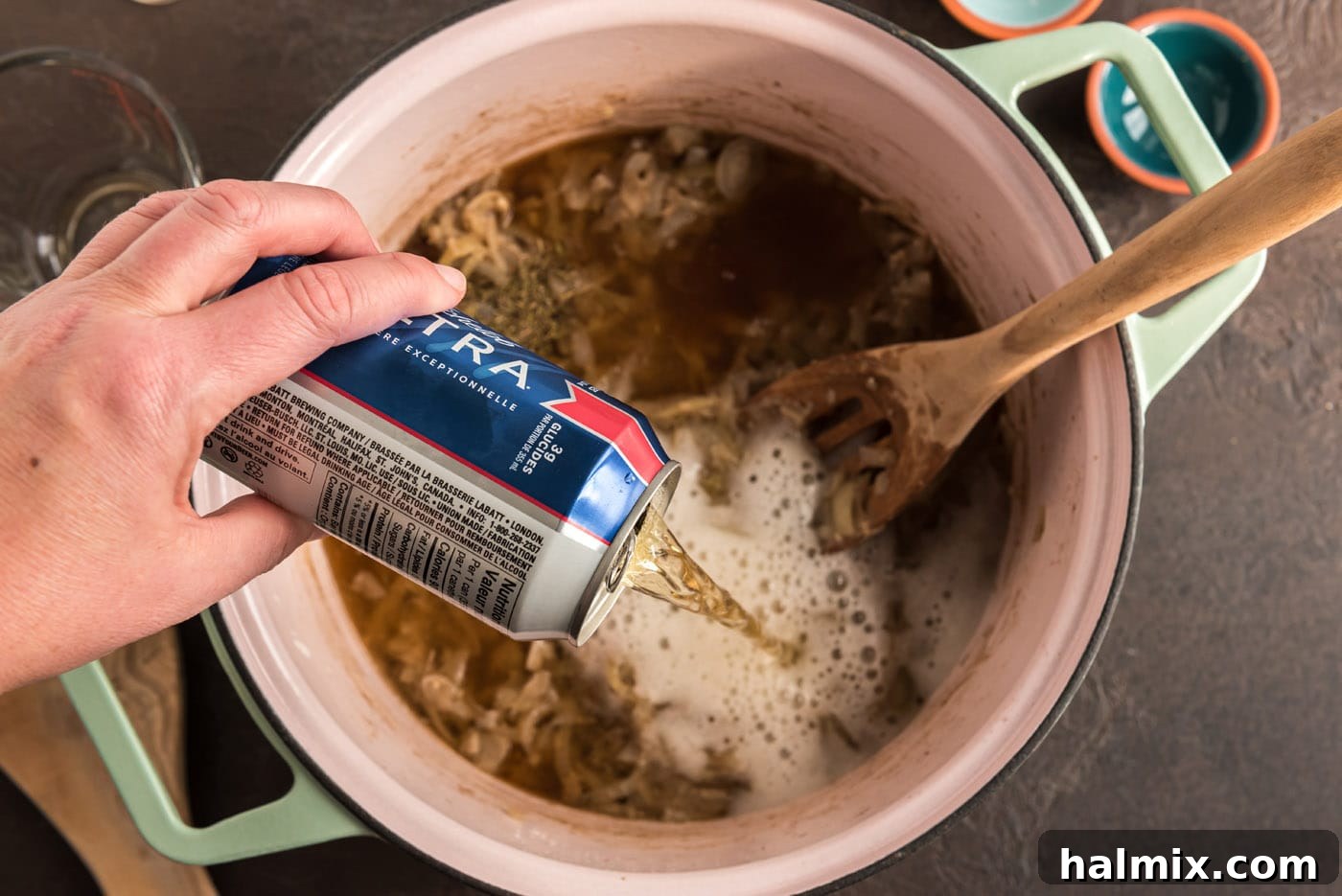
- Deglaze and Simmer: Pour in the beef broth, white wine vinegar, sugar, dried thyme, and bay leaf. Finally, add the star ingredient: the beer. Bring the mixture to a boil, stirring to scrape up any browned bits from the bottom of the pan – this is where much of the flavor resides.
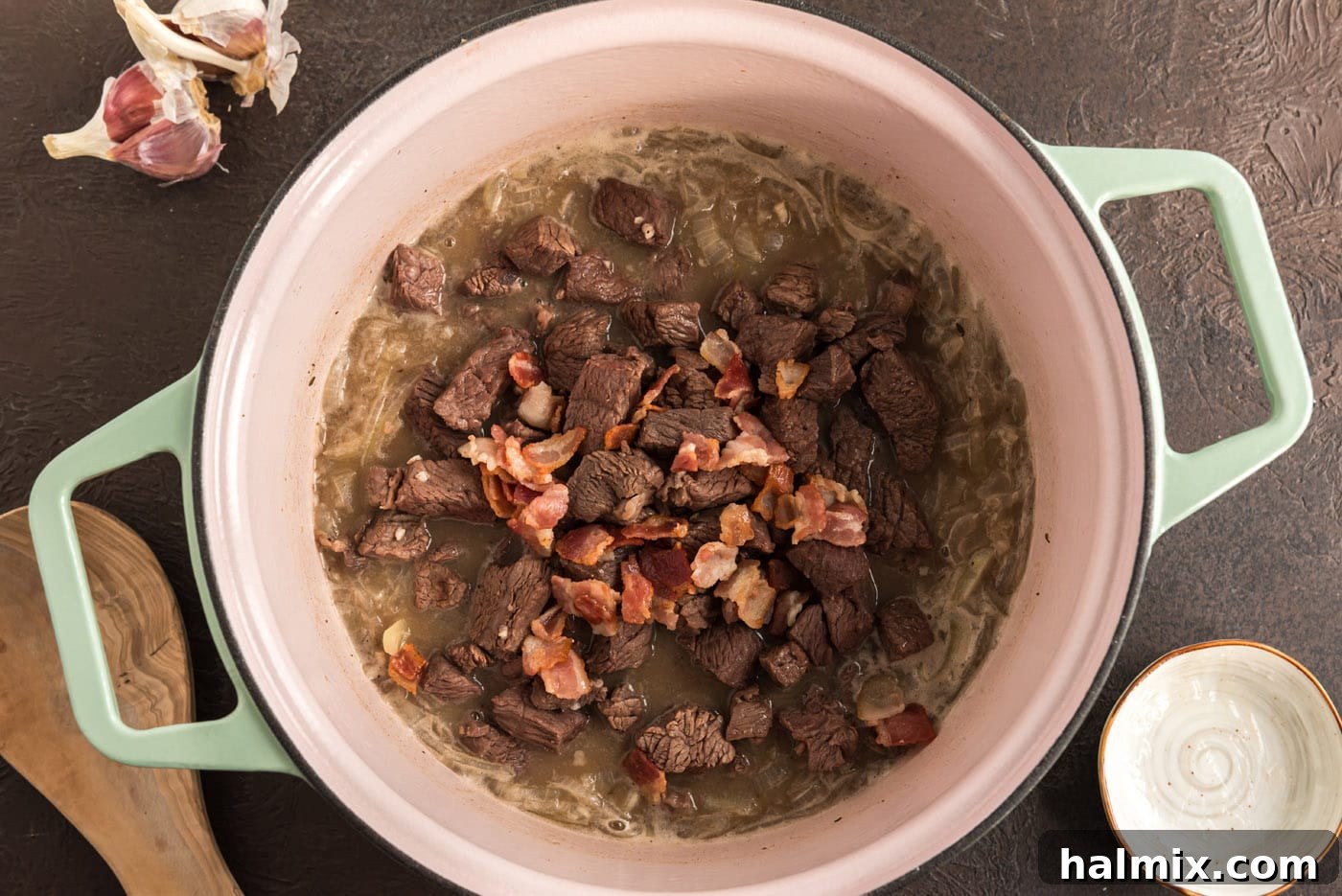
- Combine and Braise: Return the browned beef and the crispy bacon to the Dutch oven, stirring them into the liquid.
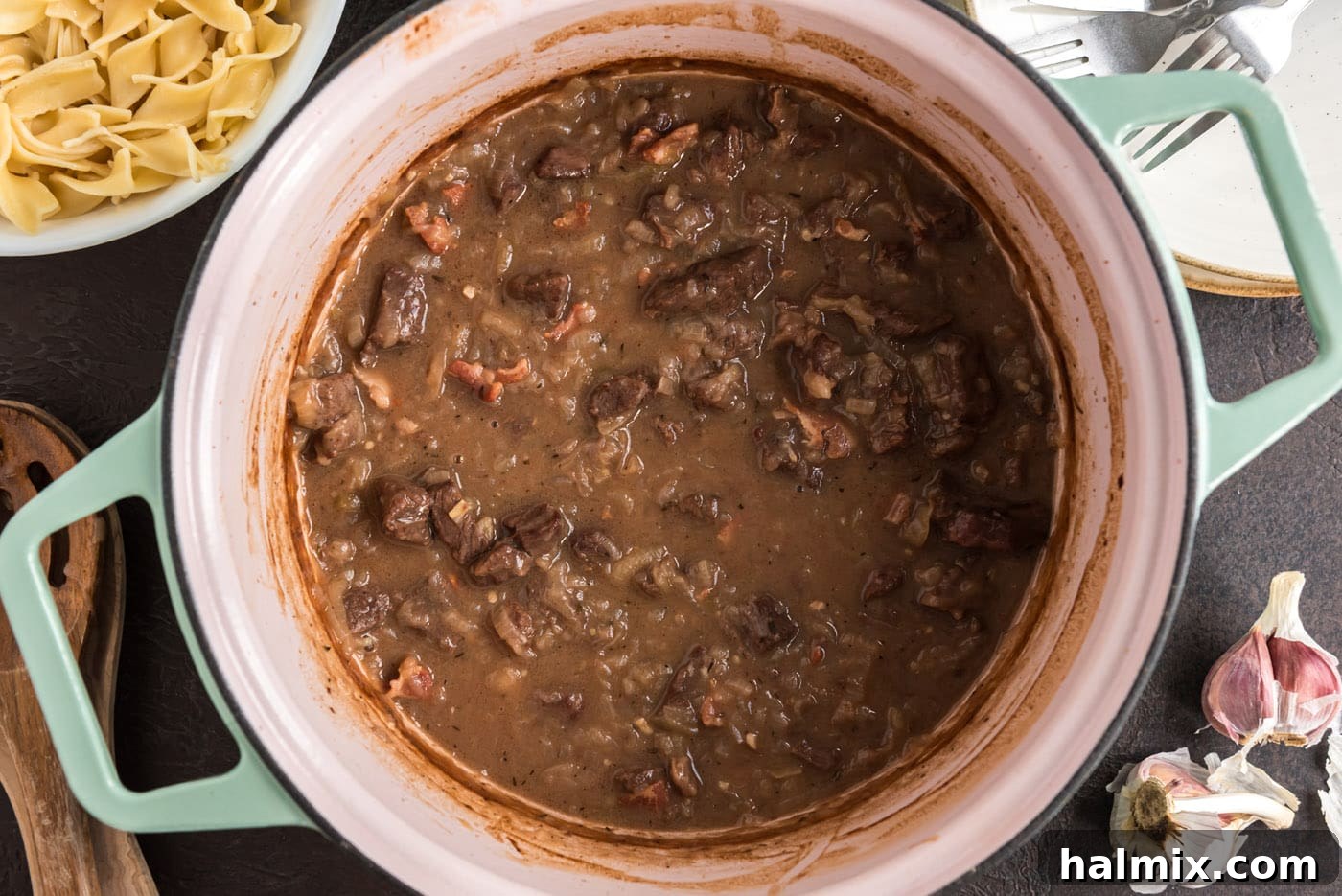
- Slow Cook to Perfection: Cover the Dutch oven tightly and transfer it to your preheated oven. Bake for 2 hours, or until the beef is incredibly tender and easily pulls apart with a fork. The long, slow cooking process is essential for developing the stew’s deep flavors and achieving that signature melt-in-your-mouth texture.
- Finish and Serve: Once cooked, carefully remove the bay leaf and discard it. Give the stew a good stir, taste, and adjust seasonings if needed. Serve your exquisite Beef Carbonnade hot over a bed of fluffy egg noodles or creamy mashed potatoes.
Expert Tips and Frequently Asked Questions for Beef Carbonnade
To ensure your Beef Carbonnade is nothing short of perfect every time, and to answer common questions, here are some invaluable tips and insights:
Store any leftover Beef Carbonnade in an airtight container in the refrigerator for up to 4 days. The flavors often deepen and improve overnight, making it even more delicious the next day!
Absolutely! Beef Carbonnade is an ideal make-ahead meal. Preparing it a day in advance allows the flavors to fully meld and intensify, resulting in an even more delicious and cohesive stew. Simply reheat it gently over medium-low heat on the stovetop, stirring occasionally until warmed through.
Yes, this stew freezes exceptionally well. Once cooled completely, transfer the Carbonnade to an airtight, freezer-safe container or a heavy-duty freezer bag. It can be frozen for up to 3 months. To serve, thaw overnight in the refrigerator, then reheat on the stovetop over medium-low heat until piping hot.
Additional Expert Tips for Perfection
- Don’t Skimp on Browning: Searing the beef thoroughly before braising is crucial for developing deep, rich flavors through the Maillard reaction. Don’t rush this step, and ensure you don’t overcrowd your Dutch oven, which can lead to steaming instead of browning.
- The Onion Transformation: As mentioned, the large quantity of onions is intentional. They will almost disintegrate during the long cook time, contributing their sweetness and thickness to the gravy, so resist the urge to reduce their amount.
- Choosing the Right Beer: Opt for a good quality Belgian ale or a non-hoppy dark beer. The beer is a primary flavor component, and a poor choice (e.g., a very bitter IPA) can negatively impact the final taste. The alcohol will cook off, leaving behind only the complex malt flavors.
- Dutch Oven is Key: A heavy-bottomed Dutch oven ensures even heat distribution, which is vital for the slow braising process and prevents scorching.
- Taste and Adjust: Before serving, always taste the stew and adjust the seasonings (salt, pepper, a touch more vinegar or sugar) as needed. Flavors can mellow during long cooking, and a final tweak can make all the difference.
Serving Suggestions to Complete Your Meal
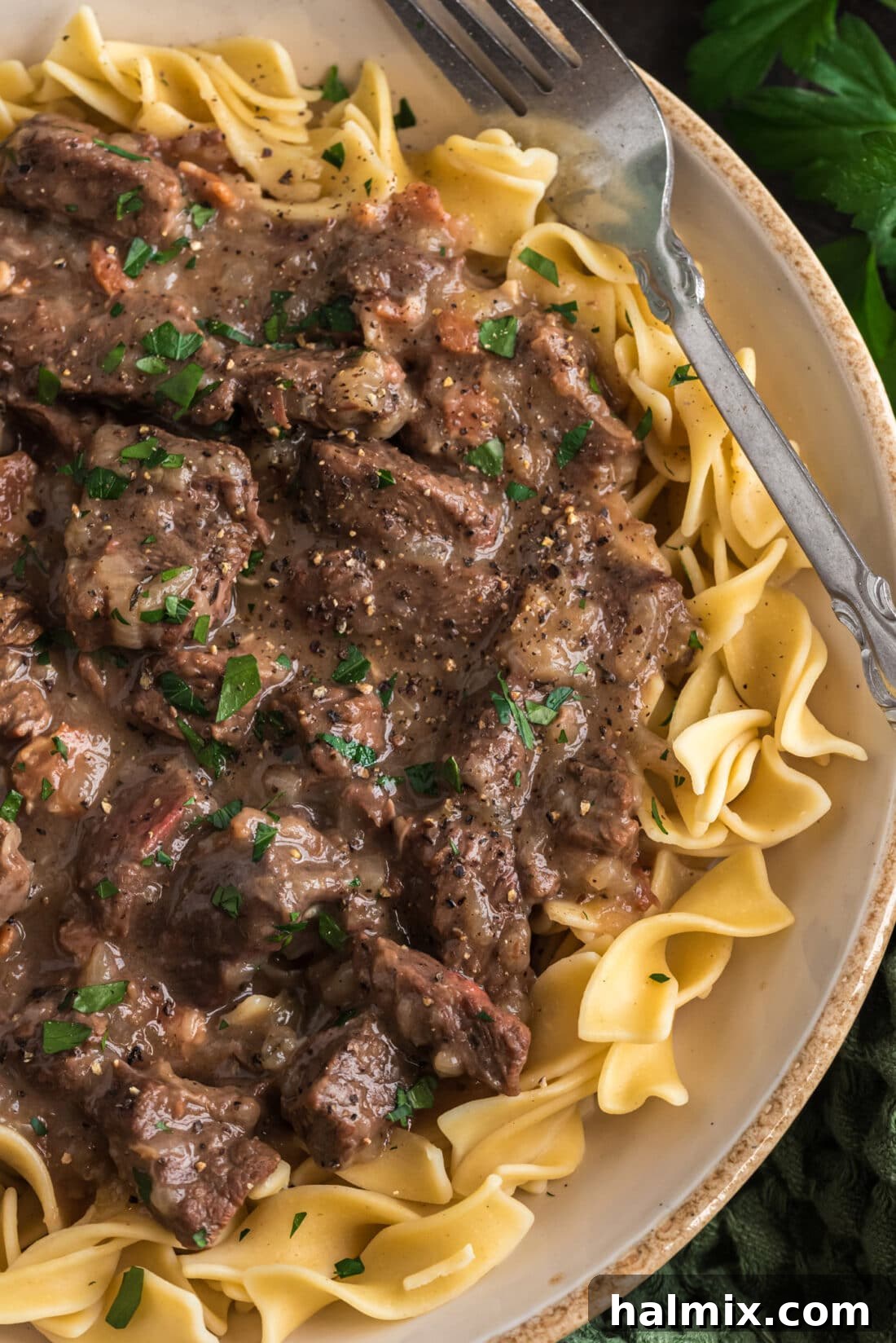
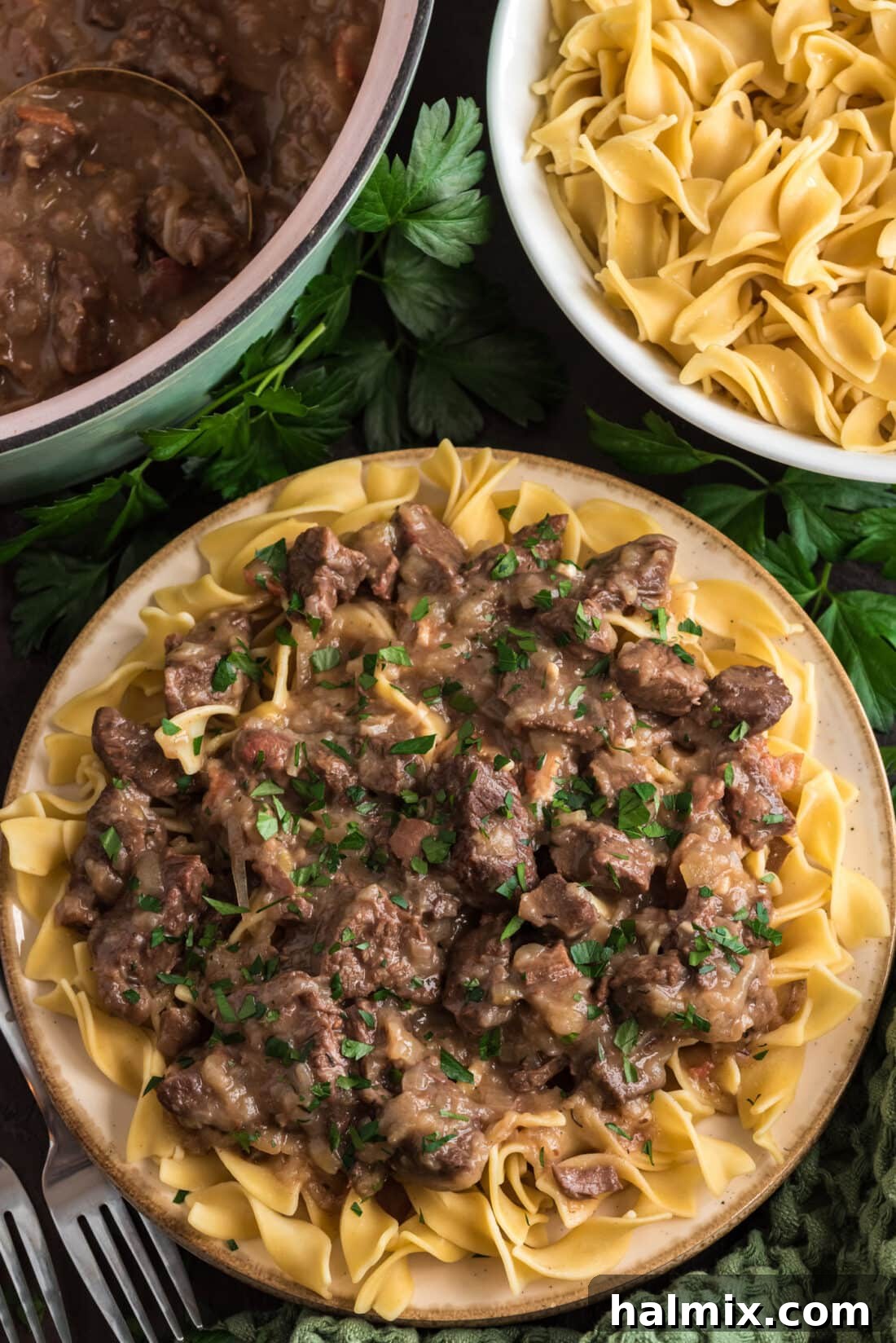
Beef Carbonnade is a meal in itself, but it truly shines when served with the right accompaniments. For a truly classic pairing, spoon generous portions over a bed of fluffy egg noodles, which soak up the rich, savory gravy beautifully. Creamy mashed potatoes are another excellent choice, providing a comforting base that contrasts wonderfully with the robust stew.
Don’t forget a side of crusty bread to mop up every last drop of that delectable gravy – it’s too good to waste! For a touch of freshness and color, a simple green salad with a light vinaigrette makes a perfect counterpoint to the richness of the stew. Consider garnishing your Carbonnade with a sprinkle of fresh parsley for an added pop of color and herbaceous note.
Explore More Hearty Stew Recipes
If you’ve fallen in love with the comforting warmth of a good stew, you’ll be delighted to explore other delicious variations. Each offers its unique blend of flavors and traditions:
- Irish Stew: A rustic, soul-satisfying stew typically featuring lamb or mutton, potatoes, carrots, and onions, often simmered in a rich broth with a hint of stout.
- Hamburger Stew: A family-friendly and economical option, made with ground beef and a medley of vegetables in a savory tomato-based broth.
- Homemade Goulash: A rich and flavorful Hungarian classic, distinguished by its vibrant paprika-spiced broth and tender beef, often served with noodles or dumplings.
- Beef Stew with Parsley, Sage, Rosemary, and Thyme: A fragrant and deeply aromatic stew, highlighting the harmonious blend of classic savory herbs with tender beef and vegetables.
Beef Carbonnade Recipe Card
Beef Carbonnade
All good things take time, and this Beef Carbonnade is no exception. The initial prep is simple enough, but it will need around two hours to fully develop in the oven. The result will be well worth the wait – a rich, deeply flavorful Belgian beef stew that’s perfect for any occasion.
IMPORTANT: There are often Frequently Asked Questions and Expert Tips within the blog post that you may find helpful. Simply scroll back up to read them!
Print Recipe |
Pin Recipe
Course: Dinner
Cuisine: American, European
Servings: 6 servings
Prep Time: 45 mins
Cook Time: 2 hrs
Total Time: 2 hrs 45 mins
Calories: 621
Author: Amanda Davis
Ingredients
- 2 slices bacon, finely diced
- 2 pounds boneless chuck roast, cut into 1-inch cubes
- ½ teaspoon salt
- ½ teaspoon pepper
- 1 clove garlic, minced
- 5 cups thinly sliced onion
- 3 Tablespoons all-purpose flour
- 1 cup beef broth
- 2 teaspoons white wine vinegar
- ½ teaspoon granulated sugar
- ½ teaspoon dried thyme
- 1 bay leaf
- 12 ounces beer (1 can, light or dark)
- 6 cups cooked egg noodles (for serving)
Things You’ll Need
- Dutch oven
- Slotted spoon
Before You Begin (Important Notes)
- Belgian ale is the most popular choice for carbonnade, but regular light or dark beer will also work. If you are worried about the flavor of beer in the end results, don’t worry, it cooks out (same with its alcohol content). However, making the stew with beer infuses richness you wouldn’t experience when using broth or stock. It’s worth every last drop.
- Don’t be alarmed by the amount of onions called for here – after a couple of hours in the oven, the flavor of the onion is transferred to the meat and gravy, and the onions themselves will almost disintegrate.
Instructions
- Preheat oven to 325°F (160°C).
- Cook the bacon in a large Dutch oven over medium heat until crisp. Remove bacon with a slotted spoon, reserving the drippings in the pan. Set bacon aside.
- Cook beef, seasoned with salt and pepper, in the drippings over medium-high heat for 3 minutes, browning the beef well on all sides.
- Add the garlic and cook for 30 seconds. Remove beef with a slotted spoon and set aside. Add onion to the pan, cover, and cook for 10 minutes, stirring occasionally.
- Stir in the flour and cook for 2 minutes.
- Add the beef broth, white wine vinegar, sugar, dried thyme, bay leaf, and the beer and bring to a boil.
- Return bacon and beef to the pan.
- Cover and bake at 325°F (160°C) for 2 hours or until the beef is tender. Discard the bay leaf and serve over noodles.
Nutrition Information
Serving: 1 serving | Calories: 621 kcal | Carbohydrates: 58 g | Protein: 40 g | Fat: 24 g | Saturated Fat: 9 g | Polyunsaturated Fat: 3 g | Monounsaturated Fat: 11 g | Trans Fat: 1 g | Cholesterol: 156 mg | Sodium: 530 mg | Potassium: 819 mg | Fiber: 4 g | Sugar: 7 g | Vitamin A: 64 IU | Vitamin C: 10 mg | Calcium: 85 mg | Iron: 5 mg
Tried this Recipe? Pin it for Later!
Follow on Pinterest @AmandasCookin or tag #AmandasCookin!
The recipes on this blog are tested with a conventional gas oven and gas stovetop. It’s important to note that some ovens, especially as they age, can cook and bake inconsistently. Using an inexpensive oven thermometer can assure you that your oven is truly heating to the proper temperature. If you use a toaster oven or countertop oven, please keep in mind that they may not distribute heat the same as a conventional full sized oven and you may need to adjust your cooking/baking times. In the case of recipes made with a pressure cooker, air fryer, slow cooker, or other appliance, a link to the appliances we use is listed within each respective recipe. For baking recipes where measurements are given by weight, please note that results may not be the same if cups are used instead, and we can’t guarantee success with that method.
This post originally appeared here on December 14th, 2010 and has since been updated with new photos and expert tips for an even better cooking experience.