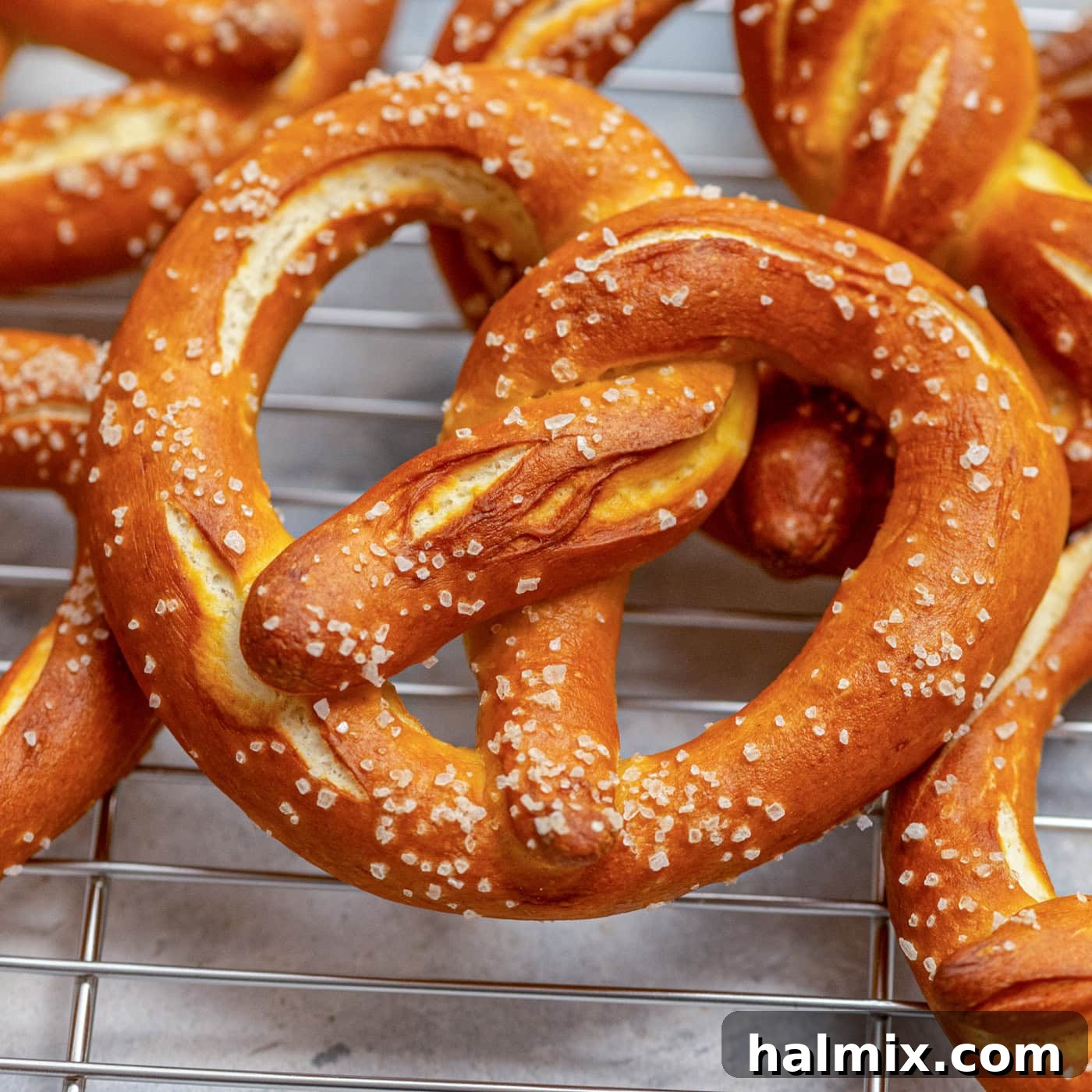
There’s something truly magical about a warm, freshly baked pretzel. For years, I’ve had the pleasure of bringing the joy of German baking into my home, particularly for my children’s high school German classes. The assignment was simple: create or bake an authentic German recipe. This culinary journey often resulted in a delightful spread of German snacks, eagerly enjoyed by the entire class. One year, my daughter, then a freshman, expressed a specific craving for proper homemade German pretzels – not the kind you find at a mall, but the real deal. This sparked my quest to find and master an authentic German pretzel recipe.
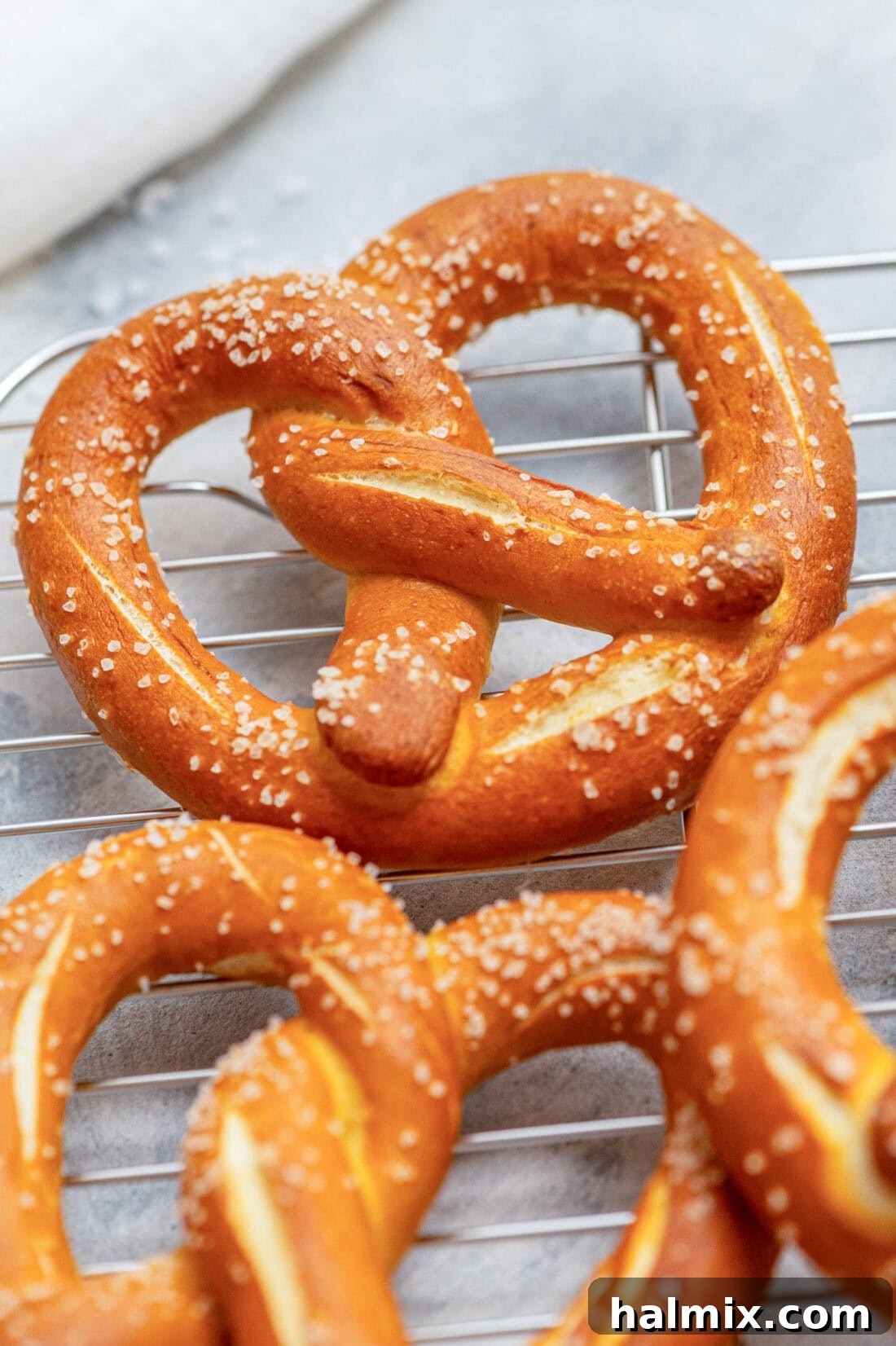
Crafting Authentic Homemade German Pretzels
My culinary adventures with German bread had actually begun earlier. I had previously experimented with Bretzel Rolls, which were a fantastic introduction to the unique texture and flavor of pretzel dough. Those rolls were incredibly delicious, evoking fond memories of a favorite restaurant. For the same German class assignments, we also ventured into other delightful treats like mini lemon cakes (Zitronenkuchen) and the always popular Partybrot, a savory German party bread perfect for sharing.
The specific German pretzel recipe that became my go-to was discovered on La Cerise, a wonderful blog curated by Astrid, a talented baker living in Zurich. Her blog is a treasure trove of baking masterpieces, and this particular pretzel recipe, originally adapted by Astrid from a German website, promised genuine authenticity. It was exciting to find a recipe with such deep roots in German tradition, and I was eager to bring that authenticity into my own kitchen.
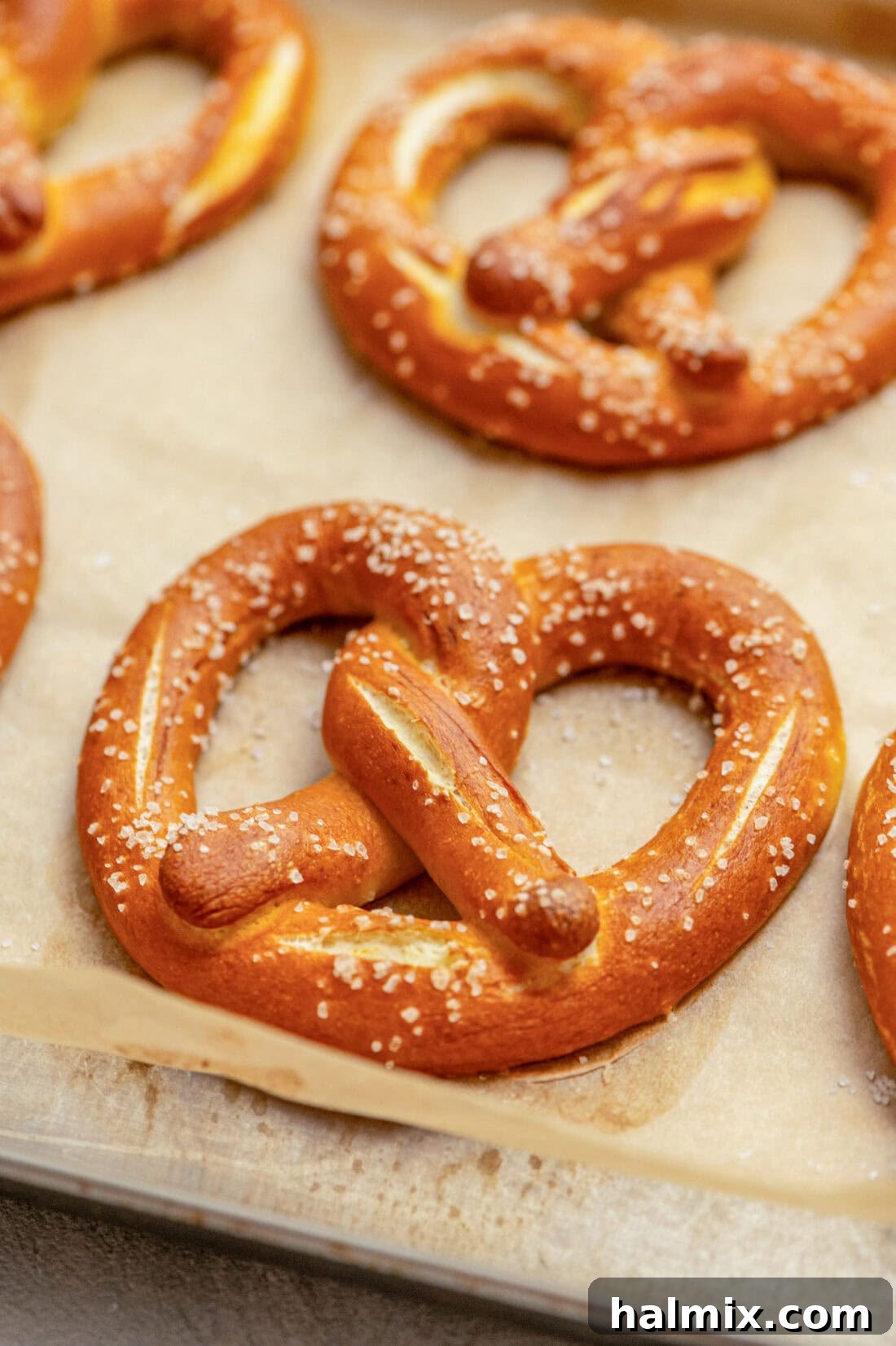
One of the initial hurdles was converting Astrid’s metric measurements to standard units. This required careful calculation, but the effort was well worth it. I was incredibly pleased when our homemade German pretzels came together so beautifully, proving that authentic German baking could be achieved right here at home.
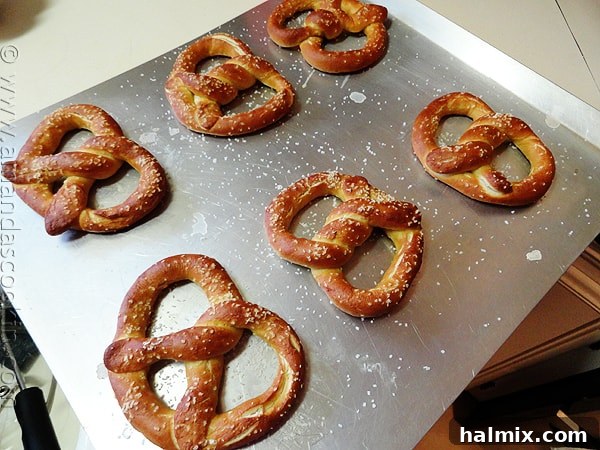
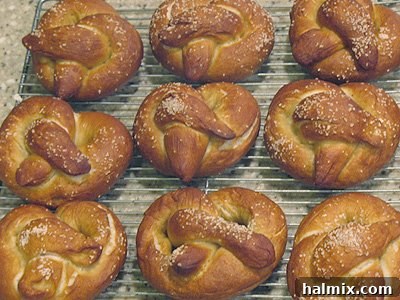
My first attempt, back in February 2009, resulted in pretzels that were considerably smaller and fatter than Astrid’s elegant creations. They were delicious, but not quite the traditional shape. This taught me a valuable lesson: to achieve that classic pretzel look, the dough ropes need to be rolled out much longer and thinner than one might initially think. On subsequent attempts, I made sure to extend my ropes, leading to the perfectly shaped, golden-brown pretzels we now enjoy. It’s a reminder that even in baking, practice makes perfect, and each batch offers a chance to refine your technique.
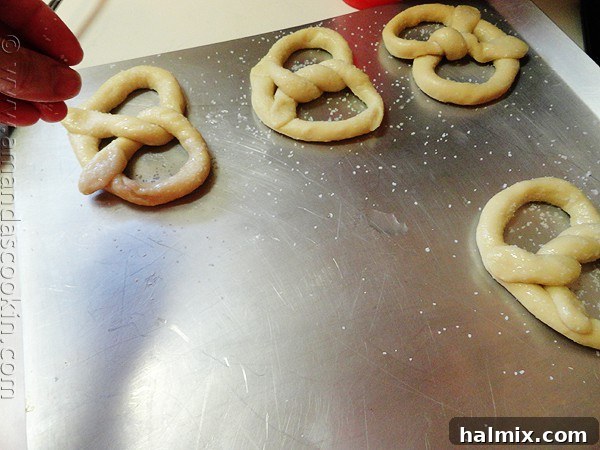
Since that first batch over a decade ago, these homemade German pretzels have become a beloved staple in our home. I’ve made them countless times, perfecting the rolling technique, the distinctive twist, and achieving that sought-after chewy interior and crisp, deeply browned crust. It’s a recipe that not only delivers on flavor but also offers a rewarding baking experience every time.
The Enduring Charm of the German Pretzel: A Culinary Icon
The pretzel, or “Brezel” in German, is far more than just a baked good; it’s a symbol deeply ingrained in German culture and culinary history. Originating in medieval Europe, possibly by monks who shaped them to resemble arms crossed in prayer, pretzels have evolved into a beloved snack across the globe. The traditional German pretzel, specifically the “Laugenbrezel,” is distinct from its American counterparts. It’s typically chewier, has a thinner, darker crust, and a less airy interior. Learning to make these at home connects us directly to centuries of baking tradition and allows us to savor a truly authentic taste of Germany.
The journey to master these pretzels isn’t just about following a recipe; it’s about understanding the nuances of the dough, the shaping technique, and the critical step that gives pretzels their signature appearance and flavor. Each stage, from activating the yeast to the final bake, contributes to the irresistible charm of these twisted delights.
The Science Behind the Perfect Crust: The Baking Soda Bath
Have you ever pondered why pretzels, despite being made from essentially the same basic dough as many breads, boast that distinctive, deep brown, glossy crust that a regular loaf of bread does not? The secret lies in a fascinating chemical reaction known as the “Maillard process.” This process, which occurs at high temperatures, is a non-enzymatic browning reaction between amino acids and reducing sugars. It’s responsible for the complex flavors and appealing color in many cooked foods, from seared steaks to roasted coffee beans and, of course, pretzels.
The traditional German method for achieving this iconic crust involves dipping the pretzel dough in a lye (sodium hydroxide) solution before baking. Lye is a strong alkaline agent that significantly speeds up and enhances the Maillard reaction. As eloquently explained by the Wisconsin Public Radio Ideas Network:
“Dipping dough in lye alters the ratio between sugar and protein, because lye breaks proteins present in the dough into smaller bits. Those are the small amino acids that then combine with sugars in the dip to create the flavor compounds at the pretzel’s crust.” [Source: Wisconsin Public Radio Ideas Network]
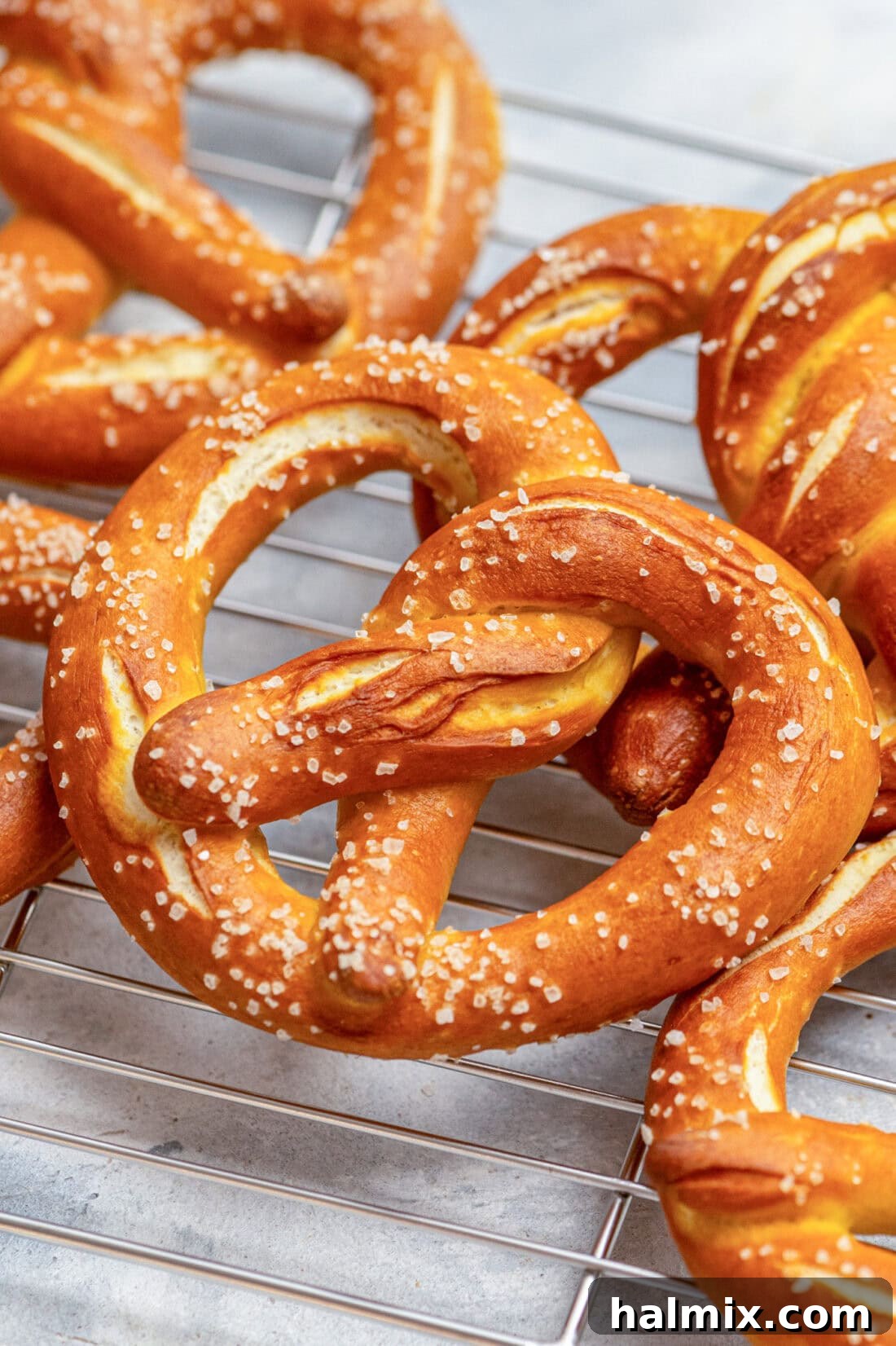
While lye delivers the most authentic results, it’s a caustic chemical that isn’t readily available in most grocery stores and requires careful handling. Fortunately, home bakers have an excellent, safe, and easily accessible alternative: the baking soda bath. When baking soda (sodium bicarbonate) is dissolved in boiling water, it creates an alkaline solution that, though milder than lye, is potent enough to kickstart the Maillard reaction. This chemical interaction on the surface of the dough, combined with the intense heat of a hot oven, transforms the pale dough into pretzels with that beautiful, golden-brown, shiny crust and unique flavor profile that pretzels are so famous for.
Distinguishing Authentic German Pretzels
It’s important to set expectations when making authentic German pretzels at home. These are often a little smaller and possess a denser, chewier texture compared to the larger, softer, and often doughier varieties found at American county fairs or local food stands. If your only experience with pretzels comes from a street vendor or food truck in the US, prepare for a delightful, yet different, culinary journey. The German pretzel offers a more refined, savory experience, with a robust crust that yields to a satisfyingly chewy interior.

Rest assured, despite these differences, they are utterly delicious and well worth the effort. The process of making them is actually quite enjoyable, transforming simple ingredients into something truly special. Who knew a bit of kitchen chemistry could result in such a delicious outcome?
Tips for Perfect Pretzel Shaping and Baking
Achieving the quintessential pretzel shape might seem intimidating at first, but with a few pointers, it becomes an intuitive and fun part of the baking process. The key is to roll your dough ropes consistently to about 20 inches, ensuring they are tapered at the ends. This length is crucial for creating the distinctive “U” shape, the double twist, and bringing the ends down to form the classic pretzel knot. Resist the urge to use flour on your surface during rolling; the dough should have enough grip to stretch without tearing. Keeping the dough cool, particularly during its brief stay in the fridge, is also vital. This cold proof not only aids in developing flavor but also helps the dough form a slight “skin,” which is essential for absorbing the baking soda solution and contributing to that beautiful, shiny crust.
Serving Suggestions for Your Homemade German Pretzels
Once your homemade German pretzels emerge from the oven, fragrant and perfectly browned, the culinary possibilities are endless. Traditionally, they are served simply with a smear of good German mustard, which perfectly complements their savory, slightly salty flavor. For a heartier snack, consider pairing them with a delicious beer cheese dip or a spread of Obatzda, a Bavarian cheese delicacy. They also make an excellent accompaniment to Weisswurst (white sausage) and sweet mustard, or simply enjoyed on their own with a cold beverage. Whether you opt for classic pairings or your own creative twists, these pretzels are guaranteed to be a hit.
Explore More Pretzel-Inspired Delights
- Ham & Cheese Pretzel Roll Sandwiches: A delicious twist on a classic sandwich.
- Bretzel Rolls (Pretzel Sandwich Rolls): Perfect for mini sandwiches or as a dinner roll with a pretzel crust.
- Air Fryer Pretzel Bites: For a quicker, bite-sized pretzel experience.

Homemade German Pretzels
IMPORTANT – There are often Frequently Asked Questions within the blog post that you may find helpful. Simply scroll back up to read them!
Print It
Pin It
Ingredients
- 1 ½ oz active dry yeast 4 1/2 teaspoons (2 packages)
- 1 cup lukewarm water 110-115 F
- 4 cups all-purpose flour
- 2 teaspoons salt
- 1 teaspoon granulated sugar
- 3 tablespoons unsalted butter
- Coarse salt for sprinkling
Soda Bath
- 2 quarts water
- ½ cup baking soda
Before You Begin
Instructions
-
Dissolve yeast in the lukewarm water. Mix flour and salt together in a large mixing bowl. Form a well in the flour mixture then add the sugar to the center of the well. Pour the yeast/water mixture into the well. Let it rest for 15 minutes before mixing.1 1/2 oz active dry yeast, 1 cup lukewarm water, 4 cups all-purpose flour, 2 teaspoons salt, 1 teaspoon granulated sugar
-
Add the softened butter to the mixing bowl and knead everything to a smooth dough. I used the dough hook on my Kitchenaid for about 6 minutes on speed #2, I did have to add about a tablespoon of additional water as it was not quite gathering all the dry ingredients. Remove the dough hook and let the dough rest for 30 minutes.3 tablespoons unsalted butter
-
Cut the dough into twelve equal parts, then roll each piece on the table (don’t flour the surface, you shouldn’t need it) to about 20 inches, tapered toward the ends. Don’t make it smaller than 20 inches as it’s impossible to get a good shape with a short, thick rope of dough. The dough should not get too warm as you roll it out, or it might tear.
-
To form the pretzel shape, place dough rope on parchment lined cookie sheet so that it creates the shape of the letter “U”. Take both ends of the “U” and cross them over each other twice forming a twist. Bring that twist down and place it over the bottom curve of the “U”.
-
Place the pretzels without covering them in the fridge for about an hour. This helps build a skin that will absorb the dipping solution better and make a beautiful shiny crust.
-
Preheat the oven to 400 F.
-
Fill large stock or pasta pot 3/4 full and bring the water to a boil. Carefully and slowly add the baking soda to the boiling water. There will be a reaction when the baking soda hits the water and it will bubble furiously for a moment and then relax. Stand back a bit just to be safe. Using a slotted spoon, gently drop each pretzel into the bath for 10 seconds, then turn over for another 10. Astrid called for a total of 10 seconds only. Place them on a baking sheet lined with parchment paper.1/2 cup baking soda, 2 quarts water
-
Score the dough once like for a baguette with a razor blade or sharp knife.
-
Sprinkle with coarse salt. Bake the pretzels for about 15 to 20 minutes (mine took 20 minutes for a nice dark crust), depending on how dark you like them.Coarse salt for sprinkling
Nutrition
The recipes on this blog are tested with a conventional gas oven and gas stovetop. It’s important to note that some ovens, especially as they age, can cook and bake inconsistently. Using an inexpensive oven thermometer can assure you that your oven is truly heating to the proper temperature. If you use a toaster oven or countertop oven, please keep in mind that they may not distribute heat the same as a conventional full sized oven and you may need to adjust your cooking/baking times. In the case of recipes made with a pressure cooker, air fryer, slow cooker, or other appliance, a link to the appliances we use is listed within each respective recipe. For baking recipes where measurements are given by weight, please note that results may not be the same if cups are used instead, and we can’t guarantee success with that method.
This post originally published on February 19, 2009