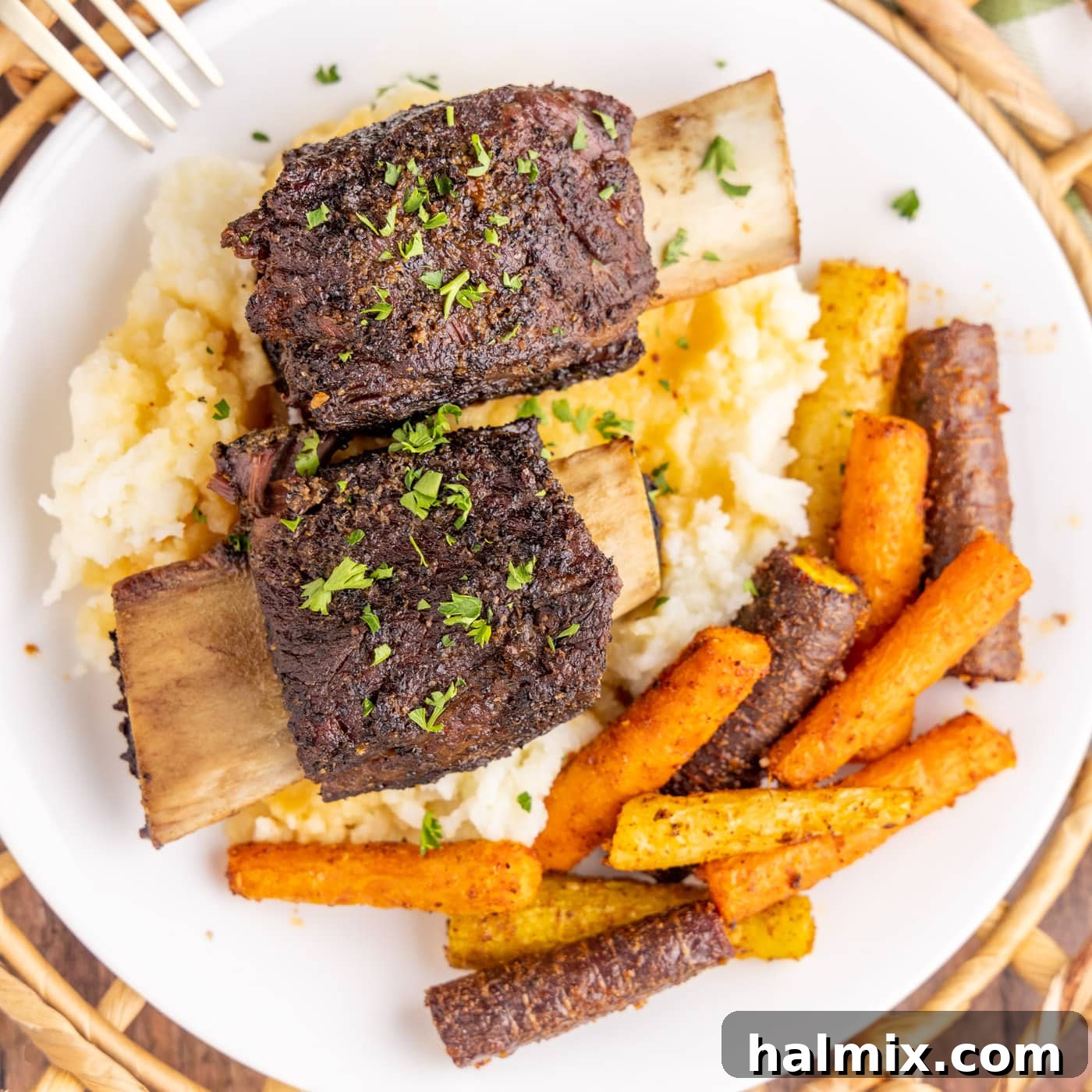
Unlock the secret to crafting succulent, fall-off-the-bone tender beef short ribs right in your own oven. This incredibly simple recipe requires just four core ingredients and relies on a classic low-and-slow cooking method to transform humble ribs into an unforgettable culinary masterpiece. Prepare to impress with minimal effort, yielding a dish so rich and tender, it practically melts in your mouth.
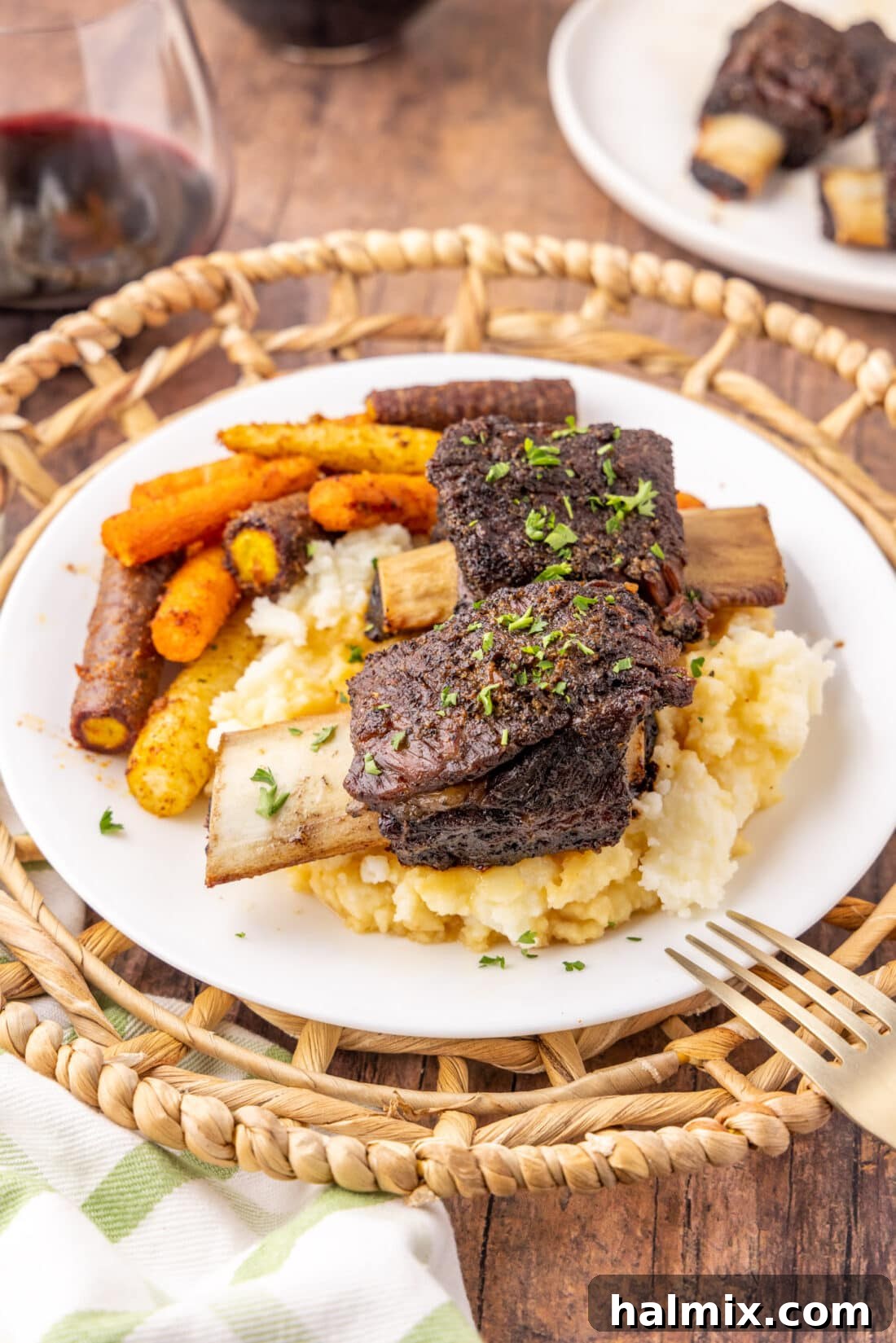
Why This Recipe Promises Unforgettable Flavor and Tenderness
This beef short rib recipe champions simplicity, allowing the inherent, rich flavor of the beef to take center stage. You don’t need an elaborate marinade or a pantry full of spices to create something truly spectacular. A judicious application of garlic salt and freshly cracked pepper is all that’s required to coax out the deep, savory notes that make short ribs so incredibly delicious.
The magic happens in two crucial steps. First, the short ribs are introduced to a screaming hot skillet for a brief but vital sear. This initial step isn’t just about browning; it’s about initiating the Maillard reaction, a chemical process that creates hundreds of new flavor compounds and gives the meat a beautiful, deep brown crust. This crust locks in moisture and adds an extra layer of savory complexity that can’t be achieved through slow cooking alone.
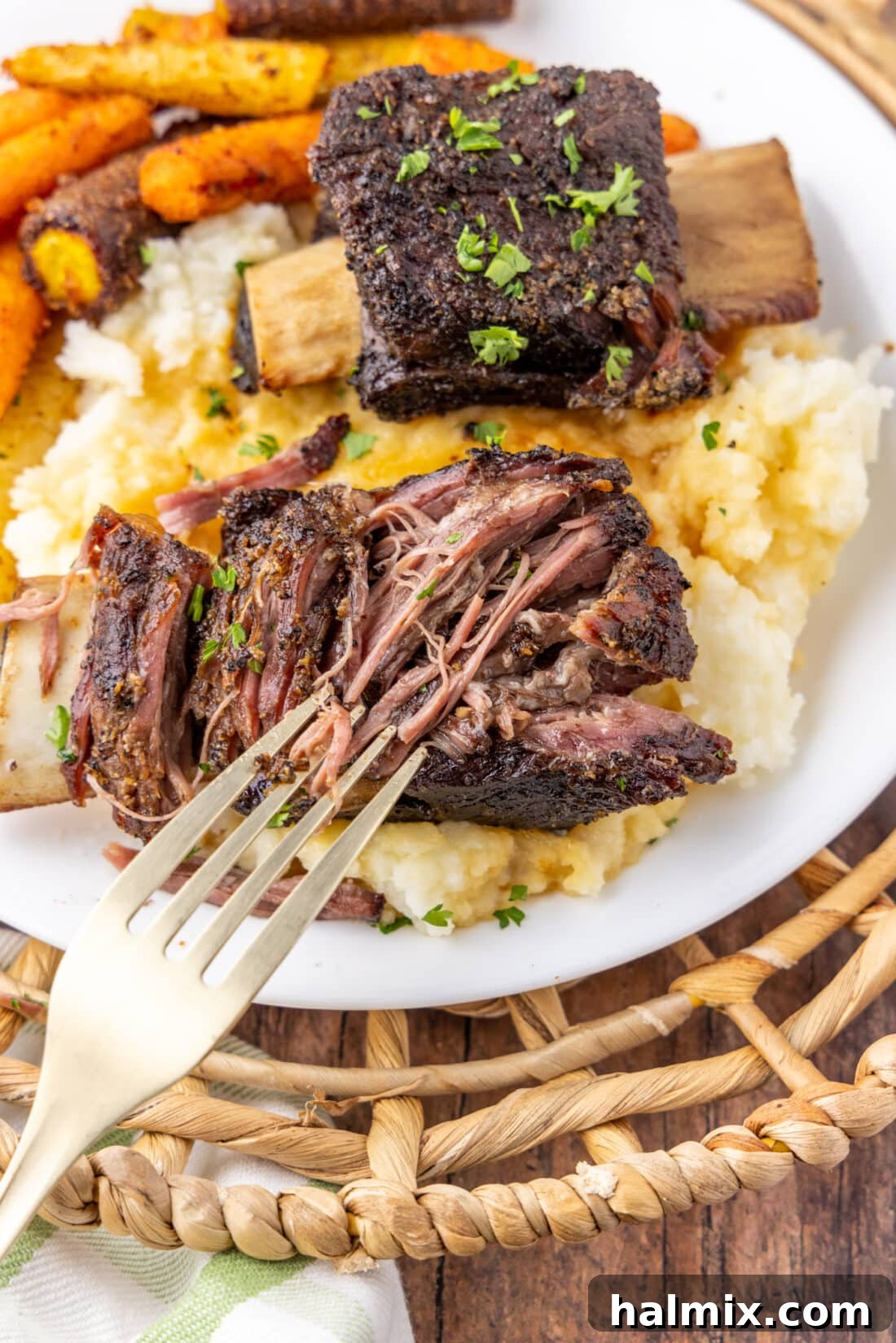
After their quick sizzle, the seared ribs are transferred to a baking dish for a leisurely journey in a low-temperature oven. Over the course of 3 to 4 hours, this gentle, consistent heat slowly breaks down the tough connective tissues within the short ribs, transforming them into succulent, gelatinous strands of pure tenderness. This extended cooking time is the cornerstone of achieving that coveted “fall-off-the-bone” texture. If time is of the essence and you need a quicker route to tender beef, you might explore our Instant Pot beef short ribs recipe, but for unparalleled depth of flavor and melt-in-your-mouth texture, the oven method reigns supreme.
Essential Ingredients for Tender Beef Short Ribs
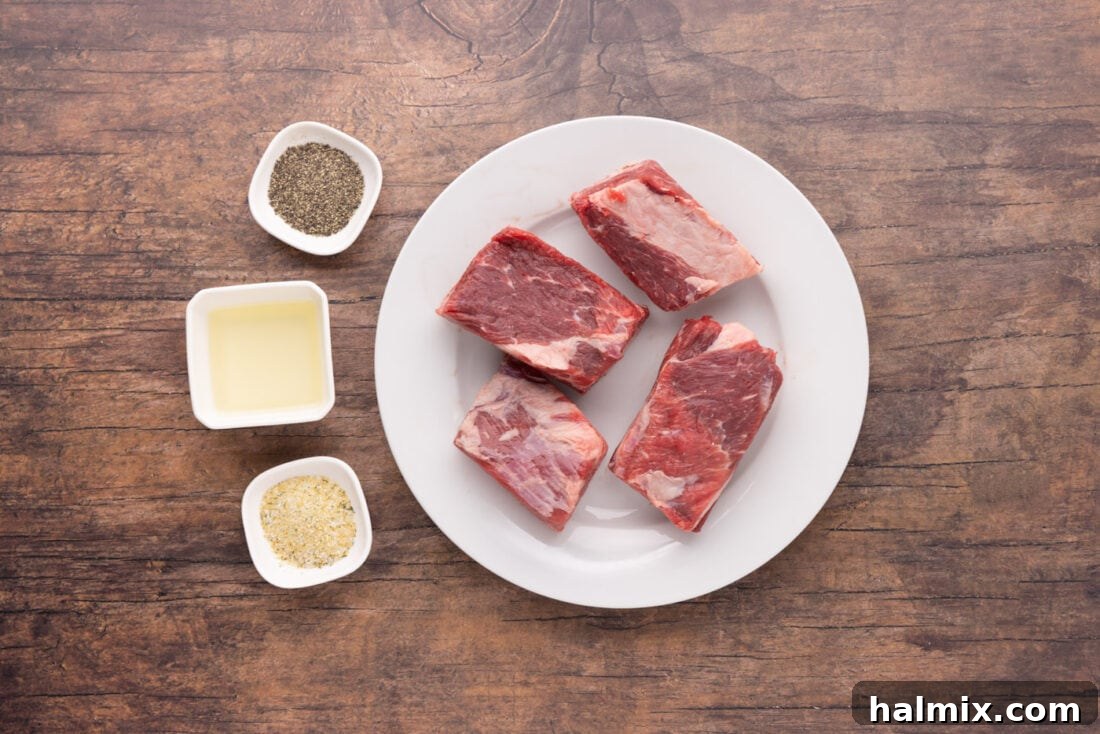
Crafting these delectable short ribs requires a surprisingly minimal list of ingredients, proving that simple doesn’t mean sacrificing flavor. Below, you’ll find a snapshot of what you’ll need. For precise measurements, detailed instructions, and a printable version of this recipe, be sure to scroll to the end of this post.
Ingredient Insights and Flavor Enhancements
Understanding your ingredients is key to culinary success, especially when working with cuts as flavorful as beef short ribs. Here’s a closer look at what you’ll need and how you can customize your dish:
BEEF SHORT RIBS – The star of our show! You can choose either bone-in or boneless beef short ribs for this recipe, though bone-in often offers a deeper, more robust flavor as the bone marrow slowly renders during cooking. Beef short ribs are typically cut in two ways: “English cut,” which features a thick piece of meat on top of a single bone, or “Flanken style,” where the ribs are cut across the bone into thinner strips. For this low-and-slow oven method, English cut short ribs are ideal, as their thicker profile benefits most from the extended cooking time, ensuring maximum tenderness. Aim to cook the ribs to an internal temperature of 190-205°F (88-96°C) for that perfect fall-apart texture. This higher temperature allows the collagen to fully break down into gelatin, resulting in incredibly succulent meat.
SEASONINGS – While this recipe highlights the beauty of simplicity with just garlic salt and pepper, beef short ribs are wonderfully versatile and can be complemented by a wide array of spices and seasonings. Feel free to experiment! Consider a dry rub with paprika, onion powder, and a touch of cayenne for a smoky kick. For a more aromatic profile, fresh herbs like rosemary and thyme, finely chopped and mixed with your spices, can elevate the dish significantly. You could also introduce a bit of chili powder or cumin for a Tex-Mex twist, or a savory blend of herbs de Provence for a Mediterranean flair. Don’t shy away from your favorite go-to beef seasonings – the rich marbling of short ribs can stand up to bold flavors beautifully.
OLIVE OIL – Used primarily for binding the seasonings to the meat and helping to create that initial savory crust during searing. While the original recipe focuses on the natural fat of the ribs, a good quality olive oil can enhance the browning and flavor of your seasoning blend. Any neutral cooking oil like vegetable or canola oil can be substituted if olive oil isn’t preferred or available.
ADDITIONAL FLAVOR BOOSTERS – While not strictly necessary for this minimalist recipe, a few common pantry staples can significantly deepen the flavor profile if you choose to expand. Consider adding chopped aromatics like onions, carrots, and celery to the baking dish (beneath the ribs) to create a flavorful bed. A splash of beef broth, red wine, or even a dark beer can add moisture and rich layers of taste, creating a natural braising liquid that can later be reduced into a magnificent sauce.
Crafting Perfectly Tender Oven-Baked Short Ribs: Step-by-Step
These step-by-step photos and detailed instructions are designed to help you visualize each stage of making this incredibly tender beef short rib recipe. For a convenient printable version, complete with precise measurements and comprehensive instructions, you can effortlessly Jump to Recipe at the bottom of this post.
- Preheat your oven to 275°F (135°C). This low temperature is crucial for the slow rendering of fat and breakdown of connective tissue, leading to ultimately tender ribs.
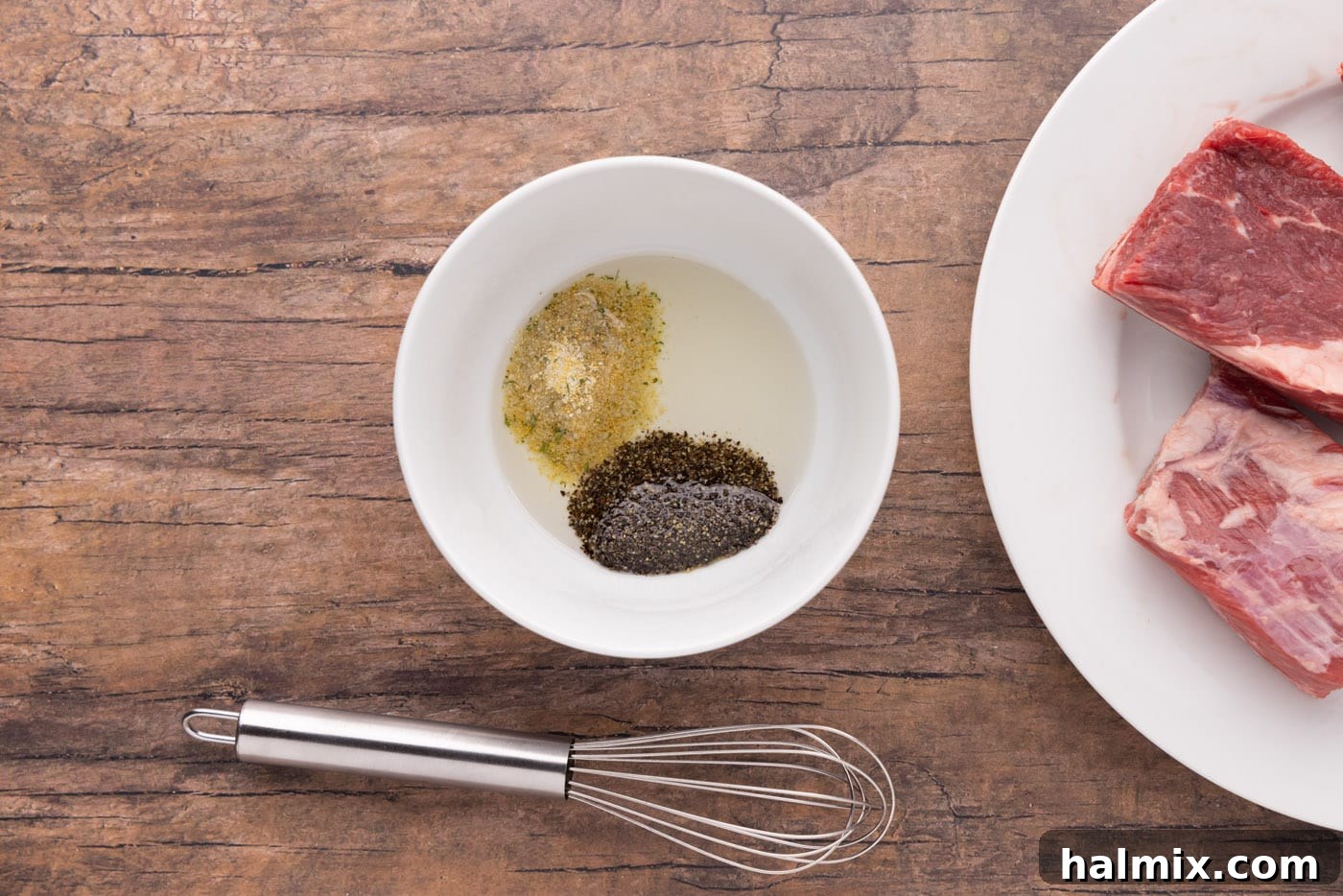
- In a small bowl, combine the olive oil, garlic salt, and black pepper. Whisk these ingredients together thoroughly until they form a well-mixed paste. The oil will help the seasonings adhere evenly to the meat, ensuring every bite is flavorful.

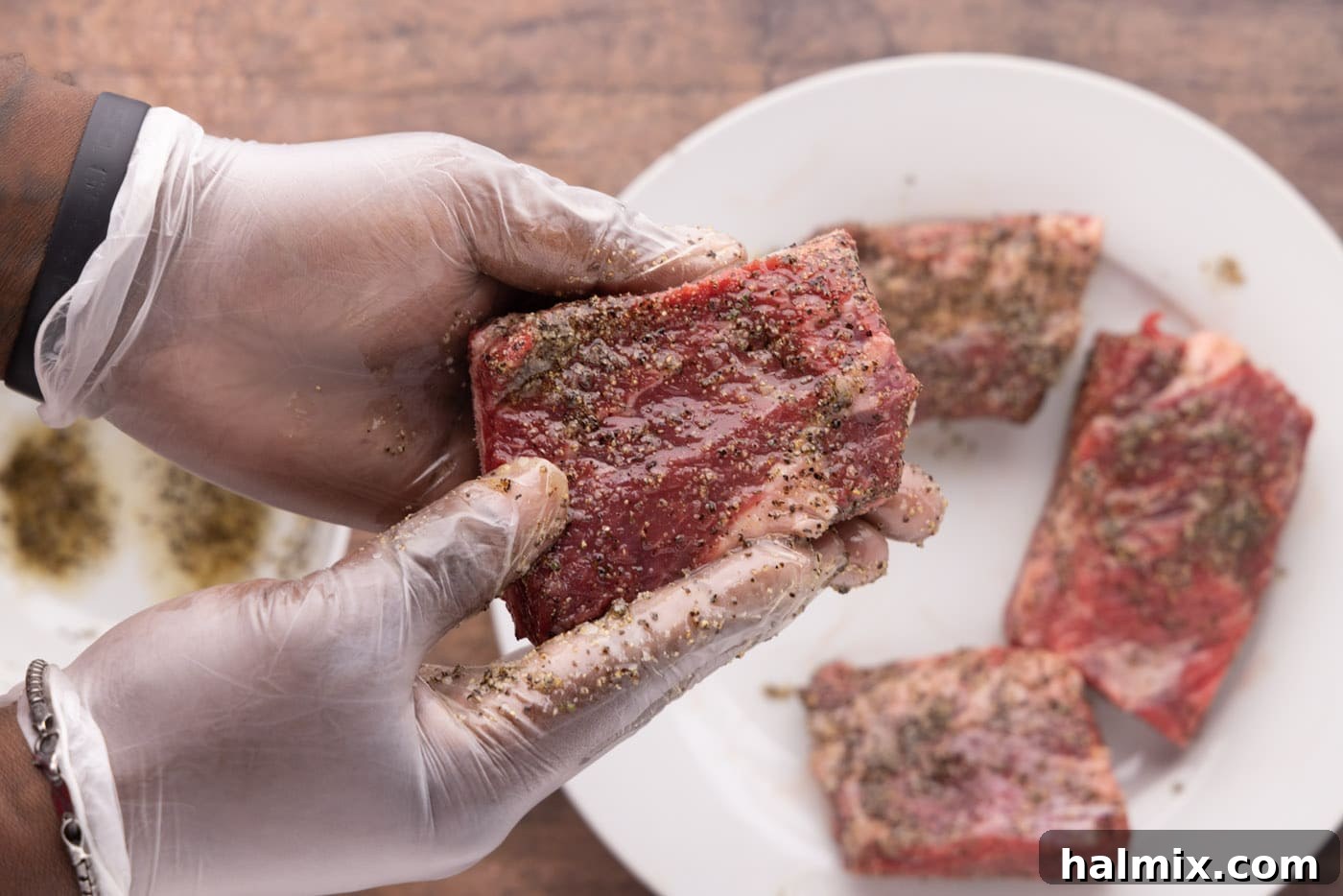
- Donning a pair of food-safe gloves (or using your clean hands), generously rub the prepared oil and spice mixture all over the beef short ribs. Ensure every surface of the meat is coated, working the seasoning into any crevices. This creates an aromatic crust that develops during searing and baking.
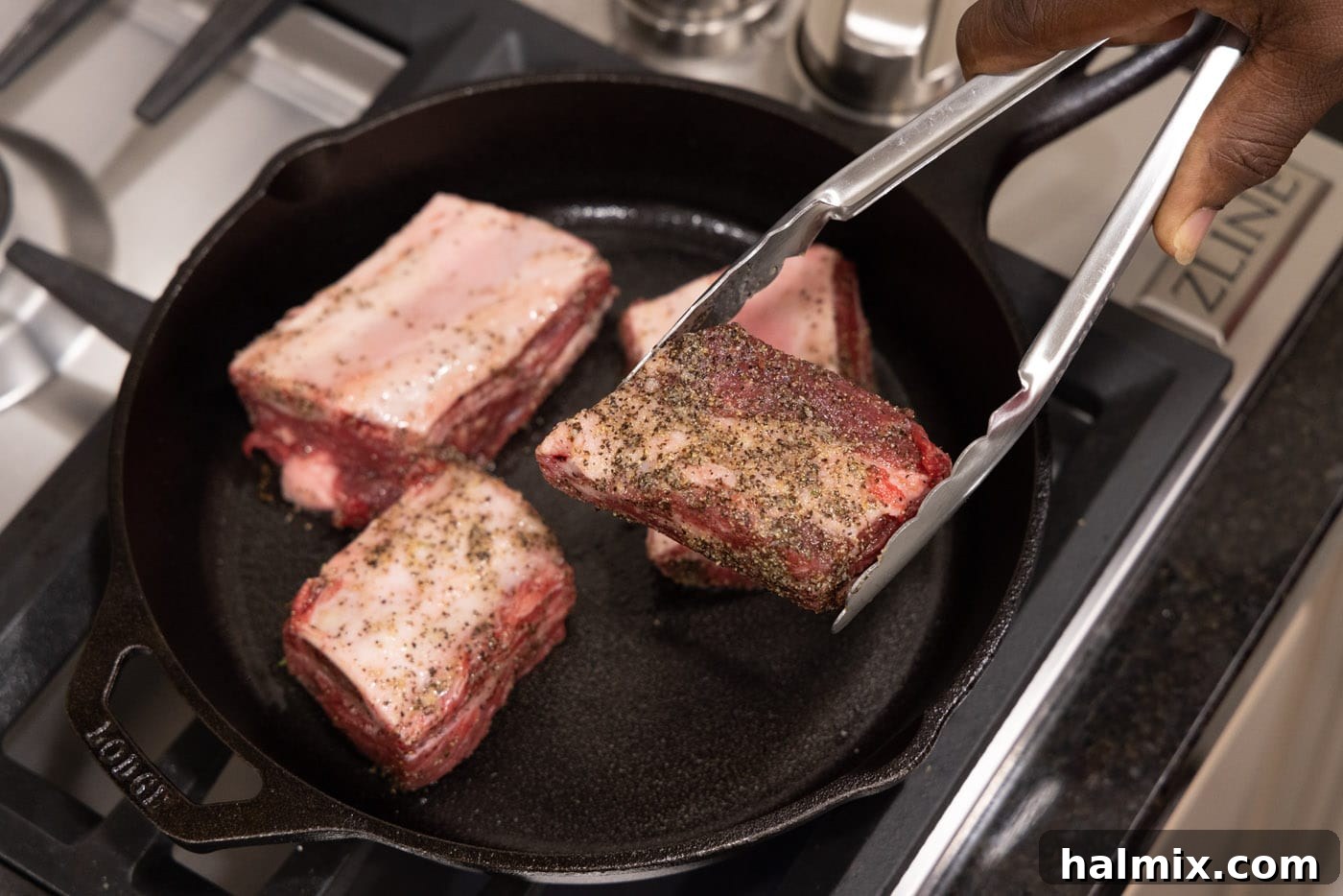
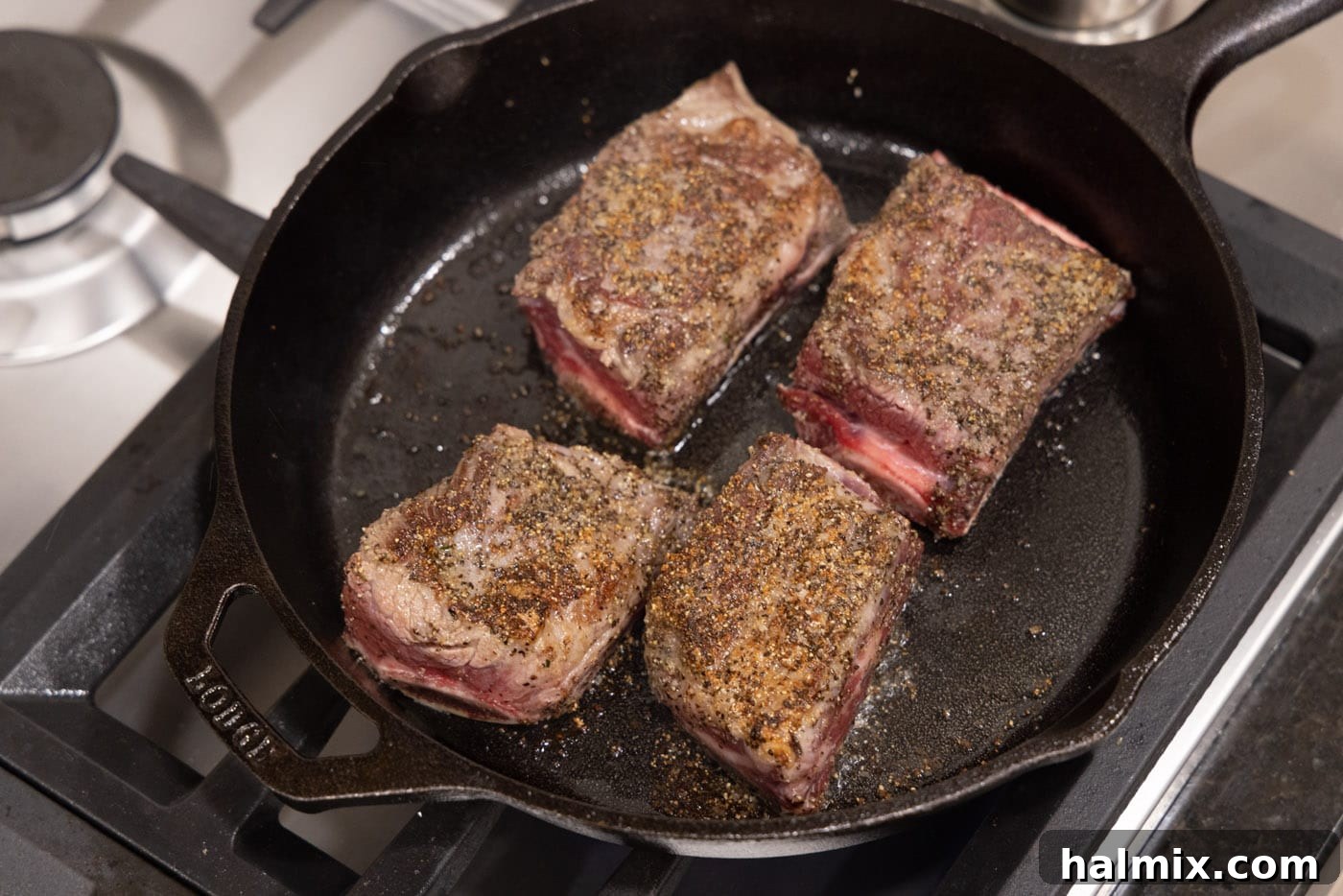
- Place a heavy-bottomed skillet (cast iron works wonderfully) over medium-high heat and allow it to get very hot. Do not add any additional oil at this stage, as short ribs have ample natural fat that will render. Once the skillet is smoking slightly, carefully place the seasoned short ribs into the hot pan. Sear them for 2-3 minutes per side, rotating until a deep, rich brown crust has developed on all surfaces. This critical step builds immense flavor.
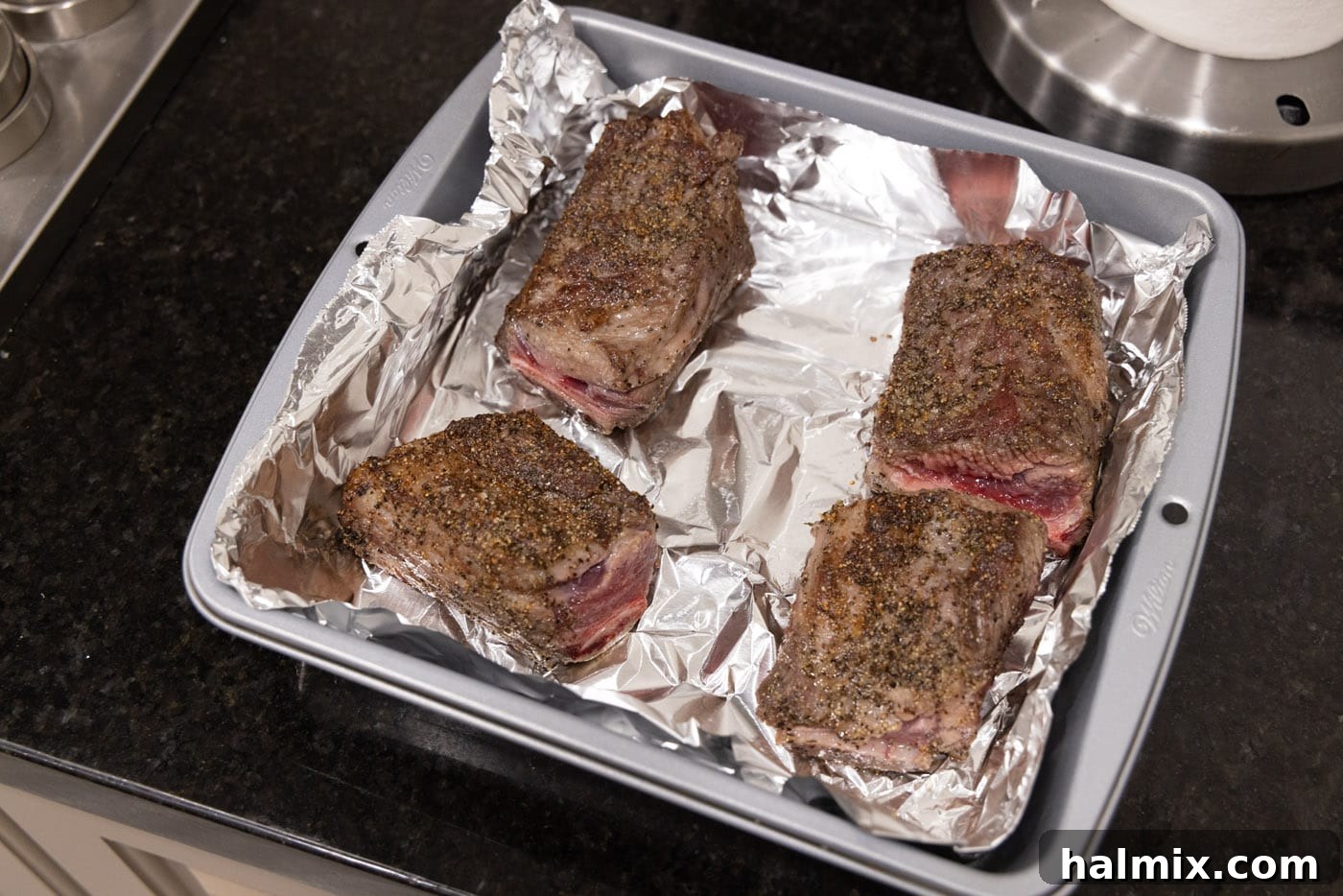
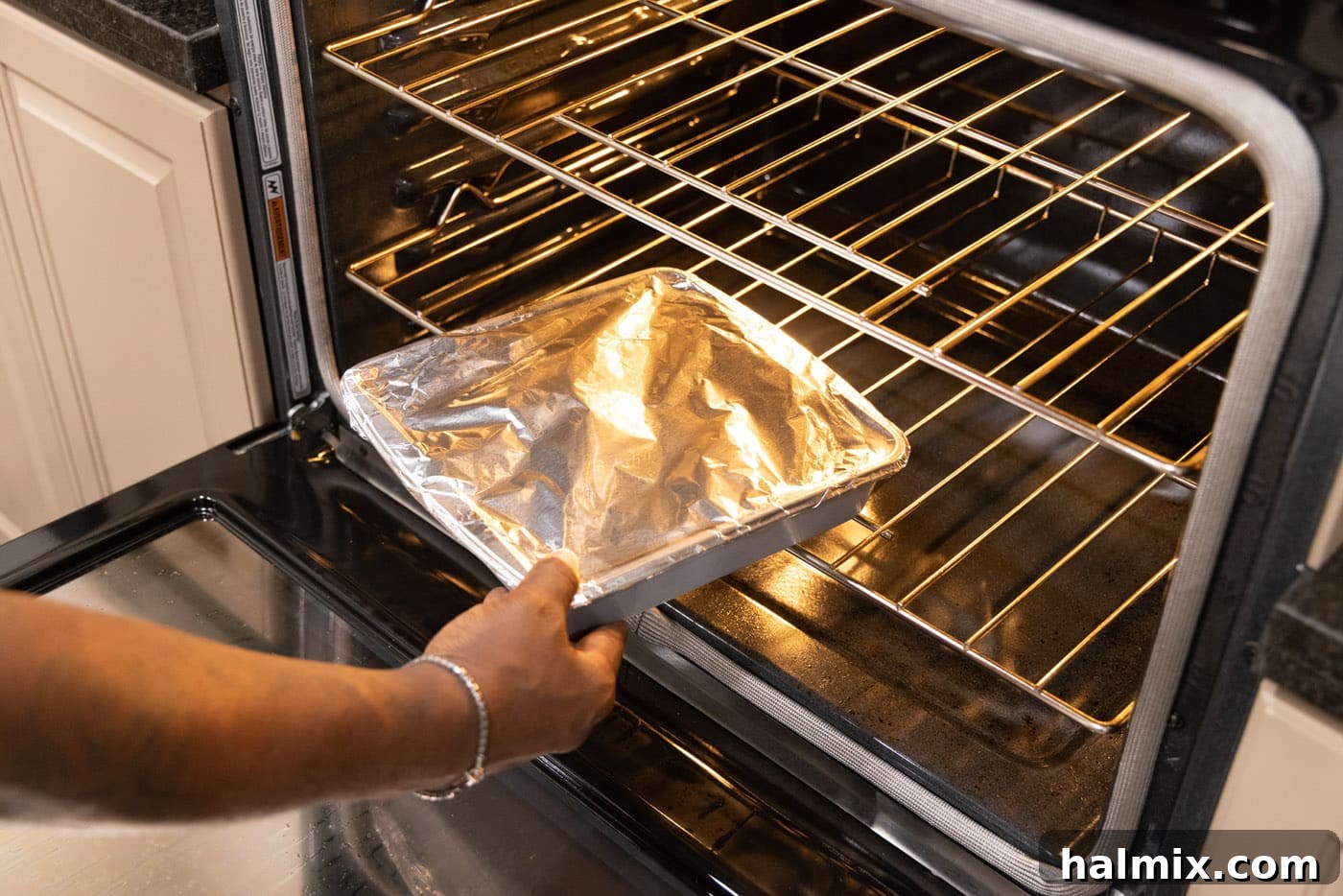
- Line a square baking pan or a casserole dish with heavy-duty aluminum foil, ensuring enough overhang to create a tight seal later. Lightly spray the foil with cooking spray to prevent sticking. Carefully transfer the seared short ribs into the prepared pan. Once all ribs are in, cover the pan tightly with the overhanging foil. A secure seal is vital to trap steam and moisture, creating a braising environment that ensures incredibly tender results.
- Bake the short ribs in the preheated oven for 3 ½ to 4 hours. The long, slow cooking process will allow the meat to gradually tenderize until it can be effortlessly pulled away from the bone with a fork. Resist the urge to peek during the first 3 hours to maintain the consistent low temperature and moisture inside the foil-covered pan. If after 3.5 hours the ribs aren’t as tender as desired, simply recover and continue baking for another 30 minutes, or until perfection is achieved.
Frequently Asked Questions & Expert Tips for Beef Short Ribs
For short ribs that are truly fall-apart tender and incredibly juicy, you’ll want to aim for an internal temperature in the range of 190°F to 205°F (88°C to 96°C). This might seem high for beef, but at these temperatures, the tough collagen in the connective tissues breaks down into rich, succulent gelatin, resulting in that desired melt-in-your-mouth texture. Always use a reliable instant-read thermometer inserted into the thickest part of the meat, avoiding the bone, for an accurate reading.
To maintain their deliciousness, store any leftover beef short ribs in an airtight container. They will keep beautifully in the refrigerator for 3 to 4 days. For longer storage, freeze them for up to 3 months. When reheating, gently warm them in the oven (covered) with a splash of beef broth to prevent drying out, or slowly on the stovetop.
Absolutely! A Dutch oven is an excellent choice for making beef short ribs. Its heavy construction allows for even heat distribution, making it perfect for both searing the ribs on the stovetop and then transferring them directly to the oven for the slow-cooking process. Just ensure it has a tight-fitting lid to trap all that essential moisture.
Achieving a deep, flavorful sear is crucial. First, ensure your short ribs are as dry as possible before placing them in the pan – pat them thoroughly with paper towels. Second, preheat your skillet over medium-high heat until it’s very hot (a drop of water should evaporate instantly). Don’t overcrowd the pan; sear the ribs in batches if necessary, giving each piece enough space to brown properly without steaming. A good sear means a better crust and more flavor.
Yes, definitely! Adding sturdy root vegetables like chopped carrots, potatoes, onions, or celery to the bottom of the baking pan can add incredible depth of flavor to the dish and provide a built-in side. They’ll slowly braise alongside the ribs, soaking up all the savory juices. Just ensure they are cut into larger chunks so they don’t turn to mush during the long cooking time.
Delicious Serving Suggestions for Beef Short Ribs
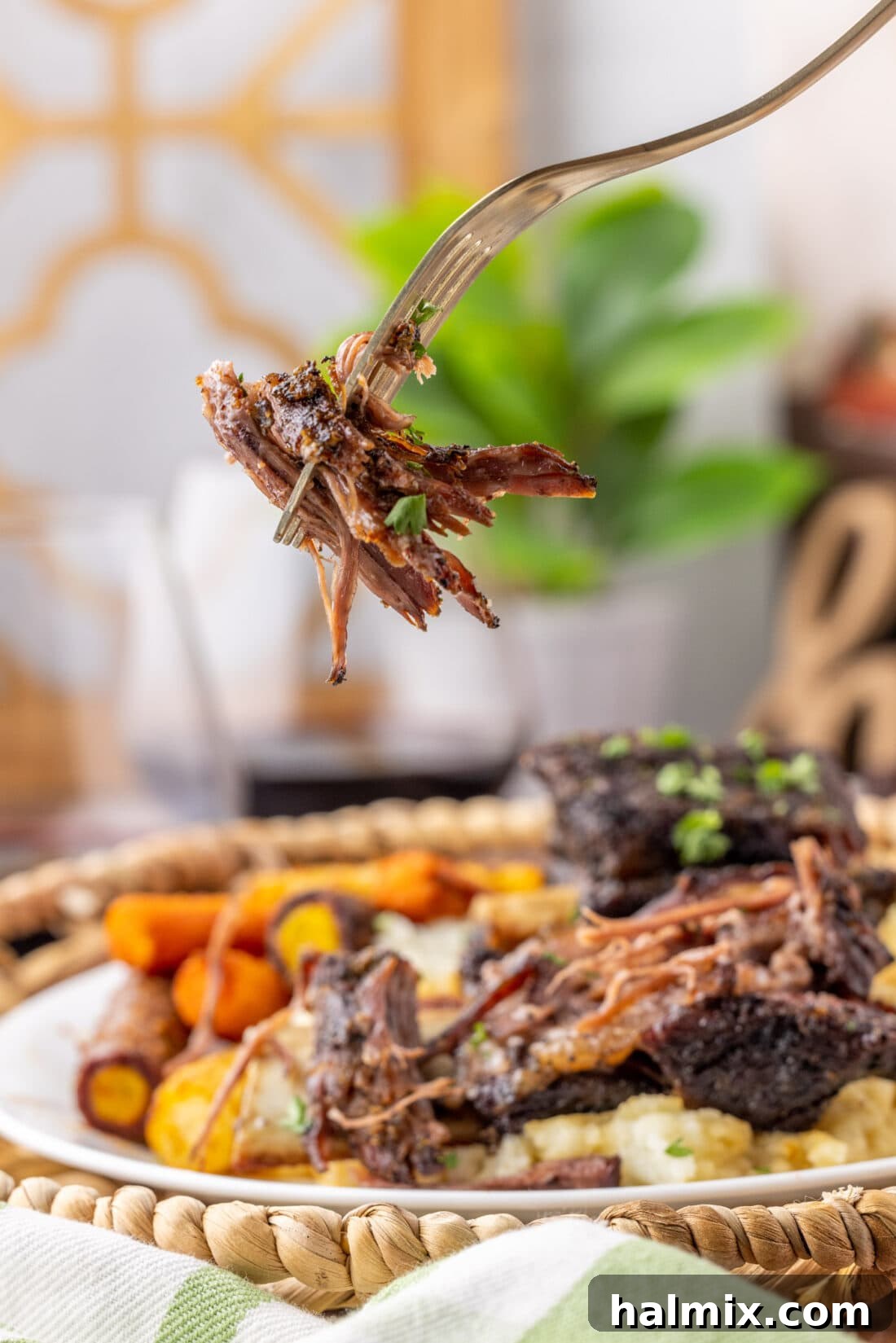
Once your beef short ribs emerge from the oven, incredibly tender and aromatic, they are ready to be paired with complementary sides that highlight their rich flavor. Classic accompaniments include creamy mashed potatoes (perfect for soaking up all the delicious juices), fluffy white rice, or even a hearty polenta. For vegetable sides, consider roasted carrots with a hint of honey, crisp-tender asparagus, steamed broccoli florets, or vibrant green beans. A simple green salad with a light vinaigrette can also provide a refreshing contrast. For an extra touch of elegance and freshness, garnish your warm short ribs with a sprinkle of chopped fresh parsley before serving. You might also consider drizzling them with a simple pan sauce made from the rendered juices, thickened slightly with a cornstarch slurry, for an even richer experience.
Explore More Delicious Beef Recipes
If you love the hearty, satisfying flavor of beef, you’ll want to explore some of our other popular recipes:
- Decadent Beef Tenderloin
- Perfectly Roasted Oven Beef Ribs
- Classic Beef Bourguignon
- Effortless Crockpot Roast Beef
- Flavorful Beef Brisket and Gravy
I find immense joy in baking and cooking, and I love sharing my kitchen adventures and perfected recipes with all of you! Remembering to check back for new culinary inspiration daily can be a challenge, which is why I offer a convenient newsletter delivering a fresh recipe directly to your inbox every time a new post goes live. Simply subscribe today and start receiving your free daily recipes, making every meal a delightful experience!
Oven-Baked Beef Short Ribs
IMPORTANT – There are often Frequently Asked Questions within the blog post that you may find helpful. Simply scroll back up to read them!
Print It
Pin It
Ingredients
- 1 ½ pounds beef short ribs
- ½ Tablespoon garlic salt
- 2 teaspoons black pepper
- 2 Tablespoons olive oil
Tools & Equipment You’ll Need
-
Food-safe gloves
-
Large skillet
-
Whisk
-
8×8 baking pan or small casserole dish
-
Aluminum foil
Before You Begin
- You can use either bone-in or boneless beef short ribs for this recipe. For optimal tenderness, aim for an internal temperature of 190 – 205°F (88-96°C).
- Store any leftover short ribs in an air-tight container in the refrigerator for 3-4 days, or freeze them for up to 3 months.
Instructions
-
Preheat oven to 275°F (135°C).
-
In a small bowl, whisk together the olive oil, garlic salt, and pepper until well combined.
-
Using gloved hands, thoroughly rub the oil and spice mixture all over the beef short ribs, ensuring a complete and even coating.
-
Preheat a large, heavy-bottomed skillet over medium-high heat until very hot. Do not add any oil, as the ribs have enough natural fat. Sear the short ribs for 2-3 minutes per side, rotating until a deep brown crust develops on all surfaces.
-
Line a square baking pan or casserole dish with heavy-duty foil, leaving enough to seal. Spray with cooking spray. Place the seared ribs in the prepared pan and cover tightly with the foil.
TIP – To maintain consistent heat and moisture, avoid uncovering the pan for at least the first 3 hours of baking. After this, you can check for tenderness, then recover and continue baking if needed.
-
Bake in the preheated oven for 3 ½ – 4 hours, or until the meat is incredibly tender and can be easily pulled away from the bone with a fork.
Nutrition Information
The recipes on this blog are tested with a conventional gas oven and gas stovetop. It’s important to note that some ovens, especially as they age, can cook and bake inconsistently. Using an inexpensive oven thermometer can assure you that your oven is truly heating to the proper temperature. If you use a toaster oven or countertop oven, please keep in mind that they may not distribute heat the same as a conventional full sized oven and you may need to adjust your cooking/baking times. In the case of recipes made with a pressure cooker, air fryer, slow cooker, or other appliance, a link to the appliances we use is listed within each respective recipe. For baking recipes where measurements are given by weight, please note that results may not be the same if cups are used instead, and we can’t guarantee success with that method.