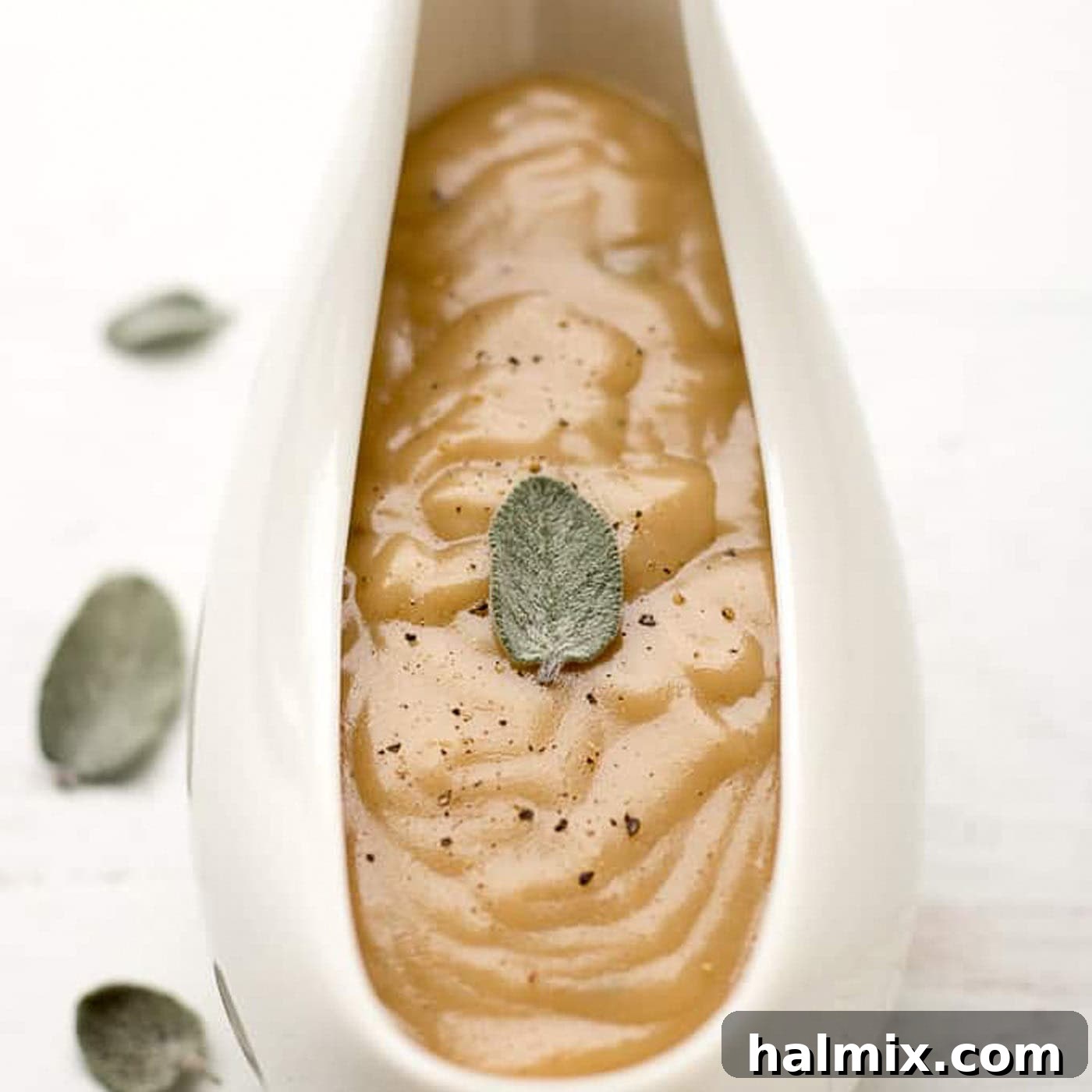
The Ultimate Guide to Homemade Turkey Gravy from Scratch
Elevate your holiday meals and Sunday dinners with the most delectable, savory, and perfectly consistent turkey gravy made entirely from scratch. This comprehensive tutorial will guide you through creating a rich, herb-infused gravy, thickened beautifully with all-purpose flour, and optionally enhanced with a splash of sherry or white wine for an extra layer of flavor. Forget store-bought gravy; once you master this recipe, you’ll never look back!
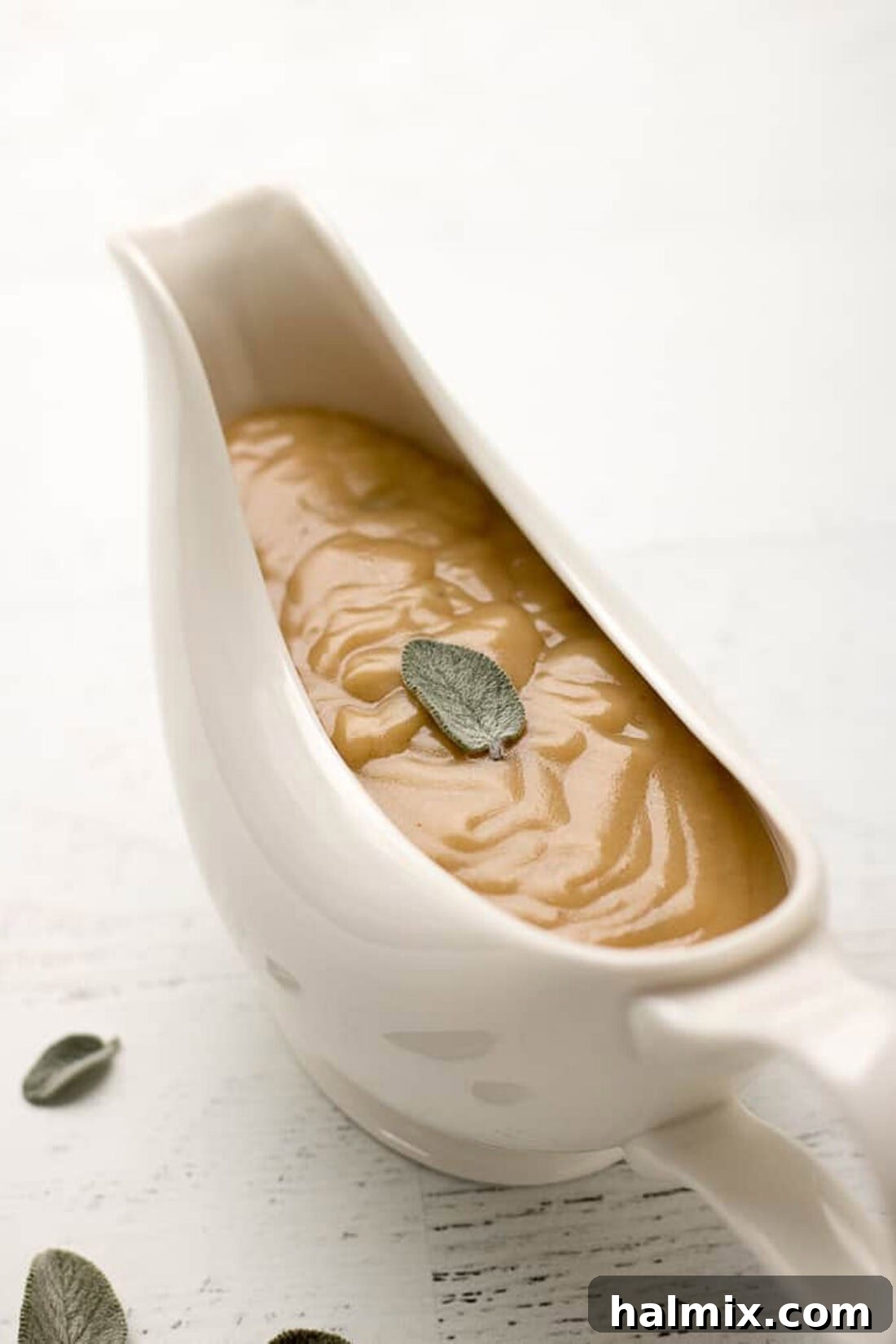
Why Homemade Turkey Gravy is a Must-Have for Your Table
Mastering the art of making homemade turkey gravy is a culinary skill that truly shines during festive occasions like Thanksgiving and Christmas, or any time a magnificent roasted turkey or whole roasted chicken graces your dining table. The depth of flavor and velvety texture of gravy made from real pan drippings simply cannot be replicated by pre-made alternatives. This recipe is designed to simplify the process, ensuring you achieve restaurant-quality gravy with minimal effort.
Beyond its superior taste, this homemade turkey gravy offers incredible versatility and convenience. You can prepare it well in advance, freezing it for the bustling holiday season, thus saving valuable time on the big day. The method is adaptable, allowing you to create a generous batch (approximately 3 1/2 to 4 cups or more, depending on your preferences) to cater to all your guests. Furthermore, it encourages customization, inviting you to infuse fresh or dried herbs like sage, rosemary, and thyme – classic complements that enhance the natural flavors of both turkey and chicken.
Essential Ingredients for Perfect Turkey Gravy
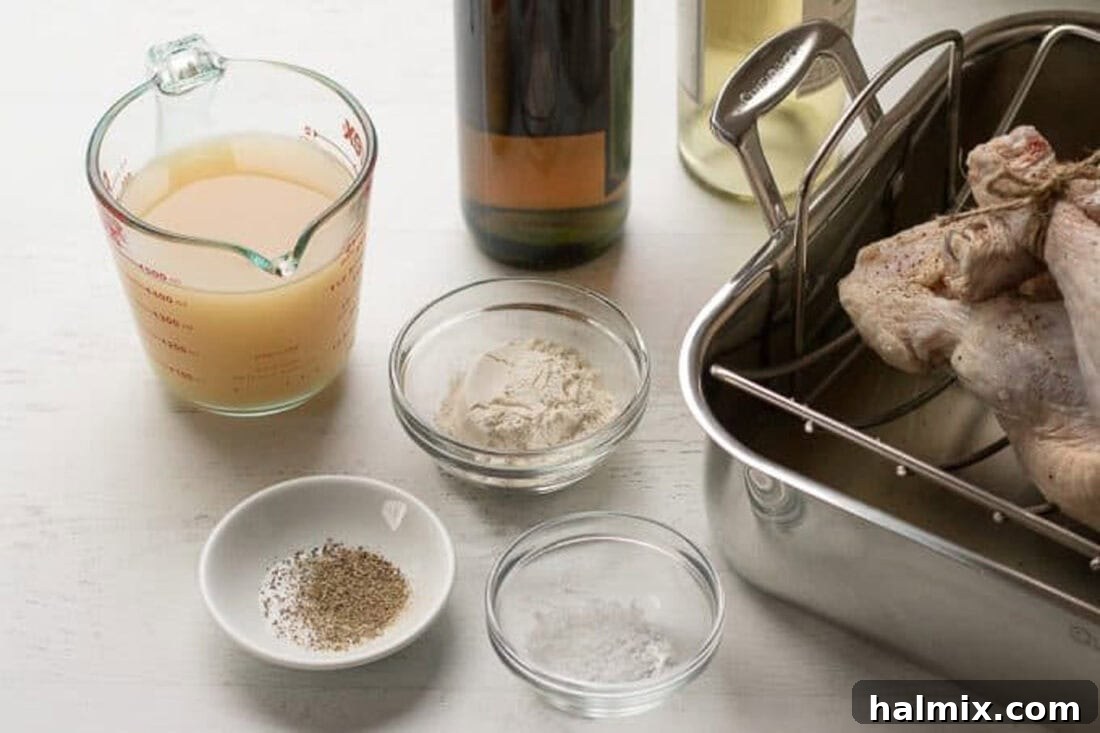
Creating an unforgettable turkey gravy starts with a few simple, high-quality ingredients. Here’s what you’ll need, along with important notes on how each component contributes to the final masterpiece:
Ingredient Information and Smart Substitutions
- Pan Drippings: The Flavor Foundation
The succulent drippings left in the roasting pan after cooking your turkey are the soul of this gravy. These are packed with concentrated turkey flavor. A fat separator is an invaluable tool that makes extracting the clear drippings from the fat incredibly easy. If you don’t have one, simply skim the fat off the top with a spoon after chilling the drippings. The fat will solidify, making it simple to remove. - Broth: For Consistency and Depth
You can use either chicken or vegetable broth. Opt for low-sodium varieties to have better control over the final seasoning of your gravy. Broth is key for deglazing the pan and achieving the desired consistency. If your gravy turns out too thick, simply whisk in a little more broth until it reaches your preferred pourable texture. - All-Purpose Flour: The Thickening Agent
Flour is essential for creating a roux, which provides the classic thick and smooth gravy texture. It’s crucial to cook the flour with the fat to remove any raw flour taste. - Unsalted Butter (Optional, to taste): For Richness
While the turkey fat provides plenty of richness, a small amount of unsalted butter can be added for an extra luxurious mouthfeel, especially if your drippings are a bit lean. - Kosher or Sea Salt & Freshly Ground Black Pepper: Seasoning Essentials
Seasoning to taste is vital. Start with a little and adjust as you go. Remember that drippings can be quite salty, so taste frequently. - Dry White Wine or Dry Sherry (Optional, 1-2 Tablespoons): Aromatic Boost
A splash of dry white wine or dry sherry adds a wonderful depth and complexity to the gravy, cutting through the richness and enhancing the savory notes. Choose a wine you would enjoy drinking. If you prefer not to use alcohol, simply omit it or substitute with an equal amount of additional broth. - Fresh Herbs (Optional, 1 teaspoon combined): Aromatic Infusion
Fresh rosemary, sage, and thyme (finely minced, stems removed) are traditional turkey companions that infuse the gravy with an incredible aroma.
Herb Substitution Tip: If fresh herbs are not available, you can use dried herbs. The general rule of thumb is to use one-third the amount of dried herbs compared to fresh herbs. So, for 1 teaspoon of fresh herbs, use approximately 1/3 teaspoon of dried herbs.
Step-by-Step: Crafting Your Perfect Homemade Turkey Gravy
Follow these detailed steps to transform simple pan drippings into a magnificent, smooth, and flavorful turkey gravy. While these photos provide a visual guide, the complete printable recipe with precise measurements can be found at the end of this post.
-
Deglazing the Roasting Pan for Maximum Flavor
The journey to incredible gravy begins right after your perfectly roasted turkey leaves the oven. Carefully remove the cooked turkey to a large platter or a rimmed sheet pan to rest. This allows the juices to redistribute, ensuring a tender bird.

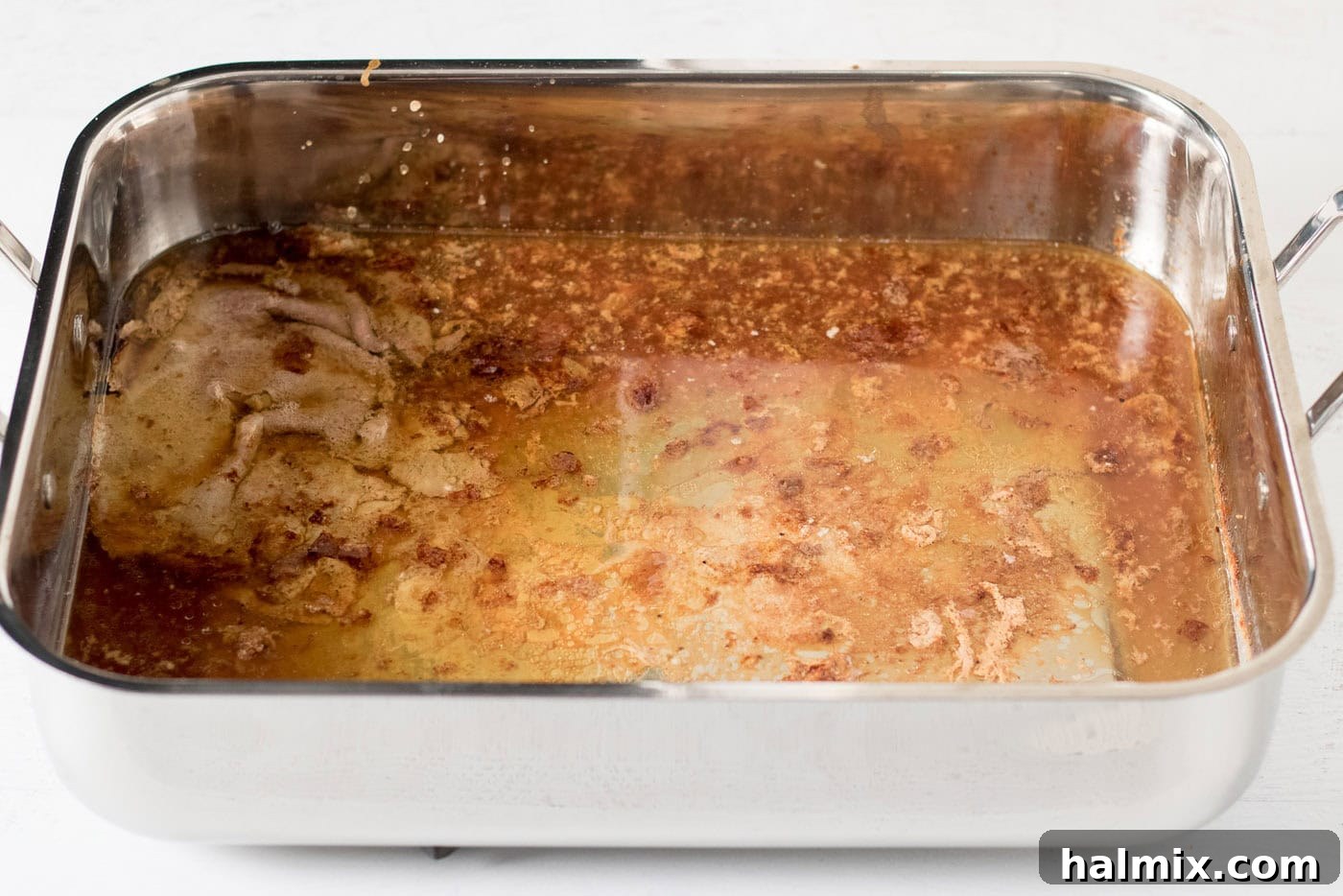
The roasting pan, rich with flavorful turkey drippings and browned bits. Place your large roasting pan across two burners on your stovetop. Turn the heat to medium-high. As the pan heats, any liquid remaining will begin to sputter and simmer. This step is crucial for deglazing and extracting all those deeply caramelized, flavorful bits stuck to the bottom of the pan.
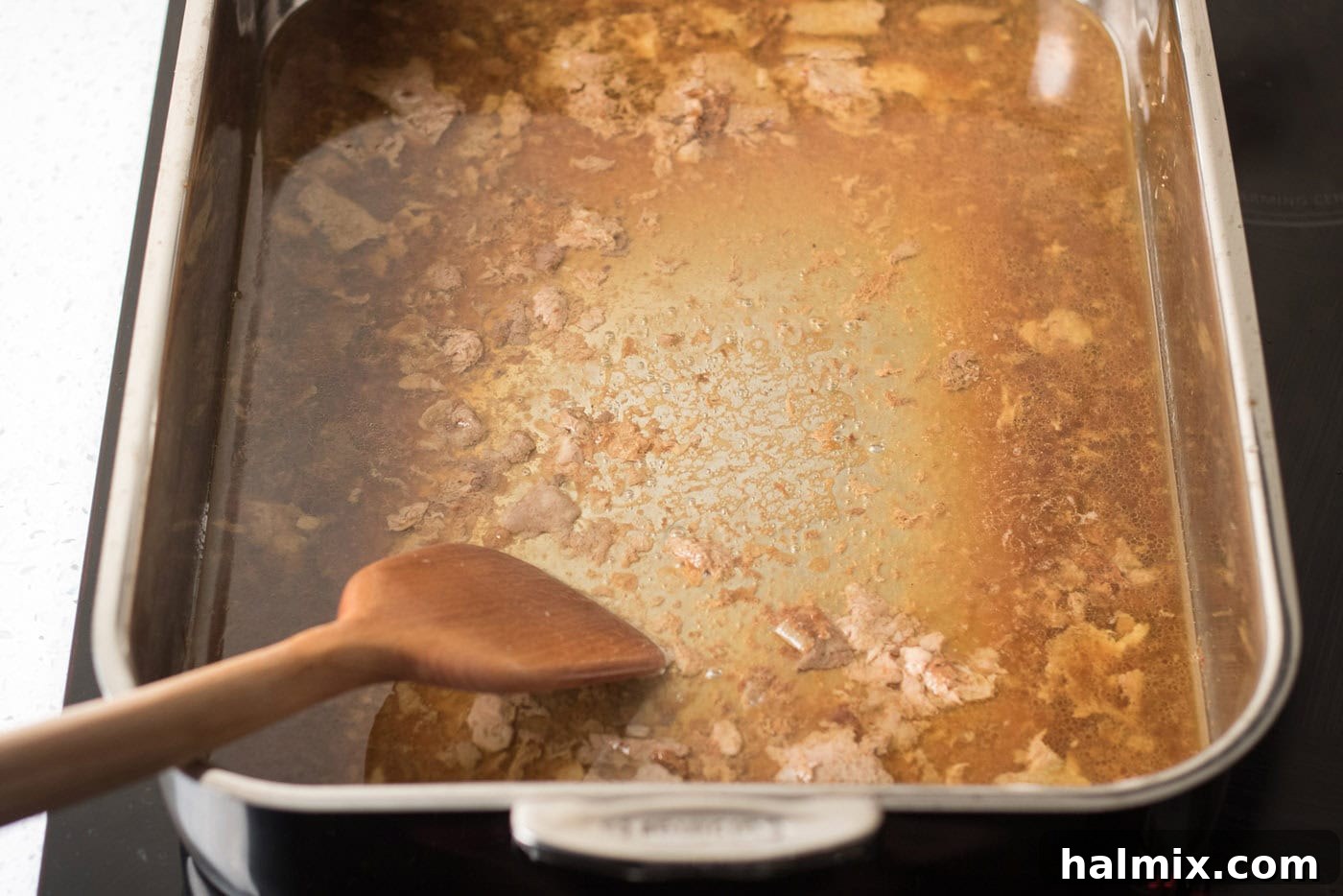
Scraping up the savory fond from the bottom of the roasting pan. Pour 1 cup of broth (chicken or vegetable) into the hot pan. Using a sturdy spatula or wooden spoon, vigorously scrape the bottom of the pan to loosen all the browned bits (known as “fond”). These bits are packed with flavor and are essential for a rich gravy.
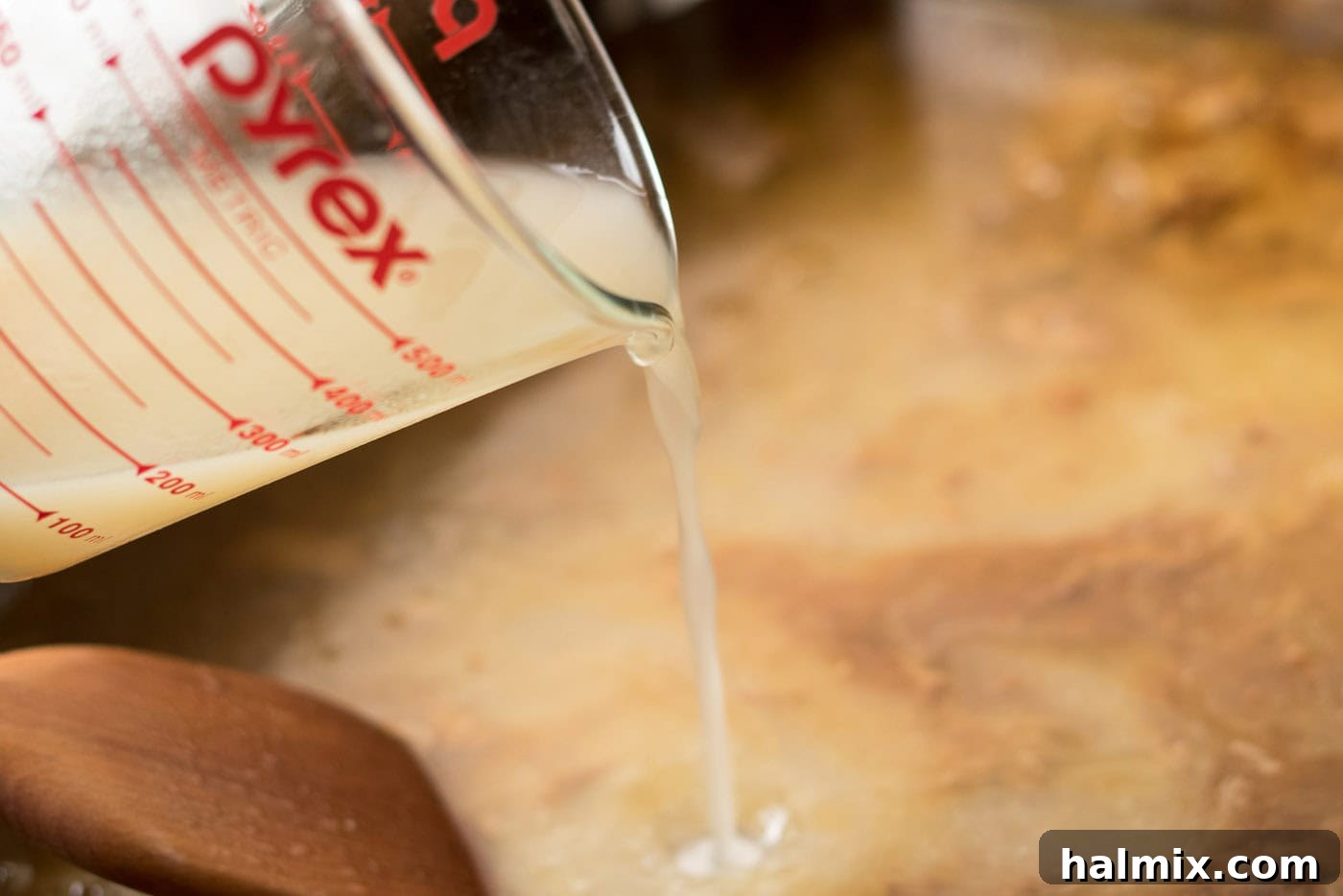
Adding broth to deglaze the pan and release all the concentrated flavors. -
Chilling and Separating the Fat
Carefully pour the deglazed pan drippings into a large liquid measuring cup or another heat-proof container. Now, place this container in the refrigerator for at least 30 minutes. If you’re making the gravy ahead of time, you can even refrigerate it overnight. Chilling allows the fat to rise to the top and solidify, making it much easier to separate.
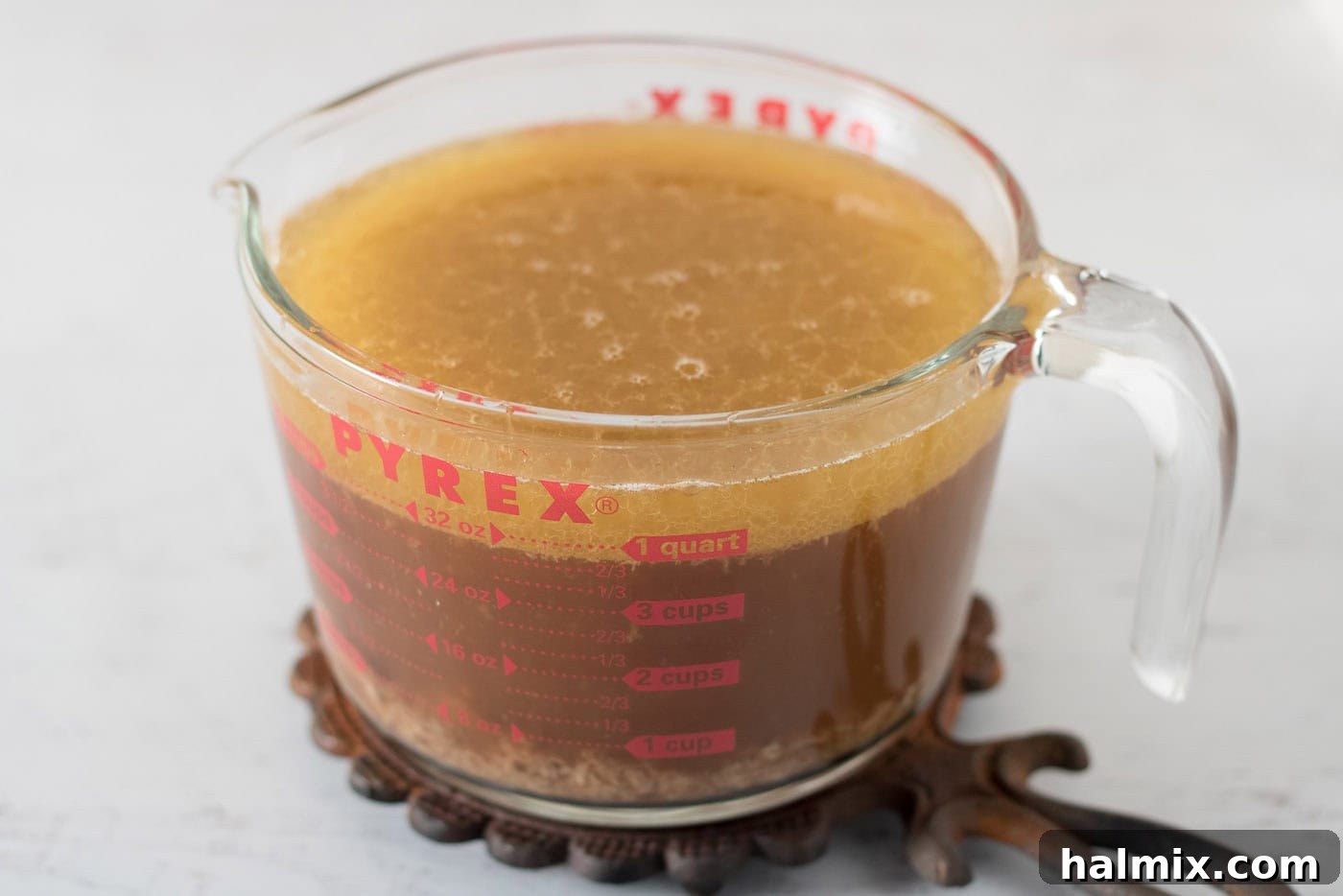
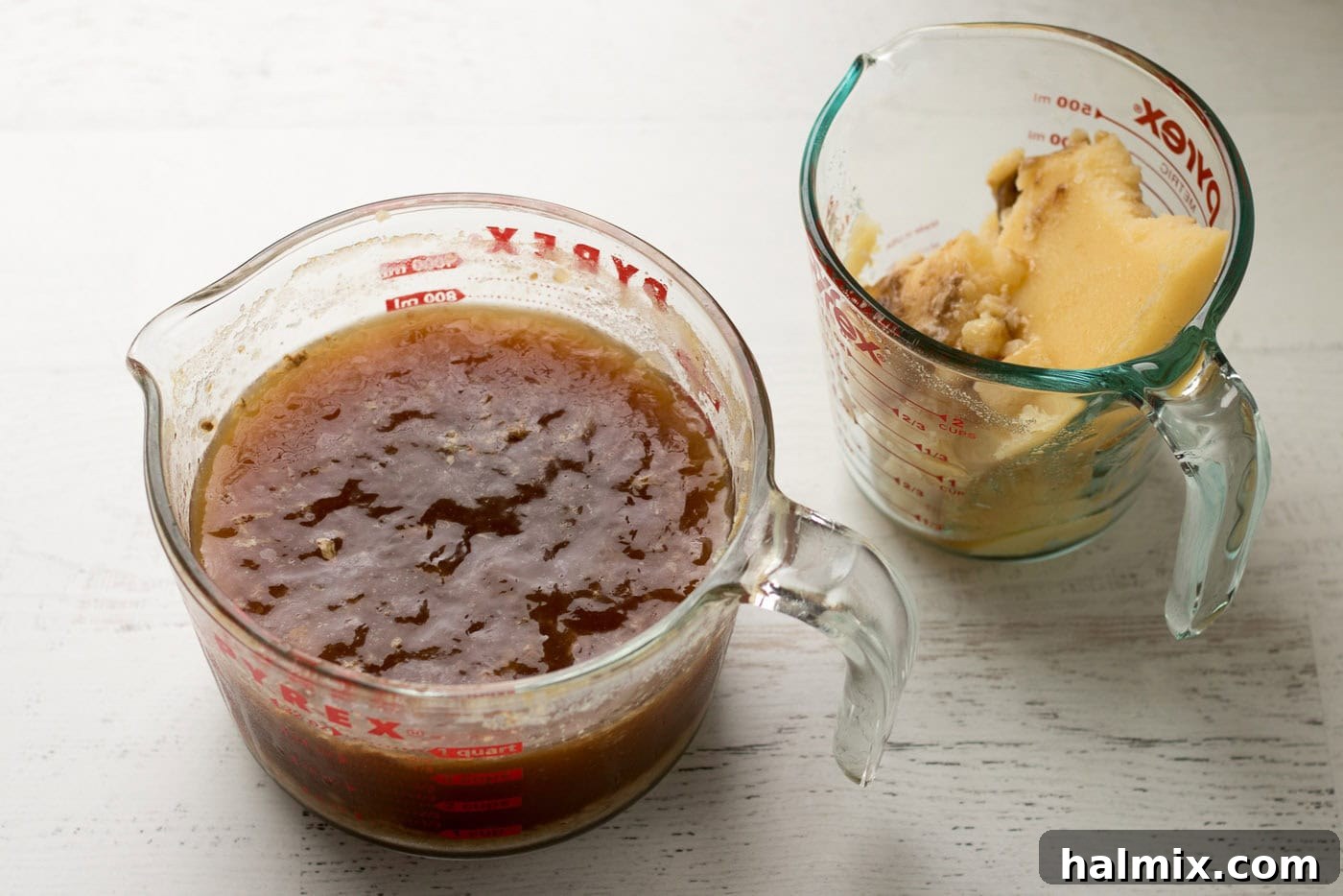
Pan drippings collected in a measuring cup, ready for chilling. Once the fat has solidified into a distinct layer on top, use a spoon to gently scrape it off and transfer it to a separate container. You’ll need some of this fat for the roux. The remaining fat and drippings can be refrigerated or frozen for future gravy endeavors.
Separated turkey fat and flavorful drippings, ready for gravy making. Measure out 1/4 cup of the skimmed fat and reserve 1 cup of the rich pan drippings for your gravy. Store any excess fat and drippings for other delicious uses, such as roasting vegetables or making additional gravy.
-
Creating the Perfect Roux
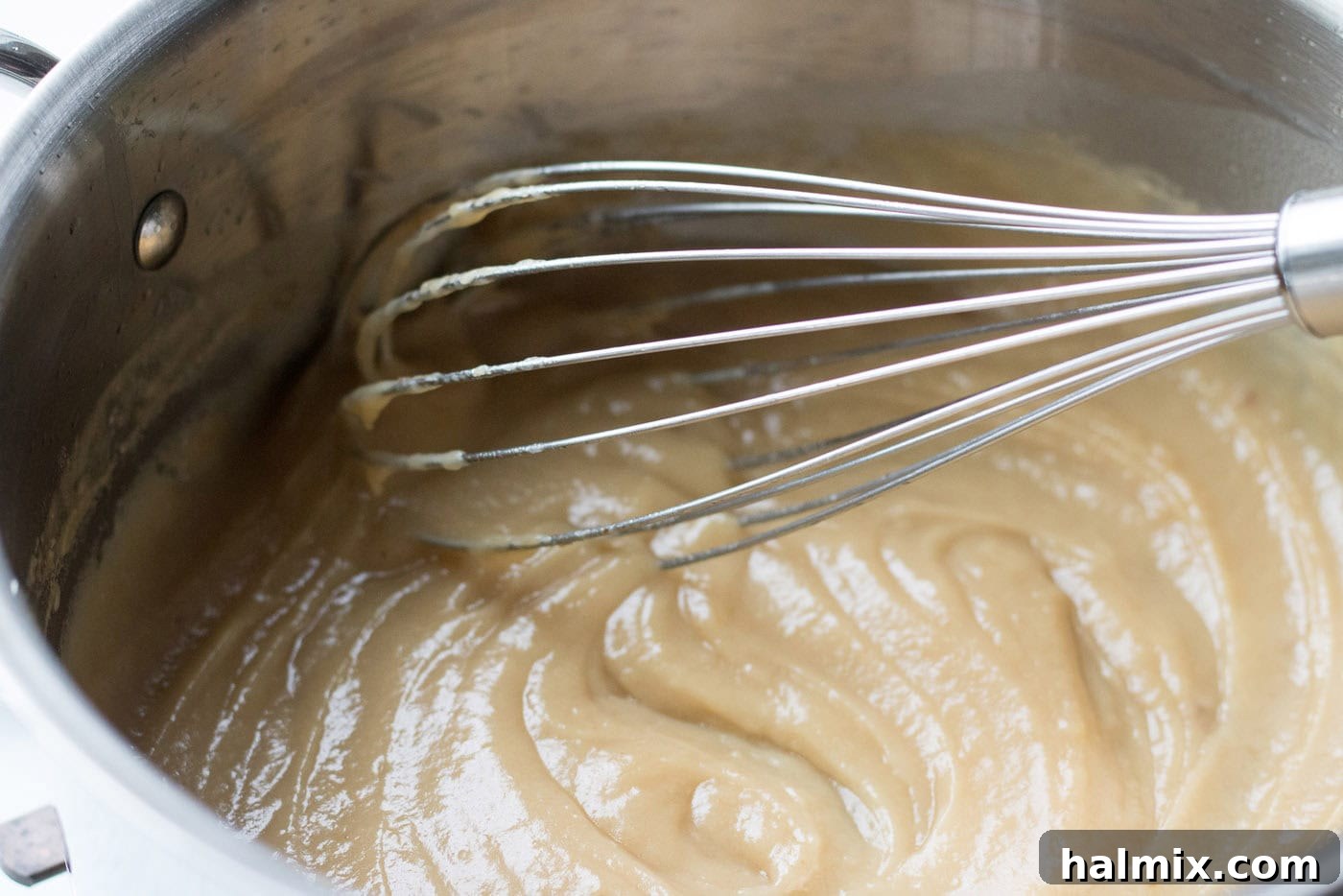
In a medium saucepan, melt the measured 1/4 cup of reserved turkey fat over medium-high heat. Once melted, add 1/4 cup of all-purpose flour. Using a metal whisk, continuously stir the fat and flour together. This mixture, called a roux, will cook for a few minutes until it forms a smooth paste and turns a light golden brown. Cooking the roux properly is crucial to prevent your gravy from having a raw flour taste.
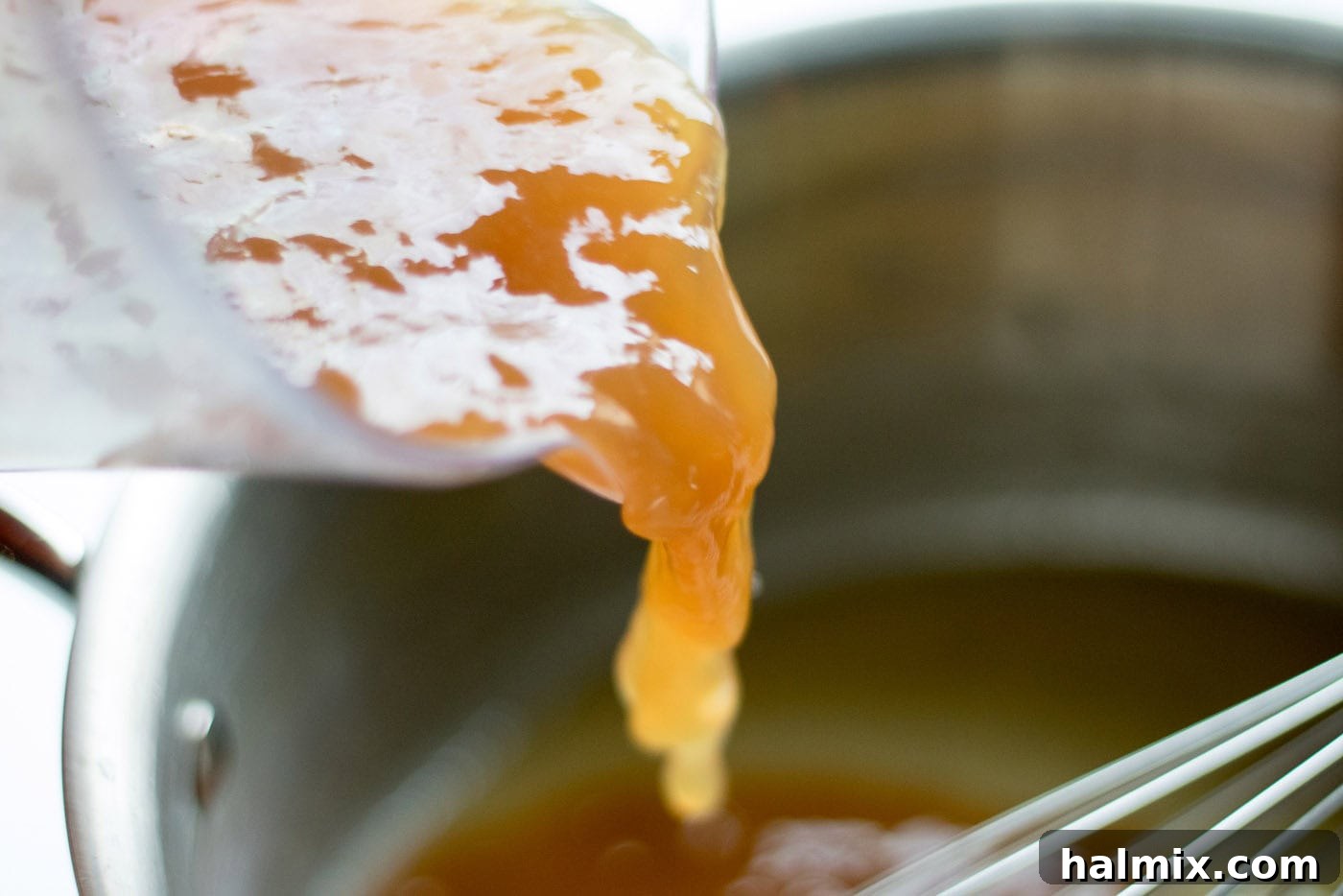
Whisking flour into the turkey fat to create a smooth roux. Gradually pour the reserved 1 cup of pan drippings into the roux, whisking constantly to incorporate them smoothly. Continue to whisk vigorously to prevent lumps from forming. The mixture will thicken almost immediately.
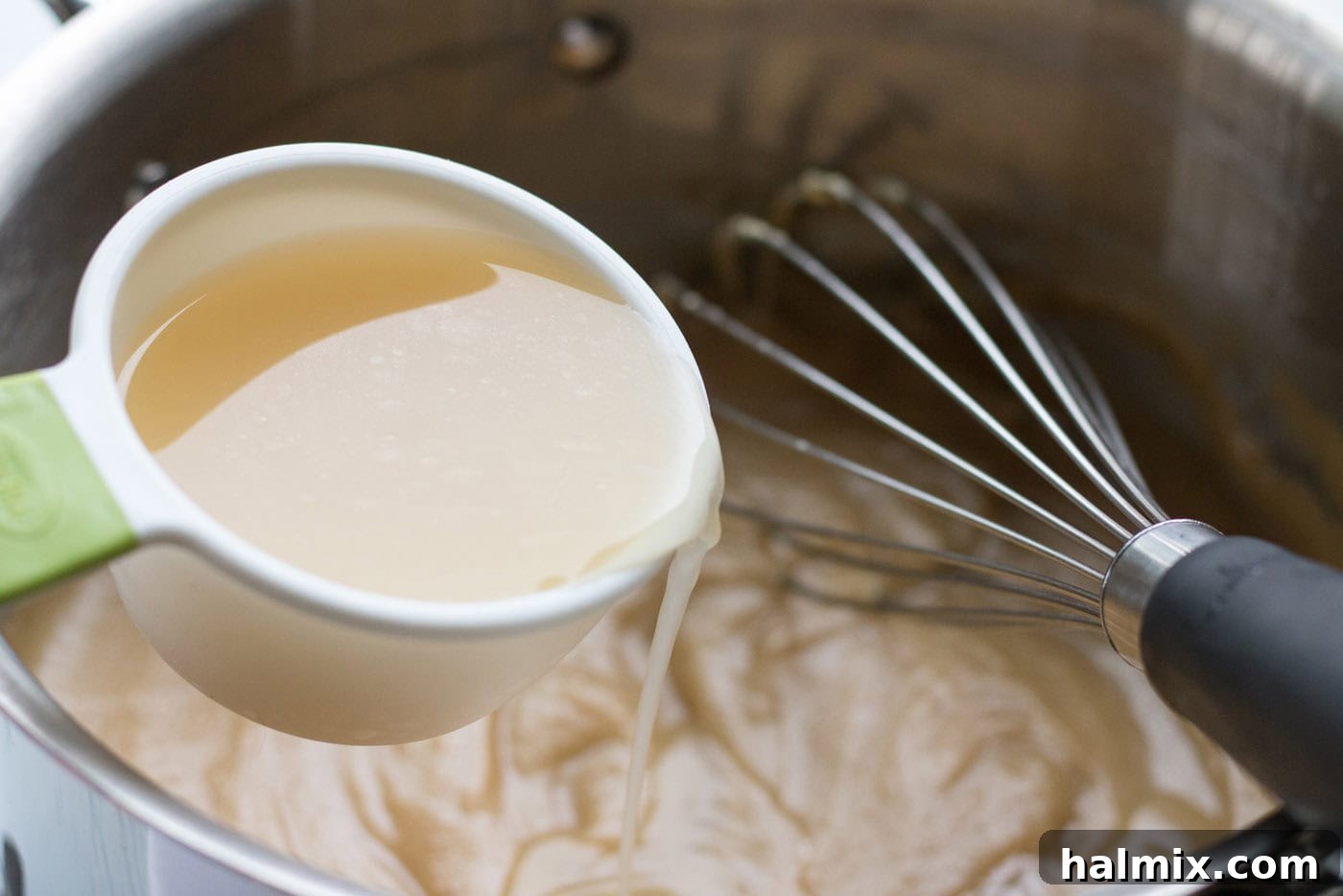
Adding the flavorful pan drippings to the roux, whisking continuously. Next, add 1/2 cup of chicken or vegetable broth to the saucepan, whisking until fully combined and smooth. At this point, you can adjust the gravy’s consistency. If you desire a thicker gravy, simmer it gently for a longer period, allowing it to reduce. For a thinner gravy, gradually add more broth until it reaches your desired consistency. Taste and adjust seasoning with salt and freshly ground black pepper.
Incorporating broth to achieve the perfect gravy consistency. -
Enhancing Flavors (Optional)
Now is the time to add any optional ingredients that deepen the gravy’s flavor profile. Stir in 1-2 tablespoons of dry white wine or dry sherry, and the finely minced fresh herbs (rosemary, sage, thyme). Simmer for a few additional minutes to allow these flavors to meld beautifully. The alcohol in the wine will cook off, leaving behind a subtle, rich note.
-
Achieving Silky Smooth Gravy
For an exceptionally smooth, lump-free gravy, consider straining it through a fine-mesh sieve directly into your gravy boat or serving container. This step removes any small lumps, herb bits, or remaining fond that didn’t fully dissolve, ensuring a silky texture that’s pure perfection.
Frequently Asked Questions & Expert Tips for Perfect Gravy
How do you store homemade turkey gravy?
This savory turkey gravy will keep wonderfully for up to 1 week when stored in an airtight container in the refrigerator. For longer storage, you can freeze the gravy in an airtight container for up to 3 months. To reheat, gently warm the gravy on the stove over low heat, whisking occasionally to restore its smooth consistency. If it’s too thick after reheating, a splash of broth will bring it back to life.
How do you thin or thicken turkey gravy?
Adjusting the consistency of your turkey gravy is simple. To make it thicker, allow it to simmer longer over low heat, stirring occasionally, which helps reduce the liquid. To thin out gravy that’s too thick, gradually whisk in additional chicken or vegetable broth (or even a little water) until it reaches your preferred pourable consistency.
My gravy is lumpy! How can I fix it?
Lumpy gravy is a common challenge, but easily remedied. The best way to fix lumpy gravy is to pour it through a fine-mesh sieve. You can also use an immersion blender directly in the saucepan or transfer it to a regular blender (be careful with hot liquids and blend in batches) to smooth it out.
Can I make this gravy gluten-free?
Absolutely! To make this turkey gravy gluten-free, simply substitute the all-purpose flour with an equal amount of gluten-free all-purpose flour blend (ensure it contains xanthan gum) or use cornstarch (slurry). If using cornstarch, mix 1 tablespoon of cornstarch with 2 tablespoons of cold water to create a slurry, then whisk it into the simmering gravy a little at a time until thickened. Simmer for 1-2 minutes to cook out the starch flavor.
What if I don’t have enough pan drippings?
If your turkey didn’t produce a lot of drippings, don’t worry! You can supplement with extra chicken or turkey broth. You can also roast some turkey wings or necks alongside your main turkey for extra drippings and flavor, or simmer turkey giblets with aromatics to create a flavorful stock.
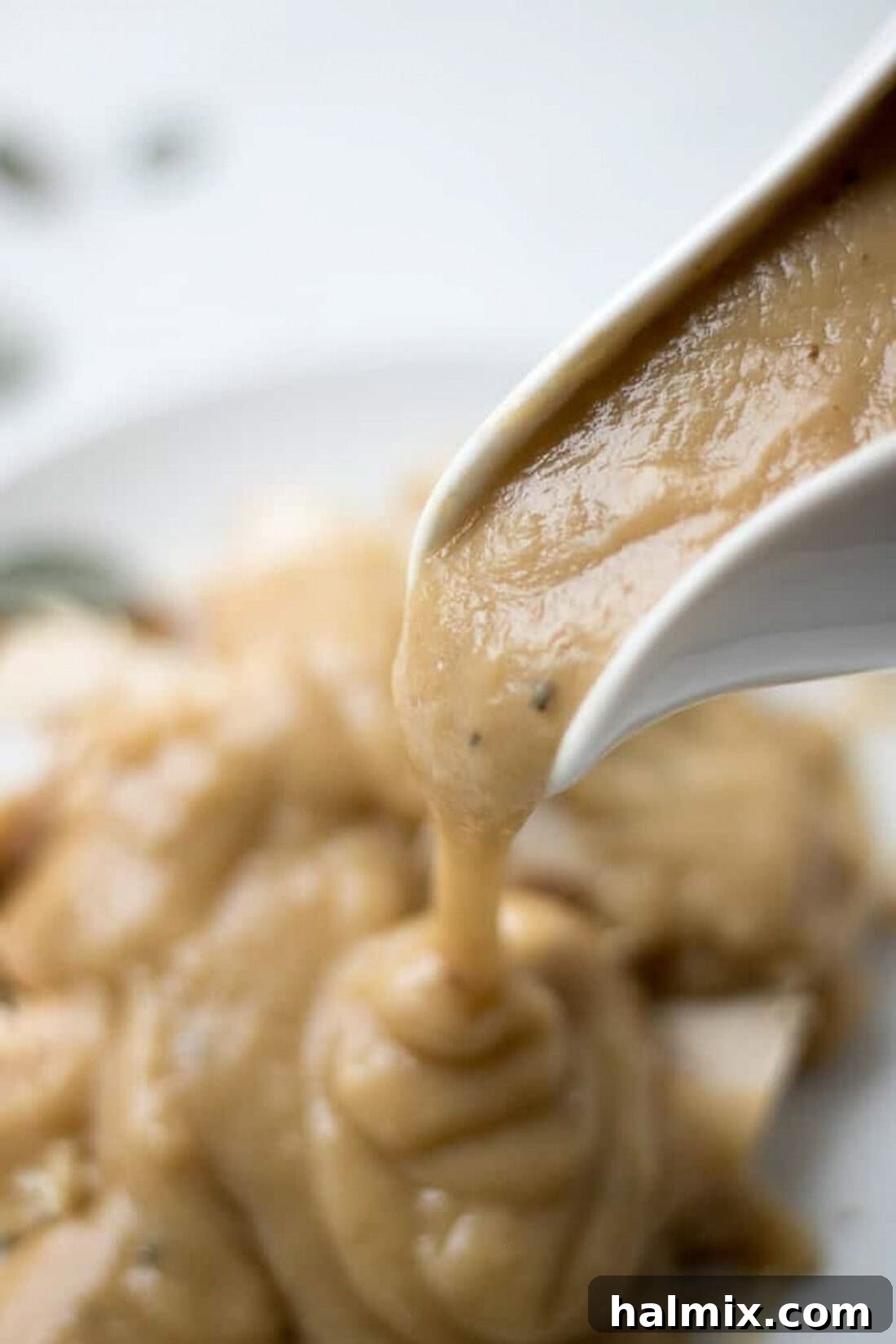
Delightful Serving Suggestions for Your Gravy
This homemade turkey gravy is the ultimate companion for your holiday turkey and so much more! It transforms ordinary dishes into extraordinary culinary experiences. Here are some fantastic ways to enjoy it:
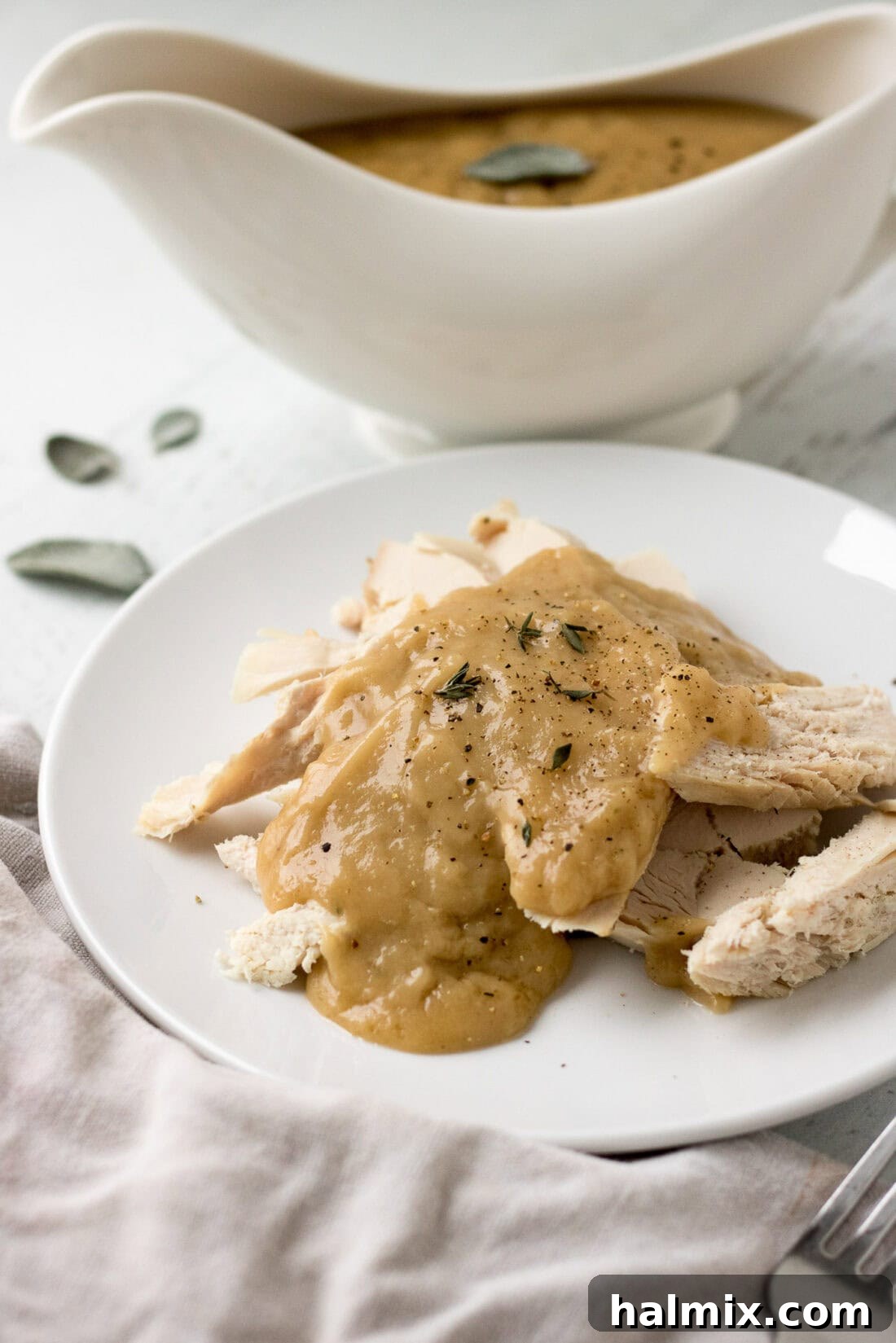
- Classic Pairing: Drench your perfectly roasted turkey slices with a generous pour of warm gravy.
- Mashed Potato Perfection: It’s simply divine over creamy mashed potatoes. Try it with these amazing Crockpot Mashed Potatoes or Creamy Traditional Mashed Potatoes.
- Stuffing’s Best Friend: Elevate your homemade stuffing or dressing with a hearty drizzle.
- Biscuit & Gravy Twist: For a comforting breakfast or brunch, serve it over warm, flaky biscuits.
- Open-Faced Sandwiches: Create mouth-watering “hot turkey” sandwiches by layering turkey, gravy, and sometimes mashed potatoes on bread.
- Roasted Vegetables: A simple pour over roasted Brussels sprouts, carrots, or green beans adds richness and flavor.
- French Fries or Poutine: For a comforting treat, consider it a luxurious topping for fries!
More Essential Thanksgiving & Holiday Recipes
Complete your festive feast with these other crowd-pleasing holiday dishes that perfectly complement your homemade turkey gravy:
- Crockpot Green Bean Casserole
- Sweet Potato Casserole
- Mini Pumpkin Pies
- Crockpot Stuffing
- Pumpkin Deviled Eggs
I love to bake and cook and share my kitchen experience with all of you! Remembering to come back each day can be tough, that’s why I offer a convenient newsletter every time a new recipe posts. Simply subscribe and start receiving your free daily recipes!
Homemade Turkey Gravy Recipe
This tutorial ensures you make the most delicious homemade turkey gravy from scratch, perfect for any holiday feast or Sunday dinner!
IMPORTANT – Don’t forget to check the Frequently Asked Questions & Expert Tips section above for valuable insights!
Print Recipe
Condiments, Side Dish
American
3.5 – 4
cups
50
minutes
279
Amanda Davis
Ingredients
-
Pan drippings
from a 12-15 pound whole roasted turkey (yields approx. 1 cup of drippings + fat) -
1-2
cups
low sodium chicken or vegetable broth -
¼
cup
all-purpose flour -
Unsalted butter
(optional, to taste for added richness) -
Kosher or sea salt
(to taste) -
Freshly ground black pepper
(to taste) -
1-2
Tablespoons
dry sherry or dry white wine
(optional) -
1
teaspoon
fresh rosemary, sage, and thyme combined
(stems removed, finely minced; see notes about substituting dried herbs)
Equipment You’ll Need
-
Fat separator
-
Medium saucepan
-
Whisk
Before You Begin: Important Notes
- Fresh vs. Dried Herbs: If fresh herbs are unavailable, remember the ratio: 3 parts fresh herbs to 1 part dried herbs. For example, use 1/3 teaspoon of dried mixed herbs instead of 1 teaspoon fresh.
- Recipe Yield: This recipe typically yields about 3 1/2 to 4 cups of gravy, depending on how thick or thin you prefer it. If you save extra pan drippings and fat, you can easily scale up the recipe to make a larger batch.
Instructions
Part 1: Deglaze and Collect Drippings
-
After removing your whole roasted turkey from the oven, transfer it to a platter or a rimmed sheet pan to rest.
-
Place the large roasting pan over two burners on your stovetop and turn the heat to medium-high. The liquid in the pan will begin to sputter and simmer.
-
Add 1 cup of chicken or vegetable broth to the pan. Using a sturdy spatula or wooden spoon, scrape all the browned bits (fond) from the bottom of the pan to incorporate their rich flavor into the liquid.
-
Pour the deglazed drippings into a large liquid measuring cup or other container and refrigerate for at least 30 minutes, or overnight if preparing ahead of time. This allows the fat to separate and solidify.
Part 2: Separate Fat and Prepare Roux
-
Once the fat has solidified on top of the drippings, carefully scrape it off into a separate container.
-
Measure out 1/4 cup of the skimmed fat and set aside 1 cup of the pan drippings for your gravy. You can refrigerate or freeze any remaining fat and drippings for future use.
-
In a medium saucepan, add the 1/4 cup of reserved fat and place over medium-high heat. Once melted, add 1/4 cup of all-purpose flour. Whisk continuously for 2-3 minutes until you achieve a smooth, light golden brown roux, cooking out any raw flour taste.
Part 3: Assemble and Finish the Gravy
-
Gradually pour the 1 cup of pan drippings into the roux, whisking constantly to prevent lumps and ensure a smooth mixture.
-
Add 1/2 cup of chicken or vegetable broth to the saucepan and whisk until fully combined. Simmer for a few minutes. For a thicker gravy, simmer longer. For a thinner gravy, add more broth gradually.
-
If using, stir in 1-2 tablespoons of dry white wine or sherry and the 1 teaspoon of finely minced fresh herbs. Simmer for another 2-3 minutes to allow flavors to meld. Taste and season with salt and freshly ground black pepper as needed.
-
For an exceptionally smooth gravy, strain it through a fine-mesh sieve directly into your gravy boat or serving container. Serve hot!
Expert Tips Recap
- Storing Gravy: Keeps for 1 week in the refrigerator, or up to 3 months frozen. Reheat gently on the stove, whisking to restore texture.
- Lump-Free Secret: Strain gravy through a fine-mesh sieve for a perfectly smooth finish.
- Consistency Control: Thicken by simmering, thin by adding more broth.
Nutrition Information
Approximate values per 2 tablespoons serving:
Serving: 2 tablespoons | Calories: 279 kcal | Carbohydrates: 6 g | Protein: 1 g | Fat: 27 g | Saturated Fat: 9 g | Cholesterol: 36 mg | Sodium: 797 mg | Potassium: 47 mg | Vitamin A: 175 IU | Vitamin C: 4.1 mg | Calcium: 4 mg | Iron: 0.5 mg
Tried this Recipe? Pin it for Later!
Follow on Pinterest @AmandasCookin or tag #AmandasCookin!
The recipes on this blog are tested with a conventional gas oven and gas stovetop. It’s important to note that some ovens, especially as they age, can cook and bake inconsistently. Using an inexpensive oven thermometer can assure you that your oven is truly heating to the proper temperature. If you use a toaster oven or countertop oven, please keep in mind that they may not distribute heat the same as a conventional full sized oven and you may need to adjust your cooking/baking times. In the case of recipes made with a pressure cooker, air fryer, slow cooker, or other appliance, a link to the appliances we use is listed within each respective recipe. For baking recipes where measurements are given by weight, please note that results may not be the same if cups are used instead, and we can’t guarantee success with that method.
This post was originally published here on December 18, 2018.