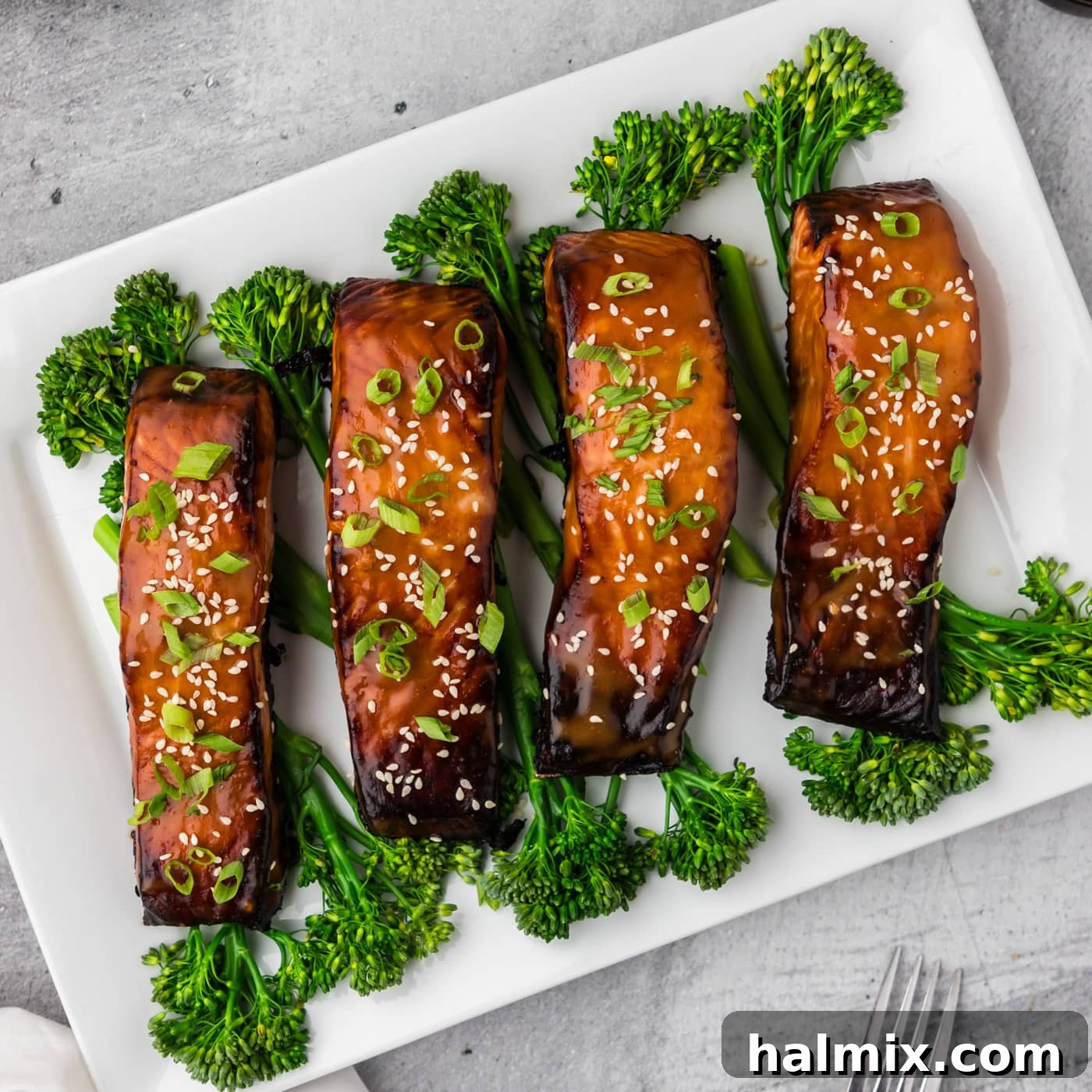
Prepare to embark on a culinary journey with this exceptional baked miso salmon recipe, where succulent, flaky salmon fillets are bathed in a uniquely flavored marinade – a perfect harmony of sweet, savory, and umami notes. This dish isn’t just a meal; it’s an experience, promising a tender bite and an unforgettable taste that will become a staple in your kitchen.
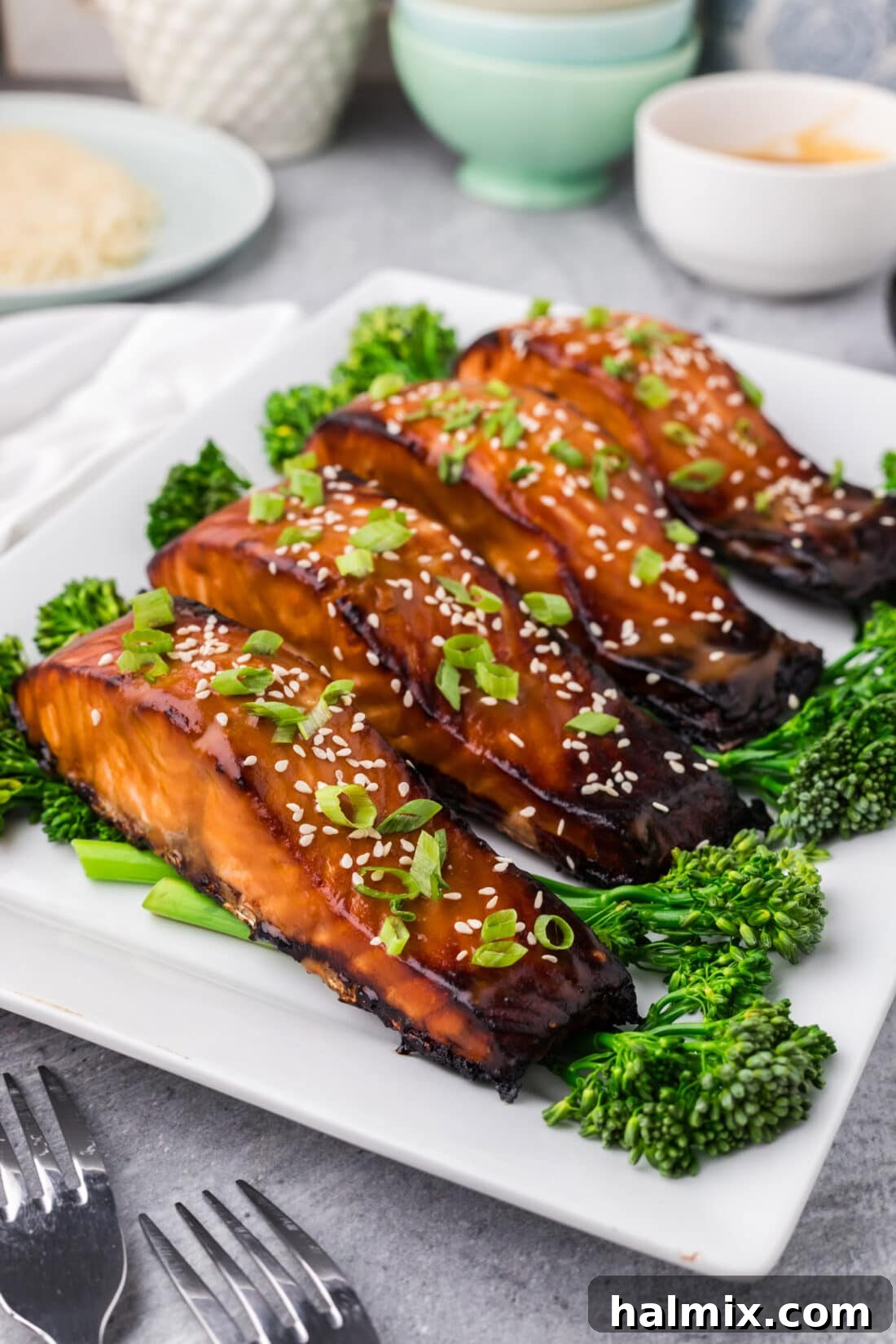
Why This Baked Miso Salmon Recipe Is a Culinary Gem
This baked miso salmon recipe isn’t just another fish dish; it’s a testament to simple ingredients yielding profound flavors. The secret lies in its meticulously crafted marinade, a blend of white miso paste, soy sauce, aromatic sesame oil, subtle sake, and tangy rice vinegar. This concoction delivers a multifaceted flavor profile that beautifully complements the richness of salmon. But the magic doesn’t stop there – we take a clever approach by transforming a portion of this very marinade into a luscious, caramelized glaze. This glaze is then artfully basted over the salmon fillets during the final stages of baking, ensuring every bite is bursting with juicy, umami-rich goodness. It’s truly a brilliant two-in-one technique that elevates the dish from good to extraordinary.
Salmon, with its mild yet distinctive taste and firm, meaty texture, serves as the ideal canvas for the bold flavors of miso. Its inherent versatility allows it to absorb and showcase a wide array of seasonings and marinades, making it a culinary chameleon. When paired with miso, salmon’s natural richness is enhanced by the deep, fermented notes of the paste, creating a symphony of flavors that is both comforting and exotic. This recipe highlights salmon’s ability to shine, offering a unique flavor profile that sets it apart from other salmon marinades and preparations. Furthermore, salmon is packed with omega-3 fatty acids, making this dish not only delicious but also incredibly healthy, contributing to heart health and overall well-being. It’s a perfect confluence of taste, nutrition, and ease of preparation, suitable for any weeknight or special occasion.
Essential Ingredients for Your Miso Salmon
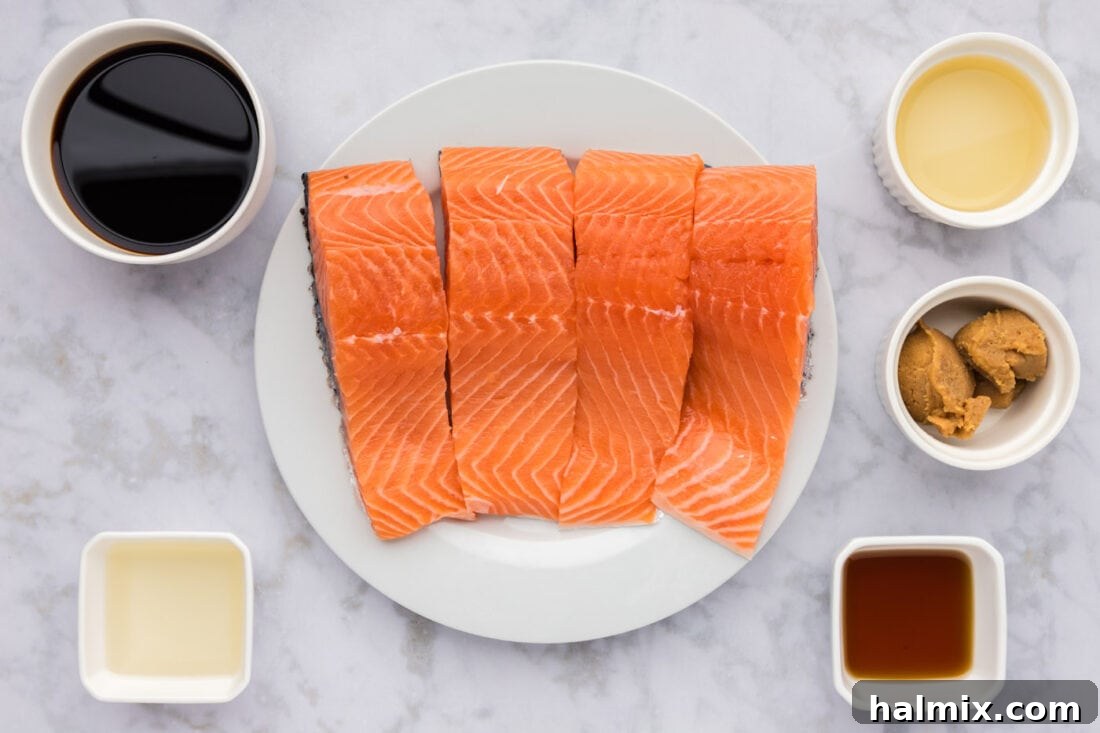
Crafting the perfect miso salmon requires a selection of high-quality ingredients, each playing a crucial role in developing the dish’s signature flavor. While a comprehensive list of measurements and instructions can be found in the printable recipe card at the conclusion of this post, here’s an overview of what you’ll need to create this delectable meal. Gathering these components beforehand ensures a smooth and enjoyable cooking process, bringing you closer to a truly authentic and satisfying dining experience.
Ingredient Insights and Smart Substitution Suggestions
SALMON: The Star of Your Dish
Selecting the right salmon is paramount for a truly exceptional miso salmon. When you’re at the grocery store, pay close attention to the visual cues: always bypass any fish that exhibits gray dullness or noticeable blemishes. Instead, look for fillets that are firm to the touch and boast a vibrant, healthy pink hue. For optimal cooking consistency, center-cut salmon is highly recommended as it offers a uniform thickness across your fillets, ensuring they cook evenly. If you purchase a larger piece, a sharp chef’s knife will allow you to expertly slice it into individual, perfectly portioned fillets. A critical tip for baking salmon is to always cook it skin-side down. This method helps protect the delicate flesh from overcooking, locks in moisture, and allows the skin to crisp up beautifully. If you were to place it skin-side up, the fish would begin to flake and potentially fall apart when you attempt to lift it from the baking sheet, compromising both presentation and texture.
THE MARINADE: A Symphony of Umami Flavors
The marinade is where the magic truly happens, infusing the salmon with its signature sweet and savory umami profile. Let’s delve into each component:
- Miso Paste: Your choice of miso paste can significantly influence the final flavor. Lighter-colored miso pastes, such as white (Shiro) miso, tend to have a milder, saltier-sweet profile, making them excellent for a balanced flavor. Darker miso pastes, like red (Aka) miso, are fermented for longer, resulting in a deeper, more intensely savory and robust flavor. We’ve opted for white miso paste in this recipe for its delicate balance, but feel free to experiment with any type based on your preference. If you choose a darker, more potent miso, I strongly recommend using low-sodium soy sauce to prevent the marinade from becoming excessively salty.
- Soy Sauce: A cornerstone of Japanese cuisine, soy sauce provides a salty, umami depth that is irreplaceable. As mentioned, for darker miso or personal preference, low-sodium soy sauce is a great alternative to control saltiness. For a gluten-free option, tamari works perfectly and maintains the essential flavor profile.
- Sesame Oil: Toasted sesame oil is prized for its rich, nutty aroma and flavor. A little goes a long way, adding a distinctive warmth and depth to the marinade. Ensure you use toasted sesame oil for that characteristic flavor, as untoasted sesame oil has a much milder, less aromatic profile.
- Sake: This Japanese rice wine is not just for drinking; it’s a fantastic culinary ingredient. Sake contributes a subtle sweetness and helps tenderize the salmon, enhancing its natural flavors. If sake is unavailable, a dry sherry or even a splash of mirin (Japanese sweet rice wine) can be used, though mirin is sweeter, so adjust other sweet elements accordingly.
- Rice Vinegar: Providing a crucial touch of acidity, rice vinegar brightens the marinade and balances the richness of the other ingredients. Its mild tanginess is less harsh than other vinegars, making it ideal for this delicate balance. Apple cider vinegar can be a decent substitute if needed, but use sparingly as it has a stronger flavor.
The combination of these ingredients creates a marinade that penetrates the salmon, infusing it with layers of complex and satisfying flavors, ensuring a delightful culinary experience every time.
How to Make Miso Salmon: A Step-by-Step Guide
These detailed step-by-step photos and instructions are provided to guide you visually through the process of making this exquisite recipe. For a convenient printable version, complete with precise measurements and instructions, simply Jump to Recipe at the very bottom of this post.
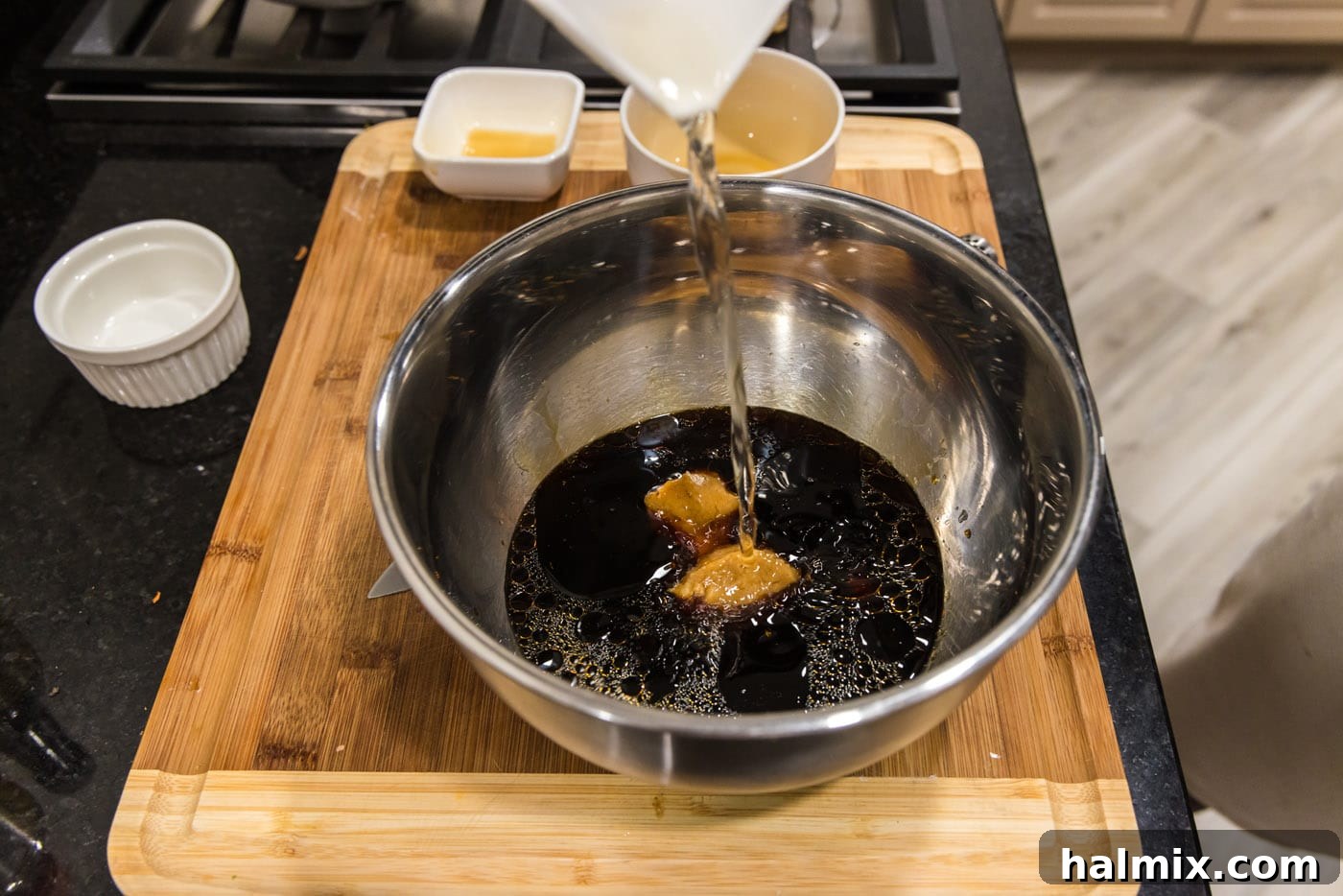
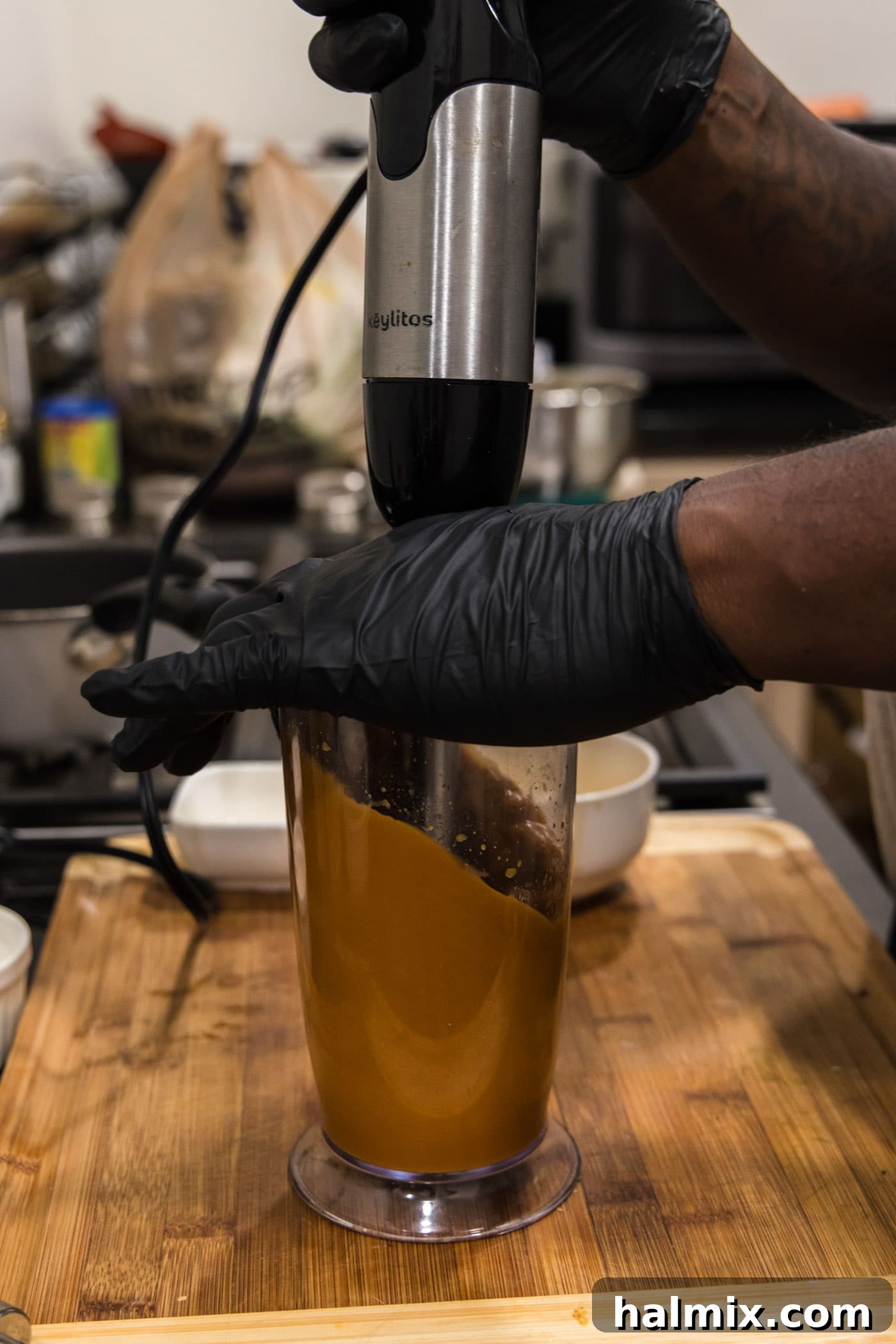
- In a spacious mixing bowl, combine all the marinade ingredients. Whisk them together thoroughly until well combined. Then, transfer this mixture into an immersion blender container and blend until the marinade achieves a perfectly smooth consistency. This ensures all the miso paste is fully incorporated and the flavors are evenly distributed.

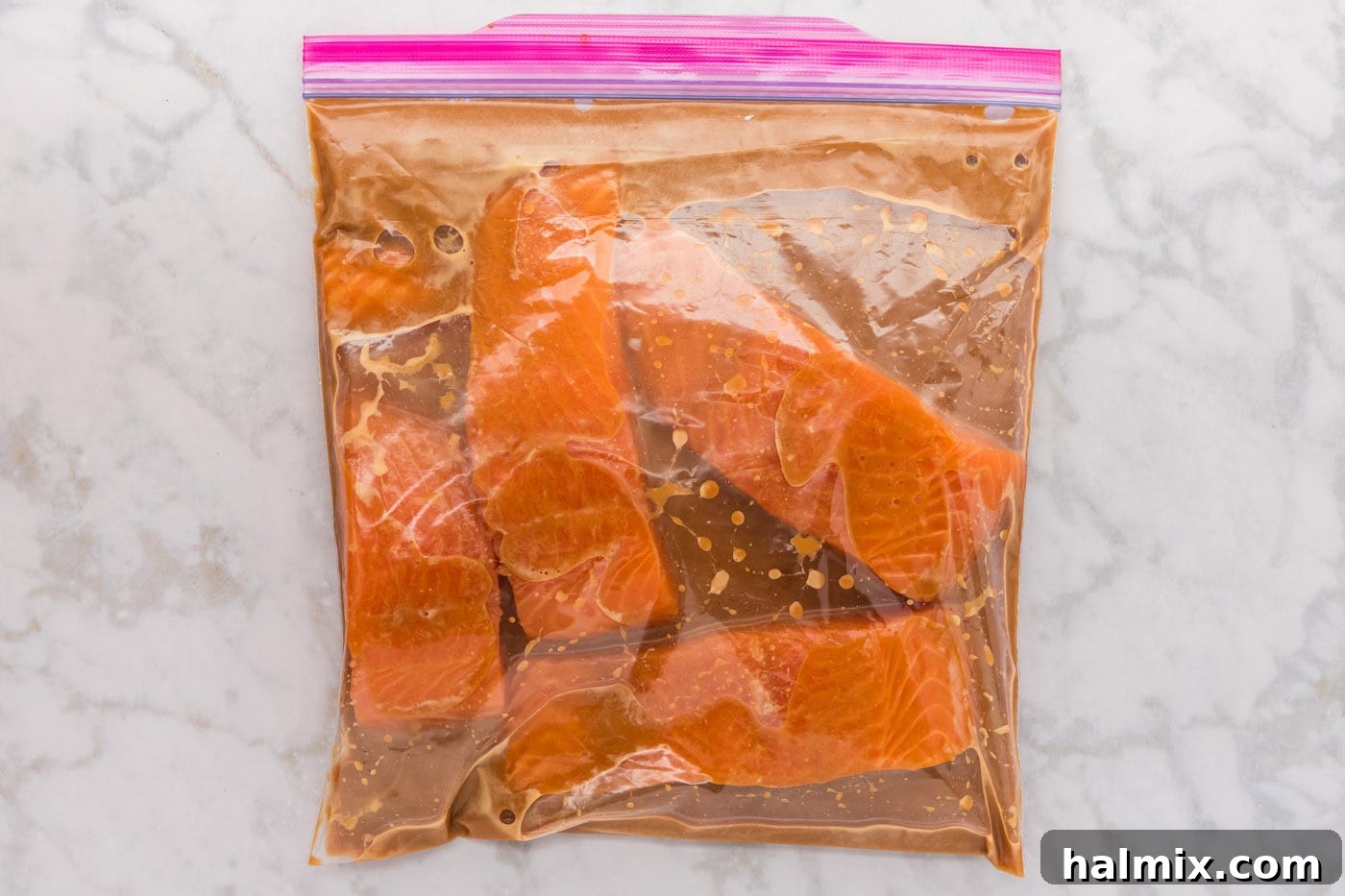
- Carefully place your salmon fillets into a gallon-sized zip-top bag. Pour the freshly blended marinade over the salmon, ensuring each fillet is thoroughly coated. Seal the bag securely, removing as much air as possible, and place it in the refrigerator to marinate for a minimum of 2 hours. This crucial step allows the salmon to absorb the complex flavors of the miso marinade.
- Once the marinating time is complete, preheat your oven to 425°F (220°C). Prepare a large baking sheet by lining it with parchment paper. This will prevent sticking and make cleanup a breeze.
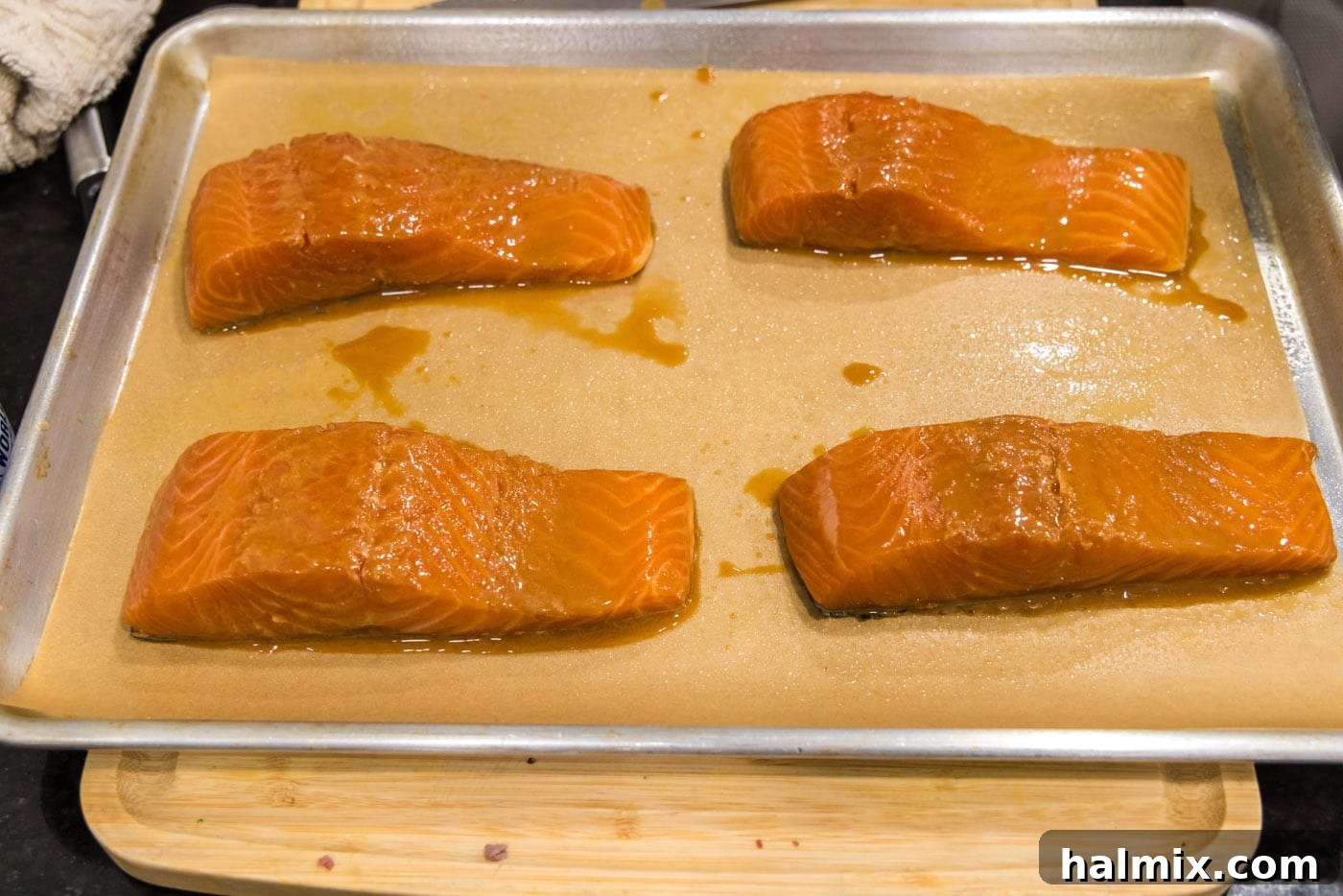
- Gently remove the salmon fillets from the marinade. Crucially, do not discard the remaining marinade; it will be used to create your delicious glaze. Arrange the salmon fillets skin-side down on the prepared baking sheet, ensuring there is a little space between each piece for even cooking.
- Place the baking sheet with the salmon into the preheated oven and bake for 18-20 minutes. The exact time may vary slightly depending on the thickness of your fillets and your oven’s calibration.
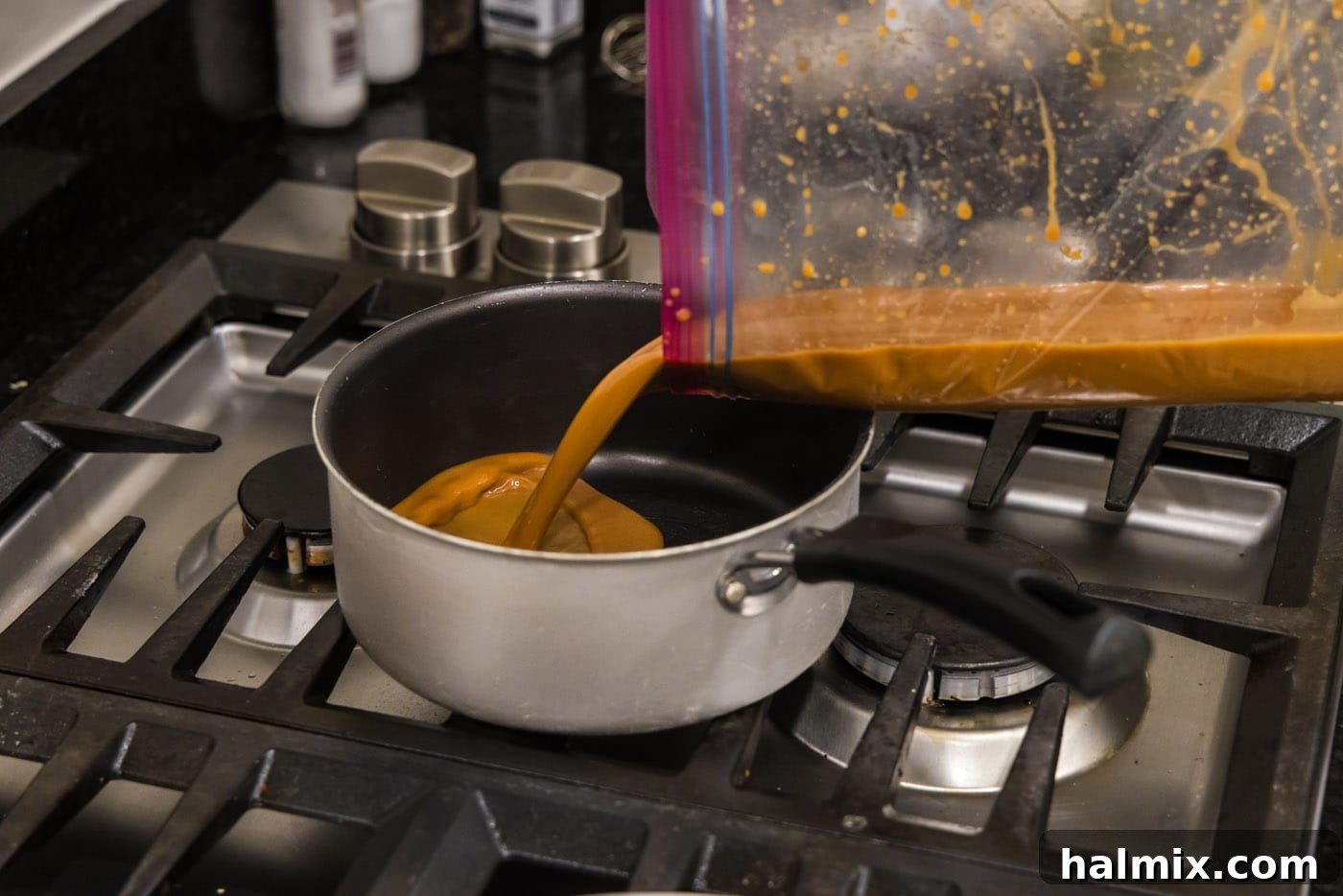
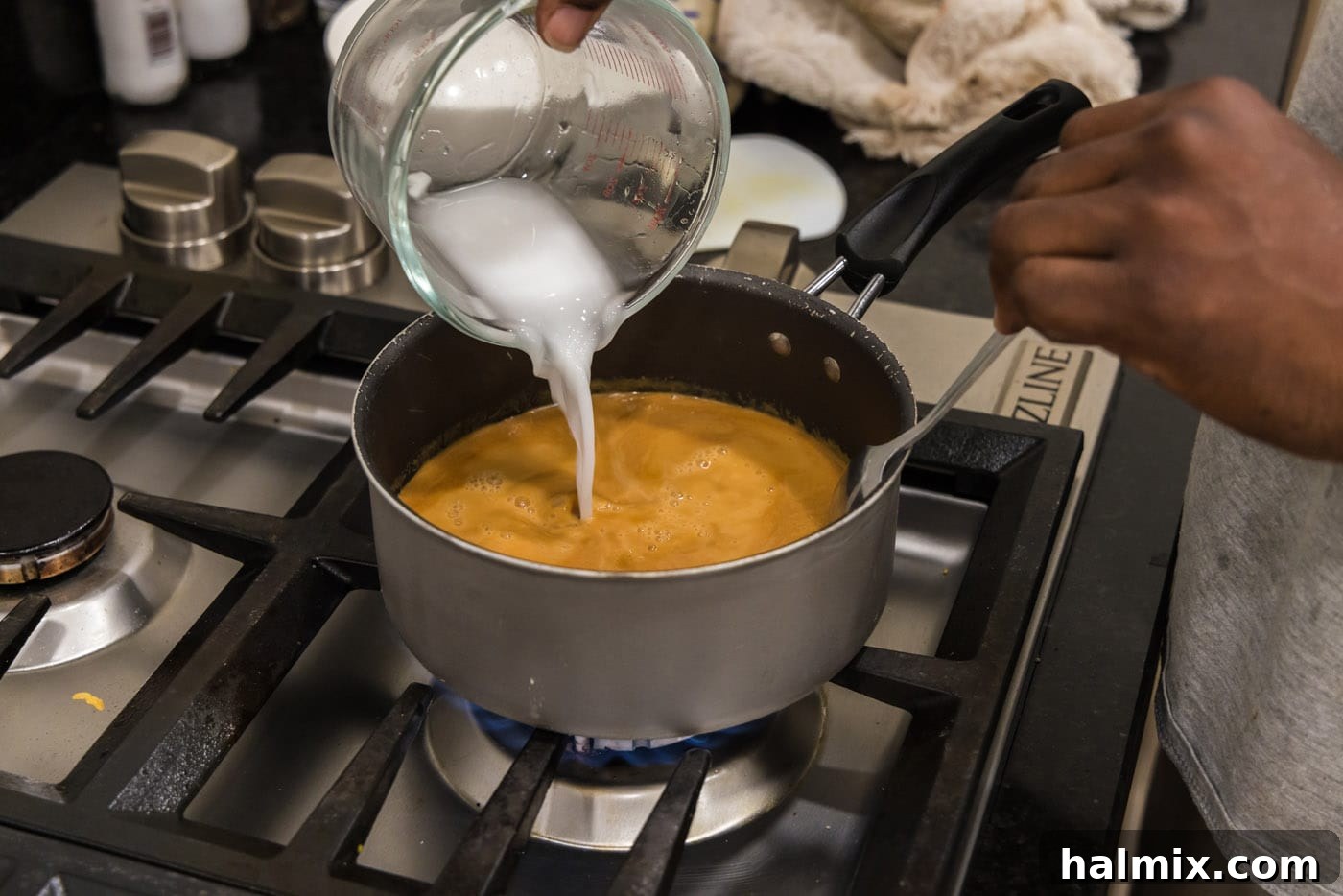
- While the salmon bakes, transfer the reserved marinade into a medium saucepan. Place the saucepan over medium-high heat. In a separate small bowl, whisk together the cornstarch and water to create a smooth slurry. Add this slurry to the simmering marinade in the saucepan. Cook, stirring continuously, until the mixture begins to visibly thicken and achieves a glaze-like consistency. Once thickened, remove the saucepan from the heat.
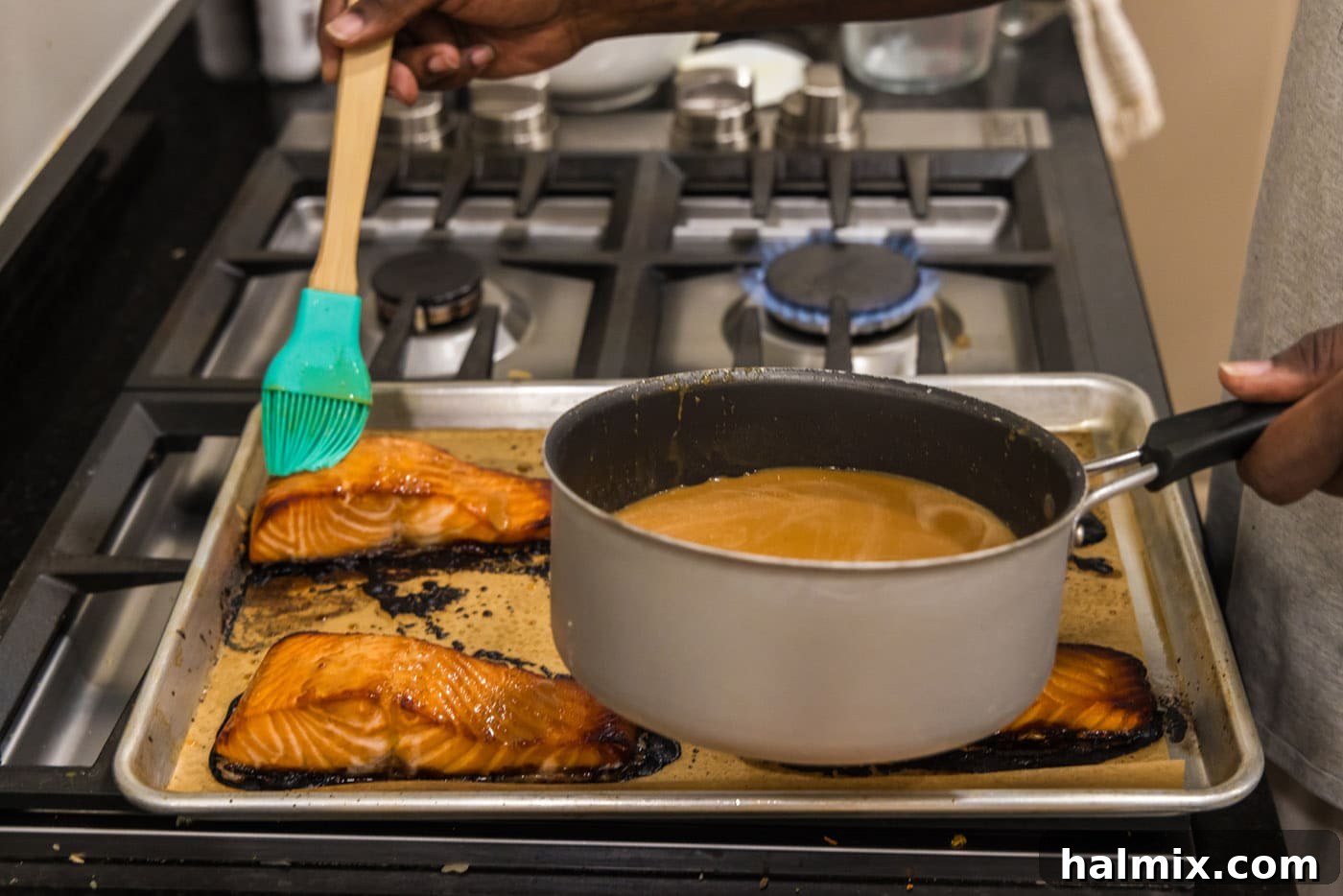
- After the initial baking period, carefully remove the salmon from the oven. Using a pastry brush, generously baste each salmon fillet with the freshly thickened marinade glaze. Return the baking sheet to the oven and continue to bake for an additional 8-10 minutes. This second baking phase allows the glaze to caramelize beautifully, forming a delicious, sticky coating.
- Once the salmon is cooked to perfection and the glaze is wonderfully caramelized, remove the pan from the oven. For an extra touch of flavor and visual appeal, brush the fillets lightly one last time with any remaining thickened marinade. Garnish generously with a sprinkle of sesame seeds and vibrant sliced green onions before serving immediately. Enjoy your perfectly baked miso salmon!
Frequently Asked Questions & Expert Tips for Perfect Miso Salmon
Achieving the ideal internal temperature is crucial for ensuring flaky, moist, and incredibly flavorful salmon fillets. Overcooked salmon, particularly thinner individual fillets, can quickly become dry and less enjoyable. For best results, use an instant-read thermometer to check for doneness. The salmon is perfectly cooked when it reaches an internal temperature of 135°F (57°C). Remember that larger or thicker fillets will naturally require more time in the oven to reach this desired temperature. Always trust your thermometer over visual cues alone to avoid overcooking.
Should you be fortunate enough to have any leftover miso salmon, store it properly to maintain its freshness and flavor. Place any remaining fillets in an airtight container and refrigerate them for up to 3 days. When you’re ready to enjoy them again, reheat the salmon in a 275°F (135°C) oven for about 10-15 minutes, or until it is thoroughly warmed through. Reheating at a lower temperature prevents the salmon from drying out.
Absolutely, using frozen salmon fillets is a convenient and perfectly acceptable option for this recipe. However, it is essential to completely thaw them before you begin the marinating process. For best results, transfer the frozen salmon to the refrigerator the night before you plan to cook, allowing it to thaw slowly and evenly. If you’re short on time, you can quick-thaw sealed salmon under cold running water.
Miso paste is a traditional Japanese seasoning produced by fermenting soybeans with salt and koji (a type of fungus), and often rice, barley, or other grains. This fermentation process gives miso its distinctive umami flavor, which is a savory, rich, and deeply satisfying taste. It’s incredibly versatile and used in everything from soups and marinades to dressings and glazes, adding depth and complexity to dishes.
While this baked recipe focuses on a tender fillet, you can achieve crispier skin by ensuring the salmon is very dry before marinating. Pat it thoroughly with paper towels. When baking, ensure the oven is fully preheated. For even crispier skin, consider finishing the salmon under the broiler for 1-2 minutes after the glaze is applied, keeping a close eye on it to prevent burning.
This recipe is excellent for meal prepping! You can prepare the marinade up to 3 days in advance and store it in an airtight container in the refrigerator. The salmon can be marinated for up to 24 hours, though 2-4 hours is often sufficient for excellent flavor absorption. This allows you to do most of the prep work in advance and simply bake when you’re ready for dinner.
Perfect Pairings for Your Miso Salmon
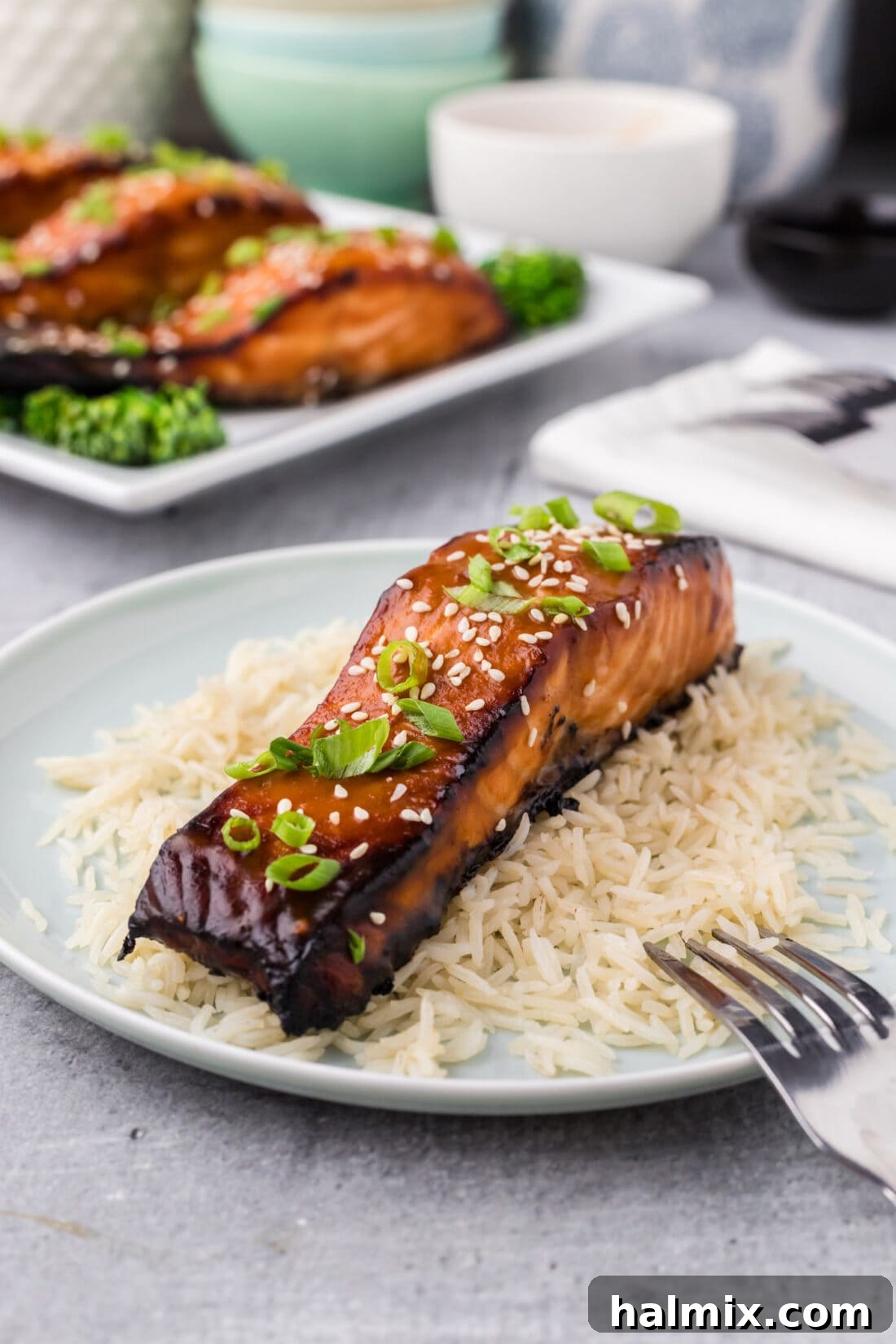
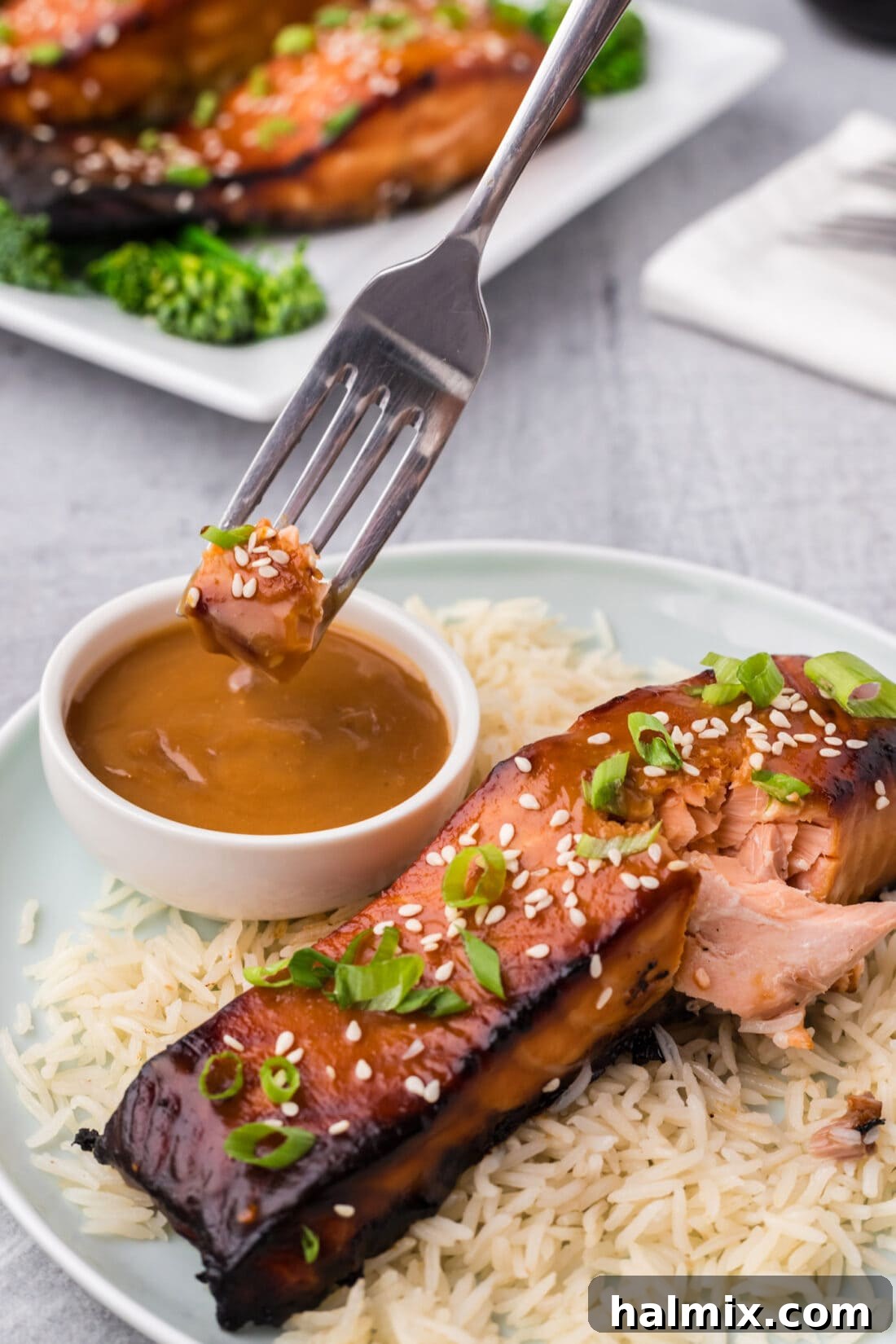
Miso salmon is a dish that effortlessly stands on its own, yet it truly shines when paired with complementary sides that enhance its exquisite flavors. Serve your perfectly baked miso salmon over a generous bed of fluffy white or nutritious brown rice, which provides a comforting base to soak up the delicious glaze. For a burst of freshness and added nutrients, steamed vegetables like vibrant edamame, crisp asparagus, tender broccoli, or sweet snap peas make excellent companions. Optionally, elevate your presentation and add another layer of flavor with a sprinkle of toasted sesame seeds and thinly sliced green onions as a garnish. For a more adventurous pairing, consider a light cucumber salad dressed with a rice wine vinaigrette, or a side of sautéed bok choy with garlic. This versatile dish also pairs wonderfully with quinoa for a protein boost or cauliflower rice for a low-carb alternative. No matter your choice, this miso salmon promises a delightful and satisfying meal!
Explore More Amazing Salmon Recipes
If you’ve enjoyed the rich flavors of this Miso Salmon, you’ll be thrilled to discover the diverse world of salmon recipes waiting for you. Salmon’s adaptability makes it a favorite for many culinary styles. Explore these other fantastic preparations to keep your meal rotation exciting and delicious:
- Honey Salmon: A delightful balance of sweet and savory, perfect for a quick and flavorful meal.
- Cajun Salmon: For those who love a bit of a kick, this recipe brings bold, spicy, and aromatic flavors to your table.
- Teriyaki Salmon: A classic favorite featuring a sticky, sweet, and savory glaze that’s always a crowd-pleaser.
- Stuffed Salmon: Elevate your salmon dinner with a delicious, savory stuffing that adds elegance and extra flavor.
- Spicy Salmon: If you crave heat, this recipe delivers a fiery twist to your tender salmon fillets.
I am passionate about baking and cooking, and I love sharing my kitchen adventures and perfected recipes with all of you! To make sure you never miss out on a new culinary creation, I offer a convenient newsletter delivered directly to your inbox every time a new recipe posts. Simply subscribe today and start receiving your free daily recipes to inspire your next meal!
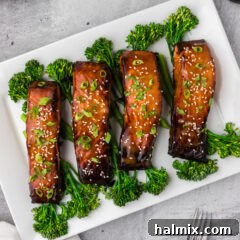
Baked Miso Salmon
IMPORTANT – There are often Frequently Asked Questions within the blog post that you may find helpful. Simply scroll back up to read them!
Print It
Pin It
Rate It
Save ItSaved!
Ingredients
- 2 pounds center cut salmon cut into 4 fillets
- 1 Tablespoon cornstarch
- ¼ cup water
Marinade
- 3 ½ Tablespoons white miso paste
- ½ cup soy sauce
- 2 ½ Tablespoons sesame oil
- ¼ cup sake
- 2 ½ Tablespoons rice vinegar
Optional Garnish
- sliced green onion tops
- sesame seeds
Things You’ll Need
-
immersion blender
-
Baking sheet
-
Saucepan
-
Pastry brush
Before You Begin
- When selecting salmon from the grocery store, prioritize fillets that are firm to the touch and exhibit a vibrant pink color, avoiding any with gray areas or blemishes. Center-cut salmon is ideal for uniform thickness across your fillets.
- Frozen salmon fillets are perfectly acceptable for this recipe; just ensure they are thoroughly thawed before you begin the marinating process to achieve the best results.
- The choice of miso paste can influence the flavor profile: lighter pastes offer a salty-sweet balance, while darker, longer-fermented pastes provide a deeper, more savory umami. White miso is used here, but any type works. If opting for a darker miso, consider using low-sodium soy sauce to control saltiness.
- Always bake fish with the skin side down. This method protects the delicate flesh from overcooking, locks in moisture, and helps the skin crisp up, preventing the fillet from flaking apart when lifted.
Instructions
-
In a large mixing bowl, whisk together all marinade ingredients. Pour the mixture into an immersion blender and blend until perfectly smooth, ensuring no miso clumps remain.
-
Place salmon fillets into a gallon zip-top bag and pour the marinade over them. Seal the bag and marinate in the refrigerator for 2 hours, allowing the flavors to penetrate the fish.
-
Preheat your oven to 425°F (220°C). Line a large baking sheet with parchment paper to prevent sticking.
-
Remove the salmon from the marinade, but do not discard the remaining marinade. Place the salmon fillets skin-side down onto the prepared baking sheet.
-
Bake the salmon in the preheated oven for 18-20 minutes, or until nearly cooked through.
-
Meanwhile, place the reserved marinade in a medium saucepan over medium-high heat. Create a slurry by whisking cornstarch and water together, then add it to the saucepan. Cook, stirring occasionally, until the mixture thickens into a glossy glaze. Remove from heat.
-
Remove the baking sheet from the oven. Brush the salmon fillets generously with the thickened miso glaze. Return to the oven and bake for an additional 8-10 minutes, allowing the glaze to caramelize beautifully.
-
Once baked, remove from oven. For extra flavor and shine, brush lightly with any remaining glaze. Garnish with sesame seeds and sliced green onions before serving immediately.
Expert Tips & FAQs
- Cooking salmon to the perfect temperature is really important for flakey, moist fillets. Salmon (especially individual fillets) become dry when overcooked. Use an instant-read thermometer to check for doneness when it reaches 135F (57°C). Keep in mind the larger your fillets, the more time it may need in the oven.
- Store any leftovers in an air-tight container kept in the refrigerator for up to 3 days. Reheat in a 275F (135°C) oven for 10-15 minutes or until warmed through, to prevent drying out.
Nutrition
The recipes on this blog are tested with a conventional gas oven and gas stovetop. It’s important to note that some ovens, especially as they age, can cook and bake inconsistently. Using an inexpensive oven thermometer can assure you that your oven is truly heating to the proper temperature. If you use a toaster oven or countertop oven, please keep in mind that they may not distribute heat the same as a conventional full sized oven and you may need to adjust your cooking/baking times. In the case of recipes made with a pressure cooker, air fryer, slow cooker, or other appliance, a link to the appliances we use is listed within each respective recipe. For baking recipes where measurements are given by weight, please note that results may not be the same if cups are used instead, and we can’t guarantee success with that method.