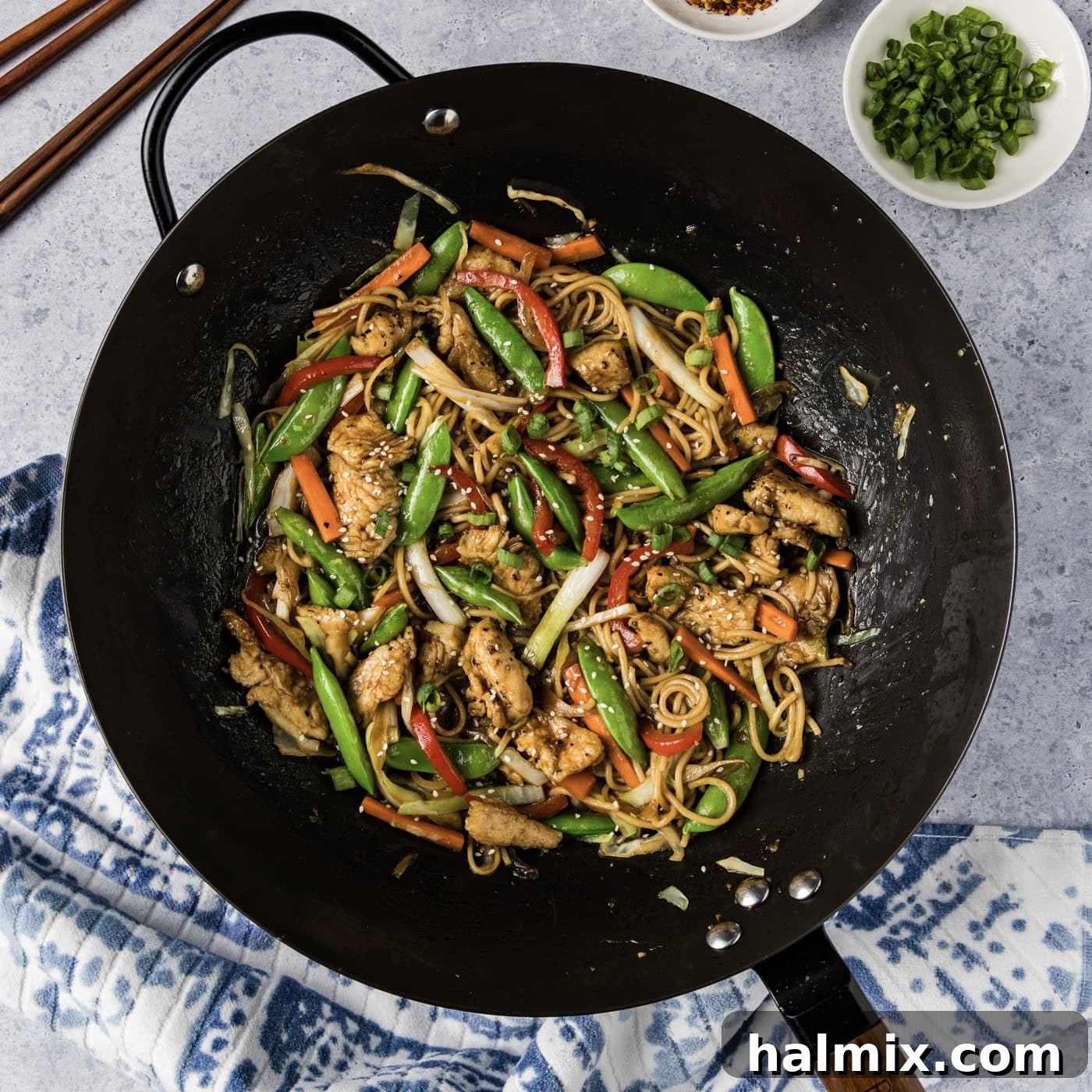
Craving the vibrant flavors and comforting noodles of your favorite takeout Lo Mein, but want to enjoy a healthier, homemade version? Look no further! This incredibly easy chicken lo mein recipe is packed with an abundance of fresh, crisp vegetables and tender noodles, all generously coated in a rich, savory umami sauce that will make you forget about ordering in. Prepare yourself for a quick, satisfying, and utterly delicious meal that’s well worth making from scratch.
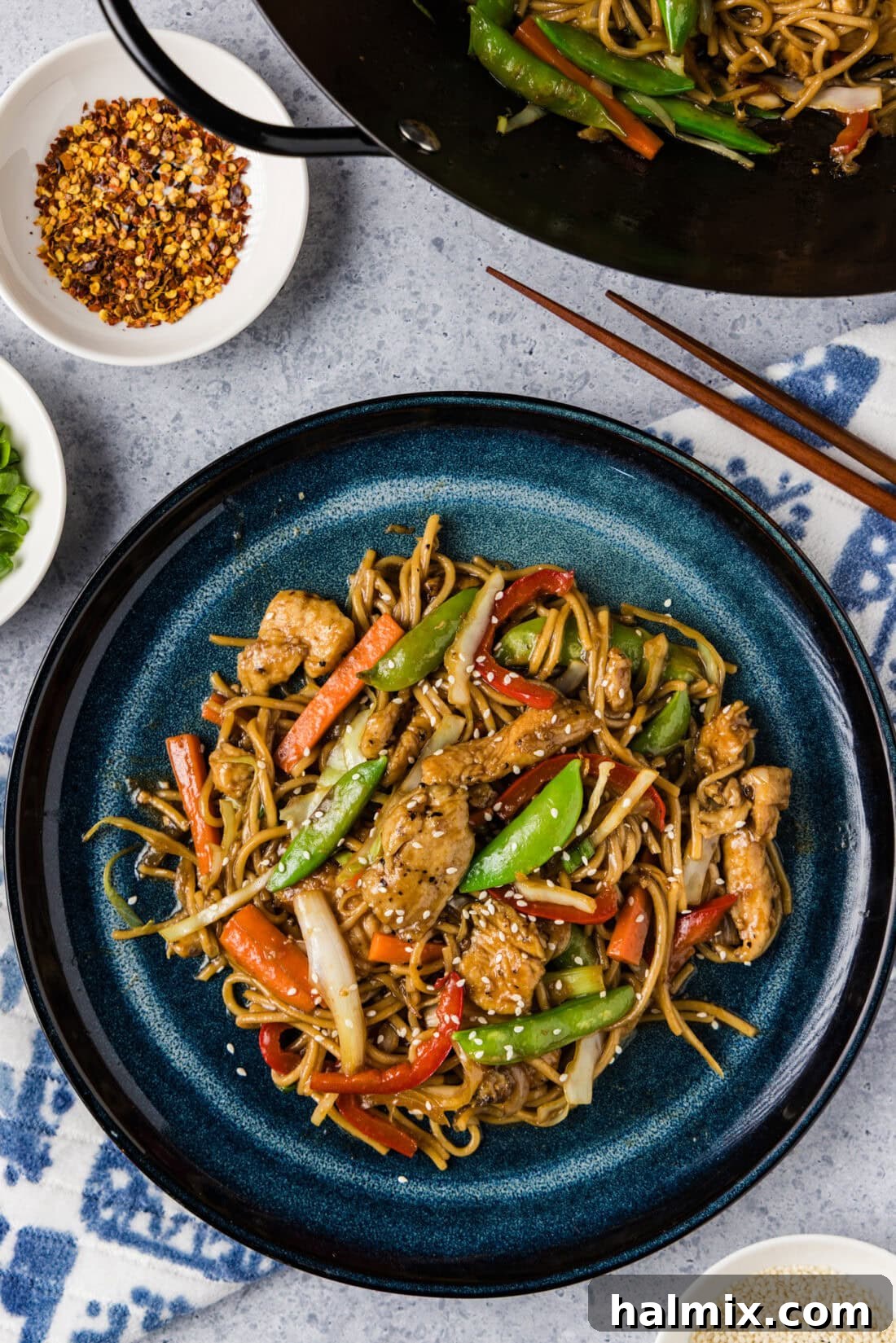
Why This Homemade Chicken Lo Mein Recipe is a Must-Try
There are countless reasons why this chicken lo mein recipe will become a regular in your meal rotation. First and foremost, its simplicity belies its incredible flavor. Even novice cooks can whip up this dish with confidence, making it perfect for busy weeknights or a spontaneous craving for something Asian-inspired. But the magic doesn’t stop at ease of preparation.
This recipe shines with its generous inclusion of fresh, colorful vegetables. Picture this: crisp onions, crunchy cabbage, vibrant bell peppers, sweet snap peas, and tender carrots, all contributing a delightful array of textures and essential nutrients. Beyond their visual appeal, these vegetables infuse the dish with natural sweetness and a satisfying bite. The aromatic trio of fresh ginger, pungent garlic, and a perfectly balanced savory sauce ties everything together, creating a symphony of flavors that rivals any restaurant rendition.
One of the greatest advantages of homemade lo mein is its remarkable versatility. It’s an ideal recipe for utilizing any leftover vegetables you might have languishing in your refrigerator, preventing food waste and encouraging culinary creativity. Don’t have snap peas? Broccoli florets or mushrooms work wonderfully. Want a different protein? Easily swap chicken for succulent beef lo mein, tender shrimp, or even crispy tofu. For a delicious plant-based option, omit the meat entirely and create a satisfying vegetable lo mein using whatever produce you have on hand. This adaptability ensures that your lo mein can be a unique culinary adventure every time you make it, tailored precisely to your preferences and pantry.
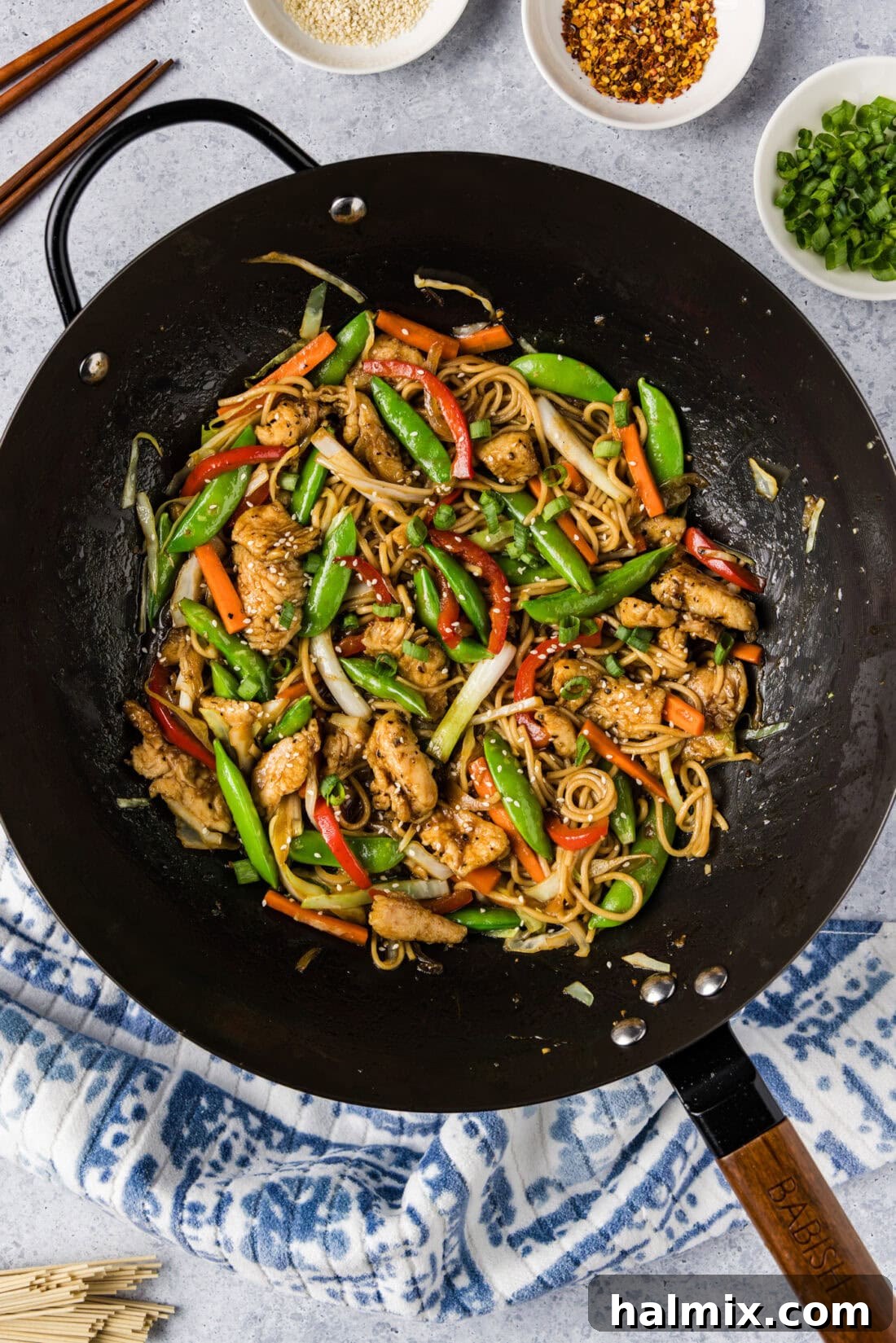
What is Lo Mein? A Brief Overview
Before we dive into the cooking process, let’s briefly understand what “Lo Mein” actually means. Originating from Cantonese cuisine, Lo Mein translates to “tossed noodles.” The hallmark of this dish is its distinctive soft and chewy wheat flour noodles, which are cooked separately and then tossed with a savory sauce, proteins, and an assortment of fresh vegetables. Unlike Chow Mein, where noodles are often stir-fried until crispy, Lo Mein emphasizes the soft texture of the noodles, allowing them to fully absorb the rich flavors of the sauce.
This traditional preparation method ensures that every strand of noodle is perfectly coated and infused with the delicious umami depth of the sauce, making Lo Mein a truly comforting and satisfying dish. It’s a staple in Chinese-American cuisine and a beloved favorite around the world, known for its balance of savory, sweet, and tangy notes.
Essential Ingredients for Your Lo Mein Masterpiece
Creating an authentic and flavorful Chicken Lo Mein starts with selecting the right ingredients. Below, we’ll outline what you need and provide some useful tips for choosing and preparing them. You’ll find a complete, printable recipe card with all exact measurements and detailed instructions at the bottom of this article.
Ingredient Spotlight & Smart Substitutions
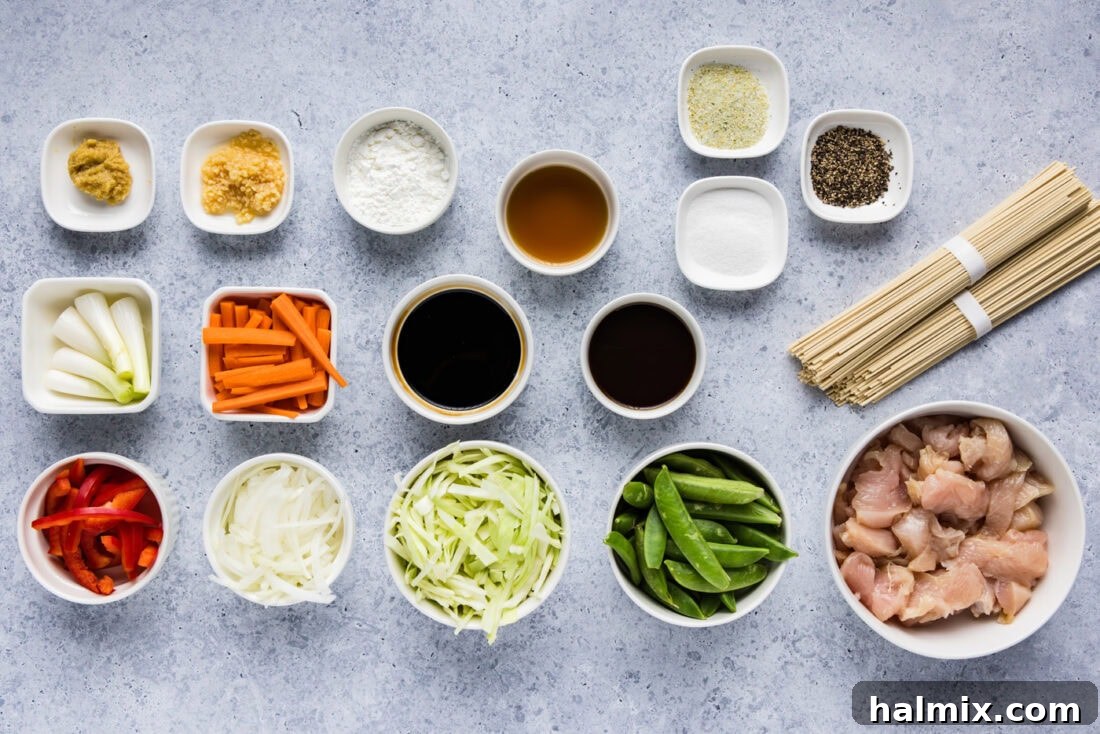
NOODLES: The foundation of any great lo mein lies in its noodles. Authentic lo mein or Cantonese egg noodles are ideal for this recipe due to their tender, chewy texture and ability to absorb the sauce beautifully. You can typically locate these in the international or pasta aisle of larger grocery stores. When selecting, note that some varieties come precooked, while others require cooking. Always check the package instructions for the best preparation method. If traditional lo mein noodles are unavailable, don’t fret! You can successfully substitute them with chow mein, ramen, or even regular spaghetti noodles. Just ensure they are cooked al dente, as they will continue to soften slightly when tossed with the hot sauce and vegetables.
PROTEIN: Our recipe features succulent boneless, skinless chicken breasts, cubed for even cooking and easy integration into the stir-fry. Chicken is a lean and versatile protein that cooks quickly. However, this recipe is incredibly adaptable. Feel free to use boneless, skinless chicken thighs for a richer flavor, or swap it out entirely. Sliced beef (like flank steak or sirloin), shrimp, pork, or even firm tofu are fantastic alternatives that will absorb the sauce wonderfully. Just adjust cooking times accordingly to ensure your chosen protein is cooked through but still tender.
VEGETABLES: This dish is a celebration of fresh produce! We call for a colorful medley of onion, cabbage, red bell peppers, snap peas (or snow peas), green onions, and julienned carrots. These vegetables provide a fantastic crunch, vibrant colors, and a wealth of nutrients. The beauty of lo mein is its flexibility; you can truly “clean out the fridge” with this recipe. Excellent replacements or additions include sliced mushrooms, broccoli florets, thinly sliced zucchini, baby corn, water chestnuts, or mini sweet peppers. Aim for a variety of colors and textures to make your lo mein visually appealing and nutritionally robust. Ensure vegetables are cut into similar sizes for uniform cooking.
THE SAVORY SAUCE: The heart of this lo mein is its deeply flavorful sauce, a perfect balance of savory, umami, and a hint of sweetness. It’s crafted from common pantry staples: soy sauce (use low-sodium if preferred), rich sesame oil, umami-packed oyster sauce, a touch of granulated sugar, and cornstarch. The cornstarch is crucial for thickening, giving the sauce that classic glossy consistency that clings to every noodle and vegetable. While oyster sauce adds a unique depth, a vegetarian oyster sauce or even a dash of hoisin sauce can be used as a substitute if needed.
Step-by-Step Guide: Crafting Your Chicken Lo Mein
These step-by-step photos and detailed instructions are here to guide you visually through the process of making this delicious recipe. For a complete printable version, including all measurements and instructions, please scroll down to the recipe card at the end of this post.
- Prepare the Sauce: In a medium bowl, combine all the sauce ingredients: soy sauce, sesame oil, oyster sauce, granulated sugar, and 2 teaspoons of cornstarch. Whisk vigorously until the cornstarch is fully dissolved and the sauce is smooth. Set aside.
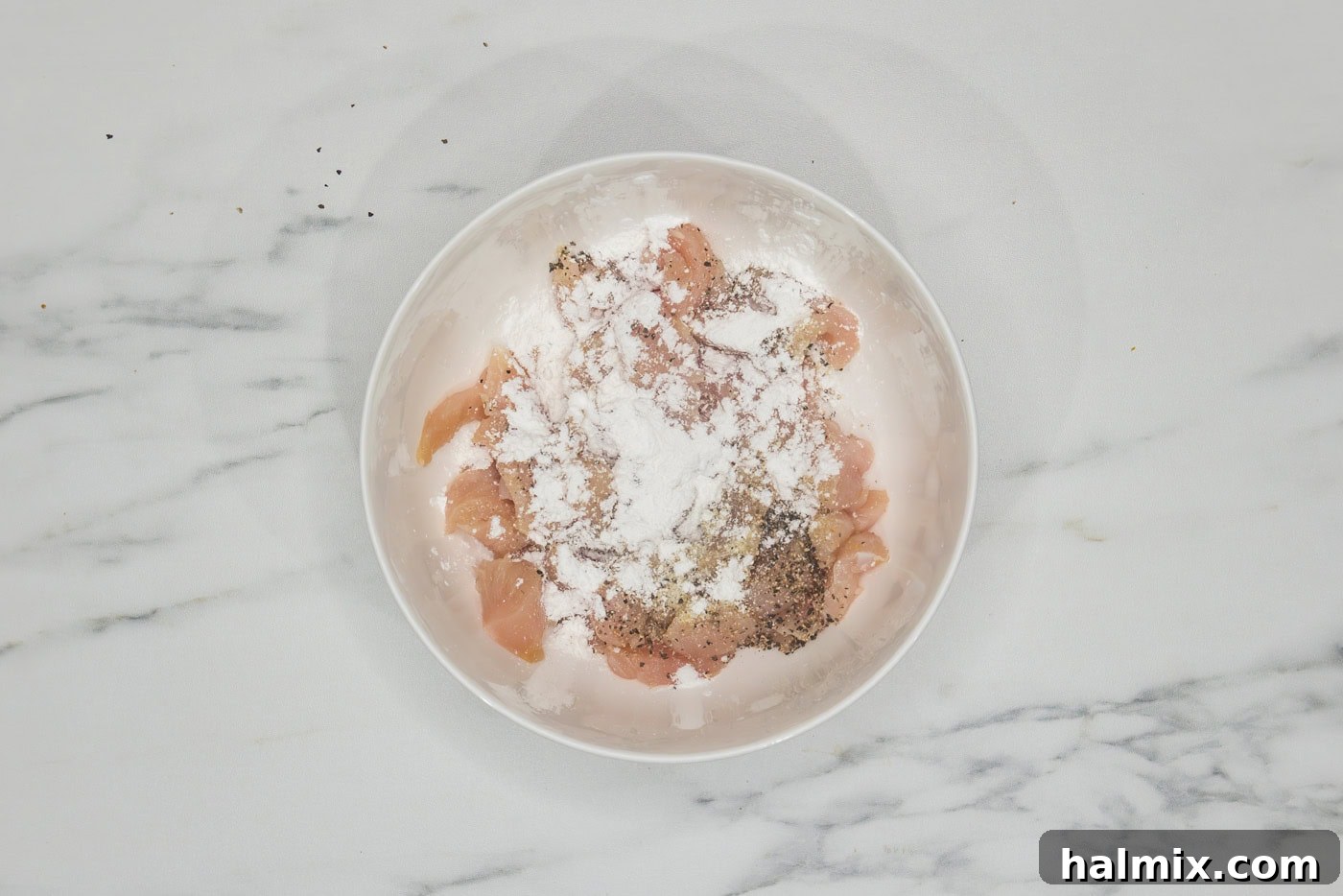
- Season the Chicken: Place your cubed boneless, skinless chicken pieces into a large bowl. Season them generously with garlic salt, black pepper, and the remaining 3 teaspoons of cornstarch. Using gloved hands (or clean bare hands), toss the chicken thoroughly to ensure each piece is evenly coated. The cornstarch coating will help create a tender crust and prevent the chicken from drying out during stir-frying.

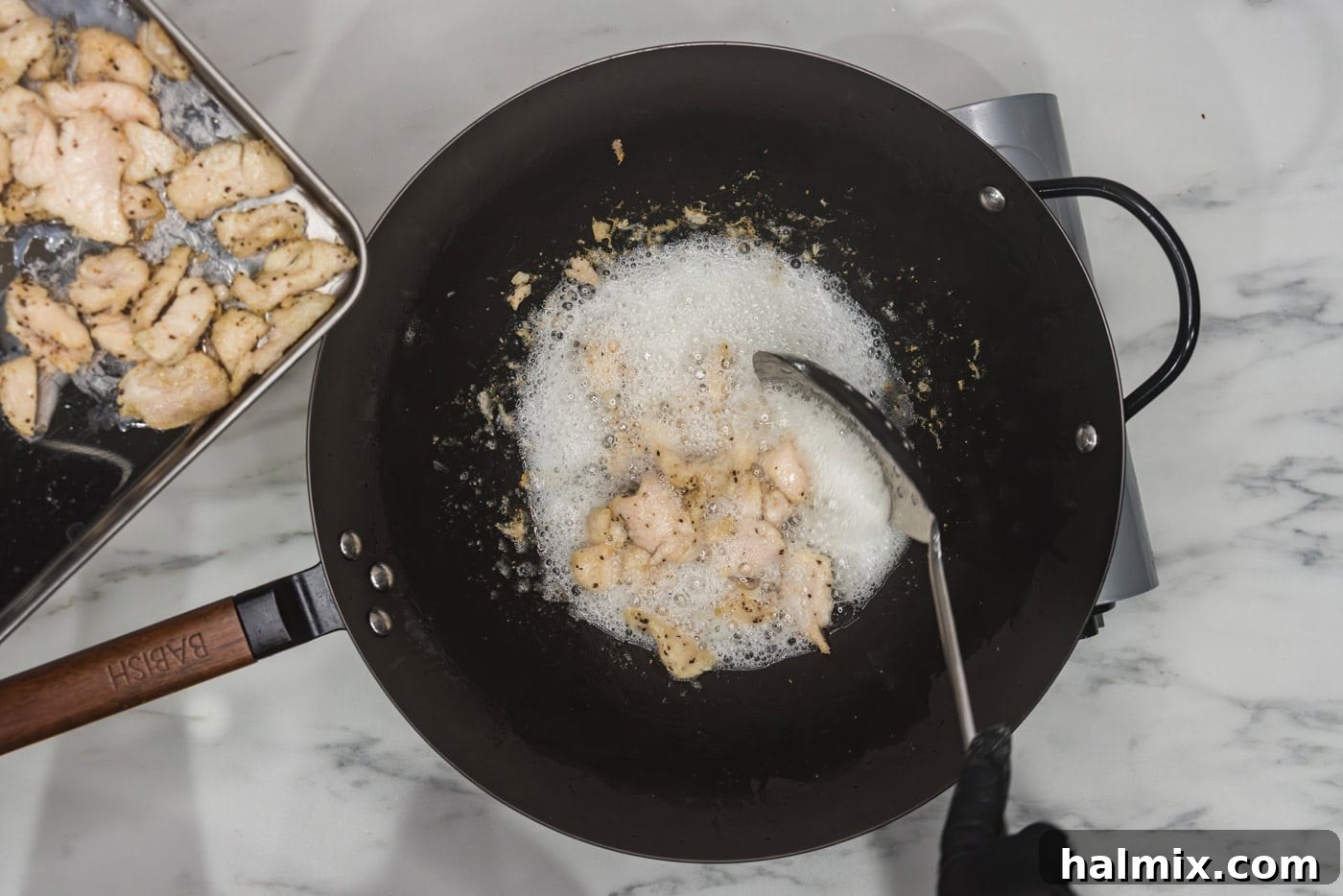
- Cook the Chicken: Heat 2 tablespoons of vegetable oil in a wok or a large, heavy-bottomed skillet over medium-high heat until the oil is shimmering. Add the seasoned chicken pieces and stir-fry, constantly moving them, until they are no longer pink and are lightly golden brown. This usually takes about 3-5 minutes. Once cooked, remove the chicken from the pan and set it aside, leaving any remaining oil in the wok.
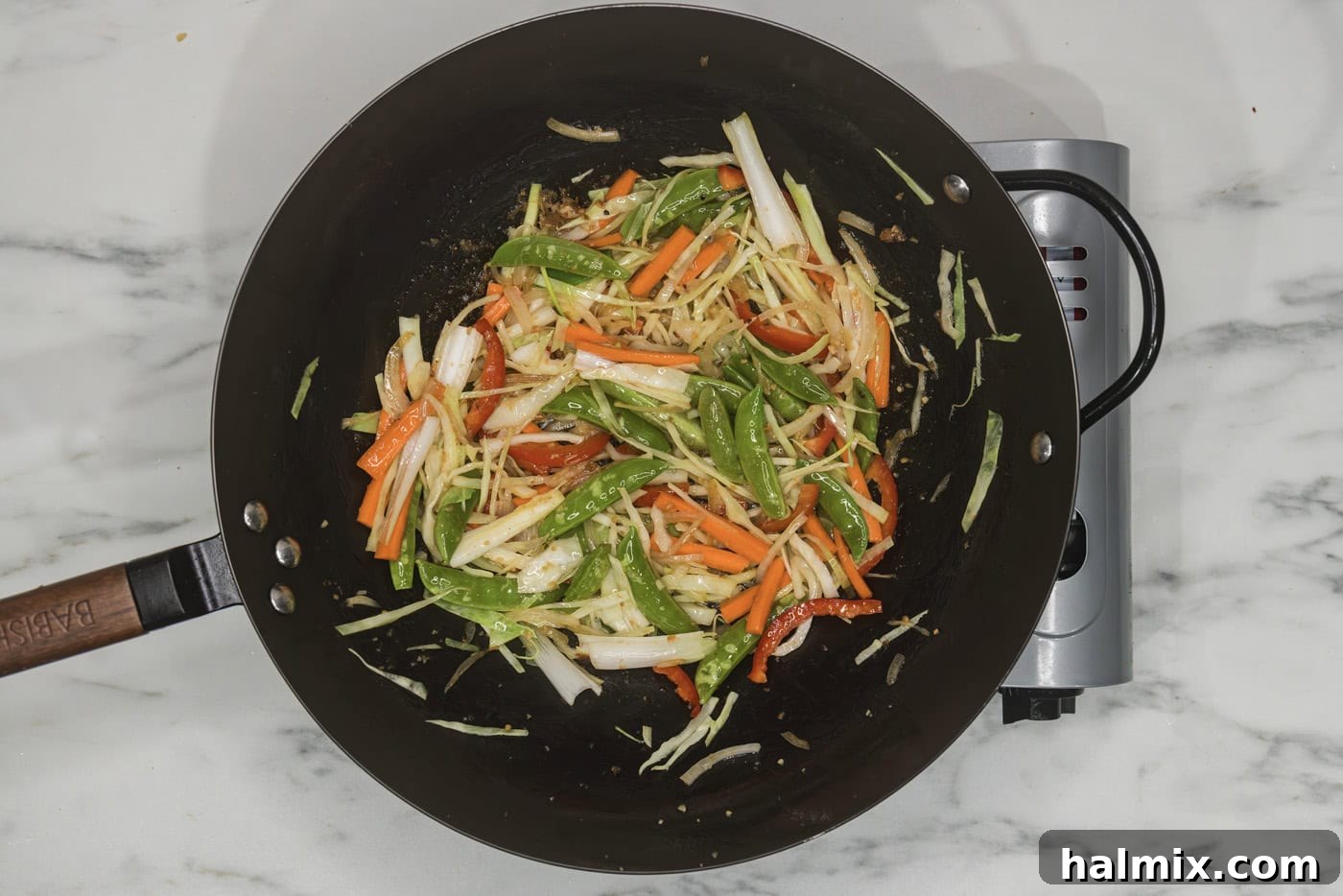
- Stir-Fry the Vegetables: To the same wok with the remaining oil, add the minced garlic, minced ginger, sliced onion, sliced cabbage, sliced red bell pepper, snow peas (or snap peas), the white parts of the green onions, and julienned carrots. Stir-fry these vegetables for 3-4 minutes over medium-high heat, constantly tossing, until they are tender-crisp – vibrant and slightly softened but still retaining a pleasant crunch. Avoid overcooking to maintain their texture and nutritional value.
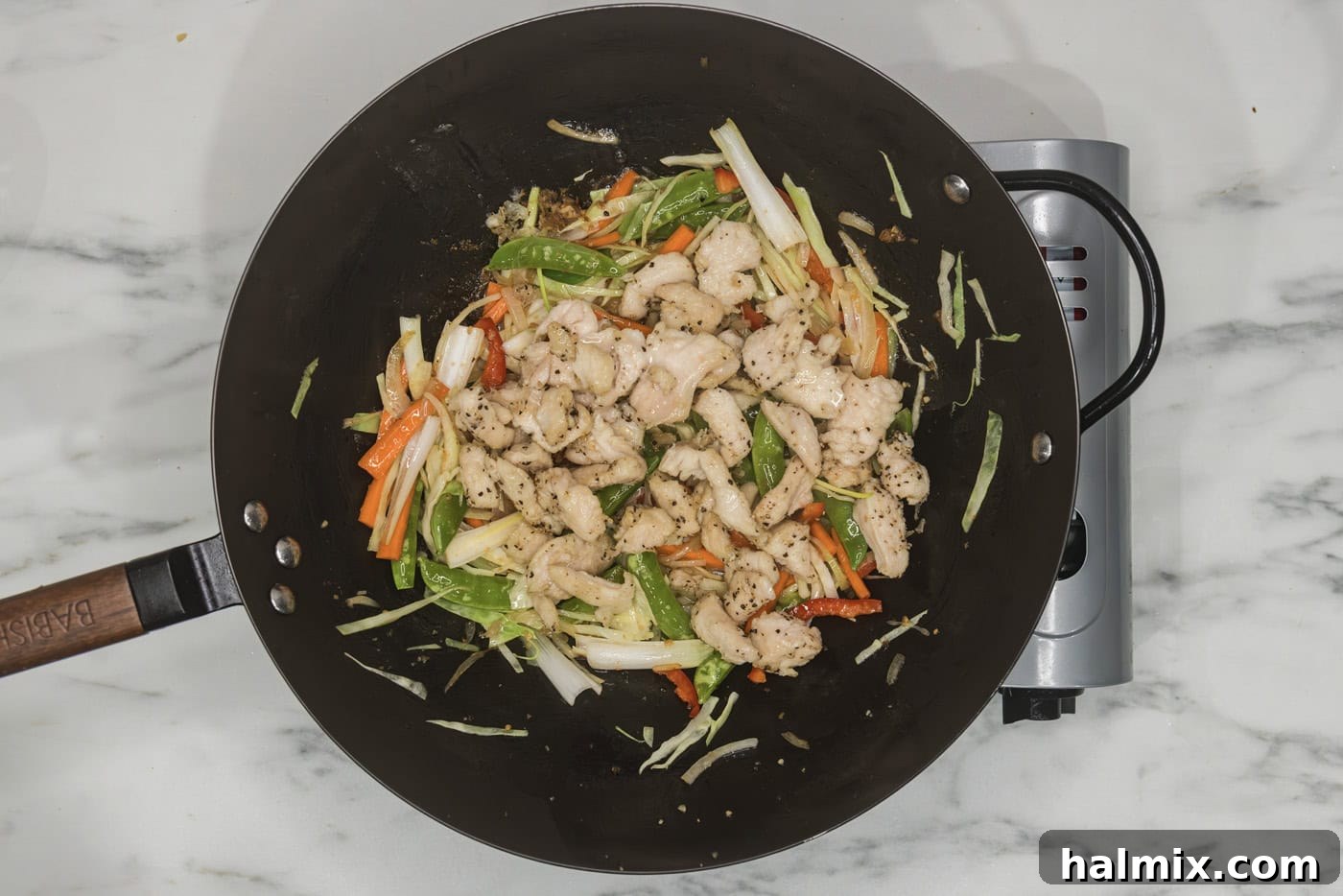
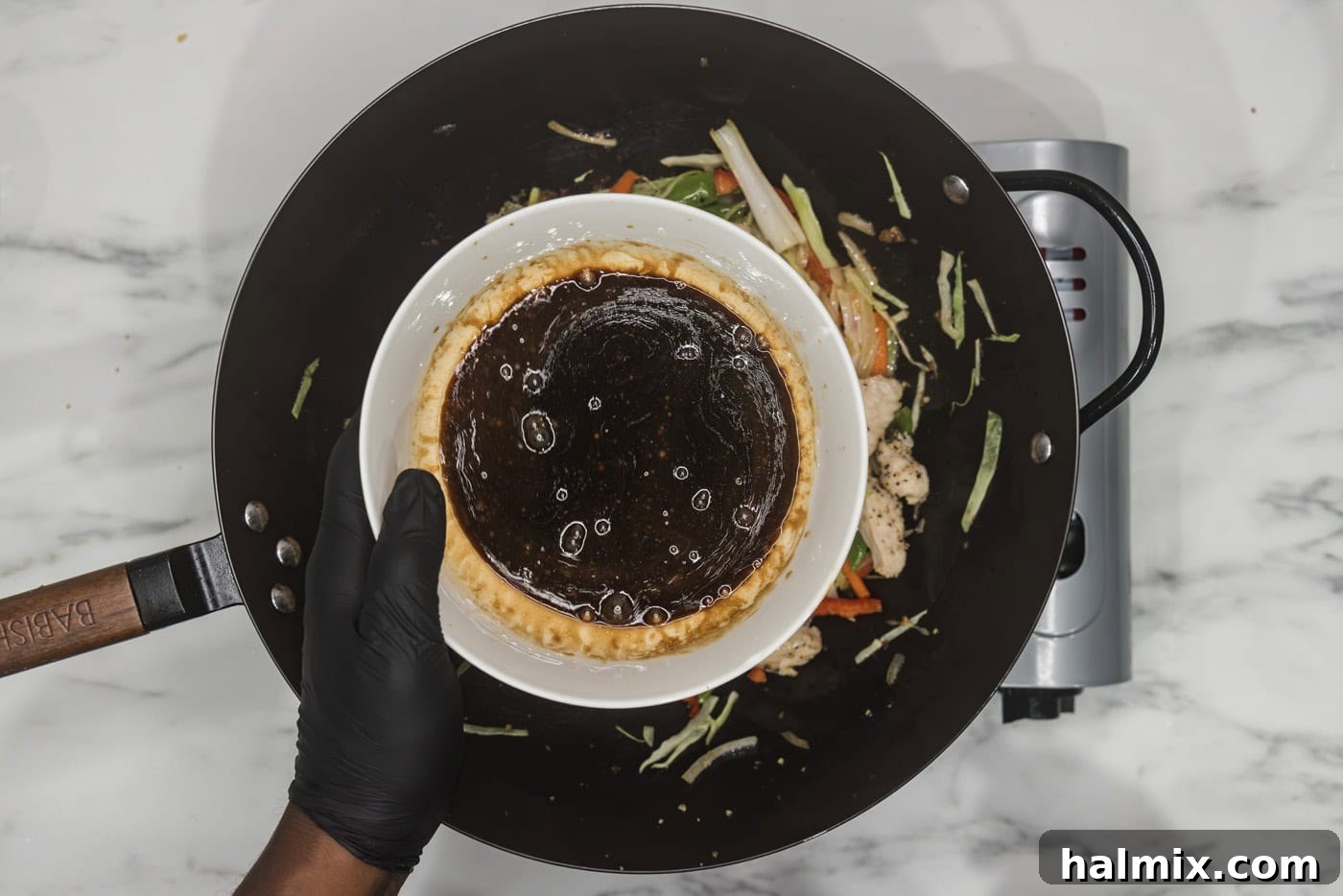
- Combine Chicken, Sauce & Thicken: Return the cooked chicken to the wok with the stir-fried vegetables. Give the prepared sauce another quick whisk to ensure the cornstarch hasn’t settled, then pour it over the chicken and vegetables. Stir-fry for another 2-3 minutes, ensuring everything is well combined and heated through. Allow the sauce to come to a gentle bubble and cook for a few minutes until it visibly thickens and coats the ingredients beautifully.
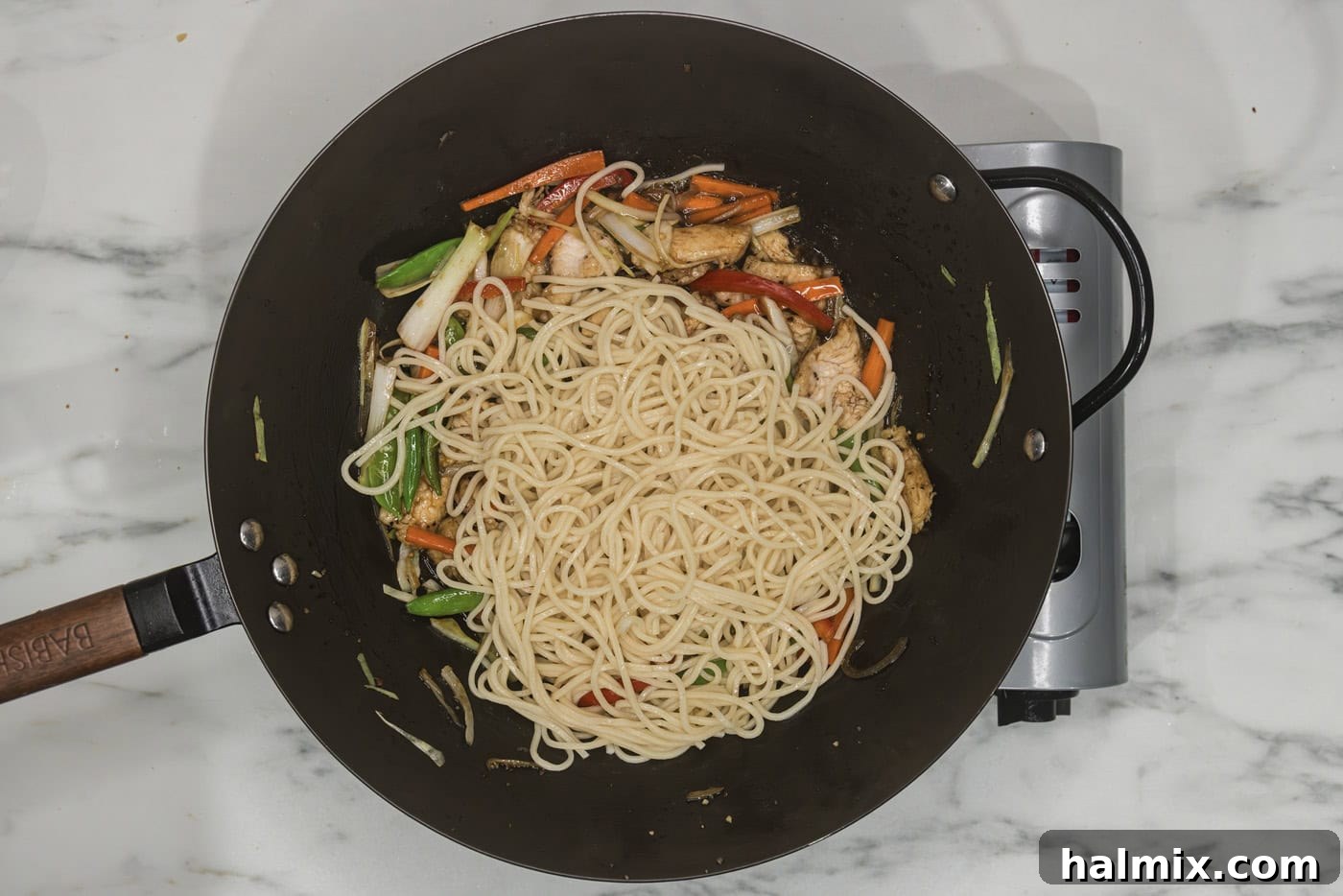
- Add Noodles and Serve: Finally, add the pre-cooked lo mein noodles to the wok. Using tongs, gently toss and stir everything together until the noodles are thoroughly coated with the sauce and evenly mixed with the chicken and vegetables. Cook for just another minute or two to ensure the noodles are heated through. Serve immediately and enjoy your homemade Chicken Lo Mein!
Expert Tips & Frequently Asked Questions for Perfect Lo Mein
Traditional Lo Mein recipes use fresh or dried Cantonese egg noodles, often labeled as “Lo Mein noodles.” These are typically thick and chewy, perfect for absorbing the sauce. If you can’t find them, fresh or dried chow mein noodles, ramen noodles (without the seasoning packet), or even regular spaghetti can be used as a substitute. Just ensure they are cooked al dente before adding them to the stir-fry.
To make your Lo Mein even healthier, consider using low-sodium soy sauce. You can also increase the vegetable content significantly; add more broccoli, bok choy, mushrooms, or green beans. For protein, lean chicken breast or shrimp are great choices, or opt for a plant-based version with extra firm tofu. Minimize added sugar in the sauce or replace it with a touch of honey or maple syrup if preferred.
Store any leftover chicken lo mein in an air-tight container in the refrigerator for 2-3 days. For best results when reheating, use a skillet over medium-low heat with a dash of oil or a splash of broth. This helps prevent the noodles from drying out and sticking together. You can also microwave it, stirring halfway through, but the skillet method yields better texture.
While both chow mein and lo mein are popular Chinese noodle dishes made with wheat flour noodles, their preparation and texture differ significantly. Lo mein, meaning “tossed noodles,” features soft, chewy noodles that are pre-cooked and then tossed with sauce, vegetables, and protein. Chow mein, meaning “fried noodles,” typically involves stir-frying the noodles until they are slightly crispy, providing a different textural experience.
Absolutely! To speed up your cooking process, you can chop all your vegetables a day in advance and store them in airtight containers in the refrigerator. The sauce can also be whisked together and stored in the fridge for up to 3 days. Cook the chicken and noodles just before you plan to assemble and serve for the freshest results.
Serving Suggestions for Your Lo Mein Feast
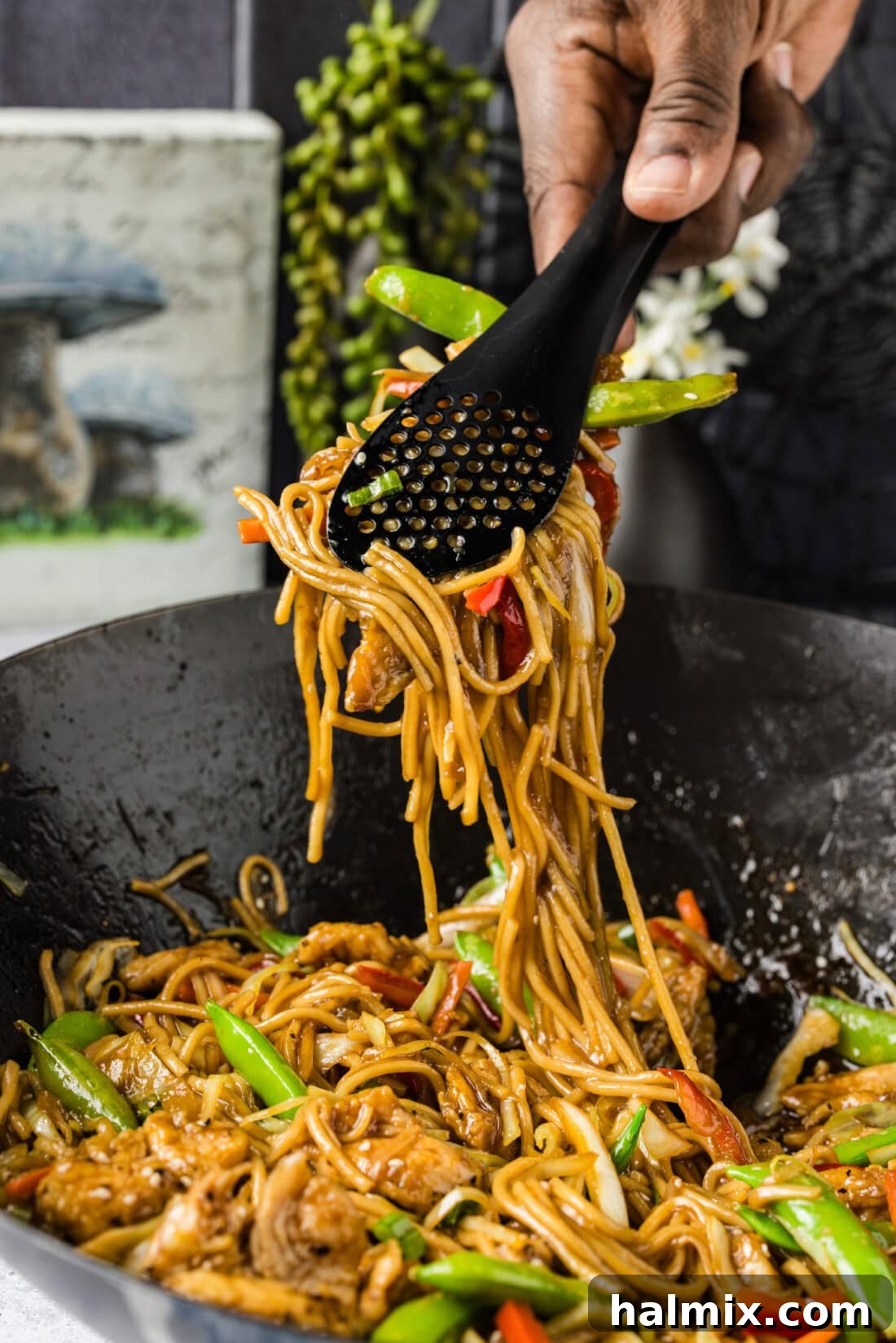
This Chicken Lo Mein is a complete meal on its own, offering a perfect balance of protein, vegetables, and carbohydrates. However, if you’re looking to create a more elaborate Asian-inspired dinner, there are several wonderful side dishes that pair beautifully. I personally love serving it alongside a warm bowl of light and savory egg drop soup or some crispy, golden egg rolls. For an extra touch of flavor and visual appeal, consider garnishing your finished lo mein with a sprinkle of toasted sesame seeds and some freshly sliced green onion tops just before serving. A side of steamed edamame or a simple cucumber salad would also complement the rich flavors wonderfully.
More Delightful Asian-Inspired Recipes to Try
If you enjoyed this Chicken Lo Mein, you’ll love exploring other popular Asian-inspired dishes. Here are a few more recipes that offer similar comfort and flavor:
- Classic Chow Mein
- Hearty Beef Lo Mein
- Flavorful Teriyaki Noodles
- Wholesome Vegetable Lo Mein
- Spicy Szechuan Chicken
I absolutely love to bake and cook, and it brings me so much joy to share my kitchen experiences and delicious recipes with all of you! Remembering to come back each day to check for new recipes can be tough, which is why I offer a convenient newsletter. Simply subscribe here and start receiving your free daily recipes directly in your inbox. Never miss another delicious meal idea!
Chicken Lo Mein
This chicken lo mein recipe has quickly become a staple! Fresh colorful veggies meet tender chicken and saucy noodles for a perfectly balanced meal.
Ingredients
- 5 teaspoons cornstarch divided
- 12 ounces boneless skinless chicken breasts cubed
- 1 teaspoon garlic salt
- ½ teaspoon black pepper
- 2 Tablespoons vegetable oil for frying
- 1 Tablespoon minced garlic
- 2 teaspoons minced ginger
- ½ cup sliced onion
- 1 cup sliced cabbage
- ½ cup sliced red bell pepper
- 1 cup snow peas or snap peas
- 5 green onions white parts only
- ½ cup julienned carrots
- 3 ½ ounces lo mein noodles cooked
Lo Mein Sauce
- ¼ cup soy sauce
- 1 Tablespoon sesame oil
- 2 Tablespoons oyster sauce
- 2 teaspoons granulated sugar
Things You’ll Need
-
Wok or large heavy bottomed skillet
-
Whisk
Before You Begin / Preparation Tips
- This recipe calls for lo mein noodles that are already cooked, so plan accordingly when preparing your ingredients. After draining your cooked noodles, you can rinse them with cool water to stop the cooking process, then add them back to a pot or large bowl of room temperature water until you need them. Alternatively, you can toss the cooked noodles with a small amount of olive oil. Either method will keep the noodles from sticking together while you prepare the rest of the recipe.
- Both lo mein or Cantonese egg noodles work great in this recipe. You’ll typically find them in the international or pasta aisle at the grocery store. If you can’t seem to find them, you can replace them with chow mein, ramen, or even spaghetti noodles.
- If you don’t have all the vegetables on hand, nice replacements include sliced mushrooms, broccoli florets, and mini sweet peppers.
Instructions
-
In a medium bowl, whisk together soy sauce, sesame oil, oyster sauce, granulated sugar, and 2 teaspoons of the cornstarch.¼ cup soy sauce, 1 Tablespoon sesame oil, 2 Tablespoons oyster sauce, 2 teaspoons granulated sugar
-
Place chicken pieces into a large bowl. Season with garlic salt, pepper, and remaining 3 teaspoons cornstarch and toss to coat with gloved hands.12 ounces boneless skinless chicken breasts, 1 teaspoon garlic salt, ½ teaspoon black pepper
-
Heat 2 Tablespoons vegetable oil in a wok over medium-high heat until shimmering. Add chicken and stir-fry until no longer pink. Remove chicken from the pan.2 Tablespoons vegetable oil
-
To the remaining oil, add the garlic, ginger, onion, cabbage, red bell pepper, snow/snap peas, green onion, and carrots. Stir-fry for 3-4 minutes, or until vegetables are tender-crisp.1 Tablespoon minced garlic, 2 teaspoons minced ginger, ½ cup sliced onion, 1 cup sliced cabbage, ½ cup sliced red bell pepper, 1 cup snow peas, 5 green onions, ½ cup julienned carrots
-
Add cooked chicken and sauce to the pan. Stir-fry for 2-3 minutes to heat through. Allow sauce to bubble gently for a few minutes to thicken.
-
Add cooked noodles to the pan; stir everything together until well combined.3 ½ ounces lo mein noodles
Nutrition Information
Calories: 348cal |
Carbohydrates: 34g |
Protein: 24g |
Fat: 13g |
Saturated Fat: 2g |
Polyunsaturated Fat: 6g |
Monounsaturated Fat: 4g |
Trans Fat: 0.1g |
Cholesterol: 54mg |
Sodium: 1595mg |
Potassium: 637mg |
Fiber: 3g |
Sugar: 6g |
Vitamin A: 3717IU |
Vitamin C: 52mg |
Calcium: 57mg |
Iron: 2mg
Tried this Recipe? Pin it for Later!
Follow on Pinterest @AmandasCookin or tag #AmandasCookin!
The recipes on this blog are tested with a conventional gas oven and gas stovetop. It’s important to note that some ovens, especially as they age, can cook and bake inconsistently. Using an inexpensive oven thermometer can assure you that your oven is truly heating to the proper temperature. If you use a toaster oven or countertop oven, please keep in mind that they may not distribute heat the same as a conventional full sized oven and you may need to adjust your cooking/baking times. In the case of recipes made with a pressure cooker, air fryer, slow cooker, or other appliance, a link to the appliances we use is listed within each respective recipe. For baking recipes where measurements are given by weight, please note that results may not be the same if cups are used instead, and we can’t guarantee success with that method.