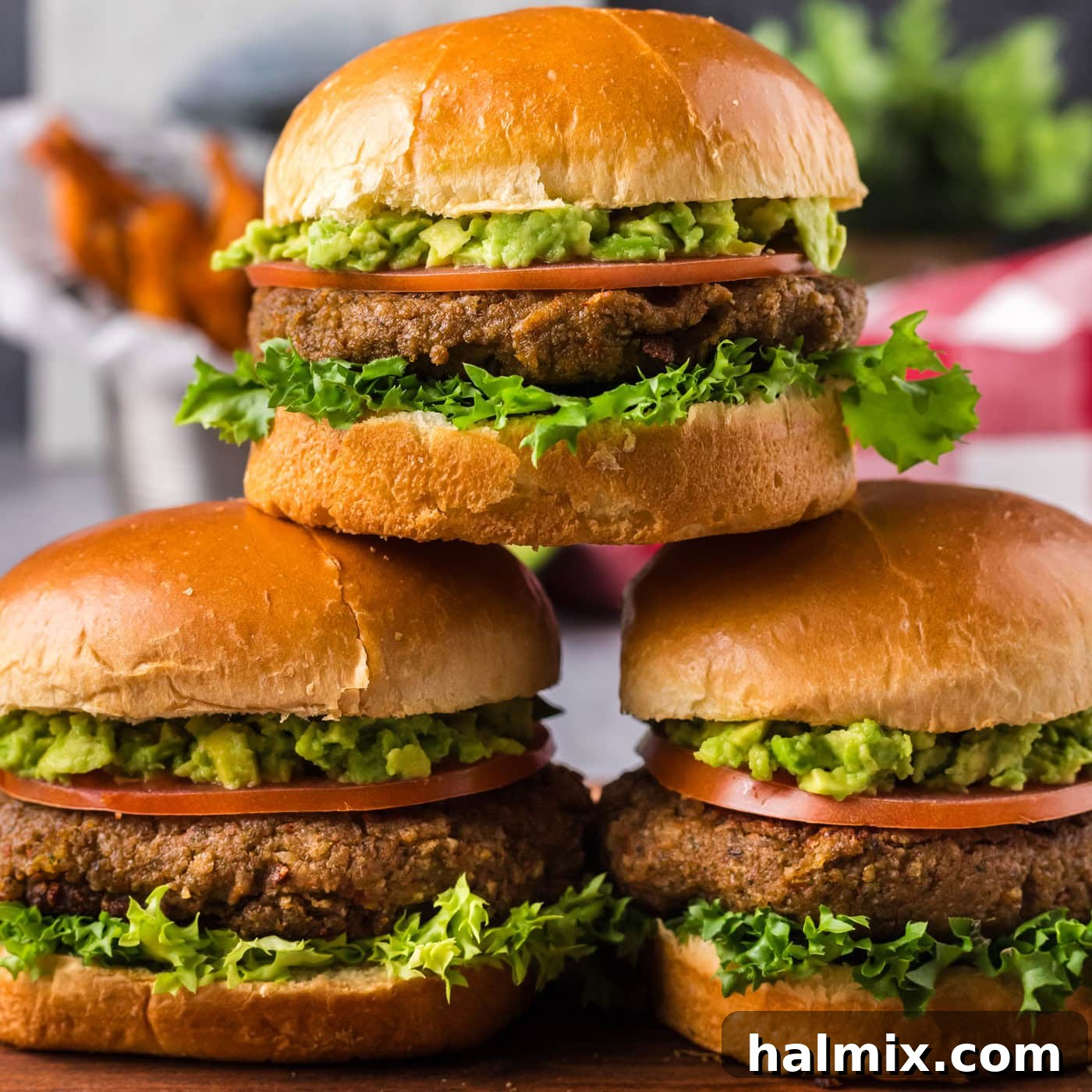
Welcome to the ultimate guide for crafting delectable, homemade veggie burgers that are bursting with flavor and wholesome goodness. Forget dry, crumbly, or bland patties – this recipe is designed to deliver a truly satisfying experience, packed with a vibrant medley of fresh vegetables, earthy walnuts, and hearty rice. Whether you’re a seasoned vegetarian, looking to incorporate more plant-based meals into your diet, or simply seeking a delicious and nutritious alternative to traditional burgers, these savory patties are sure to become a new favorite.
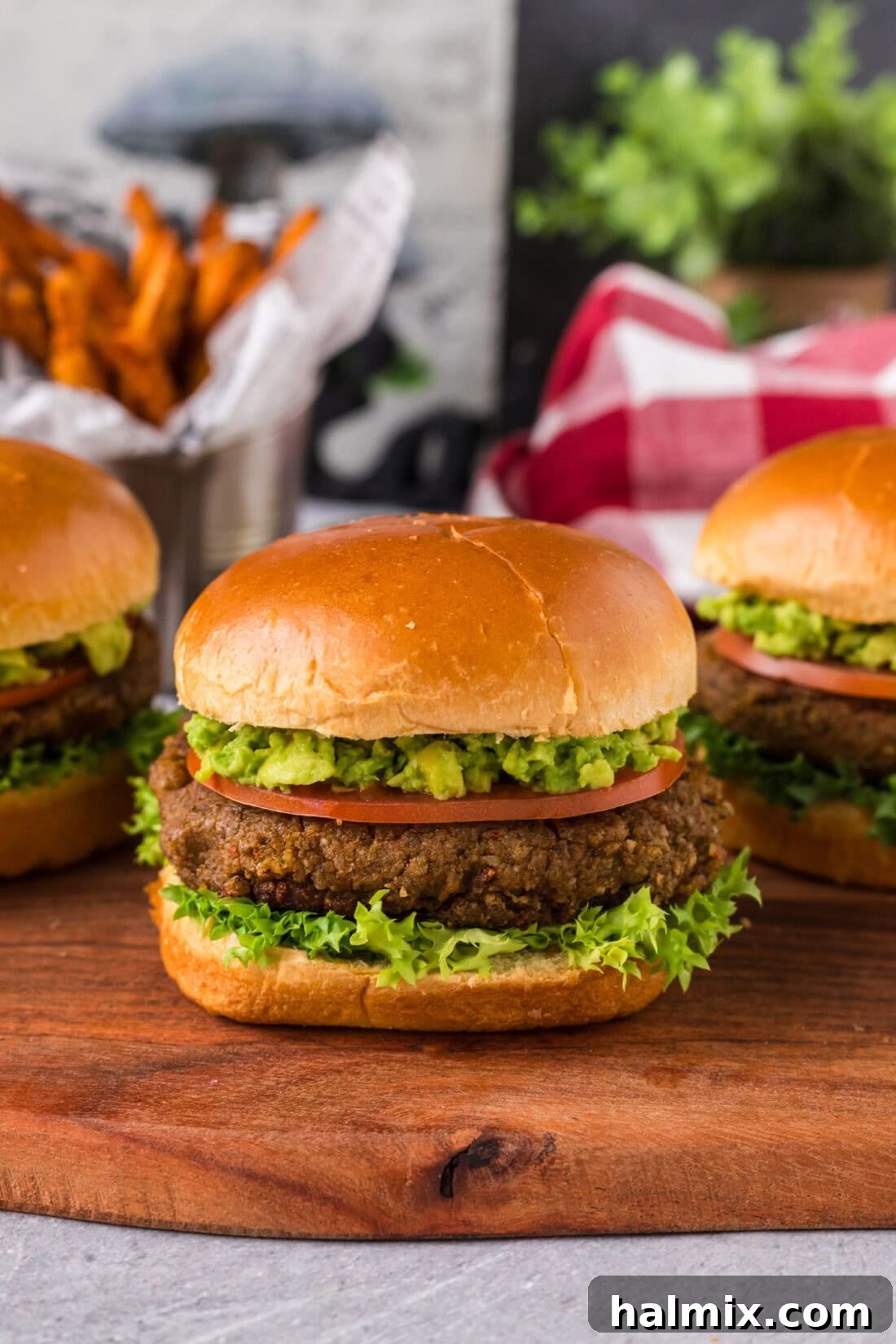
Why This Veggie Burger Recipe Stands Out
The world of veggie burgers is vast, offering everything from popular black bean burgers and savory mushroom burgers to innovative chickpea and quinoa combinations. However, this particular recipe rises above the rest by focusing on a unique blend of robust, natural ingredients that create an incredibly flavorful and satisfying burger. We’ve meticulously chosen each component to contribute not just to taste, but also to texture and nutritional value, ensuring every bite is as delicious as it is wholesome.
Unlike many store-bought options or other recipes that can sometimes lack depth, our homemade veggie burgers feature a harmonious mix of meaty mushrooms, aromatic shallots, sweet carrots, nutrient-rich broccoli, crunchy walnuts, and binding rice. This combination is a game-changer. The mushrooms provide a wonderful umami depth and a “meaty” texture, while the shallots and garlic lay a fragrant base. Carrots and broccoli add essential nutrients and a subtle sweetness, beautifully balanced by the richness of walnuts. Cooked rice and breadcrumbs act as excellent binders, ensuring your patties hold together perfectly without being overly dense or dry.
The process involves sautéing the vegetables to deepen their flavors and reduce moisture, then finely processing them with the remaining ingredients to achieve a consistency that forms perfectly into patties. This method ensures that the burgers are not only flavorful but also retain their shape beautifully, whether you choose to grill them for a smoky char or pan-fry them on the stovetop for a crispy exterior. This recipe is an ideal choice for healthy weeknight dinners, meal prep, or whenever you crave a hearty, plant-based meal that doesn’t compromise on taste or texture.
Essential Ingredients for Your Veggie Burgers
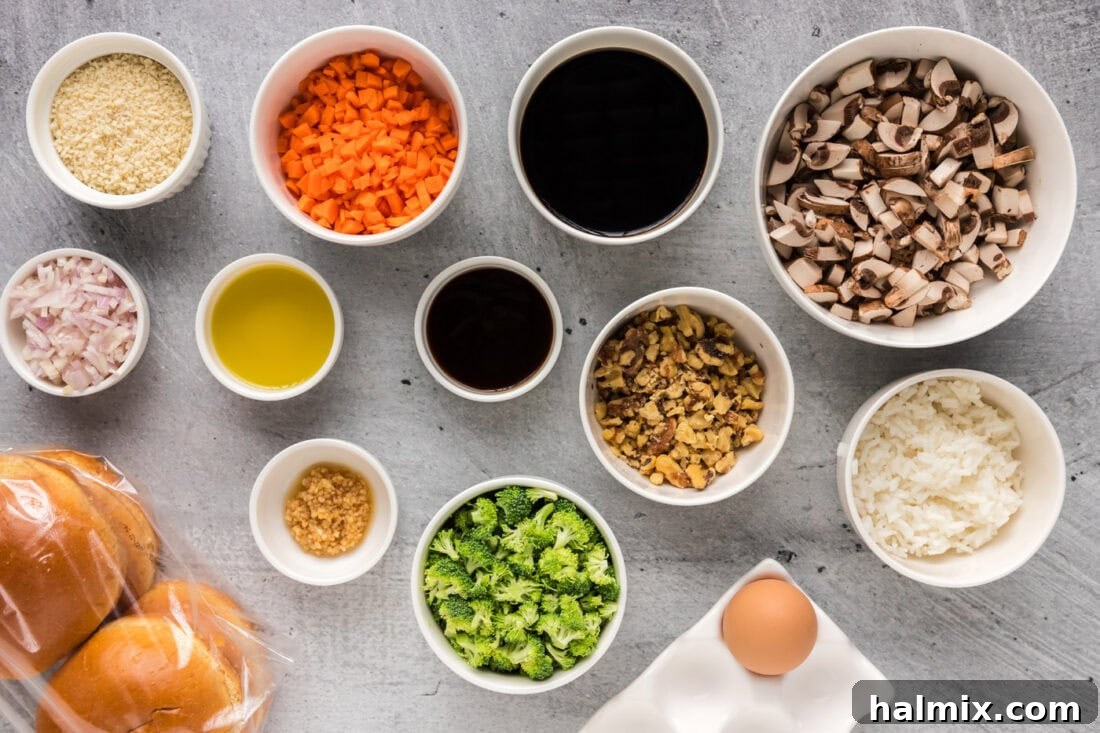
Crafting the perfect veggie burger begins with selecting fresh, high-quality ingredients. Each item on our list plays a crucial role in developing the rich flavor, satisfying texture, and nutritional profile of these patties. Below, you’ll find a detailed breakdown of what you’ll need, along with insights into their contribution to the overall deliciousness of your homemade burgers.
For precise measurements, a comprehensive list of ingredients, and step-by-step cooking instructions, refer to the printable recipe card located towards the end of this article. Gather your fresh produce and pantry staples, and let’s get ready to make some incredible plant-based burgers!
Ingredient Spotlight & Smart Substitutions
Understanding the role of each ingredient not only helps you make informed substitutions but also empowers you to create the best possible veggie burgers tailored to your preferences and dietary needs.
VEGGIES – Our vegetable base is a powerhouse of flavor and nutrition, featuring minced garlic, finely chopped shallots, diced carrots, small broccoli florets, and diced mushrooms. Shallots provide a milder, sweeter onion flavor, while garlic offers a pungent aromatic foundation. Carrots add a touch of sweetness and vibrant color, along with essential vitamins. Broccoli florets contribute texture and a boost of nutrients. For the mushrooms, baby bella (cremini) or white button mushrooms are excellent choices, lending a “meaty” texture and a deep umami flavor that is characteristic of a great burger. This combination ensures a nutrient-dense and remarkably flavorful burger patty that stands out from the crowd.
FLAVORING – The soy sauce and vegetarian oyster sauce are key players in creating the savory, umami-rich profile of these burgers. Soy sauce brings a salty, fermented depth, while vegetarian oyster sauce (often made from mushrooms) adds a subtle sweetness and a profound savory character, mirroring the complexity of traditional oyster sauce without animal products. If vegetarian oyster sauce is difficult to find in your local grocery store, you can easily substitute it with an equal amount of additional soy sauce, or even a dash of tamari for a gluten-free option. For an extra layer of umami, consider adding a teaspoon of nutritional yeast to the mixture, which also offers a slightly cheesy flavor profile. A pinch of smoked paprika can also add a delightful smoky note without needing a grill.
BINDERS – The perfect veggie burger requires a reliable binder to prevent it from falling apart. In this recipe, the egg, cooked rice, and breadcrumbs work synergistically to create a cohesive and sturdy patty. The egg provides moisture and helps to bind the ingredients together. Cooked rice adds volume and a gentle stickiness, contributing to the burger’s structure, while breadcrumbs absorb excess moisture and further aid in binding. For those seeking a vegan alternative, a “flax egg” is an excellent substitute: simply mix 1 tablespoon of ground flaxseed with 2 1/2 tablespoons of water and let it sit for about 5 minutes until it forms a gel-like consistency. This natural binder works just as effectively. Other vegan options include mashed chickpeas or a small amount of sweet potato puree, which can also add moisture and a slight sweetness.
Crafting Your Homemade Veggie Burgers: A Step-by-Step Guide
Making these delicious veggie burgers is a straightforward process, broken down into easy-to-follow steps. We’ve included detailed instructions and insights to ensure your success in creating perfectly formed, flavorful patties every time. While the visual guides throughout the post offer helpful snapshots of each stage, the core instructions here are all you need to get started.
For a printable version of this recipe, complete with precise measurements and instructions, please scroll down to the dedicated recipe card.
- Begin by heating half of the olive oil in a large skillet or frying pan over medium-high heat. You’ll know it’s ready when the oil starts to shimmer slightly. Add the minced garlic and chopped shallots to the hot oil, sautéing them for 1-2 minutes until they become fragrant and begin to soften. Be careful not to burn the garlic.
- Next, add the diced carrots to the skillet. Continue to cook, stirring frequently, for approximately 4 minutes, or until the carrots have softened to your liking. This step helps to bring out their natural sweetness and tenderness.
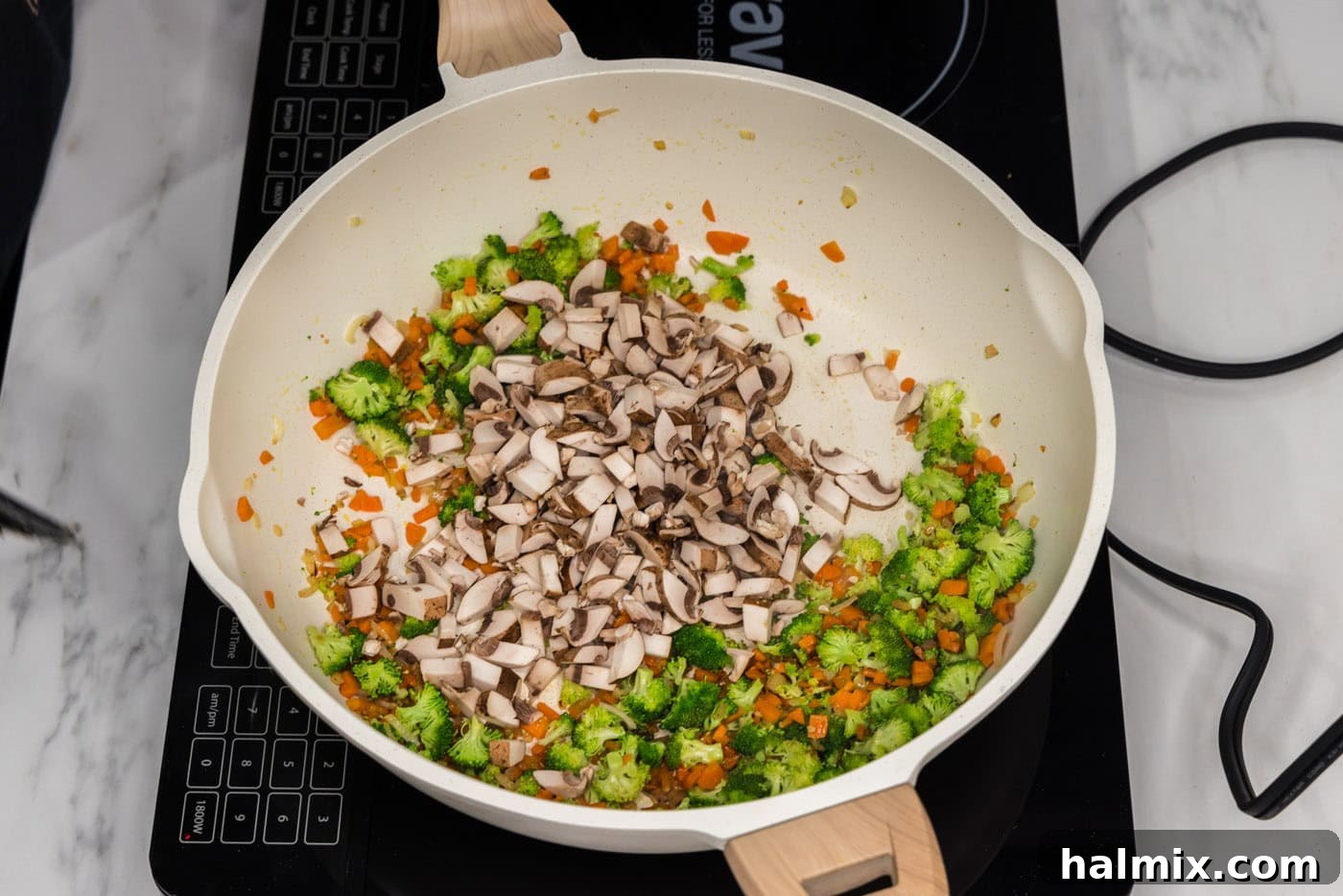
- Introduce the small broccoli florets and diced mushrooms to the skillet. Toss all the vegetables together to combine them thoroughly, ensuring even cooking.
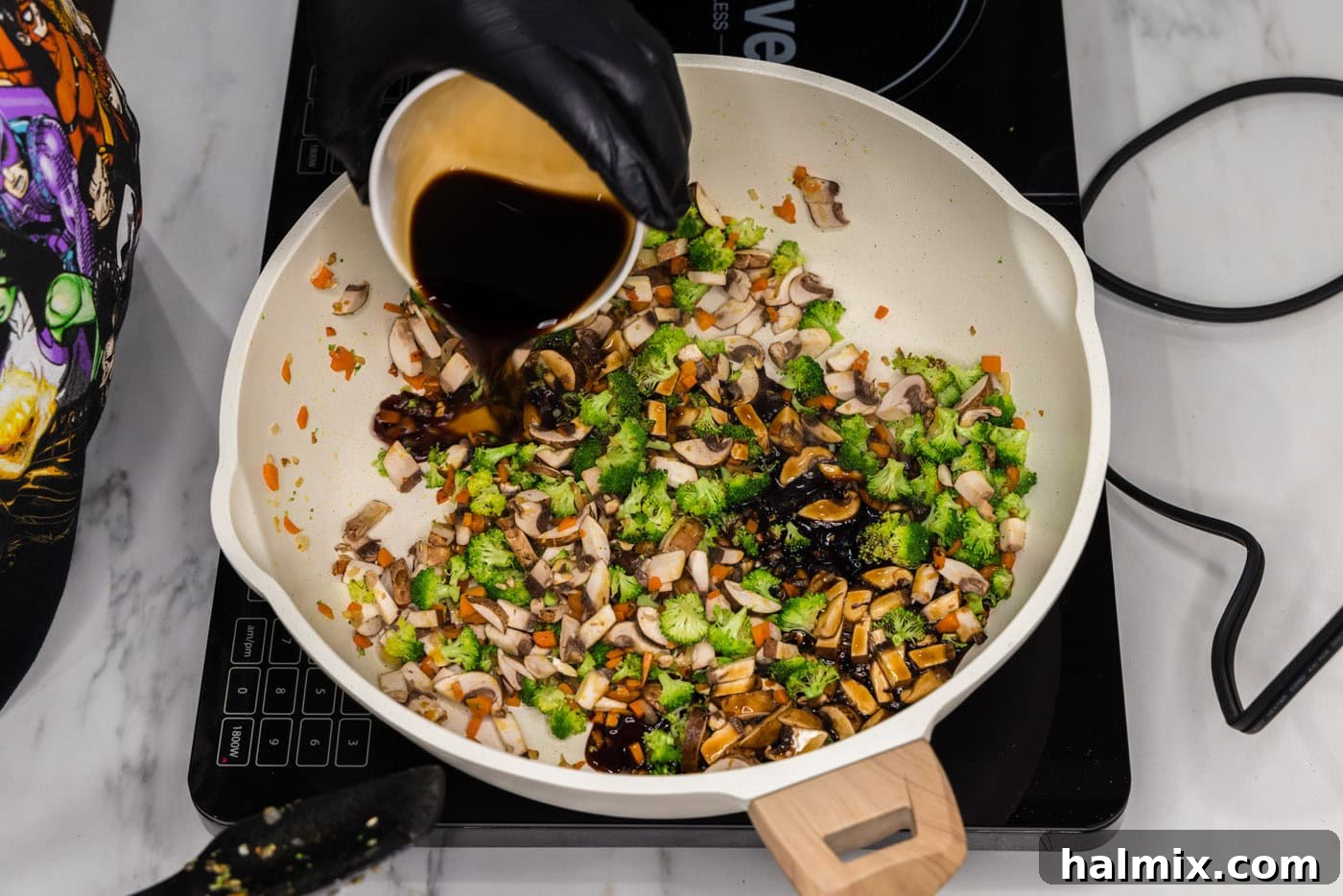
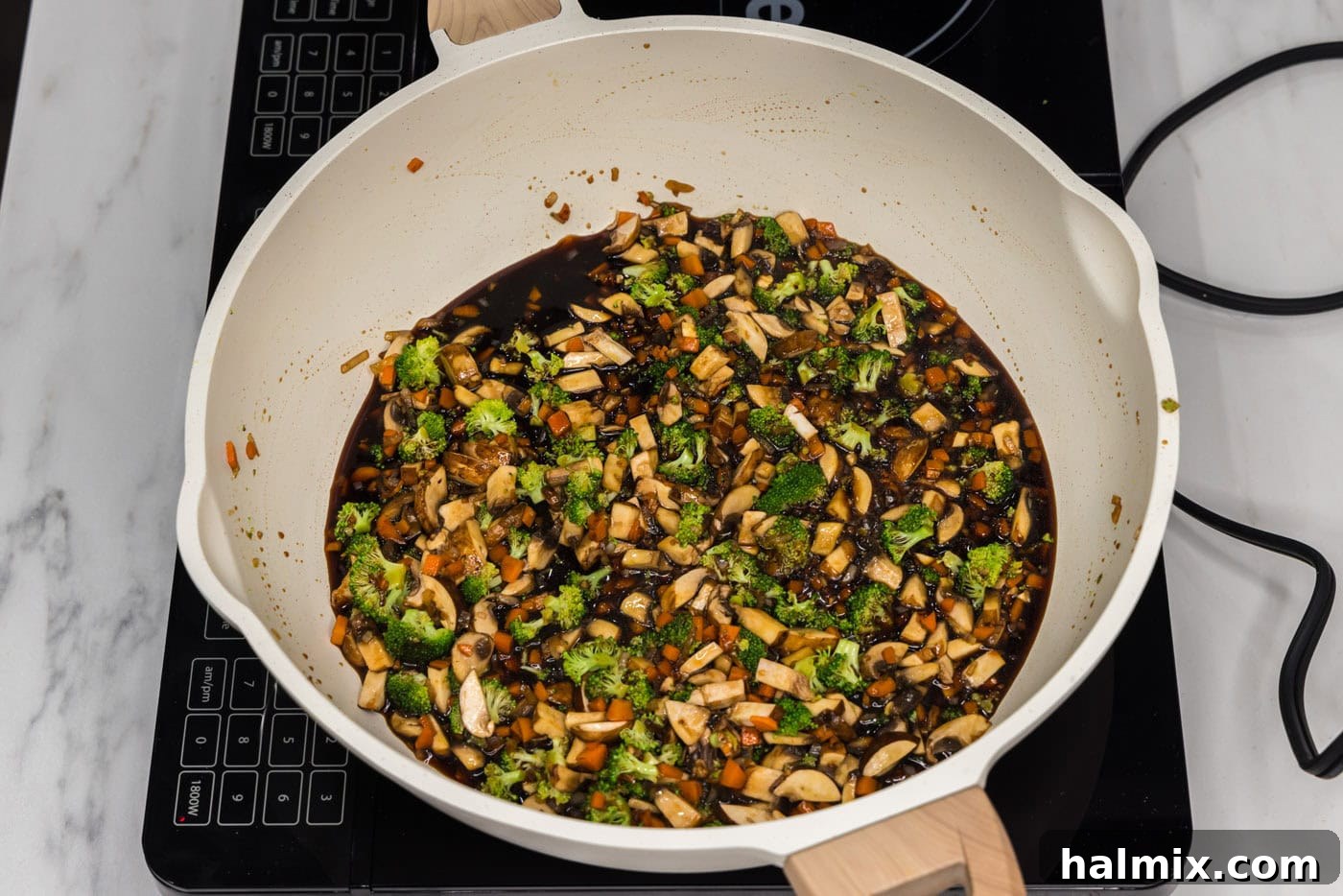
- Pour in the soy sauce and vegetarian oyster sauce (or your chosen substitute). Stir the mixture well and bring it to a gentle boil. Once boiling, reduce the heat to medium and allow it to simmer for 2-3 minutes. This simmering process allows the vegetables to absorb the rich flavors of the sauces and reduces excess moisture.
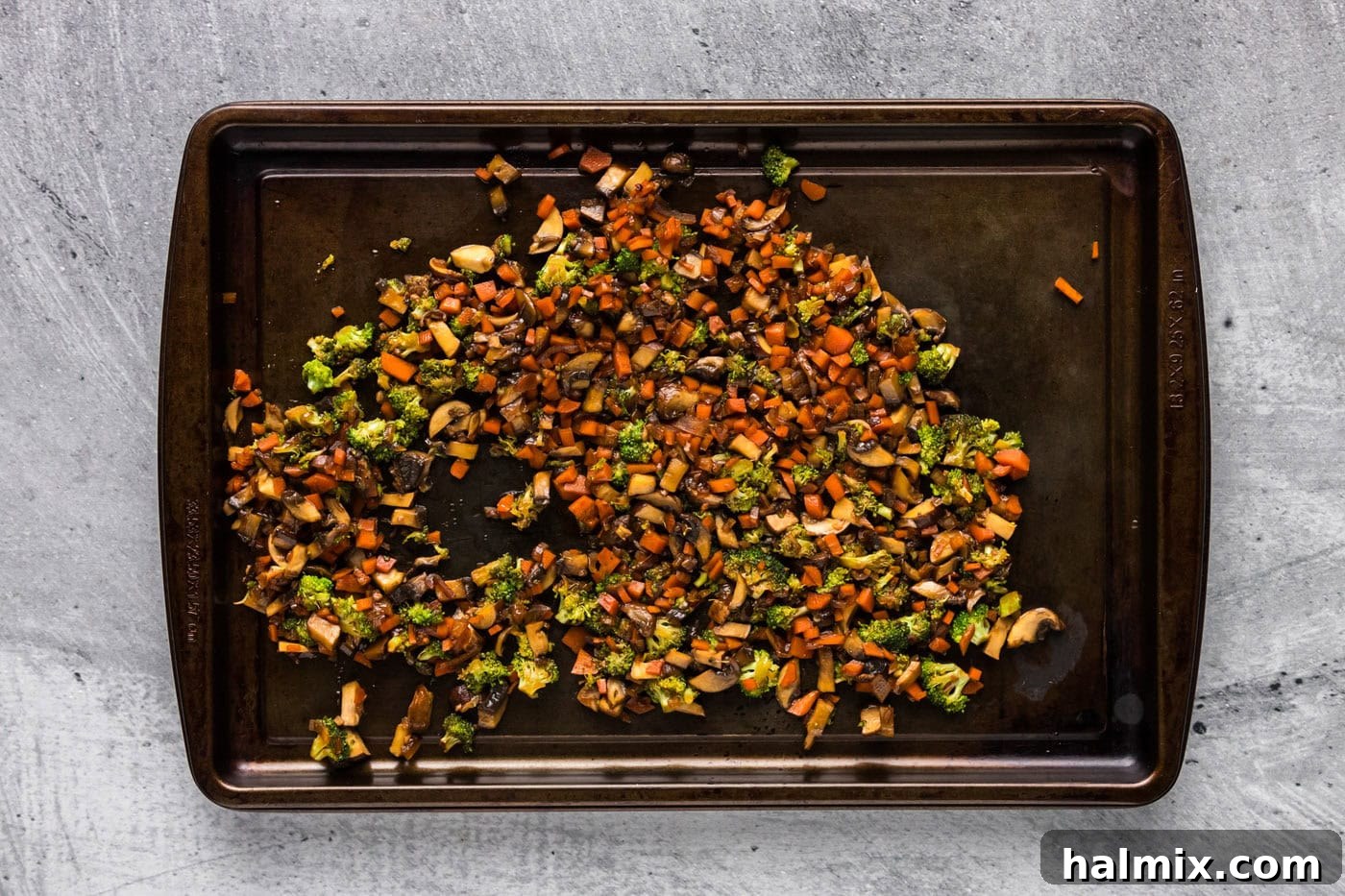
- Crucially, drain off any excess liquid from the vegetable mixture using a colander. This step is vital for preventing soggy burger patties. Once drained, spread the vegetable mixture onto a plate or a baking pan to cool down completely. Cooling the mixture helps in achieving the right consistency for processing and forming the patties.
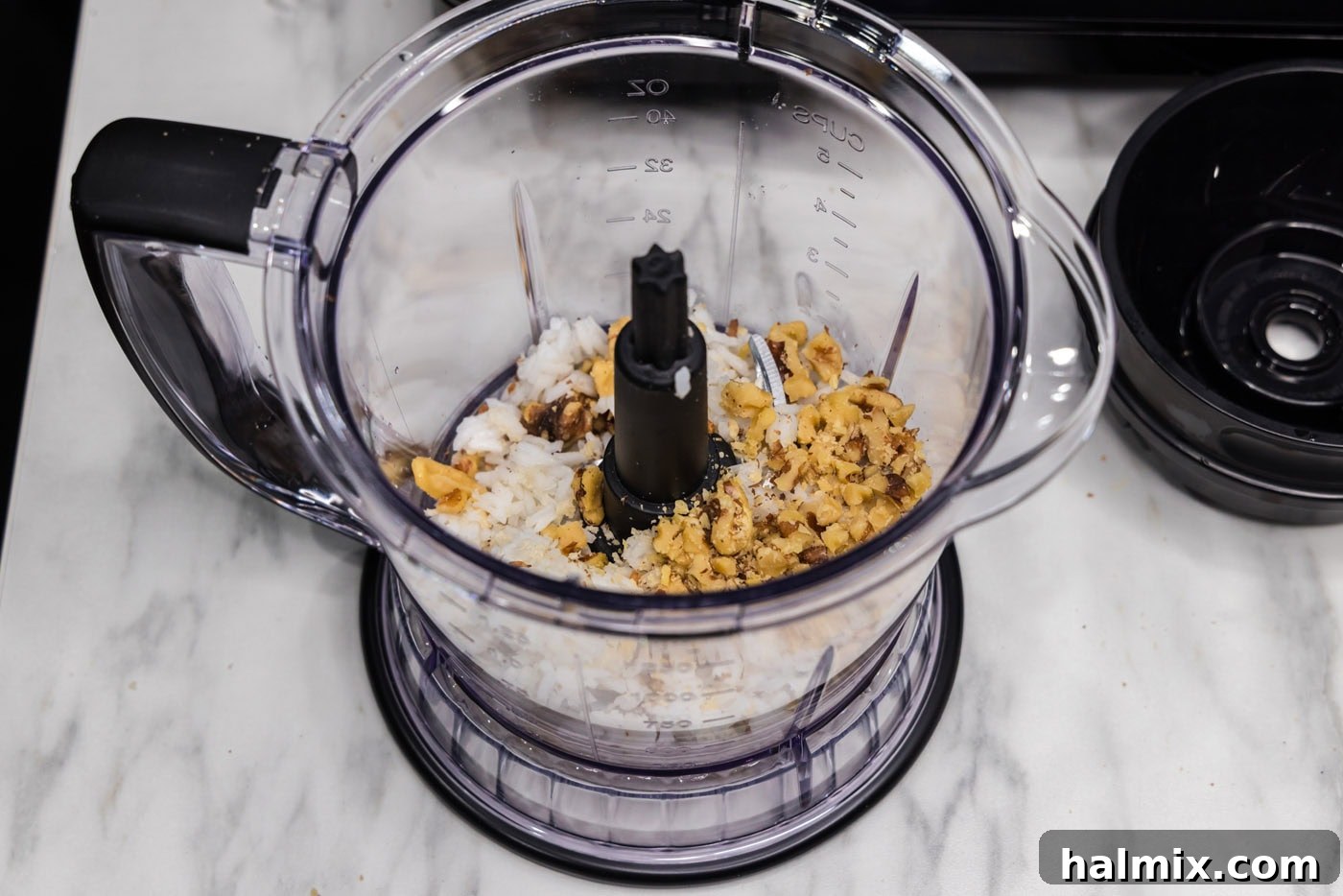
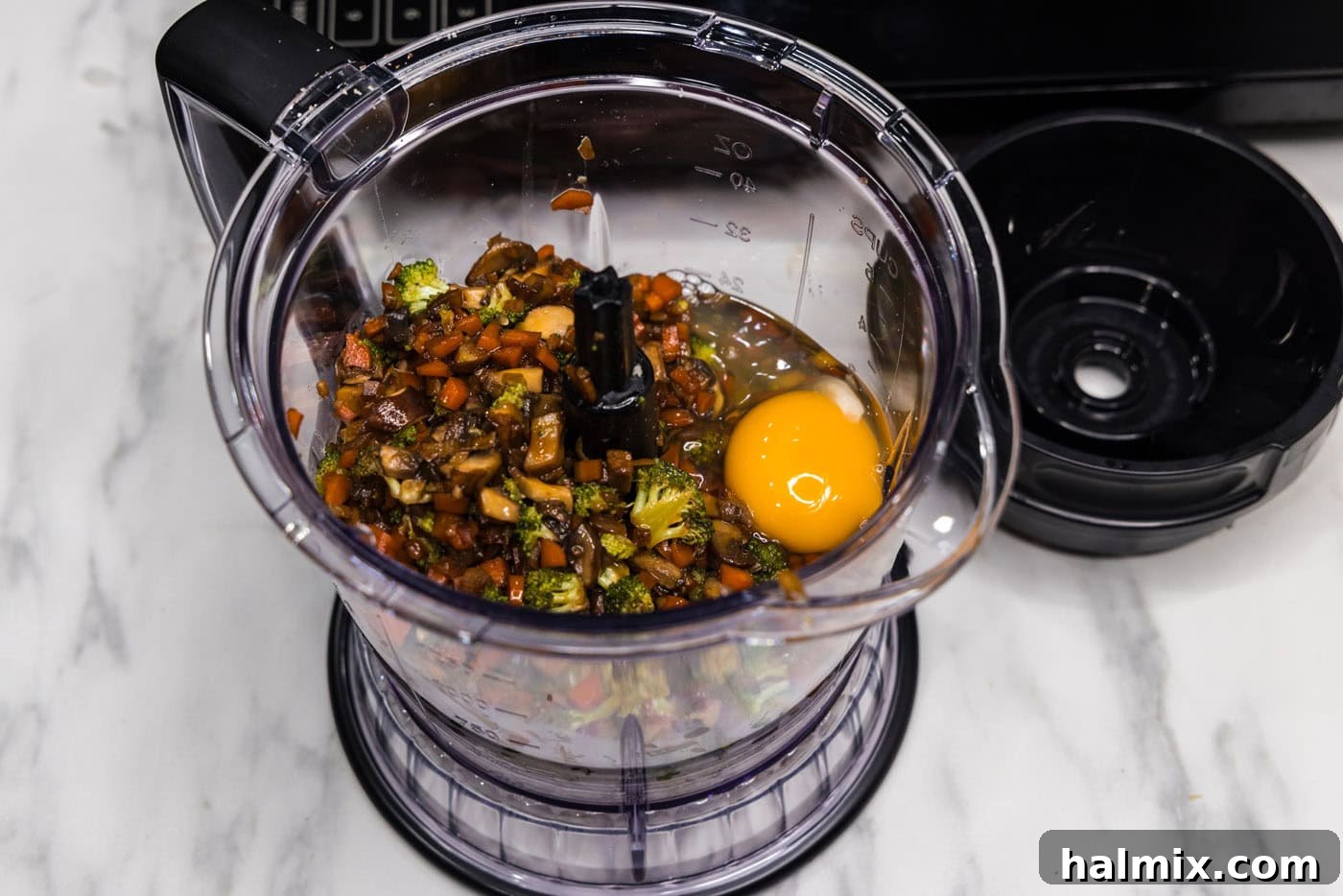
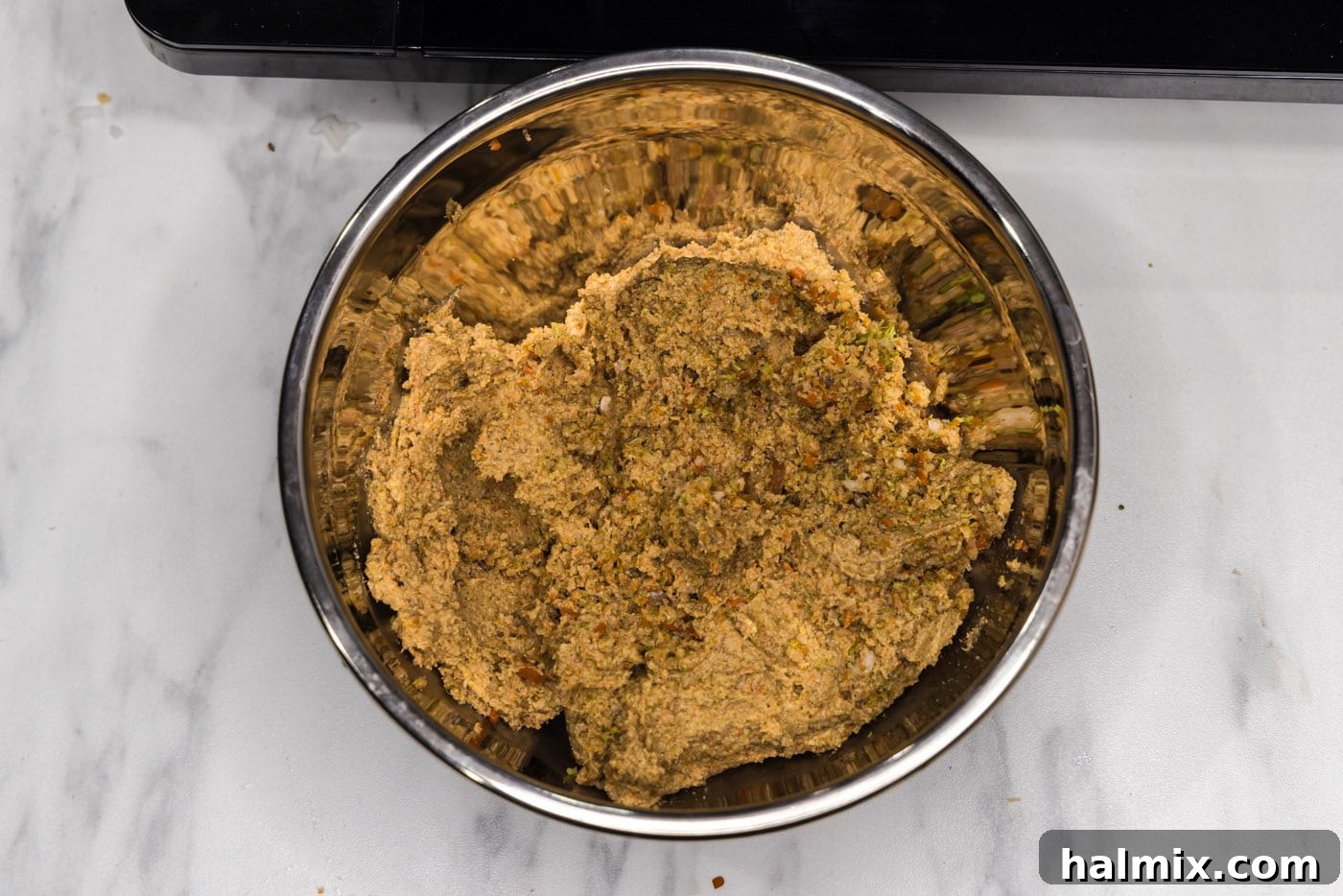
- Once the vegetable mixture is cool, transfer it to a food processor. Add the cooked rice, walnuts, and breadcrumbs. Finally, crack in the egg. Process all the ingredients together until the mixture resembles a thick, slightly coarse paste. It should be cohesive enough to hold its shape when pressed. Avoid over-processing, as you want some texture remaining.
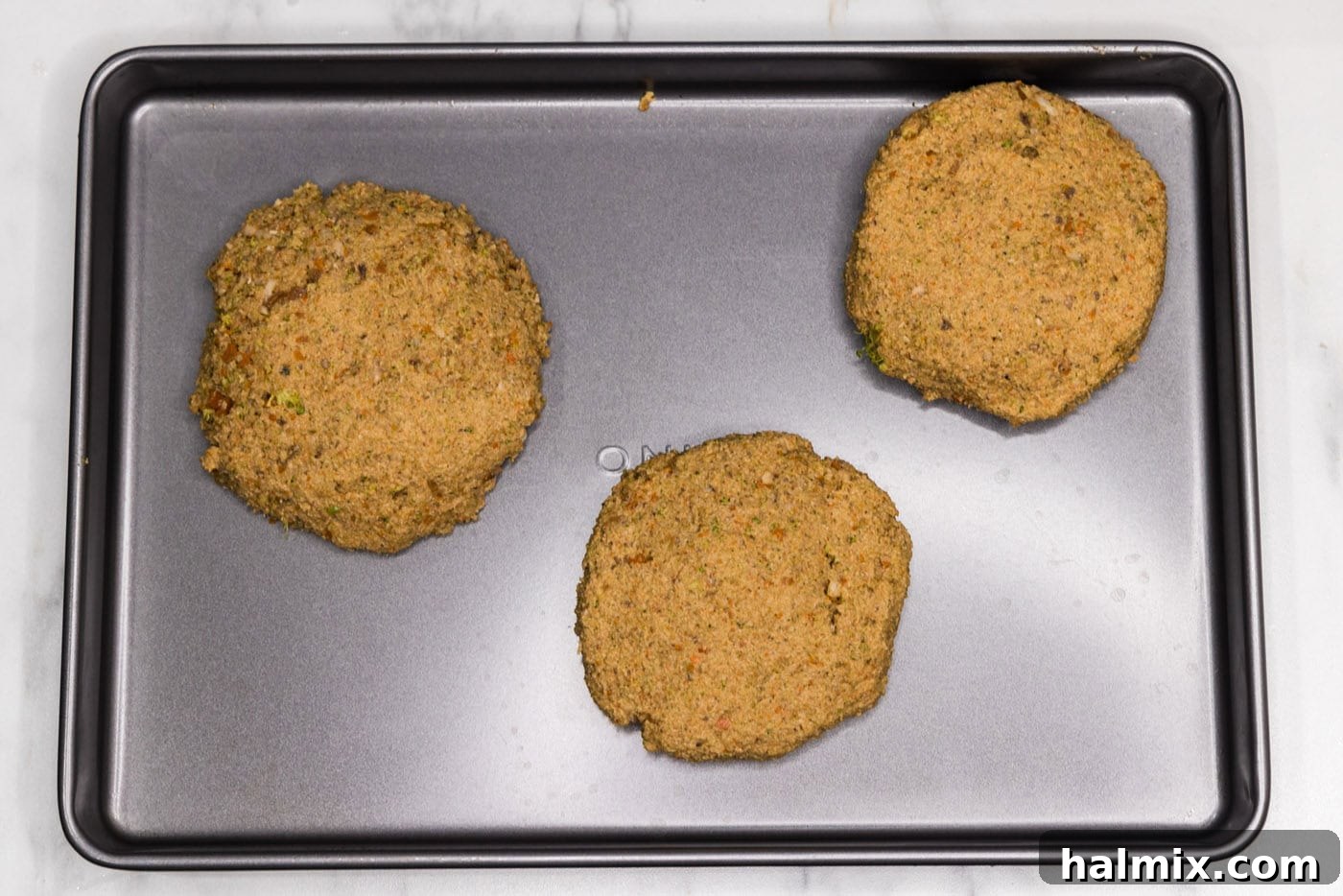
- Carefully divide the mixture into three equal portions and form each portion into a sturdy burger patty. You can adjust the size to fit your buns. Ensure they are compact so they don’t fall apart during cooking.
- Heat the remaining olive oil in the same skillet (or a clean one) over medium-high heat until it shimmers.
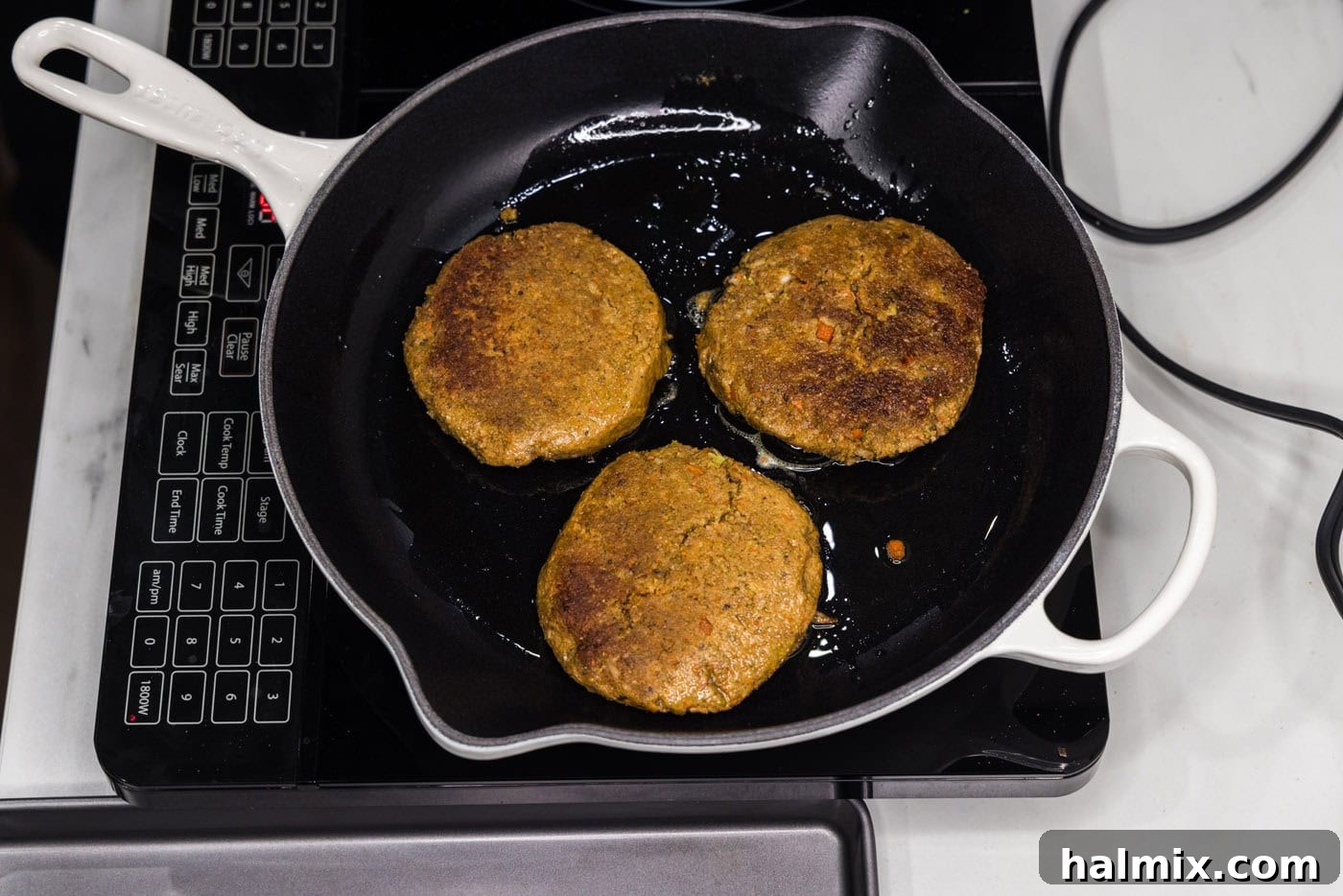
- Place the formed patties into the hot oil. Cook for about 5 minutes on one side, until a beautiful golden-brown crust forms. Then, carefully flip the patties and cook the other side for another 5-7 minutes, or until thoroughly browned and heated through.
- Serve your freshly cooked veggie burgers immediately on sandwich buns. Pile them high with your favorite toppings and condiments for a truly personalized and satisfying meal!
Frequently Asked Questions & Expert Tips for Perfect Veggie Burgers
To help you master this veggie burger recipe and troubleshoot any common queries, we’ve compiled a list of frequently asked questions and expert tips. These insights will ensure your homemade patties are always a resounding success.
Yes, absolutely! Grilling adds a wonderful smoky char and is a fantastic way to enjoy these patties. For best results, ensure your grill grates are clean and well-oiled to prevent sticking. Place the patties on a medium-heat grill, keeping the lid closed to help them cook through. Grill for approximately 7 minutes per side, or until they are nicely browned and heated. Handle the patties gently with a wide spatula when transferring them to and from the grill grates to maintain their shape.
Yes, these veggie burgers are incredibly freezer-friendly, making them perfect for meal prep! You can freeze the shaped patties either before or after cooking. If freezing raw patties, we recommend flash freezing them first: arrange the patties in a single layer on a baking sheet and freeze until solid. Once frozen, transfer them to an air-tight container or a large freezer-safe zip-top bag, separating layers with parchment paper to prevent sticking. They can be stored for up to 3 months. To cook from frozen, you may need to add a few extra minutes to the cooking time.
Store any leftover cooked veggie burgers in an air-tight container in the refrigerator for up to 3 days. To reheat, you can use a microwave, a toaster oven, or gently warm them in a skillet over medium heat until thoroughly heated through.
Yes, you can easily adapt this recipe to be gluten-free. Simply substitute the regular breadcrumbs with certified gluten-free breadcrumbs. Ensure your soy sauce is also gluten-free by using tamari instead. All other ingredients are naturally gluten-free.
The key to firm patties is properly draining excess liquid from the cooked vegetables and ensuring your mixture is processed to a thick, paste-like consistency, yet still retaining some texture. Don’t skip the cooling step before processing, as this further helps to firm up the mixture. When forming the patties, press them firmly and evenly. If the mixture feels too wet, you can add an extra tablespoon or two of breadcrumbs. If it’s too dry, a tiny bit of water or additional egg (or flax egg) can help.
Elevate Your Veggie Burger Experience: Serving Suggestions
Once your homemade veggie burgers are cooked to perfection, the fun truly begins with how you choose to serve them. The possibilities are endless, allowing you to customize your meal to suit any craving or occasion.
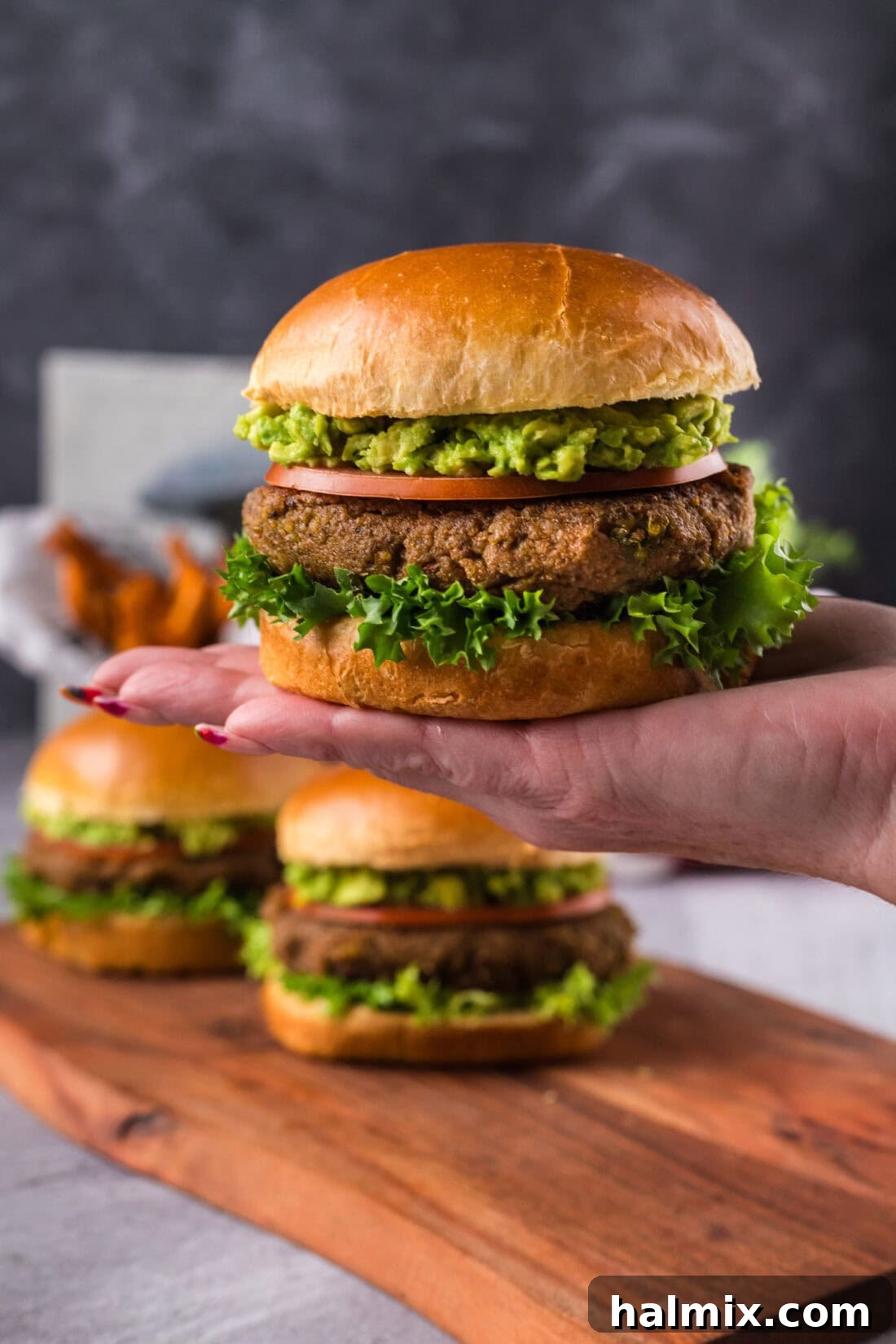
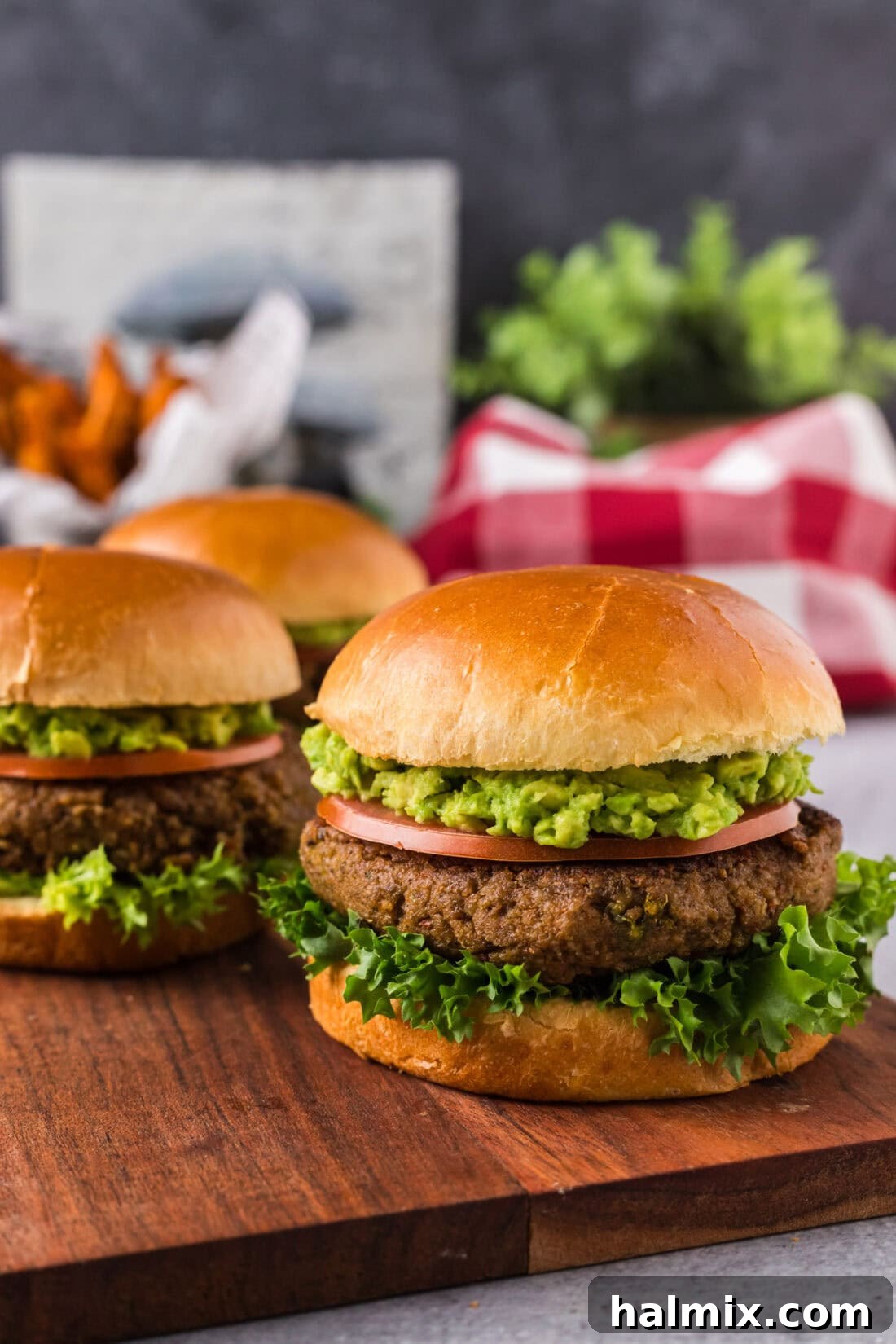
For classic burger enjoyment, serve these patties on soft sandwich buns. Get creative with your toppings! We particularly love a generous spread of creamy guacamole or sliced fresh avocado, which adds a healthy fat and a silky texture. Complement this with crisp lettuce, juicy tomato slices, and thinly sliced red onion for a refreshing crunch. For those who enjoy a little heat, a drizzle of your favorite hot sauce provides a spicy kick. Don’t forget the traditional burger condiments like ketchup, mustard, or a tangy vegan mayo.
Beyond the bun, these versatile veggie burgers pair beautifully with a variety of side dishes. Consider classic accompaniments like crispy chips or golden french fries. For a lighter, fresher meal, opt for a vibrant pasta salad or a simple green salad with a light vinaigrette. Our grilled vegetables also make an excellent healthy and flavorful side. These burgers can also be crumbled over salads or served as a main component in a grain bowl for a deconstructed approach. Enjoy experimenting and discovering your perfect combo!
Discover More Plant-Based Delights
If you loved these homemade veggie burgers, you might be interested in exploring more of our delicious and easy-to-make plant-based recipes. Expanding your vegetarian repertoire is a great way to enjoy diverse flavors and wholesome meals.
- Hearty Mushroom Burgers
- Flavorful Black Bean Burgers
- Quick & Easy Black Bean Tacos
- Crispy Vegetable Spring Rolls
I am passionate about cooking and baking, and I love sharing my culinary adventures and tested recipes with all of you! To make sure you never miss a new recipe, I offer a convenient newsletter delivered straight to your inbox every time a new creation posts. Simply subscribe today and start receiving your free daily recipes!
Savory Homemade Veggie Burgers
IMPORTANT – Don’t miss the Frequently Asked Questions and Expert Tips section above in the blog post for helpful insights!
Print Recipe
Pin It
Ingredients
Kitchen Tools You’ll Need
Before You Begin: Key Notes
- The soy sauce and vegetarian oyster sauce are crucial for deep flavor. If vegetarian oyster sauce is unavailable, use additional soy sauce.
- For a vegan option, substitute the egg with a flax egg: mix 1 tablespoon ground flaxseed with 2.5 tablespoons of water and let sit for 5 minutes to thicken.
Instructions
-
Heat half of olive oil in a skillet over medium-high heat until shimmering. Add garlic and shallots, then sauté for 1-2 minutes until fragrant.
-
Add diced carrots and cook, stirring frequently, for about 4 minutes until tender.
-
Add broccoli florets and diced mushrooms. Toss to combine and cook briefly.
-
Pour in soy sauce and vegetarian oyster sauce, stir well, and bring to a boil. Reduce heat to medium and simmer for 2-3 minutes.
-
Drain off any excess liquid through a colander. Transfer the vegetable mixture to a plate or pan to cool completely.
-
In a food processor, combine the cooled vegetable mixture, cooked rice, walnuts, breadcrumbs, and egg. Process until the mixture forms a thick, cohesive paste.
-
Divide the mixture evenly and form into 3 firm burger patties.
-
Heat the remaining olive oil in a clean skillet over medium-high heat until shimmering.
-
Add the patties to the hot oil and cook for about 5 minutes until browned. Flip and cook the other side for another 5-7 minutes until golden brown and heated through.
-
Serve hot on sandwich buns with your favorite condiments and toppings.
Expert Tips & FAQs (Detailed)
- Grilling Your Burgers: For a smoky flavor, grill the patties on a preheated grill over medium heat. Keep the lid down and cook for approximately 7 minutes per side, ensuring they are golden brown and cooked through. Be gentle when flipping them with a wide spatula to maintain their integrity.
- Storing Leftovers: Any cooked leftover veggie burgers should be stored in an airtight container in the refrigerator for up to 3 days. Reheat gently in a skillet or oven until warmed through.
- Freezing for Future Meals: These veggie burgers freeze beautifully. You can freeze them before or after cooking. To freeze raw patties, arrange them on a baking sheet and flash freeze until solid. Then, transfer them to an airtight container or freezer bag, separated by parchment paper, and store for up to 3 months. Cook from frozen by adding a few minutes to the cooking time, or thaw in the refrigerator overnight.
- Preventing Crumbly Burgers: The key to a sturdy veggie burger is proper moisture control and binding. Ensure you thoroughly drain the sautéed vegetables. Also, process the mixture until it’s cohesive but still has some texture. If the mixture feels too wet, add a little more breadcrumbs. If it’s too dry, a touch more egg (or flax egg) or a spoonful of water can help.
- Achieving Best Flavor: Don’t rush the sautéing of the aromatics (garlic, shallots) and vegetables. Allowing them to soften and lightly caramelize builds a strong flavor base. The soy sauce and vegetarian oyster sauce are crucial for umami; adjust to your taste.
Nutrition Information (per serving)
Please note: The recipes on this blog are tested using a conventional gas oven and gas stovetop. Oven performance, especially with older appliances, can vary, leading to inconsistent cooking and baking. We highly recommend using an inexpensive oven thermometer to ensure your oven maintains the correct temperature. If you use a toaster oven or countertop oven, be aware that heat distribution might differ from a full-sized oven, and cooking times may need adjustment. For recipes made with specific appliances like pressure cookers, air fryers, or slow cookers, links to the models we use are provided within their respective recipes. For baking, if measurements are given by weight, results may not be identical if volumetric cups are used instead, and we cannot guarantee success with alternative measuring methods.