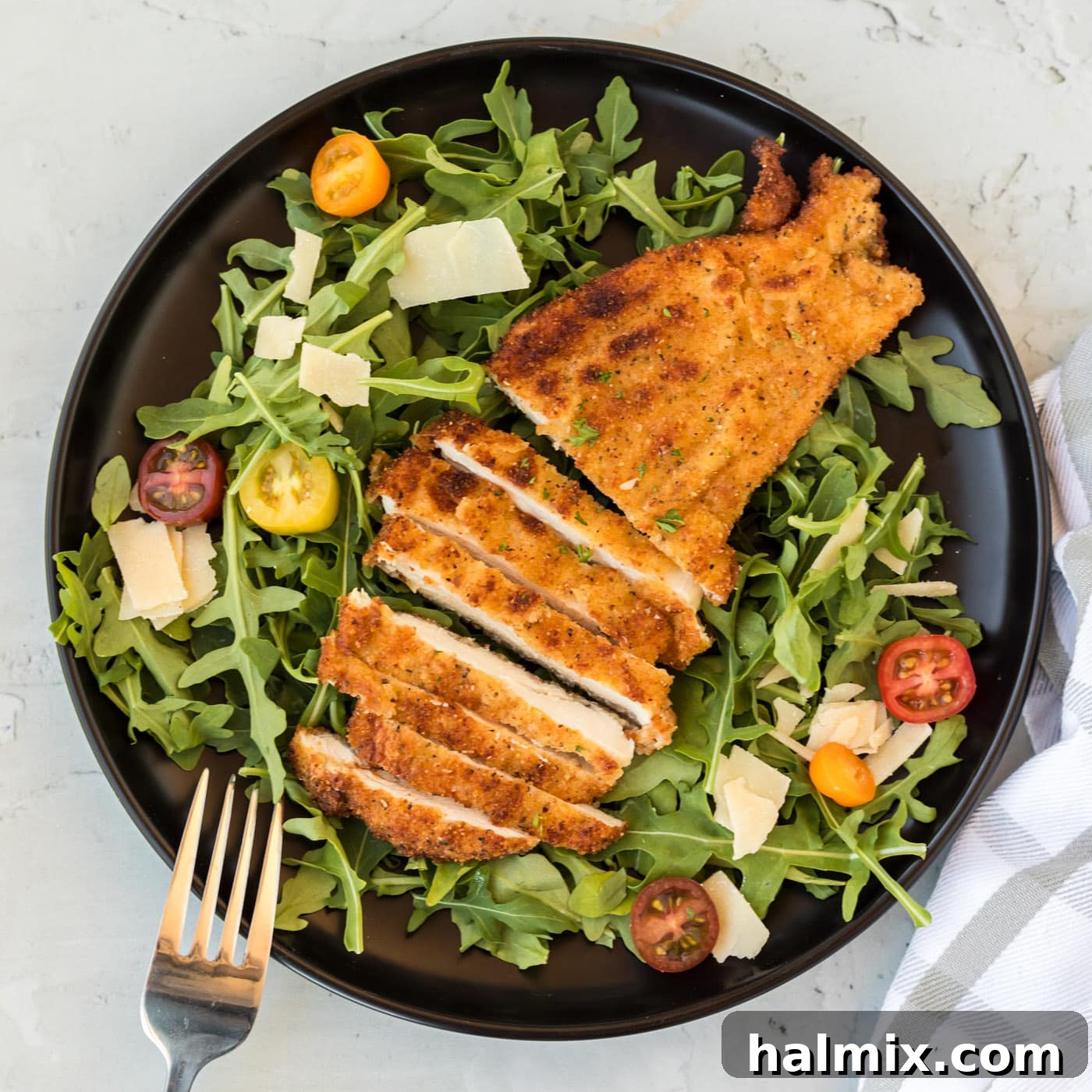
Transform your dinner routine with the irresistibly delicious and surprisingly simple Chicken Milanese. This classic Italian dish takes humble chicken cutlets and elevates them into a culinary masterpiece, featuring a perfectly crispy, golden-brown breadcrumb coating and a wonderfully tender interior. Ideal for busy weeknights, yet elegant enough to impress guests, this recipe promises a delightful experience for any home cook looking for a flavorful and satisfying meal.
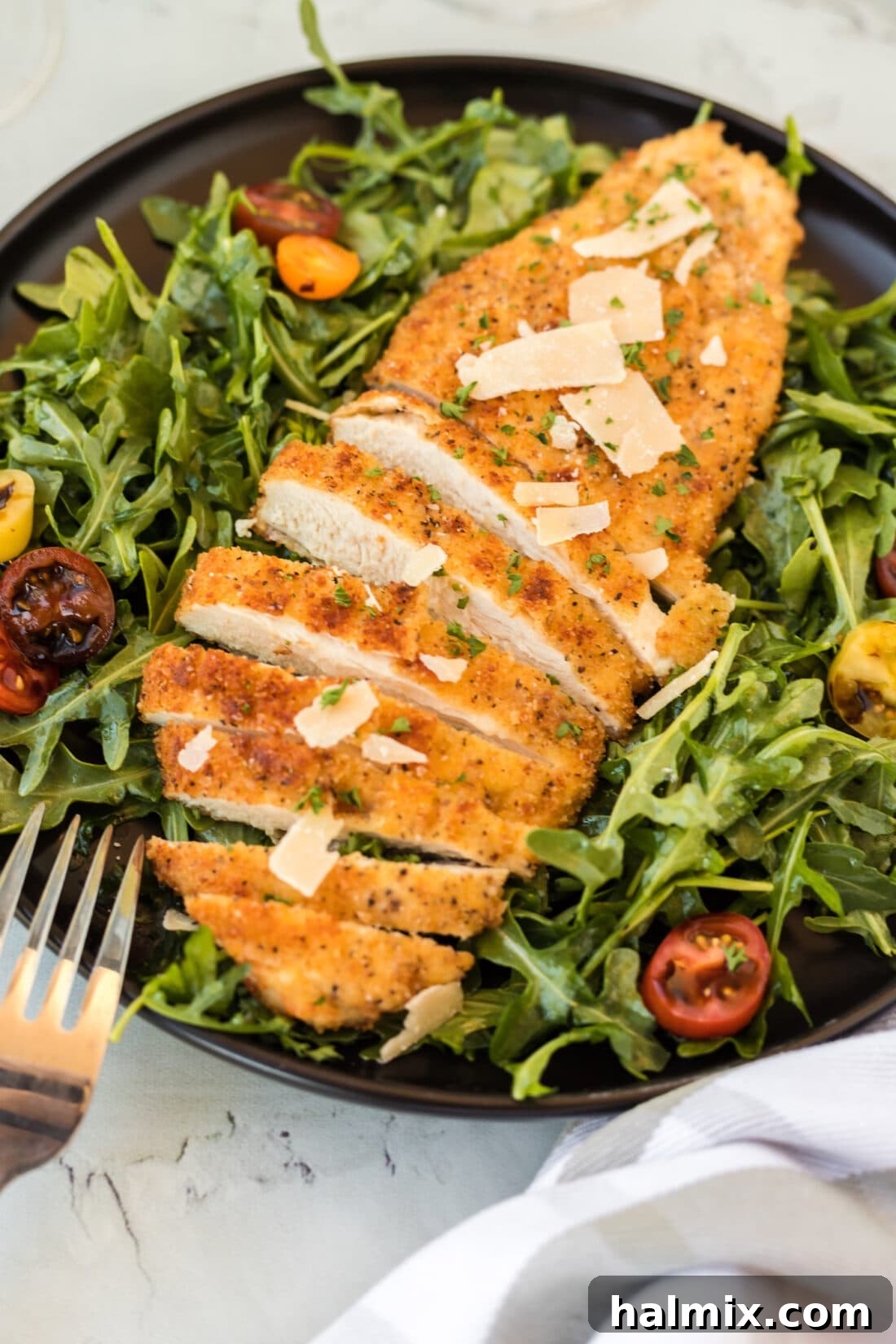
Why This Chicken Milanese Recipe is a Must-Try
Chicken Milanese, a beloved culinary tradition hailing from Milan, Italy, is celebrated for its exquisite balance of textures and flavors. Originally prepared with thinly pounded veal, the chicken rendition has gained immense popularity for its accessibility and versatility, making it a staple in kitchens worldwide. What makes this particular recipe stand out? It’s the meticulous yet straightforward process that ensures every bite delivers a tender, juicy chicken encased in an incredibly crisp, golden crust.
The magic begins with perfectly pounded chicken cutlets, ensuring uniform thickness for even cooking and maximum tenderness. This crucial step not only tenderizes the meat but also creates a larger surface area for the flavorful breading. Our three-step dredging process—flour, egg, then seasoned breadcrumbs—is key to achieving that signature delicate crumb and robust crunch. Each layer adheres beautifully, creating a protective barrier that seals in moisture during the pan-frying process.
Pan-frying in a moderate amount of olive oil allows the breading to develop a vibrant golden hue and an unparalleled crispness, without deep-frying. The result is a dish that’s visually appealing, with a satisfying crunch on the outside and moist, succulent white meat within. It’s a versatile canvas, easily paired with light salads for a refreshing meal or heartier sides for a more substantial dinner. Whether you’re aiming to impress at a dinner party or seeking an effortless yet elevated weeknight meal, this Chicken Milanese recipe consistently delivers restaurant-quality results using readily available ingredients.
Essential Ingredients for Your Perfect Chicken Milanese
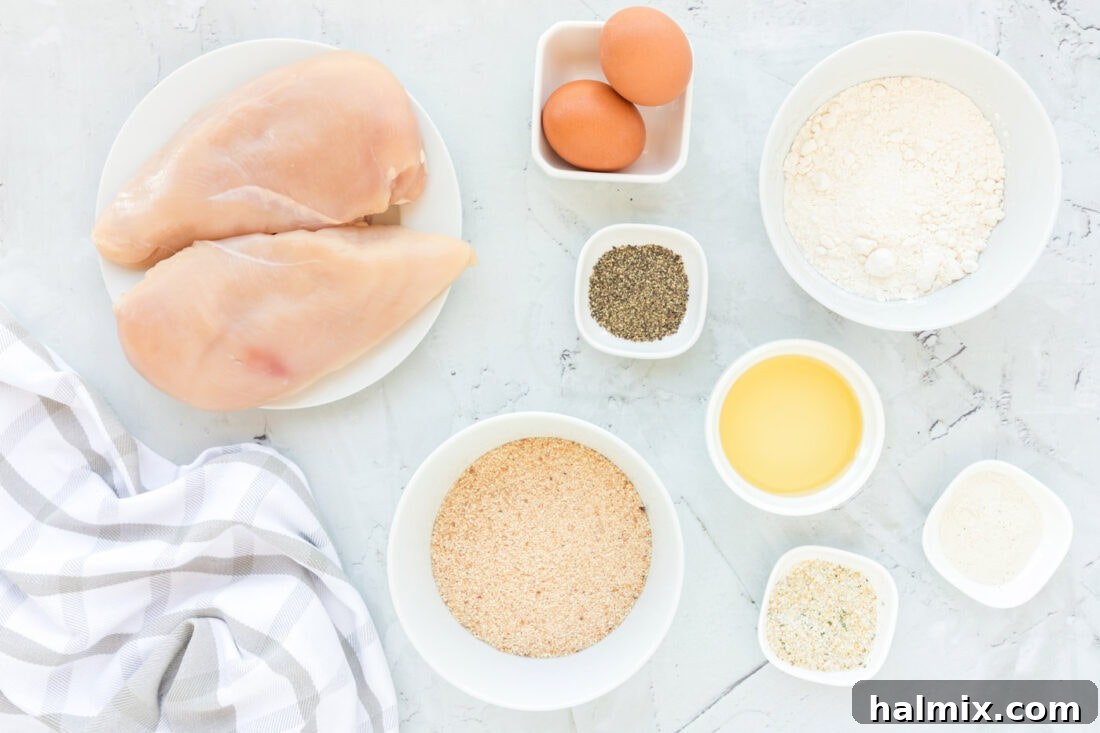
Crafting the perfect Chicken Milanese requires a handful of fresh, quality ingredients and common pantry staples. While the full list with precise measurements and detailed instructions can be found in the printable recipe card at the bottom of this page, here’s an overview of what you’ll need to gather:
- Chicken Breasts: Fresh, boneless, skinless chicken breasts form the foundation of this dish.
- All-Purpose Flour: Essential for the first coating, helping the egg wash adhere.
- Eggs: The binder that creates a strong connection between the flour and breadcrumbs.
- Breadcrumbs: The star of the crispy coating. We recommend Panko for extra crispiness, but traditional breadcrumbs work beautifully too.
- Seasonings: Garlic salt, black pepper, and onion powder are combined with both the flour and breadcrumbs to infuse flavor into every layer.
- Olive Oil: For pan-frying to golden perfection. Choose a good quality oil with a moderate smoke point.
- Water: A small amount mixed with the eggs helps thin the wash slightly for better coverage.
Having all your ingredients prepped and ready before you start the cooking process (mise en place) will make the preparation seamless and enjoyable, ensuring your focus remains on achieving that perfect golden crisp.
Ingredient Spotlight & Expert Substitution Tips
Understanding each ingredient’s role and knowing possible substitutions can elevate your cooking and adapt this recipe to your preferences or what you have on hand.
Chicken
We typically use two large chicken breasts, weighing approximately 1 1/2 pounds total, which we then butterfly and slice in half to yield four individual cutlets. The key to successful Chicken Milanese is achieving a uniform thickness of about 1/4 inch. This ensures quick, even cooking and maximizes the surface area for the crispy breading. If starting with thick breasts, butterflying them first (slicing horizontally almost all the way through and opening them up like a book) makes them easier to pound. Always remember to pound the chicken thinly but gently; you want it tender and even, not torn. A meat mallet is ideal for this task, but the flat side of a heavy pan can also work in a pinch. If you purchase pre-cut chicken cutlets, check their thickness and pound them further if needed. This step is crucial for tenderizing the meat and ensuring the cutlets cook through rapidly.
Flour
Standard all-purpose flour works perfectly for the initial dredge, creating a dry surface for the egg wash to cling to. For a gluten-free version, you can easily substitute an equal amount of your favorite gluten-free all-purpose flour blend. Ensure it’s plain, not self-rising.
Eggs
Large eggs are crucial as a binding agent. They create the sticky layer that allows the breadcrumbs to adhere to the chicken. Whisk them thoroughly with a touch of water to create a consistent, slightly thinned wash that coats the chicken evenly without being too thick or gloopy. If you’re out of eggs, a milk or buttermilk wash can work as a less ideal substitute, but eggs provide the best adhesion and richness.
Breadcrumbs
While any type of breadcrumb can be used, we highly recommend Panko breadcrumbs for their superior crispiness and lighter texture. Panko breadcrumbs are coarser and absorb less oil, resulting in a delightfully airy and crunchy coating. Italian seasoned breadcrumbs are also a good option if you prefer pre-seasoned crumbs, but be mindful of the added salt content. For a truly homemade touch, you can toast day-old bread, process it into fine crumbs, and then season it yourself. Combining breadcrumbs with additional garlic salt, black pepper, and onion powder ensures that the flavor permeates every layer of your Milanese.
Seasonings
Garlic salt, black pepper, and onion powder are the foundational seasonings that give our Chicken Milanese its robust flavor. Dividing these seasonings between the flour and breadcrumbs ensures every part of the coating is deliciously savory. Feel free to adjust quantities to your taste, or add other complementary herbs and spices like dried oregano, thyme, or a pinch of red pepper flakes for a subtle kick. Freshly grated Parmesan cheese can also be mixed into the breadcrumbs for an extra layer of savory depth.
Olive Oil
Extra virgin olive oil is preferred for its flavor, but any good quality cooking oil with a medium-high smoke point will work well for pan-frying. Vegetable oil, canola oil, or grapeseed oil are all suitable alternatives. The amount of oil is important – just enough to generously coat the bottom of your skillet, allowing the cutlets to sizzle and brown without being fully submerged, creating that perfect golden crust.
Step-by-Step Guide: Crafting Your Perfect Chicken Milanese
Follow these detailed steps, complete with visual aids, to create a restaurant-quality Chicken Milanese right in your own kitchen. This comprehensive guide will walk you through each stage, from preparing the chicken to achieving that coveted crispy crust.
- Prepare the Chicken: Begin by thoroughly rinsing your chicken breasts under cold water, then pat them completely dry with paper towels. Removing excess moisture is crucial for the breading to adhere properly and to achieve maximum crispiness.
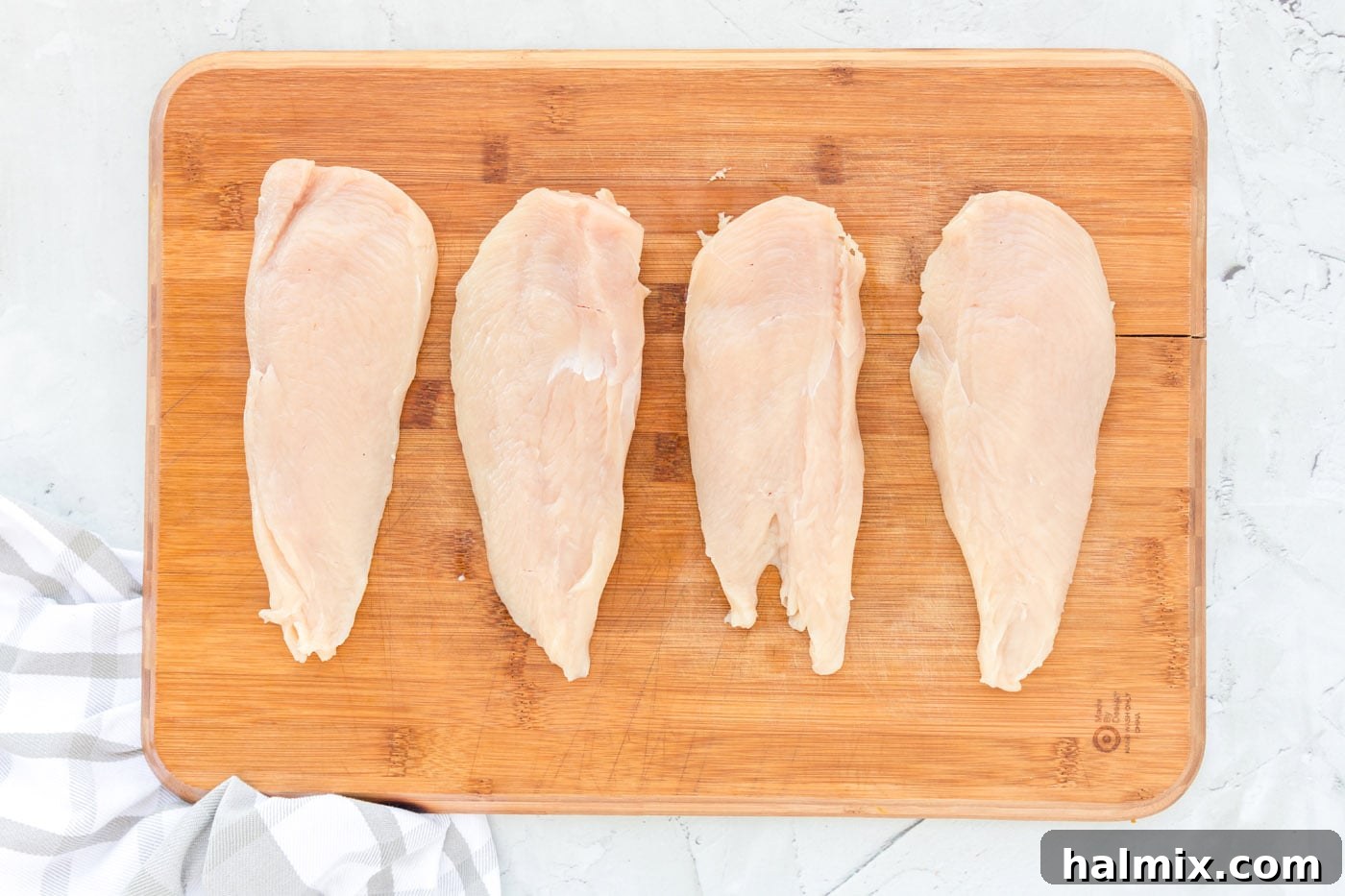
- Butterfly and Slice: To create uniformly thin cutlets, carefully butterfly each chicken breast. Lay a breast flat on a cutting board, then hold it steady with one hand. Using a sharp knife, slice horizontally through the thickest part of the breast, stopping just short of cutting all the way through. Open the breast like a book. Then, using your knife, slice down the center fold to create two thinner pieces from each butterflied breast. From two large chicken breasts, you should now have four individual cutlets.

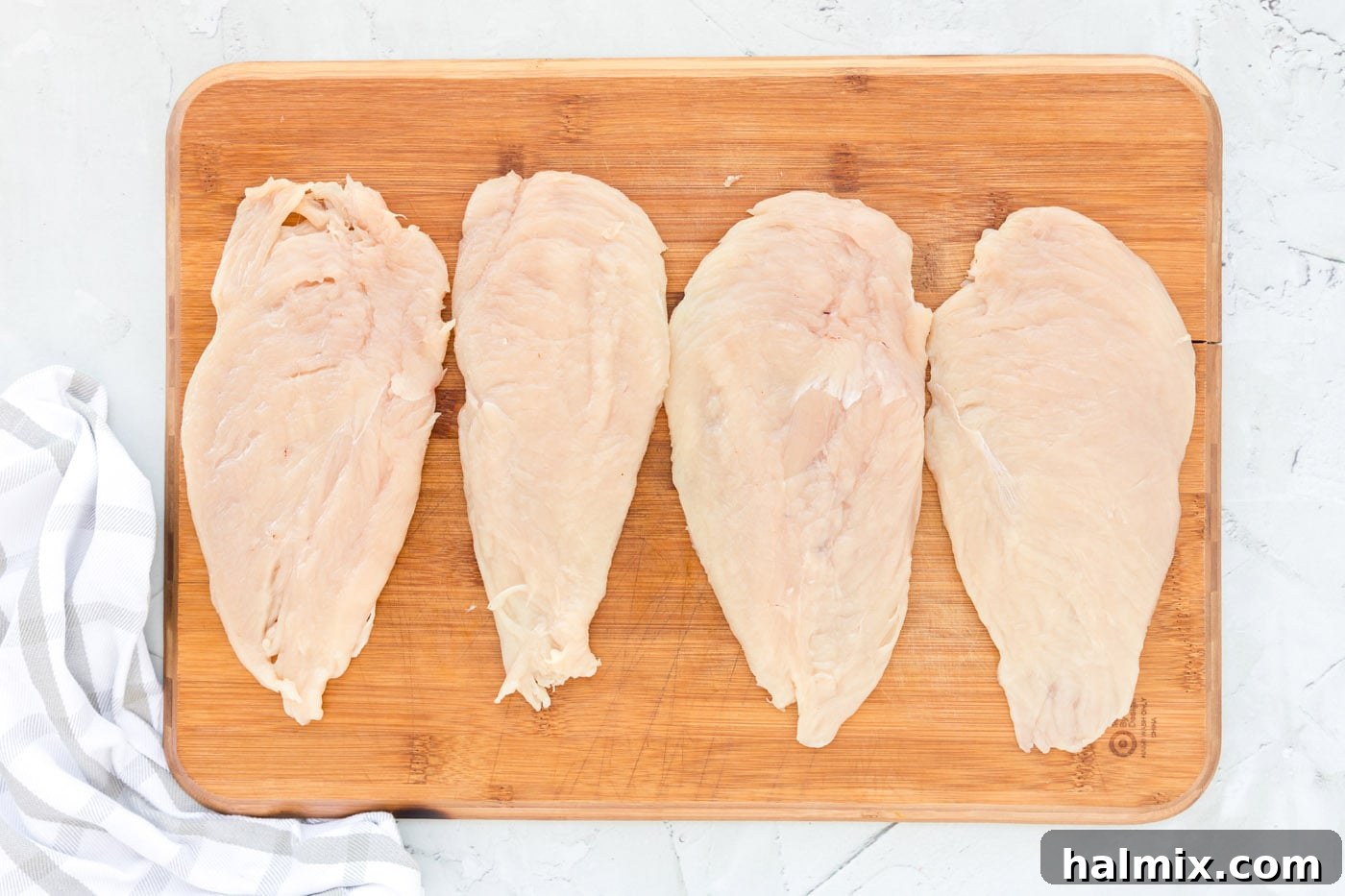
- Pound to Perfection: Place each chicken cutlet between two pieces of plastic wrap or in a large freezer bag. Using a meat mallet or the flat side of a heavy pan, pound each breast evenly until it is about 1/4 inch thick. Aim for consistent thickness across the entire cutlet to ensure even cooking. Be firm but gentle to avoid tearing the meat. This step tenderizes the chicken and creates a larger, thinner piece that cooks quickly and crisps beautifully.
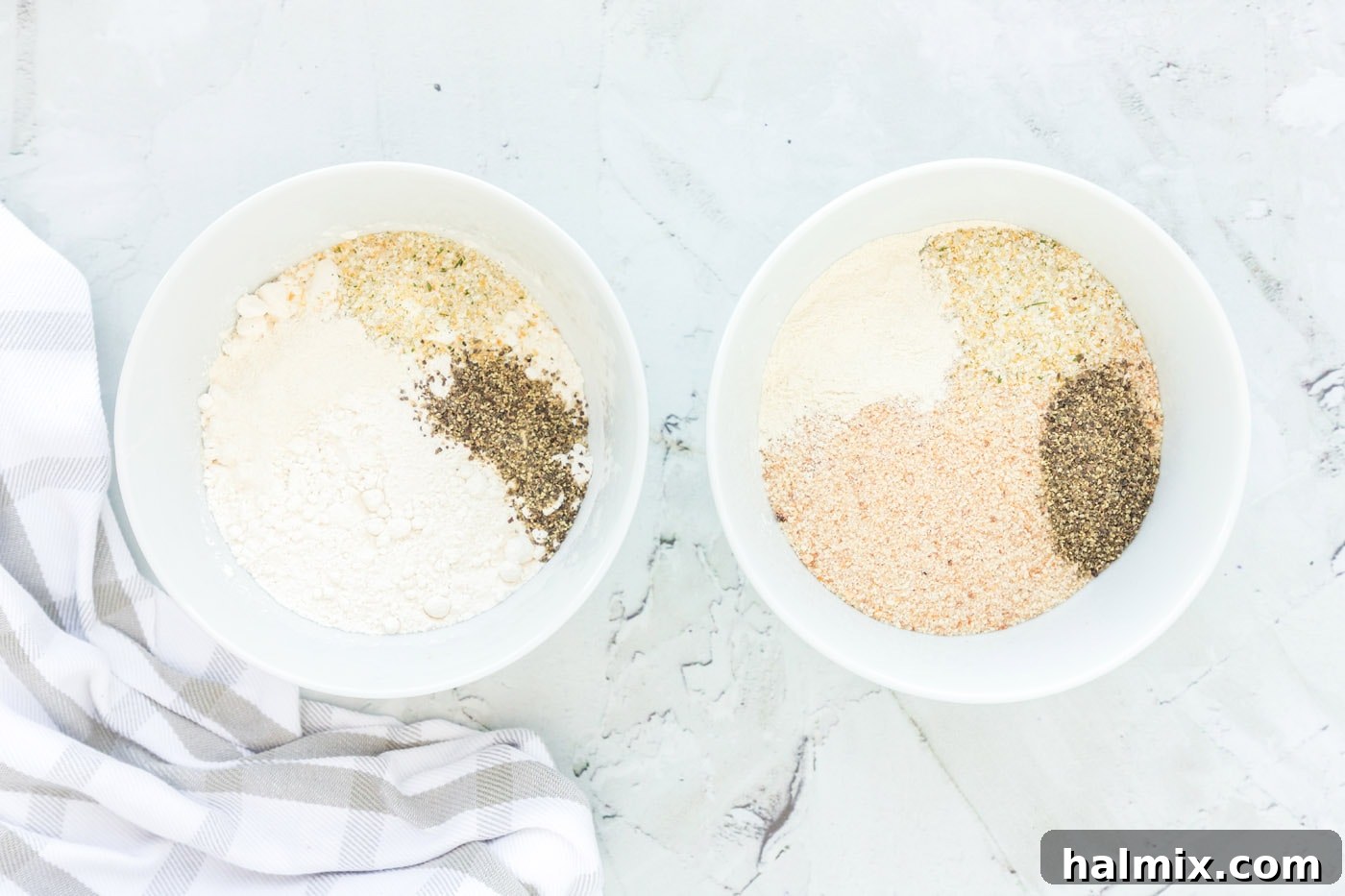
- Prepare the Flour Dredge: In a medium-sized, shallow bowl or a dinner plate with a slight rim, combine 2 cups of all-purpose flour with 1 tablespoon of garlic salt, 1/2 tablespoon of black pepper, and 1/2 tablespoon of onion powder. Whisk these ingredients together until thoroughly combined. This seasoned flour will be the first layer of your breading station.
- Prepare the Breadcrumb Dredge: In a second shallow bowl or dinner plate, combine 2 cups of breadcrumbs (Panko recommended) with the *remaining* 1 tablespoon of garlic salt, 1/2 tablespoon of black pepper, and 1/2 tablespoon of onion powder. Mix well to ensure the breadcrumbs are evenly seasoned.
- Prepare the Egg Wash: In a third shallow bowl or dinner plate, whisk together 2 large eggs and 2 tablespoons of water until the mixture is smooth and slightly frothy. This egg wash will act as the crucial binder for your breadcrumbs.
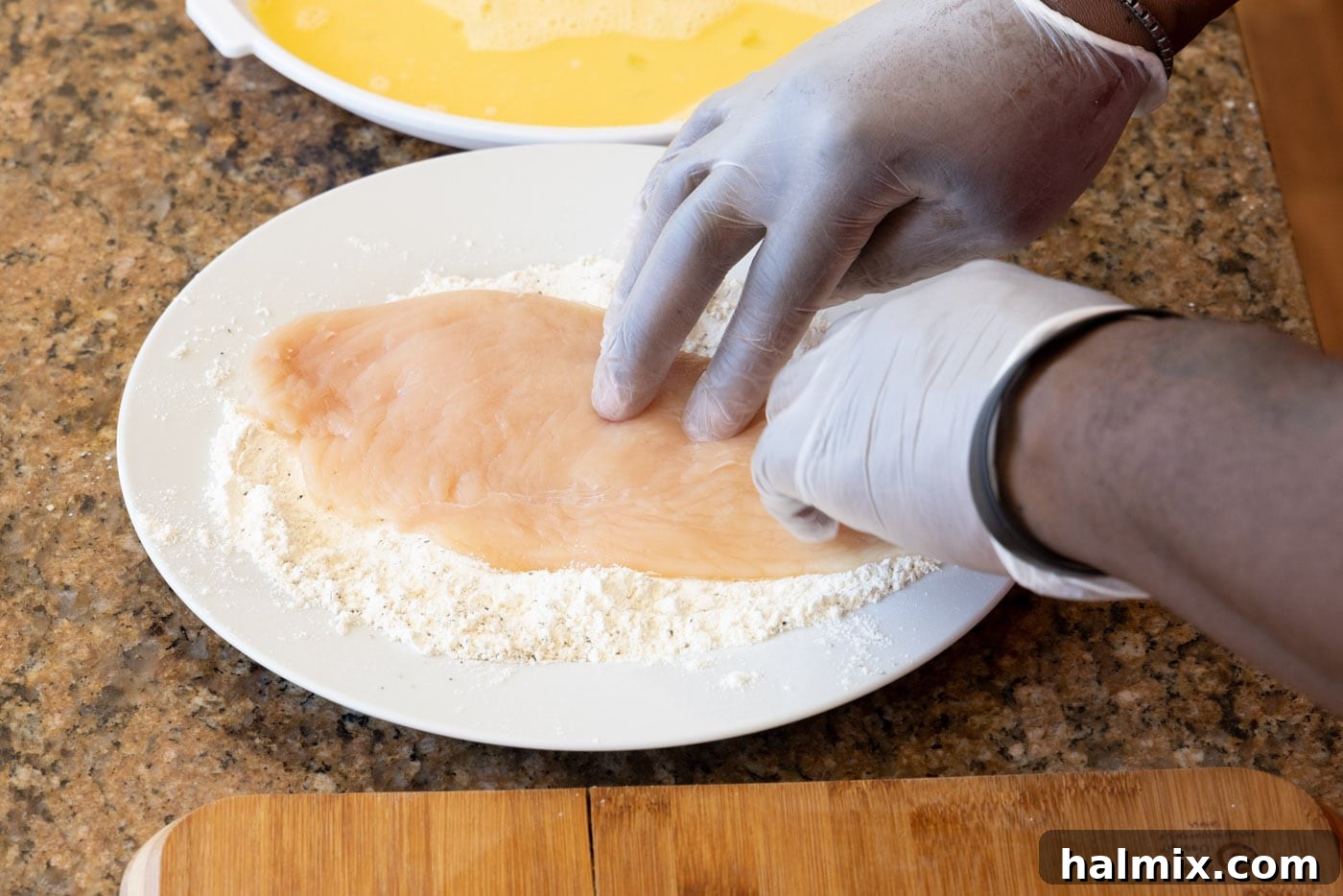
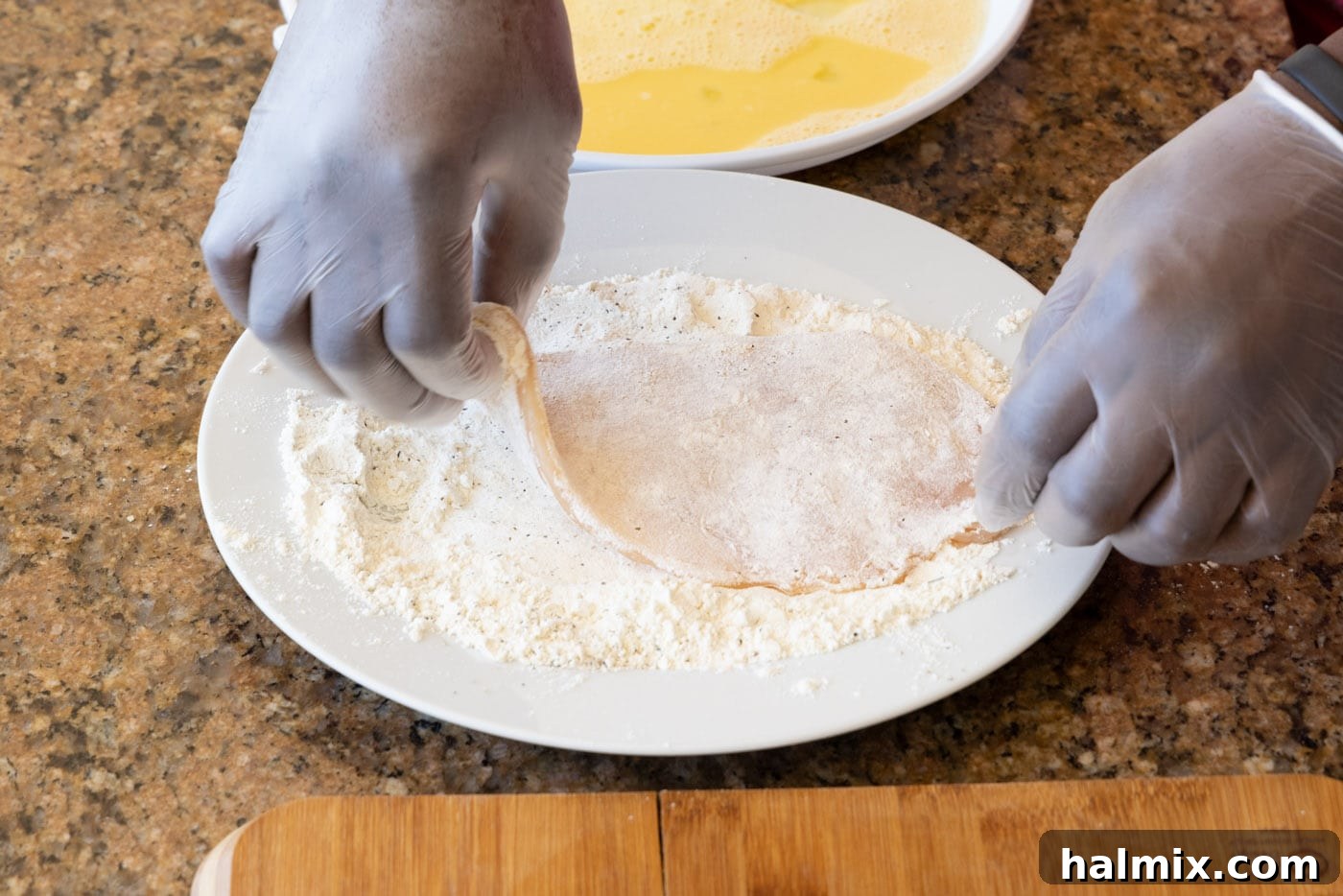
- Flour the Chicken: Using gloved hands (or one hand dedicated to dry ingredients and one to wet to avoid clumping), take a pounded chicken cutlet and press it firmly into the seasoned flour mixture. Ensure both sides are completely coated. Gently shake off any excess flour, leaving a thin, even layer. This layer helps the egg wash adhere better.
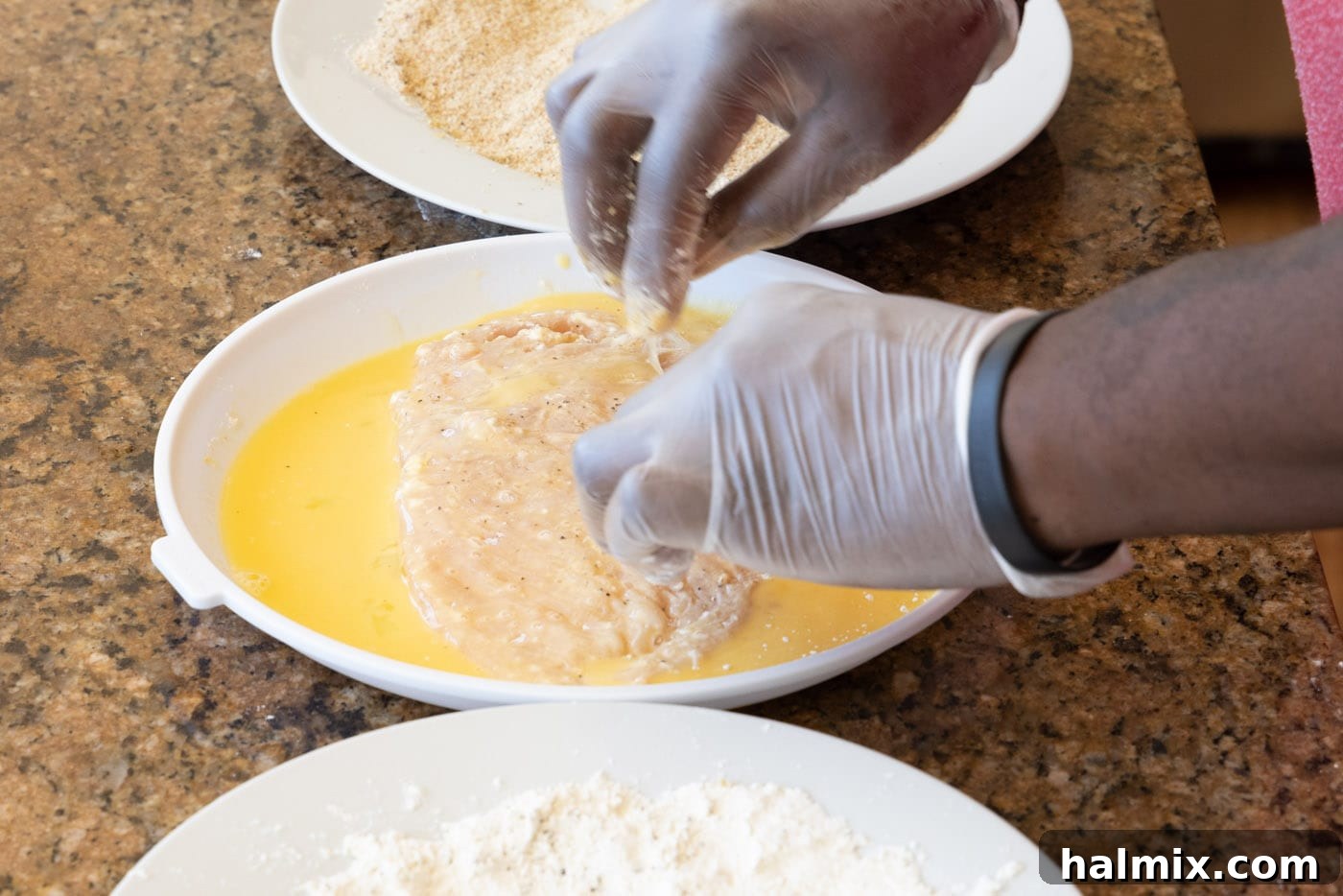
- Egg Wash the Chicken: Carefully transfer the floured chicken cutlet to the egg mixture. Dip both sides, ensuring it’s fully coated. Lift the chicken and allow any excess egg wash to drip back into the bowl. A thin, even layer is key here.
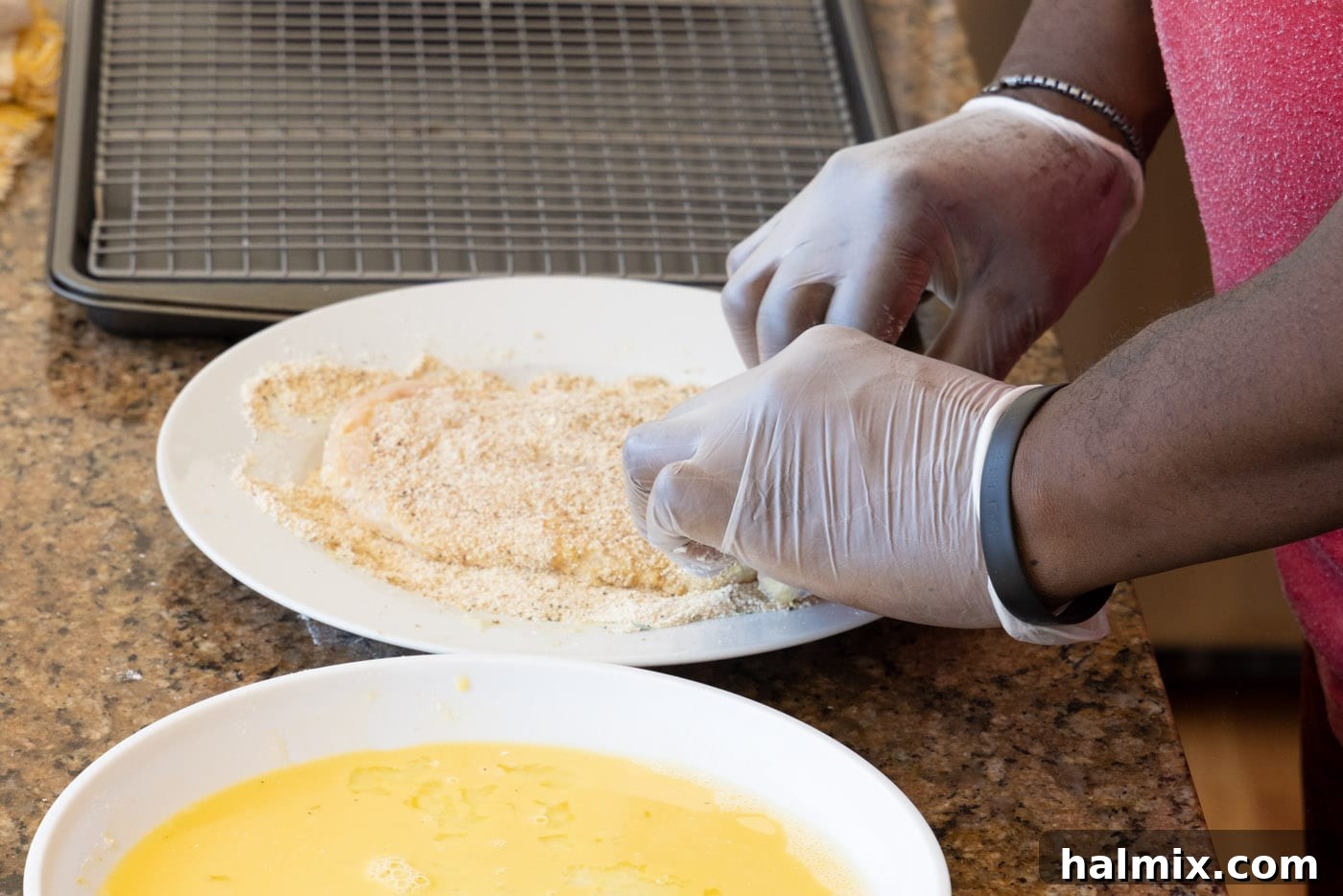
- Crumb Coat the Chicken: Finally, transfer the egg-coated chicken to the seasoned breadcrumbs. Press both sides of the chicken gently but firmly into the breadcrumbs, ensuring an even and thorough coating. The breadcrumbs should completely cover the cutlet. This pressure helps the crumbs adhere and form a robust crust.
- Rest the Battered Chicken: Place the fully breaded chicken cutlet on a wire rack set over a baking sheet. Repeat the entire dredging process for the remaining chicken cutlets. Allowing the breaded chicken to rest for 10-15 minutes helps the coating set and adhere more firmly, reducing the chances of it falling off during frying.
- Heat the Oil: Add about 3 tablespoons of olive oil to a large, heavy-bottomed skillet (cast iron or stainless steel works best). You want enough oil to generously coat the bottom of the pan, but not so much that the chicken will be submerged. Heat the oil over medium heat until it shimmers slightly and a flicked breadcrumb sizzles immediately upon contact. This indicates the oil is hot enough for frying.
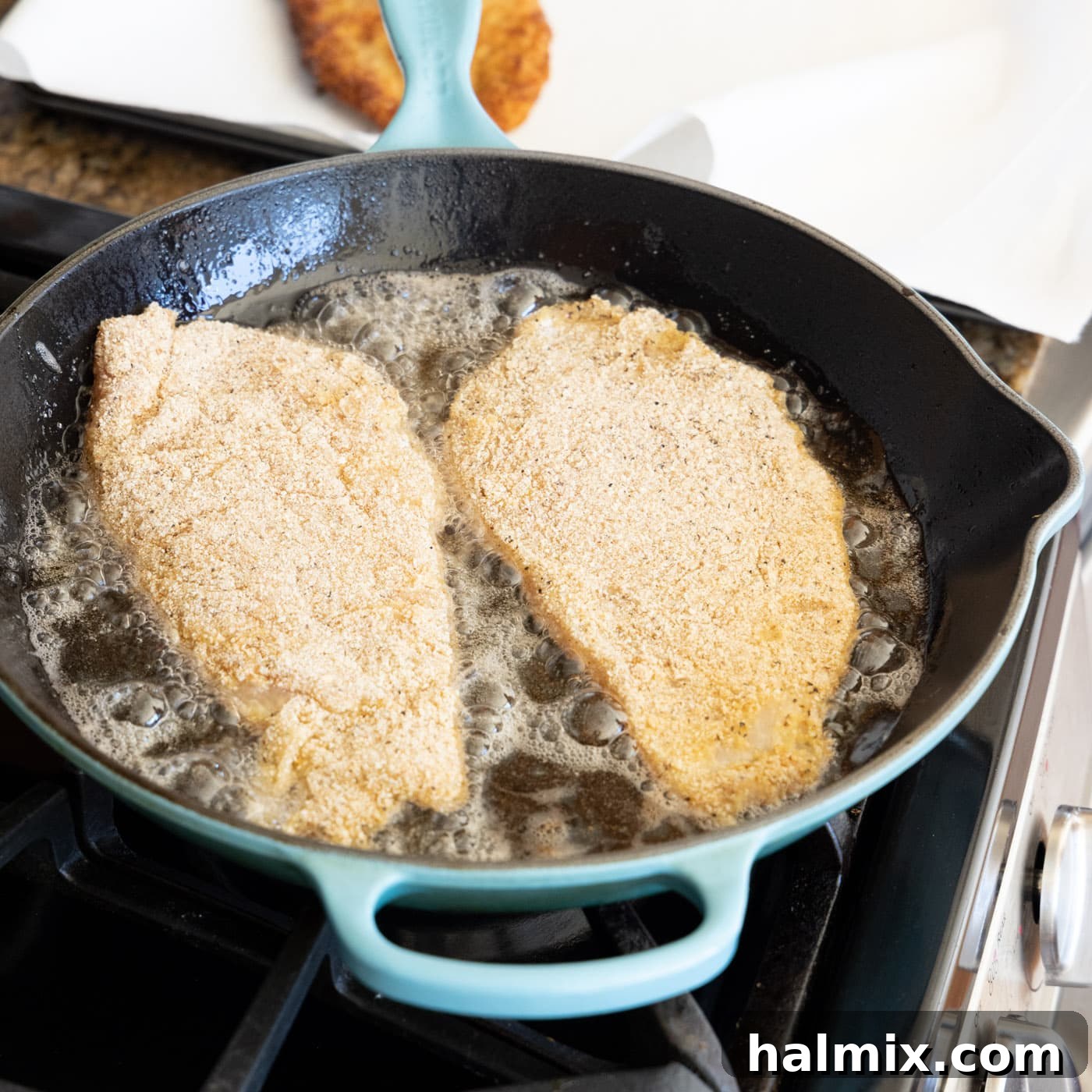
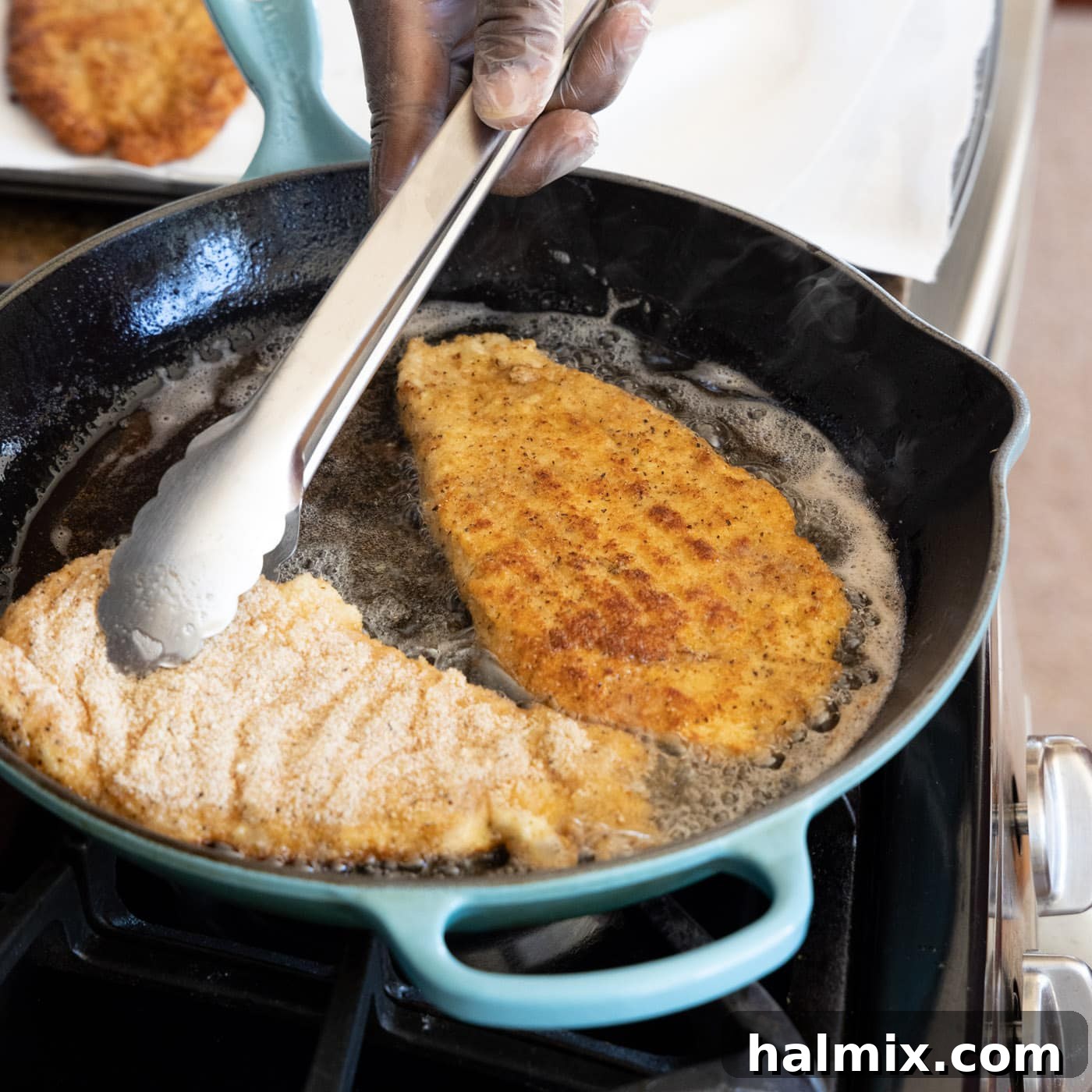
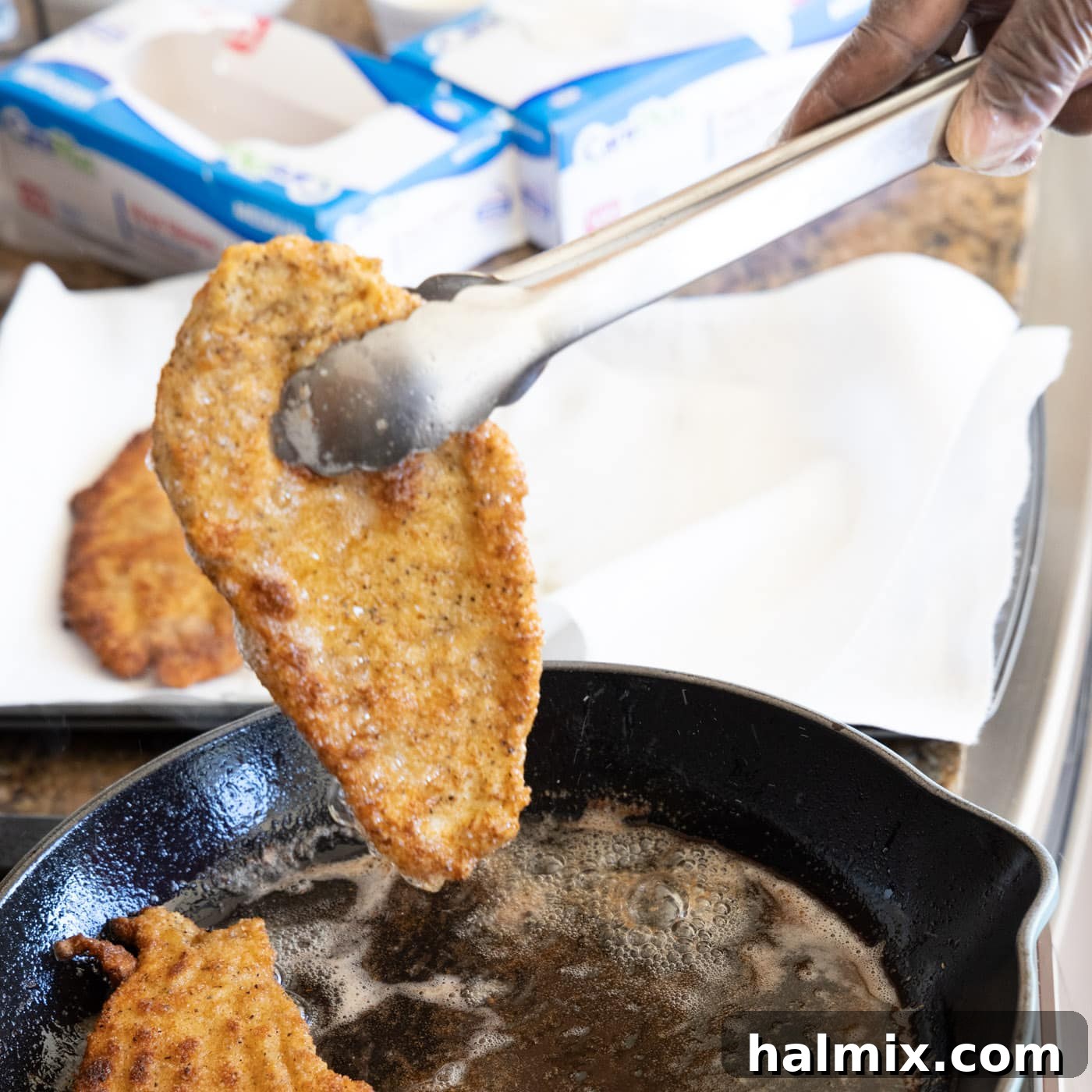
- Pan-Fry the Chicken: You will need to cook the chicken in batches to avoid overcrowding the pan, which can lower the oil temperature and lead to soggy chicken. Carefully place one or two chicken cutlets (depending on pan size) into the hot oil. Cook for 2-3 minutes per side, or until the breading is beautifully golden brown and crispy, and the chicken is cooked through to an internal temperature of 165°F (74°C). Use tongs to gently turn the chicken over.
- Drain and Keep Warm: Once cooked, remove the chicken cutlets from the skillet and place them on a plate lined with paper towels to absorb any excess oil. Keep the cooked chicken warm (you can place them in a preheated oven at a low temperature, around 200°F or 90°C) while you cook the remaining batches. This ensures all your Milanese is served hot and crispy.
Frequently Asked Questions & Expert Tips for Chicken Milanese
Here are answers to common questions and valuable tips to ensure your Chicken Milanese is perfect every time:
How do I store leftover Chicken Milanese?
Store any leftover Chicken Milanese in an airtight container in the refrigerator for 3-4 days. To maintain its crispy coating, it’s best to reheat it in the oven at 350°F (175°C) for 10-15 minutes or in an air fryer at 375°F (190°C) for 5-7 minutes until heated through and crisp.
Can I prepare Chicken Milanese ahead of time?
Yes, you can. You can pound and bread the chicken cutlets up to a few hours in advance. Place them on a wire rack over a baking sheet, cover loosely with plastic wrap, and refrigerate. This even helps the breading adhere better. However, for the freshest taste and best crispiness, pan-fry them just before serving.
What kind of chicken is best for Milanese?
Boneless, skinless chicken breasts are traditional and recommended. Their lean meat cooks quickly and uniformly when pounded thin. While boneless, skinless chicken thighs can be used for a richer flavor, they may not pound as evenly and the texture will be slightly different.
How do I prevent the breading from falling off?
- Ensure the chicken is thoroughly patted dry before dredging.
- Make sure each layer (flour, egg, breadcrumbs) is evenly coated.
- Press the breadcrumbs firmly onto the chicken.
- Allow the breaded chicken to rest on a wire rack for 10-15 minutes before frying. This “setting” time helps the coating adhere.
- Avoid overcrowding the pan, which lowers oil temperature and can make the breading soggy.
What is the best oil for frying Chicken Milanese?
Olive oil is traditional for its flavor. However, for a higher smoke point, you can use vegetable oil, canola oil, grapeseed oil, or even a blend of olive oil and a neutral oil. The key is to use enough oil to coat the bottom of the pan (about 1/4 to 1/2 inch deep) and ensure it’s heated to the right temperature before adding the chicken.
Can I bake or air fry Chicken Milanese instead of pan-frying?
While pan-frying yields the most authentic and crispy results, you can achieve a good outcome with baking or air frying for a lighter option. For baking, spray the breaded cutlets lightly with cooking spray and bake at 400°F (200°C) for 15-20 minutes, flipping halfway, until golden and cooked through. For air frying, spray with cooking spray and air fry at 375°F (190°C) for 10-15 minutes, flipping halfway, until golden and crispy.
How can I ensure the chicken is cooked through?
Since the chicken is pounded thin, it cooks quickly. You’ll know it’s done when the breading is deeply golden brown and crispy on both sides. To be absolutely sure, use an instant-read meat thermometer inserted into the thickest part of the chicken; it should register 165°F (74°C). The thinness also means it continues to cook for a minute or so after being removed from the heat.
Delightful Serving Suggestions for Chicken Milanese
Chicken Milanese is wonderfully versatile and pairs beautifully with a range of side dishes, allowing you to tailor your meal to any occasion. Here are some classic and creative serving ideas:
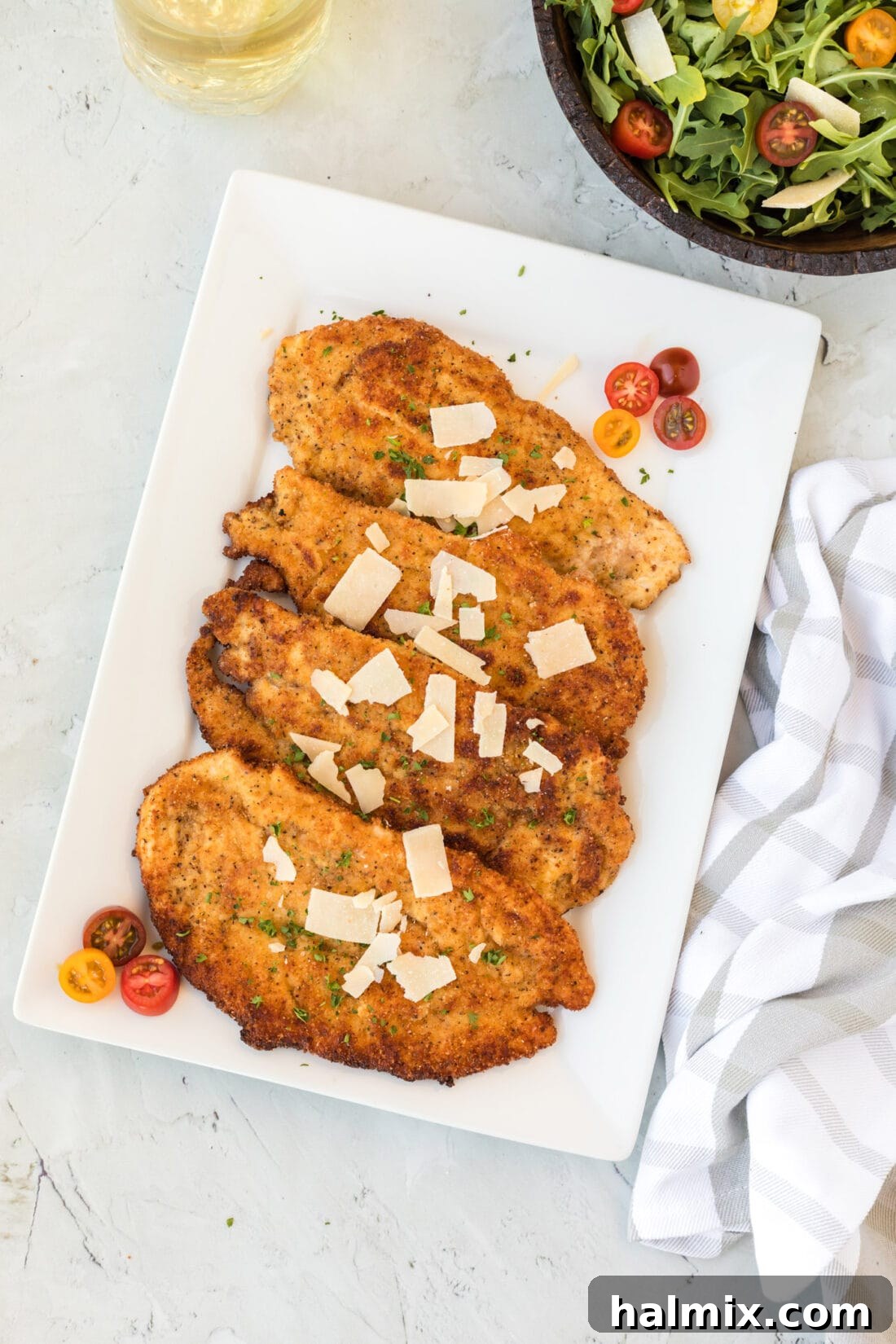
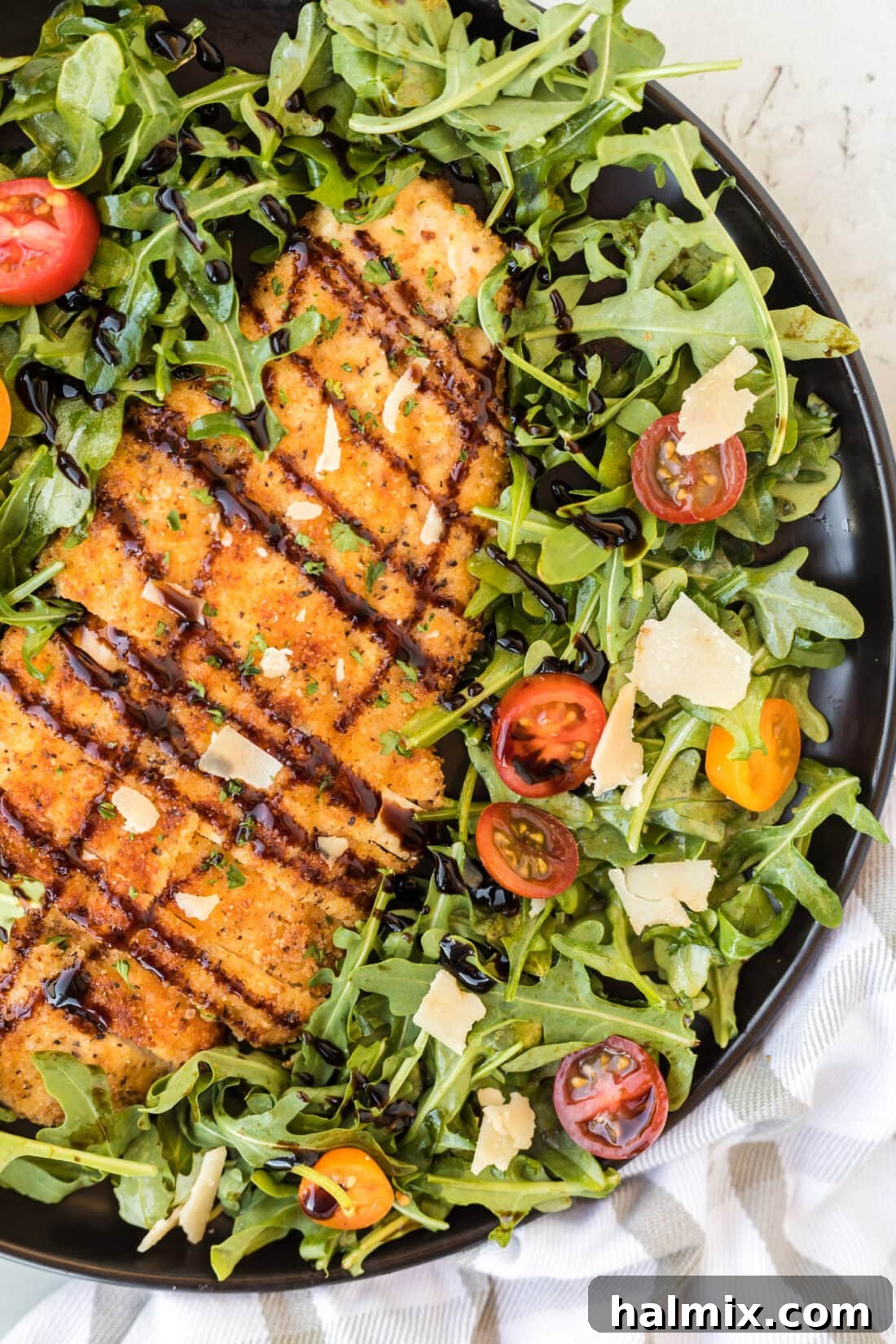
- Classic Italian Style: The most traditional way to serve Chicken Milanese is with a simple, refreshing arugula salad dressed with a light lemon vinaigrette. The peppery greens and bright acidity of the lemon perfectly cut through the richness of the fried chicken. A wedge of fresh lemon on the side for squeezing over the cutlets is also a must.
- Vegetable Companions: Enhance your meal with a variety of vibrant vegetables. Try roasted Brussels sprouts, tender green beans sautéed with garlic, steamed broccoli or asparagus, or even glazed carrots for a touch of sweetness.
- Starchy Sides: For a heartier meal, mashed potatoes or creamy risotto provide a comforting contrast to the crispy chicken. You could also serve it alongside a light pasta dish, such as pasta primavera or a simple aglio e olio.
- Sauces and Garnishes: While often enjoyed plain with just a squeeze of lemon, Chicken Milanese can also be complemented by light sauces. A fresh tomato bruschetta topping, a light caper sauce, or a sprinkle of freshly shaved or grated Parmesan cheese adds an extra layer of flavor and elegance.
- Beverage Pairings: A crisp white wine, such as Pinot Grigio or Sauvignon Blanc, complements the delicate flavors of Chicken Milanese beautifully. For non-alcoholic options, sparkling lemon water or iced tea are refreshing choices.
Explore More Delicious Chicken Recipes
If you loved this Chicken Milanese, you’ll surely enjoy exploring other fantastic chicken dishes from our collection. From rich and savory to light and zesty, there’s a chicken recipe for every craving:
- Chicken Marsala
- Chicken Piccata
- Chicken Cacciatore
- Chicken Cordon Bleu
- Baked Chicken Thighs
- Marry Me Chicken
We love sharing our passion for cooking and baking with you! To make sure you never miss a new recipe, consider subscribing to our convenient newsletter for free daily updates and culinary inspiration.

Chicken Milanese
IMPORTANT – There are often Frequently Asked Questions within the blog post that you may find helpful. Simply scroll back up to read them!
Print It
Pin It
Rate It
Ingredients
- 2 large chicken breasts about 1 1/2 pounds
- 2 cups breadcrumbs
- 2 cups all-purpose flour
- 2 Tablespoons garlic salt divided
- 1 Tablespoon black pepper divided
- 1 Tablespoon onion powder divided
- 2 large eggs
- 2 Tablespoons water
- 3 Tablespoons olive oil
Things You’ll Need
-
Large heavy bottomed skillet
-
Vinyl gloves
-
Tongs
-
Meat mallet
Before You Begin
- The chicken does not take long to cook because it is so thin. Essentially you just want to cook it long enough to brown both sides of the breading.
- Store leftover Chicken Milanese in an air-tight container kept in the refrigerator for 3-4 days. Reheat in the oven at 350F or in an air-fryer to retain the crispy coating.
Instructions
-
Rinse chicken breasts and pat dry with paper towels.
-
Cut each breast in half by butterflying them, then separating with a knife. You will now have 4 breasts.
-
Pound each breast fairly thin, but not so thin that it falls apart.
-
In a medium bowl, combine flour with 1 tablespoon garlic salt, 1/2 tablespoon black pepper, and 1/2 tablespoon onion powder. Pour contents onto a dinner plate.
-
In a second bowl, combine bread crumbs with remaining garlic salt, pepper, and onion powder. Pour contents onto a second dinner plate.
-
In a third bowl, whisk together eggs and water. Carefully pour contents onto a third dinner plate.
-
Using gloved hands, press the pounded chicken filet into the flour mixture, coating both sides and gently shaking off any excess.
-
Dip floured chicken into egg mixture, again coating both sides and allowing excess to drip off.
-
Finally, press the egg coated chicken into the bread crumb mixture. Gently press both sides of chicken to ensure they are evenly coated.
-
Place chicken on a wire rack and repeat this process for the remaining chicken filets.
-
Add olive to a large heavy-bottomed skillet. You want enough oil to coat the bottom of the pan, but not so much that the chicken will be submerged. Heat oil over medium heat until shimmering.
-
You will need to work in batches as the chicken filets are large and you don’t want to crowd them. Place chicken filet in hot oil and cook for 2-3 minutes. Turn chicken over with tongs and cook an additional 2-3 minutes. The breading should be nicely browned.
-
Remove to paper towels and keep warm while you cook the remaining chicken.