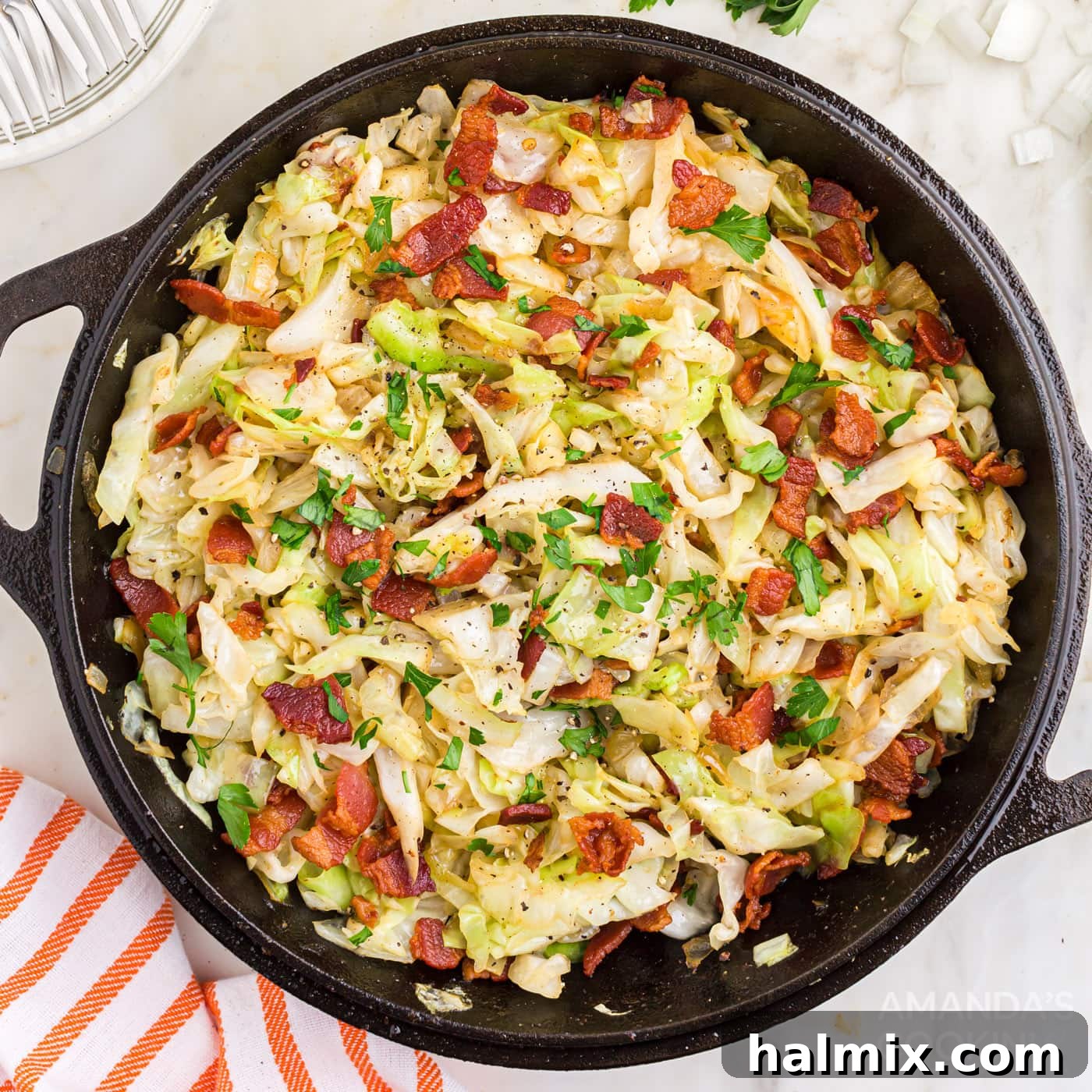
Welcome to the ultimate guide for crafting the most irresistible, quick, and easy fried cabbage recipe you’ll ever encounter! In just about 40 minutes, you can transform simple ingredients into a flavorful side dish that promises crunchy, savory bacon, tender pan-fried cabbage, sweet caramelized onions, and a perfectly balanced blend of seasonings. This isn’t just a side dish; it’s a celebration of comfort food that complements nearly any main course, bringing rich, hearty flavors to your table with minimal effort. Whether you’re a seasoned cook or just starting your culinary journey, this recipe is designed for delicious success, making it a go-to for weeknight dinners and special occasions alike.
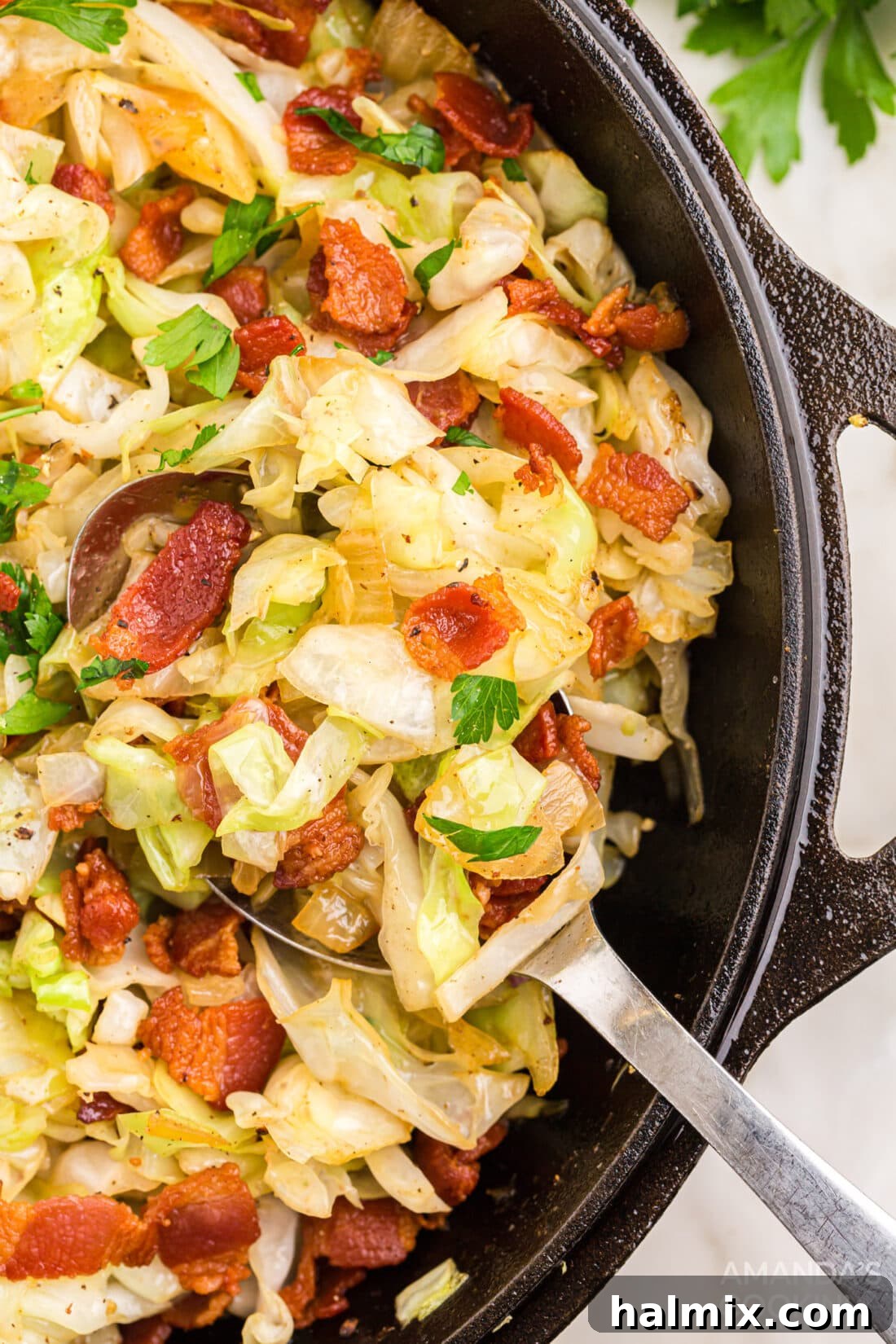
Why This Fried Cabbage Recipe is a Must-Try
This specific fried cabbage recipe stands out for its impeccable balance of textures and robust flavors. It masterfully combines the crisp-tender bite of perfectly cooked cabbage with the salty, smoky depth of well-rendered bacon. The secret lies in caramelizing the onions, which adds a layer of subtle sweetness that beautifully offsets the savoriness of the bacon and the slight bitterness of the cabbage. A hint of heat from black pepper, red pepper flakes, and a touch of Creole seasoning elevates the dish, creating a complex flavor profile that’s incredibly satisfying.
While often celebrated as a traditional companion to corned beef, this versatile side dish effortlessly pairs with a wide array of main courses. Its rustic charm and profound flavors make it a favorite across different cuisines, offering a comforting and wholesome addition to any meal. This recipe works because every ingredient plays a crucial role, building layers of taste and ensuring a memorable culinary experience with every forkful. It’s a testament to how simple ingredients, when handled with care, can create something truly extraordinary.
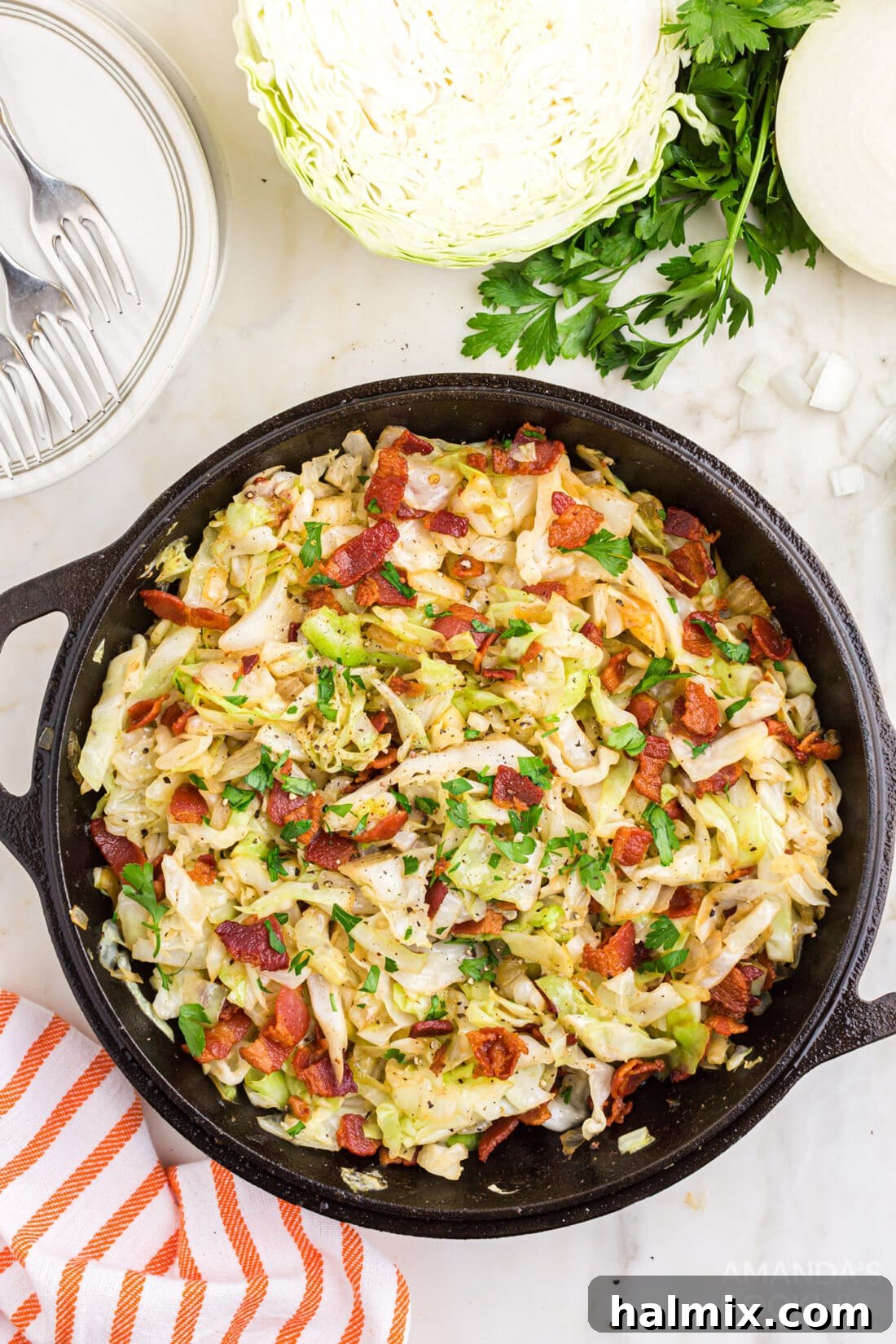
Essential Ingredients for Flavorful Fried Cabbage
Crafting this delightful fried cabbage dish requires a few foundational ingredients, each contributing significantly to the overall flavor and texture. We’ll be focusing on fresh, high-quality components to ensure the best possible outcome. Below is a concise list of what you’ll need, with detailed information and substitution suggestions provided in the following section. All precise measurements and detailed instructions are available in the printable recipe card at the end of this article.
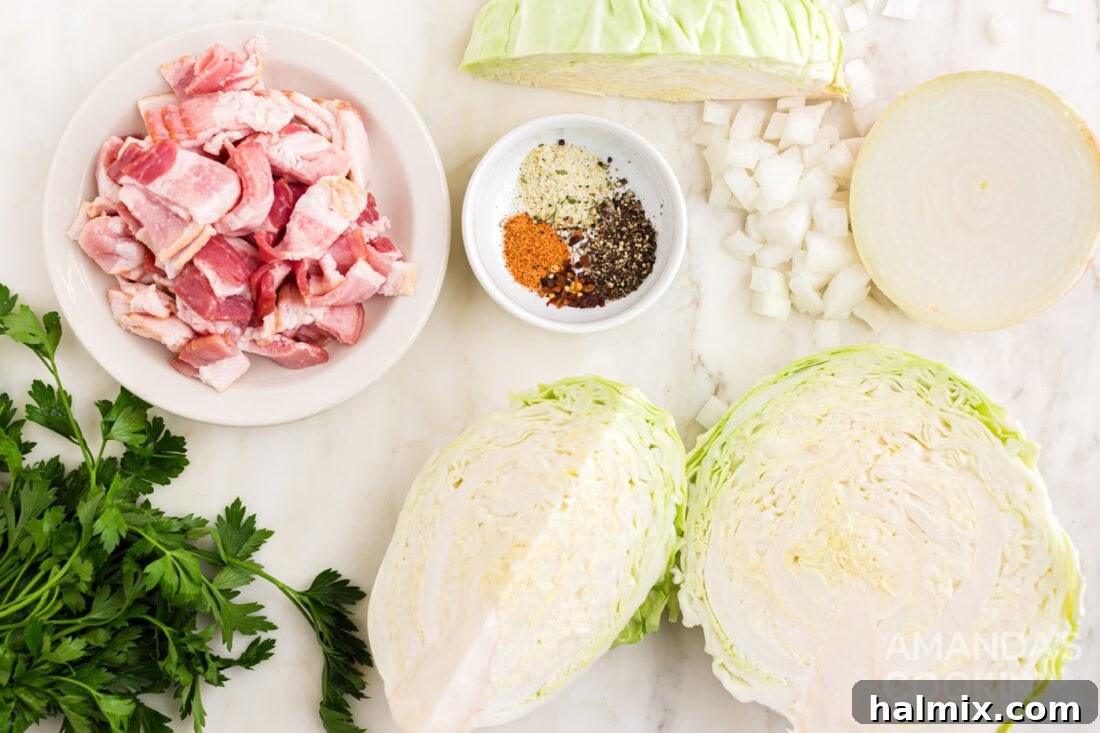
Ingredient Insights & Smart Substitutions
Understanding your ingredients and having flexible substitution options can elevate your cooking experience. Here’s a closer look at the key components of our fried cabbage recipe and how to adapt them to your preferences or dietary needs.
BACON: The Flavor Foundation
For this classic fried cabbage recipe, we utilize regular bacon, which renders a rich, savory fat that’s essential for cooking the vegetables and infusing the entire dish with a smoky depth. However, this ingredient is quite flexible! If you prefer a leaner option, turkey bacon can be a fantastic substitute, offering a similar smoky essence with less fat. For those following a plant-based diet, vegan bacon alternatives work wonderfully to replicate that crispy texture and savory element. If you choose to omit bacon entirely, don’t worry – you can still achieve incredible flavor. Simply substitute 2-3 tablespoons of unsalted butter for the bacon grease. Begin by cooking your onions in the butter until softened and translucent, then proceed with the rest of the steps. Remember to adjust the salt content to taste, as bacon itself contributes a significant amount of sodium.
CABBAGE: The Verdant Star
The choice of cabbage is crucial for the success of this dish. We recommend a firm, vibrant green cabbage head without any wilted outer leaves. When preparing, you might find some heads of cabbage to be quite large. If the entire sliced head doesn’t fit comfortably into your skillet, prioritize the softer, greener outer leaves. It’s also best to discard the very thick, tougher core areas around the stem, as these can take longer to cook and might remain overly fibrous. Aim for uniformly sliced pieces, about ¼ to ½ inch thick, to ensure even cooking and that desirable crisp-tender texture. The goal is to cook the cabbage until it’s tender but still retains a slight bite, avoiding an overly mushy consistency.
ONIONS: Sweet Aromatics
Yellow onions are the ideal choice here, as their natural sugars caramelize beautifully when slowly cooked in the bacon fat (or butter), adding a sweet, aromatic dimension that balances the savoriness of the dish. Dice them evenly to ensure they soften and caramelize at a consistent rate. Patience is key during the onion cooking stage; don’t rush it, as the caramelization develops deep, rich flavors that are indispensable to this recipe.
SEASONINGS: The Spice of Life
Our seasoning blend includes Creole seasoning, black pepper, garlic salt, and a pinch of red pepper flakes. Creole seasoning, such as Tony Chachere’s, offers a robust mix of herbs and spices, typically including paprika, garlic powder, onion powder, oregano, thyme, and various peppers, providing a fantastic depth of flavor. If you don’t have Creole seasoning, a blend of garlic powder, onion powder, smoked paprika, and a touch of cayenne can serve as a good alternative. Freshly ground black pepper adds a pungent warmth, while garlic salt offers a convenient way to incorporate both saltiness and garlic flavor. The red pepper flakes are optional but highly recommended for a gentle kick, allowing you to adjust the heat to your personal preference. For an extra layer of flavor, consider adding fresh minced garlic during the last few minutes of cooking the onions, sautéing until fragrant.
Mastering the Art of Fried Cabbage: Step-by-Step Guide
These detailed step-by-step photos and instructions are here to guide you through the process, helping you visualize each stage of making this incredibly tasty fried cabbage. For your convenience, you can easily Jump to Recipe to get the printable version of this recipe, complete with precise measurements and comprehensive instructions.
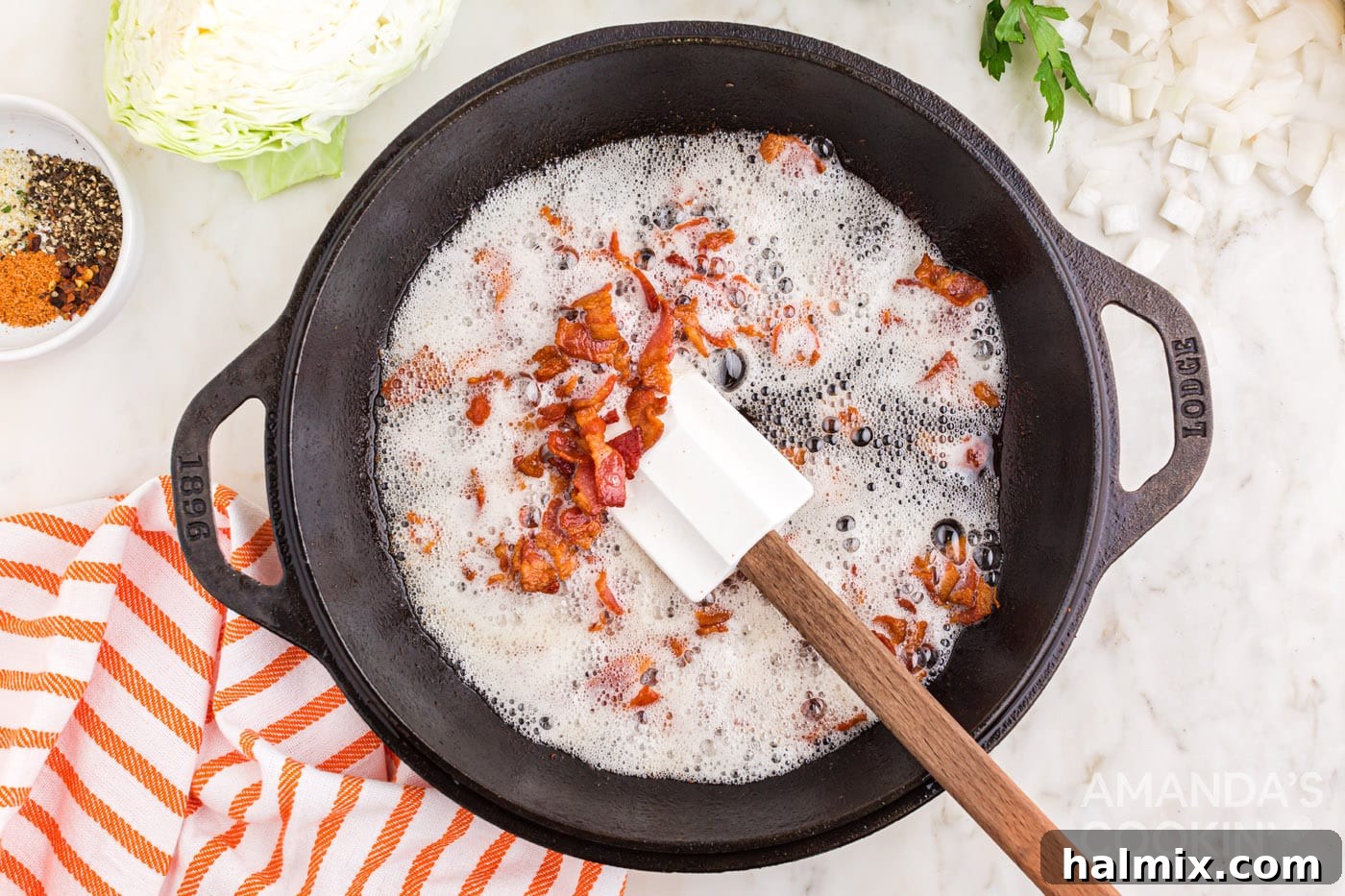
- Crisp the Bacon: Begin by cooking your chopped bacon over medium heat in a large cast iron or non-stick skillet. Stir occasionally until the bacon is beautifully crisp and has rendered most of its fat, which usually takes about 10 minutes. This step is crucial for developing the foundational savory flavor.

- Reserve the Bacon & Fat: Once the bacon is crisp, use a slotted spoon to remove it from the pan. Transfer the cooked bacon to a plate lined with paper towels to drain excess grease, and set it aside. This keeps the bacon crunchy for later. Importantly, do NOT drain the flavorful grease from the pan; this bacon fat is essential for cooking the onions and cabbage, imparting a wonderful depth of flavor.
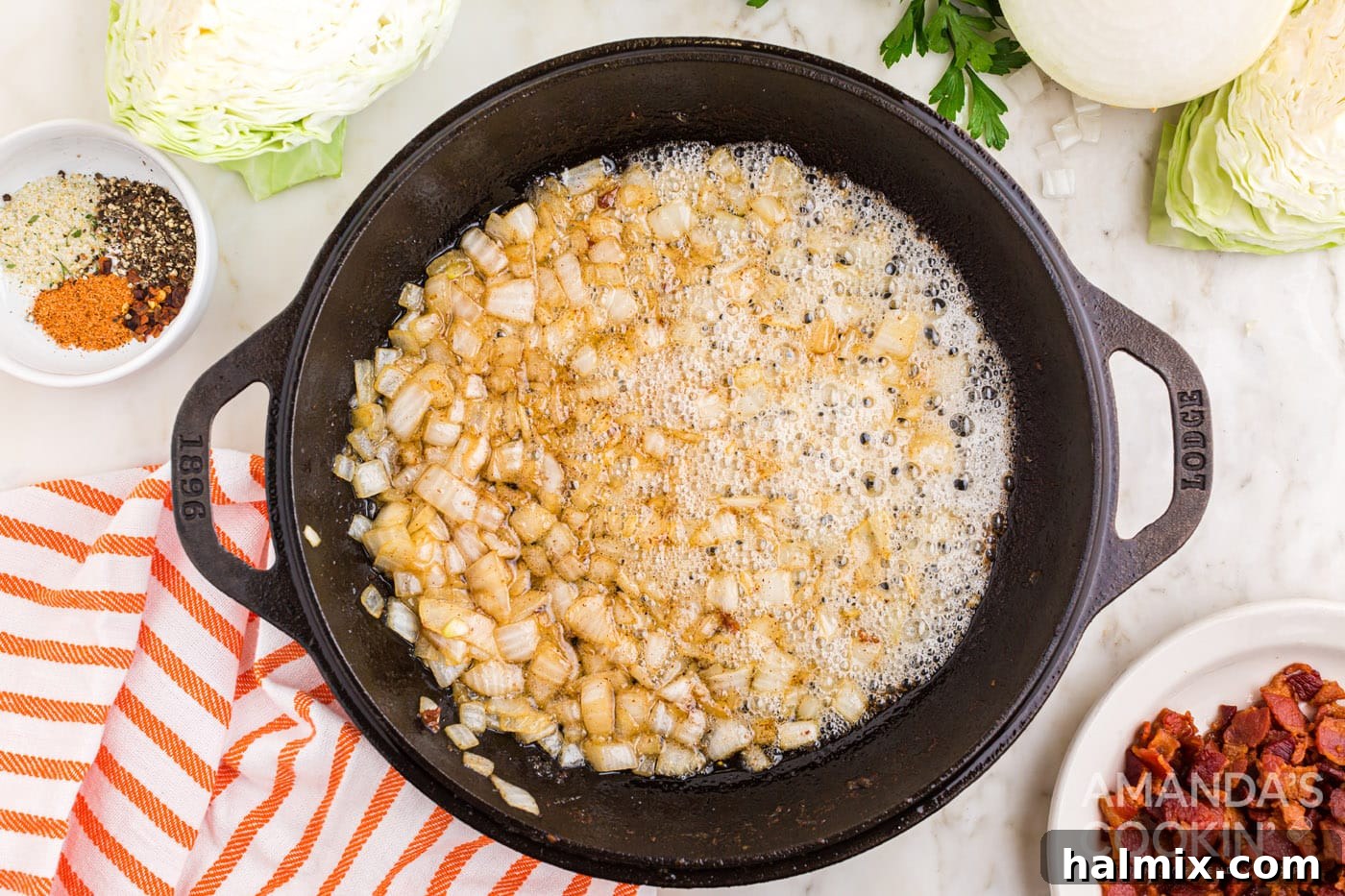
- Caramelize the Onions: Add the diced yellow onion to the skillet, stirring to coat them in the hot bacon grease. Cook the onions over medium heat, stirring occasionally, until they become softened, translucent, and begin to caramelize slightly. This process usually takes about 10 minutes. The sweetness developed here is a key component of the dish’s overall profile.
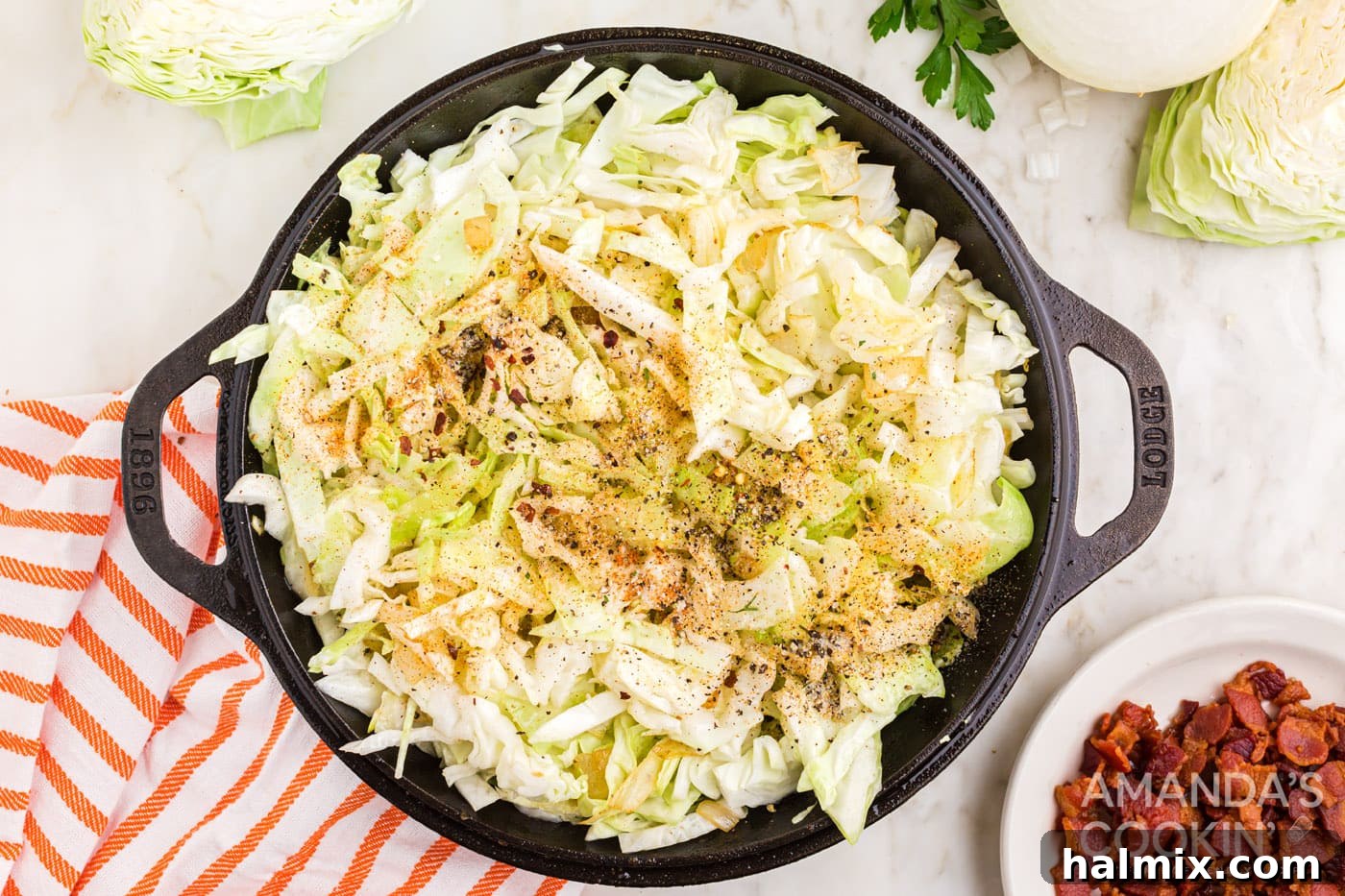
- Sauté the Cabbage & Season: Add the sliced green cabbage to the skillet, along with the Creole seasoning, black pepper, garlic salt, and a pinch of red pepper flakes. Stir everything well to combine, ensuring the cabbage is coated with the seasonings and bacon fat. Sauté for approximately 5-8 minutes, or until the cabbage is crisp-tender. It should still have a slight bite but be pleasantly soft. Be patient, as large amounts of cabbage will cook down significantly.
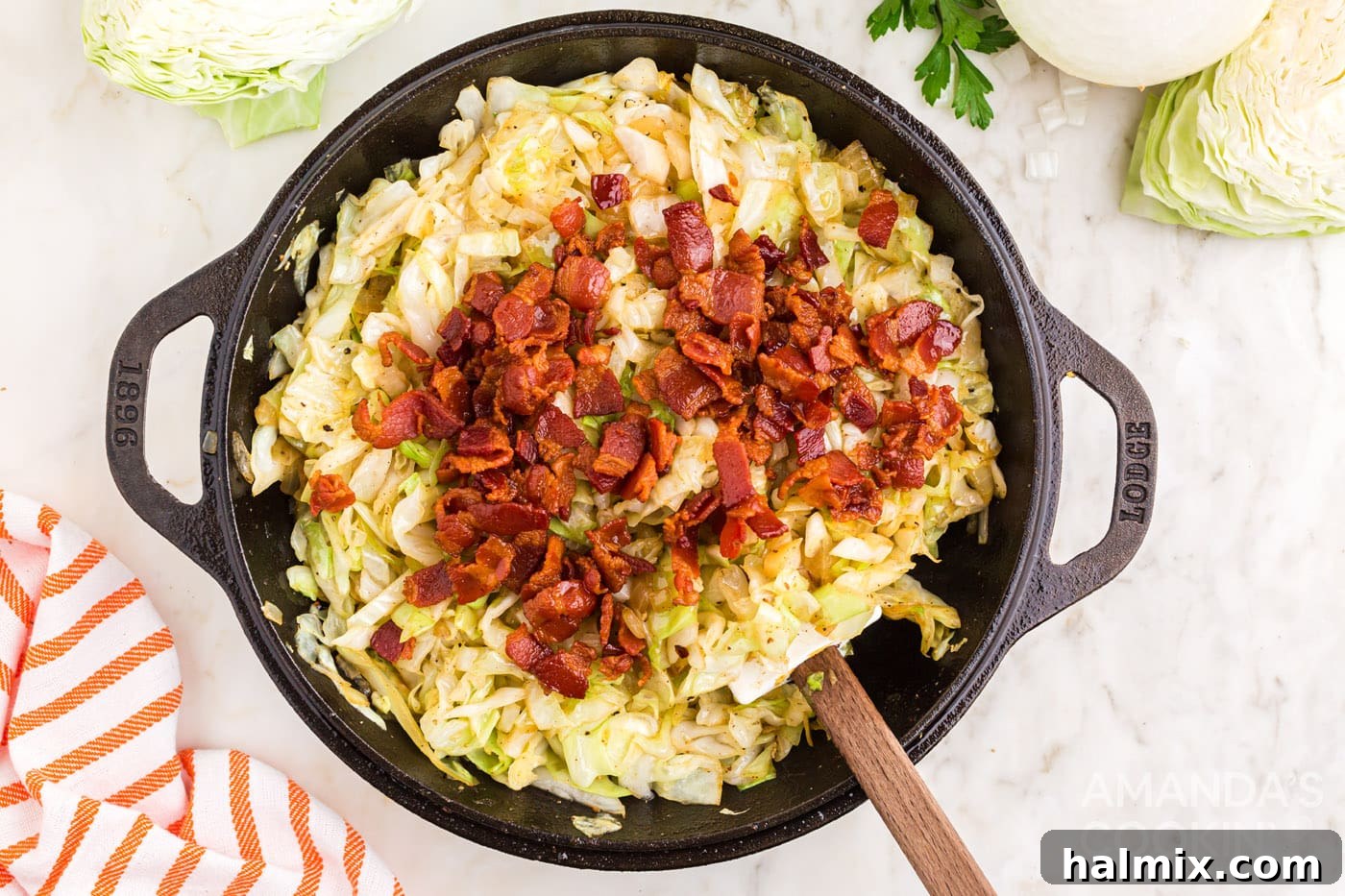
- Reincorporate Bacon: Remove the skillet from the heat. Add the reserved crispy bacon back into the cabbage mixture and stir gently to distribute it evenly throughout the dish. This ensures the bacon remains crispy until serving.
- Garnish and Serve: For a fresh touch and visual appeal, garnish your fried cabbage with an additional pinch of red pepper flakes (if desired for extra heat) and some freshly chopped parsley.
- Enjoy Immediately: Serve your delicious fried cabbage hot and enjoy it as a flavorful side dish that will impress everyone at the table!
Frequently Asked Questions & Expert Tips for Fried Cabbage
Here are some common questions and invaluable tips to help you perfect your fried cabbage and make the most of this versatile dish.
To store any delightful leftovers, first allow the fried cabbage to cool completely to room temperature. Then, transfer it to an airtight container and refrigerate for up to 2-3 days. Reheat gently on the stovetop over medium-low heat or in the microwave until warmed through. Note that the cabbage might soften slightly upon reheating, but the flavors will remain excellent.
Absolutely! As mentioned in the ingredient section, you can easily adapt this recipe. To make it vegetarian, simply omit the bacon and use 2-3 tablespoons of unsalted butter to cook the onions. For a vegan version, use a plant-based oil (like olive oil or avocado oil) and cook the onions, perhaps adding a touch of smoked paprika for a smoky flavor substitute. You can also incorporate vegan bacon bits for added texture and savory notes.
A large cast iron skillet is highly recommended for making fried cabbage. Cast iron provides excellent heat retention and even heat distribution, which helps in achieving that perfect caramelization on the onions and a slightly browned, flavorful edge on the cabbage. A good quality non-stick skillet can also work effectively, especially if you prefer easier cleanup. Ensure your skillet is large enough to accommodate the initial volume of sliced cabbage before it cooks down.
If you love a little extra kick, there are several ways to boost the heat. You can increase the amount of red pepper flakes added during the sautéing process. Another great option is to add a dash of your favorite hot sauce at the very end, just before serving. A pinch of cayenne pepper with the other seasonings will also provide a more integrated heat.
Yes, to make meal prep even quicker, you can chop your bacon, dice the onion, and slice the cabbage a day in advance. Store each component separately in airtight containers in the refrigerator. This will significantly reduce your active cooking time when you’re ready to make the dish.
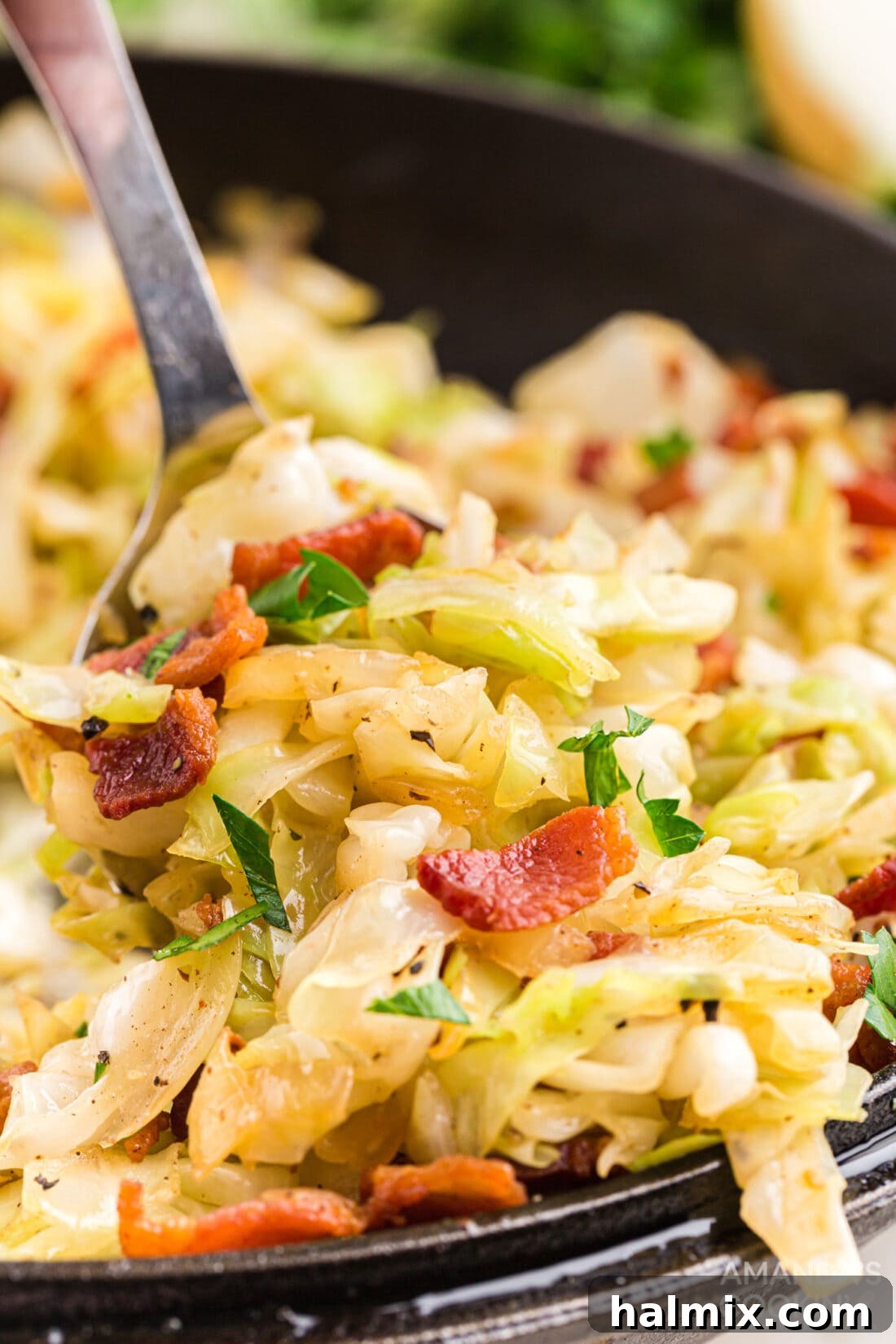
Delicious Serving Suggestions for Fried Cabbage
This savory fried cabbage is incredibly versatile and makes a fantastic accompaniment to a wide variety of main dishes. Beyond the classic corned beef, here are some serving suggestions to inspire your next meal:
- Poultry: It pairs beautifully with roasted chicken, pan-seared chicken thighs, or even a simple grilled chicken breast. The rich flavors of the cabbage complement the lean protein perfectly.
- Pork: Think beyond just bacon! Fried cabbage is superb alongside tender pork chops, a slow-cooked pork roast, or even savory sausage. The flavors meld harmoniously, creating a comforting and hearty meal.
- Beef: While a natural fit for corned beef, try it with roast beef, steak, or even as a side to a juicy meatloaf. The smoky, sweet, and spicy notes cut through the richness of the beef wonderfully.
- Fish: For a lighter pairing, consider serving fried cabbage with robust fish like salmon or cod. The hearty side provides a nice contrast to the delicate fish.
- Vegetarian Meals: Even if you make it with bacon, this dish can enhance vegetarian mains. Serve it alongside hearty bean burgers, lentil loaf, or as a flavorful component in a larger vegetable platter.
- Classic Pairings: Don’t forget the traditional Irish-American comfort food! It’s a sensational side for corned beef, especially when paired with creamy colcannon potatoes or a simple mashed potato dish.
No matter what you choose to serve it with, this easy fried cabbage recipe is sure to become a cherished addition to your recipe repertoire.
More Delightful Vegetable Side Dish Recipes
If you loved this fried cabbage recipe and are looking for more delicious ways to enjoy vegetables, here are some other fantastic side dish ideas that are equally flavorful and easy to prepare:
- Roasted Asparagus: Simple, elegant, and packed with flavor.
- Pan Roasted Broccoli: Crispy edges and tender florets, a crowd-pleaser.
- Crispy Roast Potatoes: The perfect crunchy exterior and fluffy interior.
- Slow Cooker Balsamic Carrots: Sweet and tangy, requiring minimal effort.
- Fried Green Tomatoes: A classic Southern treat with a tangy crunch.
- Spicy Fried Cabbage: For those who crave an extra fiery kick, this variation takes it up a notch!
I’m passionate about baking and cooking, and it brings me so much joy to share my kitchen adventures with all of you! Staying updated with new recipes can be tricky, which is why I offer a convenient newsletter delivered straight to your inbox every time a new recipe is posted. Simply subscribe today and start receiving your free daily recipes, ensuring you never miss out on delicious inspiration!
Classic Fried Cabbage with Bacon
Deliciously easy fried cabbage with bacon, caramelized onions, and vibrant seasonings is a flavorful, comforting side dish that can be enjoyed year-round, perfect for family meals or holiday feasts.
Rated 5 out of 5 stars by 17 users.
IMPORTANT – You’ll find valuable Frequently Asked Questions and Expert Tips within the main blog post that may be incredibly helpful. Scroll back up to read them for more insights!
Print Recipe | Pin Recipe | Rate This Recipe
Course: Side Dish
Cuisine: American, Irish
Servings: 6 servings
Total Time: 40 mins
Calories: 201
Author: Amanda Davis
Ingredients
- ½ lb bacon, cut into pieces
- ½ large yellow onion, diced (about 1 ½ cups)
- 1 head green cabbage, sliced (about 6-8 cups)
- ¼ tsp Creole seasoning (we use Tony Chachere’s Creole seasoning)
- ½ tsp freshly ground black pepper
- ½ tsp garlic salt
- Red pepper flakes, to taste
- Chopped parsley, for garnish
Equipment
- Large skillet
- Cutting board
Chef’s Notes & Tips
- When you first add the cabbage to the pan, it might mound high. Stir it gently as it begins to cook down and soften, making it easier to manage. Make sure to scoop all the way to the bottom of the skillet while stirring to integrate the onions and rich bacon grease evenly. If using a cast-iron skillet, you’ll also achieve some lovely caramelization on the cabbage at the bottom of the pan.
- For an enhanced aromatic profile, feel free to add fresh minced garlic. Stir it into the skillet during the last two minutes of cooking the onions and sauté until fragrant.
- Consider substituting or adding smoked paprika along with your Creole or Cajun seasoning for an extra layer of smoky flavor.
- If you choose to omit the bacon, begin by melting 2-3 tablespoons of unsalted butter in the skillet and cooking the onions in the butter. Then, proceed with the remaining steps as written. Be sure to add additional salt to taste, as the bacon typically contributes significant salinity.
Instructions
- Cook chopped bacon over medium heat in a cast iron or non-stick skillet for about 10 minutes, until crisp.
- Remove the crisp bacon from the pan with a slotted spoon and set aside. Do not drain the grease from the pan.
- Add diced onion to the skillet and cook until softened and translucent, which takes approximately 10 minutes.
- Add sliced cabbage, Creole seasoning, pepper, garlic salt, and a pinch of red pepper flakes to the skillet. Sauté for about 5-8 minutes, or until the cabbage is crisp-tender.
- Remove the skillet from heat and stir the cooked bacon back into the cabbage mixture.
- Garnish with an additional pinch of red pepper flakes and some freshly chopped parsley.
- Serve immediately and enjoy!
Nutrition Information
Serving: 1 serving | Calories: 201 cal | Carbohydrates: 11g | Protein: 7g | Fat: 15g | Saturated Fat: 5g | Polyunsaturated Fat: 2g | Monounsaturated Fat: 7g | Trans Fat: 1g | Cholesterol: 25mg | Sodium: 472mg | Potassium: 354mg | Fiber: 4g | Sugar: 5g | Vitamin A: 198IU | Vitamin C: 56mg | Calcium: 66mg | Iron: 1mg
Tried this Recipe? Pin it for Later!
Follow on Pinterest @AmandasCookin or tag #AmandasCookin!
The recipes on this blog are meticulously tested with a conventional gas oven and gas stovetop. Please be aware that cooking appliances, especially as they age, can exhibit inconsistencies in heating. We recommend using an inexpensive oven thermometer to ensure your oven is truly reaching the proper temperature. If you opt for a toaster oven or countertop oven, remember that they may not distribute heat identically to a full-sized conventional oven, so you might need to adjust your cooking or baking times accordingly. For recipes involving pressure cookers, air fryers, slow cookers, or other specialized appliances, a link to the specific models we use is typically provided within each recipe for reference. In the case of baking recipes where measurements are given by weight, it’s important to note that results may vary significantly if volume measurements (cups) are used instead, and we cannot guarantee success with altered methods.
This post originally appeared here on September 19, 2021, and has been updated for clarity, expanded content, and enhanced SEO.