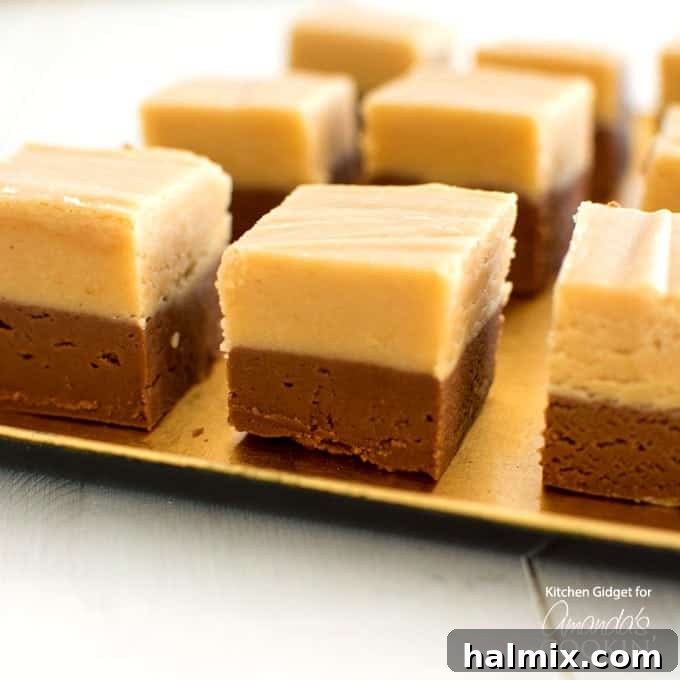
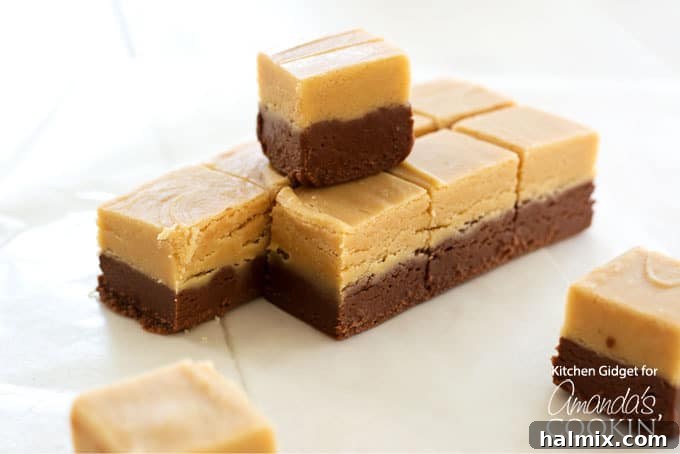
There’s something truly magical about a classic dessert that brings back cherished memories, and this chocolate peanut butter fudge does just that. It’s not just a treat; it’s a warm embrace of nostalgia, simple to create, and utterly irresistible. Featuring two distinct, perfectly balanced layers of rich chocolate and creamy peanut butter, this confection is a holiday staple, ideal for thoughtful gourmet gifting or simply indulging yourself. Homemade fudge is universally adored during the festive season, so be prepared to make an generous batch – it disappears quickly!
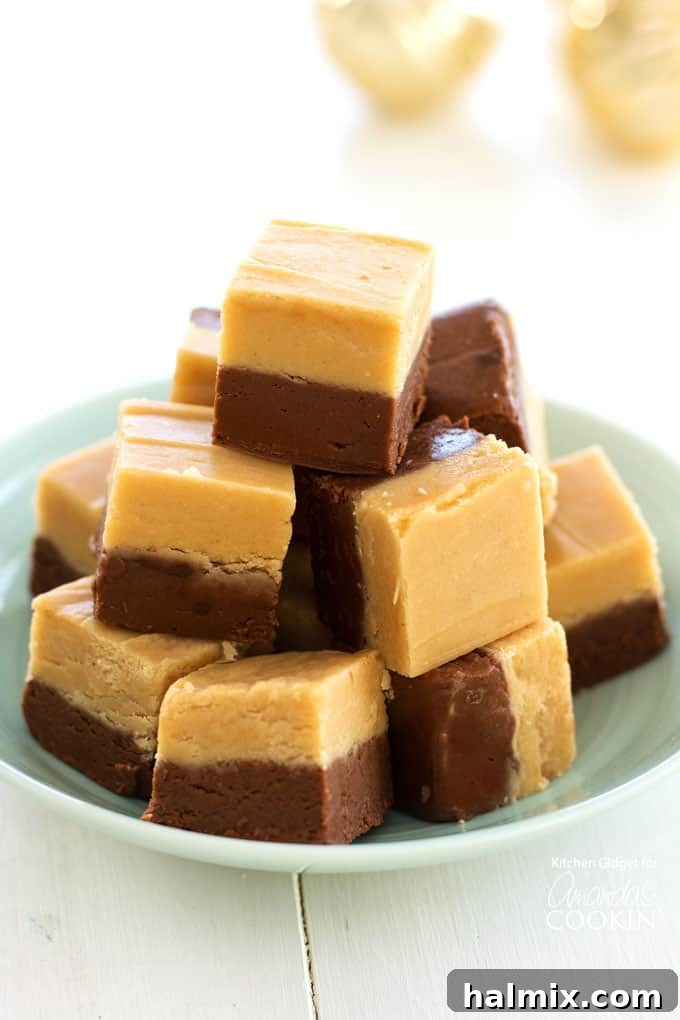
Ultimate Two-Layer Chocolate Peanut Butter Fudge Recipe
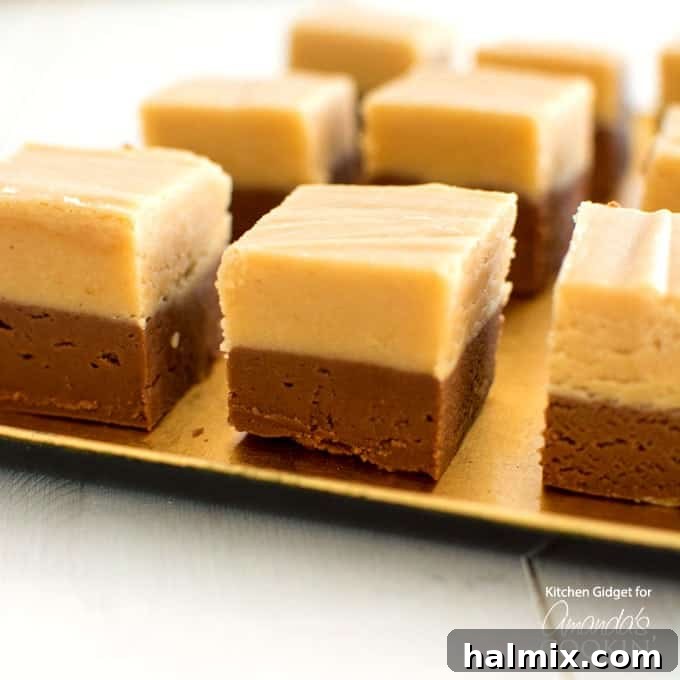
What makes this chocolate peanut butter fudge recipe a standout is its elegant two-toned design. Each bite offers a delightful journey through velvety chocolate fudge followed by a smooth, rich peanut butter fudge layer – a true double treat that’s as beautiful to behold as it is delicious to eat. This layered approach not only enhances the flavor complexity but also adds a visual appeal that makes it a showstopper on any dessert table.
Crafting the Perfect Homemade Fudge: Essential Tips
Achieving perfectly smooth and creamy fudge every time can feel like an art, but with a few key techniques, it’s entirely achievable. The secret lies in precise cooking and the right ingredients. Here’s how to master your homemade fudge:
- Temperature is Key: The most crucial aspect of smooth, creamy fudge is precise temperature control during cooking. Too little heat, and your fudge won’t set properly, resulting in a soft, gooey mess. Too much heat, and it can become dry, crumbly, or grainy. This delicate balance requires close attention and, ideally, a reliable candy thermometer.
- The Marshmallow Fluff Advantage: Luckily, modern fudge recipes often incorporate a “magic ingredient” – marshmallow fluff (or marshmallow creme). This addition is a game-changer, helping to prevent sugar crystallization and ensuring that coveted velvety, melt-in-your-mouth texture. It acts as a stabilizer, making the fudge-making process more forgiving.
- Invest in a Candy Thermometer: When embarking on any candy-making adventure, a heavy-bottomed saucepan and a candy thermometer are indispensable. Candy mixtures can be temperamental; their temperature can rise slowly and then suddenly surge. Monitor your thermometer diligently. As soon as the desired temperature is reached (234°F for this recipe), remove the pan from the heat immediately.
- No Thermometer? No Problem (with caution): If you find yourself without a candy thermometer, you can still make fudge, though it requires a bit more intuition. After the mixture begins to boil rapidly over medium heat, continue cooking for approximately 3-4 minutes, stirring constantly. This method can still yield silky smooth results, but a thermometer offers the most consistent outcome.
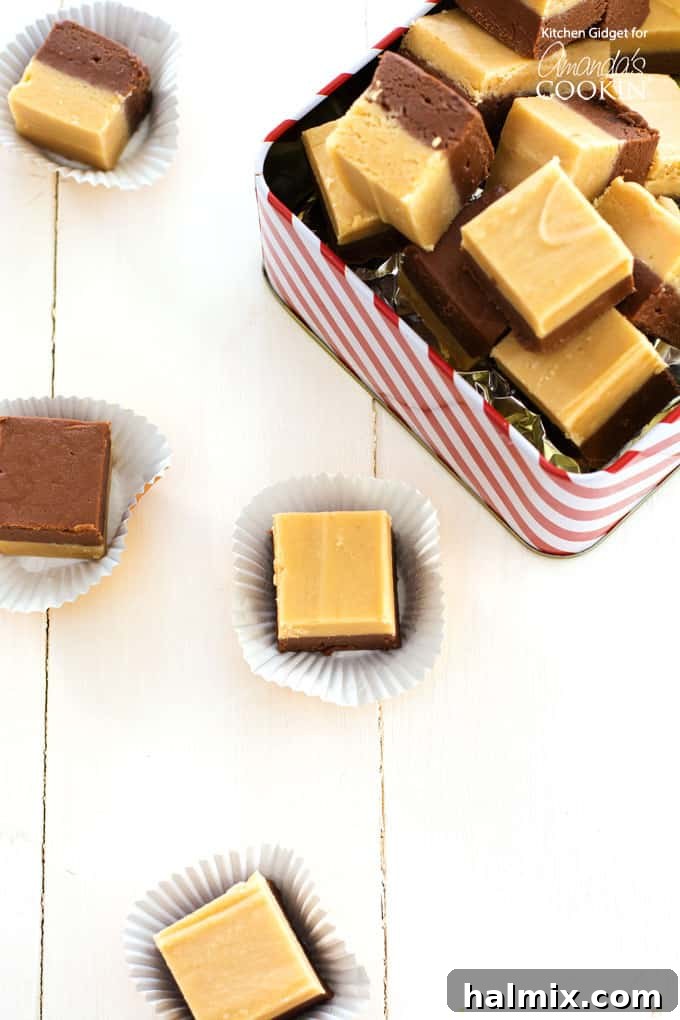
- Cooling and Cutting: Once your fudge is cooked and poured into the prepared pan, resist the urge to disturb it. Allow it to cool completely at room temperature, undisturbed. This slow cooling process is vital for the fudge to set properly and develop its signature texture. Once firm, lift it out using the foil overhang, slice into small, neat squares, and arrange on trays for guests or package beautifully for gifting.
- Avoiding Graininess: Grainy fudge is a common disappointment, often caused by undissolved sugar crystals or overcooking. Ensure all sugar crystals are dissolved before the mixture comes to a boil, and strictly adhere to the cooking temperature/time.
Simple Ingredients for Decadent Fudge
The beauty of this chocolate peanut butter fudge lies in its relatively simple ingredient list, making it an accessible recipe for home bakers of all skill levels. Here’s what you’ll need to create this delightful confection:
- 3 cups granulated sugar, divided
- 3/4 cup butter, divided
- 2/3 cup evaporated milk, divided
- 6 oz semi-sweet chocolate (chips or chopped bar)
- 1/2 cup peanut butter
- 1 jar (7 oz) marshmallow fluff, divided
- 1 teaspoon vanilla extract, divided
Helpful Kitchen Tools for Fudge Making
Having the right tools can make your fudge-making experience smoother and more successful:
- Candy thermometer (a non-negotiable for consistent results!)
- 8×8 or 9×9 baking pan
- Heavy-bottomed saucepan (prevents scorching)
- Silicone spatula scraper (for thorough mixing and scraping)
- Aluminum foil or parchment paper (for easy removal)
Chocolate Peanut Butter Fudge: Frequently Asked Questions
Can I use milk chocolate chips instead of semi-sweet chocolate chips?
Absolutely, you can substitute milk chocolate chips for semi-sweet chocolate chips in this chocolate peanut butter fudge recipe. However, it’s worth noting that this fudge is already quite sweet on its own. Using milk chocolate will result in an even sweeter confection, which might be too rich for some palates. We generally recommend semi-sweet chocolate to provide a nice contrast and balance to the sweetness of the peanut butter layer.
Is marshmallow fluff the same thing as marshmallow cream?
Yes, marshmallow creme and marshmallow fluff are essentially the same product. “Marshmallow Fluff” is a well-known brand name for marshmallow creme, while “marshmallow creme” is the generic term for the same gooey, aerated confection. So, feel free to use whichever you find available at your local grocery store.
Can you double this recipe?
Doubling this chocolate peanut butter fudge recipe is certainly possible if you’re looking to make a larger quantity. When doing so, you will need to use a larger pan, such as a 13×9 inch baking pan, instead of the recommended 8×8 or 9×9 inch square pan. Keep in mind that doubling the recipe might result in slightly thinner layers of fudge compared to a single batch in a square pan, but the taste will be just as wonderful.
What kind of sugar should I use – white sugar or powdered sugar?
This particular fudge recipe calls for regular white granulated sugar. Granulated sugar is crucial for achieving the correct candy-making chemistry and texture. Powdered sugar (confectioners’ sugar) has different properties and contains cornstarch, which would alter the fudge’s consistency and is not recommended for this recipe.
Can the marshmallow fluff be omitted?
While some fudge recipes can be made without marshmallow creme, it is a critical ingredient in this specific chocolate peanut butter fudge recipe. Marshmallow fluff plays a vital role in creating the smooth, creamy texture and helps prevent sugar crystallization. Omitting it would drastically change the fudge’s consistency and likely result in a much firmer, possibly grainy, product. If you prefer to make your own marshmallow fluff from scratch, there are recipes available to do so.
Why is my fudge grainy?
Grainy fudge is a common issue that can usually be traced back to two main culprits: the sugar not being fully dissolved, or the fudge being cooked for too long. To avoid this, ensure you stir the sugar mixture until all crystals have completely dissolved before it reaches a rapid boil. Also, precise temperature control with a candy thermometer, and promptly removing the fudge from heat once it hits 234°F, is essential. Overcooking allows too many sugar crystals to form, leading to a gritty texture.
How should I store homemade fudge?
For optimal freshness and texture, store your chocolate peanut butter fudge in an airtight container at room temperature. Layer pieces between sheets of wax paper or parchment paper to prevent sticking. Properly stored, fudge can last for up to 1-2 weeks. While you can freeze fudge for longer storage (up to 2-3 months), it’s best enjoyed at room temperature, as refrigeration can alter its creamy texture.
More Irresistible Candy and Fudge Recipes for the Holidays
As the cooler weather arrives, so does the anticipation of baking and crafting delightful homemade candies. The holidays are the perfect time to share these sweet creations with loved ones. Here are several other candy recipes that are ideal for Thanksgiving, Christmas, and beyond, perfect for gifting or enjoying with family:
- If you’re a devoted fudge enthusiast, this rich chocolate walnut fudge is absolutely divine and makes an exquisite edible gift.
- Pumpkin pie fanatics will utterly adore this creamy easy pumpkin pie fudge, a perfect addition to your Thanksgiving dessert spread!
- For a truly unique and surprisingly addictive treat, if you haven’t tried Saltine Toffee yet, it’s an absolute must! You won’t believe how incredibly good it is until you experience it yourself.
- This cherished homemade peanut brittle recipe has been a Christmas tradition in my family for over two decades, consistently delivering crunchy, sweet perfection.
- Homemade Peanut Butter Cups are incredibly quick and simple to prepare, making them an ideal choice for last-minute edible gifts or a swift craving satisfier!
- Indulge in soft and chewy homemade microwave caramels, effortlessly made with just a handful of ingredients and the convenience of your microwave.
- You only need three simple ingredients to create a batch of surprisingly delicious homemade potato candy – a unique and easy confection.
- As a gentle warning, once you try saltine toffee, you might find it dangerously addictive. Its sweet and salty crunch is truly irresistible!
- For an ultra-rich and silky smooth topping, this chocolate fudge frosting requires only five ingredients and comes together beautifully for cakes and cupcakes.
Every year during the holiday season, my father would eagerly anticipate a special gift basket from his realtor. It was always brimming with an assortment of homemade cookies, delightful sweet treats, and this very fudge. I looked forward to it annually, along with the comforting taste of grandma’s old-fashioned Butterhorn Cookies and the stunning Red Velvet Cookies, always crowned with a luxurious cream cheese frosting.
Chocolate Peanut Butter Fudge
Chocolate chips, peanut butter, marshmallow fluff, and evaporated milk, along with a few other essential ingredients, come together to create this delicious two-layered chocolate peanut butter fudge.
Rated 5 out of 5 stars by 56 users.
IMPORTANT – There are often Frequently Asked Questions within the blog post that you may find helpful. Simply scroll back up to read them!
Print It |
Pin It |
Rate It
Course: Desserts |
Cuisine: American |
Servings: 64 squares |
Total Time: 50 mins |
Calories: 92 cal |
Author: Amanda Davis
Ingredients
For the chocolate layer:
- 1 ½ cups granulated sugar
- 6 tablespoons butter
- ⅓ cup evaporated milk (not sweetened condensed)
- 6 oz semi-sweet chocolate (or chocolate chips)
- ½ cup marshmallow fluff (Scant 1/2 cup)
- ½ teaspoon vanilla extract
For the peanut butter layer:
- 1 ½ cups sugar
- 6 tablespoons butter
- ⅓ cup evaporated milk (not sweetened condensed)
- ½ cup peanut butter
- ½ cup marshmallow fluff (Scant 1/2 cup)
- ½ teaspoon vanilla extract
Things You’ll Need
- Candy thermometer
- 9×9 baking pan
- Saucepan
- Silicone spatula scraper
Before You Begin
- Use clean, dry pots and utensils for each layer of fudge to prevent cross-contamination or issues with setting.
- For the best creamy texture, it is generally recommended not to refrigerate fudge, as it can become too firm and lose its smooth consistency.
- IMPORTANT TIP – When making candy of any kind, it’s imperative that you use a heavy-bottomed saucepan to ensure even heat distribution and prevent scorching, along with a reliable candy thermometer. The temperature of a candy mixture can increase slowly and then suddenly surge up. Watch your thermometer carefully and remove the pan from heat immediately when the desired temperature is reached to prevent overcooking.
Instructions
- Line an 8×8 or 9×9 inch pan with aluminum foil, making sure the edges extend over the sides for easy removal. Lightly butter the foil and set the pan aside.
For the chocolate fudge:
- In a medium, heavy-bottomed saucepan over medium heat, combine and melt the granulated sugar, butter, and evaporated milk, stirring constantly until fully dissolved and integrated.
- After the mixture begins to boil rapidly, continue to cook for 2-4 minutes without stirring until a candy thermometer accurately reads 234°F. This specific temperature is crucial for the fudge’s consistency.
- Promptly remove the saucepan from the heat. Stir in the semi-sweet chocolate (or chocolate chips), marshmallow fluff, and vanilla extract. Beat the mixture vigorously with a spatula until all ingredients are thoroughly combined and smooth.
- Carefully pour the chocolate fudge mixture into the prepared pan, spreading it evenly to form the first layer. Set aside at room temperature to cool and begin to set while you prepare the peanut butter layer.
For the peanut butter fudge:
- Using a clean saucepan, or after thoroughly cleaning the previous one, combine the remaining sugar, butter, and evaporated milk over medium heat. Stir constantly until the sugar dissolves and the mixture begins to boil rapidly. Continue to cook for 2-4 minutes without stirring, monitoring with a candy thermometer until it reaches precisely 234°F.
- Remove the saucepan from the heat. Stir in the peanut butter, marshmallow fluff, and vanilla extract, beating vigorously until the mixture is smooth and well combined.
- Carefully pour the peanut butter fudge mixture directly over the cooled and partially set chocolate layer, spreading it evenly to create the second layer. Allow the entire pan of fudge to cool completely at room temperature until firm. Once firm, use the foil overhang to lift the fudge from the pan, cut into small squares, and serve.
Nutrition Information
Serving Size: 2 squares | Calories: 92 cal | Carbohydrates: 13g | Protein: 1g | Fat: 4g | Saturated Fat: 2g | Cholesterol: 7mg | Sodium: 31mg | Potassium: 36mg | Fiber: 1g | Sugar: 12g | Vitamin A: 73IU | Vitamin C: 1mg | Calcium: 10mg | Iron: 1mg
Tried this Recipe? Pin it for Later!
Follow on Pinterest @AmandasCookin or tag #AmandasCookin!
The recipes on this blog are tested with a conventional gas oven and gas stovetop. It’s important to note that some ovens, especially as they age, can cook and bake inconsistently. Using an inexpensive oven thermometer can assure you that your oven is truly heating to the proper temperature. If you use a toaster oven or countertop oven, please keep in mind that they may not distribute heat the same as a conventional full sized oven and you may need to adjust your cooking/baking times. In the case of recipes made with a pressure cooker, air fryer, slow cooker, or other appliance, a link to the appliances we use is listed within each respective recipe. For baking recipes where measurements are given by weight, please note that results may not be the same if cups are used instead, and we can’t guarantee success with that method.
This post originally appeared here on Nov 12, 2016.
There’s something truly magical about a classic dessert that brings back cherished memories, and this chocolate peanut butter fudge does just that. It’s not just a treat; it’s a warm embrace of nostalgia, simple to create, and utterly irresistible. Featuring two distinct, perfectly balanced layers of rich chocolate and creamy peanut butter, this confection is a holiday staple, ideal for thoughtful gourmet gifting or simply indulging yourself. Homemade fudge is universally adored during the festive season, so be prepared to make an generous batch – it disappears quickly!
Ultimate Two-Layer Chocolate Peanut Butter Fudge Recipe
What makes this chocolate peanut butter fudge recipe a standout is its elegant two-toned design. Each bite offers a delightful journey through velvety chocolate fudge followed by a smooth, rich peanut butter fudge layer – a true double treat that’s as beautiful to behold as it is delicious to eat. This layered approach not only enhances the flavor complexity but also adds a visual appeal that makes it a showstopper on any dessert table.
Crafting the Perfect Homemade Fudge: Essential Tips
Achieving perfectly smooth and creamy fudge every time can feel like an art, but with a few key techniques, it’s entirely achievable. The secret lies in precise cooking and the right ingredients. Here’s how to master your homemade fudge:
- Temperature is Key: The most crucial aspect of smooth, creamy fudge is precise temperature control during cooking. Too little heat, and your fudge won’t set properly, resulting in a soft, gooey mess. Too much heat, and it can become dry, crumbly, or grainy. This delicate balance requires close attention and, ideally, a reliable candy thermometer.
- The Marshmallow Fluff Advantage: Luckily, modern fudge recipes often incorporate a “magic ingredient” – marshmallow fluff (or marshmallow creme). This addition is a game-changer, helping to prevent sugar crystallization and ensuring that coveted velvety, melt-in-your-mouth texture. It acts as a stabilizer, making the fudge-making process more forgiving.
- Invest in a Candy Thermometer: When embarking on any candy-making adventure, a heavy-bottomed saucepan and a candy thermometer are indispensable. Candy mixtures can be temperamental; their temperature can rise slowly and then suddenly surge. Monitor your thermometer diligently. As soon as the desired temperature is reached (234°F for this recipe), remove the pan from the heat immediately.
- No Thermometer? No Problem (with caution): If you find yourself without a candy thermometer, you can still make fudge, though it requires a bit more intuition. After the mixture begins to boil rapidly over medium heat, continue cooking for approximately 3-4 minutes, stirring constantly. This method can still yield silky smooth results, but a thermometer offers the most consistent outcome.
- Cooling and Cutting: Once your fudge is cooked and poured into the prepared pan, resist the urge to disturb it. Allow it to cool completely at room temperature, undisturbed. This slow cooling process is vital for the fudge to set properly and develop its signature texture. Once firm, lift it out using the foil overhang, slice into small, neat squares, and arrange on trays for guests or package beautifully for gifting.
- Avoiding Graininess: Grainy fudge is a common disappointment, often caused by undissolved sugar crystals or overcooking. Ensure all sugar crystals are dissolved before the mixture comes to a boil, and strictly adhere to the cooking temperature/time.
Simple Ingredients for Decadent Fudge
The beauty of this chocolate peanut butter fudge lies in its relatively simple ingredient list, making it an accessible recipe for home bakers of all skill levels. Here’s what you’ll need to create this delightful confection:
- 3 cups granulated sugar, divided
- 3/4 cup butter, divided
- 2/3 cup evaporated milk, divided
- 6 oz semi-sweet chocolate (chips or chopped bar)
- 1/2 cup peanut butter
- 1 jar (7 oz) marshmallow fluff, divided
- 1 teaspoon vanilla extract, divided
Helpful Kitchen Tools for Fudge Making
Having the right tools can make your fudge-making experience smoother and more successful:
- Candy thermometer (a non-negotiable for consistent results!)
- 8×8 or 9×9 baking pan
- Heavy-bottomed saucepan (prevents scorching)
- Silicone spatula scraper (for thorough mixing and scraping)
- Aluminum foil or parchment paper (for easy removal)
Chocolate Peanut Butter Fudge: Frequently Asked Questions
Can I use milk chocolate chips instead of semi-sweet chocolate chips?
Absolutely, you can substitute milk chocolate chips for semi-sweet chocolate chips in this chocolate peanut butter fudge recipe. However, it’s worth noting that this fudge is already quite sweet on its own. Using milk chocolate will result in an even sweeter confection, which might be too rich for some palates. We generally recommend semi-sweet chocolate to provide a nice contrast and balance to the sweetness of the peanut butter layer.
Is marshmallow fluff the same thing as marshmallow cream?
Yes, marshmallow creme and marshmallow fluff are essentially the same product. “Marshmallow Fluff” is a well-known brand name for marshmallow creme, while “marshmallow creme” is the generic term for the same gooey, aerated confection. So, feel free to use whichever you find available at your local grocery store.
Can you double this recipe?
Doubling this chocolate peanut butter fudge recipe is certainly possible if you’re looking to make a larger quantity. When doing so, you will need to use a larger pan, such as a 13×9 inch baking pan, instead of the recommended 8×8 or 9×9 inch square pan. Keep in mind that doubling the recipe might result in slightly thinner layers of fudge compared to a single batch in a square pan, but the taste will be just as wonderful.
What kind of sugar should I use – white sugar or powdered sugar?
This particular fudge recipe calls for regular white granulated sugar. Granulated sugar is crucial for achieving the correct candy-making chemistry and texture. Powdered sugar (confectioners’ sugar) has different properties and contains cornstarch, which would alter the fudge’s consistency and is not recommended for this recipe.
Can the marshmallow fluff be omitted?
While some fudge recipes can be made without marshmallow creme, it is a critical ingredient in this specific chocolate peanut butter fudge recipe. Marshmallow fluff plays a vital role in creating the smooth, creamy texture and helps prevent sugar crystallization. Omitting it would drastically change the fudge’s consistency and likely result in a much firmer, possibly grainy, product. If you prefer to make your own marshmallow fluff from scratch, there are recipes available to do so.
Why is my fudge grainy?
Grainy fudge is a common issue that can usually be traced back to two main culprits: the sugar not being fully dissolved, or the fudge being cooked for too long. To avoid this, ensure you stir the sugar mixture until all crystals have completely dissolved before it reaches a rapid boil. Also, precise temperature control with a candy thermometer, and promptly removing the fudge from heat once it hits 234°F, is essential. Overcooking allows too many sugar crystals to form, leading to a gritty texture.
How should I store homemade fudge?
For optimal freshness and texture, store your chocolate peanut butter fudge in an airtight container at room temperature. Layer pieces between sheets of wax paper or parchment paper to prevent sticking. Properly stored, fudge can last for up to 1-2 weeks. While you can freeze fudge for longer storage (up to 2-3 months), it’s best enjoyed at room temperature, as refrigeration can alter its creamy texture.
More Irresistible Candy and Fudge Recipes for the Holidays
As the cooler weather arrives, so does the anticipation of baking and crafting delightful homemade candies. The holidays are the perfect time to share these sweet creations with loved ones. Here are several other candy recipes that are ideal for Thanksgiving, Christmas, and beyond, perfect for gifting or enjoying with family:
- If you’re a devoted fudge enthusiast, this rich chocolate walnut fudge is absolutely divine and makes an exquisite edible gift.
- Pumpkin pie fanatics will utterly adore this creamy easy pumpkin pie fudge, a perfect addition to your Thanksgiving dessert spread!
- For a truly unique and surprisingly addictive treat, if you haven’t tried Saltine Toffee yet, it’s an absolute must! You won’t believe how incredibly good it is until you experience it yourself.
- This cherished homemade peanut brittle recipe has been a Christmas tradition in my family for over two decades, consistently delivering crunchy, sweet perfection.
- Homemade Peanut Butter Cups are incredibly quick and simple to prepare, making them an ideal choice for last-minute edible gifts or a swift craving satisfier!
- Indulge in soft and chewy homemade microwave caramels, effortlessly made with just a handful of ingredients and the convenience of your microwave.
- You only need three simple ingredients to create a batch of surprisingly delicious homemade potato candy – a unique and easy confection.
- As a gentle warning, once you try saltine toffee, you might find it dangerously addictive. Its sweet and salty crunch is truly irresistible!
- For an ultra-rich and silky smooth topping, this chocolate fudge frosting requires only five ingredients and comes together beautifully for cakes and cupcakes.
Every year during the holiday season, my father would eagerly anticipate a special gift basket from his realtor. It was always brimming with an assortment of homemade cookies, delightful sweet treats, and this very fudge. I looked forward to it annually, along with the comforting taste of grandma’s old-fashioned Butterhorn Cookies and the stunning Red Velvet Cookies, always crowned with a luxurious cream cheese frosting.
Chocolate Peanut Butter Fudge
Chocolate chips, peanut butter, marshmallow fluff, and evaporated milk, along with a few other essential ingredients, come together to create this delicious two-layered chocolate peanut butter fudge.
Rated 5 out of 5 stars by 56 users.
IMPORTANT – There are often Frequently Asked Questions within the blog post that you may find helpful. Simply scroll back up to read them!
Print It |
Pin It |
Rate It
Course: Desserts |
Cuisine: American |
Servings: 64 squares |
Total Time: 50 mins |
Calories: 92 cal |
Author: Amanda Davis
Ingredients
For the chocolate layer:
- 1 ½ cups granulated sugar
- 6 tablespoons butter
- ⅓ cup evaporated milk (not sweetened condensed)
- 6 oz semi-sweet chocolate (or chocolate chips)
- ½ cup marshmallow fluff (Scant 1/2 cup)
- ½ teaspoon vanilla extract
For the peanut butter layer:
- 1 ½ cups sugar
- 6 tablespoons butter
- ⅓ cup evaporated milk (not sweetened condensed)
- ½ cup peanut butter
- ½ cup marshmallow fluff (Scant 1/2 cup)
- ½ teaspoon vanilla extract
Things You’ll Need
- Candy thermometer
- 9×9 baking pan
- Saucepan
- Silicone spatula scraper
Before You Begin
- Use clean, dry pots and utensils for each layer of fudge to prevent cross-contamination or issues with setting.
- For the best creamy texture, it is generally recommended not to refrigerate fudge, as it can become too firm and lose its smooth consistency.
- IMPORTANT TIP – When making candy of any kind, it’s imperative that you use a heavy-bottomed saucepan to ensure even heat distribution and prevent scorching, along with a reliable candy thermometer. The temperature of a candy mixture can increase slowly and then suddenly surge up. Watch your thermometer carefully and remove the pan from heat immediately when the desired temperature is reached to prevent overcooking.
Instructions
- Line an 8×8 or 9×9 inch pan with aluminum foil, making sure the edges extend over the sides for easy removal. Lightly butter the foil and set the pan aside.
For the chocolate fudge:
- In a medium, heavy-bottomed saucepan over medium heat, combine and melt the granulated sugar, butter, and evaporated milk, stirring constantly until fully dissolved and integrated.
- After the mixture begins to boil rapidly, continue to cook for 2-4 minutes without stirring until a candy thermometer accurately reads 234°F. This specific temperature is crucial for the fudge’s consistency.
- Promptly remove the saucepan from the heat. Stir in the semi-sweet chocolate (or chocolate chips), marshmallow fluff, and vanilla extract. Beat the mixture vigorously with a spatula until all ingredients are thoroughly combined and smooth.
- Carefully pour the chocolate fudge mixture into the prepared pan, spreading it evenly to form the first layer. Set aside at room temperature to cool and begin to set while you prepare the peanut butter layer.
For the peanut butter fudge:
- Using a clean saucepan, or after thoroughly cleaning the previous one, combine the remaining sugar, butter, and evaporated milk over medium heat. Stir constantly until the sugar dissolves and the mixture begins to boil rapidly. Continue to cook for 2-4 minutes without stirring, monitoring with a candy thermometer until it reaches precisely 234°F.
- Remove the saucepan from the heat. Stir in the peanut butter, marshmallow fluff, and vanilla extract, beating vigorously until the mixture is smooth and well combined.
- Carefully pour the peanut butter fudge mixture directly over the cooled and partially set chocolate layer, spreading it evenly to create the second layer. Allow the entire pan of fudge to cool completely at room temperature until firm. Once firm, use the foil overhang to lift the fudge from the pan, cut into small squares, and serve.
Nutrition Information
Serving Size: 2 squares | Calories: 92 cal | Carbohydrates: 13g | Protein: 1g | Fat: 4g | Saturated Fat: 2g | Cholesterol: 7mg | Sodium: 31mg | Potassium: 36mg | Fiber: 1g | Sugar: 12g | Vitamin A: 73IU | Vitamin C: 1mg | Calcium: 10mg | Iron: 1mg
Tried this Recipe? Pin it for Later!
Follow on Pinterest @AmandasCookin or tag #AmandasCookin!
The recipes on this blog are tested with a conventional gas oven and gas stovetop. It’s important to note that some ovens, especially as they age, can cook and bake inconsistently. Using an inexpensive oven thermometer can assure you that your oven is truly heating to the proper temperature. If you use a toaster oven or countertop oven, please keep in mind that they may not distribute heat the same as a conventional full sized oven and you may need to adjust your cooking/baking times. In the case of recipes made with a pressure cooker, air fryer, slow cooker, or other appliance, a link to the appliances we use is listed within each respective recipe. For baking recipes where measurements are given by weight, please note that results may not be the same if cups are used instead, and we can’t guarantee success with that method.
This post originally appeared here on Nov 12, 2016.