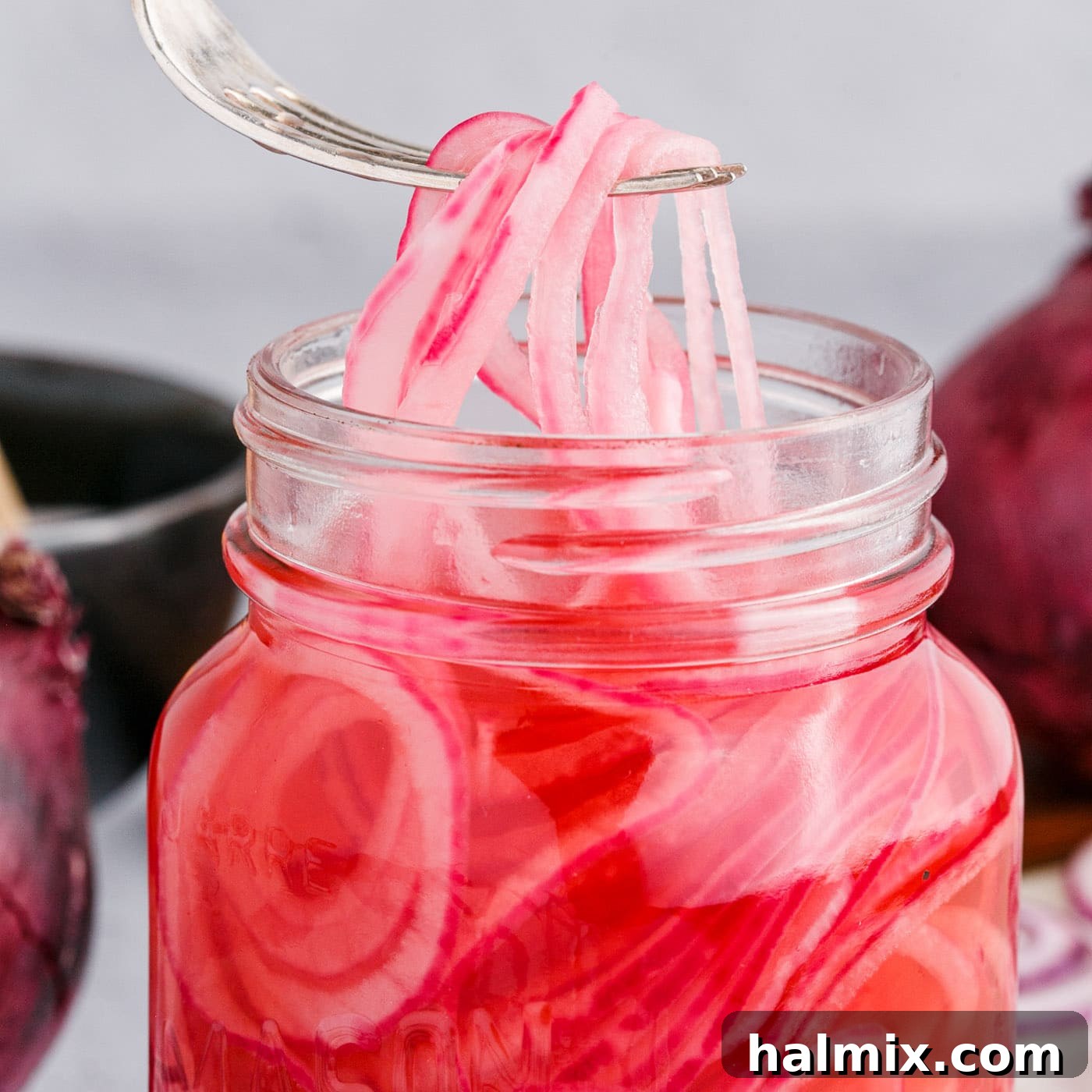
Transform your everyday meals with the vibrant zest and sweet tang of homemade pickled red onions! This incredibly simple recipe requires only 5 minutes of active preparation and a handful of common ingredients to create a truly delicious, versatile condiment. Whether you’re looking to elevate your sandwiches, add a pop of color and flavor to your tacos, or brighten up a dull salad, these quick pickled onions are an absolute game-changer. Forget store-bought versions; once you experience the fresh, crisp bite and balanced flavor of homemade, there’s no turning back.
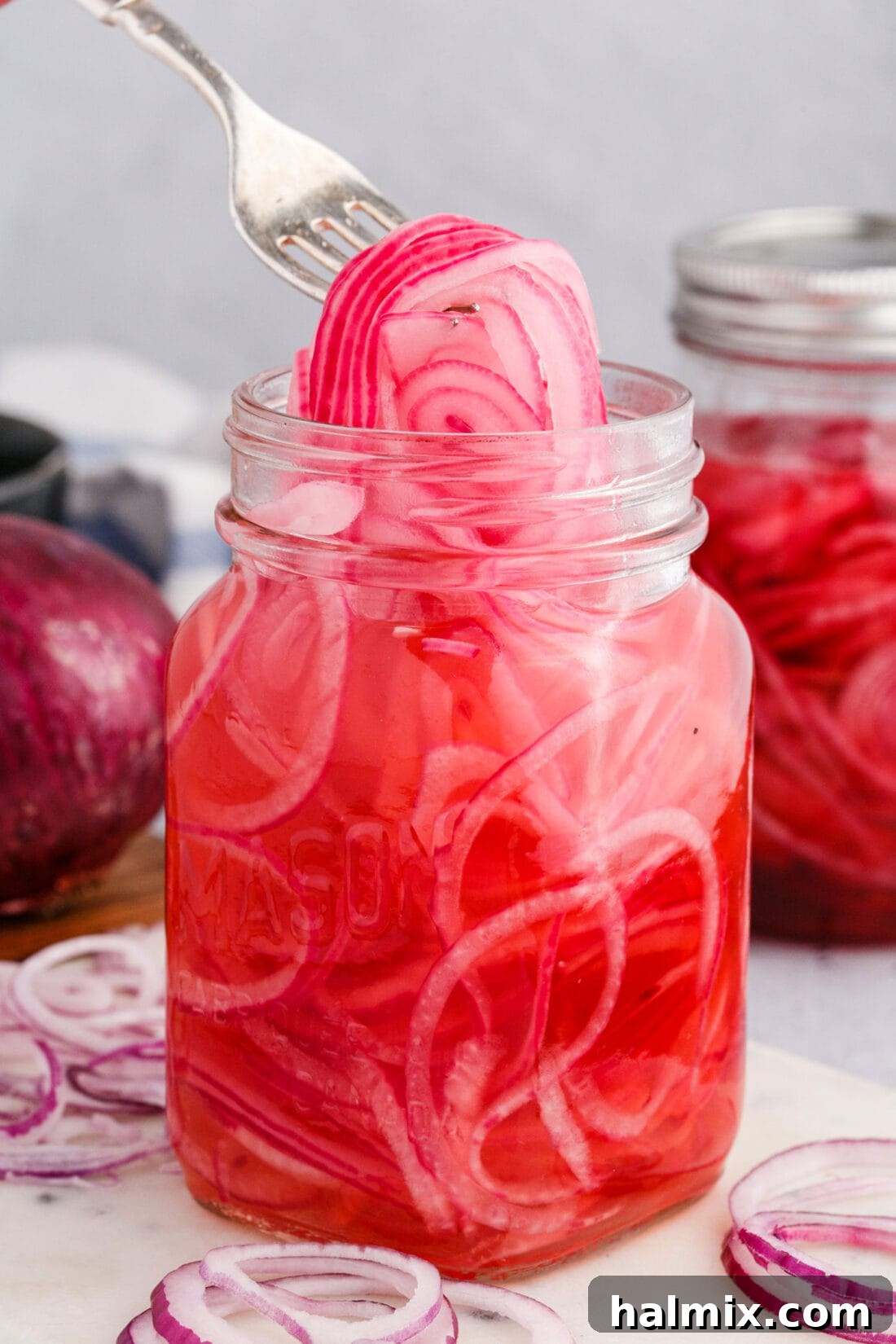
Why This Quick Pickled Onion Recipe is a Game Changer
Making your own pickled red onions couldn’t be simpler, mirroring the ease of our popular quick pickled beets. This recipe truly shines for several reasons, making it a staple in any kitchen. First and foremost, the speed is unmatched – with just 5 minutes of hands-on time, you can have a batch ready to enjoy within the hour. It’s a spontaneous condiment, perfect for those last-minute meal enhancements.
Secondly, the minimal ingredient list means you likely already have everything you need in your pantry: a large red onion, apple cider vinegar, water, granulated sugar, and salt. No obscure spices or lengthy fermentation processes are required. This simplicity ensures a consistent, delicious result every time, even for beginner cooks.
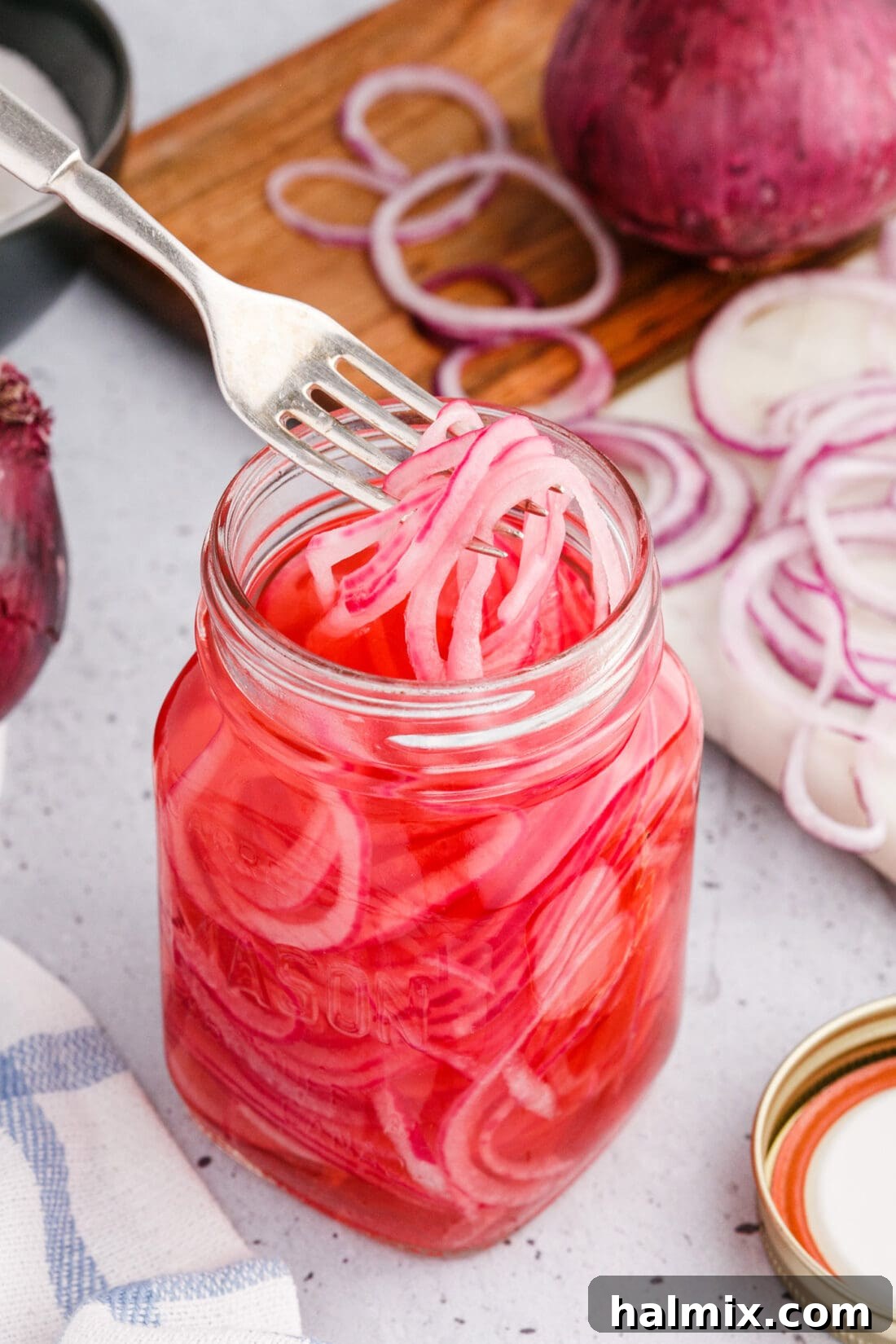
Beyond its ease, this recipe delivers an exceptional flavor profile. The pickling process softens the sharp, pungent edge of raw red onions, transforming them into crisp, slightly sweet, and tangy slices. They retain a beautiful vibrant pink hue, adding visual appeal to any dish. The acidity of the vinegar cuts through rich foods, while the touch of sweetness balances the tartness, creating a harmonious burst of flavor that complements a wide array of cuisines.
The beauty of quick pickling lies in its efficiency. Instead of waiting days or weeks for fermentation, a brief simmer of the brine mixture and a short marination period are all it takes to achieve that coveted tangy crunch. This method allows the onions to absorb the brine effectively, resulting in perfectly pickled onions without the wait. It’s a fantastic way to utilize fresh onions, extend their shelf life, and add an gourmet touch to everyday meals without any fuss.
Essential Ingredients for Perfect Pickled Onions
Crafting these delectable pickled onions requires just a few key ingredients. While the full measurements and detailed instructions are provided in the recipe card below, let’s explore why each component is crucial and what substitutions you can consider to tailor the flavor to your liking.
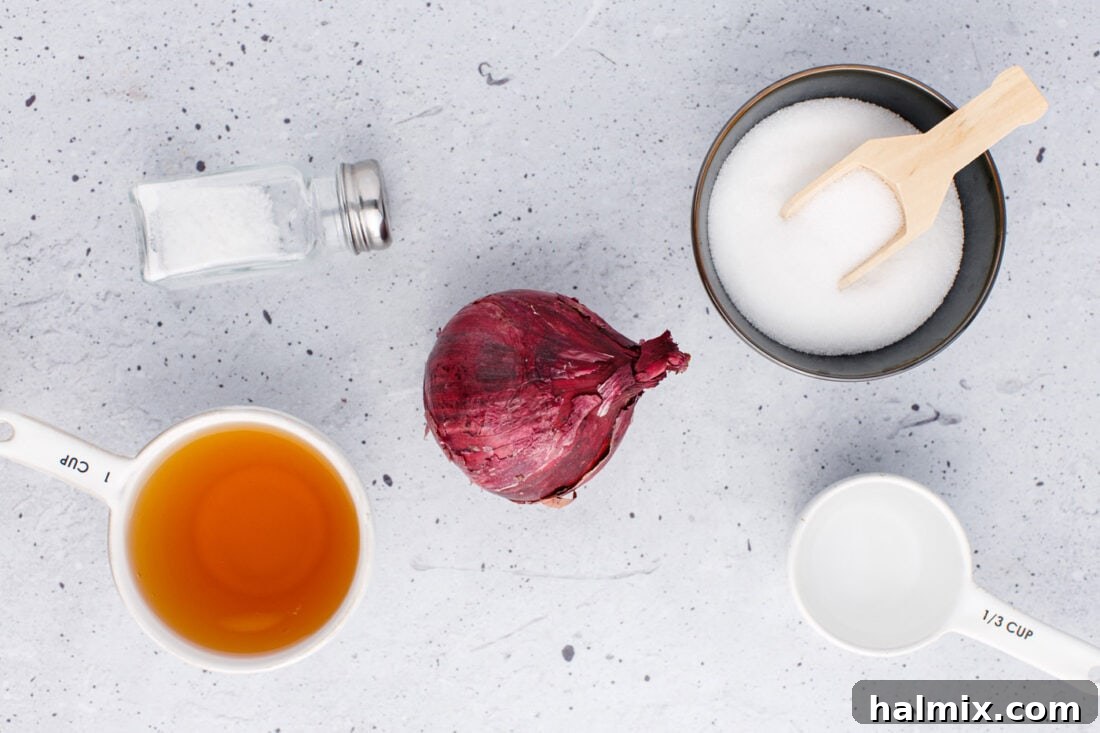
Ingredient Info and Substitution Suggestions
Red Onion: The star of our show! Red onions are preferred for pickling due to their beautiful color, mild sweetness, and crisp texture. When pickled, their vibrant purple hue beautifully bleeds into the brine, giving the onions an appealing pinkish-red shade. For best results, use a large, firm red onion, approximately 200 grams, and slice it as thinly and uniformly as possible. While red onions are ideal, you can experiment with other types like shallots for a more delicate flavor, or even white or sweet onions if red ones are unavailable, though the visual appeal might differ.
Vinegar: This recipe primarily uses apple cider vinegar, which contributes a slightly fruity, mellow tang that complements the onion’s natural sweetness. However, distilled white vinegar is an excellent substitute if that’s what you have on hand, offering a sharper, cleaner acidic profile. You can also get creative with other vinegars: white wine vinegar for a nuanced, slightly floral note, or even rice vinegar for a milder, Asian-inspired flavor profile. The key is to use a vinegar with at least 5% acidity for proper pickling and safety.
Granulated Sugar: Sugar plays a vital role in balancing the acidity of the vinegar and tenderizing the onions, mellowing their sharpness. We use granulated white sugar for its neutral flavor profile. If you prefer, you can substitute it with other sweeteners, keeping in mind they might alter the final taste. Raw cane sugar or turbinado sugar can provide a subtle molasses note, while honey or maple syrup will infuse a distinct, richer sweetness. If using liquid sweeteners like honey or maple syrup, you might need to adjust the measurements slightly, as they are often sweeter by volume than granulated sugar. Start with a little less and adjust to taste.
Salt: Sea salt is recommended for this recipe. Its coarse texture and clean taste are perfect for pickling. Salt is crucial not just for flavor enhancement but also for its role in drawing out moisture from the onions and contributing to the brine’s preservative qualities. Avoid using iodized table salt, as the anti-caking agents and iodine can sometimes make the brine cloudy or give the onions an off-flavor. Kosher salt can also be used as a good alternative to sea salt.
Water: Water is used to dilute the vinegar, creating a balanced brine that’s not too overpowering. The exact ratio of water to vinegar helps achieve the perfect level of tanginess and ensures the onions are properly pickled without being too harsh. Using filtered water can sometimes make a difference in taste, especially if your tap water has a strong mineral content.
How to Master Homemade Pickled Onions: Step-by-Step Guide
These step-by-step photos and instructions are designed to help you visualize each stage of the recipe. For the complete printable version with all precise measurements and ingredient quantities, please scroll down to the recipe card at the bottom of this post.
-
Step 1: Prepare the Brine
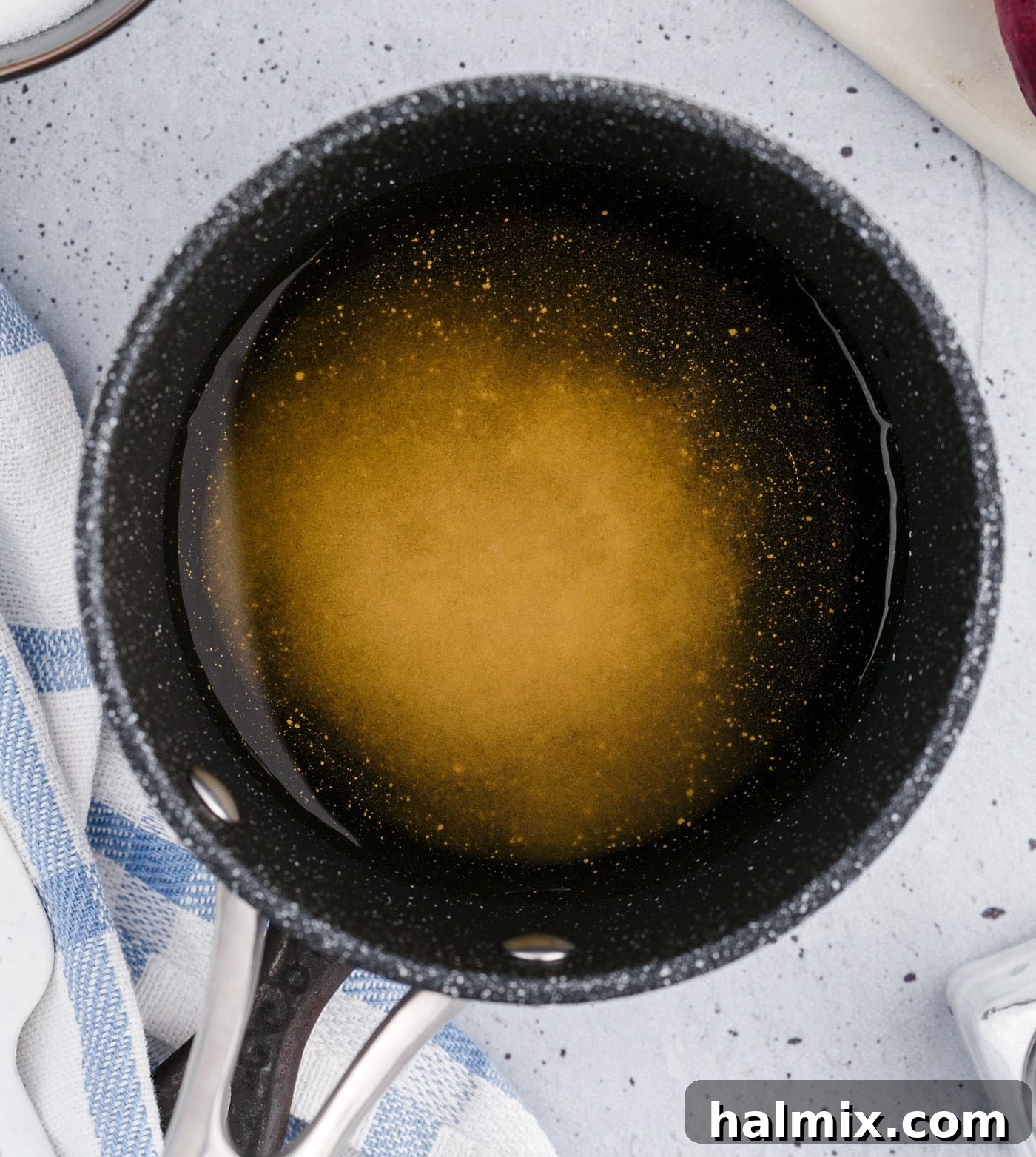
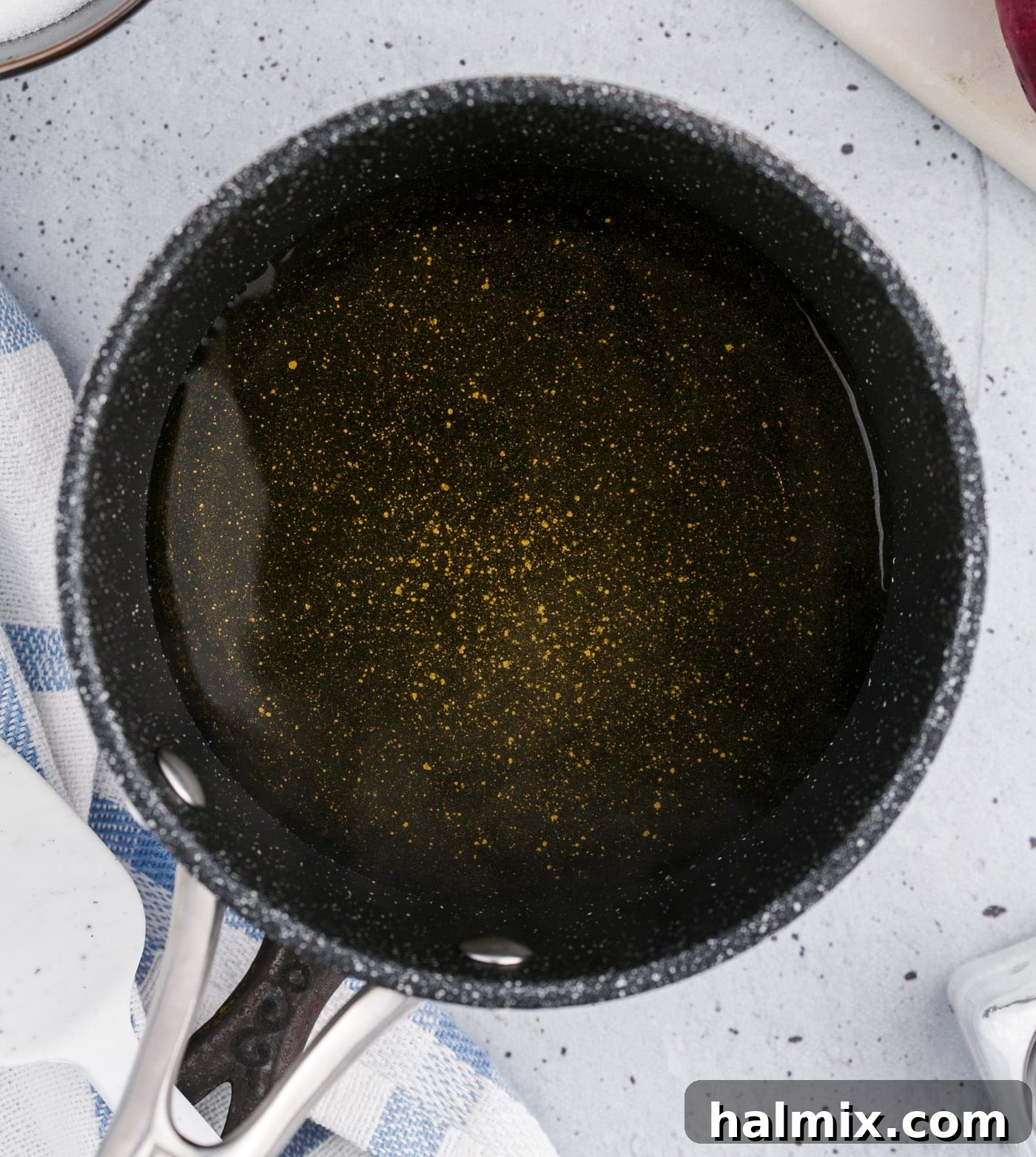
In a small saucepan, combine all the brine ingredients: apple cider vinegar, water, granulated sugar, and salt. Make sure to hold back the sliced red onion for now. Place the saucepan over medium heat and bring the mixture just to a gentle simmer. You’ll want to stir continuously until the sugar and salt are fully dissolved, ensuring a uniform brine. Once it reaches a bare simmer with small bubbles forming around the edges, immediately remove it from the heat. Over-boiling isn’t necessary and can evaporate some of the vinegar, altering the flavor balance.

-
Step 2: Slice and Pack the Onions
While your brine is heating, thinly slice your red onion. For the best texture and absorption of the pickling liquid, aim for uniform, paper-thin slices. A mandoline slicer can achieve this perfectly, but a sharp chef’s knife and a steady hand will also work beautifully. Once sliced, pack the onion rings tightly into a clean pint-sized mason jar. Don’t be afraid to really press them down; they’ll shrink a bit once the hot brine is added. The goal is to maximize the onion-to-brine ratio in the jar.
-
Step 3: Pour, Seal, and Pickle
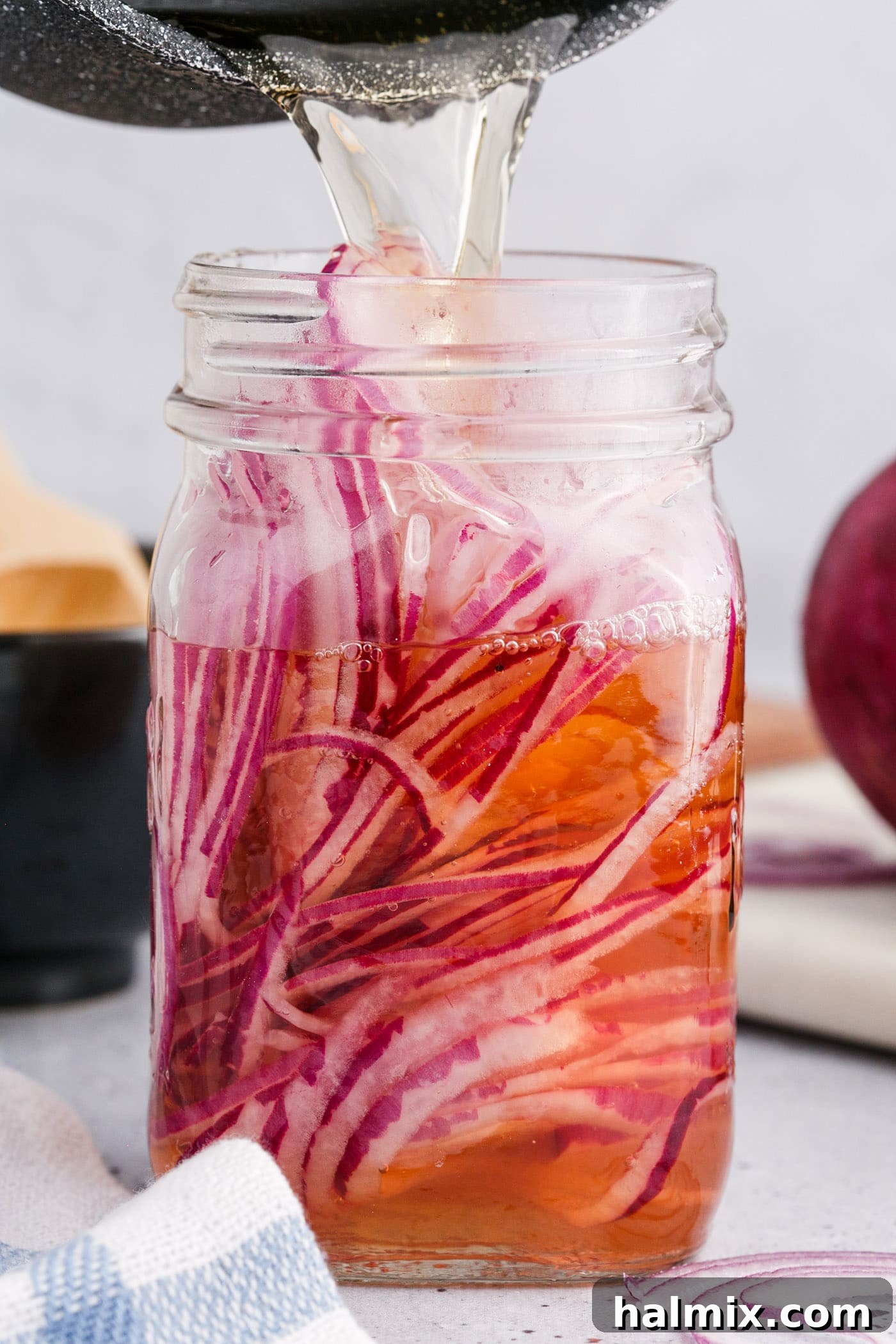
Carefully pour the hot vinegar mixture over the thinly sliced onions in the mason jar. Ensure that the onions are fully submerged in the liquid. If they’re not, you can gently push them down with a spoon or add a little more hot water or vinegar to cover them completely. Once filled, seal the jar tightly with its lid. Allow the onions to sit and marinate for about 45 minutes at room temperature before using. This short pickling time is sufficient for the onions to soften slightly and absorb the vibrant flavors of the brine, transforming them into delicious pickled perfection. For optimal flavor and texture, refrigerate for at least a few hours before serving, allowing them to cool down and the flavors to meld.
EXPERT TIP: If your onion slices rise above the brine, prevent uneven pickling by either gently pushing them down with a spoon periodically or simply flipping the sealed jar for half of the marinating duration. This ensures all onion pieces get equal exposure to the flavorful liquid.
Expert Tips & Customization Ideas
While this recipe is fantastic in its simplicity, there’s always room for personalization and a few expert tricks to enhance your pickled onion experience. Here are some tips and answers to frequently asked questions:
Flavor Enhancements
Feeling adventurous? You can easily customize your pickled onions by adding extra aromatics and spices to the brine mixture during the simmering phase:
- Garlic: Add 1-2 cloves of thinly sliced garlic for a subtle savory kick.
- Peppercorns: A teaspoon of black peppercorns, or even a mix of colorful peppercorns, will add a mild spicy undertone.
- Herbs: Fresh dill sprigs, thyme, or bay leaves can infuse wonderful herbaceous notes. Add them directly to the jar with the onions before pouring the brine.
- Spicy Kick: For those who love heat, a pinch of red pepper flakes or a thin slice of jalapeño can be added to the brine or jar.
- Mustard Seeds: A teaspoon of mustard seeds (yellow or brown) adds a classic pickling flavor.
Achieving Ideal Texture
The thickness of your onion slices greatly impacts the final texture. Thinner slices will soften more and pickle faster, while thicker slices will retain more crunch. Experiment to find your preferred bite. For crispier onions, you can soak the sliced onions in ice water for 15-30 minutes before adding them to the jar; this helps firm them up before pickling.
Storage Best Practices
Proper storage is key to enjoying your homemade pickled onions for as long as possible. Once cooled, always store them in an airtight container in the refrigerator. Ensure the onions remain submerged in the brine, as this is what keeps them preserved. While this recipe is for quick pickling and not a canning method for long-term shelf stability, these refrigerator pickled onions will generally keep well for up to 2 weeks.
Important Note: It’s crucial not to refrigerate the pickled onions immediately after making them. Allow them to cool completely at room temperature first, which helps the flavors develop and the onions absorb the brine more effectively, before transferring them to the fridge.
Common Questions Answered
When stored in an airtight container in the refrigerator, homemade quick pickled onions will stay fresh and delicious for up to 2 weeks. This recipe is designed for refrigerator storage, not for pantry shelf stability through traditional canning methods.
While technically possible, reusing the brine is generally not recommended for food safety reasons, especially for quick pickles. The brine absorbs flavors and sugars from the onions, and its acidity might be diminished. For the best flavor and safety, it’s always best to prepare a fresh batch of brine for each new batch of pickled onions.
Red onions are hands-down the best choice for quick pickling due to their beautiful color, mild sweetness, and ability to hold their crispness. However, you can also use shallots for a more delicate flavor, or even sweet onions if you prefer a less pungent profile, though they might not yield the same vibrant color.
Unleashing the Versatility: Serving Suggestions
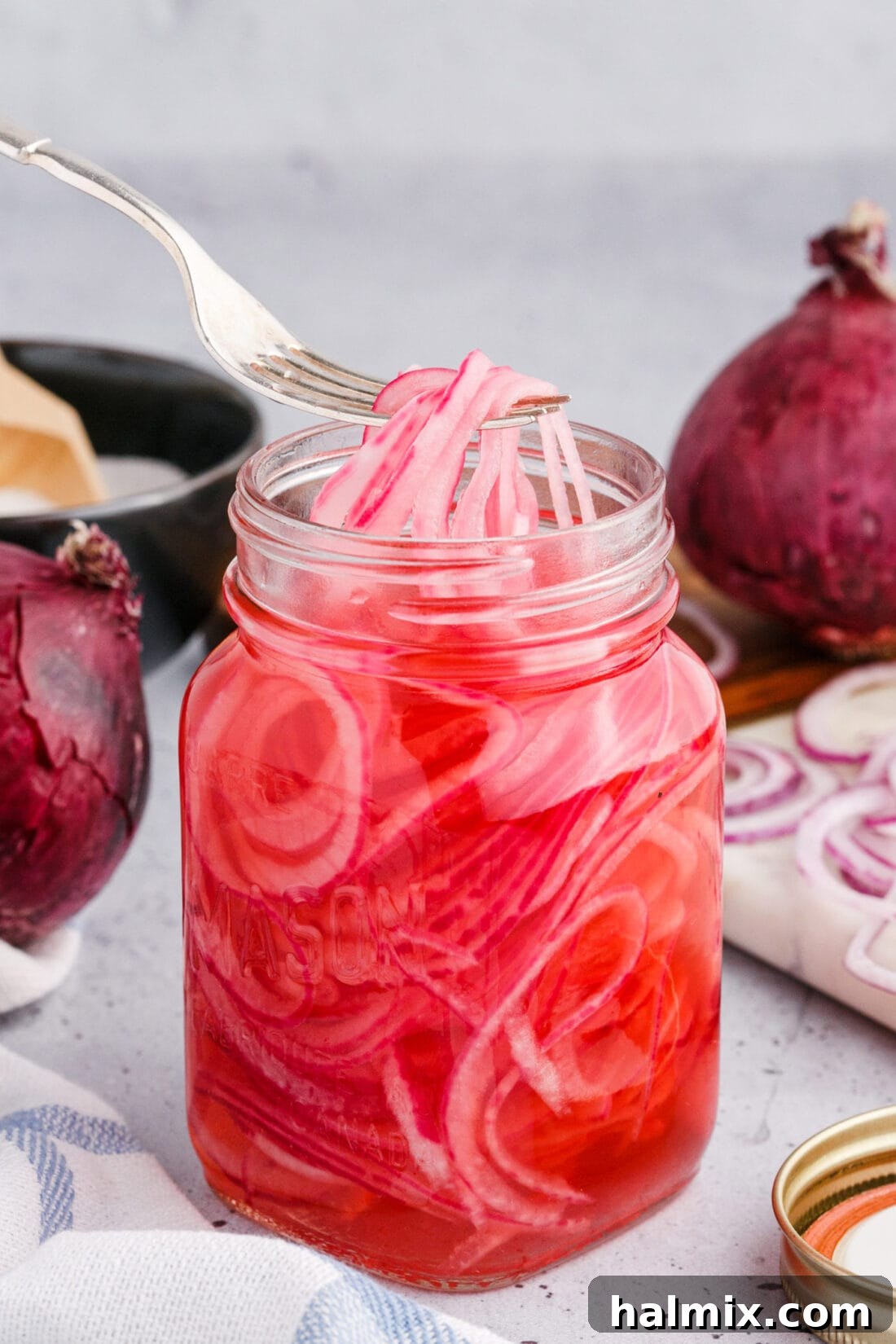
The beauty of pickled red onions lies in their incredible versatility. Their bright, tangy, and slightly sweet flavor profile makes them an exceptional accompaniment to a vast array of dishes, instantly adding a gourmet touch and a pop of color. Here are some of our favorite ways to enjoy them:
- Sandwiches and Burgers: Elevate any sandwich, sub, or burger with a generous pile of pickled onions. They cut through the richness of meats and cheeses, adding a refreshing tang. Think pulled pork sandwiches, grilled cheese, or a classic beef burger.
- Tacos, Burritos, and Quesadillas: Pickled onions are an absolute must-have for Mexican-inspired dishes. Their acidity brightens rich meats like carnitas, al pastor, or even simple bean tacos, adding a much-needed zing.
- Salads and Bowls: Toss them into green salads, grain bowls, or pasta salads for an instant flavor and texture boost. They pair wonderfully with creamy dressings and hearty ingredients.
- Avocado Toast: A simple yet effective way to add a gourmet touch to your morning toast. Top creamy avocado with a few pickled onion rings for a beautiful contrast.
- Eggs: Whether scrambled, fried, or poached, a spoonful of pickled onions can add an unexpected and delicious twist to your breakfast eggs. Try them on huevos rancheros or breakfast burritos.
- Grilled Meats and Fish: Serve them alongside grilled chicken, steak, or flaky white fish to complement the smoky flavors and provide a refreshing counterpoint.
- Charcuterie Boards: A colorful and tangy addition to any cheese or charcuterie board, offering a palate cleanser and vibrant visual appeal.
- Hot Dogs and Sausages: Move beyond traditional relishes! Pickled onions offer a sophisticated and tangy alternative for your hot dogs and sausages.
- Soups and Stews: Use them as a garnish for creamy soups, chili, or hearty stews, adding a final burst of freshness and acidity.
Don’t hesitate to experiment with adding extra flavorings like garlic, peppercorns, or fresh herbs (dill, thyme, oregano) to the brine if you want to tailor them even further to specific dishes.
More Delightful Pickling & Homemade Creations
If you loved making these quick pickled onions, you’re in for a treat! The world of homemade condiments and pickled goods is vast and rewarding. Here are some other fantastic recipes to explore:
- Pickled Beets
- Pickled Eggs
- Caramel Sauce
- Homemade Cherry Pie Filling
- Homemade Claussen Pickles Copycat
I love to bake and cook and share my kitchen experience with all of you! Remembering to come back each day can be tough, that’s why I offer a convenient newsletter every time a new recipe posts. Simply subscribe and start receiving your free daily recipes!
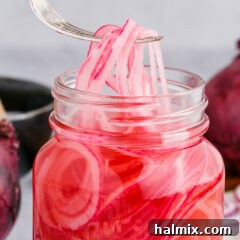
Quick Pickled Onions
IMPORTANT – There are often Frequently Asked Questions and expert tips within the blog post that you may find helpful. Simply scroll back up to read them!
Print Recipe |
Pin Recipe
Condiments
American
2
cups (1 pint)
Prep time: 5 mins
Amanda Davis
Ingredients
- 1 cup apple cider vinegar (or white vinegar)
- ⅓ cup water
- 1 ½ Tablespoons granulated sugar
- ½ teaspoon sea salt
- 1 large red onion (thinly sliced, about 200 grams)
Equipment
-
1 Pint size mason jar
-
Saucepan
Notes
- You can substitute apple cider vinegar with distilled white vinegar.
- Substitute granulated sugar with either maple syrup, honey, raw, or cane sugar. You may need to adjust measurements if doing so.
- These pickled onions will keep well in the refrigerator with an air-tight lid for up to 2 weeks. These instructions are for refrigerator pickles, not for long-term canning.
- Feel free to add extra flavorings like garlic, peppercorns, or fresh herbs if desired.
Instructions
-
Add all ingredients into a small saucepan, except for the onion. Bring it just to a simmer, stirring until sugar and salt dissolve, then remove from heat.
-
Slice your onion thin and pack into a pint size mason jar. Carefully pour the hot vinegar mixture over the onions, ensuring they are submerged.
-
Seal the jar and allow onions to sit for about 45 minutes at room temperature before use. For best flavor, cool completely then refrigerate for a few hours.
-
TIP – If your onions float above the liquid, gently push them down with a spoon periodically or flip the sealed jar halfway through the marinating time to ensure even pickling.
Tried this Recipe? Pin it for Later!
Follow on Pinterest @AmandasCookin or tag #AmandasCookin!
The recipes on this blog are tested with a conventional gas oven and gas stovetop. It’s important to note that some ovens, especially as they age, can cook and bake inconsistently. Using an inexpensive oven thermometer can assure you that your oven is truly heating to the proper temperature. If you use a toaster oven or countertop oven, please keep in mind that they may not distribute heat the same as a conventional full sized oven and you may need to adjust your cooking/baking times. In the case of recipes made with a pressure cooker, air fryer, slow cooker, or other appliance, a link to the appliances we use is listed within each respective recipe. For baking recipes where measurements are given by weight, please note that results may not be the same if cups are used instead, and we can’t guarantee success with that method.