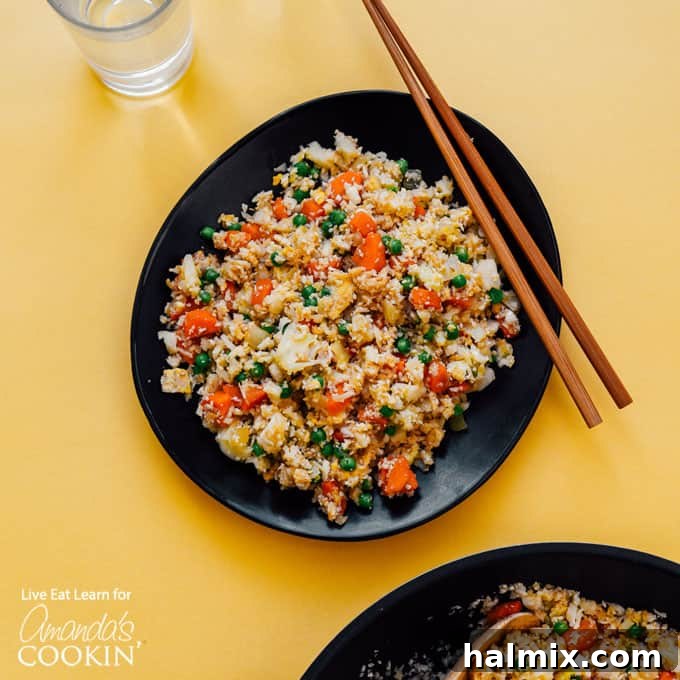
Welcome to the ultimate guide for creating a delightful and incredibly versatile dish: Cauliflower Fried Rice. This recipe offers a brilliant low-carb alternative to traditional fried rice, packed with vibrant vegetables and irresistible Asian-inspired flavors. Whether you’re adhering to a keto-friendly diet, seeking a healthier meal option, or simply looking to incorporate more vegetables into your routine, this cauliflower-based version proves that you don’t have to sacrifice taste or satisfaction. It’s an easy-to-make dish that truly stands out, promising a burst of flavor in every forkful.
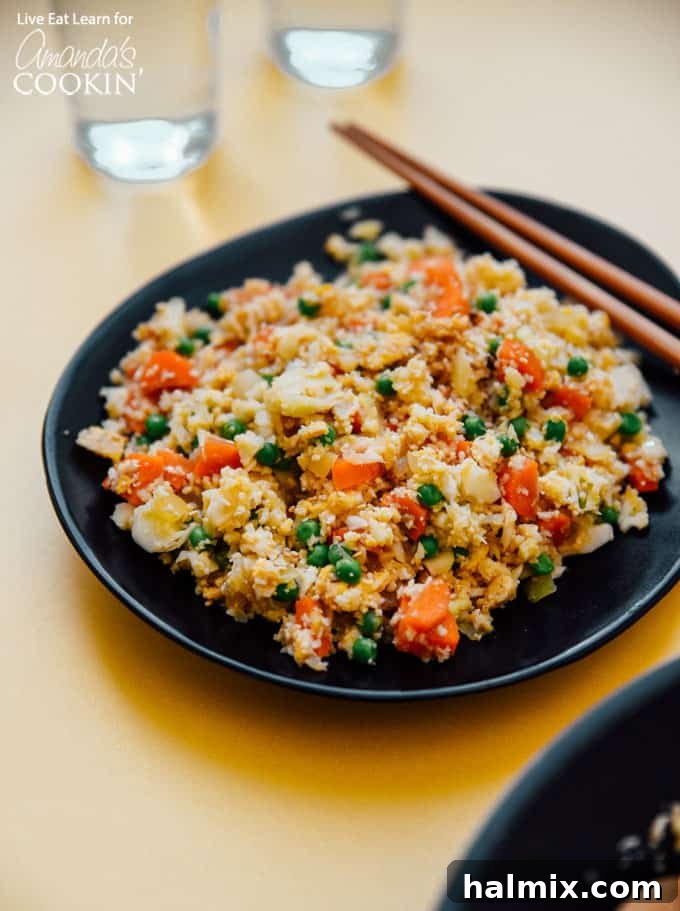
Cauliflower Fried Rice: A Game-Changer in Healthy Eating
For a long time, the idea of replacing rice with cauliflower in my favorite dishes seemed daunting. However, as the popularity of low-carb and keto diets surged, influencing friends and countless online communities, I decided to venture into the world of cauliflower-based recipes. And what a discovery it has been! The results have consistently exceeded expectations, proving that cauliflower is a culinary chameleon.
I’ve enjoyed incredibly fluffy and creamy cauliflower “mashed potatoes” that rivaled their starchy counterparts. A cauliflower pizza crust surprised me by holding up perfectly to my rigorous pizza standards. And if you’re skeptical, I urge you to try a cauliflower smoothie – it’s genuinely delicious and remarkably well-hidden! Today, I’m thrilled to share one of the simplest yet most impactful low-carb recipe swaps you can make: transforming humble cauliflower into a vibrant and flavorful fried rice.
This recipe isn’t just about cutting carbs; it’s about embracing a nutritious vegetable that offers a fantastic texture and a neutral canvas for bold flavors. Cauliflower is rich in vitamins C and K, fiber, and antioxidants, making this fried rice a powerful addition to a healthy diet. Its finely chopped florets mimic the texture of rice remarkably well, providing a satisfying mouthfeel without the heaviness associated with traditional grain-based dishes. Get ready to embark on a culinary journey that promises both health benefits and incredible taste!
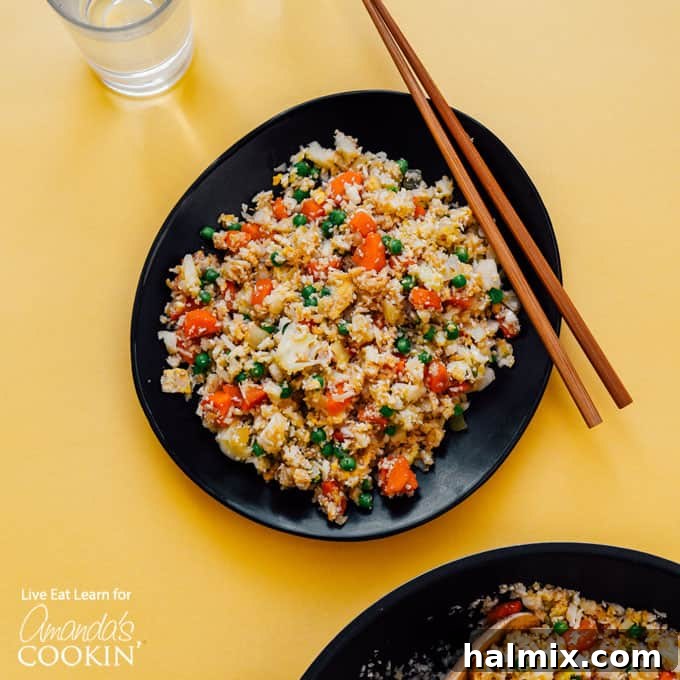
Gather Your Ingredients: What You’ll Need for Flavorful Cauliflower Fried Rice
Creating this delicious cauliflower fried rice requires a handful of fresh ingredients and pantry staples, each playing a crucial role in building its authentic Asian-inspired flavor profile. Here’s a detailed look at what you’ll need:
- 1/2 head cauliflower: The star of our dish! Choose a firm, white head. This will be transformed into “rice.”
- 2 Tbsp olive oil: Essential for sautéing and building the flavor base. You can also use avocado oil or sesame oil for an even richer Asian aroma.
- 1/2 cup chopped onion: Adds a sweet and pungent aromatic foundation to the dish.
- 2 cloves garlic, minced: Garlic is non-negotiable for that authentic fried rice taste. Minced fresh garlic offers the best flavor.
- 2 carrots, diced: Provides natural sweetness, a pop of color, and a pleasant textural contrast.
- 1/2 cup frozen peas: A classic fried rice component, adding sweetness and small bursts of flavor. No need to thaw beforehand.
- 2 large eggs: Scrambled into the rice, they add protein and a creamy texture that is characteristic of traditional fried rice.
- 2 Tbsp soy sauce: The primary seasoning, delivering a savory, umami punch. For a gluten-free option, use tamari.
- 1/2 tsp toasted sesame oil: A finishing oil that imparts a deep, nutty aroma and flavor, elevating the entire dish.
These carefully selected ingredients ensure a balanced and incredibly satisfying dish that feels both comforting and remarkably fresh.
Essential Kitchen Tools for Easy Preparation
While this recipe is straightforward, having the right tools can make the process even smoother. Here are some kitchen essentials you might find helpful:
- Food processor: This is the easiest and quickest way to turn cauliflower florets into “rice.” It yields consistent results with minimal effort.
- Box grater: If you don’t have a food processor, a box grater works perfectly for ricing cauliflower. Use the side with medium-sized holes.
- Large wok or large skillet: A large cooking surface is crucial for stir-frying. It allows the ingredients to spread out and cook evenly, preventing steaming.
- Measuring cups and spoons: For precise ingredient measurements, ensuring consistent results every time.
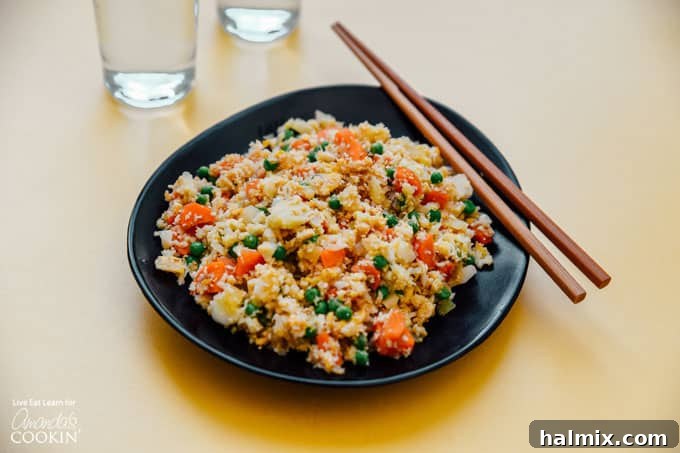
Step-by-Step Guide to Making Perfect Cauliflower Fried Rice
You’ll be delighted to find that making cauliflower fried rice is often even simpler and quicker than its traditional counterpart, mainly because there’s no boiling or waiting for rice to cook! Here’s how to master this delicious dish:
1. Prepare Your Cauliflower “Rice”
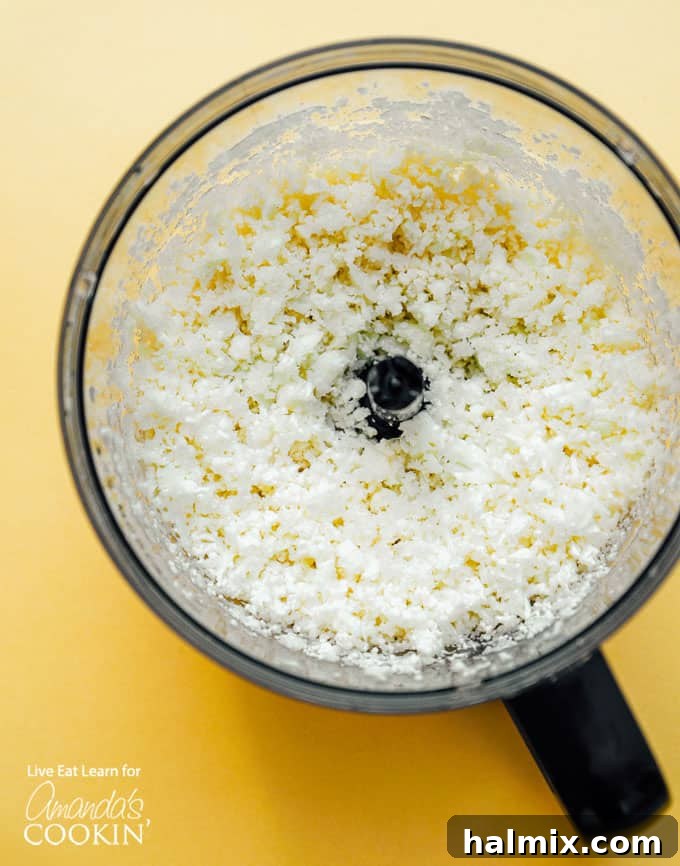
The first crucial step is to transform your cauliflower into a rice-like consistency. Cut your half head of cauliflower into manageable chunks. Place these chunks into your food processor and pulse a few times until a fine, rice-like texture forms. Be careful not to over-process, or you’ll end up with a mushy consistency. If you don’t have a food processor, a box grater will work just as well; simply grate the cauliflower florets directly into a bowl. Once prepared, set your cauliflower rice aside.
2. Build the Flavor Base
Next, it’s time to lay down the aromatic foundation that gives fried rice its signature taste. Heat the olive oil in a large wok or a large skillet over medium-high heat. Once shimmering, add the chopped onion, minced garlic, and diced carrots. Sauté these vegetables, stirring frequently, until the carrots are tender-crisp and the onions and garlic are fragrant, typically about 5 minutes. This step is essential for developing deep, savory flavors.
3. Cook the Cauliflower and Peas
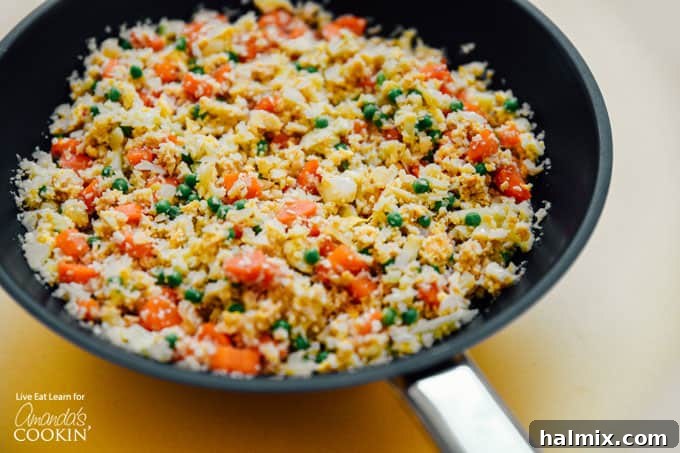
Once your aromatics are ready, stir in the frozen peas and your prepared cauliflower rice. Give everything a good toss to combine. Cover the wok or skillet and allow the mixture to cook for approximately 5 more minutes, or until the cauliflower rice is slightly tender but still has a bit of bite. Be mindful not to overcook, as this can lead to a watery or mushy texture. Stir occasionally to ensure even cooking.
4. Incorporate the Eggs
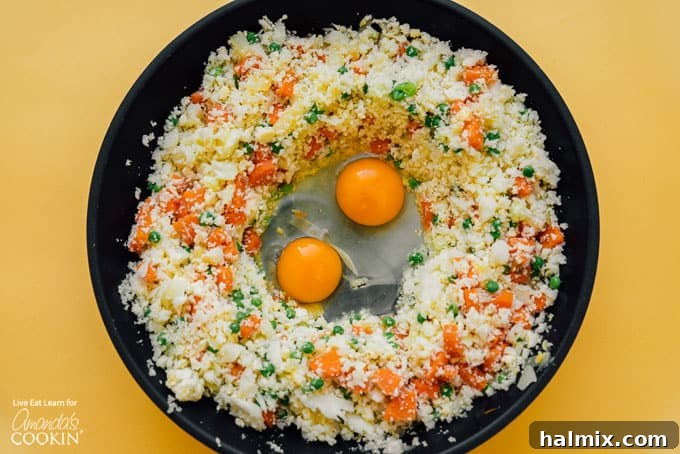
One of my favorite elements in any stir-fry is the scrambled egg pieces. To keep this recipe a convenient one-pan wonder, simply push the cooked cauliflower rice mixture to one side of the wok, creating an empty space in the center. Crack your two large eggs directly into this cleared area. Let them cook for a minute or two until they begin to set, then scramble them right in the wok. Once the eggs are cooked through and broken into small, fluffy pieces, stir them thoroughly into the cauliflower rice mixture, ensuring they are evenly distributed. This adds a wonderful boost of protein and richness.
5. The Finishing Touches
Finally, it’s time to infuse the dish with its signature Asian flavors. Drizzle in the soy sauce and the toasted sesame oil. Stir everything together vigorously for about another minute, allowing the seasonings to coat every grain of cauliflower and vegetable. The soy sauce brings that essential umami and saltiness, while the toasted sesame oil provides an irresistible nutty aroma that transforms a simple vegetable dish into a truly delicious stir-fry dream. Serve your cauliflower fried rice warm and enjoy!
Customization and Serving Suggestions
This cauliflower fried rice recipe is incredibly versatile and can be adapted to your personal preferences. Here are a few ideas to customize your dish:
- Add Protein: For a more substantial meal, consider adding cooked chicken, shrimp, tofu, or even beef. Simply add your pre-cooked protein during step 3 or quickly stir-fry raw protein before adding vegetables in step 2.
- Extra Veggies: Feel free to toss in other quick-cooking vegetables like bell peppers, mushrooms, green beans, or snap peas. Add them along with the carrots, or slightly later, depending on their cooking time.
- Spice It Up: If you enjoy a kick, add a pinch of red pepper flakes or a dash of sriracha to the wok with the soy sauce.
- Garnish: Finish your fried rice with chopped green onions, a sprinkle of fresh cilantro, or an extra drizzle of toasted sesame oil for added flavor and visual appeal.
This dish makes a fantastic light lunch, a satisfying main course, or a healthy side dish to accompany grilled meats, fish, or other Asian-inspired meals. It pairs wonderfully with dishes like General Tso’s Chicken (or General Tso’s Cauliflower!), or simply enjoyed on its own.
Meal Prep and Storage Tips
Cauliflower fried rice is an excellent option for meal prepping! You can prepare a larger batch and enjoy it throughout the week. Store leftovers in an airtight container in the refrigerator for up to 3-4 days. To reheat, simply warm it gently in a skillet over medium heat, or in the microwave. If it seems a little dry, add a tiny splash of water or soy sauce before reheating.
Frequently Asked Questions (FAQ) About Cauliflower Fried Rice
Can I use frozen cauliflower rice?
Absolutely! Frozen cauliflower rice works wonderfully and can save you prep time. You do not need to thaw it beforehand. Add it directly to the wok in step 3. Keep in mind that frozen cauliflower rice can release more water, so you might need to cook it for a few extra minutes uncovered to allow the moisture to evaporate and prevent a soggy dish.
How do I prevent my cauliflower fried rice from being soggy?
The key to avoiding soggy cauliflower fried rice is not to overcook the cauliflower and to use a sufficiently hot pan. Ensure your wok or skillet is hot enough to stir-fry, not steam, the vegetables. Also, don’t overcrowd the pan; if making a large batch, you might want to cook it in two smaller batches. After adding the cauliflower, letting it cook uncovered for a bit helps any excess moisture to evaporate.
Is this recipe genuinely keto and gluten-free?
Yes, this recipe is inherently low-carb and keto-friendly, as cauliflower is a non-starchy vegetable. To ensure it’s gluten-free, make sure to use tamari instead of regular soy sauce, as most traditional soy sauces contain wheat. Always check the labels of all your ingredients to confirm they meet your dietary needs.
Can I make this recipe vegan?
Yes, you can easily make this recipe vegan. Simply omit the eggs. You can replace them with scrambled tofu for added protein and texture, or increase the amount of vegetables you use. Ensure your soy sauce (or tamari) is vegan-friendly.
How long does cauliflower fried rice last in the refrigerator?
When stored in an airtight container, cauliflower fried rice will last for 3-4 days in the refrigerator, making it perfect for meal prepping.
More Delicious Cauliflower Recipes to Explore
If you’ve discovered the incredible versatility of cauliflower through this recipe, you’ll be excited to try these other fantastic cauliflower dishes:
- Cauliflower Risotto
- Mashed Cauliflower
- Cauliflower Copycat Chipotle Rice
- General Tso’s Cauliflower
- Sticky Garlic Cauliflower
- Crockpot Creamy Cauliflower Soup
- Cauliflower Casserole
- Mexican Cauliflower Rice
Cauliflower Fried Rice
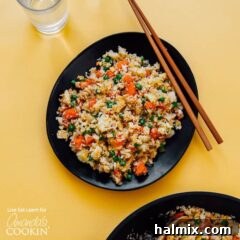
This Cauliflower Fried Rice is a delicious, low carb alternative to traditional fried rice, packed with Asian-inspired flavor that makes you forget about regular rice!
IMPORTANT: For additional helpful tips, variations, and answers to common questions, please refer to the detailed sections within the blog post above.
Print It
Pin It
Course: Sides, Vegetarian | Cuisine: Chinese | Servings: 4 servings | Total Time: 20 mins | Calories: 159 | Author: Amanda Davis
Ingredients
- ½ head cauliflower
- 2 Tbsp olive oil
- ½ cup onion chopped
- 2 cloves garlic minced
- 2 carrots diced
- ½ cup frozen peas
- 2 large eggs
- 2 Tbsp soy sauce
- ½ tsp toasted sesame oil
Instructions
- Cut cauliflower into chunks and process in a food processor until “rice” forms. Set aside.
- In a large wok, heat olive oil over medium-high heat. Add onion, garlic, and carrot, cooking until carrot is tender, about 5 minutes.
- Stir in frozen peas and cauliflower rice. Cover and cook until cauliflower rice is slightly tender, about 5 more minutes.
- Make a hole in the middle of the mixture. Crack eggs into the hole and cook until scrambled, then stir to evenly combine with the rice.
- Stir in soy sauce and sesame oil. Serve warm.
Nutrition
Serving: 1 serving | Calories: 159cal | Carbohydrates: 12g | Protein: 6g | Fat: 10g | Saturated Fat: 1g | Cholesterol: 81mg | Sodium: 578mg | Potassium: 435mg | Fiber: 3g | Sugar: 4g | Vitamin A: 5355IU | Vitamin C: 45.6mg | Calcium: 50mg | Iron: 1.3mg
Tried this Recipe? Pin it for Later!
Follow on Pinterest @AmandasCookin or tag #AmandasCookin!
The recipes on this blog are tested with a conventional gas oven and gas stovetop. It’s important to note that some ovens, especially as they age, can cook and bake inconsistently. Using an inexpensive oven thermometer can assure you that your oven is truly heating to the proper temperature. If you use a toaster oven or countertop oven, please keep in mind that they may not distribute heat the same as a conventional full sized oven and you may need to adjust your cooking/baking times. In the case of recipes made with a pressure cooker, air fryer, slow cooker, or other appliance, a link to the appliances we use is listed within each respective recipe. For baking recipes where measurements are given by weight, please note that results may not be the same if cups are used instead, and we can’t guarantee success with that method.
This post originally appeared on this blog on March 19, 2019.