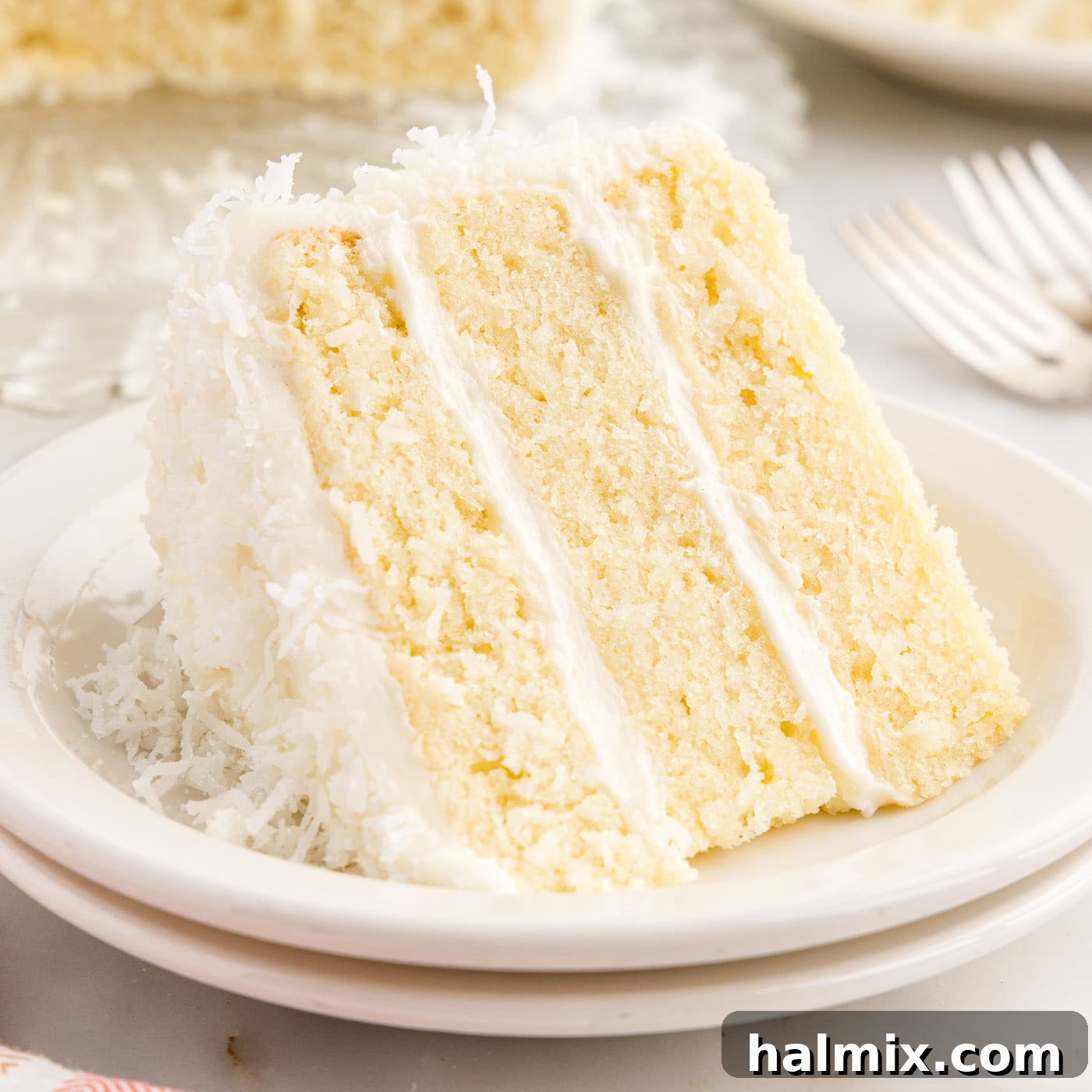
Welcome to the ultimate guide for creating the most exquisite Coconut Cake you’ll ever taste! This isn’t just a dessert; it’s a culinary experience, a symphony of delicate textures and rich, tropical flavors. Our recipe delivers a cake that is incredibly soft, profoundly moist, and bursting with sweet coconut essence in every bite. Crowned with a luxurious, fluffy cream cheese frosting and adorned with tender shredded coconut, each forkful promises pure bliss. Prepare to impress your family and friends with this show-stopping, homemade masterpiece that truly celebrates the beloved coconut.
Why This Coconut Cake Recipe Stands Out
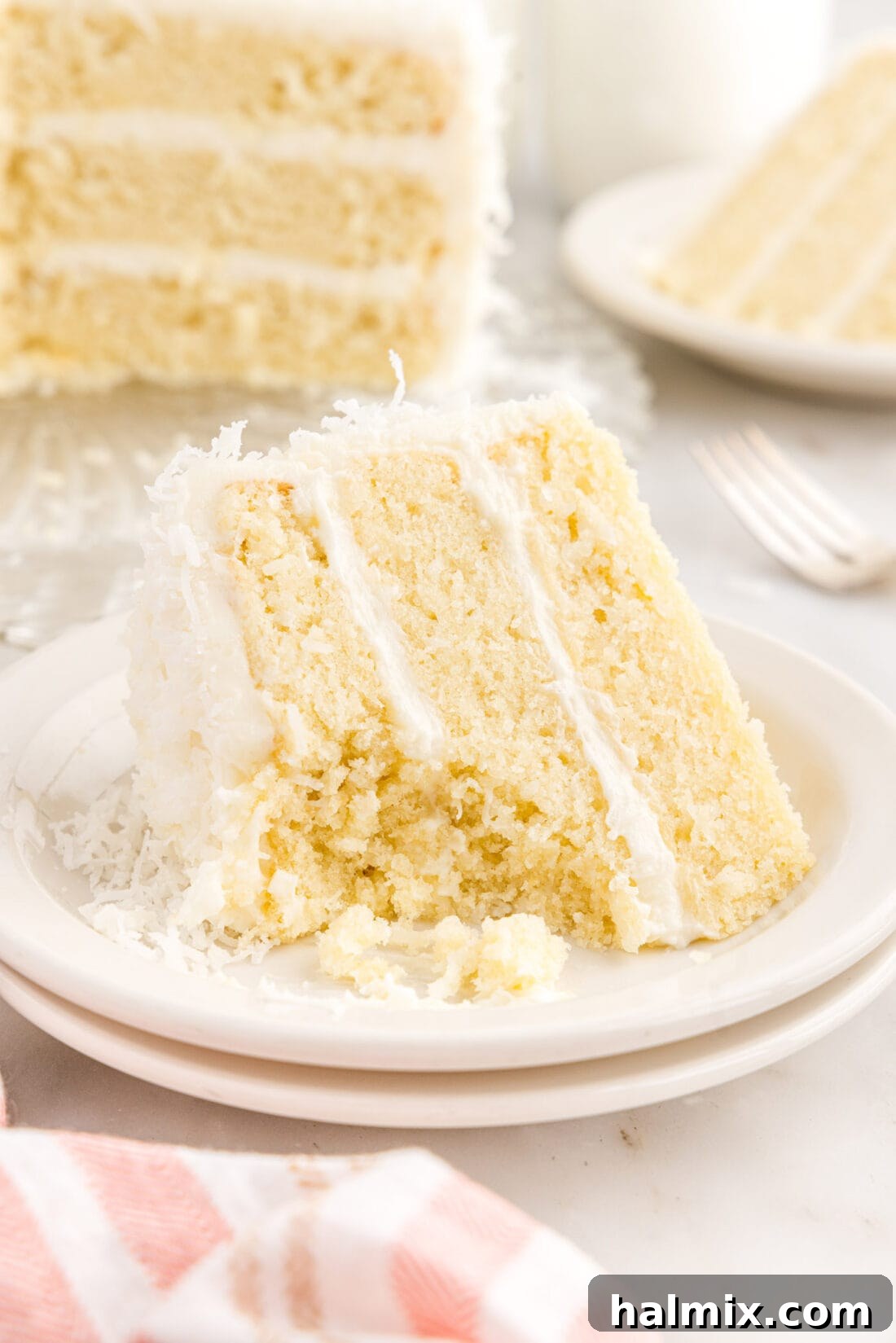
What makes this particular coconut cake recipe a cut above the rest? It’s all in the meticulous layering of coconut flavors and the careful balance of ingredients, ensuring an unparalleled moistness and tenderness. Unlike some recipes that offer only a hint of coconut, ours ensures the tropical star ingredient truly shines through. We achieve this profound flavor profile by incorporating not one, but three distinct coconut elements: fragrant coconut extract, rich cream of coconut, and creamy coconut milk. This trifecta guarantees an authentic and vibrant coconut taste that permeates every crumb.
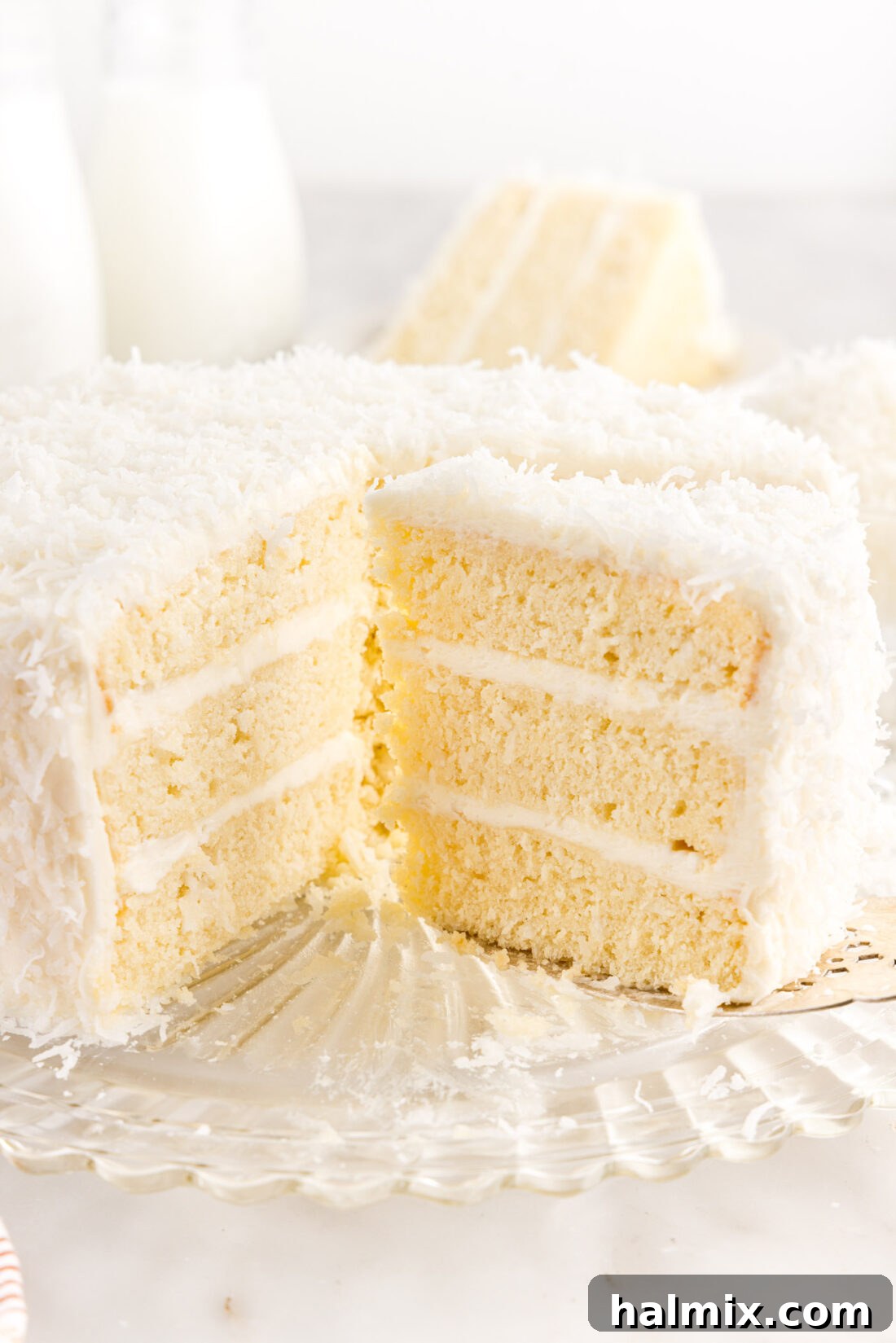
The cake itself is a marvel of baking science, resulting in a crumb that is wonderfully soft, incredibly moist, and delicately chewy. It’s a texture that melts in your mouth while offering just enough resistance to savor. Complementing this perfect cake base is our signature tangy cream cheese frosting. This frosting isn’t just a sweet topping; its slight tanginess provides a refreshing contrast to the cake’s sweetness, adding a layer of rich complexity between each beautifully stacked tier. The generous coating of shredded coconut, lovingly pressed against the frosting, doesn’t just contribute additional flavor; it introduces a delightful textural element and elevates the cake’s visual appeal to a truly stunning presentation. From its irresistible aroma to its exquisite taste and elegant look, this coconut cake is a guaranteed crowd-pleaser for any occasion, promising the perfect bite every single time.
Essential Ingredients for Your Perfect Coconut Cake
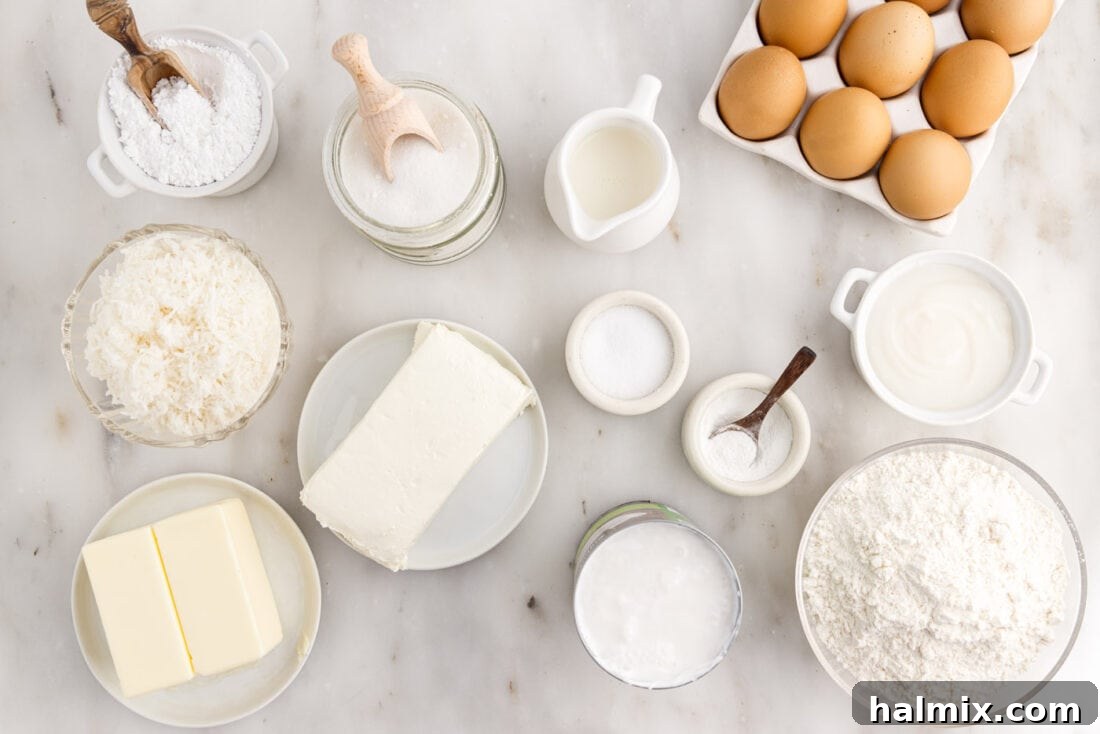
Crafting this phenomenal coconut cake begins with gathering a selection of high-quality ingredients. Each component plays a crucial role in achieving the cake’s signature moist texture and intense coconut flavor. For the detailed list of measurements and step-by-step instructions, please refer to the comprehensive recipe card provided at the end of this article. But before you dive into the baking process, let’s take a closer look at the key players that bring this delightful dessert to life.
Ingredient Spotlight & Expert Substitution Tips
Understanding each ingredient and knowing potential substitutions can elevate your baking experience and ensure success every time. Here’s a deeper dive into the components of our irresistible coconut cake:
For the Cake Batter:
- Unsalted Butter (Room Temperature): Always use unsalted butter to control the overall saltiness of your cake. Bringing it to room temperature is crucial for proper creaming with sugar, which incorporates air and contributes to the cake’s light and fluffy texture. If you only have salted butter, you can use it, but reduce the added salt in the recipe by ¼ teaspoon per stick (½ cup) of butter.
- Granulated White Sugar: Provides sweetness and helps create a tender crumb. Fine-grain sugar dissolves more easily, leading to a smoother batter.
- Large Eggs (Room Temperature): Like butter, room temperature eggs emulsify better with the other ingredients, resulting in a more uniform and stable batter. This contributes significantly to the cake’s moistness and structure.
- Coconut Extract: This is a powerful flavor enhancer. A good quality coconut extract will deepen the tropical notes without making the cake taste artificial. Don’t skip it for maximum coconut impact.
- Vanilla Extract: A universal enhancer in baking, vanilla complements the coconut beautifully and adds depth to the overall flavor profile.
- Cream of Coconut: This is a sweetened, thick coconut product, often found near cocktail mixers. It’s distinct from coconut milk and is vital for both moisture and intense coconut flavor. Its rich consistency and sweetness contribute to the cake’s luxurious texture. Do not confuse it with canned coconut milk or coconut cream, which are unsweetened.
- All-Purpose Flour: The backbone of our cake. Measure it correctly (preferably by weight, or by spooning into a measuring cup and leveling off) to avoid a dense or dry cake.
- Baking Powder: Our primary leavening agent, ensuring the cake rises beautifully and achieves that desirable fluffy texture.
- Salt: Essential for balancing the sweetness and enhancing all the other flavors in the cake.
-
Unsweetened Coconut Milk (Lite or Regular): This adds liquid, fat, and a subtle coconut flavor to the batter, contributing to its incredible moisture.
Substitution Suggestion: While coconut milk adds to the authentic flavor, you can substitute it with whole milk or 2% milk without significantly compromising the cake’s structure or moisture. Given the presence of coconut extract and cream of coconut, you’ll still get a robust coconut flavor. However, for the purest and most intense coconut experience, stick with unsweetened coconut milk. - Sweetened Shredded Coconut: Folded into the batter, this adds delightful texture and bursts of sweet coconut flavor throughout the cake.
For the Cream Cheese Frosting:
- Salted Butter (Room Temperature): We use salted butter for the frosting to balance the sweetness of the powdered sugar and the tang of the cream cheese. Ensure it’s softened for a smooth, lump-free frosting.
- Cream Cheese (Room Temperature): Full-fat cream cheese is recommended for the best flavor and creamy consistency. It should be softened to room temperature to blend smoothly, preventing lumps in your frosting.
- Vanilla Extract: Enhances the flavor of the cream cheese frosting, adding a classic touch.
- Powdered Sugar (Confectioners’ Sugar): Provides sweetness and structure to the frosting. Sifting it can help prevent lumps, though careful mixing often suffices.
- Heavy Whipping Cream (Optional): A small amount of heavy cream helps achieve a lighter, fluffier, and more spreadable frosting consistency. Add it gradually until your desired texture is reached.
-
Sweetened Shredded Coconut (for Garnish): This is the final flourish, adhering beautifully to the frosted cake for both visual appeal and an extra layer of coconut goodness.
Substitution/Enhancement Tip: For an even deeper flavor and a lovely golden hue, consider using toasted coconut on top of and/or within the cake, or as a garnish for the frosting. To toast coconut, simply spread it in a single layer on a baking sheet and bake in a preheated 350°F (175°C) oven for 3-5 minutes, watching carefully until it turns a beautiful golden brown. Remove it from the hot baking sheet immediately to prevent over-browning. You can use either flaked or shredded coconut, sweetened or unsweetened, for this process.
Frosting Substitution: While cream cheese frosting is undeniably perfect for this coconut cake, if you prefer a different profile, a simple vanilla buttercream can also be used.
Crafting Your Homemade Coconut Cake: A Step-by-Step Guide
Creating this delightful coconut cake is a rewarding experience, blending simple techniques with incredible flavors. Follow these step-by-step instructions carefully, and you’ll be on your way to a truly memorable dessert. For a convenient printable version of the full recipe, complete with precise measurements and detailed instructions, scroll down to the recipe card below.
Cake Instructions
- Prepare Your Oven and Pans: Begin by preheating your oven to 350°F (175°C). Prepare three 8-inch round cake pans by spraying them generously with a non-stick baking spray. For easy removal and to prevent sticking, line the bottoms of each pan with parchment paper. This ensures your cake layers come out perfectly every time.
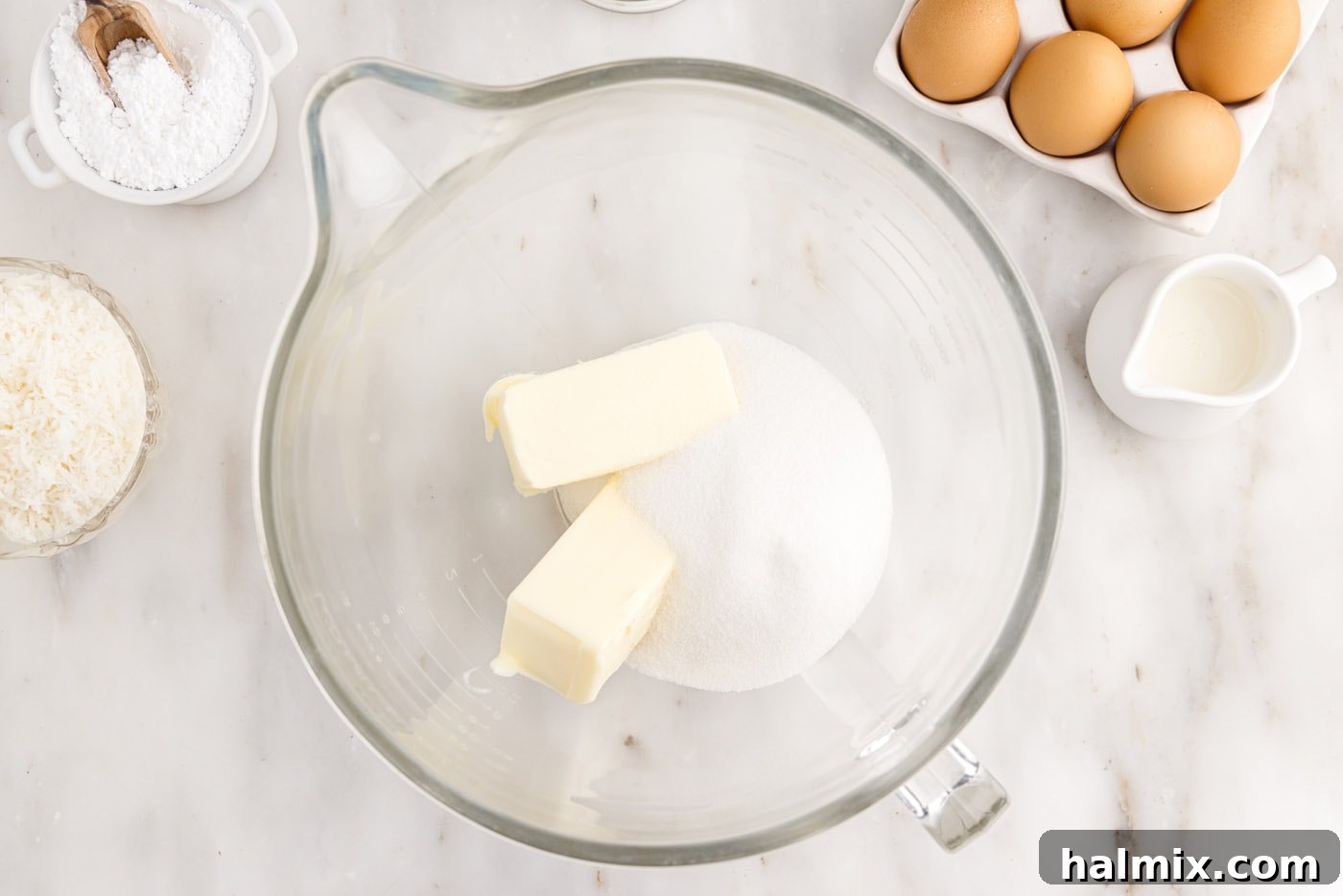
- Cream Butter and Sugar: In a large mixing bowl, combine the softened unsalted butter and granulated white sugar. Using a hand mixer or a stand mixer fitted with the paddle attachment, beat them together on medium speed until the mixture becomes light, fluffy, and creamy. This process incorporates air, which is essential for a tender cake.
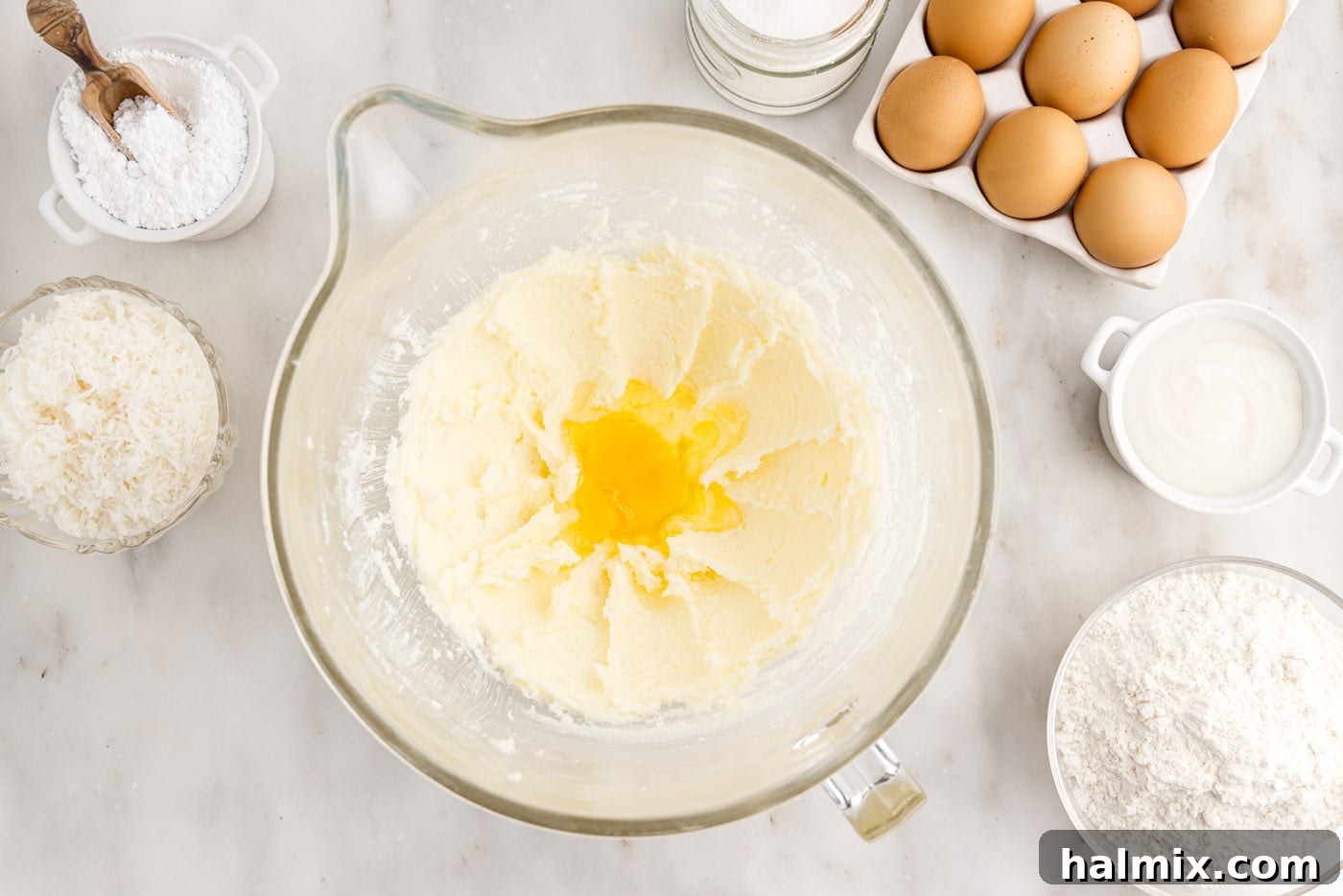
- Add Eggs Gradually: With the mixer still running on medium-low speed, add the large eggs one at a time. Beat well after each addition, ensuring each egg is fully incorporated before adding the next. This prevents the batter from curdling and builds a strong emulsion.

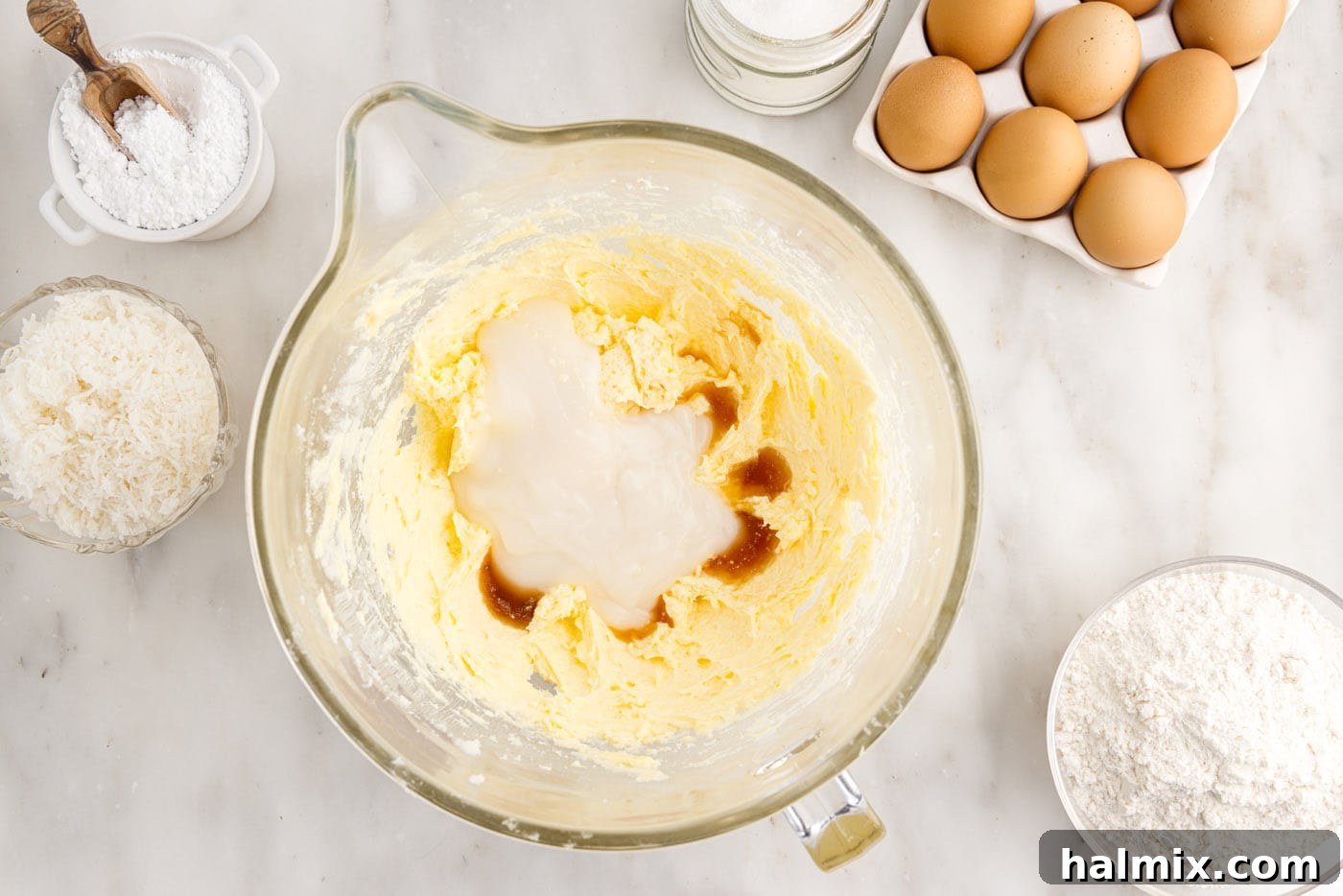
- Incorporate Flavorful Liquids: Next, add the vanilla extract, coconut extract, and the rich cream of coconut to the butter and egg mixture. Beat again until all these liquid ingredients are well combined and evenly distributed throughout the batter, intensifying the coconut flavor.
- Prepare Dry Ingredients: In a separate, medium-sized bowl, whisk together the all-purpose flour, baking powder, and salt. This ensures the leavening agent and salt are evenly distributed before being added to the wet ingredients.
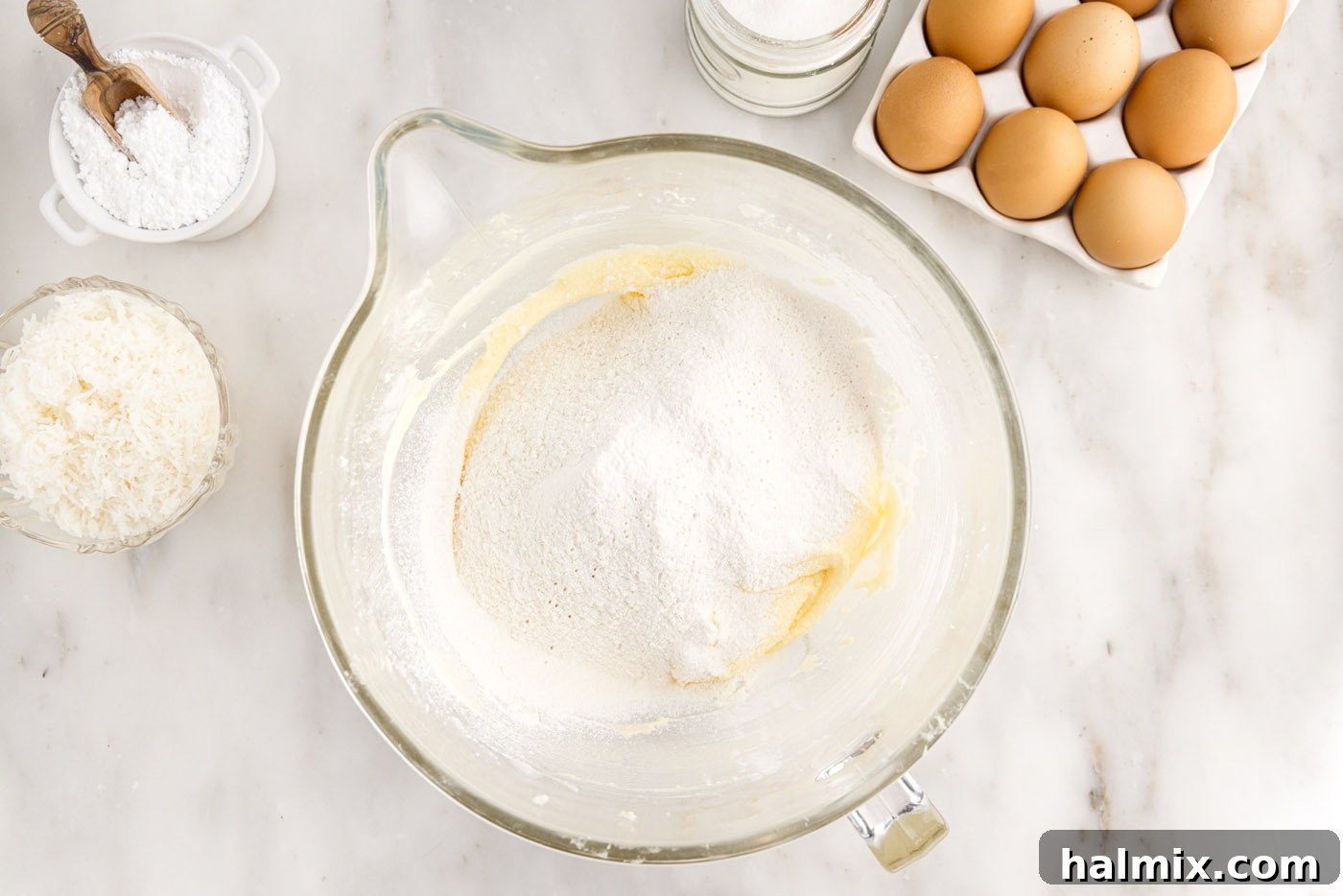
- Combine Wet and Dry Ingredients: With the mixer on low speed, alternately add the unsweetened coconut milk and the flour mixture to the cake batter, beginning and ending with the dry ingredients. Mix only until just combined; be careful not to overmix, as this can lead to a tough cake. Scrape down the sides of the bowl as needed.
- Fold in Shredded Coconut: Gently fold 1 cup of sweetened shredded coconut into the cake batter using a spatula. This adds a wonderful texture and additional coconut flavor throughout the cake.
- Divide and Bake: Evenly divide the prepared cake batter among the three lined 8-inch cake pans. Tap the pans gently on the counter to release any air bubbles.
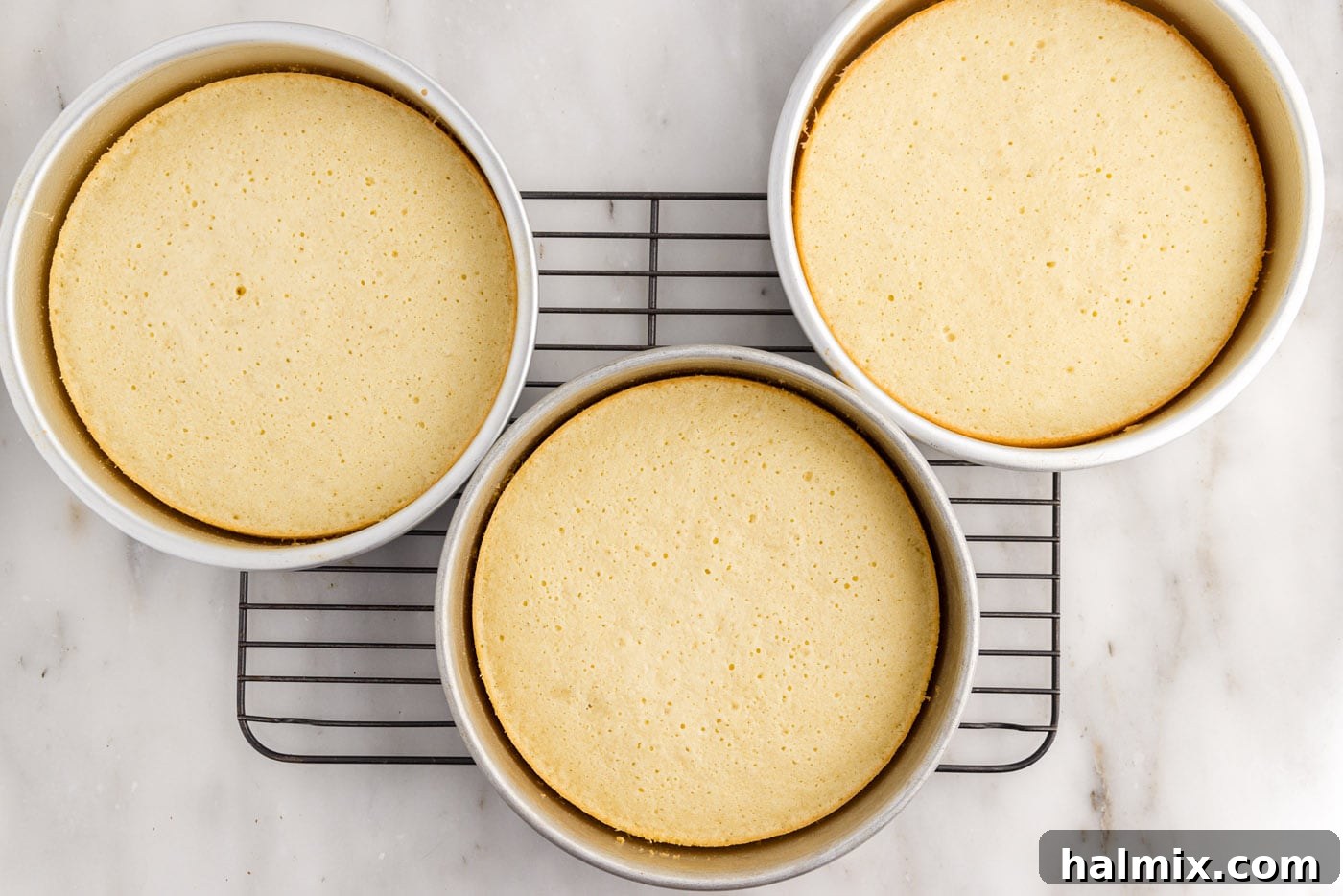
- Bake Until Done: Bake for approximately 20 minutes, or until a wooden toothpick inserted into the center of a cake layer comes out with only a few moist crumbs attached, but no wet batter.
- Cool the Cakes: Once baked, remove the cakes from the oven and let them cool in their pans on a wire cooling rack for 10-15 minutes. This allows them to firm up slightly. After this initial cooling, carefully invert the cakes onto the cooling rack, remove the parchment paper, and let them cool completely before frosting. Frosting warm cakes will result in melted, messy frosting.
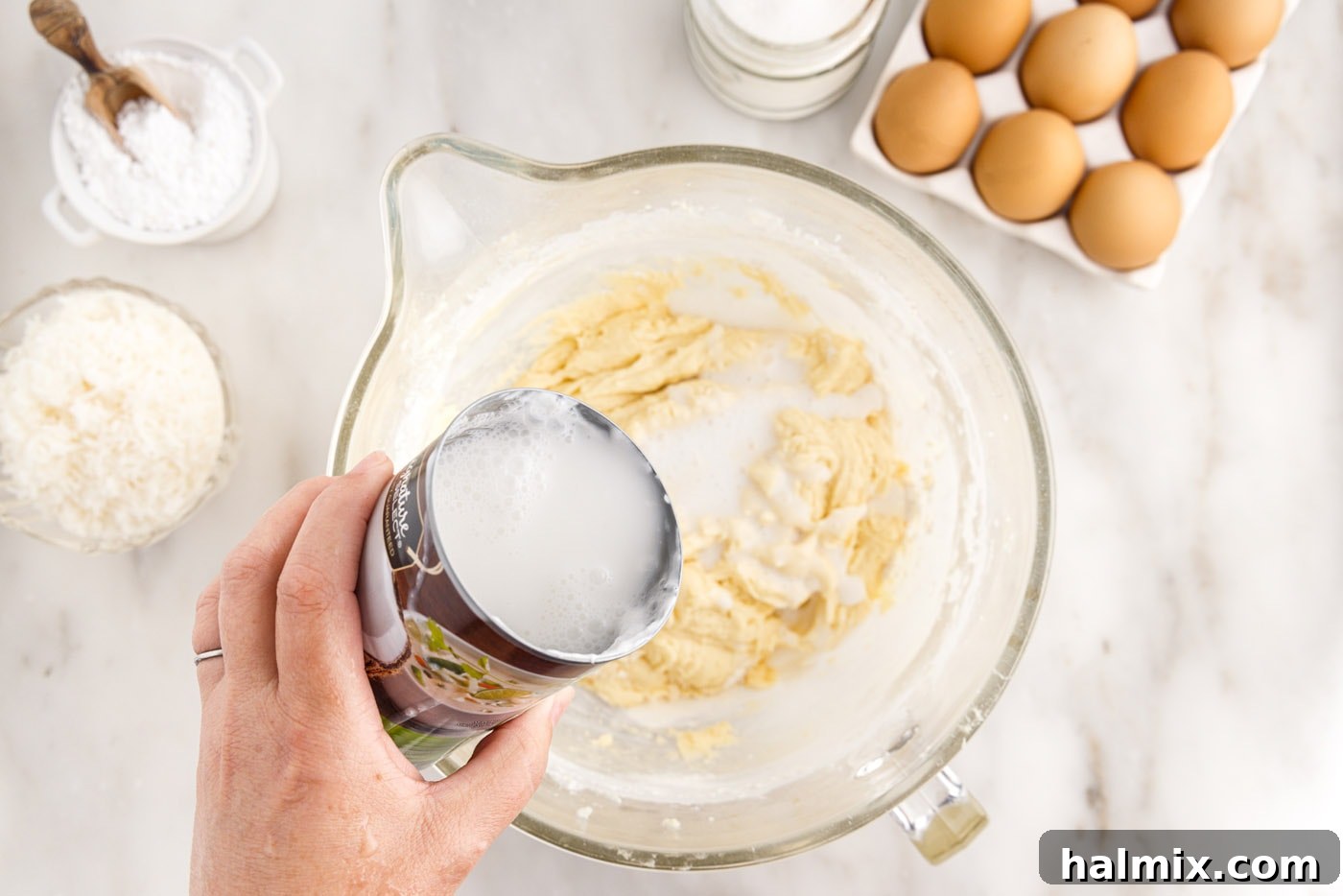
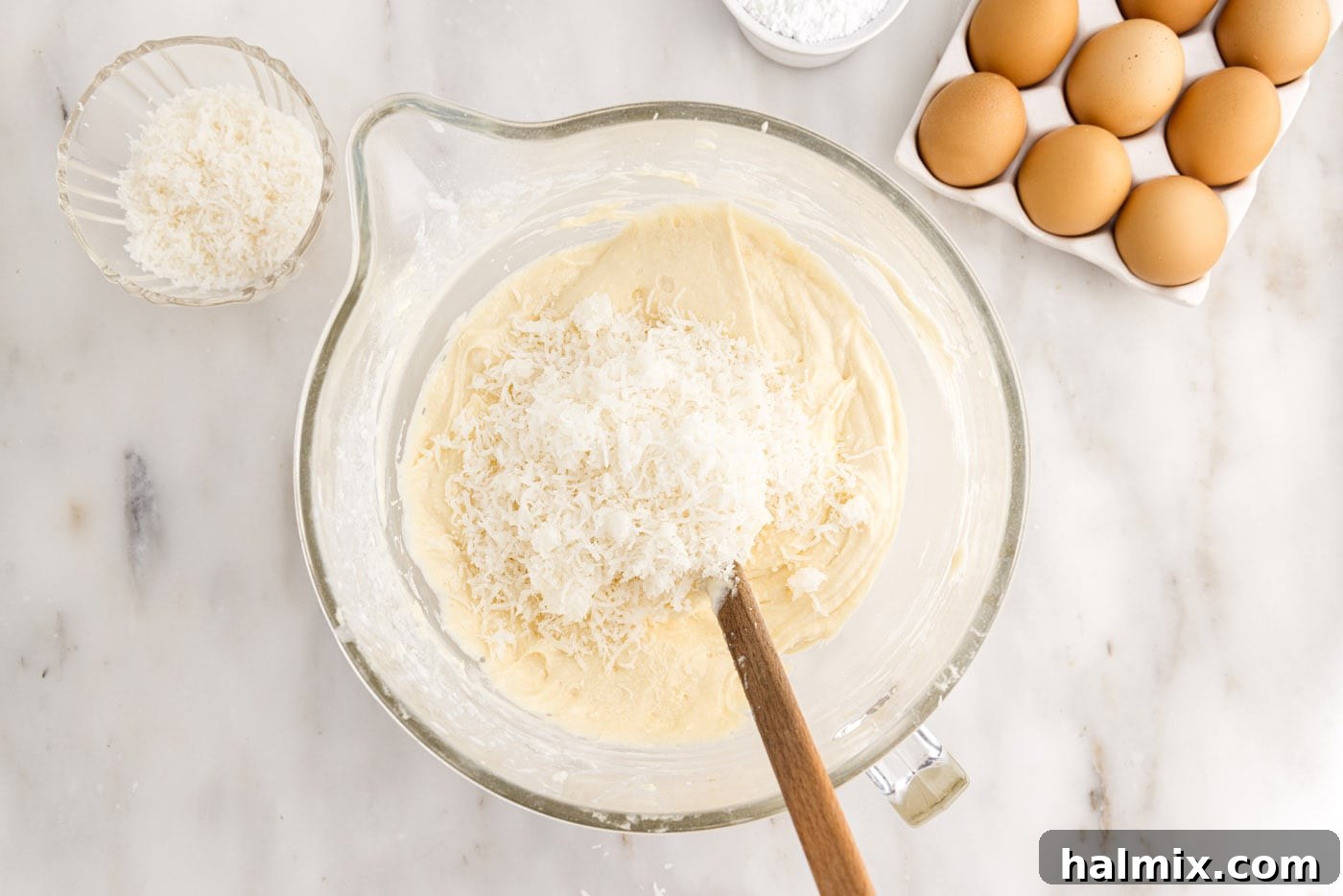
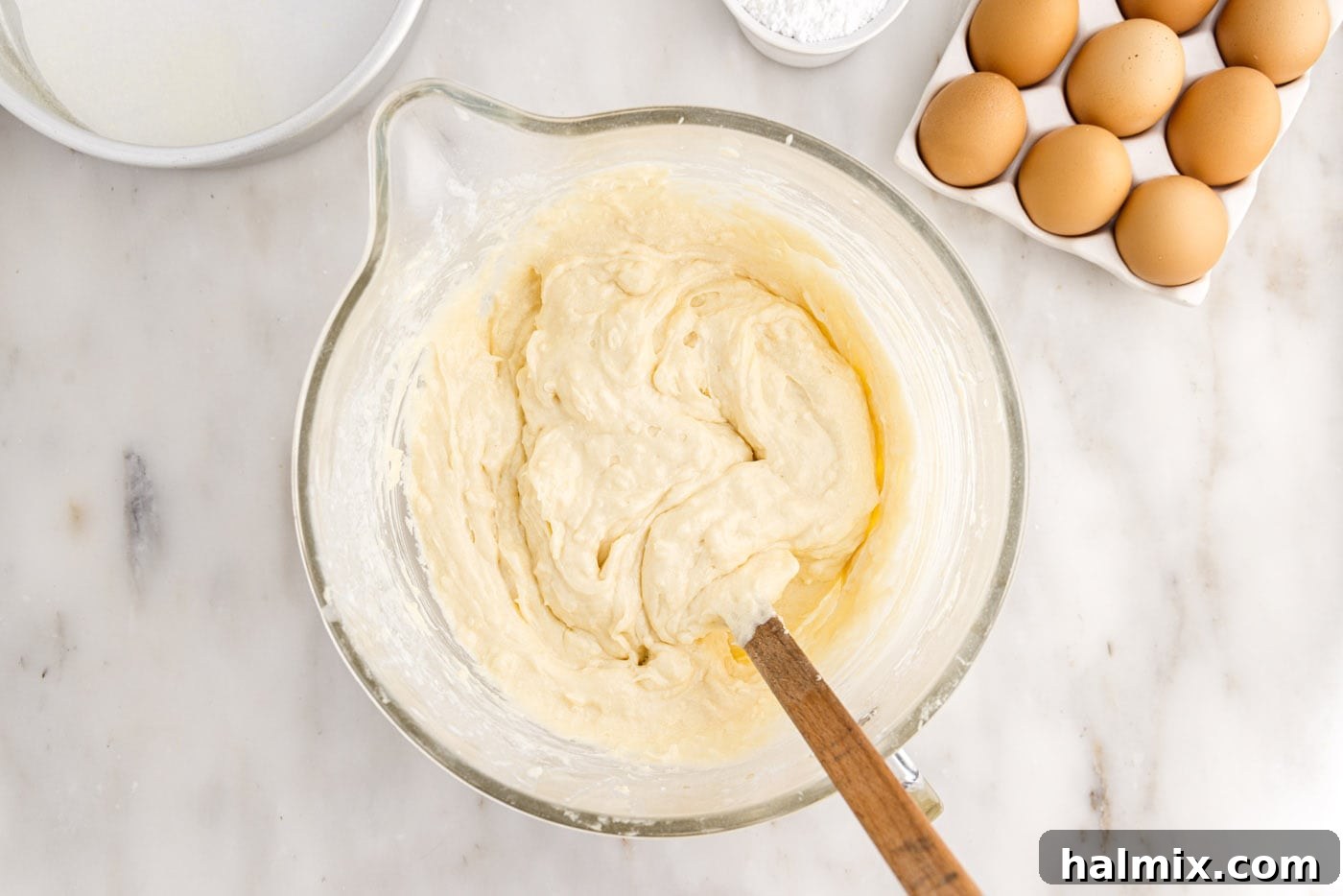
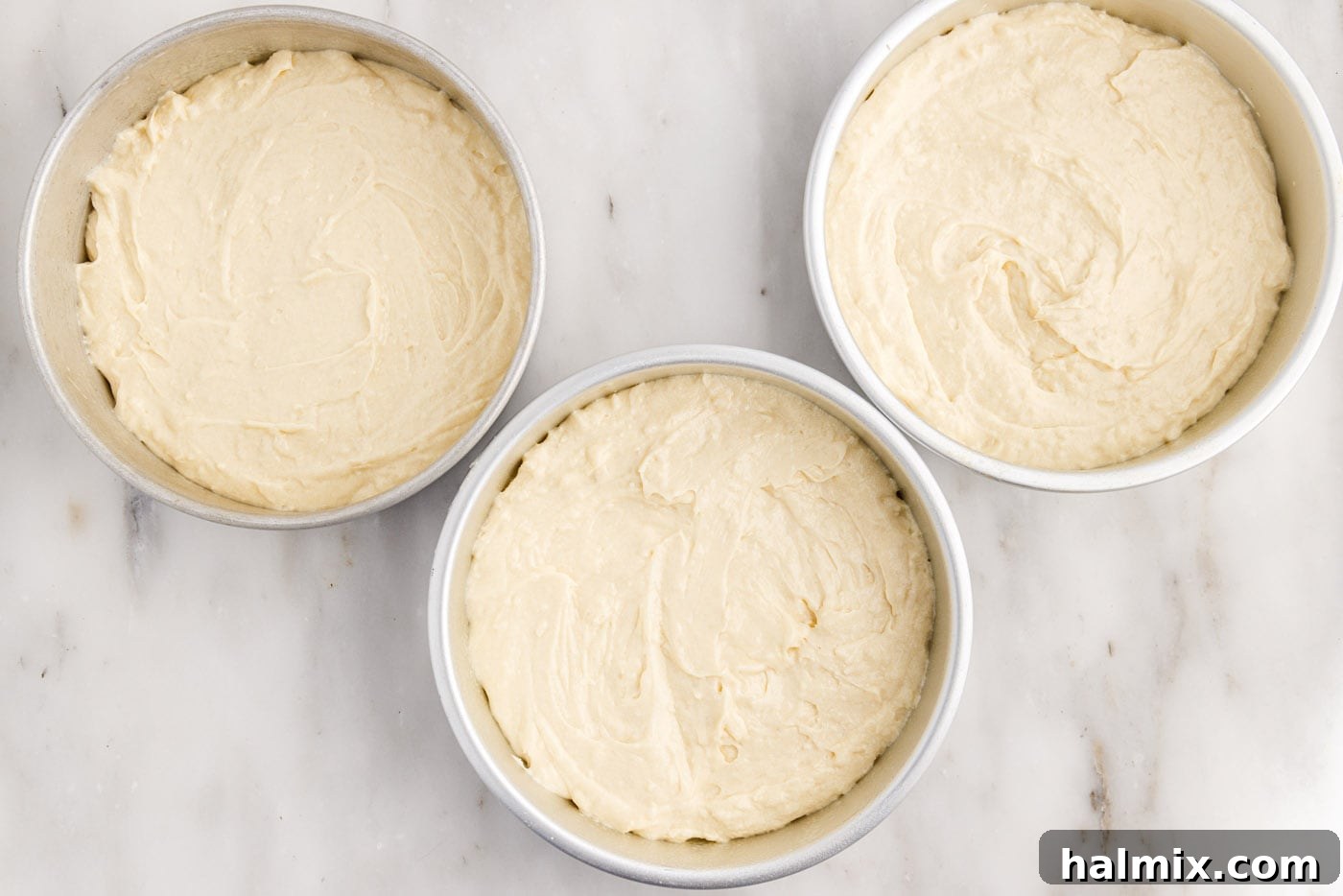
To Make the Cream Cheese Frosting
- Cream Butter and Cream Cheese: In a large mixing bowl, beat the softened salted butter and softened cream cheese together using a hand mixer or stand mixer until the mixture is smooth, creamy, and wonderfully fluffy. Ensure there are no lumps of cream cheese.
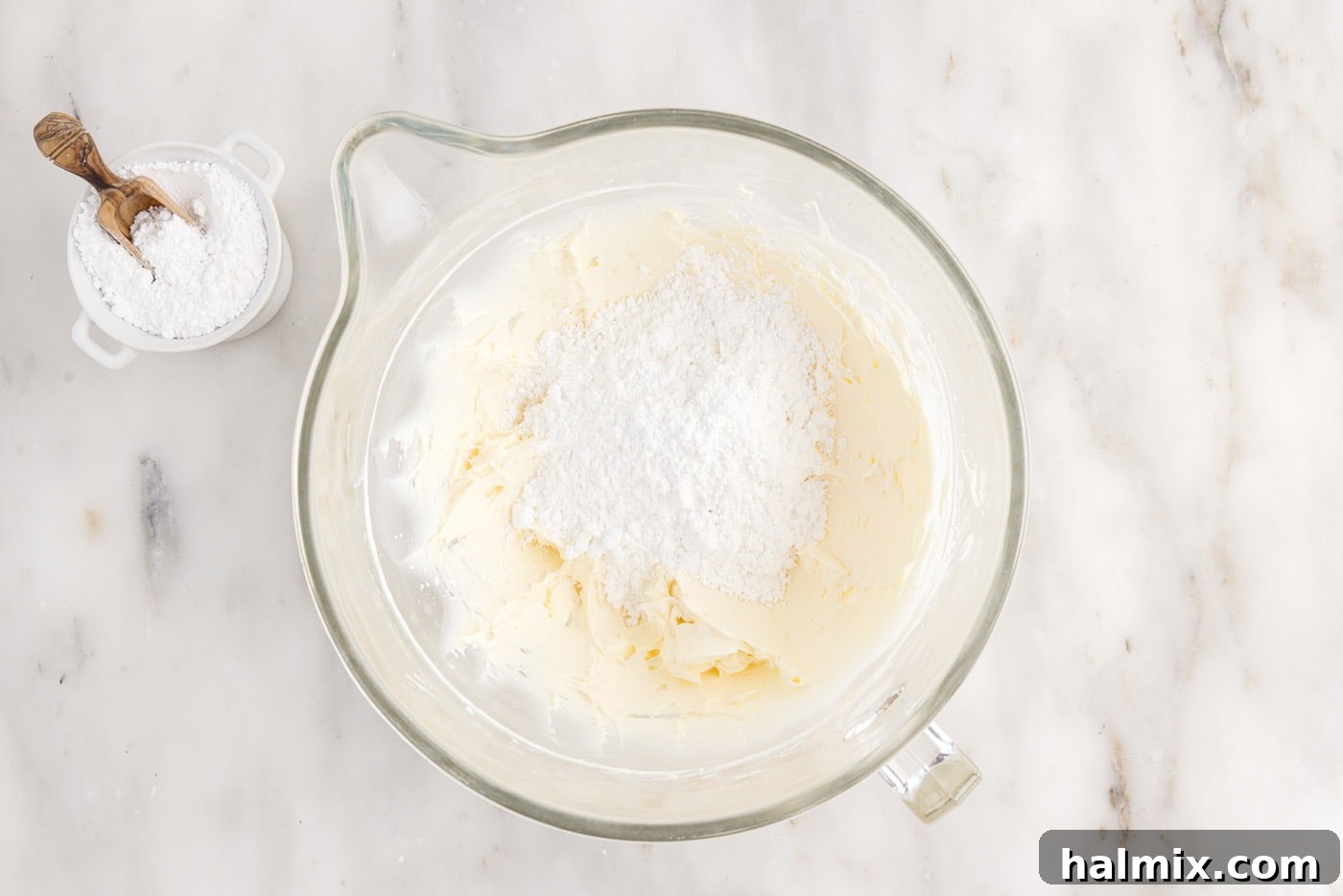
- Add Powdered Sugar: Gradually add the powdered sugar, one cup at a time, beating on low speed until each addition is fully incorporated and the frosting begins to thicken. Continue beating until smooth and combined.
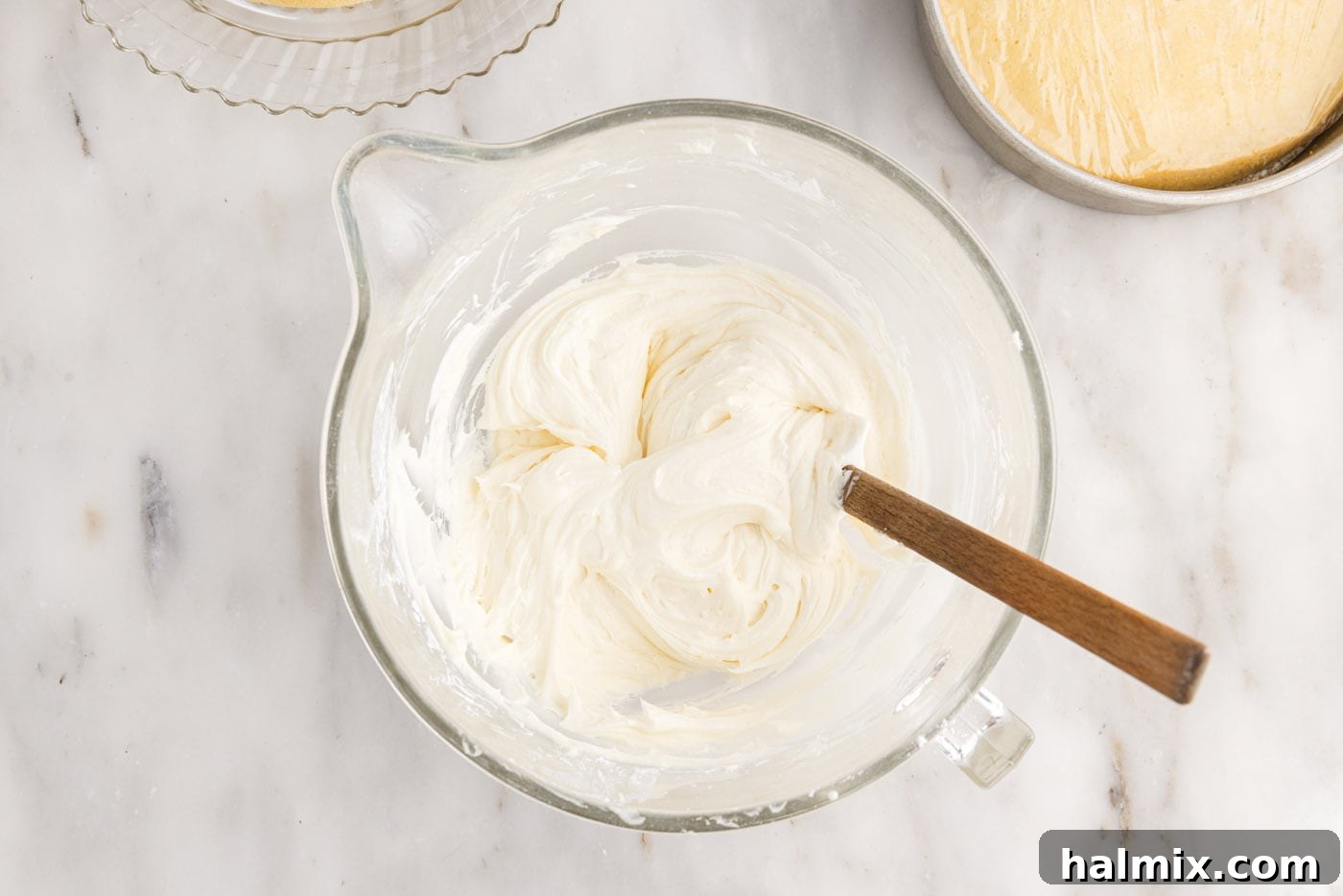
- Achieve Desired Consistency: Stir in the vanilla extract. Then, add the heavy cream, 1 tablespoon at a time, beating until the frosting reaches a fluffy, spreadable consistency. Adjust the amount of heavy cream as needed to achieve your preferred texture.
Assembling Your Coconut Cake
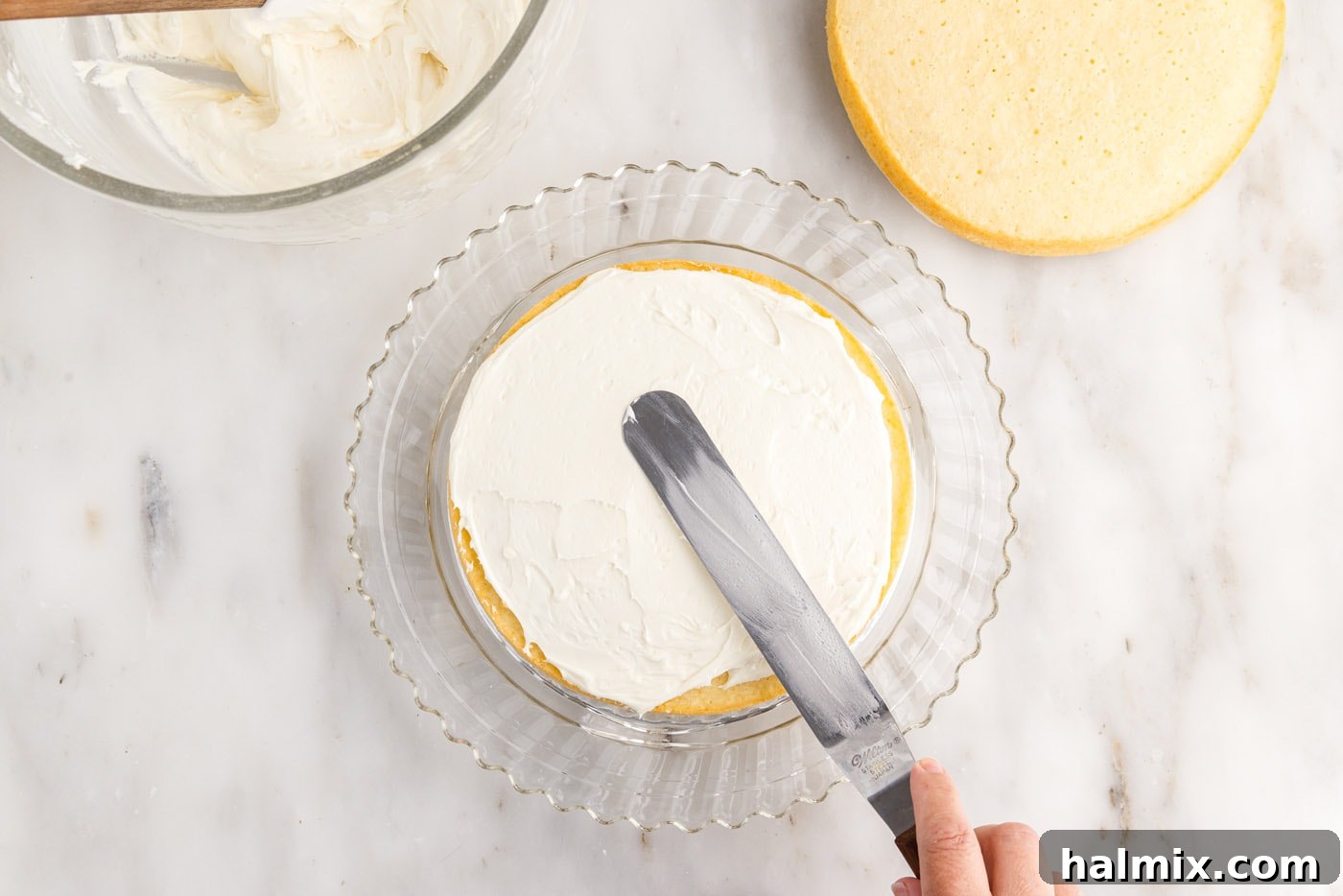
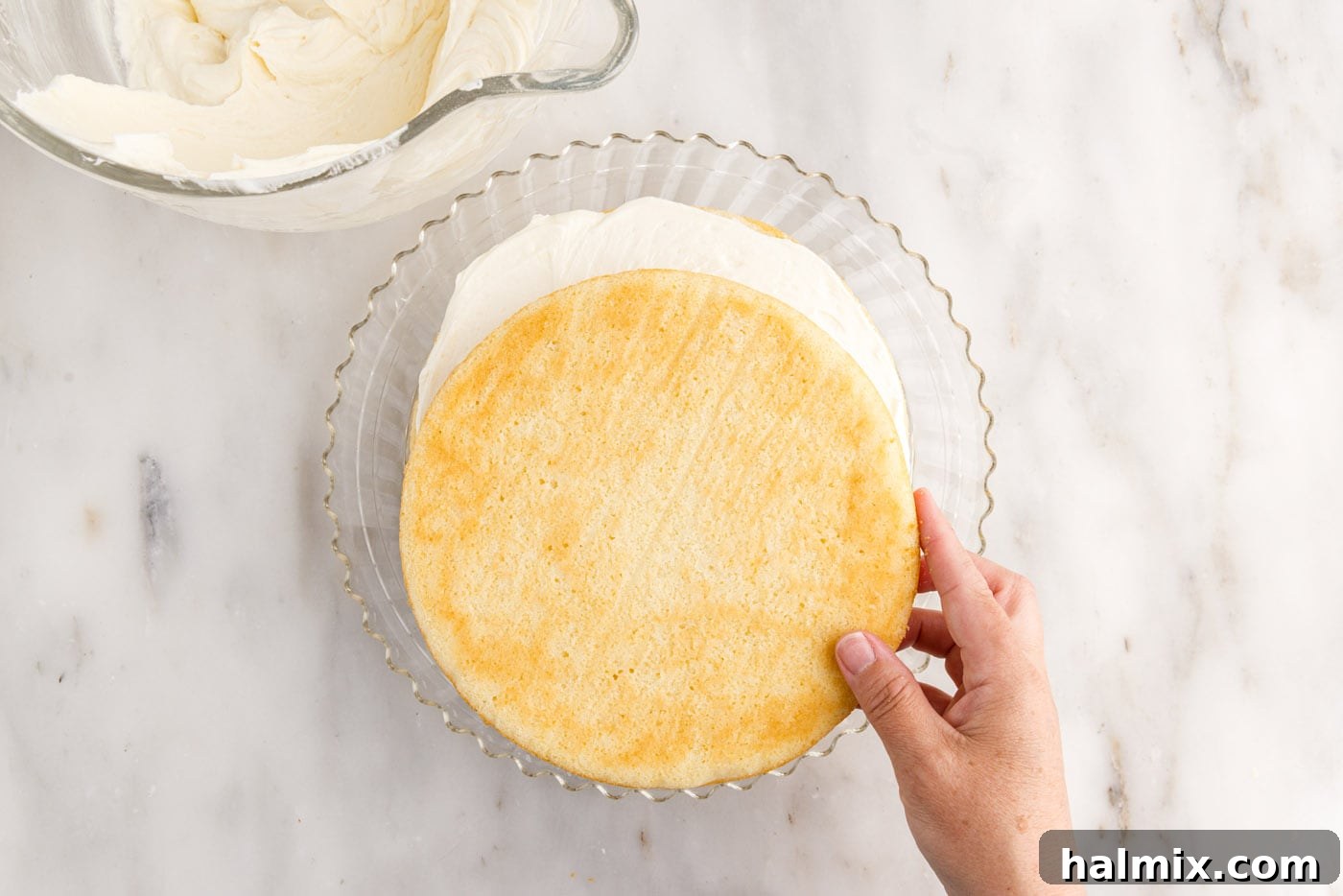
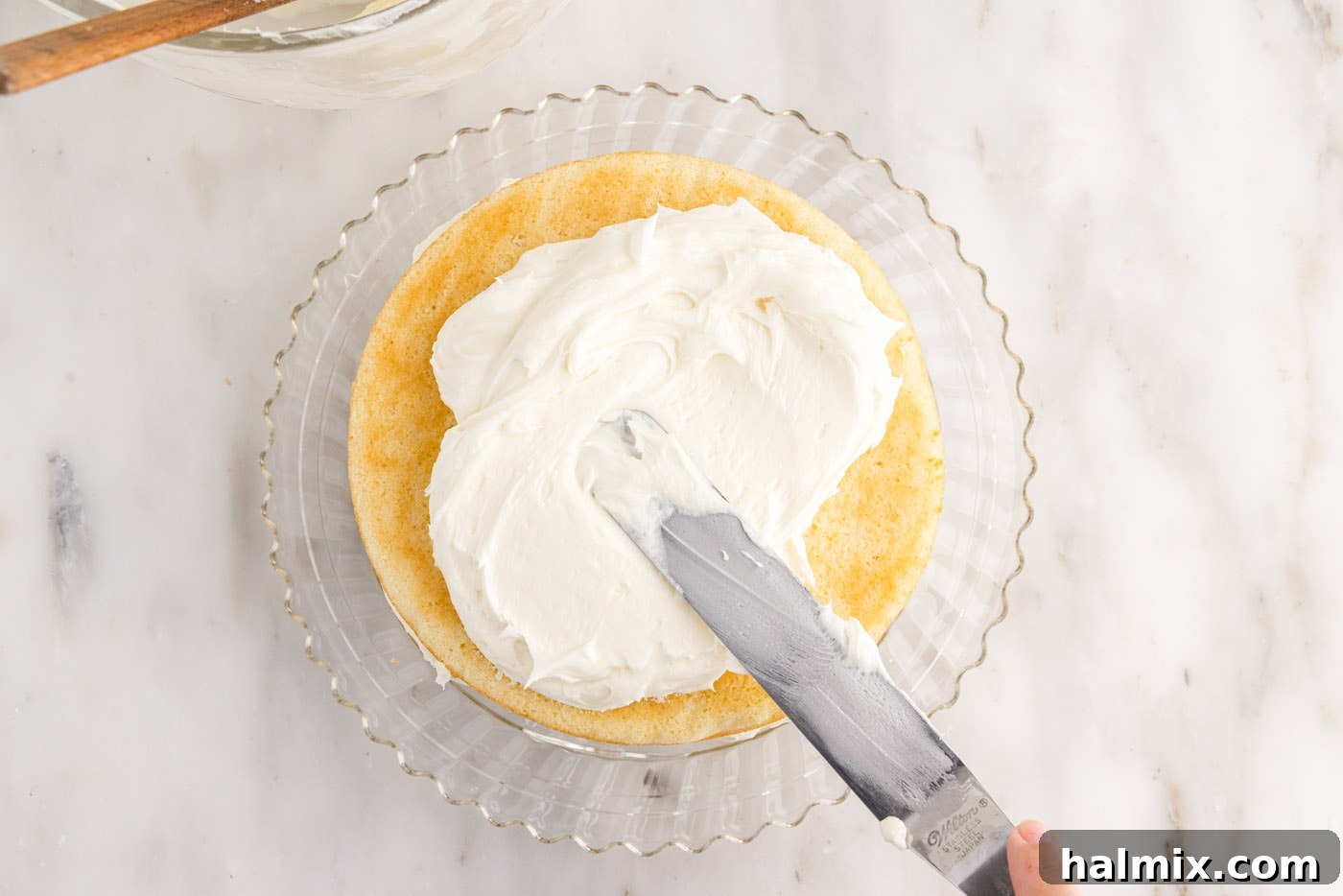
- Layer the Cake: Place one cooled cake layer on your serving plate or cake stand. Spread about ½ cup of the luscious cream cheese frosting evenly over the top of the layer.
- Stack the Layers: Carefully place the second cake layer on top of the first, aligning it gently. Spread another ½ cup of frosting over this layer. Repeat with the third cake layer.
- Frost the Entire Cake: Use the remaining frosting to generously cover the entire top and sides of the assembled cake, creating a smooth and even coating. Take your time to achieve a beautiful finish.
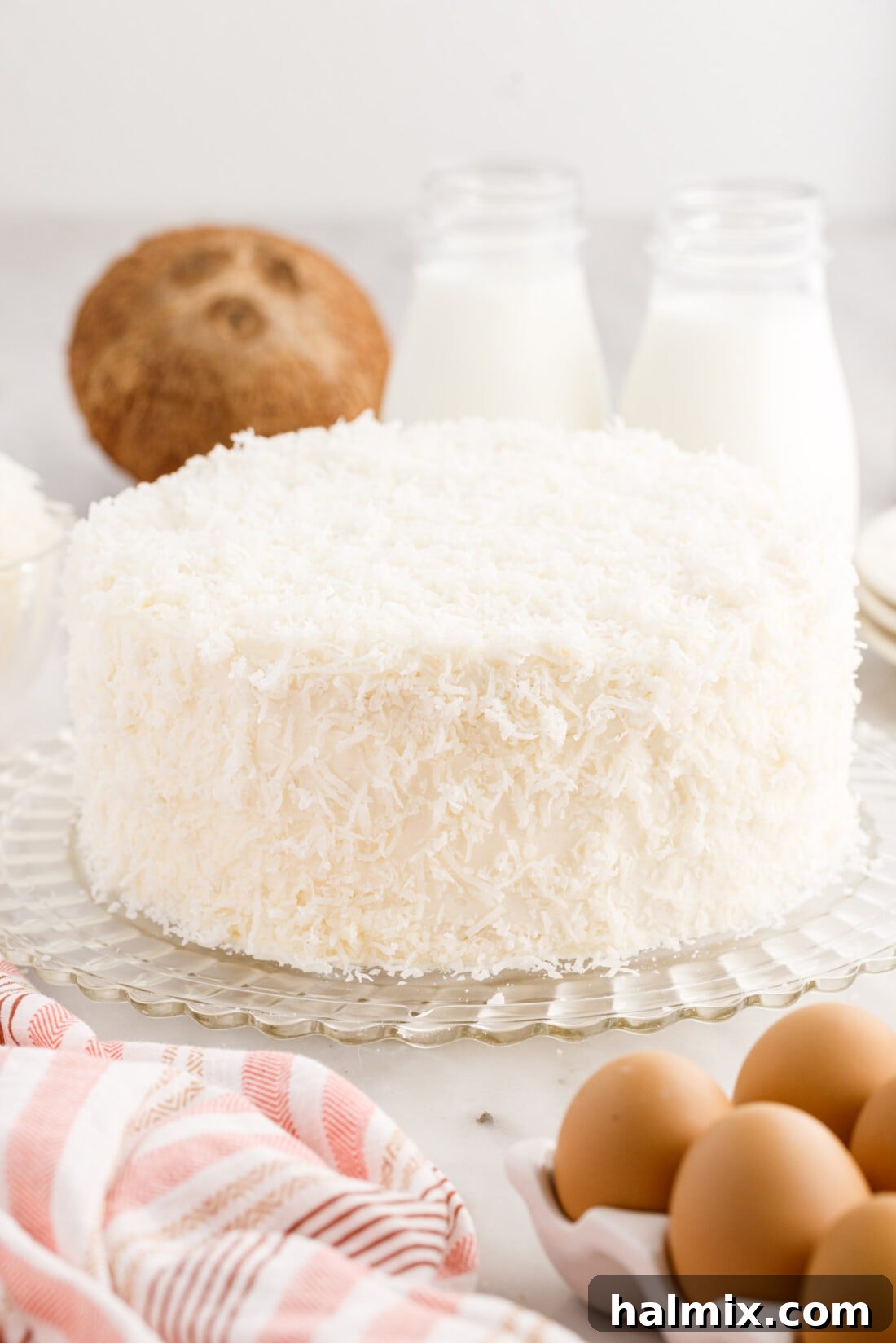
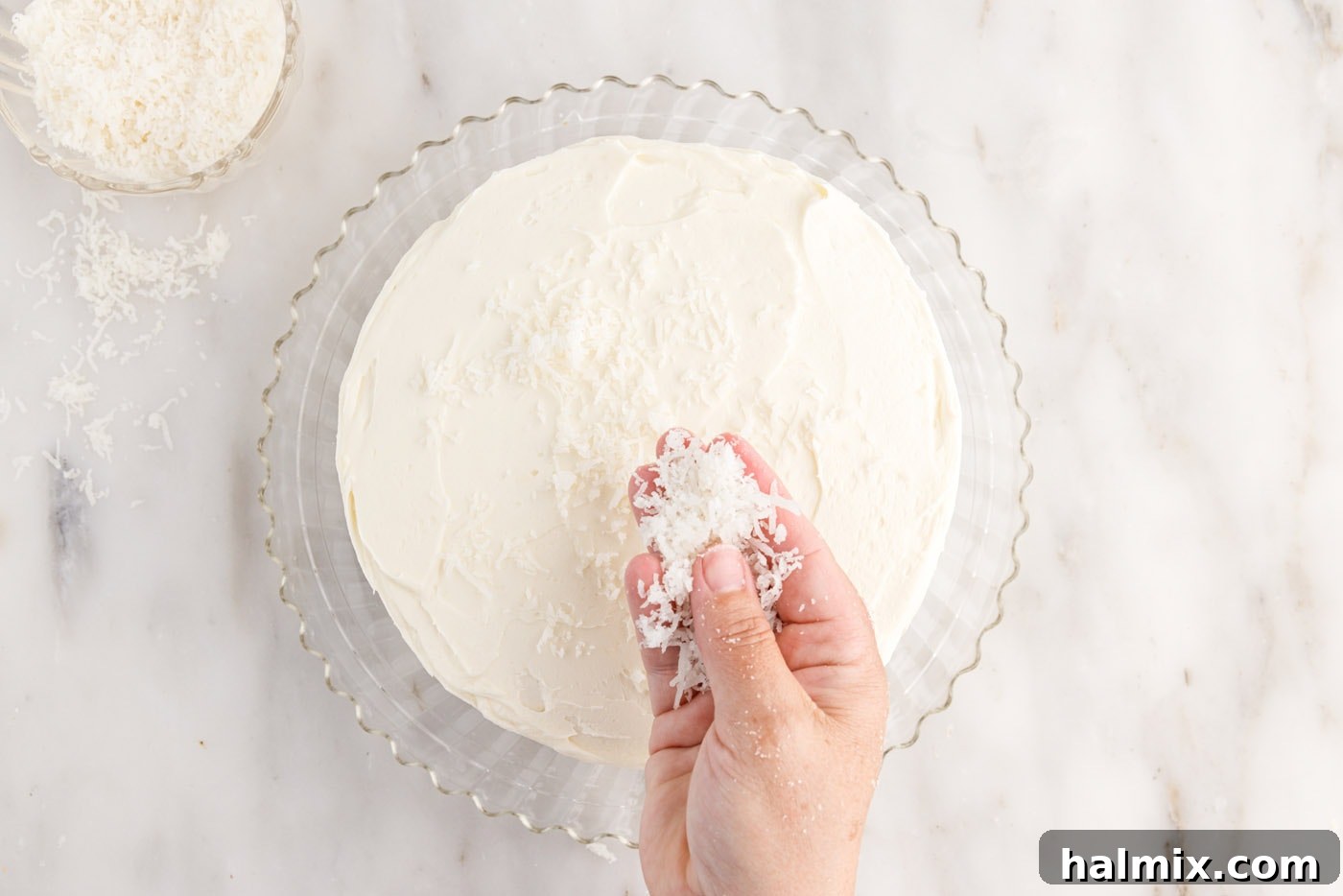
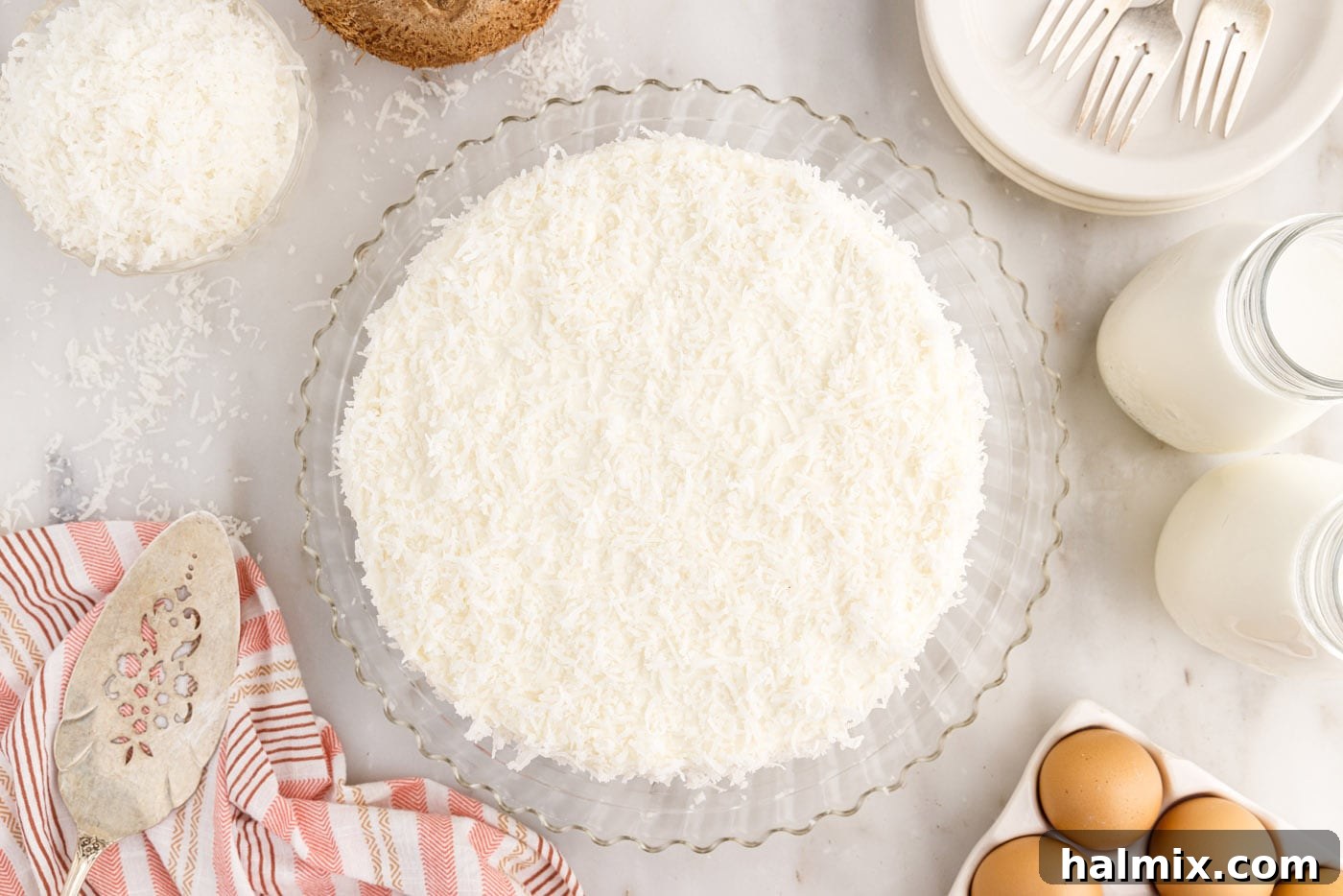
- Decorate with Coconut: For the grand finale, generously sprinkle the remaining 2 cups of sweetened shredded coconut over the top of the cake. Gently pat handfuls of shredded coconut onto the sides of the cake, pressing lightly to adhere, until the entire cake is completely covered in a beautiful, snowy layer of coconut.
Frequently Asked Questions & Expert Tips for Coconut Cake
Ensuring your coconut cake turns out perfectly every time involves a few key insights and common questions. Here are some expert tips and answers to frequently asked questions:
Expert Tips for Success:
- Room Temperature Ingredients are Key: Always ensure your butter, cream cheese, and eggs are at true room temperature. This allows them to emulsify properly, creating a smooth, lump-free batter and frosting, and contributing to the cake’s tender crumb and airy frosting.
- Don’t Overmix the Batter: Once you add the flour mixture, mix only until just combined. Overmixing develops the gluten in the flour, which can lead to a tough and dry cake. A few small lumps in the batter are preferable to overmixing.
- Measure Flour Correctly: For accurate baking, spoon your flour into the measuring cup and level it off with a straight edge, rather than scooping directly from the bag. This prevents compacting the flour and adding too much, which can result in a dense cake.
- Even Cake Layers: For beautifully even cake layers, use a kitchen scale to divide the batter equally among your three prepared pans. This ensures consistent baking and a level cake structure.
- Cool Completely Before Frosting: Patience is paramount! Frosting a warm cake will cause the cream cheese frosting to melt and slide off, creating a messy result. Ensure your cake layers are completely cool to the touch before you begin frosting.
- Toasted Coconut for Extra Flair: For an elevated flavor and aesthetic, lightly toast some shredded coconut in a dry pan or oven until golden brown. This adds a nutty depth and a lovely crunch. You can use it as a garnish or mix some into the frosting.
Absolutely! This coconut cake is an excellent make-ahead dessert, perfect for special occasions or when you want to minimize last-minute stress. You can prepare and assemble the entire cake a day ahead of time. Once frosted, store it in a cake stand fitted with a lid or a portable cake carrier. Since this cake features a delicious cream cheese frosting, it will need to be refrigerated to maintain its freshness and structure. Remove it from the refrigerator about 30-60 minutes before serving to allow the frosting to soften slightly and the flavors to fully develop.
Yes, this cake freezes beautifully, offering a fantastic way to prepare ahead or preserve leftovers.
For Freezing Cake Layers (Unfrosted): To freeze individual cake layers before assembly, ensure they are completely cooled. Wrap each layer tightly a couple of times with plastic wrap, then follow with a layer of aluminum foil. This double-wrapping prevents freezer burn. Store the wrapped layers in the freezer for up to 3 months. When ready to use, transfer them to the refrigerator overnight to thaw before unwrapping and frosting.
For Freezing a Frosted Cake or Slices: If you wish to freeze an already frosted cake, first “flash freeze” the cake by placing it uncovered in the freezer for about 1-2 hours, or until the frosting is completely solid to the touch. This prevents the frosting from sticking to the wrapping. Once the frosting is firm, wrap the entire cake (or individual slices) several times with plastic wrap, followed by a layer of aluminum foil. Store in the freezer for up to 3 months. Thaw frosted cakes or slices in the refrigerator overnight. You can bring them to room temperature for about an hour before serving for optimal taste and texture.
Due to the cream cheese frosting, this coconut cake must be stored in the refrigerator. Keep it covered with a lid, in a cake stand with a dome, or in a cake carrier to prevent it from drying out and to protect it from absorbing other refrigerator odors. Properly stored, your homemade coconut cake will remain fresh and delicious in the refrigerator for up to 5 days. For the best flavor and texture, allow the cake to sit at room temperature for 30-60 minutes before serving.
Delightful Serving Suggestions for Your Coconut Cake
This magnificent coconut cake is a celebration in itself, making it a perfect treat for virtually any occasion. Whether you’re commemorating birthdays, retirements, graduations, or holidays, or simply indulging “just because,” its tropical charm will surely brighten any gathering. Its rich, sweet flavor and moist texture make it a standout dessert that needs little accompaniment.
However, for those looking to elevate the experience further, consider these delightful serving suggestions:
- Fresh Fruit: A sprinkle of fresh berries like raspberries or blueberries, or sliced tropical fruits such as mango or pineapple, can add a refreshing counterpoint to the cake’s richness.
- Coffee or Tea: Serve alongside a hot cup of coffee, a soothing herbal tea, or a creamy iced coffee for a delightful afternoon treat or after-dinner indulgence.
- Ice Cream: A small scoop of vanilla bean or coconut ice cream can add an extra layer of decadence and cool creaminess.
- Toasted Coconut Garnish: As an optional garnish, sprinkle additional toasted coconut over each slice just before serving. The warm, nutty flavor and slight crunch of toasted coconut beautifully complement the soft cake and creamy frosting. (Refer to the Ingredient Info section for instructions on how to toast coconut.)
Enjoy every glorious bite of this stunning cake! It’s more than just a dessert; it’s an experience.
Explore More Irresistible Cake Recipes
If you have a passion for baking and a love for delightful cakes, you’re in the right place! After mastering this sensational coconut cake, why not expand your baking repertoire with some of our other beloved cake recipes? Each one promises a unique and delicious experience, perfect for any craving or celebration.
- Zesty & Refreshing Lemon Cake
- Classic Swirled Marble Cake
- Joyful Funfetti Birthday Cake
- Elegant Classic White Cake
- Tropical Pineapple Coconut Cake
I absolutely adore spending time in the kitchen, experimenting with new flavors and classic favorites, and sharing all my culinary adventures with you! To make sure you never miss out on a delicious new recipe or baking tip, I offer a convenient newsletter delivered straight to your inbox every time a new post goes live. Simply subscribe here and start receiving your free daily recipes!
Ultimate Homemade Coconut Cake
IMPORTANT – Don’t forget to check out the Frequently Asked Questions and Expert Tips section within the blog post for additional helpful guidance!
Ingredients
For the Cake
- 1 cup unsalted butter softened at room temperature
- 1 cup granulated white sugar
- 3 large eggs at room temperature
- 2 teaspoons coconut extract
- 1 teaspoon vanilla extract
- ½ cup cream of coconut
- 2 cups all-purpose flour
- 2 teaspoons baking powder
- ½ teaspoon salt
- ¾ cup unsweetened coconut milk lite or regular
- 1 cup sweetened shredded coconut
For the Cream Cheese Frosting
- 1 cup salted butter softened at room temperature
- 8 ounces cream cheese softened at room temperature
- 1 teaspoon vanilla extract
- 5 cups powdered sugar
- 2 Tablespoons heavy whipping cream optional, for desired consistency
- 2 cups sweetened shredded coconut for garnish
Equipment You’ll Need
-
Hand mixer or stand mixer
-
Mixing bowls (large and medium)
-
Wire cooling racks
-
3 8-inch round cake pans
-
Parchment paper
-
Spatula
Chef’s Notes & Pro Tips
- Toasting Coconut: For an enhanced flavor and texture, consider toasting some of your shredded coconut. Spread it in a single layer on a baking sheet and bake for 3-5 minutes in a 350°F oven until golden brown. Remove immediately to cool. Both flaked or shredded, sweetened or unsweetened coconut can be toasted.
- Coconut Milk Alternatives: While unsweetened coconut milk adds to the cake’s authentic tropical flavor, you can substitute it with whole milk or 2% milk if preferred. The strong coconut presence from the extract and cream of coconut will still ensure a delightful flavor.
- Advance Preparation: This coconut cake can be baked and assembled one day in advance. Store the finished cake in a lidded cake stand or a portable cake carrier in the refrigerator due to the cream cheese frosting.
- Storage: Keep the cake covered in the refrigerator for up to 5 days. Ensure it’s protected to maintain moisture and prevent flavor absorption from other foods.
- Preventing Dry Cake: Avoid overmixing the cake batter. Mix only until the ingredients are just combined. Overmixing develops gluten, which can lead to a dry and tough cake.
- Achieving Fluffy Frosting: Ensure both your butter and cream cheese are truly at room temperature. Cold ingredients will result in a lumpy frosting. Beat them together until very light and fluffy before gradually adding powdered sugar.
Step-by-Step Instructions
Cake Preparation
-
Preheat oven to 350°F (175°C). Grease and flour three 8-inch round cake pans or spray with non-stick baking spray, then line the bottoms with parchment paper.
-
In a large mixing bowl, beat softened butter and granulated sugar until light and creamy (about 2-3 minutes).
-
Add eggs one at a time, beating well after each addition until fully incorporated.
-
Stir in vanilla extract, coconut extract, and cream of coconut, beating until well combined.
-
In a separate bowl, whisk together the all-purpose flour, baking powder, and salt.
-
Alternately add the coconut milk and the flour mixture to the wet ingredients, beginning and ending with the dry ingredients. Mix on low speed only until just combined. Do not overmix.
-
Gently fold 1 cup of sweetened shredded coconut into the batter.
-
Divide the batter evenly among the three prepared cake pans.
-
Bake for 20-25 minutes, or until a toothpick inserted into the center comes out with only a few moist crumbs.
-
Cool cakes in pans on a wire rack for 10-15 minutes, then invert onto the rack, remove parchment paper, and cool completely before frosting.
Frosting Preparation
-
In a large bowl, cream together the softened salted butter and softened cream cheese using a hand or stand mixer until smooth and fluffy.
-
Gradually add the powdered sugar, one cup at a time, beating after each addition until combined.
-
Add vanilla extract and heavy cream (if using), 1 tablespoon at a time, beating until the frosting is light, fluffy, and spreadable.
Cake Assembly
-
Place one cooled cake layer on your serving plate. Spread about ½ cup of frosting evenly over the top.
-
Top with the second cake layer, spread with another ½ cup of frosting, then add the third cake layer.
-
Use the remaining frosting to generously cover the top and sides of the entire cake.
-
Sprinkle the remaining 2 cups of sweetened shredded coconut over the top of the cake, then gently pat handfuls of coconut onto the sides to completely cover the cake.
Nutrition Information (per serving)
Serving: 1 slice | Calories: 775kcal | Carbohydrates: 89g | Protein: 5g | Fat: 46g | Saturated Fat: 31g | Polyunsaturated Fat: 2g | Monounsaturated Fat: 9g | Trans Fat: 1g | Cholesterol: 128mg | Sodium: 315mg | Potassium: 225mg | Fiber: 2g | Sugar: 73g | Vitamin A: 1117IU | Vitamin C: 1mg | Calcium: 64mg | Iron: 2mg
Tried this Recipe? Pin it for Later!
Follow on Pinterest @AmandasCookin or tag #AmandasCookin to share your creations!
The recipes on this blog are carefully tested with a conventional gas oven and gas stovetop. Please note that oven performance can vary, especially with older models, leading to inconsistent cooking and baking times. We recommend using an inexpensive oven thermometer to ensure your oven is consistently reaching the proper temperature. If you’re using a toaster oven or countertop oven, be aware that heat distribution might differ from a full-sized conventional oven, potentially requiring adjustments to cooking or baking times. For recipes utilizing appliances such as pressure cookers, air fryers, or slow cookers, a link to the specific models we use is typically provided within their respective recipes. For baking recipes where ingredients are measured by weight, we highly recommend adhering to these measurements, as using volumetric cups instead may yield different results, and we cannot guarantee success with alternative measuring methods.