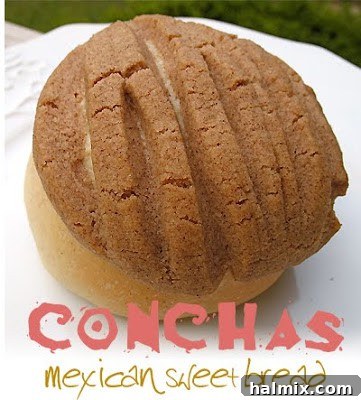
Bake the Perfect Conchas: A Traditional Mexican Sweet Bread Recipe
There’s something truly magical about Mexican cuisine, a vibrant symphony of flavors that captivates the senses. While many instantly think of savory tacos, enchiladas, or robust mole sauces, the world of Mexican baked goods, known as pan dulce, offers an equally enchanting experience. Among these delightful treats, the Concha stands out as an iconic and beloved staple, recognizable by its distinct seashell-patterned, sugary topping.
My journey into Mexican baking began with these very Conchas. Having always cherished the spicy and savory notes of Mexican food, I was intrigued when I stumbled upon a recipe for this “Mexican sweet bread with a cinnamon topping” in the BHG magazine’s “Ultimate Mexican” issue. The idea of combining my love for baking with the rich heritage of Mexican flavors was irresistible. This recipe marked my first attempt at making Conchas, and while a few of my toppings might have playfully slid during the bake, the overall experience was surprisingly straightforward, and the resulting taste was absolutely fabulous.
Conchas are more than just a pastry; they are a cultural cornerstone in Mexico, gracing the counters of every panadería (bakery) and adorning breakfast tables across the country. Their soft, brioche-like dough paired with a crumbly, sweet topping makes them an irresistible companion to a morning coffee or a rich, warm beverage like Champurrado. If you’ve ever dreamt of recreating the authentic taste of a Mexican bakery in your own kitchen, this recipe is your perfect starting point.
The Charm of Conchas: More Than Just Bread
Conchas, meaning “shells” in Spanish, get their name from the distinctive pattern etched into their sugary crust, resembling a scallop shell. This isn’t just a decorative flourish; the topping provides a delightful textural contrast to the soft, airy interior of the bread. While cinnamon is a classic flavor for the topping, variations often include vanilla or chocolate, each offering a unique twist to this traditional treat.
Making Conchas from scratch is a rewarding experience. It allows you to control the quality of ingredients, fill your home with the intoxicating aroma of freshly baked bread, and share a piece of Mexican culinary tradition with your loved ones. Don’t be intimidated by the yeast or the shaping process; I’ve broken down each step to ensure your baking journey is enjoyable and successful.
Conchas (Mexican Sweet Bread) Recipe
Recipe adapted from BHG Ultimate Mexican magazine
Conchas – Mexican Sweet Bread
A delightful traditional Mexican sweet bread with a soft, fluffy interior and a sweet, crumbly cinnamon topping.
Rating: 5 from 4 votes
IMPORTANT – There are often Frequently Asked Questions within the blog post that you may find helpful. Simply scroll back up to read them!
Pin It
Author: Amanda Davis
Ingredients
Dough
- 1 package active dry yeast
- ½ cup warm water (115-120 F)
- ½ cup warm evaporated milk (115-120 F)
- ⅓ cup sugar
- ⅓ cup butter, melted
- 1 egg
- 1 teaspoon salt
- 4 cups all-purpose flour
- ½ teaspoon ground cinnamon
Topping
- ½ cup butter, softened
- ⅔ cup sugar
- 1 cup all-purpose flour
- 2 teaspoons ground cinnamon
- 1 teaspoon vanilla extract
Instructions
- Activate the Yeast: In a large mixing bowl, combine the active dry yeast with ½ cup warm water. The water temperature is crucial here; it should be warm enough to activate the yeast but not so hot that it kills it. Let this mixture stand for about 10 minutes until it becomes foamy, indicating the yeast is active and ready to work.
- Prepare the Dough Base: Once the yeast is activated, stir in the warm evaporated milk, ⅓ cup sugar, melted butter, egg, and salt. These ingredients will form the rich foundation of your sweet bread.
- Form the Dough: Gradually incorporate the all-purpose flour. Begin by stirring in 2 cups of flour until well combined. Then, gradually add the remaining 2 cups of flour along with ½ teaspoon of ground cinnamon. Mix until a shaggy dough forms, ensuring all ingredients are integrated.
- Knead and Rise (First Proof): Turn the dough out onto a lightly floured surface. Knead the dough for 3-5 minutes. This process develops the gluten, making the bread smooth and elastic, contributing to its tender texture. Once kneaded, shape the dough into a ball and transfer it to a greased bowl, turning it once to coat with oil. Cover the bowl with plastic wrap or a clean kitchen towel and let it rise in a warm, draft-free place until it has doubled in size, which typically takes about 60-75 minutes.
- Prepare the Topping: While the dough is rising, prepare the signature Concha topping. In a medium bowl, beat the softened ½ cup butter with an electric mixer on medium speed for about 30 seconds until creamy. Add ⅔ cup sugar and beat until the mixture is light and fluffy. Finally, stir in 1 cup of all-purpose flour, 2 teaspoons of ground cinnamon, and 1 teaspoon of vanilla extract. Mix until a soft, crumbly paste forms. You might need to use your hands to bring it together into a cohesive ball.
- Punch Down and Divide: Once the dough has doubled, gently punch it down to release the air. Cover it again and let it rest for another 10 minutes. This short rest helps the gluten relax, making the dough easier to handle. Divide the dough into 12 equal pieces. For best results, use a kitchen scale to ensure uniform size, which helps in even baking.
- Shape the Conchas: Roll each piece of dough into a smooth ball. Place the dough balls about 3 inches apart on a baking sheet lined with parchment paper. Gently press each ball down slightly to flatten it into a thick disc.
- Apply the Topping: Divide the prepared topping mixture into 12 equal portions. Roll each portion into a small ball, then gently pat or roll each ball flat into a thin round disc, roughly the same size as your flattened dough balls. Carefully place one round of topping onto each dough ball.
- Create the Shell Pattern: This is where the Concha gets its iconic look. Use a sharp paring knife or a specialized Concha cutter to gently cut grooves into the topping, creating a pattern that resembles a scallop shell. Be careful not to cut too deeply into the dough itself.
- Second Rise (Proofing): Cover the shaped Conchas loosely with plastic wrap or a clean kitchen towel. Let them rise again in a warm, draft-free place until they have nearly doubled in size, which should take approximately 45 minutes. This second rise contributes to the light and airy texture of the final bread.
- Bake: While the Conchas are undergoing their second rise, preheat your oven to 375°F (190°C). Bake the rolls for 18-20 minutes, or until they are a beautiful light golden brown and the topping is set.
- Cool: Carefully remove the baked Conchas from the baking sheet and transfer them to wire racks to cool completely.
Tips for Perfect Conchas Every Time
Achieving bakery-quality Conchas at home is entirely possible with a few key considerations:
- Yeast Activation: Always ensure your water and milk are within the specified temperature range (115-120 F / 46-49 C). Too cold, and the yeast won’t activate; too hot, and it will die. A kitchen thermometer is your best friend here.
- Kneading is Key: Don’t skimp on the kneading time. This develops the gluten, giving the bread its characteristic chewiness and elasticity. If you have a stand mixer with a dough hook, it makes this step much easier.
- Warm Environment for Rising: Yeast loves warmth. Find a cozy spot for your dough to rise—a slightly warmed oven (turned off!), a sunny windowsill, or near a heating vent can work wonders.
- Preventing Topping Slide: If your topping tends to slide, there are a few tricks. Ensure your butter for the topping is softened, not melted. After placing the topping on the dough, gently press it to adhere. Also, avoid over-proofing the dough; if it rises too much, the topping can stretch and crack.
- Scoring the Topping: A very sharp paring knife or a specialized Concha cutter will yield the cleanest lines. You can also lightly dust the knife with flour to prevent sticking.
- Don’t Overbake: Conchas should be light golden brown. Overbaking can lead to dry bread. Keep an eye on them towards the end of the baking time.
Serving and Enjoying Your Homemade Conchas
These Conchas are truly wonderful, though they are undeniably best eaten the same day they are baked. The crumbly topping and soft interior are at their peak when fresh from the oven. If they have cooled completely, a quick 10-second pop in the microwave will bring back that delightful warmth and soften the dough, making them feel freshly baked again.
Beyond the traditional Champurrado, Conchas pair perfectly with a cup of rich Mexican coffee, a glass of cold milk, or even a simple hot chocolate. They make an excellent breakfast pastry, a delightful afternoon snack, or a light dessert to share with family and friends.
Storage and Reheating Advice
While fresh Conchas are unparalleled, you can store them to enjoy later. Store them in an airtight container at room temperature for up to 2-3 days. For longer storage, Conchas freeze exceptionally well. Wrap individual Conchas tightly in plastic wrap, then place them in a freezer-safe bag or container. They can be frozen for up to 1-2 months.
To reheat frozen Conchas, let them thaw at room temperature for an hour or two. Then, warm them in a microwave for 10-15 seconds, or in a preheated oven at 300°F (150°C) for 5-7 minutes, until soft and warm throughout. This will revive their tender texture and fragrant aroma.
Variations and Flavor Pairings
While this recipe focuses on classic cinnamon Conchas, feel free to experiment with flavors. For the topping, you can:
- Chocolate Conchas: Replace 1-2 tablespoons of flour in the topping with unsweetened cocoa powder.
- Vanilla Conchas: Increase the vanilla extract in the topping slightly, or add a pinch of vanilla bean powder.
- Orange or Lime Zest: Add finely grated zest to both the dough and the topping for a citrusy brightness.
- Spices: Introduce a small amount of cardamom or nutmeg alongside the cinnamon for a more complex spice profile.
You can also brush the Conchas with an egg wash before applying the topping for a richer golden hue.
Tried this Recipe? Pin it for Later!
Follow on Pinterest @AmandasCookin or tag #AmandasCookin!
The recipes on this blog are tested with a conventional gas oven and gas stovetop. It’s important to note that some ovens, especially as they age, can cook and bake inconsistently. Using an inexpensive oven thermometer can assure you that your oven is truly heating to the proper temperature. If you use a toaster oven or countertop oven, please keep in mind that they may not distribute heat the same as a conventional full sized oven and you may need to adjust your cooking/baking times. In the case of recipes made with a pressure cooker, air fryer, slow cooker, or other appliance, a link to the appliances we use is listed within each respective recipe. For baking recipes where measurements are given by weight, please note that results may not be the same if cups are used instead, and we can’t guarantee success with that method.
— NEW! Be sure to subscribe to my newsletter, Foodie in the Craftroom, to receive updates and tips from both Amanda’s Cookin’ and Crafts by Amanda! Visit https://amandascookin.com/p/subscribe-to-newsletter.html