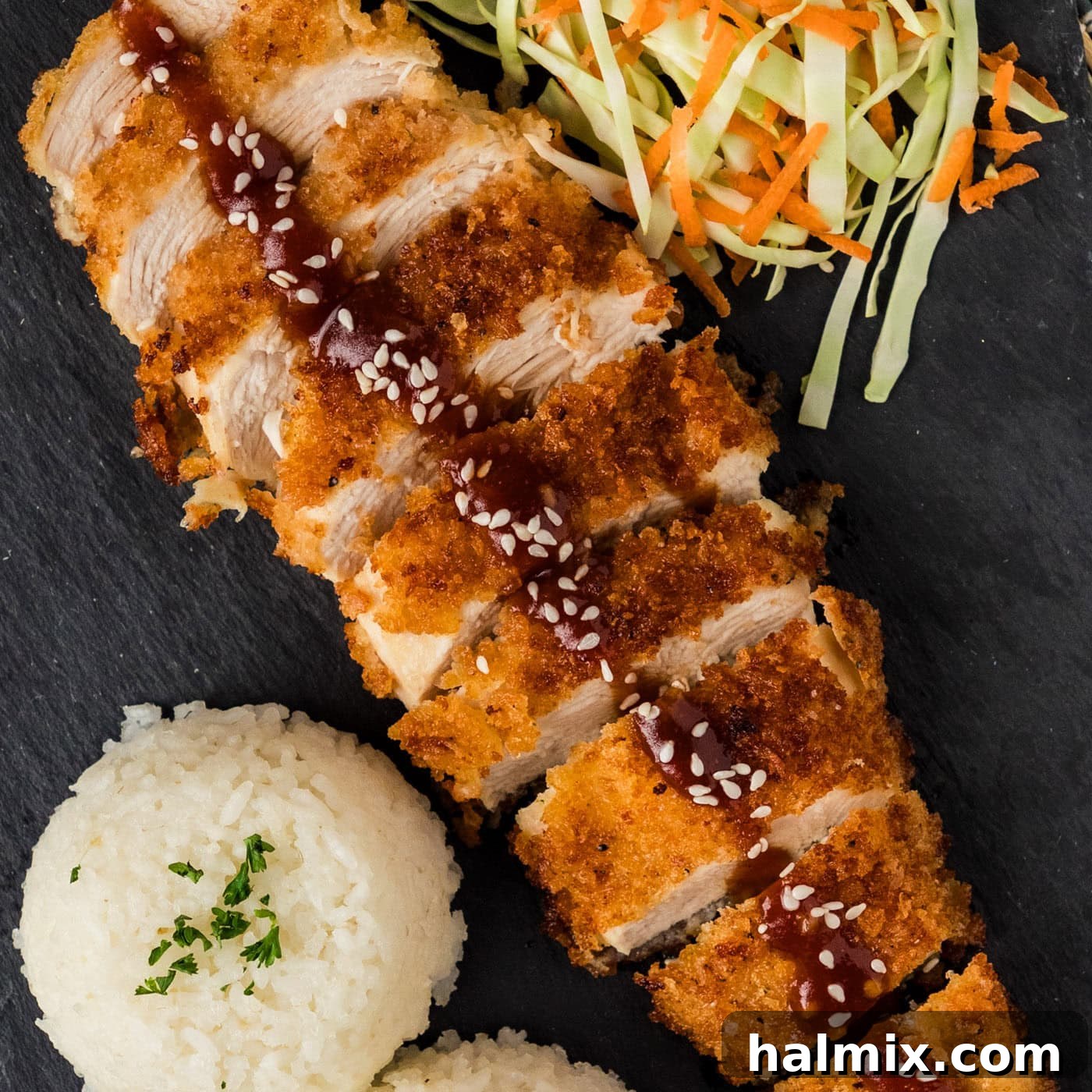
Crispy Chicken Katsu: Your Guide to Perfect Japanese Fried Chicken
Master the art of crispy, golden-brown Chicken Katsu right in your kitchen! This classic Japanese dish, beloved for its satisfying crunch and tender chicken, can be prepared in just 35 minutes using simple ingredients like chicken breast and crunchy panko breadcrumbs. Dive into our easy-to-follow recipe and discover how to create a restaurant-quality meal that’s perfect for any weeknight or special occasion.
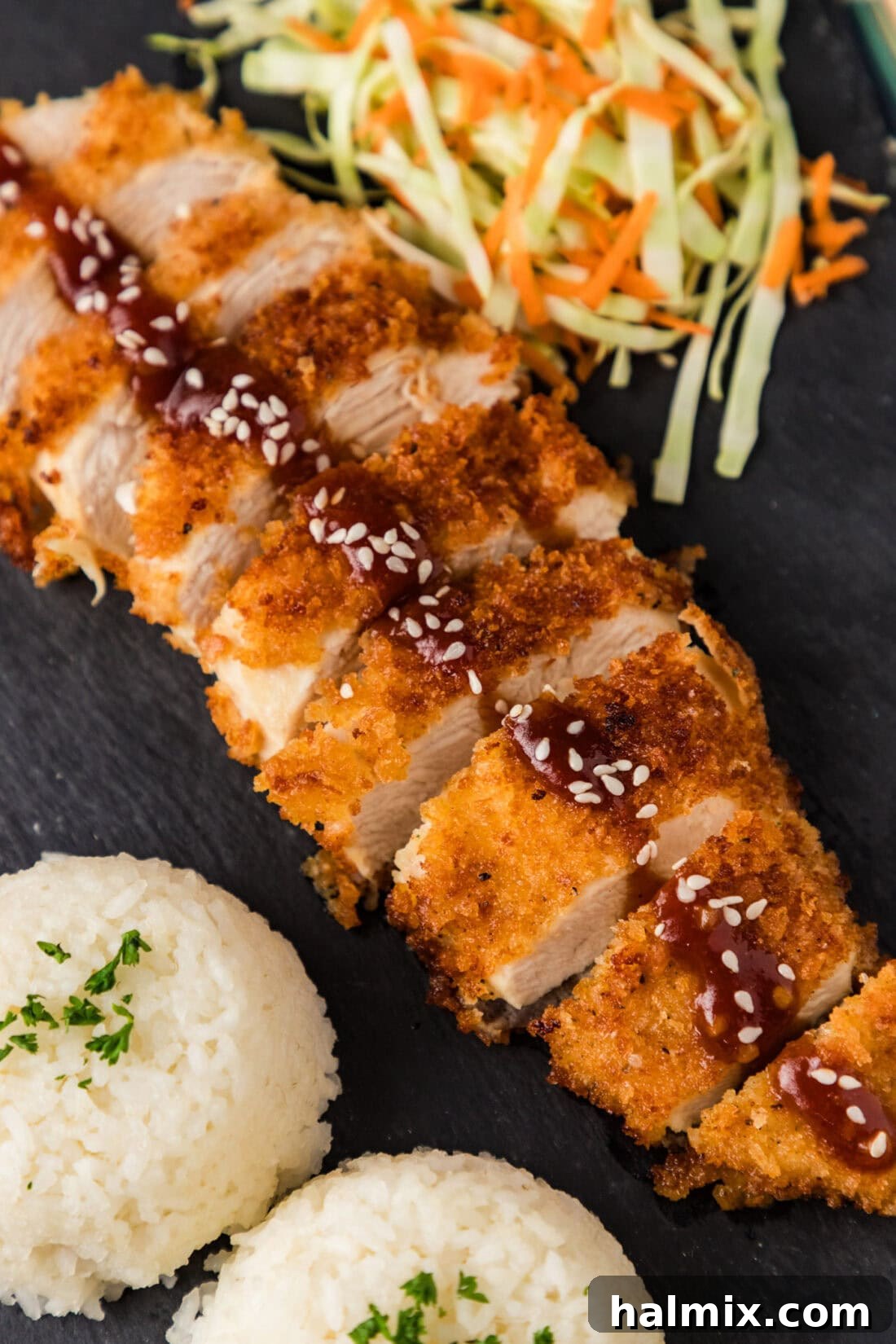
Why This Homemade Chicken Katsu Recipe Stands Out
Chicken Katsu is a quintessential Japanese comfort food, celebrated for its irresistible texture and flavorful profile. Our recipe simplifies this culinary delight, making it accessible for home cooks while delivering authentic results. The secret lies in the meticulous breading process using coarse panko breadcrumbs, which create an exceptionally light and airy crust that shatters with every bite, far superior to regular breadcrumbs.
What truly elevates this dish is the accompanying Katsu sauce, also widely known as Tonkatsu sauce. This homemade rendition perfectly balances sweet, savory, and tangy notes, providing an ideal complement to the fried chicken. Whether you prefer to drizzle it generously over the cutlets or serve it on the side for dipping, this sauce transforms the Katsu into a complete culinary experience. We’ve included the full sauce recipe below, ensuring you achieve that perfect harmony of flavors.
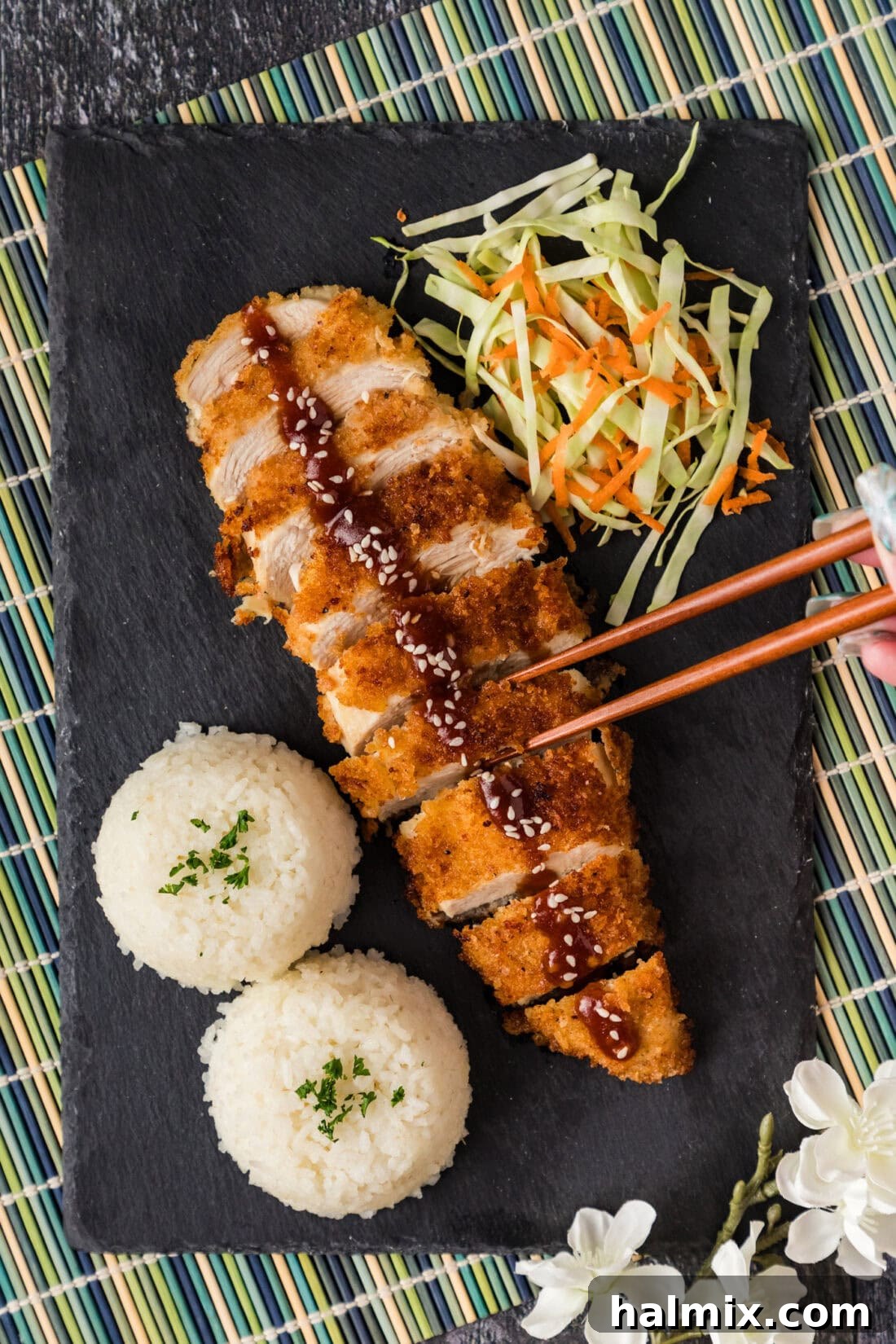
While traditional Katsu often uses chicken cutlets, our version opts for chicken breasts, offering a more substantial and juicy piece of chicken. However, the versatility of this recipe means you can easily adapt it to your preference. Served alongside a generous scoop of fluffy, steamy rice and a crisp bed of shredded cabbage, this dish isn’t just a meal; it’s a gastronomic journey that feels straight out of your favorite Japanese restaurant. It’s a quick, impressive, and deeply satisfying meal that’s sure to become a regular in your rotation.
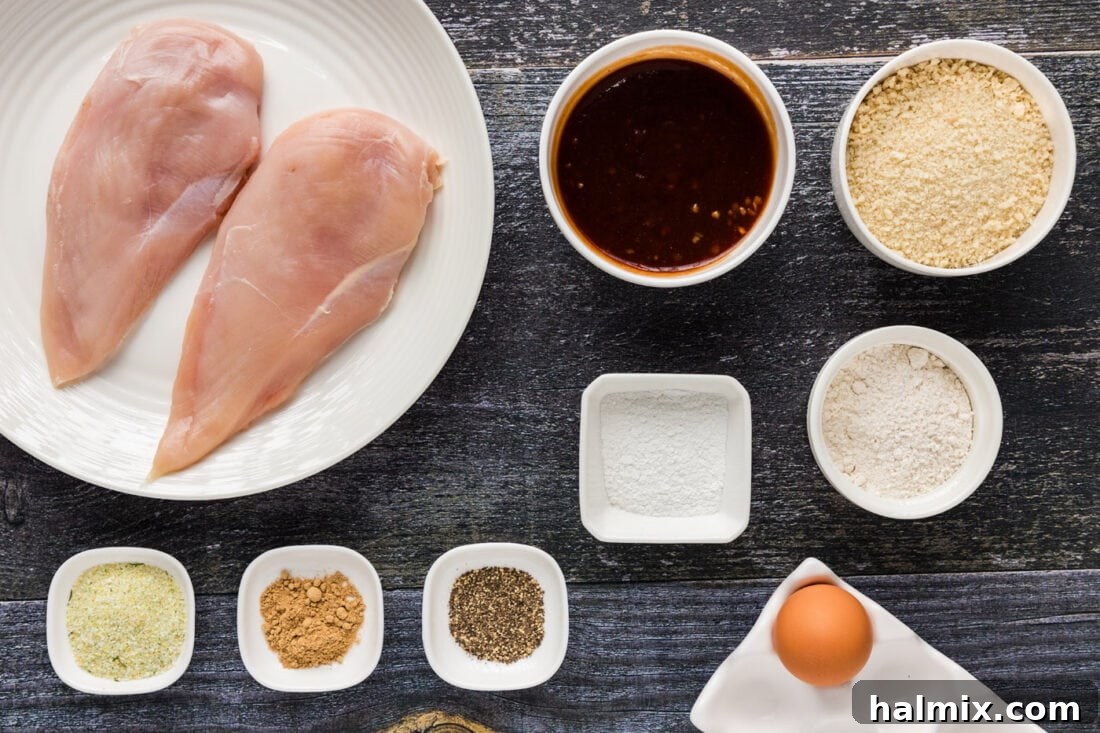
Essential Ingredients for Your Perfect Chicken Katsu
Crafting delicious Chicken Katsu starts with quality ingredients. Below, you’ll find a comprehensive list of everything you’ll need, including specific quantities for both the chicken and the delectable Katsu sauce. For your convenience, all measurements and detailed instructions are also available in the printable recipe version at the end of this post.
Ingredient Spotlight & Expert Substitution Tips
Understanding each ingredient’s role is key to perfecting your Chicken Katsu. Here’s a closer look, along with smart substitution suggestions to tailor the recipe to your pantry and preferences:
CHICKEN: Our recipe features boneless, skinless chicken breasts, chosen for their tender texture and ease of preparation. For best results, we recommend trimming them to an even thickness or gently pounding them to ensure uniform cooking. This prevents thinner parts from overcooking while thicker sections remain undercooked. If chicken breasts are too thick, slice them horizontally into thinner cutlets before pounding.
Alternatively, you can substitute with pre-cut chicken cutlets. Keep in mind that these are typically thinner and will cook much faster, so monitor them closely to avoid overcooking. For a traditional Japanese fried pork cutlet, simply swap the chicken with pork cutlets to create classic Tonkatsu – a delicious variation with a rich history!
BREADING: The cornerstone of truly crispy Katsu is panko breadcrumbs. Unlike conventional breadcrumbs, panko has a coarser, flakier texture that doesn’t absorb as much oil, resulting in a lighter, crispier, and less greasy coating. We strongly recommend sticking to panko for this recipe to achieve that signature Katsu crunch. While regular breadcrumbs can be used in a pinch, they won’t yield the same coveted light and airy crispiness.
FLOUR & CORNSTARCH: The initial dredge in a mixture of all-purpose flour and cornstarch creates a dry surface for the egg wash to adhere to. The cornstarch, in particular, contributes to an extra layer of crispness, ensuring a golden, crunchy exterior.
EGG WASH: A simple whisked egg with a touch of water forms the perfect binder between the flour and the panko. It helps the breadcrumbs cling firmly to the chicken, creating a robust crust.
SEASONINGS: Garlic salt, black pepper, and dried ginger are added directly to the panko breadcrumbs, infusing the crust with aromatic depth. This ensures every bite is seasoned from the outside in.
KATSU SAUCE INGREDIENTS: This simple yet powerful sauce combines ketchup, Worcestershire sauce, brown sugar, oyster sauce, and garlic salt. Each ingredient plays a crucial role: ketchup provides a sweet and tangy base, Worcestershire adds umami and depth, brown sugar balances the acidity with sweetness, oyster sauce contributes a rich savory note, and garlic salt enhances the overall flavor profile. Don’t skip any of these; they work in harmony to create the iconic Katsu flavor.
Step-by-Step Guide to Crafting Perfect Chicken Katsu
Follow these detailed step-by-step photos and instructions to visualize each stage of making this delectable recipe. For a quick reference, you can Jump to Recipe to access the printable version, complete with precise measurements and instructions.
- Prepare the Chicken: Begin by trimming your boneless, skinless chicken breasts to an even thickness. This is crucial for uniform cooking. If the breasts are particularly thick, you can carefully slice them horizontally to create thinner cutlets or place them between two sheets of plastic wrap and gently pound them with a meat mallet or rolling pin until they are about ½ to ¾ inch thick. Pat the chicken dry thoroughly with paper towels; moisture can prevent the breading from adhering properly.
CHEF TIP: Don’t discard any trimmed chicken scraps! These small pieces are excellent for future stir-fries, soups, or even quick wraps. Simply freeze them in an airtight container until ready to use.
- Make the Katsu Sauce: We recommend preparing the Katsu sauce first for two important reasons. Firstly, allowing the sauce ingredients to mingle for a bit enhances their combined flavors, deepening the taste. Secondly, having the sauce ready means you can serve your perfectly fried chicken Katsu immediately after it comes out of the skillet, ensuring maximum freshness and crispness.
- Combine all Katsu sauce ingredients (ketchup, Worcestershire sauce, brown sugar, oyster sauce, and garlic salt) in a small bowl. Whisk them together until thoroughly combined and smooth. Set the sauce aside while you prepare the chicken.
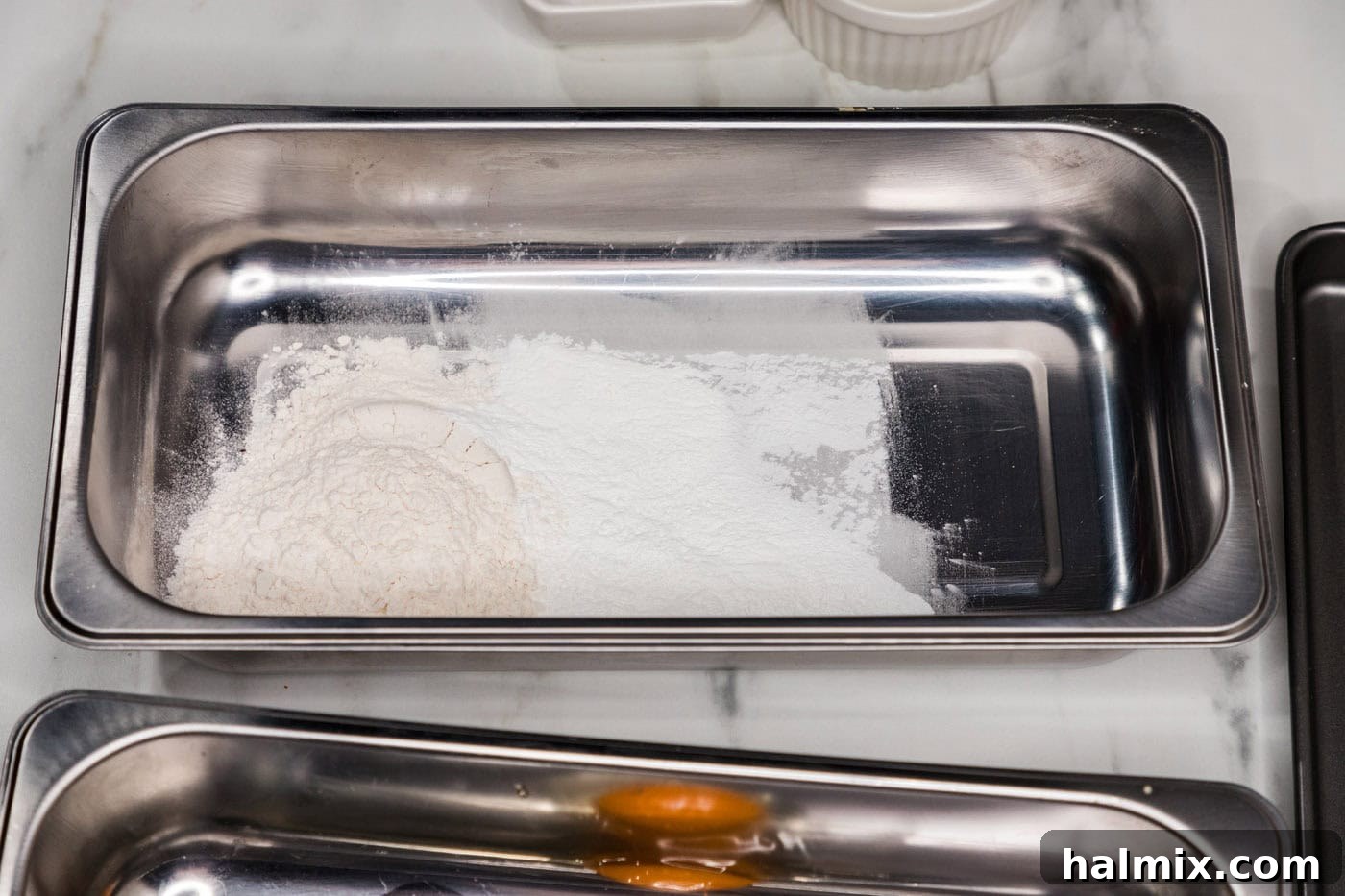
- Set Up Breading Stations: For an organized and efficient breading process, line up three shallow breading trays or shallow dishes next to each other. In the first tray, combine the all-purpose flour and cornstarch, stirring well to ensure an even mix.

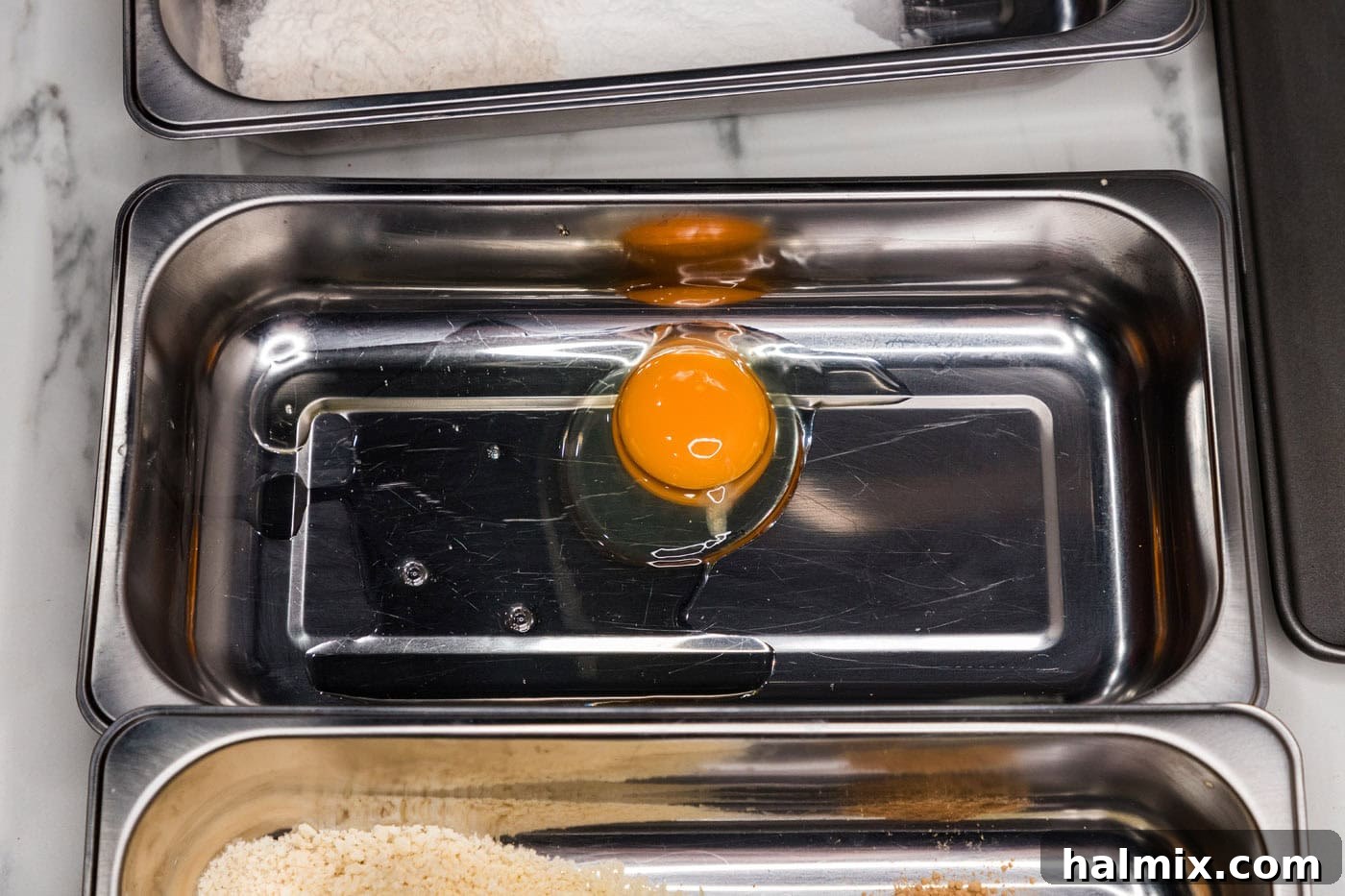
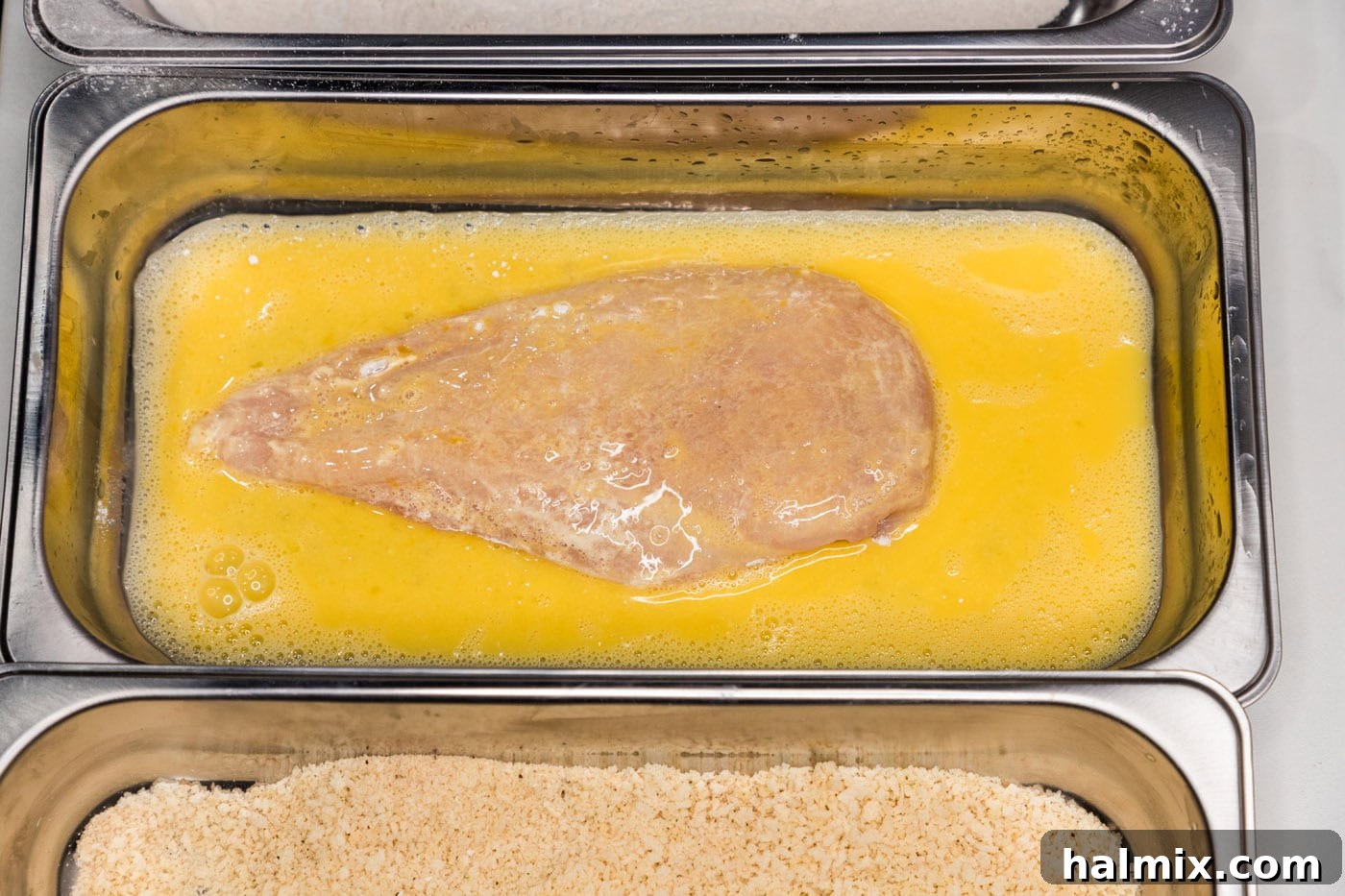
- In the second tray, whisk together the large egg and water until the mixture is uniform and slightly frothy. This creates the essential “glue” for the panko.
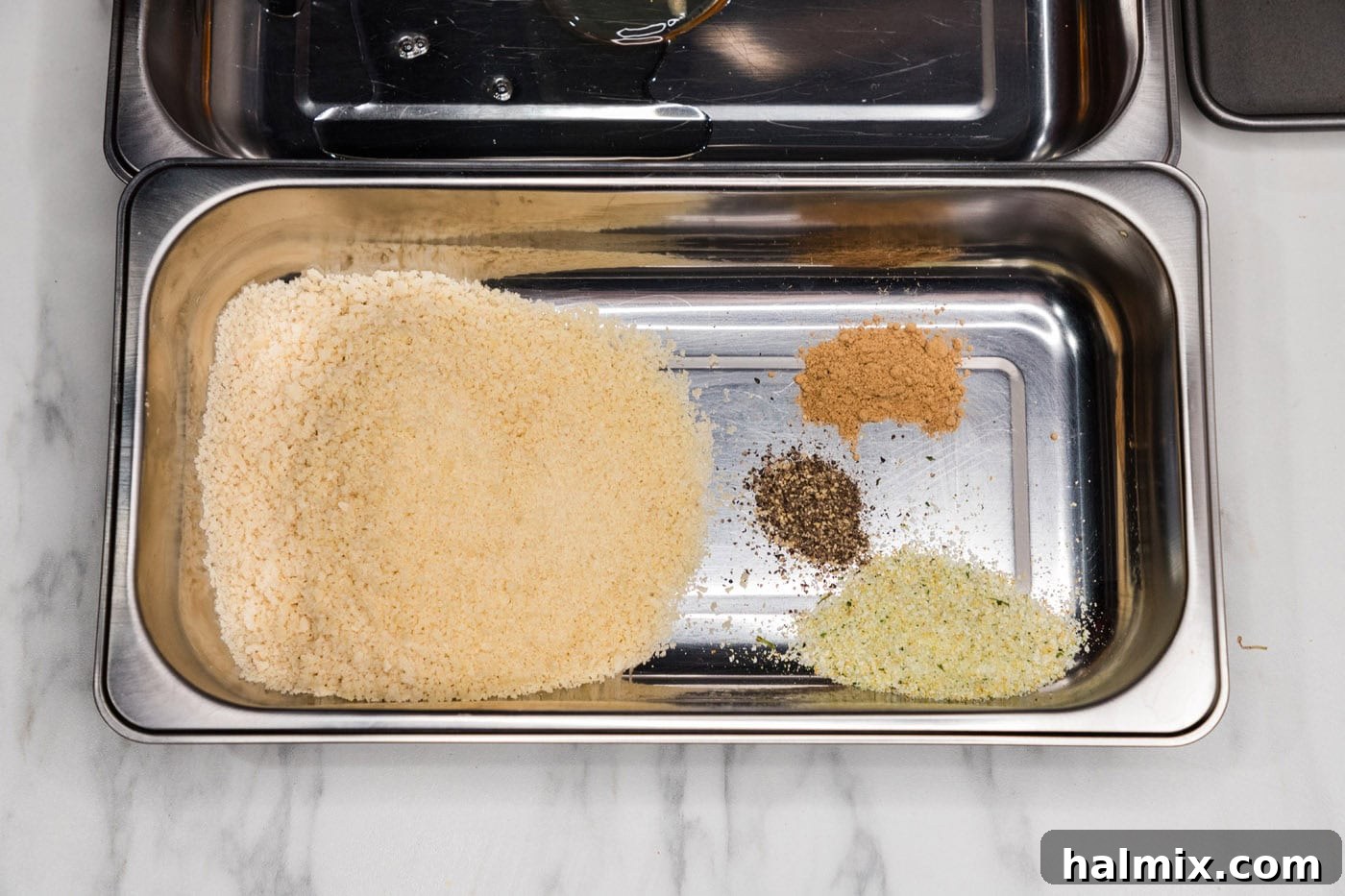
- In the third tray, combine the panko breadcrumbs with garlic salt, black pepper, and dried ginger. Mix thoroughly to evenly distribute the seasonings throughout the panko.
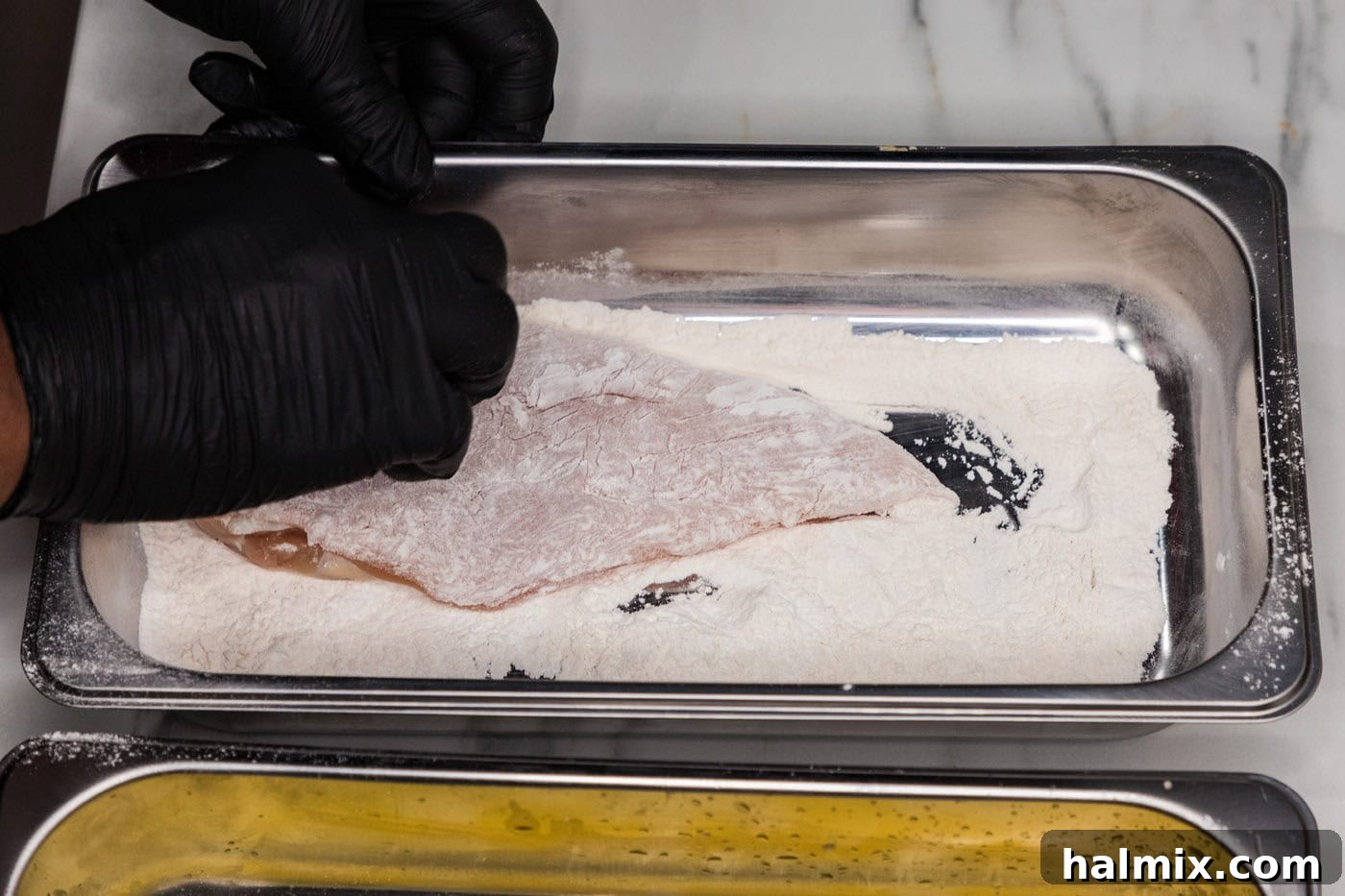
- Breading the Chicken: Take each prepared chicken breast and dredge it first in the flour mixture, ensuring it’s completely coated. Shake off any excess flour.
- Next, dip the floured chicken into the egg wash, making sure all sides are fully coated. Allow any excess egg to drip off to prevent a gummy breading.
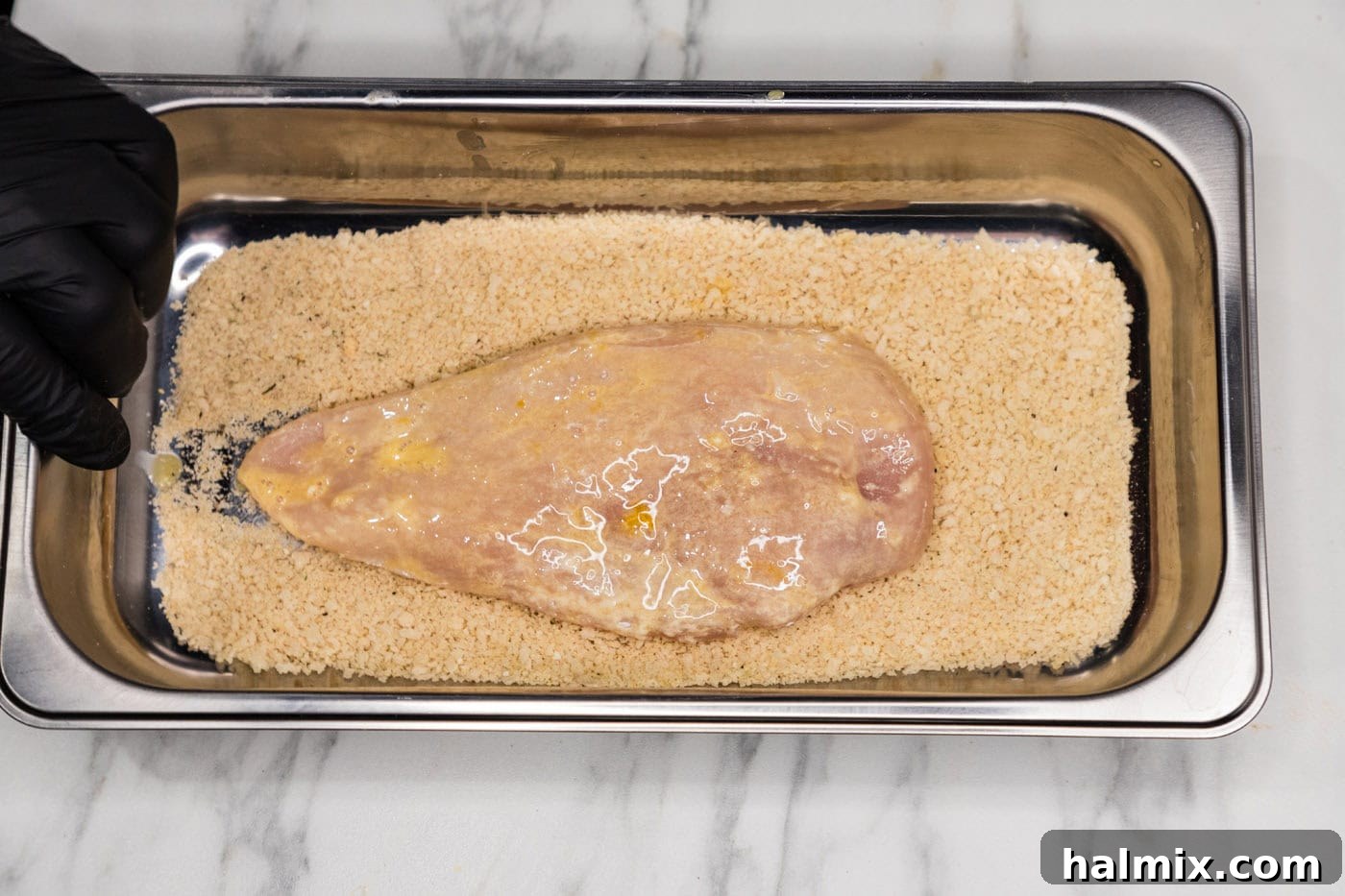
- Finally, place the egg-coated chicken into the panko breadcrumb mixture. Gently press the panko onto both sides of the chicken to ensure maximum adhesion and an even, thick coating. Transfer the fully breaded chicken breasts to a clean plate or tray, ready for frying.
- Frying the Katsu: In a large, heavy-bottomed skillet, add enough cooking oil (such as vegetable, canola, or peanut oil) to come about an inch up the sides of the pan. Heat the oil over medium-high heat until it reaches a temperature of 350°F (175°C). Using a cooking thermometer is essential for accuracy; maintaining the correct oil temperature prevents soggy or burnt Katsu.
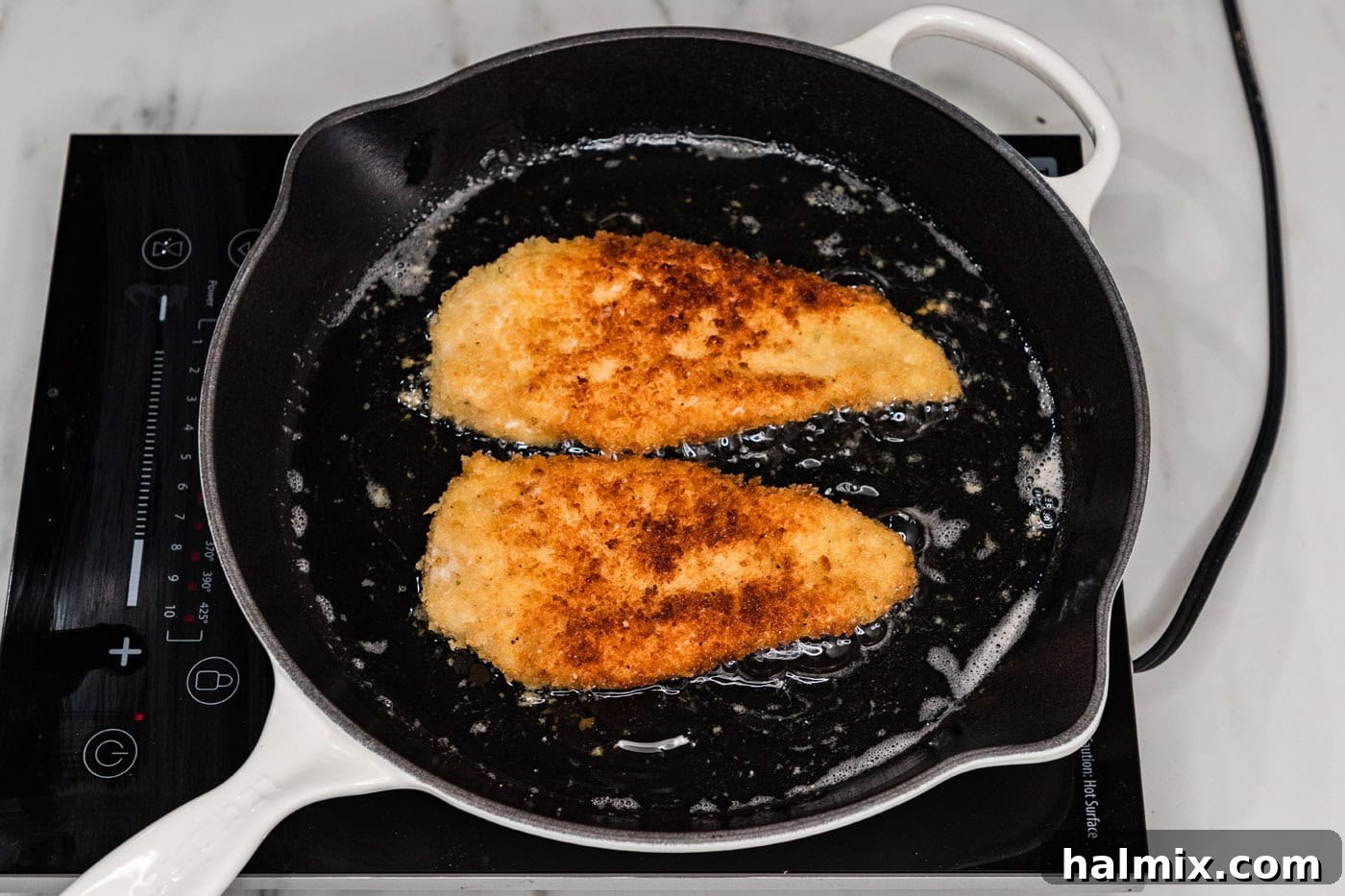
- Once the oil is at the ideal temperature, carefully place the breaded chicken breasts into the hot oil, ensuring not to overcrowd the pan. Cook undisturbed for approximately 4 minutes per side, or until golden brown and crispy. Flip the chicken over and cook for another 4 minutes, or until the second side is equally golden and crispy. The internal temperature of the chicken should reach 165°F (74°C) as registered by a meat thermometer inserted into the thickest part.
- Drain and Serve: Carefully remove the cooked chicken Katsu from the oil. If serving immediately, place them on paper towels to absorb any excess oil. However, if there will be a slight delay before serving, transfer the chicken to a wire rack set over a baking sheet.
CHEF TIP: Using a wire rack is highly recommended. If the chicken sits on paper towels for too long, the steam can become trapped underneath, causing the bottom to soften and lose its prized crispiness. A wire rack allows air circulation, keeping your Katsu perfectly crunchy.
Frequently Asked Questions & Expert Tips for Chicken Katsu
While often used interchangeably in casual conversation, there’s a distinct difference. “Katsu” is a broader term in Japanese cuisine that refers to any cutlet (usually meat or sometimes seafood) that has been breaded with panko and deep-fried. So, you can have Chicken Katsu, Gyukatsu (beef katsu), or even Ham Katsu. “Tonkatsu,” on the other hand, specifically refers to a breaded and fried pork cutlet. So, while all Tonkatsu is Katsu, not all Katsu is Tonkatsu. Our recipe, for instance, is Chicken Katsu.
Store any leftover Chicken Katsu in an airtight container in the refrigerator for up to 4 days. When it comes to reheating, avoid the microwave at all costs, as it will inevitably make the breading soggy. For the best results in retaining crispness, reheat Katsu in a preheated 350°F (175°C) oven or toaster oven for approximately 10-15 minutes, or until thoroughly warmed through and crispy. An air fryer is another excellent option; reheat at 350°F (175°C) for 5-8 minutes, flipping halfway. The goal is to heat it quickly and evenly without steaming it.
Yes, you can bake Chicken Katsu for a slightly lighter alternative, though it won’t achieve the exact same deep-fried crispness. To bake, prepare the chicken as usual through the breading step. Preheat your oven to 400°F (200°C). Lightly spray a baking sheet with cooking oil, or line it with parchment paper. Place the breaded chicken on the sheet and lightly spray the tops of the chicken with oil. Bake for 20-25 minutes, flipping halfway, until golden brown and cooked through (internal temperature 165°F/74°C). The oil spray helps promote browning and crispness.
Several factors contribute to crispy Katsu. Ensure your chicken is thoroughly patted dry before breading; excess moisture creates steam, leading to a soggy crust. Secondly, use panko breadcrumbs – they are crucial for achieving that light, airy crispness. Thirdly, make sure your oil is at the correct temperature (350°F/175°C). If the oil is too cold, the breading will absorb too much oil and become greasy and soggy. If it’s too hot, the exterior will burn before the inside cooks. Lastly, don’t overcrowd the pan, as this drops the oil temperature and can lead to less crispy results.
Delicious Serving Suggestions for Your Chicken Katsu
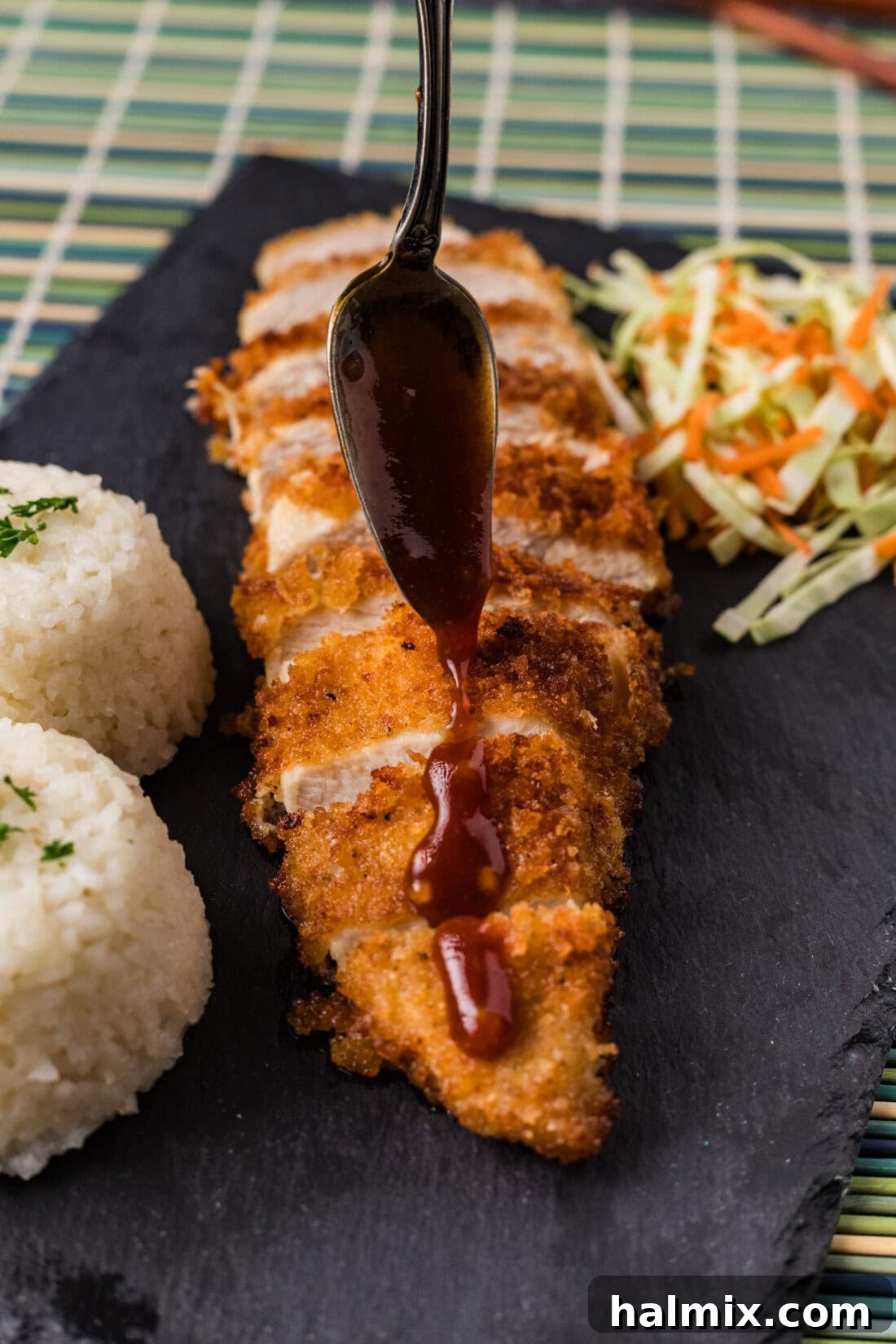
Chicken Katsu is a wonderfully versatile dish that pairs beautifully with a variety of sides. For a traditional Japanese experience, serve it with a generous portion of hot white rice and a fresh, crisp salad of shredded cabbage and carrots, perhaps with a light sesame dressing. The coolness and crunch of the vegetables provide a delightful contrast to the warm, crispy chicken.
Beyond the classics, consider serving your Katsu with steamed or roasted vegetables like broccoli, green beans, or asparagus for a healthy and vibrant addition. For a more adventurous twist, try a Japanese potato salad or a simple miso soup. The homemade Katsu sauce is a non-negotiable accompaniment; you can either artfully drizzle it directly over the sliced chicken for a visually appealing presentation or serve it in a small bowl on the side for individual dipping, allowing everyone to customize their perfect bite. Don’t forget a sprinkle of toasted sesame seeds or chopped scallions for an extra touch of flavor and garnish!
Explore More Japanese-Inspired Recipes
If you’ve enjoyed the flavors of our Chicken Katsu, we invite you to explore more delicious Japanese-inspired dishes that are just as easy and rewarding to make at home. Expand your culinary repertoire with these fantastic recipes:
- Miso Salmon: A flavorful and healthy fish dish marinated in a savory miso glaze.
- Shrimp Tempura: Lightly battered and fried shrimp, perfect as an appetizer or a main course.
- Hibachi Shrimp: Quick and vibrant, bringing the teppanyaki experience to your kitchen.
- Yum Yum Sauce: The famous creamy, tangy, and slightly sweet sauce that complements almost any Japanese-style dish.
I love to bake and cook and share my kitchen experience with all of you! Remembering to come back each day can be tough, that’s why I offer a convenient newsletter every time a new recipe posts. Simply subscribe and start receiving your free daily recipes!
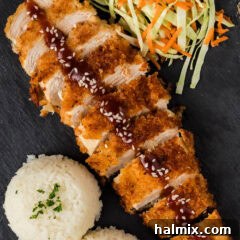
Chicken Katsu
IMPORTANT – There are often Frequently Asked Questions within the blog post that you may find helpful. Simply scroll back up to read them!
Print It
Pin It
Rate It
Save It
Saved!
Course:
Dinner
Cuisine:
American
2
servings
35 minutes
535
Amanda Davis
Ingredients
-
1 pound boneless skinless chicken breast -
¼ cup all purpose flour -
2 Tablespoons cornstarch -
1 large egg -
1 Tablespoon water -
¾ cup Panko breadcrumbs -
2 teaspoons garlic salt -
1 teaspoon black pepper -
1 ½ teaspoons dried ginger
Katsu Sauce
-
¼ cup ketchup -
3 Tablespoons Worcestershire sauce -
1 Tablespoon brown sugar -
2 Tablespoons oyster sauce -
1 teaspoon garlic salt
Things You’ll Need
-
Breading trays
-
Large heavy bottomed skillet
-
Candy thermometer
Before You Begin
- We highly recommend using panko breadcrumbs for this recipe. Their unique flaky texture is essential for creating the incredibly light and crispy coating that distinguishes authentic Chicken Katsu from dishes made with regular breadcrumbs.
- While chicken breasts are our preferred choice for this recipe, you can easily substitute them with chicken cutlets. If using cutlets, be aware that they are thinner and will cook more quickly, so adjust frying times accordingly to prevent overcooking. For a delicious alternative, try pork cutlets to make traditional Tonkatsu!
Instructions
-
Trim chicken breasts to an even thickness. Pat dry thoroughly with paper towels.1 pound boneless skinless chicken breast
Make the Sauce
-
We suggest making the sauce first for two reasons: it allows the flavors to meld beautifully while the chicken cooks, and it ensures your sauce is ready the moment your crispy chicken comes out of the skillet.
-
Combine all the sauce ingredients (ketchup, Worcestershire sauce, brown sugar, oyster sauce, and garlic salt) in a bowl and mix well until smooth. Set aside.1/4 cup ketchup,
3 Tablespoons Worcestershire sauce,
1 Tablespoon brown sugar,
2 Tablespoons oyster sauce,
1 teaspoon garlic salt
Prepare the Chicken
-
Line up 3 shallow breading trays next to each other. In the first tray, combine the cornstarch and all-purpose flour; stir to mix thoroughly.2 Tablespoons cornstarch,
1/4 cup all purpose flour -
In the second tray, whisk together the egg and water until well combined.1 large egg,
1 Tablespoon water -
To the third tray, add the Panko breadcrumbs, garlic salt, black pepper, and dried ginger. Stir to combine all seasonings evenly.3/4 cup Panko breadcrumbs,
2 teaspoons garlic salt,
1 teaspoon black pepper,
1 1/2 teaspoons dried ginger -
Dredge each chicken breast completely in the flour mixture, shaking off any excess.
-
Dip the floured chicken into the egg wash, ensuring all sides are thoroughly coated. Allow any excess egg to drip off.
-
Place the egg-coated chicken into the breadcrumb mixture. Gently press the panko crumbs onto both sides of the chicken to ensure they adhere well. Transfer the fully breaded chicken breasts to a clean plate or tray.
-
In a large, heavy-bottomed skillet, add enough cooking oil to come about an inch up the sides of the pan. Heat the oil over medium-high heat until it reaches a consistent temperature of 350°F (175°C). Use a candy or oil thermometer to accurately monitor the temperature.
-
Carefully place the breaded chicken into the hot oil. Cook undisturbed for approximately 4 minutes, or until deeply golden and crispy. Turn the chicken over and cook the other side for about 4 more minutes, until it also reaches a golden brown and crispy perfection. The internal temperature of the chicken should register 165°F (74°C) with a meat thermometer.
-
Remove the cooked chicken Katsu from the oil. If serving immediately, transfer it to a plate lined with paper towels to drain excess oil. If not serving right away, place the chicken on a wire rack set over a baking sheet.
We strongly recommend using a wire rack as it allows air to circulate around the chicken, preventing steam from accumulating and preserving the crispiness of the breading.
Expert Tips & FAQs
- For storing leftovers, place cooled chicken katsu in an airtight container in the refrigerator for up to 4 days. When reheating, always opt for the oven, air fryer, or toaster oven at 350°F (175°C) for 10-15 minutes, or until warm and crispy. This method is superior to a microwave, which will soften the delicious breading.
- Achieving the perfect Katsu requires precise oil temperature. If your oil is too cold, the panko will absorb too much oil, resulting in a greasy, soggy crust. If it’s too hot, the exterior will brown too quickly, leaving the inside undercooked. A kitchen thermometer is your best friend here!
- To ensure maximum crispiness, avoid overcrowding your skillet. Fry the chicken in batches if necessary, maintaining consistent oil temperature between batches. This allows each piece to fry evenly and develop a beautiful golden crust.
Nutrition
Tried this Recipe? Pin it for Later!
Follow on Pinterest @AmandasCookin or tag #AmandasCookin!
The recipes on this blog are tested with a conventional gas oven and gas stovetop. It’s important to note that some ovens, especially as they age, can cook and bake inconsistently. Using an inexpensive oven thermometer can assure you that your oven is truly heating to the proper temperature. If you use a toaster oven or countertop oven, please keep in mind that they may not distribute heat the same as a conventional full sized oven and you may need to adjust your cooking/baking times. In the case of recipes made with a pressure cooker, air fryer, slow cooker, or other appliance, a link to the appliances we use is listed within each respective recipe. For baking recipes where measurements are given by weight, please note that results may not be the same if cups are used instead, and we can’t guarantee success with that method.