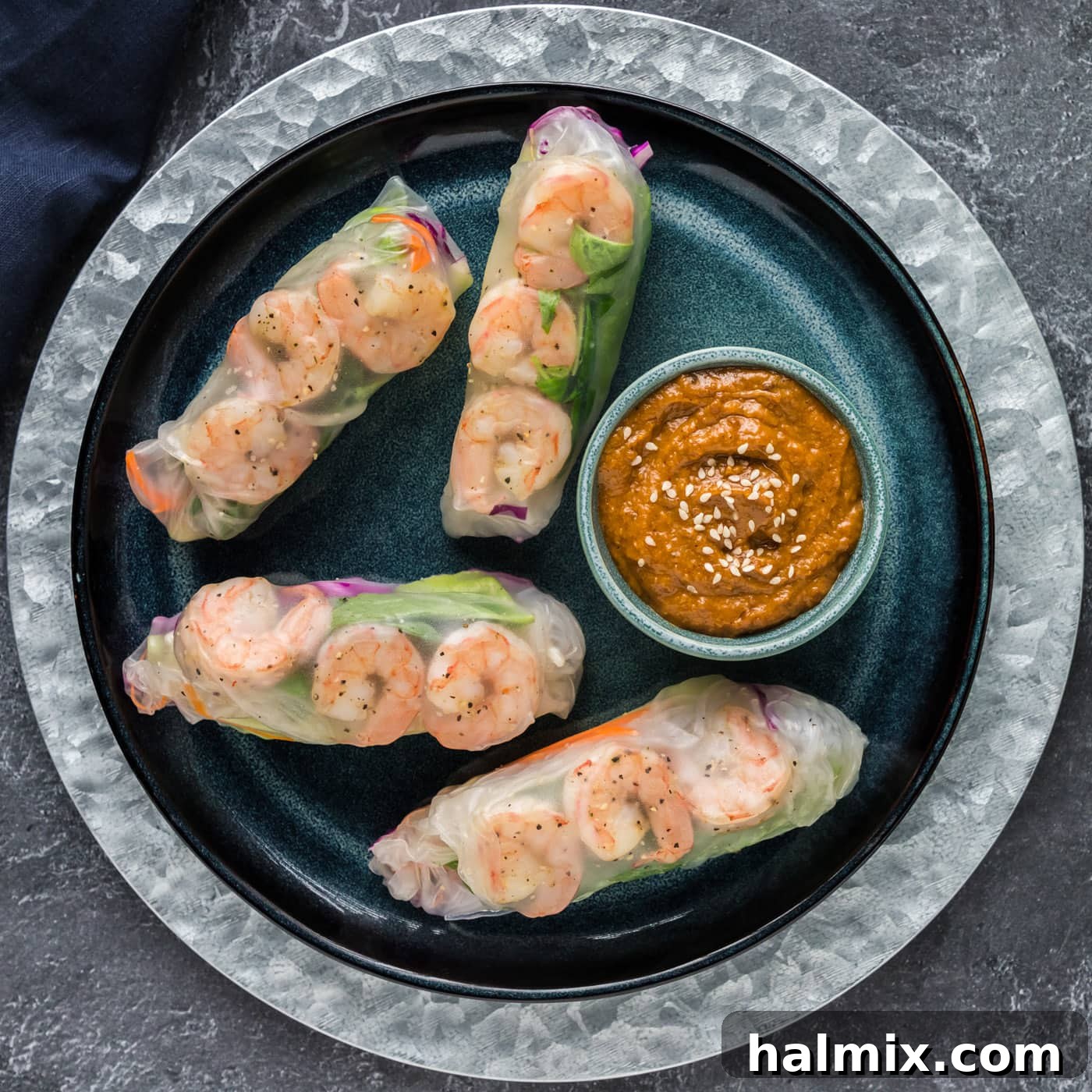
Delicate, fresh, and bursting with vibrant flavors, Shrimp Spring Rolls are a culinary delight that transcends seasons and occasions. These delightful rolls, featuring succulent shrimp, crisp vegetables, and delicate bean thread noodles, are gracefully encased in translucent spring roll wrappers. They offer a perfect blend of textures and tastes – a light, healthy, and incredibly easy-to-make dish that’s as visually appealing as it is delicious. Whether you’re seeking a quick, nutritious lunch option, an elegant appetizer for your next gathering, or a refreshing alternative to heavier meals, these homemade shrimp spring rolls promise to impress with their simplicity and undeniable freshness.
Why This Recipe for Fresh Shrimp Spring Rolls Works
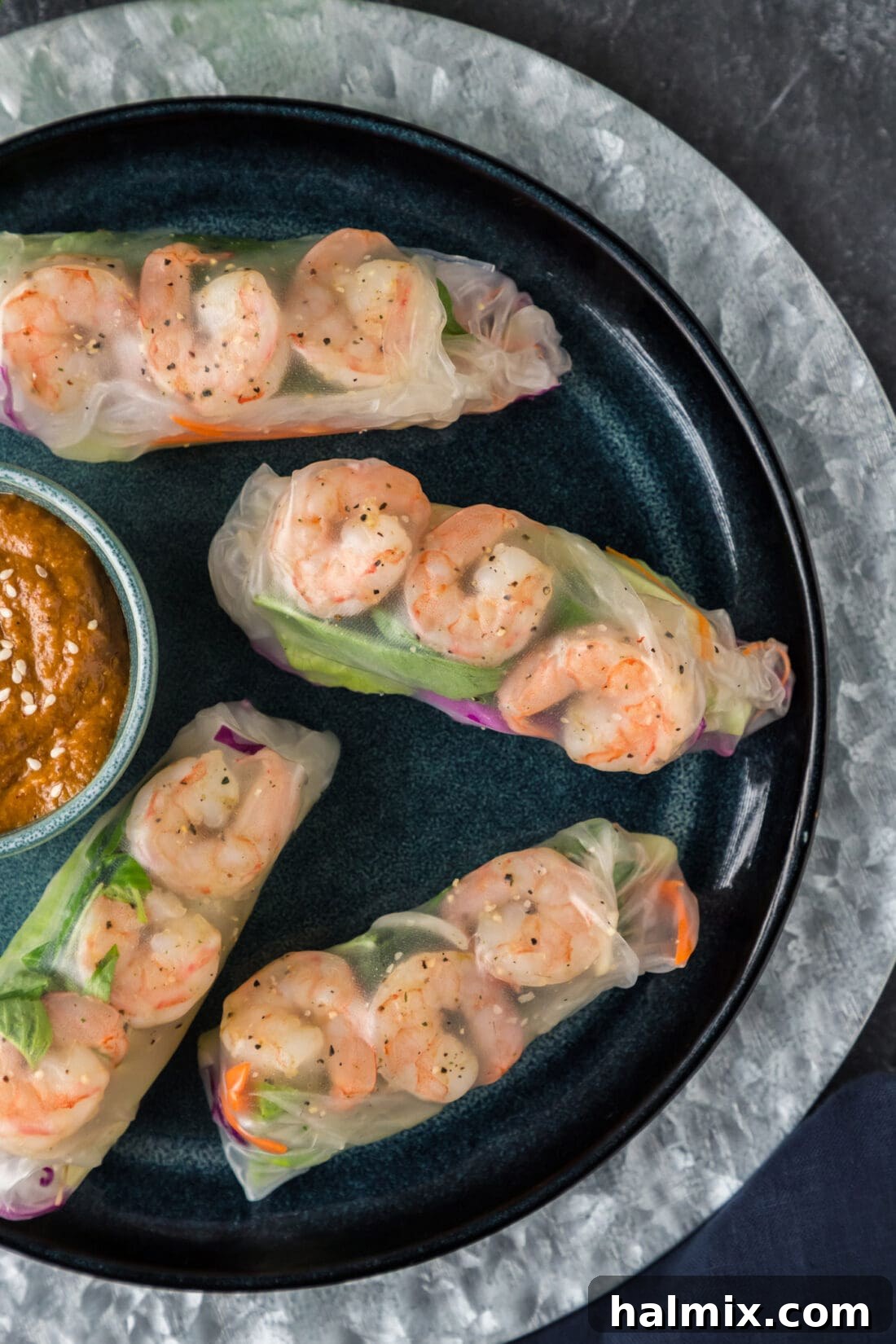
Today, we’re elevating the classic vegetable spring roll by incorporating juicy, tender shrimp, creating a truly exceptional dish that’s perfect for a light lunch, a refreshing appetizer, or even a healthy dinner. What makes these fresh shrimp spring rolls stand out is their harmonious blend of textures and flavors. Imagine crisp, garden-fresh vegetables like crunchy carrots, refreshing lettuce, and vibrant red cabbage, all snuggled alongside tender, perfectly cooked shrimp and delicate bean thread noodles, encased in a soft, pliable spring roll wrapper. This combination creates a truly mouth-watering experience with every bite.
Beyond their delightful taste, these spring rolls offer a fantastic balance of nutrition and ease. They are remarkably simple to prepare, requiring minimal cooking and hardly any elaborate techniques. This makes them an ideal choice for busy weeknights or for those who appreciate wholesome food without the fuss. The freshness of the ingredients shines through, offering a clean, invigorating taste that is often missing in heavier fried dishes. Plus, they are highly customizable, allowing you to easily adjust ingredients to suit your preferences or what you have on hand. Whether you’re a seasoned chef or a kitchen novice, you’ll find this recipe straightforward and incredibly rewarding.
Essential Ingredients for Perfect Spring Rolls
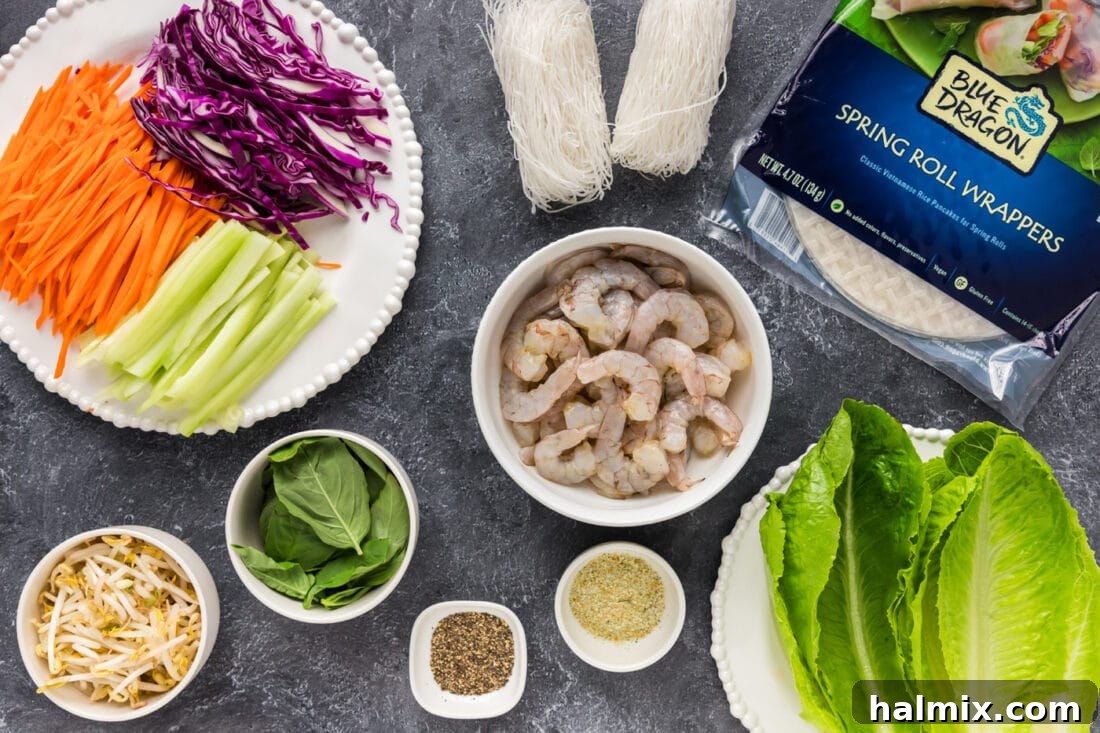
Crafting delicious shrimp spring rolls begins with selecting high-quality, fresh ingredients. Below is a detailed look at what you’ll need to assemble these delightful parcels of flavor. For precise measurements and step-by-step instructions, please refer to the printable recipe card at the conclusion of this post.
Ingredient Spotlight & Smart Substitutions
Understanding each component and its role is key to mastering these fresh spring rolls:
SHRIMP: You will need approximately 1 pound of medium raw shrimp for this recipe, ideally peeled, deveined, and with tails removed for ease of eating. If using frozen shrimp, it’s crucial to thaw them completely before you begin cooking. A quick thawing method involves placing the frozen shrimp in a sealed zip-top bag and submerging it in a bowl of cold water for about 15-20 minutes, changing the water once or twice. While precooked shrimp can be used in a pinch, we highly recommend fresh raw shrimp. The texture of freshly cooked shrimp, when perfectly tender, offers a superior contrast to the crisp vegetables, enhancing the overall experience significantly. Overcooked shrimp can become rubbery, so a quick blanching is preferred.
VEGETABLES: The bulk of these healthy spring rolls comes from a vibrant assortment of fresh vegetables, including crisp Romaine lettuce, finely shredded red cabbage, julienned carrots, thinly sliced celery, and fresh bean sprouts. These vegetables not only add a burst of color and a delightful crunch but also contribute essential vitamins and fiber. When preparing your vegetables, pay close attention to the length of your cuts. Ensure they are not too long, as overly long pieces can pierce through the delicate spring roll wrappers, making them difficult to roll and messy to eat. Julienne-cutting (matchstick style) is ideal for carrots and celery. Feel empowered to customize your vegetable selection based on your preference or what’s seasonally available. Other great additions could include cucumber, bell peppers, mint, or cilantro for an extra layer of flavor and aroma.
NOODLES: Bean threads, also widely known as mung bean noodles, cellophane noodles, or glass noodles, are a staple in many Asian cuisines and are incredibly easy to prepare. Their delicate, somewhat chewy texture is perfect for absorbing the flavors of the other ingredients without overpowering them. Always refer to your package instructions for the precise preparation method, as cooking times can vary slightly by brand. Typically, they involve soaking in hot water for a few minutes until tender, then draining. If bean threads are unavailable or if you prefer a different texture, thin rice noodles (vermicelli) make an excellent substitute, offering a similar light and refreshing quality to the rolls.
SPRING ROLL WRAPPERS: These are arguably the most crucial component. Made from rice paper, they become translucent and pliable when dampened, allowing the colorful filling to peek through. Choose wrappers that are thin but durable. The package typically contains instructions on how to hydrate them properly. Learning to work with them takes a little practice, but it’s well worth the effort for the final aesthetic and texture.
Crafting Your Own Fresh Shrimp Spring Rolls: A Step-by-Step Guide
These detailed step-by-step photos and instructions are designed to visually guide you through the process of making this recipe. For a complete printable version, including all measurements and instructions, please scroll down to the dedicated recipe card at the bottom of this page.
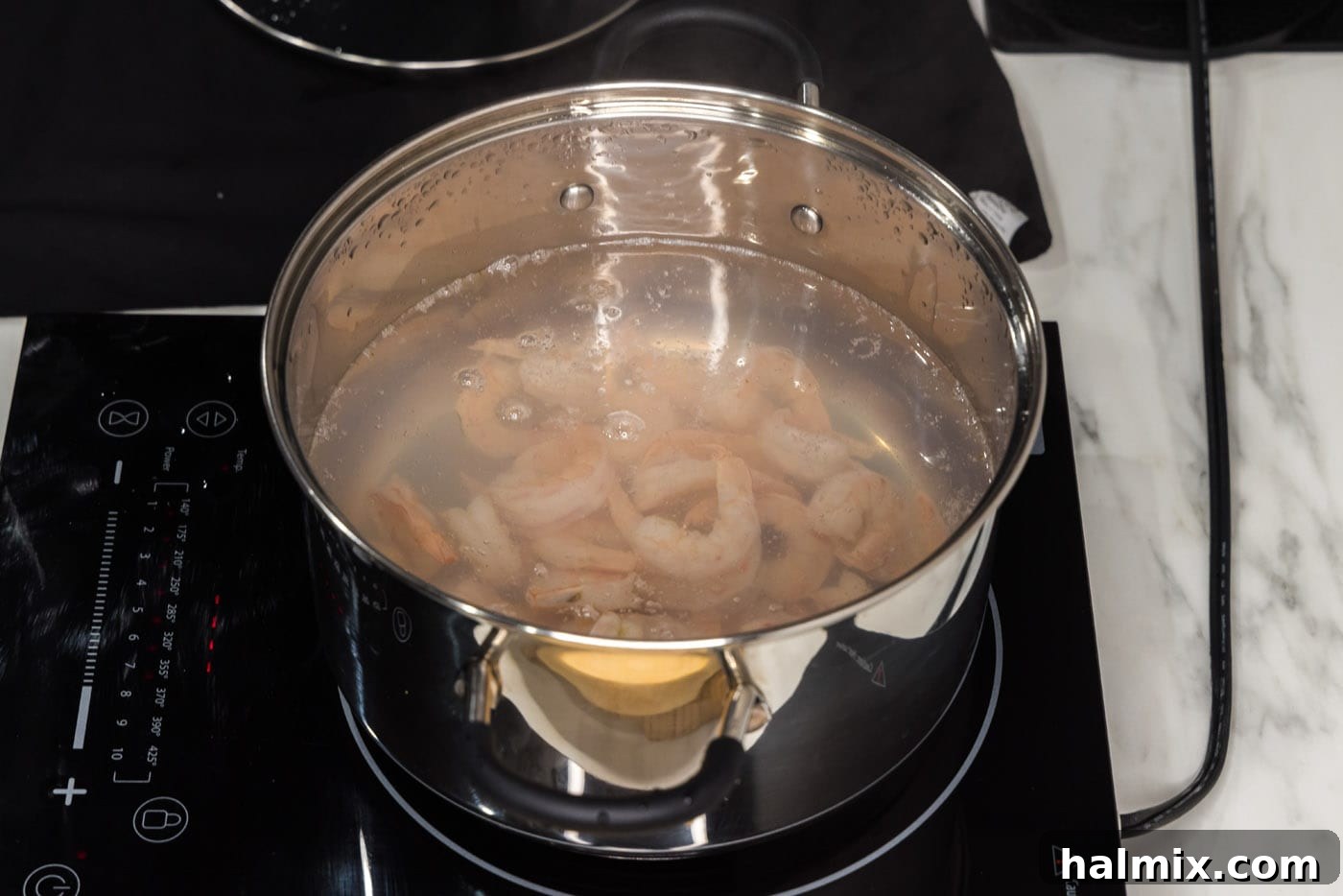
- **Cook the Shrimp:** Fill a stockpot approximately two-thirds full with water. Bring the water to a vigorous rolling boil over medium-high heat. Once boiling, carefully add the raw shrimp to the water and immediately turn off the heat. Stir the shrimp gently and allow them to sit in the hot water for just 2-3 minutes. This method ensures the shrimp cook through without becoming rubbery.

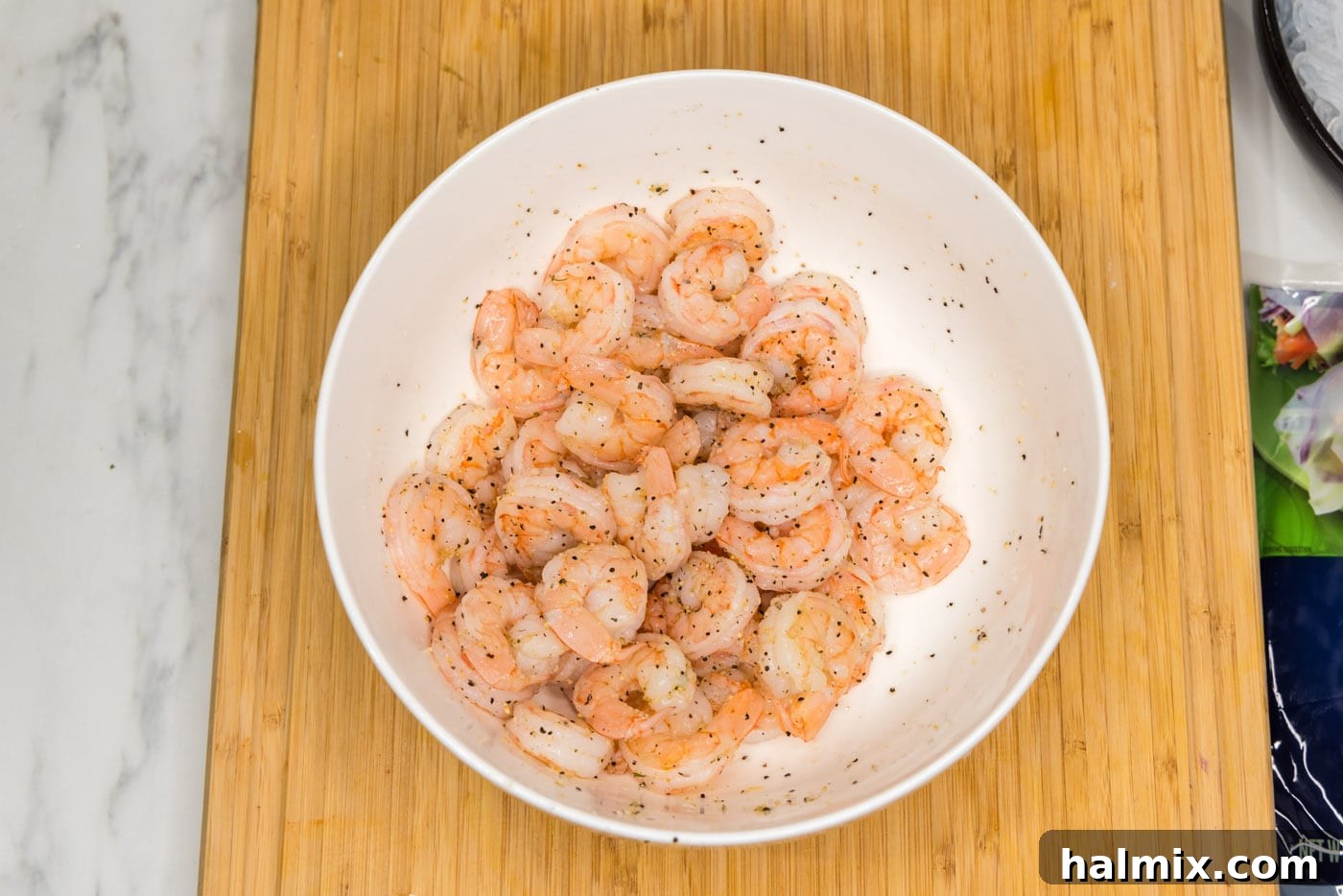
- **Season the Shrimp:** Drain the cooked shrimp thoroughly using a colander. Transfer the drained shrimp into a large mixing bowl. Season the shrimp generously with garlic salt and black pepper. For best results and even distribution of seasonings, use gloved hands to gently toss the shrimp, ensuring every piece is coated.
- **Prepare the Noodles:** Cook the bean thread noodles according to the specific directions provided on their package. This usually involves soaking them in hot water until they are tender and translucent, then draining them well.
- **Prep the Basil:** Carefully remove the stems from the fresh basil leaves, leaving only the tender green leaves.
- **Separate Lettuce:** Gently separate the head of Romaine lettuce into individual, clean leaves.
- **Julienne Vegetables:** Using a sharp knife or a mandoline slicer, julienne (cut into thin matchsticks) the carrots, celery, and red cabbage. Ensure all vegetable pieces are uniform in size and not too long to prevent them from tearing the wrappers.
- **Bowl of Sprouts:** Place the bean sprouts in a small, easily accessible bowl.
- **Set up Rolling Station:** Dampen a few sheets of paper towels or a clean kitchen towel and lay them flat on your work surface. This will be where you place your softened wrappers.
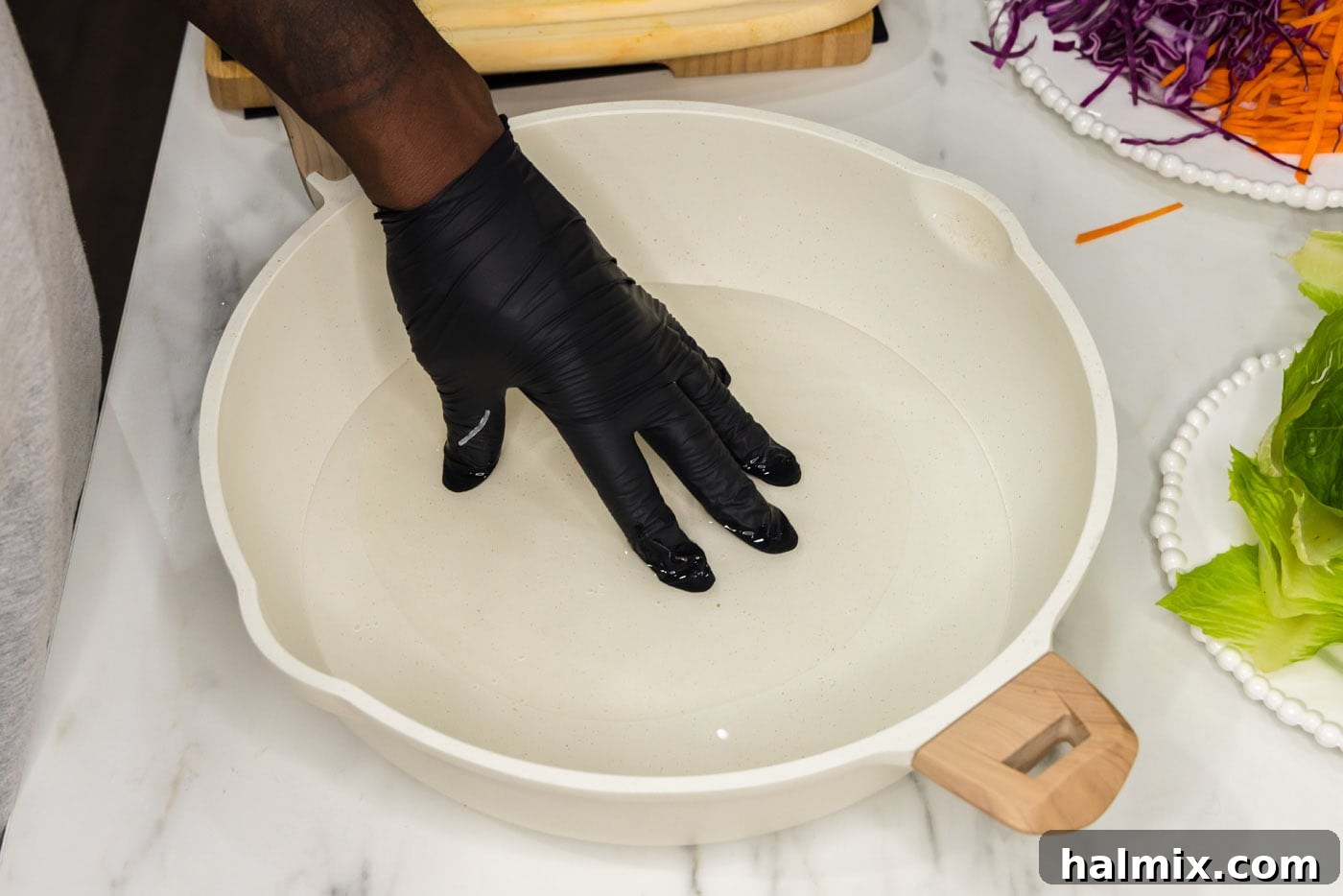
- **Water Bath for Wrappers:** Add approximately 2 inches of room temperature tap water to a wide skillet or any dish/pan large enough to comfortably fit a spring roll wrapper.
- **Soften Wrapper:** Working with one spring roll wrapper at a time, dip it into the water, quickly turn it over to ensure both sides are wet, then immediately remove it and place it flat onto the damp towel. The wrapper will continue to soften as you prepare the filling. Do not oversoak, as it will become too sticky and tear.
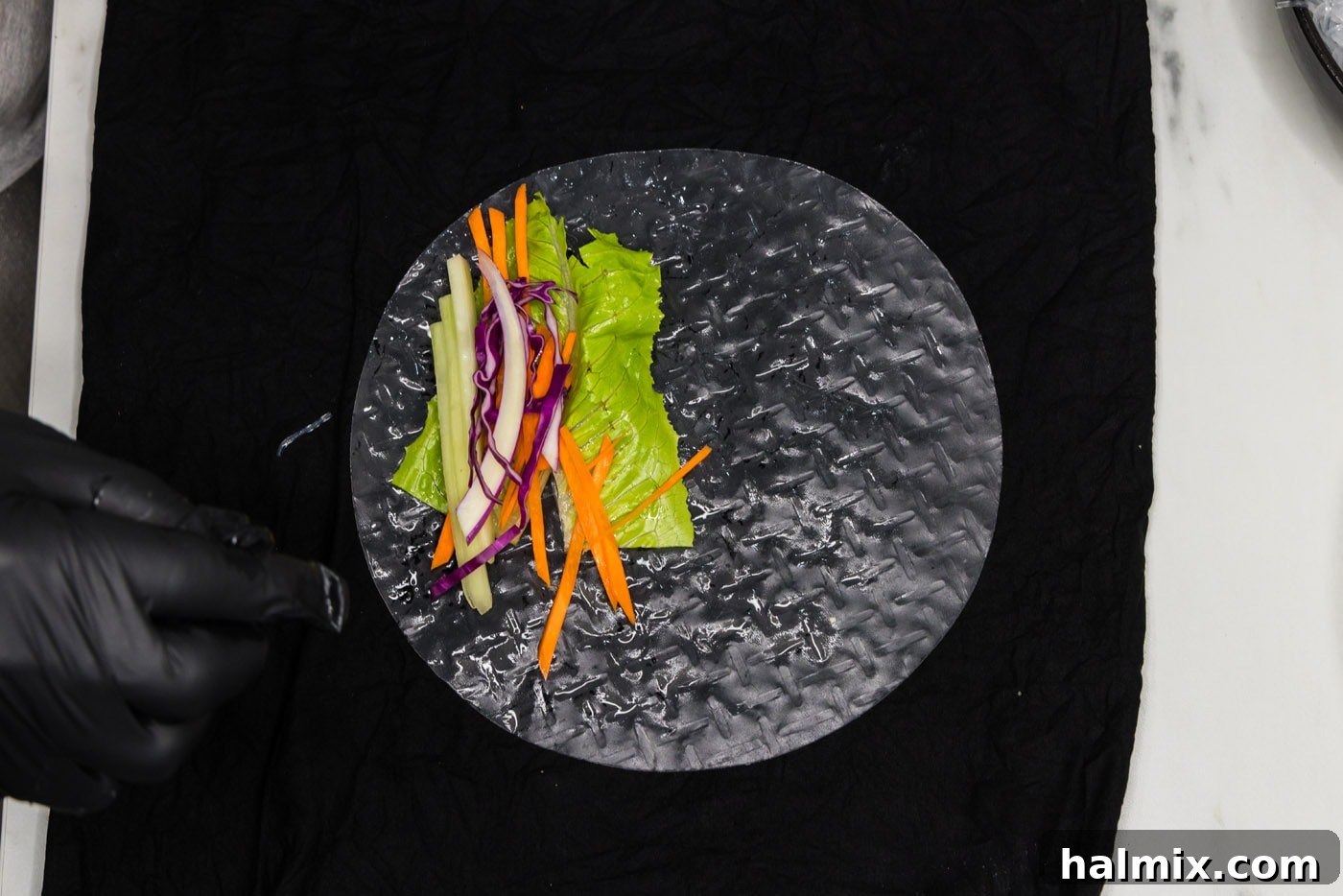
- **Assemble the Filling Base:** In the center of the softened wrapper, lay one Romaine lettuce leaf. On top of the lettuce, arrange a small portion of the cooked bean threads, followed by a handful of bean sprouts, some julienned carrots, celery, and red cabbage. Be mindful not to overfill.
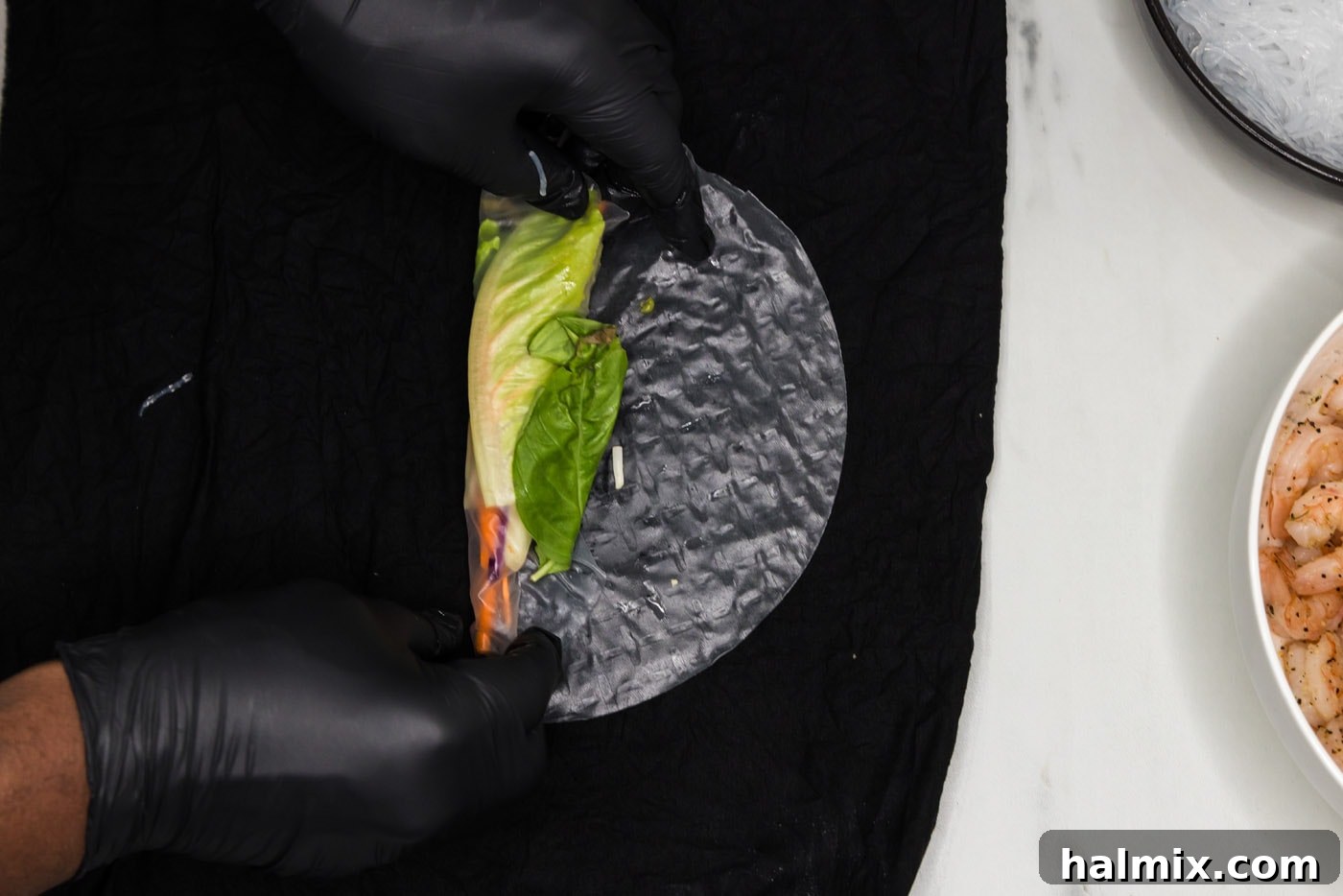
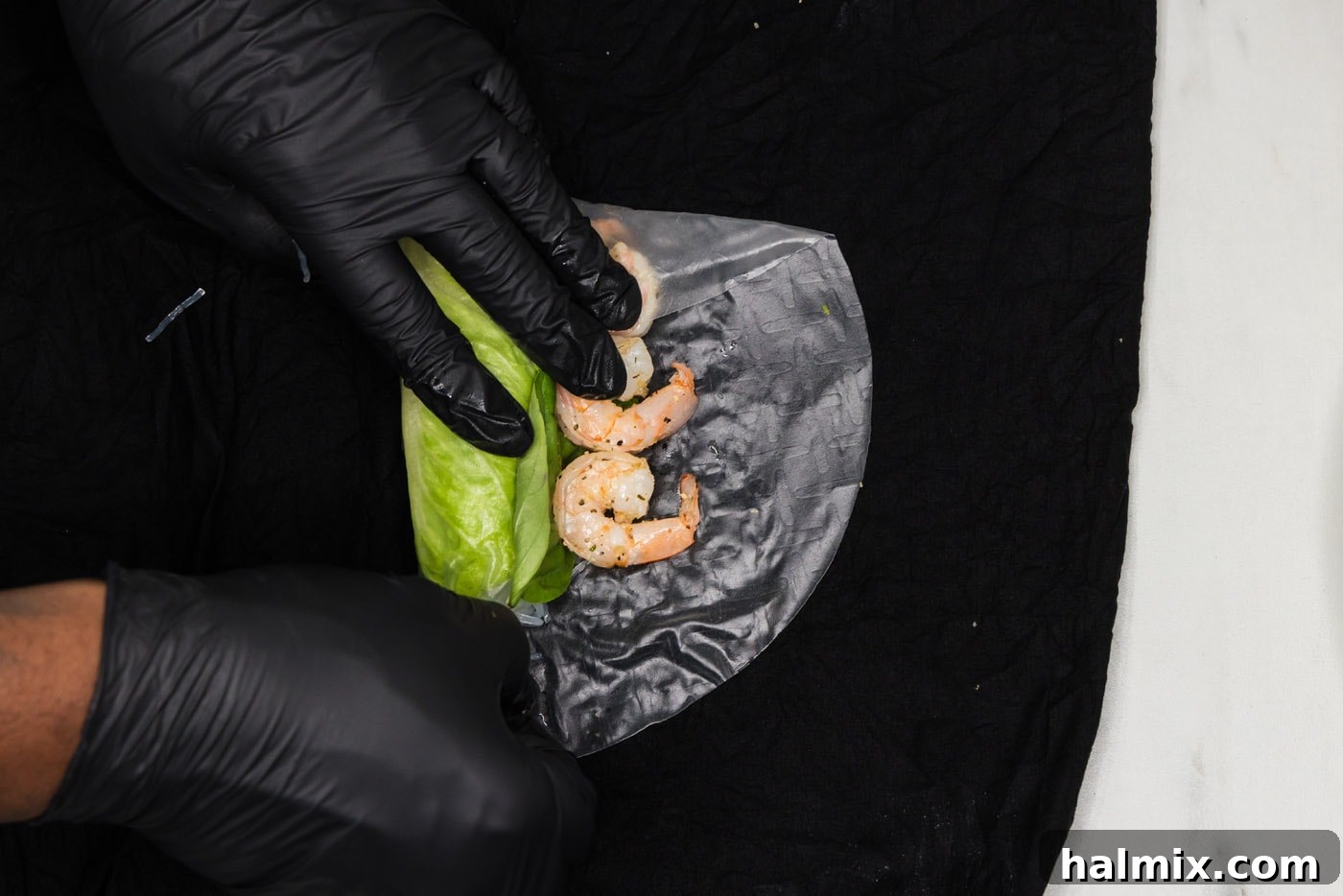
- **First Roll & Shrimp Addition:** Begin to roll the wrapper tightly from the bottom, rolling it up about halfway. Once rolled halfway, arrange a couple of fresh basil leaves and 3 pieces of seasoned shrimp horizontally across the roll, just above the existing filling.
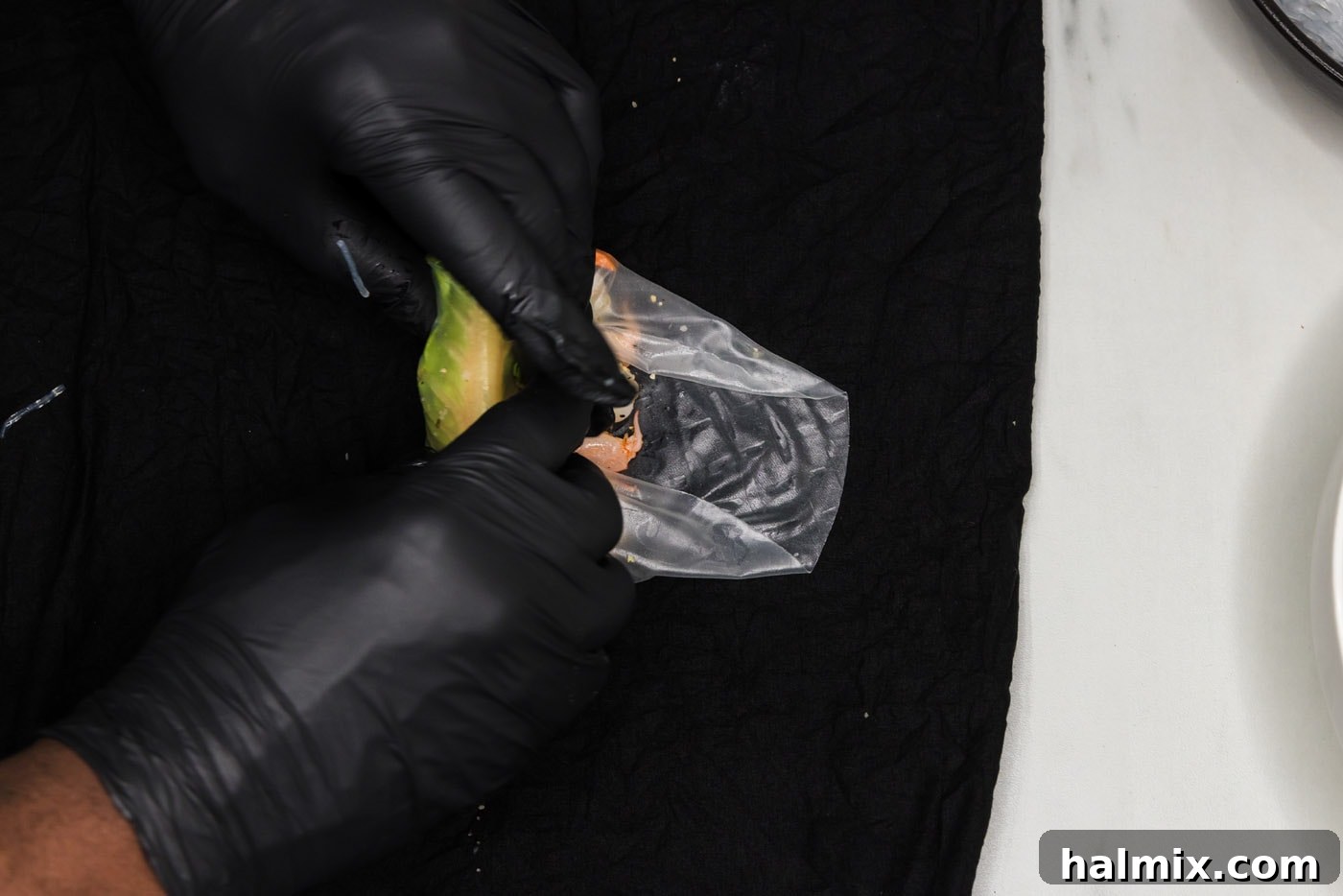
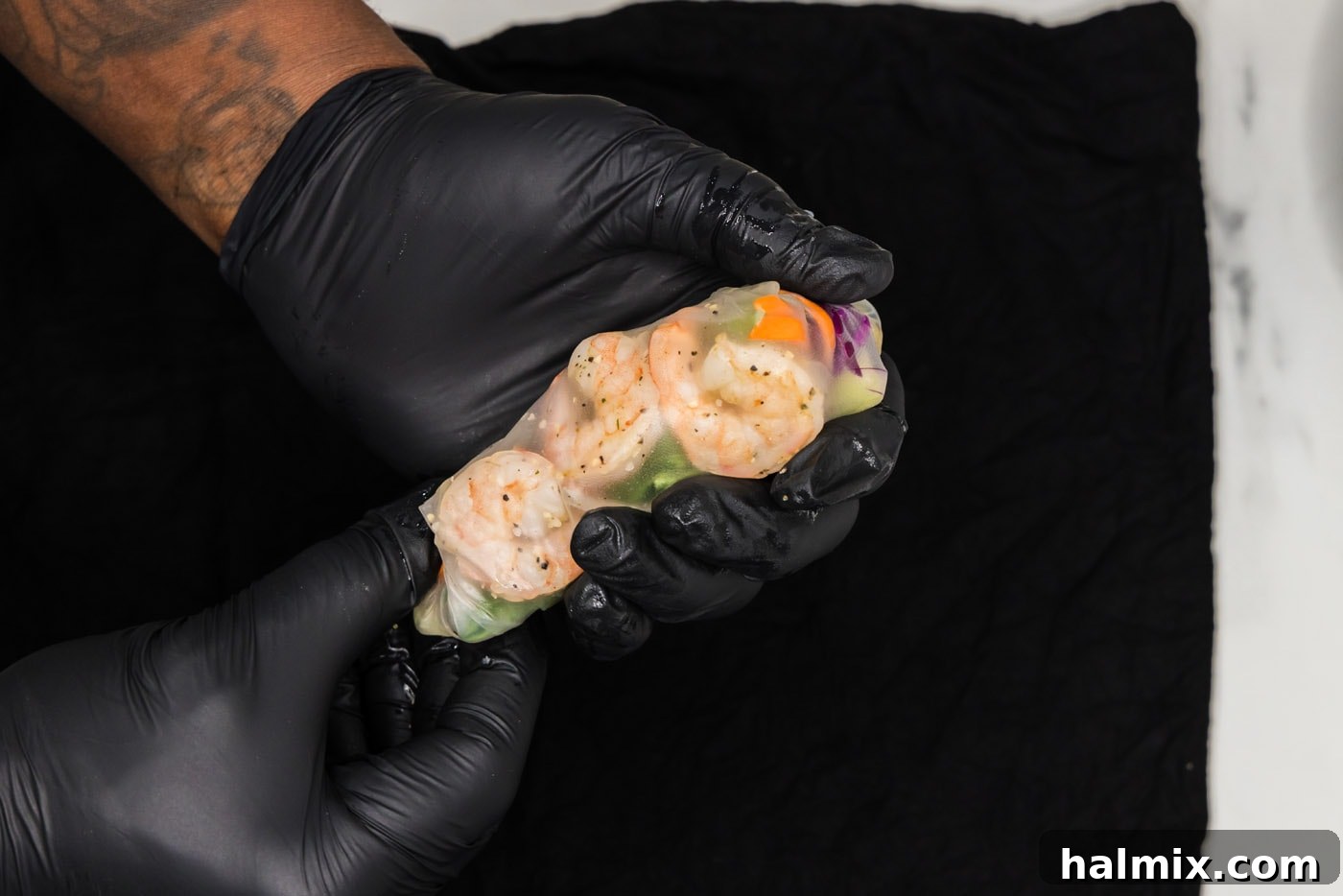
- **Final Roll:** Fold in the sides of the wrapper (burrito style) over the shrimp and basil. Then, continue to roll the entire spring roll tightly all the way to the top. The damp spring roll wrapper will naturally stick to itself, securing the contents inside. Repeat this process for the remaining wrappers and filling ingredients.
Frequently Asked Questions & Expert Tips
Yes, you can prepare shrimp spring rolls a day in advance, which is perfect for party planning or meal prep. However, it’s important to note that the texture of the wrappers can become slightly rubbery or tougher when refrigerated overnight. To minimize this, immediately after rolling, wrap each spring roll individually in a slightly damp paper towel, then place them in an airtight container or cover them tightly with plastic wrap before refrigerating. The damp paper towel helps maintain some moisture in the wrappers. If you need to stack them in a container, place a sheet of parchment paper between each layer to prevent sticking.
Store any leftover shrimp spring rolls in an airtight container in the refrigerator for 1-2 days. While they are best enjoyed fresh, proper storage can help preserve their quality for a short period. Always ensure they are covered to prevent the wrappers from drying out.
Expert Tips for Success:
- Preparation is Key: Spring roll assembly is a quick process, so it’s essential to have all your ingredients prepped and laid out before you start rolling. This includes cooking and seasoning the shrimp, cooking and draining the noodles, and washing and julienning all your vegetables.
- Gloves for Grip: We highly recommend wearing food-safe gloves while handling the damp spring roll wrappers. They can be quite sticky, and gloves will make the process much easier and cleaner, preventing them from sticking to your bare hands.
- Avoid Overfilling: It’s tempting to pack your spring rolls with lots of delicious ingredients, but overfilling is a common mistake that leads to torn wrappers. Start with moderate amounts of each filling component, especially until you get the hang of rolling.
- Don’t Overcook Shrimp: Shrimp cooks very quickly. The method of adding them to boiling water and immediately turning off the heat ensures they cook perfectly without becoming tough or rubbery, retaining their tender texture.
- Even Vegetable Cuts: Uniformly julienned vegetables not only look more appealing but also ensure even distribution of crunch in every bite. More importantly, it prevents long, rigid pieces from poking through and tearing the delicate wrappers.
- Practice Makes Perfect: Don’t get discouraged if your first few spring rolls aren’t perfectly neat. It takes a little practice to get the wrapper softened just right and to roll it tightly and evenly. You’ll quickly get the hang of it!
- Wrapper Softness: The key to a good wrapper is not to oversoak it. A quick dip and transfer to a damp towel is sufficient. It will continue to soften on the towel. If it becomes too soft and sticky, it’s prone to tearing.
- Adjusting Quantities: The ingredient measurements provided are approximate and depend heavily on how much filling you prefer in each wrapper. Feel free to adjust based on your desired roll size and density.
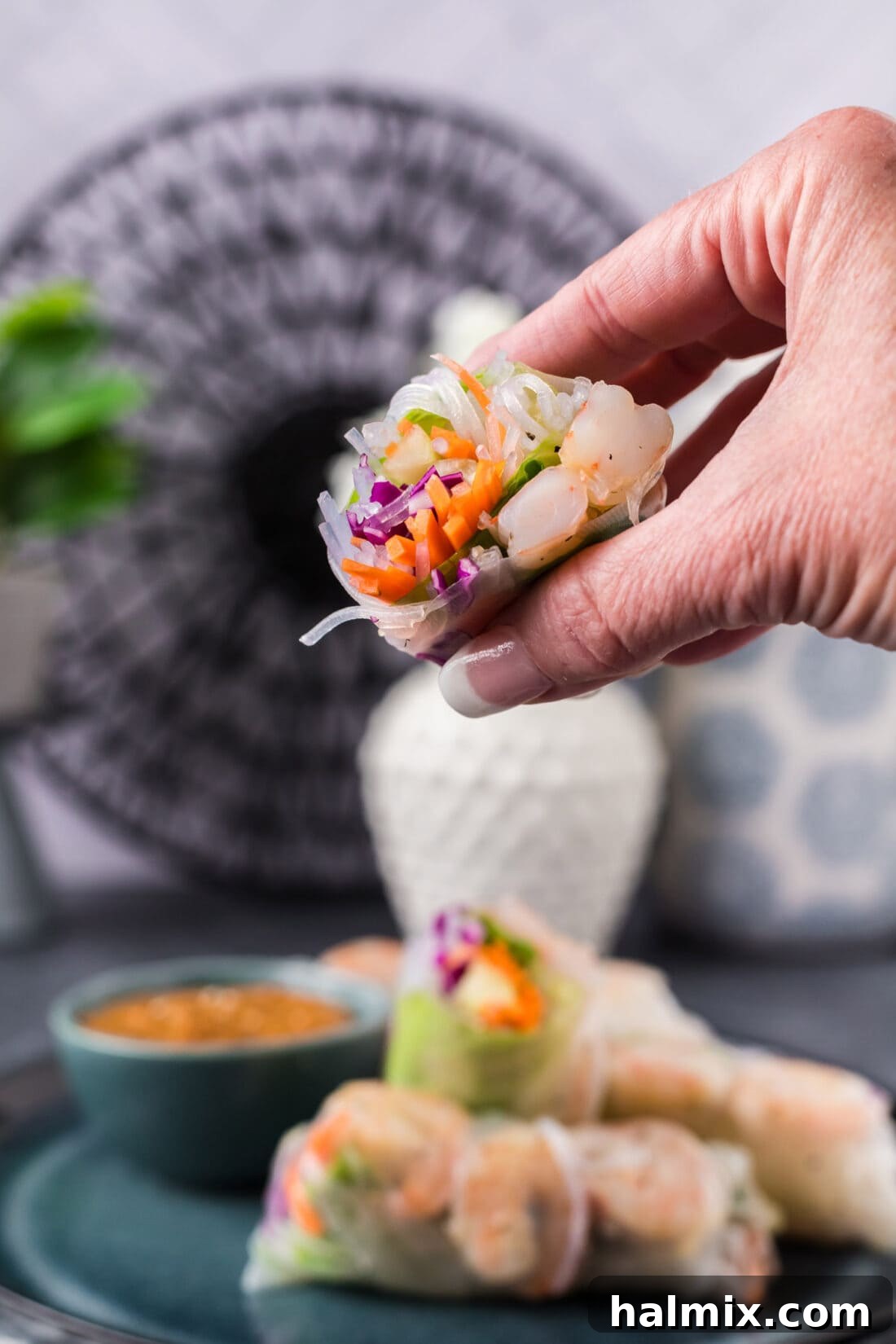
Delectable Serving Suggestions
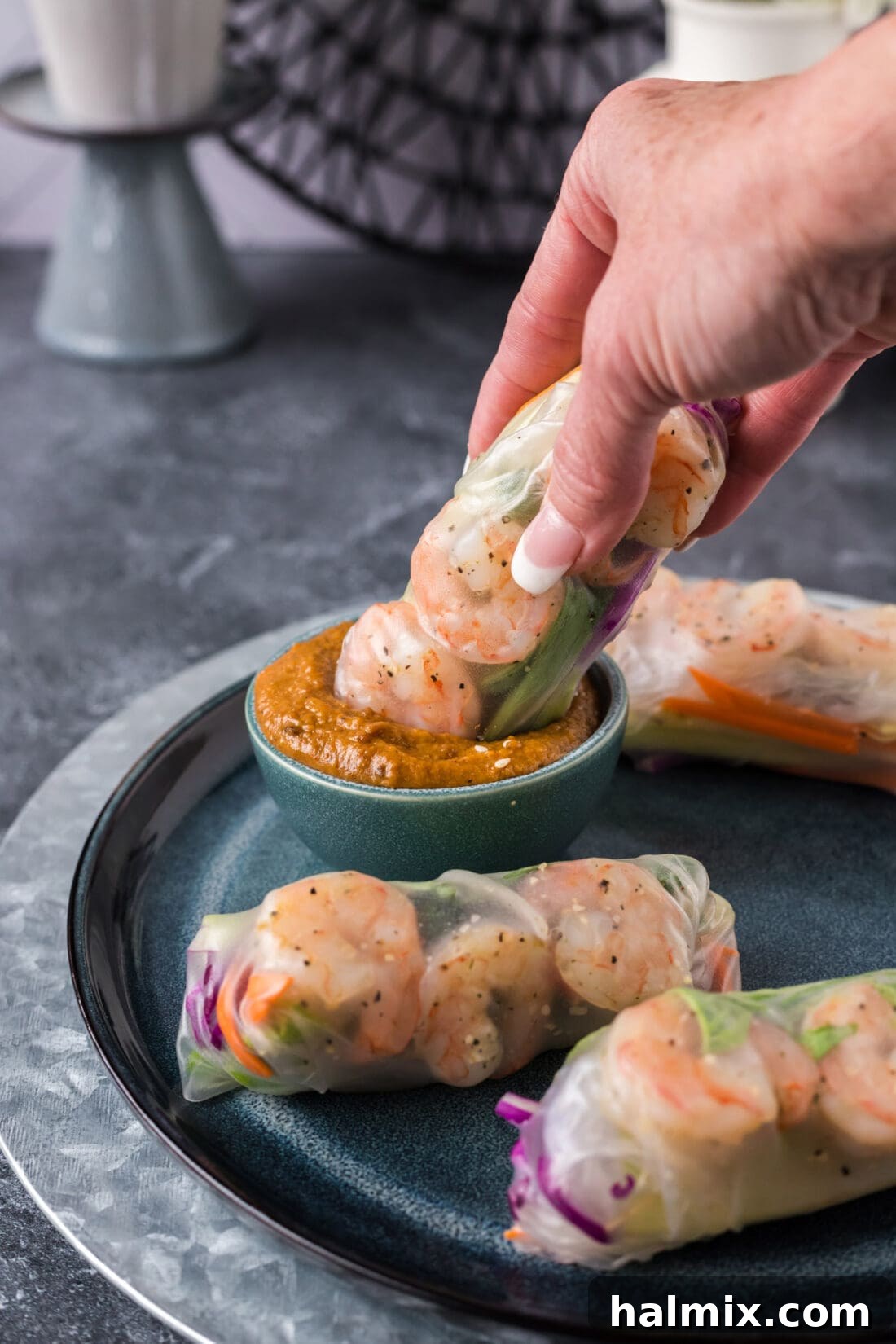
Shrimp spring rolls are truly versatile and pair wonderfully with a variety of dipping sauces. For a classic and irresistible combination, serve them with a rich, savory peanut sauce. The creamy, nutty flavor beautifully complements the freshness of the rolls. Other fantastic options include a vibrant Thai sweet chili sauce for a balance of sweet and spicy, or a tangy sweet and sour sauce. For a refreshing experience, enjoy these healthy summer rolls immediately after preparation, or chill them in the refrigerator for an hour or so before serving to enhance their crispness and cool appeal, especially on warm days.
Discover More Fresh & Flavorful Recipes
If you loved these fresh shrimp spring rolls, you’ll surely enjoy exploring other recipes that share similar vibrant flavors and fresh ingredients:
- Shrimp Tempura: A delightful crispy fried shrimp dish perfect for appetizers.
- Vegetable Spring Rolls: The classic vegetarian version, equally fresh and satisfying.
- Lobster Cucumber Boats: Light, elegant, and refreshing seafood bites.
- Mexican Style Summer Rolls: A unique fusion twist on fresh rolls with Mexican-inspired flavors.
- Shrimp Pad Thai: A popular Thai noodle dish featuring succulent shrimp.
I’m passionate about baking and cooking, and I love sharing my culinary adventures with all of you! To make sure you never miss a new recipe, I offer a convenient newsletter delivered right to your inbox every time a new post goes live. Simply subscribe today and start receiving your free daily recipes, bringing fresh inspiration to your kitchen!
Shrimp Spring Rolls
IMPORTANT – Don’t forget to check out the Frequently Asked Questions and Expert Tips sections within the blog post for additional helpful information!
Print Recipe
Pin It
Rate It
Ingredients
- 1 pound medium raw shrimp peeled, deveined, tails removed
- 2 teaspoons garlic salt
- 1 teaspoon black pepper
- 3 ounces bean threads about 1/2 a package
- 1 bunch fresh basil leaves
- 1 head Romaine lettuce leaves
- 1 cup red cabbage
- 1 large carrot
- 1 stalk celery
- 1 cup bean sprouts
- 4.7 ounces spring roll wrappers 1 package
Things You’ll Need
-
Stockpot
-
Colander
-
Mixing bowls
-
Vinyl gloves
-
Skillet
Before You Begin
- It’s important to have all your ingredients prepped and ready before you begin rolling. Only work with one wrapper at a time, and we highly recommend using gloves as the damp spring roll wrappers can be very sticky.
- Ensure your vegetables are cut into appropriate lengths (julienned or thinly sliced) so they don’t poke through or tear the delicate wrappers.
- Bean threads, also known as mung bean noodles, cellophane noodles, or glass noodles, are simple to prepare. Always refer to your package instructions for the best results. If preferred, you can easily substitute them with thin rice vermicelli noodles.
Instructions
Cook the Shrimp
-
Fill a stock pot 2/3 full with water. Bring to a rolling boil over medium-high heat. Add shrimp to the boiling water and immediately turn off the heat. Stir the shrimp gently and let them sit in the hot water for 2-3 minutes, until pink and cooked through.
-
Drain the cooked shrimp through a colander and transfer to a large mixing bowl. Season the shrimp with garlic salt and black pepper. Use gloved hands to toss the shrimp and distribute the seasonings evenly.
Prep the Filling
-
Cook and drain bean threads according to package directions until tender and translucent.
-
Remove the tough stems from the fresh basil leaves.
-
Separate the Romaine lettuce into individual, clean leaves.
-
Julienne cut (into thin matchsticks) the carrots, celery, and red cabbage.
-
Place the bean sprouts in a small bowl for easy access.
Get Ready to Wrap
-
Dampen several sheets of paper towels or a clean kitchen towel and lay them flat on your clean work surface.
-
Pour about 2 inches of room temperature tap water into a wide skillet or another shallow dish/pan that is large enough to fit a spring roll wrapper comfortably.
-
Working with one wrapper at a time, dip the spring roll wrapper into the water, quickly turn it over to ensure both sides are wet, then immediately remove it and place it flat onto the damp towel. It will continue to soften.
-
Near the bottom center of the softened wrapper, layer one Romaine lettuce leaf, a small handful of bean threads, some bean sprouts, and a portion of the julienned carrots, celery, and red cabbage.
-
Roll the wrapper up about halfway from the bottom, pulling it taut. Then, add a couple of fresh basil leaves and 3 pieces of the seasoned shrimp horizontally across the roll, just above the existing filling.
-
Fold in the sides of the wrapper, similar to folding a burrito. Continue rolling the entire spring roll tightly all the way to the top. The natural stickiness of the damp wrapper will seal it closed. Repeat for all remaining ingredients.
Expert Tips & FAQs (Condensed)
- For storage, keep any leftover shrimp spring rolls in an airtight container in the refrigerator for 1-2 days.
- If making ahead (up to one day), wrap each roll individually in a damp paper towel and store in an airtight container or tightly covered with plastic wrap in the refrigerator. This helps maintain wrapper texture, though they may still become slightly rubbery overnight. Use parchment paper between layers if stacking.
- Remember that the measurements for fillings are approximate; adjust based on how generously you fill each wrapper to achieve your desired roll size and consistency.
Nutrition
The recipes on this blog are carefully tested using a conventional gas oven and gas stovetop. Please note that appliance performance can vary, especially with older models, leading to inconsistent cooking and baking. An inexpensive oven thermometer can help verify that your oven is accurately reaching the desired temperature. If you are using a toaster oven or countertop oven, be aware that heat distribution might differ from a full-sized conventional oven, potentially requiring adjustments to your cooking or baking times. For recipes prepared with specialized appliances like a pressure cooker, air fryer, or slow cooker, links to the specific models we use are typically provided within each respective recipe. When it comes to baking recipes where ingredient measurements are given by weight, please be aware that using cup measurements instead may yield different results, and we cannot guarantee success with such substitutions.