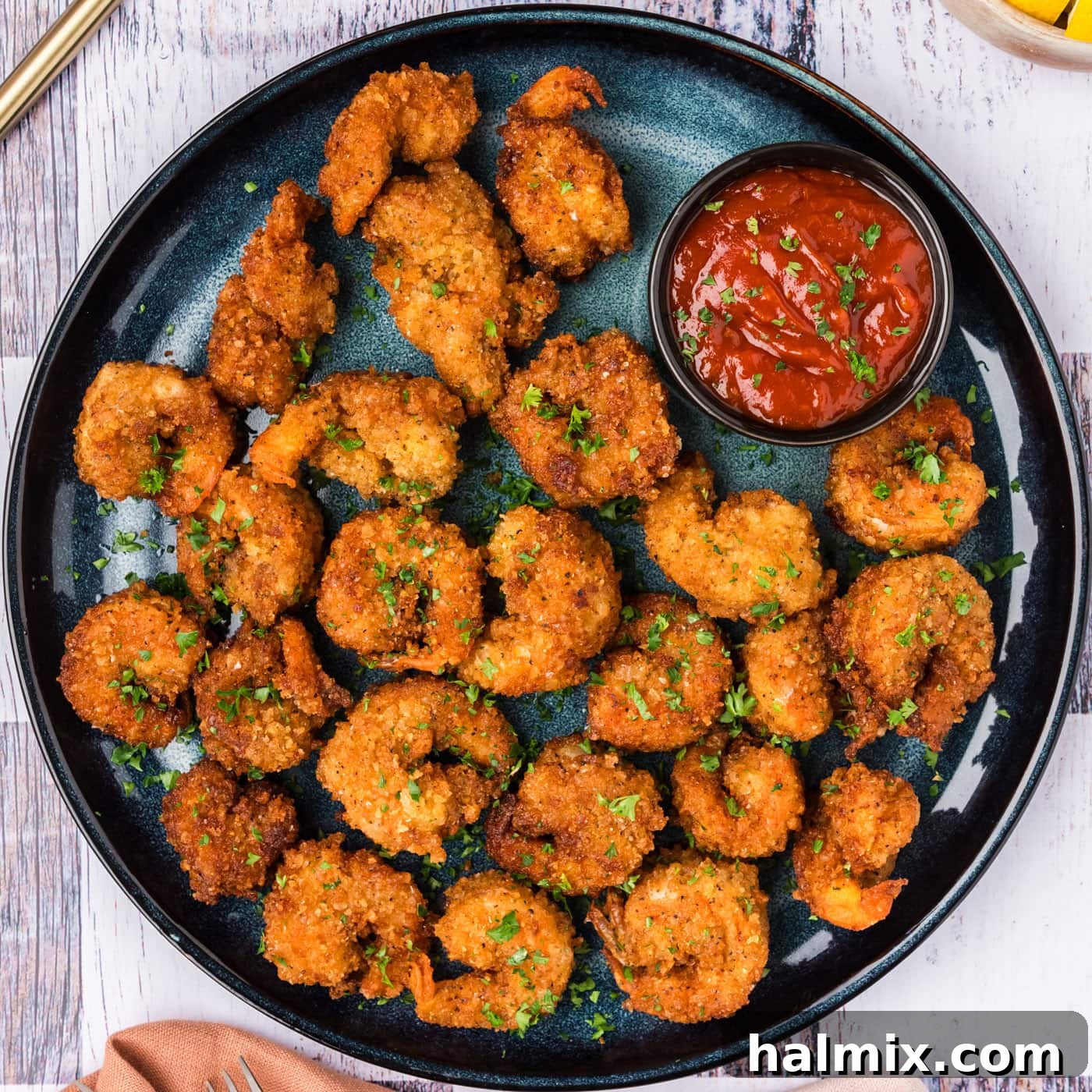
Indulge in the ultimate seafood delight with this incredibly easy breaded shrimp recipe. Each succulent shrimp is generously coated in a golden, crispy breading and then quickly fried to perfection in just around 20 minutes from start to finish. This recipe promises a wonderfully crunchy texture and mouthwatering flavor that’s perfect for a quick weeknight meal, an impressive appetizer, or a casual gathering. Prepare to elevate your home cooking with this irresistible classic that’s sure to become a family favorite.
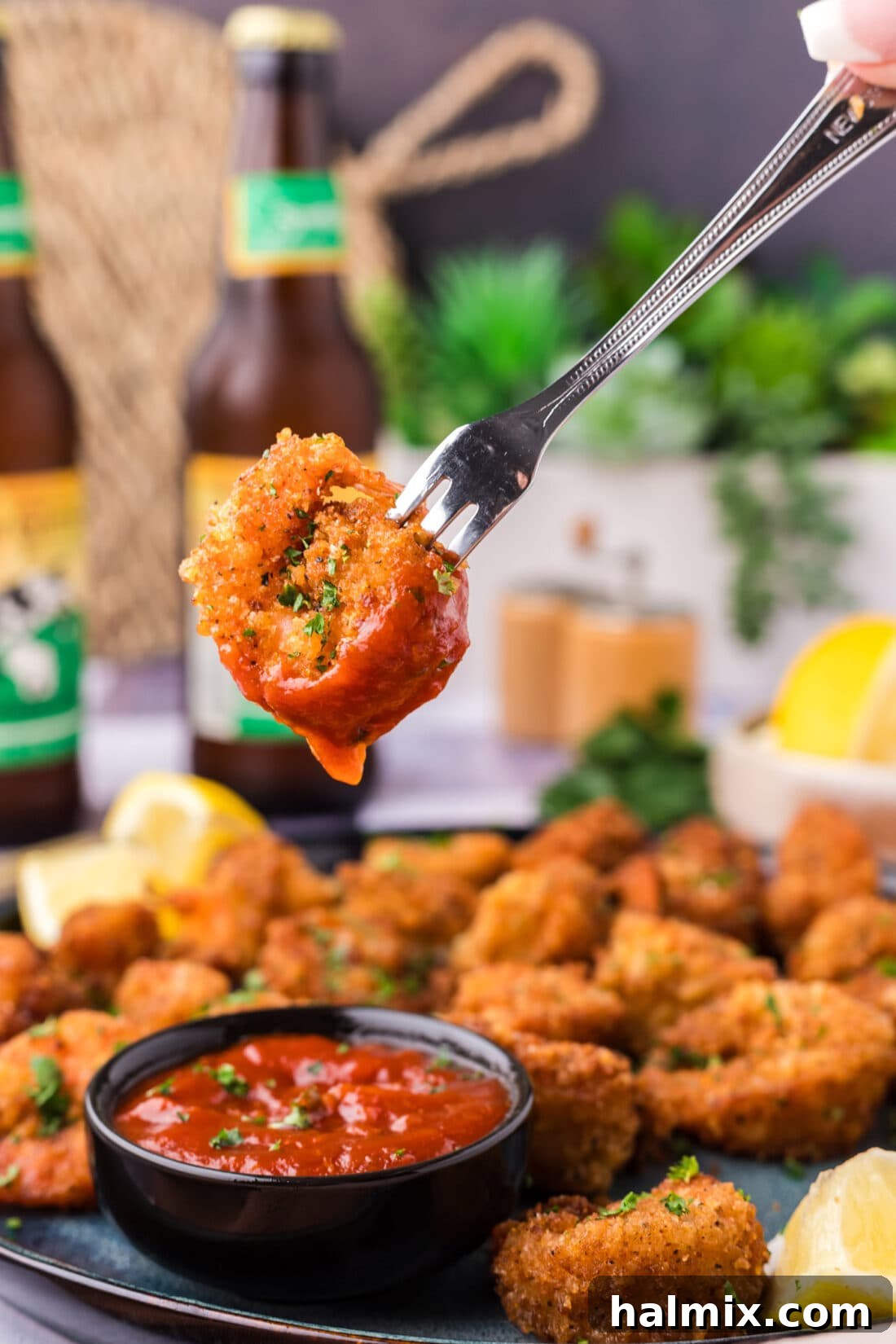
Why This Recipe Works for Perfect Crispy Shrimp
What makes this breaded shrimp recipe truly stand out is the ingenious combination of panko and plain breadcrumbs. This blend isn’t just a simple preference; it’s a strategic culinary choice that yields a superior outcome. Panko breadcrumbs, known for their larger, flakier texture, contribute an exceptional lightness and airy crispness, absorbing less oil during frying compared to standard breadcrumbs. This results in a less greasy, more delicate crunch. Meanwhile, the finer texture of plain breadcrumbs creates a robust, golden-brown crust that adheres beautifully to the shrimp, ensuring every bite is satisfyingly crunchy. Together, they form a coating that is both light and incredibly flavorful, offering a delightful textural contrast that elevates the entire dish. This approach is a subtle yet significant departure from recipes that might solely rely on cornmeal or single-type breadings, providing a distinct and seriously delicious experience that you’ll want to savor. Experimenting with different coatings, as we do with our classic fried shrimp recipe, allows you to discover your personal favorite texture, but this panko-plain breadcrumb duo often wins hearts for its ideal balance.
Essential Ingredients for Your Breaded Shrimp
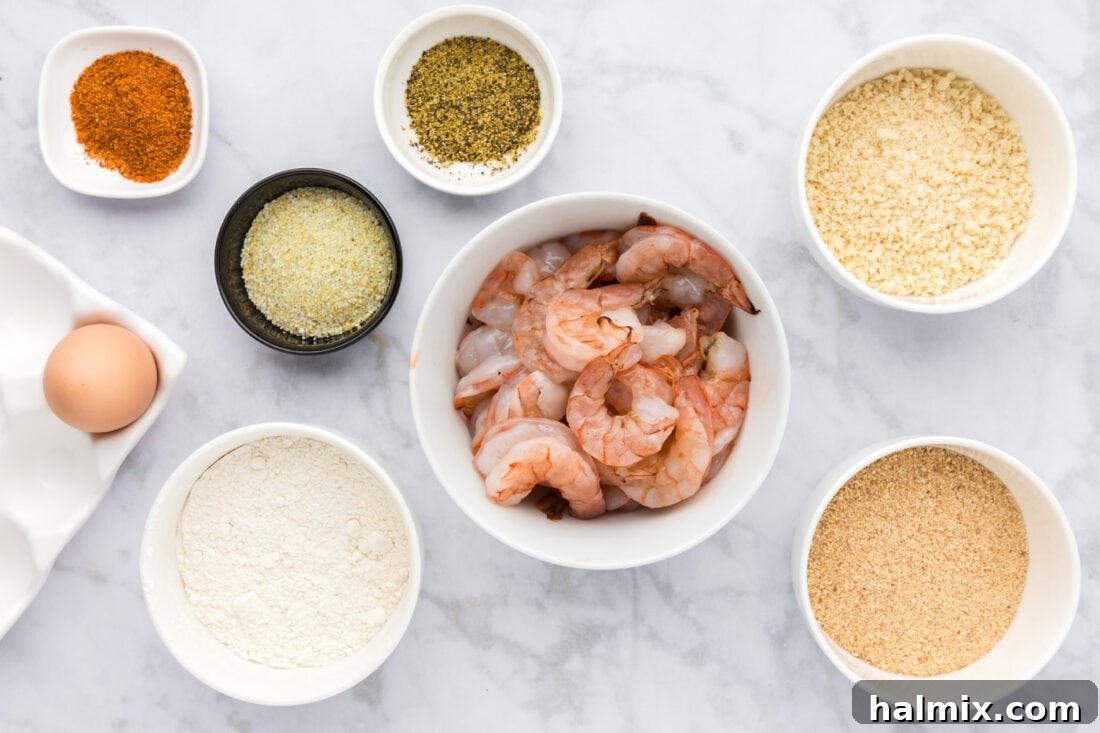
Crafting the perfect breaded shrimp begins with selecting the right ingredients. Below, you’ll find a detailed list of everything you’ll need to create this amazing dish, along with helpful insights and substitution ideas to ensure your success. The full, printable recipe card with precise measurements and comprehensive instructions can be found further down this page.
Ingredient Breakdown and Substitution Suggestions
SHRIMP – For this recipe, we recommend using fresh jumbo shrimp (typically 16-20 count per pound), as their larger size ensures a substantial bite and prevents overcooking. However, almost any kind of fresh shrimp, from medium to large, will work beautifully. If fresh shrimp aren’t available, high-quality frozen shrimp are an excellent alternative. The key when using frozen shrimp is proper thawing: always thaw them thoroughly in the refrigerator overnight or under cold running water, then meticulously pat them dry with paper towels. This crucial step ensures the breading adheres properly and achieves maximum crispness, preventing a soggy coating. Remember, smaller shrimp will cook much faster, so adjust frying times accordingly. Shrimp are fully cooked once they turn opaque, curl into a C-shape, and develop a lovely golden hue.
SEASONING – The delicate flavor of shrimp is perfectly complemented by our carefully selected blend of garlic salt, seafood seasoning, and lemon pepper. Garlic salt provides a foundational savory note, while lemon pepper adds a bright, zesty tang that enhances the natural sweetness of the shrimp. Seafood seasoning, often a blend of salt, paprika, celery salt, and various spices, ties all the flavors together. For those who enjoy customizing their spice blend, you can substitute the store-bought seafood seasoning with our easy homemade shrimp seasoning. If you’re craving an extra kick, a vibrant Cajun seasoning can transform this dish with its bold, spicy profile, adding a delightful zip to your breaded shrimp.
BREADING – The secret to an irresistibly light yet exceptionally crispy coating lies in the combination of both plain (or all-purpose) and Panko breadcrumbs. Panko breadcrumbs, originating from Japan, are made from crustless white bread and have a unique flaky, airy structure that fries up incredibly light and crispy, soaking up less oil than traditional breadcrumbs. This reduces greasiness and enhances the crunch. Traditional plain breadcrumbs, on the other hand, provide a finer, more uniform coating that browns beautifully and contributes to the overall structural integrity of the crust. Using both ensures a multi-layered texture – the delicate crunch of Panko combined with the satisfying crispness of plain breadcrumbs – resulting in a perfectly textured breading that is golden, flavorful, and truly delicious. For dietary restrictions, consider gluten-free panko and plain breadcrumbs, which are widely available and can yield similar results.
How to Make the Best Crispy Breaded Shrimp
These step-by-step photos and detailed instructions are designed to help you visualize each stage of making this delectable breaded shrimp recipe. For your convenience, you can easily jump to the printable recipe card at the bottom of this post, where you’ll find all measurements and instructions in a concise format.
- **Prepare Your Workspace:** Begin by lining a baking sheet with several layers of paper towels. This will be used later to drain the excess oil from the freshly fried shrimp. Place a wire cooling rack on top of the paper towels, creating an ideal surface for the shrimp to rest without becoming soggy. This setup is crucial for maintaining crispness.
- **Pat Shrimp Dry:** Thoroughly pat each shrimp dry with paper towels. Removing excess moisture is paramount for the breading to adhere properly and for achieving that coveted crispy texture. Damp shrimp will result in a less adhesive coating and a less crispy finish.
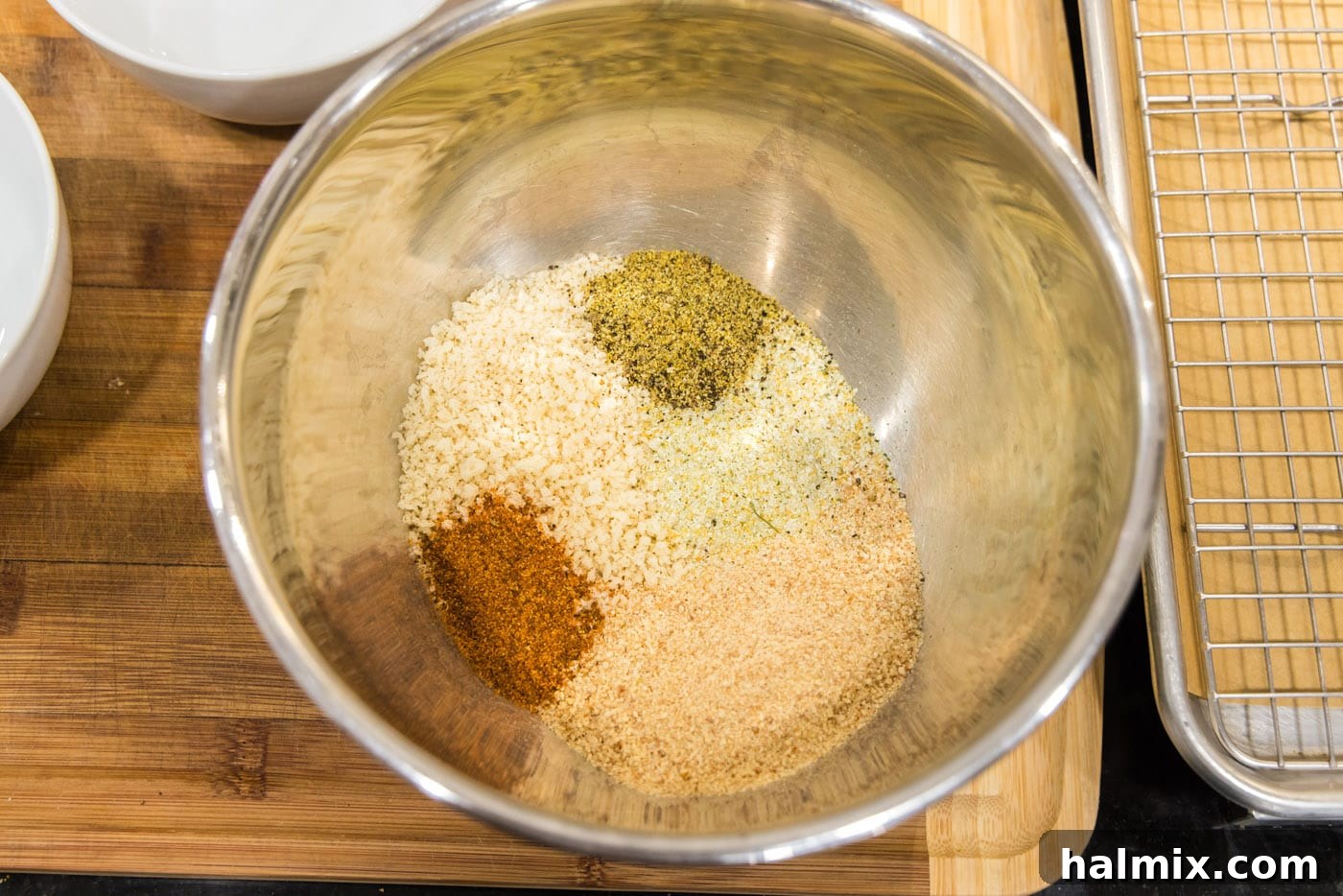
- **Prepare the Breading Mixture:** In a large mixing bowl, combine your dry breading ingredients: Panko breadcrumbs, plain breadcrumbs, garlic salt, paprika (for color and subtle flavor), and lemon pepper. Use a whisk or a fork to thoroughly mix these ingredients together until well combined. This ensures even distribution of flavors and textures in your coating.

The perfectly seasoned breadcrumb mixture. - **Prepare the Egg Wash:** In a separate small bowl, whisk one large egg until the yolk and white are fully combined and slightly frothy. This egg wash acts as the crucial adhesive layer between the flour and the breadcrumbs, helping the coating stick uniformly.
- **Prepare the Flour Dredge:** Place two cups of all-purpose flour in another small, shallow bowl. This will be your first coating layer, helping to create a dry surface for the egg wash to cling to.
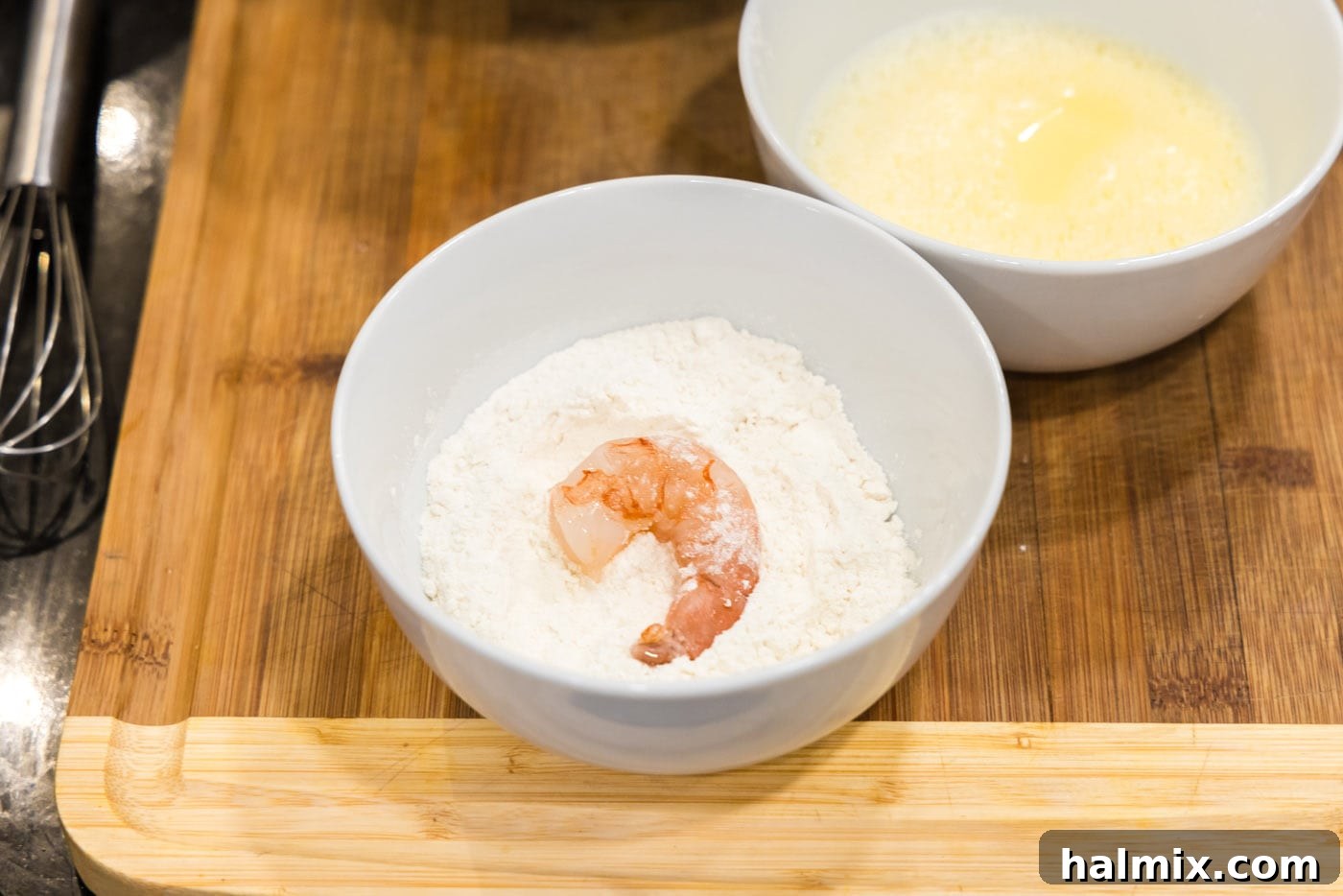
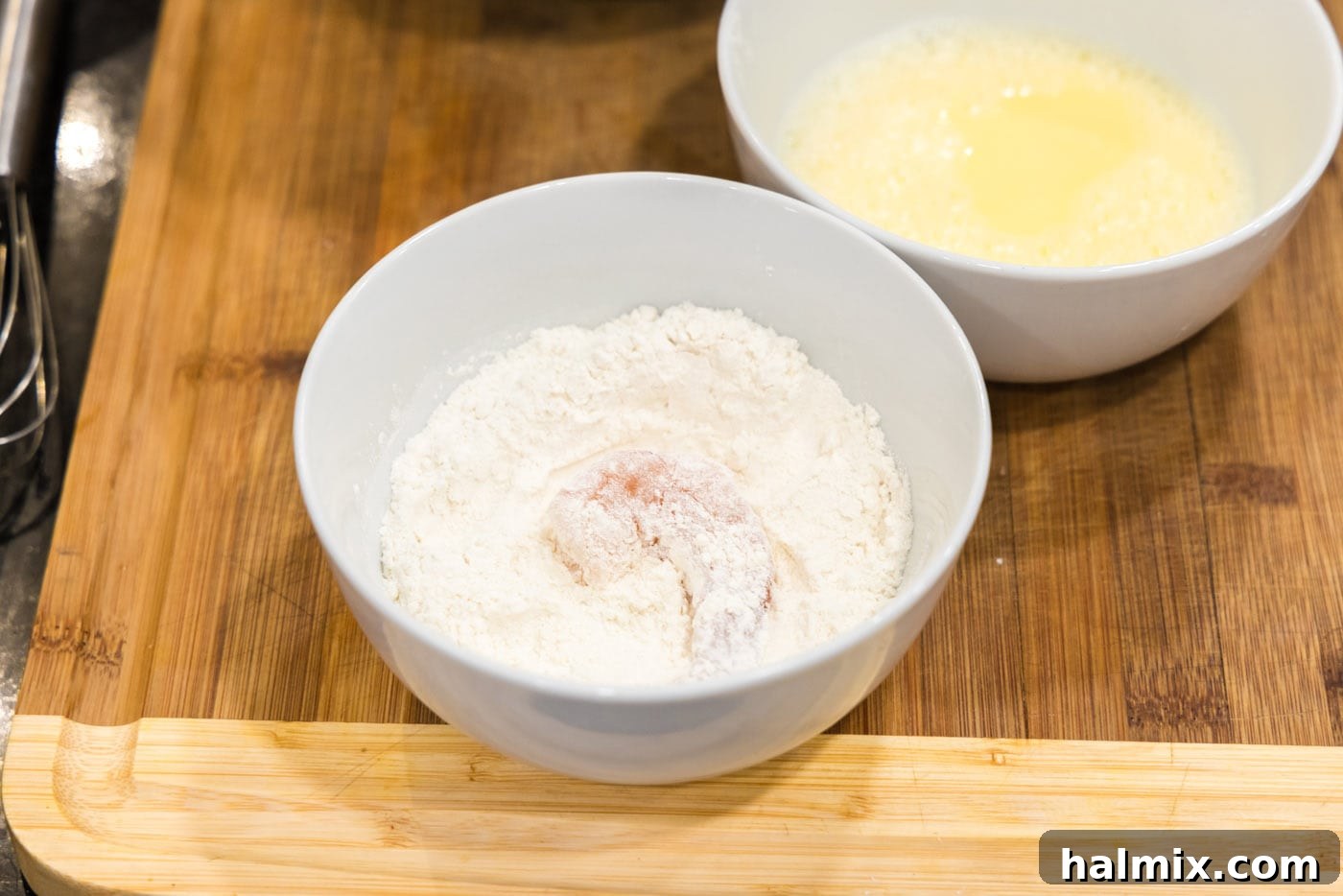
- **Dredge in Flour:** Take one shrimp and dredge it completely in the flour, ensuring all surfaces are covered. Gently shake off any excess flour. A thin, even layer is what you’re aiming for. Too much flour can create a gummy texture.
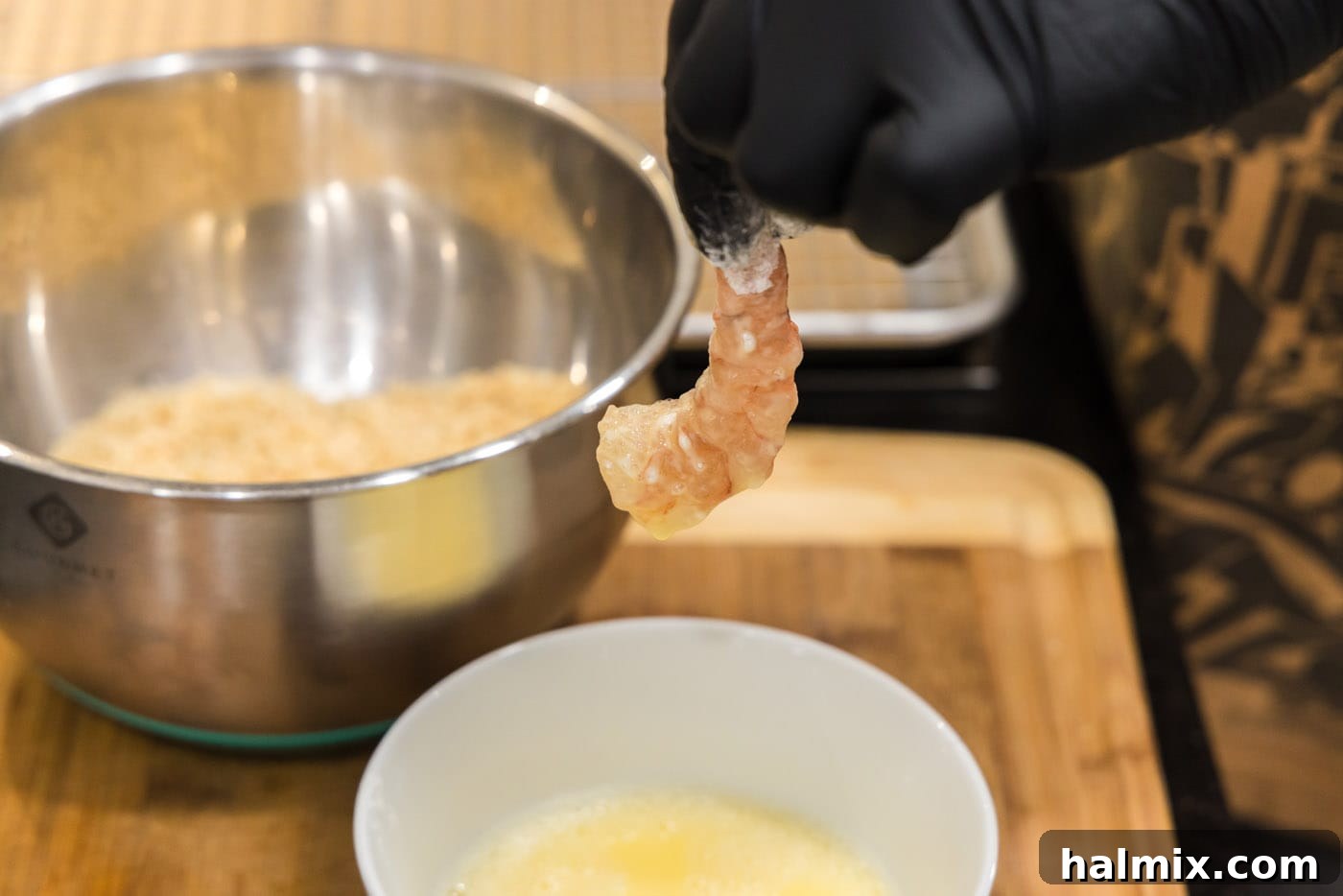
Ensuring full coverage with flour. A perfectly floured shrimp. - **Dip in Egg Wash:** Dip the flour-coated shrimp into the whisked egg, allowing any excess egg to drip off. This creates a sticky surface for the breadcrumbs.
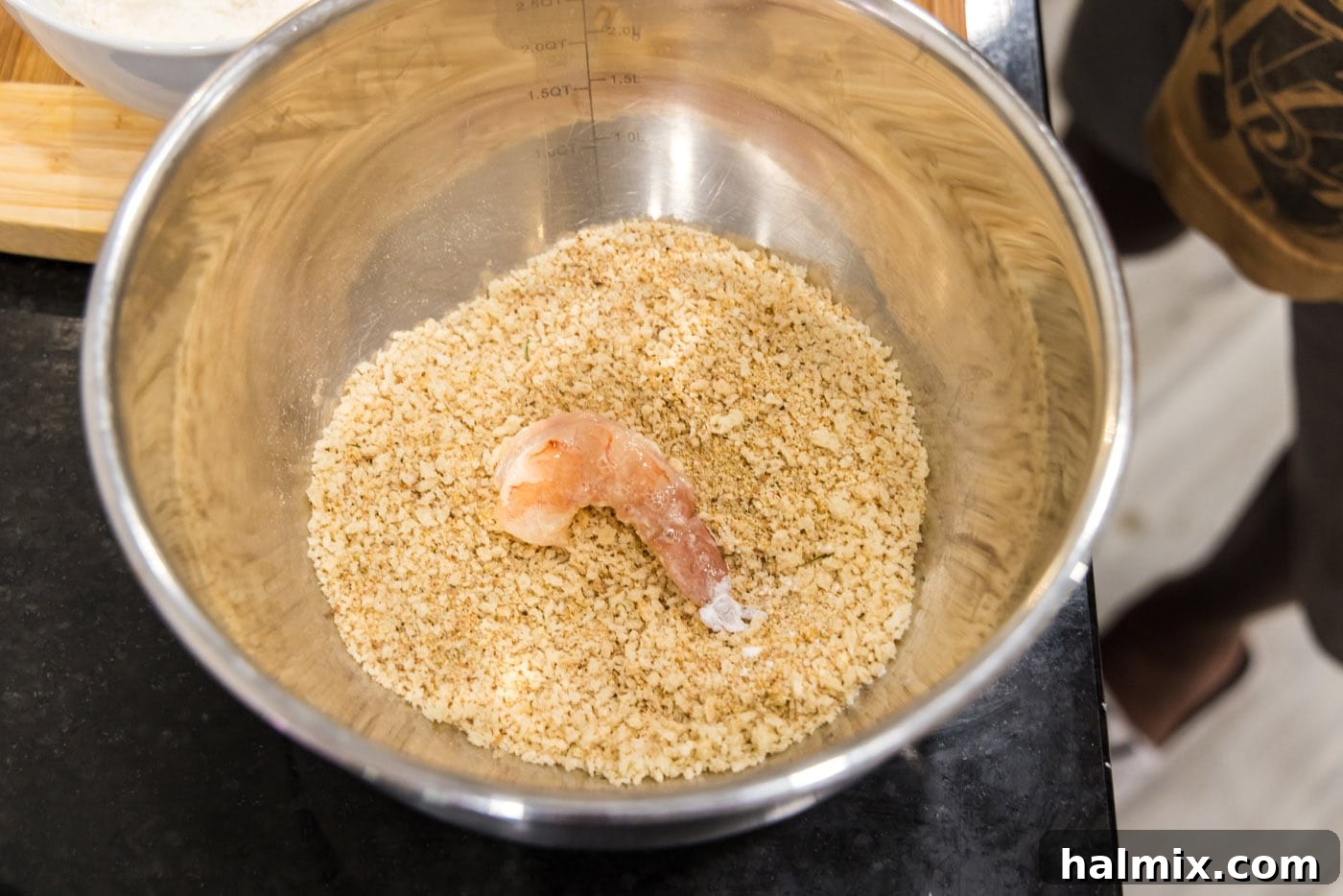
The egg wash creates a bonding layer. - **Coat in Breading Mixture:** Gently press the egg-dipped shrimp into the breadcrumb mixture, ensuring both sides are thoroughly coated. Use your fingers to lightly press the breadcrumbs onto the shrimp to help them adhere. You want a good, thick coating for maximum crunch.
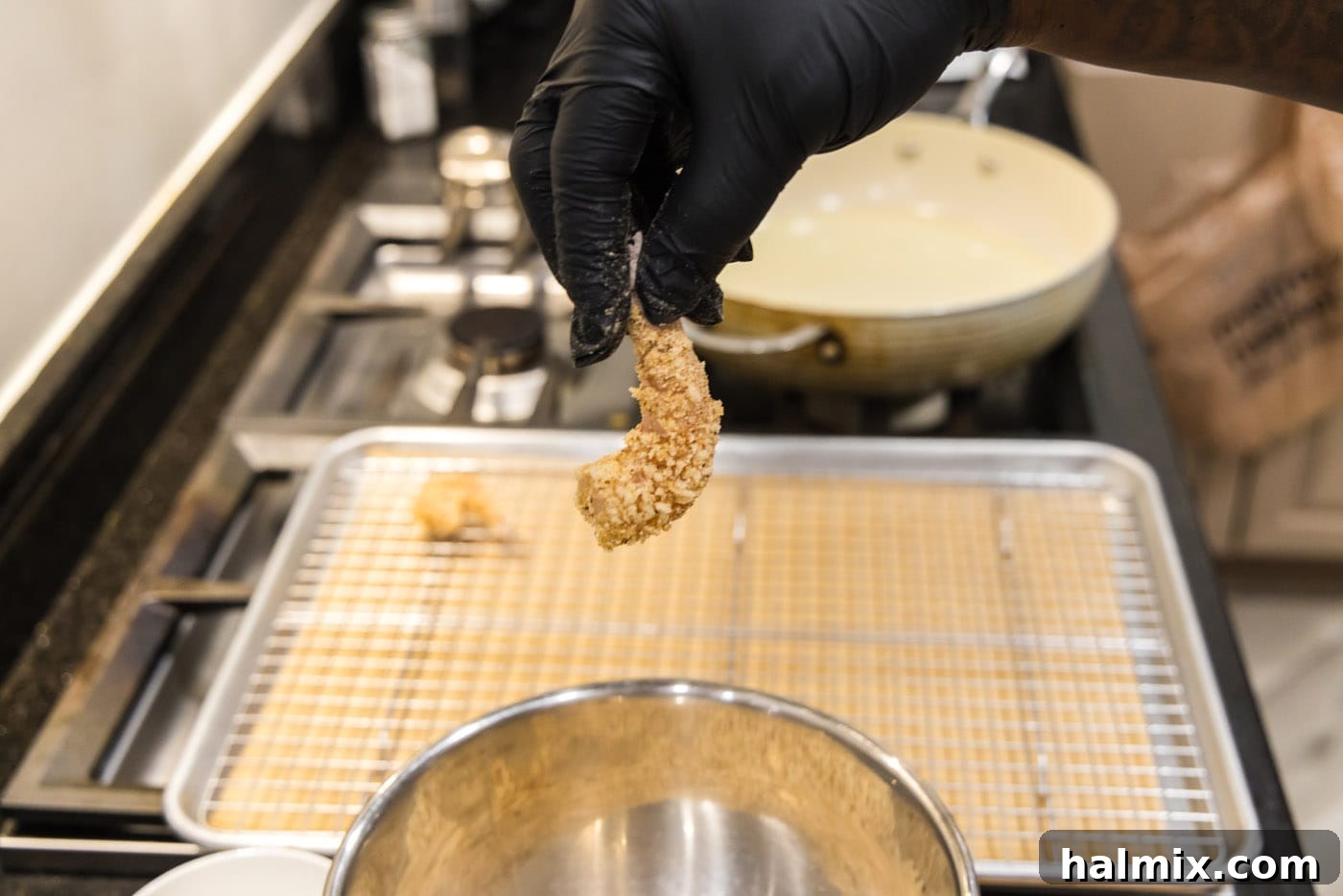
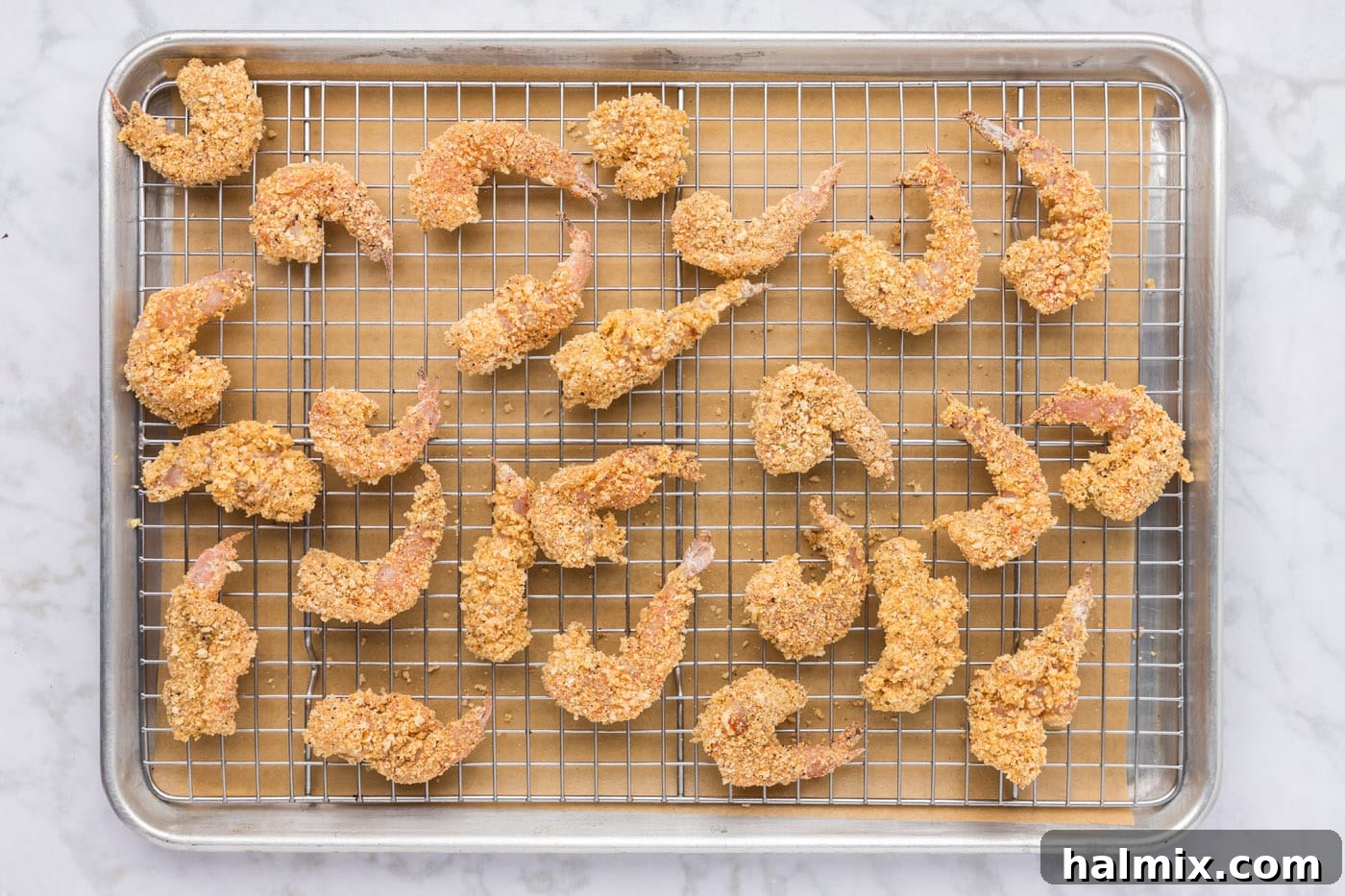
Firmly pressing breadcrumbs ensures full coverage. A perfectly breaded shrimp. - **Rest the Breaded Shrimp:** Place the fully breaded shrimp on the prepared wire rack on the baking sheet. This allows the breading to set slightly, which helps prevent it from falling off during frying. Repeat the entire breading process for all remaining shrimp.
Breaded shrimp awaiting their turn in the skillet. - **Heat the Frying Oil:** Pour enough vegetable oil into a large, deep-sided skillet to reach about 1/2-inch up the sides of the pan. Heat the oil over medium-high heat until it reaches a temperature of 325°F (163°C). Using a kitchen thermometer is highly recommended for accuracy, as proper oil temperature is key to crispy, non-greasy shrimp.
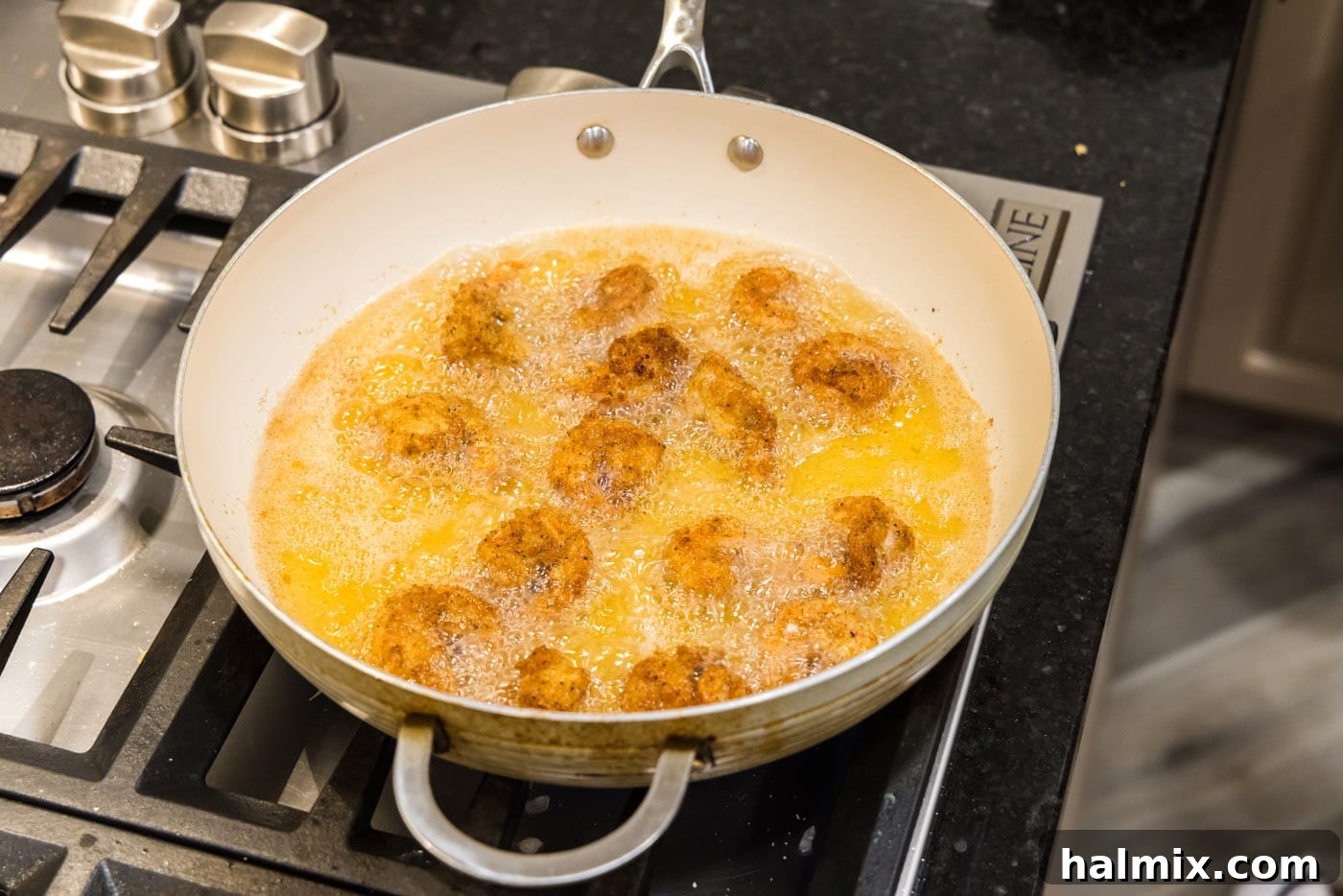
- **Fry the Shrimp:** Carefully add enough breaded shrimp to the hot oil to form a single layer, ensuring they do not crowd the pan. Crowding lowers the oil temperature, leading to greasy shrimp. Fry for 2-3 minutes per side, or until they turn a beautiful golden brown and are cooked through. The shrimp will curl slightly into a C-shape when done.
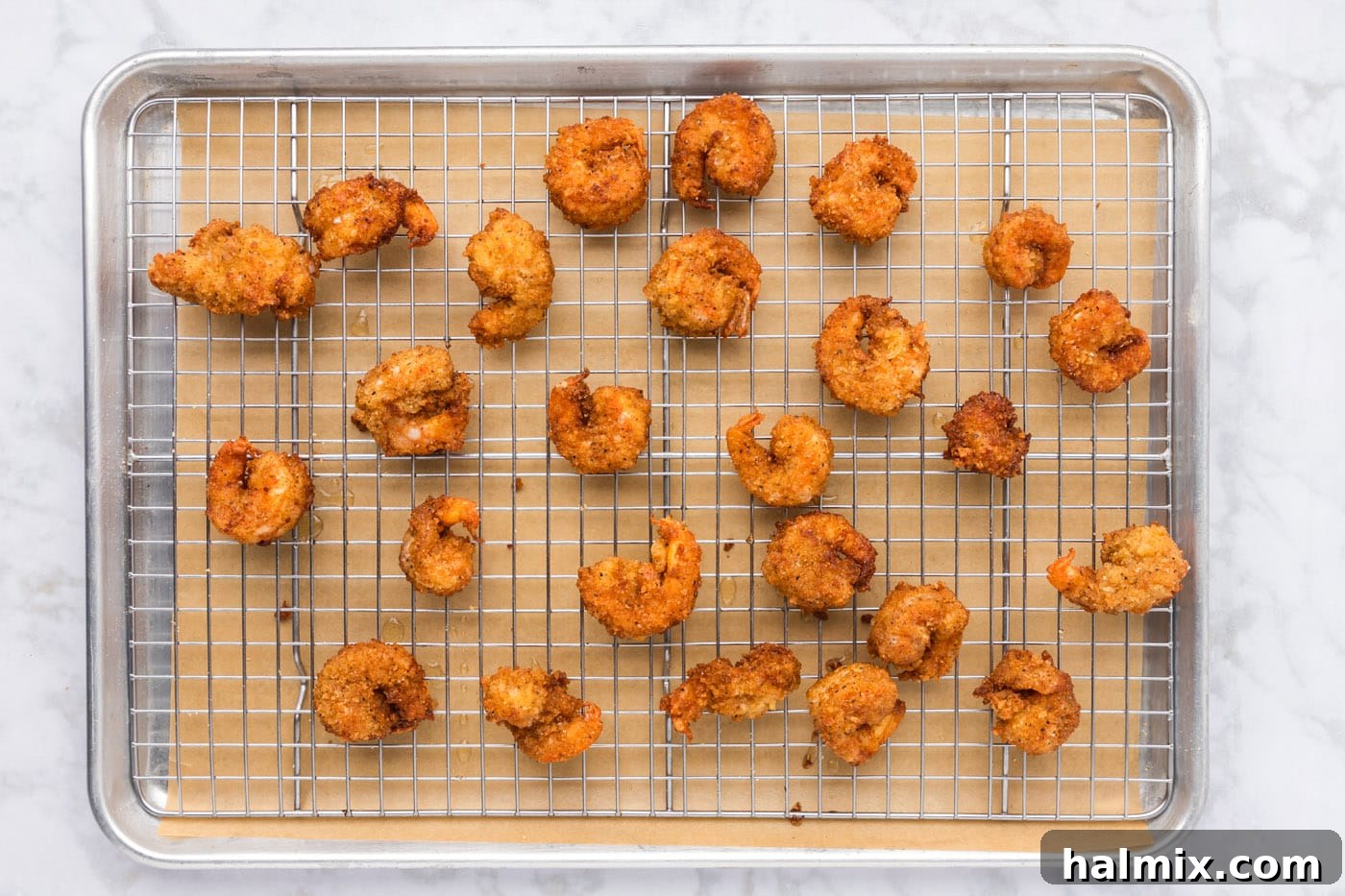
Frying to golden perfection. Crispy, golden-brown shrimp fresh from the fryer. Remove the cooked shrimp from the oil with a slotted spoon or tongs and place them on the prepared wire rack to drain any excess oil. Serve immediately for the best taste and texture.
Frequently Asked Questions & Expert Tips for Breaded Shrimp
How do you store leftover breaded shrimp?
To keep leftover breaded shrimp fresh, store them in an airtight container in the refrigerator for up to 3-4 days. For reheating, the best methods are those that restore crispness without overcooking the shrimp. You can add the fried shrimp to a skillet over medium-low heat with a small amount of oil, reheating until warmed through, about 1-2 minutes per side. Be cautious not to reheat them for too long, as shrimp can quickly become tough and chewy. Alternatively, reheating them in an air fryer at 350°F (175°C) for 3-5 minutes is an excellent method to bring back their original crunch and warmth.
How do you know when breaded shrimp is done cooking?
Shrimp cooks remarkably quickly, whether it’s breaded or not. You’ll know your breaded shrimp is perfectly cooked when it starts to coil into a gentle “C” shape and achieves a beautiful golden-brown color on its exterior. The flesh inside should turn opaque and white. Overcooked shrimp will form a tight “O” shape and can become rubbery, so keep a close eye on them during frying.
Can I bake or air fry breaded shrimp instead of frying?
Absolutely! For a healthier alternative, you can bake or air fry your breaded shrimp. To bake, preheat your oven to 400°F (200°C). Place the breaded shrimp in a single layer on a baking sheet lined with parchment paper and lightly sprayed with cooking spray. Bake for 10-15 minutes, flipping halfway through, until golden and cooked through. For air frying, preheat your air fryer to 375°F (190°C). Arrange the shrimp in a single layer in the air fryer basket (you may need to work in batches). Air fry for 8-12 minutes, shaking the basket or flipping the shrimp halfway, until crispy and golden.
What kind of oil is best for frying shrimp?
For deep frying breaded shrimp, choose an oil with a high smoke point and a neutral flavor. Good options include vegetable oil, canola oil, peanut oil, or sunflower oil. These oils can withstand the high temperatures needed for frying without burning, ensuring a clean flavor for your shrimp.
Irresistible Serving Suggestions
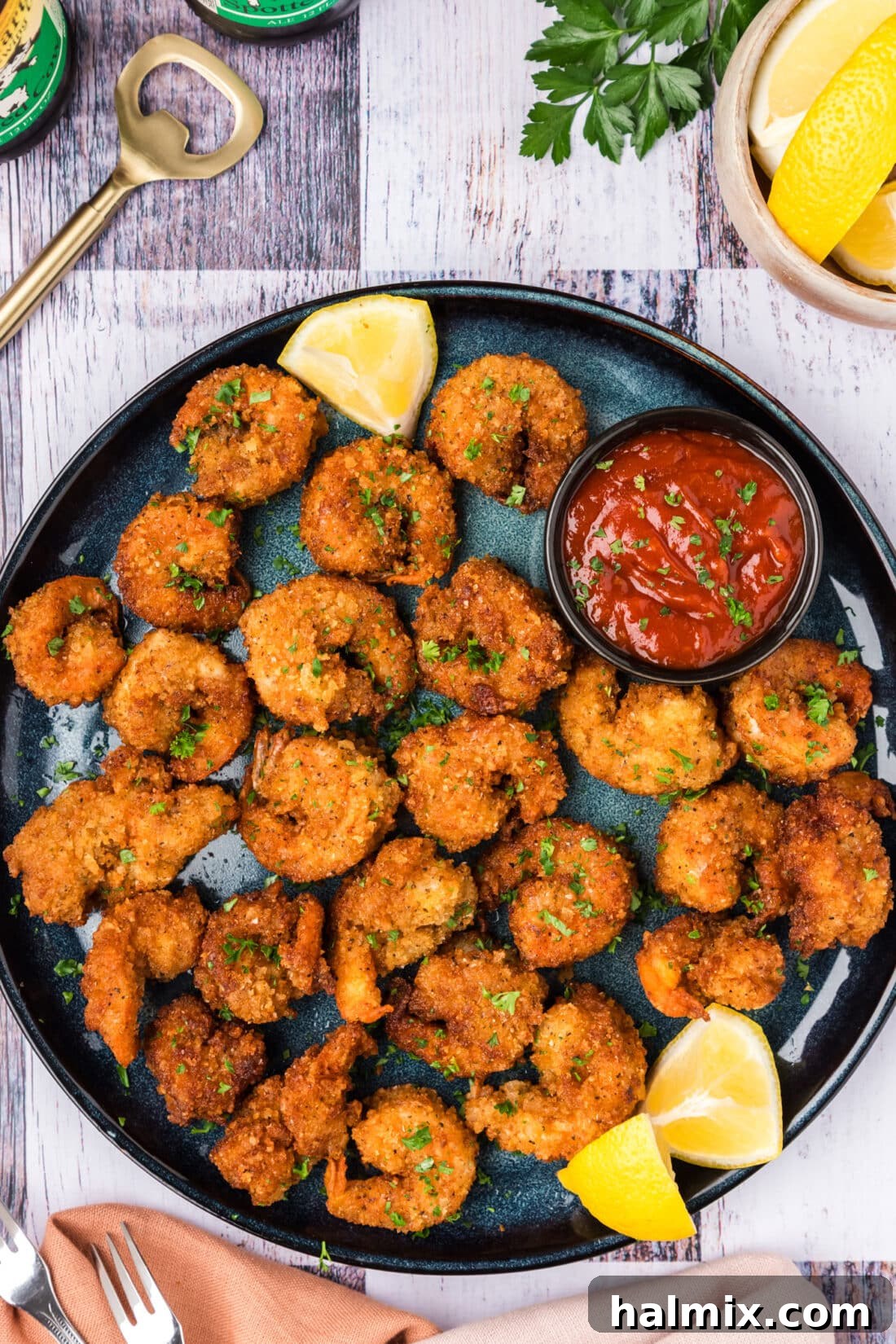
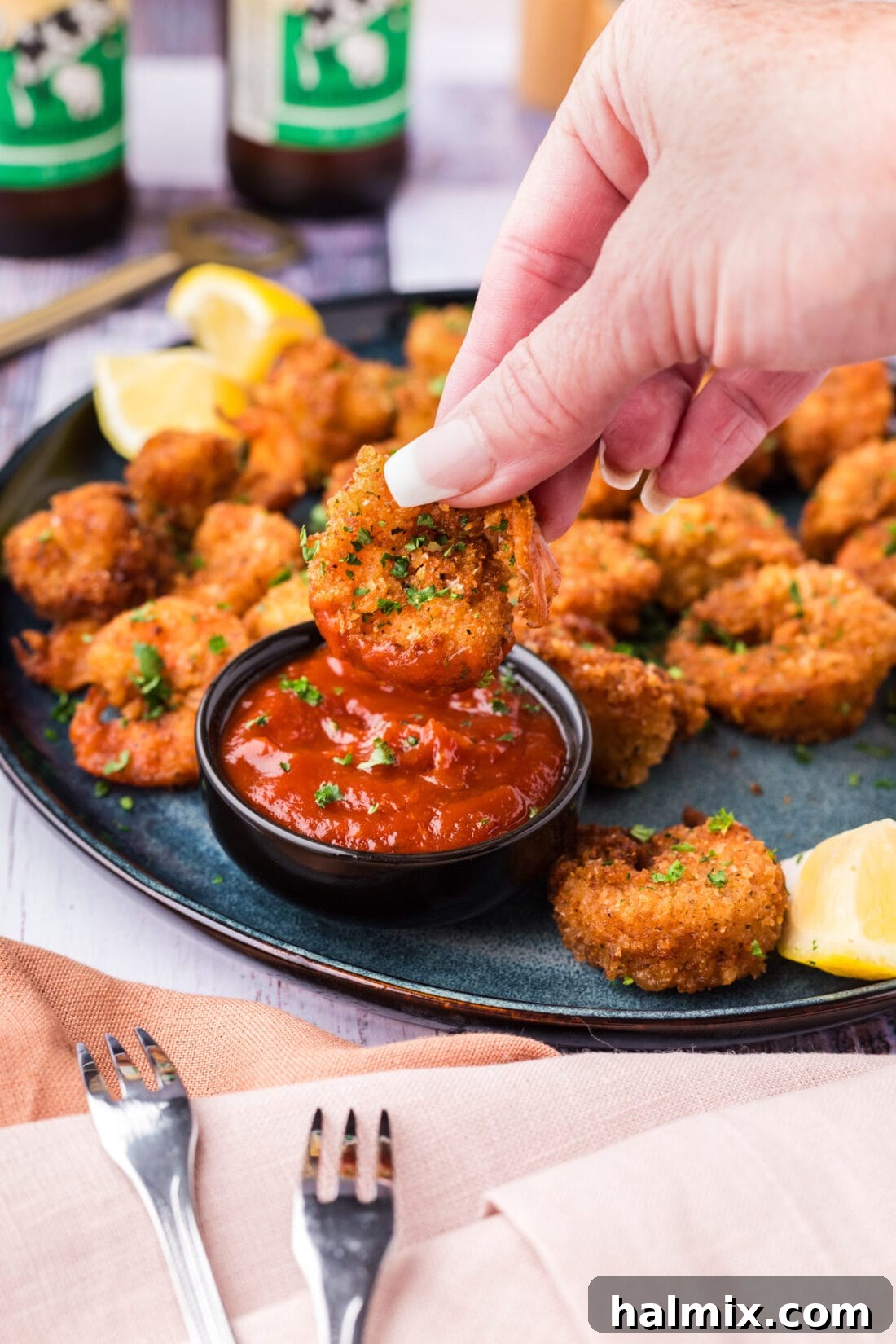
Crispy breaded shrimp are incredibly versatile and pair wonderfully with a variety of dips and side dishes. For an absolute classic, serve them alongside a zesty cocktail sauce, offering that perfect tangy complement to the savory crunch. Other fantastic dipping options include a rich garlic butter sauce, a sweet and tangy sweet and sour sauce, or our popular creamy yum yum sauce, each providing a unique flavor profile for dipping and dunking. As for side dishes, fried shrimp is a natural match for crispy french fries, creating a delightful “surf and turf” vibe. A refreshing coleslaw offers a cool, crisp contrast, while sweet corn on the cob adds a touch of summery sweetness. For a complete meal, consider serving them with a simple green salad, steamed asparagus, or a light rice pilaf. Always enjoy your breaded shrimp warm, straight from the skillet or oven, for the ultimate experience.
Explore More Shrimp Recipes
If you’re a fan of shrimp, you’ll love exploring other ways to prepare this versatile seafood. Expand your culinary repertoire with these equally delicious shrimp recipes:
- Crispy Shrimp: For an alternative take on ultimate crunch.
- Coconut Shrimp: A tropical twist with a sweet and savory coating.
- Popcorn Shrimp: Bite-sized perfection for snacking or appetizers.
- Butterfly Shrimp: Elegant and easy, perfect for a lighter meal.
I absolutely love to bake and cook, and sharing my kitchen experiences and cherished recipes with all of you is my passion! Remembering to check back for new culinary inspiration every day can be tough, which is why I offer a convenient newsletter delivered straight to your inbox every time a new recipe posts. Simply subscribe today and start receiving your free daily recipes, ensuring you never miss out on a delicious meal idea!
Breaded Shrimp
A quick and easy breaded shrimp recipe that’s perfect for all occasions – from weeknight dinners to special gatherings. Its irresistible crunch and savory flavor make it a guaranteed hit!
IMPORTANT – Be sure to scroll up and read the Frequently Asked Questions and Expert Tips within the blog post, as they contain valuable insights!
Pin It
Rate It
Course: Appetizer, Dinner
Cuisine: American
Servings: 4 servings
Prep time: 15 minutes
Cook time: 6 minutes
Total Time: 21 minutes
Calories: 789
Author: Amanda Davis
Ingredients
- 1 pound jumbo shrimp, peeled, deveined, tails removed
- 2 cups panko bread crumbs
- 2 cups plain bread crumbs
- 2 Tablespoons garlic salt
- 1 Tablespoon seafood seasoning
- 1 Tablespoon lemon pepper
- 1 large egg
- 2 cups all-purpose flour
- Vegetable oil for frying (enough to fill skillet 1/2-inch deep)
Things You’ll Need
- Mixing bowls
- Baking sheet
- Wire cooling rack
- Large deep sided skillet
- Kitchen thermometer (optional, but recommended for oil temperature)
Before You Begin (Helpful Notes)
- We used fresh jumbo shrimp, though you can use almost any kind of fresh shrimp for this recipe. Frozen shrimp will also work, but be sure you allow them to thaw then pat them dry thoroughly so the breading can stick properly. The smaller the shrimp you use, the less time it will take them to fry in the oil. Shrimp cooks quickly; once they begin to turn golden and curl up into a “C” shape, they should be finished cooking.
- The mixture of both plain and Panko breadcrumbs is key to achieving a breading that is light yet wonderfully crispy. Panko breadcrumbs soak up less oil compared to plain breadcrumbs, resulting in a less greasy finish, while the plain breadcrumbs contribute a lovely, consistent crunch. This combination is ideal for frying.
- For a gluten-free version, simply substitute the plain and panko breadcrumbs with their gluten-free equivalents, and use gluten-free all-purpose flour.
Instructions
- Line a baking sheet with paper towels and place a wire rack on top. This setup will be used for draining the fried shrimp.
- Thoroughly pat each shrimp dry with paper towels to ensure optimal breading adhesion and crispness.
- In a large mixing bowl, combine the Panko breadcrumbs, plain breadcrumbs, garlic salt, paprika, and lemon pepper. Mix well until all seasonings are evenly distributed throughout the breadcrumbs.
- In a separate small bowl, whisk the large egg until thoroughly blended. This will serve as your egg wash.
- Place the all-purpose flour in a third small, shallow bowl.
- Dredge one shrimp at a time in the flour, coating it completely. Gently shake off any excess flour, leaving a light, even layer.
- Dip the flour-coated shrimp into the whisked egg, allowing any excess egg to drip away.
- Gently press the egg-dipped shrimp into the breadcrumb mixture, ensuring both sides are fully and generously coated. Lightly press the breadcrumbs onto the shrimp to help them adhere.
- Place the breaded shrimp on the prepared wire rack. Repeat the breading steps for all the remaining shrimp.
- Pour enough vegetable oil into a large, deep-sided skillet to come about 1/2-inch up the sides of the pan. Heat the oil over medium-high heat until it reaches 325°F (163°C). A kitchen thermometer is highly recommended for accuracy.
- Carefully add enough shrimp to the hot oil to form a single layer, making sure not to overcrowd the pan. Cook the shrimp for 2-3 minutes per side, or until they turn a beautiful golden brown and are cooked through, curling into a “C” shape.
- Using a slotted spoon or tongs, remove the fried shrimp from the oil and transfer them to the wire rack set over paper towels to drain any excess oil. Serve immediately while hot and crispy.
Expert Tips & FAQs (Summary from post)
- Shrimp cooks quickly, usually done when it turns golden brown and curls into a “C” shape. Avoid overcooking to prevent tough, chewy shrimp.
- Store leftovers in an airtight container in the refrigerator for 3-4 days. Reheat gently in a skillet with a little oil or in an air fryer to maintain crispness.
- For best results, maintain the oil temperature at 325°F (163°C) and avoid overcrowding the pan during frying.
- Consider adding a pinch of cayenne pepper to the breading for a subtle spicy kick.
Nutrition Information
(Approximate values per serving, based on 4 servings)
- Serving: 1 serving (approx. 6 shrimp)
- Calories: 789 cal
- Carbohydrates: 128 g
- Protein: 38 g
- Fat: 12 g
- Saturated Fat: 2 g
- Polyunsaturated Fat: 5 g
- Monounsaturated Fat: 3 g
- Trans Fat: 0.04 g
- Cholesterol: 189 mg
- Sodium: 3196 mg
- Potassium: 451 mg
- Fiber: 7 g
- Sugar: 7 g
- Vitamin A: 306 IU
- Vitamin C: 0.1 mg
- Calcium: 293 mg
- Iron: 9 mg
Disclaimer: Nutritional values are estimates and may vary based on specific ingredients, preparation methods, and portion sizes. Consult a professional for precise dietary advice.
Tried this Recipe? Pin it for Later!
Follow on Pinterest @AmandasCookin or tag #AmandasCookin!
The recipes on this blog are tested with a conventional gas oven and gas stovetop. It’s important to note that some ovens, especially as they age, can cook and bake inconsistently. Using an inexpensive oven thermometer can assure you that your oven is truly heating to the proper temperature. If you use a toaster oven or countertop oven, please keep in mind that they may not distribute heat the same as a conventional full sized oven, and you may need to adjust your cooking/baking times. In the case of recipes made with a pressure cooker, air fryer, slow cooker, or other appliance, a link to the appliances we use is listed within each respective recipe. For baking recipes where measurements are given by weight, please note that results may not be the same if cups are used instead, and we can’t guarantee success with that method.