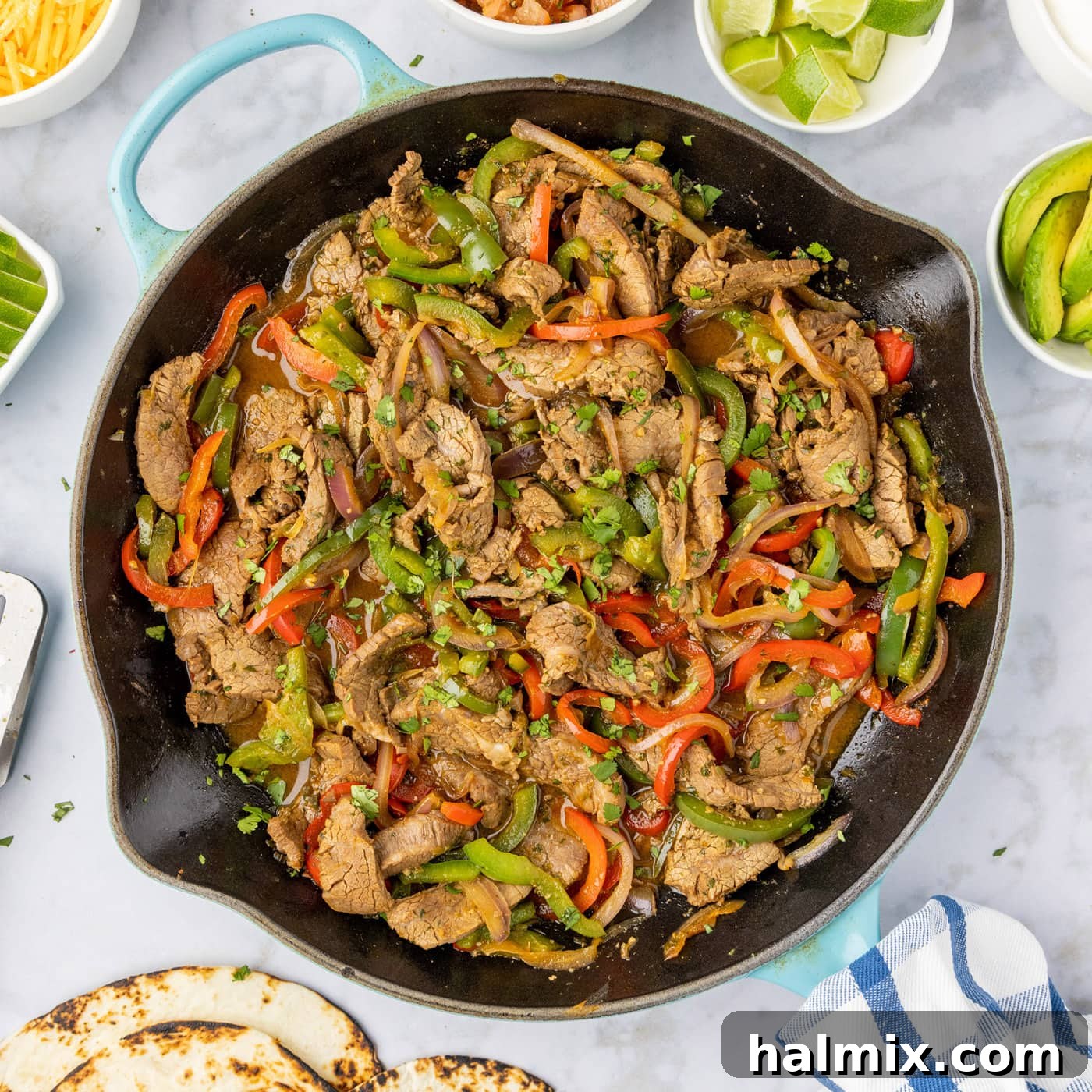
Hot off the sizzling skillet, these homemade steak fajitas promise an explosion of authentic Tex-Mex flavor. Featuring tender, juicy steak strips, first marinated to perfection, then expertly tossed with vibrant red onions and colorful bell peppers, this recipe is designed to bring the festive experience of your favorite Mexican restaurant right to your kitchen.
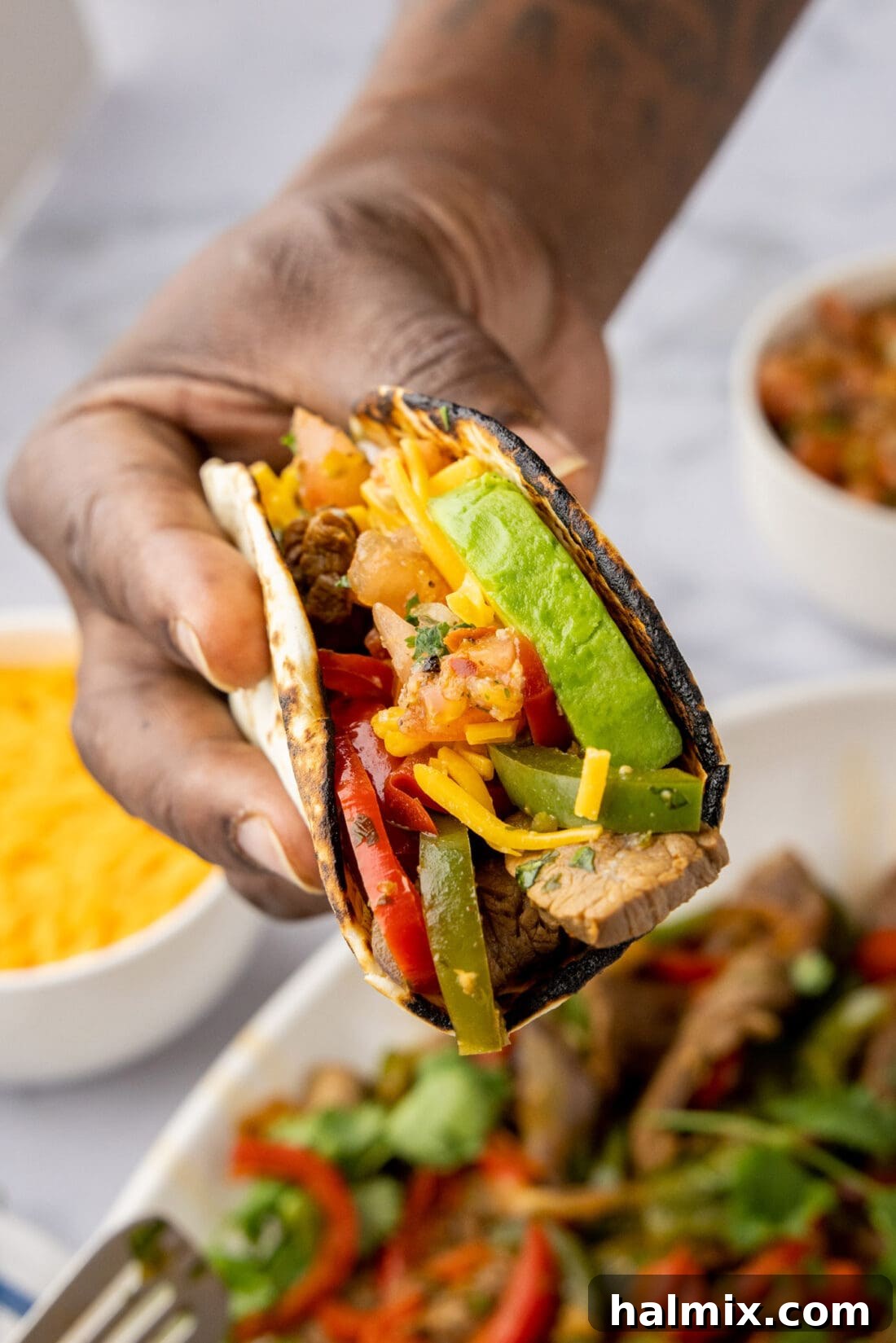
Steak fajitas aren’t just a meal; they’re an experience. The irresistible aroma of seasoned beef and sizzling vegetables, the vibrant colors, and the customizable nature of building your own taco make them a consistent crowd-pleaser. Whether you’re hosting a dinner party or simply craving a delicious and satisfying weeknight meal, this comprehensive guide will equip you with all the knowledge and techniques to create restaurant-quality steak fajitas at home. From selecting the perfect cut of beef and crafting a potent marinade to mastering the skillet cooking and assembling your ultimate fajita, we cover every step to ensure your success.
Why This Steak Fajita Recipe Is a Game-Changer
Our steak fajita recipe stands out for several key reasons, ensuring a consistently delicious and easy-to-make Tex-Mex masterpiece. At its heart, this recipe celebrates the classic taco-style meal: thinly sliced, flavorful steak strips complemented by tender-crisp vegetables, all nestled within a warm, inviting corn tortilla. But it’s the thoughtful details that truly elevate it.
- The Power of the Marinade: We start with a deeply flavorful and tenderizing fajita marinade. This isn’t just about adding flavor; it’s about transforming the texture of the steak. The acidic components in the marinade work to break down tough muscle fibers, ensuring every bite of steak is wonderfully tender. Meanwhile, a complex blend of spices infuses the meat with a rich, savory taste that forms the foundation of the fajitas’ incredible flavor profile. This crucial step is what sets our fajitas apart, delivering unmatched succulence and depth of taste.
- Perfectly Cooked Vegetables: The key to great fajitas lies not only in the steak but also in the perfectly cooked vegetables. We guide you to achieve that ideal “tender-crisp” texture, where bell peppers and onions are soft enough to bite through easily but still retain a slight firmness and vibrant color. This balance is essential for adding a refreshing crunch and natural sweetness that beautifully complements the rich steak.
- The Sizzle Factor: There’s nothing quite like the presentation of fajitas served in a steamy, sizzling cast iron skillet. It’s a showstopper that instantly whets the appetite, and this recipe delivers on that promise. High-heat searing in a cast iron skillet creates those coveted charred edges on both the steak and vegetables, intensifying their flavors and adding a delightful smoky dimension. This cooking method is quick, efficient, and locks in moisture, ensuring everything remains juicy and succulent.
- Simplicity Meets Flavor: Despite the impressive results, this recipe is surprisingly straightforward. With clear, step-by-step instructions, even novice cooks can achieve professional-level fajitas. The process is streamlined to minimize effort while maximizing flavor, proving that authentic Tex-Mex doesn’t have to be complicated.
Whether you’re a fan of chicken, shrimp, or classic steak fajitas, the allure of a sizzling platter loaded with vibrant ingredients is undeniable. This recipe harnesses that excitement, delivering not just a meal, but a memorable culinary experience every time.
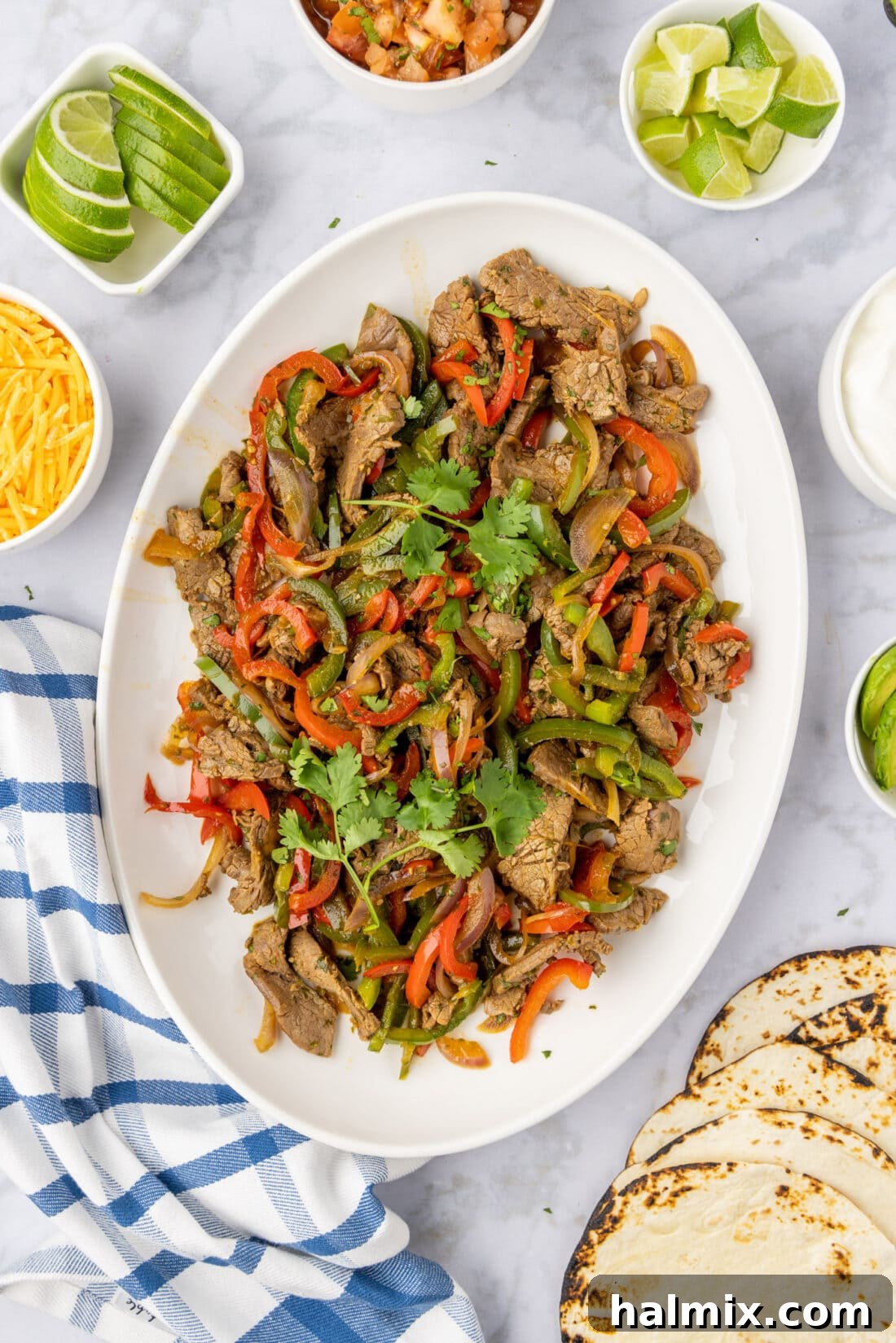
Essential Ingredients for Your Ultimate Steak Fajitas
Creating exceptional steak fajitas begins with selecting high-quality ingredients. Here’s what you’ll need to gather for this flavorful Tex-Mex dish. Remember, fresh and vibrant components are key to a truly unforgettable experience.
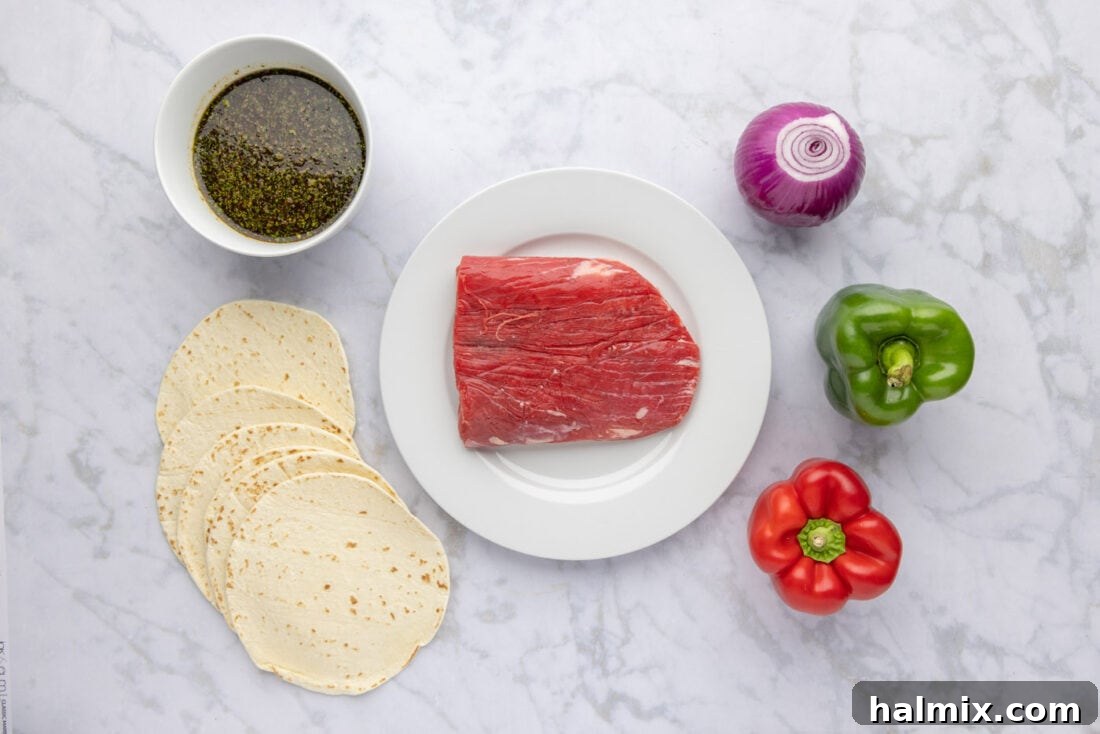
Meat Selection: The Heart of Your Fajitas
- Flank Steak: The star of the show. One pound of flank steak, cut thinly against the grain, is ideal for its lean profile and ability to absorb marinade flavors beautifully.
- Alternative: Skirt Steak: A fantastic substitute, skirt steak offers a slightly beefier flavor. Ensure it’s also sliced against the grain to maximize tenderness.
The Flavor-Packed Marinade (1 ½ cups)
Our homemade fajita marinade is crucial for tenderizing the beef and infusing it with an incredible depth of flavor. If you’re making your own, it typically includes:
- Soy Sauce: Adds umami and a salty base.
- Garlic: Pungent and aromatic, essential for any savory dish.
- Cilantro: Fresh and herbaceous, providing that authentic Mexican flavor.
- Jalapeño: For a touch of heat and vibrant pepper flavor (adjust to your spice preference).
- Cumin & Paprika: Classic Tex-Mex spices that provide warmth and earthy notes.
- Liquid Smoke: Optional, but adds a wonderful smoky depth without needing a grill.
- Garlic Powder: Reinforces the garlic flavor.
- Lime Juice: Crucial for its acidity, which tenderizes the meat and brightens the overall flavor profile.
Vibrant Vegetables (for that signature fajita crunch)
- Red Bell Pepper: One large, sliced into strips. Adds sweetness and a beautiful crimson color.
- Green Bell Pepper: One large, sliced into strips. Offers a slightly bitter, classic fajita flavor. You can also use yellow or orange bell peppers for added color and mild sweetness.
- Red Onion: Half of a large onion, sliced into strips. Provides a sharp, sweet bite that mellows beautifully when cooked.
Other Essentials
- Olive Oil: Two tablespoons for sautéing the vegetables and searing the steak. A good quality olive oil enhances flavor and ensures even cooking.
- Tortillas: Six taco-sized tortillas (corn or flour). Corn tortillas offer a traditional flavor, while flour tortillas are soft and pliable.
Get all exact measurements, detailed instructions, and a printable version of this recipe at the end of this post to ensure you have everything you need for a seamless cooking experience!
Detailed Ingredient Insights and Savvy Substitutions
Understanding your ingredients is key to culinary success. Here’s a deeper dive into the components of our steak fajitas, along with helpful substitution suggestions to suit your pantry and preferences.
Understanding Your Beef: Flank Steak vs. Skirt Steak
BEEF – For this recipe, flank steak is our top recommendation. It’s a lean cut known for its robust beefy flavor and relatively uniform thickness, which makes for easy slicing and even cooking. The secret to achieving maximum tenderness with flank steak is in how you cut it: always slice thinly against the grain. The “grain” refers to the long, visible muscle fibers running through the meat. Cutting perpendicular to these fibers shortens them, resulting in a much more tender and easier-to-chew strip of steak.
You can also use skirt steak for this recipe, a highly popular choice for fajitas due to its rich flavor and slightly looser texture, which readily absorbs marinades. Skirt steak is generally thinner and has a more pronounced grain than flank steak, and while it’s flavorful, it can be a bit tougher if overcooked or not sliced correctly. If using skirt steak, ensure you slice it against the grain and be mindful not to overcook it to avoid overly fibrous strips. Both flank and skirt steak are lean cuts that greatly benefit from marinating, which not only infuses flavor but also aids in tenderization.
Other Beef Options: While flank and skirt are traditional, you could also experiment with sirloin or even a well-marbled chuck steak (though chuck would require longer cooking and potentially braising to become truly tender for fajitas).
The Magic of the Marinade: Flavor and Tenderization
MARINADE – Marinating the beef is a non-negotiable step for truly outstanding steak fajitas. It serves a dual purpose: tenderizing the meat and infusing it with layers of complex, savory flavor. Our homemade fajita marinade is a meticulously crafted blend that includes:
- Soy Sauce: Provides a deep umami base and necessary salinity. Use low-sodium soy sauce if you are mindful of salt intake.
- Garlic (fresh and powdered): Offers an intense aromatic foundation. Fresh garlic brings a sharp kick, while garlic powder provides a more subtle, pervasive flavor.
- Cilantro: Essential for that fresh, herbaceous, authentic Mexican essence. If you’re not a fan of cilantro, parsley can offer a similar freshness, though the flavor profile will differ.
- Jalapeño: Adds a gentle warmth and a hint of fruity pepper flavor. For more heat, leave in some of the seeds and membranes. For less, remove them entirely. You can also substitute with a milder green chili like poblano or a spicier serrano.
- Cumin & Paprika: These spices are the backbone of Tex-Mex cuisine, offering earthy warmth and a vibrant color. Smoked paprika can add an extra layer of depth.
- Liquid Smoke: An optional but highly recommended ingredient that imparts a delicious, char-grilled smoky flavor, especially if you’re cooking indoors without a grill.
- Lime Juice: The acidic hero of the marinade. Lime juice helps to break down the connective tissues in the beef, making it wonderfully tender. It also adds a bright, zesty finish that balances the richness of the meat and spices.
This versatile marinade isn’t just for steak fajitas; it works exceptionally well on pork or chicken as well, making it a valuable recipe to keep in your culinary repertoire.
Vegetables: Color, Texture, and Flavor
BELL PEPPERS & ONION – We use a combination of red and green bell peppers for visual appeal and a balanced flavor profile. Red bell peppers are sweeter and milder, while green bell peppers have a slightly more robust, earthy flavor. Feel free to use yellow or orange bell peppers for an even sweeter profile and a rainbow of colors. The red onion provides a sharp, piquant flavor raw, which mellows and sweetens considerably when sautéed, adding a critical layer of aroma and taste to the fajita mix.
Olive Oil: A good quality olive oil is recommended for its flavor and high smoke point, making it suitable for high-heat searing in a skillet.
Tortillas: While corn tortillas offer a traditional touch, flour tortillas are also a popular choice for their soft, pliable texture. Both are excellent; choose based on your personal preference.
Crafting Your Own Sizzling Steak Fajitas: A Step-by-Step Guide
These step-by-step photos and instructions are here to help you visualize how to make this recipe perfectly. For a comprehensive printable version with all measurements and instructions, scroll down to the recipe card at the bottom of this post.
-
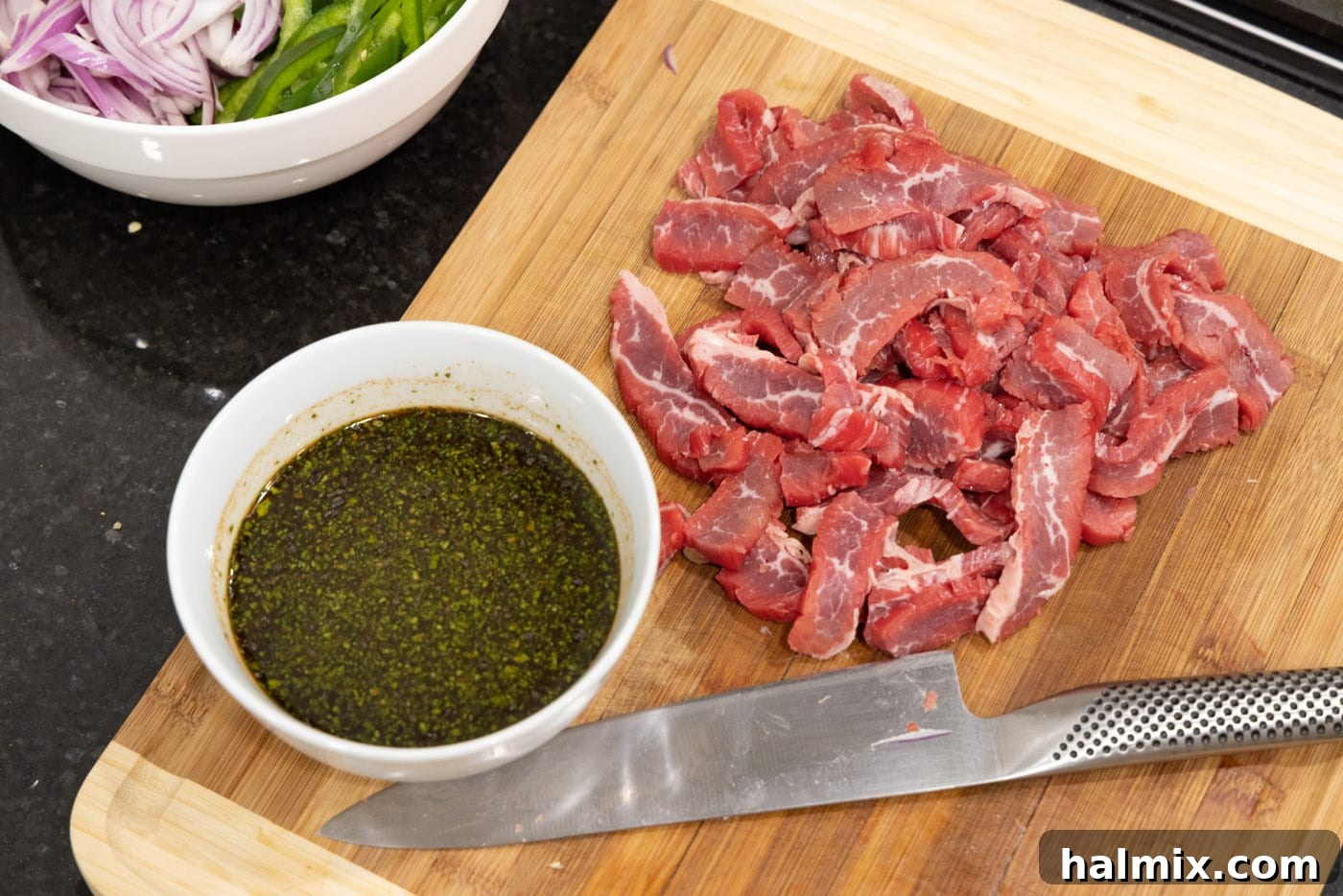
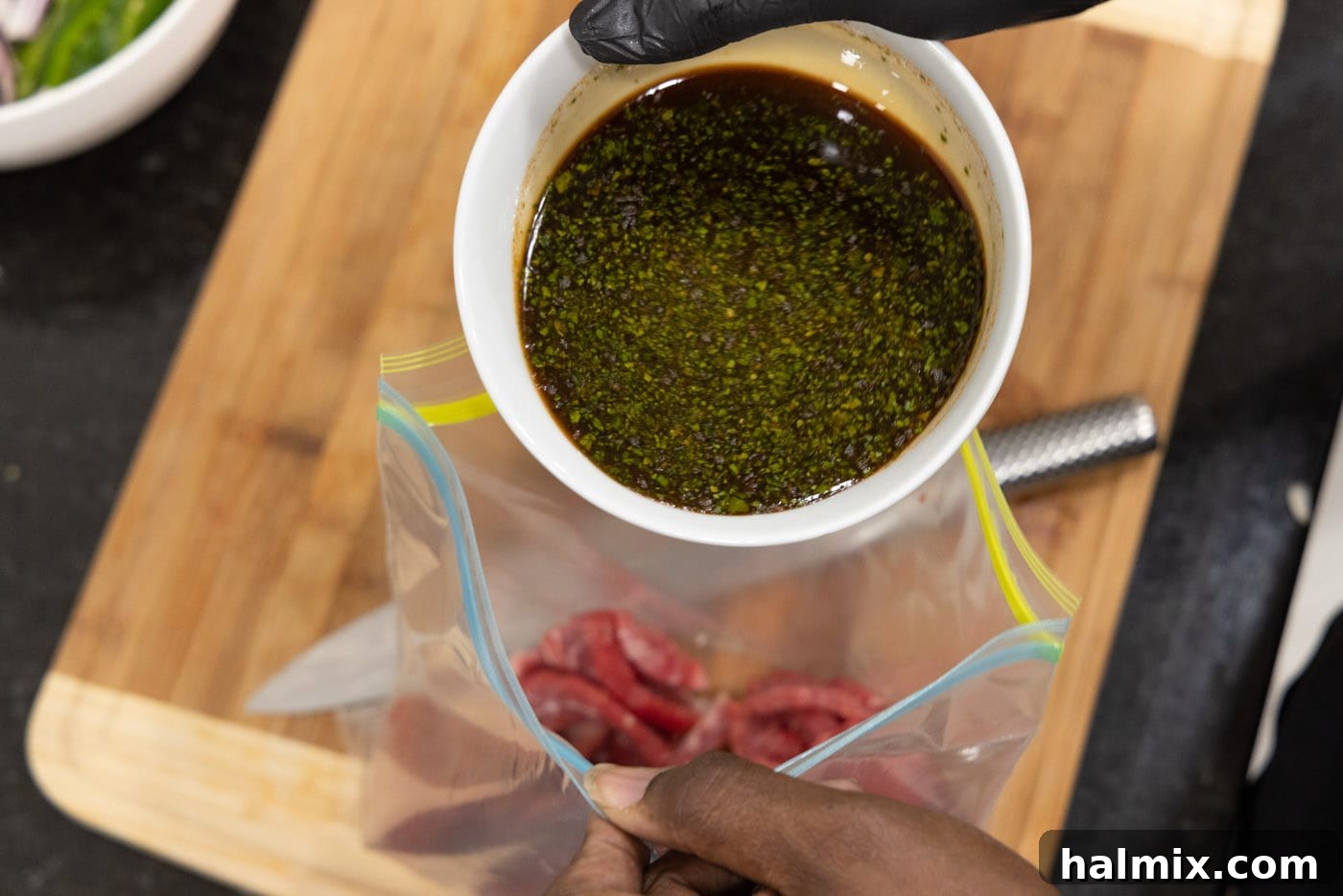
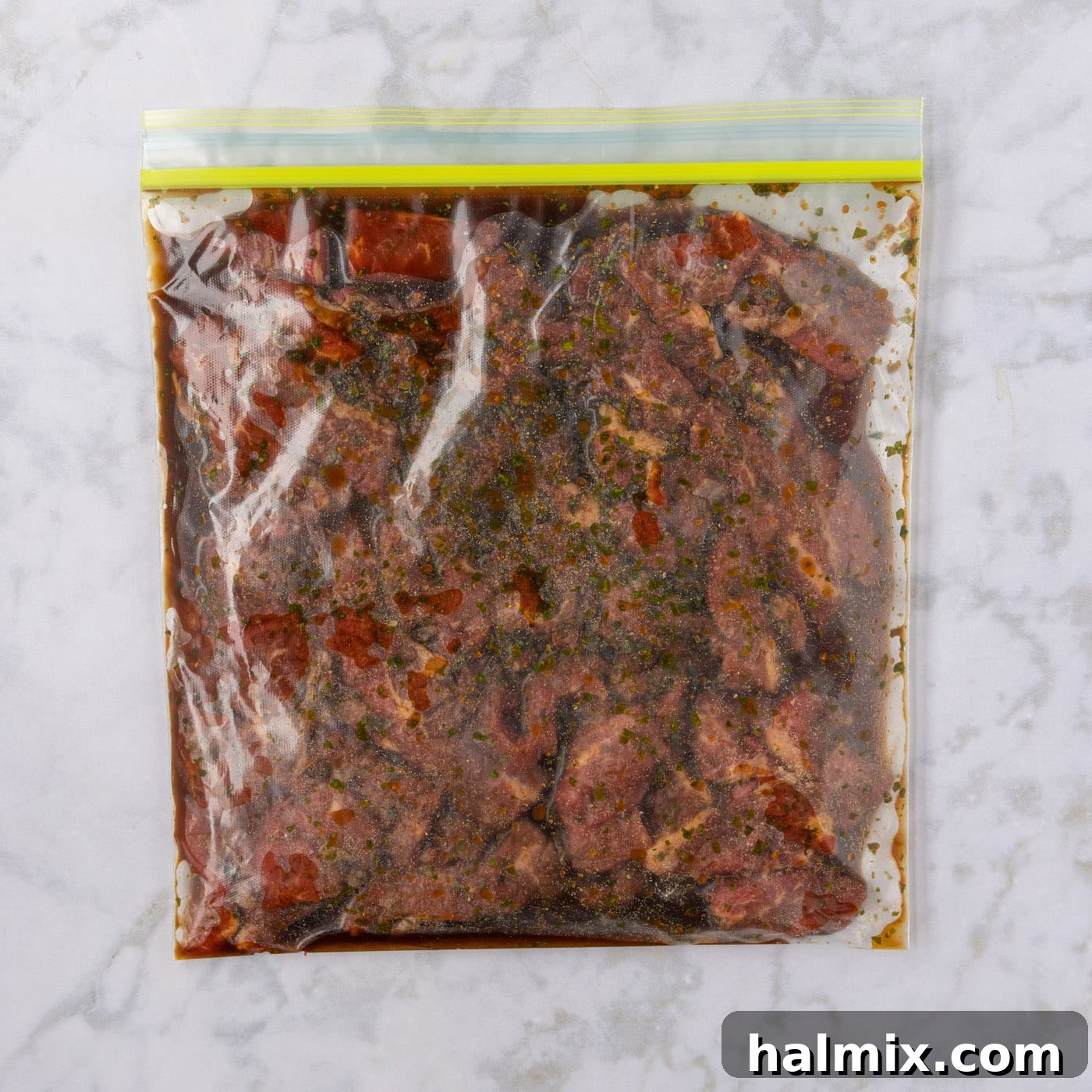
Prepare the Steak and Marinade: Begin by cutting your flank steak (or skirt steak) into thin strips, always slicing against the grain. This crucial step ensures the steak will be tender and easy to chew. Place the thinly sliced meat into a gallon-sized plastic bag or a shallow non-reactive dish. Pour in your homemade fajita marinade, ensuring all the steak strips are well coated. Seal the bag (or cover the dish) and let the steak marinate at room temperature for a minimum of one hour. For even deeper flavor and tenderness, you can marinate it in the refrigerator for up to 4 hours, bringing it back to room temperature for about 30 minutes before cooking.

Thinly sliced flank steak ready for its flavorful marinade. Pouring the rich homemade marinade over the steak strips. Flank steak strips soaking up all the delicious flavors of the marinade. -
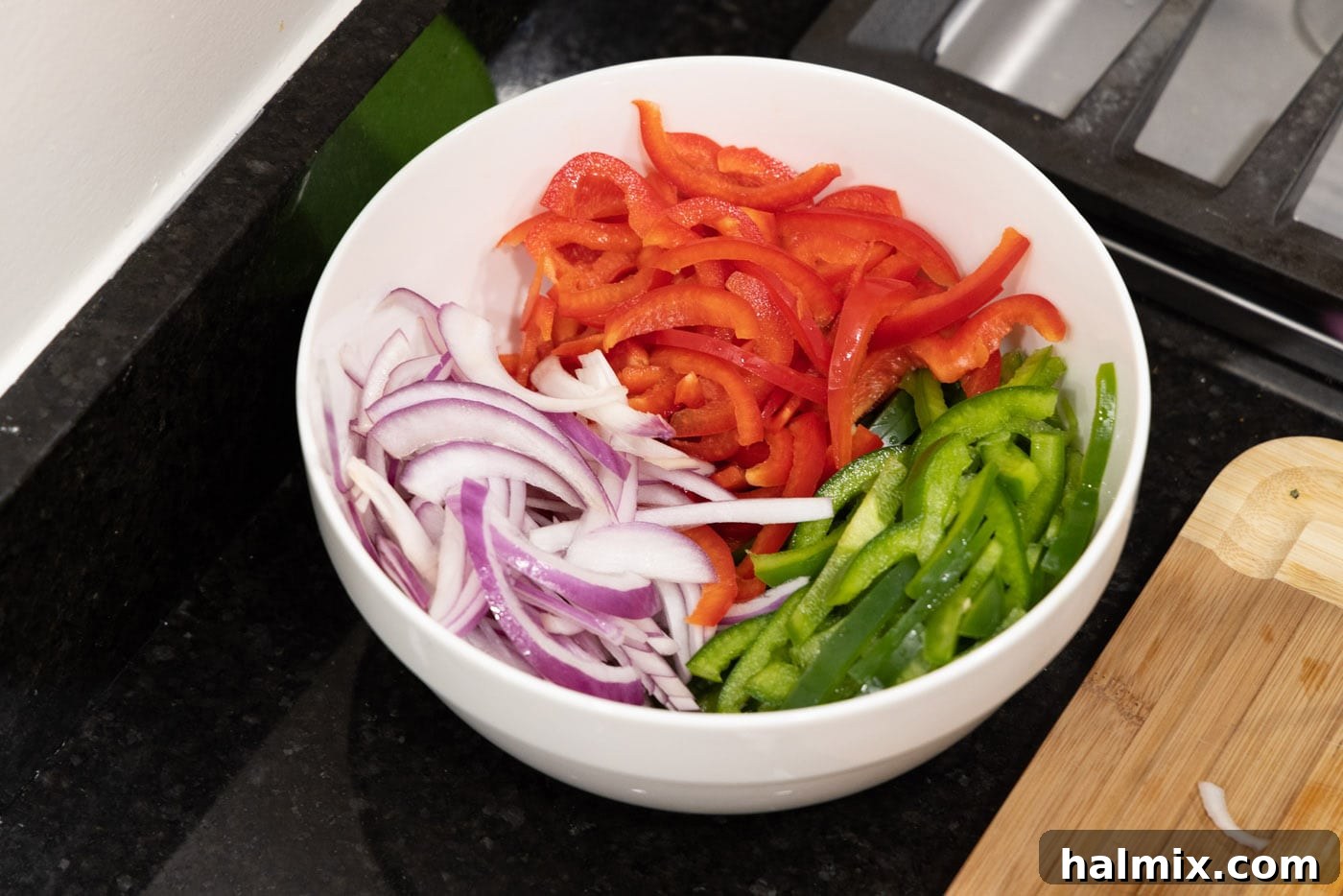
Chop Your Veggies: While the steak is marinating, prepare your vegetables. Slice the bell peppers (red and green) and the red onion into thin, uniform strips. This ensures they cook evenly and integrate well with the steak. A sharp knife makes this task quick and easy.
A colorful medley of sliced bell peppers and red onion, ready for the skillet. -
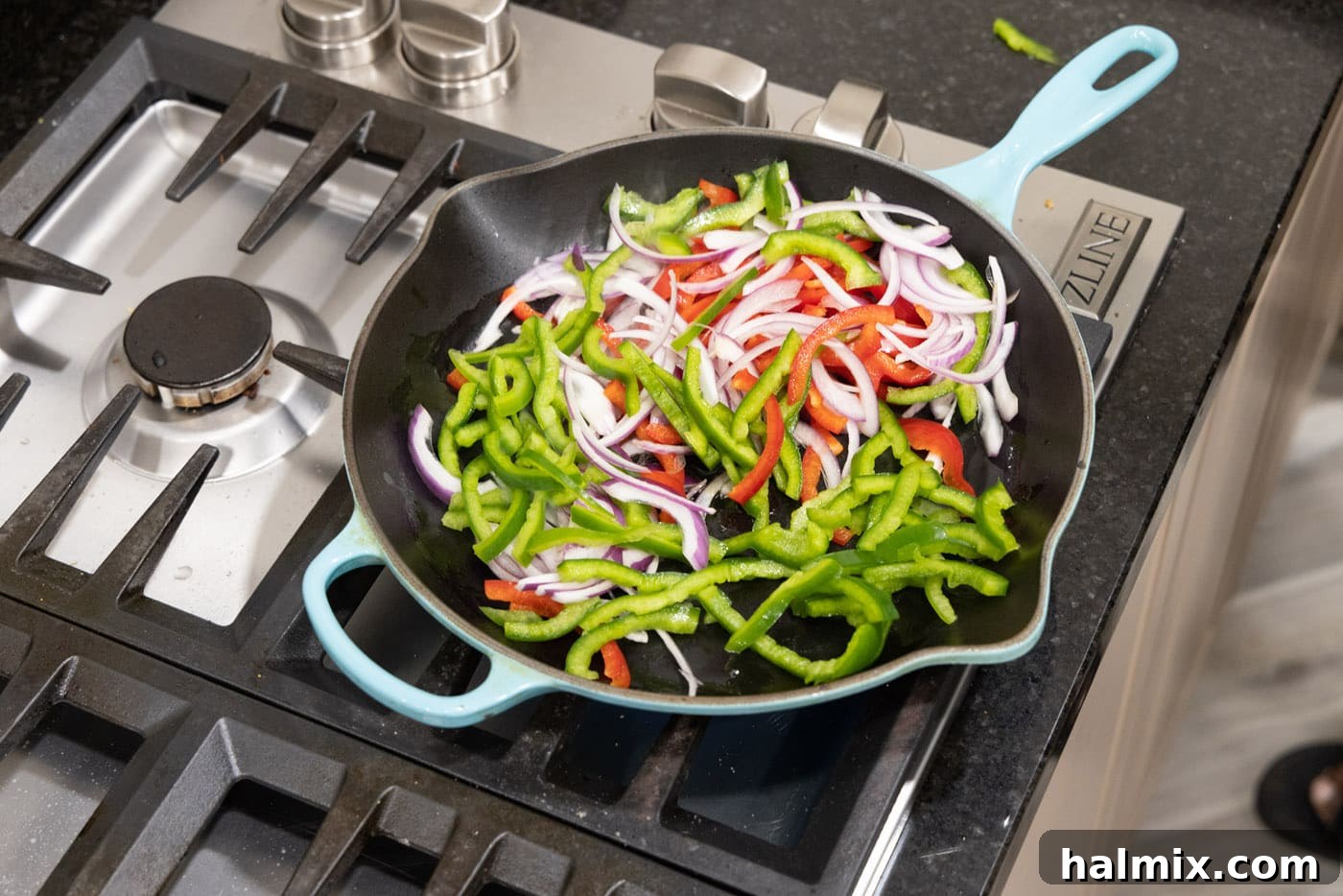
Heat the Skillet: Place a cast iron skillet over medium-high heat. Allow it to heat thoroughly for a few minutes before adding the olive oil. You want the skillet to be hot enough for the oil to shimmer, indicating it’s ready for searing. A properly heated skillet is key to achieving those desirable charred edges and a flavorful sear.
-
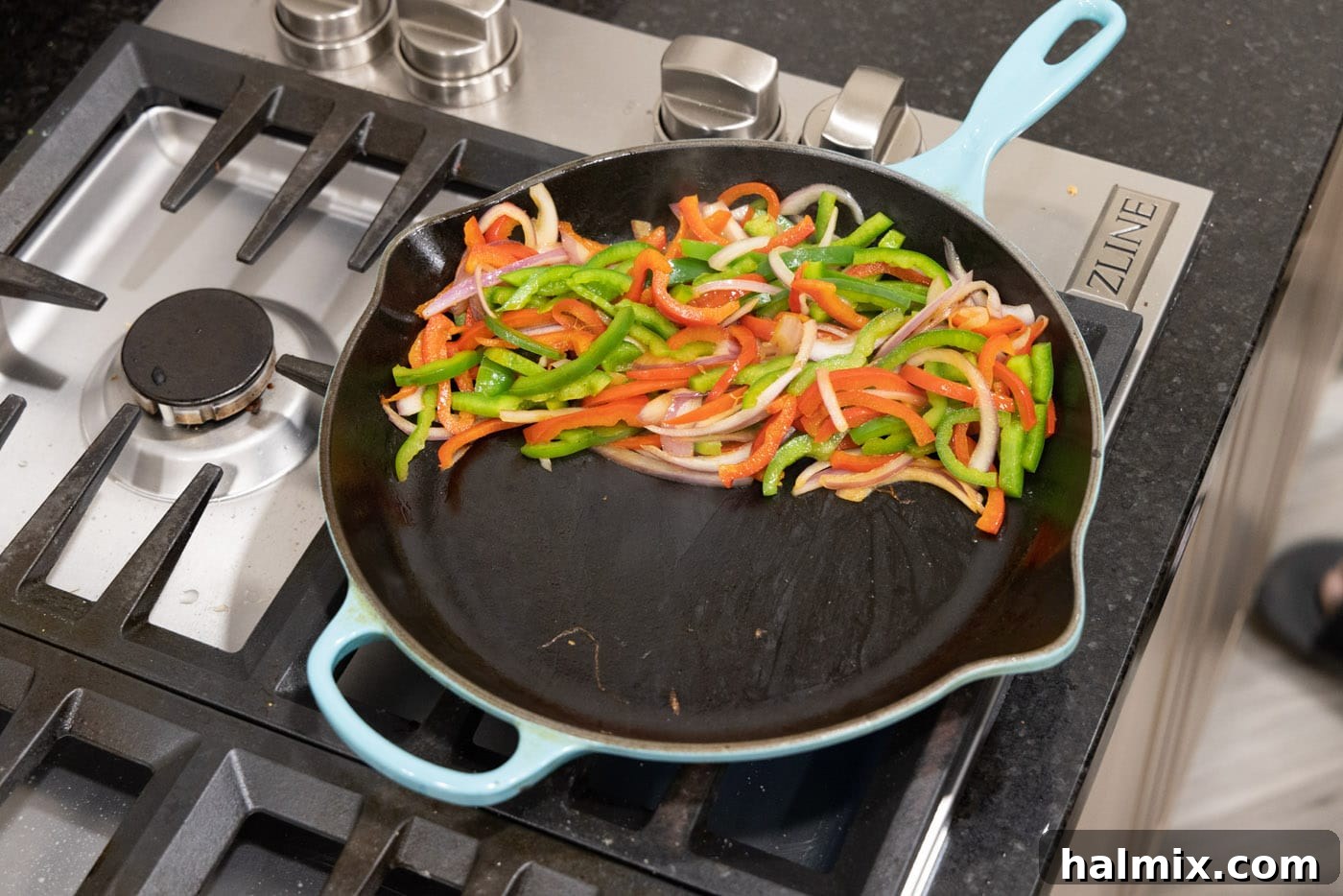
Cook the Vegetables: Add the sliced bell pepper and onion strips to the hot skillet. Cook, stirring occasionally, for about 2-3 minutes. The goal is to get them tender-crisp – slightly softened but still retaining a pleasant bite and vibrant color. Be careful not to overcrowd the pan, as this can steam the vegetables instead of searing them. If necessary, cook them in two batches.
Bell peppers and onions sizzling in a hot cast iron skillet. -
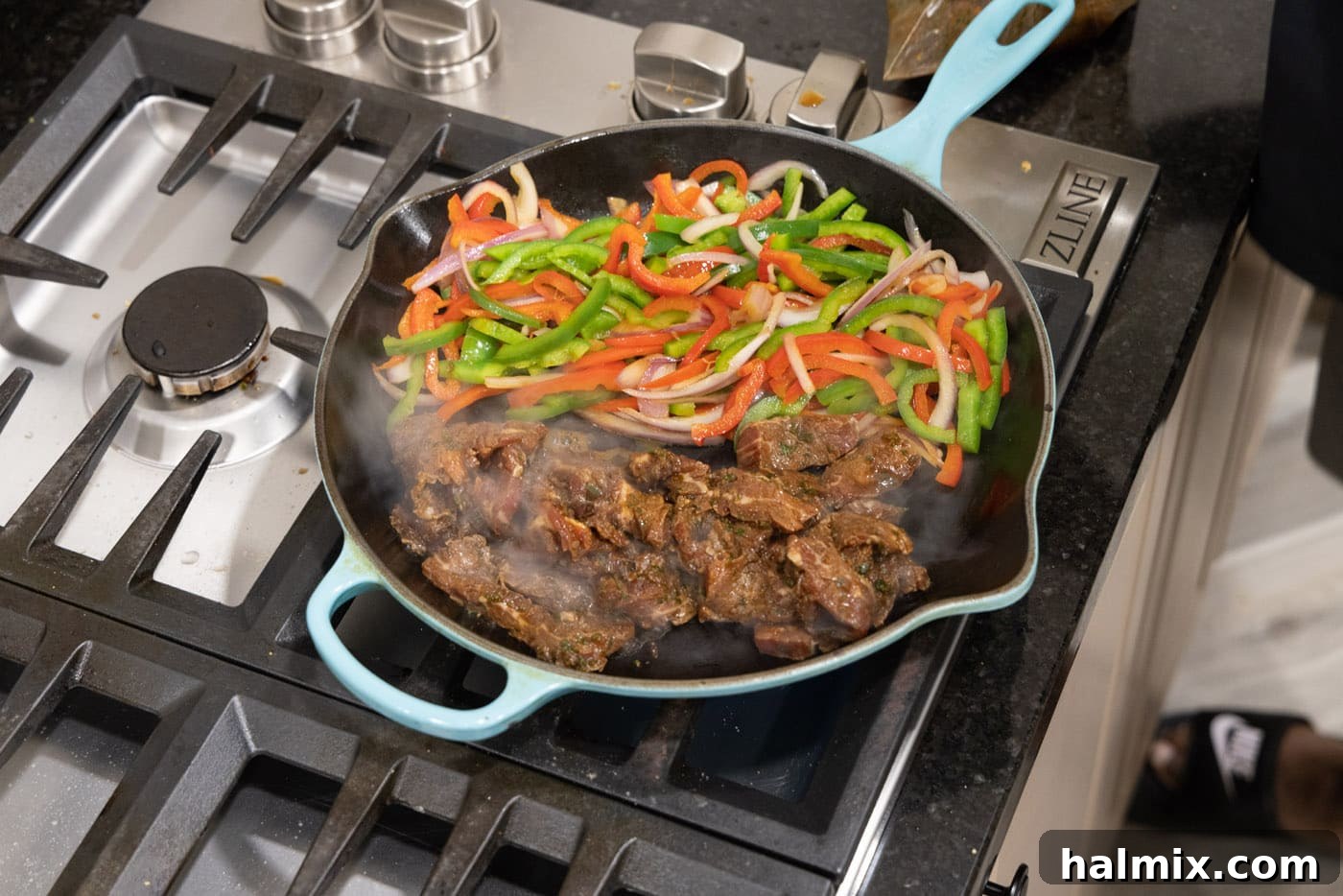
Sear the Steak: Once the vegetables reach the desired tenderness, push them to one side of the pan, creating an empty space. Using tongs, remove the beef strips from the marinade and add them to the empty side of the hot skillet. Cook, stirring occasionally, for 1-2 minutes. You want a quick sear to lock in the juices and develop a nice crust. Discard any leftover marinade to prevent cross-contamination.
Expert Tip: We love our fajita meat juicy, so we add the steak directly from the marinade. If you prefer less pan juices, you can gently pat the marinated beef strips dry with paper towels before adding them to the skillet.
Fajita vegetables pushed to one side, making way for the marinated steak. -
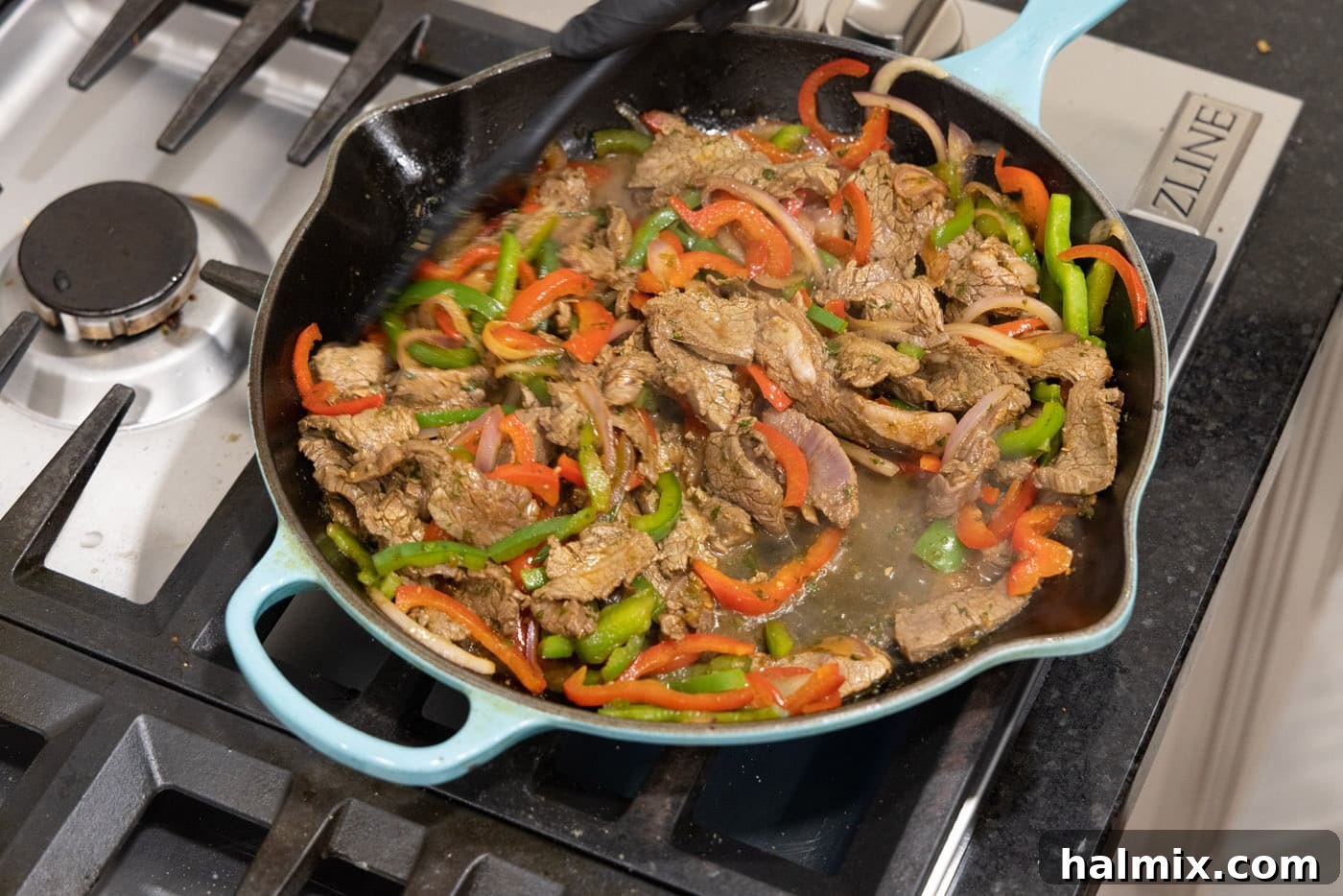
Combine and Finish: Stir the cooked vegetables and seared beef together, allowing them to mingle and finish cooking for an additional 2-3 minutes. This final quick cook ensures all flavors are well combined and the steak reaches your desired doneness without overcooking. Immediately turn off the heat and set the pan aside to rest momentarily.
Steak strips and vegetables combined for the ultimate fajita filling. The delicious steak fajita filling, hot and ready in the cast iron skillet. -
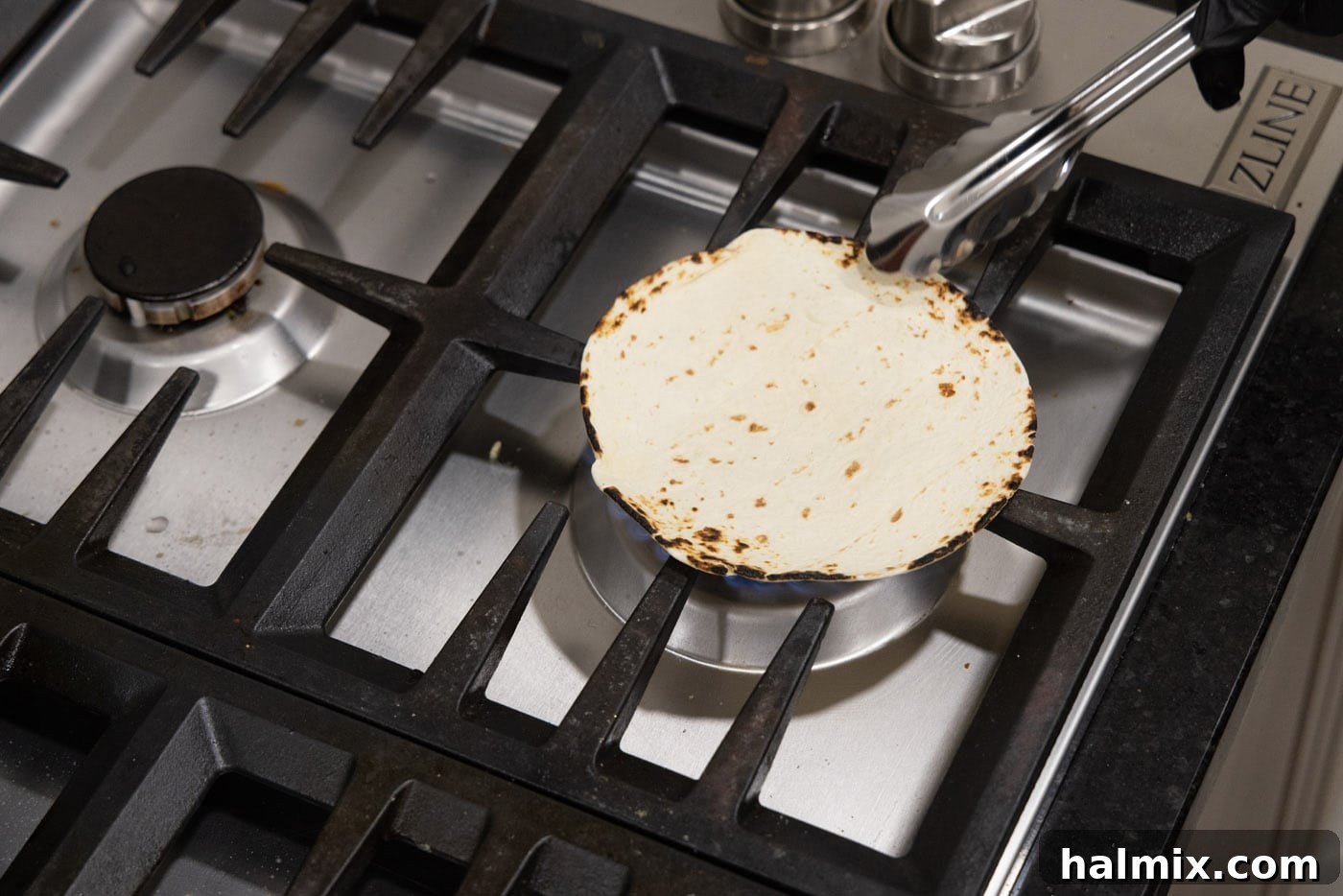
Warm the Tortillas: This step requires an open flame for best results, but a dry skillet works too. CAUTION: Using an open flame demands constant attention. If you prefer, you can also heat the tortillas in a dry skillet until warm and pliable. The flame method, however, imparts beautiful char marks and a subtle smoky flavor that enhances the authentic fajita experience.
To toast over an open flame, use tongs to hold and turn tortillas directly over your stove burner. Each side only needs about 5-10 seconds on the burner. Do not leave the tortillas unattended, as they can burn quickly. You want them just warmed through and slightly pliable with a few darkened spots.
Corn tortillas getting perfectly charred over an open flame.
Frequently Asked Questions & Expert Tips for Perfect Fajitas
Flank steak is widely considered the top choice for fajitas due to its robust flavor, lean nature, and ideal texture when sliced correctly. It absorbs marinades wonderfully, resulting in tender, flavorful strips. Skirt steak is another excellent option, offering an even richer beefy flavor. While skirt steak is slightly tougher than flank, its thinness makes it quick-cooking and tender when sliced against the grain and not overcooked. Both cuts are fantastic for soaking up marinades, which is crucial for tenderizing and infusing maximum flavor.
Absolutely! While steak is traditional, you can easily adapt this recipe for chicken fajitas (using chicken breast or thighs), shrimp fajitas, or even pork. The key is to use a similar marinade and adjust cooking times according to the type and thickness of the protein to ensure it’s cooked through but remains juicy.
There are two main secrets: First, a good marinade. The acidic components (like lime juice) break down tough fibers, while enzymes in ingredients like papaya or pineapple (if used) can further tenderize. Second, slicing the meat thinly against the grain. This shortens the muscle fibers, making each bite less chewy. Finally, don’t overcook it! Fajita steak cooks very quickly over high heat, so sear it briefly until just done to maintain juiciness.
To maintain optimal freshness and prevent sogginess, always store the leftover beef and cooked vegetables separately from the tortillas. Place the cooled fajita filling in an airtight container and keep it in the refrigerator for 3-4 days. This ensures your tortillas remain fresh for serving, and your filling doesn’t become mushy.
To reheat, gently warm the beef and vegetables in a skillet over medium-low heat. Stir occasionally until heated through, which should only take a few minutes. Alternatively, you can reheat them in an oven at 250°F (120°C) for about 10 minutes. The critical point is to avoid high temperatures, which can quickly overcook the beef, turning it tough and chewy. Low and slow is the best approach for succulent reheated fajitas.
Yes, you can freeze the leftover fajita filling (beef and vegetables), separate from the tortillas, for up to 3 months. Allow the cooked beef and veggies to cool completely before transferring them to a sealed freezer bag or an airtight freezer-safe container. When you’re ready to enjoy them, thaw the filling overnight in the refrigerator and then reheat on the stovetop as described above.
A cast iron skillet is highly recommended for fajitas. Its ability to retain and distribute heat evenly is crucial for achieving that authentic “sizzle” and a perfect sear on both the meat and vegetables. If you don’t have cast iron, a heavy-bottomed stainless steel skillet can also work, but you may need to adjust cooking times slightly.
Elevate Your Fajita Experience: Creative Serving Suggestions
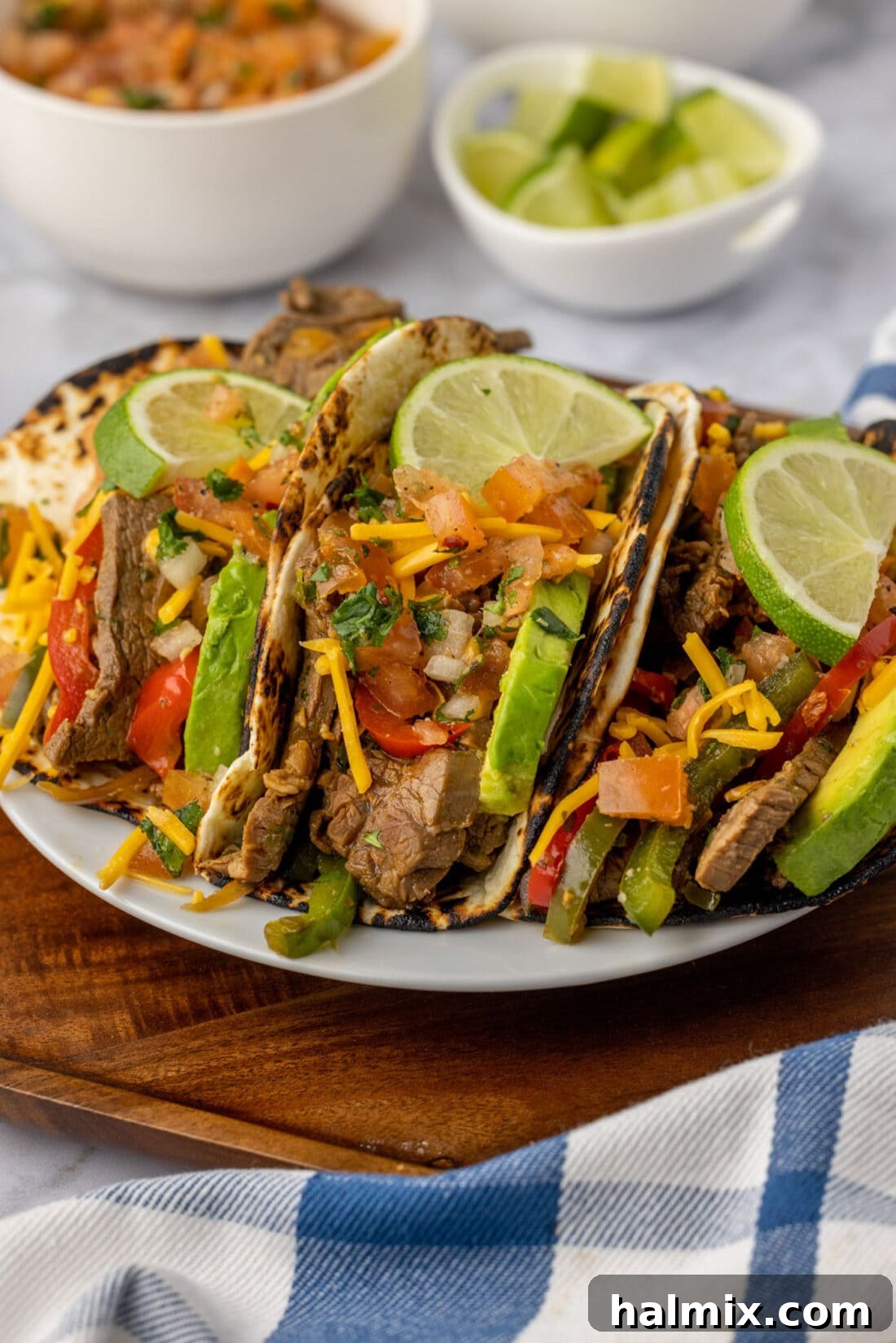
The beauty of steak fajitas lies in their versatility and the joy of customization. While the sizzling meat and vegetables are the stars, the accompaniments truly complete the experience. Here are some fantastic serving suggestions to make your fajita feast unforgettable:
- Classic Toppings:
- Sour Cream or Mexican Crema: A dollop of cool, creamy sour cream or its milder Mexican counterpart provides a delightful contrast to the warm, spicy fajita filling.
- Salsa Fresca (Pico de Gallo): A vibrant mix of diced fresh tomatoes, onions, cilantro, and jalapeños, salsa fresca adds a burst of fresh flavor and texture.
- Salsa Verde (Green Salsa): Tangy and often spicier, salsa verde offers a different flavor dimension, typically made with tomatillos.
- Shredded Cheese: A sprinkle of shredded Monterey Jack, cheddar, or a Mexican blend cheese adds a savory, melty goodness that perfectly complements the hot filling.
- Guacamole or Sliced Avocados: Creamy, rich guacamole or simple slices of fresh avocado provide a cooling element and healthy fats. Don’t forget lime wedges to squeeze over everything for an extra zesty kick!
- Hearty Side Dishes:
- Classic Spanish Rice: A flavorful and filling side, Spanish rice (also known as Mexican rice) is the perfect accompaniment to soak up all the delicious juices.
- Refried Beans: Creamy, savory refried beans are a staple side dish that adds a comforting and authentic touch to your meal.
- Black Beans: For a lighter, healthier option, a side of seasoned black beans can be a fantastic choice.
- Creative Alternatives:
- Lettuce Wraps: If you’re looking for a low-carb option, skip the tortillas entirely and wrap the delicious beef and veggie filling into crisp lettuce leaves (such as butter lettuce or romaine hearts).
- Fajita Bowls: For a deconstructed fajita experience, toss the steak and vegetable mixture into a bowl with a base of rice, quinoa, or even cauliflower rice. Add your favorite toppings for a wholesome and satisfying meal.
- Fajita Salad: Transform your fajitas into a vibrant salad by serving the warm steak and veggies over a bed of mixed greens, topped with a zesty vinaigrette and your preferred fajita toppings.
No matter how you choose to serve them, these sizzling steak fajitas are sure to be a hit!
Discover More Delicious Tex-Mex Recipes
If you loved these steak fajitas, you’re in for a treat! Explore more of our flavorful Tex-Mex and Mexican-inspired dishes that are perfect for any occasion:
- Carne Asada: Perfectly grilled, marinated steak that’s ideal for tacos, burritos, or simply enjoyed on its own.
- Shrimp Fajitas: A lighter, equally delicious alternative to steak, featuring succulent shrimp tossed with colorful peppers and onions.
- Chimichangas: Deep-fried burritos filled with savory ingredients, offering a crispy exterior and a wonderfully soft interior.
- Chicken Fajita Salad: All the amazing flavors of fajitas transformed into a fresh and satisfying salad.
- Chicken Fajitas: Another classic, featuring tender marinated chicken strips expertly cooked with bell peppers and onions.
I love to bake and cook and share my kitchen experience with all of you! Remembering to come back each day can be tough, that’s why I offer a convenient newsletter every time a new recipe posts. Simply subscribe and start receiving your free daily recipes!
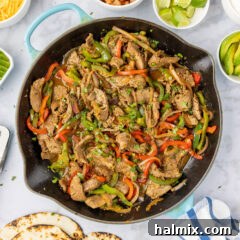
Steak Fajitas
Steak fajitas are a staple Tex-Mex meal served taco style with thinly sliced steak strips loaded with tender-crisp veggies that are stuffed inside an ever-inviting corn tortilla.
IMPORTANT – There are often Frequently Asked Questions within the blog post that you may find helpful. Simply scroll back up to read them!
Print It
Pin It
Rate It
Save It
Ingredients
- 1 pound flank steak
- 1 ½ cups homemade fajita marinade
- 1 large red bell pepper, cut into strips
- 1 large green bell pepper, cut into strips
- ½ large red onion, cut into strips
- 2 Tablespoons olive oil
- 6 corn tortillas or flour, taco size
Things You’ll Need
- Large cast iron skillet
- Vinyl gloves
Before You Begin (Expert Tips & Reminders)
- Slicing Steak for Tenderness: Always cut the flank steak thinly against the grain. Slicing against (perpendicular to) the muscle fibers ensures the meat is much more tender and easier to chew, preventing a tough texture.
- Choosing Your Cut: Flank steak is a popular and excellent choice for fajitas. Skirt steak is another great option, though it can be slightly tougher than flank. If using skirt steak, consider cooking it for a slightly shorter duration to prevent it from becoming overly fibrous. Both cuts are lean and absorb marinades exceptionally well, aiding in tenderization.
- Storing Leftovers Smartly: To keep your fajitas delicious, store the cooked beef and vegetables separately from the tortillas in an airtight container in the refrigerator. This method prevents the tortillas from becoming soggy and keeps the filling fresh for 3-4 days.
- Reheating Without Drying: When reheating, gently warm the beef and veggies in a skillet over medium-low heat until just warmed through (a few minutes). Alternatively, you can use a 250°F (120°C) oven for about 10 minutes. Avoid high temperatures, which can quickly overcook the beef and make it tough and chewy.
- Freezing for Future Meals: You can freeze the cooled fajita filling (beef and vegetables, separate from tortillas) for up to 3 months. Place them in a sealed freezer bag or airtight container. Thaw overnight in the refrigerator before reheating on the stovetop.
Instructions
-
Cut flank steak against the grain into thin strips. Place meat into a gallon sized plastic bag and pour in the marinade. Seal the bag and allow to marinate at room temperature for one hour.
-
Cut bell peppers and onion into thin strips.
-
Heat olive oil in a cast iron skillet over medium-high heat until shimmering.
-
Add bell pepper and onion strips and cook, stirring occasionally, until tender crisp, about 2-3 minutes.
-
Move all the vegetables to one side of the pan. Using tongs or your gloved hand, remove beef from marinade and add it to the empty side of the pan. Cook, stirring occasionally for 1-2 minutes. Discard leftover marinade.
TIP – We like our meat to be juicy, so we add the meat to the pan right out of the marinade. If you prefer less pan juices, drain the marinated meat first and gently pat dry with paper towels.
-
Stir vegetables and beef together, cooking for an additional 2-3 minutes. Turn off heat and set pan aside.
-
CAUTION: the next step requires an open flame. If you prefer, you can also heat the tortillas in a dry skillet but the flame gives you those nice char marks.
Toast tortillas over open flame on your stove, turning with tongs. Do not leave the tortillas alone and they will need to be turned fairly quickly.
-
Each side only needs about 5-10 seconds on the burner.
Nutrition
Tried this Recipe? Pin it for Later!Follow on Pinterest @AmandasCookin or tag #AmandasCookin!
The recipes on this blog are tested with a conventional gas oven and gas stovetop. It’s important to note that some ovens, especially as they age, can cook and bake inconsistently. Using an inexpensive oven thermometer can assure you that your oven is truly heating to the proper temperature. If you use a toaster oven or countertop oven, please keep in mind that they may not distribute heat the same as a conventional full sized oven and you may need to adjust your cooking/baking times. In the case of recipes made with a pressure cooker, air fryer, slow cooker, or other appliance, a link to the appliances we use is listed within each respective recipe. For baking recipes where measurements are given by weight, please note that results may not be the same if cups are used instead, and we can’t guarantee success with that method.