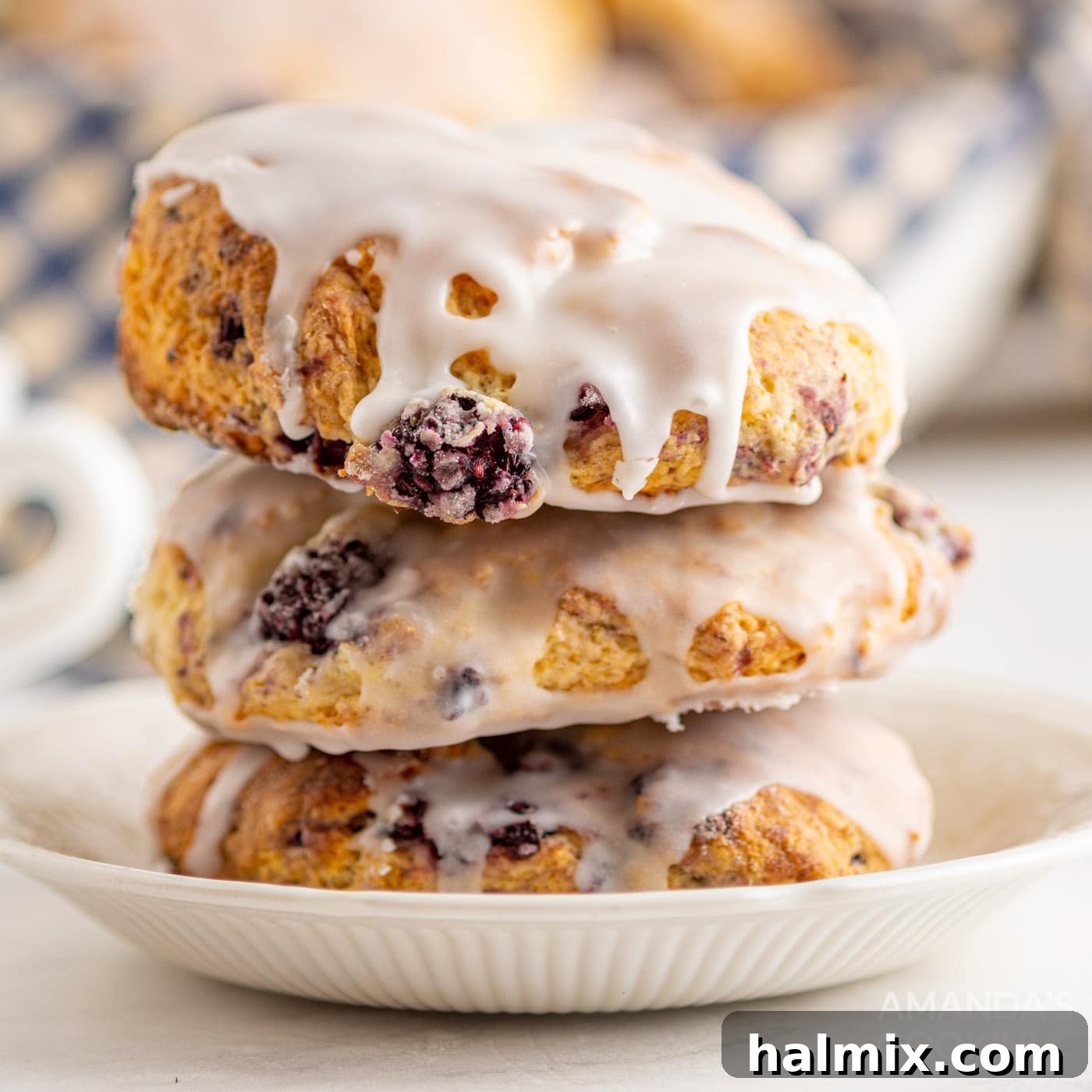
There’s nothing quite like the comforting aroma of freshly baked goods wafting through your kitchen, and these homemade blackberry scones are no exception. Imagine biting into a pastry that is wonderfully soft and sweet on the inside, punctuated by bursts of tart, juicy blackberries. The exterior offers a delightful contrast, with a lightly crispy texture crowned by a smooth, delicate glaze that adds a touch of elegant sweetness. This recipe promises a perfect balance of flavors and textures, making it an irresistible treat for any occasion.
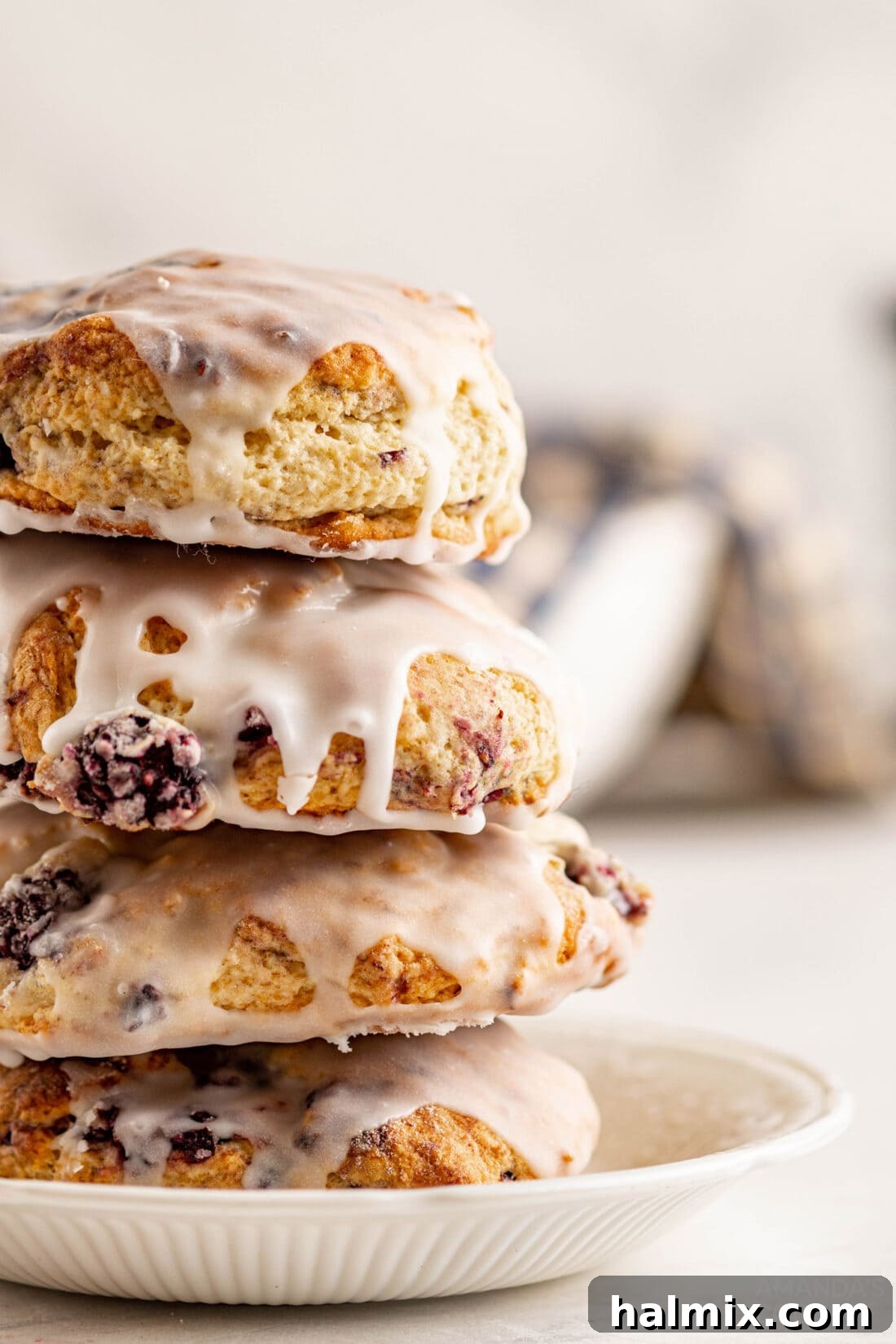
Why This Recipe Works: The Secret to Perfect Blackberry Scones
This blackberry scone recipe isn’t just another pastry; it’s a testament to simple ingredients coming together to create something truly magical. The success of these scones lies in the harmonious blend of juicy, plump blackberries, a rich and buttery soft dough, and a lightly sweet glaze that brings all the flavors into perfect symphony. They are incredibly versatile, making them an ideal choice for a leisurely afternoon tea, a festive brunch spread, or simply a delightful breakfast to kickstart your day.
Blackberries are a standout ingredient in baked goods for a very specific reason: their delightful tartness. This inherent tang beautifully cuts through the sweetness of the pastry, creating a balanced flavor profile that is both refreshing and indulgent. This quality makes them a favorite for many breakfast and brunch creations, adding depth and brightness to every bite. Beyond these luscious scones, consider incorporating blackberries into other delightful recipes such as our braided blackberry breakfast danish or classic desserts like our blackberry pie squares. The robust flavor of blackberries consistently elevates any sweet treat.
Essential Ingredients for Your Blackberry Scones
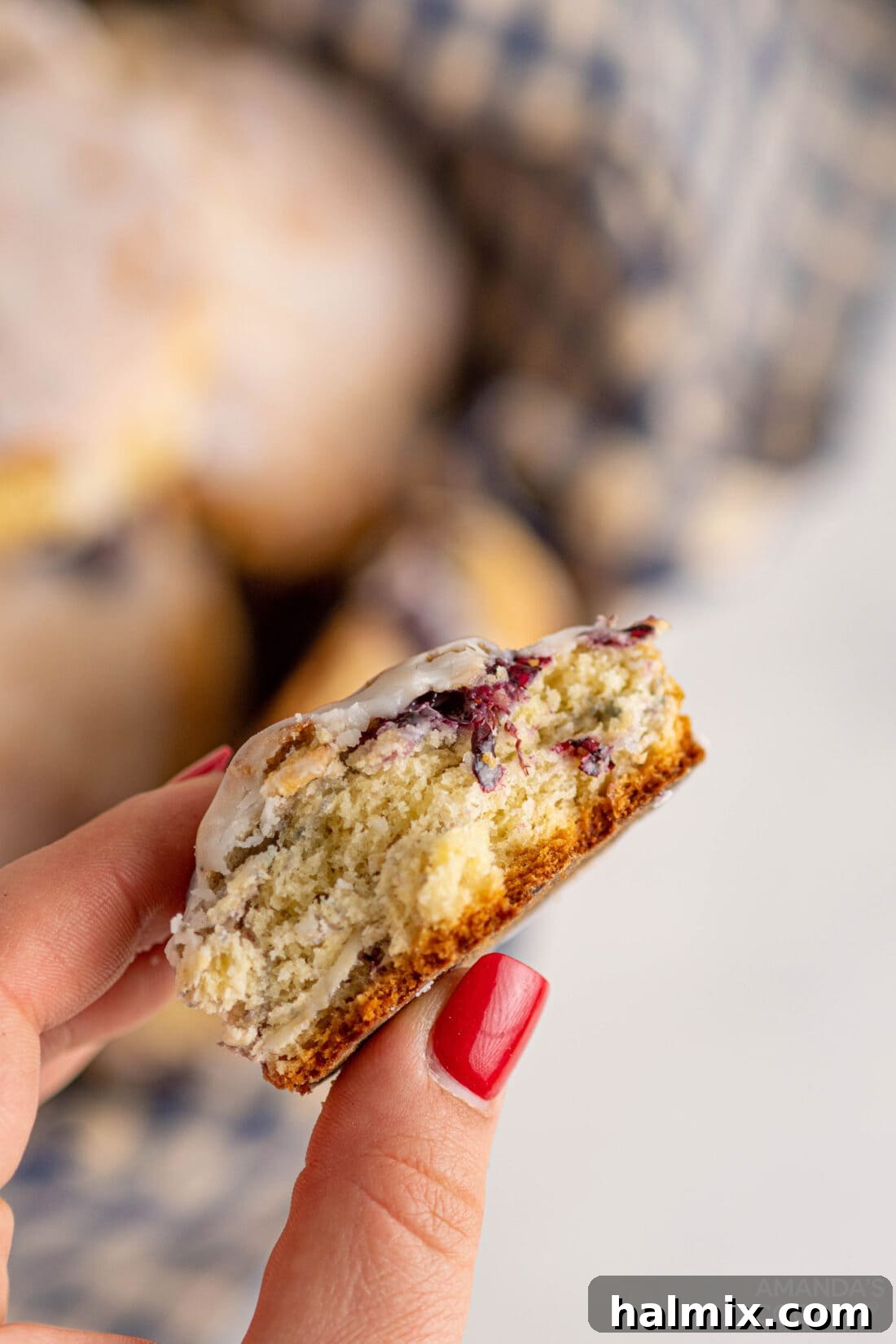
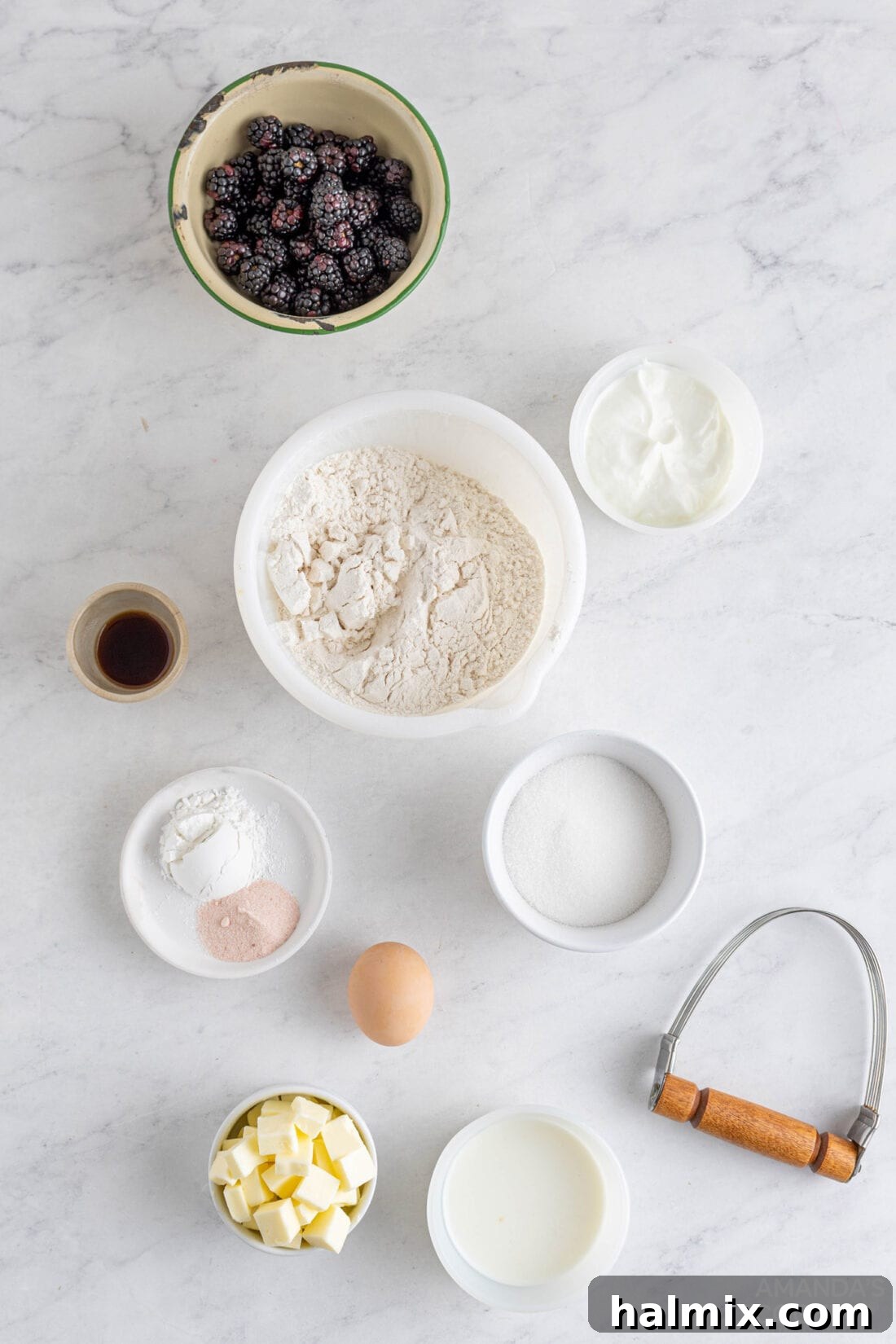
Crafting the perfect blackberry scone begins with selecting quality ingredients. Below is a detailed list of what you’ll need, along with explanations and suggestions to ensure your scones turn out perfectly every time. For exact measurements and a printable version of the recipe, please refer to the recipe card towards the end of this post.
Ingredient Spotlight and Substitution Suggestions
- FLOUR: For these tender scones, we recommend using all-purpose flour. Its moderate protein content provides the ideal structure without making the scones tough. While we haven’t had success with gluten-free flour in this particular recipe, adventurous bakers might experiment with whole wheat flour for a nuttier, heartier scone. Alternatively, for those seeking different textures and flavors, consider sprouted grain or spelt flour, keeping in mind that these alternatives may require slight adjustments to liquid content due to varying absorption rates.
- YOGURT: Plain yogurt adds moisture and a subtle tang that complements the blackberries beautifully. If plain yogurt isn’t available, vanilla yogurt can be used for an extra hint of sweetness and flavor. Sour cream is also an excellent substitute, providing a similar creamy texture and acidic component that reacts with the baking powder to create a light and fluffy crumb.
- BUTTER: The key to flaky, delicious scones lies in using cold butter. When cold butter is cut into the dry ingredients, it creates small pockets of butter throughout the dough. As the scones bake in the hot oven, these butter pieces melt, releasing steam that pushes up the layers of dough, resulting in that signature light and flaky texture. Always cube your butter and keep it chilled until you’re ready to incorporate it into the flour mixture.
- BLACKBERRIES: Fresh blackberries are highly recommended for their vibrant flavor and texture. Frozen blackberries can be used, but do not thaw them beforehand. Adding them frozen helps prevent the dough from turning purple and keeps the berries intact. Gently toss frozen berries with a tablespoon of flour before adding to the dough to help prevent them from sinking to the bottom.
How to Master Homemade Blackberry Scones
These step-by-step photos and detailed instructions are designed to help you visualize the process of making these delightful scones. For a printer-friendly version complete with precise measurements and instructions, scroll down to the full recipe card at the bottom of this page.
- Prepare Your Baking Environment: Begin by preheating your oven to 400°F (200°C). This ensures the oven is at the correct temperature for immediate baking, promoting an even rise. Lightly grease a baking sheet or line it with parchment paper to prevent sticking, and set it aside.
- Combine Dry Ingredients: In a large mixing bowl, whisk together the all-purpose flour, granulated sugar, baking powder, and salt. Whisking ensures these ingredients are evenly distributed, which is crucial for uniform leavening and flavor throughout your scones.
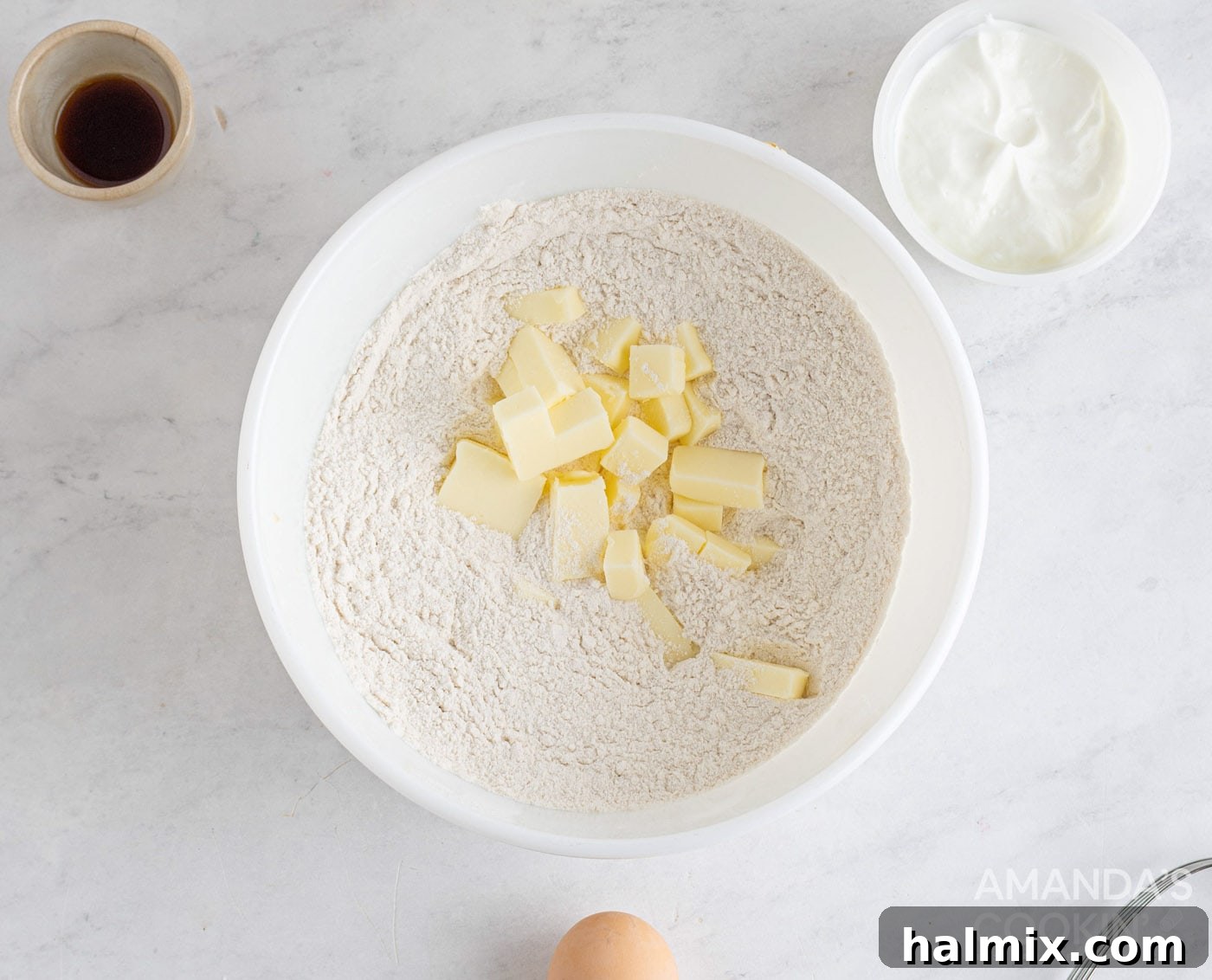
- Incorporate Cold Butter: Using a pastry cutter, two forks, or even your fingertips (working quickly to prevent the butter from warming), cut the cold, cubed butter into the dry mixture. Continue until the mixture resembles coarse crumbs, with some pea-sized pieces of butter remaining. These pockets of butter are essential for creating flaky layers.

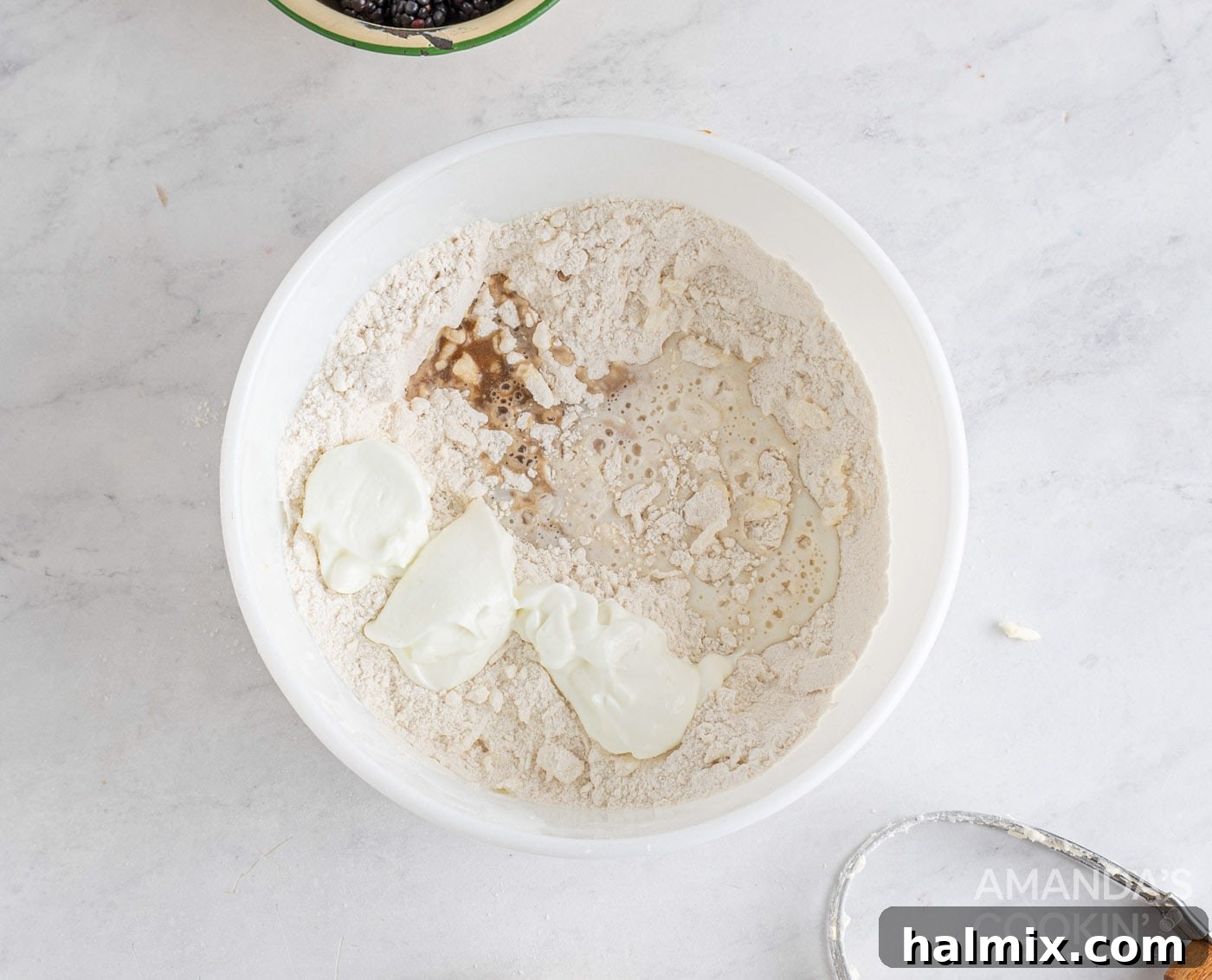
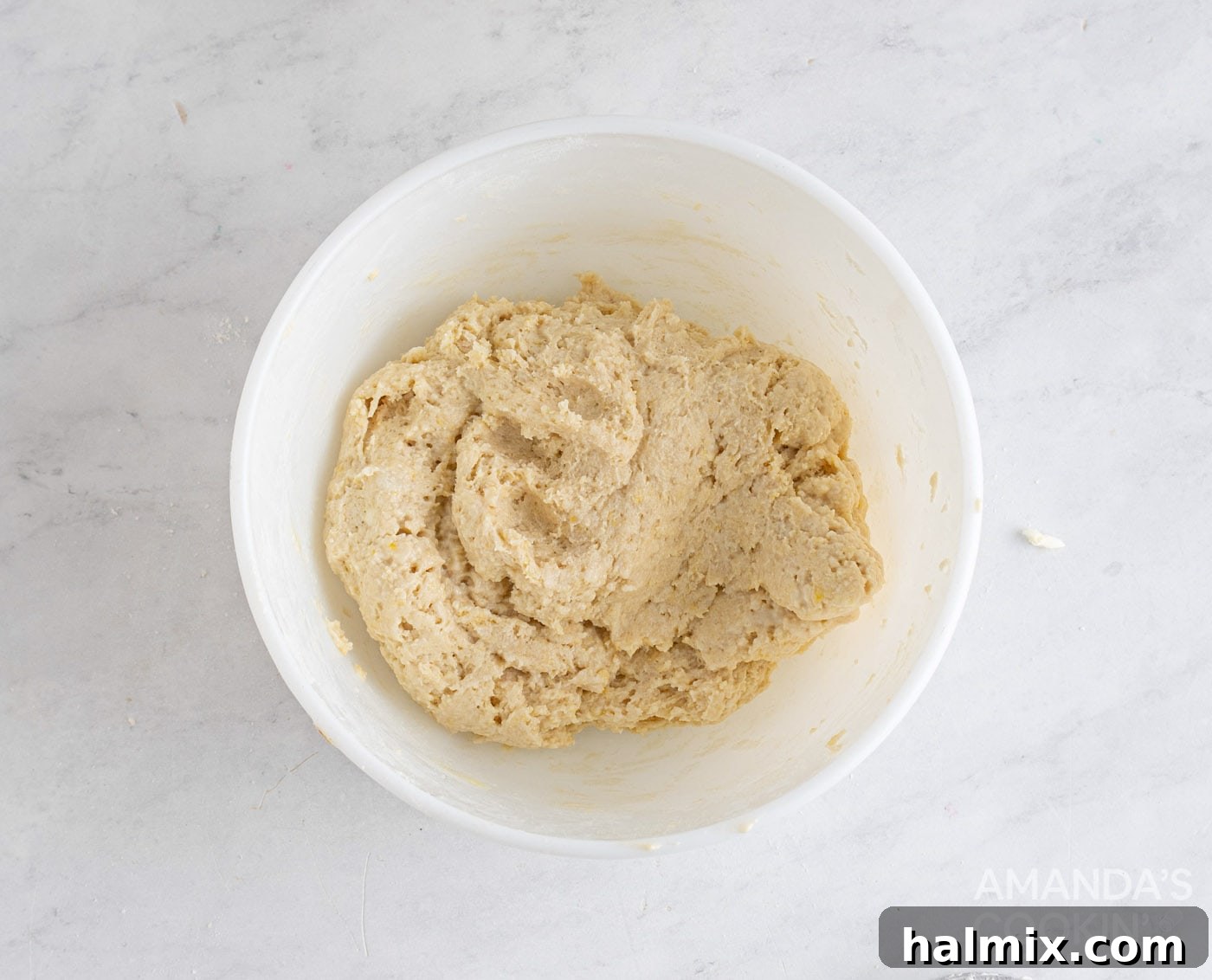
Cutting cold butter into the dry flour mixture until it becomes crumbly. - Add Wet Ingredients & Form Dough: Pour in the cold buttermilk, plain yogurt, and vanilla extract. Gently mix these ingredients with a spatula or your hands until a shaggy dough begins to form. Then, crack in the egg and continue to work the mixture until the dough just comes together. Be careful not to overmix, as this can lead to tough scones. The dough should still be slightly sticky and cohesive.
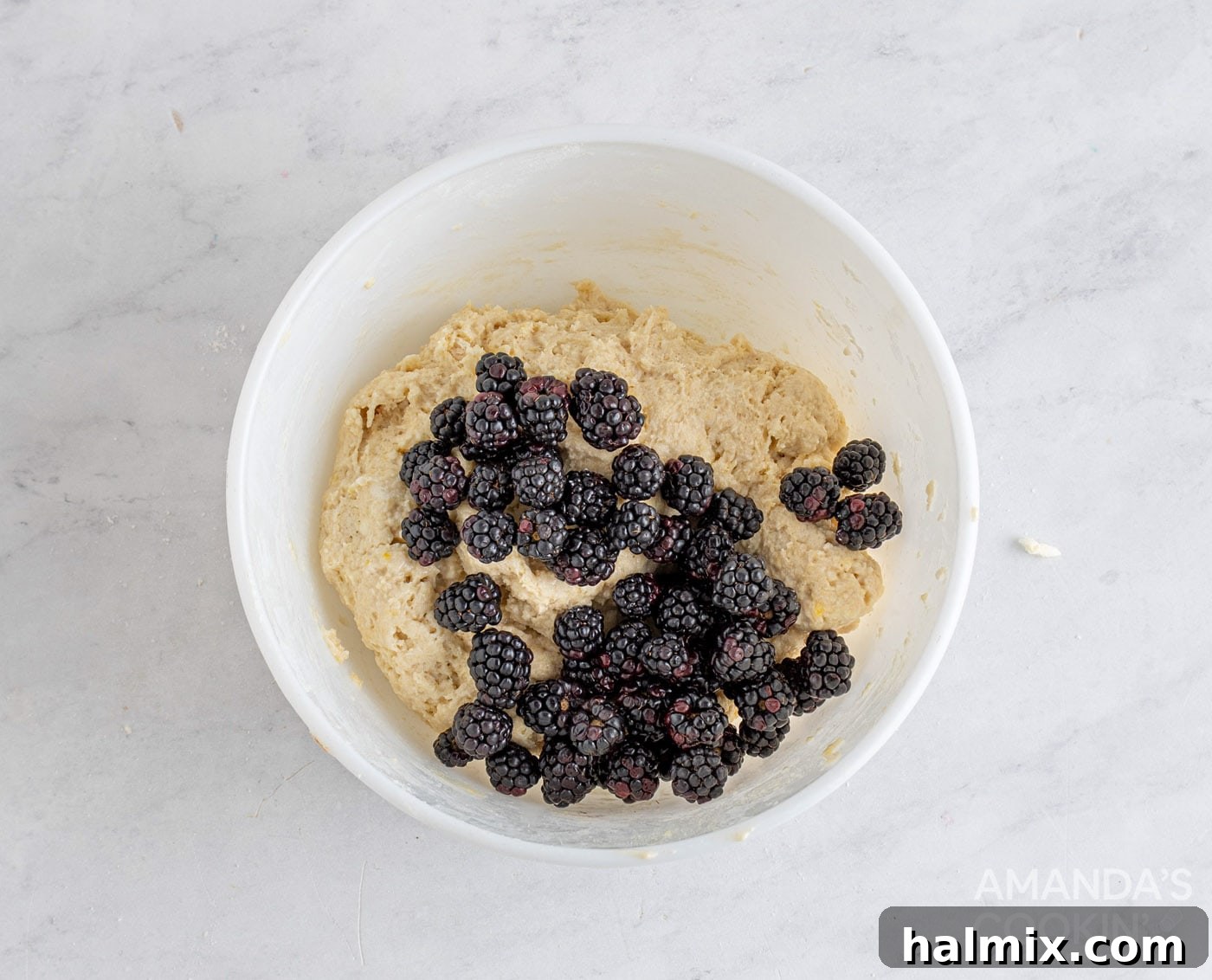
Adding buttermilk, yogurt, and vanilla to the crumbly mixture. Gently mixing the egg into the developing scone dough. - Fold in Blackberries: Carefully fold in the fresh blackberries. Do this with a light hand to avoid crushing the berries and coloring the dough too much. The goal is to distribute them evenly throughout the dough.
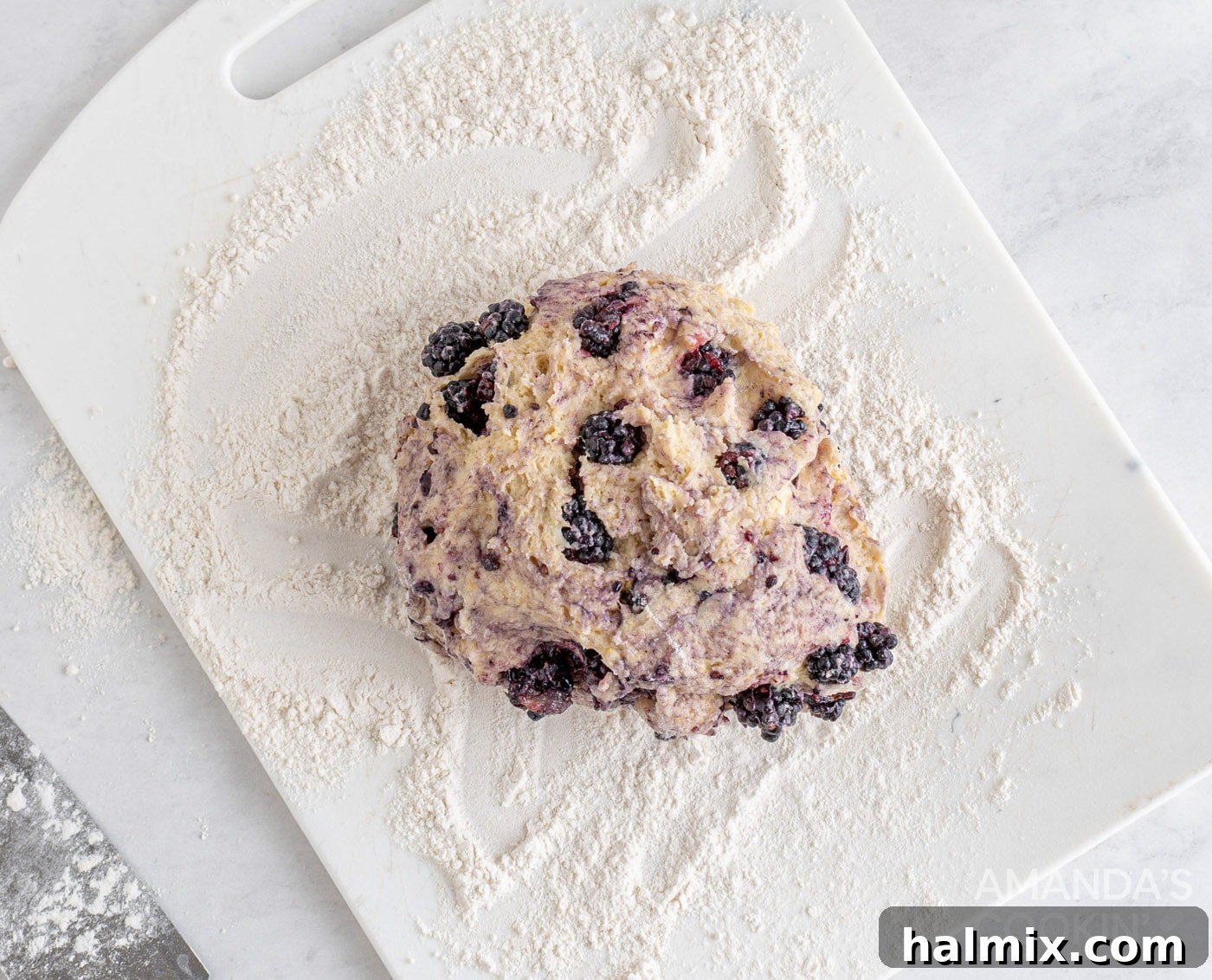
Gently folding fresh blackberries into the scone dough. - Shape the Dough: Turn the scone dough out onto a lightly floured surface. Using your hands, gently pat and press the dough into a disc approximately ½ inch thick. Avoid rolling or kneading excessively, as this develops gluten and can make your scones tough.
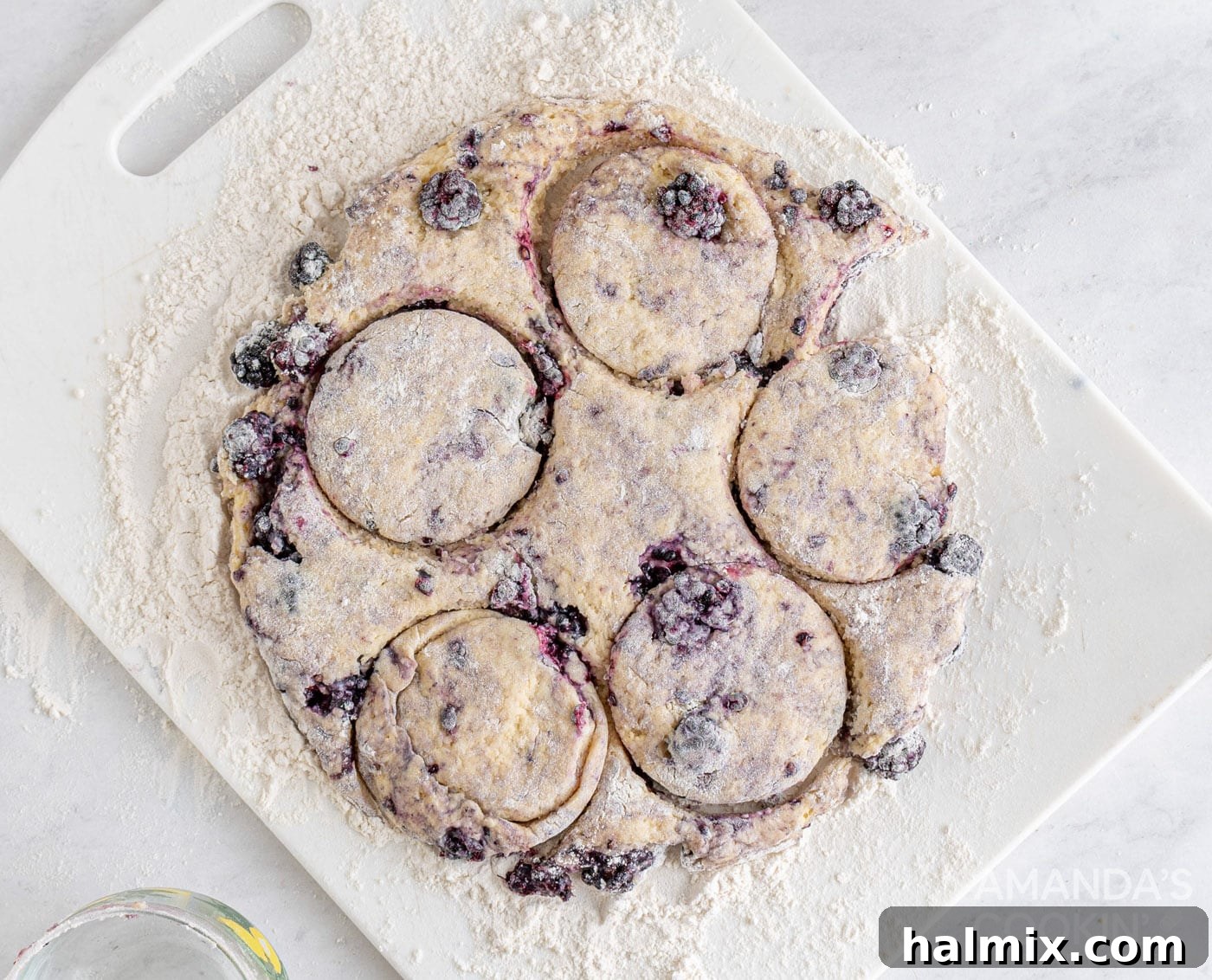
Scone dough shaped into a uniform disc on a floured surface. - Cut Out Scones: Dip a biscuit cutter (or a glass with a sharp rim) into flour to prevent sticking. Cut out as many scones as possible from the disc. Place the cut scones onto your prepared baking sheet, leaving a little space between each. Gather the remaining dough, gently press it back into a disc, and cut out more scones. Repeat this process until all the dough has been used.
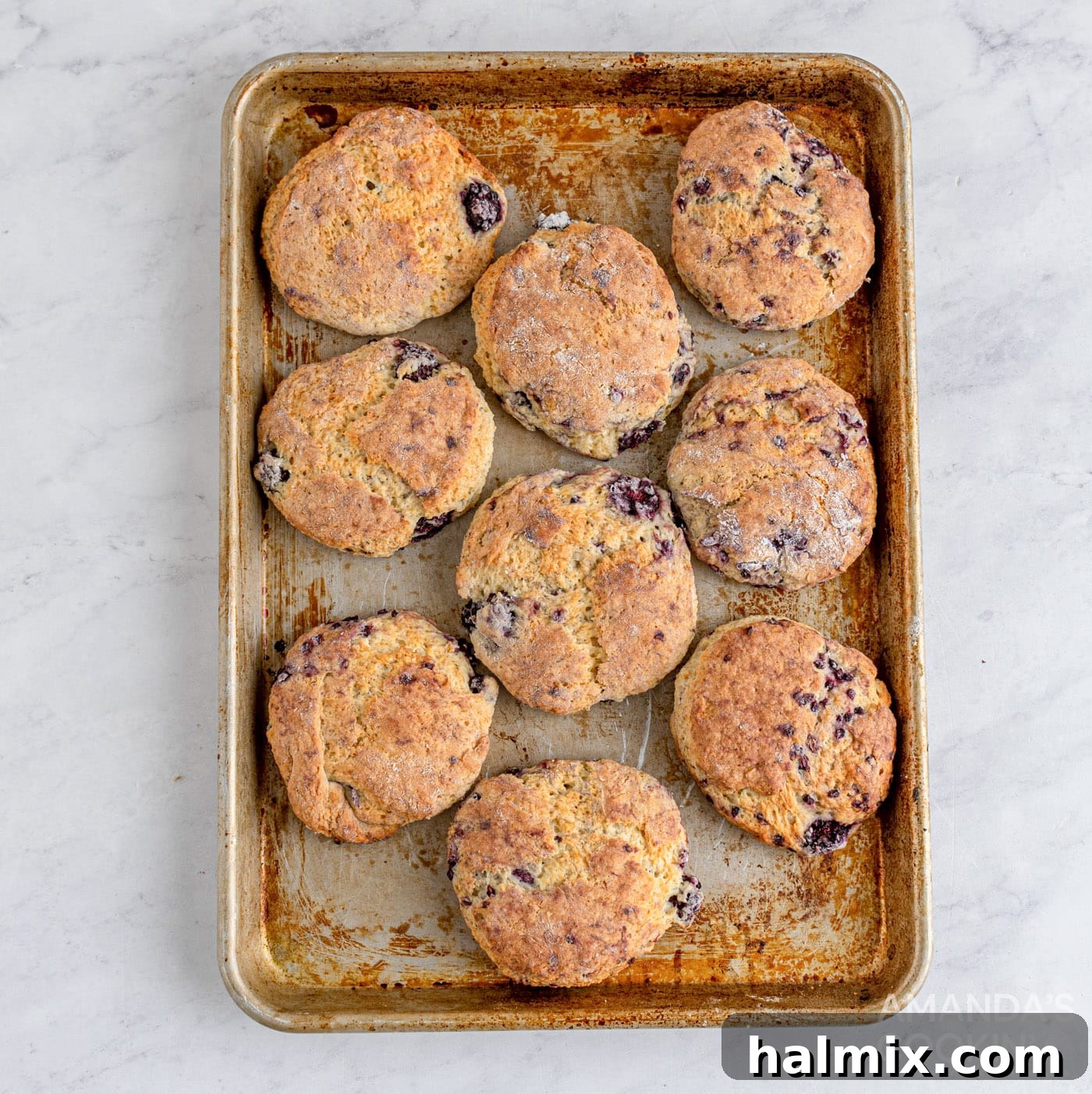
Using a biscuit cutter to create perfectly shaped scones. - Bake to Golden Perfection: Place the baking sheet into the preheated oven and bake for 30-35 minutes. The scones are ready when their edges are golden brown and they are baked through. A toothpick inserted into the center should come out clean. Remove them from the oven and immediately transfer them to a cooling rack to cool completely before glazing.
Freshly baked blackberry scones, golden and inviting, cooling on a rack. - Prepare the Sweet Glaze: While the scones are cooling, prepare the simple yet delightful glaze. In a small bowl, whisk together the powdered sugar and milk until a smooth, pourable glaze has formed. Adjust the consistency by adding more milk a tiny bit at a time for a thinner glaze, or more powdered sugar for a thicker one.
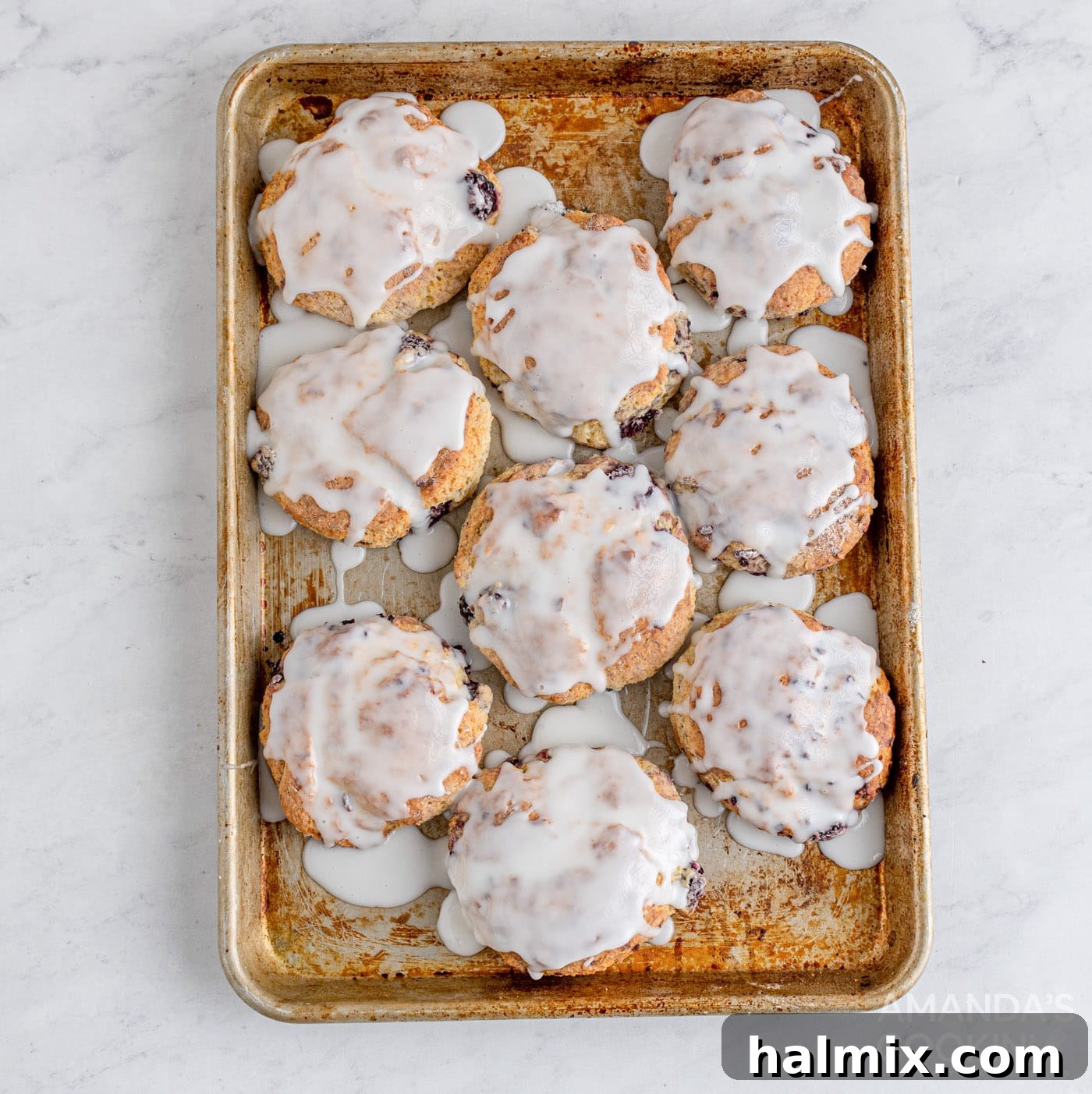
Applying the finishing touch: a smooth, sweet glaze over the cooled scones. - Glaze and Serve: Once the scones have cooled completely, spoon or drizzle the prepared glaze generously over each one. Allow the glaze to set for a few minutes before serving. Enjoy these scrumptious homemade blackberry scones with your favorite hot beverage!
Frequently Asked Questions & Expert Baking Tips for Scones
To maintain their freshness and tender texture, store your baked blackberry scones in an airtight container or a Ziploc bag. They will keep well at room temperature for 2-3 days. For extended freshness, especially in warmer climates, you can refrigerate them for up to 5 days. Reheating them gently in the oven or microwave can restore some of their initial warmth and softness.
Absolutely! Scones are excellent for making ahead. You can freeze them unbaked: simply arrange the cut scone rounds on a baking sheet and freeze until solid. Once frozen, transfer them to a Ziploc freezer bag or an airtight container, and they will keep for up to 3 weeks. When you’re ready to bake, remove them from the freezer, let them thaw for about 20 minutes (they don’t need to be fully thawed), and then bake as directed. You can also freeze baked scones. Allow them to cool completely, then wrap them individually in plastic wrap and place them in a freezer bag. Thaw at room temperature or gently reheat in the oven.
Yes, this scone dough is remarkably versatile and serves as a fantastic base for all sorts of berry-flavored scones! Feel free to substitute blueberries, strawberries (chopped if large), or raspberries in place of blackberries. Each berry will lend its unique flavor profile, allowing you to customize your scones to your liking. For best results, use fresh berries, or add frozen berries directly to the dough without thawing.
For even flakier scones, incorporate an extra step: after combining the wet and dry ingredients but before adding the blackberries, turn the dough out onto a lightly floured surface. Gently press it into a rough rectangle, sprinkle with a little flour, and fold it over itself (like folding a letter). Rotate the dough 90 degrees and repeat this process one or two more times. This layering technique, similar to puff pastry, creates more distinct layers and results in an incredibly flaky texture. Just remember to work quickly and handle the dough minimally to keep it cold.
Achieving the perfect glaze consistency is simple. For a thinner glaze that subtly coats the scones, add milk a half teaspoon at a time to the powdered sugar, whisking well after each addition until you reach your desired pourable consistency. You can also apply a thinner glaze while the scones are still slightly warm to help it spread. If you prefer a thicker, more opaque glaze, do the opposite: add milk a tablespoon at a time, whisking thoroughly and pausing to check the consistency before adding more. A thicker glaze is best applied to fully cooled scones to prevent it from running off.
Serving Suggestions and Pairing Ideas
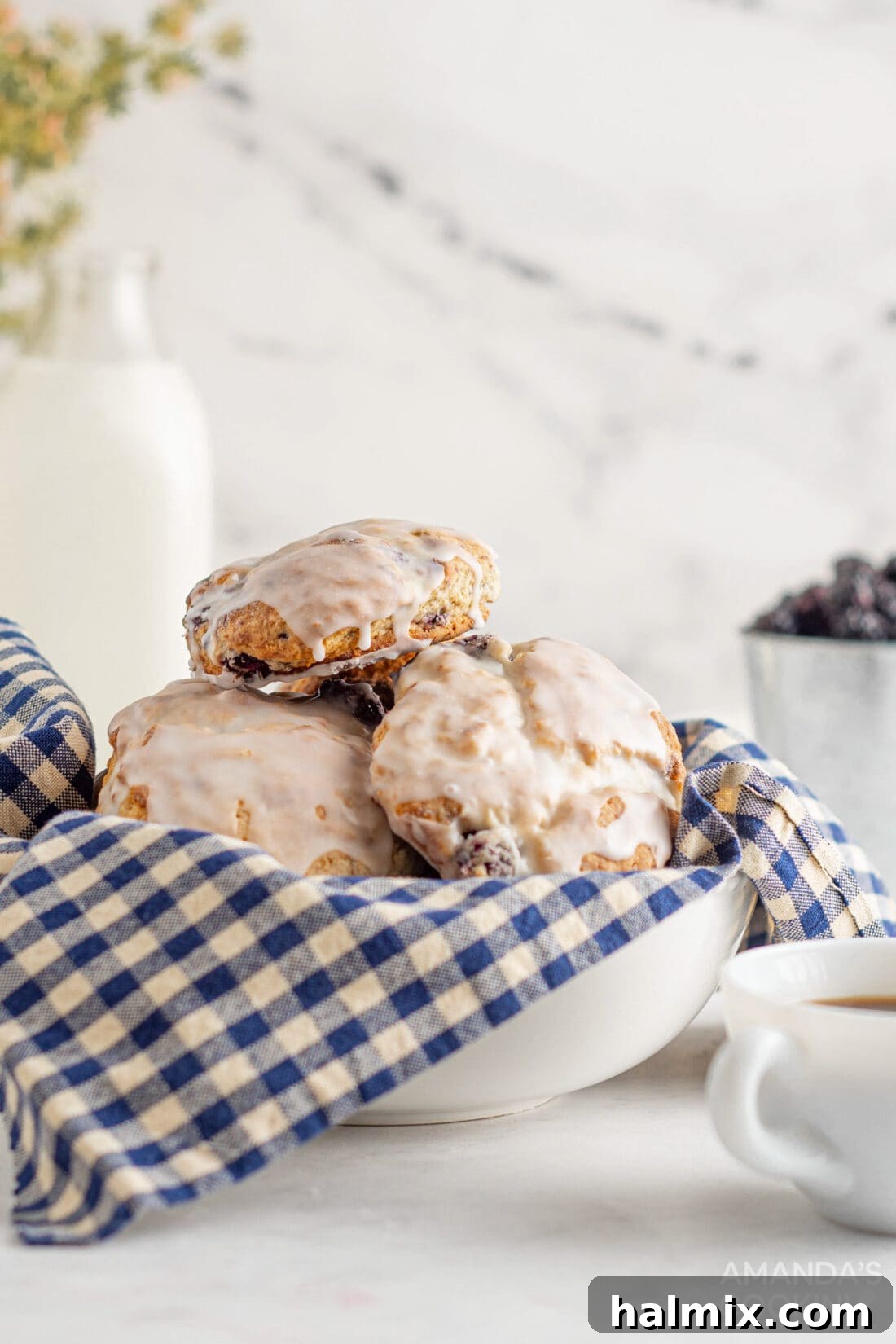
While these blackberry scones are utterly delicious enjoyed as they are, especially with their sweet glaze, don’t hesitate to personalize your serving experience! If you fancy, you can always slather them with an extra dollop of butter for richness or a spoonful of your favorite fruit jam to intensify the berry goodness. However, it’s worth noting that this recipe is crafted with a generous “Americanized” butter-to-sugar ratio, ensuring they are perfectly enjoyable without any additional embellishments. For a simpler finish, you can skip the glaze entirely and opt for a sprinkle of granulated sugar before baking, or even leave them plain for a rustic touch.
Whether you prefer them warm from the oven or at room temperature, these scones are a versatile delight. They pair wonderfully with a steaming cup of coffee, a fragrant herbal tea, or even a glass of cold milk. They’re an excellent snack any time of day, a quick and satisfying on-the-go breakfast, or a lovely addition to a formal breakfast or brunch spread. Consider serving them alongside fresh fruit, scrambled eggs, or a light yogurt parfait for a complete and balanced meal.
More Delightful Pastry Recipes to Explore
If you loved baking these blackberry scones, you’re sure to enjoy these other fantastic pastry recipes:
- Classic Cream Puffs
- Easy 4-Ingredient Blueberry Hand Pies
- Nostalgic Homemade Pop Tarts
- Sweet Cranberry Cream Cheese Pastries
- Traditional Rugelach
- Elegant Braided Breakfast Danish
I am passionate about baking and cooking, and I love sharing my kitchen adventures and recipes with all of you! To make sure you never miss out on a new delicious creation, I offer a convenient newsletter every time a new recipe posts. Simply subscribe and start receiving your free daily recipes directly to your inbox!
Blackberry Scones
Juicy plump blackberries meet a buttery soft dough topped with a lightly sweet glaze in this blackberry scone recipe – a perfect balance of sweet and tart for any occasion.
IMPORTANT – You may find helpful Frequently Asked Questions and expert tips within the blog post. Scroll up to read them!
Ingredients
- 2 ¼ cup all purpose flour
- ½ cup granulated sugar
- 1 Tbsp baking powder
- 1 tsp salt
- ½ cup butter, cold – cubed
- ⅓ cup buttermilk
- ⅓ cup plain yogurt
- 1 tsp vanilla extract
- 1 egg
- 1 cup blackberries, fresh
Glaze
- 2 cup powdered sugar
- 2 ½ Tbsp milk
Equipment You’ll Need
- Biscuit cutters
- Pastry cutter
- Mixing bowls
Instructions
- Preheat the oven to 400°F (200°C). Grease a baking sheet and set aside.
- In a large bowl, whisk together the flour, sugar, baking powder, and salt. Using a pastry cutter or two forks, cut in the cold butter until the mixture is crumbly.
- Add in the buttermilk, yogurt, and vanilla extract. Gently mix to form a shaggy dough, then incorporate the egg until just combined. Fold in the fresh blackberries carefully.
- Turn the dough out onto a lightly floured surface and gently press it into a disc approximately ½ inch thick.
- Using a floured biscuit cutter or glass, cut out as many scones as possible. Place scones onto the greased baking sheet. Gently re-gather and press remaining dough into a disc to cut more scones until all dough is used.
- Bake for 30-35 minutes, or until the scones are golden brown around the edges and baked through. Remove from the oven and transfer to a cooling rack.
- While the scones cool, prepare the glaze by whisking powdered sugar and milk together in a small bowl until smooth.
- Once the scones are completely cool, spoon or drizzle glaze onto each one. Allow the glaze to set for a few minutes before serving. Enjoy!
Nutrition
Serving: 1 scone | Calories: 381cal | Carbohydrates: 65g | Protein: 5g | Fat: 12g | Saturated Fat: 7g | Polyunsaturated Fat: 1g | Monounsaturated Fat: 3g | Trans Fat: 1g | Cholesterol: 48mg | Sodium: 373mg | Potassium: 237mg | Fiber: 2g | Sugar: 39g | Vitamin A: 406IU | Vitamin C: 3mg | Calcium: 99mg | Iron: 2mg
Tried this Recipe? Pin it for Later!
Follow on Pinterest @AmandasCookin or tag #AmandasCookin!
The recipes on this blog are tested with a conventional gas oven and gas stovetop. It’s important to note that some ovens, especially as they age, can cook and bake inconsistently. Using an inexpensive oven thermometer can assure you that your oven is truly heating to the proper temperature. If you use a toaster oven or countertop oven, please keep in mind that they may not distribute heat the same as a conventional full-sized oven and you may need to adjust your cooking/baking times. In the case of recipes made with a pressure cooker, air fryer, slow cooker, or other appliance, a link to the appliances we use is listed within each respective recipe. For baking recipes where measurements are given by weight, please note that results may not be the same if cups are used instead, and we can’t guarantee success with that method.