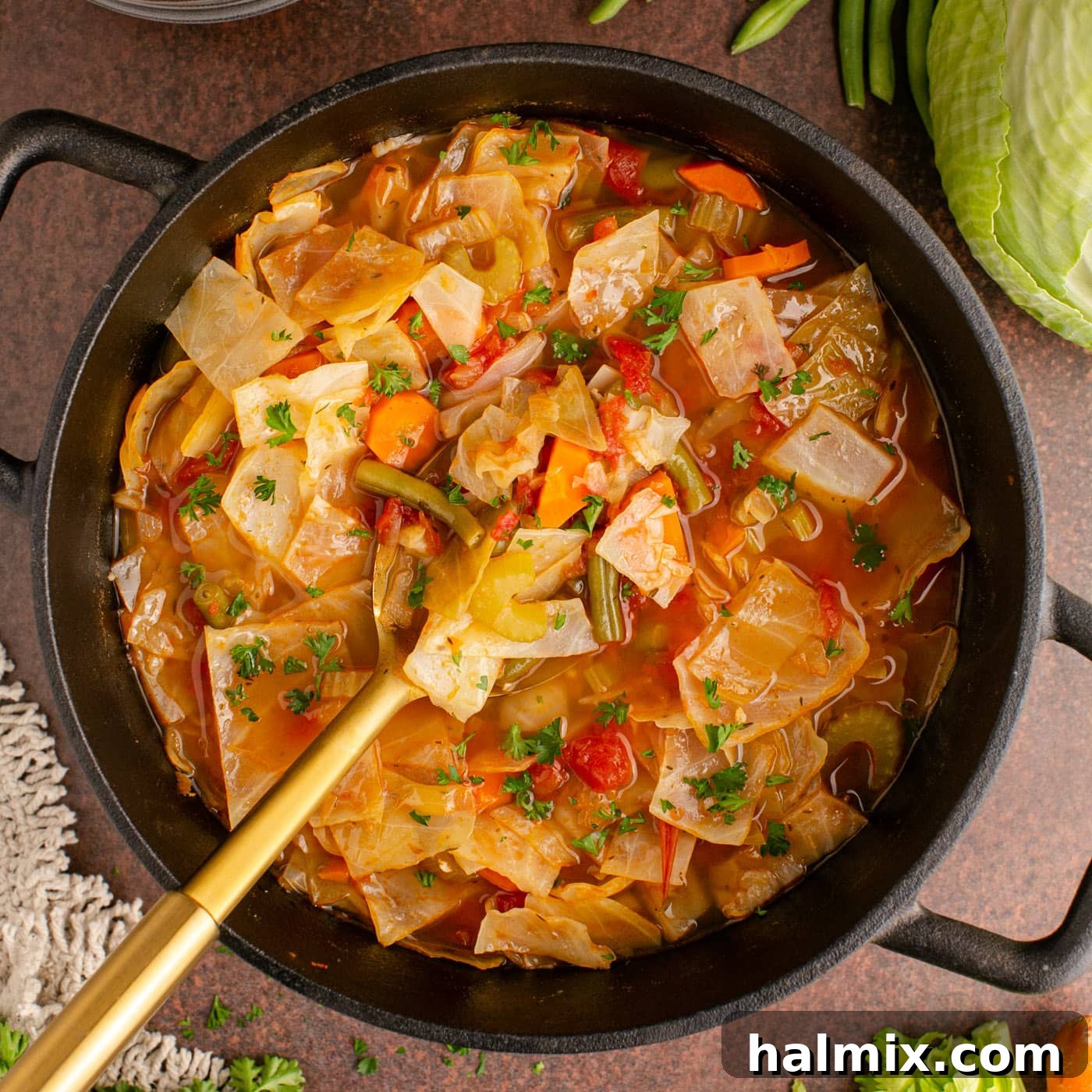
Welcome to the ultimate guide for creating a bowl of nourishing and incredibly flavorful Cabbage Soup that’s both satisfying for the soul and packed with goodness for your body. Every hearty spoonful is brimming with tender, vibrant vegetables, all swimming in a rich, herby tomato broth that’s simply irresistible. This isn’t just a recipe; it’s an invitation to embrace healthy, comforting eating with ease and joy. Whether you’re seeking a light lunch, a wholesome dinner, or a fantastic meal prep option, this easy vegetarian cabbage soup promises to be a staple in your kitchen.
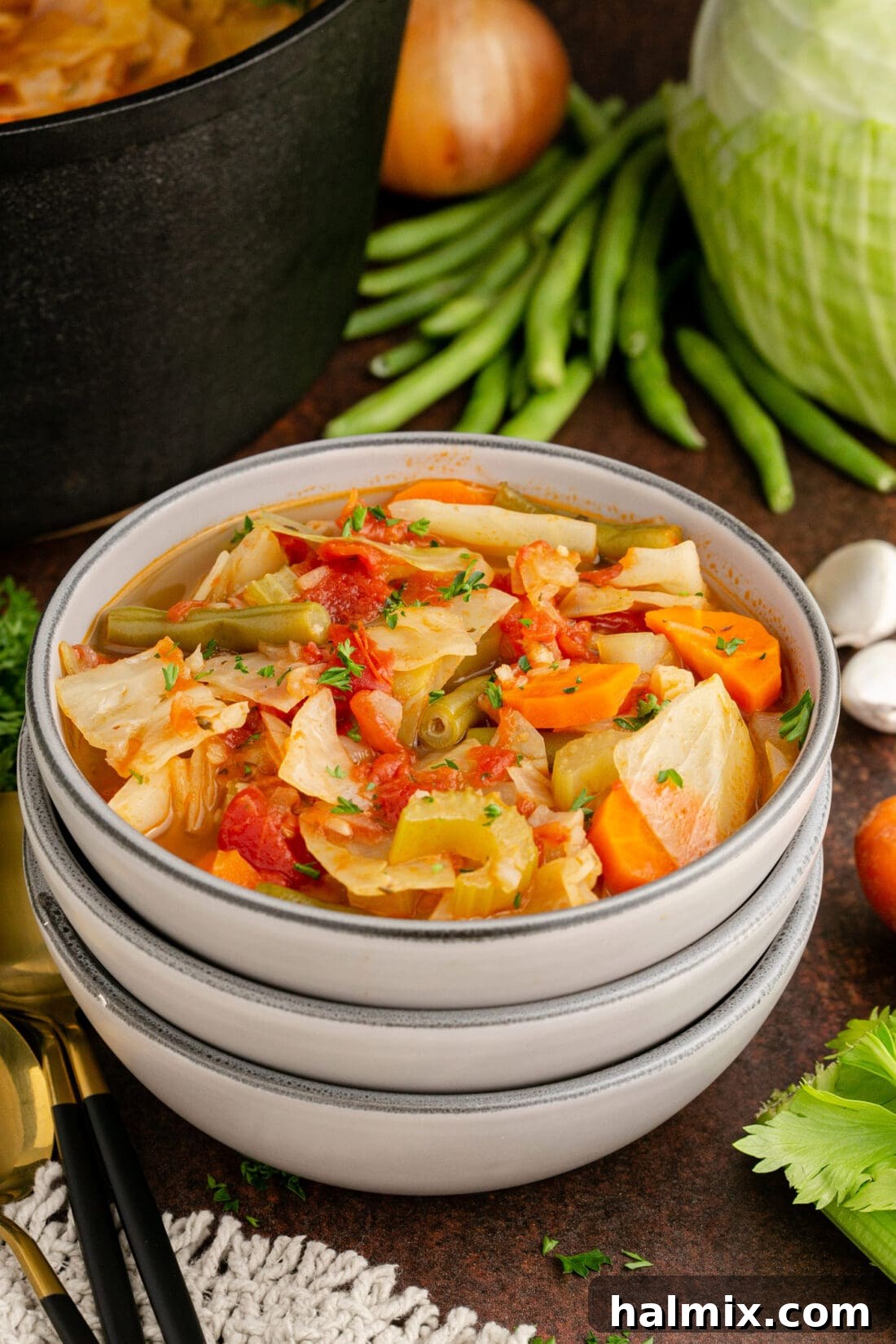
The Ultimate Healthy Cabbage Soup Recipe: Hearty, Flavorful, and Easy
Why This Cabbage Soup Recipe Works for Everyone
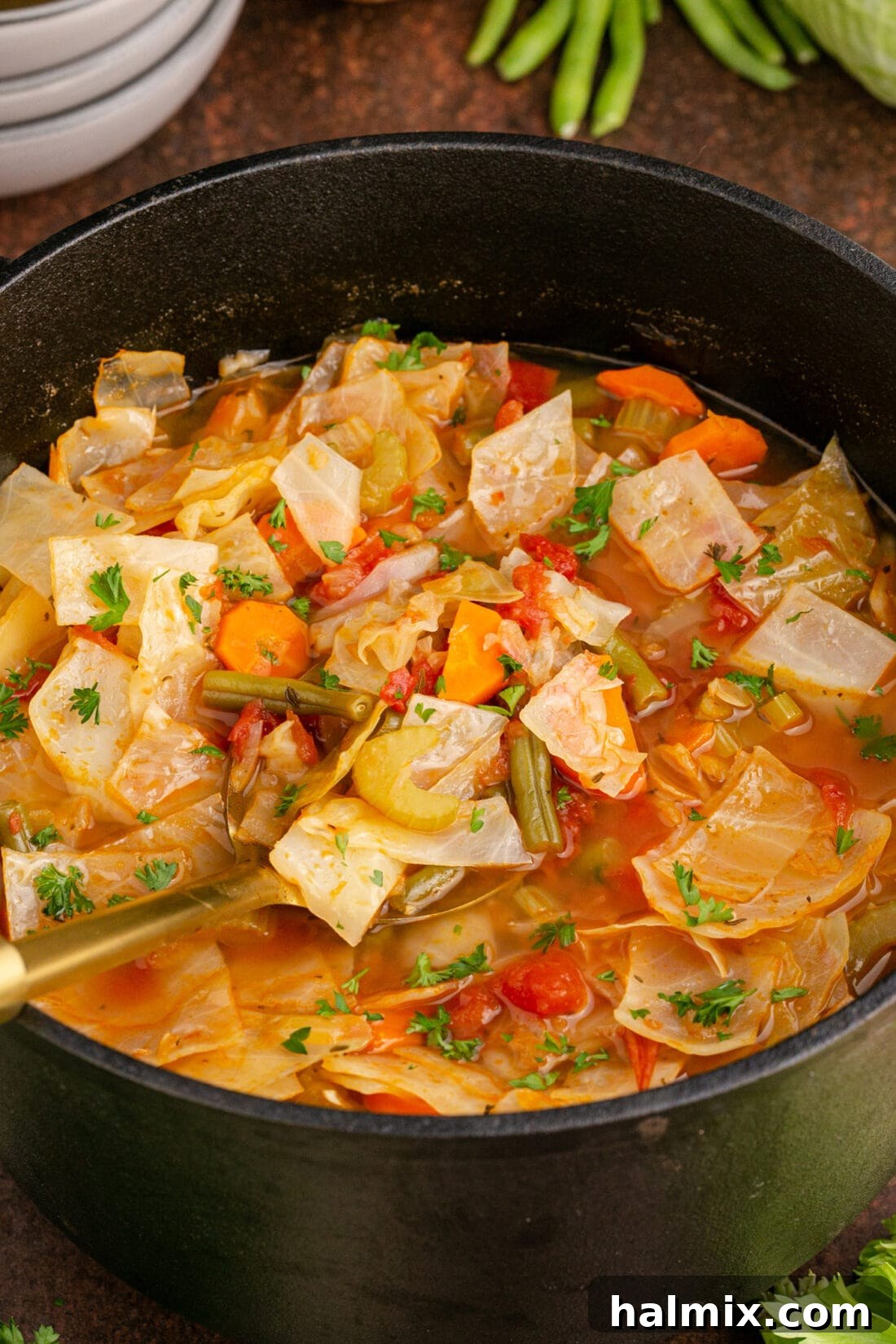
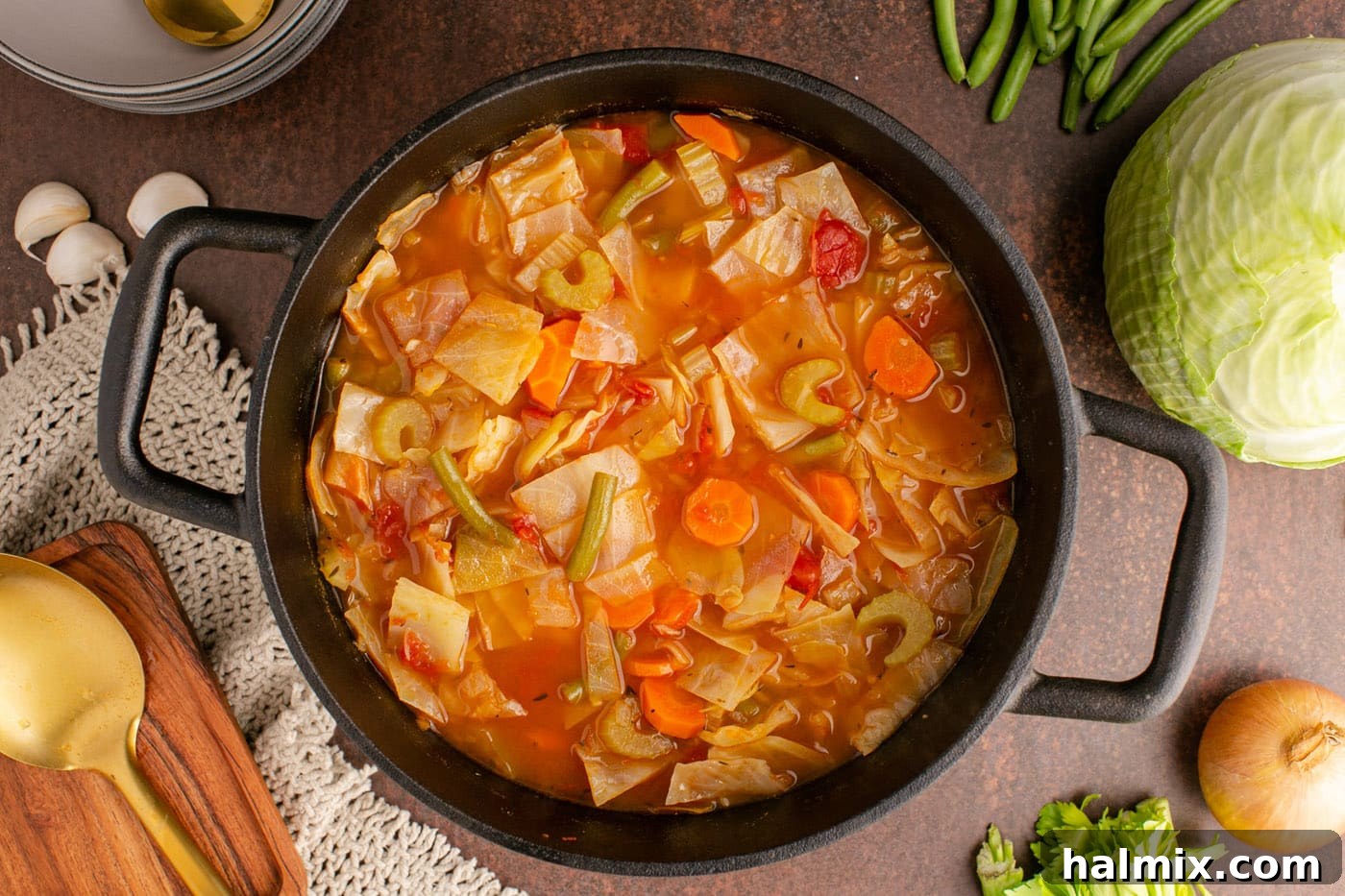
This cabbage soup recipe is more than just a dish; it’s a wholesome experience crafted for convenience and exceptional flavor. It stands out as a healthy, comforting option, generously loaded with tender green cabbage, sweet onion, aromatic garlic, crisp celery, vibrant tomatoes, crunchy carrots, and fresh green beans. Each ingredient plays a crucial role, building a deep, complex flavor base enhanced by a thoughtful sprinkle of dried aromatics. The best part? Everything simmers together in a single pot, making both cooking and cleanup a breeze. This is the perfect recipe to cozy up with, knowing you’re nourishing your body with truly good-for-you ingredients.
Cabbage, often overlooked in the culinary world, is a nutritional powerhouse. It’s an incredibly versatile vegetable, celebrated for its low-calorie content and abundance of vitamins and minerals. In this soup, it becomes wonderfully tender, absorbing all the delicious flavors of the broth. Beyond this fantastic soup, cabbage shines in many other dishes, from our savory cabbage rolls, which make a complete meal, to a simple yet delightful side like fried cabbage. Don’t underestimate this humble veggie; it truly has an immense amount to offer in terms of both health benefits and culinary possibilities, making it a budget-friendly and delicious choice for any meal.
Key Ingredients for Your Perfect Cabbage Soup
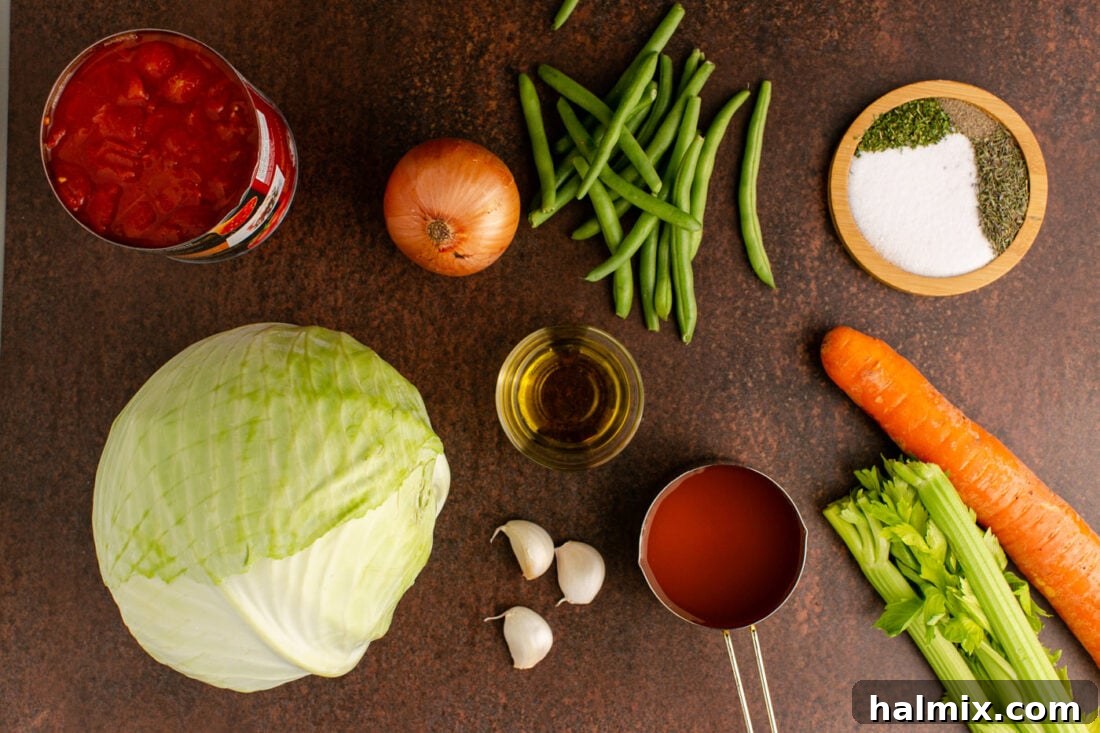
Crafting a delicious cabbage soup begins with selecting fresh, high-quality ingredients. Here’s everything you’ll need to create this comforting and nutritious meal:
For the Soup Base:
- 2 tablespoons extra virgin olive oil: The foundation for sautéing our aromatics.
- 1 large yellow onion: Chopped, approximately 1 1/2 cups, for a sweet and pungent flavor.
- 4 cloves garlic: Minced, about 1 tablespoon, adding essential aroma and depth.
- ½ large head of green cabbage: Chopped, yielding about 9-10 cups, the star of our soup, tender and sweet when cooked.
- 2 ribs celery: Chopped, about 2 cups, contributing a crisp texture and subtle herbaceous note.
- 1 large carrot: Chopped, about 1 1/2 cups, for natural sweetness and a pop of color.
- 1 cup fresh green beans: Cut into 1-inch pieces, adding freshness and a slight crunch.
- 28 ounces diced tomato: One can, providing a rich, tangy base for the broth.
- 6-7 cups low sodium vegetable stock or chicken stock: The liquid base, choose based on dietary preferences.
For Seasoning:
- 2 teaspoons salt: To enhance all the natural flavors. Adjust to taste.
- 1 teaspoon dried thyme: A classic herb that pairs wonderfully with vegetables and tomatoes.
- ½ teaspoon dried parsley: For a fresh, herbaceous undertone.
- ¼ teaspoon ground pepper: For a gentle warmth and spice.
Optional Garnish:
- Fresh parsley: Chopped, for a bright finish and a touch of color.
Deep Dive: Ingredient Information & Substitution Suggestions
Understanding your ingredients and knowing how to make smart substitutions can elevate your cooking and adapt recipes to your pantry or dietary needs. Here’s a closer look at the components of this healthy cabbage soup:
The Mighty Veggies:
Cabbage: While we recommend green cabbage for its tenderness and mild flavor, this soup is incredibly versatile. You can experiment with other varieties like Savoy cabbage (known for its crinkly leaves and delicate flavor) or even Napa cabbage (often used in Asian cuisine, it cooks quickly and has a milder taste). Cabbage is rich in Vitamin C, Vitamin K, and fiber, making this soup a fantastic choice for boosting your immune system and digestive health. Don’t be afraid to add other vegetables from your fridge – zucchini, bell peppers, or spinach are all excellent additions.
Aromatics (Onion, Garlic, Celery, Carrot): This classic combination, often referred to as mirepoix (or soffritto with garlic), forms the aromatic foundation of our soup. Sautéing these ingredients first unlocks their deep flavors, creating a complex and savory base. Yellow onion provides sweetness, garlic offers a pungent kick, while celery and carrots add freshness and earthy notes. If you don’t have yellow onion, white or even red onion can work, though red onion might impart a slightly stronger flavor and color.
Diced Tomatoes: A 28-ounce can of diced tomatoes provides acidity, sweetness, and a lovely umami depth to the broth. They also contribute to the beautiful color of the soup. If you prefer, you can use crushed tomatoes for a smoother broth or fresh chopped tomatoes when in season for an even brighter flavor. A tablespoon or two of tomato paste can also be added during the sautéing stage for an even richer, more concentrated tomato flavor and to help thicken the broth.
Green Beans: Fresh green beans add a delightful snap and a burst of green color. Feel free to use frozen green beans (no need to thaw) if fresh aren’t available. Other great additions for texture and nutrients include diced potatoes (for a heartier soup), corn, or peas.
The Broth and Seasoning:
Stock: Low-sodium vegetable or chicken stock are both excellent choices for this recipe. Using low-sodium allows you to control the overall saltiness of the soup. For a completely vegetarian and vegan version, stick with vegetable stock. If you have homemade stock on hand, that will undoubtedly elevate the flavor even further. Water can be used in a pinch, but the stock provides a much richer flavor profile.
Dried Aromatics (Thyme, Parsley, Salt, Pepper): These dried herbs are crucial for developing the characteristic flavor of the soup. Thyme offers a subtle, earthy, and slightly floral note, while dried parsley adds a fresh, green undertone. Don’t skimp on salt and pepper – they are essential for seasoning the vegetables and broth properly. For an extra layer of complexity, consider adding a bay leaf during simmering and removing it before serving.
Essential Equipment You’ll Need
To make this delicious cabbage soup, you’ll need a few basic kitchen tools:
- 6 quart soup pot: A large, heavy-bottomed pot is ideal for sautéing and simmering all the ingredients.
- Chef’s knife: Essential for chopping all your vegetables efficiently.
- Cutting board: A sturdy surface for safe and easy vegetable preparation.
- Stirring spoon: For sautéing and mixing.
Step-by-Step Guide: How to Make Cabbage Soup
Follow these simple steps to create a nourishing and incredibly flavorful pot of homemade cabbage soup. Each stage is designed to build layers of flavor, ensuring a truly delicious result.
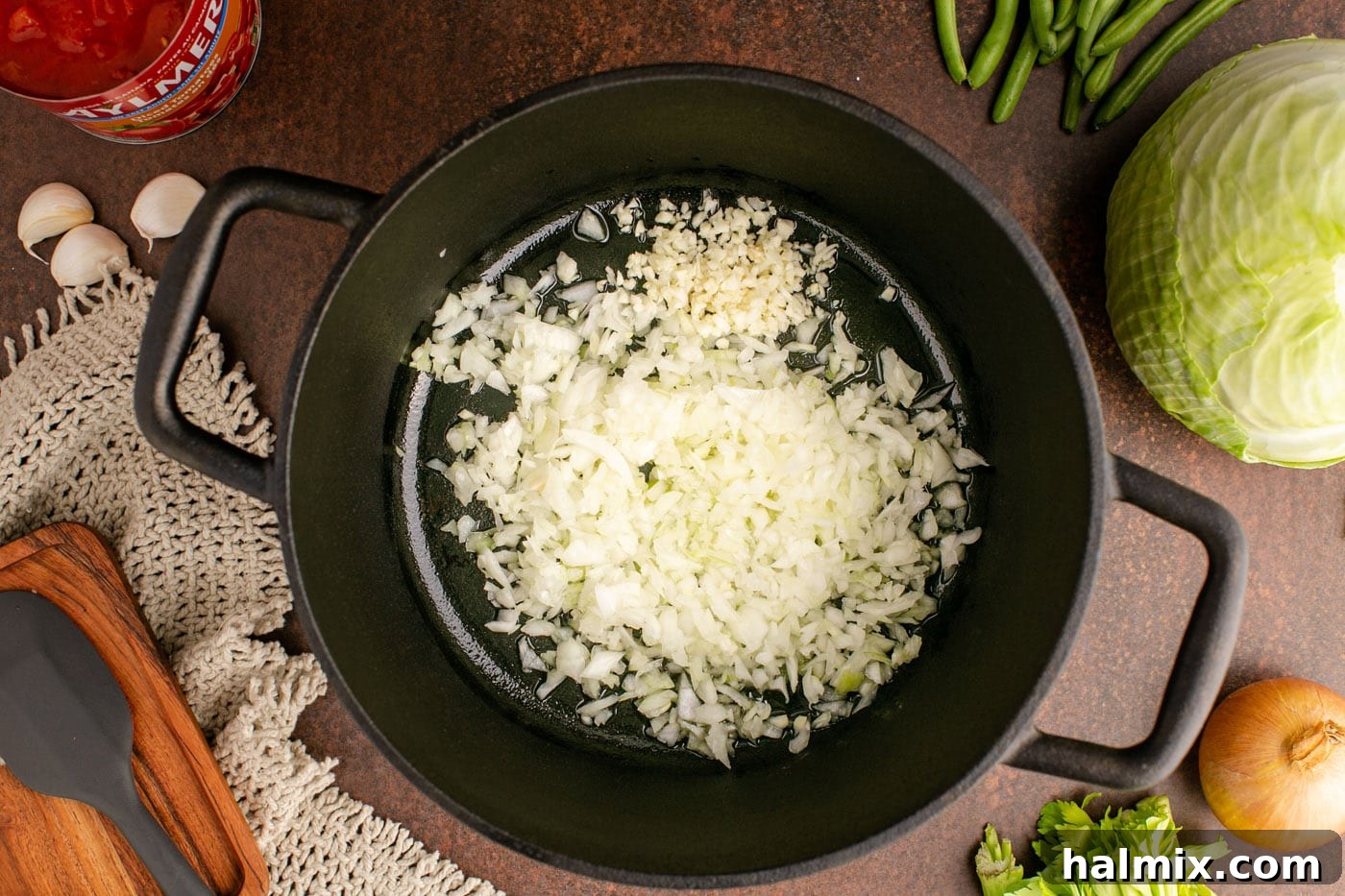
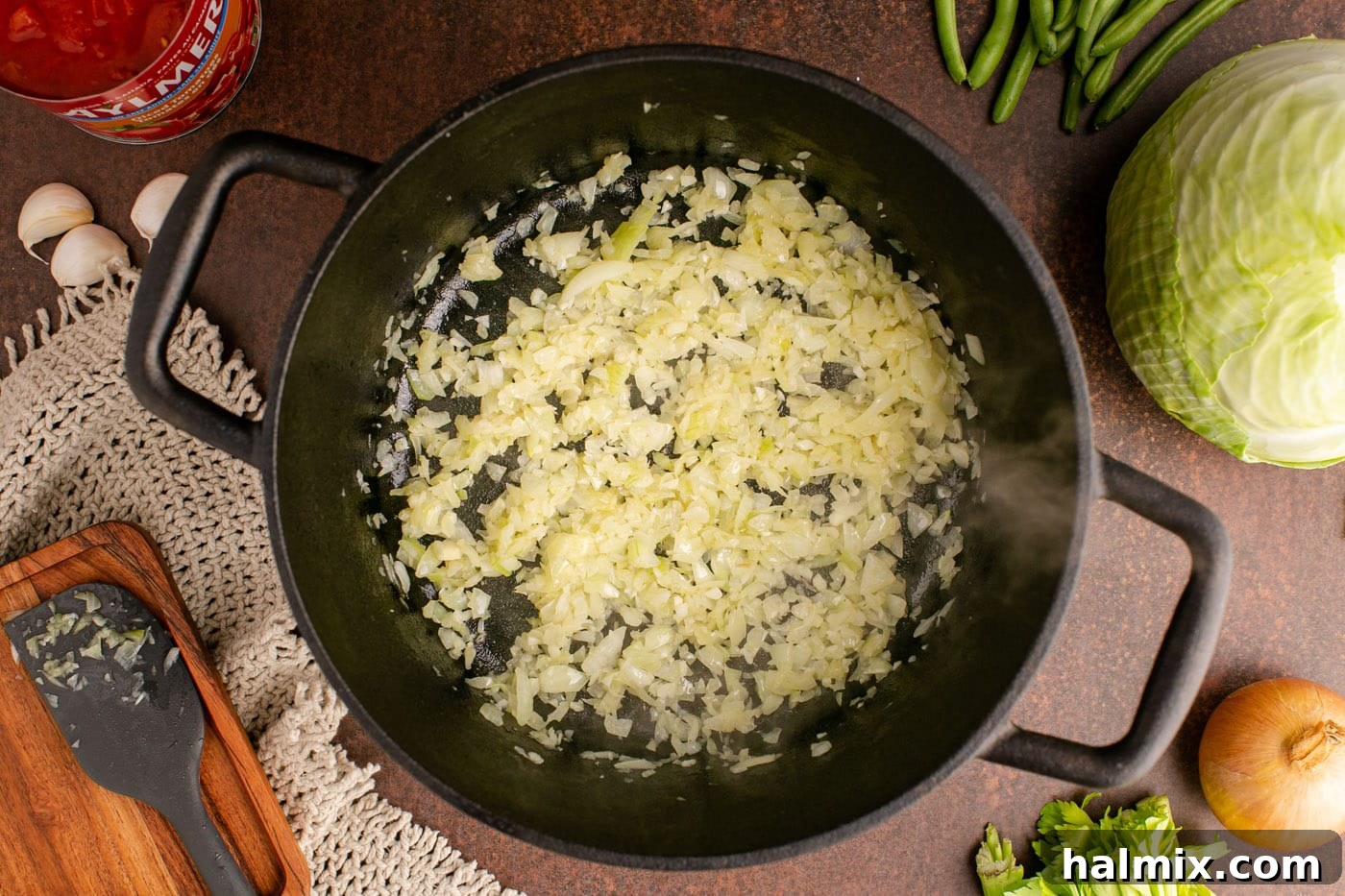
- Sauté the Aromatics: Begin by heating two tablespoons of olive oil in your 6-quart soup pot over medium heat. Once shimmering, add the chopped yellow onion and minced garlic. Sauté for 3-5 minutes, stirring occasionally, until the onion becomes translucent and fragrant. This step is crucial for building the foundational flavor of your soup.

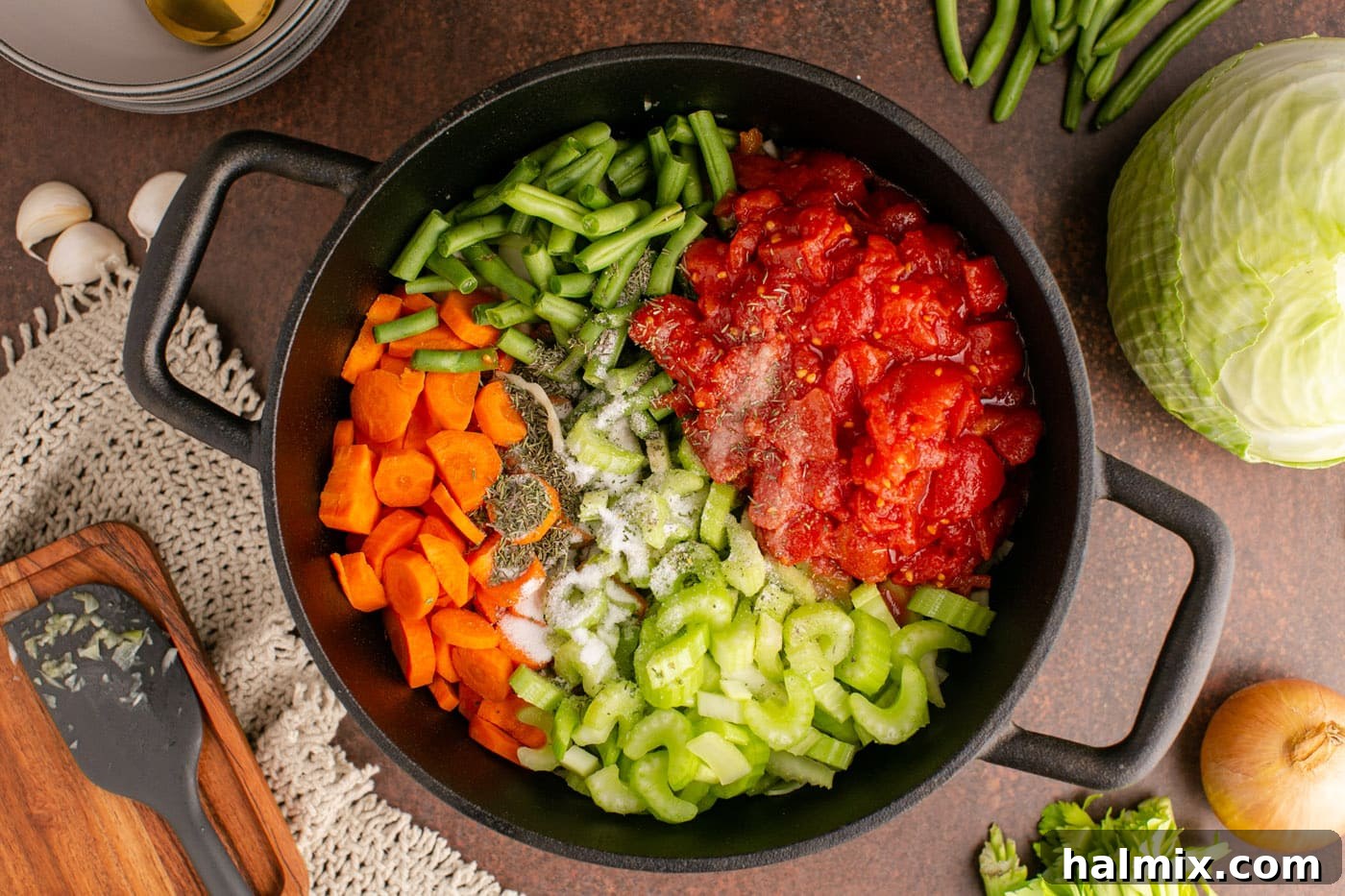
- Add the Remaining Vegetables and Seasonings: Next, add the chopped cabbage, celery, diced tomatoes (undrained), chopped carrot, fresh green beans, salt, dried thyme, dried parsley, and ground pepper to the pot. Stir well to combine all the ingredients, ensuring the vegetables are coated with the sautéed aromatics and seasonings.
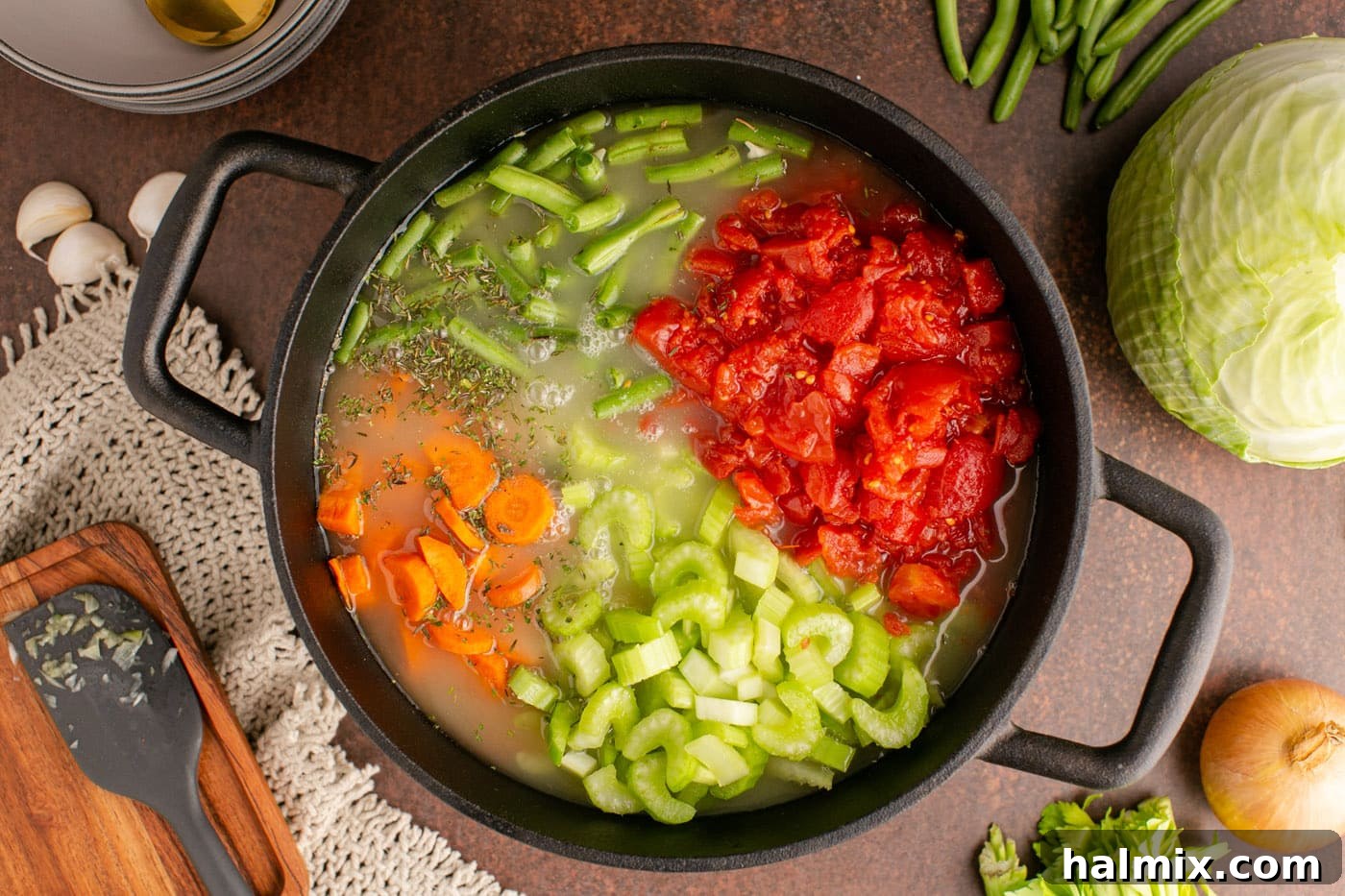
- Introduce the Stock and Bring to a Boil: Pour in enough vegetable or chicken stock to almost fully cover the vegetables. Stir gently. Increase the heat to high and bring the soup to a rolling boil, uncovered. This initial boil helps to soften the tougher vegetables and meld the flavors.
- Simmer to Perfection: Once boiling, reduce the heat to medium-low and cook uncovered for 10 minutes, stirring occasionally. This allows some of the liquid to evaporate, concentrating the flavors. Afterward, cover the pot and continue to simmer on the lowest setting for an additional 20 minutes, or until the vegetables are tender.
- Expert Tip for Softer Cabbage: If you prefer your cabbage to be exceptionally soft and melt-in-your-mouth tender, simply cook the soup covered for an additional 15 minutes during the simmering stage. Always taste and adjust seasonings before serving.

Frequently Asked Questions & Expert Tips for Cabbage Soup
Here are some common questions and expert tips to ensure your cabbage soup is perfect every time, from prep to leftovers:
How do you store leftover cabbage soup?
Storing leftover cabbage soup is simple and ensures you can enjoy this healthy meal for days. Allow the soup to cool completely to room temperature before transferring it to an airtight container. Store it in the refrigerator for 4-5 days. To reheat, gently warm the soup on the stovetop over medium-low heat, stirring occasionally, until it’s heated through. You can also microwave individual portions.
Can you freeze cabbage soup?
Yes, cabbage soup freezes beautifully, making it an excellent option for meal prepping! To freeze, ensure the soup has cooled completely. Transfer it to freezer-safe airtight containers or heavy-duty freezer bags, leaving about an inch of headspace to allow for expansion. It can be frozen for up to 3 months. When you’re ready to enjoy it, thaw the soup overnight in the refrigerator, then reheat on medium-low on the stovetop until warmed through. The vegetables, especially the cabbage, might be slightly softer after freezing and thawing, but the flavor will remain delicious.
How can I make my broth thicker?
If you prefer a thicker, more substantial broth in your cabbage soup, there are several easy methods:
- Tomato Paste: Stir in a few tablespoons of tomato paste when you add the diced tomatoes. Tomato paste not only enhances the flavor but also adds body to the broth.
- Cornstarch Slurry: Whisk together 1-2 tablespoons of cornstarch with an equal amount of cold water to create a slurry. Gradually stir this into the simmering soup and cook for a few more minutes until the broth thickens to your desired consistency.
- Flour Roux: For a richer thickening, you can make a light roux. After sautéing the aromatics, stir in 1-2 tablespoons of flour and cook for a minute before adding the other vegetables and stock.
- Puree a Portion: For a naturally thicker broth without adding starches, carefully scoop out 1-2 cups of the cooked soup (mostly vegetables) and blend it until smooth using an immersion blender or a regular blender (be cautious with hot liquids). Stir the pureed mixture back into the pot. This adds creaminess and thickness while retaining all the flavor.
What can I add to cabbage soup to enhance it?
Our cabbage soup recipe is wonderfully vegetarian-friendly, but its versatility means you can easily customize it to your taste or dietary preferences.
- Proteins: To make it a heartier meal, consider adding cooked proteins. Crispy bacon bits, shredded cooked chicken, crumbled sausage (beef, pork, or plant-based), or even lean ground beef can be stirred in during the last 10-15 minutes of simmering.
- Legumes & Grains: For a more filling vegetarian option, stir in a can of drained and rinsed white beans, kidney beans, cannellini beans, or chickpeas. Cooked white rice or barley can also be added towards the end of cooking for extra substance.
- Extra Vegetables: Don’t hesitate to toss in other vegetables you have on hand. Diced potatoes (add them with the carrots for proper cooking time), bell peppers, zucchini, kale, or spinach are all excellent choices.
- Flavor Boosters: A bay leaf added during simmering will infuse the broth with a subtle, aromatic depth (remember to remove it before serving). A splash of lemon juice or a dash of your favorite hot sauce at the end can brighten the flavors, while a sprinkle of fresh dill or chives can add a delicate herbal note.
Serving Suggestions for Cabbage Soup
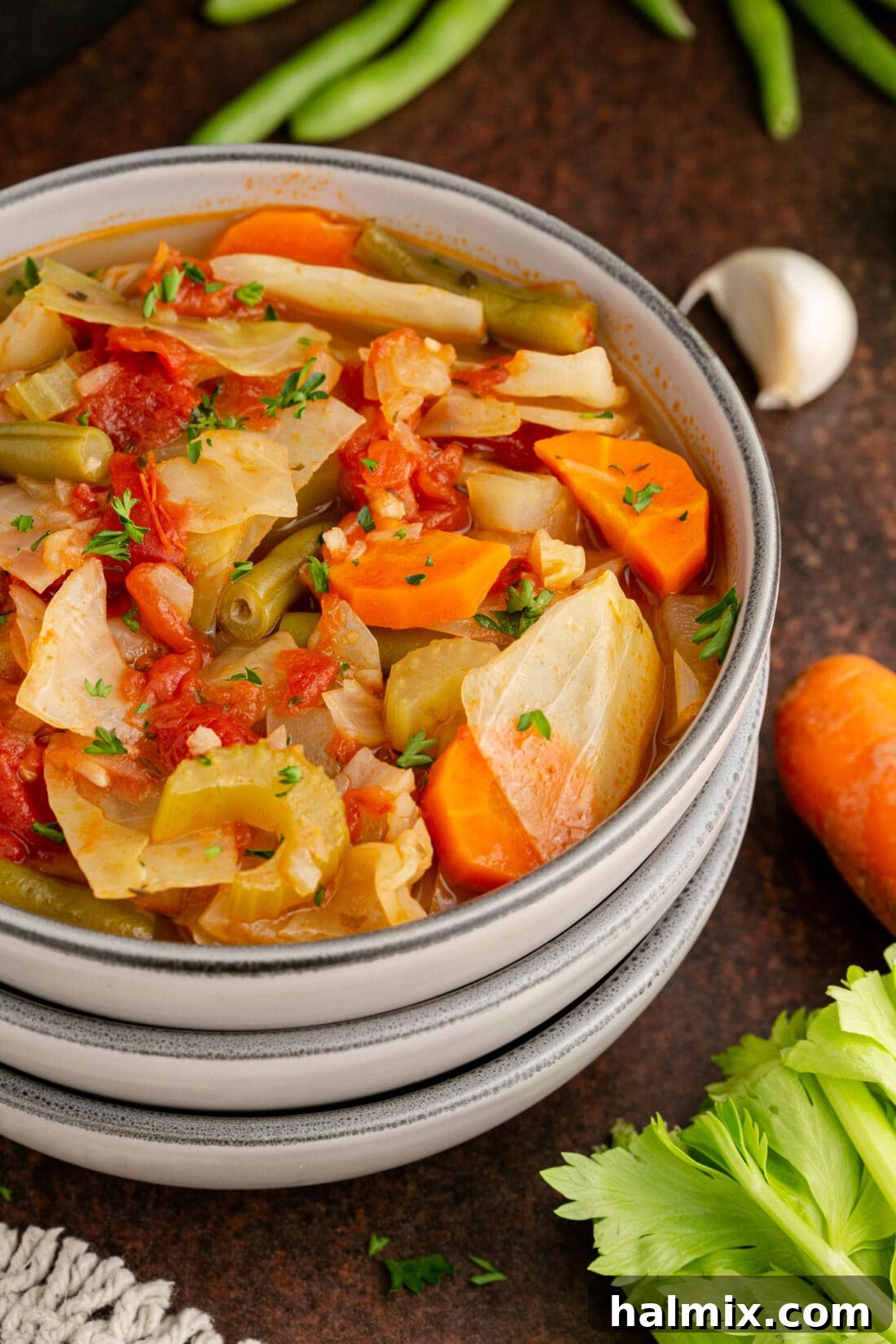
This comforting cabbage soup is a meal in itself, but a few thoughtful additions can elevate your dining experience. Serve it warm directly from the pot, garnished generously with freshly chopped parsley for a pop of color and fresh flavor. For an extra layer of richness, a sprinkle of grated Parmesan cheese or a dollop of sour cream (or Greek yogurt for a lighter option) makes a delightful topping. Pair your bowl of soup with a slice of crusty bread or a warm, grilled cheese sandwich for dipping. A simple side salad can also complement the soup beautifully, adding more greens and a refreshing contrast. Enjoy this wholesome soup as a light lunch, a comforting dinner, or even as a starter to a larger meal.
Nutritional Information (Per Serving)
This healthy cabbage soup provides a balanced and nutritious meal. Below are the estimated nutritional values per serving:
- Serving Size: 1 serving
- Calories: 98 cal
- Carbohydrates: 15 g
- Protein: 3 g
- Fat: 4 g
- Saturated Fat: 1 g
- Polyunsaturated Fat: 0.5 g
- Monounsaturated Fat: 3 g
- Sodium: 622 mg
- Potassium: 439 mg
- Fiber: 5 g
- Sugar: 7 g
- Vitamin A: 1842 IU
- Vitamin C: 42 mg
- Calcium: 84 mg
- Iron: 2 mg
Please note that these are approximate values and may vary based on specific ingredients and preparation methods.
More Delicious Soup Recipes to Explore
If you loved this cabbage soup, be sure to explore more of our comforting and flavorful soup recipes:
- Lentil Soup
- Split Pea Soup
- Easy Tomato Soup
- Healthy Vegetable Soup
- Cream of Asparagus Soup
- Wonton Soup
I love to bake and cook and share my kitchen experience with all of you! Remembering to come back each day can be tough, that’s why I offer a convenient newsletter every time a new recipe posts. Simply subscribe and start receiving your free daily recipes!
The recipes on this blog are tested with a conventional gas oven and gas stovetop. It’s important to note that some ovens, especially as they age, can cook and bake inconsistently. Using an inexpensive oven thermometer can assure you that your oven is truly heating to the proper temperature. If you use a toaster oven or countertop oven, please keep in mind that they may not distribute heat the same as a conventional full sized oven and you may need to adjust your cooking/baking times. In the case of recipes made with a pressure cooker, air fryer, slow cooker, or other appliance, a link to the appliances we use is listed within each respective recipe. For baking recipes where measurements are given by weight, please note that results may not be the same if cups are used instead, and we can’t guarantee success with that method.