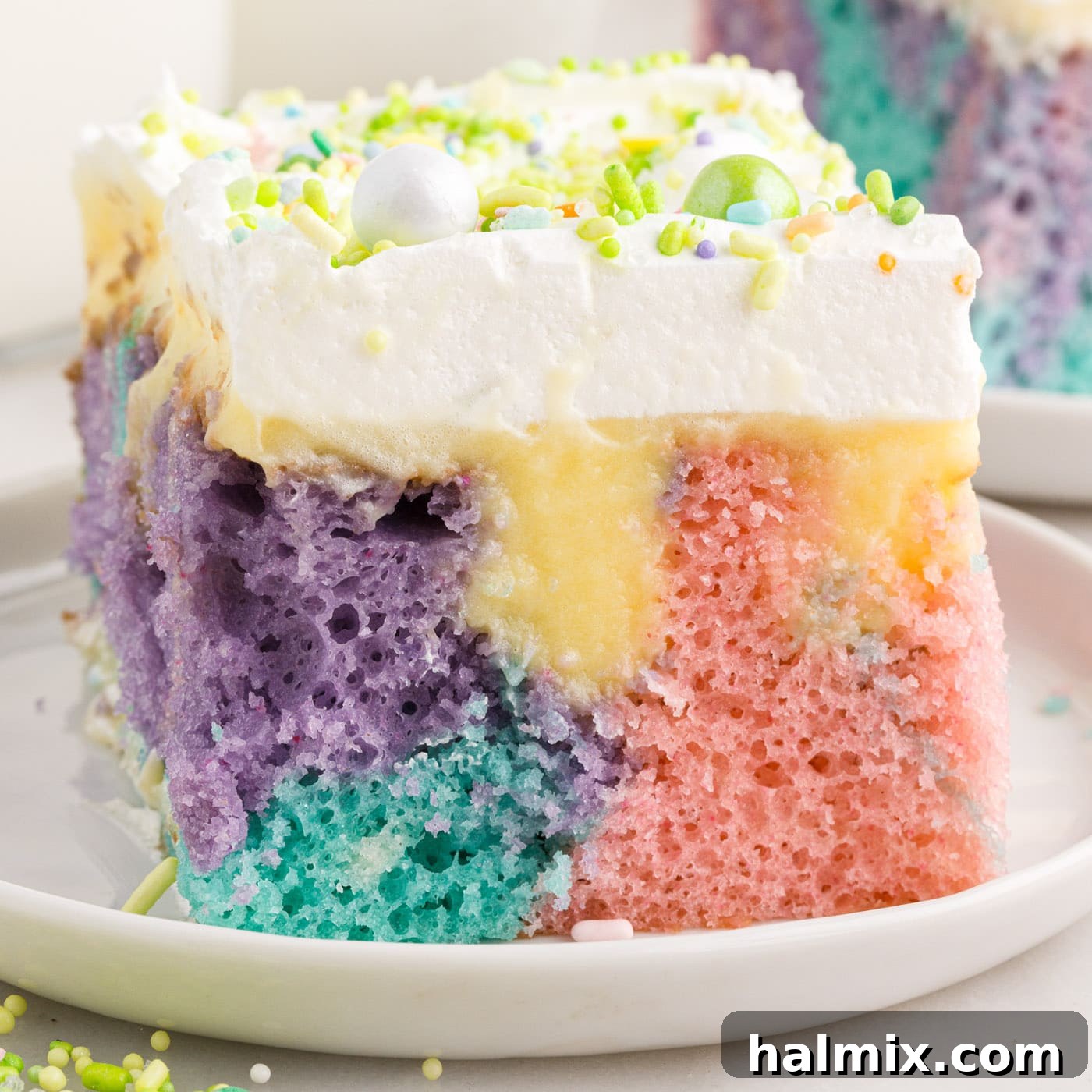
There’s nothing quite like a dazzling, pastel-colored Easter poke cake to brighten your holiday dessert table. This delightful treat is not only visually stunning but also incredibly simple to prepare, making it a perfect choice for busy hosts. With just a few pantry staples like a white cake mix, creamy instant vanilla pudding, and a luscious Cool Whip topping, you can create a show-stopping dessert that promises smiles all around. Forget complicated baking; this recipe brings together ease and elegance for an unforgettable Easter celebration.
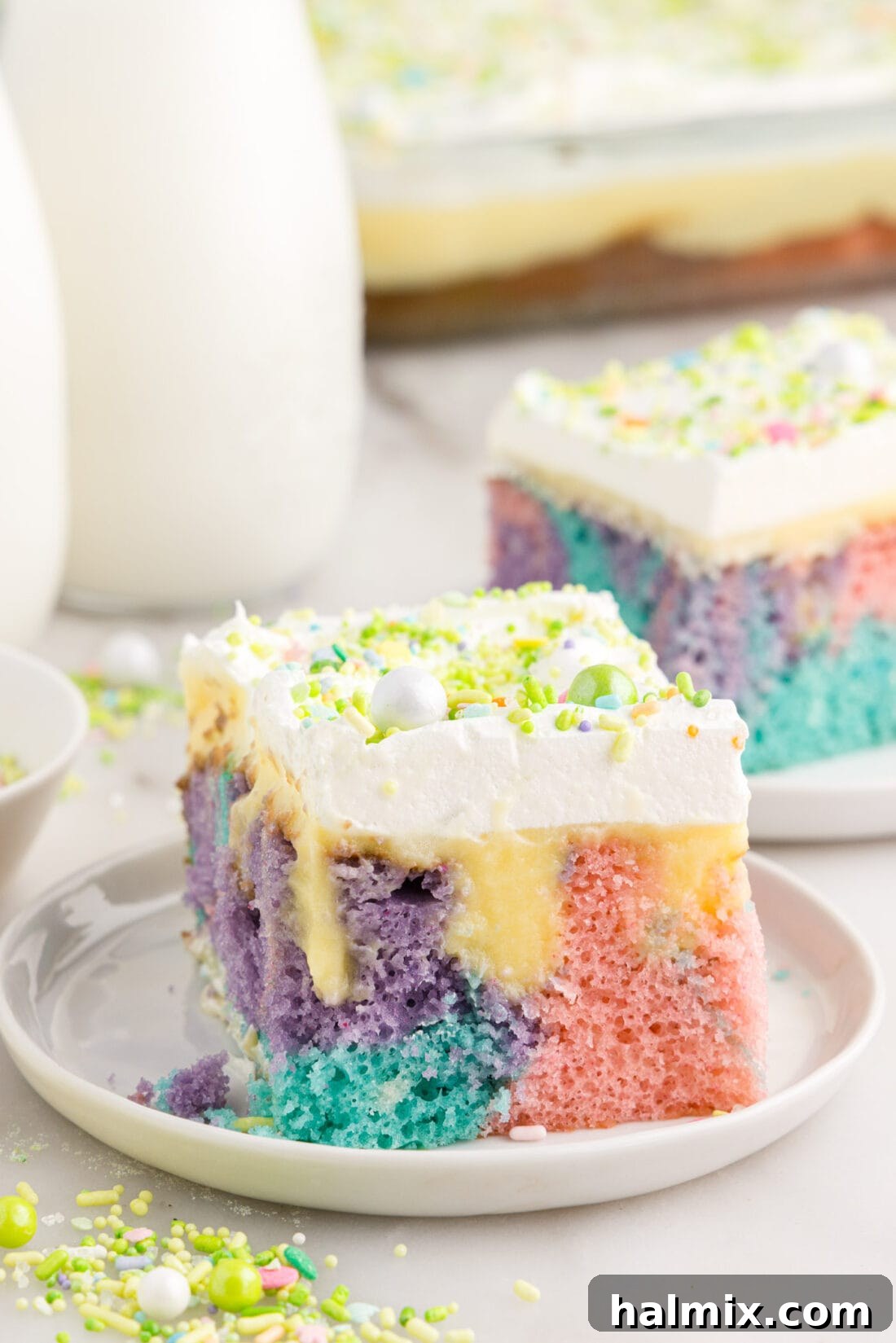
Why This Easter Poke Cake Recipe Is a Must-Try
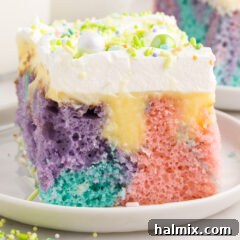
This Easter poke cake truly embodies the spirit of spring with its cheery and bright aesthetic. Imagine a symphony of pastel purple, pink, and blue cake swirls, beautifully complemented by a subtle touch of pale yellow vanilla pudding peeking through. Each slice reveals a delightful surprise, making it an instant conversation starter. Topped with a silky smooth Cool Whip frosting and adorned with a generous scattering of colorful sprinkles, this isn’t just an Easter dessert; it’s a work of art that’s as easy to prepare as it is pretty to behold. It’s the kind of dessert that looks like you spent hours in the kitchen, but secretly, it’s a breeze!
Easter is a cherished holiday in our home, inspiring us to create fun and festive recipes that incorporate the beloved pastel palette, along with adorable bunnies, fluffy chicks, and creative decorations like tie-dye Easter eggs. Last year, our Easter dirt cake was a phenomenal success, earning rave reviews from both children and adults. We are confident that this vibrant poke cake will follow suit, quickly becoming a new holiday tradition. Its simplicity makes it perfect for involving younger family members in the baking process, creating cherished memories alongside a delicious treat. The combination of moist cake, creamy pudding, and light whipped topping creates a texture sensation that is simply irresistible.
Essential Ingredients for Your Easter Poke Cake
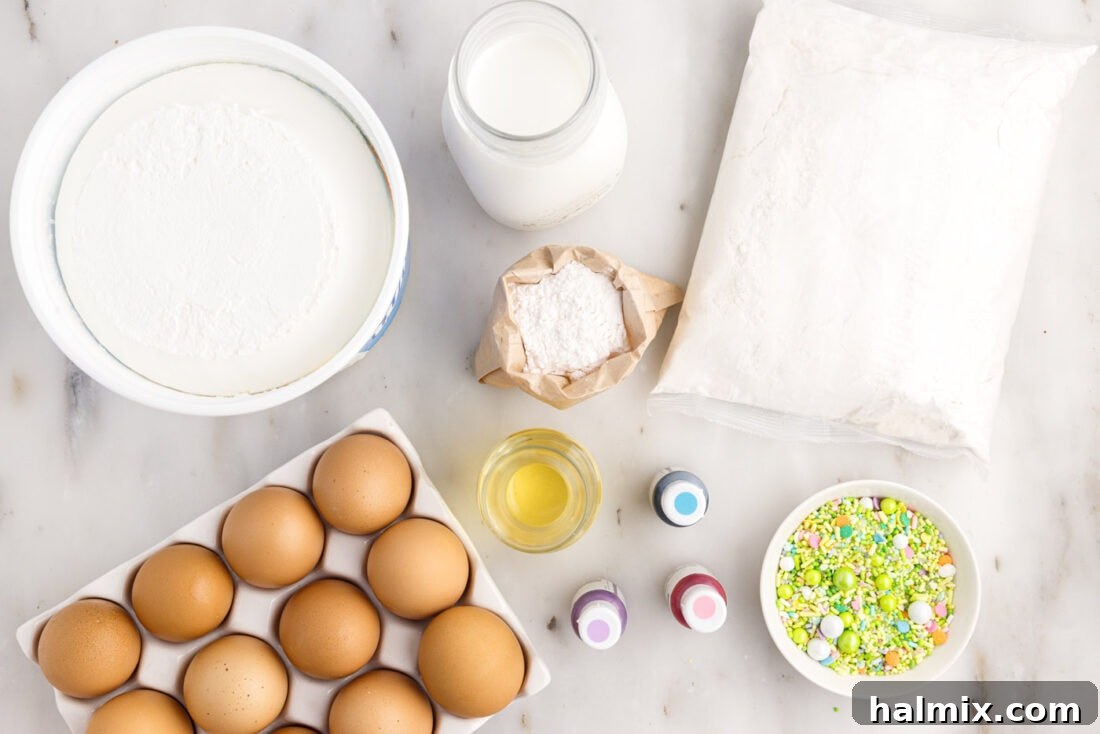
Crafting this festive Easter poke cake requires a selection of readily available ingredients, ensuring a stress-free baking experience. Below you’ll find a detailed breakdown of each component, along with expert insights and substitution suggestions to help you achieve the perfect result. For a comprehensive list of all measurements and instructions, please refer to the printable recipe card towards the end of this post.
Ingredient Spotlight & Smart Substitutions
Understanding your ingredients is key to successful baking, especially when customizing a recipe. Here’s a closer look at what goes into our Easter Poke Cake and how you can adapt it to your preferences:
Cake Base: The Foundation of Flavor and Color
WHITE CAKE MIX: We’ve opted for a standard 15.25-ounce package of white cake mix for its convenience and light base. This ensures your pastel colors truly pop. While a yellow cake mix can be used, its inherent yellow tint will alter the pastel shades, making them less vibrant. You can also explore different white cake mix brands; most perform similarly for this type of recipe. For those with dietary restrictions, many brands now offer gluten-free white cake mixes that work wonderfully as a substitute.
EGGS: Our recipe uses whole eggs, as indicated on most cake mix packages. However, for an even truer, purer white cake that allows the pastel food coloring to shine without any interference, we highly recommend using only egg whites. The slight yellow tint from egg yolks, while minimal, can subtly affect the final pastel hues. The cake will still rise, bake, and taste essentially the same with either whole eggs or egg whites, so choose based on your desired color vibrancy.
VEGETABLE OIL: This provides moisture and tenderness to your cake. Canola oil or another neutral-flavored oil works perfectly. If you prefer, you can sometimes substitute melted unsalted butter for a richer flavor, or even unsweetened applesauce for a slightly healthier twist, though these may alter the texture slightly. Always check your cake mix package for recommended alternatives.
MILK: We use milk in both the cake batter and the pudding mixture. Whole milk will yield a richer, moister cake and a creamier pudding. However, 2% or even skim milk can be used with minimal impact on the final result. For a dairy-free version, unsweetened almond milk or soy milk are excellent substitutes for both the cake batter and the instant pudding preparation, maintaining consistency and flavor.
GEL FOOD COLORING: This is crucial for achieving those beautiful, vibrant pastel shades. Unlike liquid food coloring, gel food coloring is highly concentrated, meaning you only need a drop or two to achieve intense color without adding excess moisture to your batter. This preserves the cake’s texture and prevents muddy colors. Pink, purple, and blue are classic Easter pastels, but feel free to experiment with mint green or soft peach for additional variety.
The Creamy Core: Pudding Perfection
INSTANT VANILLA PUDDING MIX: A 3.4-ounce package of instant vanilla pudding mix is central to the “poke” aspect of this cake. Its pale yellow tint adds a lovely fourth pastel color to the sliced cake, creating an appealing contrast. If you plan to use yellow as one of your cake batter colors, or if you prefer a stark white contrast for your filling, we suggest using white chocolate instant pudding mix instead. This will provide a truer white hue that won’t blend into a yellow cake layer. Chocolate pudding is also an option for a contrasting flavor if you’re not strictly adhering to pastels.
The Fluffy Topping: A Cloud of Sweetness
COOL WHIP (FROZEN WHIPPED TOPPING): An 8-ounce container of thawed Cool Whip provides a wonderfully light, airy, and stable frosting that perfectly balances the rich cake and pudding layers. Its convenience is unmatched, especially when you’re short on time. For a more homemade touch, you can certainly whip up your own fresh whipped cream (heavy cream, powdered sugar, vanilla extract). Just be aware that homemade whipped cream is less stable and should be added closer to serving time if the cake will be out for an extended period.
SPRINKLES OR EASTER CANDY: These are your final flourish! Choose an assortment of festive Easter sprinkles, mini chocolate eggs, jelly beans, or even marshmallow Peeps to add texture, color, and a playful touch to your cake. This is where your creativity can truly shine!
Step-by-Step Guide: Crafting Your Easter Poke Cake
Follow these detailed instructions to create your stunning Easter Poke Cake. These step-by-step photos are designed to help you visualize each stage of the process, ensuring a smooth and enjoyable baking experience. For the full printable version of this recipe, complete with precise measurements and comprehensive instructions, please refer to the recipe card at the bottom of this article.
-
Prepare Your Workspace and Oven: Begin by preheating your oven to 350°F (175°C). Next, take a 9×13 inch glass baking dish and generously spray it with a nonstick baking spray. Ensure all corners and edges are coated to prevent the cake from sticking. Set the prepared dish aside.
-
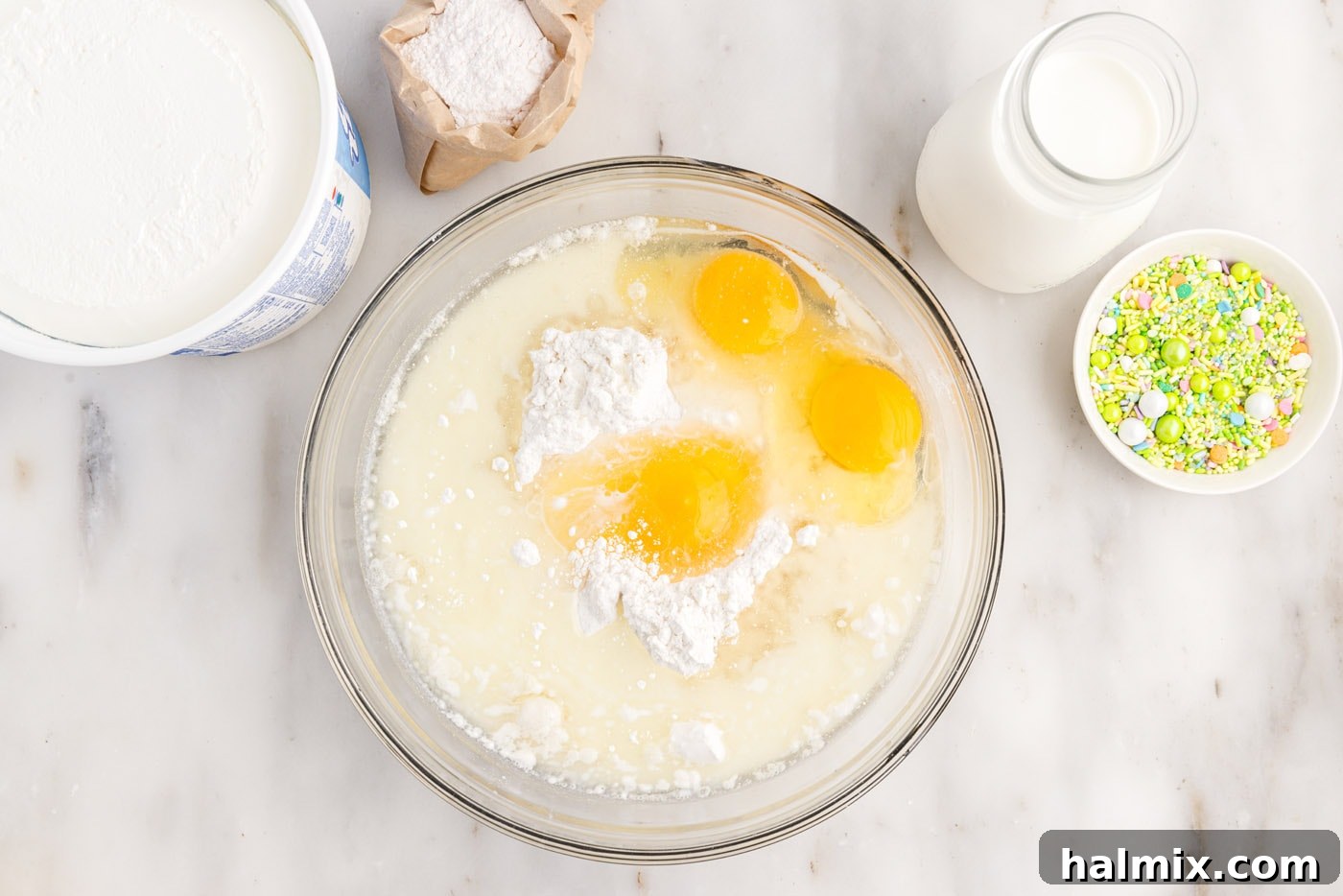
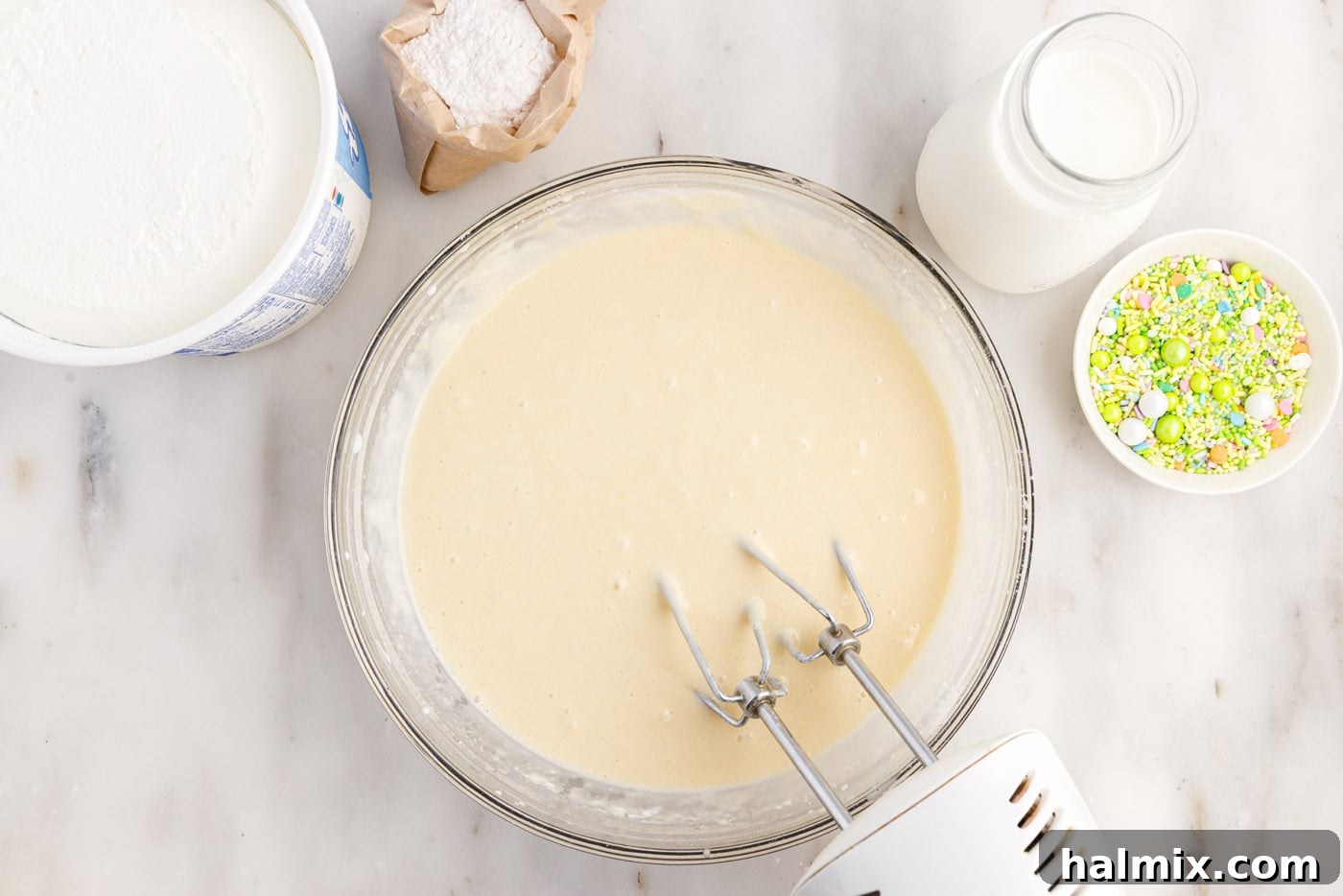
Mix the Cake Batter: In a large mixing bowl, combine the white cake mix, eggs (or just egg whites, if you’re aiming for the purest pastel colors), vegetable oil, and 1 cup of milk. Beat these ingredients together using an electric mixer until they are fully combined and the batter is smooth. Be careful not to overmix, as this can lead to a tougher cake texture.

All cake ingredients ready for mixing. Beat until the batter is smooth and well combined. -
Divide the Batter: Carefully divide the prepared cake batter evenly into three separate bowls. This will allow you to create distinct pastel colors.
-
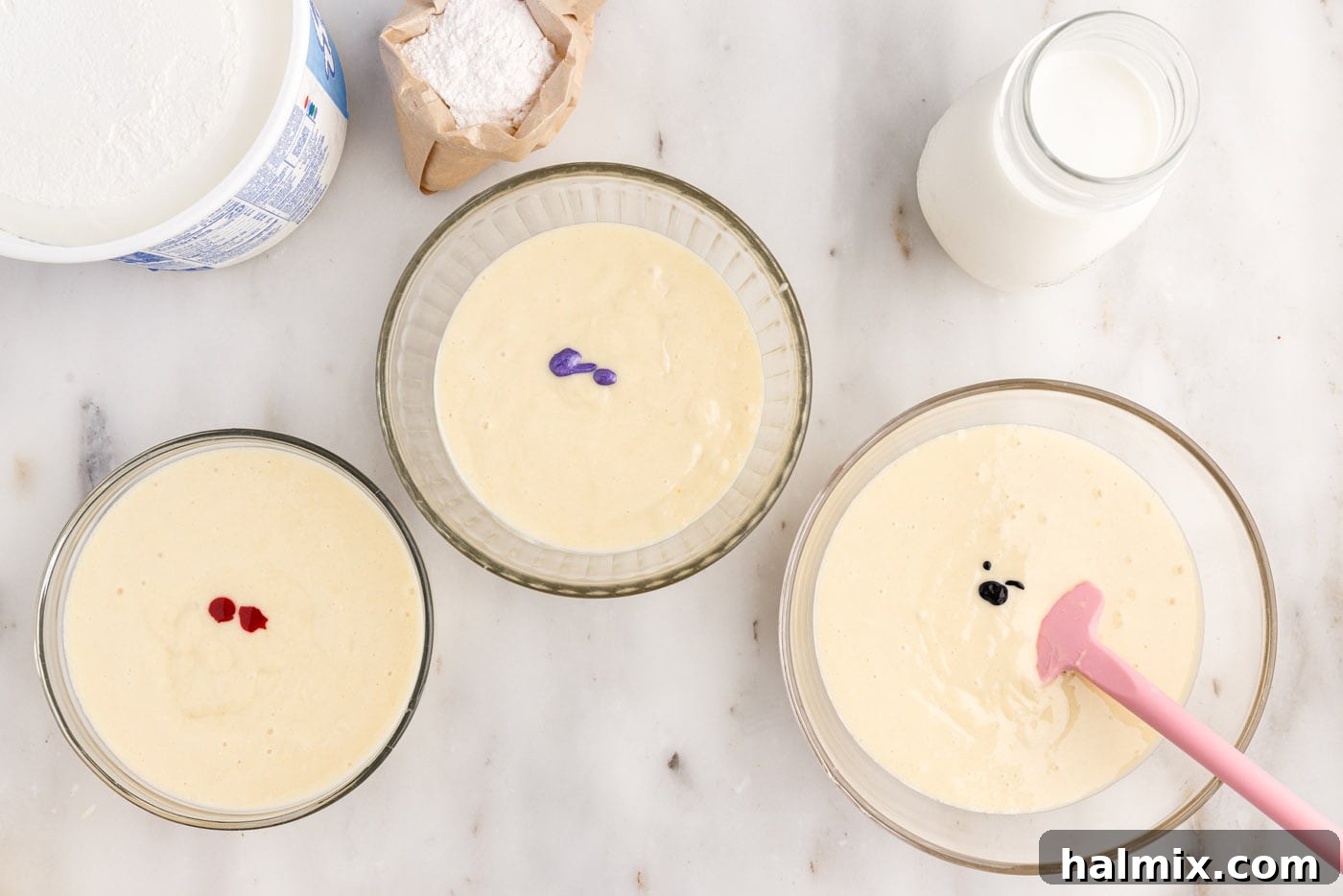
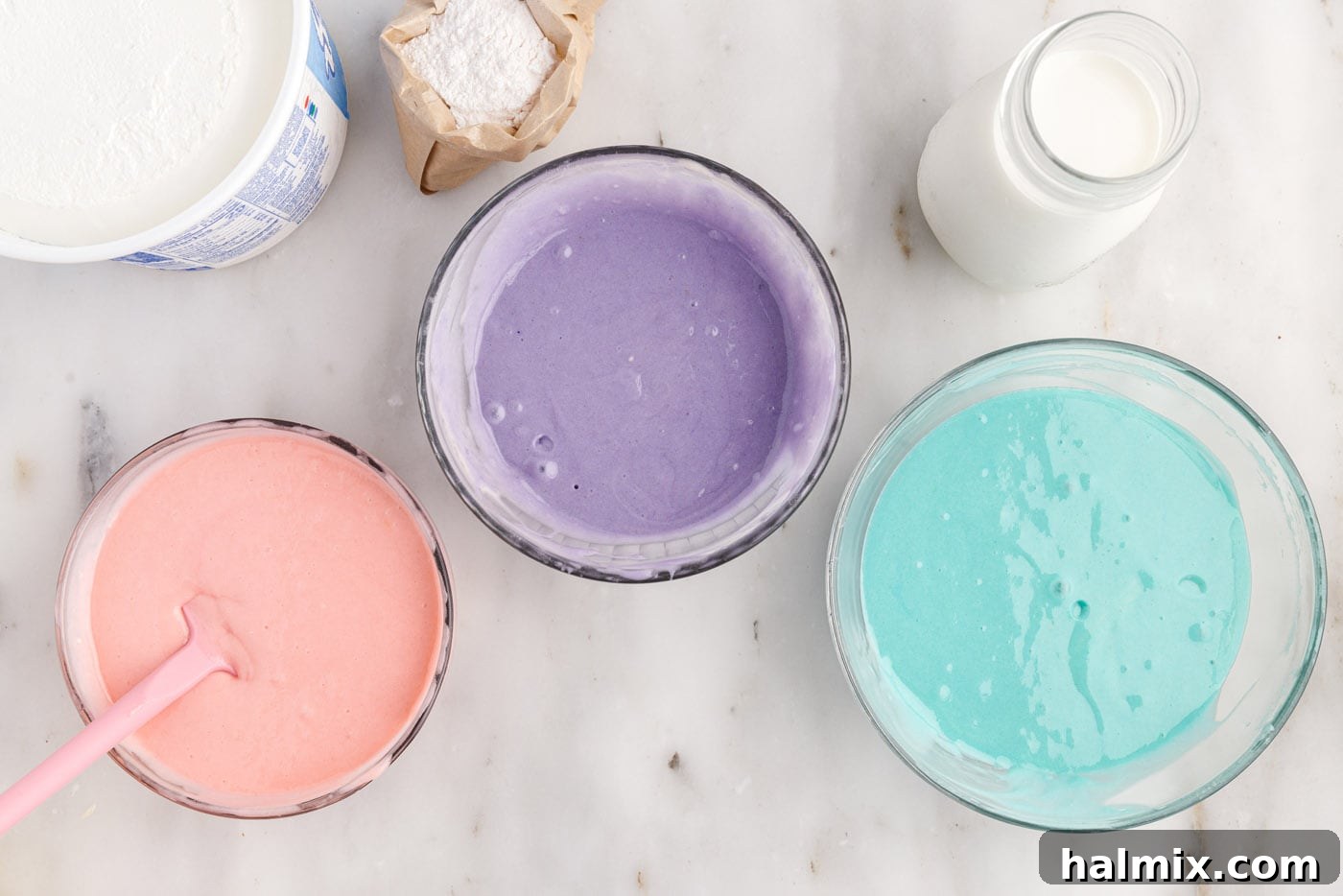
Tint Each Batter with Color: Add just a single drop or two of gel food coloring to each bowl of cake batter. Use different pastel shades like pink, purple, and blue. Stir gently to incorporate the color. Continue adding more drops gradually, stirring after each addition, until you achieve your desired pastel vibrancy. Remember, it’s easier to add more color than to remove it!
Add gel food coloring for vibrant hues. Beautiful pastel cake batters are ready! -
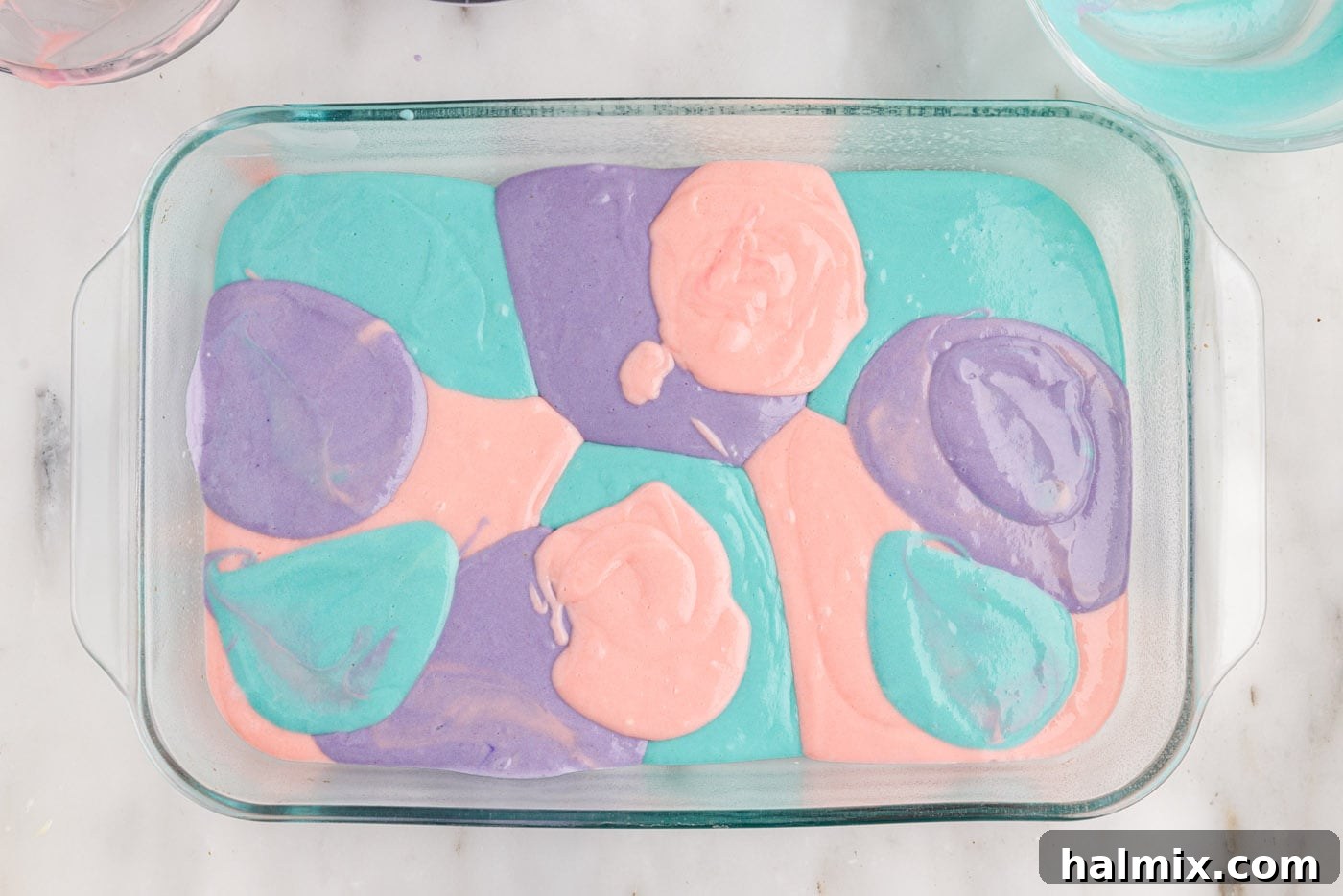
Create the Swirl Effect: Using an ice cream scoop or a large cookie dough scoop, drop large spoonfuls of the pastel-colored cake batter into the prepared baking dish. Alternate the colors randomly across the dish. This method ensures a beautiful, marbled effect throughout the cake. For smaller scoops, avoid swirling the batter too much, as the varied placement will naturally create enough color distinction.
EXPERT TIP: Using an ice cream scoop or large cookie dough scoop makes it effortless to dispense the batter evenly. The goal is random distribution, so don’t worry about perfect placement!
Dollops of colorful batter scattered in the dish. -
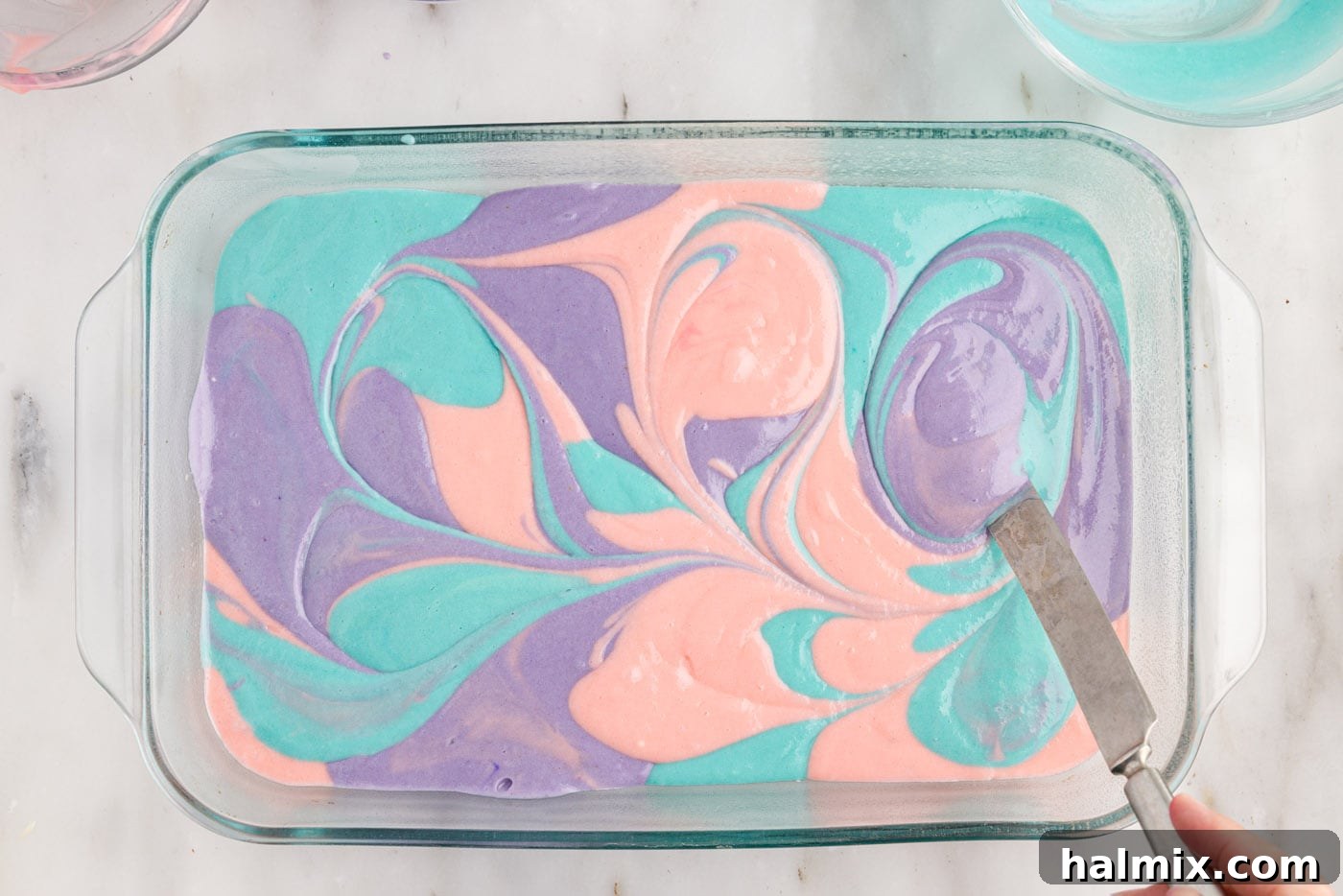
Gently Swirl the Colors: Take a knife or a wooden skewer and gently swirl the colors together in the baking dish. Be careful not to over-swirl, as this can cause the beautiful pastel shades to become muddy and blend into a less appealing single color. A few gentle passes are all you need to create a lovely marble pattern.
A gentle swirl creates stunning patterns. -
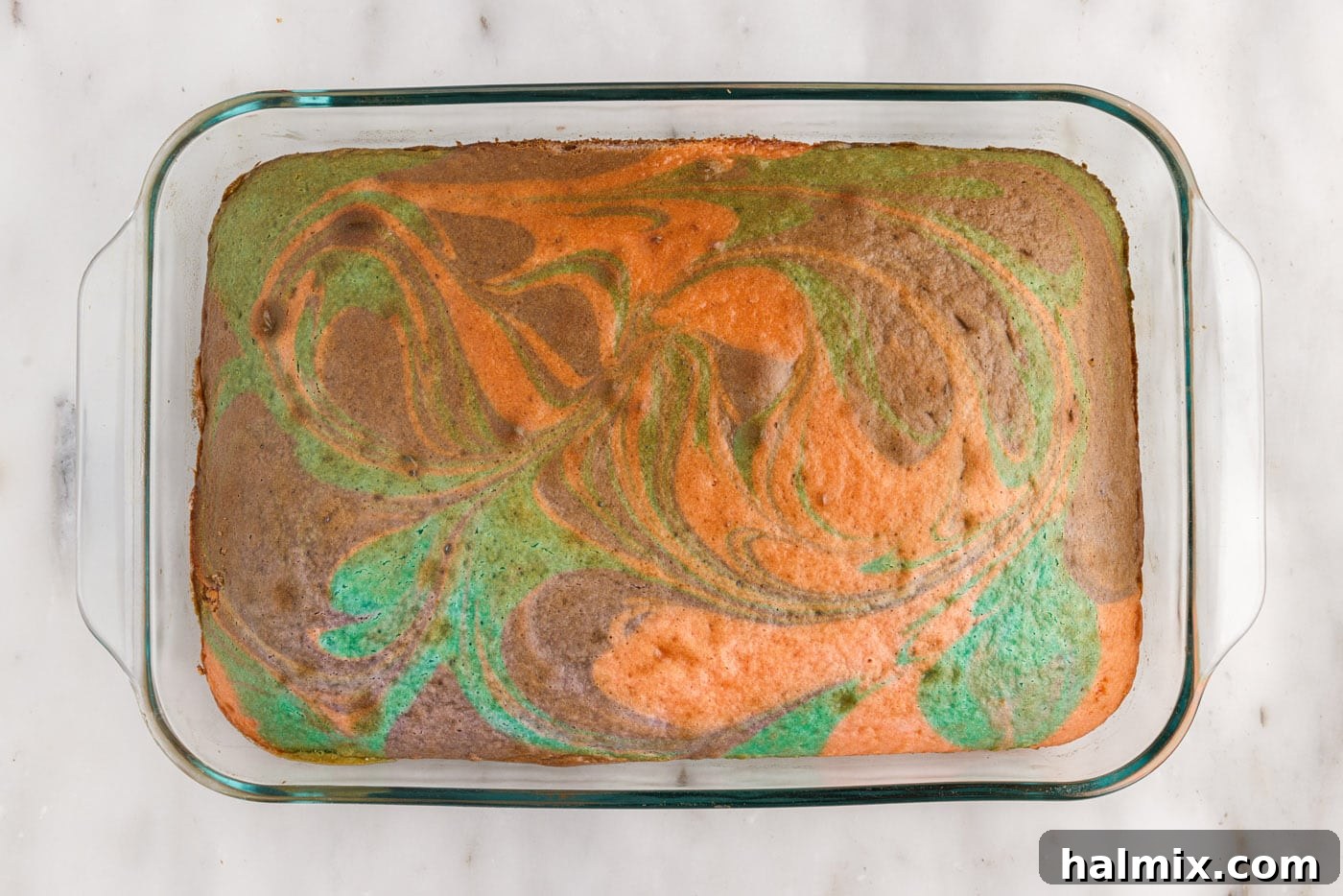
Bake the Cake: Place the baking dish into your preheated oven and bake for 25-30 minutes. The cake is done when the center is set, and a toothpick inserted into the middle comes out with only a few moist crumbs attached, or clean. Avoid overbaking to keep the cake moist.
The cake is baked and the colors are vibrant! -
Cool the Cake: Once baked, remove the cake from the oven and place it on a wire rack to cool completely. This is a crucial step; attempting to poke holes or add pudding to a hot cake can result in a soggy texture and uneven absorption.
-
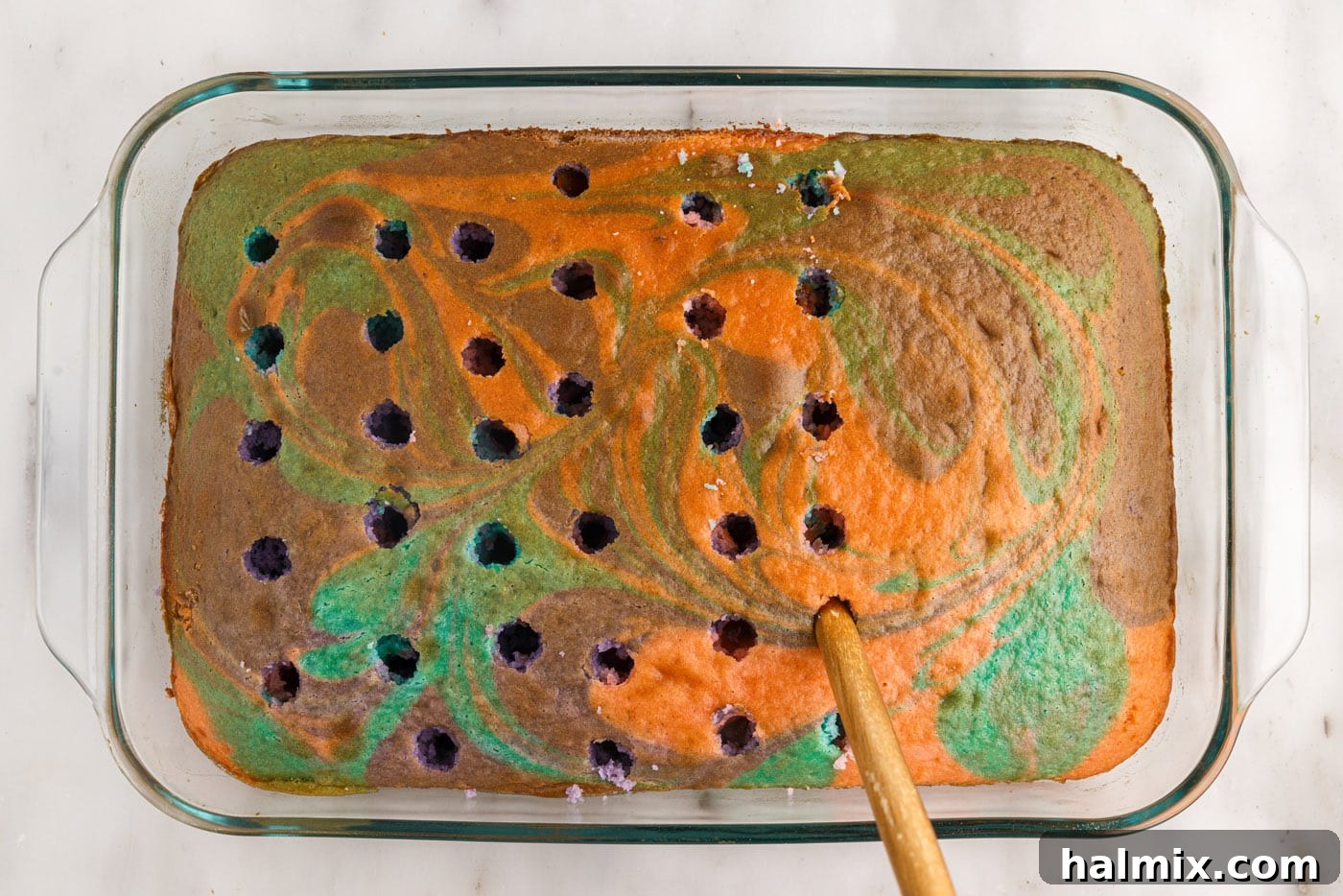
Poke the Holes: When the cake has cooled thoroughly, grab the round handle of a wooden spoon or a wooden dowel. Carefully poke holes all over the surface of the cake. Aim for holes that go about two-thirds of the way down into the cake, spacing them approximately 3/4 to 1 inch apart. This creates the “poke” effect, allowing the pudding to seep into the cake and create pockets of creamy goodness.
Carefully poke holes for the pudding to fill. -
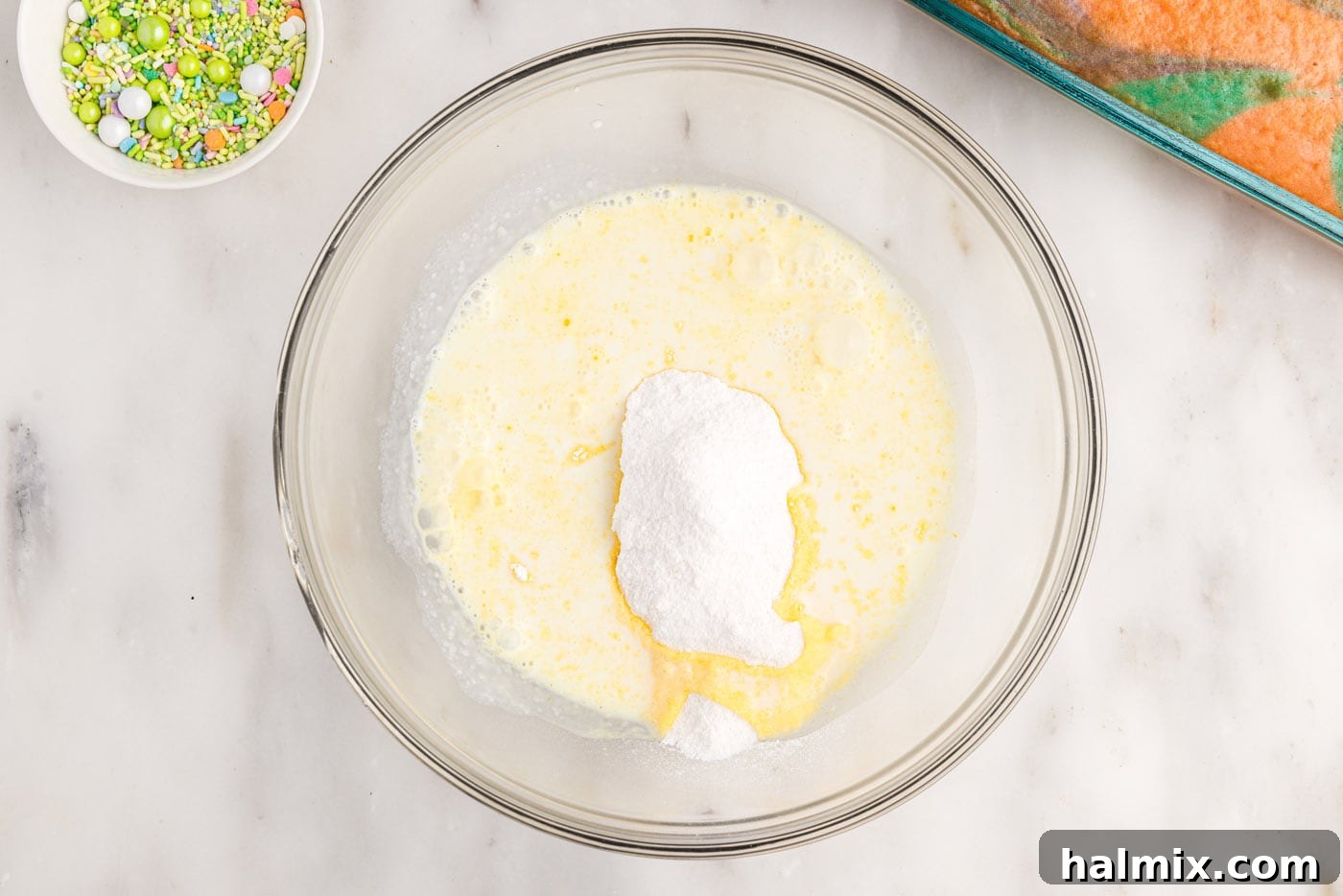
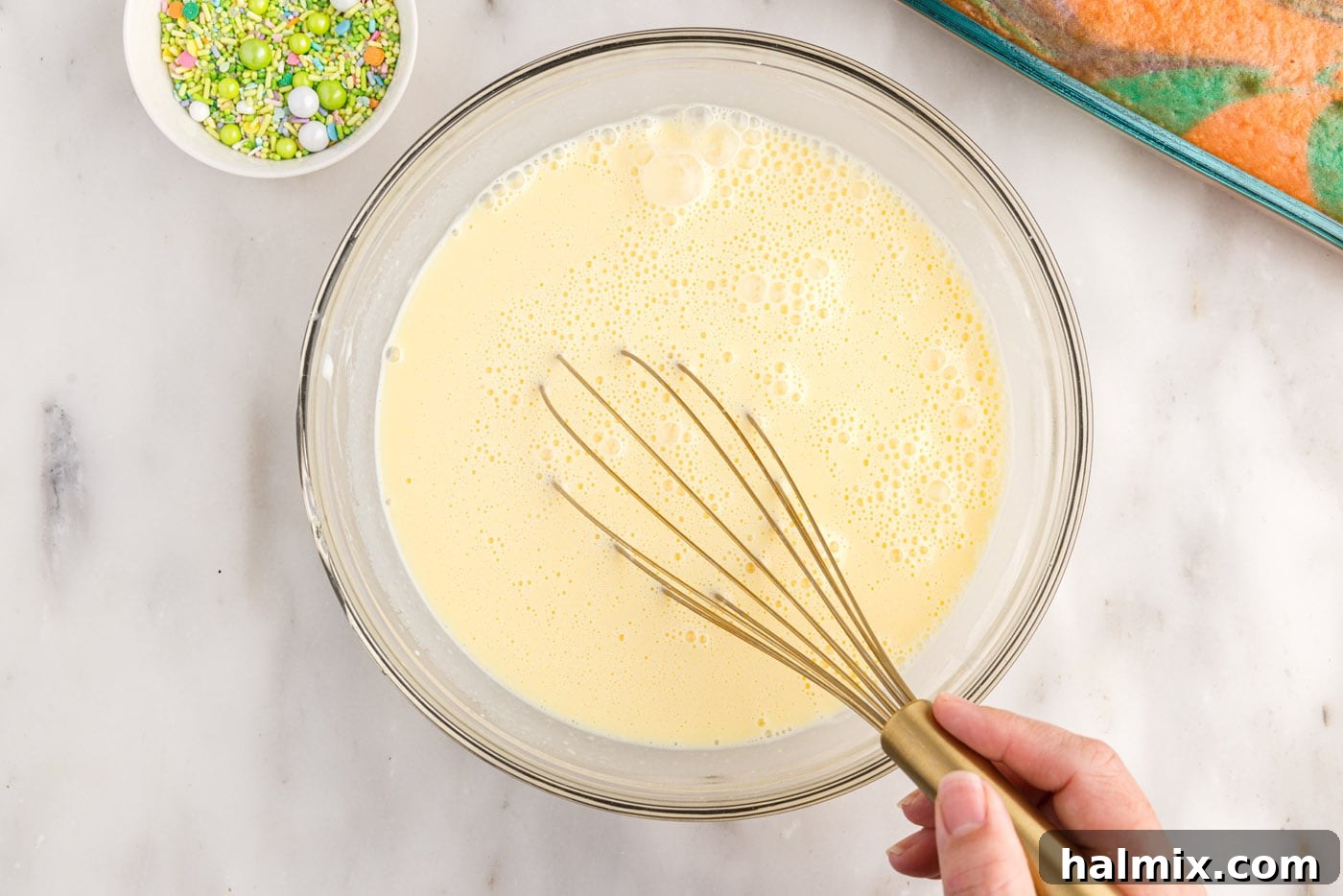
Prepare the Pudding Mixture: In a separate bowl, whisk together the instant vanilla pudding mix with the remaining 2 cups of milk. Continue whisking for 1-2 minutes until the mixture is fully combined and just begins to thicken. It should still be pourable but not watery.
Combine instant pudding with milk. Whisk until it just begins to thicken. -
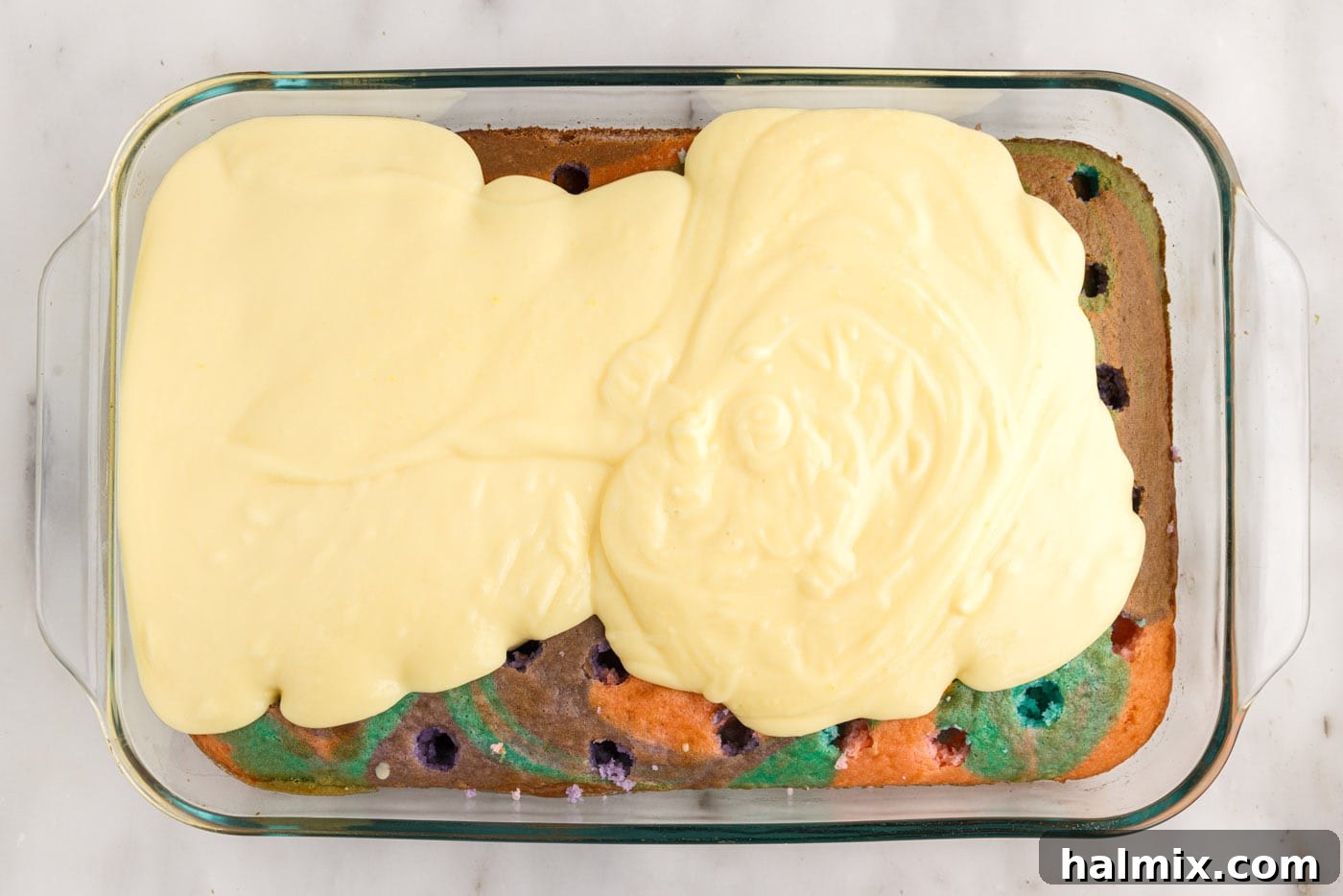
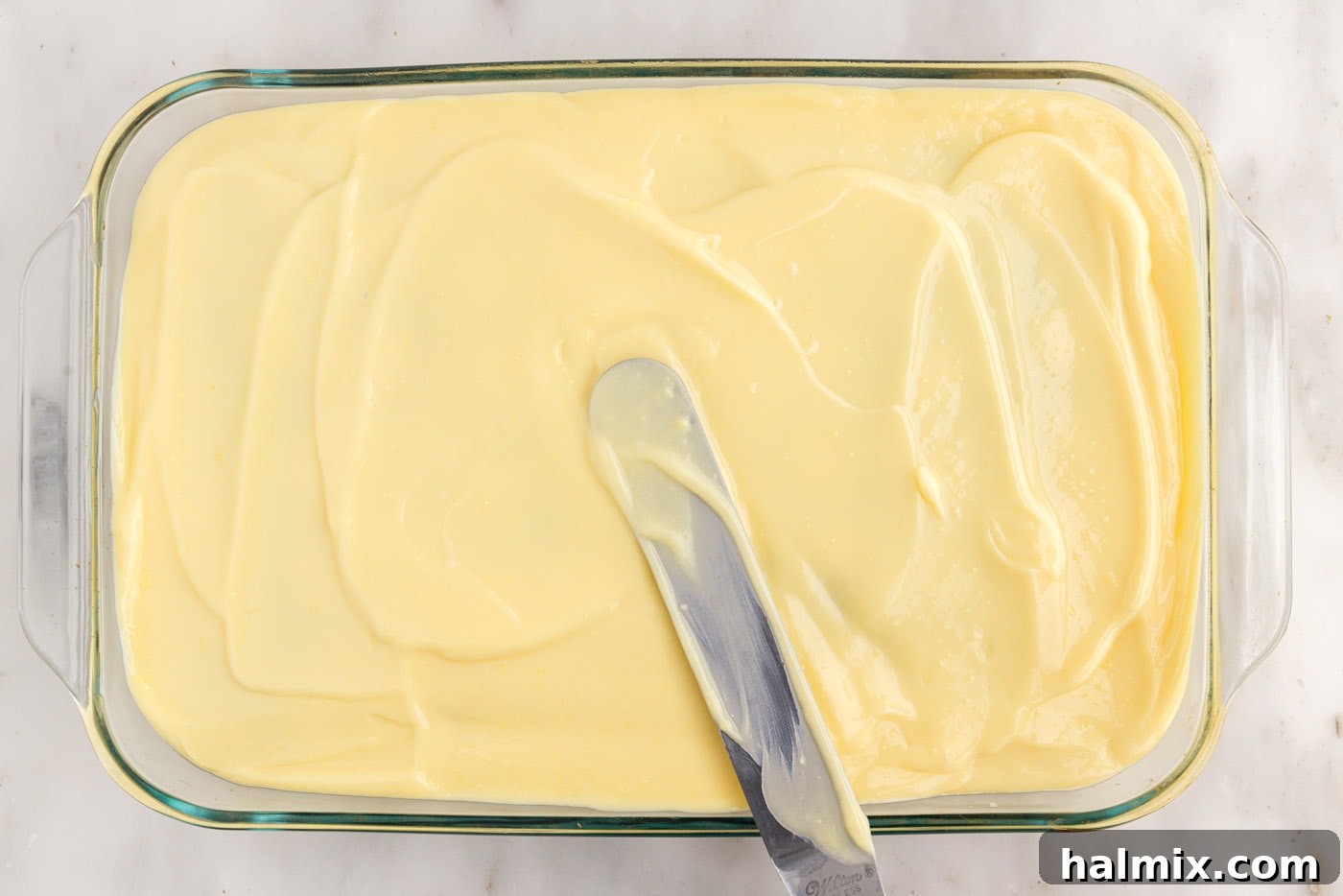
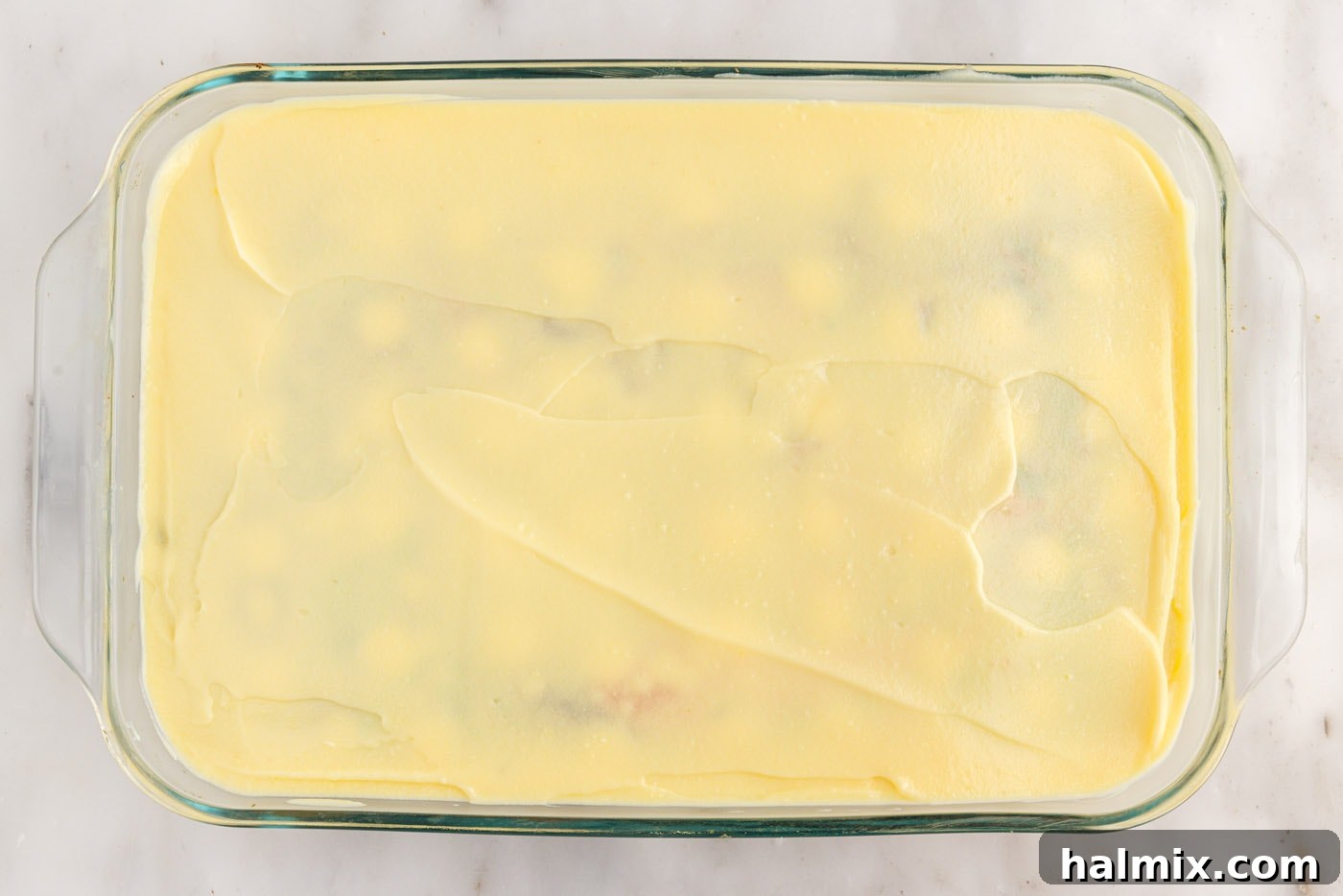
Fill the Cake with Pudding: Gently pour the prepared pudding mixture evenly over the entire surface of the poked cake. Using an offset spatula or the back of a spoon, carefully spread the pudding across the top, pressing it down slightly to ensure it fills all the poked holes. This is what gives the poke cake its signature creamy interior!
Pour the creamy pudding over the cake. Carefully spread the pudding to fill all the holes. An overhead view of the pudding-filled cake. -
Chill for Setting: Place the cake in the refrigerator for a minimum of 30 minutes. This allows the pudding to fully set and absorb into the cake, creating that moist and flavorful texture that defines a perfect poke cake.
-
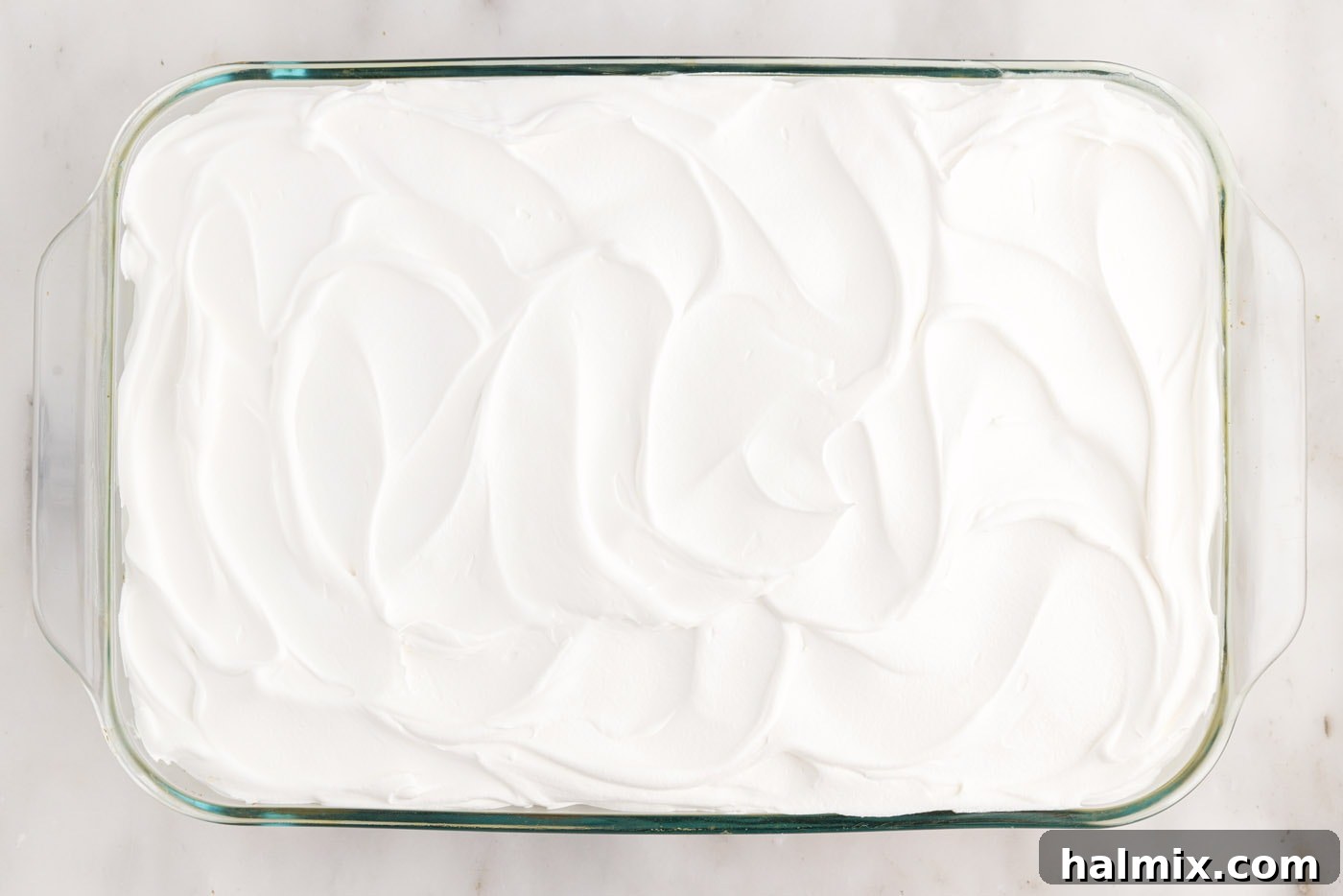
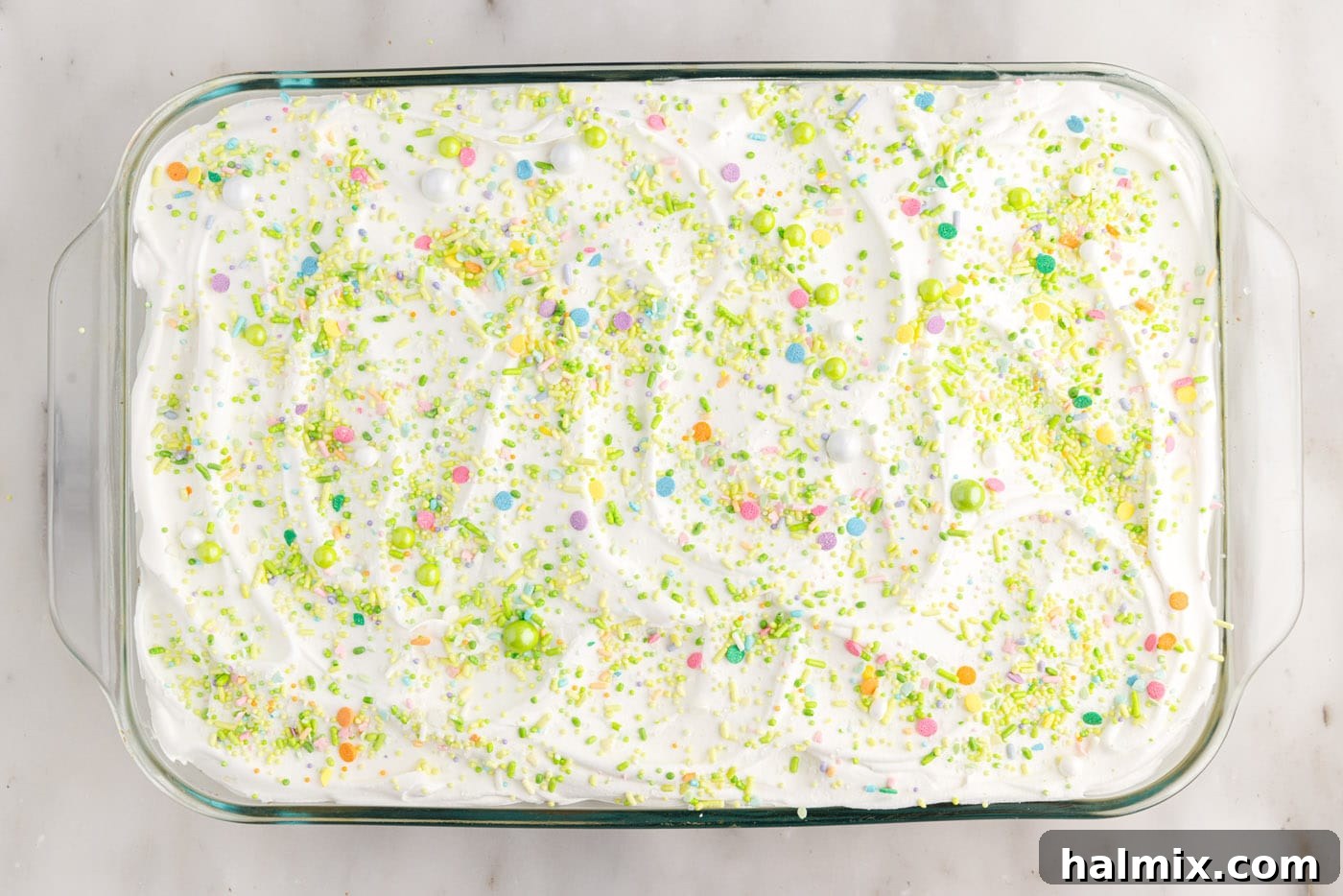
Frost and Decorate: Once the pudding has set, remove the cake from the refrigerator. Generously top the entire cake with the thawed Cool Whip, spreading it evenly with your offset spatula. Finish by decorating with your chosen sprinkles or Easter candy, adding that final festive flourish. Now your beautiful Easter Poke Cake is ready to serve and impress!
Swirl the Cool Whip topping for a light and airy finish. The final flourish: colorful Easter sprinkles!
Frequently Asked Questions & Expert Tips for Your Poke Cake
To maintain its freshness and creamy texture, store this poke cake, covered tightly with plastic wrap or in an airtight container, in the refrigerator for up to 5 days. If you’re planning further ahead, this cake can also be frozen for up to 3 months. For freezing, we highly recommend waiting to add the Cool Whip frosting until you are ready to serve. This makes wrapping the cake much easier and prevents the topping from being squashed or damaged during storage, ensuring it looks perfect when thawed.
Absolutely! This is one of the best features of a poke cake, especially for busy holiday preparations. You can prepare the entire cake, including the pudding filling and Cool Whip topping, a day or two in advance. Simply store it covered in the refrigerator until you’re ready to serve. This allows the flavors to meld beautifully and the pudding to fully set, often resulting in an even more delicious cake.
Yes, absolutely! While a white cake mix and vanilla pudding create the classic pastel Easter theme, feel free to experiment with other flavors. A lemon cake mix with lemon pudding would be wonderfully refreshing for spring. Strawberry cake mix with vanilla or strawberry pudding could also be a delicious variation. Just remember that darker cake mixes might obscure the vibrant pastel colors if that’s your desired aesthetic.
Gel food coloring is highly concentrated, allowing you to achieve vibrant colors with just a tiny amount. Liquid food coloring, on the other hand, requires more volume to reach the same intensity, which can add excess moisture to your cake batter and potentially alter its texture. Gel colors also tend to produce brighter, more stable hues that won’t fade during baking, making them ideal for pastel designs.
For picture-perfect slices, ensure your cake is thoroughly chilled before cutting. Use a sharp, thin knife. For even cleaner cuts, dip your knife in hot water and wipe it clean between each slice. This technique helps prevent the frosting and cake layers from sticking and tearing.
The most common culprits for dry or dense cakes are overmixing the batter and overbaking. Mix the cake batter only until just combined; visible streaks of flour are usually fine as they will disappear during baking. Keep a close eye on your oven and use the toothpick test described in the instructions to avoid baking longer than necessary. An inexpensive oven thermometer can also ensure your oven is truly heating to the correct temperature.
Creative Serving & Decorating Ideas
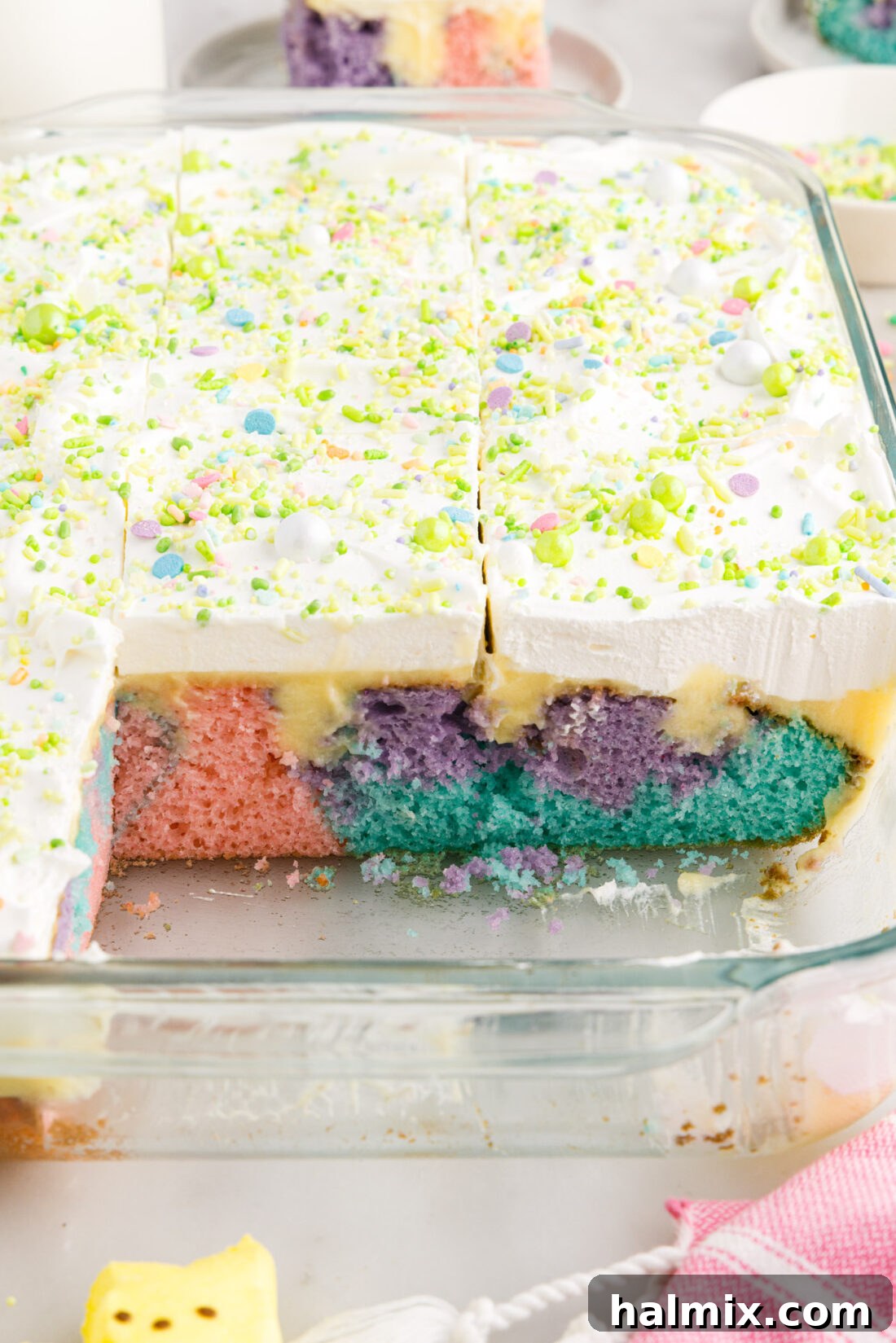
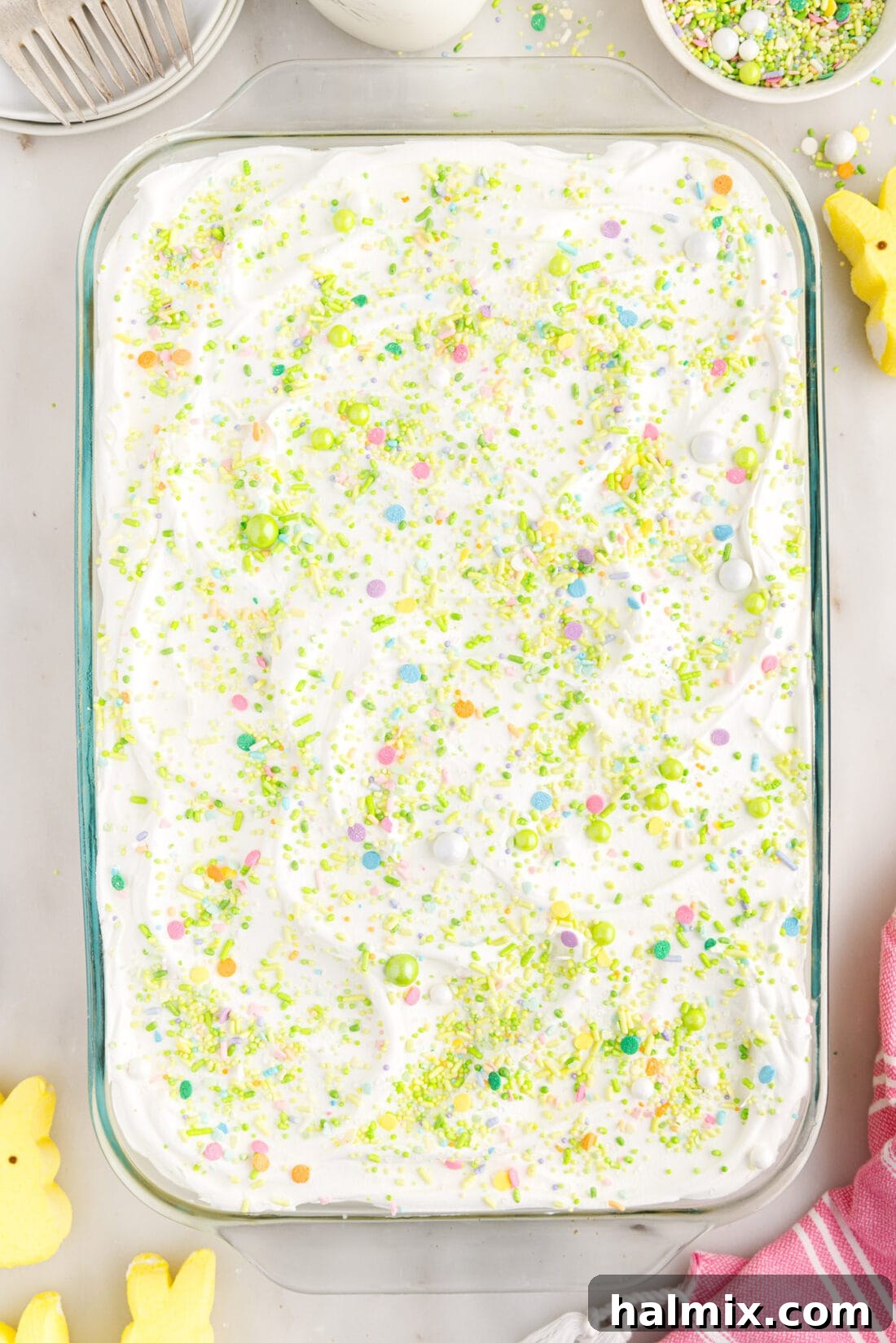
The beauty of this Easter poke cake lies not only in its taste but also in its incredible versatility for decoration. With the abundance of charming Easter candies available each spring, your options are truly endless! Beyond the classic pastel sprinkles, consider adorning your cake with a delightful array of themed treats. You could use mini pastel-colored chocolate eggs, a scattering of colorful jelly beans, or even whimsical marshmallow Peeps (bunnies or chicks) strategically placed on top for an extra touch of holiday cheer. Fresh berries like raspberries or blueberries can add a pop of natural color and a hint of tartness, while edible flowers can elevate the elegance for a more sophisticated presentation. This cake is equally delicious enjoyed chilled straight from the refrigerator or at room temperature, making it convenient for any gathering.
Beyond Easter, this versatile cake can easily be transformed for other festive occasions. With its vibrant swirled colors, it can effortlessly pass as a magical Unicorn cake for a themed birthday party! Simply garnish it with whimsical unicorn sprinkles, edible glitter, or even a fondant horn and ears. It’s also a fantastic choice for spring celebrations, baby showers, or gender reveal parties, where you can customize the colors to match your theme. Pair slices with a cup of freshly brewed coffee, a glass of cold milk, or even a sparkling rosé for a truly delightful dessert experience.
Explore More Festive Easter Recipes
If you’re looking to expand your Easter culinary repertoire, we have a wonderful collection of recipes that are sure to delight. From sweet treats to savory delights, these recipes are perfect for your spring celebrations:
- Easter Toffee: An irresistible sweet and salty treat that’s dangerously addictive!
- Easter Dirt Cake: A fun, kid-friendly dessert featuring crushed cookies and creamy pudding, perfect for a garden-themed celebration.
- Rice Krispie Nests: Easy no-bake treats shaped like bird nests, ideal for holding candy eggs.
- Easter Nest Cupcakes: Adorable cupcakes decorated to resemble bird nests, complete with candy eggs.
- Bunny Butt Cupcakes: Whimsical cupcakes featuring a bunny’s bottom sticking out, guaranteed to make everyone smile.
- Easter Bunny Cupcakes: Classic bunny-themed cupcakes that are as cute as they are delicious.
I genuinely love to bake and cook, and it brings me immense joy to share my kitchen experiences and tested recipes with all of you! Remembering to visit the blog each day for new culinary inspiration can sometimes be a challenge, which is why I offer a convenient newsletter. Every time a new recipe is posted, you’ll receive it directly in your inbox. Simply subscribe here to start receiving your free daily recipes and never miss a delicious update!
Easter Poke Cake
This Easter poke cake is a joyous and bright dessert featuring pastel purple, pink, and blue cake swirled together, with a delightful hint of yellow from the vanilla pudding soaked inside. It’s an easy, impressive treat for any spring gathering.
IMPORTANT – You’ll find expanded details and extra tips within the main blog post that you may find helpful. Scroll up to read them!
Course: Dessert | Cuisine: American | Servings: 24 servings | Prep Time: 15 mins | Cook Time: 30 mins | Total Time: 1 hr 10 mins | Calories: 164kcal | Author: Amanda Davis
Ingredients
- 15.25 ounce package of white cake mix
- 3 large eggs (or egg whites for pure white cake, see notes)
- ½ cup vegetable oil
- 3 cups milk, divided
- Gel food coloring (in 3-4 pastel colors like pink, purple, and blue)
- 3.4 ounces instant vanilla pudding mix
- 8 ounces Cool Whip or frozen whipped topping, thawed
- Sprinkles or Easter candy for garnish
Equipment You’ll Need
- 9×13 inch baking dish
- Mixing bowls
- Wooden spoon or dowel for poking holes
- Offset icing spatula
- Electric mixer (handheld or stand mixer)
- Whisk
Notes & Tips Before You Begin
- For the most vibrant pastel colors, consider using only egg whites instead of whole eggs in your cake batter. This eliminates any yellow tint from the yolks that might interfere with your desired hues.
- Vanilla pudding provides a subtle yellow shade, acting as a fourth pastel color. If your cake already includes a yellow layer or you prefer a crisp white filling, opt for white chocolate instant pudding mix.
- Store your finished Easter poke cake, covered, in the refrigerator for up to 5 days. It can also be frozen for up to 3 months. If freezing, wait to add the Cool Whip frosting until just before serving to preserve its texture and appearance.
- This recipe is perfect for making ahead! Prepare the cake and frosting a day or two in advance and keep it chilled in the refrigerator until your event.
- Gel food coloring is recommended over liquid to achieve intense colors without altering the batter consistency.
- To ensure cleaner slices, make sure the cake is thoroughly chilled and use a sharp knife, wiping it clean between cuts.
Instructions
- Prepare Oven and Baking Dish: Preheat oven to 350°F (175°C). Lightly spray a 9×13 inch glass baking dish with nonstick baking spray and set aside.
- Mix Cake Batter: In a large bowl, beat together the white cake mix, 3 eggs (or egg whites), ½ cup vegetable oil, and 1 cup of milk until fully combined and smooth.
- Divide Batter: Divide the prepared cake batter evenly into three separate bowls.
- Tint Batter: Add a few drops of gel food coloring to each bowl (e.g., pink, purple, blue). Gently stir until the desired pastel color is achieved.
- Arrange Batter in Dish: Using an ice cream scoop or large spoon, drop large, alternating spoonfuls of each colored batter throughout the prepared baking dish.
- Gently Swirl Colors: With a knife or a wooden skewer, gently swirl the colors slightly to create a marbled effect. Be careful not to overmix the colors.
- Bake Cake: Bake for 25-30 minutes, or until the center is set and a toothpick inserted comes out with only a few moist crumbs.
- Cool Cake: Remove from oven and let the cake cool completely on a wire rack.
- Poke Holes: Once cooled, use the round handle of a wooden spoon or a wooden dowel to poke holes all over the cake, about 2/3 of the way down, spaced 3/4 to 1 inch apart.
- Prepare Pudding: In a separate bowl, whisk together the 3.4 ounces instant vanilla pudding mix with the remaining 2 cups of milk for 1-2 minutes until it just begins to thicken.
- Pour Pudding: Pour the pudding mixture evenly over the poked cake. Spread it gently with an offset spatula, ensuring the pudding fills all the holes.
- Chill Cake: Place the cake in the refrigerator for at least 30 minutes to allow the pudding to thicken and set properly.
- Frost and Decorate: Once chilled, spread the thawed 8 ounces of Cool Whip evenly over the top of the cake. Garnish with sprinkles or Easter candy as desired. Serve chilled or at room temperature.
Nutrition Information
Serving: 1 slice (approx. 1/24 of cake) | Calories: 164kcal | Carbohydrates: 22g | Protein: 3g | Fat: 7g | Saturated Fat: 2g | Polyunsaturated Fat: 3g | Monounsaturated Fat: 2g | Trans Fat: 0.1g | Cholesterol: 28mg | Sodium: 178mg | Potassium: 77mg | Fiber: 0.3g | Sugar: 14g | Vitamin A: 100IU | Calcium: 91mg | Iron: 0.5mg
Tried this Recipe? Share Your Creation!
We’d love to see your beautiful Easter Poke Cake! Pin it for later inspiration or share your photo on social media. Follow us on Pinterest @AmandasCookin or tag your posts with #AmandasCookin!
The recipes on this blog are carefully tested using a conventional gas oven and gas stovetop. It is important to note that oven performance can vary, especially with older appliances, leading to inconsistent cooking and baking. We recommend using an inexpensive oven thermometer to verify your oven is reaching and maintaining the correct temperature. If you use a toaster oven, countertop oven, pressure cooker, air fryer, slow cooker, or any other appliance, please be aware that heat distribution and cooking times may differ from a conventional full-sized oven. You may need to adjust your cooking or baking times accordingly. For baking recipes where measurements are provided by weight, please understand that using volume measurements (cups) instead may yield different results, and we cannot guarantee success with alternative measurement methods.