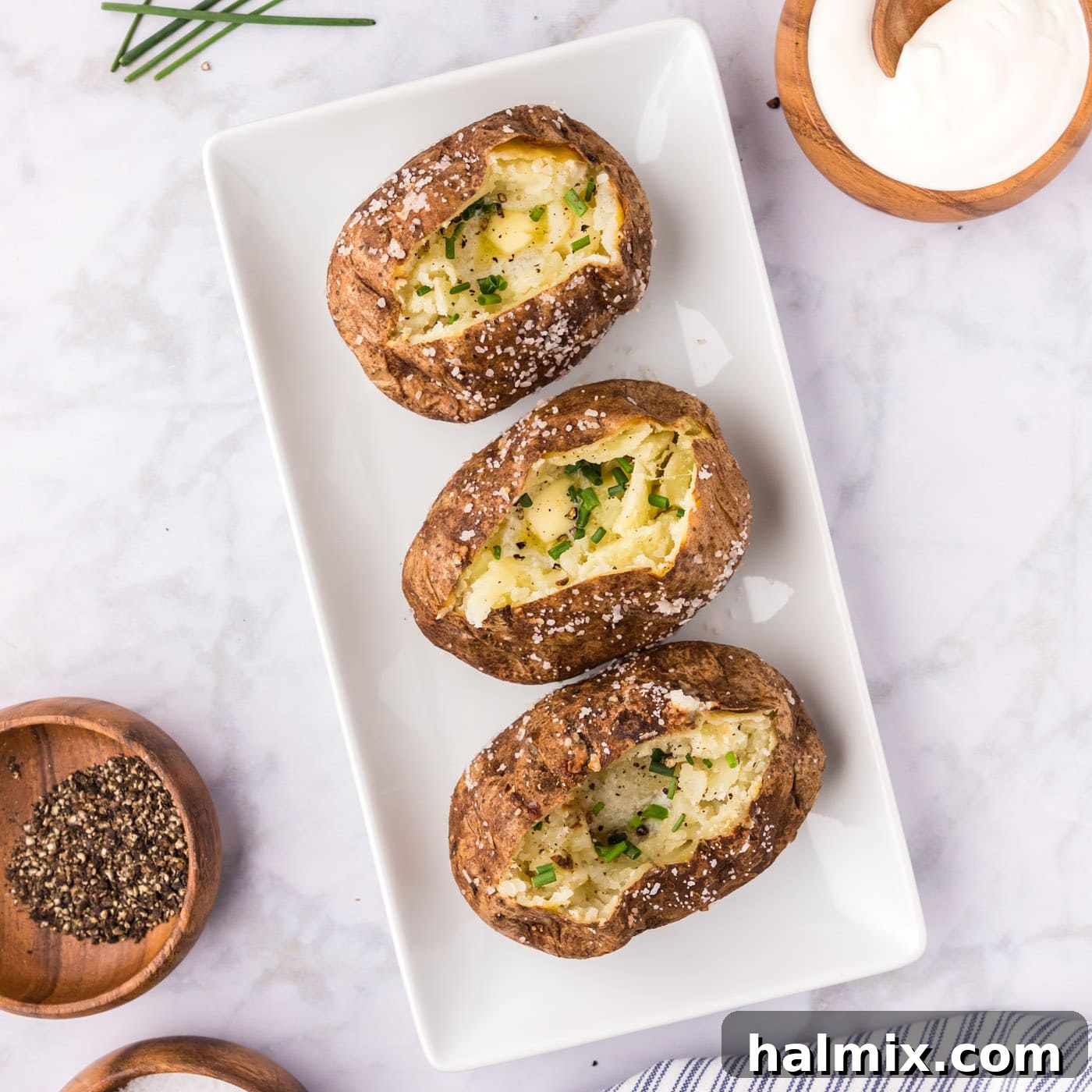
Perfect Baked Potatoes: Your Ultimate Guide to Crispy Skins and Fluffy Interiors
Transforming a humble potato into a culinary masterpiece with a gloriously crispy skin and a tender, fluffy interior doesn’t have to be a daunting task. With just three essential ingredients and a few simple steps, you can achieve consistently perfect baked potatoes that are ready to be loaded with all your favorite toppings. This guide will walk you through everything you need to know, from selecting the ideal potato to mastering the baking process and exploring endless topping possibilities.
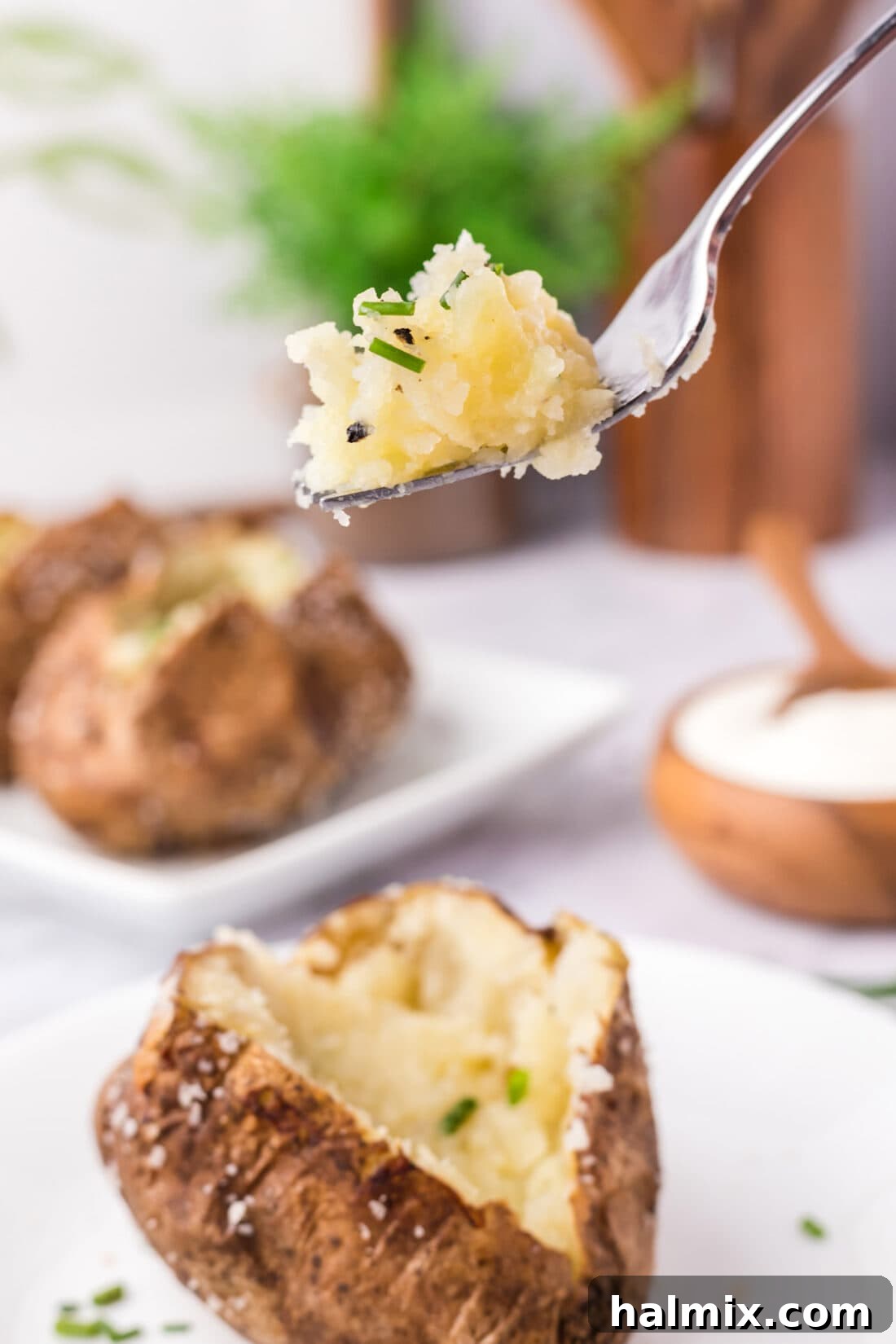
Why This Simple Baked Potato Recipe Works Every Time
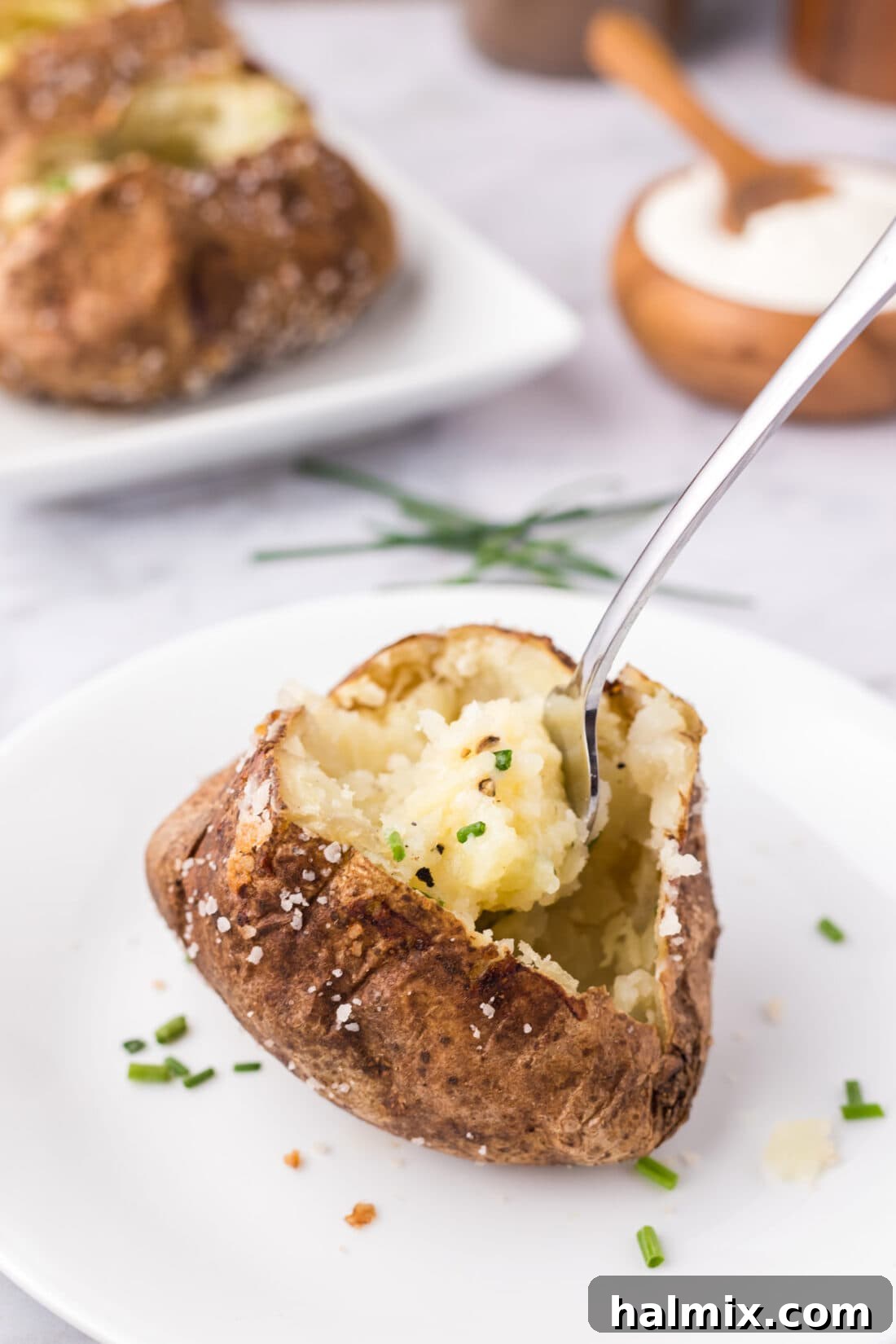
The secret to an exceptional baked potato lies in a few fundamental techniques that guarantee a superb texture every single time. A truly great baked potato should boast a remarkably crisp, salty skin and an interior so light and airy it practically melts in your mouth. This seemingly simple dish is a testament to the power of basic ingredients and precise method. You’ll only need three key ingredients, a reliable baking sheet, and a properly preheated oven to achieve perfection. The often-overlooked step of piercing the potatoes is crucial for releasing steam, which contributes to both the crispy skin and fluffy texture, preventing a dense or soggy result.
Once baked to golden perfection, these versatile spuds become a blank canvas for an array of delightful toppings. Whether you prefer classic butter, sour cream, and chives, or more hearty options like tender beef barbacoa or succulent pulled pork, the possibilities are truly endless.
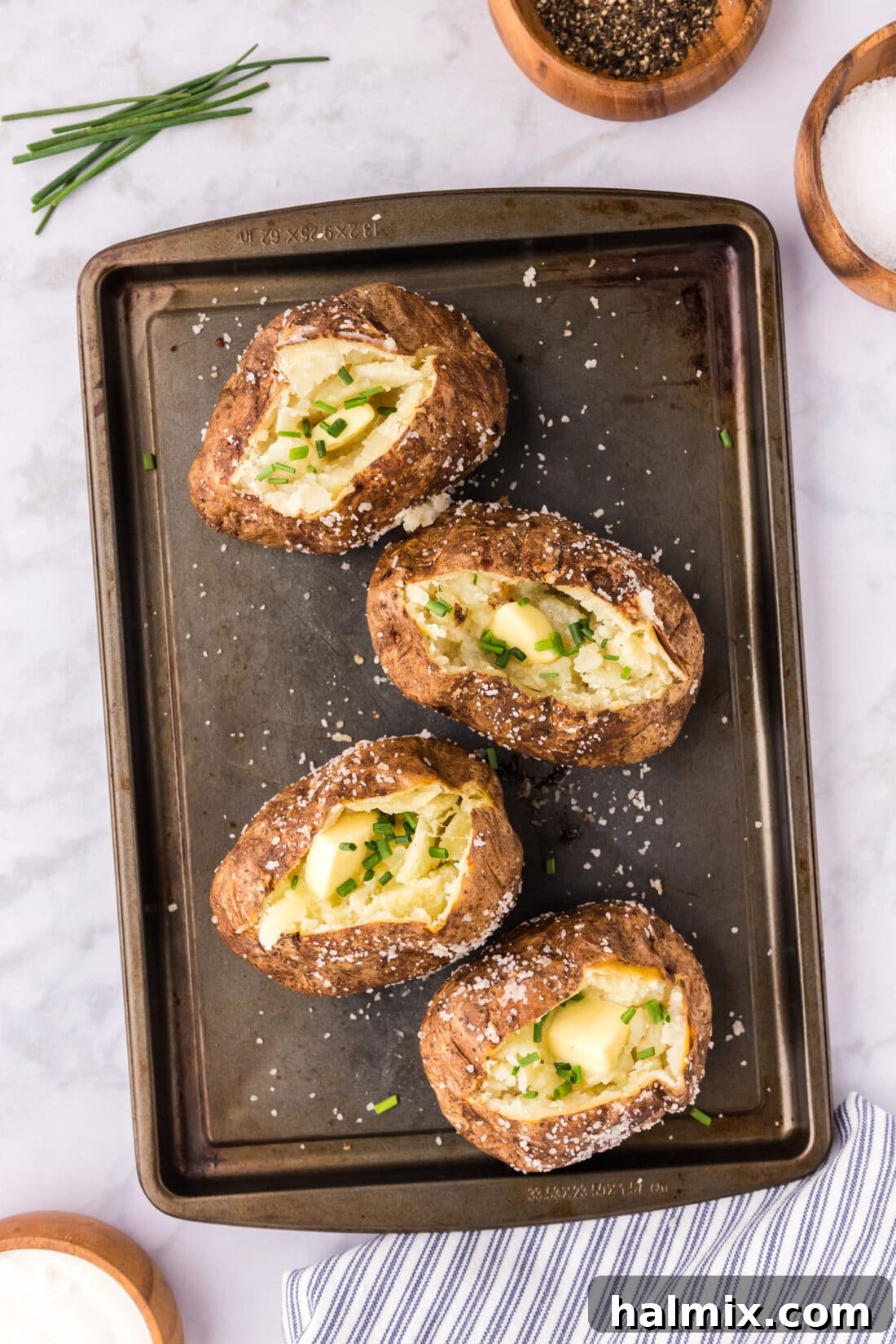
Essential Ingredients for Your Best Baked Potatoes
Crafting the perfect baked potato requires a minimalistic approach, focusing on quality ingredients that truly shine. Here’s a closer look at what you’ll need and why each component is vital for that ideal crispy-on-the-outside, fluffy-on-the-inside result.
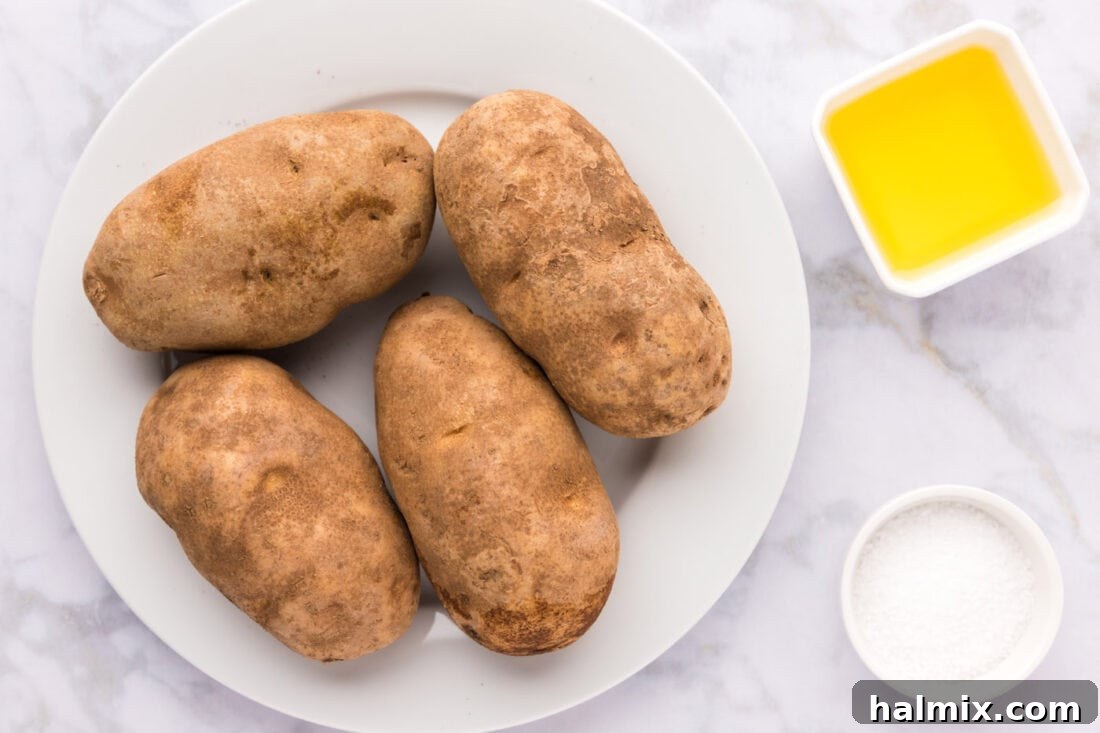
Ingredient Information and Smart Substitutions
- POTATOES: When it comes to baking, Russet potatoes are unequivocally the champion. Their distinctive thick skin and high starch content make them ideal. The thick skin holds up beautifully under high heat, becoming wonderfully crisp, while the starchy interior bakes up incredibly light and fluffy, perfect for mashing with a fork once split open. Other potato varieties like Yukon Golds or red potatoes have a lower starch content and thinner skins, which tend to result in a denser, sometimes waxy texture and less crispy skin when baked. For the best outcome, always opt for firm, evenly shaped Russets without any green spots or sprouts. Medium to large potatoes are usually best for baking as they cook more uniformly.
- OIL: Rubbing your potatoes generously with olive oil is a game-changer for achieving that coveted crispy skin. The oil acts as a heat conductor, helping the skin to dehydrate and crisp up beautifully while preventing it from becoming tough or chewy. If olive oil isn’t your preference, or you’re simply looking for alternatives, you can achieve similar results with other high smoke point oils such as canola oil, grapeseed oil, peanut oil, vegetable oil, or avocado oil. Some home cooks also swear by butter for an extra rich flavor and crispiness, which can be applied melted or softened.
- SALT: A generous sprinkle of Kosher salt on the potato skin before baking does more than just add flavor. The coarse granules adhere well to the oiled surface, creating a delicious, savory crust. Furthermore, salt helps to draw out moisture from the potato’s skin during baking, contributing significantly to its crispness. While Kosher salt is recommended for its texture and flavor, sea salt can also be used. Avoid fine table salt, as it can over-salt concentrated areas and doesn’t provide the same textural benefit.
How to Make Perfect Baked Potatoes: A Step-by-Step Guide
Achieving a restaurant-quality baked potato at home is surprisingly straightforward. Follow these simple steps for a consistently delicious result:
- Preheat Your Oven: Begin by preheating your oven to a consistent 425°F (220°C). A hot oven is essential for both cooking the potato thoroughly and ensuring a crispy skin.
- Wash and Dry Thoroughly: Wash your Russet potatoes under cold running water, scrubbing gently with a vegetable brush to remove any dirt. This step is important, especially if you plan to eat the skin. After washing, it’s absolutely crucial to dry the potatoes completely with a clean towel. Any residual moisture will steam the skin instead of crisping it.
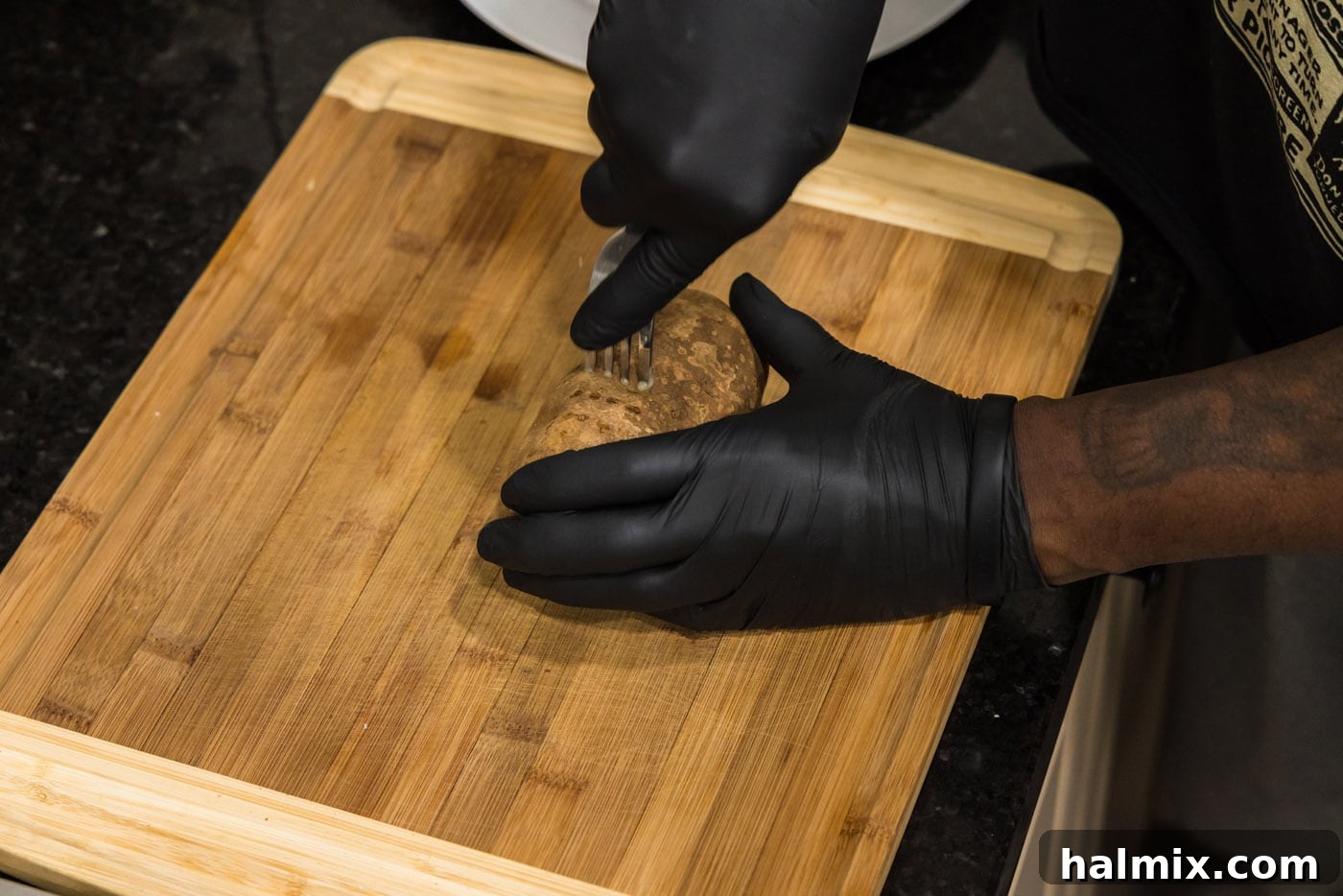
- Pierce the Potatoes: Using a fork, pierce each potato several times across its surface. Aim for about 6-8 punctures per potato. This allows steam to escape during baking, preventing the potato from bursting and ensuring a light, fluffy interior rather than a dense, soggy one.
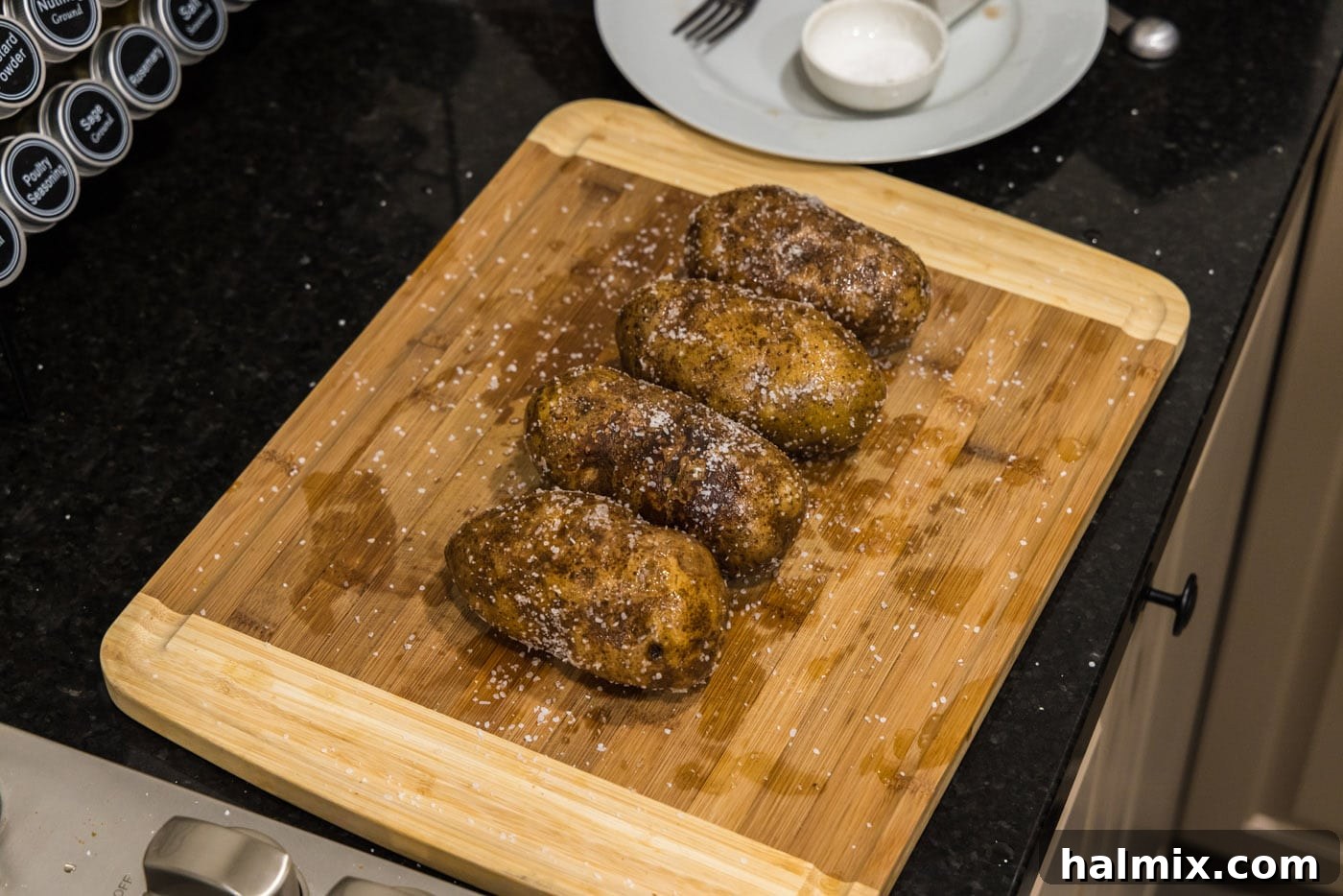
- Oil and Salt Generously: Drizzle each potato with about a teaspoon of olive oil (or your chosen oil) and rub it evenly all over the skin. Then, sprinkle generously with Kosher salt, ensuring an even coating across the entire surface. The oil helps the salt adhere and promotes a beautifully crisp skin.
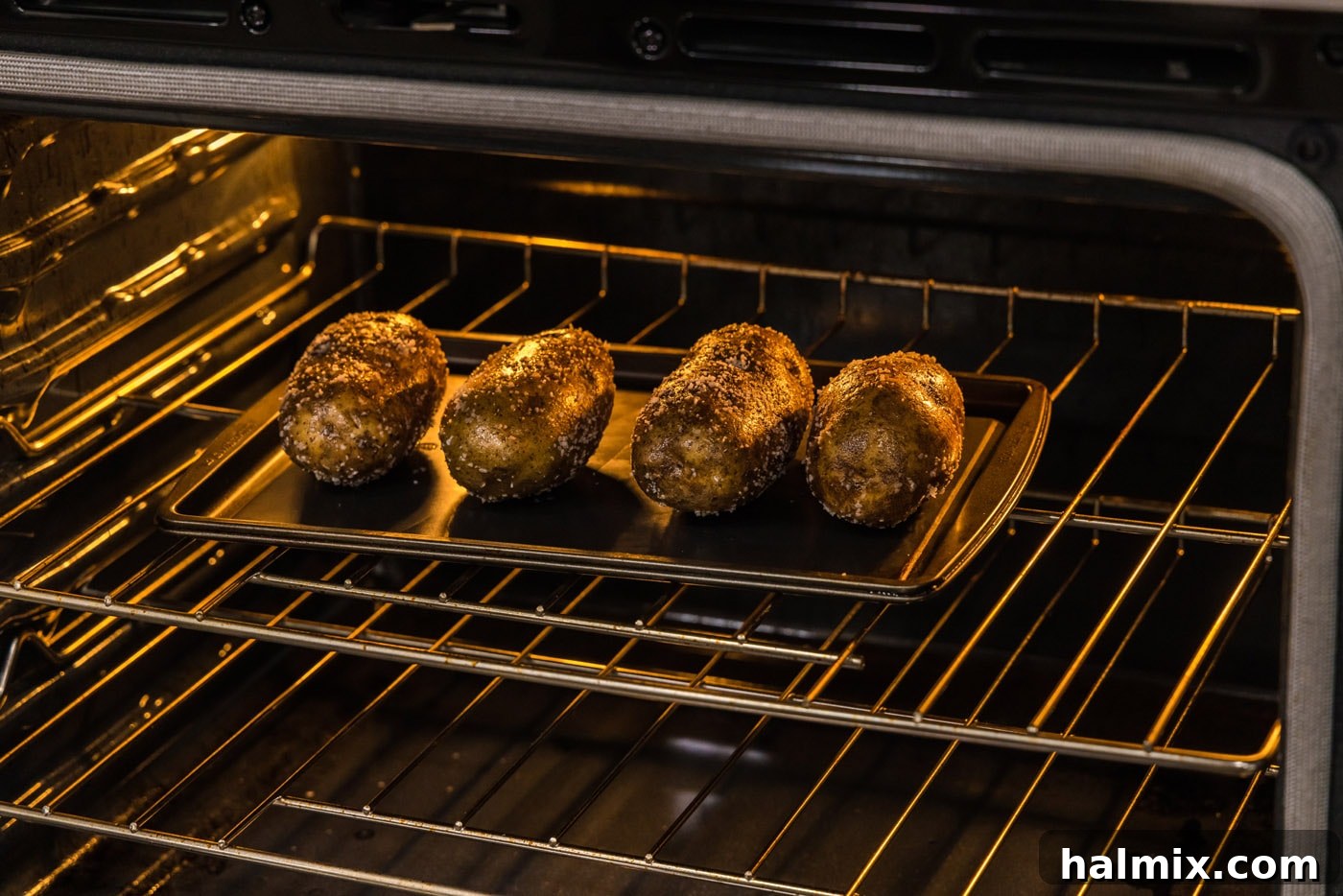
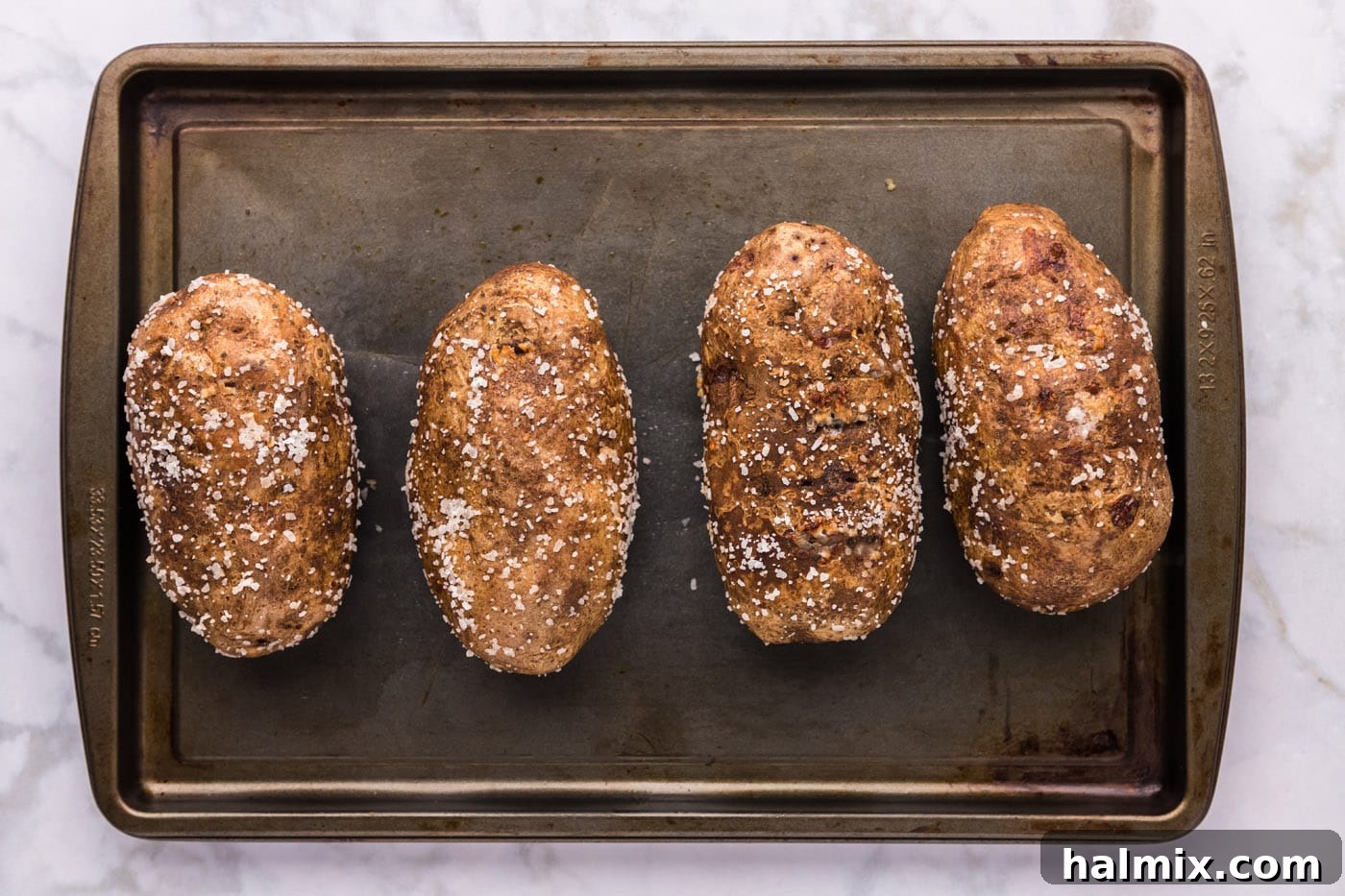
- Bake to Perfection: Place the prepared potatoes directly onto a baking sheet. Baking them directly on the sheet (or even an oven rack for maximum air circulation) ensures heat can reach the entire surface. Bake for approximately 1 hour, or until the potatoes are tender when squeezed gently and a fork easily penetrates the center. Larger potatoes may require an additional 10-15 minutes.
Frequently Asked Questions & Expert Tips for Baked Potatoes
Even though baking a potato seems simple, a few common questions and expert tips can elevate your results from good to absolutely fantastic.
Should you wrap potatoes with foil before baking?
No, it is generally not recommended to wrap potatoes in foil before baking if your goal is a crispy skin. Wrapping them in foil essentially steams the potato as it bakes because it traps the moisture in. This will result in a soft, wet, and often soggy skin, which is the opposite of the desired crispy texture. While foil might speed up the cooking process slightly and keep the interior moist, it sacrifices the delightful crispiness of the exterior. Only consider foil if you specifically prefer a steamed potato or need to keep it warm for an extended period after baking.
Why should you poke holes in baked potatoes?
Poking holes in the potatoes before baking is a critical step for a couple of reasons. Potatoes naturally contain a high amount of moisture. When subjected to high heat in the oven, this moisture converts into steam. If this steam remains trapped within the potato, the internal pressure can build up significantly, potentially causing the potato to split open or even “explode” in your oven (though actual explosions are rare, splitting is more common). More importantly for texture, allowing steam to escape promotes a drier, crispier skin and a lighter, fluffier interior. Without proper ventilation, the steam can make the inside dense and watery.
How do you know when a baked potato is done?
A perfectly baked potato should feel tender all the way through. You can test for doneness by gently squeezing the potato; if it yields easily to pressure, it’s likely done. Another reliable method is to insert a metal skewer or a thin knife into the center. If it slides in with little to no resistance, your potato is ready. For precise results, you can also use an instant-read thermometer. The internal temperature of a fully cooked baked potato should be between 205-212°F (96-100°C).
How do you store leftovers?
To store leftover baked potatoes, allow them to cool completely to room temperature within two hours of baking. Then, place them in an airtight container or a resealable bag and store them in the refrigerator for 2-3 days. Do not store baked potatoes at room temperature for extended periods, as this can lead to the growth of harmful bacteria. To reheat, you can place them on a baking sheet in a 350°F (175°C) oven for 10-15 minutes, or until warmed through. This method helps the skin re-crisp. Alternatively, you can microwave them, but this may result in a softer skin.
Creative Topping Ideas for Your Baked Potato Bar
Once your baked potatoes emerge from the oven, hot and inviting, it’s time for the fun part: adding toppings! The versatility of a baked potato makes it a fantastic base for countless flavor combinations, transforming a simple side into a satisfying meal or a delightful party centerpiece. Here are some serving suggestions to inspire your next potato creation:
Classic & Comforting Toppings:
- Butter and Chives: A timeless combination that highlights the potato’s natural flavor.
- Sour Cream & Green Onions: Cool, tangy sour cream perfectly complements the warm potato.
- Cheddar Cheese: Shredded cheddar cheese melts beautifully into the hot potato.
- Bacon Bits: Crispy, salty bacon adds a delightful crunch and savory depth.
- Broccoli & Cheese: Steamed broccoli florets with a rich cheese sauce or shredded cheese for a hearty, comforting option.
Savory & Hearty Meal Toppings:
- Chili: A generous scoop of your favorite beef or vegetarian chili transforms a baked potato into a substantial meal.
- Pulled Pork or Chicken: Shredded, slow-cooked meats, perhaps with a smoky BBQ sauce, make for an incredibly satisfying main dish.
- Taco Style: Ground beef or turkey seasoned with taco spices, topped with salsa, guacamole, and shredded lettuce.
- Steak and Blue Cheese: Sliced grilled steak, crumbled blue cheese, and a drizzle of balsamic glaze for a gourmet touch.
- Mediterranean Inspired: Feta cheese, Kalamata olives, sun-dried tomatoes, and a sprinkle of fresh oregano.
Vegetarian & Fresh Options:
- Diced Jalapeños: For those who love a bit of heat and a fresh crunch.
- Pesto & Cherry Tomatoes: A vibrant and flavorful combination with a Mediterranean twist.
- Sautéed Mushrooms and Onions: Earthy and savory, a simple yet elegant choice.
- Roasted Vegetables: A medley of roasted seasonal vegetables like bell peppers, zucchini, and asparagus.
- Spinach & Artichoke: A creamy, cheesy spinach and artichoke dip warmed over the potato.
Create a Loaded Potato Bar:
For parties or family gatherings, setting up a “loaded potato bar” is an absolute crowd-pleaser. Simply bake a large batch of potatoes and arrange a variety of toppings in separate bowls. Guests can customize their own potatoes, making it an interactive and fun dining experience. Don’t forget to include basic condiments like salt, black pepper, and hot sauce. Enjoy these warm from the oven, dressed up or kept wonderfully simple with just a pat of butter!
More Delicious Potato Recipes to Try
If you’ve mastered the art of the baked potato and are looking for more ways to enjoy this versatile root vegetable, here are some other fantastic potato recipes to add to your repertoire:
- Crispy Potato Wedges
- Hearty Baked Potato Soup
- Savory Garlic Roasted Potatoes
- Quick Air Fryer Baked Potatoes
- Loaded Mashed Potato Casserole
- Classic Potato Skins
I genuinely love experimenting in the kitchen and sharing my culinary discoveries with all of you! Remembering to visit daily for new recipes can be challenging, which is why I offer a convenient newsletter delivered right to your inbox every time a new recipe is posted. Simply subscribe today and start receiving your free daily recipes, ensuring you never miss a delicious update!
Baked Potatoes
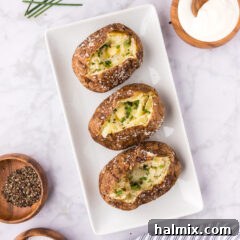
It takes no more than three ingredients, a baking sheet, and a toasty oven to make perfect baked potatoes every time!
IMPORTANT – There are often Frequently Asked Questions within the blog post that you may find helpful. Simply scroll back up to read them!
Ingredients
- 4 large Russet potatoes
- 1 Tablespoon olive oil
- 1 Tablespoon Kosher salt
Things You’ll Need
- Baking sheet
Instructions
- Preheat oven to 425 F.
- Wash and dry potatoes thoroughly.
- Pierce potatoes with a fork several times.
- Rub olive oil all over the potatoes then sprinkle generously with Kosher salt.
- Place prepared potatoes on baking sheet and bake for 1 hour, or until tender.
Nutrition Facts
Calories: 309 cal |
Carbohydrates: 67g |
Protein: 8g |
Fat: 2g |
Saturated Fat: 0.4g |
Polyunsaturated Fat: 0.4g |
Monounsaturated Fat: 1g |
Sodium: 309mg |
Potassium: 1539mg |
Fiber: 5g |
Sugar: 2g |
Vitamin A: 4IU |
Vitamin C: 21mg |
Calcium: 48mg |
Iron: 3mg
Follow on Pinterest @AmandasCookin or tag #AmandasCookin!
The recipes on this blog are tested with a conventional gas oven and gas stovetop. It’s important to note that some ovens, especially as they age, can cook and bake inconsistently. Using an inexpensive oven thermometer can assure you that your oven is truly heating to the proper temperature. If you use a toaster oven or countertop oven, please keep in mind that they may not distribute heat the same as a conventional full sized oven and you may need to adjust your cooking/baking times. In the case of recipes made with a pressure cooker, air fryer, slow cooker, or other appliance, a link to the appliances we use is listed within each respective recipe. For baking recipes where measurements are given by weight, please note that results may not be the same if cups are used instead, and we can’t guarantee success with that method.