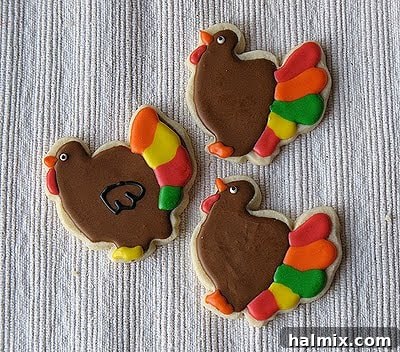

Mastering Festive Thanksgiving Cookies: Turkeys, Leaves & Pumpkins with Royal Icing
There’s something truly magical about holiday baking, especially when it involves beautifully decorated cookies that capture the spirit of the season. As Thanksgiving approaches, the kitchen transforms into a hub of creativity, filled with the aroma of spices and sugar. This year, I found myself embarking on a delightful cookie decorating adventure, crafting charming turkeys, vibrant leaves, and classic pumpkins. What started as a simple idea quickly blossomed into a newfound obsession, blending my love for crafts with my passion for food. These edible works of art are not only a joy to make but also bring immense delight to anyone who receives them.
While the thought of sharing intricate cookie decorating tutorials might feel a bit daunting, I’m thrilled to share my journey, invaluable tips I’ve learned, and the fantastic recipes that made these festive treats possible. Whether you’re a seasoned baker or just starting your cookie decorating exploration, this guide aims to equip you with the knowledge to create your own stunning Thanksgiving cookies, perfect for family gatherings or as thoughtful gifts.

The Journey to Cookie Perfection: From Inspiration to Creation
My love affair with decorated cookies began a while ago, particularly after crafting elaborate football jersey cookies for my boys’ teams. The satisfaction of transforming a simple cookie into a personalized masterpiece was incredibly rewarding. So, when I stumbled upon a set of adorable cookie cutters at Walmart—a turkey, a leaf, and a pumpkin—just days before Halloween, I knew exactly what my next project would be. It felt like destiny, prompting the creation of these delightful Thanksgiving-themed cookies. With an additional leaf cutter already at home and a collection of alphabet letter cutters, the possibilities for festive designs were endless, and this post was born out of that excitement.
This particular project perfectly bridges the gap between my craft blog and this food blog. Decorating cookies is an art form, a miniature canvas for edible creativity. Because they are, first and foremost, edible, all my royally iced cookie creations will find their home here. Be warned: I foresee myself finding every possible occasion and holiday to make these. So, if you ever feel overwhelmed by a cascade of decorated cookie posts, feel free to skip ahead, but know that these little works of art are simply too fun and rewarding not to share!

Essential Foundations: The Perfect Sugar Cookie & Royal Icing Recipes

The foundation of any great decorated cookie is a superb sugar cookie recipe that holds its shape beautifully while still being incredibly delicious. For this project, I turned to the fantastic sugar cookie recipe provided by my friend Leslie, from The Hungry Housewife. Her recipe is a true winner, consistently yielding perfectly shaped, tender, and flavorful cookies. Leslie also shared the royal icing recipe and an abundance of insightful tips that are crucial for successful cookie decorating. I highly recommend visiting her site and bookmarking her valuable resources for future reference. Her guidance has been instrumental in my cookie decorating journey.

DIY Piping Bags for Precision and Efficiency
Beyond the core recipes, mastering a few key techniques can elevate your decorating game. One exceptional resource I discovered is The Baker’s Banter from King Arthur Flour. Their post details an incredibly cool method for transforming simple parchment paper into small, disposable piping bags. These DIY bags are fantastic for creating fine lines and intricate details. Not only do they allow for incredible precision, perfect for delicate accents like the lines on the pumpkins, the eyes on the turkey, or the dots on the alphabet letters, but they also minimize waste by holding only a small amount of icing. This means you can easily switch colors without feeling like you’re wasting precious royal icing.
For those times when you’re working with many different colors and don’t want to constantly clean or switch out a single decorator tip, or invest in multiple tips and couplings, a simple workaround works wonders. I often fill disposable piping bags with different colored icings and then snip a tiny corner off the end of each bag. While professional piping tips offer unparalleled precision, this method delivers excellent results for many designs and is incredibly convenient, especially for beginners or when decorating in bulk.

Mastering Royal Icing Techniques: Tips for Stunning Results
Royal icing is the secret to those smooth, professional-looking decorated cookies. But it can be a bit intimidating at first. Here are some critical tips that have made a world of difference in my cookie decorating endeavors:
Achieving the Right Icing Consistency
One of the most crucial aspects of royal icing is achieving the correct consistency for different tasks. For outlining, you need a slightly thicker consistency, often referred to as “20-second icing” (meaning a line drawn on the surface disappears within 20 seconds). For flooding, the icing should be thinner, a “10-second icing,” allowing it to spread smoothly and evenly across the cookie surface. Too thick, and it’s hard to pipe; too thin, and it runs off the cookie. Practice and small adjustments with water or powdered sugar are key.
The “Outline and Fill Immediately” Golden Rule

Leslie shared an incredibly valuable tip: when outlining and filling a cookie with the same color, always pipe the border and then immediately fill the center. Do not outline all your cookies first and then go back to fill them. The reason? If the border has time to dry before you fill the center, you’ll end up with noticeable, raised border lines. I learned this the hard way with my white jersey cookies, where I outlined everything first, tried a flooding method with icing bottles from another blog, and ended up with distinct border lines. It just didn’t work. However, when I applied Leslie’s method to the colored jersey cookies, they turned out perfectly smooth. This immediate outline-and-fill strategy is a game-changer for achieving seamless results.
Effective Flooding Technique
When filling the centers of your cookies, simply pipe along the inner border of your outline, working your way inward until the entire area is covered. Once the icing is applied, gently tap the cookie against a flat surface, like the side of a cookie sheet, or carefully pick it up and shake it side-to-side a little. This helps the icing spread out evenly to the edges and eliminates any visible lines. If you notice any air bubbles, pop them with a toothpick and shake the cookie again. You can also use a toothpick to gently guide the icing into any stubborn gaps, but remember to work quickly before the icing starts to set. The key is to work on one cookie at a time, ensuring a smooth, uniform finish for each one.
Artistic Touches: Blending Colors and Details

Experimenting with color blending can add a beautiful artistic dimension to your cookies. For the leaves, I tried blending different autumn hues, and while there’s always room for improvement, I was quite pleased for a newbie attempt! The trick here is the “wet-on-wet” technique: add your secondary color(s) immediately after applying the base coat, while the base icing is still wet. Then, simply drag a toothpick through the wet icing to create swirls, marbling effects, or other unique patterns. This technique allows the colors to meld seamlessly, creating stunning gradients and textures.
Drying and Finishing
After decorating, proper drying is essential. Royal icing needs time to harden completely. Depending on humidity levels, this can take anywhere from a few hours to overnight. Allow your cookies to air dry on a flat surface, preferably undisturbed, until the icing is firm to the touch. This prevents smudges and ensures a durable, beautiful finish. If you plan to add sprinkles, nonpareils, or colored sugar, remember to do so immediately after applying the wet icing, before it has a chance to set.

Beyond Royal Icing: Simple Decorating Alternatives
Even if the thought of tackling royal icing seems a bit too much right now, I strongly encourage you to try this sugar cookie recipe. It’s truly a delicious, overall winner! The cookies are fantastic on their own, and they’re also incredibly fun to decorate with simpler options. You can use canned frosting, a quick powdered sugar glaze, or even just sprinkle them generously with jimmies, nonpareils, or colored sugar. These quick and easy decorating methods still yield festive and tasty treats that everyone will enjoy, proving that a fantastic cookie base can shine with any topping.

Conclusion: The Joy of Thanksgiving Baking
My deepest gratitude goes to my wonderful friend, Leslie. Her willingness to share these incredible recipes and patiently answer my many questions truly made these yummy treats possible. My family, who eagerly devoured every single cookie, also extends their heartfelt thanks! Baking and decorating these Thanksgiving cookies was a truly rewarding experience, full of creativity and delicious results.
I hope these tips and insights inspire you to embark on your own cookie decorating adventure this Thanksgiving. May your holidays be filled with warmth, delicious food, and plenty of joyous moments. Happy Thanksgiving!
Looking for More Kid-Friendly Thanksgiving Treats?
If you’re searching for a fun and simple activity for the younger ones, try this adorable Thanksgiving turkey treat from The Idea Room. It’s a fantastic project that kids will love to make and eat!
Cut Out Sugar Cookies
from The Hungry Housewife

Thanksgiving Cookies: Turkeys, Leaves & Pumpkins, Oh My!
IMPORTANT – There are often Frequently Asked Questions within the blog post that you may find helpful. Simply scroll back up to read them!
Print It
Pin It
Rate It
Save ItSaved!
Ingredients
- 1 cup butter softened
- 1 cup sugar
- 1 egg
- 1 ½ teaspoon almond or vanilla extract or a mix of both
- 3 cups ap flour
- 1 ½ teaspoons baking powder
- ½ teaspoon salt
Royal Icing Cookie Glaze
- 6 oz 3/4 cup warm water
- 5 Tablespoons Meringue Powder
- 1 teaspoon cream of tartar
- 2 ¼ pounds powdered sugar
Instructions
-
Cream the butter and sugar until light and fluffy. Add in the eggs and the extract and beat to incorporate. In a separate bowl sift together the flour, baking powder and salt. Slowly add the flour mixture to the butter mixture and mix until combined.
-
Divide the dough into 2 portions and roll to 3/8″ thick in between 2 sheets of parchment paper and chill in the fridge for 2 hours.
-
Remove the dough and cut your desired shape. Place the formed cookies back in the fridge for 10-15 minutes. Take the scraps and re roll them to 3/8″ in the parchment paper and re chill before cutting out again.
-
Preheat oven to 350 degrees F (175 degrees C) 30 minutes before baking the cookies. Bake your cookies on an ungreased cookie sheet (resist the urge to add parchment. These don’t make a mess, but the parchment can cause spreading) for 8-12 minutes depending on the thickness of your cookie. (Mine were done in 9.5 minutes)
-
Cool on cookie sheet for 2 minutes before removing to a cooling rack.
-
Cool completely before icing.
Royal Icing Cookie Glaze
-
If your meringue powder does not have any vanilla flavor in it, you can add a teaspoon of CLEAR vanilla.
-
In a mixer bowl, pour the warm water and the meringue powder in and whisk for about 30 seconds until frothy. Add the cream of tartar and whisk for another 30 seconds. Pour all of the sugar in at once and place on the mixer.
-
Using your paddle attachment, on the lowest speed, mix slowly for 10 full minutes.
-
Icing will be thick and creamy (like Elmer’s Glue). Cover the bowl the a damp cloth to prevent drying and crusting.
-
If you find the icing too thick, you can thin it by adding in water by the Tablespoon.
-
TIP: To test, lift your paddle attachment. Watch the ribbon of icing fall back into the bowl of icing. It should disappear before the count of 10. If it doesn’t add a little water at a time until it does.
The recipes on this blog are tested with a conventional gas oven and gas stovetop. It’s important to note that some ovens, especially as they age, can cook and bake inconsistently. Using an inexpensive oven thermometer can assure you that your oven is truly heating to the proper temperature. If you use a toaster oven or countertop oven, please keep in mind that they may not distribute heat the same as a conventional full sized oven and you may need to adjust your cooking/baking times. In the case of recipes made with a pressure cooker, air fryer, slow cooker, or other appliance, a link to the appliances we use is listed within each respective recipe. For baking recipes where measurements are given by weight, please note that results may not be the same if cups are used instead, and we can’t guarantee success with that method.
NEW! Be sure to subscribe to my newsletter, Foodie in the Craftroom, to receive updates and tips from both Amanda’s Cookin’ and Crafts by Amanda! Visit https://amandascookin.com/p/subscribe-to-newsletter.html