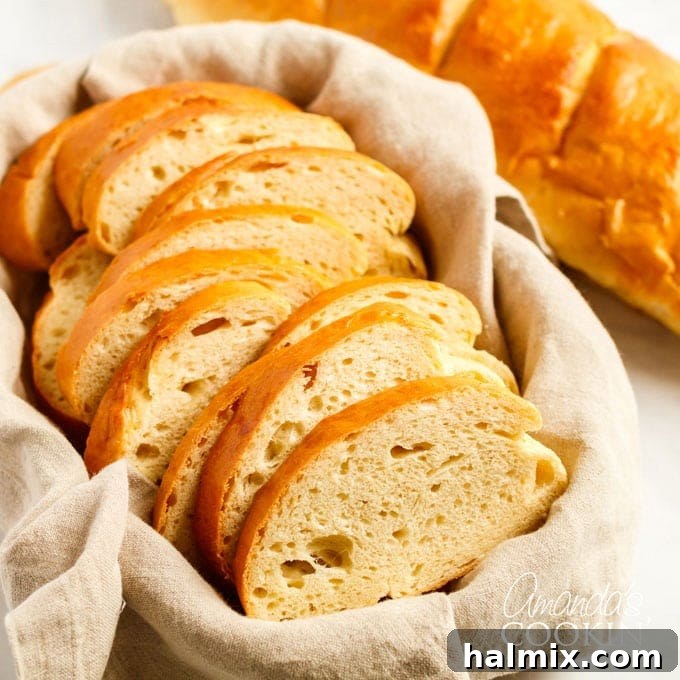
There’s nothing quite like the aroma of freshly baked bread wafting through your home. And when it comes to comfort food, a warm, crusty loaf of homemade Italian bread straight from the oven is truly unbeatable. While you can certainly grab a loaf from the grocery store, the immense satisfaction of baking your own bread is an experience every home cook should try. This easy Italian bread recipe not only tastes delicious but also transforms a simple act into a rewarding culinary adventure.
Beyond being a delightful snack, this versatile Italian loaf is the perfect accompaniment to countless meals. It shines brilliantly alongside a hearty bowl of spaghetti and meatballs, ready to sop up every drop of rich marinara sauce. It also pairs wonderfully with a comforting plate of my crockpot roast beef, offering a delightful contrast to the tender meat and savory gravy. For those who enjoy a variety of homemade breads, you might also love my 1963 homemade white bread for classic sandwiches or the rustic charm of everything peasant bread for everyday snacking. But for a taste of Italy, this recipe is your go-to.
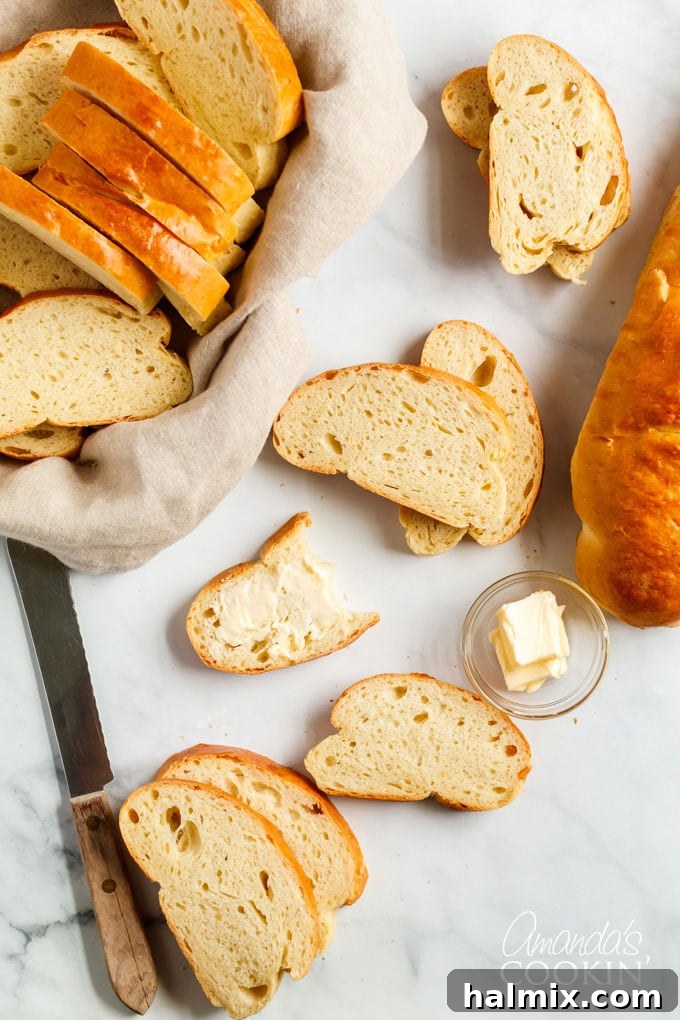
The Essence of Italian Bread: A Classic Recipe
When embarking on the journey to bake authentic Italian bread, it’s helpful to understand what sets it apart. Many people don’t realize there’s a distinct difference between French bread and Italian bread, though both are beloved staples of European cuisine. While French baguettes are renowned for their crisp crust and airy interior, traditionally made with just flour, water, yeast, and salt (French law even prohibits added fats), Italian bread often incorporates a touch of oil. This addition of oil is key to Italian bread’s characteristic softer crumb, more tender texture, and a crust that, while still beautifully crisp, can be a little less crackly than its French counterpart, allowing it to stay fresh longer.
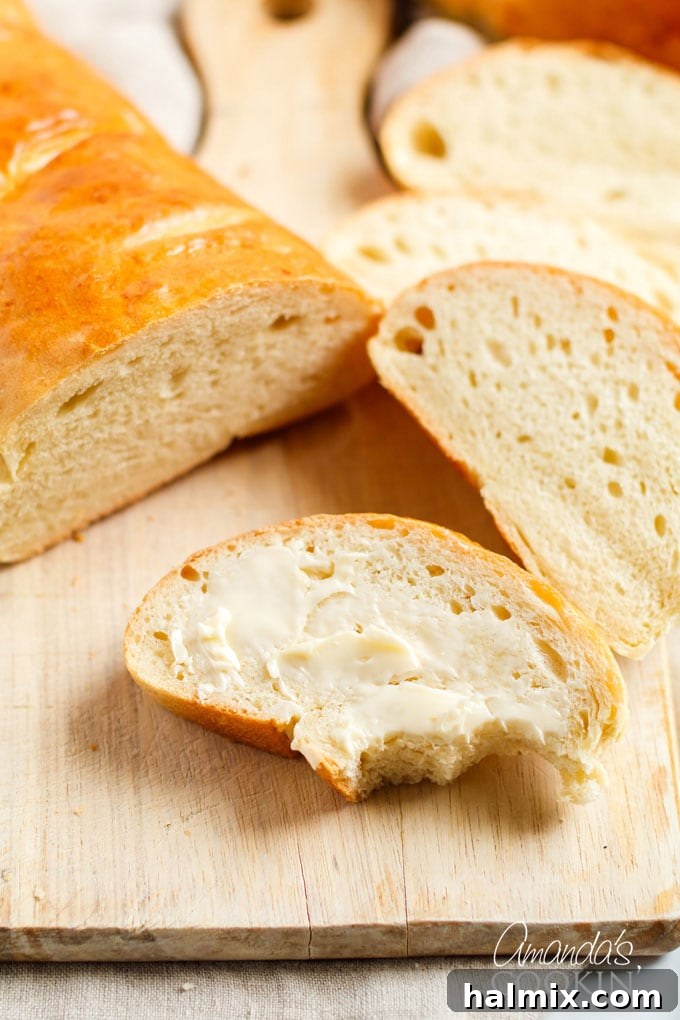
The form factor also differs: French loaves are typically long and thin, perfect for tearing and sharing. Italian loaves, on the other hand, tend to be shorter and wider, offering a heartier slice. Our homemade Italian bread recipe embraces these beloved characteristics, delivering a loaf that is both tender on the inside and perfectly golden and crisp on the outside. It’s a versatile bread that’s ideal for soaking up sauces, building robust sandwiches, or simply enjoying with a drizzle of olive oil and a sprinkle of salt. It’s truly a celebration of simple, wholesome ingredients coming together to create something extraordinary.
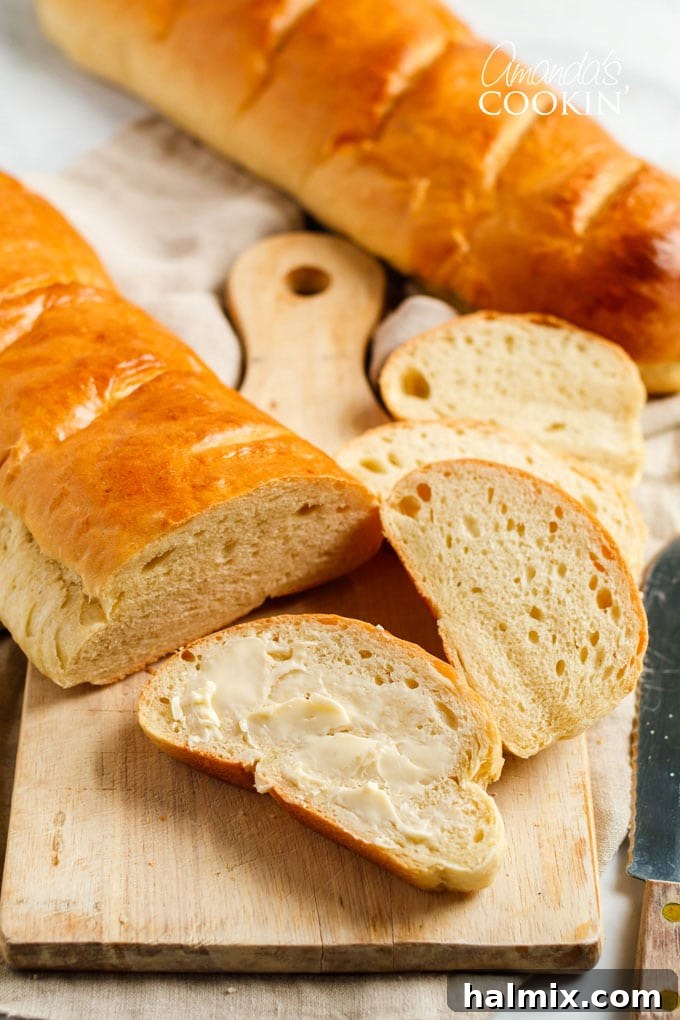
Expert Baking Tips & FAQs for Perfect Italian Bread
Baking bread is a science and an art, and understanding your ingredients is crucial for a successful loaf. Here are some essential tips and answers to common questions that will help you master this easy Italian bread recipe. You’ll find the complete list of ingredients with precise measurements in the printable recipe card at the end of this post.
Understanding Your Ingredients:
- Yeast: Active Dry vs. Instant: You can use the small packets of active dry yeast found in any grocery store. If you bake frequently, consider purchasing SAF instant yeast in larger, more economical packages. The key difference is that active dry yeast typically needs to be “proofed” (dissolved in warm water with a pinch of sugar to activate it and ensure it’s still alive) before adding to other ingredients. Instant yeast, however, can often be mixed directly with the dry ingredients. Our recipe uses the proofing method for active dry yeast to ensure a robust rise.
- Water Temperature is Crucial: When a bread recipe calls for warm water to activate yeast, the ideal temperature is typically around 110°F (43°C). Think of it like a baby’s bath – warm, but not hot. If the water is too hot, it will kill the delicate yeast organisms, preventing your bread from rising. If it’s too cold, the yeast will activate too slowly, resulting in a dense loaf. You’ll also use hot water in this recipe (around 115-120°F or 46-49°C, from the tap, not boiling). This hot water is mixed with other ingredients before the proofed yeast mixture is added, so it won’t harm the yeast, but helps in gluten development and creates a more extensible dough.
- The Role of Sugar: Granulated sugar in bread recipes does more than just sweeten the dough. It acts as “food” for the yeast, helping it to activate and produce carbon dioxide, which gives the bread its airy texture. We use regular white granulated sugar in this recipe.
- Salt for Flavor and Structure: Don’t underestimate the importance of salt. It not only enhances the flavor of the bread but also helps to control yeast activity, ensuring a steady, even rise, and strengthens the gluten structure. Use regular table salt for this recipe.
- Choosing Your Oil: This recipe specifies vegetable oil, which contributes to the soft crumb and tender crust characteristic of Italian bread. However, you can absolutely substitute it with olive oil for a more pronounced Mediterranean flavor. Both options work beautifully, so choose what you prefer or have on hand.
- Flour Type: We use standard all-purpose flour (white, not wheat) for this bread. All-purpose flour provides the right balance of protein for good gluten development without making the bread overly dense, resulting in a wonderfully pliable dough and a light, chewy interior.
Common Questions & Troubleshooting:
Absolutely! Freezing the dough is a fantastic way to prepare ahead. Wrap the dough tightly in plastic wrap, then place it in freezer bags for up to 3 months. When you’re ready to bake, remove the dough from the freezer and let it thaw at room temperature. This process usually takes about 4 hours. Once thawed, proceed with the recipe instructions for shaping and baking.
This is where proofing comes in! When you dissolve the yeast, warm water (110°F), and a pinch of sugar in a small bowl, let it sit for 5-10 minutes. If the mixture becomes foamy and bubbly, your yeast is active and ready to use. If nothing happens, your yeast might be old or dead, and it’s best to start with a fresh batch.
Don’t worry, sticky dough is common, especially with no-knead recipes. If your dough is still exceptionally sticky after the first rise, gradually add small amounts of all-purpose flour, about a quarter cup at a time, until it becomes more manageable and pliable. The goal is to have a dough that’s easy to handle but not dry. Avoid adding too much flour, as this can result in a dense, tough bread.
Certainly! For an aromatic twist, you can incorporate dried Italian herbs like oregano, basil, or rosemary (about 1-2 teaspoons) into the flour mixture. If you love garlic, consider adding 1-2 cloves of minced garlic with the oil. These additions will infuse your bread with even more delicious flavor, perfect for serving with Italian-inspired meals.
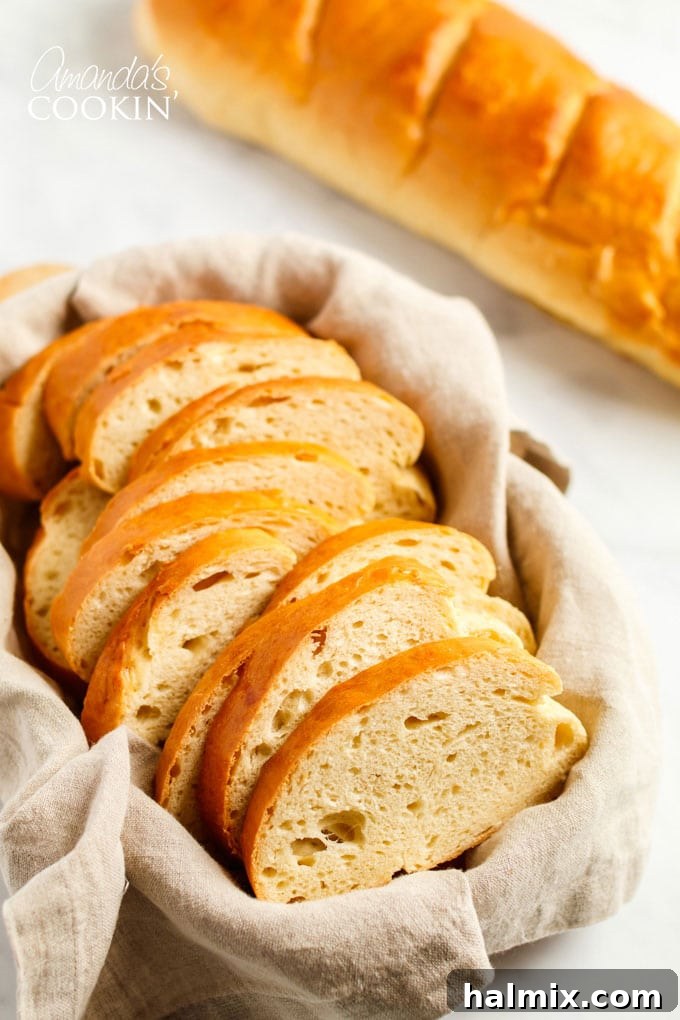
Helpful kitchen tools for bread baking:
- A set of sturdy mixing bowls for combining ingredients and allowing the dough to rise.
- A reliable stand mixer with a dough hook can make the mixing process effortless, or a hand mixer can be used for initial blending.
- Quality baking sheets are essential for baking your loaves evenly.
- A wire cooling rack is a must for ensuring your bread cools properly, preventing a soggy bottom.
- A pastry brush is handy for applying the egg wash for that beautiful golden crust.
- A rolling pin for shaping the dough into perfect loaves.
- And of course, a sharp bread knife for clean, effortless slicing.
Special note: Looking for a shortcut? Bread Machine instructions for the dough are provided at the very end of this post!
How to Make Italian Bread: A Step-by-Step Guide
Baking delicious Italian bread at home is a straightforward process, even for beginners. Follow these detailed steps to create a beautiful, aromatic loaf. For convenience, you can also print this recipe here.
- Activate the Yeast: In a small bowl, combine the active dry yeast, 1/2 cup of warm water (ensure it’s around 110°F or 43°C), and 1/2 teaspoon of granulated sugar. Stir gently to dissolve the yeast. Let this mixture sit for 5-10 minutes. During this time, the yeast should become foamy and bubbly on the surface, indicating that it’s active and ready to work its magic. This crucial step is known as “proofing” the yeast, ensuring your bread will rise beautifully.
A NOTE ABOUT YEAST: Whether you’re using active dry yeast or instant yeast, understanding their behavior is key. Active dry yeast requires proofing – reactivating it in warm liquid to “prove” it’s alive and effective. Without proper proofing, your bread may not rise. Instant dry yeast, however, is designed to be added directly to dry ingredients without prior proofing, as it’s processed to activate more quickly. Our recipe proofs the yeast to guarantee a successful rise, especially if you’re using active dry yeast or are unsure of its freshness.
- Combine Wet and Dry Ingredients (Initial Mix): In a large mixing bowl or the bowl of your stand mixer, combine 2 cups of hot water (about 115-120°F or 46-49°C – hot to the touch but not scalding), the remaining 3 tablespoons of granulated sugar, the salt, and the vegetable oil. Give it a good stir. Then, add 3 cups of all-purpose flour to this mixture. Mix thoroughly until all the ingredients are well incorporated and you have a shaggy, somewhat sticky batter.
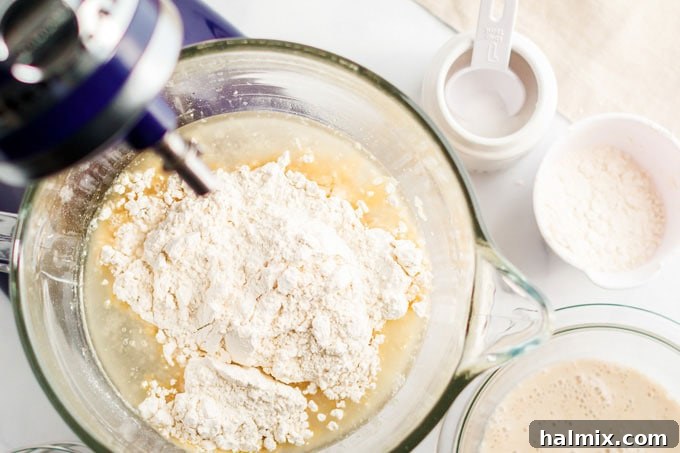
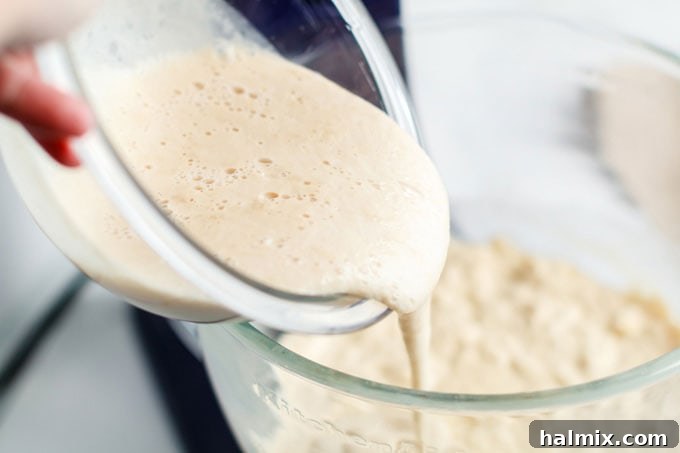
- Add Yeast Mixture: Gently pour the activated, foamy yeast mixture into the large bowl with your flour mixture. Stir it in until it’s evenly distributed throughout the dough.
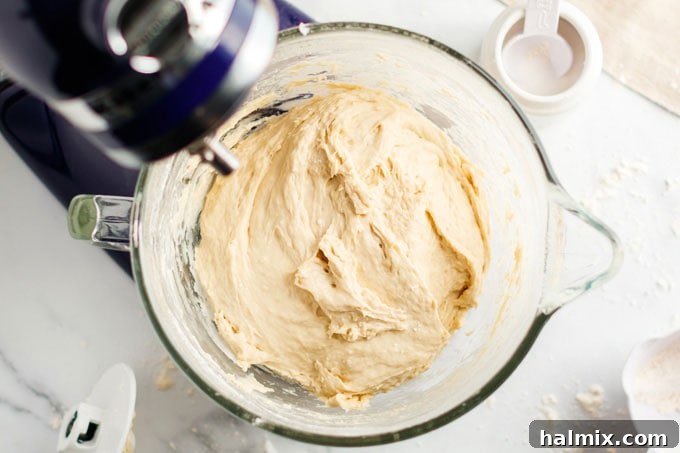
- Incorporate Remaining Flour: Gradually add 2 to 3 more cups of all-purpose flour to the dough, mixing until it’s well blended. At this stage, your dough will still be quite soft and sticky. The exact amount of flour can vary depending on humidity and flour consistency, so aim for a dough that is sticky but starting to pull away from the sides of the bowl.
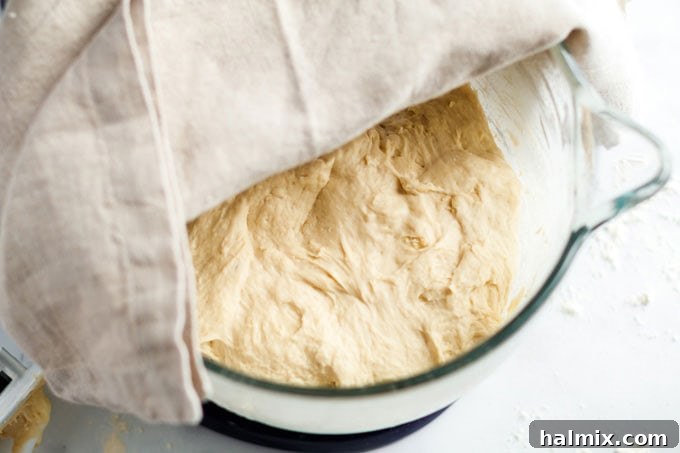
- First Rise (Bulk Fermentation): Cover the bowl containing your dough with a clean kitchen towel. Place it in a warm, draft-free spot and let it rise for approximately 1 hour. During this time, the dough should roughly double in size. If you’re using a stand mixer, remember to remove the bowl from the mixer stand before covering, to prevent the paddle attachment or dough hook from becoming encased in risen dough! This is a no-knead Italian bread recipe, so no strenuous kneading is needed.
- Prepare for Shaping: After the first rise, gently turn the dough out onto a lightly floured surface. If the dough is still too sticky to handle comfortably, add small amounts of flour (about 1/4 cup at a time) to your hands and the work surface until it’s pliable but not dry. Divide the dough into 2 equal pieces for larger loaves, or 3 pieces if you prefer smaller, more manageable loaves.
NOTE: This wonderful Italian bread dough is designed to be a no-knead recipe, meaning you won’t need to perform any traditional kneading steps. Its simple mixing and rising process makes it incredibly beginner-friendly!
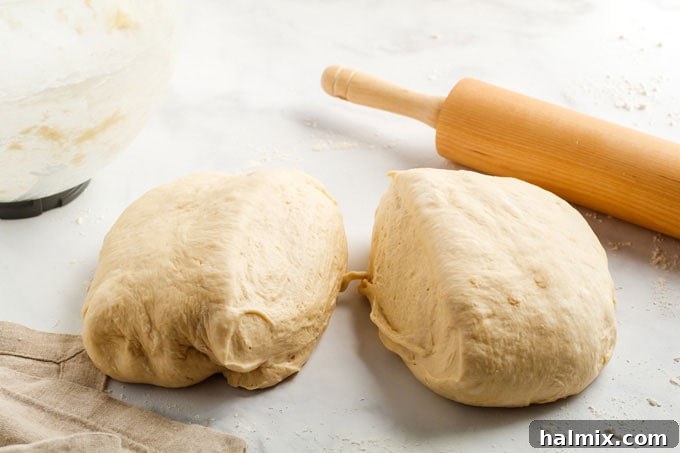
- Shape the Loaves: Take one piece of dough and roll it out on your floured surface into the desired length and shape – typically an oblong or rectangular shape. Then, starting from one of the longer sides, roll the dough up tightly lengthwise, similar to how you would roll a jelly roll. This creates tension in the dough, which helps achieve a good structure in your final loaf. Repeat with the remaining dough pieces.
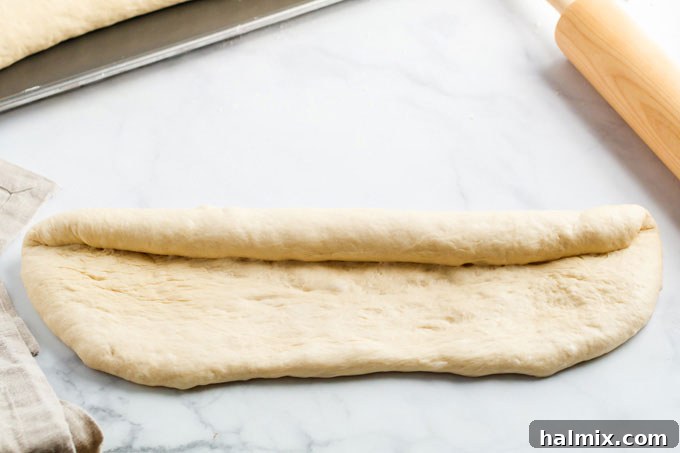
- Prepare for Second Rise: Lightly grease a large baking sheet. Carefully transfer your shaped loaves to the prepared baking sheet, placing them sealed-side down. Tuck the ends of each loaf neatly underneath to create a tidy shape. Using a sharp knife or a baker’s lame, make several diagonal slashes across the top of each loaf, about a couple of inches apart. These slashes not only add to the aesthetic appeal but also allow the bread to expand without tearing during baking, resulting in a beautiful crust.
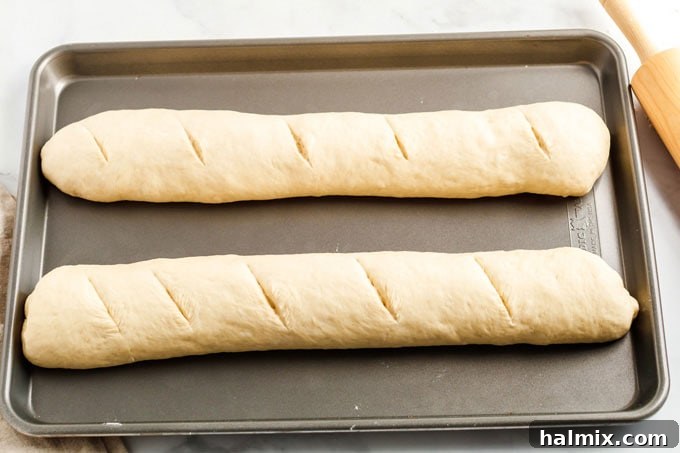
- Second Rise (Proofing): Cover the shaped loaves on the baking sheet with a clean kitchen towel. Let them rise for an additional 30 minutes in a warm, draft-free location. This final rise will allow the loaves to puff up and become light and airy, preparing them for the oven.
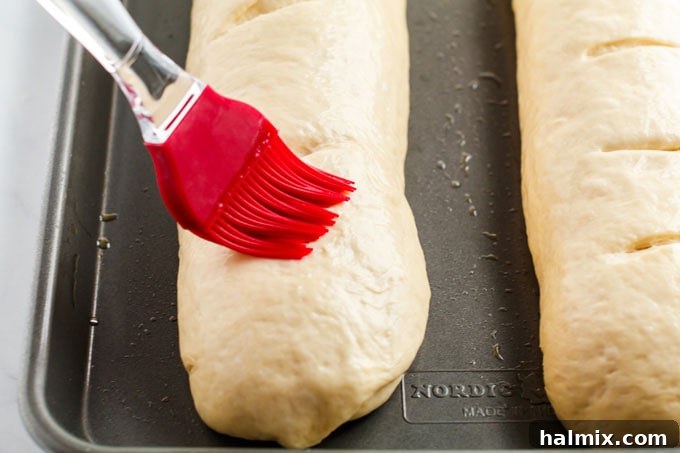
- Preheat Oven & Egg Wash: While your loaves are undergoing their second rise, preheat your oven to 400°F (200°C). In a small bowl, whisk one large egg white until it’s slightly frothy. Just before baking, gently brush this egg white over the top of each loaf. The egg wash will give your Italian bread that coveted glossy, golden-brown crust.
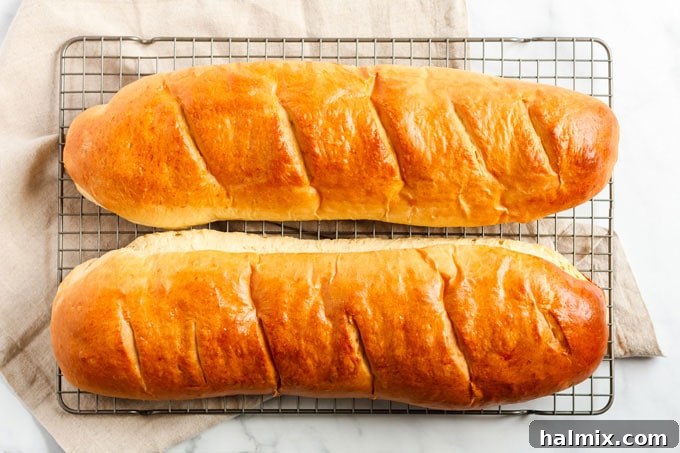
- Bake to Perfection: Place the baking sheet with your loaves into the preheated oven. Bake for 25 to 30 minutes, or until the loaves are beautifully golden brown and sound hollow when tapped on the bottom. Keep an eye on them towards the end of the baking time, as oven temperatures can vary.
Bread Machine Magic: Preparing Italian Bread Dough
For those who love the convenience of kitchen gadgets, a bread machine can be a fantastic tool for preparing the dough for this delicious Italian bread. While the bread machine handles the mixing and initial rising, you’ll still enjoy the hands-on satisfaction of shaping and baking the loaves in your conventional oven. This method significantly cuts down on active prep time, making homemade bread even more accessible.
- Adjust Ingredients: Refer to the printable recipe below for the full list of ingredients. When using a bread machine for dough preparation, you’ll need to cut all the ingredients in half, as most bread machines are designed for smaller batch sizes. Additionally, you can skip the initial yeast proofing step (combining warm water and sugar with yeast in a small bowl) as bread machines typically handle this differently.
- Add Liquids to Bread Machine: Begin by adding 1 cup of warm water (around 110°F or 43°C) and 1/4 cup of vegetable oil to the bread machine bucket. Ensure the mixing paddle is correctly installed at the bottom of the bucket.
- Add Sweetener and Salt: Next, add 4 1/2 teaspoons of granulated sugar and 1 1/2 teaspoons of salt to the bucket. These ingredients will dissolve into the liquids as the machine begins its cycle.
- Layer in Flour: Gently add 3 cups of all-purpose flour over the liquid mixture. Try to cover all the wet ingredients with the flour, creating a barrier. This layering helps to keep the yeast separate from the liquids until the mixing cycle begins.
- Add Yeast Last: Carefully place 2 1/4 teaspoons (which is typically one standard packet) of active dry or instant yeast on top of the flour. Make sure no other ingredients are directly touching the yeast. This prevents premature activation or inhibition.
- Start Dough Cycle: Place the bucket securely into your bread machine. Select the “Dough” cycle. The machine will mix, knead, and perform the first rise automatically.
- Shape and Bake: Once the bread machine beeps, indicating the dough cycle is complete, carefully remove the dough from the bucket. Turn it out onto a lightly floured surface. If it’s too sticky, add a little more flour as needed to make it workable. Now, follow steps 7 through 12 from the conventional oven instructions above for shaping the loaves (rolling them up jelly roll style), placing them on a greased baking sheet, adding slashes, covering to rise for 30 minutes, brushing with egg white, and finally, baking at 400°F (200°C) for 25-30 minutes.
How to Enjoy This Versatile Italian Bread
The beauty of homemade Italian bread lies in its incredible versatility. While it’s a natural fit for classic Italian fare, its soft interior and satisfying crust make it a welcome addition to countless meals, expanding far beyond pasta dishes. Get ready to elevate your dining experience with these delicious serving ideas:
- Sop Up Savory Juices: There’s nothing better than using a generous hunk of this bread to soak up the rich, flavorful juices from a succulent main course. It’s truly exceptional with my favorite pork sirloin roast, or any tender pot roast, ensuring not a single drop of savory goodness goes to waste.
- Perfect with Soups and Stews: A big, comforting bowl of soup practically screams for a warm slice of buttered bread. Whether it’s the robust flavors of Italian Sausage Tomato Orzo Soup, the creamy richness of my Cheddar Cheese Potato Soup, or a hearty Zuppa Toscana (a definite hit for Olive Garden fans!), this Italian bread is the ideal companion.
- Dipping into Sauces: Pair it with saucy dishes like a classic Chicken Cacciatore. The bread provides the perfect vehicle to enjoy every last bit of the rich, tomato-based sauce. And for a truly satisfying meal, imagine this bread alongside our new Crockpot Lasagna – it would be an absolutely perfect combination, complementing the layers of pasta and cheese.
- Simple Starters: Toast thick slices and rub with a raw garlic clove, then drizzle with extra virgin olive oil and a pinch of salt for instant garlic bread. Or transform it into bruschetta by topping toasted slices with fresh chopped tomatoes, basil, and a balsamic glaze.
- Sandwiches & Paninis: The sturdy yet soft texture of this Italian loaf makes it ideal for building robust sandwiches or grilling into warm, pressed paninis filled with your favorite meats, cheeses, and veggies.
- Croutons & Breadcrumbs: Don’t let stale bread go to waste! Cut leftover bread into cubes, toss with olive oil and herbs, then bake until crispy for homemade croutons for salads and soups. Or process it into fresh breadcrumbs for coating cutlets or topping casseroles.
Need more dinner inspiration? You can explore all my delicious dinner recipes here!
What Our Readers Are Saying About This Recipe
If you’re new to bread baking, or simply want assurance before gathering your ingredients and dedicating your time, hear what fellow home bakers are saying! This recipe has garnered rave reviews for its simplicity and incredible results. You can find even more glowing testimonials and helpful feedback in the comments section below!
“I have made this twice and it is very tasty, good crust and soft inner not dense , very good flavor, I have been baking bread for 40 years, this is in the top five, Thanks.” ~ Thomas
“By far one of the best and easiest bread recipes I have come across!! Dough comes out perfect and is so easy to roll!! So glad I came across this recipe it’s a game changer.” ~ Tracy
“This bread was so, so delicious! I am proud of myself for going through with it. I was scared to do it and usually need video ( visual learner ) but went ahead and one of the two loaves is already gone! I wish I could attach a pic! I will make this over and over!” ~ Desiree
“I never post reviews… but after making this, I had to!!! I only had bread flour, so used that… but that was the only deviation. I followed the recipe exactly. The bread came out PERFECT! Crispy outside and moist inside. This is some of the best bread I’ve ever made. It will definitely be made again. Thank you!!” ~ Terri
“’This is a million times better than store bought bread’
‘You have to make this every time we have pasta now’
‘Nom nom nom…’Feedback from my family after serving them this bread for dinner. Excellent recipe!” ~Dave
“OMG! I made this bread today and have to say this is the BEST bread I have ever made, and I’ve tried a lot of recipes! It was very light and fluffy yet just crispy enough on the crust. The only changes I made were I used bread flour and only used 2.5 tablespoons of the sugar instead of three. Thank you for sharing this! I am throwing away all my other bread recipes!” ~ Nadine

Homemade Italian Bread
IMPORTANT – There are often Frequently Asked Questions within the blog post that you may find helpful. Simply scroll back up to read them!
Print It
Pin It
Rate It
Save It
Saved!
Ingredients
- 1 ½ tablespoons active dry yeast (2 packets)
- ½ cup warm water (110F)
- ½ teaspoon granulated sugar
- 2 cups hot water (hot to the touch, not boiling (115-120F))
- 3 tablespoons granulated sugar
- 1 tablespoon salt
- ½ cup vegetable oil
- 5-6 cups all-purpose flour (add more if needed to get to a pliable dough)
- 1 large egg white (for brushing on loaves)
Before You Begin
- If your dough is still super sticky, you can add small amounts of flour until the dough just comes together and is workable.
- You can use the packets of active dry yeast available at any grocery store. If you bake a lot of bread, you might prefer to buy SAF instant yeast in larger packages. If using active dry yeast, follow the instructions in the recipe to proof it (it will get a little foamy).
- When a bread recipe calls for warm water, the temperature should be around 110 degrees F (43°C). Water that’s too hot will kill the yeast, while water that’s too cold will delay or prevent the rising process.
- Use regular white granulated sugar for this recipe; it feeds the yeast and adds subtle flavor.
- In a separate step, you’ll also use hot water in this recipe. Since you mix it with other ingredients before adding the yeast, it needs to be hot tap water (about 115-120 F / 46-49°C), not boiling, to help with gluten development.
- Regular everyday table salt is used, not Kosher or sea salt, which can have different crystal sizes affecting measurement.
A note about yeast:
You can use active dry yeast or instant yeast. If you use active dry yeast, it needs to be proofed (activated in warm water) for it to work effectively. Instant dry yeast doesn’t typically need separate proofing and can be mixed directly with dry ingredients. This recipe proofs the yeast to ensure it’s active and ready to make your bread rise properly.
- This recipe calls for vegetable oil for a tender crumb, but olive oil can also be used for a slightly richer flavor profile.
- We are using standard all-purpose flour (white, not whole wheat) to achieve the classic texture of this Italian bread.
Instructions
-
Activate Yeast: In a small bowl, dissolve 1 1/2 tablespoons of active dry yeast, 1/2 cup warm water (at 110°F/43°C), and 1/2 teaspoon granulated sugar. Let stand for 5-10 minutes until foamy.
-
Combine Main Ingredients: In a large bowl or stand mixer, combine 2 cups hot water (115-120°F/46-49°C), 3 tablespoons granulated sugar, 1 tablespoon salt, and 1/2 cup vegetable oil. Add 3 cups of all-purpose flour and mix well until combined. Stir in the activated yeast mixture.
-
Form Dough & First Rise: Gradually add 2 – 3 more cups of flour, mixing until just blended and the dough is sticky but cohesive. No kneading is required. Cover the bowl with a towel and let the dough rise in a warm, draft-free place for 1 hour, or until doubled in size.
-
Adjust Consistency (if needed): After the rise, if the dough is still too sticky to handle, add more flour (a quarter cup at a time) to your hands and work surface until it is workable and pliable, but not dry.
-
Shape Loaves: Divide the dough into 2 (for larger loaves) or 3 (for smaller) equal pieces. On a lightly floured surface, roll out each piece into an oblong shape, then roll it up lengthwise like a jelly roll. Ensure the ends are tucked under and the seam is on the bottom.
-
Prepare for Baking: Place the shaped loaves on a greased cookie sheet, seam-side down. Using a sharp knife, make several diagonal slashes across the top of each loaf (every couple of inches).
-
Second Rise: Cover the loaves with a towel and let them rise for another 30 minutes in a warm place.
-
Preheat Oven: While the loaves are rising, preheat your oven to 400°F (200°C).
-
Egg Wash: Whisk the large egg white until slightly frothy, then gently brush it over the top of each loaf just before baking.
-
Bake: Bake for 25 – 30 minutes, or until the crust is golden brown and the loaves sound hollow when tapped.
Nutrition
Calories: 106cal |
Carbohydrates: 16g |
Protein: 2g |
Fat: 4g |
Saturated Fat: 3g |
Sodium: 219mg |
Potassium: 23mg |
Fiber: 1g |
Sugar: 1g |
Calcium: 3mg |
Iron: 1mg
The recipes on this blog are tested with a conventional gas oven and gas stovetop. It’s important to note that some ovens, especially as they age, can cook and bake inconsistently. Using an inexpensive oven thermometer can assure you that your oven is truly heating to the proper temperature. If you use a toaster oven or countertop oven, please keep in mind that they may not distribute heat the same as a conventional full sized oven and you may need to adjust your cooking/baking times. In the case of recipes made with a pressure cooker, air fryer, slow cooker, or other appliance, a link to the appliances we use is listed within each respective recipe. For baking recipes where measurements are given by weight, please note that results may not be the same if cups are used instead, and we can’t guarantee success with that method.
This recipe for delicious, homemade Italian bread was originally published here on January 28, 2009, and has since been updated and refined for optimal baking success.