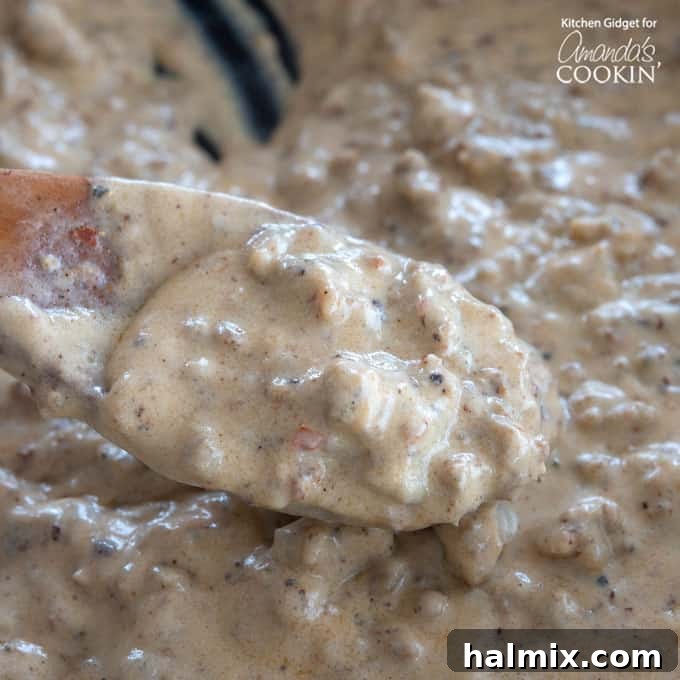
Unlock the secret to the ultimate Southern comfort food with this incredibly easy recipe for homemade Sausage Gravy. In just about 20 minutes, you can transform simple ingredients into a rich, creamy, and wonderfully peppery gravy, brimming with savory sausage crumbles. This hearty dish is more than just breakfast fare; it’s a versatile culinary delight perfect for any meal, promising warmth and satisfaction with every spoonful. Get ready to master a classic that will impress your family and friends!

Homemade Sausage Gravy: A Southern Staple
There’s something uniquely comforting about a plate piled high with fluffy biscuits drowned in a rich, peppery sausage gravy. It’s a dish that transcends mere sustenance, evoking memories of lazy weekend mornings, holiday feasts, and the warm embrace of home. This isn’t just a recipe; it’s an invitation to experience true Southern hospitality in your own kitchen. Whether you’re a seasoned chef or a beginner, our step-by-step guide will ensure you create a flawless batch of this beloved classic, perfect for any occasion from a quick weekday breakfast to a festive holiday brunch.
The beauty of homemade sausage gravy lies in its simplicity and profound flavor. It asks for just a handful of everyday ingredients, yet the result is a complex, deeply satisfying dish. We’ve enjoyed it for breakfast, lunch, and even dinner – its versatility is truly unmatched. It’s surprisingly easy to whip up when you’re short on time but craving something substantial, yet it’s also elegant enough to be the star of a special meal, like a heartwarming Christmas morning spread or a delightful Mother’s Day brunch. Prepare this dish, and you’re guaranteed to earn rave reviews!
Why This Easy Sausage Gravy Recipe Will Become Your Go-To
One of the many advantages of this particular sausage gravy recipe is its excellent make-ahead potential. It can be prepared up to 5 days in advance and stored safely in the refrigerator, making it an ideal choice for meal prep or entertaining. For instance, last year, when hosting a large Christmas breakfast for nearly 20 people, I prepared a double batch of gravy the day before. The next morning, it was simply a matter of gently reheating it with a splash of milk to restore its creamy consistency, as gravy naturally thickens significantly upon cooling. After a quick taste test and any necessary adjustments to salt and pepper, it was served warm from a crock pot, keeping it perfect throughout the morning. It was an absolute sensation, pairing wonderfully with a Cheesy Hashbrown Potato Casserole and other breakfast favorites.
While classic Southern biscuits are undeniably the quintessential companion to this luscious gravy – a pairing as perfect as peanut butter and jelly – don’t limit your culinary imagination. This versatile gravy can elevate so many other dishes! Try serving it over crispy toast for a quick and comforting meal, spoon it over fluffy white rice for a unique twist, or even incorporate it into breakfast tacos for an exciting flavor explosion. Imagine filling warm tortillas with our Papas con Huevos (potato & egg tacos), then adding a generous spoonful of this creamy gravy and a sprinkle of shredded cheese – truly an *amazing* combination that will have everyone asking for more.
Essential Ingredients for the Best Sausage Gravy
Crafting perfect homemade sausage gravy begins with high-quality ingredients. Each component plays a crucial role in developing the rich flavor and creamy texture we all crave. Here’s a breakdown of what you’ll need and why each element is important:
- 1 lb Fresh Pork Sausage: The star of the show! Use a good quality bulk pork sausage. This is the uncooked, ground sausage often found in a tube. Its flavor is the foundation of the gravy, so choose wisely.
- 2 tablespoons Unsalted Butter: While the sausage grease provides much-needed fat, a bit of unsalted butter adds richness and helps create the perfect roux without making the gravy overly salty.
- ¼ cup All-Purpose Flour: This is your thickening agent. All-purpose flour is traditional and provides the ideal texture and taste for classic gravy.
- 3 cups Milk: Whole milk is recommended for the creamiest, most luxurious gravy. However, 2% milk can also be used for a slightly lighter version without sacrificing too much richness.
- 1 teaspoon Kosher Salt: Essential for seasoning. Kosher salt has larger crystals and a cleaner taste compared to table salt, allowing for better control over seasoning.
- 1 teaspoon Freshly Ground Black Pepper: The signature peppery kick is what sets Southern sausage gravy apart. Freshly ground pepper delivers a more potent aroma and flavor than pre-ground.
Helpful Kitchen Tools for a Seamless Gravy Experience:
Having the right tools can make all the difference in the kitchen, especially when perfecting a dish like sausage gravy. These items will ensure a smooth and enjoyable cooking process:
- Cast Iron Skillet: A well-seasoned cast iron skillet is ideal for browning sausage evenly and building the flavorful roux. Its excellent heat retention ensures consistent cooking.
- Liquid Measuring Cup: Crucial for accurately measuring milk, ensuring your gravy achieves the perfect consistency.
- Wooden Spoon: Perfect for breaking up sausage, stirring the roux, and scraping the bottom of the skillet to prevent sticking and ensure even cooking.
- Measuring Cups and Spoons: Accurate measurements are key in gravies, ensuring the correct flour-to-fat ratio for a lump-free and perfectly thickened sauce.
Choosing Your Sausage: The Foundation of Flavor
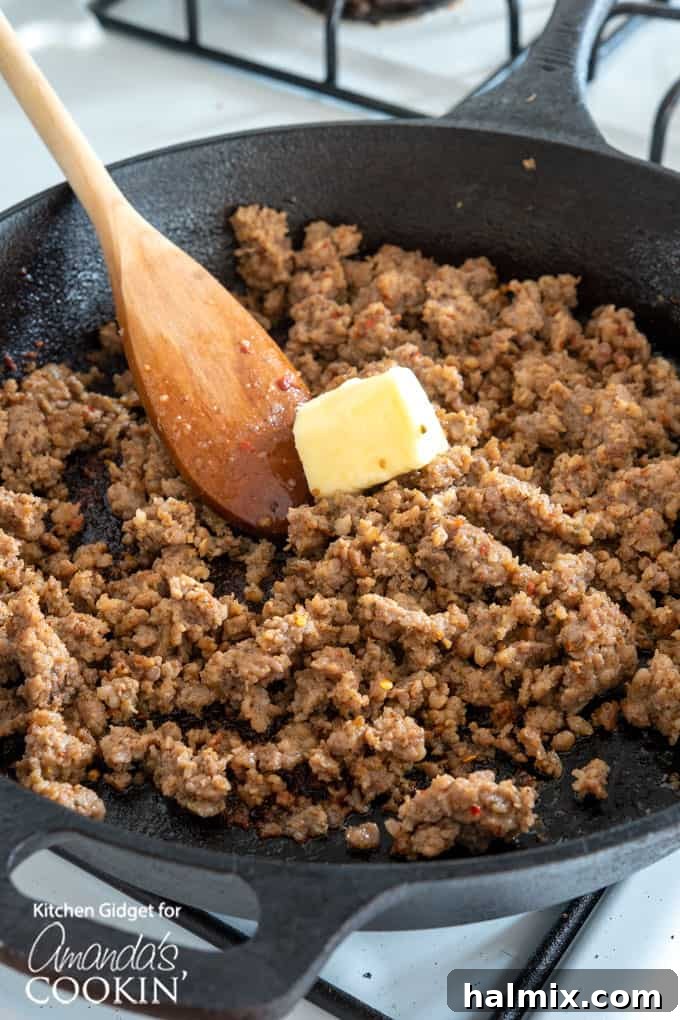
The type of sausage you select is paramount to the overall taste profile of your gravy. For this recipe, it’s best to use **bulk pork sausage**. This comes in a tube and is uncooked, allowing you to crumble and brown it directly in your skillet, rendering out its delicious fats that are crucial for the roux. I often stock up on a few tubes and keep them in the freezer, ready for a gravy craving or last-minute meal. You’re not limited to just “original” flavor; feel free to experiment with different varieties to customize your gravy. For those who appreciate a blend of sweet and savory, **maple sausage** offers a delightful twist. If you prefer a bit of heat, opt for a **hot version** of the sausage. In our kitchen, we frequently go for the hot variety and sometimes even add an extra dash of Tabasco sauce for an elevated spicy kick. Don’t be afraid to try different brands and flavors until you find your absolute favorite!
Mastering the Roux: The Art of Thickening
The process of making gravy might seem daunting, but it’s all about understanding a few simple steps. After thoroughly browning your sausage, ensuring it’s crumbled into nice chunks and no longer pink, it’s time to build the roux. This is where the magic happens! First, drain off some of the excess grease if there’s too much, leaving just enough to combine with the butter. Add the unsalted butter to the skillet with the cooked sausage and stir until it’s completely melted, integrating with the rendered sausage fat. This rich base is essential for the roux.
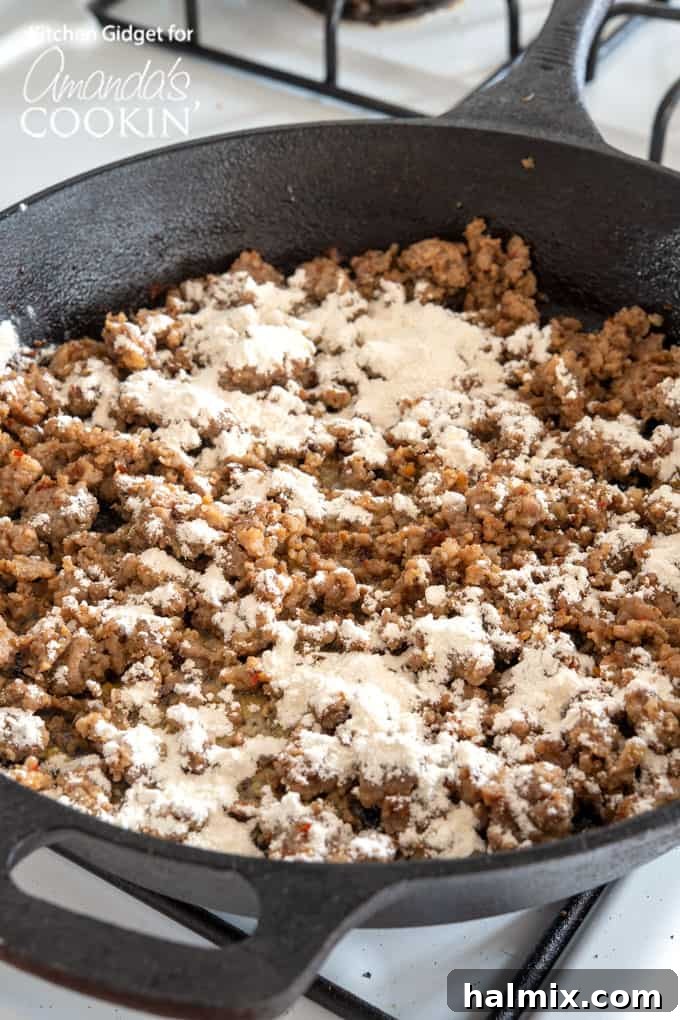
Next, evenly sprinkle the all-purpose flour over the sausage and butter mixture. Flour is the traditional thickening agent for gravy, and for good reason—it imparts the best taste and texture, creating a smooth, creamy consistency that other thickeners simply can’t replicate. Stir vigorously, ensuring the flour combines thoroughly with the grease from the sausage and the melted butter. This creates a thick paste, known as a roux, which is the cornerstone of your creamy gravy. Cook the roux for about a minute, stirring constantly, to cook out the raw flour taste and allow it to slightly toast, which will add a subtle nutty depth to your gravy.
Achieving Perfect Creaminess: Adding the Milk
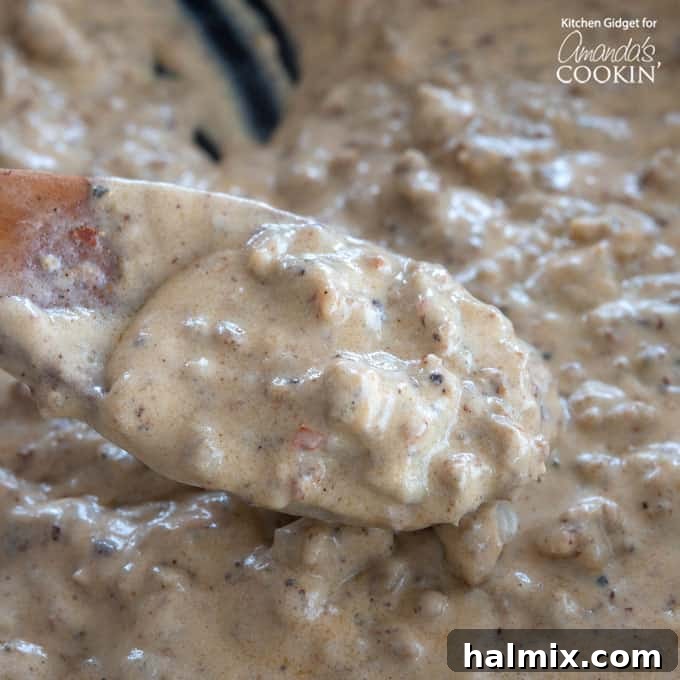
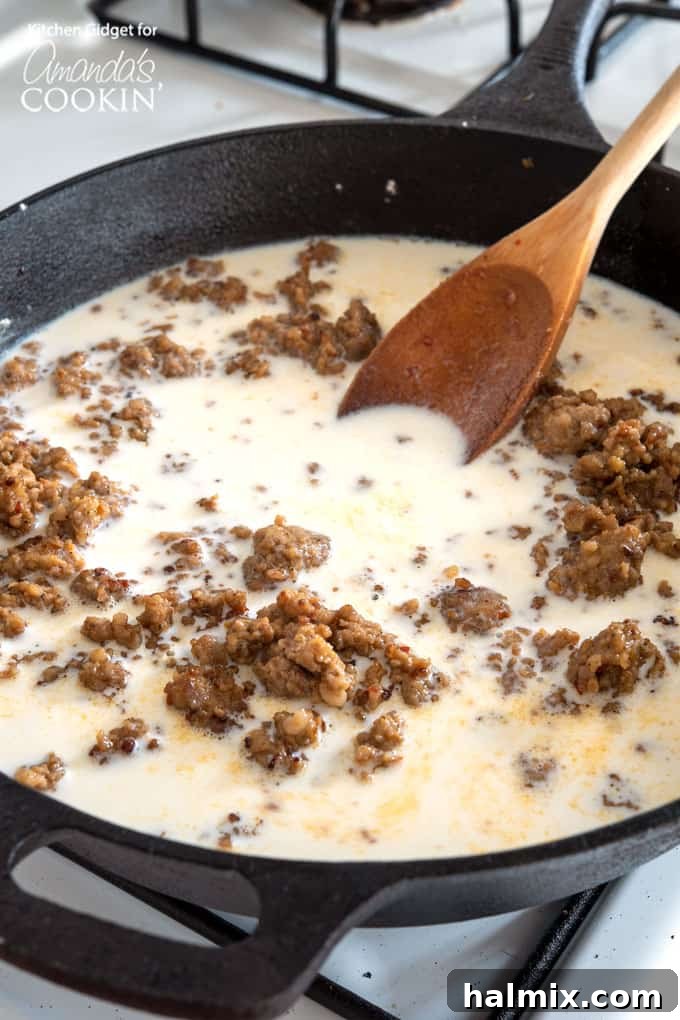
Once your roux is ready, it’s time for the milk, which will transform your thick paste into a velvety, creamy gravy. This step requires a little patience and constant attention. Begin by adding the milk gradually, a little at a time, while stirring continuously. This constant stirring is critical to prevent any flour clumps from forming, ensuring your gravy remains perfectly smooth. Initially, the mixture might appear thin and watery, but don’t be alarmed—this is perfectly normal. As the milk heats up and the flour in the roux begins to cook and swell, the gravy will start to thicken. This process can take anywhere from 8 to 10 minutes, so resist the urge to increase the heat too drastically, as this can scorch the gravy.
Continue stirring occasionally as the gravy comes to a gentle simmer, with small bubbles breaking on the surface. Once it reaches this point and has been simmering for about two full minutes, it should have noticeably thickened. Remember that the gravy will continue to thicken further as it cools, so it’s often best to remove it from the heat just before it reaches your desired consistency. If you find your gravy becomes too thick for your liking, or when reheating leftovers, simply whisk in a splash of additional milk until it reaches the perfect pourable consistency. Conversely, if it’s too thin, you can continue to simmer it gently for a few more minutes, or, for a quick fix, whisk a teaspoon of flour with a tablespoon of cold milk and gradually stir into the simmering gravy until thickened.
The Final Flourish: Seasoning Your Gravy
The beauty of a well-made sausage gravy is that its primary flavor comes from the sausage itself, complemented by just the right amount of salt and pepper. You typically don’t need a multitude of other spices, allowing the rich, savory notes of the pork and the robust kick of black pepper to shine. For the best possible flavor, always reach for freshly ground black pepper. Its aroma and sharp, clean taste are far superior to pre-ground varieties and will truly elevate your gravy. Be generous with the pepper; a truly authentic Southern sausage gravy should have a distinct, robust peppery flavor. However, seasoning is a matter of personal preference, so taste as you go and adjust the salt and pepper to suit your palate. A final taste test before serving ensures your gravy is seasoned to perfection, ready to impress.

Frequently Asked Questions About Sausage Gravy
Here are some common questions and helpful tips to ensure your sausage gravy is always a success:
Q: Can I use a different type of sausage?
A: Absolutely! While bulk pork sausage is traditional, you can experiment. Turkey sausage or even vegetarian sausage can work, though they may render less fat, so you might need to add a bit more butter or oil to make the roux. The flavor profile will also change, so adjust seasonings accordingly. For a spicy kick, hot Italian sausage (removed from its casing and crumbled) is a great option. Maple sausage adds a delightful sweet-savory note.
Q: How do I prevent lumpy gravy?
A: The key to lump-free gravy is two-fold:
- **Making the Roux:** Ensure the flour is thoroughly combined with the fat (sausage grease + butter) to form a smooth paste before adding any liquid. Cook it for at least a minute to remove the raw flour taste.
- **Adding Milk Gradually:** Pour in the milk slowly, a little at a time, while whisking constantly. Start with a small amount to create a thin slurry, then gradually add the rest. This technique helps dissolve the flour smoothly without clumps.
If you still end up with a few lumps, you can gently press them against the side of the skillet with your spoon, or for truly smooth gravy, strain it through a fine-mesh sieve before serving (though this is rarely necessary if you follow the gradual addition method).
Q: My gravy is too thick/thin. How can I fix it?
A:
- **Too Thick:** Slowly whisk in a tablespoon or two of warm milk until the desired consistency is reached. Do this off the heat, then return to low heat if needed to warm through.
- **Too Thin:** This means your roux didn’t have enough flour, or you added too much liquid. You can create a “slurry” by whisking a teaspoon of flour or cornstarch with an equal amount of cold water or milk until smooth. Gradually whisk this slurry into your simmering gravy until it thickens. Be careful not to add too much at once.
Q: How long does homemade sausage gravy last?
A: Properly stored in an airtight container in the refrigerator, homemade sausage gravy will last for up to 4-5 days. It is not recommended to freeze dairy-based gravies, as they tend to separate and become grainy upon thawing.
Q: Can I make this gravy gluten-free or dairy-free?
A:
- **Gluten-Free:** Yes! Replace the all-purpose flour with a 1:1 gluten-free flour blend. Ensure your chosen blend contains xanthan gum for optimal thickening.
- **Dairy-Free:** You can use unsweetened, unflavored dairy-free milk alternatives such as almond milk, soy milk, or oat milk. Be aware that the flavor profile will be slightly different, and some plant-based milks may not thicken as robustly as cow’s milk. Ensure your sausage and butter are also dairy-free.
Q: What are some alternative serving suggestions beyond biscuits?
A: Beyond the traditional biscuits, this versatile gravy shines when served with:
- **Toast:** Simple yet satisfying, especially a thick slice of Texas toast.
- **Breakfast Tacos/Burritos:** A fantastic addition to egg and potato-filled tortillas.
- **Grits:** A true Southern experience! Creamy grits topped with sausage gravy.
- **Hash Browns or Home Fries:** Spooned over crispy potatoes for a hearty meal.
- **Eggs:** Serve alongside scrambled, fried, or poached eggs.
- **Waffles or Pancakes:** For a sweet and savory breakfast combination (especially good with maple sausage gravy!).
- **Cornbread:** Crumbled cornbread makes an excellent base for gravy.
More Delicious Breakfast and Brunch Ideas
If you’re looking for more ways to kickstart your day with incredible flavors, or to impress guests at your next brunch, explore these fantastic breakfast recipes:
- Hearty Breakfast Casserole with Ham and Cheese
- Sweet and Simple Blueberry Breakfast Cake
- Savory Turkey Hash Brown Casserole
- Convenient Make-Ahead Breakfast Burritos
- Healthy Slow Cooker Breakfast Quinoa
- Energizing Loaded Coffee Smoothie
- Classic Corned Beef Hash

Classic Southern Sausage Gravy
For detailed answers to common questions, scroll up to our Frequently Asked Questions section within the blog post!
Print It
Pin It
Rate It
Save ItSaved!
Ingredients
- 1 lb fresh pork sausage
- 2 tablespoons unsalted butter
- ¼ cup all-purpose flour
- 3 cups milk
- 1 teaspoon kosher salt
- 1 teaspoon black pepper freshly ground
Instructions
-
In a large, heavy-bottomed skillet (preferably cast iron) over medium heat, cook the fresh pork sausage, crumbling it with a wooden spoon as it cooks. Continue until the sausage is browned and no longer pink, which should take approximately 8 minutes. Drain off any excessive grease, leaving about 2-3 tablespoons in the pan.
-
Add the unsalted butter to the skillet with the cooked sausage. Stir until the butter is completely melted and combined with the sausage fat. Sprinkle the all-purpose flour evenly over the mixture. Stir constantly and cook for 1 minute, allowing the flour to absorb the fats and cook out any raw taste, forming a roux.
-
Gradually add the milk, pouring it in slowly while whisking or stirring constantly. This continuous stirring is crucial to prevent the formation of lumps, ensuring a smooth and creamy gravy.
-
Increase the heat slightly to bring the mixture to a gentle simmer, stirring occasionally. This process may take 8-10 minutes. Once it begins to simmer with active bubbling, continue to cook for 2 full minutes, or until the gravy has thickened to your desired consistency. Keep in mind that the gravy will continue to thicken slightly as it cools.
-
Remove from heat. Stir in the kosher salt and freshly ground black pepper. Taste the gravy and adjust the seasoning as necessary, adding more salt or pepper to suit your preference. Serve hot and enjoy!
Nutrition
The recipes on this blog are tested with a conventional gas oven and gas stovetop. It’s important to note that some ovens, especially as they age, can cook and bake inconsistently. Using an inexpensive oven thermometer can assure you that your oven is truly heating to the proper temperature. If you use a toaster oven or countertop oven, please keep in mind that they may not distribute heat the same as a conventional full sized oven and you may need to adjust your cooking/baking times. In the case of recipes made with a pressure cooker, air fryer, slow cooker, or other appliance, a link to the appliances we use is listed within each respective recipe. For baking recipes where measurements are given by weight, please note that results may not be the same if cups are used instead, and we can’t guarantee success with that method.