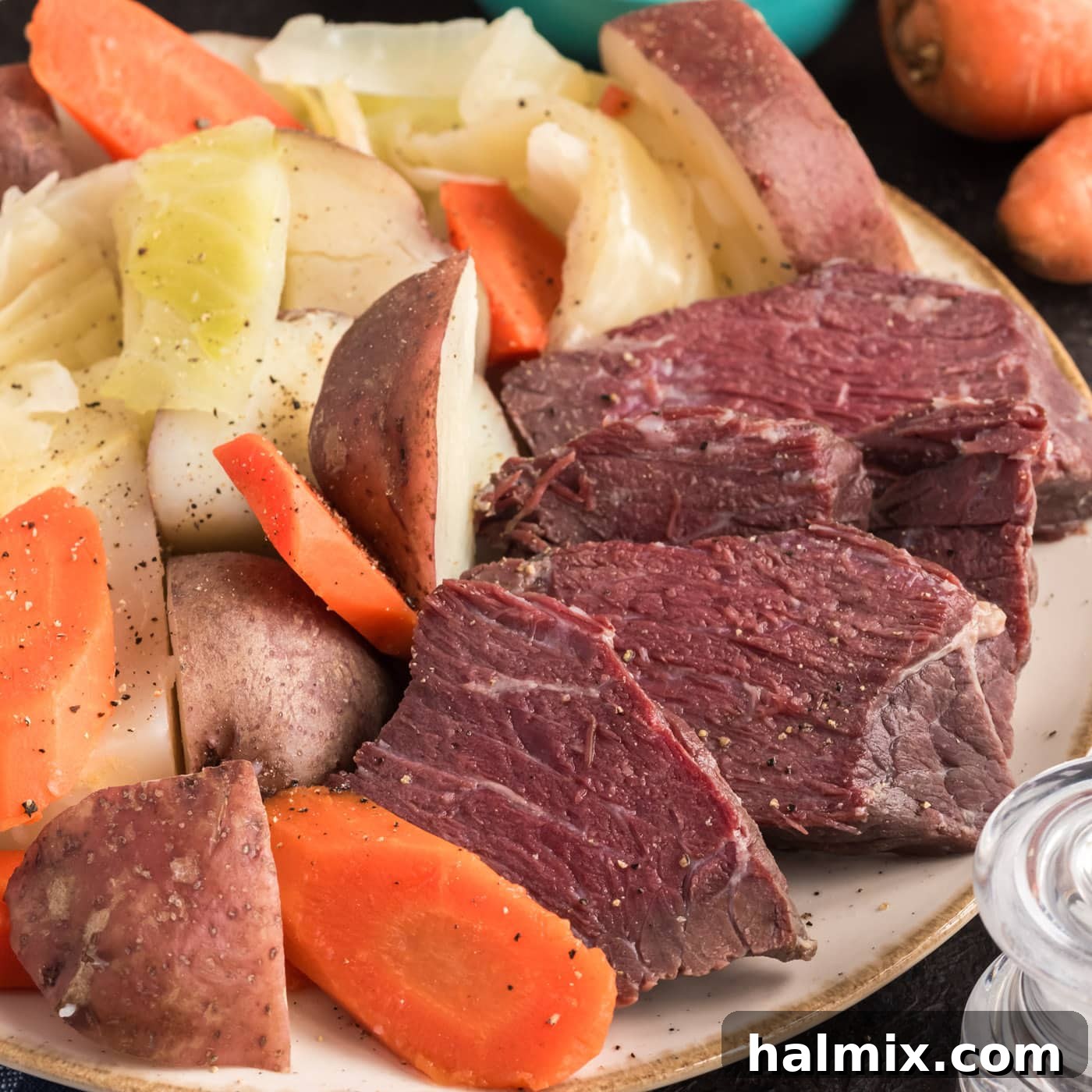
The Ultimate Guide to Tender & Juicy Corned Beef and Cabbage
There are few dishes that evoke the same sense of comfort and tradition as a perfectly cooked corned beef and cabbage. This classic meal, often associated with St. Patrick’s Day celebrations, is a true testament to hearty, wholesome cooking. Imagine succulent, salt-ccured beef brisket, slow-cooked to fork-tender perfection, alongside vibrant, sweet carrots, earthy potatoes, savory onions, and crisp, tender cabbage. It’s a culinary embrace in a single pot, offering a symphony of flavors and textures that satisfies both the stomach and the soul.
Whether you’re a seasoned cook looking to master the art of homemade brine or prefer the convenience of a pre-seasoned brisket, this comprehensive guide will walk you through every step. We’ll explore the rich history behind this beloved dish, provide expert tips for achieving optimal flavor and tenderness, and offer versatile cooking methods to suit any schedule. Get ready to transform simple ingredients into an unforgettable feast that’s perfect not just for holidays, but for any occasion calling for a truly satisfying meal.
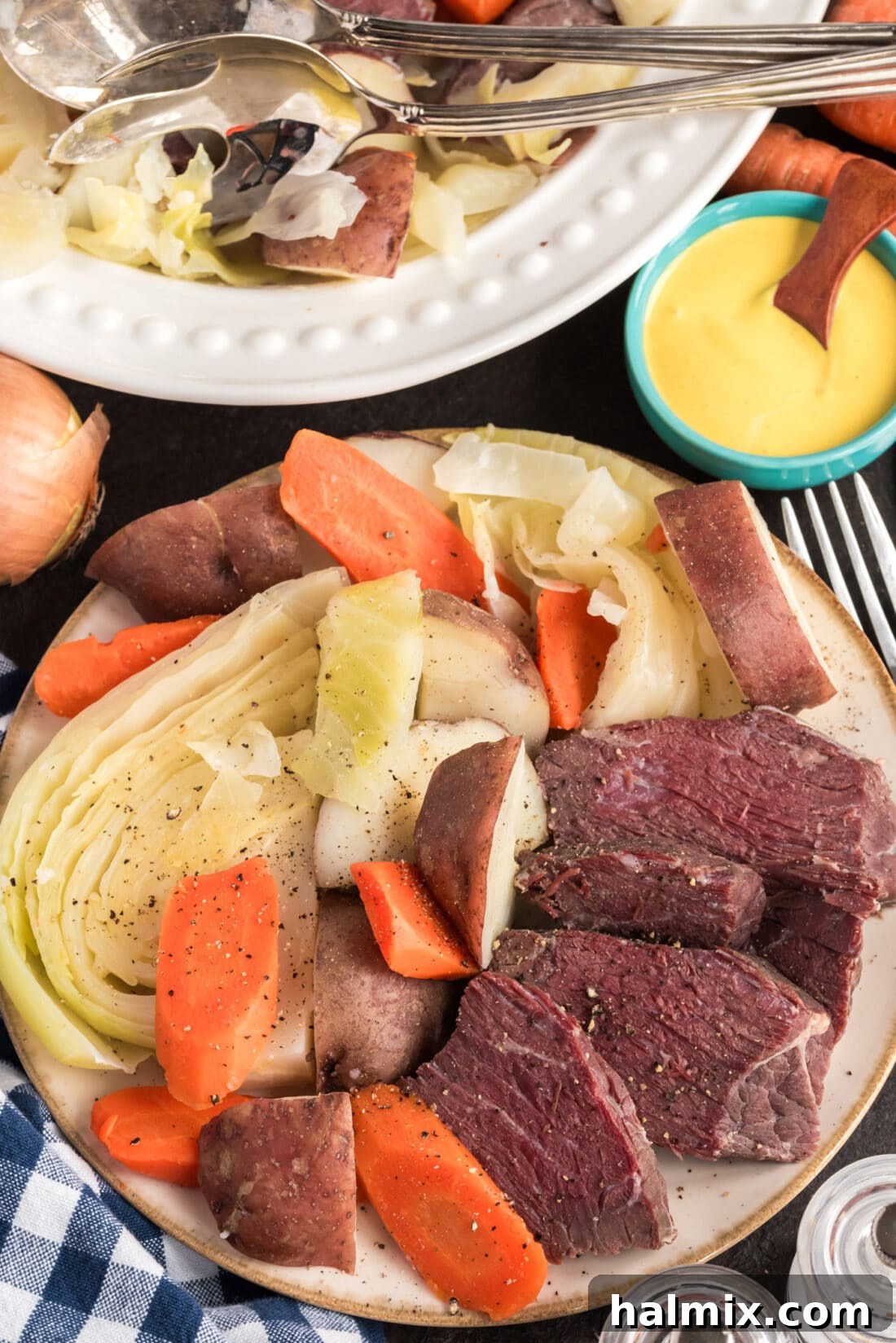
Why This Classic Recipe Always Delivers
Corned beef and cabbage isn’t just a meal; it’s an experience. Its enduring popularity stems from several key factors that make it a standout dish. Firstly, the rich, savory depth of the salt-cured beef brisket is unparalleled. The brining process infuses the meat with a unique flavor profile, making it incredibly tender and juicy. This robust flavor provides the perfect foundation for a medley of fresh vegetables.
The beauty of this recipe also lies in its simplicity and the way it transforms humble ingredients into something truly extraordinary. As a one-pot meal, it minimizes cleanup and allows all the flavors to meld together harmoniously. The slow-cooking method ensures that every component—from the beef to the root vegetables and the cabbage—reaches its ideal texture. The potatoes become creamy, the carrots sweet and tender, and the cabbage retains a slight bite while soaking up all the delicious broth.
Furthermore, this recipe offers flexibility. For those who enjoy a culinary project, crafting a homemade brine from scratch provides a deeply rewarding experience and complete control over the flavor. Alternatively, using a pre-seasoned beef brisket from your local grocery store makes this dish incredibly accessible for busy weeknights or impromptu gatherings. We even provide options for using modern appliances like the Crockpot and Instant Pot, making this comforting classic adaptable to any cooking style and schedule.
Essential Ingredients for Your Corned Beef Feast
Crafting the perfect corned beef and cabbage begins with selecting the right ingredients. Below is a comprehensive list of everything you’ll need, along with specific recommendations to ensure the best possible outcome for your dish. We’ve separated the ingredients for making your own brine versus those for cooking a pre-brined brisket, so you can easily choose the method that suits you best.
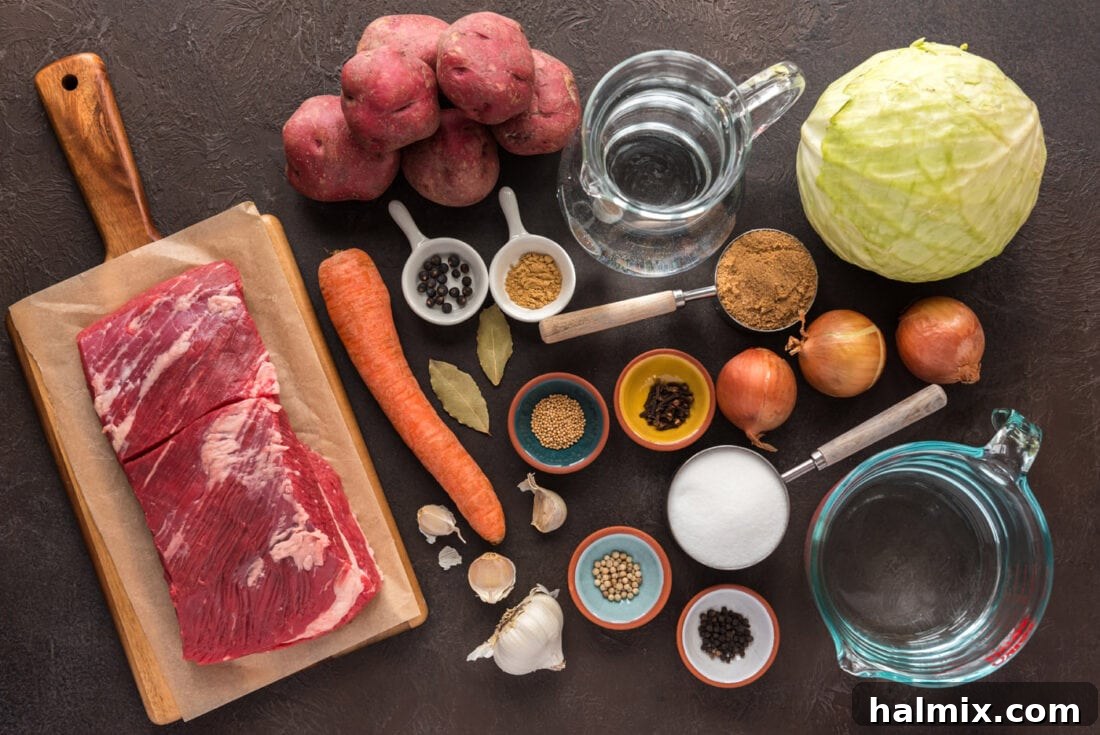
Detailed Ingredient Information and Smart Substitutions
Understanding each ingredient’s role is key to mastering this recipe. Here’s a closer look at what goes into your pot and how to choose wisely:
BEEF: The Star of the Show
The foundation of this dish is, undoubtedly, the beef brisket. You have two excellent paths to choose from: a homemade brine or a store-bought, pre-seasoned brisket. Both methods yield delicious results, but each has its distinct advantages. Homemade brining, detailed in the recipe card below, allows you to meticulously control the salt content and customize the spice profile to your liking. It’s a process that requires patience, as the beef needs to be fully submerged and refrigerated for several days, up to 10. This method provides a truly bespoke flavor that many home cooks cherish. However, it can be a bit tricky to ensure complete submersion, which is crucial for even curing.
For those seeking convenience without compromising flavor, a pre-seasoned corned beef brisket from the grocery store is an excellent choice. These briskets typically come with a spice packet, containing a blend of pickling spices that impart that classic corned beef taste. Whichever you choose, look for a good quality brisket, ideally a flat cut for easier slicing and a more uniform appearance, or a point cut for extra marbling and richness, though it can be fattier and shred more easily. Trimming excess hard fat before cooking can improve the final texture and reduce greasiness.
ADDITIONS: The Hearty Ensemble
The vegetables are more than just side dishes; they are integral to the complete flavor profile and hearty nature of corned beef and cabbage. Their earthy sweetness perfectly balances the savory richness of the beef.
- Cabbage: Green cabbage is the traditional choice for this recipe. When preparing, cut the cabbage into sturdy wedges, ensuring that a part of the core remains intact with each wedge. This clever trick prevents the cabbage from disintegrating into mush during the long simmering process, allowing it to cook through while still holding its shape beautifully.
- Potatoes: Red potatoes are considered the most authentic choice due to their waxy texture, which holds up well to simmering without becoming mealy. They absorb the rich flavors of the broth wonderfully. If red potatoes are unavailable, small Yukon Gold potatoes or new potatoes are excellent alternatives. Halve or quarter them depending on their size, ensuring they are roughly uniform for even cooking. Leaving some skin on adds to the rustic charm and nutritional value.
- Carrots: Fresh, vibrant carrots add natural sweetness and a beautiful color contrast to the dish. Peel them and cut them into large chunks or thick slices. They contribute a subtle sweetness that mellows the saltiness of the beef.
- Onion: A large onion, quartered or thickly sliced, will slowly melt into the broth, releasing its aromatic compounds and adding a foundational layer of savory flavor. Yellow or white onions work best for their robust taste.
- Garlic: While often considered optional, a few cloves of crushed or minced garlic will elevate the overall aroma and depth of flavor in the broth. It’s a subtle but impactful addition.
Step-by-Step: Crafting Your Perfect Corned Beef and Cabbage
Follow these detailed steps to create a tender, flavorful corned beef and cabbage meal. Whether you start with a homemade brine or a pre-seasoned brisket, the cooking process is straightforward and rewarding.
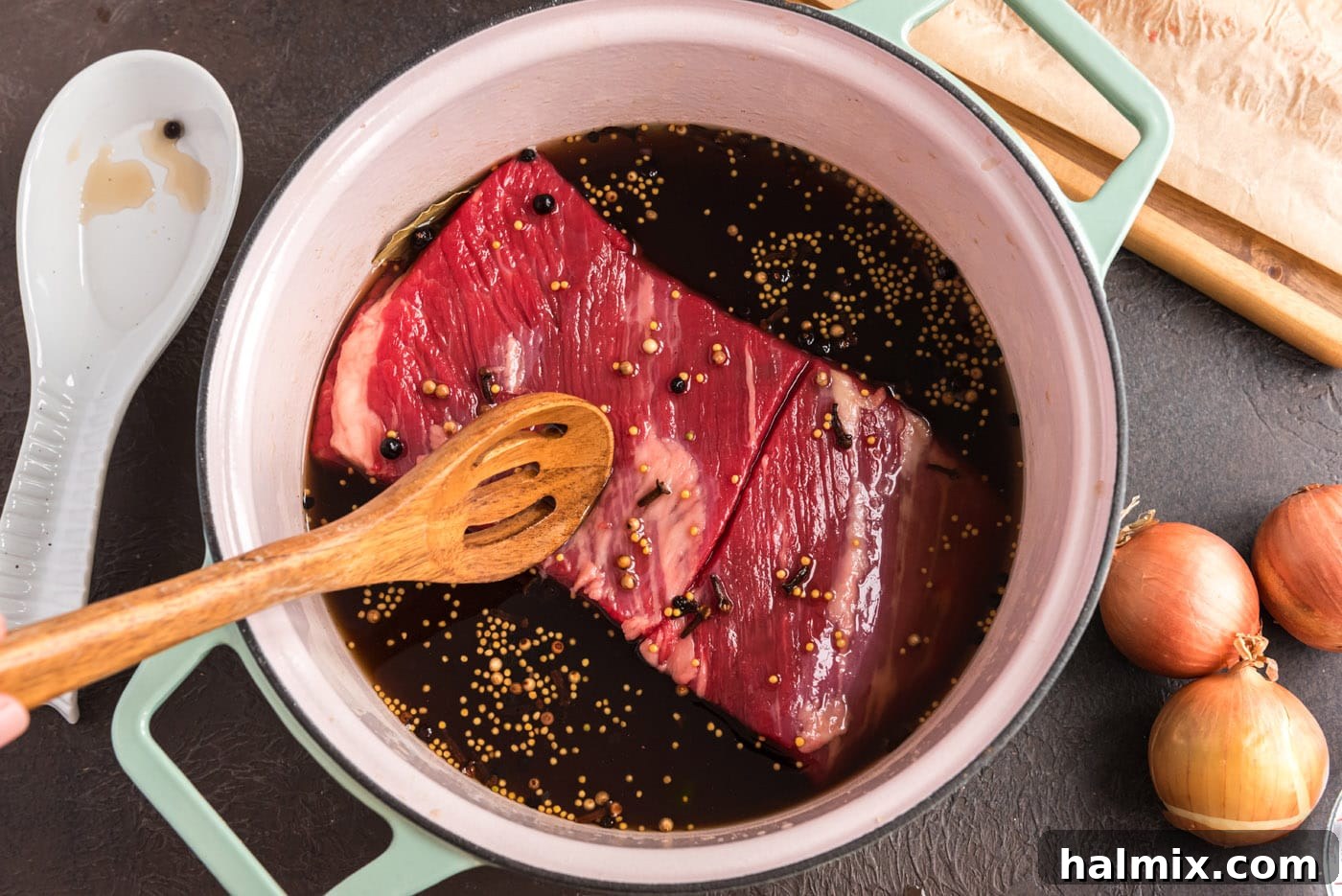
- For Homemade Brine (If Using): Begin by combining all brine ingredients—water, salt, brown sugar, whole mustard seeds, black peppercorns, white peppercorns, whole cloves, whole juniper berries, bay leaves, and ground ginger—in a large stockpot. Bring the mixture to a rolling boil over medium-high heat, stirring frequently until the sugar and salt are fully dissolved. This ensures that the curing agents are evenly distributed.
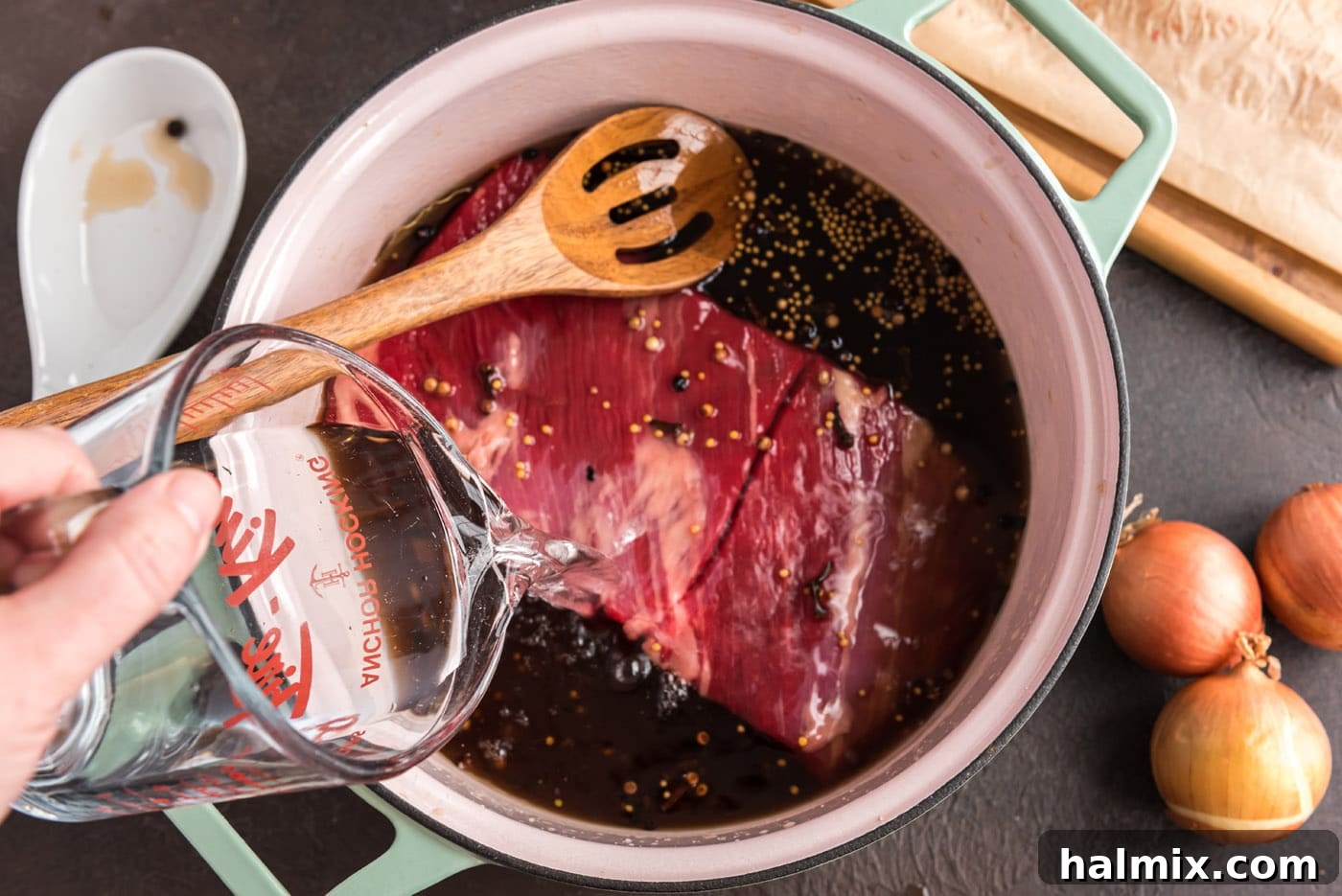
- Allow the brine to cool completely to room temperature. This step is crucial; placing hot meat into hot brine can affect the texture and safety of the beef. Once cooled, carefully submerge your beef brisket into the brine mixture. Ensure the brisket is entirely covered. If necessary, add extra cold water to achieve full submersion, or use a plate or weight to keep the meat pressed down.
- Refrigerate the brisket in the brine for a minimum of 5 days, and up to 10 days, turning it once daily if possible. This long brining period is essential for the meat to absorb the flavors and become perfectly cured.
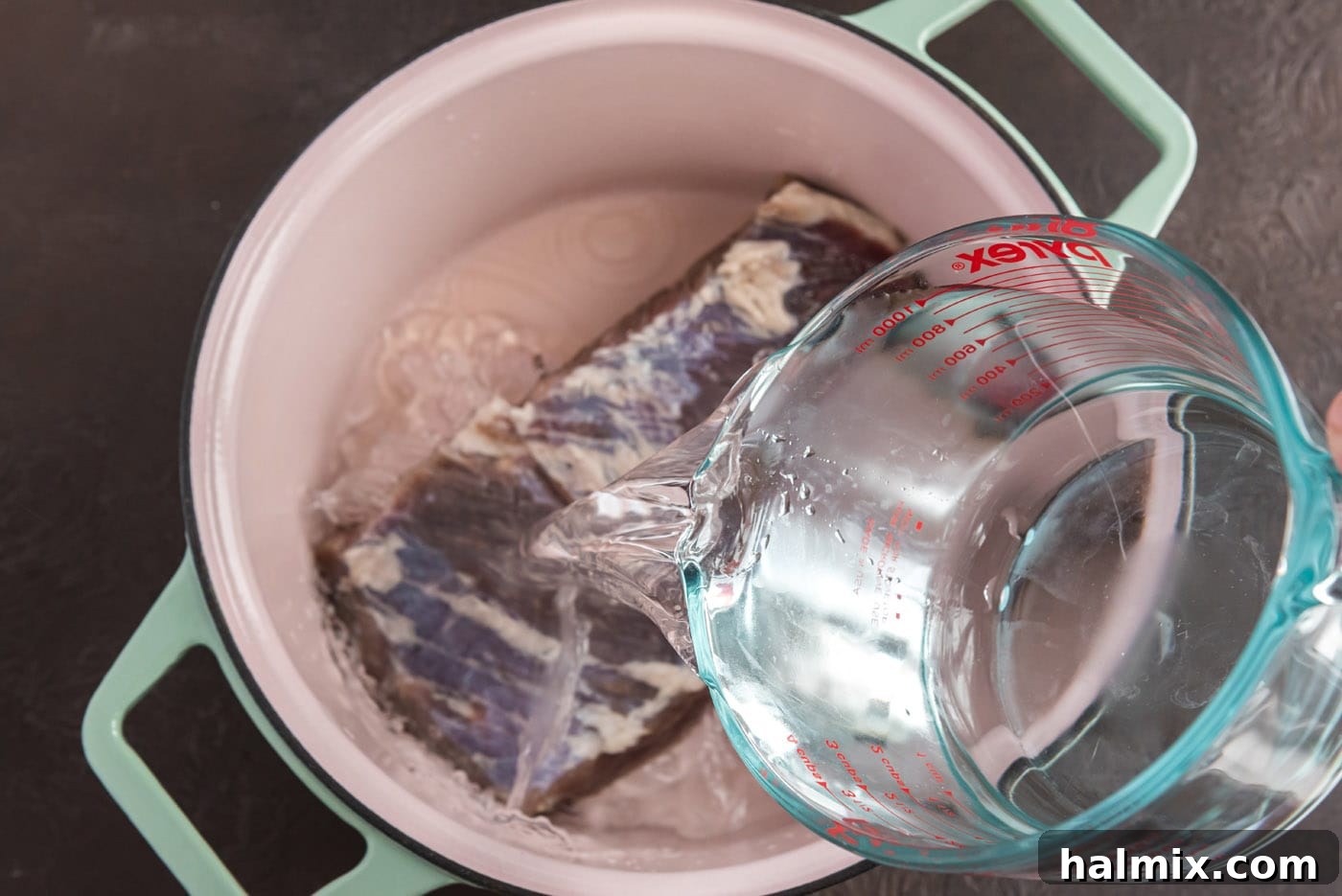
- Preparing the Corned Beef: When you’re ready to cook, remove the brisket from the brine (or unwrap your pre-seasoned brisket). If using homemade brine, it’s recommended to rinse the brisket under cold water to remove excess salt from the surface, which helps prevent the final dish from being overly salty. Place the beef brisket in a large pot or a heavy-bottomed Dutch oven. Cover the meat completely with fresh cold water. If your pre-seasoned brisket came with a spice packet, add it to the pot now.
- Cover the pot with a tight-fitting lid and bring the water to a rolling boil over high heat. Once boiling, immediately reduce the heat to a gentle simmer. The key to tender corned beef is slow, consistent cooking, not aggressive boiling.
- Continue to simmer the brisket for approximately 45 minutes per pound. For a typical 4-pound brisket, this means around 3 hours. The meat should be incredibly tender when pierced with a fork.
- Preparing the Vegetables: While the beef simmers, prepare your vegetables. Peel and chop the potatoes, carrots, and onion. Feel free to leave a bit of skin on the potatoes for a more rustic feel, if desired. Cut the cabbage into large, sturdy wedges, making sure part of the core remains to hold the leaves together.
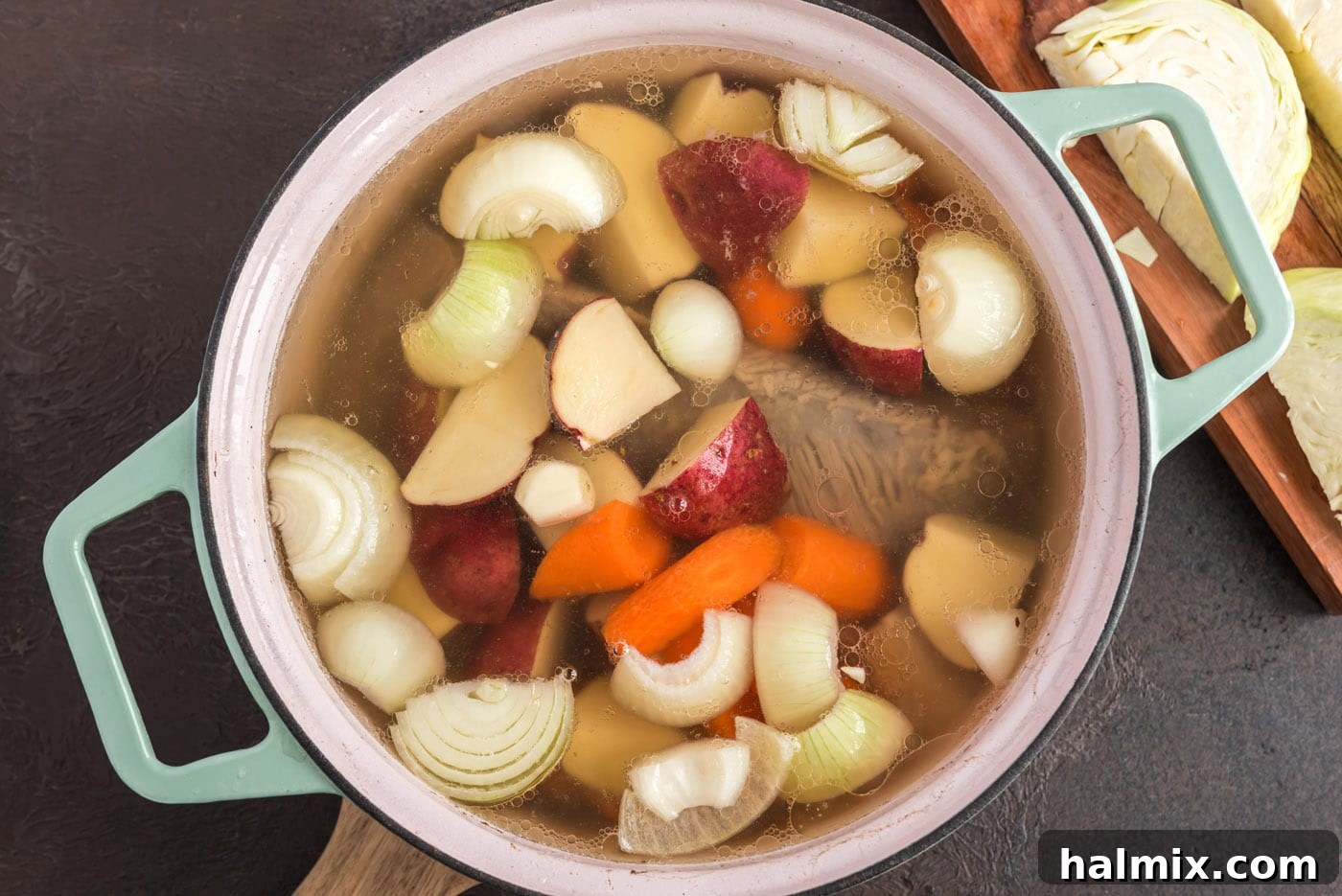
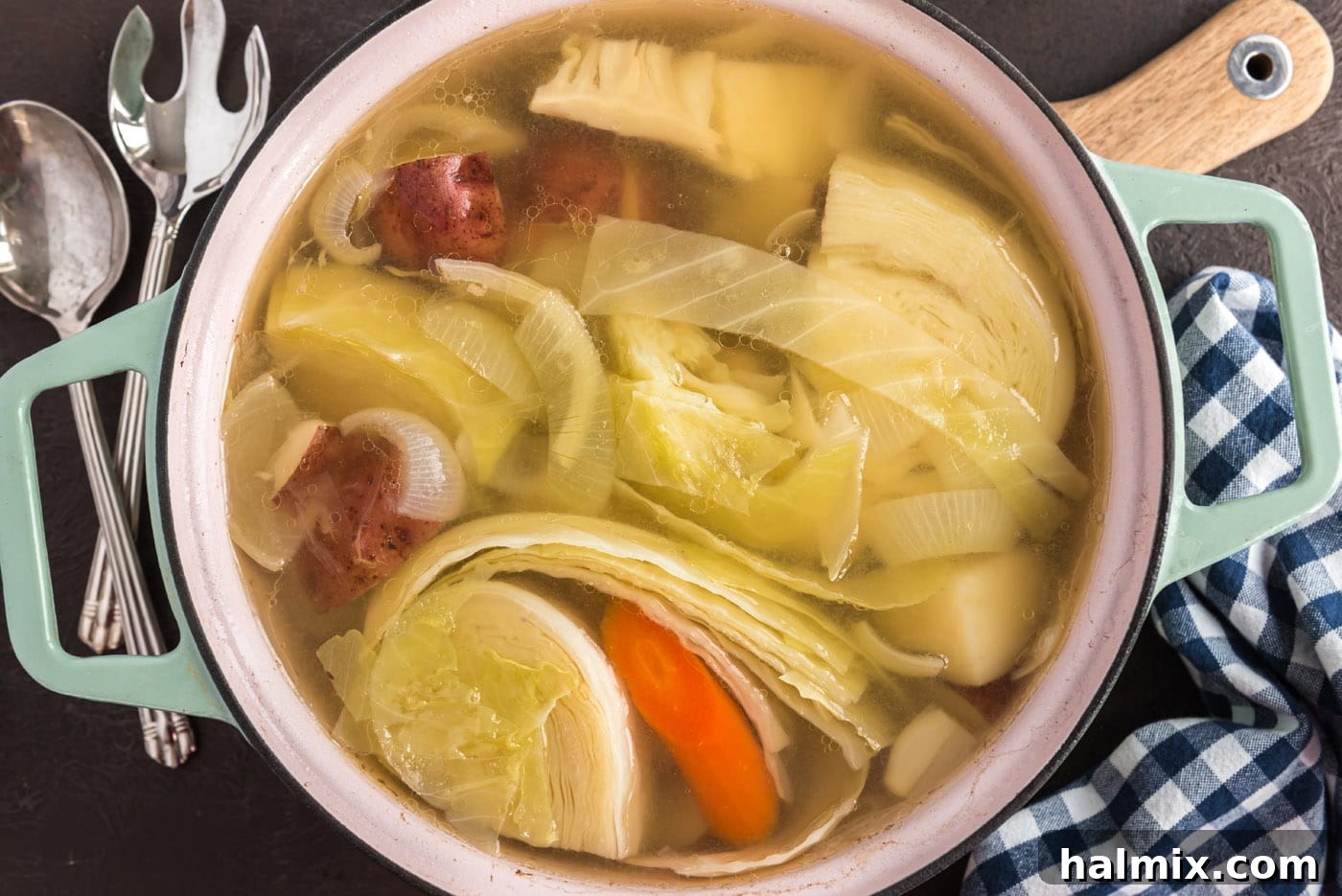
- Adding the Vegetables: With about 30 minutes left in the beef’s cooking time, add the potatoes, carrots, and onion to the pot. They will cook in the flavorful broth alongside the beef. After these have cooked for 15 minutes, add the cabbage wedges to the pot. This staggered addition ensures all vegetables are perfectly tender without being overcooked.
- Once the beef and vegetables are tender, remove the pot from the heat. Carefully transfer the corned beef to a cutting board and allow it to rest for at least 10 minutes before slicing. This resting period allows the juices to redistribute, ensuring a moist and flavorful slice of meat. Serve the sliced beef alongside the beautifully cooked vegetables and a generous spoonful of the flavorful broth.

Frequently Asked Questions & Expert Tips for Perfection
Mastering corned beef and cabbage is simple with these insights and common questions addressed:
While the tradition of salting meat (corned beef) has historical roots in Ireland, the dish as we commonly know it today—corned beef served with cabbage—is largely an Irish-American culinary tradition. During the 19th and 20th centuries, Irish immigrants in America, particularly in cities like New York, found corned beef to be a more affordable and readily available alternative to the traditional bacon and cabbage dish they ate in Ireland. They often purchased it from Jewish kosher butchers, who used similar curing methods. This fusion of cultural availability led to corned beef and cabbage becoming a beloved staple, especially around St. Patrick’s Day, symbolizing Irish-American heritage. It’s a delicious tradition that can certainly be enjoyed year-round.
To maintain freshness and safety, store any leftover corned beef and cabbage in an airtight container in the refrigerator. It will keep well for up to 4 days. For best results, allow the leftovers to cool completely before refrigerating. When reheating, you can gently warm it on the stovetop with a little of the cooking liquid, or in the microwave.
Absolutely! Both slow cookers (Crockpots) and Instant Pots are fantastic tools for making incredibly tender corned beef and cabbage with even greater convenience. These methods often require less active cooking time, allowing you to set it and forget it. For detailed instructions, we recommend checking out our dedicated recipes for Crockpot Corned Beef and Instant Pot Corned Beef. They offer excellent results for a hands-off approach to this classic meal.
Brisket is the traditional cut for corned beef, and it comes in two main sections: the flat cut (or “point end”) and the point cut (or “deckle”). The flat cut is leaner, more uniform in shape, and easier to slice neatly, making it ideal for presentation. The point cut is richer, fattier, and has more marbling, which can result in a more flavorful and tender, shreddable meat. Many stores sell “corned beef brisket,” which can be either cut or a combination. Choose based on your preference for leanness versus richness.
The most common reason for tough corned beef is insufficient cooking time or cooking at too high a temperature. Brisket is a tough cut of meat with a lot of connective tissue, which needs long, slow, moist heat to break down and become gelatinous and tender. Ensure you’re simmering, not boiling, and cook it for the full recommended time (approximately 45 minutes per pound), or until a fork easily penetrates the meat. Allowing the meat to rest after cooking also helps ensure tenderness.
If your corned beef tastes overly salty, there are a few potential reasons. If you made your own brine, you might have used too much salt, or the brining time might have been too long. If using a pre-brined brisket, it’s crucial to rinse it thoroughly under cold water before cooking to remove surface salt. Additionally, avoid adding extra salt to the cooking liquid or the vegetables, as the beef itself will impart significant saltiness to the entire dish.
Elevate Your Corned Beef and Cabbage Experience
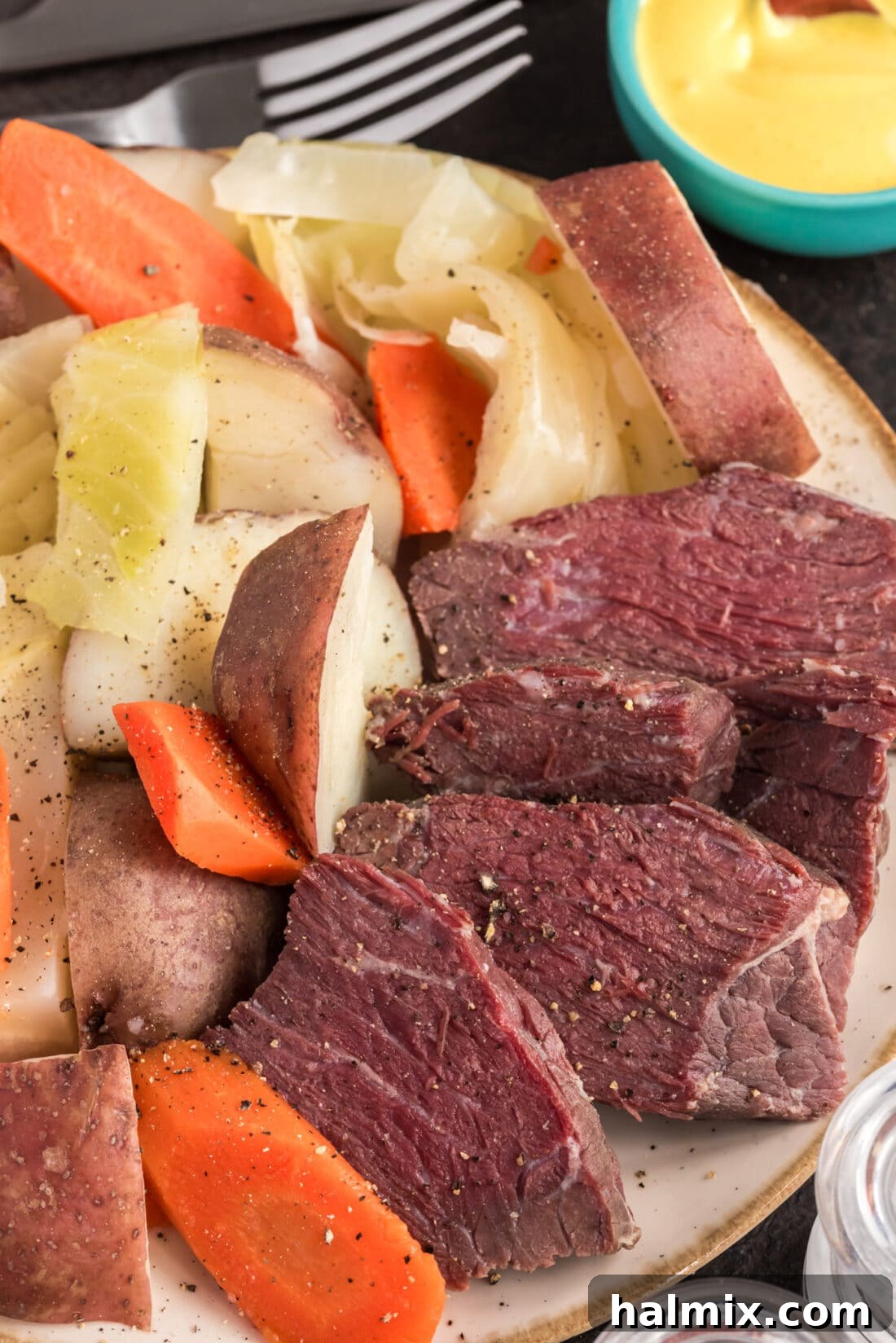
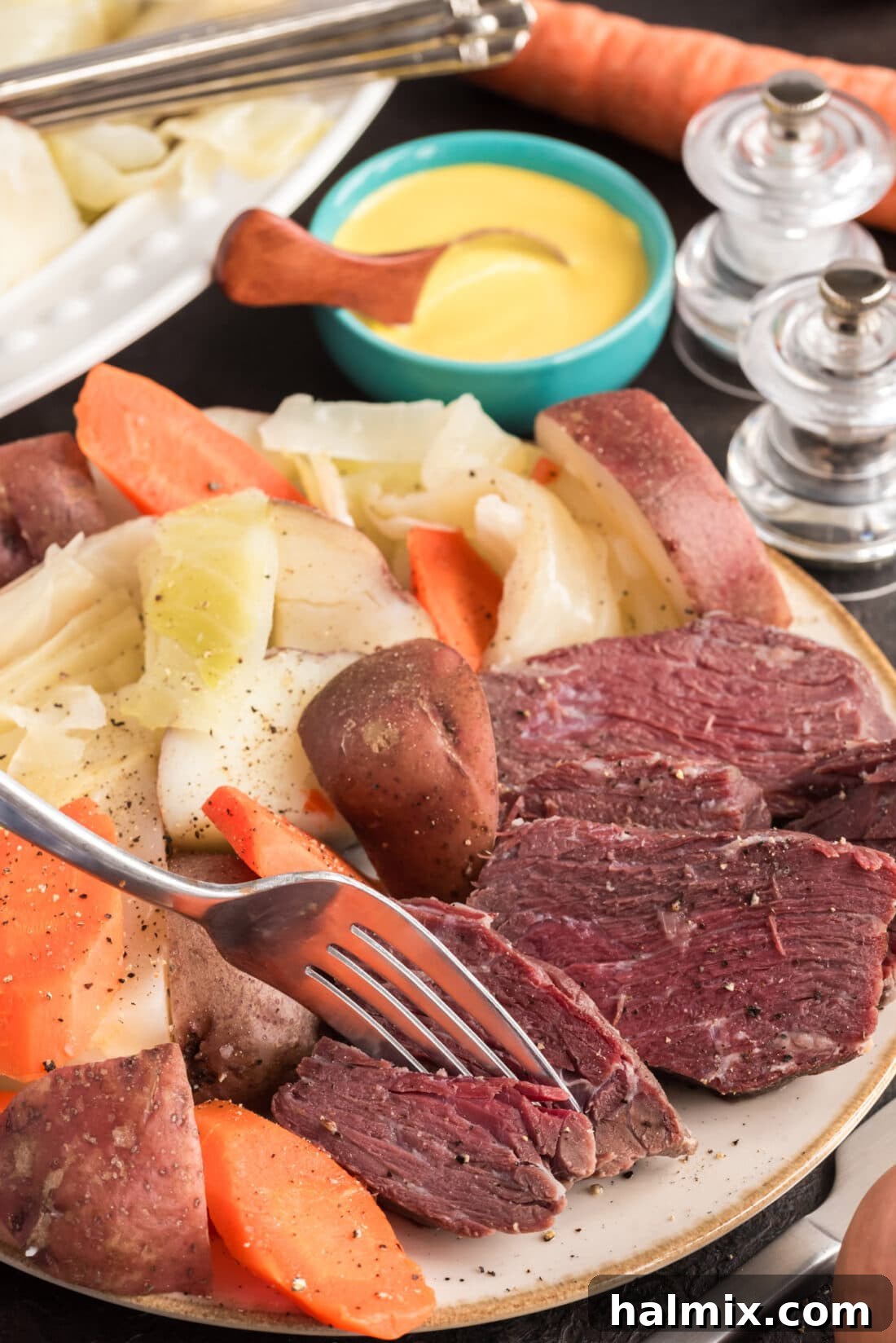
Once your corned beef has rested, it’s time to slice and serve this magnificent meal. Always slice the corned beef against the grain. This is a crucial step for tenderness, as it shortens the muscle fibers, making each bite easier to chew and more enjoyable. You can opt for thin, delicate slices or thicker, heartier cuts, depending on your preference.
Serve the rich slices of corned beef nestled alongside the tender potatoes, carrots, onions, and sweet cabbage. A drizzle of the flavorful cooking liquid over everything ties the dish together beautifully. For an extra touch, consider serving with a dollop of spicy mustard or horseradish sauce to complement the savory beef. Crusty rye bread or a fresh, crisp dinner salad makes for perfect accompaniments, adding texture and freshness to your plate.
The magic of corned beef doesn’t end with the first meal. Leftovers are a true culinary gift! Transform them into a hearty corned beef sandwich, piled high with Swiss cheese and sauerkraut on rye, or create a classic corned beef hash for a delightful breakfast or brunch. The possibilities for enjoying this delicious meat extend far beyond the initial serving, ensuring nothing goes to waste.
Discover More St. Patrick’s Day Delights
If you’re celebrating St. Patrick’s Day or simply craving more comforting Irish-inspired cuisine, explore these fantastic recipes:
- Irish Stew: A soul-warming classic with tender lamb and root vegetables.
- Reuben Dip: All the flavors of a Reuben sandwich in a delicious, dippable form.
- Fried Cabbage: A simple yet incredibly flavorful side dish.
- Irish Soda Bread: A quick and easy rustic bread, perfect for soaking up juices.
- Colcannon (Irish Mashed Potatoes): Creamy mashed potatoes mixed with cabbage or kale.
I love to bake and cook and share my kitchen experience with all of you! Remembering to come back each day can be tough, that’s why I offer a convenient newsletter every time a new recipe posts. Simply subscribe and start receiving your free daily recipes!
Corned Beef and Cabbage
This one-pot corned beef and cabbage recipe delivers a hearty, comforting dish packed with tender salt-cured beef, carrots, potatoes, and vibrant green cabbage, perfect for any occasion.
Dinner
Irish-American
6 servings
3 hours 15 minutes
733
Amanda Davis
IMPORTANT – There are often Frequently Asked Questions within the blog post that you may find helpful. Simply scroll back up to read them!
Rate This Recipe
Ingredients
To make your brine from scratch:
- 4 cups water PLUS more as needed
- 1 cup salt
- ½ cup brown sugar
- 1 teaspoon whole mustard seeds
- 1 teaspoon black peppercorns
- ½ teaspoon white peppercorns
- 1 teaspoon whole cloves
- 1 teaspoon whole juniper berries
- 2 bay leaves
- ½ teaspoon ground ginger
Whether you make your corned beef brisket from scratch or not, you’ll need:
- 4 pounds beef brisket (trimmed)
- 1 onion (sliced)
- 1 cup carrots (1 large carrot)
- ½ head cabbage (sliced into wedges)
- 6 red potatoes (halved or quartered)
- 3 cloves garlic (optional)
- 6 cups water (or more as needed)
Things You’ll Need
- Dutch oven or stockpot
Before You Begin
- You can make this recipe using our homemade brine or by using a pre-seasoned corned beef brisket from the grocery store. Both ways work well! Brining the beef brisket can sometimes be tricky if you don’t fully submerge it in the mixture; however, it does allow you to control the amount of salt that goes into your beef. We have made this recipe both ways, it all comes down to preference.
- Red potatoes are most authentic for this recipe, and you’ll want to use green cabbage. Cut the cabbage into wedges, leaving part of the core intact to keep the cabbage from falling apart.
Instructions
To Make the Brine (if using)
- To make the brine, place all ingredients in a stockpot and bring to a boil to dissolve the sugar and salt, stirring occasionally.
- Allow the brine to cool completely before submersing the brisket. Top with additional water as needed to completely cover.
- Refrigerate for up to 10 days to brine.
To Prepare the Corned Beef and Cabbage
- When ready to prepare, place the corned beef brisket in a large pot (or Dutch oven) and cover with fresh water.
- Cover the pot with a lid and bring to a boil, then reduce to a simmer.
- Continue to simmer for 45 minutes per pound.
- Peel and chop your vegetables however you’d like – it’s more rustic to leave them with a bit of skin.
- Add the vegetables, except the cabbage, to the pot when there are about 30 minutes left of cooking time. After 15 minutes, add the cabbage.
- Remove the pot from the heat and let the meat rest for 10 minutes before serving.
Expert Tips & FAQs
- Store leftovers in an airtight container kept in the refrigerator for up to 4 days.
- Use leftovers to make a corned beef sandwich or corned beef hash the following day!
Nutrition Information
Serving: 1 portion | Calories: 733cal | Carbohydrates: 61g | Protein: 68g | Fat: 23g | Saturated Fat: 7g | Cholesterol: 187mg | Sodium: 19187mg | Potassium: 2230mg | Fiber: 6g | Sugar: 24g | Vitamin A: 3655IU | Vitamin C: 49.1mg | Calcium: 118mg | Iron: 8.3mg
Tried this Recipe? Pin it for Later!
Follow on Pinterest @AmandasCookin or tag #AmandasCookin!
The recipes on this blog are tested with a conventional gas oven and gas stovetop. It’s important to note that some ovens, especially as they age, can cook and bake inconsistently. Using an inexpensive oven thermometer can assure you that your oven is truly heating to the proper temperature. If you use a toaster oven or countertop oven, please keep in mind that they may not distribute heat the same as a conventional full sized oven and you may need to adjust your cooking/baking times. In the case of recipes made with a pressure cooker, air fryer, slow cooker, or other appliance, a link to the appliances we use is listed within each respective recipe. For baking recipes where measurements are given by weight, please note that results may not be the same if cups are used instead, and we can’t guarantee success with that method.
This post originally appeared here on February 1st, 2017 and has since been updated with new photos and expert tips.