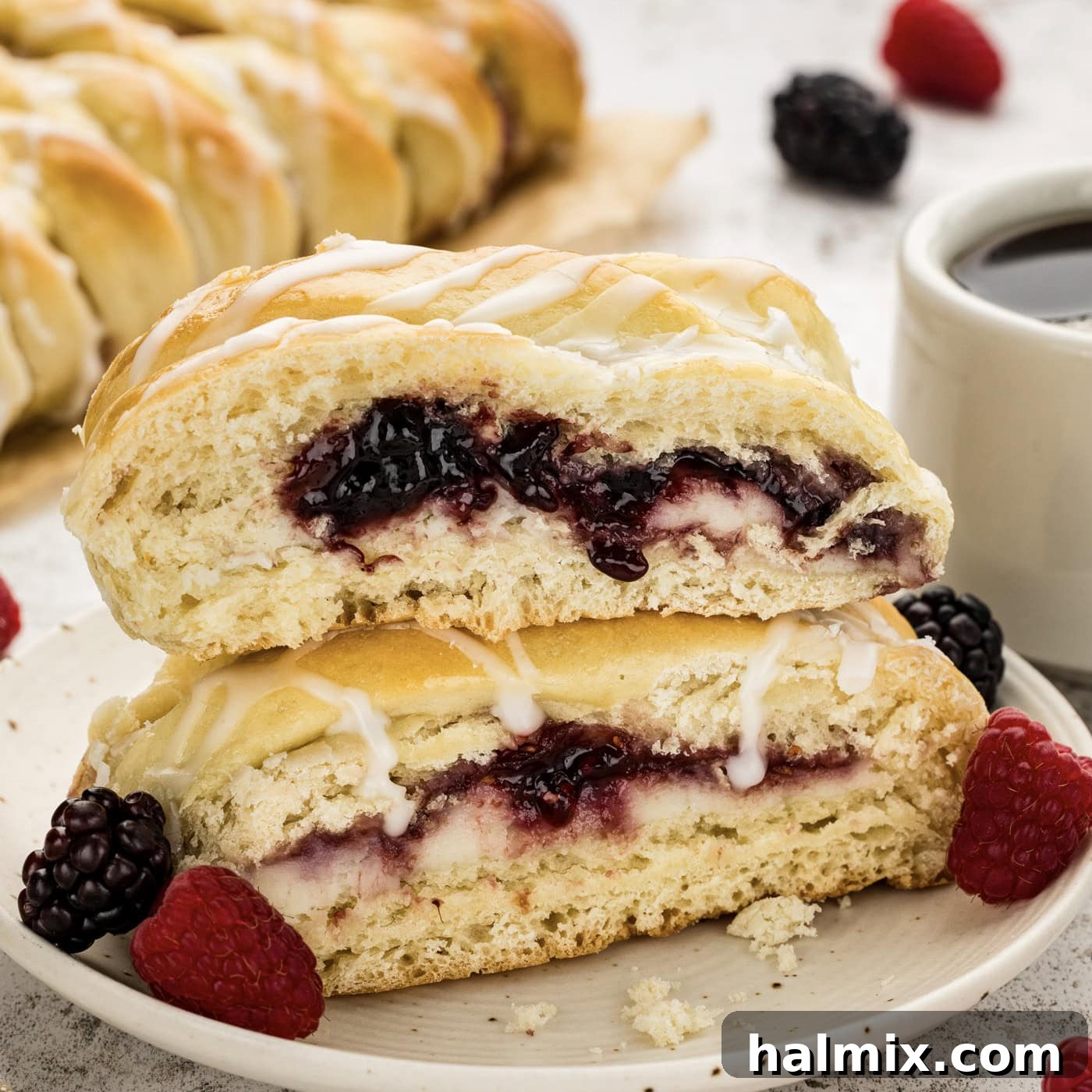
Indulge in Homemade Bliss: The Ultimate Braided Breakfast Danish Recipe
Imagine waking up to the comforting aroma of a freshly baked pastry, golden brown and glistening, right in your own kitchen. This extraordinary braided breakfast danish recipe transforms an ordinary morning into a special occasion. We’re talking about tender, cake-like dough, meticulously woven and generously filled with a vibrant, sweet jam or fruit preserves, perfectly balanced by the rich, tangy creaminess of cream cheese. Every single bite offers a symphony of textures and flavors that promises to make this a truly unforgettable treat.
This danish is more than just a breakfast item; it’s a testament to the simple joys of homemade baking. Its elegant braided appearance hints at a complex creation, yet the steps are approachable, making it a deeply rewarding project for bakers of all skill levels. Whether you’re planning a quiet weekend brunch, a festive holiday gathering, or simply want to share a heartwarming treat with loved ones, this recipe is designed to impress and delight. Prepare to create a culinary masterpiece that not only captivates the eye but also delivers an absolutely divine taste experience.
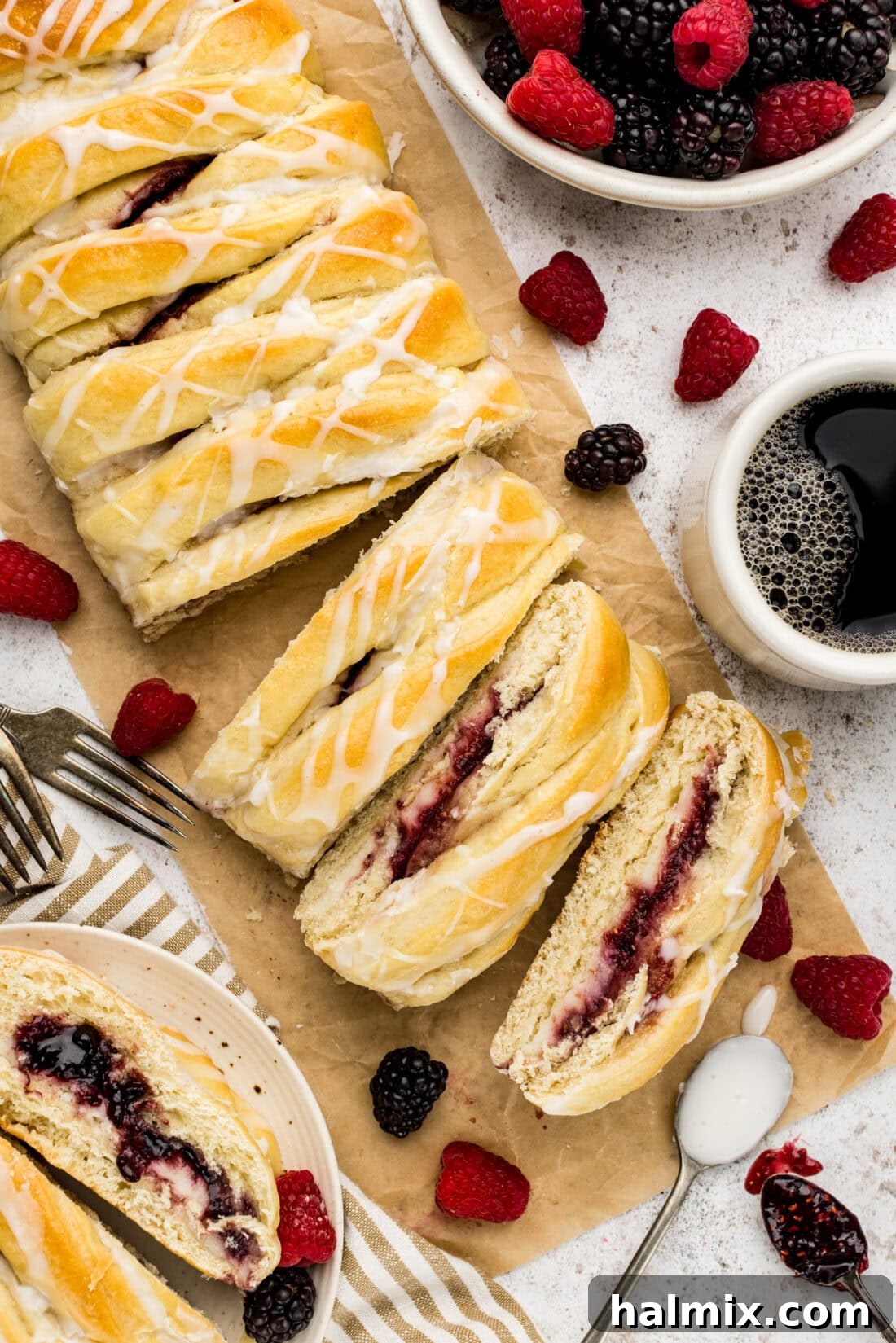
Why This Recipe Works: The Secret to a Perfect Breakfast Danish
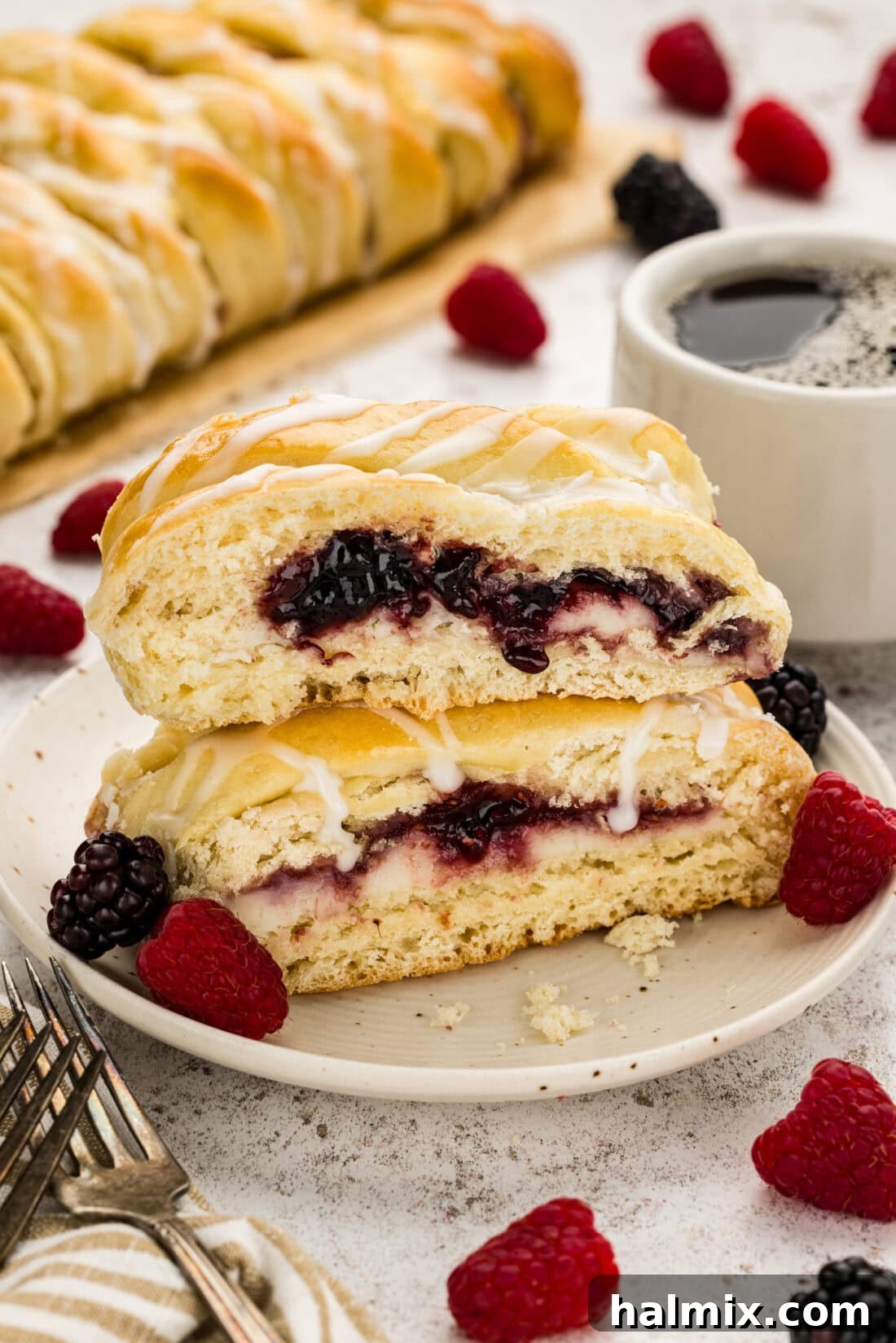
Embarking on this danish-making journey is a labor of love, but the immense satisfaction and delicious results make every step worthwhile. A homemade danish far surpasses store-bought versions in freshness, flavor, and sheer indulgence. This particular recipe yields two substantial loaves, offering ample portions to share with a large family, thoughtful gifts for neighbors, or simply to savor over a leisurely long weekend. For those magical holiday mornings, such as Easter or Christmas, the convenience of preparing the dough and filling the night before means you can wake up to the effortless joy of fresh-baked goodness, minimizing morning stress.
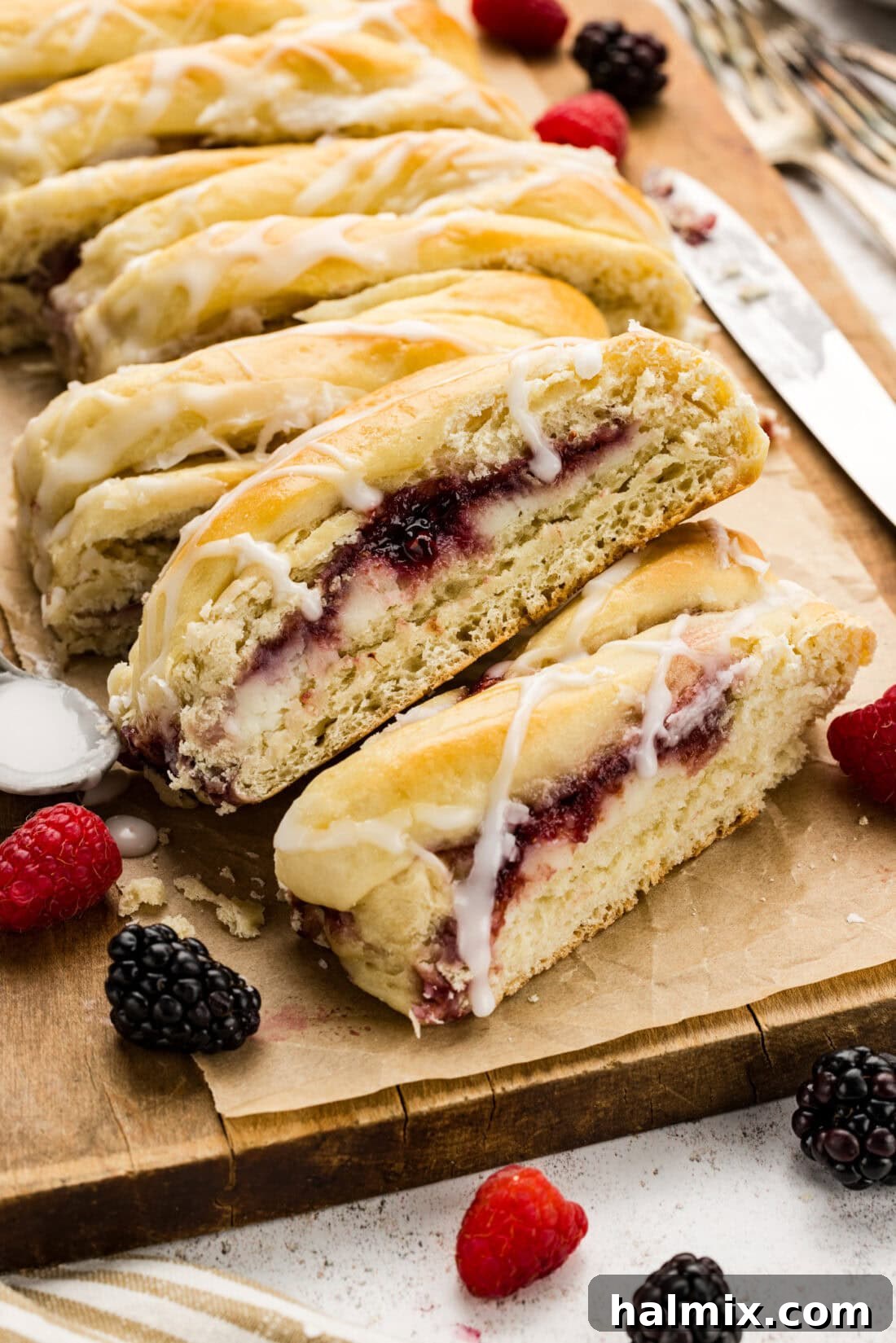
One of the distinguishing features of this danish is its unique texture. Unlike traditional flaky, puff-pastry-style danishes, our recipe creates a softer, more cake-like crumb. This deliberate choice provides a comforting, tender base that beautifully complements the smooth, rich filling. The result is a pastry that feels substantial yet light, reminiscent of a refined coffee cake, where the luscious cream cheese and vibrant fruit preserves are the undisputed stars. This soft, yielding dough allows the full spectrum of the filling’s flavors to shine through, creating a truly harmonious and delectable experience.
Beyond its irresistible taste and delightful texture, this recipe offers remarkable versatility. The choice of fruit jam or preserves allows for endless creative permutations, enabling you to customize each danish according to seasonal availability, personal preference, or specific holiday themes. Classic options like strawberry, raspberry, blackberry, apricot, and marmalade are always a hit. For a brighter, tangier note, lemon curd provides a refreshing contrast to the creaminess. Feeling adventurous? Imagine the delightful burst of blueberry or cherry pie filling nestled within the braids. The adaptability of this recipe means every batch can be a unique culinary exploration, ensuring you’ll never tire of discovering new flavor combinations. The effort invested is generously rewarded with not just two stunning, golden-brown braided loaves, but also with the profound satisfaction of creating something truly exceptional from scratch. It’s a culinary adventure that feeds both the body and the soul, making every slice a reason to celebrate.
For those times when you crave cream cheese pastry but are short on time, be sure to explore our cranberry cream cheese pastries, a simpler alternative utilizing convenient store-bought crescent dough.
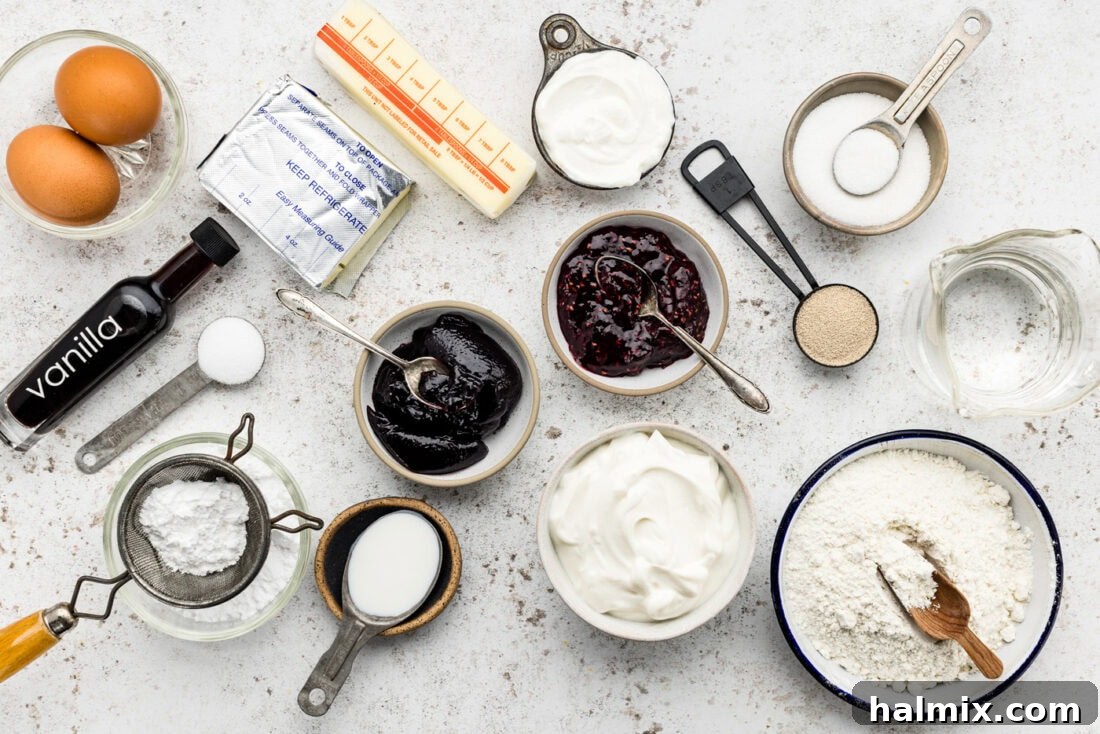
Essential Ingredients for Your Braided Breakfast Danish
To embark on the creation of this exquisite braided danish, you’ll need a selection of quality ingredients, each playing a crucial role in developing the perfect balance of flavors and textures. Having all your components ready and prepared before you begin will ensure a smooth and enjoyable baking experience. For precise measurements and a complete list, please consult the detailed recipe card located at the very end of this post.
Ingredient Insights and Customization Suggestions
Successful baking often hinges on understanding your ingredients. Here, we delve deeper into each component and offer flexible substitution ideas to ensure your braided breakfast danish is nothing short of perfect.
SPONGE: The Foundation for an Exquisite Dough
The sponge, a preliminary mixture of yeast, a small amount of flour, warm water, and sugar, is a critical step for developing a rich, airy dough. It serves as a pre-ferment, allowing the yeast to become fully active and vigorous before facing the heavier, more enriched ingredients like butter and eggs in the main dough. This initial proofing gives your yeast a significant head start, which is crucial for achieving a beautiful rise and an incredibly tender crumb. Always confirm your yeast is fresh and not expired; inactive yeast is the most common culprit for dense baked goods. The water temperature is equally vital: it should be between 105°F and 115°F. Using a kitchen thermometer is highly recommended, as water too hot will destroy the yeast, while water too cold will prevent its activation. Remember, aim for warm, not hot, water! For optimal and consistent baking results, especially when measuring flour, utilizing a kitchen scale to weigh your ingredients will provide far greater accuracy than volumetric cups, which can vary widely depending on scooping methods.
DOUGH: Achieving Supple and Even Consistency
For the main dough, temperature control of your ingredients is paramount. Ensure that all chilled components, specifically the yogurt, butter, and eggs, are brought to room temperature before you begin mixing. This allows them to seamlessly and uniformly incorporate into the dough, leading to a consistent texture and an optimal rise. Cold ingredients can stiffen the butter, making it difficult to achieve a smooth, well-kneaded dough and potentially resulting in an uneven final product. The vanilla yogurt not only adds a delightful subtle tang but also contributes essential moisture, which is key to the soft, cake-like consistency of this exceptional danish.
FILLING: Your Creative Culinary Canvas
The filling is truly where your culinary creativity can shine. The classic pairing of cream cheese with fruit preserves offers a delightful symphony of creamy, sweet, and tart notes. Almost any type of fruit jam or preserves will perform beautifully in this recipe. Tried-and-true favorites include luscious apple, vibrant raspberry, rich blackberry, sweet strawberry, fragrant apricot, tangy marmalade, or a bright and zesty lemon curd. For those seeking an extra layer of indulgence, consider the delightful possibilities of a sweet blueberry or a rich cherry pie filling. Don’t hesitate to experiment with your personal favorites or seasonal specialties; the adaptability of this filling is one of the recipe’s greatest strengths, allowing for endless delicious variations.
How to Make a Braided Breakfast Danish: Step-by-Step Guide
Follow these detailed steps, complete with visual aids, to successfully create your magnificent braided breakfast danish. For a comprehensive printable version with all exact measurements, scroll down to the full recipe card at the conclusion of this article.
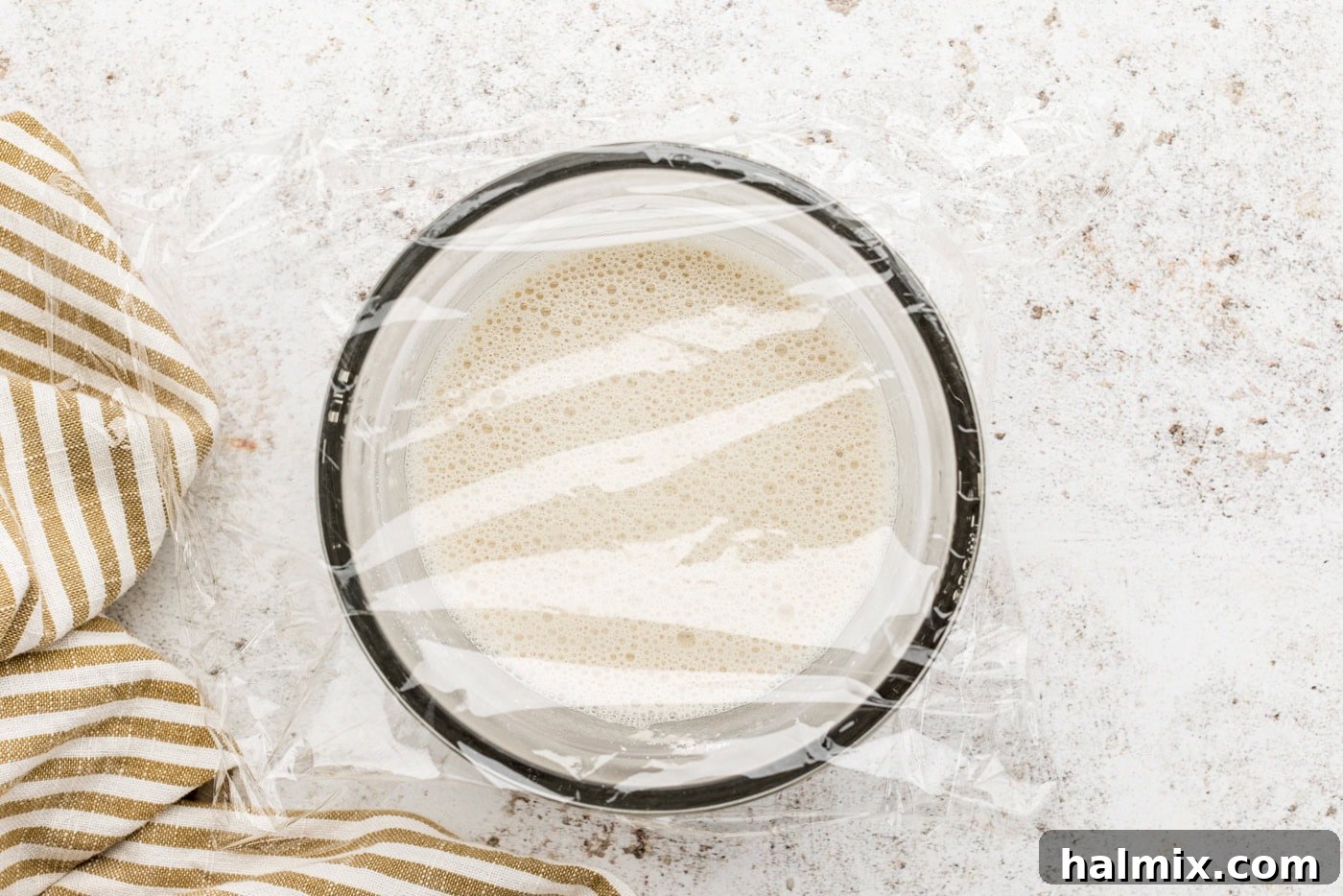
- Prepare the Sponge: In a small bowl, combine ¾ cup warm water (ensuring its temperature is between 105°F and 115°F), 2 teaspoons of granulated sugar, 1 Tablespoon of SAF instant yeast, and 61 grams (approximately ½ cup) of unbleached all-purpose flour. Stir all these ingredients together thoroughly until well combined. Loosely cover the bowl with plastic wrap or a clean kitchen towel and set it aside in a warm, draft-free place to proof for 10 to 15 minutes. During this crucial time, the yeast will activate, forming a frothy, bubbly mixture on the surface, which indicates it’s alive and ready to work its magic.

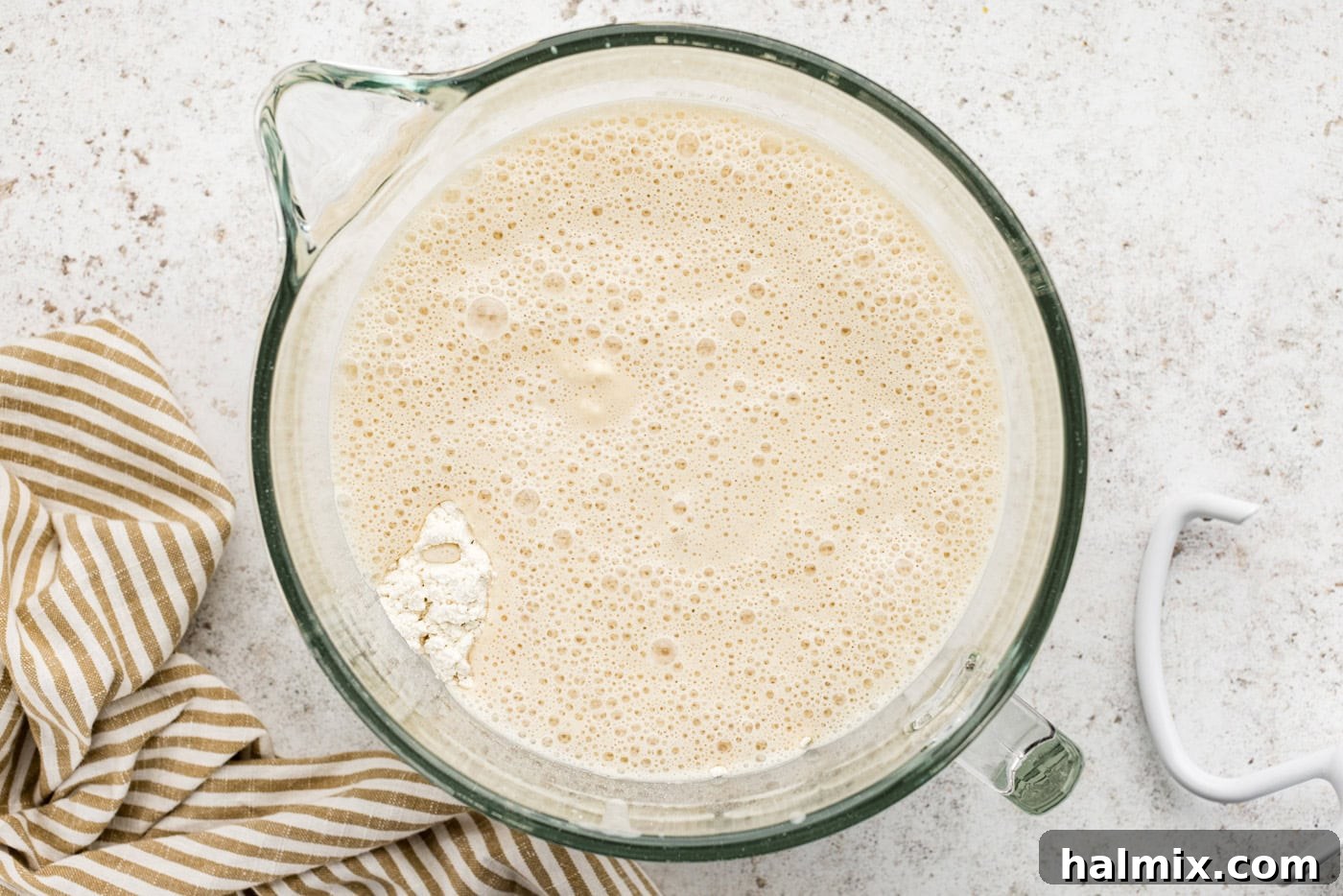
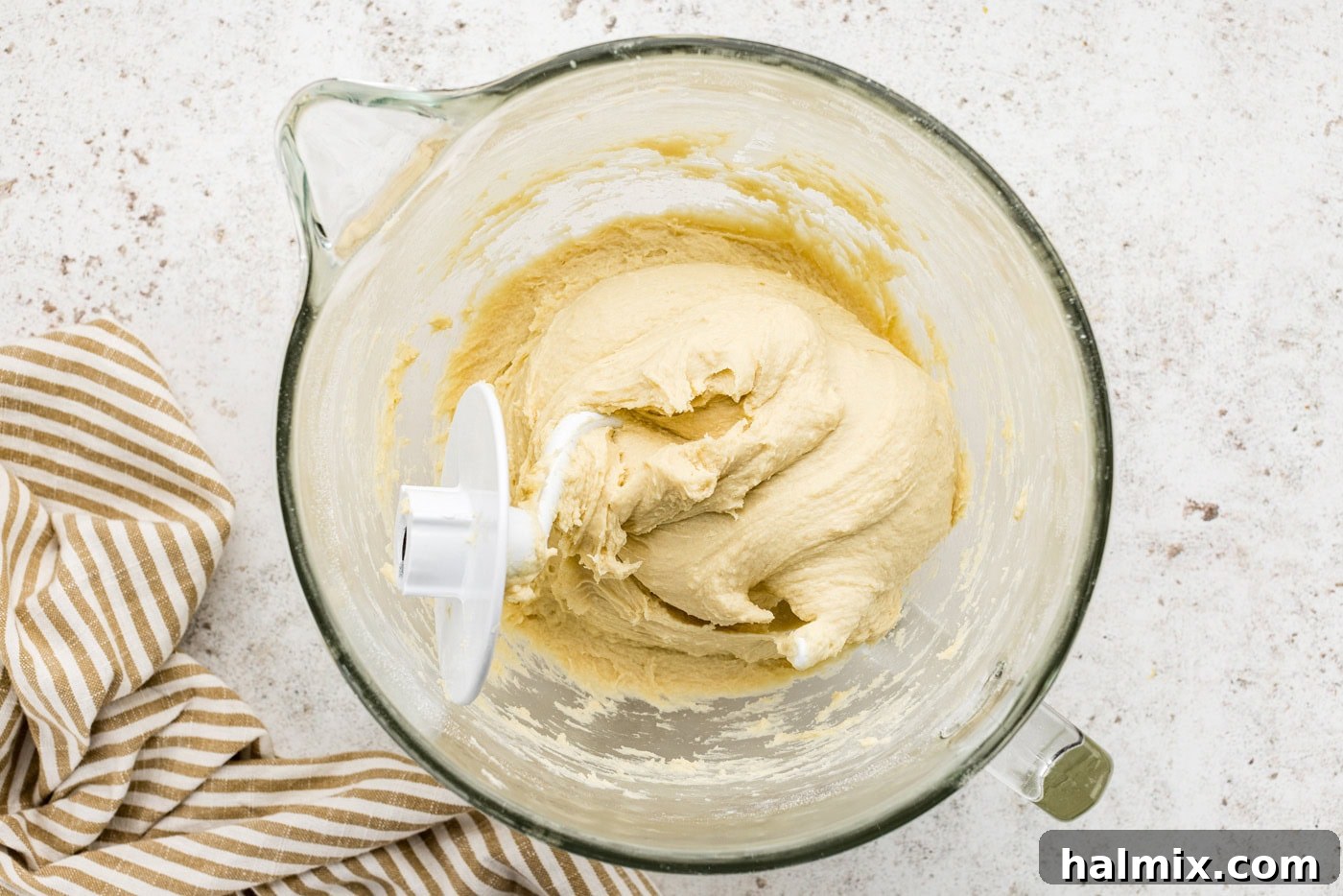
- Form the Dough: Carefully transfer the fully proofed sponge into the bowl of your stand mixer. To this, add the remaining dough ingredients: ¾ cup of room-temperature vanilla yogurt, ½ cup of softened unsalted butter (one stick), 2 large eggs (beaten and at room temperature), 113 grams (approximately ½ cup) of granulated sugar, 2 teaspoons of salt, 2 teaspoons of vanilla extract, and 629 grams (approximately 5 cups) of unbleached all-purpose flour. Attach the dough hook attachment and begin mixing on speed 2. Knead the dough for about 5 to 6 minutes, or until it transforms into a soft, smooth, and elastic consistency that readily pulls away from the sides of the bowl.
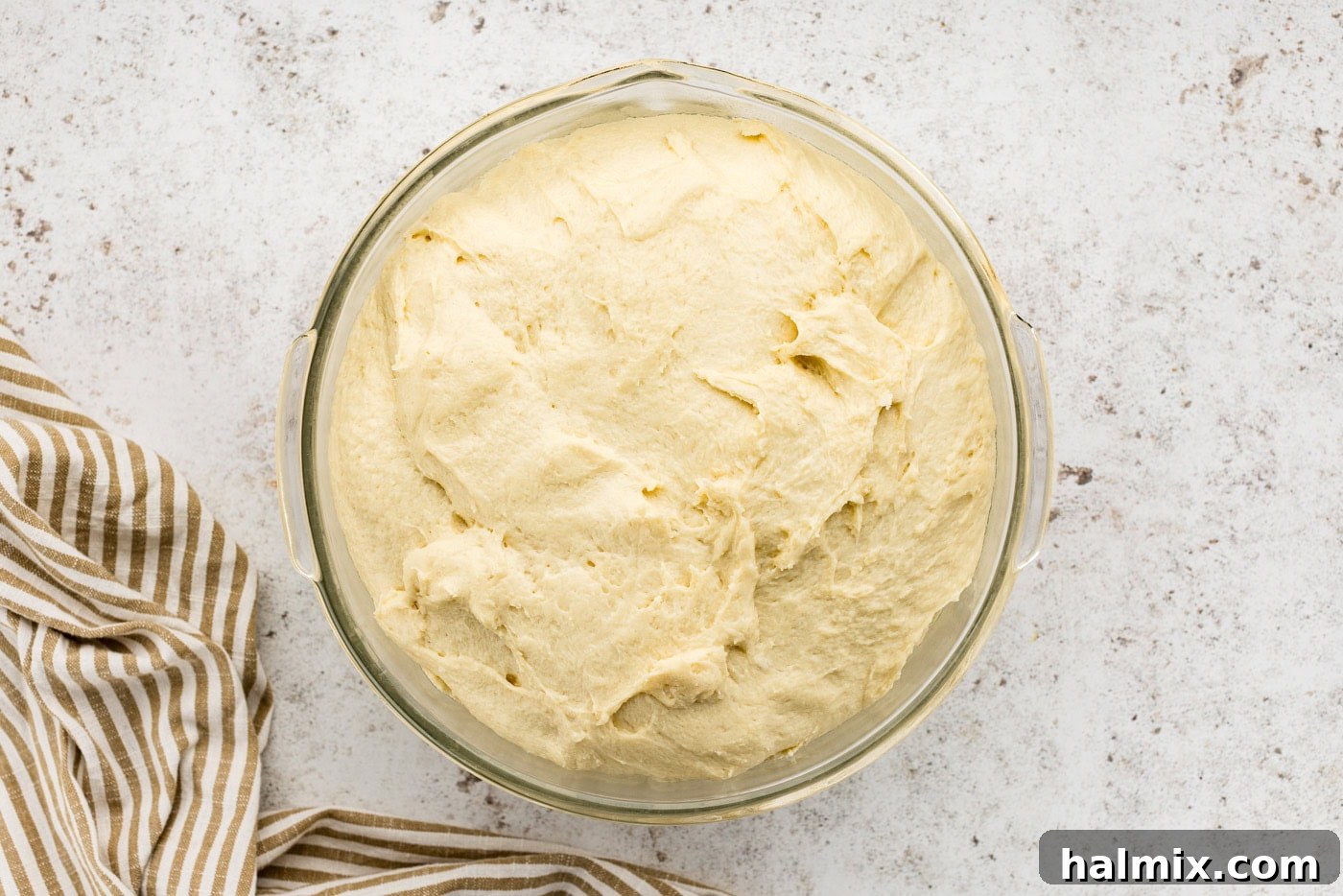
- First Rise (Bulk Fermentation): Lightly grease a large, clean mixing bowl. Transfer the freshly kneaded dough into the greased bowl, turning it once to ensure it is lightly coated with oil, which prevents sticking. Cover the bowl securely with plastic wrap or a clean, damp kitchen towel. Allow the dough to rise in a warm, draft-free environment for 60 to 90 minutes. It should become noticeably puffy and nearly double in its original size. This critical first rise is essential for developing the dough’s rich flavor and desirable texture.
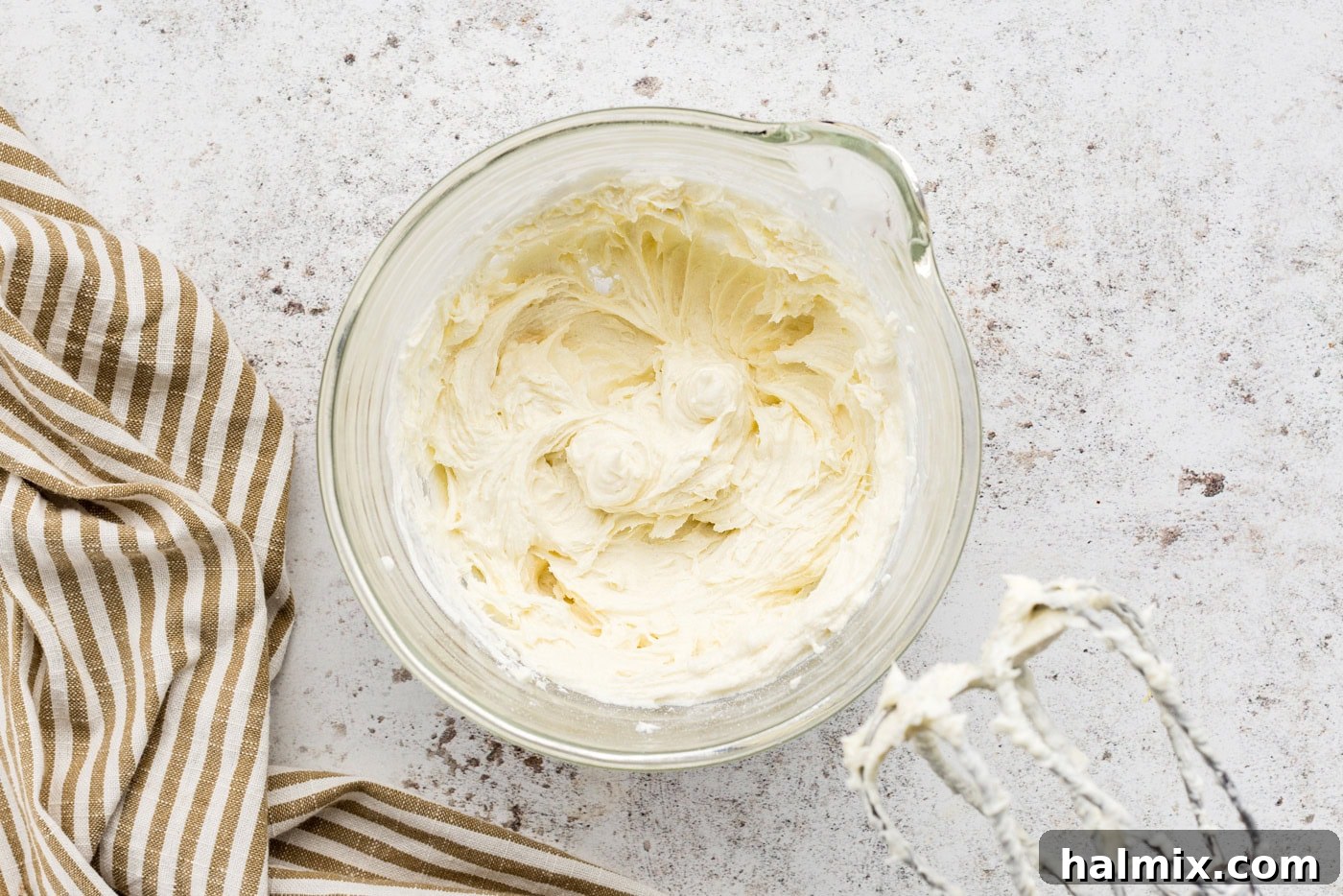
- Prepare the Filling: While your dough is undergoing its first rise, use this time to prepare the luscious cream cheese filling. In a separate small bowl, combine ⅔ cup of softened cream cheese, 57 grams (approximately ¼ cup) of granulated sugar, ¼ cup of room-temperature sour cream, and 30 grams (approximately ¼ cup) of unbleached all-purpose flour. Mix all these ingredients together thoroughly until the mixture is perfectly smooth, creamy, and completely free of any lumps. Once prepared, set both this cream cheese filling and your chosen fruit preserves aside until you are ready to assemble the danish braids.
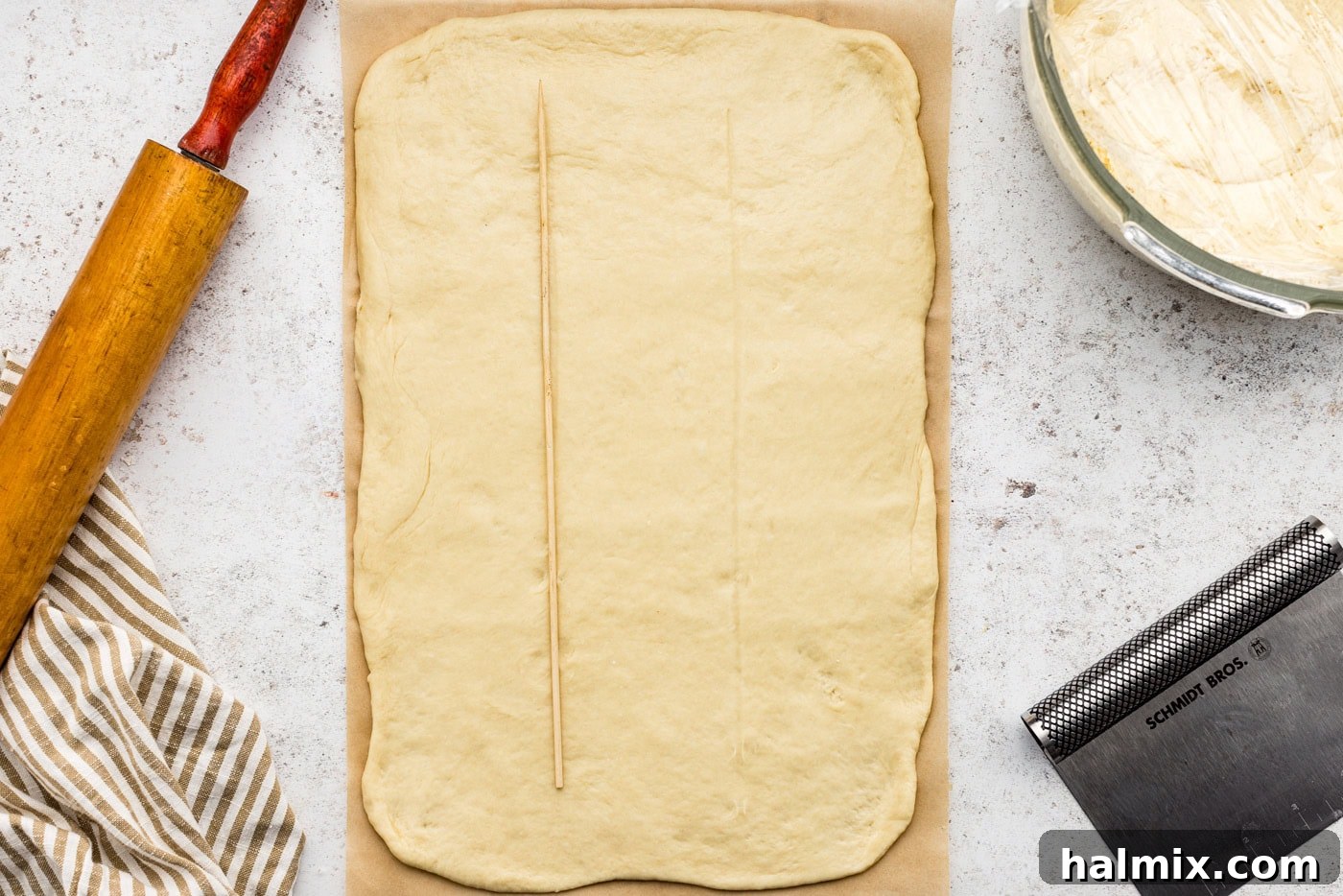
- Shape the Dough: Once the dough has completed its first rise, gently deflate it by lightly pressing down to release the trapped gases. Divide the dough precisely into two equal halves. Cover one half with plastic wrap to prevent it from drying out while you work with the first portion. Cut two pieces of parchment paper into 10-inch by 15-inch rectangles. On one piece of parchment, roll out the first half of the dough into a consistent rectangular shape, measuring approximately 10 inches wide by 15 inches long. Rolling the dough directly on parchment paper is a highly recommended technique, as it makes the subsequent step of transferring the delicate filled danish to the baking sheet significantly easier and mess-free.
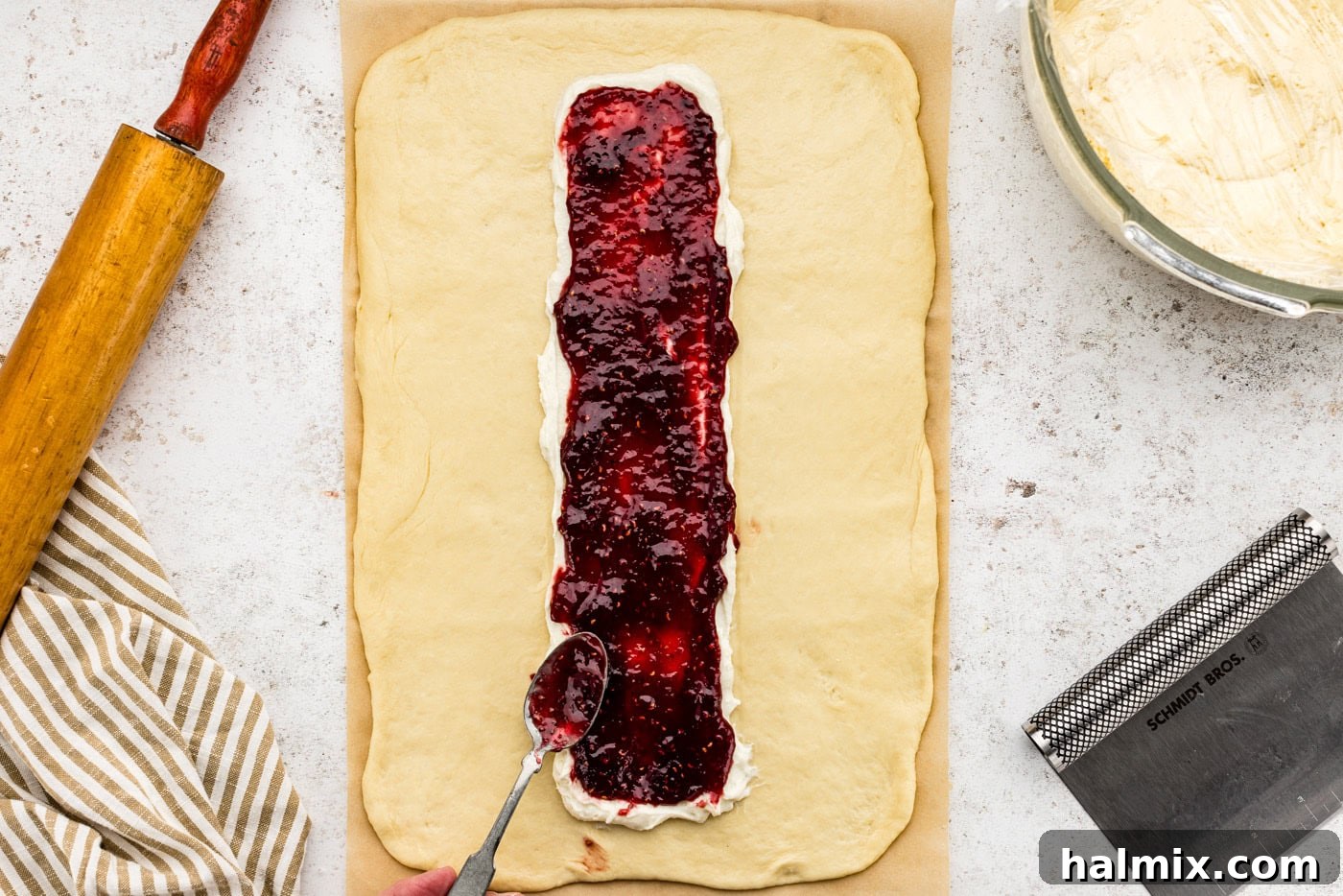
- Fill the Danish: Once your dough rectangle is perfectly shaped, lightly press two parallel lines lengthwise down the dough. This will visually divide it into three equal sections. Carefully and evenly spread half of the prepared cream cheese filling down the center section of the dough. On top of the cream cheese layer, gently spoon half of your selected fruit preserves. Ensure you leave a clear 1-inch border of dough free on all sides of the filling. This crucial border is necessary for properly sealing and elegantly braiding the danish, keeping the delicious filling securely inside.
Crafting the Braids and Final Assembly
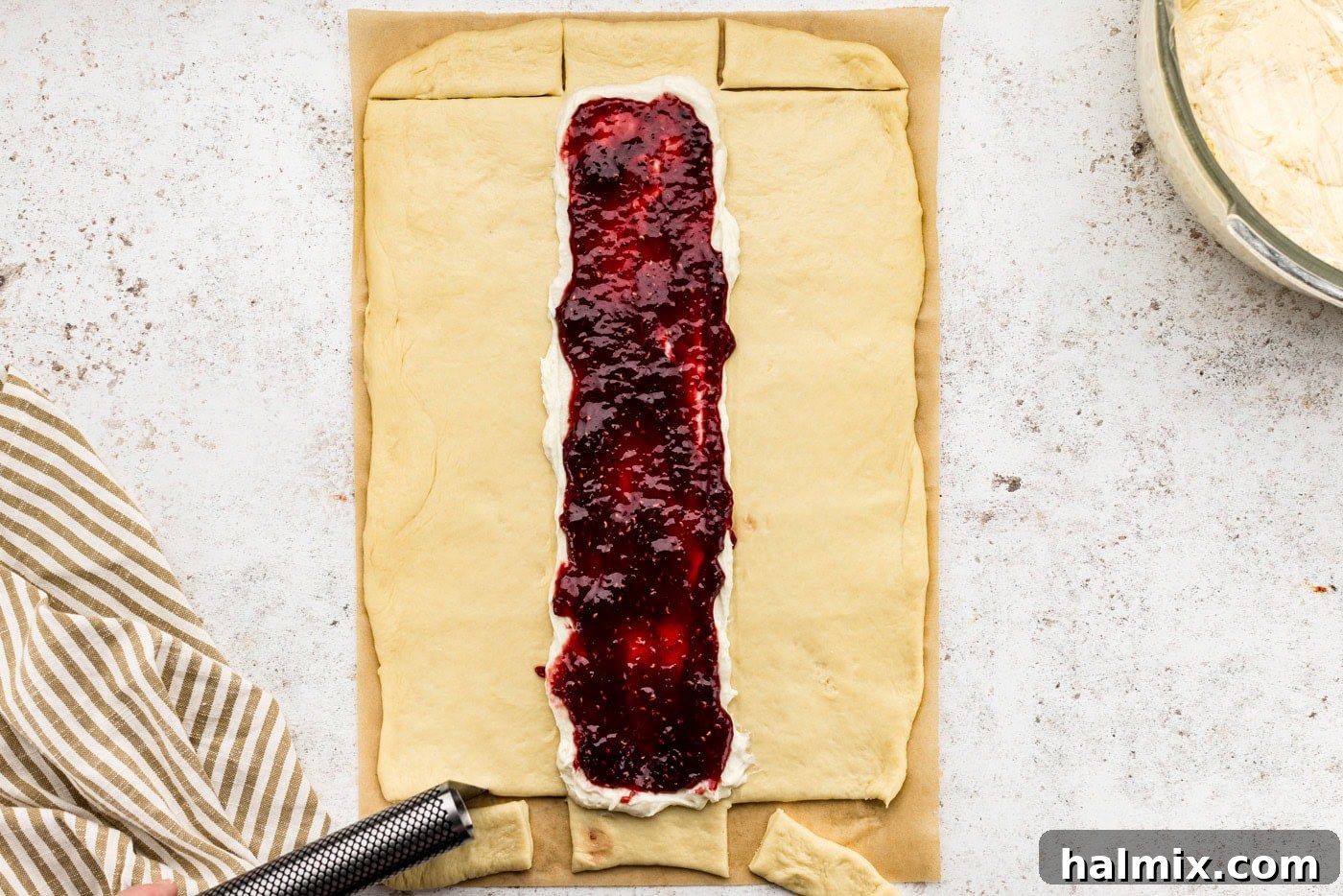
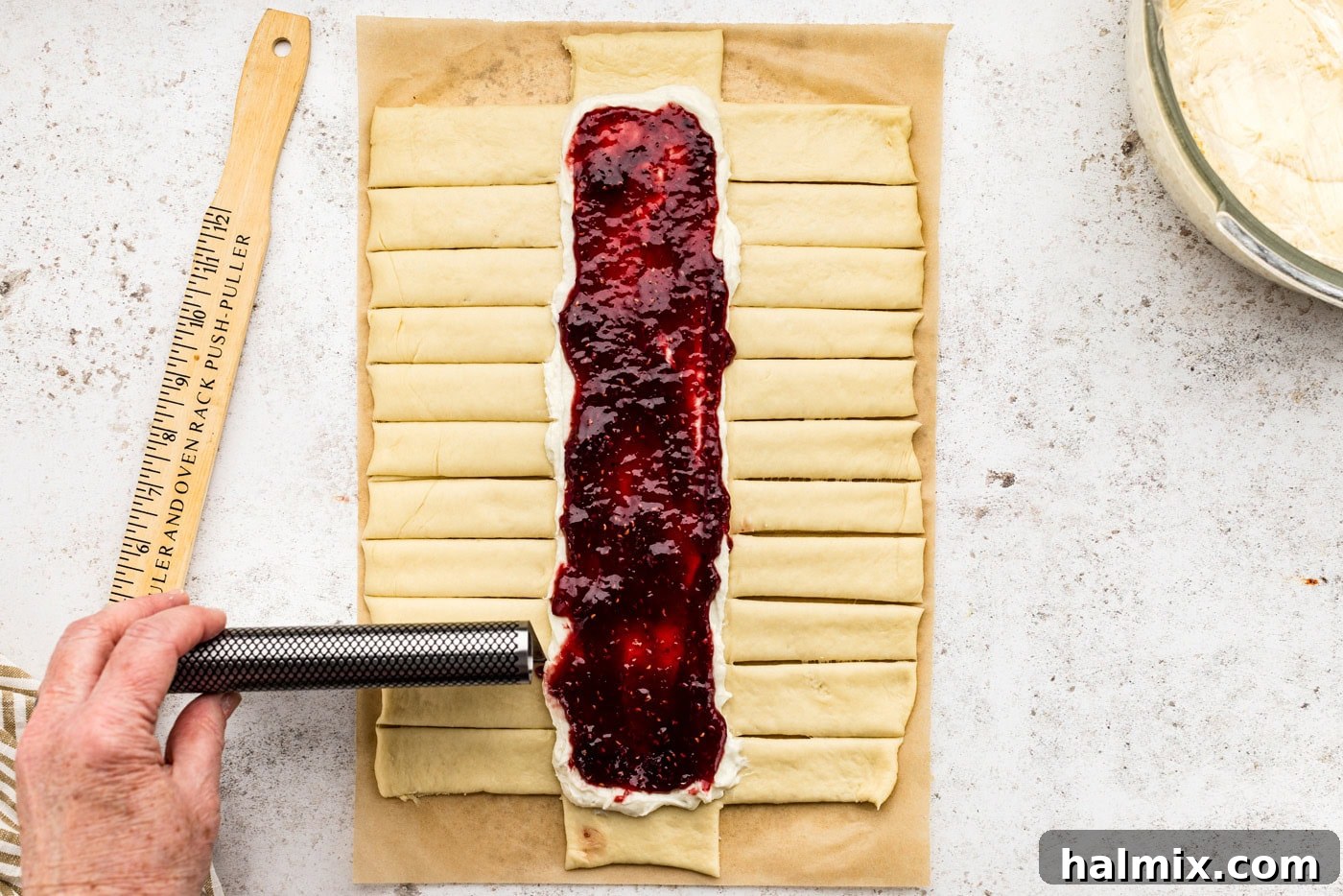
- Cut the Strips for Braiding: To begin forming the elegant braided pattern, start by meticulously cutting out a 1-inch triangle from each of the four corners of your dough rectangle. Next, using a pastry cutter, a clean pizza cutter, or even sharp kitchen shears, carefully cut 1-inch wide crosswise strips down the entire length of the outside two sections of the dough. It is important to aim for an equal number of strips on both the left and right sides to ensure a balanced and symmetrical braid.
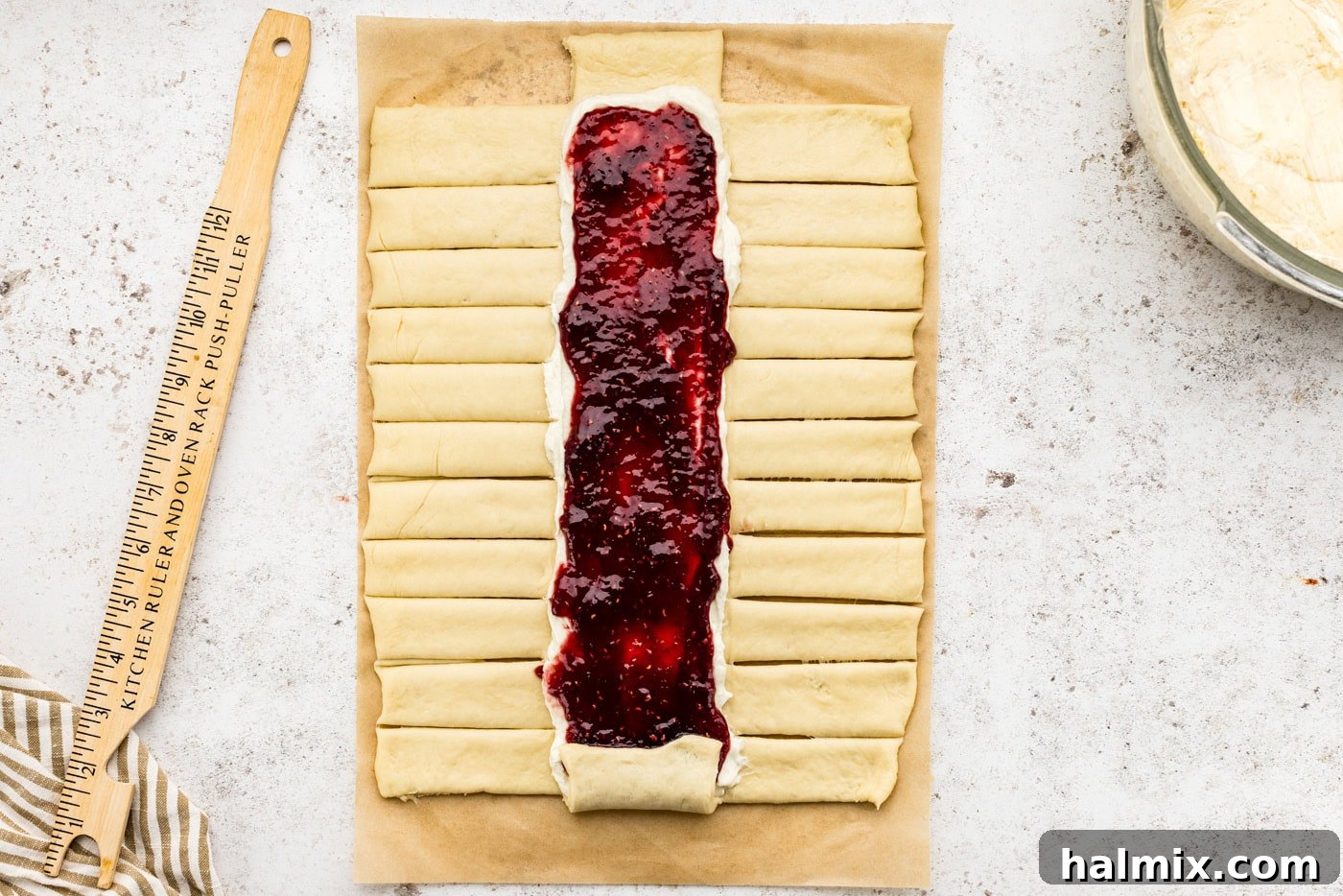
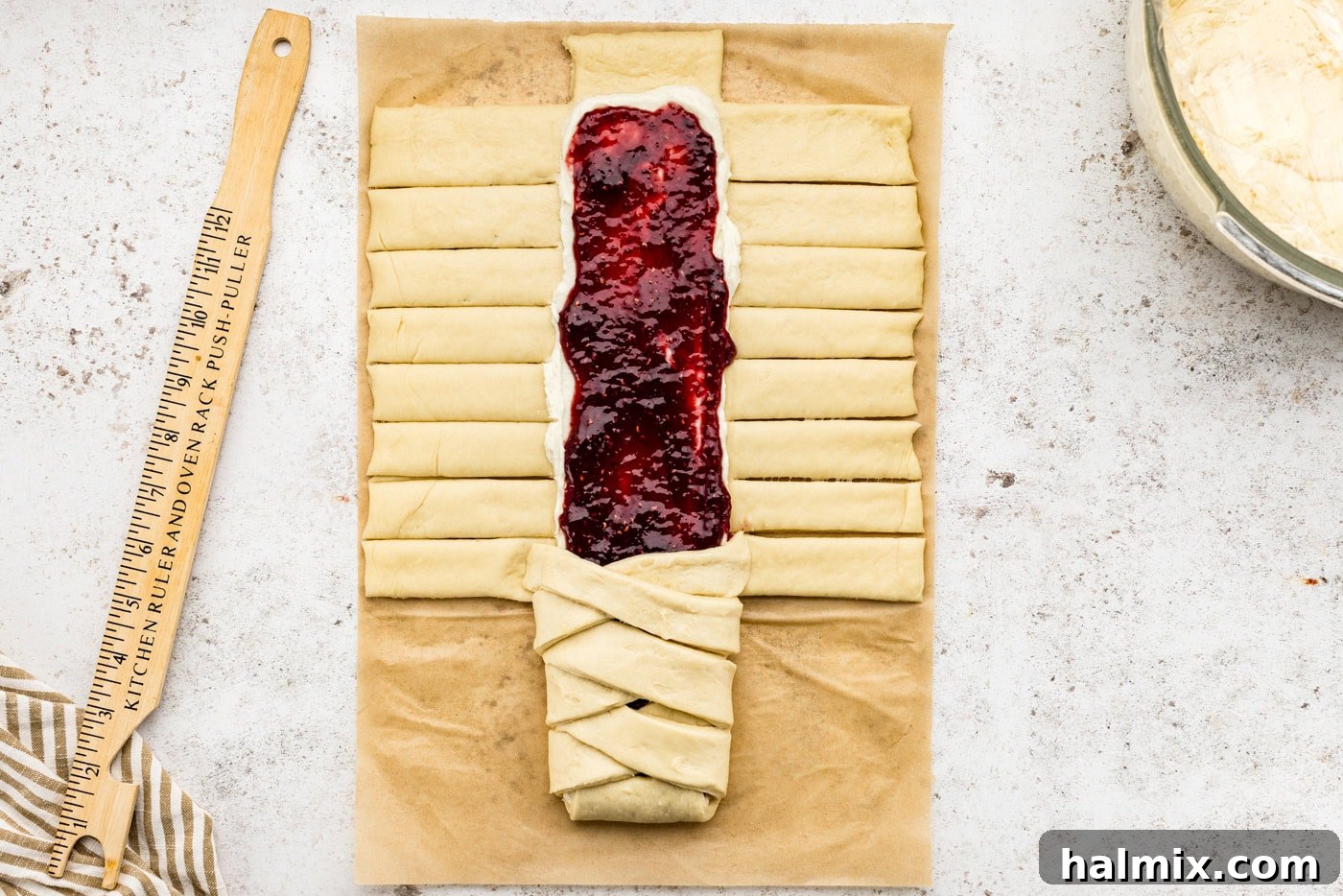
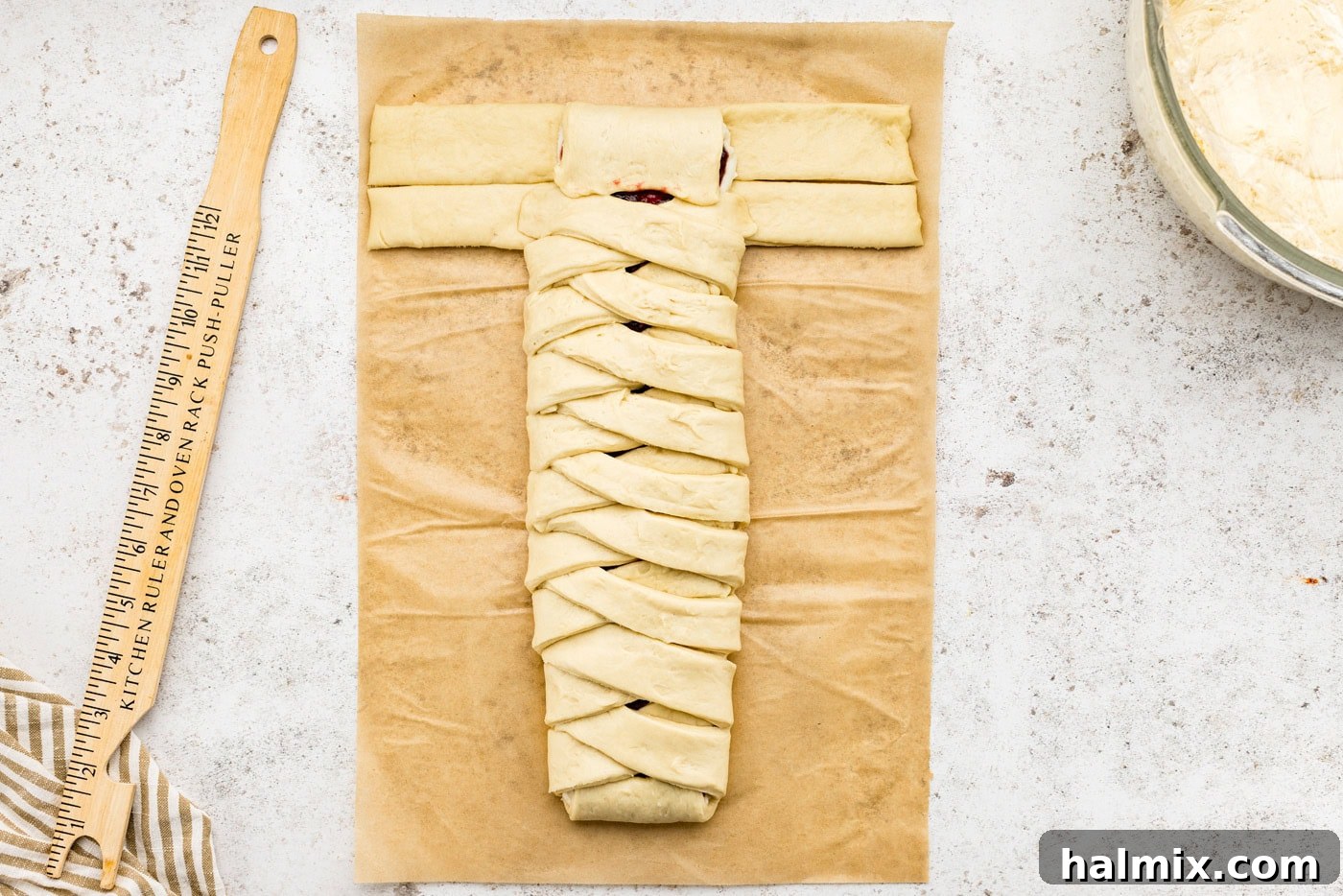
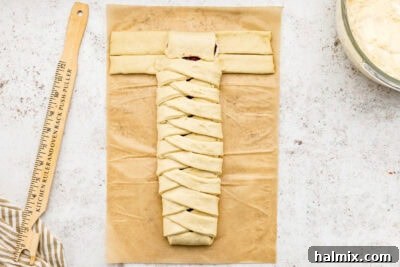
- Begin the Braiding Process: Take one end of the center dough section and gently fold it over the filling, effectively sealing one end of your future danish. Now, starting from the top left-hand side, carefully lift the uppermost dough strip and bring it diagonally across the filling, gently pressing its end into the dough on the opposite side to secure it. Repeat this exact process with the top strip from the right side, crisscrossing it over the first strip you laid down. Continue this alternating pattern, taking strips from left and then right, working your way down the entire length of the loaf. This methodical crisscrossing will gradually form the beautiful, intricate braided pattern of your danish.
- Seal the End of the Braid: Once you have worked your way down the loaf and are left with the final two “legs” of dough on either side and an end section, it’s time to seal it neatly. First, fold up the bottom end section of the dough over any remaining filling. Then, take the two side “legs” and crisscross them over the folded end, carefully tucking their ends neatly underneath the loaf. This creates a secure and visually appealing finish to your braided danish.
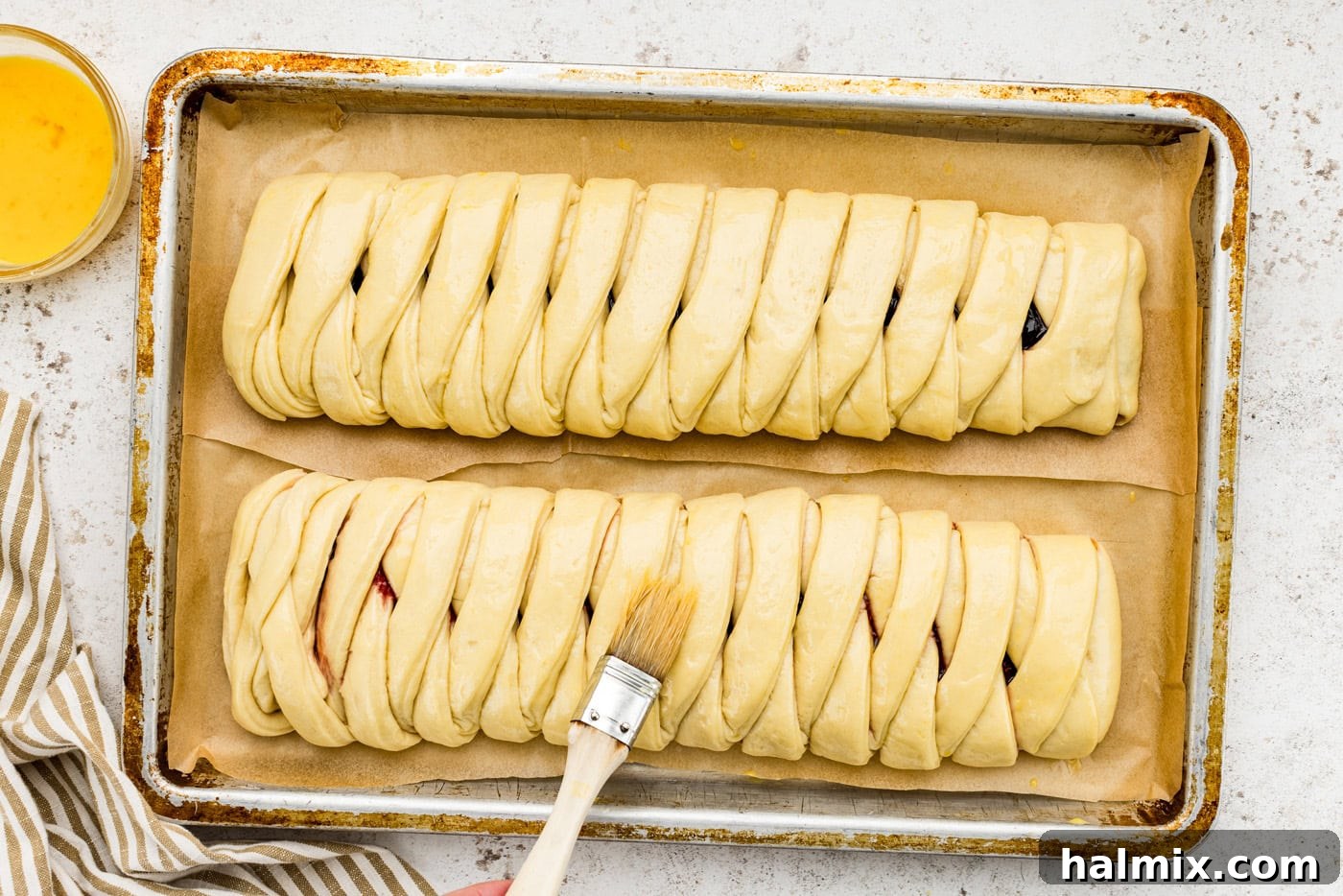
- Second Loaf & Final Rise: Now, repeat the entire process of rolling, filling, and braiding with the second piece of dough, using the remaining cream cheese filling and fruit preserves. Once both loaves are braided, carefully slide them, still on their parchment paper, onto an insulated baking sheet. Typically, both loaves should fit comfortably on one standard sheet, though you might need to trim the parchment paper slightly. Cover both loaves with a soft, clean cloth and allow them to rise for a final 45 to 50 minutes, or until they appear notably puffy and lighter in feel.
- Bake to Golden Perfection: While the loaves are undergoing their final rise, preheat your oven to 375°F (190°C). In a small bowl, prepare an egg wash by lightly beating one large egg with 2 teaspoons of water and a small pinch of salt. Once the danishes have completed their second rise, gently brush the tops and sides of the loaves with this egg wash. This step will give them a beautiful golden-brown sheen and a slightly crisp finish. Bake the danishes for 25 to 30 minutes, or until they are gloriously golden brown and cooked through. Remove them from the oven and carefully transfer them to a wire rack to cool for 15 to 20 minutes before proceeding with the glaze.
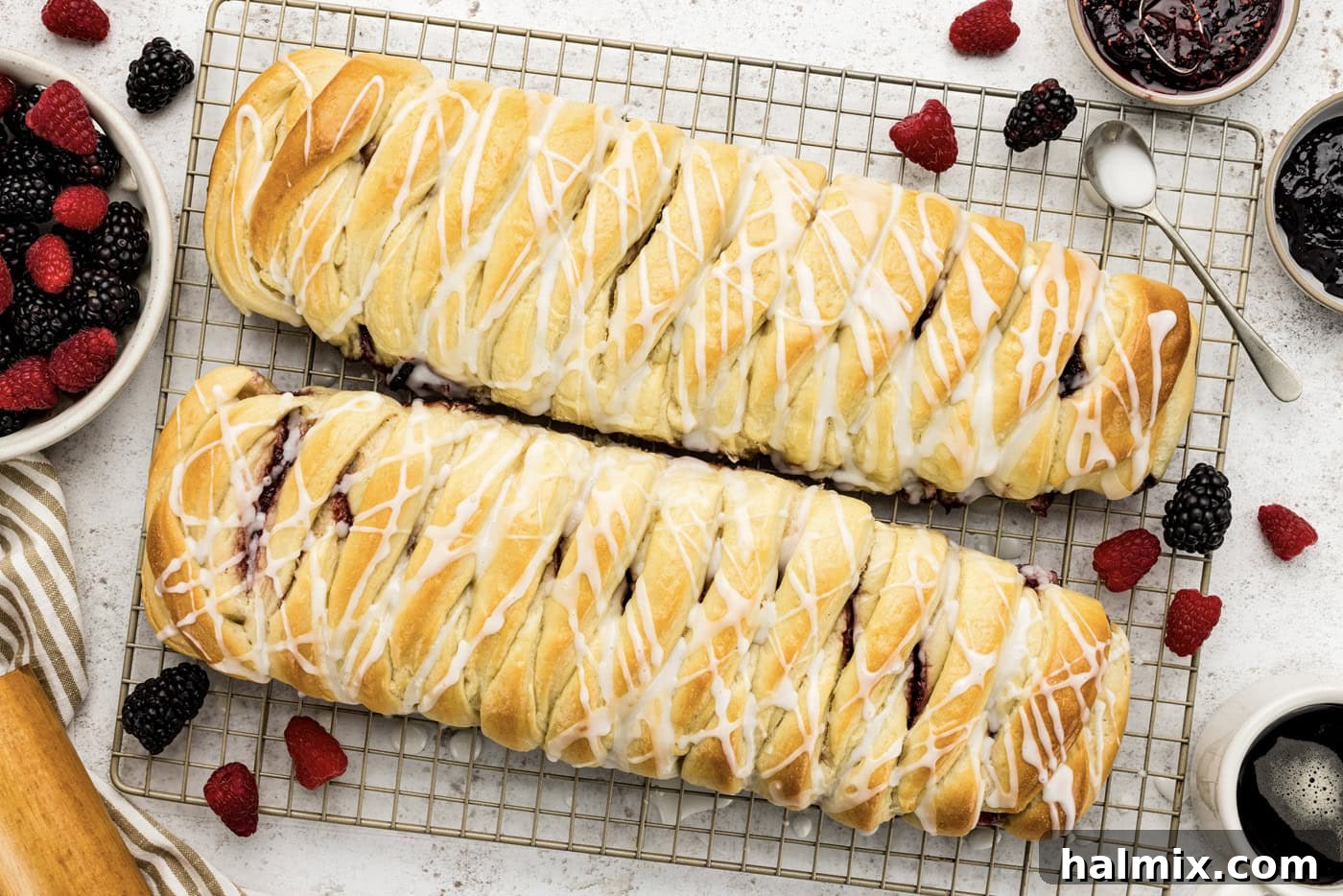
- Drizzle with Glaze and Serve: To prepare the delightful powdered sugar drizzle, slowly add small amounts of milk to your sifted powdered sugar, stirring continuously until you achieve a consistency that is thick but still easily pourable. Arrange your cooled danish loaves on a cooling rack, placing waxed paper or parchment paper underneath to catch any drips. Drizzle the powdered sugar glaze generously back and forth across the tops of the loaves in an artistic pattern. Allow the glaze to set for a few minutes until it hardens slightly before slicing and serving.
Frequently Asked Questions & Expert Baking Tips
In the world of baking, a “sponge” refers to a pre-ferment or starter dough. It’s a simple initial mixture of yeast, a small portion of the total flour, warm water, and a touch of sugar. The primary reason for using a sponge, especially in rich doughs like this danish that contain significant amounts of fat (butter) and protein (eggs), is to give the yeast a crucial head start. These enriching ingredients can sometimes inhibit yeast activity, making it harder for the dough to rise effectively. By creating a sponge, you establish an optimal environment for the yeast to fully activate, multiply, and become robust – you’ll see it turn frothy and bubbly! This initial burst of activity ensures a more powerful rise, contributing to a lighter, softer, and more flavorful final product. If your sponge becomes active and bubbly, you know your yeast is healthy and ready to infuse your danish with its magical lift.
While the braided danish is undoubtedly a delight when enjoyed fresh and warm from the oven, any leftovers can certainly be stored to extend the pleasure. Given the presence of a cream cheese filling, it is essential to store the danish in an airtight container and keep it refrigerated. When properly stored, it will maintain its quality for up to 3 days. It’s worth noting that baked goods, particularly breads, tend to dry out slightly when kept in the refrigerator. To best enjoy a chilled slice, we recommend allowing it to come to room temperature for approximately 30 minutes before serving. Alternatively, a quick rewarming in a toaster oven or microwave for a few seconds can help restore its tender texture and delightful warmth. Always ensure it’s in an airtight container to prevent staleness and absorb odors from the fridge.
Freezing yeast-based doughs like this braided danish for future baking is indeed an option, but it requires a specific technique to ensure quality. Since this is a yeast dough, it’s generally recommended to “parbake” it first. Parbaking involves partially baking the danish until it is just set and forms a very pale crust, without allowing it to brown significantly. This process effectively halts the yeast’s activity and stabilizes the dough’s proteins and starches, preventing over-proofing or undesirable changes in flavor and texture during freezing. After parbaking and allowing the loaves to cool completely, wrap them tightly in plastic wrap, followed by a layer of aluminum foil, before freezing them for up to one month. To bake from frozen, simply transfer the parbaked loaves directly into a preheated oven (often at a slightly lower temperature and for a longer duration than the initial bake) until they are beautifully golden brown and fully cooked through. As this particular recipe has not been specifically tested with a parbake-and-freeze method, precise baking times for the parbaking and final baking stages cannot be guaranteed. However, the general guideline is to parbake until a crust forms but no browning occurs, and then finish baking after thawing or directly from frozen to achieve that perfect golden finish.
The secret to a beautifully intricate and even braid lies in precision cutting and a gentle touch during assembly. Use a clean ruler or measuring tape to ensure that your 1-inch dough strips are consistently sized; uniformity is key to an attractive finished product. When you begin crisscrossing the strips over the filling, resist the urge to pull them too tightly. Excessive pulling can cause the delicate dough to tear, or worse, squeeze out some of the delicious filling. Instead, handle each strip with care, gently laying it diagonally across the filling so it slightly overlaps the previous strip, and then lightly press its end to secure it to the base dough. The objective is to create a relaxed, uniform weave that looks elegant and effectively encases the filling throughout the baking process. Don’t be discouraged if your first attempt isn’t flawless; like any artistic endeavor, practice leads to perfection, and rest assured, even an imperfectly braided danish will still taste absolutely delectable!
While a classic drizzle of powdered sugar and milk provides a simple yet elegant finish, feel empowered to customize your glaze for an extra touch of flavor and flair. For a brighter, more tangy dimension, consider substituting the milk with a small amount of fresh lemon juice or orange juice. You can also elevate the glaze with a tiny dash of vanilla extract or almond extract, adding a wonderful aromatic depth. The key to the perfect glaze consistency is to add the liquid gradually, stirring continuously, until it’s thick enough to cling beautifully to the danish but still flow smoothly off a spoon. For an even more impressive presentation, after drizzling the glaze, you might sprinkle the top with toasted slivered almonds, chopped pistachios, or a dusting of citrus zest for added texture and aroma.
Serving Suggestions for Your Homemade Danish
This magnificent braided breakfast danish is wonderfully versatile and can be enjoyed in a myriad of ways, making it suitable for any time of day. A warm slice, perhaps gently reheated to bring out its tender best, pairs divinely with a freshly brewed cup of coffee, a soothing herbal tea, or a tall glass of cold milk. Its rich flavor and comforting texture make it the ideal companion for a leisurely morning, transforming an ordinary breakfast into an indulgent experience. It also serves as an exquisite centerpiece or a delightful addition to any brunch spread, beautifully complementing savory dishes and fresh seasonal fruits.
Beyond breakfast, consider tucking a slice into a lunchbox for a sophisticated midday treat, or presenting it as an elegant dessert to round off an evening meal. The delicate balance of sweetness and the creamy, satisfying filling make it a perfect conclusion to any dining occasion. While the powdered sugar drizzle is technically optional, we wholeheartedly recommend it! That final, delicate touch of sweetness not only elevates the flavor profile but also adds a visually appealing finishing flourish, making each slice feel even more special. Whether you prefer your danish warmed to perfection or savored at a pleasant room temperature, there’s truly no incorrect way to enjoy this homemade delight. We genuinely hope you cherish every delicious bite!
Explore More Delectable Breakfast Recipes
If you thoroughly enjoyed the process of crafting this braided danish, we’re confident you’ll adore our other breakfast creations. Expand your baking repertoire and discover new favorites with these delightful recipes:
- Blackberry Scones: Light, fluffy, and bursting with the fresh, juicy flavor of blackberries, perfect for a classic tea time or breakfast.
- Crescent Danish Wreath: An easier, yet equally impressive and festive pastry, ideal for celebrations or when time is of the essence.
- Blueberry Breakfast Cake: A simple, moist, and tender cake studded with sweet blueberries, making it a delightful choice for any morning.
- Cranberry Cream Cheese Pastries: Quick to assemble and utterly delightful, these pastries cleverly utilize convenient store-bought dough for an effortless treat.
- Cherry Cream Cheese Coffee Cake: A wonderfully tender coffee cake featuring a luscious and tangy cherry cream cheese swirl, perfect for sharing.
I find immense joy in baking and cooking, and it is truly a pleasure to share my culinary experiences and creations with all of you! To ensure you never miss out on new and exciting recipes, I offer a convenient newsletter delivered directly to your inbox every time a new creation is posted. Simply subscribe here to start receiving your free daily recipes, bringing fresh inspiration and delicious ideas directly to your kitchen!

Braided Breakfast Danish
IMPORTANT – Explore the Frequently Asked Questions within the blog post for helpful insights and tips!
Print It
Pin It
Course:
Breads, Breakfast
Cuisine:
American
20
servings (2 loaves)
3 hours
10 minutes
296
Amanda Davis
Ingredients
Sponge
- ¾ cup warm water temperature between 105-115°F
- 2 teaspoons granulated sugar
- 1 Tablespoon SAF instant yeast
- 61 grams unbleached all purpose flour (½ cup)
Dough
- All of the sponge
- ¾ cup vanilla yogurt at room temperature
- ½ cup unsalted butter softened at room temperature (1 stick)
- 2 large eggs beaten and brought to room temperature
- 113 grams granulated sugar (½ cup)
- 2 teaspoons salt
- 2 teaspoons vanilla extract
- 629 grams unbleached all purpose flour (5 cups)
Filling
- ⅔ cup cream cheese softened at room temperature
- 57 grams granulated sugar (¼ cup)
- ¼ cup sour cream room temperature
- 30 grams unbleached all purpose flour (¼ cup)
- ½ cup fruit preserves
Finishing
- Egg wash for brushing braid (one lightly beaten egg, 2 teaspoons water, and a pinch of salt)
- 90 grams sifted powdered sugar (1 cup)
- 2-3 Tablespoons milk
Things You’ll Need
-
Kitchen scale for weighing ingredients
-
Stand mixer with dough hook
-
Pastry cutter or kitchen scissors/pizza cutter
-
Insulated baking sheets
Before You Begin: Key Tips
- Yeast Check: Always verify that your yeast has not expired. Active yeast is fundamental for a good rise.
- Water Temperature: The ideal temperature for warm water is between 105°F and 115°F. Use a thermometer; temperatures above 120°F can kill the yeast, while colder water won’t activate it effectively.
- Precise Measurement: For the most consistent results in baking, especially with flour, use a kitchen scale to weigh ingredients rather than relying solely on volumetric cup measurements.
- Room Temperature Ingredients: Ensure all chilled ingredients for the dough and filling (yogurt, butter, eggs, cream cheese, sour cream) are at room temperature. This helps them incorporate smoothly and evenly.
- Filling Versatility: Feel free to customize your danish with various fruit jams or preserves. Excellent options include apple, raspberry, blackberry, strawberry, apricot, marmalade, or lemon curd. For a richer flavor, blueberry or cherry pie filling can also be fantastic choices.
Instructions
-
1. Prepare the Sponge: In a small bowl, combine ¾ cup warm water (105-115°F), 2 teaspoons granulated sugar, 1 Tablespoon SAF instant yeast, and 61 grams (½ cup) unbleached all-purpose flour. Stir well, cover loosely with plastic wrap, and let proof for 10-15 minutes until frothy.
-
2. Make the Dough: In a stand mixer bowl, combine the sponge with ¾ cup room-temperature vanilla yogurt, ½ cup softened unsalted butter, 2 beaten room-temperature large eggs, 113 grams (½ cup) granulated sugar, 2 teaspoons salt, 2 teaspoons vanilla extract, and 629 grams (5 cups) unbleached all-purpose flour. Knead with the dough hook on speed 2 for 5-6 minutes until smooth.
-
3. First Rise: Place the kneaded dough in a lightly greased bowl, cover with plastic wrap, and let rise for 60-90 minutes until nearly doubled.
-
4. Prepare Filling: While dough rises, combine ⅔ cup softened cream cheese, 57 grams (¼ cup) granulated sugar, ¼ cup room-temperature sour cream, and 30 grams (¼ cup) unbleached all-purpose flour in a small bowl. Mix until smooth. Reserve with ½ cup fruit preserves.
-
5. Shape and Fill Dough: Cut two 10″x15″ parchment rectangles. Gently deflate dough, divide in half. Roll one half into a 10″x15″ rectangle on parchment. Press two lines lengthwise to divide into three sections. Spread half the cream cheese filling down the center, then top with half the preserves, leaving 1″ border.
Making the Braids and Assembling
-
6. Cut Strips: Cut a 1″ triangle from each corner of the dough. Cut 1″ crosswise strips down the length of the outside sections, ensuring an equal number on each side.
-
7. Braid the Loaf: Fold one end of the center dough section over the filling. Alternating from left to right, lift the top dough strip and bring it diagonally across the filling, pressing to secure. Continue down the loaf to form the braid.
-
8. Seal the End: Fold up the bottom end section of dough, then crisscross the remaining side “legs” over the top and tuck underneath.
-
9. Second Loaf & Final Rise: Repeat steps 5-8 for the second piece of dough. Slide both loaves on parchment onto an insulated baking sheet. Cover with a soft cloth and let rise for 45-50 minutes until puffy.
-
10. Bake: Preheat oven to 375°F (190°C). Brush loaves with egg wash (one lightly beaten egg, 2 tsp water, pinch of salt). Bake for 25-30 minutes until golden brown. Cool on a wire rack for 15-20 minutes.
-
11. Drizzle Glaze: Slowly add 2-3 Tablespoons milk to 90 grams (1 cup) sifted powdered sugar until a thick, drizzling consistency is reached. Drizzle over cooled loaves. Allow to set before serving.
Nutrition
Calories: 296cal |
Carbohydrates: 49g |
Protein: 5g |
Fat: 9g |
Saturated Fat: 5g |
Polyunsaturated Fat: 1g |
Monounsaturated Fat: 2g |
Trans Fat: 0.2g |
Cholesterol: 39mg |
Sodium: 311mg |
Potassium: 91mg |
Fiber: 1g |
Sugar: 19g |
Vitamin A: 292IU |
Vitamin C: 1mg |
Calcium: 39mg |
Iron: 2mg
Tried this Recipe? Pin it for Later!
Follow on Pinterest @AmandasCookin or tag #AmandasCookin!
The recipes on this blog are tested with a conventional gas oven and gas stovetop. It’s important to note that some ovens, especially as they age, can cook and bake inconsistently. Using an inexpensive oven thermometer can assure you that your oven is truly heating to the proper temperature. If you use a toaster oven or countertop oven, please keep in mind that they may not distribute heat the same as a conventional full sized oven and you may need to adjust your cooking/baking times. In the case of recipes made with a pressure cooker, air fryer, slow cooker, or other appliance, a link to the appliances we use is listed within each respective recipe. For baking recipes where measurements are given by weight, please note that results may not be the same if cups are used instead, and we can’t guarantee success with that method.
This delightful recipe was inspired by the Braided Lemon Bread recipe from King Arthur, which motivated us to create our unique version featuring luscious fruit preserves and a sweet powdered sugar glaze.