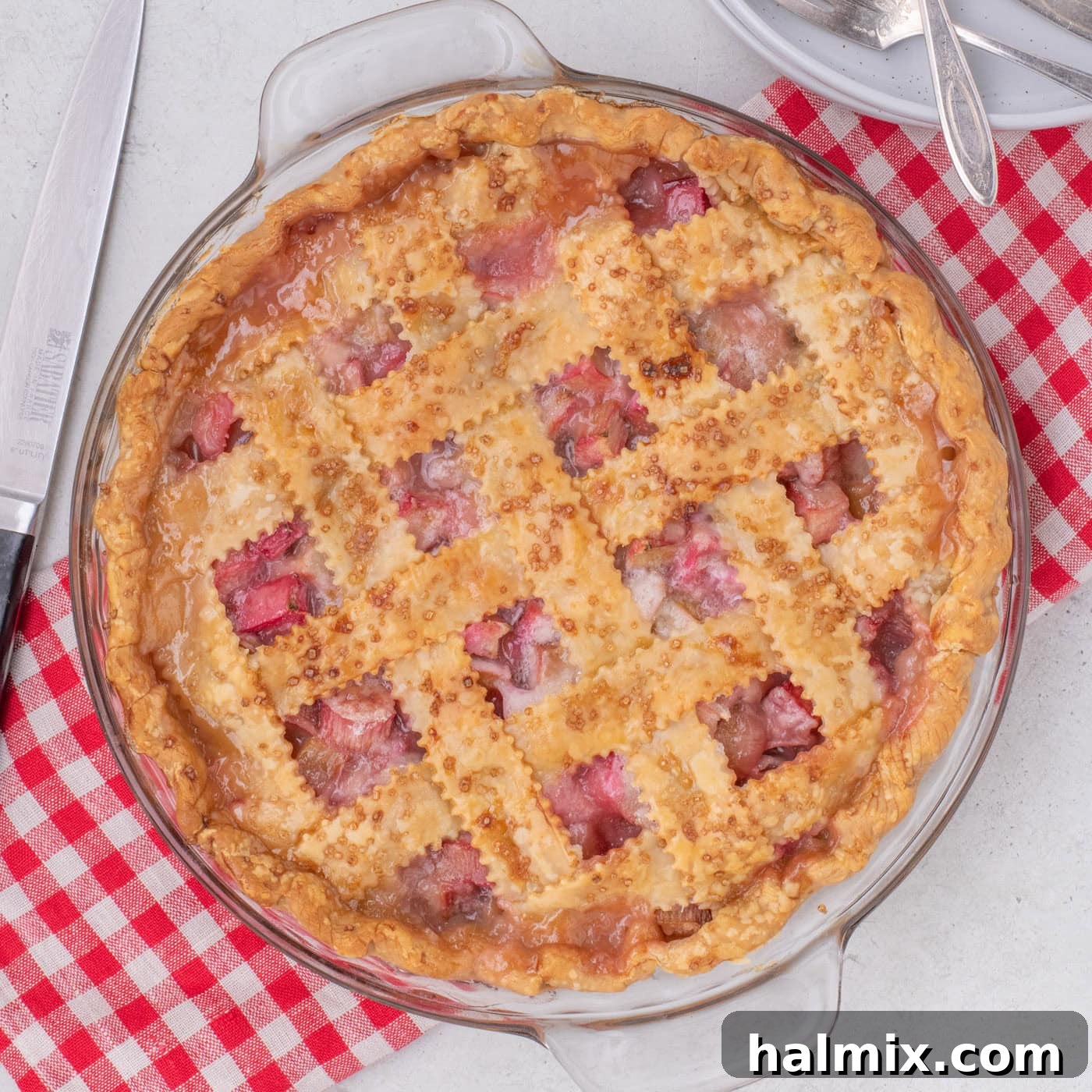
Welcome to the ultimate guide for crafting the most delectable rhubarb pie! This recipe is a celebration of spring, perfectly balancing the vibrant tang of fresh rhubarb with just the right amount of sweetness, all nestled within a sumptuously flaky, buttery pie crust. Crowned with an elegant, sugar-studded lattice top, this pie isn’t just a dessert; it’s a masterpiece that promises to delight with every single bite. Whether you’re a seasoned baker or new to the world of pies, our comprehensive instructions and expert tips will guide you to a truly unforgettable culinary creation.
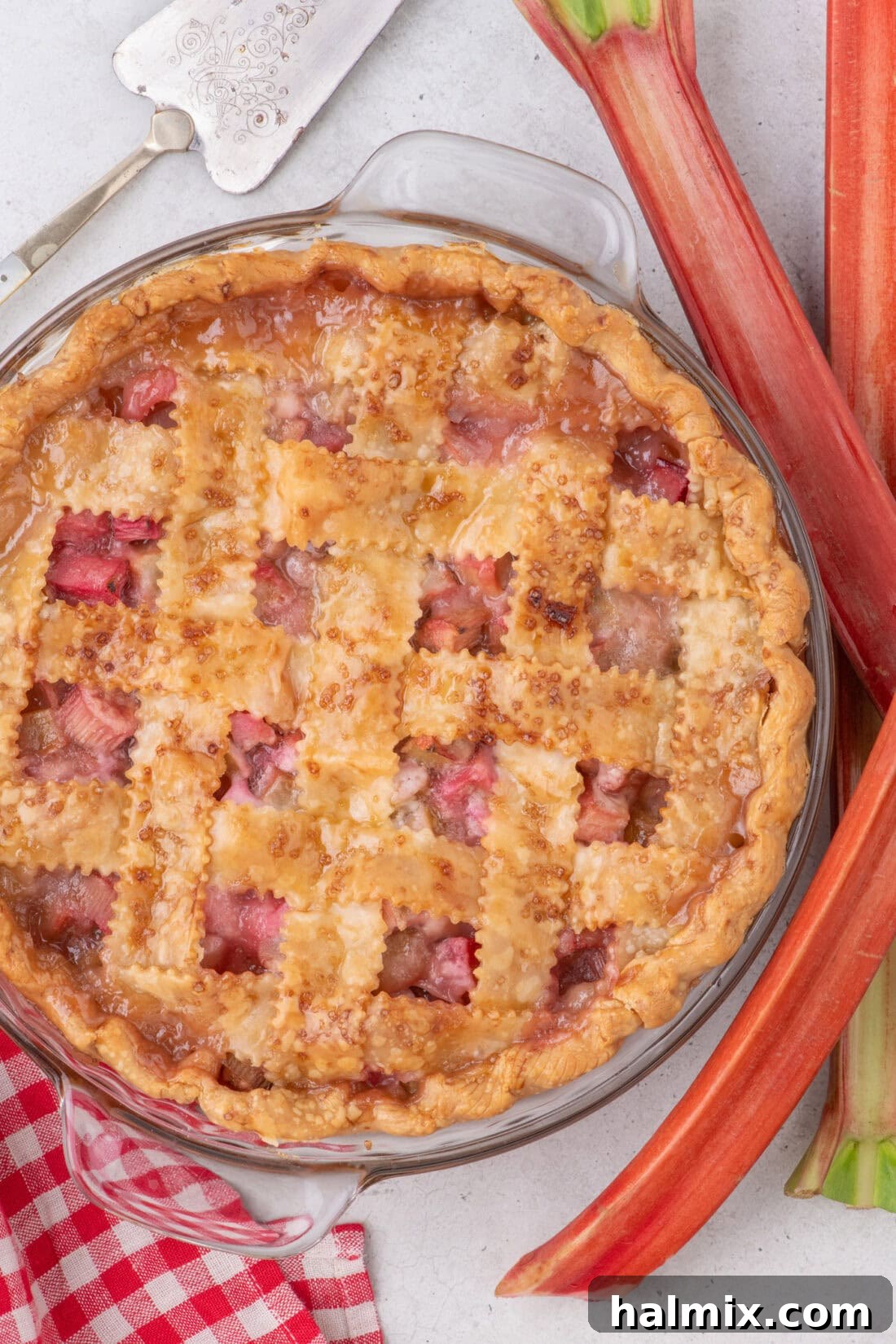
Why This Rhubarb Pie Recipe Stands Out
There’s a special magic in a homemade rhubarb pie, especially when the stalks are fresh from the garden or farmer’s market. This particular recipe captures that magic effortlessly, making it an absolute must-try for anyone looking to embrace the flavors of spring. We’ve fine-tuned every element to ensure a consistently perfect result, transforming humble rhubarb into an extraordinary dessert.
What makes our rhubarb pie truly special? It begins with a flawlessly buttery crust that provides a rich, tender base and crisp texture, beautifully complementing the vibrant filling. The filling itself is a harmonious blend of sweet and tangy, allowing the unique flavor of rhubarb to shine without being overwhelmingly sour. As it bakes, the filling bubbles enticingly, thickening to a luscious consistency, while the crust turns a magnificent golden brown. We believe that baking should be a joy, not a chore, which is why this recipe is designed for ease. By leveraging readily available pantry staples and making smart choices – like the option of using a high-quality store-bought pie crust – you can achieve bakery-worthy results without excessive effort. This means less stress in the kitchen and more time to savor the incredible aromas and, eventually, the delicious slices of your freshly baked rhubarb pie. While our award-winning rhubarb crumble is certainly a contender, there’s nothing quite like the classic comfort of a perfectly crafted pie, especially when the springtime rhubarb bounty calls!
Essential Ingredients & Smart Substitutions for Your Rhubarb Pie
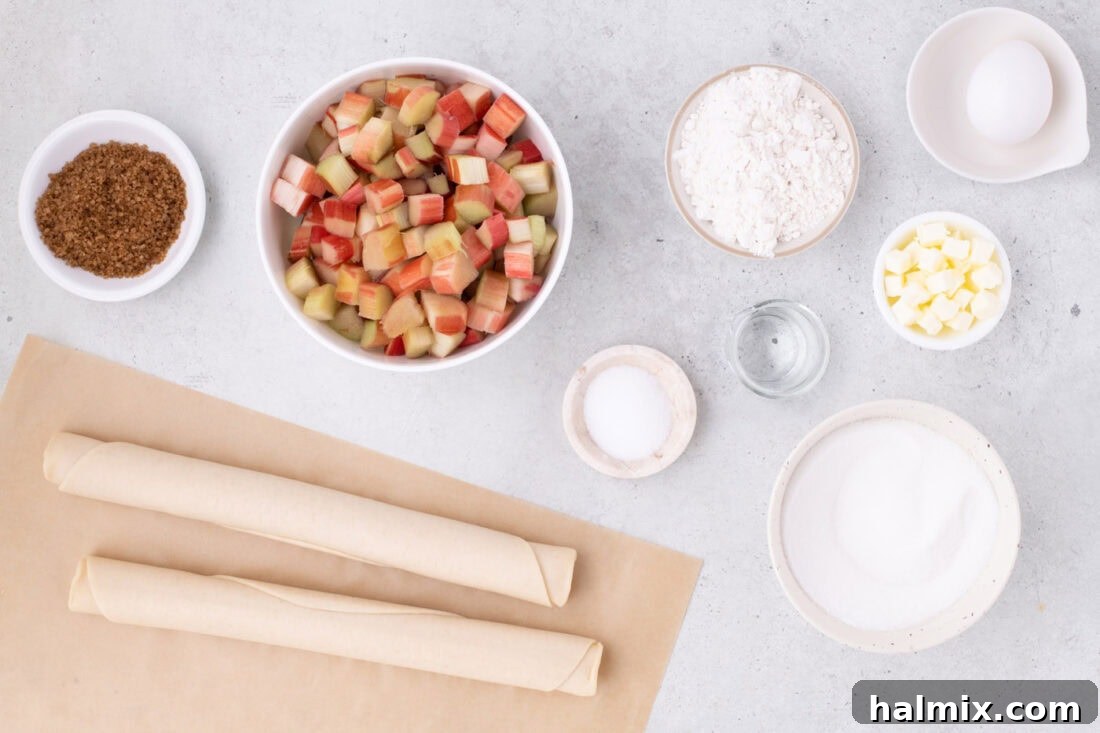
Creating an exceptional rhubarb pie starts with understanding your ingredients. Below, we break down each key component, offering insights into selection, preparation, and potential substitutes to ensure your pie turns out perfectly every time.
Spotlight on Rhubarb: The Star of the Show
Many are surprised to learn that rhubarb is botanically a vegetable, not a fruit! Its distinctively tart flavor makes it a phenomenal ingredient for baking, particularly when paired with sugar to balance its natural acidity. When selecting rhubarb, whether from your garden or the grocery store, look for stalks that are firm, crisp, and a vibrant red or pink. Avoid any stalks that appear limp, bruised, or discolored. If harvesting from your garden, wait until stalks are at least 10 inches long. Gently twist and pull them from the base to ensure a clean harvest and encourage further growth. For this recipe, you’ll need about 6 cups of chopped fresh rhubarb, which usually translates to about eight 12-inch stalks. Slice them into ½-inch cubes for even cooking and distribution in the pie.
Can you use frozen rhubarb? Absolutely! If fresh rhubarb isn’t in season, frozen rhubarb is a convenient and excellent alternative. There’s no need to thaw it; simply add the frozen rhubarb directly to the pie filling mixture. Keep in mind that frozen rhubarb tends to release more water and may shrink slightly more than fresh rhubarb once thawed and cooked. To account for this, we recommend increasing the quantity of rhubarb by an additional 1/3 cup when using frozen varieties.
The Perfect Pie Crust: Flaky Foundation
For convenience and consistent results, we often use store-bought refrigerated pie crusts. They are a fantastic shortcut that doesn’t compromise on flavor or texture, especially high-quality brands. This recipe uses one 14.1-ounce box of two refrigerated pie crusts. However, if you prefer the satisfaction of a completely homemade pie crust, our detailed guide can walk you through the process. Whether store-bought or homemade, ensure your crusts are cold but pliable when working with them to prevent tearing and achieve maximum flakiness.
Sweeteners and Thickeners: Balancing Act
Granulated Sugar: A crucial ingredient to tame rhubarb’s tartness and create a luscious filling. We use 1 cup of granulated sugar, which provides the ideal balance of sweetness. You can adjust this slightly to your preference, but remember rhubarb needs a good amount of sugar to truly shine. Later, turbinado sugar is used for a crunchy, glittering finish on the lattice, adding both texture and visual appeal.
All-Purpose Flour: This acts as our primary thickener, ensuring the rhubarb filling sets beautifully rather than being runny. Six tablespoons of all-purpose flour create a perfectly viscous filling that slices cleanly. Cornstarch can be used as an alternative, typically at half the amount of flour (so 3 tablespoons of cornstarch), but flour tends to provide a slightly more opaque and traditional pie filling consistency.
The Richness of Butter: Flavor and Texture
Unsalted Butter: Cubed and dotted over the rhubarb filling, unsalted butter melts as the pie bakes, infusing the filling with a rich, creamy flavor and contributing to its luxurious texture. Using unsalted butter allows you to control the overall salt content of the pie. If you only have salted butter, omit the additional kosher salt from the recipe.
The Golden Finish: Egg Wash
Egg and Water: A simple egg wash (one egg whisked with one tablespoon of water) brushed over the lattice top before baking creates that beautiful, golden-brown sheen and helps the turbinado sugar adhere, providing a delightful sparkly crust. This step is essential for both appearance and a subtle crispness on the top crust.
Other Essentials: Salt
Kosher Salt: Just a ¼ teaspoon of kosher salt in the filling mixture enhances all the flavors, balancing the sweetness and tartness, and bringing out the best in the rhubarb. Don’t skip this small but impactful ingredient!
How to Make This Irresistible Rhubarb Pie: A Step-by-Step Guide
Follow these detailed steps to bake a magnificent rhubarb pie that will impress everyone at your table. Precision and a little patience are key!
Phase 1: Preparing the Pie Crust and Filling
- Prepare the Pie Crusts: Remove both refrigerated pie crusts from their packaging. Let them rest at room temperature for about 10 minutes. This makes them pliable and easier to roll without cracking, but they should still be cold enough to handle without becoming sticky.
- Chop the Rhubarb: Wash and thoroughly dry the rhubarb stalks. Trim off any very fibrous ends and discard the leaves (rhubarb leaves are toxic). Cut the rhubarb into uniform ½-inch cubes. Set aside in a large bowl.
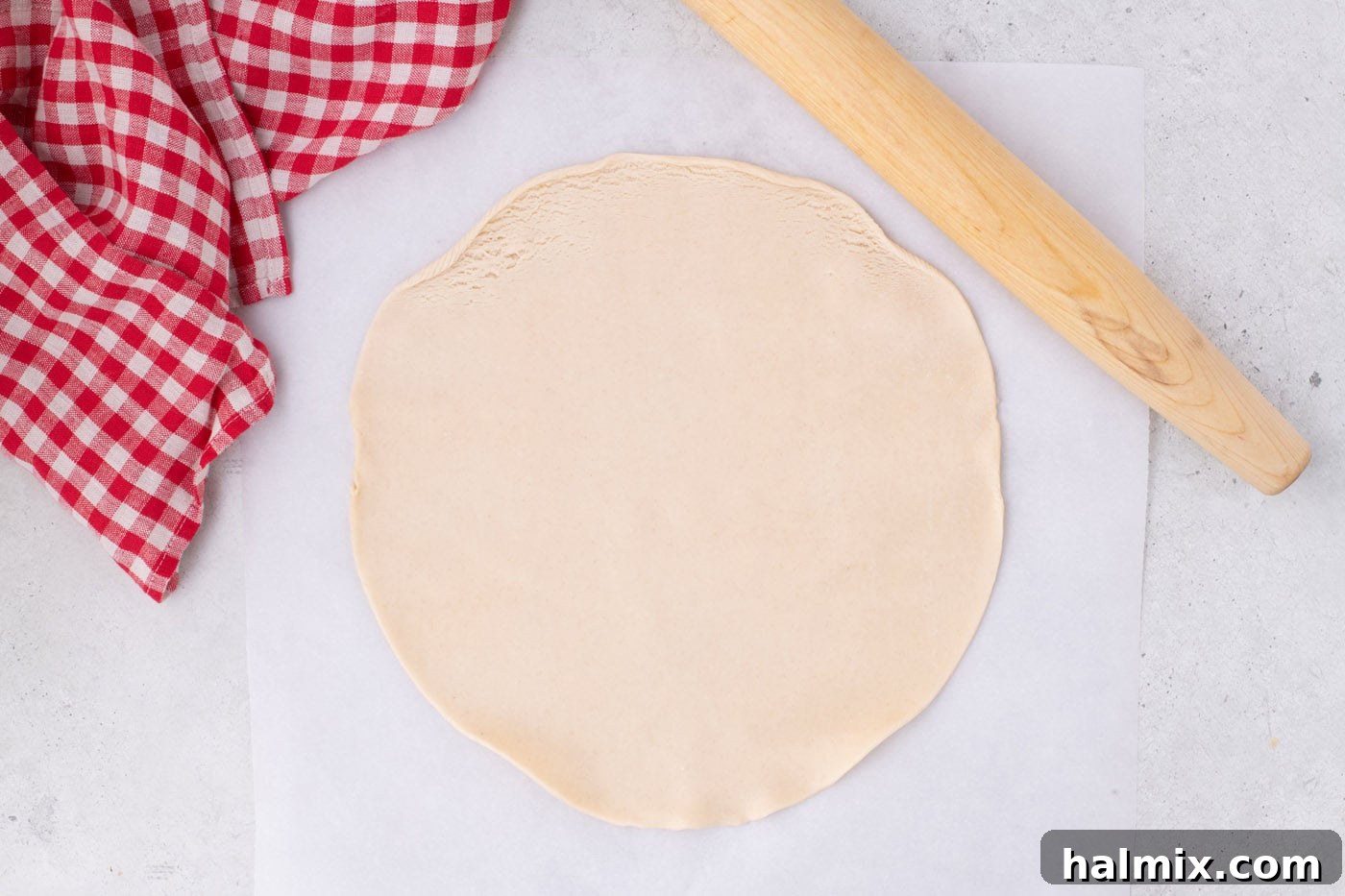
- Roll Out the Bottom Crust: On a lightly floured or parchment-lined surface, gently roll out one of the pie crusts. Aim for a diameter approximately 2 inches larger than your pie plate. For a standard 9½-inch pie plate, your crust should be about 11½ inches in diameter. This extra margin will allow for crimping.
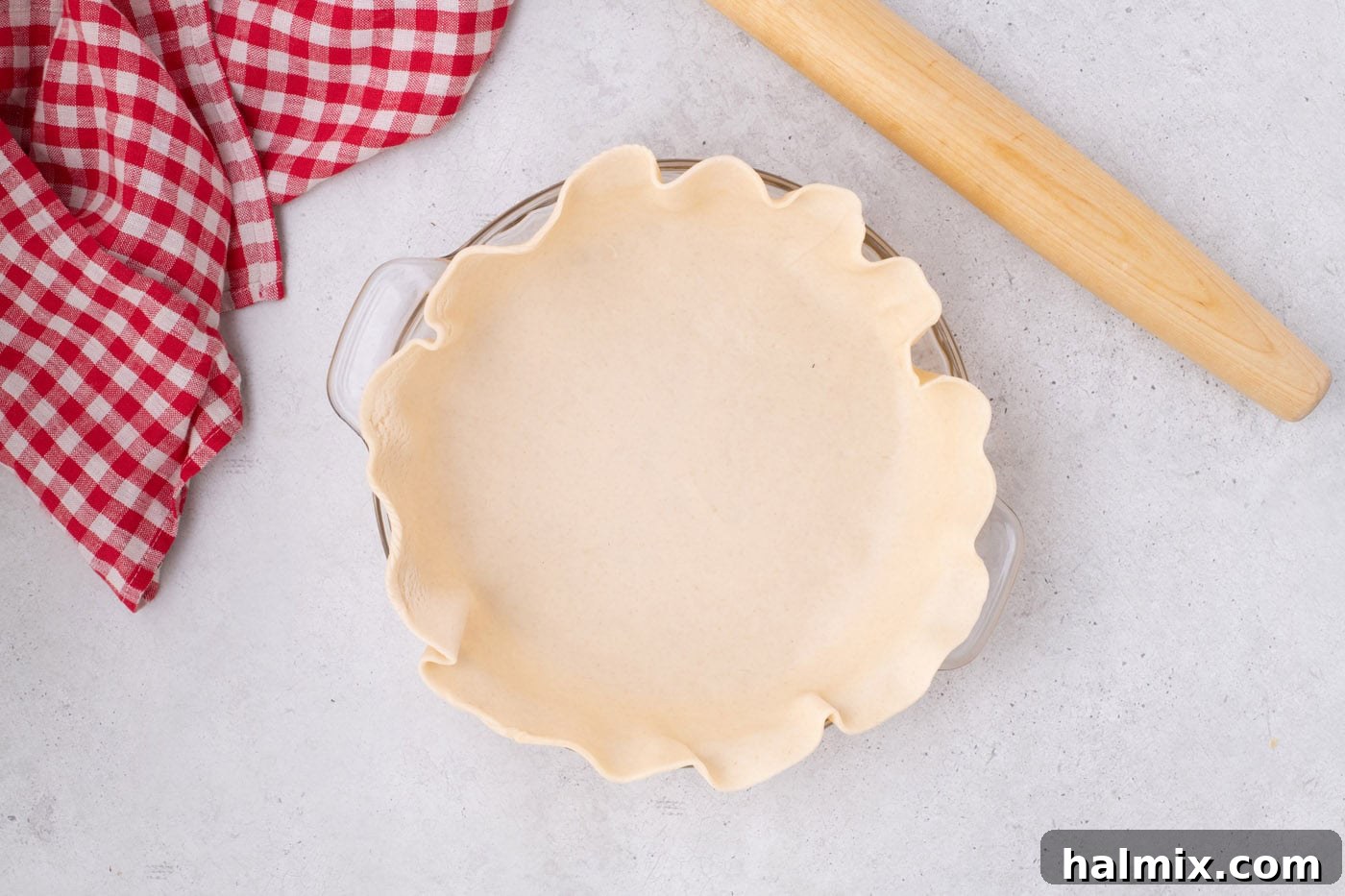
- Line the Pie Plate: Carefully drape the rolled-out pie crust over your rolling pin, then transfer it to your 9-inch pie plate. Gently press the dough into the bottom and up the sides of the plate, ensuring there are no air bubbles. Do not trim the edges yet.
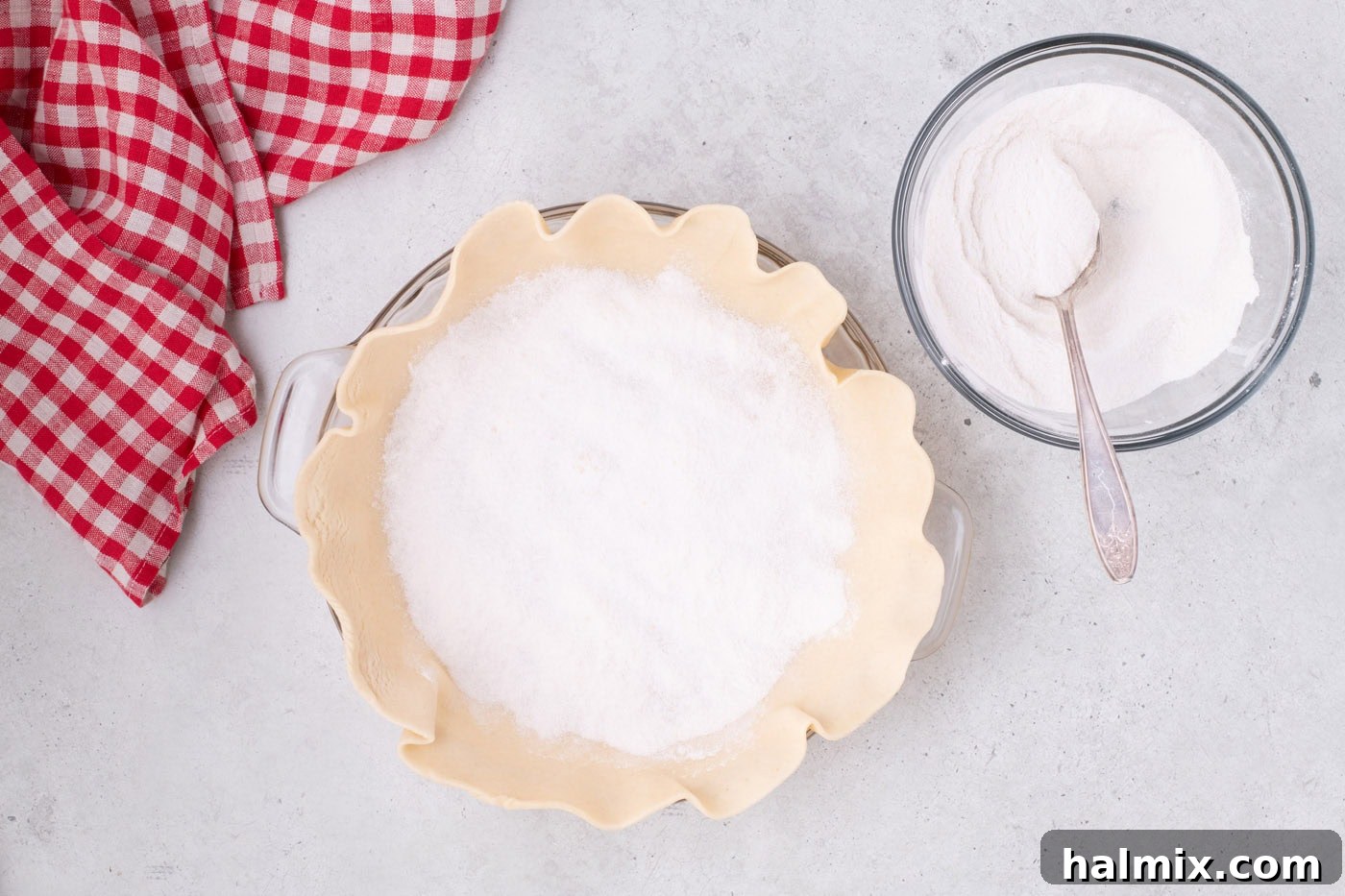
- Prepare the Sugar Mixture: In a small bowl, whisk together the 1 cup of granulated sugar, 6 tablespoons of all-purpose flour, and ¼ teaspoon of kosher salt until thoroughly combined.
- Assemble the First Layer of Filling: Sprinkle ¼ cup of the prepared sugar mixture evenly over the bottom of the pie crust. This crucial step helps prevent a “soggy bottom” by creating a protective barrier between the juicy rhubarb and the pie dough.
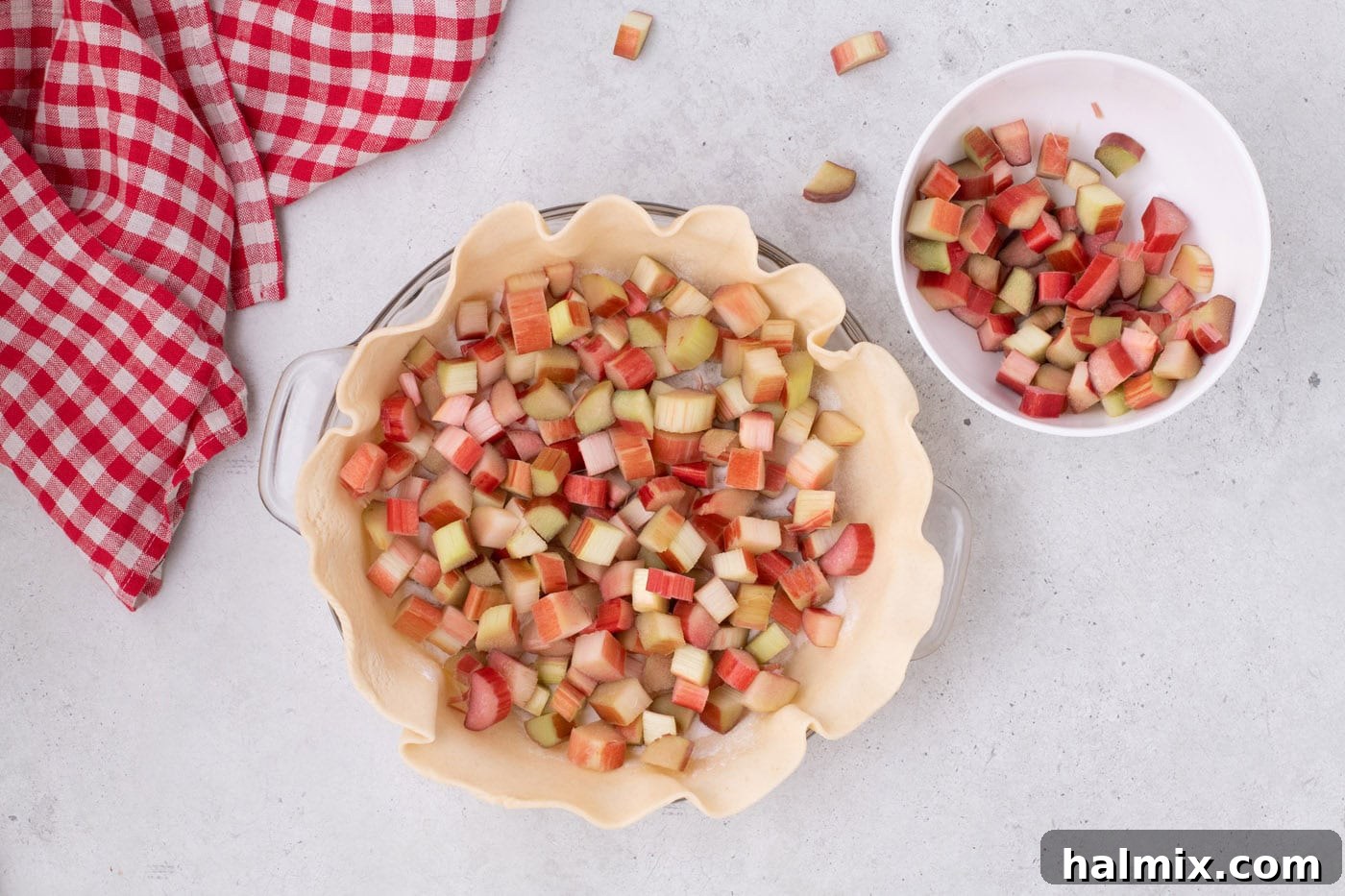
- Add Rhubarb Layers: Arrange half of the chopped rhubarb evenly over the sugar mixture in the pie crust. Sprinkle an additional ½ cup of the sugar mixture over this rhubarb layer. Top with the remaining chopped rhubarb.
- Dot with Butter: Sprinkle the remaining sugar mixture over the final layer of rhubarb. Evenly dot the surface with the 2 tablespoons of cubed unsalted butter.
- Chill the Base: Place the assembled pie plate in the refrigerator while you prepare the lattice top. This keeps the butter in the crust cold, contributing to a flakier texture.
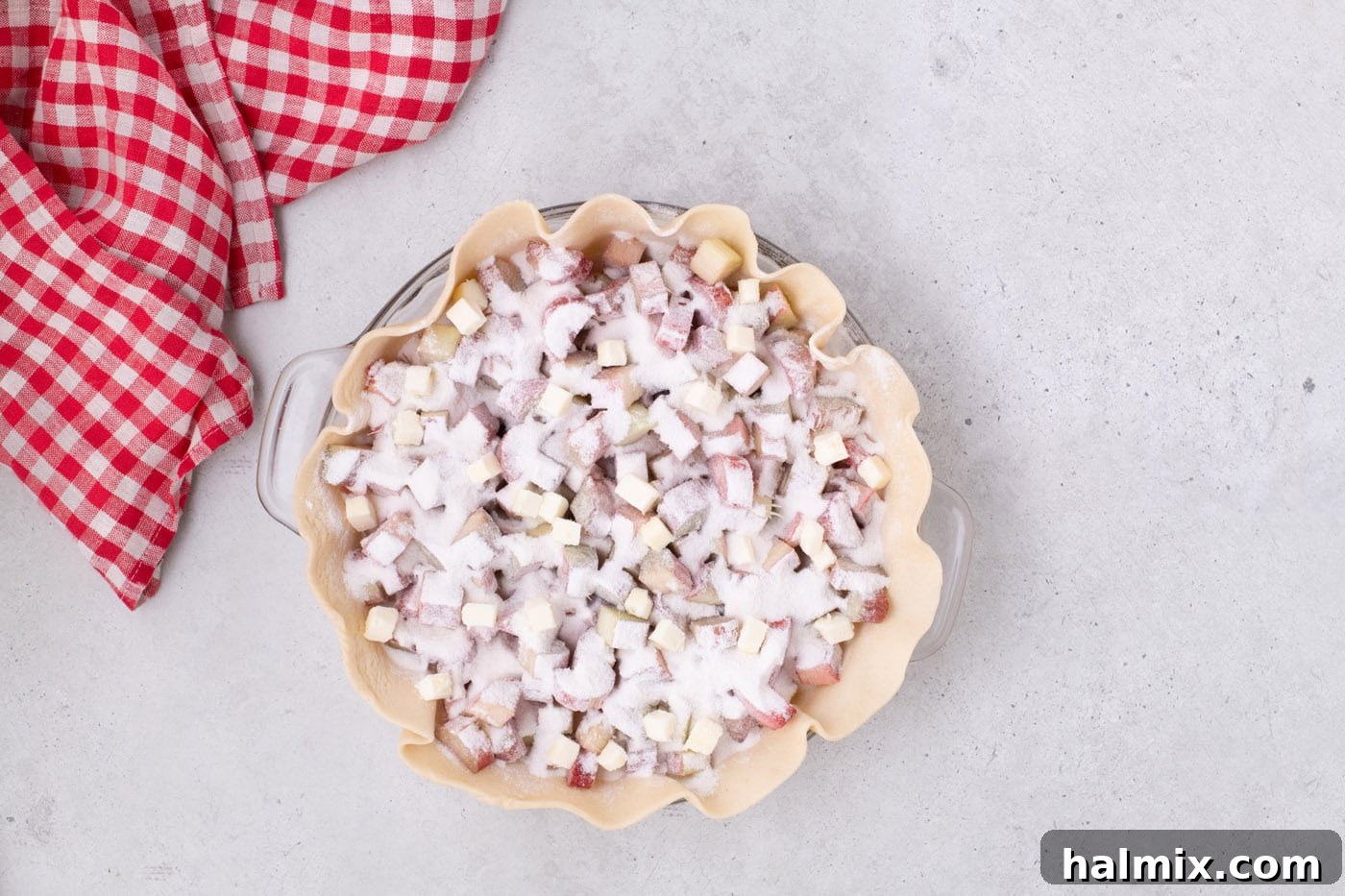
Phase 2: Crafting the Elegant Lattice Top
A lattice top isn’t just beautiful; it allows steam to escape, preventing a soggy crust and ensuring even baking. Follow these steps for a perfect weave.
- Prepare the Top Crust: On a parchment-lined or lightly floured surface, roll out the second pie crust so it measures about 1 inch larger than the diameter of your pie plate.
- Cut the Strips: Using a pastry cutter or a sharp knife and a ruler, cut 10 even strips, each about 1-inch thick.
- Lay Initial Strips: Take five of the strips and lay them parallel over the rhubarb filling, spaced evenly about 1½ inches apart. These will form the base of your lattice.
- Start the Weave (First Cross Strip): Fold back every other strip (e.g., strips 1, 3, and 5) halfway from the center towards the edge of the pie. Place one of the remaining five strips perpendicularly across the center of the pie, over the unfolded strips and under the folded ones. Once in place, unfold strips 1, 3, and 5 back over this new strip.
- Continue Weaving (Second Cross Strip): Now, fold back the alternate set of parallel strips (e.g., strips 2 and 4) halfway from the center to the edge. Lay another perpendicular strip about 1½ inches from the first cross strip. Unfold strips 2 and 4 back over this new strip.
- Complete the Lattice: Repeat steps 13 and 14, working outwards from the center, until all your strips are woven into a beautiful lattice pattern over the pie.
- Seal the Edges: Trim any excess strips of dough that hang over the pie plate. Take the bottom crust that was previously left untrimmed and fold it over the lattice strips. Pinch the two layers of crust together firmly around the entire edge of the pie plate to create a strong seal and an attractive crimped finish.
- Final Chill: Refrigerate the pie again for at least 15-20 minutes while your oven preheats. This helps the crust hold its shape during the initial blast of high heat.
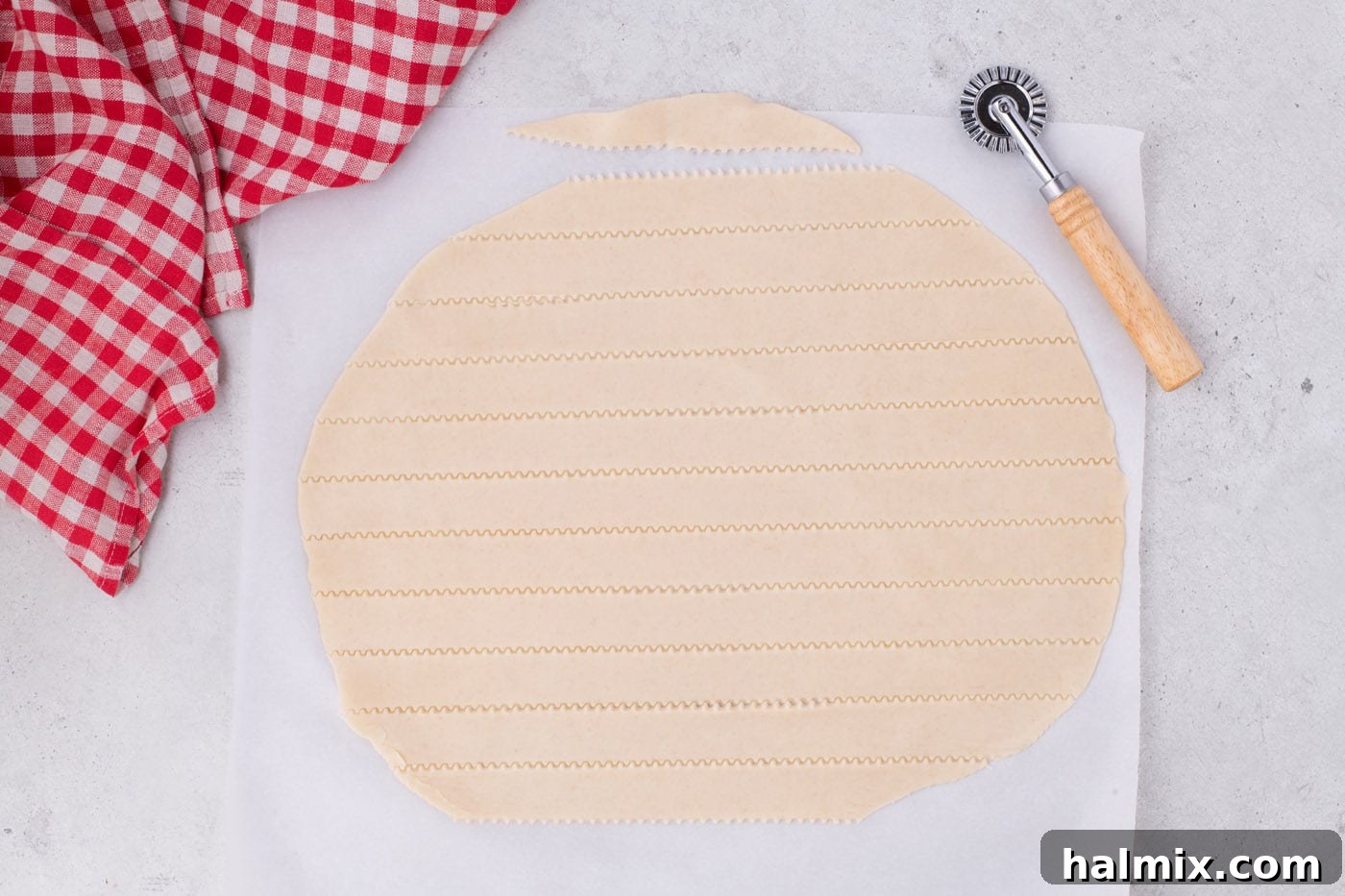
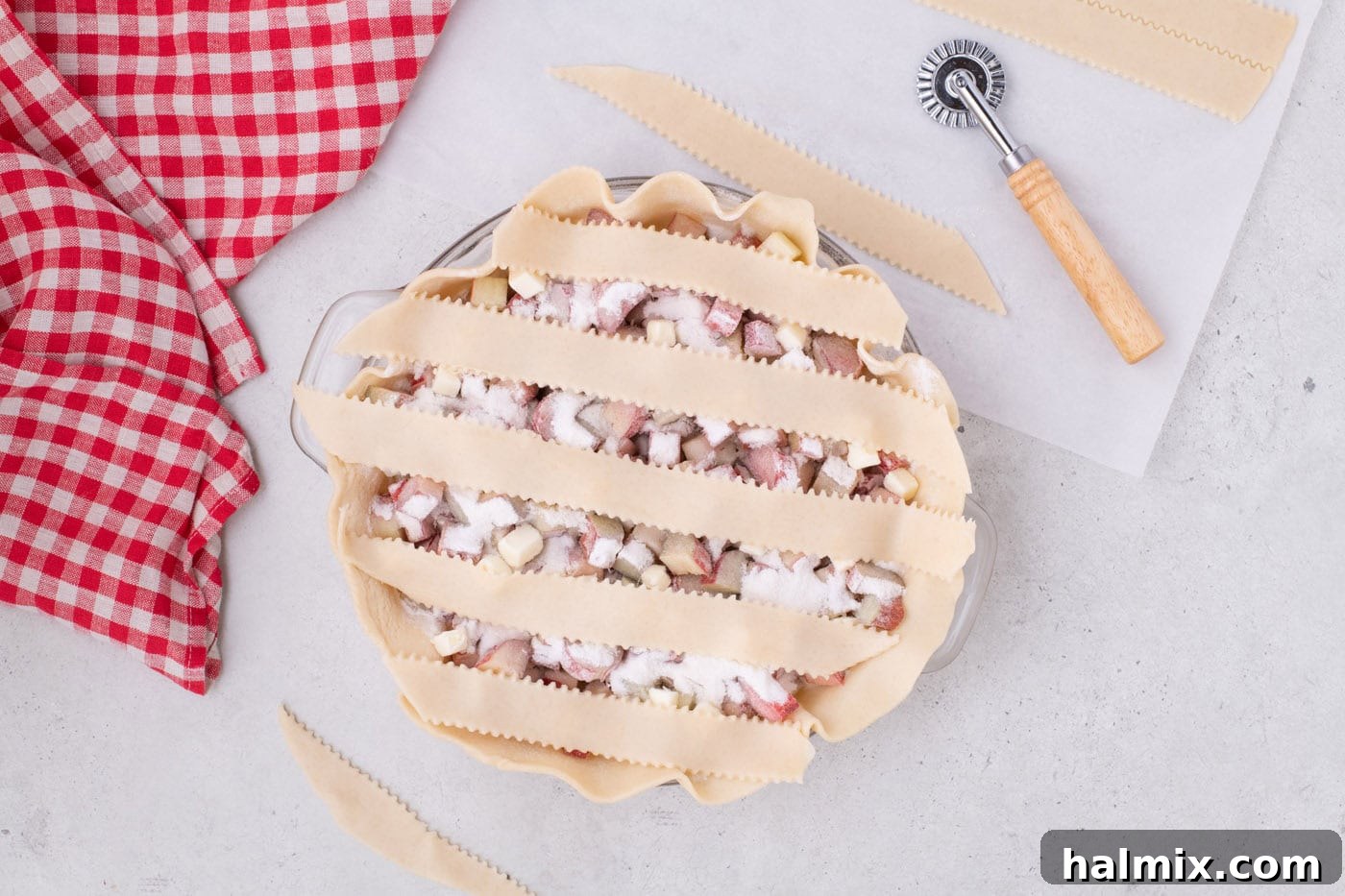
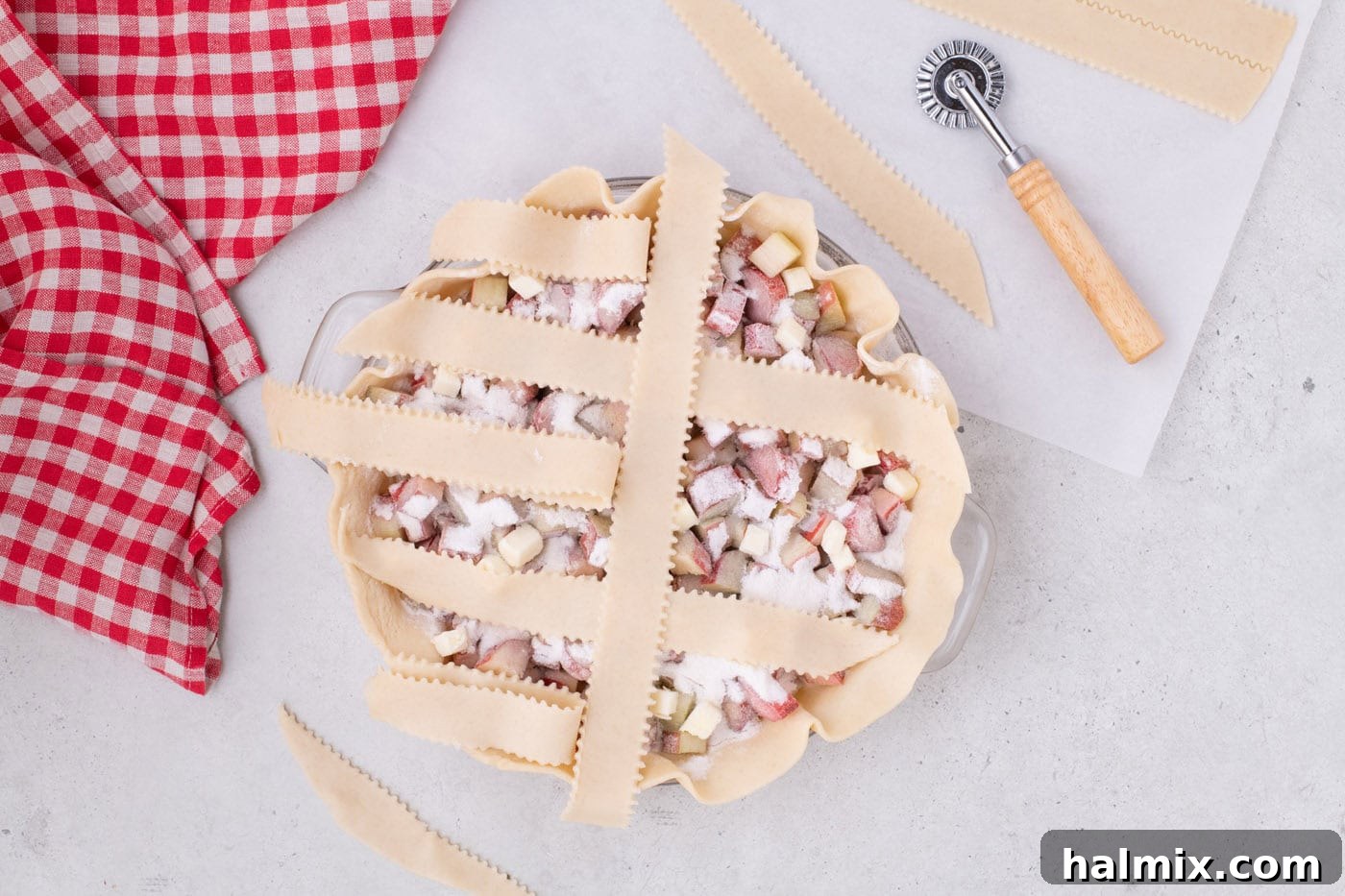
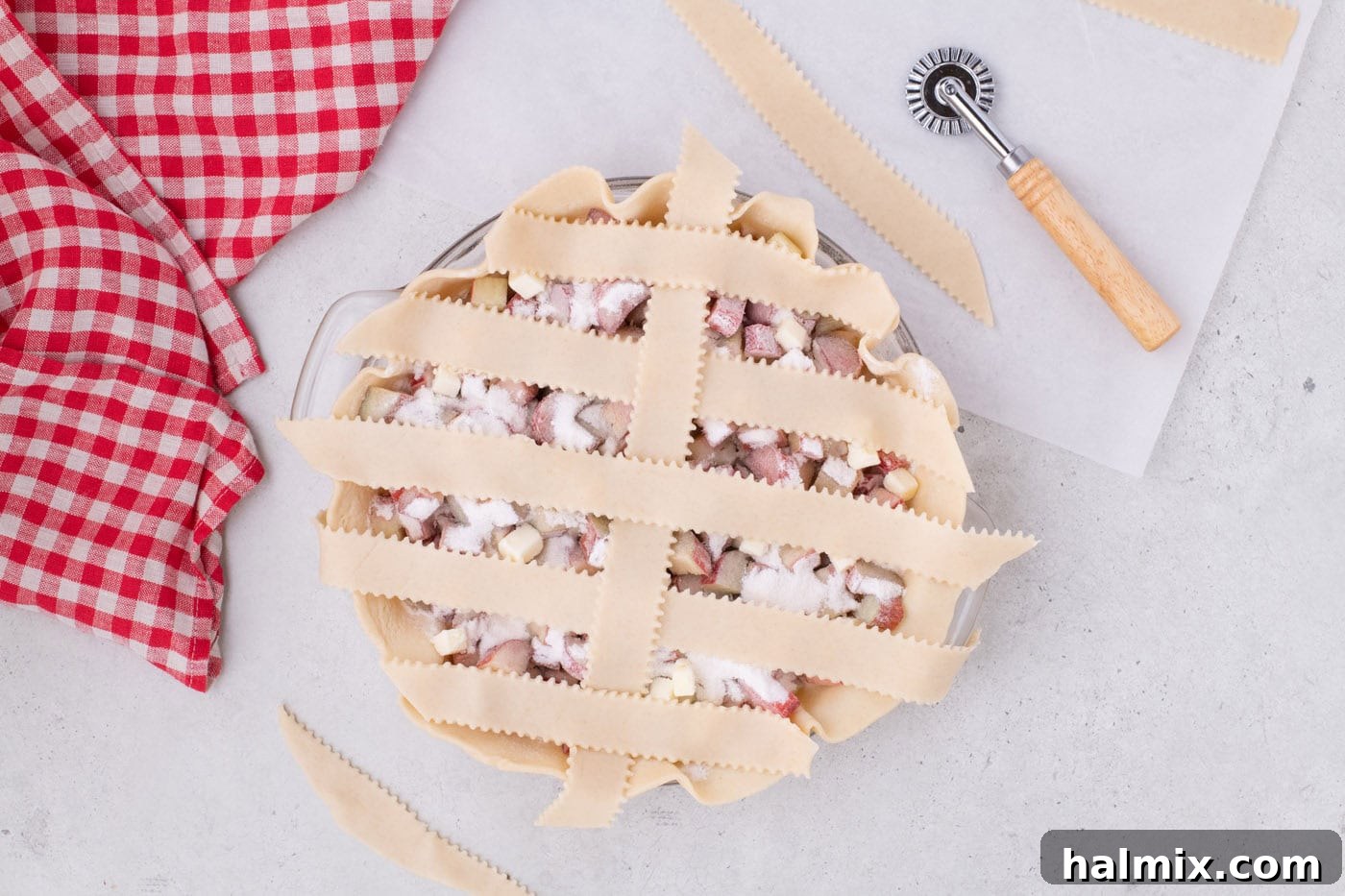
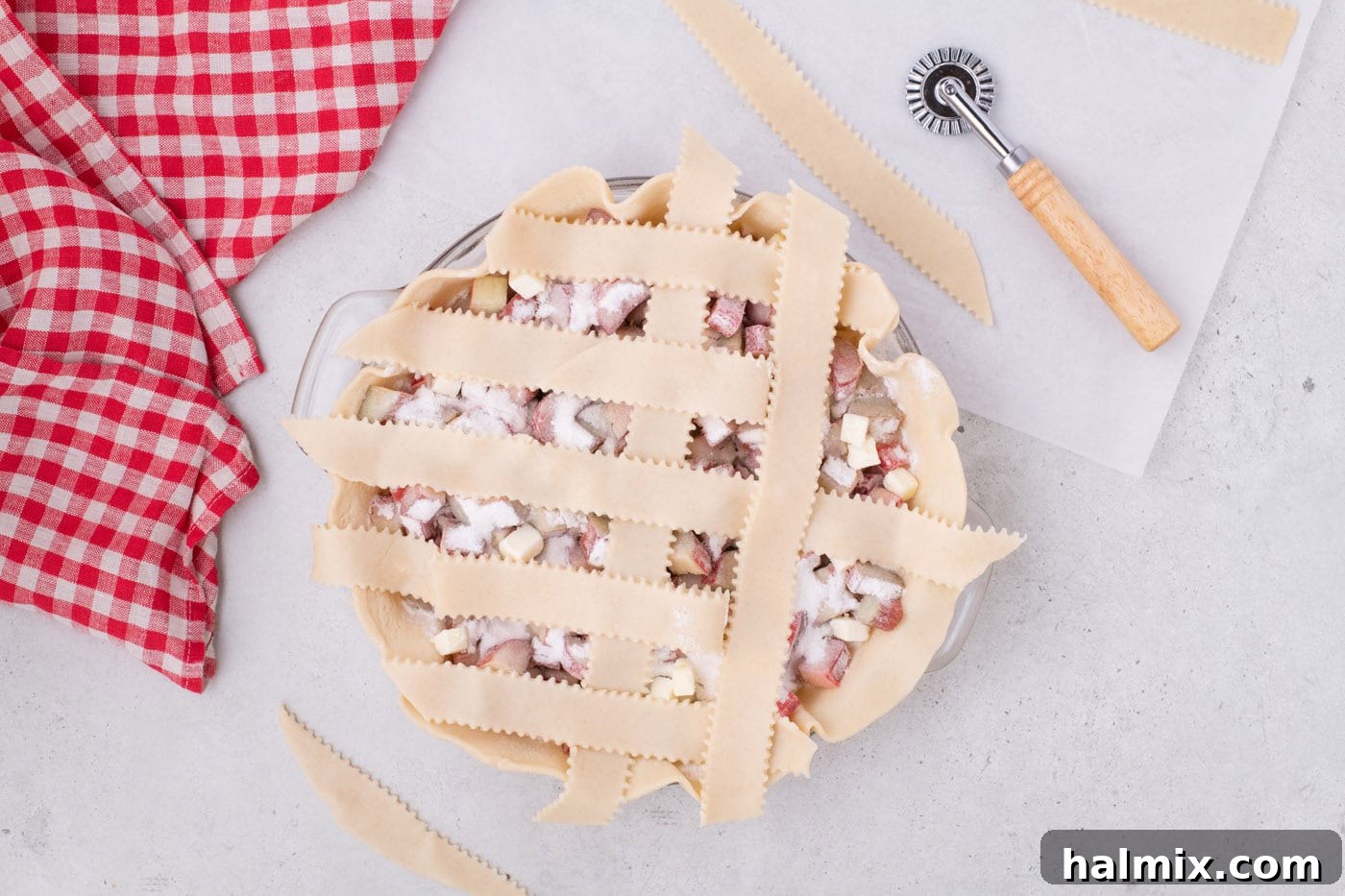
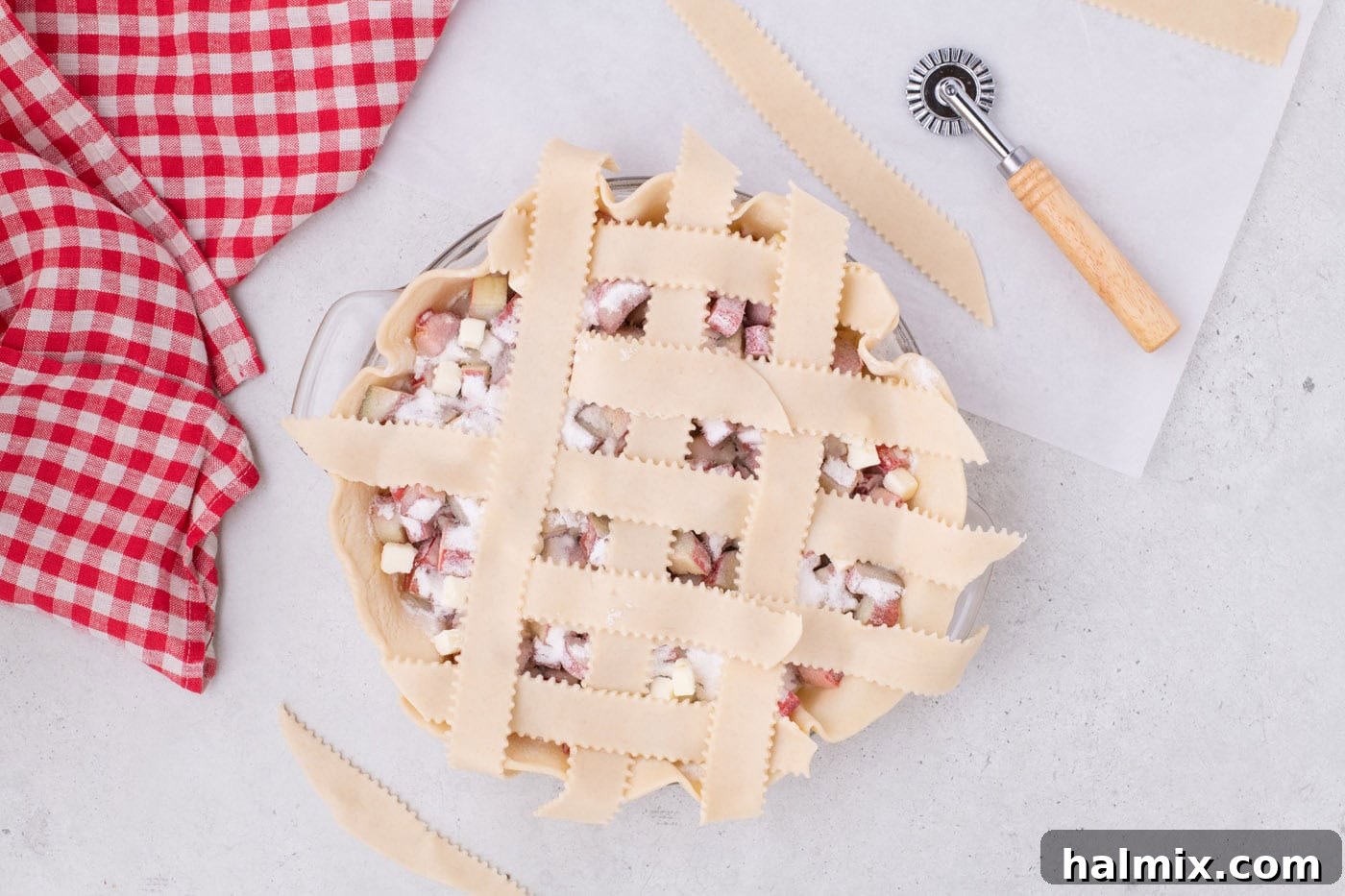
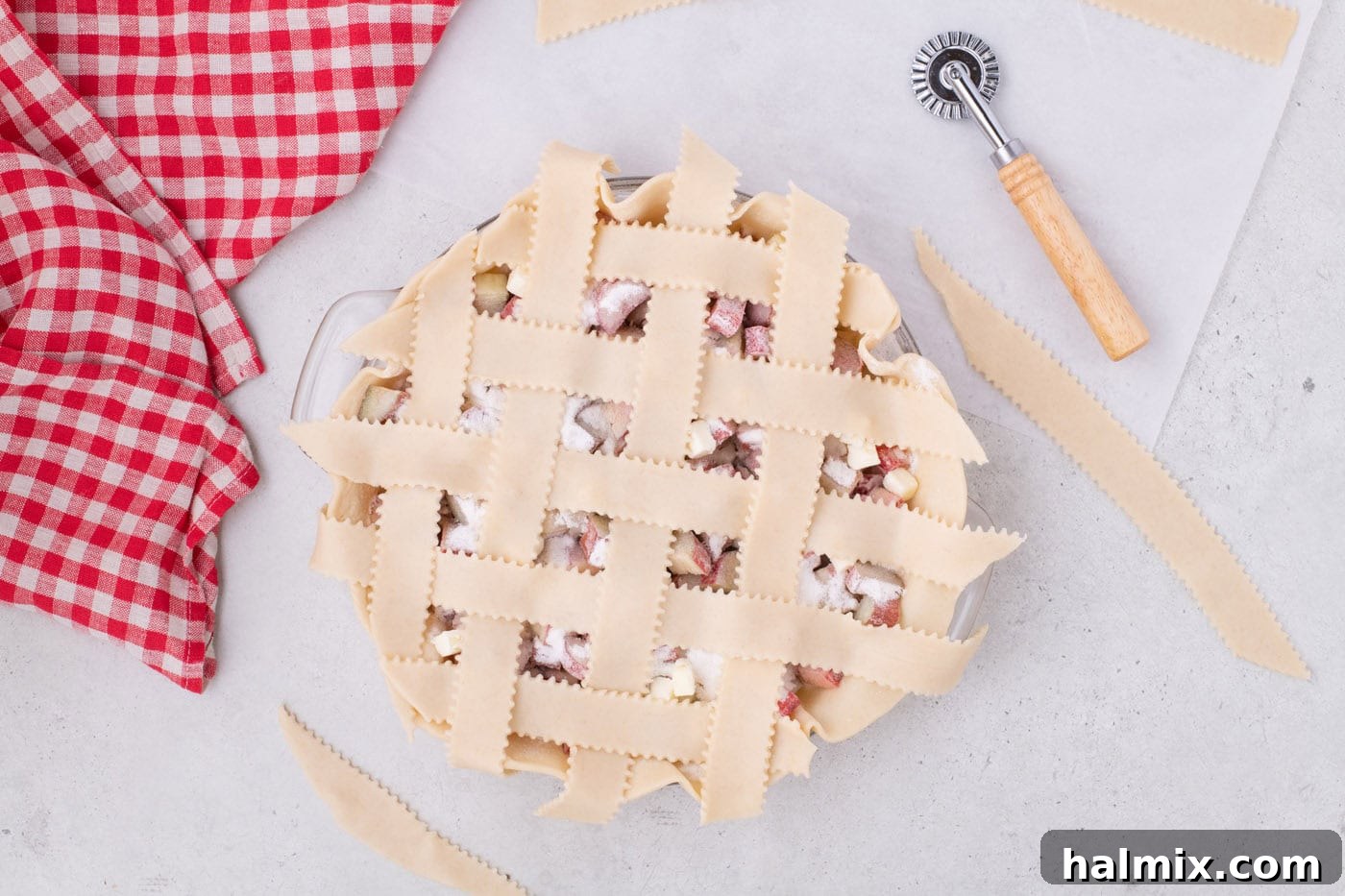
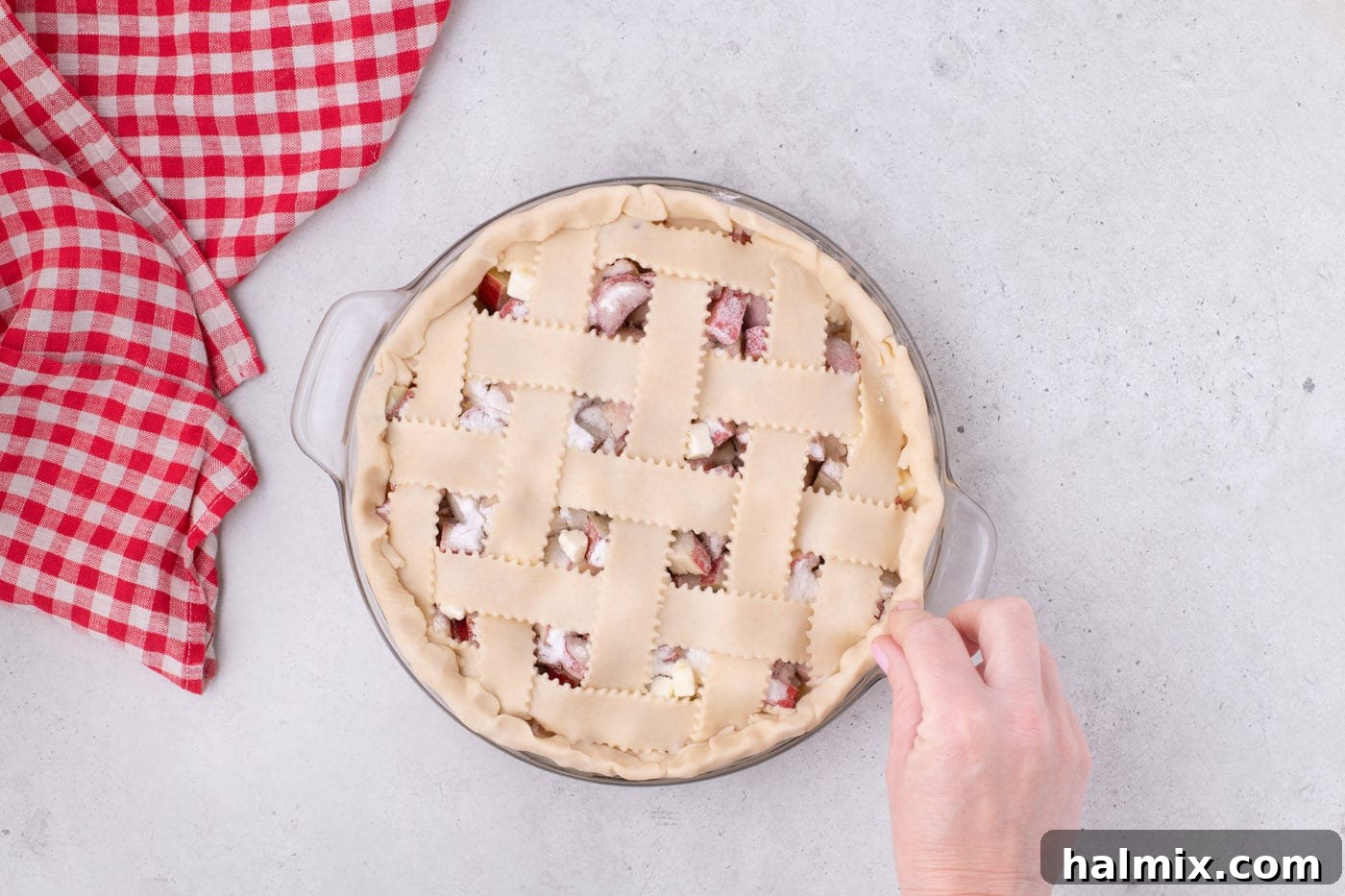
Phase 3: Baking Your Rhubarb Pie to Perfection
The baking process for this rhubarb pie involves two temperatures, ensuring a perfectly cooked filling and a golden, crispy crust.
- Preheat and Prepare for Baking: Preheat your oven to 425°F (220°C). While the oven heats, remove the chilled pie from the refrigerator. In a small bowl, whisk together the egg and water to create an egg wash. Lightly brush the entire lattice top with the egg wash, ensuring even coverage. Sprinkle generously with turbinado sugar for a beautiful sparkle and crunch. Place the pie plate on a large baking sheet; this catches any bubbling juices and makes cleanup much easier.
- Initial High-Heat Bake: Place the baking sheet with the pie into the preheated oven. Bake at 425°F (220°C) for 10 minutes. This initial high heat helps to set the crust and begin the bubbling of the filling.
- Reduce Heat and Continue Baking: After 10 minutes, reduce the oven temperature to 350°F (175°C) and continue baking for an additional 45-55 minutes, or until the filling is visibly bubbling through the lattice, and the crust is beautifully golden brown.
- Cool Completely: Once baked, carefully remove the pie from the oven and place it on a wire rack to cool completely. This crucial step takes approximately 2-3 hours. It allows the filling to properly set and thicken, preventing a messy, runny slice when you cut into it. Patience here is key to a perfect slice!
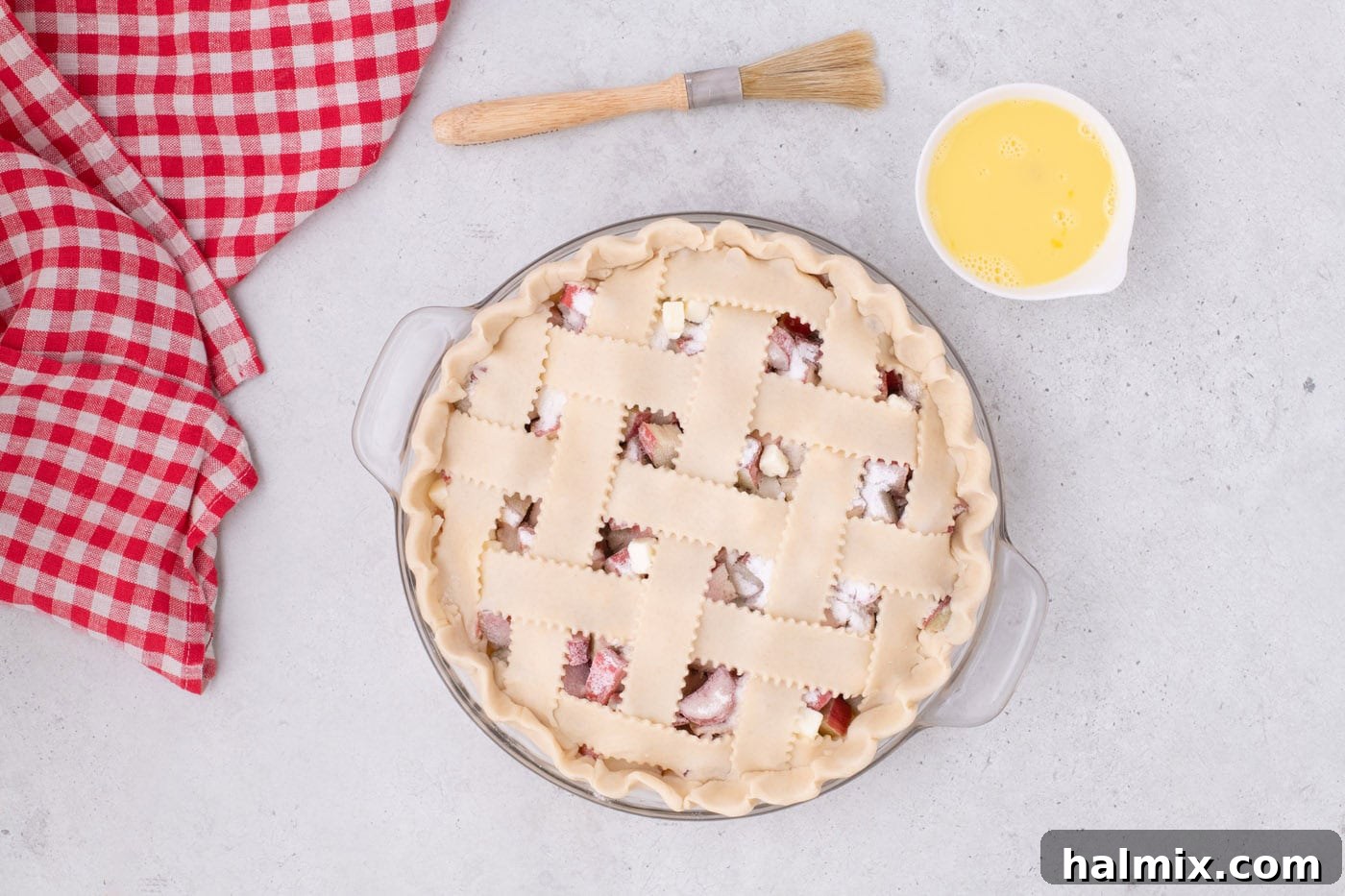
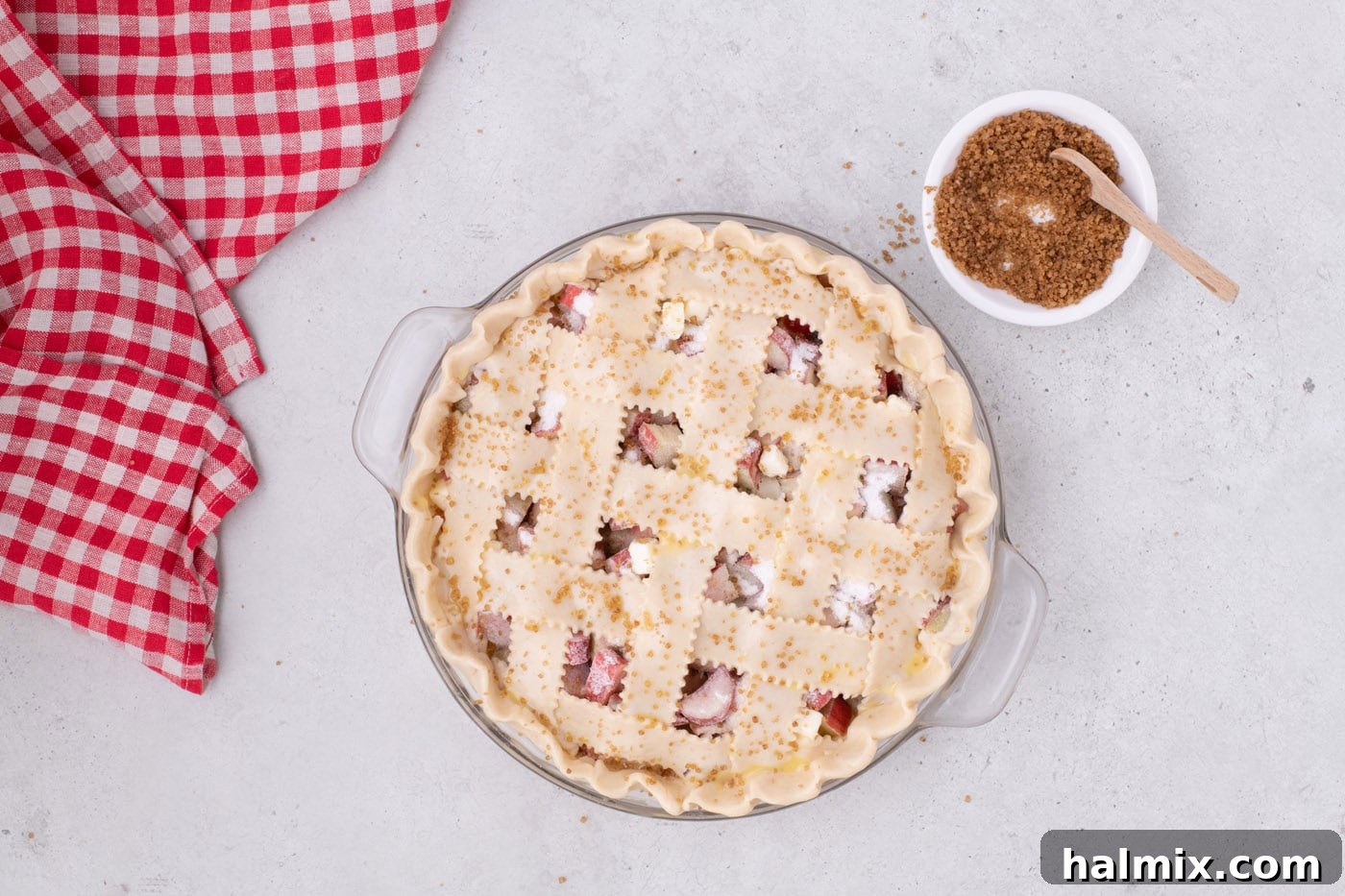
Expert Tip: Prevent Over-Browning! During the baking process, keep an eye on the lattice top. If it starts to brown too quickly before the filling is fully cooked, loosely cover the entire pie with aluminum foil or use a pie crust shield. This will protect the crust from burning while allowing the filling to finish cooking.
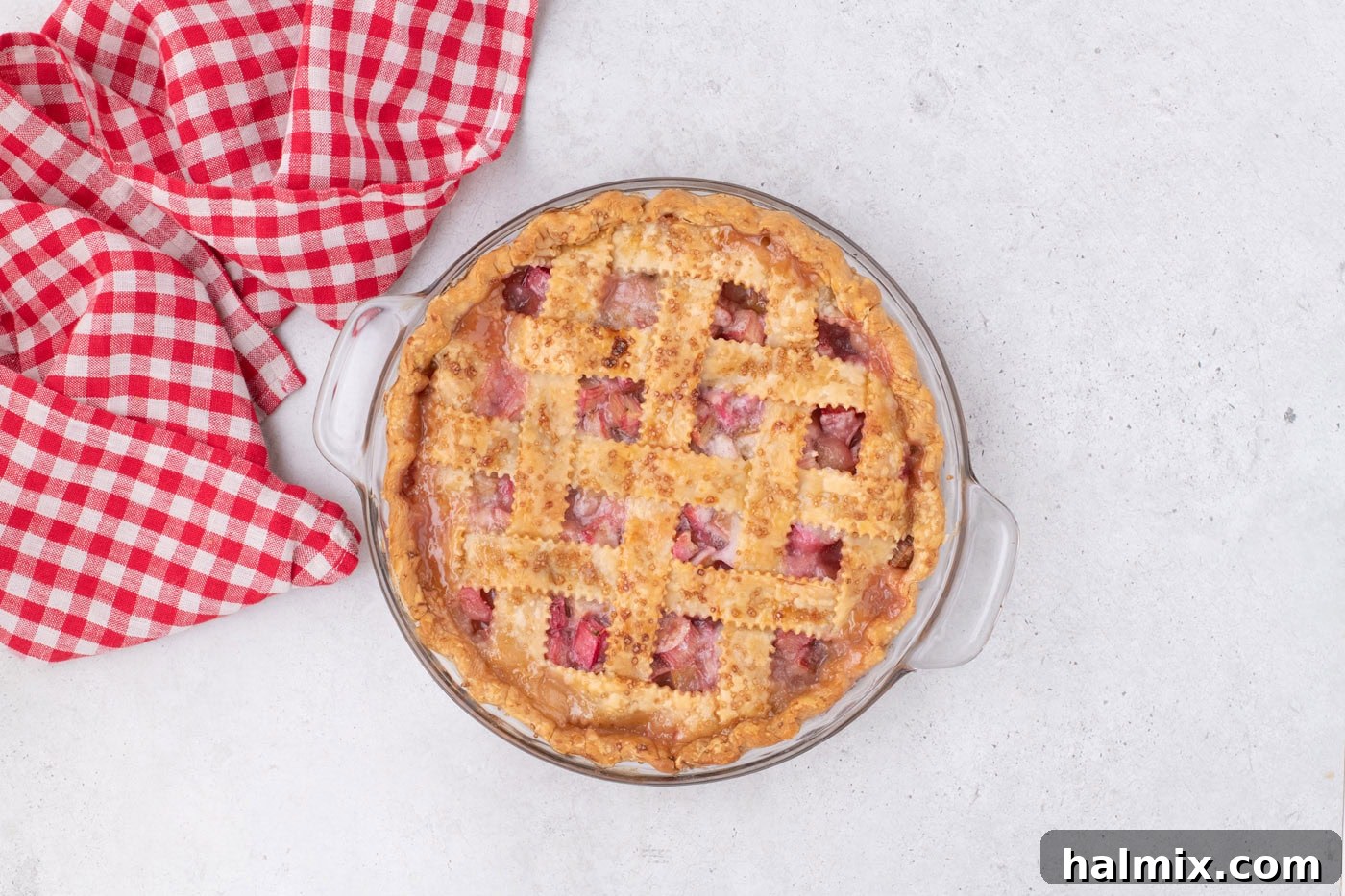
Expert Tips and Frequently Asked Questions for Success
Achieve pie-baking perfection with these essential tips and answers to common queries.
Storage for Optimal Freshness
Rhubarb pie is undeniably at its best when enjoyed on the day it’s baked, offering the crispiest, flakiest crust. While the crust may soften slightly over time, you can store leftover pie covered loosely with plastic wrap or foil in the refrigerator for up to 4 days. This helps maintain its quality and prevents spoilage.
Making Rhubarb Pie Ahead of Time
This recipe is wonderfully adaptable for advance preparation! You can assemble the entire pie, including the lattice top, and then freeze it unbaked. To do so, follow all the assembly steps up until baking. Tightly wrap the unbaked pie first with plastic wrap, then with a layer of aluminum foil. Label it with the date. It can be stored in the freezer for up to 3 months. When you’re ready to bake, remove it from the freezer, unwrap, and bake as directed, adding about 15-20 minutes to the baking time to account for the frozen state. You may also need to shield the crust earlier to prevent over-browning.
Freezing Baked Rhubarb Pie
Yes, baked rhubarb pie also freezes beautifully. Allow the pie to cool completely after baking. Once cool, wrap it tightly first in plastic wrap, then in a layer of aluminum foil, ensuring no air pockets. Freeze for up to 3 months. To serve, thaw the pie in the refrigerator overnight. You can gently rewarm slices in the oven at 300°F (150°C) for about 10-15 minutes to crisp up the crust before serving.
Preventing a Runny Filling
The flour in this recipe is crucial for thickening. Ensure you measure it accurately. Also, allowing the pie to cool completely (2-3 hours!) is perhaps the most important step to prevent a runny filling. The starches in the flour need time to fully gelatinize and set as the pie cools. Cutting into a warm pie will almost always result in a softer, looser filling.
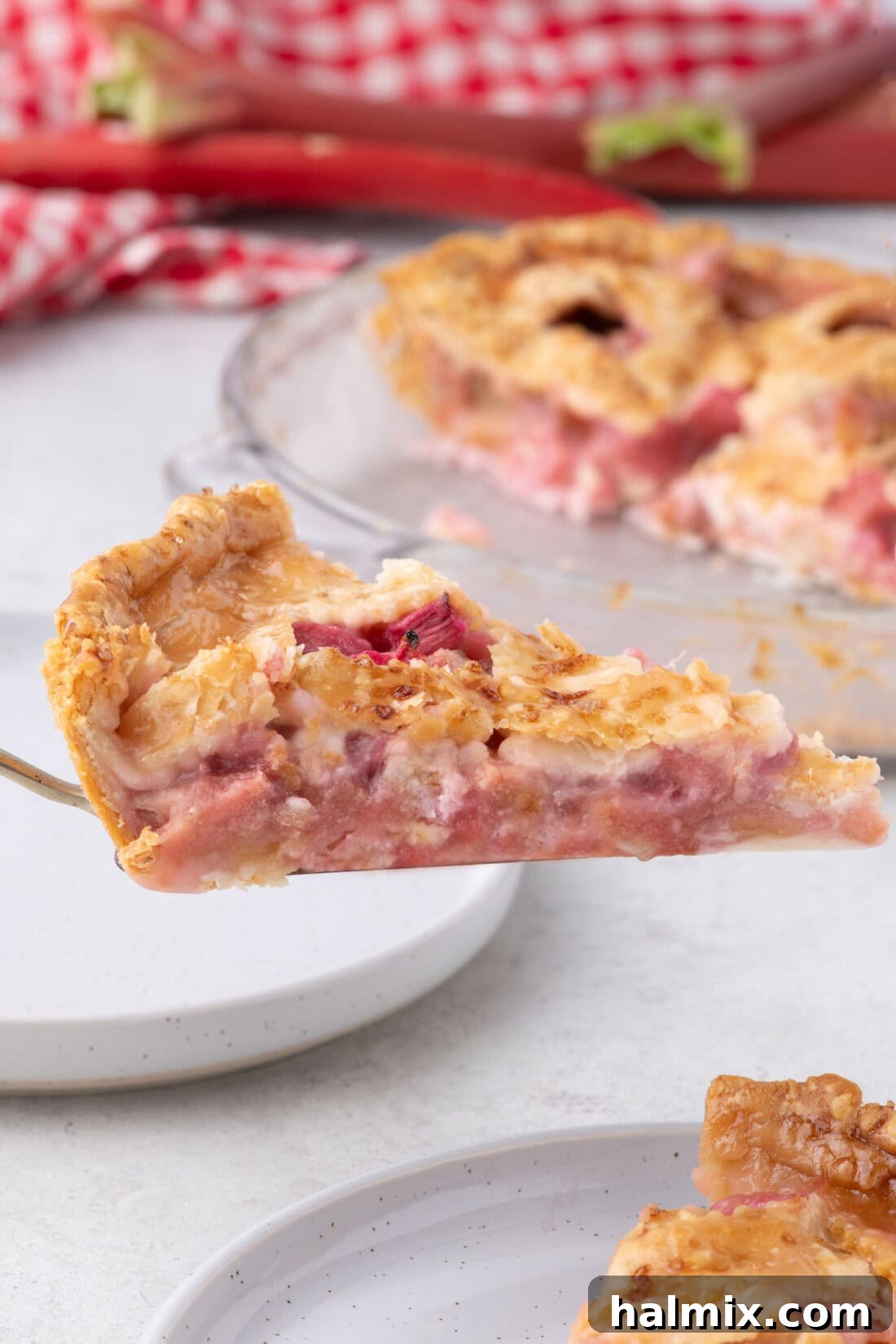
Serving Suggestions for Your Perfect Rhubarb Pie
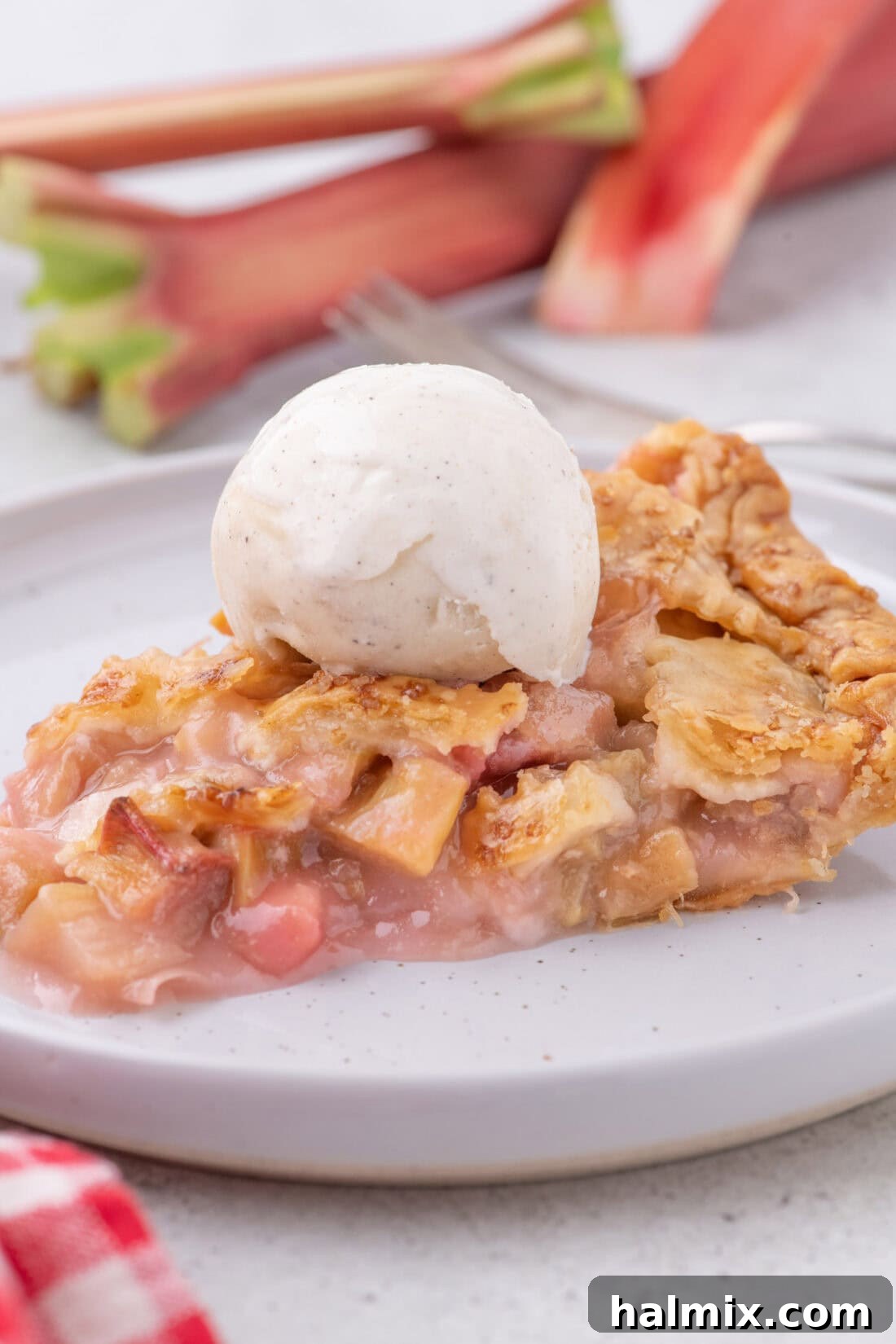
This incredible rhubarb pie is a dessert that truly shines, whether served simply or adorned with delicious accompaniments. For a classic experience, a generous dollop of freshly whipped cream or a heaping scoop of premium vanilla bean ice cream is absolute perfection. The cool creaminess provides a delightful contrast to the warm, tart-sweet filling. While it’s particularly heavenly served warm, the pie is equally delightful chilled, offering a refreshing treat on a spring or summer evening. No matter how you choose to enjoy it, this rhubarb pie promises pure culinary bliss!
More Delicious Pie Recipes to Explore
If you’ve fallen in love with pie baking, we have more delightful recipes for you to try:
- Classic Blueberry Pie
- Scrumptious Cherry Slab Pie
- Fresh Strawberry Pie
- Comforting Deep Dish Peach Pie
I genuinely love sharing my passion for baking and cooking with all of you! To make sure you never miss a new recipe, consider subscribing to our convenient newsletter. Simply subscribe here and start receiving free daily recipes directly to your inbox!
Rhubarb Pie
This classic rhubarb pie recipe brings together a vibrant sweet and tart filling, a perfect flaky crust, and a beautiful lattice top for an unforgettable spring dessert. Using fresh rhubarb and simple pantry staples, it’s easier to make than you think!
Ingredients
- 6 cups chopped fresh rhubarb (about eight 12-inch stalks)
- 14.1 ounce store-bought refrigerated pie crusts (1 box, containing 2 crusts)
- 1 cup granulated sugar
- 6 Tablespoons all-purpose flour
- ¼ teaspoon kosher salt
- 2 Tablespoons unsalted butter, cubed
- 1 large egg
- 1 Tablespoon water
- 1 Tablespoon turbinado sugar
Equipment You’ll Need
- 9-inch pie plate
- Rolling pin
- Pastry cutter (or a sharp knife and ruler)
- Baking sheet
Instructions
Preparing the Pie and Filling
- Remove pie crusts from the refrigerator and let them sit out for 10 minutes to become pliable.
- Cut rhubarb into ½-inch cubes and set aside.
- On a parchment-lined or floured surface, roll out one pie crust to measure 2 inches larger than your pie plate’s diameter (e.g., 11½ inches for a 9½-inch plate).
- Drape the rolled crust into the pie plate, gently pressing it down.
- In a small bowl, whisk together granulated sugar, flour, and salt.
- Sprinkle ¼ cup of the sugar mixture over the bottom pie crust (to prevent a soggy bottom).
- Add half of the chopped rhubarb over the sugar layer.
- Sprinkle ½ cup of the sugar mixture over the rhubarb, then top with the remaining rhubarb.
- Sprinkle with the remaining sugar mixture and dot with cubed unsalted butter.
- Refrigerate the pie while you prepare the lattice top.
Making the Lattice Top
- Roll out the second pie crust to measure 1 inch larger than the pie plate’s diameter.
- Using a pastry cutter or knife, cut 10 1-inch-thick strips.
- Lay five strips parallel over the rhubarb, spaced evenly (about 1½ inches apart).
- Fold every other strip (e.g., strips 1, 3, 5) halfway back from the center. Place one of the remaining strips perpendicularly across the center. Unfold the previously folded strips over it.
- Fold back the alternate set of parallel strips (e.g., strips 2, 4) halfway. Lay another perpendicular strip 1½ inches from the previous one. Unfold the strips over it.
- Repeat this weaving process until all strips are in place, forming a lattice.
- Trim any excess dough. Fold the bottom crust over the lattice strips and pinch them together to seal the edges.
- Refrigerate the pie for 15-20 minutes while you preheat the oven to 425°F (220°C).
Baking the Pie
- In a small bowl, whisk together the egg and water for an egg wash.
- Remove the pie from the refrigerator, brush the lattice top with the egg wash, and sprinkle with turbinado sugar.
- Place the pie on a large baking sheet (to catch any drips) and bake in the preheated oven at 425°F (220°C) for 10 minutes.
- Reduce the oven temperature to 350°F (175°C) and continue baking for another 45-55 minutes, or until the filling is bubbling and the crust is golden brown. If the crust browns too quickly, cover loosely with aluminum foil.
- Remove the pie from the oven and let it cool completely on a wire rack for 2-3 hours. This allows the filling to set properly before slicing and serving.
Nutrition Information (per serving)
Serving: 1 slice | Calories: 403 cal | Carbohydrates: 59g | Protein: 5g | Fat: 17g | Saturated Fat: 6g | Polyunsaturated Fat: 2g | Monounsaturated Fat: 7g | Trans Fat: 0.1g | Cholesterol: 28mg | Sodium: 289mg | Potassium: 327mg | Fiber: 3g | Sugar: 27g | Vitamin A: 211IU | Vitamin C: 7mg | Calcium: 93mg | Iron: 2mg
The recipes on this blog are tested with a conventional gas oven and gas stovetop. It’s important to note that some ovens, especially as they age, can cook and bake inconsistently. Using an inexpensive oven thermometer can assure you that your oven is truly heating to the proper temperature. If you use a toaster oven or countertop oven, please keep in mind that they may not distribute heat the same as a conventional full sized oven and you may need to adjust your cooking/baking times. In the case of recipes made with a pressure cooker, air fryer, slow cooker, or other appliance, a link to the appliances we use is listed within each respective recipe. For baking recipes where measurements are given by weight, please note that results may not be the same if cups are used instead, and we can’t guarantee success with that method.