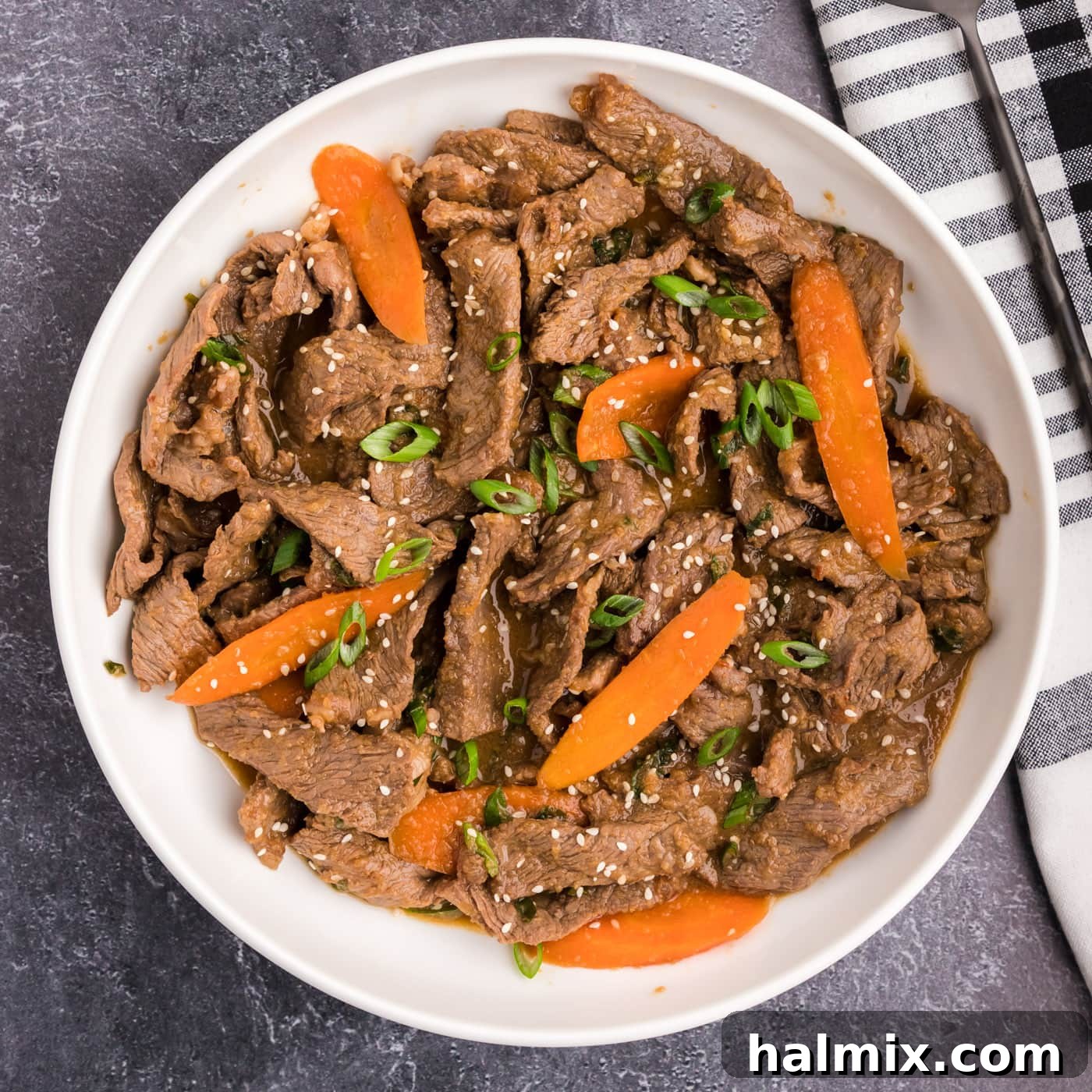
Embark on a delightful culinary journey to Korea with this exceptional homemade beef bulgogi recipe. Imagine thinly sliced ribeye, meticulously marinated in a harmonious blend of sweet, savory, and aromatic ingredients, then swiftly stir-fried in a hot wok until perfectly tender and caramelized. This iconic Korean barbecue dish is not only incredibly delicious and mouthwatering but also surprisingly simple to recreate in your own kitchen. Prepare to savor the authentic taste of Korea with every juicy, flavor-infused bite.
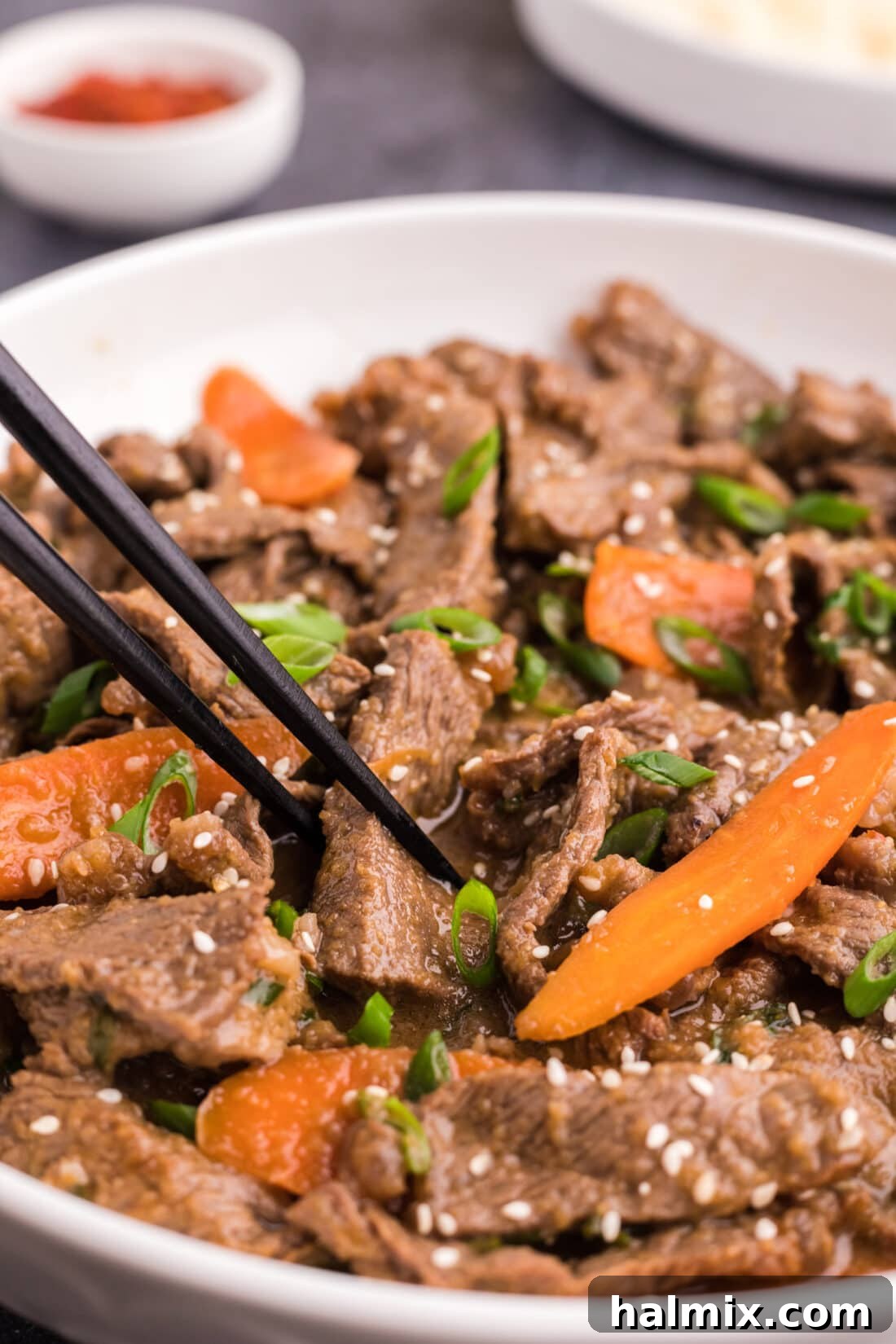
Why This Beef Bulgogi Recipe Will Become Your New Favorite
Beef bulgogi, literally translating to “fire meat,” stands as one of the most celebrated and beloved dishes in the vibrant world of Korean cuisine. It’s a cornerstone of Korean barbecue, known for its irresistibly tender texture and complex flavor profile. Our homemade rendition captures the very essence of this classic, making it accessible and enjoyable for every home cook. The secret lies within our signature marinade, a perfectly balanced concoction designed to tenderize the beef while infusing it with an explosion of sweet, savory, and slightly spicy notes.
This exquisite marinade is crafted from fresh, wholesome ingredients: ripe pears (preferably Asian pears) for their natural sweetness and enzymatic tenderizing properties; pungent onions, fresh ginger, and garlic to build a robust aromatic foundation; a subtle touch of chili sauce to introduce a pleasing warmth without overpowering; and premium low-sodium soy sauce to provide that essential umami depth. Each ingredient plays a vital role, working in synergy to create a marinade that transforms simple ribeye into strips of melt-in-your-mouth perfection.
Beyond its incredible taste, this recipe is a fantastic gateway to exploring the rich and diverse flavors of Korean cooking. Korean barbecue is renowned globally for its unique combination of textures, bold flavors, and communal dining experience. If you’re new to this culinary genre, our beef bulgogi offers a deliciously approachable starting point. Its straightforward preparation and universally appealing flavors make it an ideal dish for dipping your toe into the waters of Korean cuisine. Once you’ve experienced the joy of creating this dish, you might find yourself eager to explore other Korean favorites, such as our crispy Korean fried chicken or savory Korean short ribs. This recipe isn’t just about cooking; it’s about bringing the vibrant spirit of Korean hospitality and flavor to your family table.
Gathering Your Essential Ingredients for Bulgogi Perfection
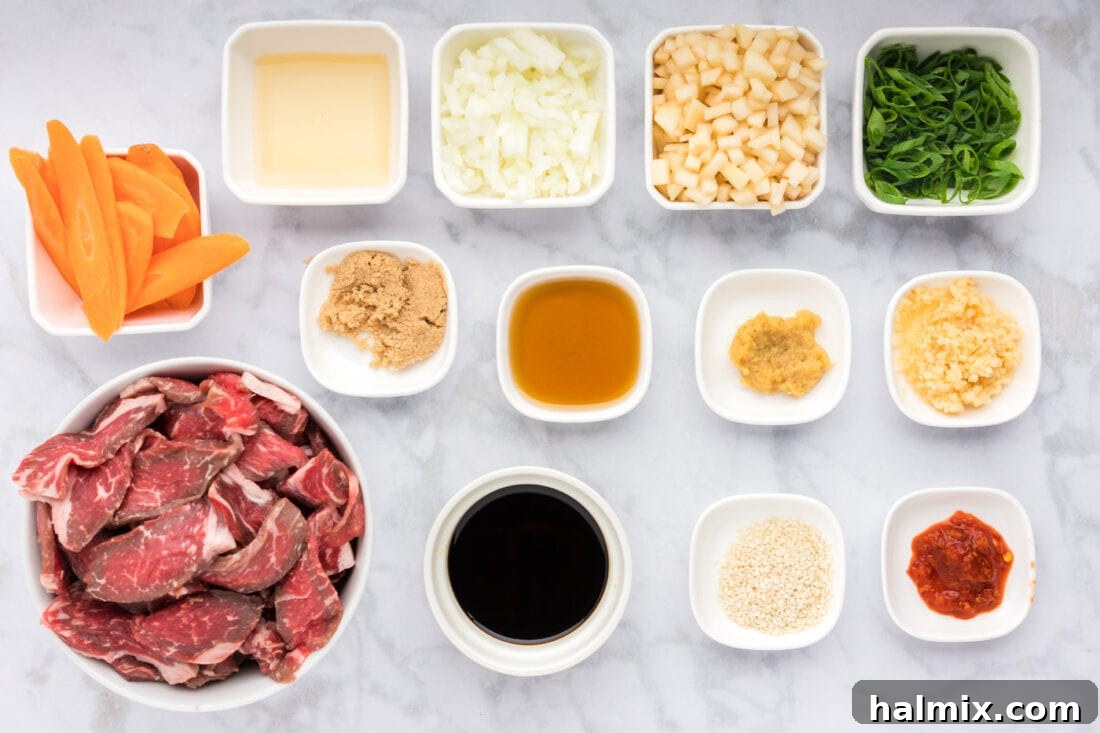
The journey to creating truly memorable beef bulgogi begins with selecting the finest ingredients. While the comprehensive list with exact measurements is readily available in the printable recipe card located at the conclusion of this post, here’s an overview of the key components you’ll want to have on hand. Opting for fresh, high-quality beef and produce will undeniably elevate the final taste and texture of your dish. Each ingredient, from the star of the show – the beef – to every element of the vibrant marinade, plays a critical role in developing the signature sweet, savory, and subtly spicy profile that defines authentic bulgogi.
Ingredient Spotlight: Tips & Smart Substitutions
To truly master this beef bulgogi recipe, understanding each ingredient and its function is key. Here’s a deeper dive into the components that make this dish so extraordinary, along with helpful tips and substitution suggestions to ensure your success.
BEEF Selection and Preparation: The Foundation of Tenderness
The choice and preparation of your beef are paramount to achieving that characteristic melt-in-your-mouth tenderness. For optimal results, we highly recommend **boneless beef ribeye steaks**. Ribeye is celebrated for its rich marbling, which translates directly into superior flavor and a luxuriously tender texture when cooked. To attain those signature, paper-thin slices essential for bulgogi, a simple yet effective technique is to partially freeze the beef. Place the ribeye in the freezer for approximately 20 to 30 minutes, or until it becomes firm but not completely solid. This slight chill makes it significantly easier to slice uniformly and very thinly against the grain using a sharp chef’s knife.
Should ribeye not be available, or if you prefer other options, excellent alternatives include **beef tenderloin** or **sirloin**. Both cuts are inherently tender and will absorb the marinade beautifully. For a more economical choice that still yields fantastic results, **flank steak** is a superb substitute. It’s robust enough to stand up to high-heat stir-frying and readily soaks up the complex flavors of the marinade. Remember, regardless of the cut, slicing against the grain is the golden rule for ensuring maximum tenderness in every bite.
The Dynamic MARINADE: A Symphony of Korean Flavors
Our bulgogi marinade is a carefully orchestrated blend, with each ingredient contributing to its exquisite balance of sweet, savory, and subtly spicy notes, while actively tenderizing the beef.
- Pears (Especially Asian Pears): Pears are a secret weapon in authentic Korean marinades. They provide a delicate, natural sweetness and, more importantly, contain natural enzymes that are incredibly effective at tenderizing meat. If you can find them, Asian pears (also known as Nashi pears or apple pears) are ideal due to their crisp texture and balanced sweetness. If Asian pears are difficult to source, a ripe Bosc or Bartlett pear can serve as a good alternative, or even a small amount of grated apple can work in a pinch.
- Onions, Ginger, and Garlic: This aromatic trifecta forms the foundational flavor profile for countless Asian dishes. Freshly chopped onions offer a pungent sweetness, ginger imparts a warm, zesty kick, and minced garlic delivers its indispensable savory depth. Blending these fresh ingredients directly into the marinade ensures their flavors are fully extracted and seamlessly integrated throughout the beef.
- Brown Sugar and Honey: These sweeteners are crucial for balancing the savory intensity of the soy sauce and the subtle heat from the chili. Brown sugar contributes a deeper, molasses-rich sweetness, while honey adds a lighter, floral note and aids in achieving that beautiful caramelization during cooking, giving the bulgogi its signature slightly glossy finish.
- Asian Chili Sauce: A modest amount of Asian chili sauce, such as Gochujang (Korean chili paste) for authentic flavor, or Sriracha for a more universally accessible mild heat, introduces a pleasant warmth that enhances the dish without overwhelming the other components. Adjust the quantity according to your preferred level of spice.
- Low Sodium Soy Sauce: This ingredient forms the savory, umami-rich base of our marinade. Opting for low-sodium soy sauce is a conscious choice that allows for greater control over the dish’s overall saltiness, ensuring the other delicate flavors of the marinade can shine through without being masked by excessive sodium.
Optional Marinade Gravy: For those who enjoy a richer sauce to spoon over their rice, a clever trick is to reserve a small portion of the marinade *before* adding the raw beef. Simply whisk this reserved marinade with a teaspoon of cornstarch mixed with a tablespoon of water, then simmer it gently in a separate small saucepan until it thickens into a glossy, flavorful gravy. This makes for an exquisite accompaniment, perfect for soaking up with your serving of rice.
Crafting Your Perfect Homemade Beef Bulgogi: Step-by-Step Guide
For your convenience, a comprehensive, printable version of this entire recipe, complete with precise measurements for all ingredients and detailed instructions, is provided at the very end of this post. You can easily Jump to Recipe if you prefer. These accompanying step-by-step photos and descriptions are designed to visually guide you through each stage of the cooking process, helping you achieve a flawless and delicious beef bulgogi every single time.
- Prepare the Beef for Slicing: Begin by thinly slicing the boneless beef ribeye steaks. This is a crucial step for tender bulgogi; always slice against the grain. For optimal thinness and ease, place the beef in the freezer for approximately 20-30 minutes beforehand, allowing it to firm up slightly without freezing solid. Once sliced, set the beef aside.
- Blend the Aromatic Marinade: Gather all your marinade ingredients: chopped pears, chopped onion, packed brown sugar, honey, minced ginger, minced garlic, Asian chili sauce, and low sodium soy sauce. Place them all into an immersion blender or a standard blender. Blend the mixture thoroughly until it is completely smooth and free of any large chunks. A smooth marinade ensures even flavor distribution.

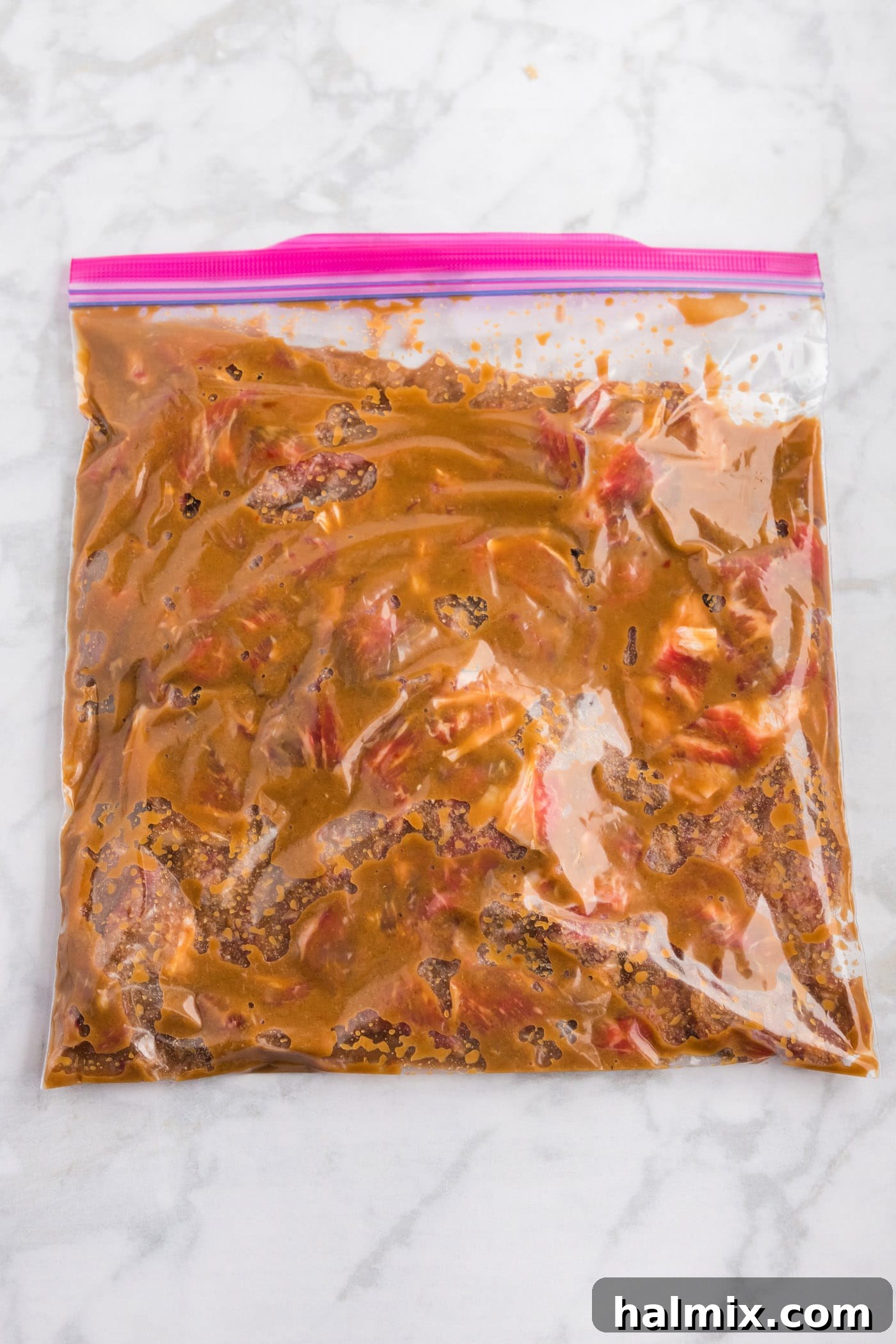
- Marinate the Beef to Perfection: Transfer the thinly sliced beef and the freshly blended marinade into a durable plastic gallon zipper bag or a large, shallow, non-reactive dish. Ensure that all the beef strips are thoroughly coated in the marinade. Allow the beef to marinate at room temperature for at least 1 hour. For an even more profound infusion of flavor and enhanced tenderness, you can marinate it overnight in the refrigerator.
- Preheat Your Wok or Skillet: Add the olive oil to your wok or a large, heavy-bottomed skillet. Heat the oil over medium-high heat until it begins to shimmer. This indicates the oil is hot enough for effective stir-frying, which is crucial for searing the beef quickly and preventing it from steaming.
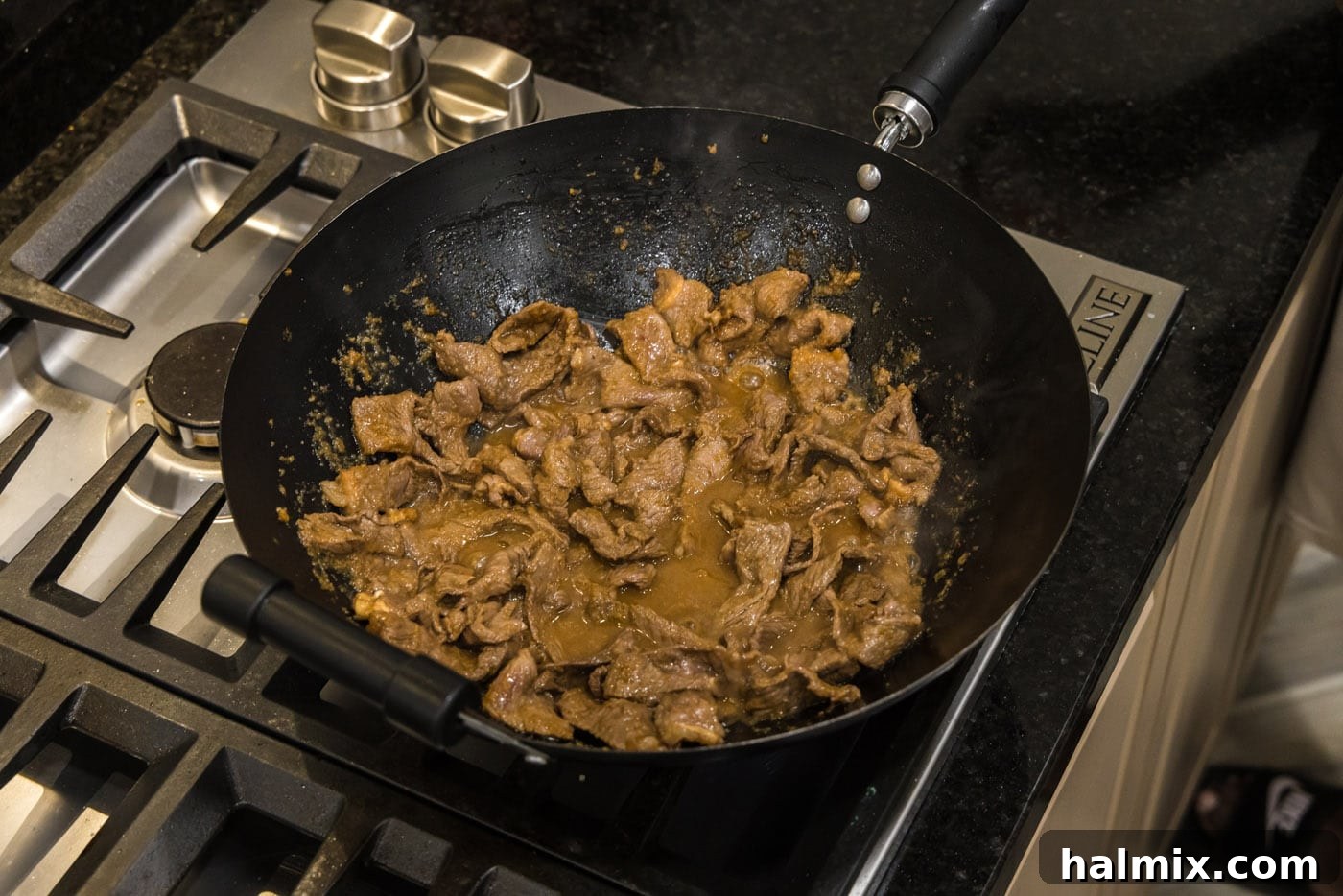
- Begin Stir-Frying the Beef: Using tongs, carefully remove the beef strips from the marinade bag, allowing any excess marinade to drip off. Place the beef into the preheated wok in a single layer. It is vital to avoid overcrowding the pan; if necessary, cook the beef in batches to ensure it fries evenly and develops a beautiful sear.
- Cook Until No Pink Remains: Stir-fry the beef frequently, tossing it to ensure all sides are evenly cooked and seared. Continue cooking for just a few minutes until no pink color remains and the beef is fully cooked through and slightly caramelized.
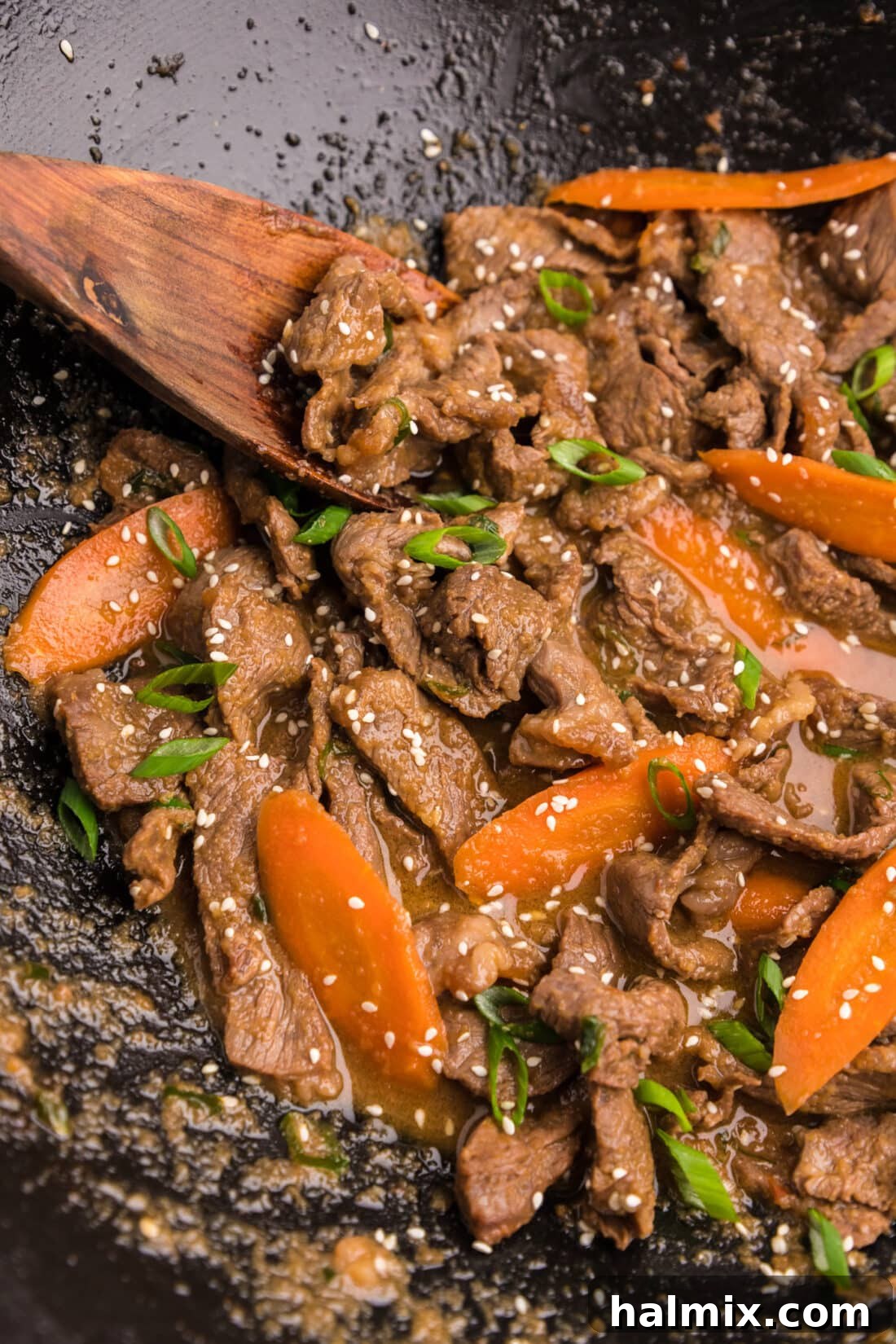
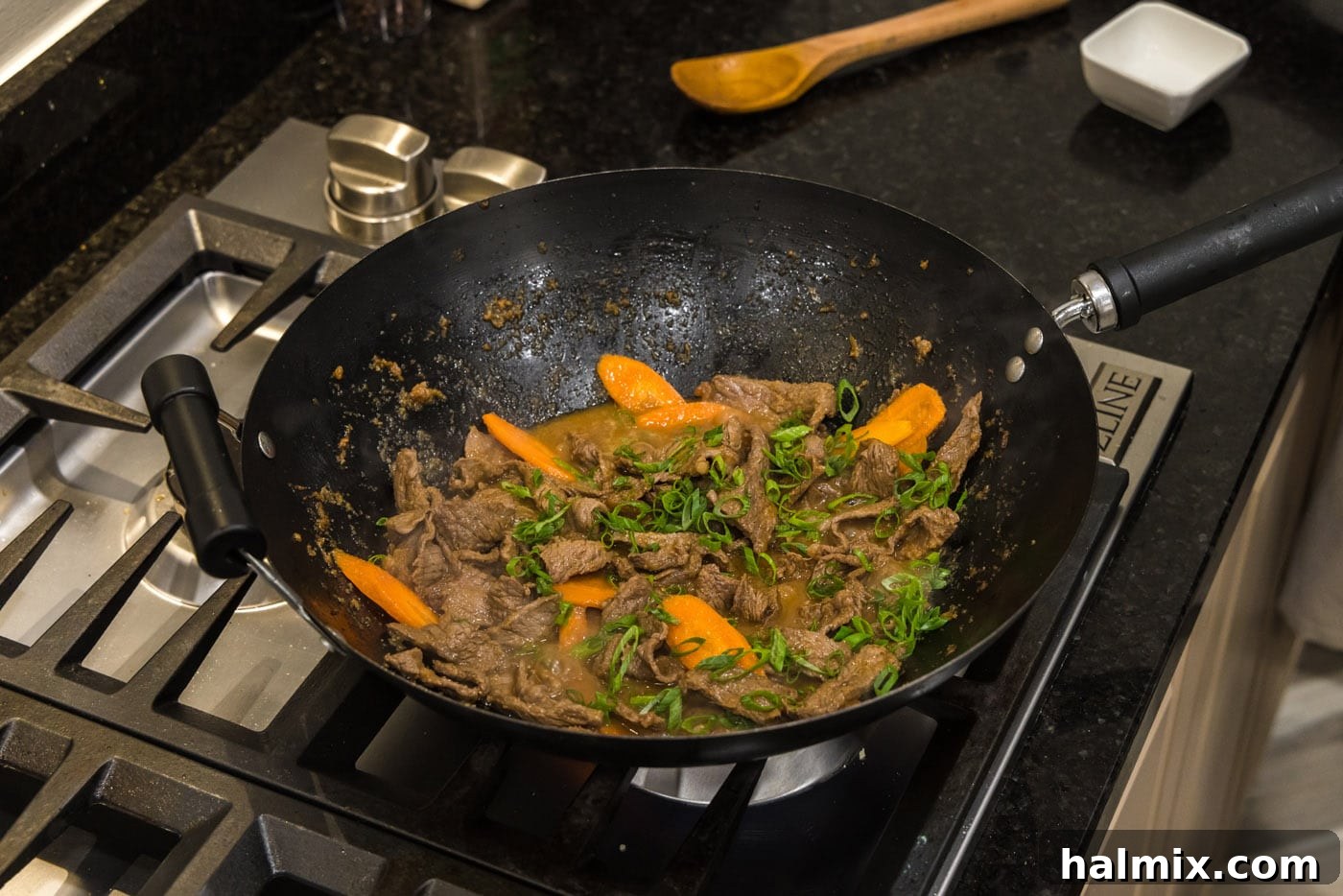
- Incorporate the Carrots: Once the beef is nearly done, add the sliced carrots to the wok. Continue to cook, stirring occasionally, for an additional 2-3 minutes. The carrots should soften slightly but still retain a pleasant bite and vibrant color.
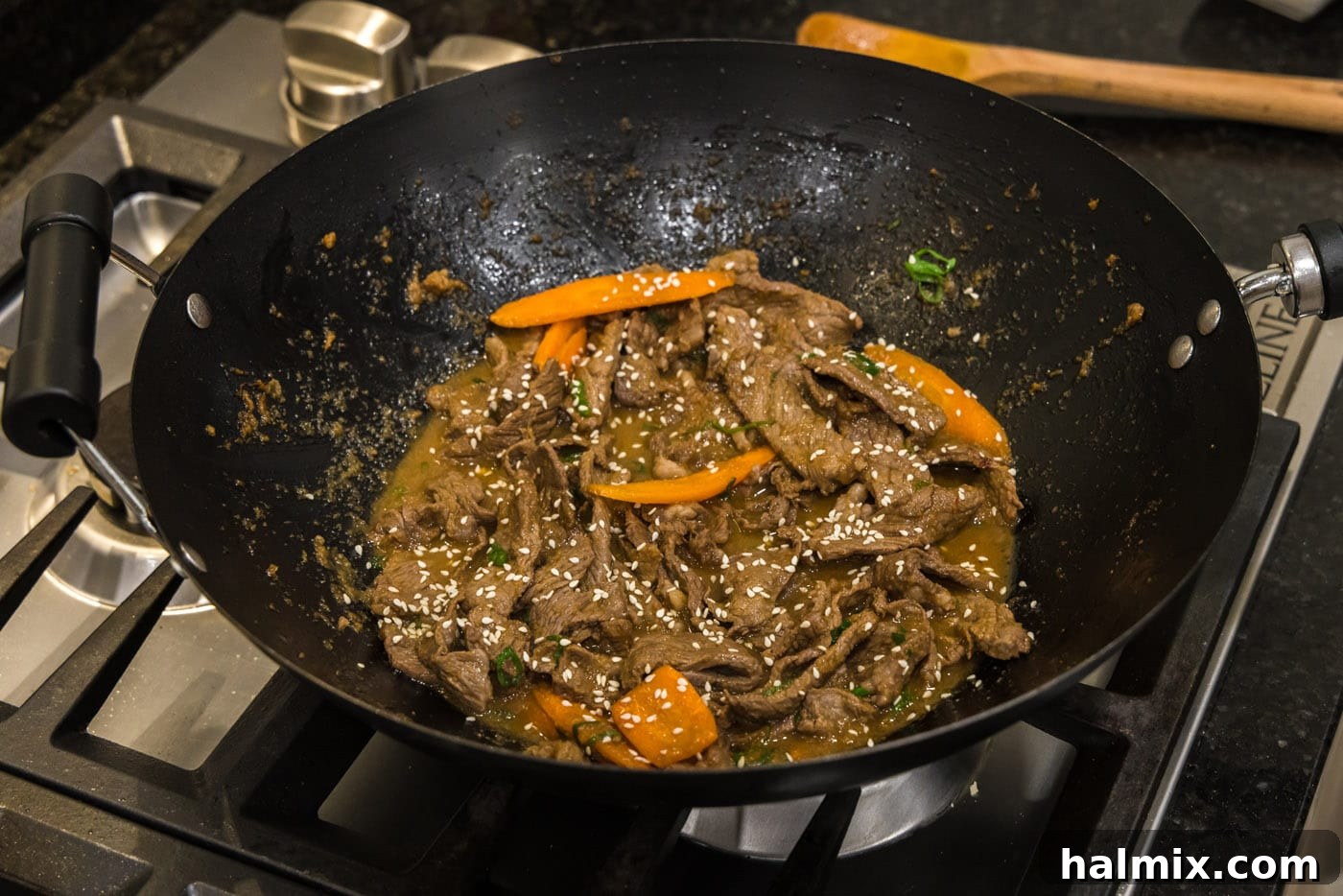
- Finish with Fresh Aromatics: To complete your bulgogi, add the sliced green onions (using only the green parts for a fresh finish) and sesame seeds to the wok. Stir everything together briskly and cook for just one more minute. This allows the green onions to become fragrant and the sesame seeds to toast lightly, adding a final layer of flavor and texture. Serve immediately.


Frequently Asked Questions & Expert Tips for Perfect Bulgogi
Leftover beef bulgogi can be conveniently stored in an airtight container within the refrigerator for up to 4 days. When you’re ready to enjoy it again, reheat the bulgogi gently over medium-low heat in a skillet or wok. If the beef appears a bit dry, a splash of water or a light broth can be added during reheating to restore its moisture. Be mindful not to overcook it, as this can diminish its tenderness and texture.
For the most authentically tender beef bulgogi, we strongly recommend cuts such as ribeye, sirloin, or even beef tenderloin. These cuts are characterized by excellent marbling and a fine grain, which, when thinly sliced and marinated, results in an incredibly succulent and melt-in-your-mouth experience. As a more budget-friendly yet still delicious option, flank steak is a fantastic alternative; it performs exceptionally well in stir-fries and readily absorbs the rich flavors of the marinade. The paramount rule, regardless of the beef cut chosen, is to slice it very thinly and against the grain to maximize tenderness.
The secret to effortlessly achieving those paper-thin, uniform beef slices lies in a simple freezing trick. Place your chosen beef cut (ribeye, sirloin, or flank) in the freezer for about 20 to 30 minutes, or until the meat is firm to the touch but not completely frozen solid. This slight hardening makes it significantly easier to slice precisely with a sharp chef’s knife against the grain. If you have access to a meat slicer, it can provide professional-grade consistency.
Absolutely! Grilling is actually a very traditional method for cooking bulgogi, especially in Korean barbecue settings. If you opt for grilling, you can either thread the marinated beef onto skewers or place the thin slices directly onto a preheated grill over medium-high heat. Cook for just a few minutes per side until the beef is beautifully charred and cooked through. Due to its thinness, bulgogi cooks very quickly on the grill, so keep a close eye on it to prevent overcooking. An indoor grill pan also works wonderfully for achieving similar results.
Certainly! While a wok is ideal for stir-frying due to its shape and ability to retain high heat, a large, heavy-bottomed skillet or a cast-iron pan will serve as an excellent substitute. The most important factor is to ensure your chosen pan can achieve and maintain very high heat. Remember to avoid overcrowding the pan; if necessary, cook the beef in smaller batches. This technique ensures that the beef sears beautifully and develops delicious caramelized edges, rather than steaming and becoming tough.
This is perhaps the single most critical tip for successful stir-frying, especially with thin cuts of meat like bulgogi. When you overcrowd your wok or skillet, the temperature of the cooking surface drops rapidly. This causes the beef to steam in its own juices rather than sear, resulting in tough, unappealingly gray meat instead of beautifully browned, tender strips. Always cook the beef in batches, ensuring each batch has ample space to cook quickly and evenly. This also allows the flavorful marinade to properly caramelize onto the beef, significantly enhancing its taste and texture.
Before you add the raw beef to the marinade, take a tiny taste of the blended marinade (be cautious if it contains raw garlic/ginger, as it will be very strong on its own). This crucial step allows you to fine-tune the balance of sweet, savory, and spicy notes to perfectly match your personal preference. You can add a little more honey or brown sugar for extra sweetness, a dash more soy sauce for enhanced umami, or an additional pinch of chili sauce for a bolder kick. Personalizing your marinade ensures that your homemade bulgogi is perfectly tailored to your palate.
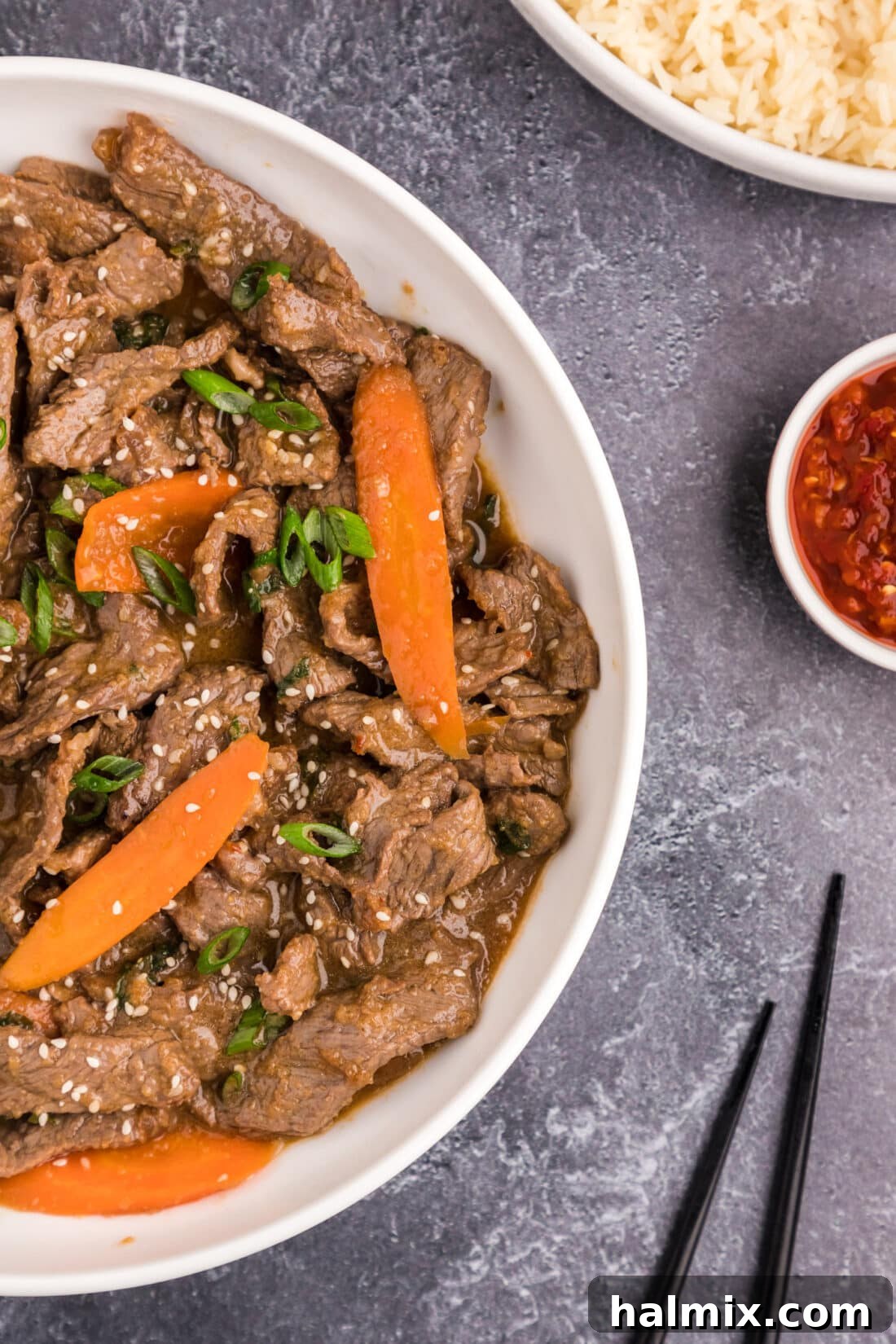
Delightful Serving Suggestions for Your Homemade Beef Bulgogi
Once your irresistible beef bulgogi is cooked to golden-brown perfection, the ways to enjoy it are as diverse and delicious as the dish itself. For a classic and visually appealing presentation, consider garnishing your bulgogi with an extra sprinkle of toasted sesame seeds and some freshly sliced green onion. These additions not only enhance the aesthetic but also provide a wonderful burst of fresh flavor and texture.
Here are some popular and incredibly satisfying ways to serve your homemade bulgogi:
- Over Fluffy Steamed Rice: The most traditional and comforting way to enjoy bulgogi is piled high over a bed of warm, fluffy steamed white rice. The rice readily soaks up the exquisite savory-sweet juices from the beef, creating a deeply satisfying and complete meal.
- Alongside Korean Noodles (Japchae or Ramyeon): Elevate your meal by pairing bulgogi with a side of stir-fried glass noodles (Japchae), known for their chewy texture and savory flavors. Alternatively, serve it with a steaming bowl of spicy Ramyeon for a heartier, more adventurous combination.
- As Flavorful Lettuce Wraps (Ssam): For a lighter, fresher, and wonderfully interactive dining experience, serve your bulgogi with an assortment of fresh lettuce leaves (such as red leaf, green leaf, or romaine), alongside traditional accompaniments like ssamjang (a spicy Korean dipping sauce), thin slices of raw garlic, and green chilies. Simply wrap a piece of succulent beef and your desired condiments in a crisp lettuce leaf for a burst of fresh, crunchy, and spicy flavor.
- A Vibrant Bibimbap Topping: Transform your bulgogi into a key component of Bibimbap, a beloved traditional Korean mixed rice dish. Arrange your bulgogi amongst an array of colorful sautéed vegetables (namul) and crown it with a perfectly fried egg for a visually stunning and nutritionally balanced bowl.
- Part of a Larger Korean Feast (Banchan Style): Bulgogi can also be served as a central meat dish within a larger spread of Korean banchan (small side dishes). Complement it with various pickled vegetables, kimchi, seasoned bean sprouts, and other traditional Korean sides for an authentic and abundant meal.
Explore More Exquisite Asian-Inspired Recipes
If the vibrant flavors of this beef bulgogi have ignited your passion for Asian cuisine, we invite you to explore more tantalizing dishes from our collection. Each recipe offers a unique taste experience, promising to expand your culinary horizons and bring exciting new meals to your table.
- Hunan Shrimp: Dive into a spicy and intensely flavorful shrimp stir-fry, a dish guaranteed to awaken your palate with its bold zest.
- Teriyaki Noodles: Savor the comforting and delightful combination of tender beef and perfectly cooked noodles, all bathed in a rich, glossy teriyaki sauce.
- Asian Broccoli Slaw: Discover a refreshing and crunchy side dish, featuring crisp broccoli slaw tossed in a tangy, zesty Asian-inspired dressing – perfect for any meal.
- Korean Fried Chicken: Experience the ultimate indulgence with our recipe for ultra-crispy, impossibly juicy fried chicken, coated in a tantalizingly sweet and spicy glaze.
- Korean Short Ribs: Treat yourself to succulent, fall-off-the-bone short ribs, marinated to perfection in a deeply savory and aromatic Korean sauce.
I love to bake and cook and share my kitchen experience with all of you! Remembering to come back each day can be tough, that’s why I offer a convenient newsletter every time a new recipe posts. Simply subscribe and start receiving your free daily recipes!
Beef Bulgogi
IMPORTANT – There are often Frequently Asked Questions within the blog post that you may find helpful. Simply scroll back up to read them!
Print It
Pin It
Rate It
Save It
Course: Dinner
Cuisine: American, Korean
Ingredients
- 1 ½ pounds boneless beef ribeye steaks
- 3 Tablespoons olive oil
- 1 cup sliced carrots
- ⅓ cup sliced green onion green parts only
- 2 teaspoons sesame seeds
Marinade
- ½ cup chopped pears
- ⅓ cup chopped onion
- 1 ½ teaspoons packed brown sugar
- 1 Tablespoon honey
- ½ teaspoon minced ginger
- 2 teaspoons minced garlic
- 1 teaspoon Asian chili sauce
- ¼ cup low sodium soy sauce
Things You’ll Need
-
Wok
-
Immersion blender
-
Chef’s knife
Before You Begin
- About 20-30 minutes before you begin this recipe, place the beef in the freezer. Having the beef nice and cold, but not solid, will make it easier to slice thin.
- Beef bulgogi should be very tender, so we tend to reach for cuts such as ribeye, sirloin, or even beef tenderloin when making it. You can certainly use flank steak as a more affordable alternative as it stir-fries really well.
- If you like, you can reserve some of the marinade (before adding the raw beef) and mix it with a little cornstarch and water to make a simple gravy to serve with the cooked bulgogi.
- Store leftovers in an air-tight container kept in the refrigerator for up to 4 days. Reheat over medium-low heat in a skillet or wok, adding a splash of water if needed.
- For authentic flavor, consider using Asian pears in your marinade if available. They provide natural sweetness and help tenderize the meat.
- When stir-frying, avoid overcrowding the pan to ensure the beef sears beautifully and doesn’t steam. Cook in batches if necessary.
Instructions
-
Slice beef thinly against the grain. Set aside.
-
Place all marinade ingredients (chopped pears, onion, brown sugar, honey, minced ginger, minced garlic, Asian chili sauce, and low sodium soy sauce) into an immersion blender. Blend until smooth and no chunks remain.
-
Combine the thinly sliced beef and the smooth marinade in a plastic gallon zipper bag or a large bowl. Ensure the beef is thoroughly coated. Allow to marinate at room temperature for 1 hour (or refrigerate for up to overnight for deeper flavor).
-
Add olive oil to a wok or large skillet and heat on medium-high until shimmering.
-
Using tongs, remove the beef from the marinade bag (letting excess drip off), and place it in the hot wok in a single layer. Cook in batches if necessary to avoid overcrowding.
-
Cook, stirring frequently, until no pink remains and the beef is beautifully browned and tender.
-
Add sliced carrots to the wok with the beef and cook, stirring occasionally, for 2-3 minutes, allowing them to soften slightly.
-
Finally, add the sliced green onion (green parts only) and sesame seeds. Stir and cook for an additional minute to combine flavors and warm through. Serve hot.
Nutrition
Carbohydrates: 28g |
Protein: 37g |
Fat: 35g |
Saturated Fat: 12g |
Polyunsaturated Fat: 3g |
Monounsaturated Fat: 19g |
Cholesterol: 104mg |
Sodium: 706mg |
Potassium: 799mg |
Fiber: 3g |
Sugar: 22g |
Vitamin A: 5464IU |
Vitamin C: 7mg |
Calcium: 58mg |
Iron: 4mg
Tried this Recipe? Pin it for Later!
Follow on Pinterest @AmandasCookin or tag #AmandasCookin!
The recipes on this blog are tested with a conventional gas oven and gas stovetop. It’s important to note that some ovens, especially as they age, can cook and bake inconsistently. Using an inexpensive oven thermometer can assure you that your oven is truly heating to the proper temperature. If you use a toaster oven or countertop oven, please keep in mind that they may not distribute heat the same as a conventional full sized oven and you may need to adjust your cooking/baking times. In the case of recipes made with a pressure cooker, air fryer, slow cooker, or other appliance, a link to the appliances we use is listed within each respective recipe. For baking recipes where measurements are given by weight, please note that results may not be the same if cups are used instead, and we can’t guarantee success with that method.