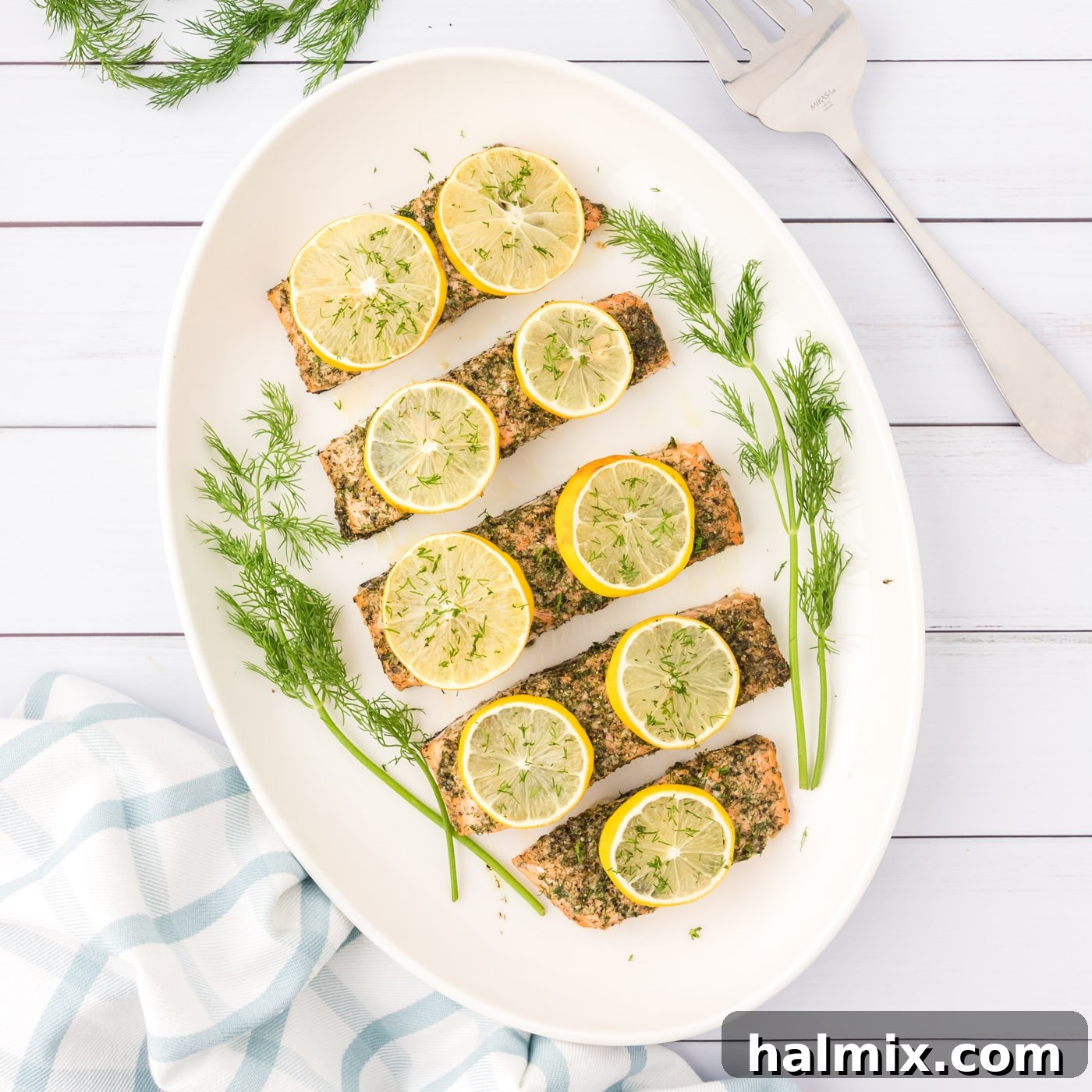
Unlock the secret to a remarkably flavorful and incredibly simple weeknight meal with our baked dill salmon recipe. This dish features succulent salmon fillets infused with the vibrant freshness of dill and the zesty brightness of lemon slices, a culinary duo destined for perfection. What truly sets this recipe apart is its astonishing speed – you’ll have a gourmet-quality dinner on your table in under 20 minutes from start to finish!
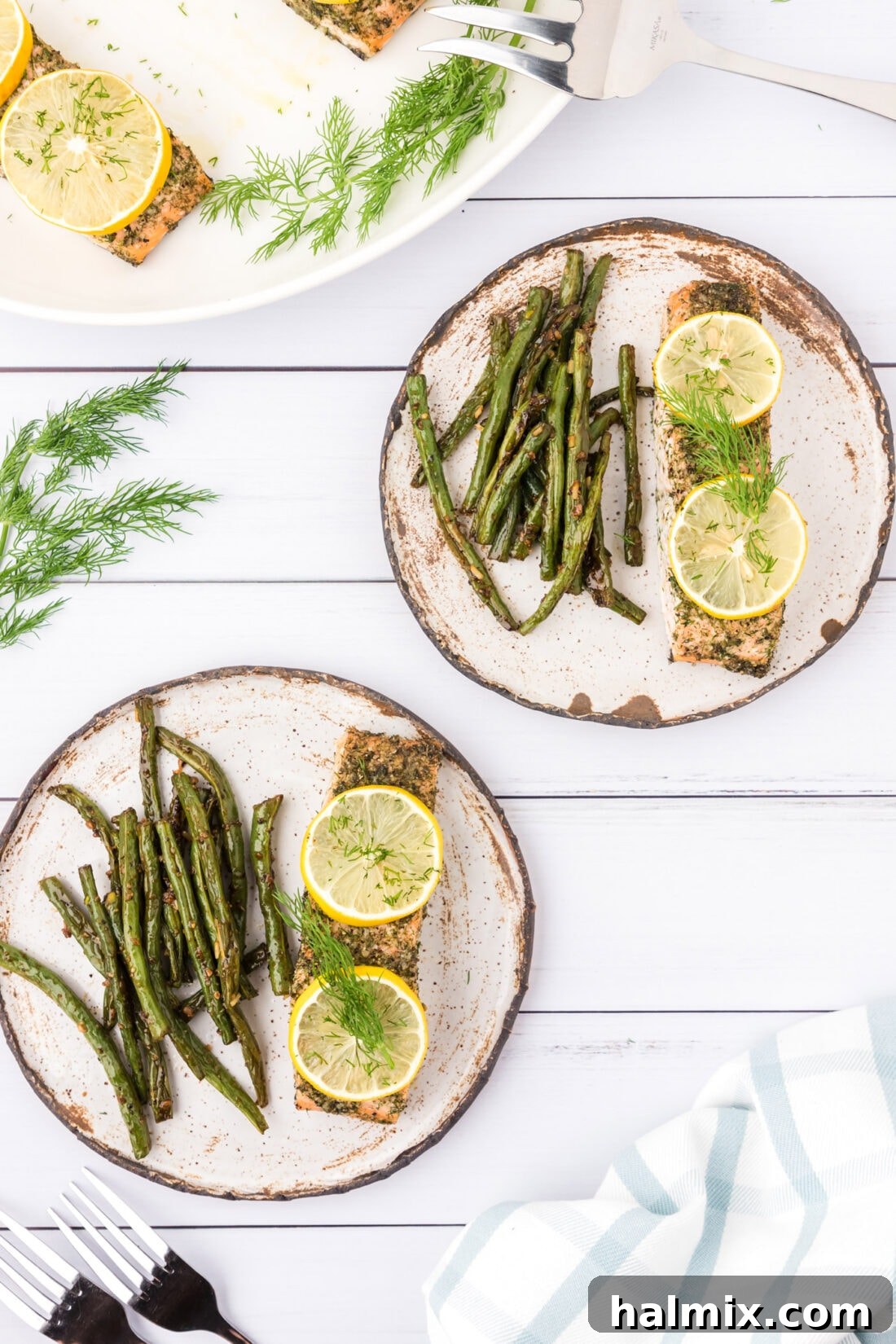
Why This Baked Dill Salmon Recipe is a Weeknight Winner
We all crave meals that are not only delicious but also fit seamlessly into our busy schedules. This baked dill salmon recipe checks every box, making it a staple in many households. Here’s why it’s destined to become your new favorite:
- Unbeatable Speed: Seriously, the oven might take longer to preheat than the actual prep time for this dish. In less than 10 minutes of active cooking, you’ll achieve perfectly flaky salmon. This makes it an ideal choice for quick weeknight dinners, meal prepping, or even impromptu gatherings.
- Explosion of Fresh Flavor: The combination of fresh and dried dill creates a robust, herbaceous foundation that is beautifully complemented by the tangy zest of fresh lemon. These natural flavors enhance the salmon without overpowering its delicate taste, resulting in a dish that feels both elegant and satisfying.
- Nutrient-Packed & Healthy: Salmon is renowned for being a powerhouse of nutrition, rich in omega-3 fatty acids, which are vital for heart health and brain function. When paired with healthy sides like roasted green beans, you’re not just getting a tasty meal, but one that provides essential vitamins and minerals like folate and potassium.
- Simple Ingredients, Stunning Results: You don’t need a pantry full of exotic spices to create something extraordinary. A few key ingredients—salmon, olive oil, garlic salt, dill, black pepper, and lemon—are all it takes to transform simple fillets into a culinary delight.
- Foolproof Method: Baking salmon on a wire rack ensures even cooking and allows air to circulate, resulting in a beautifully crisp exterior and a tender, moist interior. Even novice cooks can master this technique with ease.
This recipe truly embodies the joy of effortless cooking, proving that healthy, flavorful meals don’t have to be time-consuming or complicated. Get ready to impress your family and friends with minimal effort!
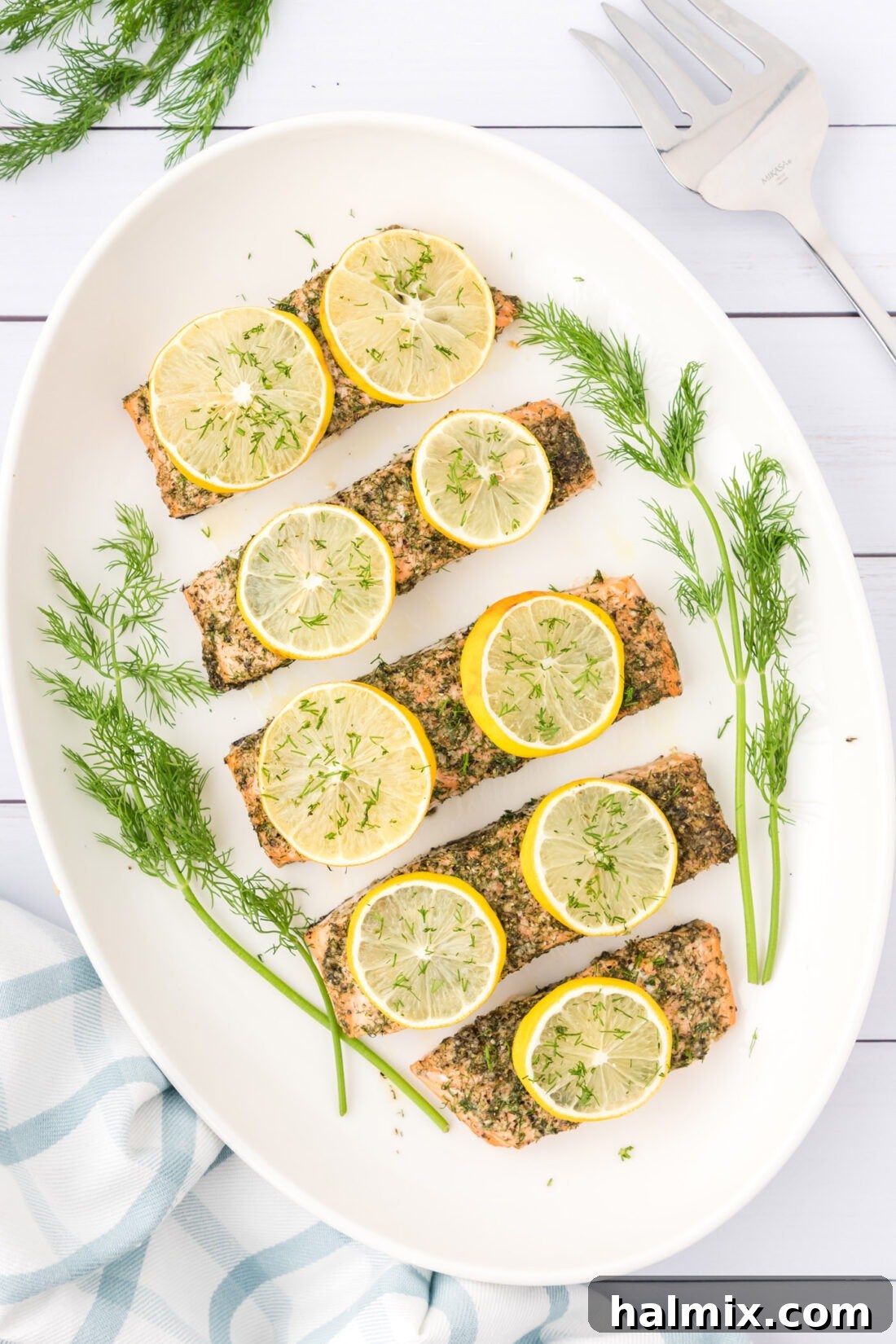
Essential Ingredients for Your Dill Salmon
Crafting this incredible dill salmon dish requires just a handful of fresh and simple ingredients. Each component plays a crucial role in building the irresistible flavor profile that makes this recipe so special. Below, you’ll find a detailed look at what you’ll need and how to select the best for optimal results.
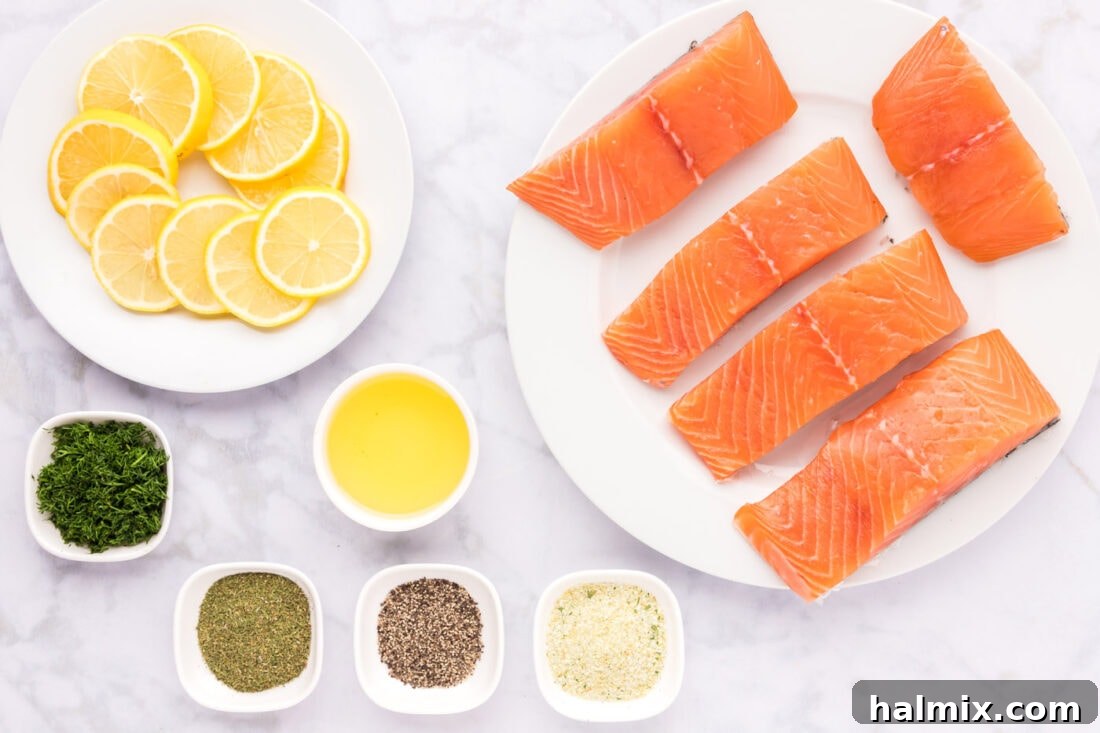
Ingredient Spotlight & Expert Tips
Let’s dive deeper into each ingredient, ensuring you get the most out of your dill salmon experience. Understanding the role of each component and how to choose it will elevate your cooking.
- Salmon: The Star of the Show
- Selection: For the best results, opt for fresh, high-quality salmon fillets. Look for vibrant, orange-pink flesh that is firm to the touch and has a fresh, mild scent (not fishy). You can purchase pre-portioned fillets, or buy a larger center-cut salmon and slice it into individual 5-6 ounce portions yourself. Ensure the fish is raw when cutting.
- Type: While any salmon will work, wild-caught salmon (like Sockeye or Coho) generally has a more intense flavor and firmer texture. Farm-raised Atlantic salmon is also widely available and often has a higher fat content, resulting in a richer, more buttery flavor. Choose what’s available and fits your preference.
- Skin On or Off? We recommend keeping the skin on when baking. The skin helps protect the delicate flesh from drying out and becomes wonderfully crispy, adding texture and flavor. Plus, it makes the fillets easier to handle on the baking sheet. You can easily remove it after cooking if desired.
- Quantity: This recipe calls for 1 ½ pounds of center-cut salmon, typically yielding 5 fillets. Adjust quantity based on your serving needs.
- Fresh Dill: The Aromatic Hero
- Flavor Profile: Fresh dill brings a distinct, bright, and slightly anisy flavor that is quintessential to this dish. It’s delicate yet impactful, marrying perfectly with salmon and lemon.
- Selection: Look for fresh dill with bright green leaves and a strong, fresh aroma. Avoid any bunches with yellowing or wilting leaves.
- Preparation: Finely chop the fresh dill just before using to maximize its aromatic oils. You’ll use this as a fragrant garnish, adding a burst of flavor and visual appeal.
- Substitution: While fresh dill is highly recommended for its vibrant flavor, if absolutely necessary, you can use 1 teaspoon of dried dill for every tablespoon of fresh dill. However, the taste will be less pronounced.
- Dried Dill: The Flavor Base
- Role: Dried dill, when mixed into the seasoning blend, provides a more concentrated, earthy dill flavor that penetrates the salmon during baking. Using both fresh and dried dill creates a multi-layered dill experience.
- Quantity: 2 Tablespoons of dried dill form the base of our seasoning rub.
- Tip: Ensure your dried dill is fresh and hasn’t lost its potency. Old spices can lead to dull flavors.
- Lemons: The Zesty Counterpart
- Flavor Profile: Lemon provides crucial acidity and brightness, cutting through the richness of the salmon and enhancing the dill. The slices also infuse the fish with a delicate citrus aroma as it bakes.
- Selection: Choose firm, brightly colored lemons that feel heavy for their size, indicating they are juicy.
- Preparation: Thinly slice 2 lemons. Some slices will be placed directly on the salmon for infusing flavor, while others can be reserved for serving.
- Tip: For an extra citrus punch, you can finely grate some lemon zest into the olive oil mixture before mixing.
- Olive Oil: The Binding Agent & Flavor Enhancer
- Role: Olive oil acts as a binder for the spices, ensuring they adhere evenly to the salmon fillets. It also helps to keep the salmon moist during baking and contributes a subtle, fruity undertone.
- Type: Use a good quality extra virgin olive oil for the best flavor.
- Quantity: 3 Tablespoons are sufficient to coat the fillets generously.
- Garlic Salt & Black Pepper: The Essential Seasonings
- Garlic Salt: Provides a savory, aromatic base. Its pre-mixed nature ensures a balanced blend of salt and garlic. If using garlic powder and salt separately, adjust quantities to taste (e.g., 1 tsp garlic powder + 2 tsp salt for 1 tbsp garlic salt).
- Black Pepper: Freshly ground black pepper adds a pungent, spicy kick that complements the other flavors beautifully.
By understanding and selecting these ingredients with care, you’re setting the stage for an unforgettable meal.
Mastering the Method: How to Bake Perfect Dill Salmon
This step-by-step guide will help you visualize and execute this simple yet elegant dill salmon recipe. Follow these instructions closely for a perfectly cooked, flaky, and flavorful result every time. For a printable version of the full recipe, including exact measurements and detailed instructions, please refer to the recipe card below.
- Prepare Your Oven and Baking Sheet: Begin by preheating your oven to a precise 400°F (200°C). While the oven heats, set up your baking sheet. Place a wire rack directly onto a large baking sheet. The wire rack is key to achieving that beautiful, even cook and slightly crisp exterior, as it allows air to circulate around the entire fillet.
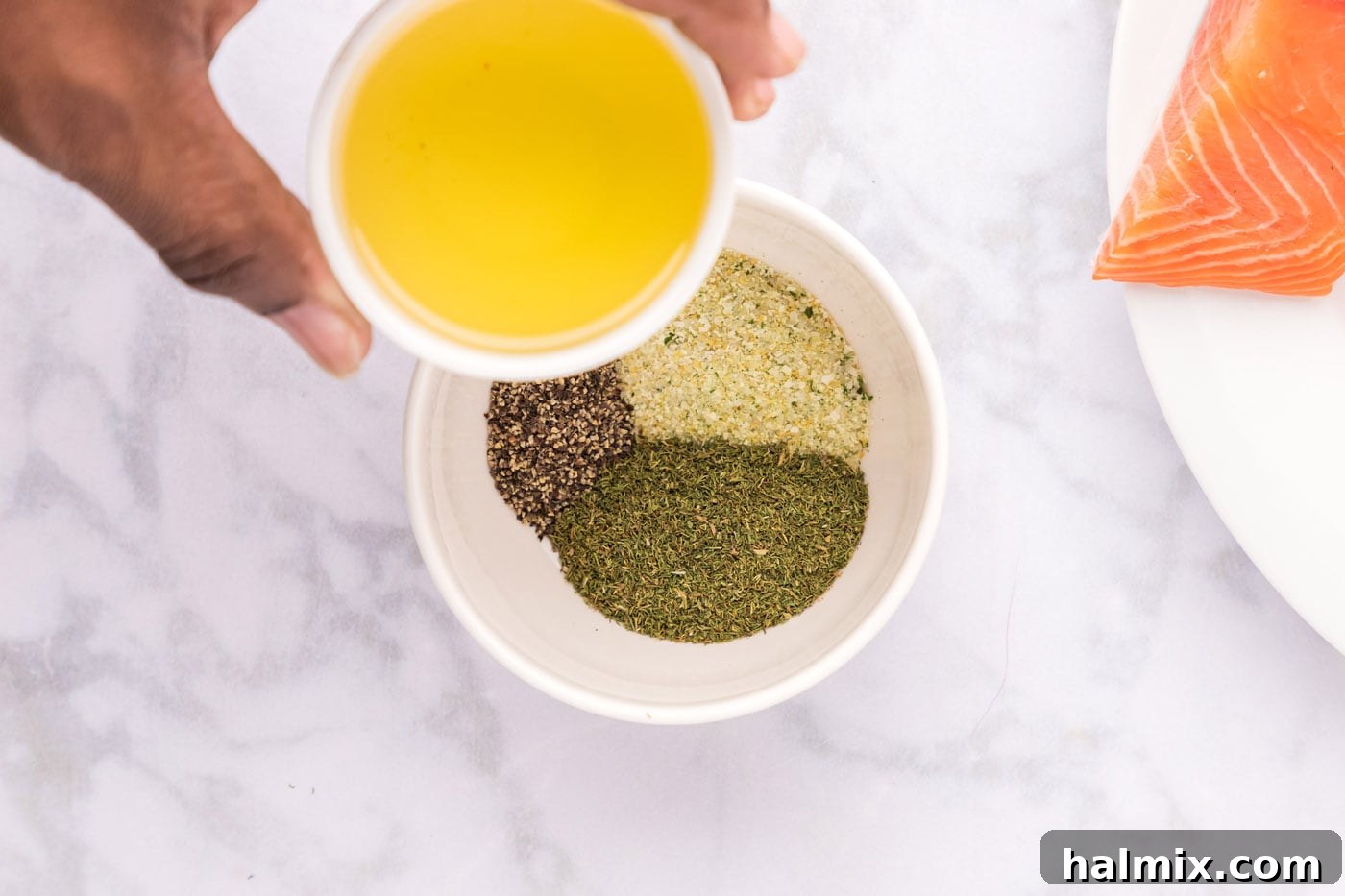
- Craft the Flavorful Rub: In a small bowl, combine your wet and dry seasonings. Pour in the olive oil, then add the garlic salt, dried dill, and freshly ground black pepper. Whisk these ingredients together until they are thoroughly combined, forming a thick, aromatic paste. This mixture will be the primary flavor coating for your salmon.

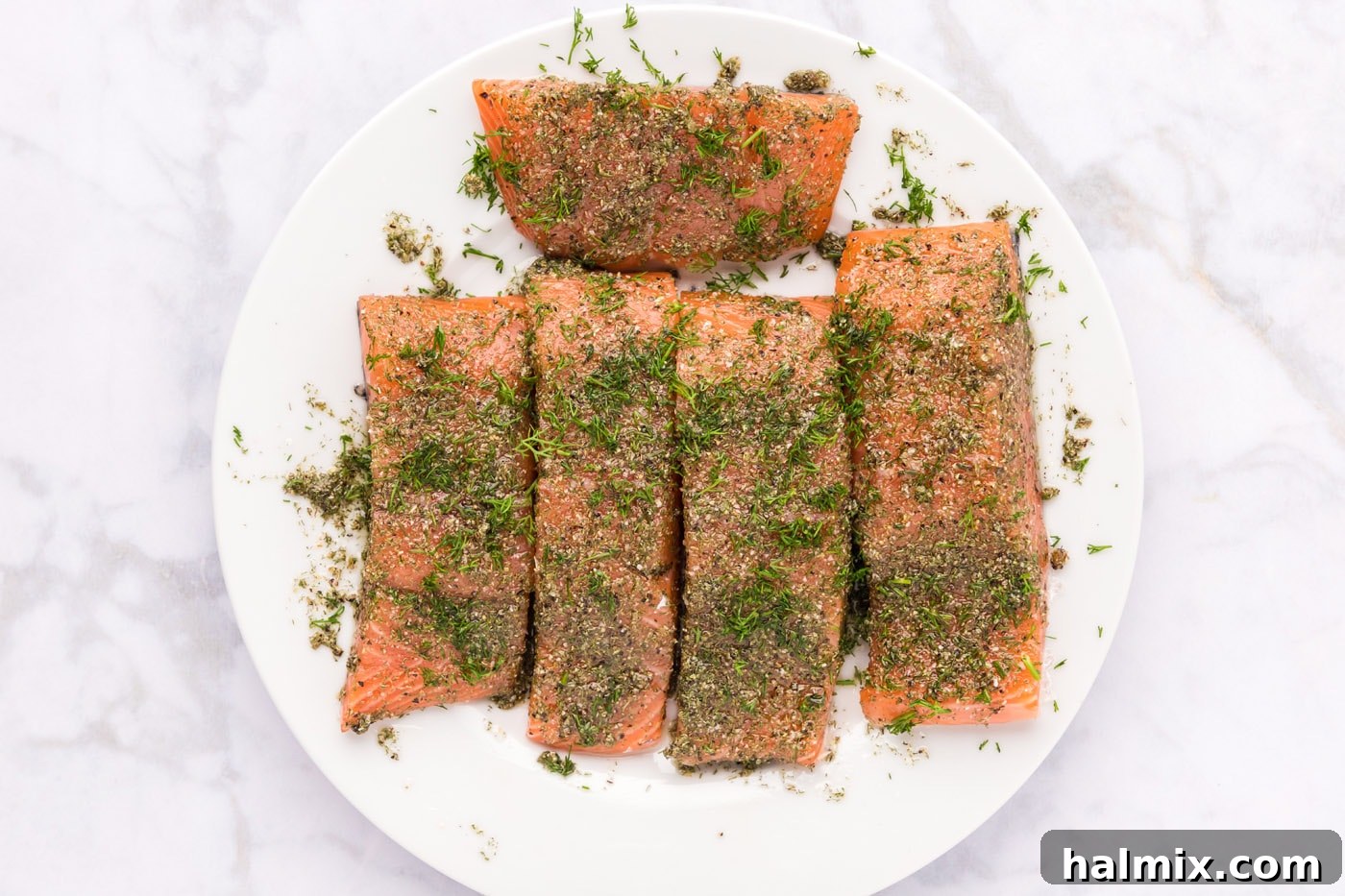
- Season the Salmon: Put on a pair of gloves (this helps with an even spread and keeps your hands clean) and generously spread the prepared olive oil mixture over all sides of each salmon fillet. Don’t be shy – ensure every surface is coated to maximize flavor. Once coated, sprinkle a good amount of fresh dill over the top of each fillet. The fresh dill adds an immediate burst of aromatic freshness.
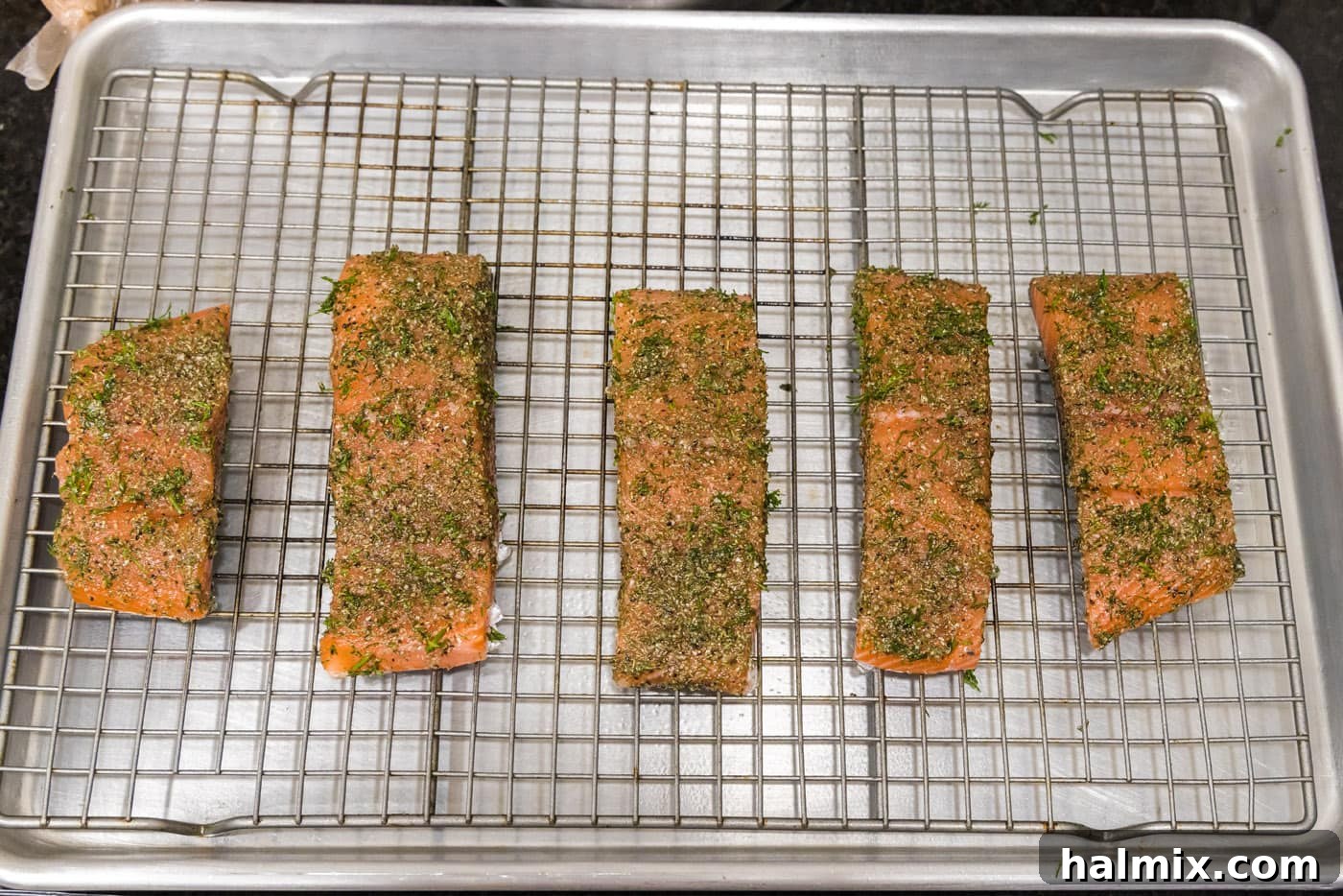
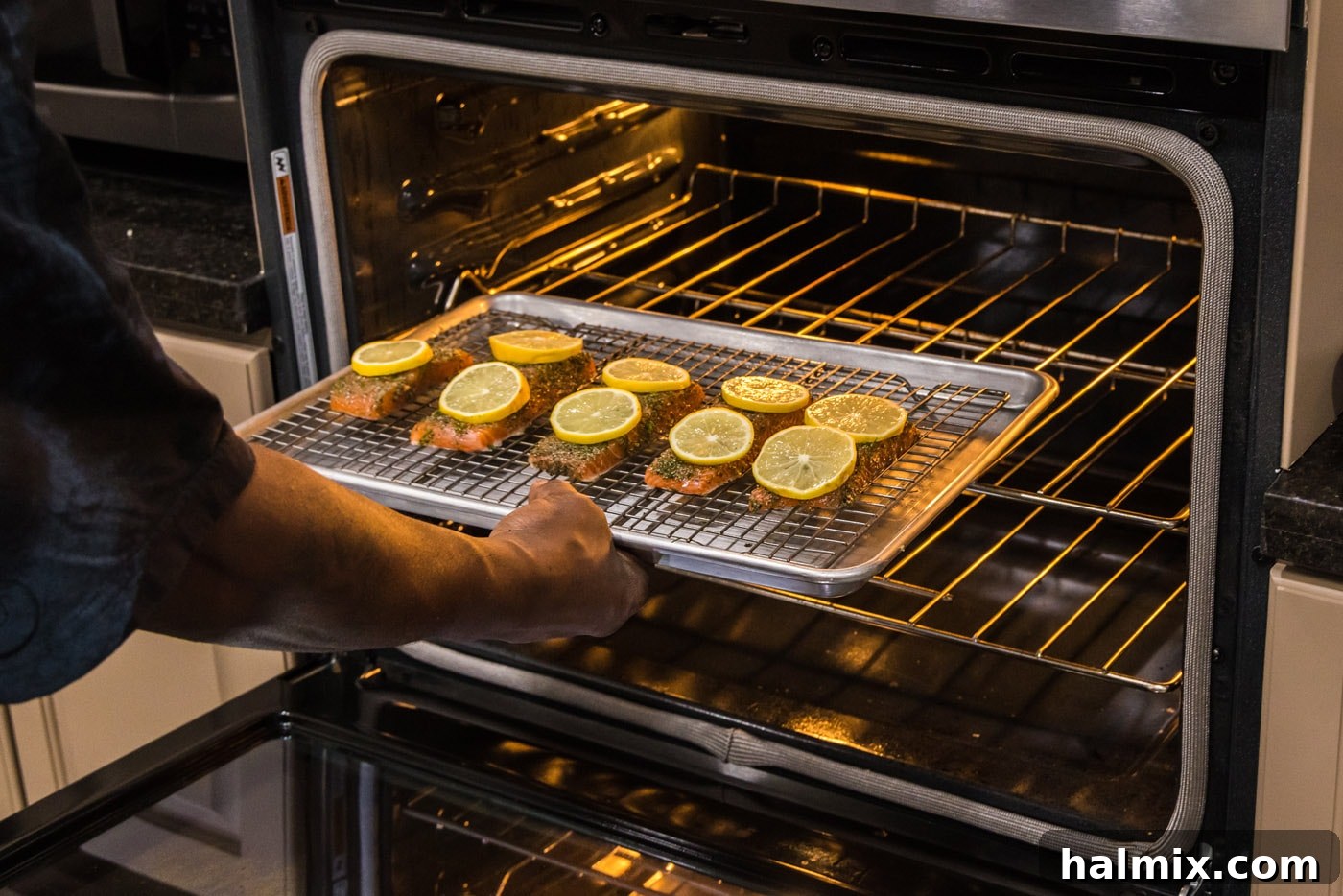
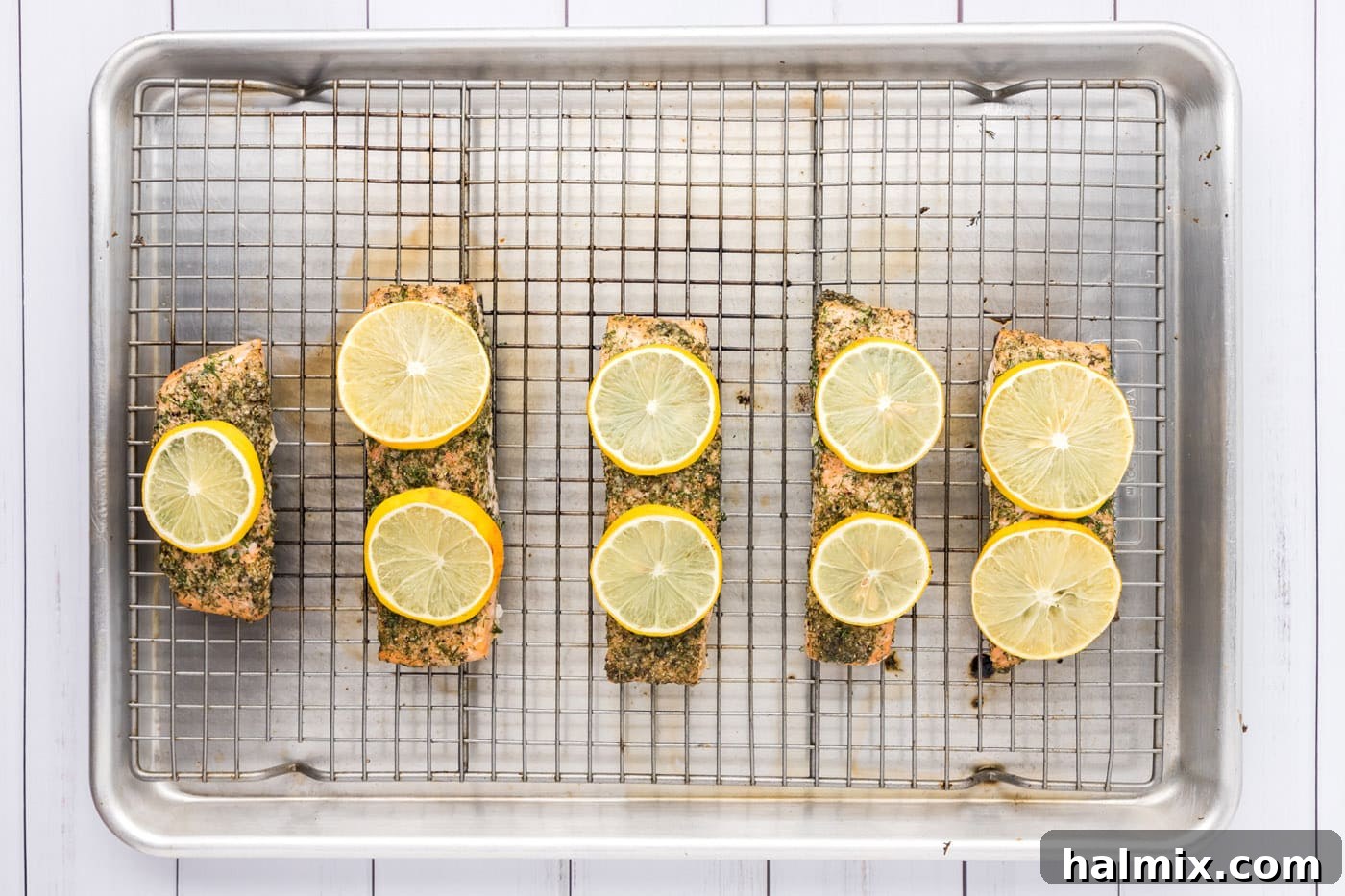
- Arrange on the Baking Sheet: Carefully transfer the seasoned salmon fillets to the wire rack on your baking sheet. Arrange them in a single layer, ensuring there’s a little space between each fillet for optimal heat circulation.
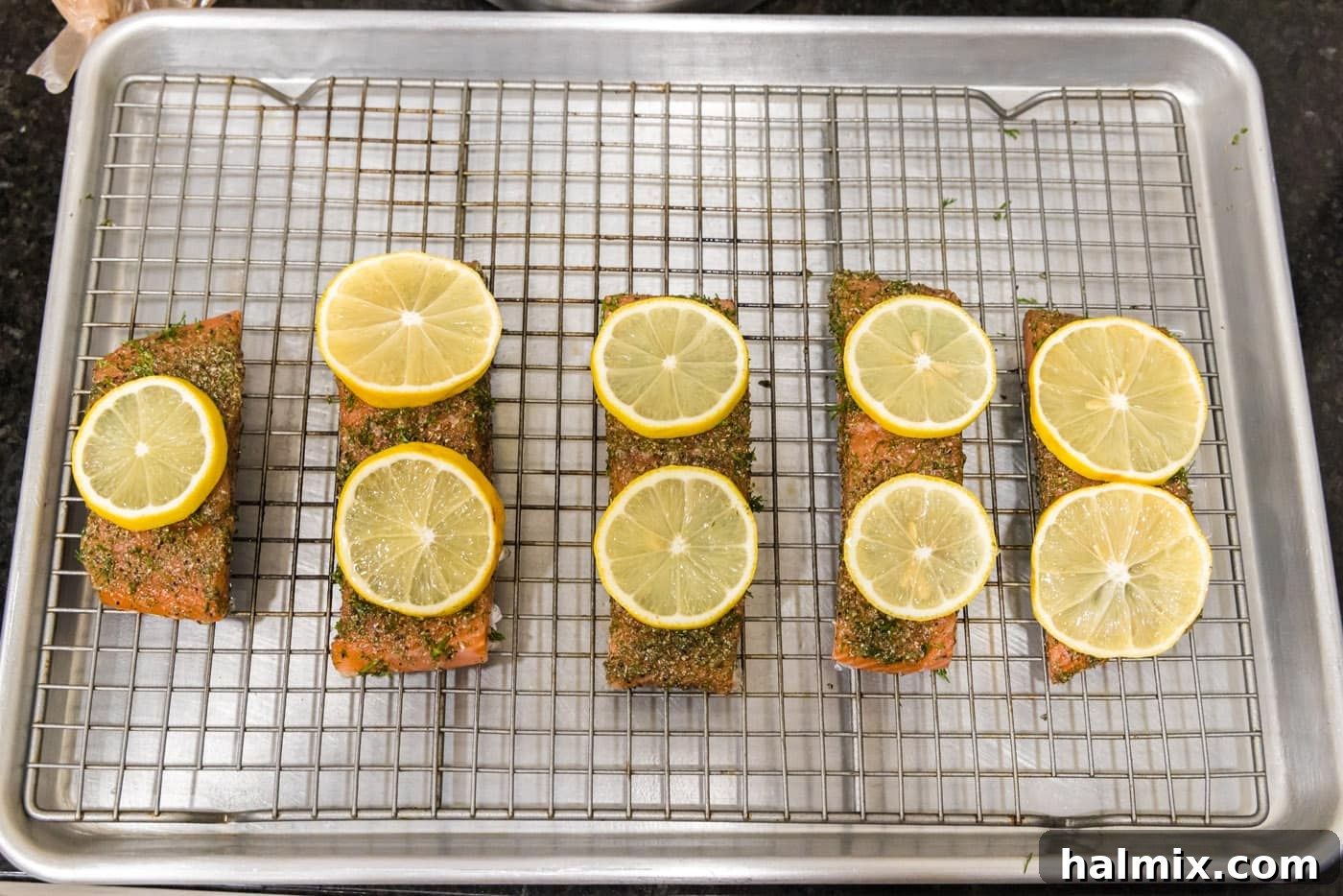
- Top with Lemon Slices: Place a few thin slices of fresh lemon directly on top of each salmon fillet. As the salmon bakes, these lemon slices will impart a subtle, refreshing citrus flavor and aroma, further enhancing the dish.
- Bake to Perfection: Place the baking sheet with the salmon into your preheated 400°F oven. Bake uncovered for approximately 7-9 minutes. The exact cooking time will vary depending on the thickness of your salmon fillets and your oven. For thinner fillets (around 1-inch thick), 7 minutes might be sufficient, while thicker fillets may require closer to 9 minutes. The goal is perfectly cooked, pull-apart flaky salmon.
Frequently Asked Questions & Expert Tips
The best way to determine if salmon is perfectly cooked is by checking its flakiness. Gently poke the top of the thickest part of the fillet with your finger or the back of a fork. If the salmon easily flakes along the natural white lines (muscle fibers) and appears opaque throughout, it’s ready. An internal temperature of 145°F (63°C) is ideal, but relying on visual cues and texture is often sufficient for thinner fillets.
To maintain freshness and prevent spoilage, store leftover dill salmon in an airtight container in the refrigerator for 3-4 days. This ensures it retains its flavor and moisture for future enjoyment.
Reheating salmon effectively without drying it out is crucial. We recommend using a low temperature in the oven. Preheat your oven to 300°F (150°C), place the salmon fillets on a baking sheet, and reheat for approximately 10-15 minutes, or until just warmed through. Avoid microwaving, as it can quickly dry out the salmon and give it an undesirable texture. Gentle reheating preserves its moist, flaky texture.
Absolutely! If using frozen salmon, ensure it is completely thawed before proceeding with the recipe. Thaw it overnight in the refrigerator or by placing it in a sealed bag under cold running water. Pat the fillets very dry with paper towels before seasoning to ensure the rub adheres properly and the salmon cooks evenly.
While dill and lemon are a classic combination, salmon is incredibly versatile. Other herbs that pair beautifully include parsley, chives, thyme, and rosemary. You can experiment with these for different flavor profiles. A sprinkle of red pepper flakes can also add a nice touch of heat.
Elevate Your Meal: Inspired Serving Suggestions
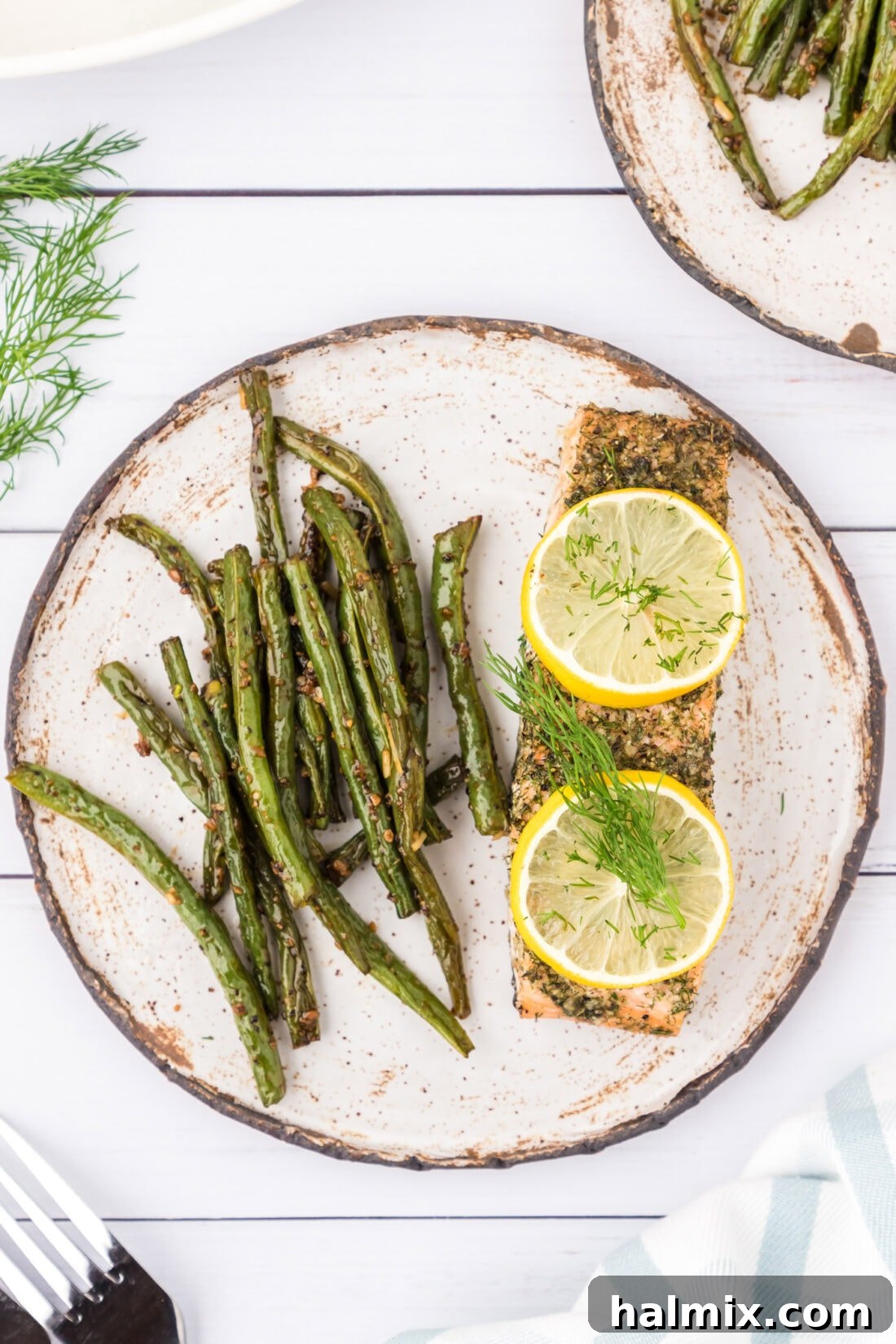
This dill salmon, with its bold yet fresh flavors, is incredibly versatile and pairs wonderfully with a variety of sides. Here are some ideas to complete your meal, whether you’re looking for something light, hearty, or elegantly simple:
- Roasted or Steamed Vegetables: The perfect companion to baked salmon. Try classic choices like our roasted green beans, tender asparagus, crisp broccoli, flavorful cauliflower, or sweet carrots. Roasting brings out their natural sweetness and a slight caramelization, while steaming keeps them light and vibrant. A drizzle of olive oil and a squeeze of lemon juice are often all they need.
- Hearty Potatoes: For a more substantial meal, potatoes are always a hit. Our roasted red potatoes are a favorite, offering a satisfying texture and earthy flavor. Mashed potatoes (with a hint of garlic or herbs) or even a light potato salad can also be delicious options.
- Fresh Salads: Keep it light and refreshing with a crisp dinner salad. Think mixed greens with cherry tomatoes, cucumber, and a simple vinaigrette. A lemon-herb dressing or a classic balsamic dressing would complement the salmon beautifully, adding another layer of freshness.
- Quinoa or Rice: For a gluten-free and nutritious grain option, fluffy quinoa or brown rice makes an excellent base. They absorb any delicious pan juices from the salmon and provide a wholesome foundation for your meal.
- Crusty Bread: Don’t underestimate the power of a good slice of crusty bread to soak up any leftover sauces or olive oil on your plate. A warm baguette can elevate the entire dining experience.
No matter your choice, ensure your sides are prepared to enjoy warm from the oven alongside your freshly baked dill salmon for the best experience.
Discover More Delicious Salmon Recipes
If you’ve fallen in love with the simplicity and flavor of this dill salmon, you’ll be thrilled to explore more of our fantastic salmon creations. From sweet and savory to bold and spicy, there’s a salmon recipe for every palate and occasion. Expand your culinary repertoire with these enticing options:
- Sweet & Savory Teriyaki Salmon
- Spicy Blackened Salmon
- Maple Soy Glazed Salmon
- Elegant Dijon Lemon Caper Salmon
- Simple & Delicious Honey Salmon
I love to bake and cook and share my kitchen experience with all of you! Remembering to come back each day can be tough, that’s why I offer a convenient newsletter every time a new recipe posts. Simply subscribe and start receiving your free daily recipes!
Dill Salmon
IMPORTANT – There are often Frequently Asked Questions within the blog post that you may find helpful. Simply scroll back up to read them!
Print Recipe
Pin Recipe
Rate Recipe
Course: Dinner, Main Dish
Cuisine: American, Seafood
Ingredients
- 1 ½ pounds center-cut salmon cut into 5 fillets
- 3 Tablespoons olive oil
- 1 Tablespoon garlic salt
- 2 Tablespoons dried dill
- 2 teaspoons black pepper
- 3 Tablespoons fresh dill
- 2 lemons sliced
Things You’ll Need
-
Baking sheet
-
Wire cooling rack
-
Vinyl gloves
Notes & Tips
- You can purchase salmon fillets individually or buy a whole center cut salmon and cut them yourself. Be sure to cut into fillets while the fish is raw for easier handling.
- Store leftover dill salmon in an airtight container kept in the refrigerator for 3-4 days.
- For reheating, it’s best to do so at a low temperature in the oven. I would recommend preheating the oven to 300°F (150°C), placing the fillets on a baking sheet, and reheating for around 10-15 minutes or until warmed through. You don’t want to rush the process of reheating salmon as it can dry out rather quickly.
Instructions
-
Preheat oven to 400°F (200°C). Place a wire rack onto a large baking sheet.
-
In a small bowl, combine olive oil, garlic salt, dried dill, and black pepper. Mix well to form a paste.
-
Using gloved hands, spread the olive oil mixture evenly over all sides of the salmon fillets. Top each fillet with fresh dill.
-
Place the seasoned fillets onto the wire rack on the baking sheet, ensuring they are not touching.
-
Top each fillet with lemon slices.
-
Bake uncovered for 7-9 minutes, or until the salmon flakes easily with a fork.
Nutrition Information
Calories: 285cal |
Carbohydrates: 5g |
Protein: 28g |
Fat: 17g |
Saturated Fat: 3g |
Polyunsaturated Fat: 4g |
Monounsaturated Fat: 9g |
Cholesterol: 75mg |
Sodium: 1459mg |
Potassium: 779mg |
Fiber: 2g |
Sugar: 1g |
Vitamin A: 157IU |
Vitamin C: 24mg |
Calcium: 54mg |
Iron: 2mg
Tried this Recipe? Pin it for Later!Follow on Pinterest @AmandasCookin or tag #AmandasCookin!
The recipes on this blog are tested with a conventional gas oven and gas stovetop. It’s important to note that some ovens, especially as they age, can cook and bake inconsistently. Using an inexpensive oven thermometer can assure you that your oven is truly heating to the proper temperature. If you use a toaster oven or countertop oven, please keep in mind that they may not distribute heat the same as a conventional full sized oven and you may need to adjust your cooking/baking times. In the case of recipes made with a pressure cooker, air fryer, slow cooker, or other appliance, a link to the appliances we use is listed within each respective recipe. For baking recipes where measurements are given by weight, please note that results may not be the same if cups are used instead, and we can’t guarantee success with that method.