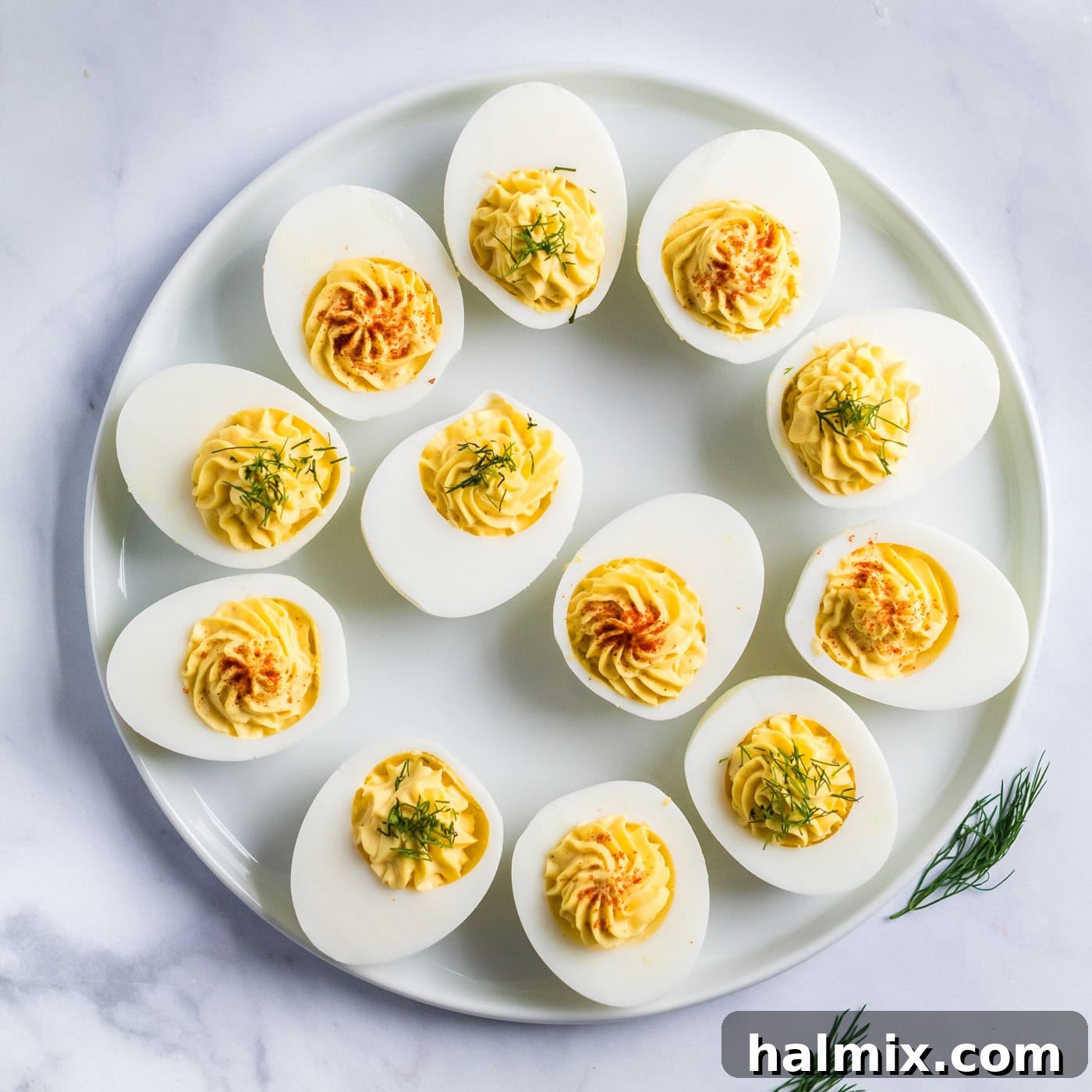
There are some dishes that evoke a wave of nostalgia with just a single glance, and classic deviled eggs are undoubtedly one of them. For many, these delightful bites were a staple at every holiday gathering, picnic, or potluck. Their timeless appeal lies in their simplicity, incredible flavor, and elegant presentation as a perfect finger food. Easy to prepare and universally loved, deviled eggs are a testament to the fact that some of the best culinary creations are often the most straightforward.
Bringing a large tray of these creamy, savory treats to any party instantly makes you a crowd favorite. Much like my beloved cucumber sandwiches, deviled eggs are a go-to choice for effortless entertaining, always disappearing quickly from the spread.
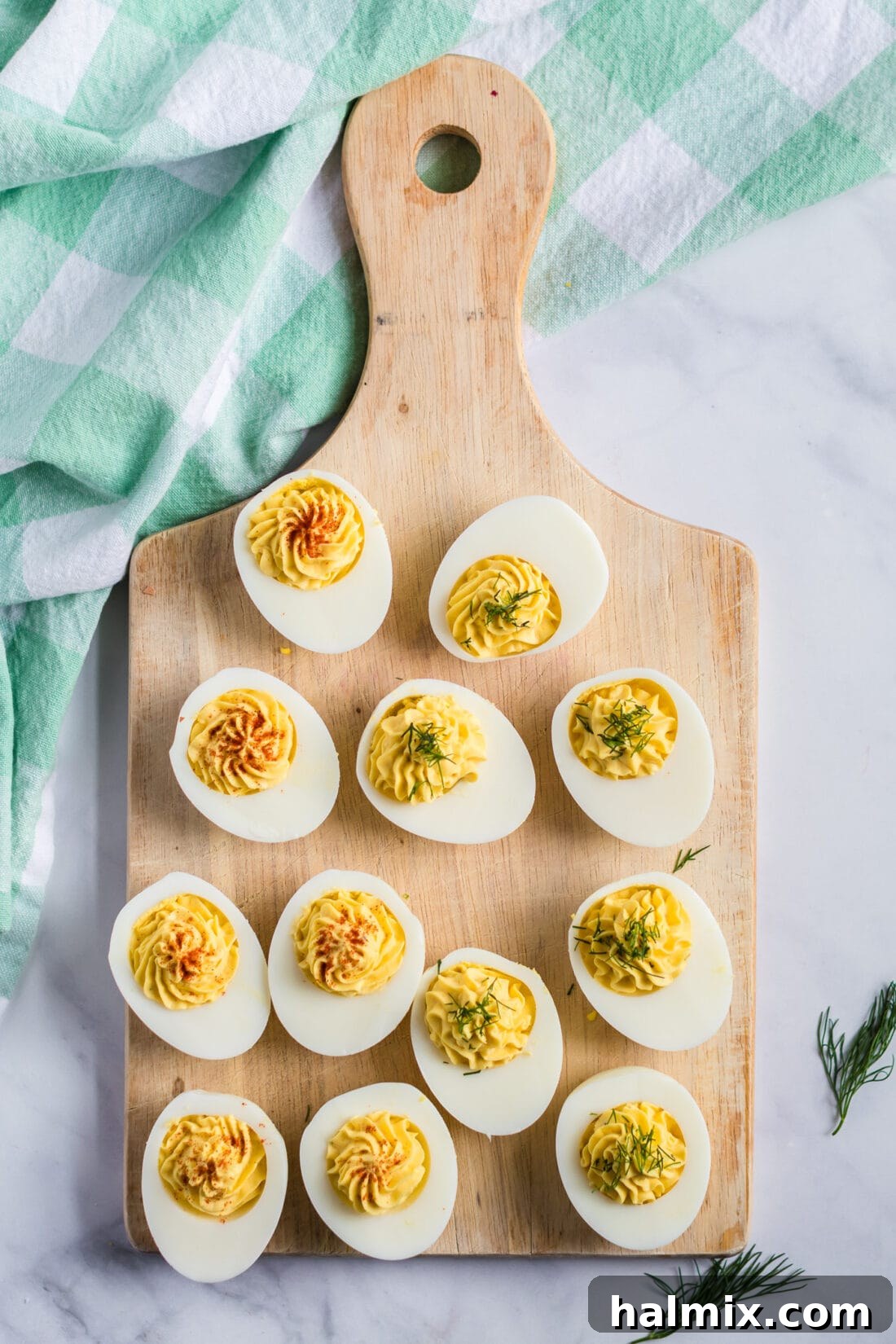
Why This Classic Deviled Egg Recipe Stands Out
While the culinary world constantly introduces new trends and variations, some recipes hold a special place because of their enduring legacy and inherent perfection. This classic deviled egg recipe is one such gem, a time-honored tradition passed down through generations. It’s the kind of recipe your grandmother and great-grandmother likely made by heart, perhaps with their own subtle twists, but always adhering to a simple, delicious foundation.
The magic of this recipe lies in its elegant simplicity. It begins with a creamy base of mayonnaise and the subtle tang of Dijon mustard, creating a velvety texture that perfectly complements the rich egg yolks. From this core, you can choose to keep it exquisitely simple with just a touch of salt and freshly ground black pepper, or you can elevate it with exciting mix-ins. Imagine the delightful crunch of crumbled bacon, the fresh zest of finely chopped chives, or even the creamy richness of a hint of guacamole for a unique twist. The versatility of deviled eggs means they can be tailored to any palate or occasion.
For those mindful of their dietary intake, this recipe naturally aligns with low-carb and keto lifestyles. Eggs are a powerhouse of protein and healthy fats, making deviled eggs an excellent, satisfying snack or appetizer that won’t derail your diet goals. However, remember that adding other ingredients will impact the carbohydrate count, so it’s wise to consider that if you’re strictly tracking your macros. This recipe truly works because it’s adaptable, comforting, and consistently delivers a delightful experience.
Essential Ingredients for Perfect Deviled Eggs
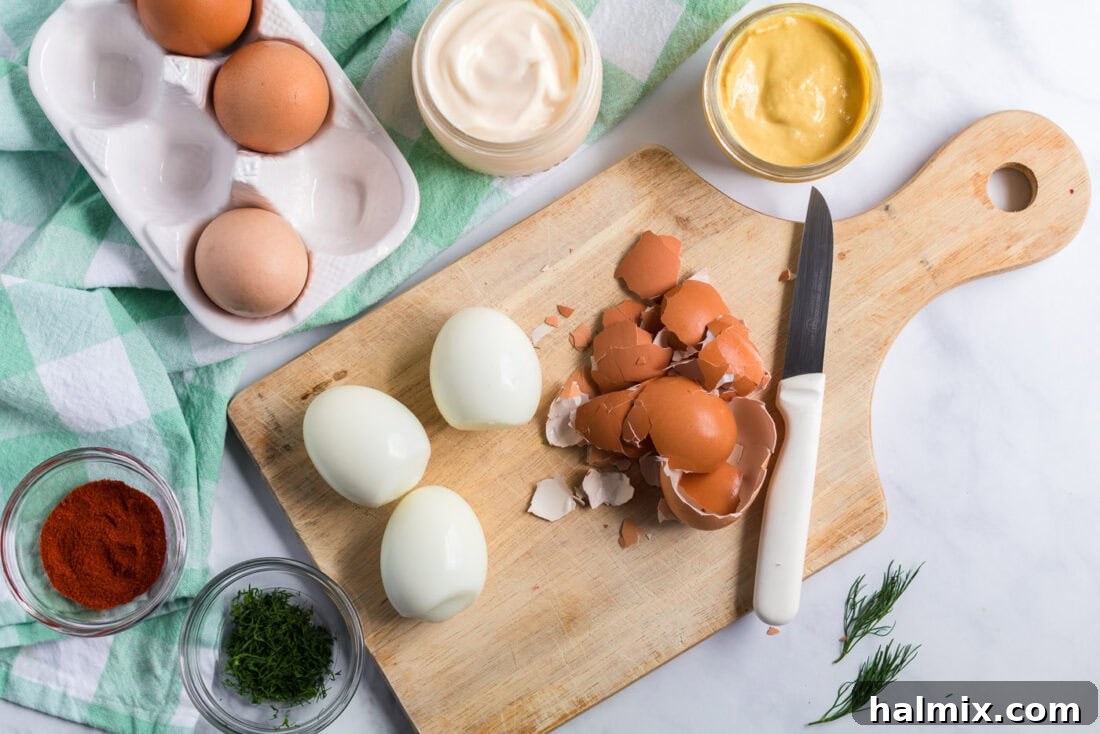
Crafting the perfect batch of deviled eggs requires just a handful of staple ingredients, proving that extraordinary flavor doesn’t always demand a long shopping list. The beauty of this recipe is how these simple components come together to create something truly special. For precise measurements and step-by-step instructions, you’ll find a complete recipe card later in this post.
Detailed Ingredient Insights and Creative Substitution Ideas
One of the most exciting aspects of deviled eggs is their incredible versatility. While many, including myself, cherish the traditional rendition, there’s a vast spectrum of ways to customize and flavor these stuffed eggs. From gourmet seafood additions to vibrant herb infusions, or even unexpected elements like hummus for a Mediterranean twist, the possibilities are truly endless. However, for a truly authentic and comforting experience, the classic approach remains unsurpassed.
- EGGS: The foundation of any great deviled egg recipe. Six hard-boiled eggs will yield a perfect dozen deviled egg halves, ideal for your next gathering or potluck. Achieving perfectly cooked and easily peelable hard-boiled eggs is crucial, and we’ll delve into expert tips for this below.
- MAYONNAISE: This ingredient provides the essential creaminess and binds the yolk mixture together. I typically opt for regular, full-fat mayonnaise for its rich flavor and texture, which contributes significantly to the overall mouthfeel. However, if you’re looking to lighten things up, low-fat or light mayonnaise can be used as a suitable substitute without compromising too much on consistency.
- MUSTARD: Mustard adds a delightful tang and subtle kick to the yolk filling, balancing the richness of the mayonnaise and egg. My preferred choice is Dijon mustard, known for its complex, slightly spicy, and tangy profile. Some people, however, enjoy the sharper, more pronounced bite of classic yellow mustard. Feel free to experiment to find your personal preference or adjust based on what you have on hand.
- SEASONINGS: Simplicity is key here. You’ll need fine table salt to enhance the flavors and freshly ground black pepper to add a gentle warmth and aromatic depth to the creamy yolk mixture. Adjust these to your taste; a pinch more can make all the difference.
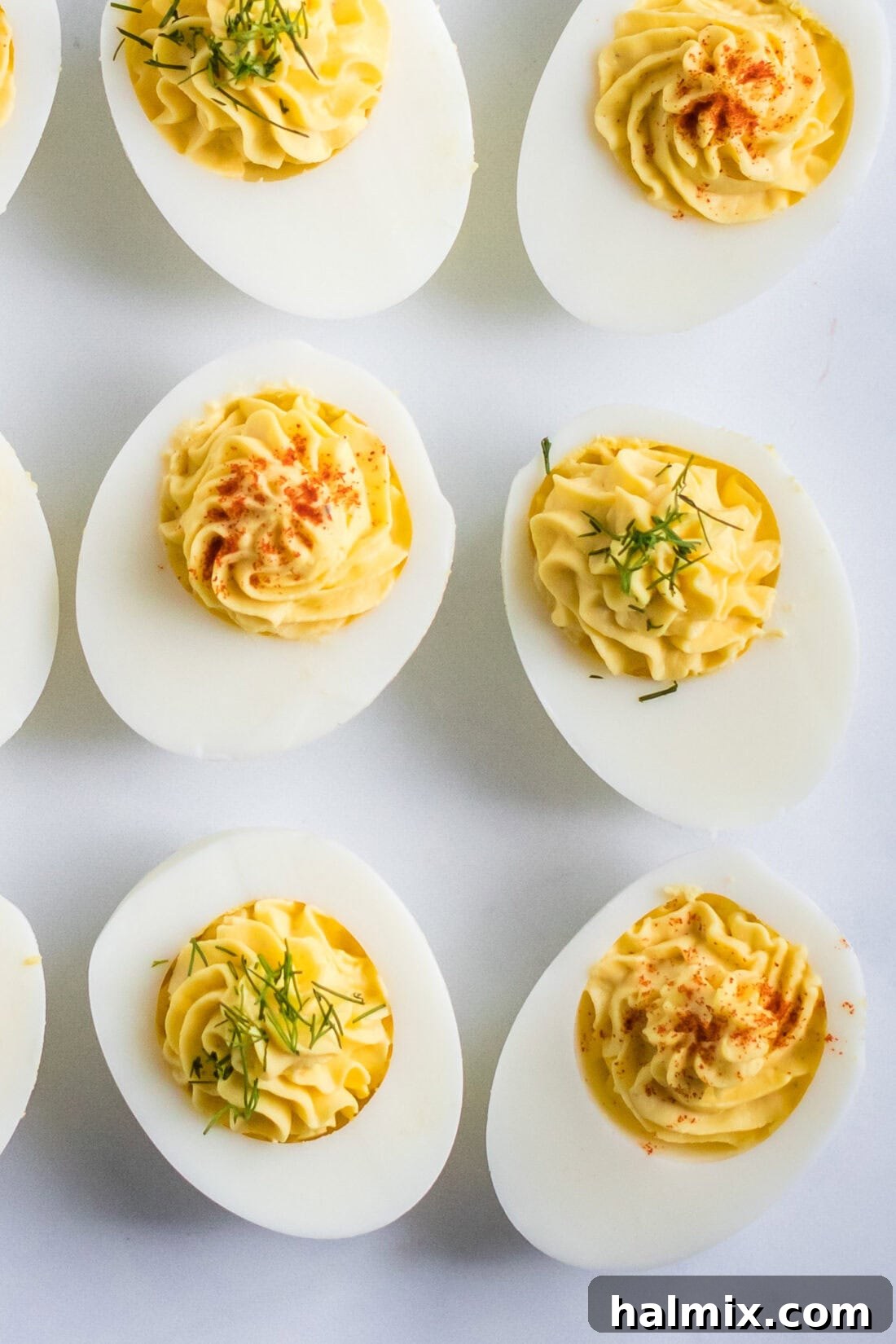
- GARNISH: The finishing touch is not just for aesthetics; it also adds a subtle layer of flavor and texture. The most common and beloved garnishes are paprika and dried dill. Paprika provides a beautiful pop of reddish-orange color, offering a visual contrast against the pale egg whites, while dried dill contributes a fresh, herbaceous aroma and delicate green flecks. A beautiful presentation on a dedicated deviled egg tray makes them even more inviting.
Step-by-Step Guide: Crafting Delicious Deviled Eggs
Making deviled eggs is a straightforward process, but paying attention to each step ensures a perfect outcome. These simple instructions will guide you through creating beautifully stuffed eggs that are as appealing to the eye as they are to the palate. For a printable version of this recipe, complete with precise measurements and comprehensive instructions, please refer to the recipe card at the end of this post.
The journey to perfect deviled eggs begins with perfectly cooked hard-boiled eggs. While I rely on my trusty egg cooker for consistent results, you can use your preferred method. Below, I’ll share some tried-and-true tips for achieving that ideal hard-boiled egg every time.
- Prepare the Eggs: Once your eggs are perfectly hard-boiled and cooled, carefully remove the shells. This step is crucial for the final presentation, as you want to avoid any gouges or scrapes on the pristine white halves that will be on display. After peeling, a quick rinse and pat dry with paper towels will ensure they are ready. Then, using a sharp knife, slice each egg in half lengthwise, creating two symmetrical halves.
- Extract and Mash Yolks: Gently scoop out the vibrant yellow yolks from each egg white half. Place all the yolks into a small mixing bowl. Using a fork, thoroughly mash the yolks until they are completely smooth, ensuring no large chunks remain. This creates a uniform base for your creamy filling.
- Create the Filling: To the mashed yolks, add the mayonnaise, Dijon mustard, salt, and black pepper. With your fork or a small whisk, mix all these ingredients together until the mixture is wonderfully smooth and evenly combined. The consistency should be thick yet spreadable, holding its shape well.

- Fill the Egg Whites: Now for the fun part! You can spoon the creamy yolk mixture back into the hollowed-out egg white centers for a rustic look. For a more elegant and professional presentation, transfer the mixture to a piping bag fitted with a decorative tip, such as a Wilton 21 star tip, and pipe the filling into each egg half. I used this method for years, and it always yields beautiful results.
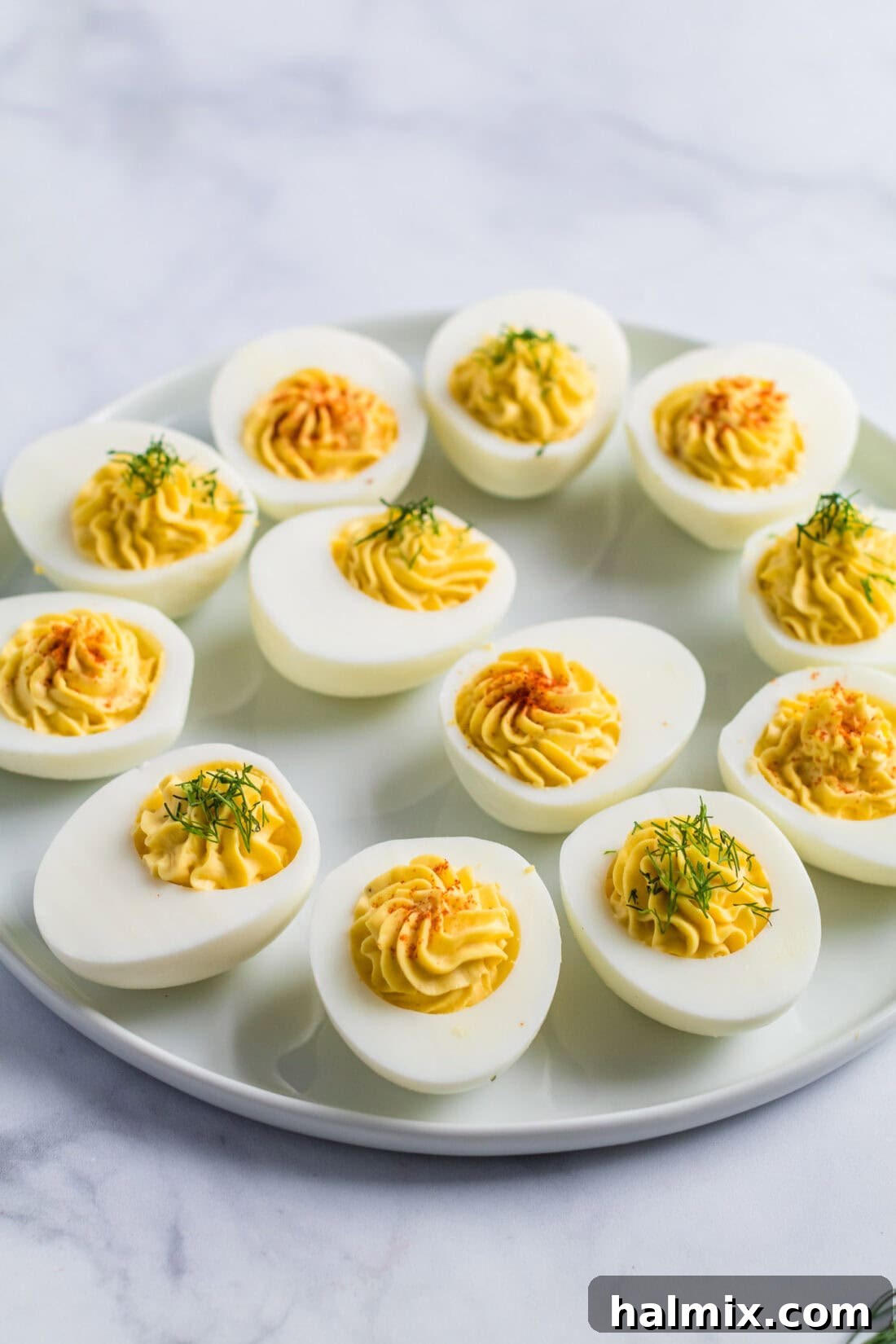
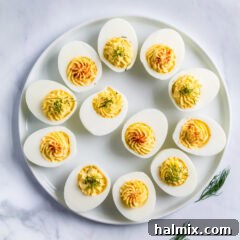
- Garnish and Serve: As a final flourish, lightly sprinkle half of your deviled eggs with paprika for a touch of color and subtle flavor, and the other half with dried dill for a fresh, herbaceous note. This dual garnish not only enhances their visual appeal but also offers a slight variation in taste.
- Transporting Your Delights: If you’re bringing your deviled eggs to a party or gathering, investing in a specialized deviled egg tray with a secure lid is highly recommended. This will keep them pristine and prevent any mishaps during transport.
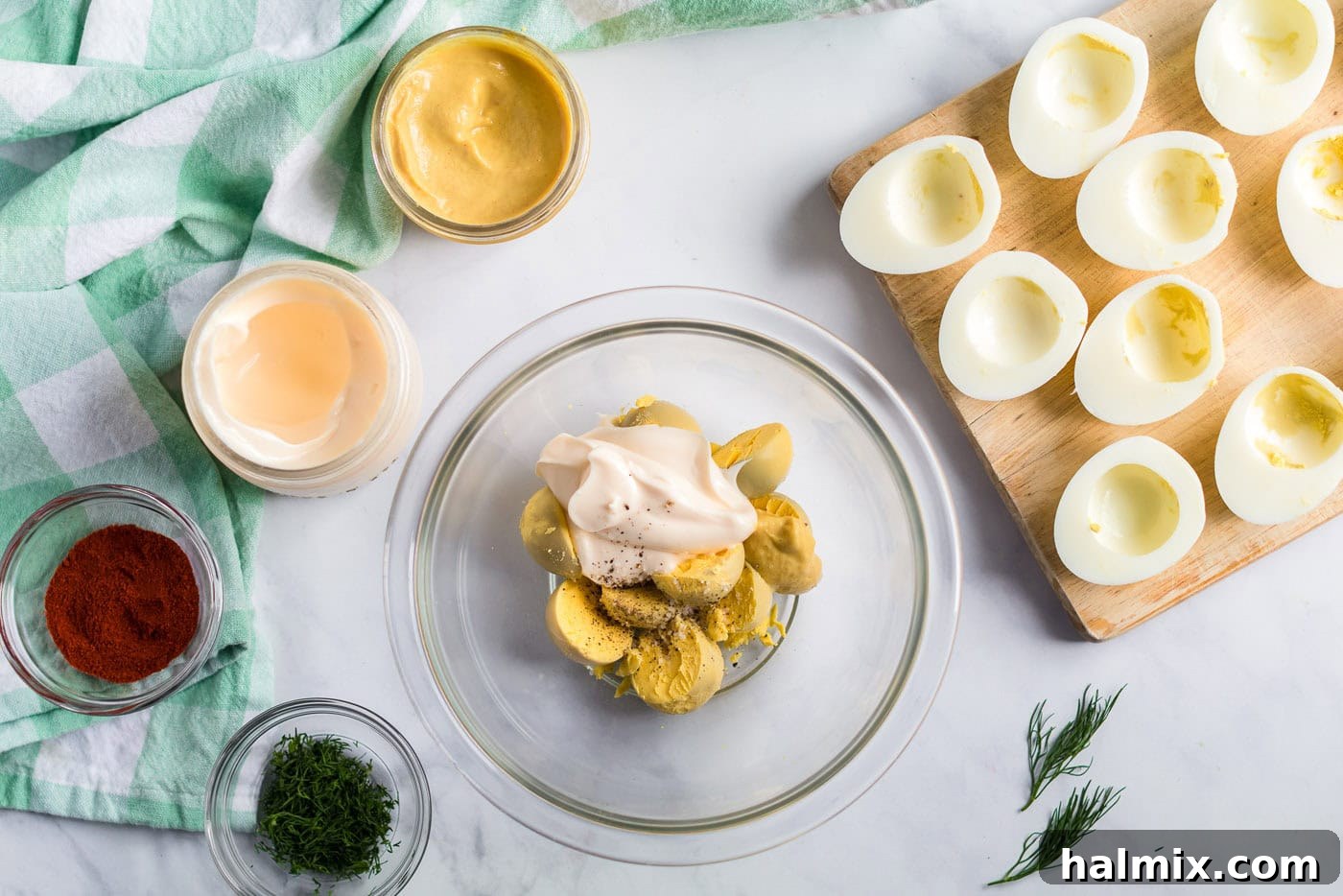
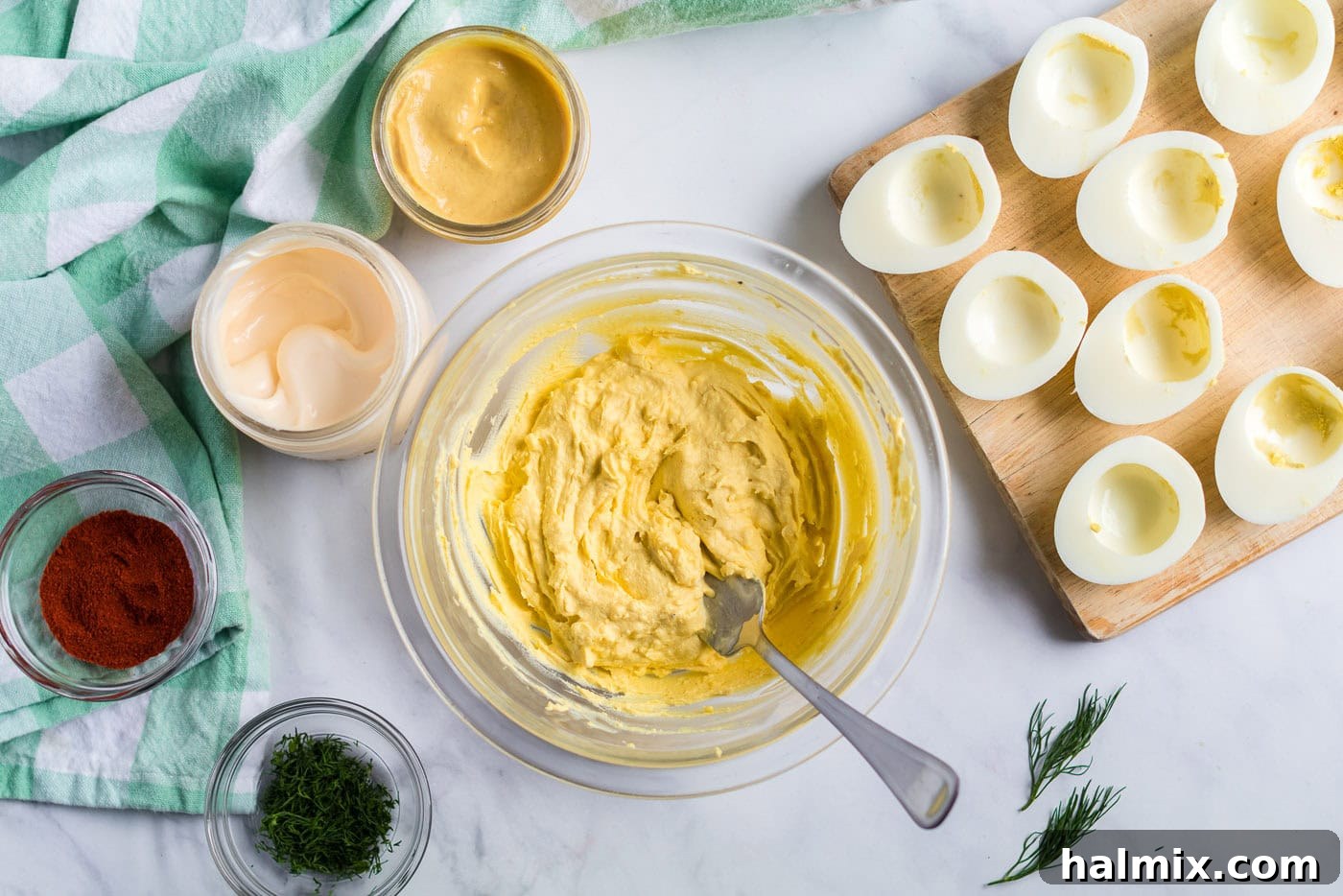
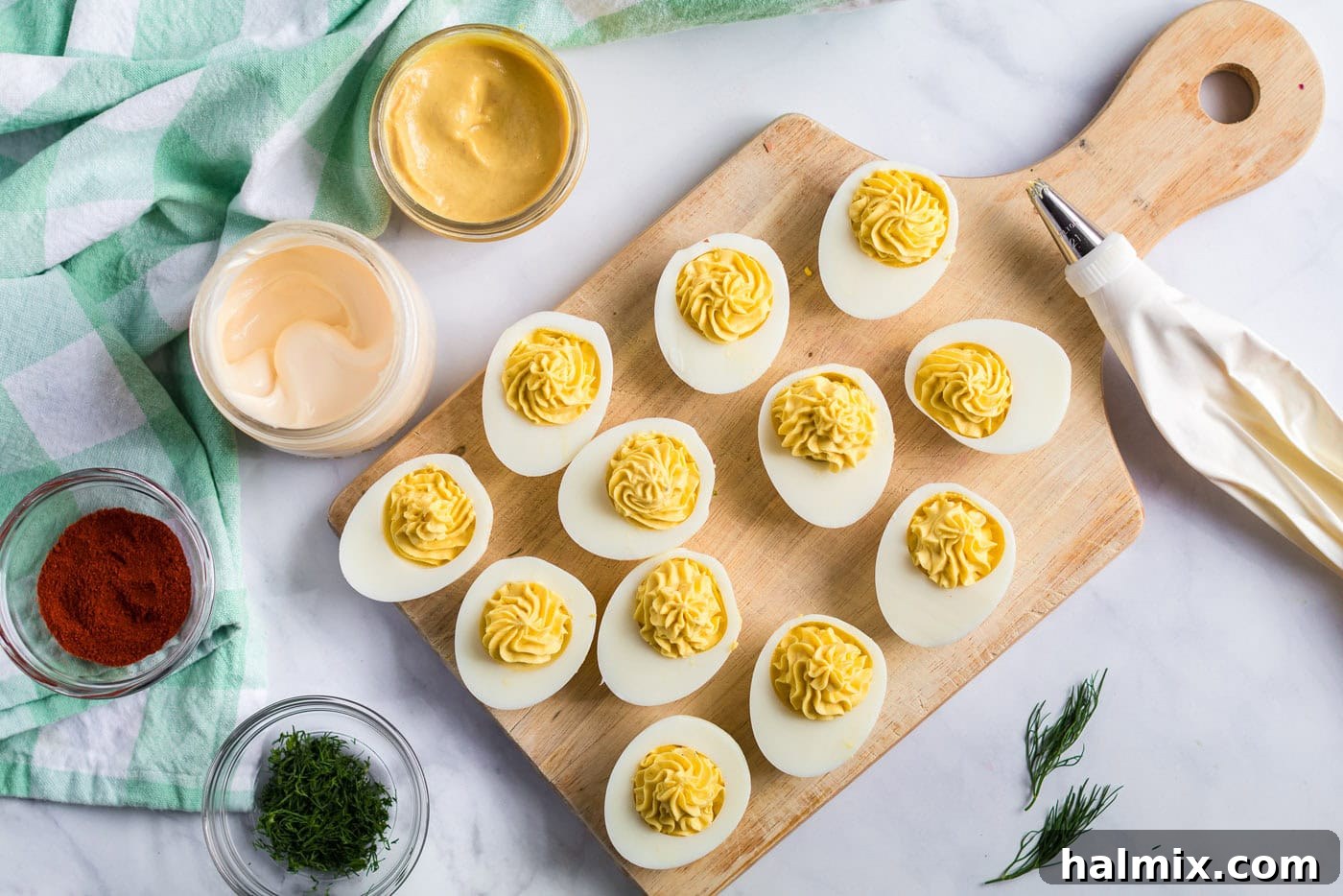
Each perfectly prepared deviled egg half typically contains around 71 calories, making it a delightful and relatively light finger food option for any occasion.
Frequently Asked Questions & Expert Tips for Deviled Eggs
Here are some common questions and essential tips to help you master the art of deviled egg preparation:
To maintain their freshness and flavor, store your deviled eggs in an airtight container or a specialized egg carrier. Keep them refrigerated, and they will stay delicious for up to 4 days. It’s best to consume them within this timeframe for optimal taste and texture.
Absolutely! Deviled eggs are an excellent make-ahead appetizer. You can boil and peel the eggs, prepare the yolk mixture, and even pipe it into the whites up to 24 hours in advance. To prevent the eggs from drying out and to maintain their best appearance, it’s often recommended to store the plain egg white halves and the yolk filling separately in airtight containers in the refrigerator. Assemble them just a few hours before serving, garnish, and then chill until party time. This method ensures they look and taste their freshest.
A greenish-gray ring around the yolk is a common occurrence and is usually harmless. It’s caused by a chemical reaction between sulfur in the egg white and iron in the yolk, which creates iron sulfide. This reaction is intensified by overcooking the eggs or by cooking them at too high a temperature for too long. To avoid this, follow the proper cooking times for hard-boiled eggs and plunge them into an ice bath immediately after cooking to stop the process.
The beauty of deviled eggs lies in their adaptability! Beyond the classic recipe, you can experiment with various flavors:
- **Spicy Deviled Eggs:** Add a dash of hot sauce, a pinch of cayenne pepper, or finely diced jalapeños to the yolk mixture.
- **Smoky Deviled Eggs:** Incorporate smoked paprika, a touch of liquid smoke, or finely crumbled bacon bits.
- **Herby Deviled Eggs:** Mix in fresh herbs like chives, parsley, tarragon, or cilantro.
- **Gourmet Deviled Eggs:** Top with caviar, smoked salmon, or a sprinkle of truffle oil for an elevated experience.
- **Southern-Style:** A touch of sweet pickle relish or a dash of pickle juice is a popular addition for a sweet and tangy profile.
Achieving Perfection: Essential Tips for Flawless Hard-Boiled Eggs
The secret to truly beautiful deviled eggs starts with the perfect hard-boiled egg. Years ago, I perfected a stovetop method: I would bring them to a rolling boil for 3 minutes, then remove the pan from the heat, cover it, and let the eggs sit for precisely 12 minutes. This technique consistently yielded great results about 95% of the time. The occasional challenge, however, was a stubborn egg that wouldn’t peel cleanly, marring its otherwise smooth white exterior.
These days, my kitchen staple is an egg cooker. This small appliance is a game-changer, producing perfectly cooked and incredibly easy-to-peel eggs every single time, without fail. I discovered its magic when I started buying farm-fresh eggs. It’s a well-known fact that the fresher the egg, the more difficult it can be to peel once boiled. The farmer’s wife herself shared the secret: for perfectly boiled eggs, especially fresh ones, an egg cooker is the ultimate tool!
Regardless of whether you use a saucepan or an egg cooker, one crucial step remains constant: plunging the cooked eggs immediately into a large bowl of ice water. This serves two vital purposes. Firstly, the sudden cold shock halts the cooking process instantly. This prevents the yolks from overcooking, which can lead to an undesirable grayish-green ring forming around the otherwise lovely yellow center. Secondly, the ice water rapidly cools the eggs, making them comfortable to handle and peel without burning your fingers. This ensures a pleasant and efficient peeling experience, leading to those perfectly smooth, unblemished egg white halves ready for their delicious filling.
Creative Serving Suggestions for Deviled Eggs
Deviled eggs are the quintessential finger food, making them an ideal choice for virtually any social gathering. Their compact size and delightful flavor profile make them a hit at potlucks, casual parties, and especially during holiday celebrations. I regularly include them on my Thanksgiving, Christmas, and Easter menus, and they’re even a fun addition for Halloween!
For a particularly festive touch during autumn, consider my unique Halloween deviled eggs. These creative treats are designed to resemble miniature pumpkins, adding a playful element to your spooky spread. With a simple modification – adding small triangles of black olives – you can easily transform them into adorable Jack O’Lanterns, sure to delight both children and adults alike. Beyond holidays, think about serving them alongside a charcuterie board, as part of a brunch spread, or even as a sophisticated appetizer for a more formal dinner party. Their versatility is truly unmatched.
Explore More Delicious Appetizer Recipes
If you’re looking to expand your repertoire of crowd-pleasing appetizers, here are some other fantastic recipes that are sure to impress your guests:
- Refreshing Cucumber Salad
- Irresistible Bacon Wrapped Little Smokies
- Creamy Buffalo Chicken Dip
- Savory Stuffed Mushrooms
- Crispy Air Fryer Pretzel Bites
- Unique Fried Deviled Eggs
I am passionate about baking and cooking, and I love sharing my kitchen experiences with all of you! Remembering to come back each day for new recipes can be tough, which is why I offer a convenient newsletter every time a new recipe posts. Simply subscribe today and start receiving your free daily recipes directly in your inbox!
How to Make Deviled Eggs
Classic deviled eggs are easy to make, so delicious, and they are a really pretty finger food.
Rated 5 out of 5 stars by 5 votes.
IMPORTANT – There are often Frequently Asked Questions within the blog post that you may find helpful. Simply scroll back up to read them!
Print Recipe
Course: Appetizer
Cuisine: American
Servings: 12 servings
25 mins
Calories: 71
Author: Amanda Davis
An instructional video for making deviled eggs is available here.
Ingredients
- 6 hard-boiled eggs
- ¼ cup mayonnaise
- 1 teaspoon Dijon mustard
- ¼ teaspoon salt
- ⅛ teaspoon pepper
- Paprika and dill to taste (for garnish)
Things You’ll Need
- Mixing bowls
- Wilton 21 star tip (optional, for piping)
- Piping bag (optional, for piping)
Before You Begin
- I highly recommend using an egg cooker, as it makes peeling much easier. Alternatively, you can boil eggs in a saucepan.
- Always plunge your boiled eggs into a bowl of ice water immediately after cooking. This stops the cooking process and helps cool the eggs quickly.
- While I prefer regular, full-fat mayonnaise for richness, low-fat or light mayonnaise can also be used.
- Dijon mustard is my top choice for its balanced flavor, but yellow mustard can be used for a sharper taste.
Instructions
-
Carefully remove shells from 6 hard-boiled eggs and slice them in half lengthwise.
-
Gently remove the yolks from the egg whites and place them in a small bowl. Mash the yolks thoroughly with a fork until smooth.
-
Add ¼ cup mayonnaise, 1 teaspoon Dijon mustard, ¼ teaspoon salt, and ⅛ teaspoon pepper to the mashed yolks. Mix well until the filling is smooth and creamy.
-
Pipe or spoon the egg yolk mixture evenly into the hollowed-out egg white centers.
-
Lightly sprinkle half of the filled eggs with paprika and the other half with dried dill for garnish.
Expert Tips & FAQs
- Store prepared deviled eggs in an airtight container or egg carrier in the refrigerator for up to 4 days.
- To prevent a greenish ring around the yolk, avoid overcooking eggs and use an ice bath immediately after boiling.
- Deviled eggs can be made ahead; store egg whites and yolk filling separately and assemble just before serving for best results.
Nutrition
Tried this Recipe? Pin it for Later!Follow on Pinterest @AmandasCookin or tag #AmandasCookin!
The recipes on this blog are tested with a conventional gas oven and gas stovetop. It’s important to note that some ovens, especially as they age, can cook and bake inconsistently. Using an inexpensive oven thermometer can assure you that your oven is truly heating to the proper temperature. If you use a toaster oven or countertop oven, please keep in mind that they may not distribute heat the same as a conventional full sized oven and you may need to adjust your cooking/baking times. In the case of recipes made with a pressure cooker, air fryer, slow cooker, or other appliance, a link to the appliances we use is listed within each respective recipe. For baking recipes where measurements are given by weight, please note that results may not be the same if cups are used instead, and we can’t guarantee success with that method.
This post was originally published here on November 22, 2020.