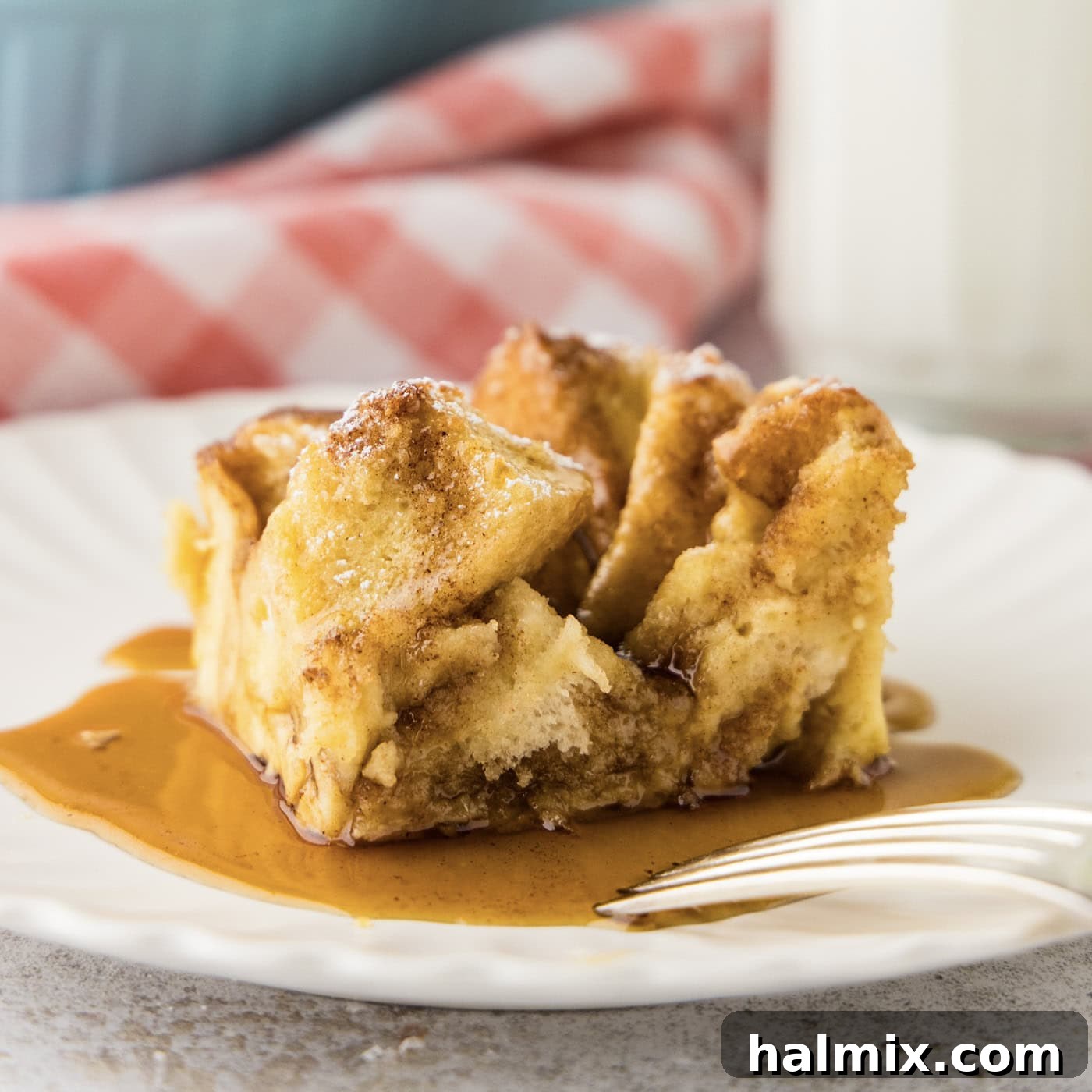
The Ultimate Make-Ahead French Toast Casserole: Your Go-To Recipe for Effortless Brunch
Imagine waking up to the irresistible aroma of warm cinnamon-spiced bread, golden and perfectly puffed, ready to be drizzled with sweet maple syrup or adorned with fresh, vibrant fruits. This isn’t just a dream; it’s the reality of a French Toast Casserole. It stands as the quintessential breakfast and brunch dish, transforming a classic favorite into an easy, oven-baked delight. Whether you’re planning a festive holiday morning, a leisurely weekend brunch, or simply craving a comforting start to your day, this casserole promises a memorable experience with minimal fuss.
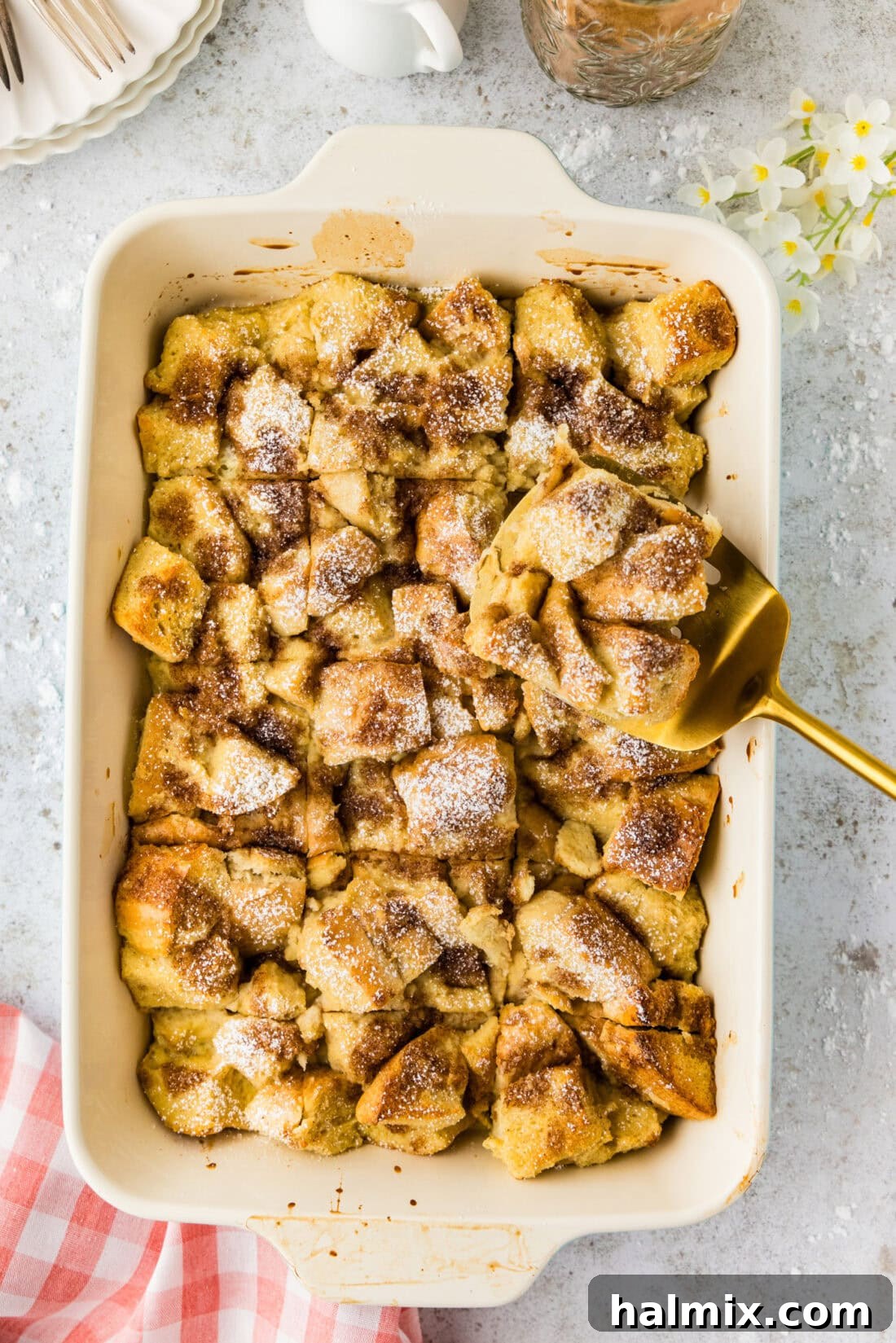
Why This Recipe is a Brunch Game-Changer
There’s an undeniable charm and convenience that sets French Toast Casserole apart from its skillet-flipped counterpart. What makes it truly special? Perhaps it’s the luxurious texture of soft, warmly spiced bread, boasting golden-brown tops and a custardy interior that melts in your mouth. Or maybe, for hosts and busy home cooks, it’s the sheer liberation from standing over a hot stove, endlessly flipping individual slices. This recipe offers the best of both worlds: gourmet taste with unparalleled ease.
The ability to prepare this breakfast casserole ahead of time is its most celebrated feature, making it an absolute lifesaver for special occasions like Christmas morning, Easter brunch, or any gathering where your attention is divided among many tasks. Imagine waking up, sliding a prepared dish into the oven, and letting it bake to perfection while you enjoy your coffee and company. It’s like a magical fusion: the comforting familiarity of classic French toast combined with the rich, indulgent nature of a bread pudding. This delightful hybrid creates the ideal canvas for a generous pour of pure maple syrup, a dusting of powdered sugar, or a medley of fresh berries. Its robust structure ensures every bite is a satisfying blend of sweet, spice, and tender bread.
Essential Ingredients for a Perfect French Toast Casserole
Crafting the ultimate French Toast Casserole begins with selecting the right ingredients. Each component plays a vital role in achieving that coveted balance of crispy edges, custardy center, and irresistible flavor. While the recipe is quite forgiving, choosing quality ingredients will undoubtedly elevate your final dish. You’ll find all precise measurements and detailed instructions in the printable recipe card towards the end of this article. For now, let’s explore the stars of this breakfast show:
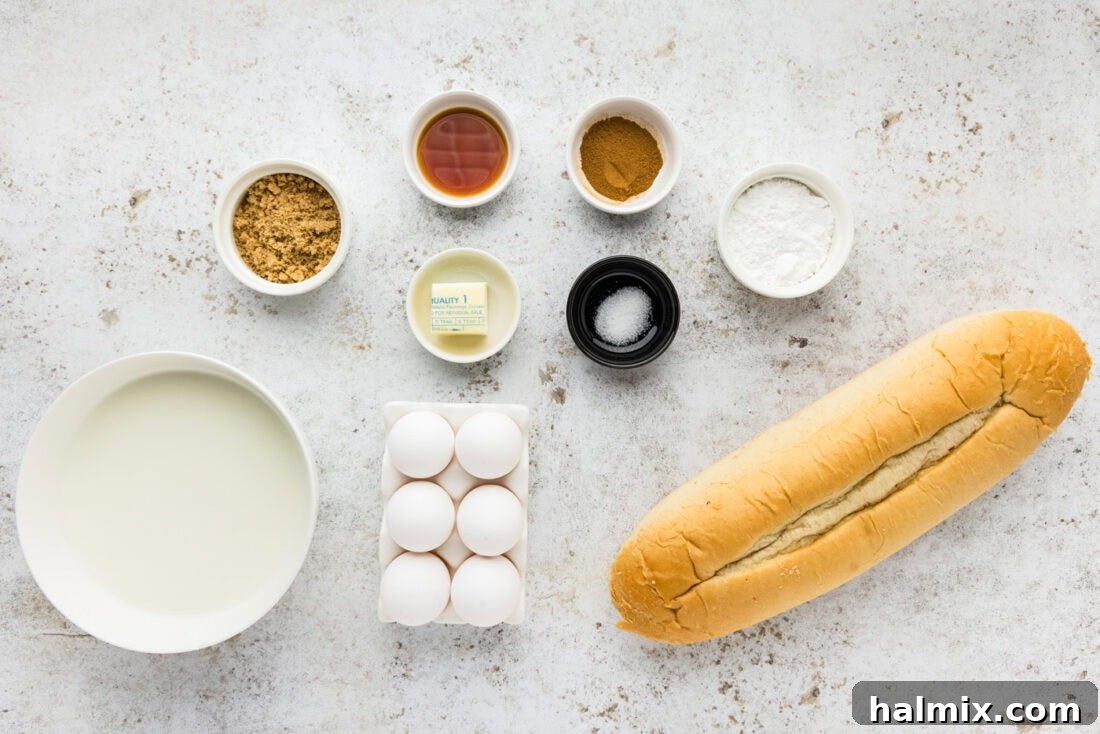
Ingredient Insights and Smart Substitution Suggestions
- Bread: The Foundation of Flavor and Texture
The choice of bread is paramount to a successful French Toast Casserole. While almost any type of bread can work, sturdier, day-old loaves are truly the secret weapon. Heartier options like Italian bread, French bread, challah, brioche, or even Texas toast are ideal because they can withstand the soaking process without becoming overly soggy. Stale bread, in particular, has started to dry out, creating a perfect porous structure that readily absorbs the rich egg mixture, ensuring a deeply flavorful and custardy interior. For best results, cut your bread into uniform cubes of about 1-inch to 1.5-inch to ensure even soaking and baking. If your bread is fresh, you can lightly toast it in the oven for a few minutes to dry it out slightly before cubing. - Eggs: The Binding Custard Base
Eggs are the magical binder in this recipe, transforming the milk mixture into a luscious, custard-like filling that permeates every piece of bread. They contribute to the rich flavor and structure, ensuring the casserole holds together beautifully while baking. Large eggs are typically recommended for consistent results. - Milk: For Richness and Creaminess
Whole milk is often preferred for its balanced richness, offering a creamy texture without being overly heavy. It provides that luxurious mouthfeel desired in the custard filling. However, you can certainly substitute with 2% milk if that’s what you have on hand; the difference in the final product will be minimal. If you’re aiming for an even richer casserole, you could experiment with a blend of 1 cup whole milk and 1 cup half-and-half or heavy cream. Be cautious using all heavy cream or half-and-half, as this can make the custard mixture excessively thick and potentially too rich, altering the intended light and fluffy texture. For a dairy-free option, unsweetened almond milk or oat milk can be used, though the richness may be slightly different. - Vanilla Extract: Aromatic Sweetness
Vanilla extract is essential for enhancing the overall sweetness and adding a warm, aromatic depth to the casserole. Use a good quality pure vanilla extract for the best flavor. - Ground Cinnamon: The Signature Spice
Cinnamon is a hallmark of classic French toast, and in this casserole, it plays a starring role. Dividing the cinnamon (and brown sugar) allows for a flavorful custard and a delightful spiced topping that caramelizes beautifully during baking, adding an extra layer of texture and taste. - Brown Sugar: Deep, Molasses Sweetness
Brown sugar, with its subtle molasses notes, adds a deeper, more complex sweetness compared to granulated sugar. Like the cinnamon, it’s divided between the custard mixture and the buttery topping, contributing to both the internal flavor and the appealing golden crust. - Melted Butter: Golden Crisp and Rich Flavor
Melted butter serves a dual purpose: it greases the baking dish, preventing sticking and contributing to crispy edges, and it forms the delectable topping when combined with cinnamon and brown sugar. This topping creates a beautiful, caramelized crust that is undeniably addictive.
How to Make Your Irresistible French Toast Casserole
These step-by-step photos and detailed instructions are designed to help you visualize each stage of making this delightful recipe. For the exact measurements and a printable version, please scroll down to the full recipe card at the bottom of this post.
- Prepare the Bread: Begin by cutting your chosen bread into uniform cubes, approximately 1 to 1.5 inches in size. The consistency in size ensures that each piece soaks up the custard evenly and bakes uniformly. Place all the bread cubes into a large mixing bowl, ready for the custard.
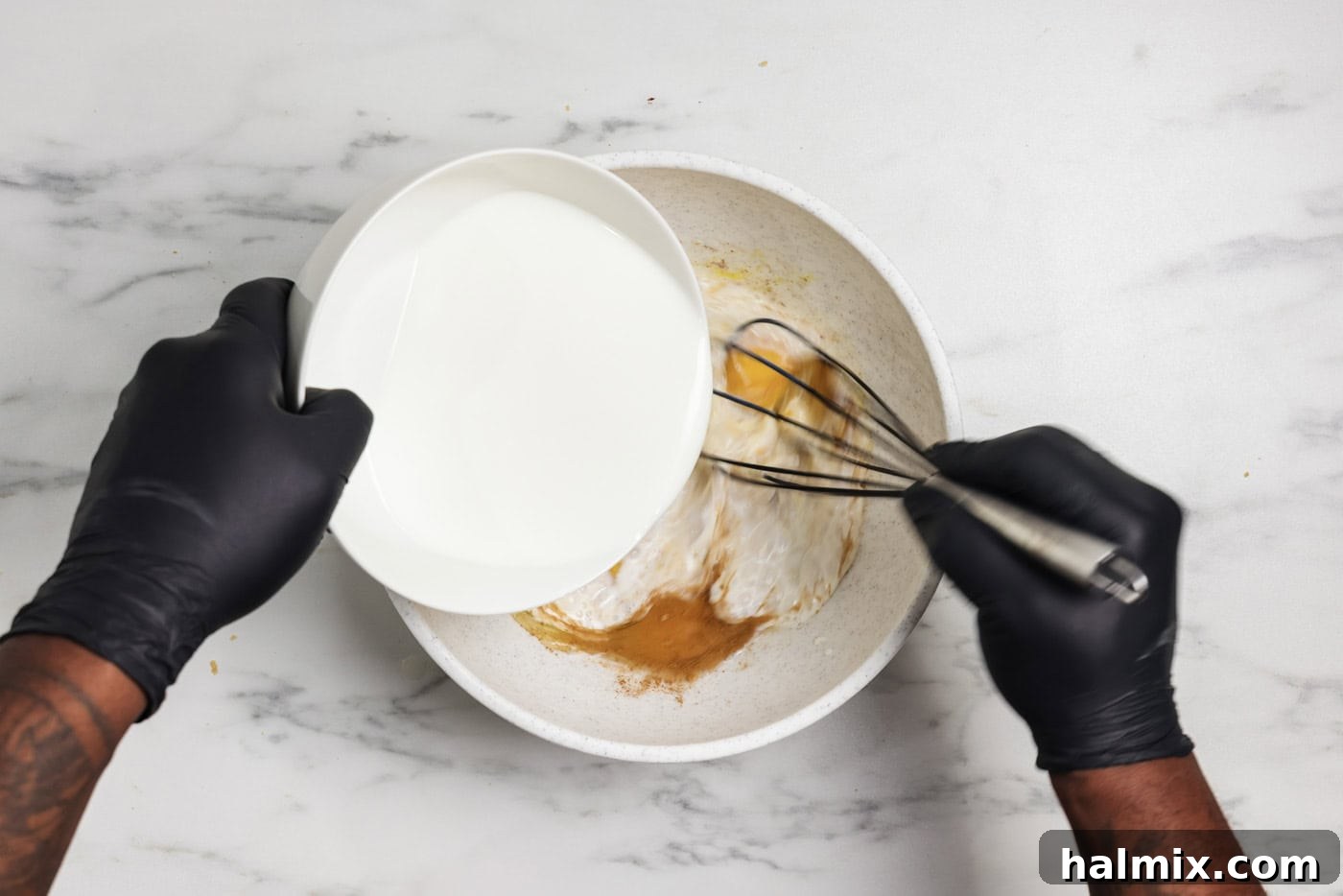
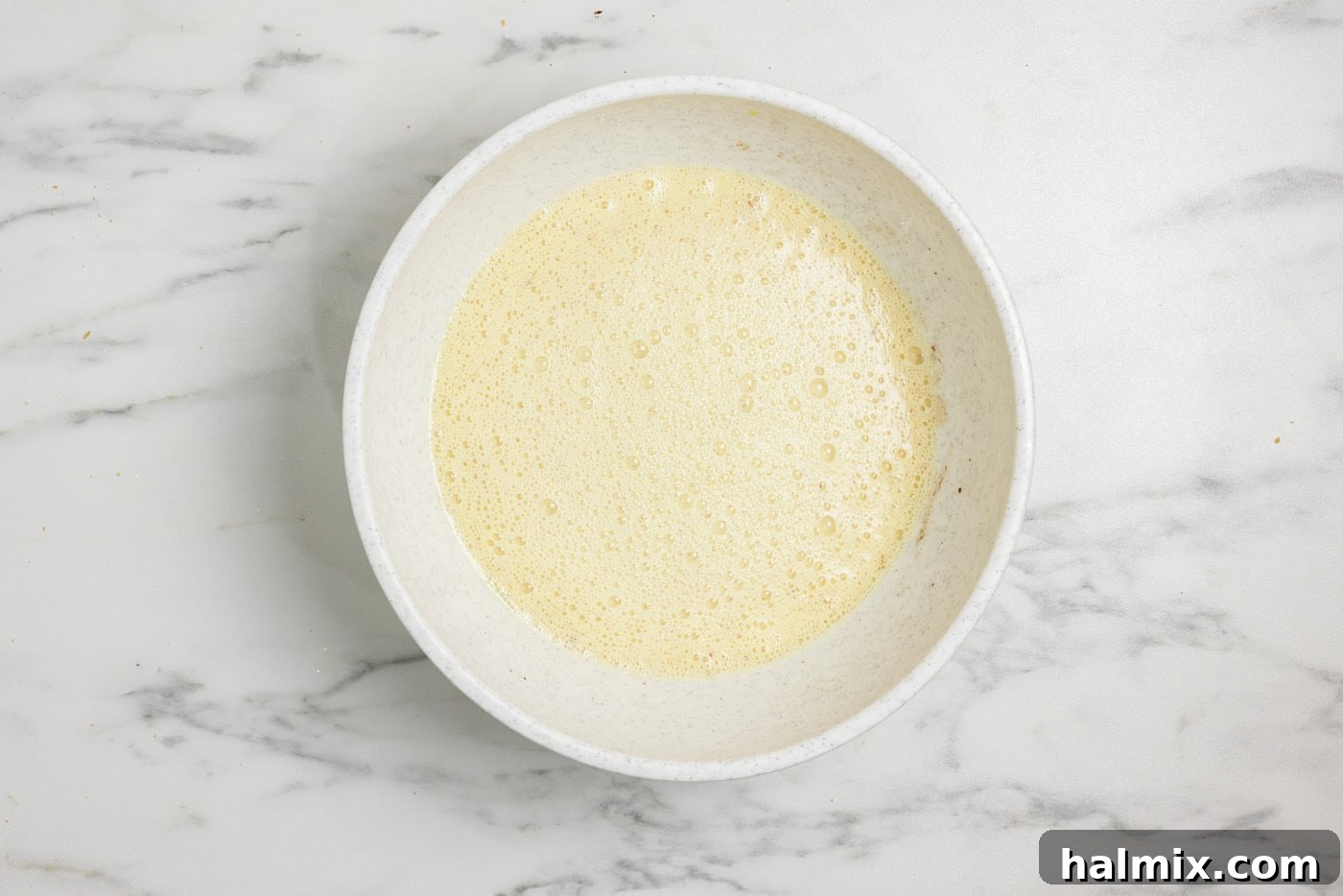
- Whisk the Custard Mixture: In a separate, generously sized bowl, combine the eggs, vanilla extract, and salt. Whisk these ingredients thoroughly until well combined and slightly frothy. Then, add half a tablespoon of the ground cinnamon, one and a half tablespoons of the brown sugar, and the two cups of whole milk. Continue whisking until all ingredients are fully incorporated, creating a smooth, rich custard. This is the heart of your French toast casserole, imparting flavor and moisture.

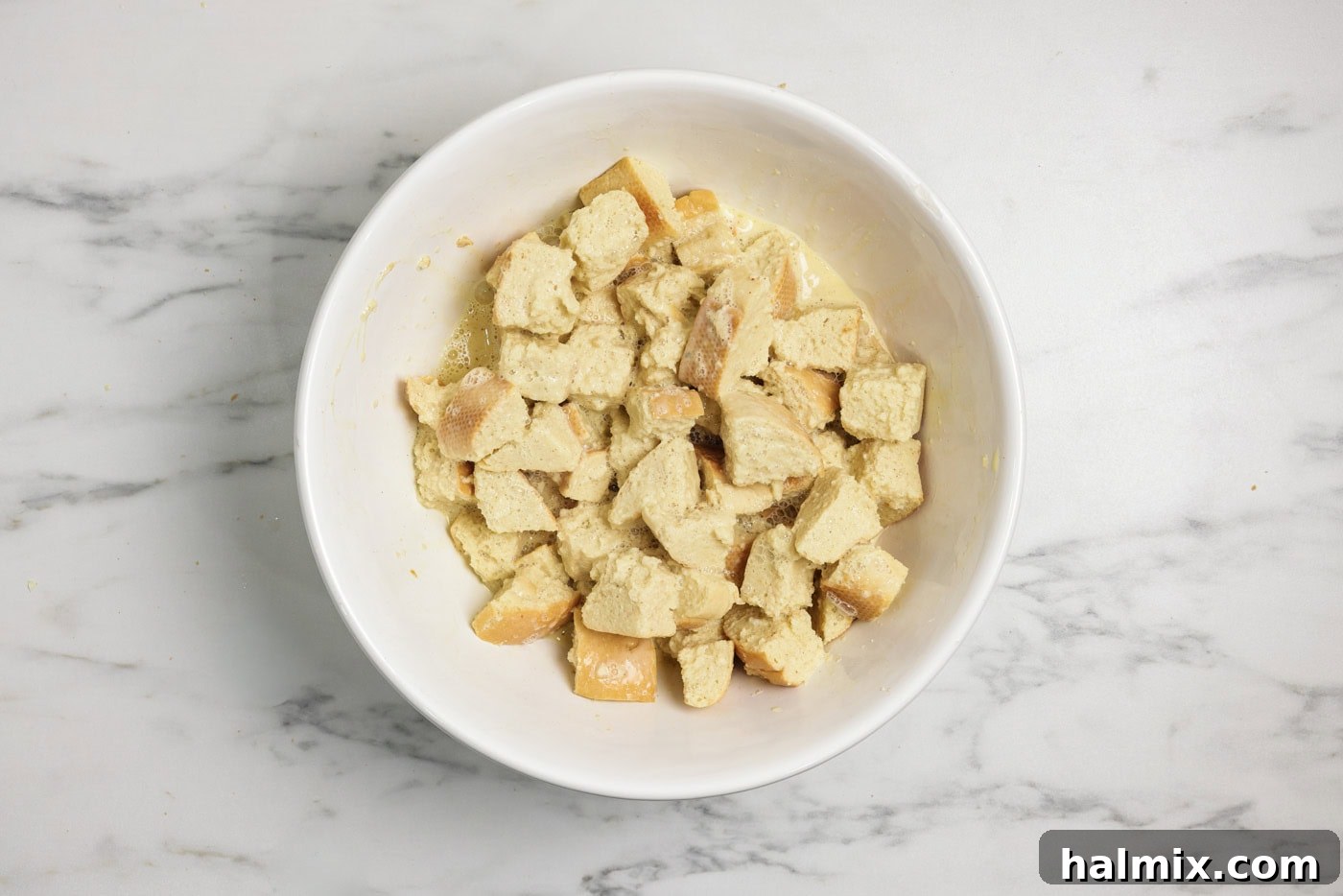
- Combine Bread and Custard: Pour the egg and milk mixture evenly over the bread cubes in the large bowl. Gently toss and press the bread into the custard, ensuring every piece is thoroughly coated. Allow the bread to sit for a few minutes, giving it time to absorb the liquid.
CHEF TIP: To ensure even distribution of the custard without mashing the bread cubes, using food-safe gloves can be incredibly helpful. Gently toss the bread in the mixture several times, using your hands to ensure maximum absorption and a delicate touch.
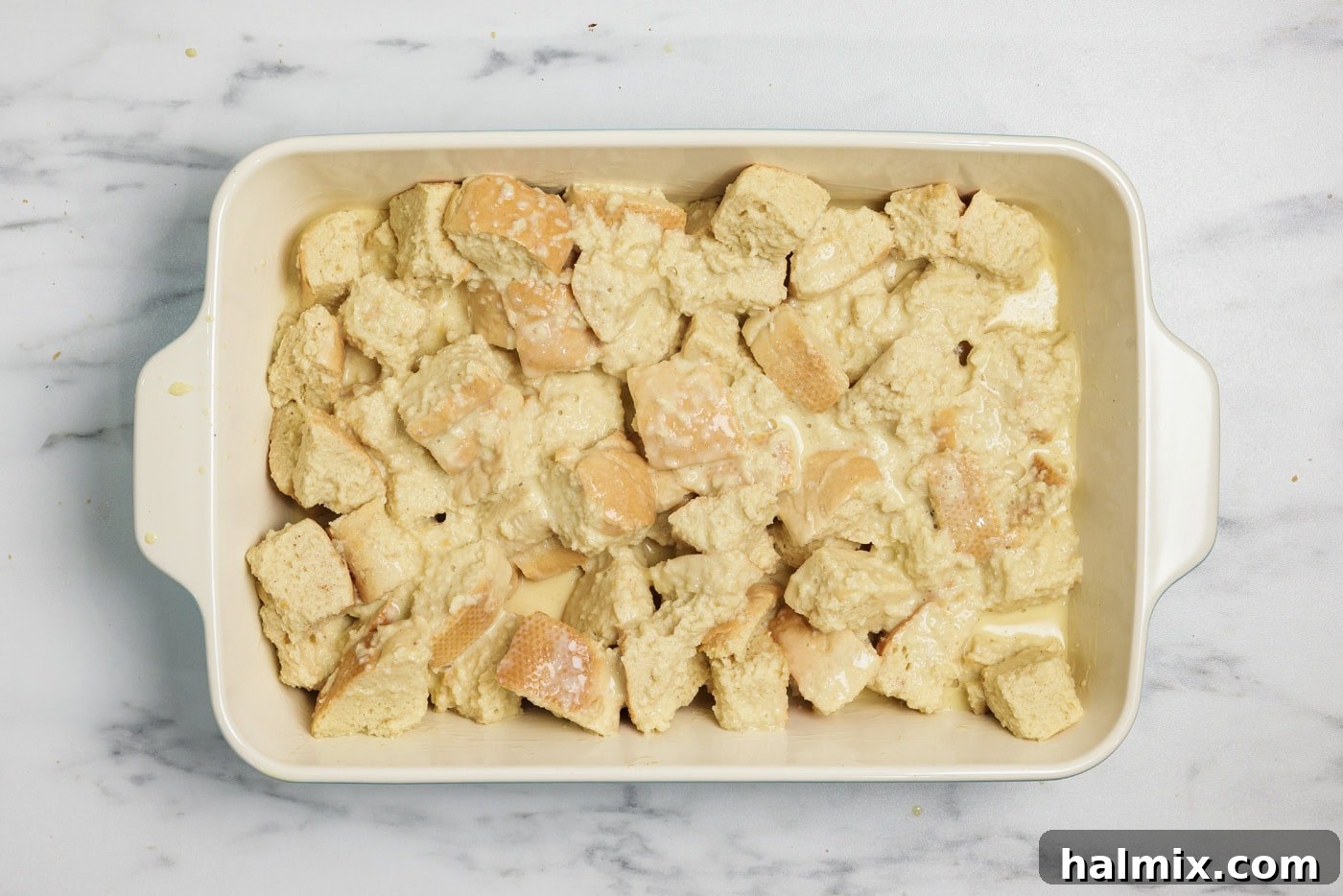
- Prepare for Soaking: Brush one tablespoon of melted butter generously over the bottom and sides of your 13×9 inch baking dish. This prevents sticking and adds flavor to the crust. Transfer the soaked bread cube mixture into the prepared baking dish, spreading it out evenly. Cover the dish tightly with plastic wrap. Now, the magic happens: allow the casserole to sit at room temperature for at least one hour, or for even deeper flavor and a truly “make-ahead” convenience, refrigerate it overnight (up to 12 hours). This soaking time is crucial for developing the rich custardy texture.
- Preheat Oven: When you’re ready to bake, preheat your oven to 400°F (200°C). This higher temperature helps achieve that desirable golden-brown, slightly crispy top.
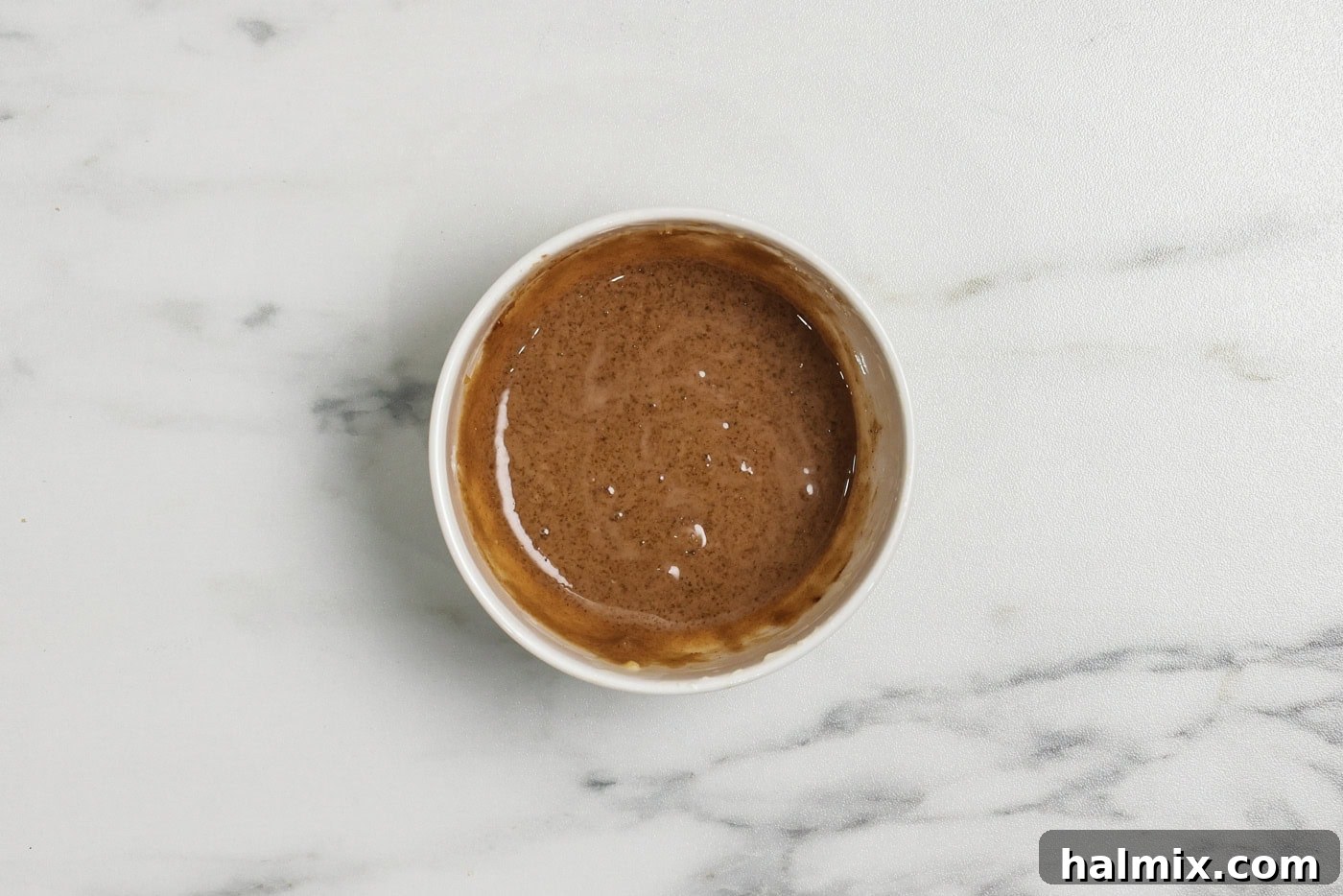
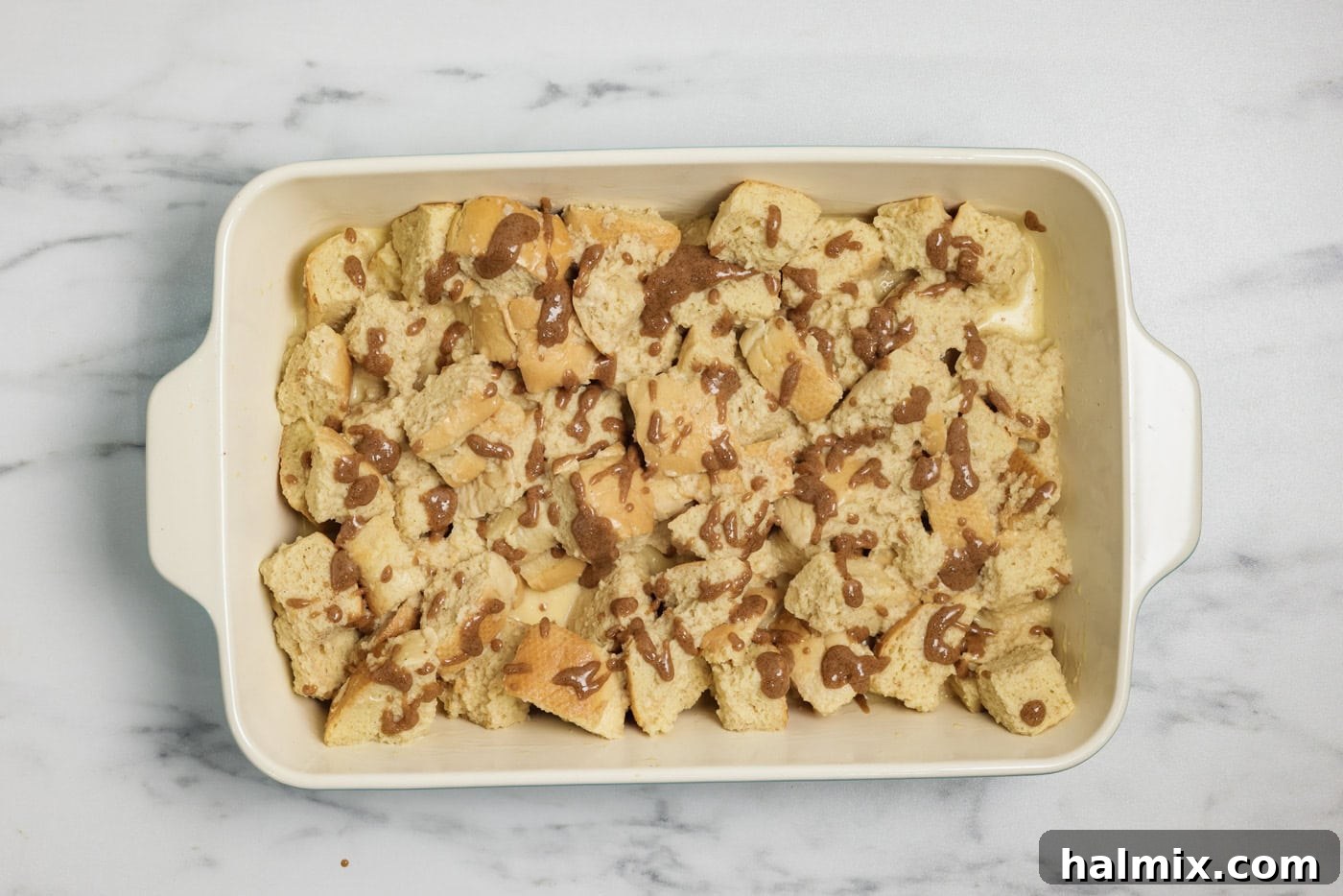
- Create the Cinnamon-Butter Topping: In a small bowl, combine the remaining half tablespoon of ground cinnamon, the remaining one and a half tablespoons of brown sugar, and the remaining one tablespoon of melted butter. Mix these ingredients until they form a coarse, crumbly mixture. Evenly distribute this delicious topping all over the surface of the casserole in the baking dish. This will create a beautiful, caramelized crust and an extra burst of cinnamon-sugar flavor.
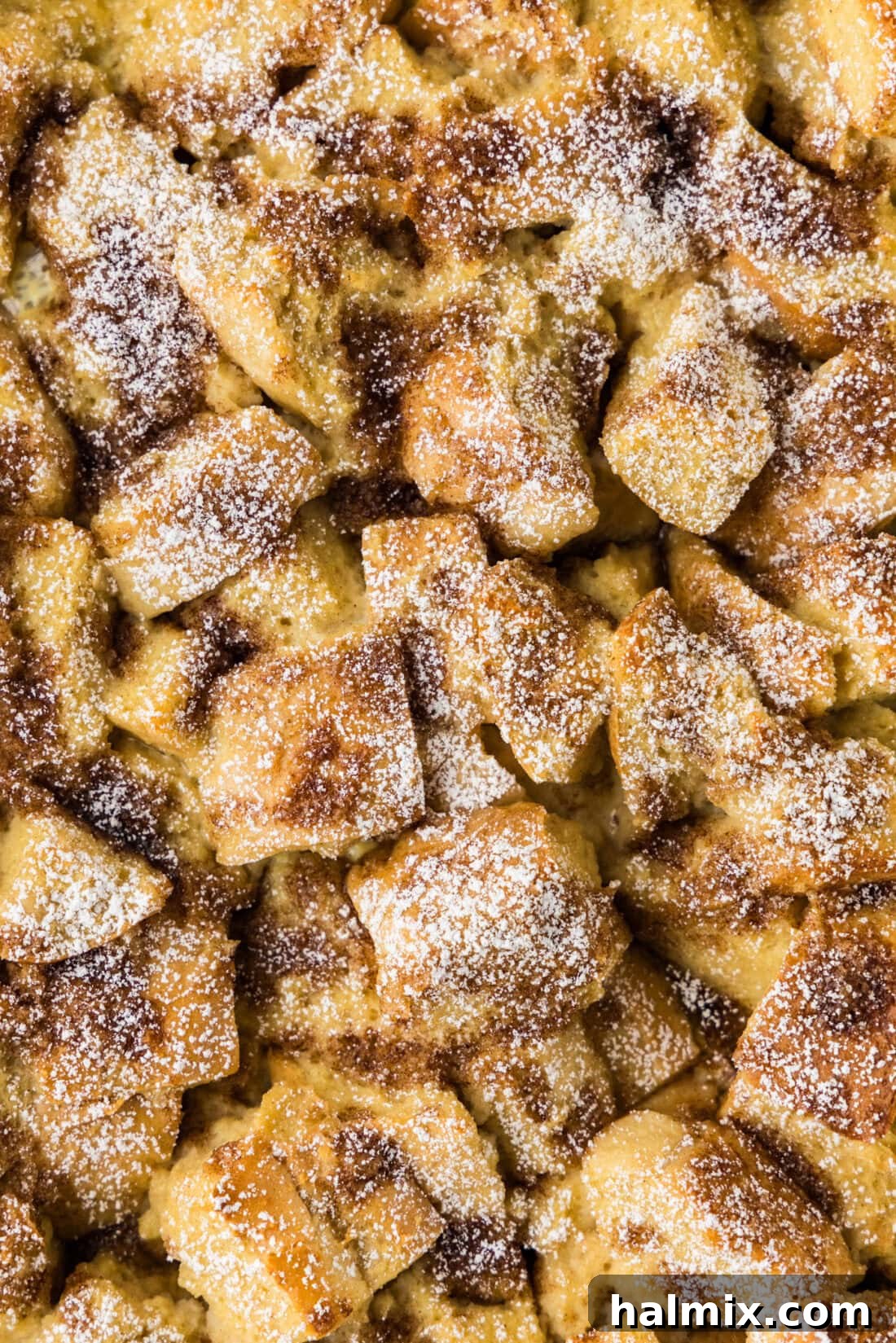
- Bake to Golden Perfection: Place the uncovered baking dish into the preheated oven. Bake for approximately 25 minutes, or until the top is a beautiful golden brown and a toothpick inserted into the center comes out clean, indicating the custard is fully set. The baking time may vary slightly depending on your oven and the thickness of your bread cubes.
- Cool and Serve: Once baked, remove the casserole from the oven and allow it to cool for 5-10 minutes before cutting and serving. This resting period allows the custard to further set and makes for cleaner slices.
Frequently Asked Questions & Expert Tips for French Toast Casserole
For the most outstanding French Toast Casserole, sturdy, slightly stale breads are your best friend. Options like Italian bread, French bread, brioche, challah, or Texas toast are excellent choices. Their robust structure prevents them from becoming mushy when soaked in the custard, allowing them to absorb flavor beautifully while maintaining a pleasant texture. While fresh bread can be used, a day-old or slightly toasted loaf ensures better absorption and a less soggy result. The key is a bread that can hold its shape and soak up all that delicious eggy goodness.
Absolutely! Making this casserole ahead of time is one of its greatest advantages. You can assemble the entire dish, including the bread and custard mixture, cover it tightly with plastic wrap or an airtight lid, and refrigerate it overnight (for up to 12 hours). This extended soaking period actually enhances the flavors and ensures a deeply custardy texture. Just pull it from the fridge, add the topping, and bake in the morning.
Yes, French toast casserole freezes beautifully, making it perfect for meal prep or future busy mornings. To freeze, assemble the casserole completely (without baking). Wrap it tightly with a layer or two of plastic wrap, followed by a layer of heavy-duty aluminum foil to prevent freezer burn. It can be frozen for up to 2 months. When you’re ready to enjoy it, thaw the casserole in the refrigerator overnight. If baking in a glass dish, allow it to rest at room temperature for about 30 minutes before placing it in a hot oven to prevent thermal shock. Then, bake as directed in the recipe.
Knowing when your French toast casserole is done is crucial for that perfect custardy texture. Look for a golden-brown and slightly puffed top. The best way to check for doneness is to insert a toothpick or a thin butter knife into the center of the casserole. If it comes out mostly clean, with no wet batter, your casserole is ready. Avoid overbaking, as this can lead to a dry texture.
Store any cooled leftovers in an airtight container in the refrigerator for up to 3 days. To reheat, the oven is your best bet for maintaining texture. Cover the casserole with foil and bake in a 350°F (175°C) oven for 10-20 minutes, or until thoroughly warmed through. While a microwave can be used for quick reheating, it may sometimes lead to a slightly soggy texture, so the oven is generally preferred.
Serving Suggestions and Delicious Pairings
French Toast Casserole is a dish that needs little accompaniment to shine, but a few simple additions can elevate it to an extraordinary brunch centerpiece. My youngest daughter, for instance, once claimed she “didn’t like” French toast – a common declaration from children who haven’t quite discovered the magic yet! That changed quickly when her friend spent the night and they each devoured two generous helpings of this casserole. It just has a way of winning over even the pickiest eaters!
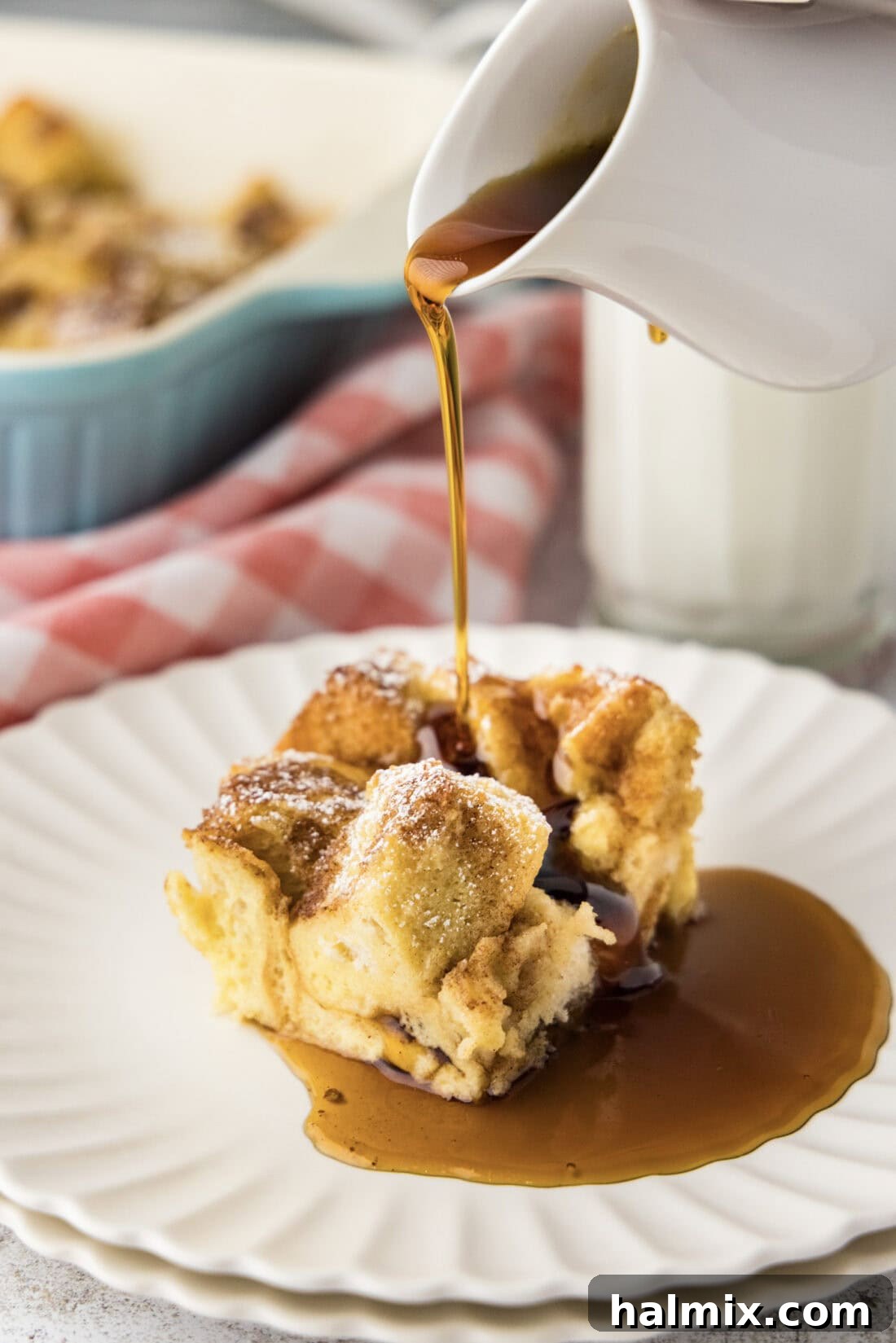
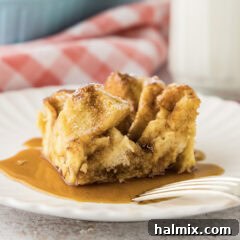
Serve your French toast casserole warm, immediately after its brief cooling period. The possibilities for toppings are endless: a generous drizzle of pure maple syrup is a classic for a reason, its rich sweetness perfectly complementing the spiced bread. A delicate dusting of powdered sugar adds a touch of elegance and extra sweetness. For a burst of freshness and color, chopped fresh fruits like strawberries, blueberries, raspberries, or sliced bananas are wonderful additions. A dollop of whipped cream or a scoop of vanilla ice cream can turn this breakfast into a dessert-like treat. Consider also toasted nuts, chocolate chips (stirred into the custard or sprinkled on top), or a fruit compote for added layers of flavor and texture.
More Delightful Breakfast and Brunch Recipes
If you’re a fan of comforting, crowd-pleasing breakfast dishes, explore some of these other fantastic recipes that are perfect for any morning gathering or simply a special treat:
- Lemon Sweet Rolls: Bright, zesty, and irresistibly soft, these rolls are a wonderful wake-up call.
- Blueberry Breakfast Cake: A moist and tender cake bursting with fresh blueberries, ideal for a sweet start.
- Cinnamon Roll Casserole: All the warmth and spice of cinnamon rolls in an easy-to-serve casserole format.
- Breakfast Casserole with Ham and Cheese: For those who prefer a savory option, this hearty casserole is packed with flavor.
Cooking and baking are true passions of mine, and I love sharing my culinary adventures and tested recipes with you! To make sure you never miss out on a new delicious creation, I offer a convenient newsletter. Simply subscribe here and receive free daily recipes delivered straight to your inbox, making meal planning and discovery effortless.
French Toast Casserole
IMPORTANT – Don’t forget to check the Frequently Asked Questions and Expert Tips section within the blog post for helpful insights and advice!
Print Recipe
Pin It
Ingredients
- 18 ounces French or Italian bread (about 1 loaf, day-old preferred), cut into 1-inch cubes
- 6 large eggs
- 2 teaspoons vanilla extract
- ¼ teaspoon salt
- 1 Tablespoon ground cinnamon (divided)
- 3 Tablespoons brown sugar (divided)
- 2 cups whole milk
- 2 Tablespoons melted butter (divided)
Optional Garnish
- powdered sugar
- maple syrup
- fresh berries or sliced fruit
Things You’ll Need
-
Mixing bowls (large)
-
Whisk
-
13×9 inch baking dish
-
Basting brush
Before You Begin
- For the best texture, opt for thicker, sturdier breads such as Italian, French, brioche, Texas toast, or challah. These varieties are hearty enough to absorb the custard without becoming soggy. Stale bread works exceptionally well as its drier nature allows for superior absorption of the egg mixture.
Instructions
-
Cut 18 ounces of French or Italian bread into 1-inch cubes and place them in a large bowl.
-
In a separate large bowl, whisk together 6 large eggs, 2 teaspoons vanilla, ¼ teaspoon salt, ½ tablespoon of the cinnamon, 1 ½ tablespoons of the brown sugar, and 2 cups whole milk until well combined.
-
Pour the egg mixture over the bread cubes and combine well, ensuring all bread pieces are thoroughly coated. Using gloves can help distribute the mixture gently without breaking up the cubes.
-
Brush 1 tablespoon of the melted butter over the bottom and sides of a 13×9 inch baking dish. Add the bread cube mixture to the pan. Cover with plastic wrap and allow to sit at room temperature for one hour, or refrigerate up to overnight for best results.
-
When ready to bake, preheat oven to 400°F (200°C).
-
Combine the remaining ½ tablespoon of cinnamon, remaining 1 ½ tablespoons of brown sugar, and the remaining 1 tablespoon of melted butter. Distribute this topping mixture evenly over the top of the casserole.
-
Bake uncovered for 25 minutes or until the top is golden brown and a toothpick poked into the center comes out clean.
-
Allow the casserole to cool for 5-10 minutes before cutting and serving.
Expert Tips & FAQs
- Store cooled leftovers in an airtight container in the refrigerator for up to 3 days.
- This casserole can be reheated in the oven, covering it with foil and baking at 350°F (175°C) for 10-20 minutes. We do not recommend reheating in the microwave as it can make the casserole soggy.
- For make-ahead convenience, assemble the casserole the night before, cover tightly with plastic wrap or an airtight lid, and store in the refrigerator. This allows the bread more time to soak up the delicious flavors.
- To freeze, assemble the casserole (unbaked) then cover it tightly with a layer or two of plastic wrap followed by a layer of aluminum foil. Freeze for up to 2 months. Thaw in the fridge overnight before baking as usual. If using a glass dish, allow it to rest at room temperature for around 30 minutes before placing in a hot oven.
Nutrition Information (per serving)
Tried this Recipe? Pin it for Later!Follow on Pinterest @AmandasCookin or tag #AmandasCookin!
The recipes on this blog are meticulously tested using a conventional gas oven and gas stovetop. Please be aware that oven performance can vary, especially with older models, leading to inconsistent cooking and baking. We highly recommend using an inexpensive oven thermometer to ensure your oven maintains the correct temperature. If you opt for a toaster oven or countertop oven, remember that their heat distribution may differ from full-sized conventional ovens, and cooking/baking times might need adjustment. For recipes involving pressure cookers, air fryers, slow cookers, or other appliances, a link to the specific models we use is typically provided within each recipe. Additionally, for baking recipes where measurements are given by weight, using cup measurements instead may yield different results, and we cannot guarantee success with alternative measurement methods.