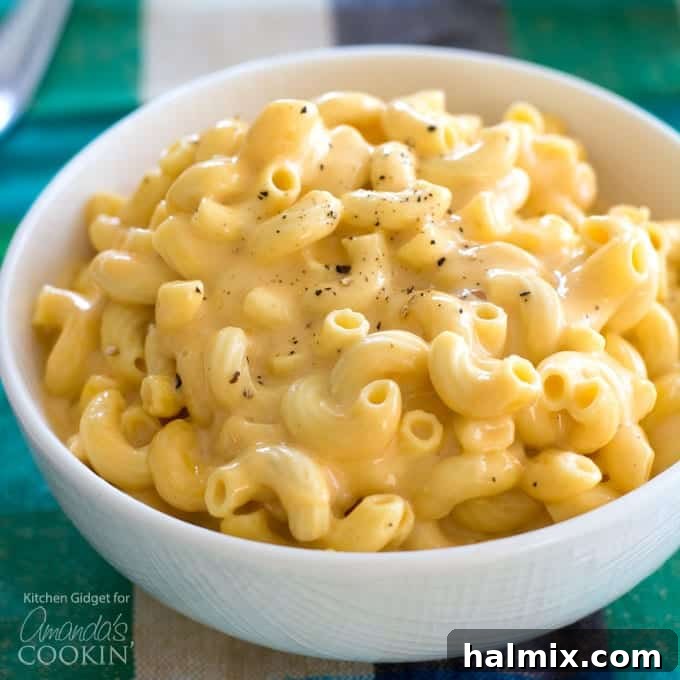
Effortlessly Creamy Slow Cooker Mac and Cheese: The Ultimate No-Boil Recipe
Imagine a rich, velvety mac and cheese that practically makes itself. This incredibly creamy slow cooker mac and cheese recipe achieves just that, starting with uncooked elbow pasta. Forget the hassle of boiling noodles separately; simply combine milk, a decadent blend of cheeses, and savory seasonings directly in your slow cooker for a meal that promises comfort and convenience. It’s the perfect solution for busy weeknights or a fantastic dish to share at any gathering.
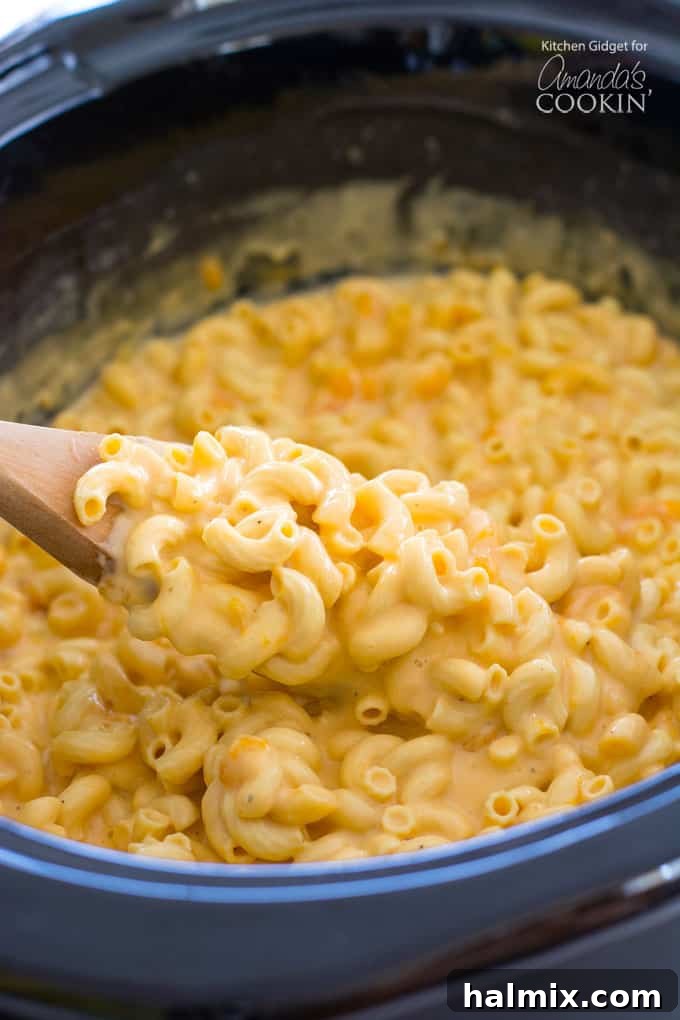
One of the greatest advantages of using a slow cooker for this classic comfort food is its unmatched portability and ability to keep the dish warm and moist without drying out. This makes it an ideal choice for potlucks, family reunions, or holiday celebrations where you need a reliable, crowd-pleasing side that travels well and stays perfectly creamy. No more worries about reheating or maintaining temperature – your slow cooker handles it all with grace.
The Quest for Perfectly Creamy Slow Cooker Mac and Cheese
Macaroni and cheese holds a special place in the hearts of many, with countless variations perfected over generations. Broadly, two popular styles dominate: the hearty, often baked southern-style mac and cheese, which typically includes eggs for a casserole-like texture, and the silky stovetop version, characterized by a smooth béchamel sauce and an egg-free, ultra-creamy consistency. Our slow cooker method leans heavily towards the latter, aiming for that luscious, melt-in-your-mouth creaminess without constant stirring or complex sauces.
Achieving an ultra-creamy texture in a slow cooker can be a challenge. Many recipes rely on processed cheese products like condensed cheese soup or Velveeta to ensure smoothness. While effective, these ingredients don’t always offer the authentic, rich flavor many mac and cheese aficionados seek. Our recipe bypasses these shortcuts, instead utilizing a combination of evaporated milk and quality deli cheeses to achieve that desired luxurious consistency. Evaporated milk, with its lower water content and slightly caramelized flavor, is key to developing a thick, rich sauce that clings beautifully to every noodle. When paired with cheeses like deli-sliced American, or naturally melty options such as Muenster or Havarti, the result is a gloriously smooth and flavorful experience that tastes homemade and gourmet, yet is deceptively simple to prepare.
Essential Tips for Holiday Preparation
Planning to serve this delicious mac and cheese for the holidays? If you haven’t tried this recipe before, we strongly recommend doing a “dry run” a few weeks prior to your big event! Every slow cooker behaves differently; some run hotter or cooler, and understanding how yours cooks this dish will ensure perfect results when it truly matters. This allows you to fine-tune cooking times and make any necessary adjustments with peace of mind. For optimal success, be sure to review our comprehensive Frequently Asked Questions section below, which addresses common concerns and provides expert advice.
Frequently Asked Questions for Slow Cooker Mac and Cheese
We’ve gathered and answered the most common questions about this popular slow cooker mac and cheese recipe. Please consult this section before leaving comments, as your query might already have a detailed answer. For best results, also pay close attention to the specific notes within the printed recipe card.
Can I double this recipe and does it change the cooking time?
Absolutely, you can easily double this recipe! Just ensure you have a slow cooker large enough to accommodate the increased volume, typically a 7-quart or larger model. The great news is that doubling the ingredients usually does not alter the cooking time significantly. The liquid-to-pasta ratio and the heat distribution in the slow cooker remain relatively consistent, allowing for a similar cooking duration. However, always monitor closely towards the end of the cooking process, as described in the instructions.
I don’t eat yellow cheese, what is a good white substitute?
If you prefer white cheeses, you have several excellent options that will deliver delicious results. Muenster cheese is a fantastic choice, known for its mild flavor and exceptional meltability, which contributes beautifully to the creamy texture. White American cheese, sourced from the deli counter, is another reliable substitute that melts smoothly. For a sharper, more complex flavor, consider a high-quality White Cheddar, such as Vermont white sharp cheddar, which will add a delightful tang. Marble cheese, often a blend of white and yellow cheddars, can also work well if you’re looking for a good balance of flavor and texture. The key is to select a cheese that melts well to ensure that signature creamy consistency.
Can I make this ahead and reheat it?
While we don’t typically recommend reheating macaroni and cheese, as it can sometimes lose its original texture and the pasta might become mushy, we understand that convenience is sometimes a priority. If you must prepare it in advance, here’s the best approach: cook it fully, then turn off your slow cooker and leave the lid on until you’re ready to serve or transport it. The residual heat will keep it warm. If the sauce has thickened too much upon arrival or reheating, simply stir in a splash of milk to loosen it to your desired consistency. To minimize compromise on quality, making it shortly before leaving for an event is often the best strategy.
Why was my mac and cheese gritty?
A gritty texture in mac and cheese is a common issue, almost always attributable to the type of cheese used. Pre-packaged shredded cheeses often contain anti-caking agents, such as cellulose, which can prevent the cheese from melting smoothly and instead leave a grainy or gritty residue. To avoid this, we highly recommend purchasing blocks of cheese from the deli counter and shredding them yourself. This ensures pure cheese that melts into a perfectly smooth sauce. We’ve also noted that some less expensive block cheeses can occasionally result in a slightly gritty texture initially, but this tends to dissipate as the mac and cheese rests and the flavors meld.
Why was my mac and cheese mushy?
Mushy macaroni in your slow cooker mac and cheese is typically a sign of either overcooking or using the wrong type of pasta. The biggest culprit is often thin macaroni noodles. Thinner pasta cooks much faster than robust varieties and can easily turn to mush in the slow cooker’s moist, sustained heat. We strongly recommend using thicker, sturdy elbow noodles, such as Barilla brand or Creamette, which often have ridges and hold their shape better during the extended cooking process. Gluten-free pasta also tends to be more delicate; if using, monitor it very closely, as it will likely cook faster (one reader reported 90 minutes for gluten-free pasta, becoming mushy at 2 hours).
Another factor could be an older slow cooker. Older models sometimes cook at a higher temperature, even on the “low” setting, compared to newer appliances. To prevent mushiness, resist the urge to increase the temperature to “high.” Start by cooking on low with the lid on for one hour without disturbing. After one hour, give it a good stir, then check for doneness every 15 minutes thereafter, stirring gently each time. My slow cooker, for instance, typically finishes this recipe in about 1 hour and 45 minutes.
Can I mix all of the ingredients, refrigerate overnight, and put in the crockpot a few hours prior to serving?
You can certainly prepare many of the ingredients in advance for added convenience, but with one critical exception: the pasta. Go ahead and shred your cheeses, measure your liquids, and combine your seasonings, then refrigerate them overnight. However, hold off on adding the uncooked macaroni noodles until just before you’re ready to start the slow cooker. Adding the pasta too early and letting it sit in the liquid overnight can cause it to absorb too much moisture before cooking begins, leading to a gummy or mushy texture. For best results, add the pasta right before you turn on the crockpot.
I’m confused by the cooking time, is it 2 hours or 3?
The cooking time provided is an estimate, ranging “up to 3 hours,” because slow cookers vary significantly in their actual heat output. Think of it like ovens – they all cook slightly differently. We recommend an initial cook on low for 1 hour, followed by a thorough stir. After that, you’ll need to check the pasta periodically, typically every 30 minutes, until it reaches your desired tenderness. The actual time it takes for your dish to be perfectly cooked will depend entirely on your specific slow cooker model. The key is to monitor closely after the initial hour and avoid increasing the heat, which can lead to mushy pasta.
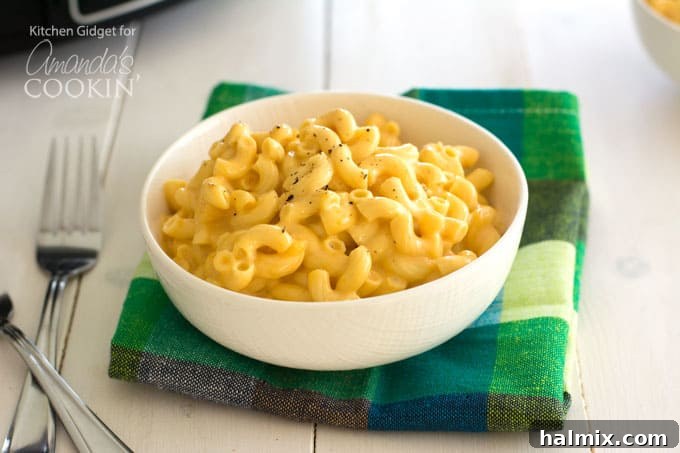
To ensure our mac and cheese is anything but bland, we elevate the basic salt and pepper with a strategic blend of mustard, garlic powder, and a dash of cayenne pepper. These additions create a complex flavor profile that truly makes the dish sing. The dry mustard enhances the cheese flavor without being overtly mustardy, garlic adds aromatic depth, and cayenne provides a subtle warmth that cuts through the richness. All these seasonings can be easily adjusted to suit your personal taste preferences, allowing you to customize your perfect batch of creamy, flavorful mac and cheese.
Crockpot Mac and Cheese
This incredibly creamy slow cooker mac and cheese starts with uncooked macaroni. Just combine the milk, a selection of cheeses, and essential seasonings in your slow cooker for a meal everyone will absolutely adore!
4.95 from 5862 votes
IMPORTANT: Don’t forget to check the Frequently Asked Questions (FAQ) section above for crucial tips and troubleshooting!
Pin It
Rate It
Course: Sides
Cuisine: American
Servings: 8 people
Total Time: 2 hours 20 minutes
Calories: 574
Author: Amanda Davis
Recipe Video
Watch how to make this delicious Crockpot Mac and Cheese step-by-step.
Ingredients
- 1 pound elbow pasta, uncooked (use regular, NOT gluten-free, NOT quick cook pasta; Barilla brand is recommended for its sturdiness)
- 2 ½ cups whole milk
- 12 ounces evaporated milk (ensure it’s not sweetened condensed milk)
- 12 ounces Extra sharp cheddar, shredded (approx. 3 cups; purchase from the deli and shred yourself to avoid anti-caking agents)
- 4 ounces American cheese, shredded (approx. 1 cup; from the deli, not processed slices)
- 1 teaspoon salt
- ½ teaspoon black pepper
- ½ teaspoon dry mustard
- ¼ teaspoon garlic powder
- Dash of cayenne pepper, to taste
- ¼ cup butter, cubed
Things You’ll Need
- 5-6 qt Crockpot
- Food processor (for shredding cheese)
- Liquid measure
- Measuring cups and spoons
Before You Begin
- Cheese Quality Matters: Avoid bagged shredded cheese, as anti-caking agents can make your mac and cheese gritty. Always buy block cheese from the deli and shred it yourself for the smoothest results.
- Choose Sturdy Pasta: Thin noodles cook too quickly and risk becoming mushy. Opt for a robust elbow pasta that can withstand slow cooking. Brands like Barilla are known for their sturdy noodles.
- Know Your Slow Cooker: Every slow cooker is unique. Newer models tend to cook more consistently. Cook on low for one hour without opening the lid. After one hour, remove the lid, stir thoroughly, then replace the lid and check every 30 minutes thereafter. NEVER turn up the heat to high; this will result in mushy macaroni. Your cooking time may vary; for reference, my slow cooker typically finishes in about 1 hour and 45 minutes.
- For comprehensive guidance and troubleshooting, please refer to the Frequently Asked Questions section within the blog post.
- Holiday Prep: If you’re making this for a special occasion, especially if it’s your first time, conduct a trial run beforehand. This ensures you’re familiar with your slow cooker’s nuances and can guarantee perfect results for your guests. Happy Thanksgiving and Merry Christmas!
Instructions
- Spray a 6-quart slow cooker thoroughly with non-stick cooking spray.
- Rinse the uncooked elbow pasta well under cold water and drain completely.
- Add the rinsed pasta to the slow cooker along with the whole milk, evaporated milk, shredded cheddar, American cheese, salt, black pepper, dry mustard, garlic powder, and a dash of cayenne pepper. Stir all ingredients to combine thoroughly, ensuring the macaroni is submerged in the liquid as much as possible.
- Dot the top of the mixture with the cubed butter.
- Cover and cook on low heat for 1 hour. After 1 hour, quickly remove the lid and stir well, minimizing heat loss. At this point, depending on your slow cooker, your dish might be close to done or may require an additional 1-2 hours of cooking.
- If not yet done, continue cooking on low and check periodically (every 30 minutes or so), stirring gently each time until the pasta is tender and the sauce is thick and creamy.
- Once cooked, the pasta will be tender, and the liquid will have transformed into a rich, thick, and creamy sauce. The sauce will continue to thicken slightly after the lid is removed and the mac and cheese rests for a few minutes. Serve warm and enjoy!
Expert Tips & FAQs
- Evaporated vs. Condensed Milk: It is crucial to use evaporated milk, not sweetened condensed milk. Condensed milk is heavily sweetened and cannot be used interchangeably; it would ruin the savory profile of your mac and cheese.
- Evaporated Milk Substitutions: Do not substitute regular milk for evaporated milk directly. Regular milk has a higher water content and will result in a runny sauce. If you don’t have evaporated milk, you can make your own: simmer 2 ¼ cups of regular milk until it reduces to 1 cup.
- Whole Milk for Richness: Always use whole milk as specified in the ingredient list. Lower-fat milks contain more water, which can dilute the sauce and prevent proper cooking and thickening, leading to a less creamy final product.
Nutrition
Serving: 1 cup | Calories: 574cal | Carbohydrates: 51g | Protein: 26g | Fat: 29g | Saturated Fat: 17g | Cholesterol: 90mg | Sodium: 923mg | Potassium: 426mg | Fiber: 1g | Sugar: 10g | Vitamin A: 985IU | Vitamin C: 0.8mg | Calcium: 672mg | Iron: 1.2mg
Tried this Recipe? Pin it for Later!
Follow on Pinterest @AmandasCookin or tag #AmandasCookin!
The recipes on this blog are tested with a conventional gas oven and gas stovetop. It’s important to note that some ovens, especially as they age, can cook and bake inconsistently. Using an inexpensive oven thermometer can assure you that your oven is truly heating to the proper temperature. If you use a toaster oven or countertop oven, please keep in mind that they may not distribute heat the same as a conventional full sized oven and you may need to adjust your cooking/baking times. In the case of recipes made with a pressure cooker, air fryer, slow cooker, or other appliance, a link to the appliances we use is listed within each respective recipe. For baking recipes where measurements are given by weight, please note that results may not be the same if cups are used instead, and we can’t guarantee success with that method.
This post was originally published on August 21, 2017.