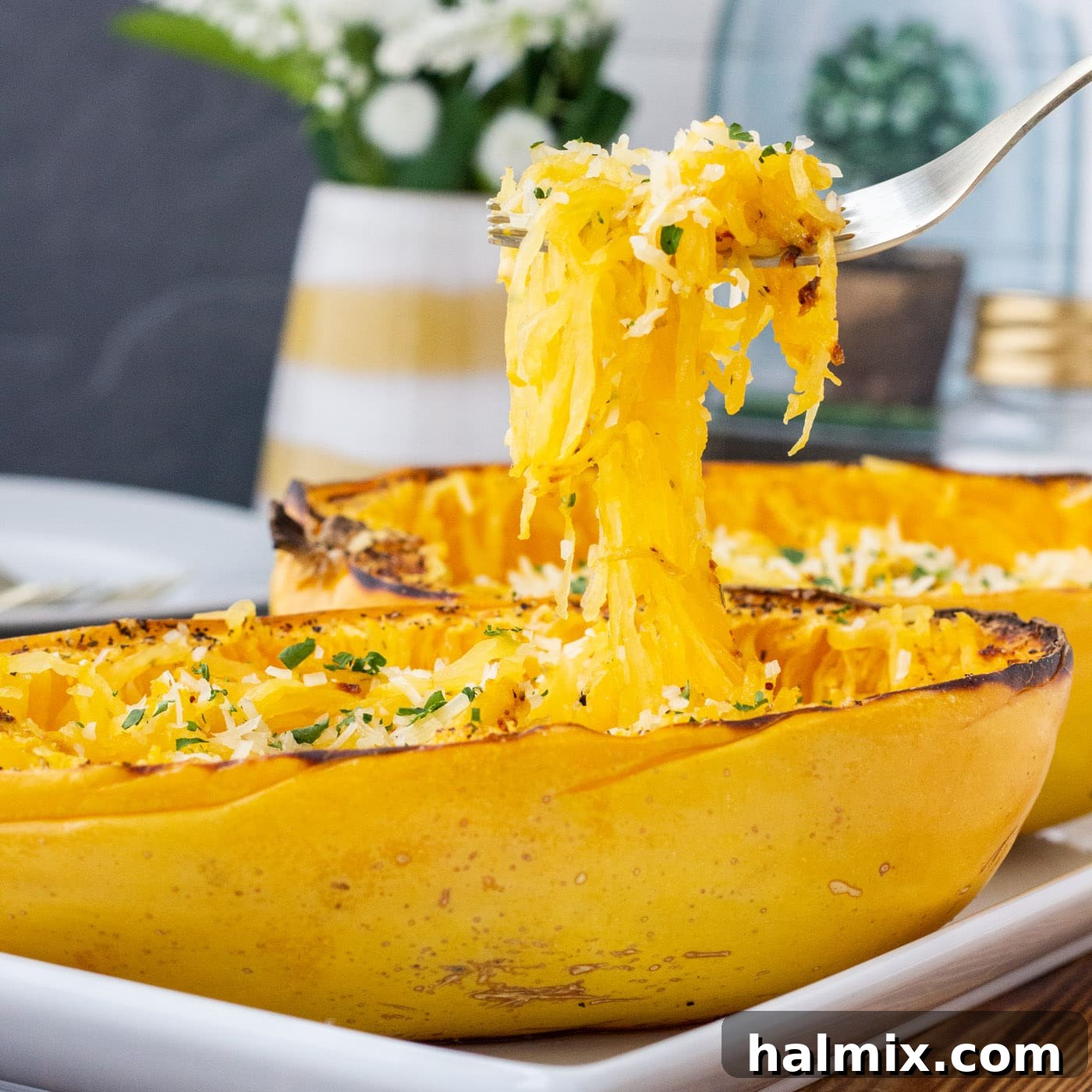
Whether you’re seeking a delightful, low-carb alternative to traditional pasta or simply craving a nutritious and satisfying meal on its own, baked spaghetti squash is a culinary marvel. This comprehensive guide will equip you with all the essential tips, tricks, and detailed instructions to effortlessly achieve perfectly tender, easily shreddable spaghetti squash every single time. Prepare to transform this humble winter squash into a versatile and incredibly delicious staple in your kitchen.
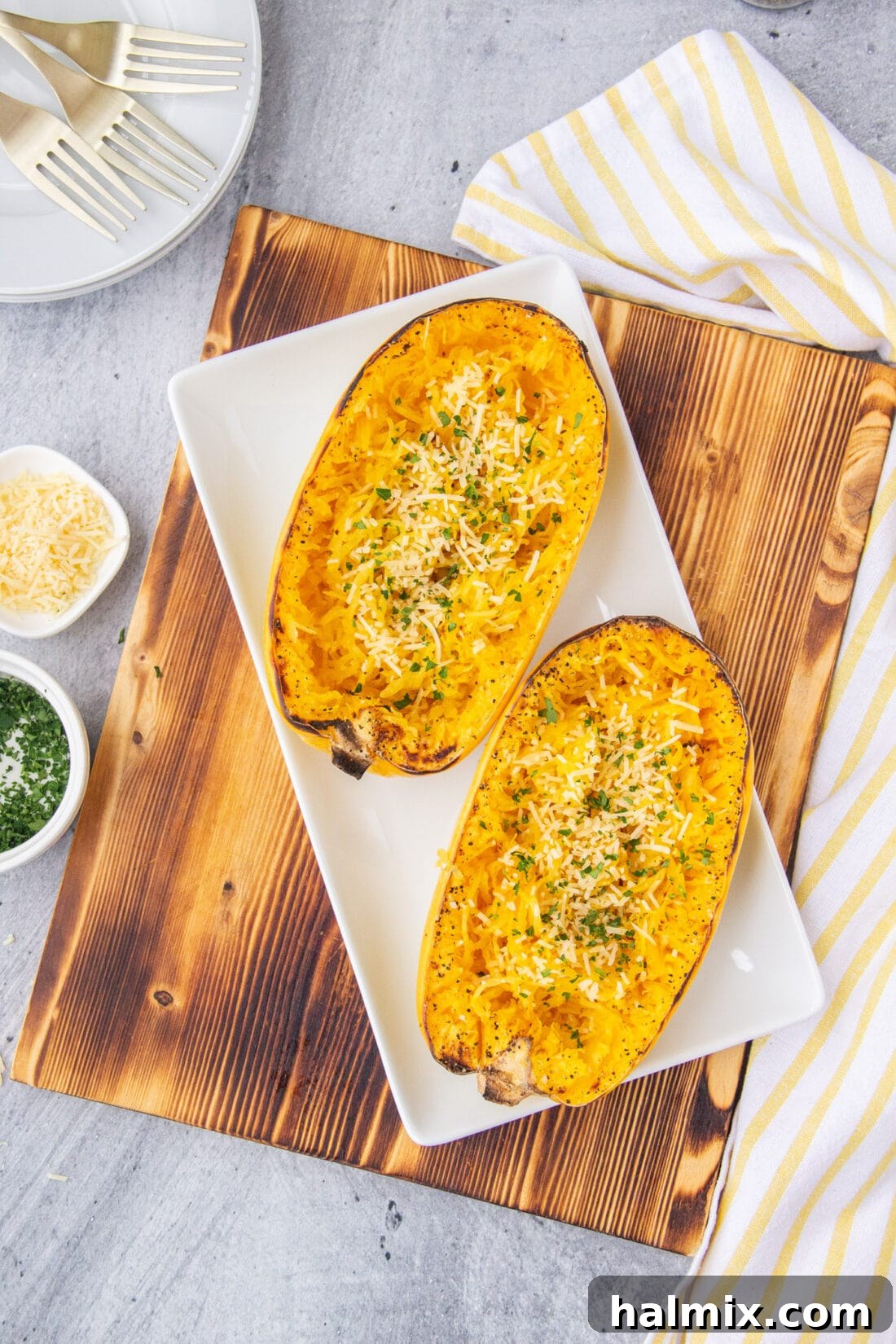
Why Baked Spaghetti Squash is a Must-Try Recipe
Baked spaghetti squash has earned its reputation as a true powerhouse of nutrition, brimming with essential vitamins, potent antioxidants, and vital nutrients. Much like popular alternatives such as zucchini noodles, this versatile winter squash serves as an exceptional substitute for pasta dishes. It’s an ideal choice for those adhering to low-carb, ketogenic, or low-calorie diets, offering a guilt-free way to enjoy your favorite pasta-inspired meals.
What makes spaghetti squash truly shine is its uniquely appealing texture. Once cooked, its mild-tasting flesh naturally separates into delicate, spaghetti-like strands, creating a satisfying and familiar mouthfeel. This stringy consistency makes it a fantastic base for an endless array of toppings and sauces, from rich marinara and creamy Alfredo to vibrant pesto and savory meat sauces. Its neutral flavor profile ensures it readily absorbs the delicious flavors you pair it with, making it incredibly adaptable to various cuisines.
Beyond its culinary versatility, spaghetti squash is inherently hearty and filling. Despite being significantly lower in carbohydrates and calories than traditional pasta, it provides a sense of satiety that helps keep hunger at bay. For individuals seeking gluten-free alternatives, it’s a natural and wholesome choice, eliminating the need for processed gluten-free pasta products. The texture, while not identical to durum wheat pasta, is pleasantly soft and tender when perfectly cooked, offering a wonderful middle ground that boasts a far superior nutritional profile. Enriched with fiber, Vitamin A, Vitamin C, and potassium, spaghetti squash offers a nourishing foundation for a healthy diet, far surpassing the empty calories often found in carb-heavy pastas.
Embracing baked spaghetti squash means making a smart choice for your health without compromising on flavor or satisfaction. It allows you to indulge in comforting meals while boosting your intake of beneficial nutrients, making it a go-to option for health-conscious food lovers.
Essential Ingredients for Perfect Spaghetti Squash
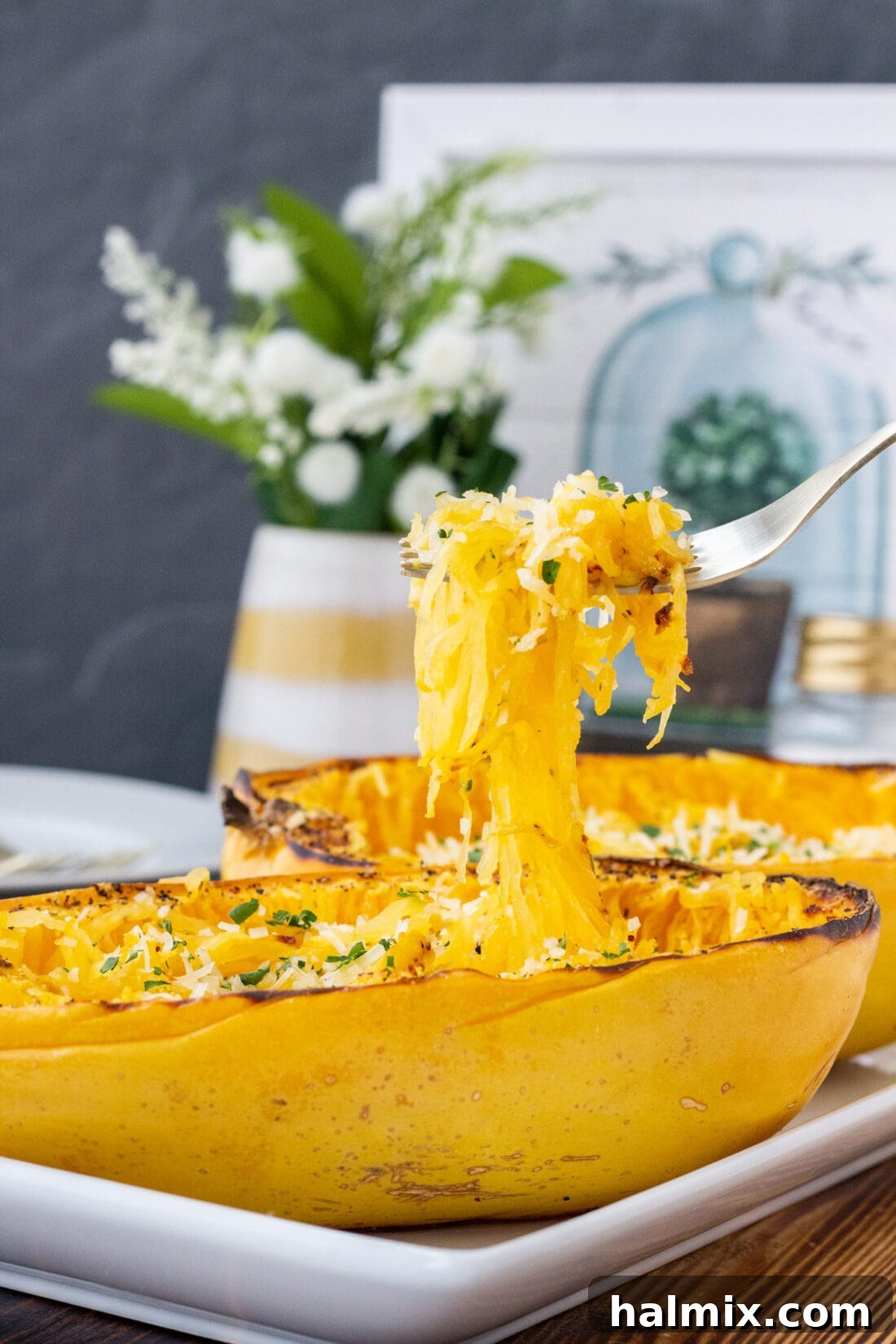
Creating delicious baked spaghetti squash requires just a handful of simple ingredients. The beauty of this dish lies in its minimalism, allowing the natural flavors of the squash to shine through, complemented by basic seasonings. Below is a list of what you’ll need for this recipe, along with key considerations for selecting the best produce.
Ingredient Spotlight & Expert Tips
Selecting and Preparing Your Squash
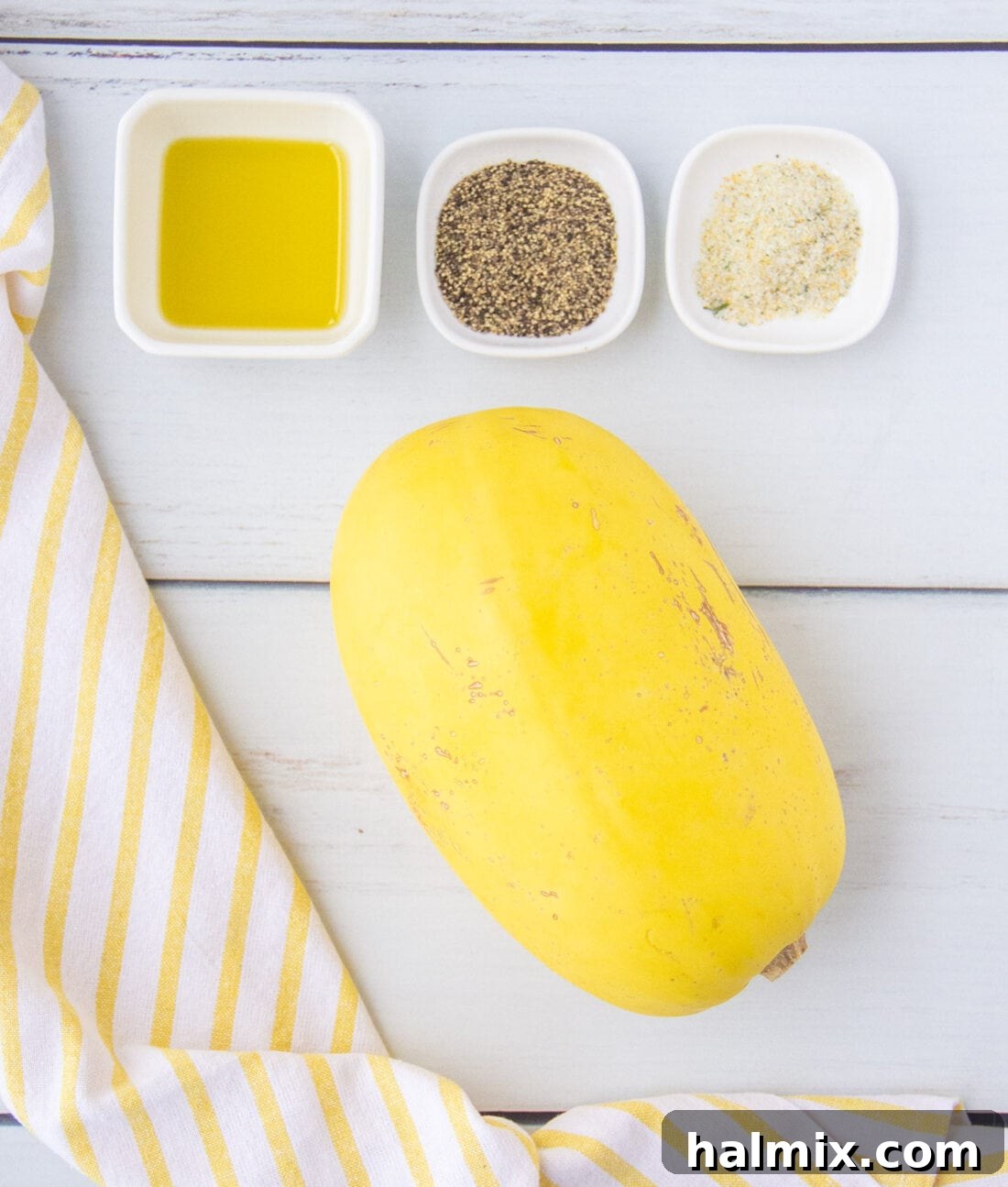
Spaghetti Squash: The star of our dish! When selecting a spaghetti squash, look for one that is firm, heavy for its size, and has a vibrant, uniform yellow color. Avoid any squash with soft spots, blemishes, or green patches, as these indicate it may not be ripe or fresh. A medium-sized squash, typically weighing between 2 to 3 pounds (around 32-48 ounces), is ideal for serving two to four people. This recipe uses a squash approximately 2 1/3 lbs (37 ounces).
Cutting spaghetti squash can indeed be a bit challenging due to its thick, hard rind. For safety and ease, we recommend using a sawing motion with a sturdy bread knife rather than a straight slicing motion with a chef’s knife. The serrated edge of a bread knife provides better grip and leverage. Always ensure your cutting board is stable; placing a damp paper towel underneath can prevent it from slipping as you apply pressure. A sharp, heavy-duty chef’s knife can also work if you’re comfortable and careful. For a visual guide on how to safely and effectively shred the baked spaghetti squash into perfect strands, refer to the video demonstration at the end of this post.
Seasoning and Flavor Enhancers
- Olive Oil: Extra virgin olive oil adds richness and helps the squash caramelize beautifully in the oven. It also prevents the flesh from drying out. If you don’t have olive oil, avocado oil, or even melted butter, can be excellent substitutes, each offering a slightly different flavor profile.
- Garlic Salt: A simple yet powerful seasoning that infuses the squash with savory, aromatic garlic notes. You can adjust the amount to your taste. If you only have garlic powder and regular salt, use 1/2 teaspoon of garlic powder and 1/2 teaspoon of salt.
- Black Pepper: Freshly ground black pepper adds a subtle kick and depth of flavor. Feel free to add more or less according to your preference.
- Optional Toppings: Shredded Parmesan Cheese adds a salty, umami layer that melts into the warm squash. Other cheeses like mozzarella, feta, or even a sprinkle of nutritional yeast can work wonderfully. Fresh Chopped Parsley provides a burst of freshness and a vibrant green garnish, enhancing both flavor and visual appeal.
Experimenting with additional seasonings like Italian herbs, dried oregano, red pepper flakes for a touch of heat, or even a squeeze of lemon juice after baking can elevate the flavors even further. The beauty of spaghetti squash is its ability to adapt to a wide range of flavor profiles, making it easy to customize to your personal taste.
Step-by-Step Guide: How to Make Baked Spaghetti Squash
These step-by-step photos and detailed instructions are designed to help you visualize each stage of making this delicious recipe. For a convenient printable version of this recipe, complete with precise measurements and comprehensive instructions, please refer to the full recipe card located at the bottom of this post.
- Preheat Your Oven: Begin by preheating your oven to 400°F (200°C). Allowing the oven to reach the correct temperature ensures even cooking and promotes proper caramelization of the squash.
- Prepare the Squash for Cutting: Carefully place the spaghetti squash on a stable cutting board. For safety, ensure the cutting board is secure (a damp paper towel underneath can help prevent slipping). Using a large, sharp knife, cut the spaghetti squash in half lengthwise, from stem to base. This can be challenging, so use a sawing motion if necessary. A bread knife can often provide better grip than a chef’s knife for this task.

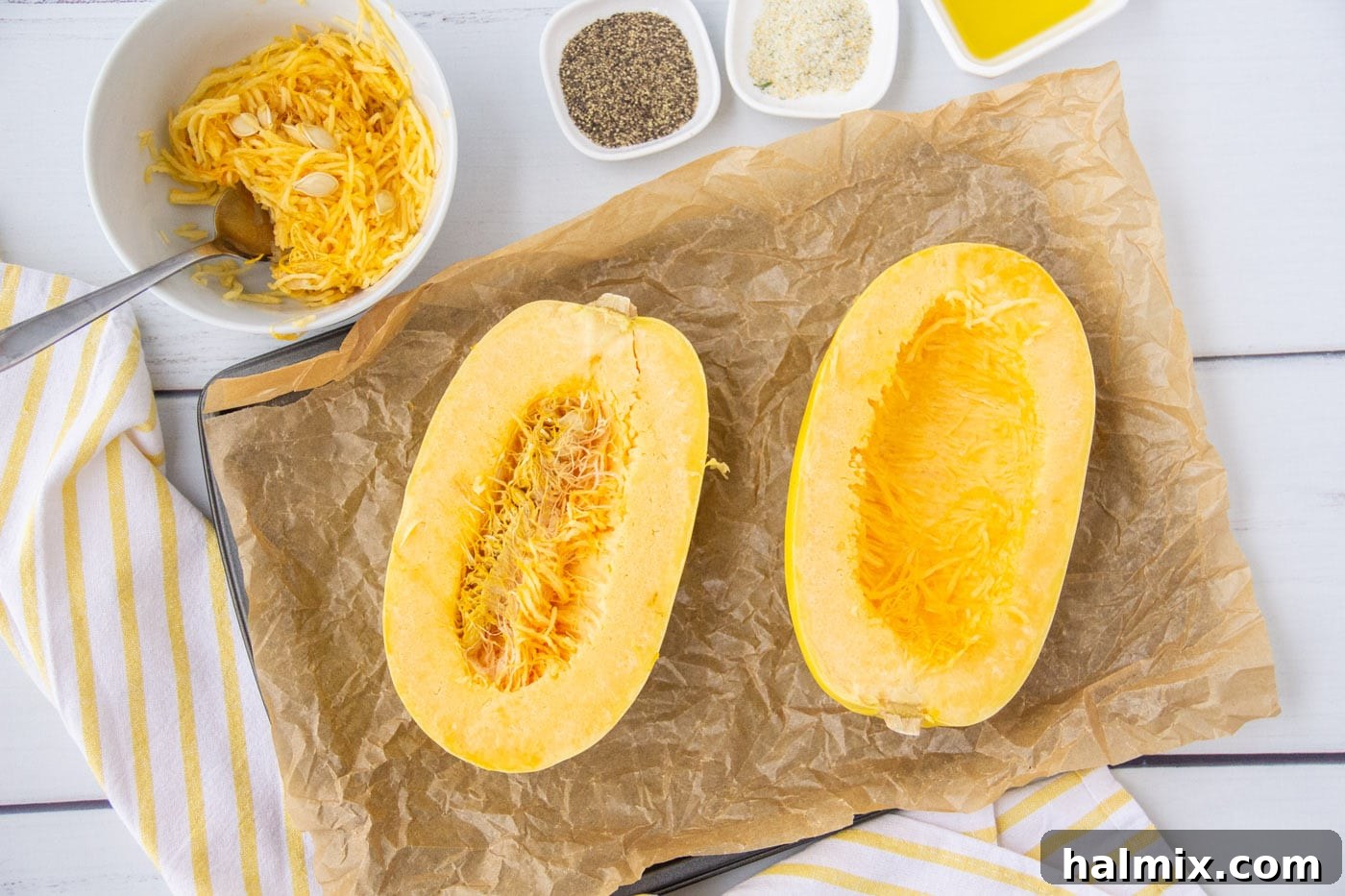
- Remove the Seeds: Using a spoon, scoop out all the seeds and fibrous strands from the center of both squash halves. Similar to a pumpkin, these can be discarded or roasted for a healthy snack later. Removing them creates a clean cavity for cooking and ensures a pure squash flavor.
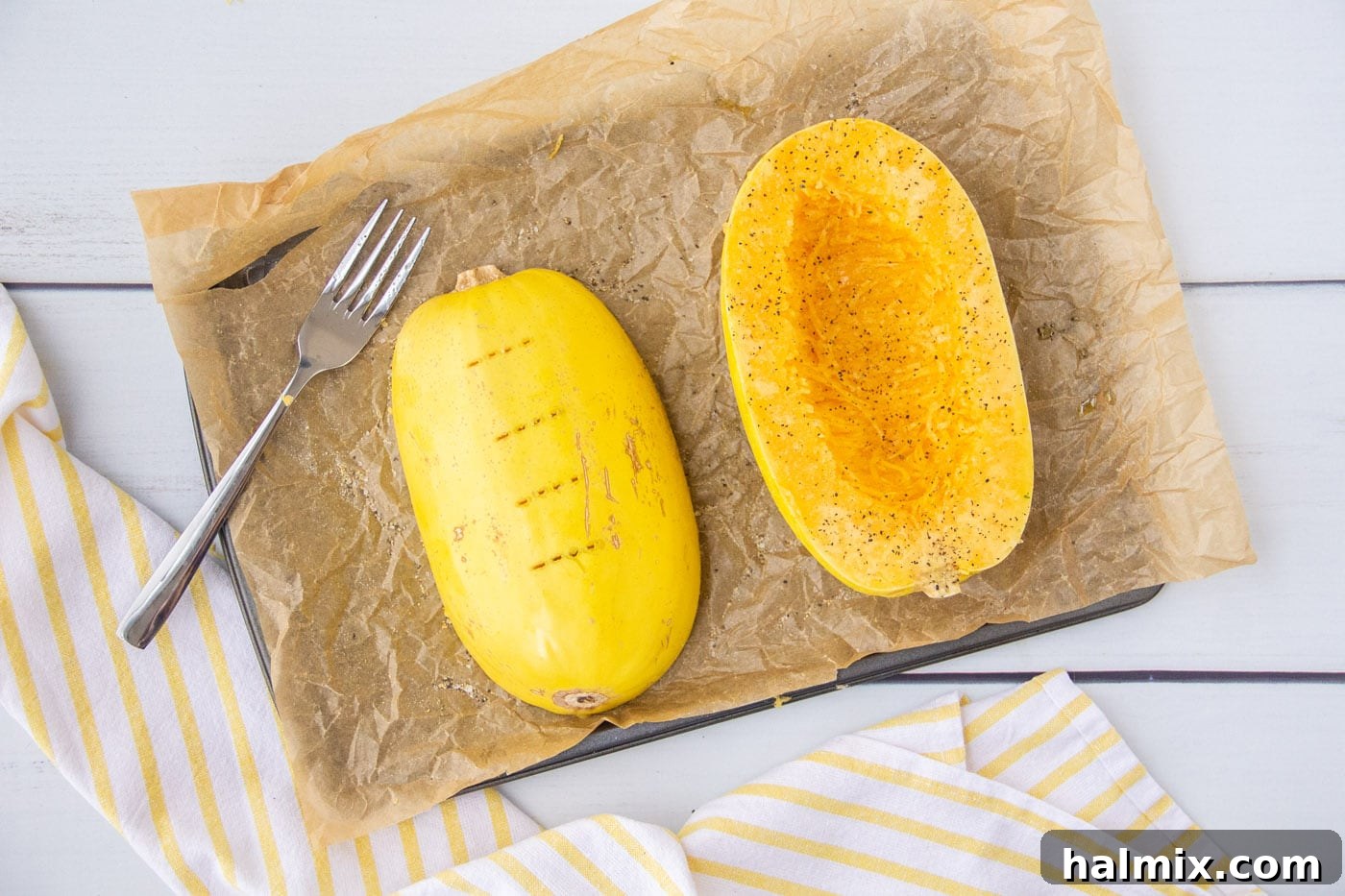
- Pierce the Skin: Turn the squash halves over, so the skin side is facing up. Using a fork, pierce the skin several times. This crucial step allows steam to escape during baking, preventing the squash from bursting and ensuring more even cooking.
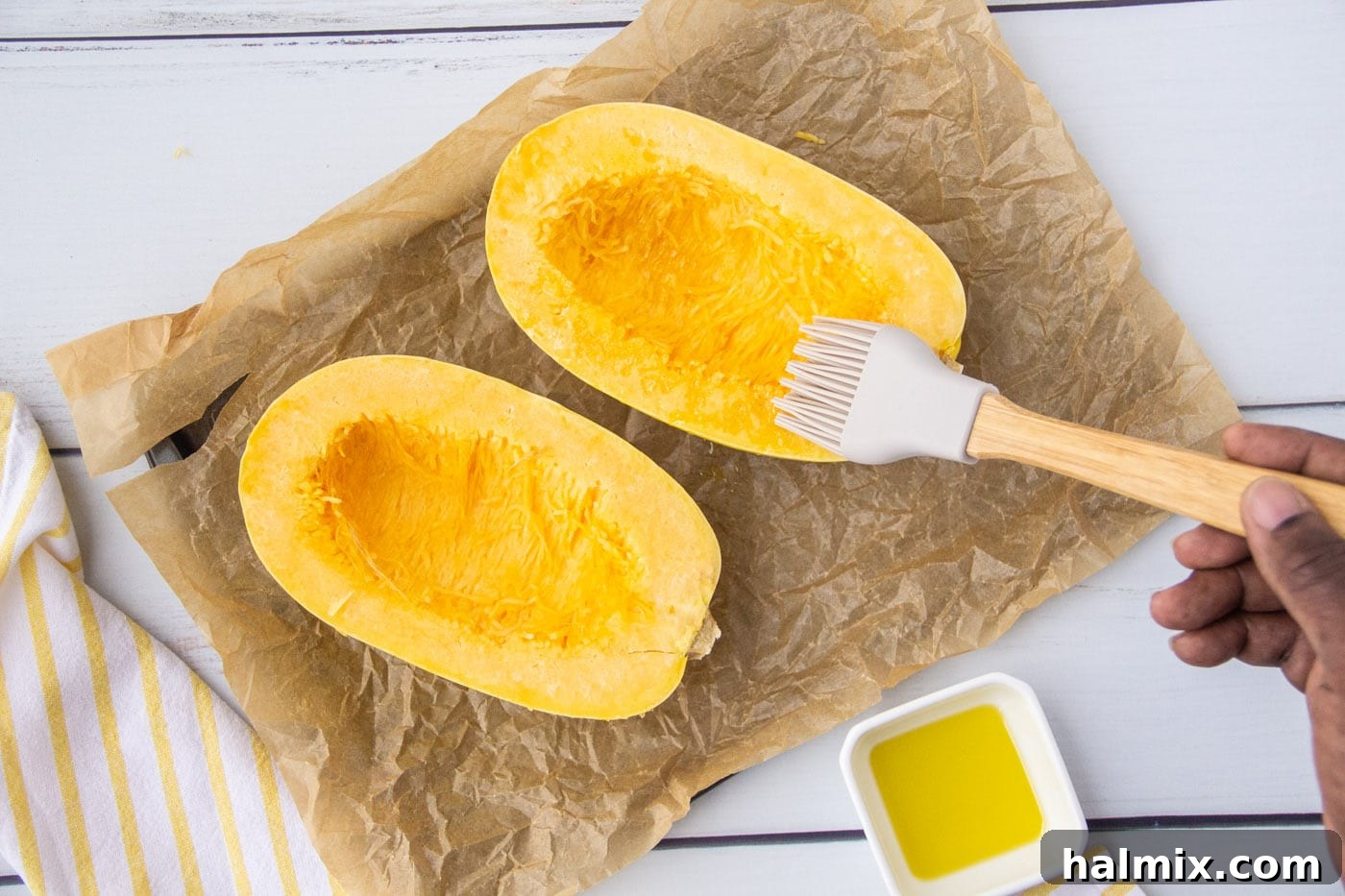
- Season the Flesh: Flip the squash halves back over, so the cut side (flesh) is facing up. Lightly brush the flesh of both halves with olive oil. This not only adds flavor but also helps in caramelizing the squash and preventing it from sticking. Spread the oil evenly.
- Apply Seasoning: Generously season the oiled squash flesh with garlic salt and black pepper. Don’t be shy; the squash has a mild flavor and can handle a good amount of seasoning. This step is vital for developing rich flavor in the final dish.
- Bake to Perfection: Place the seasoned squash halves, skin side down, on a baking sheet lined with parchment paper. Parchment paper is essential for easy cleanup and prevents sticking. Baking the squash skin-side down creates a natural steaming environment, ensuring the flesh becomes wonderfully tender. Bake in the preheated oven for 45 minutes. The baking time may vary slightly depending on the size of your squash; a larger squash might need a few extra minutes.
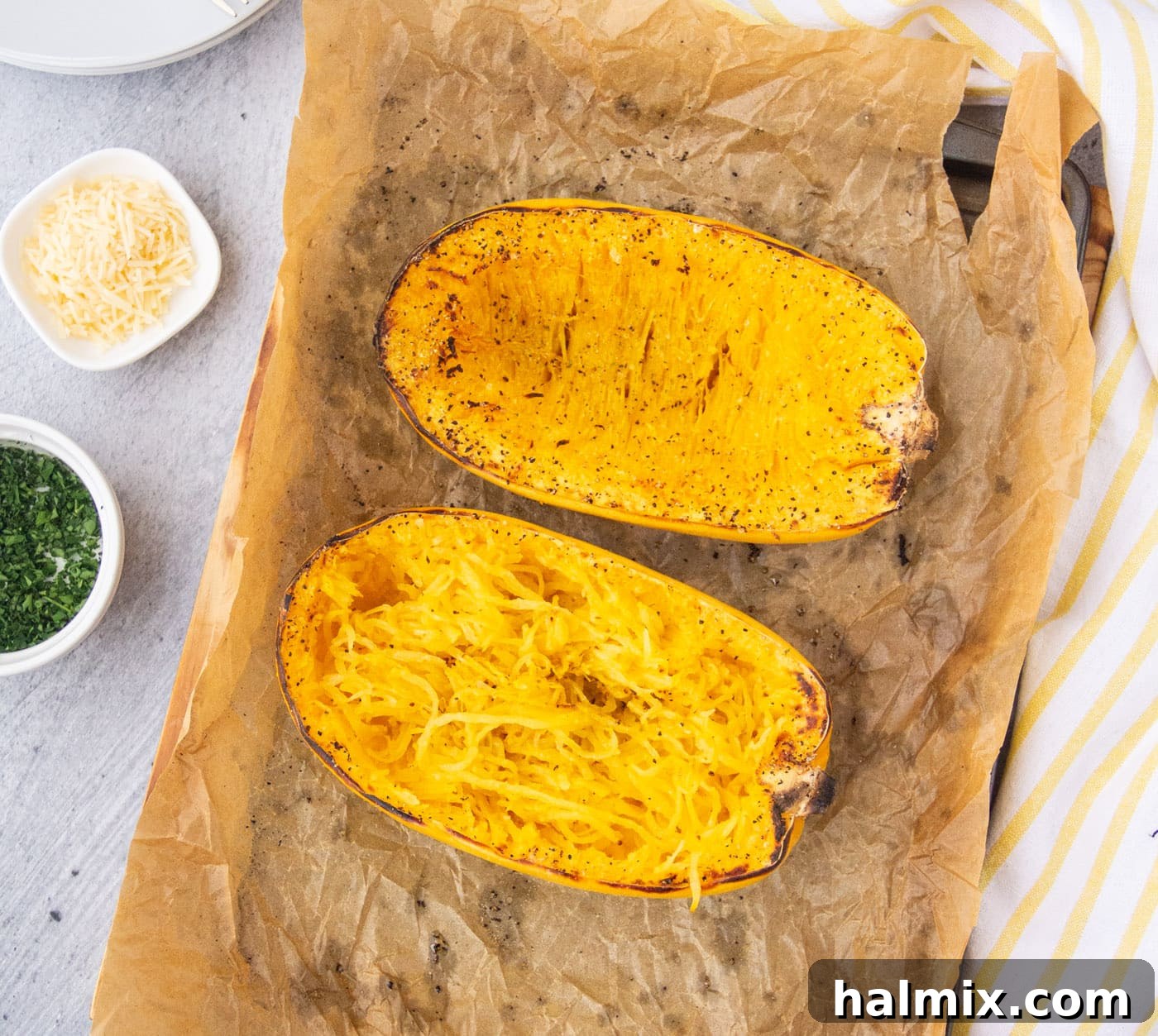
- Broil for a Golden Finish: After 45 minutes, carefully move the baking sheet to the top rack of your oven. Increase the oven temperature to the broil setting. Watch the squash very carefully during this stage – you only want to broil it long enough to achieve a beautiful golden-brown top, typically about 2-3 minutes. The broiling step adds a slight crispness and enhances the flavor. Do not walk away, as broiler heat is intense and can burn quickly.
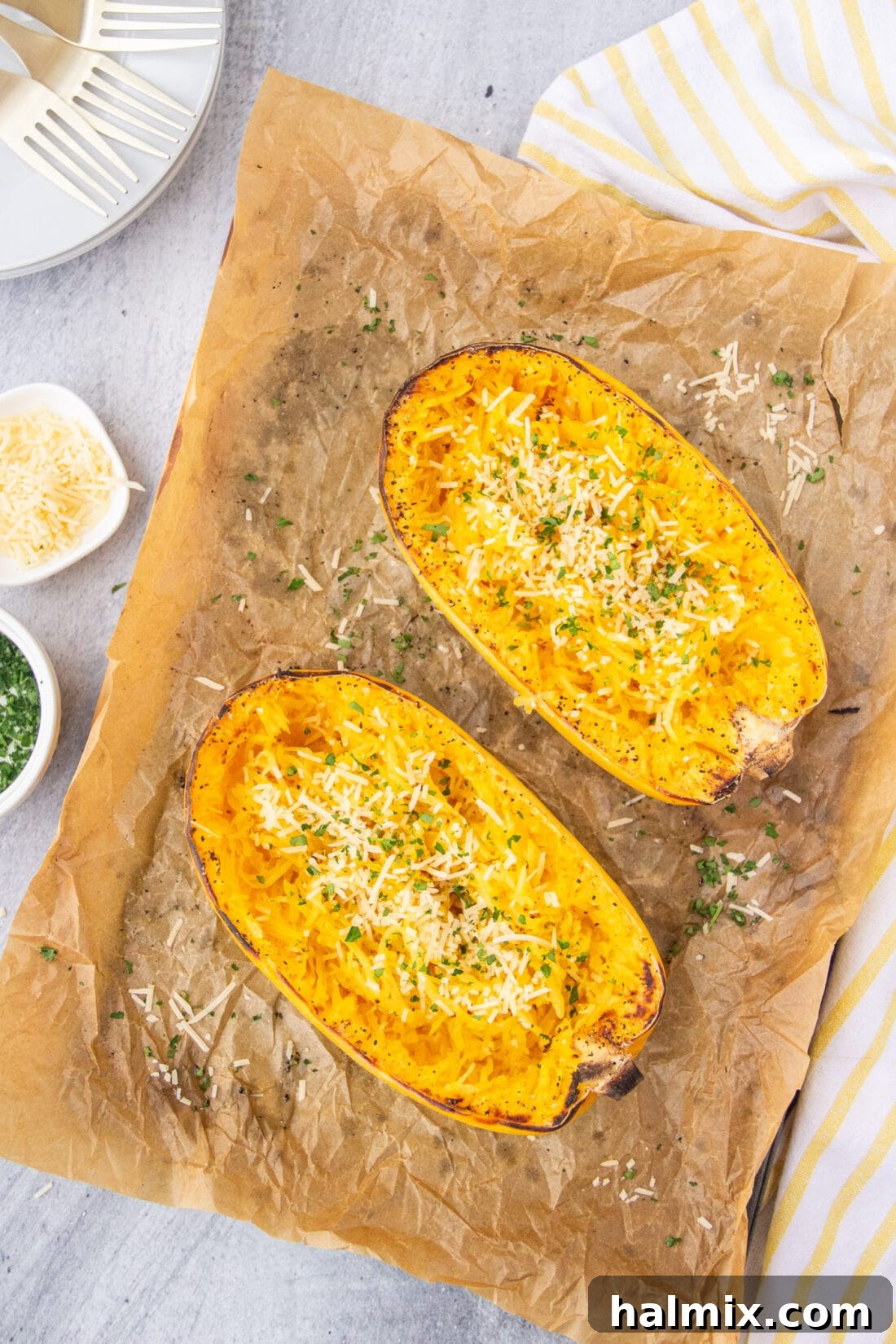
- Garnish and Serve Immediately: Remove the squash from the broiler. If using, immediately sprinkle with shredded Parmesan cheese while it’s still hot, allowing the cheese to melt slightly into the warm strands. Garnish with fresh chopped parsley for a pop of color and fresh herb flavor. Serve hot and enjoy!
Frequently Asked Questions & Expert Tips
Look for a spaghetti squash that is firm to the touch, heavy for its size, and has a bright, uniform yellow color. Avoid any squash with soft spots, green patches, or blemishes, as these can indicate it’s underripe or past its prime. The skin should be smooth and intact.
Cutting a raw spaghetti squash can be challenging. To make it easier and safer, use a large, sharp chef’s knife or a serrated bread knife. You can also carefully pierce the squash several times with a fork and microwave it for 3-5 minutes before cutting. This softens the skin slightly, making it easier to slice in half. Always use a damp paper towel under your cutting board to prevent slipping.
Once the squash is baked and tender, use a fork to gently scrape the flesh from the inside of the skin. Start from the edges and work your way towards the center. The cooked flesh should easily separate into long, spaghetti-like strands. You can also watch the video at the end of this post for a demonstration.
Yes, both methods work! For the microwave, pierce the whole squash several times, then microwave for 8-15 minutes, flipping halfway, until tender. For an Instant Pot, cut the squash in half (or in rings if it fits), add a cup of water to the pot, place the squash on a trivet, and cook on high pressure for 7-10 minutes, followed by a quick release. These methods are quicker but may not yield the same roasted depth of flavor as baking.
This dish will keep well in an airtight container in the refrigerator for about 2 days. While day one leftovers are perfectly fine, we’ve found that spaghetti squash tastes its absolute best when served fresh right out of the oven. By day two, it tends to lose some of its vibrant flavor and tender texture.
Yes, you can freeze cooked spaghetti squash. Once the strands are separated, allow them to cool completely. Place them in a freezer-safe bag or container, removing as much air as possible, and freeze for up to 3-4 months. Thaw in the refrigerator overnight and reheat gently. Note that the texture may be slightly softer after freezing and thawing.
Avoid undercooking, which results in hard, un-shreddable flesh, or overcooking, which can make it mushy. Always pierce the skin to prevent bursting, and don’t forget to season generously. Ensure your oven is properly preheated for consistent results.
Creative Serving Suggestions for Baked Spaghetti Squash
Baked spaghetti squash is incredibly versatile, making it an excellent base for a wide variety of meals. Its mild flavor and pasta-like texture allow it to adapt beautifully to diverse culinary influences. Here are some delicious ways to serve it, whether you’re looking for a simple side or a hearty main course:
Classic & Comforting Pairings:
- Simple & Savory: Enjoy it as is with just a pat of butter, a drizzle of extra olive oil, and a dash of salt and pepper. This allows the natural, subtle sweetness of the squash to truly shine.
- Cheesy Indulgence: Immediately after baking, sprinkle with shredded Parmesan cheese. The residual heat will melt the cheese into a gooey, flavorful topping. Other great cheese options include mozzarella, feta, goat cheese, or a sharp cheddar.
- Italian Inspired: Toss the warm spaghetti squash strands with your favorite marinara sauce, creamy Alfredo sauce, or vibrant pesto. Add a sprinkle of fresh basil or oregano for an authentic Italian flair.
Hearty Main Course Ideas:
- With Protein: Mix in cooked ground beef, turkey, chicken, or Italian sausage for a protein-packed meal. It pairs wonderfully with a bolognese or a simple garlic-herb seasoning. For a seafood twist, add sautéed shrimp or scallops.
- Vegetarian Feast: Incorporate roasted vegetables like bell peppers, zucchini, mushrooms, spinach, or cherry tomatoes. A sprinkle of toasted pine nuts or walnuts can add a delightful crunch. Chickpeas or lentils can also provide a plant-based protein boost.
- Stuffed Squash: Use the hollowed-out squash halves as natural “boats” to hold your desired fillings. Mix the shredded squash with your choice of sauce, cheese, protein, and vegetables, then bake again until heated through and bubbly.
Global Flavors & Creative Twists:
- Mediterranean Style: Drizzle with lemon juice, top with chopped olives, sun-dried tomatoes, crumbled feta cheese, and a pinch of dried oregano for a refreshing Mediterranean-inspired dish.
- Asian Fusion: Toss with a light sesame-ginger dressing, soy sauce, a touch of rice vinegar, and top with green onions and toasted sesame seeds for an Asian-inspired noodle bowl alternative. Add shredded chicken or edamame for protein.
- Breakfast Bowl: Believe it or not, baked spaghetti squash can even be a unique base for a savory breakfast bowl! Top with a fried egg, avocado slices, and a dash of hot sauce.
No matter how you choose to serve it, baked spaghetti squash offers a canvas for endless culinary creativity. Its adaptability makes it an invaluable ingredient for both everyday meals and special occasions.
Discover More Delicious & Healthy Recipes
If you’ve enjoyed the versatility and health benefits of baked spaghetti squash, you’ll love exploring other fresh, wholesome recipes that celebrate vegetables and creative cooking. Expand your culinary repertoire with these related dishes:
- Zucchini Sliders
- Air Fryer Acorn Squash
- Butternut Squash Mac and Cheese
- Slow Cooker Butternut Squash Soup
- Butternut Squash Pasta with Cheesy Cream Sauce
I love to bake and cook and share my kitchen experience with all of you! Remembering to come back each day can be tough, that’s why I offer a convenient newsletter every time a new recipe posts. Simply subscribe and start receiving your free daily recipes!
Baked Spaghetti Squash
Spaghetti squash is a mellow tasting squash with stringy innards once cooked. It’s hearty, filling, and a great base for flavorful mix-ins.
IMPORTANT – There are often Frequently Asked Questions within the blog post that you may find helpful. Simply scroll back up to read them!
Print Recipe |
Pin It
Course: Main Course, Side Dish
Cuisine: American
Servings: 2 servings
Total Time: 50 mins
Calories: 214
Author: Amanda Davis
Ingredients
- 1 spaghetti squash (approximately 2 1/3 lbs, 37 ounces)
- 1 Tablespoon olive oil
- 1 teaspoon garlic salt
- 1 teaspoon black pepper
- Shredded parmesan cheese (optional topping)
- Fresh chopped parsley (optional garnish)
Things You’ll Need
- Chef’s knife
- Cutting board
- Baking sheet
- Parchment paper
- Pastry brush
Before You Begin (Notes)
- Spaghetti squash can be a little challenging to cut through. You may find it easier to use a sawing motion with a bread knife instead of a slicing motion with a chef’s knife.
- Use a damp paper towel underneath your cutting board to keep the board from moving around while you work, enhancing safety.
- This dish will keep in the refrigerator for about 2 days. However, we have found that spaghetti squash tastes best if served right away. Day one of leftovers is fine, but by day two the dish will have lost some of its flavor luster.
Instructions
- Preheat oven to 400 F.
- Cut 1 spaghetti squash in half lengthwise.
- Scoop seeds out of both sides of the squash.
- Turn squash over, skin side up, pierce the skin with a fork a few times.
- Turn squash back over, skin side down, brush flesh of squash with 1 Tablespoon olive oil.
- Season with 1 teaspoon garlic salt and 1 teaspoon black pepper.
- Place squash, skin side down on a parchment paper lined baking sheet. Bake for 45 minutes.
- Move pan up to top rack. Turn oven up to the broil setting. Watch carefully, you just want to broil it long enough to brown the top. About 2-3 minutes.
- Remove from broiler and immediately sprinkle with shredded parmesan cheese (if using). Garnish with fresh chopped parsley and serve.
Nutrition Information
Serving: 1 serving (1/2 the squash)
- Calories: 214 cal
- Carbohydrates: 34g
- Protein: 3g
- Fat: 10g
- Saturated Fat: 2g
- Polyunsaturated Fat: 2g
- Monounsaturated Fat: 5g
- Sodium: 1245mg
- Potassium: 535mg
- Fiber: 7g
- Sugar: 13g
- Vitamin A: 585IU
- Vitamin C: 10mg
- Calcium: 116mg
- Iron: 2mg
Tried this Recipe? Pin it for Later!
Follow on Pinterest @AmandasCookin or tag #AmandasCookin!
The recipes on this blog are tested with a conventional gas oven and gas stovetop. It’s important to note that some ovens, especially as they age, can cook and bake inconsistently. Using an inexpensive oven thermometer can assure you that your oven is truly heating to the proper temperature. If you use a toaster oven or countertop oven, please keep in mind that they may not distribute heat the same as a conventional full sized oven and you may need to adjust your cooking/baking times. In the case of recipes made with a pressure cooker, air fryer, slow cooker, or other appliance, a link to the appliances we use is listed within each respective recipe. For baking recipes where measurements are given by weight, please note that results may not be the same if cups are used instead, and we can’t guarantee success with that method.